Power Pop fan, Baseball, Beatles, Alternative music, old movies, and tv show fan. Also anything to do with pop culture in the 60s and 70s... I'm also a songwriter, bass and guitar player. Not the slightest bit interested in politics at all.
How would you like to live thousands of years? Mr. Jameson was given that option that many of us would love to have…but it’s not without it’s downfalls. Like the episode “Escape Clause” this episode explores immortality except in this one the main character is sophisticated but can be just as selfish. Even with his considerable life experiences some things don’t sink in.
Compared to shows in 2021 this episode is paced slow but that is a great thing. The story has room to breathe and is laid out in front of us. Living forever looks great on paper but in real time it would be hard to lose people you love over and over again… and lose yourself in parts and pieces in the process.
This is a great episode and an interesting view on immortality.
This episode deals with immortality. The entire cast all lived exceptionally long lives. Kevin McCarthy lived to be 96, Estelle Winwood was 101 when she passed away, Edgar Stehli passed away shortly after turning 89, and Dodie Heath turned 90 in August of 2018.
McCarthy died September 11, 2010 at the age of 96, having earned an acting credit as late as the year he died, more than 50 years after this episode was produced.
This show was written by Charles Beaumont
Rod Serling’s Opening Narration:
You’re looking at Act One, Scene One, of a nightmare, one not restricted to witching hours of dark, rainswept nights. Professor Walter Jameson, popular beyond words, who talks of the past as if it were the present, who conjures up the dead as if they were alive…In the view of this man, Professor Samuel Kittridge, Walter Jameson has access to knowledge that couldn’t come out of a volume of history, but rather from a book on black magic, which is to say that this nightmare begins at noon.
Summary
Walter Jameson is a successful history professor. He’s been teaching for 12 years and has proven to be very popular with his students for his ability to bring his subject to life. He is engaged to Susanna Kittridge, his good friend Professor Sam Kittridge’s daughter. One thing that Professor Kittridge has noticed about Walter is that he doesn’t seem to have aged one bit in the 12 years they have known each other. Walter admits that he is far older than anyone can imagine but before he and Susanna can elope, someone from his past pays him a visit.
Rod Serling’s Closing Narration:
Last stop on a long journey, as yet another human being returns to the vast nothingness that is the beginning and into the dust that is always the end.
CAST
Rod Serling … Narrator (voice) (uncredited)
Kevin McCarthy … Prof. Walter Jameson / Tom Bowen / Maj. Hugh Skelton
Edgar Stehli … Professor Sam Kittridge
Estelle Winwood … Laurette Bowen
Dodie Heath … Susanna Kittridge (as Dody Heath)
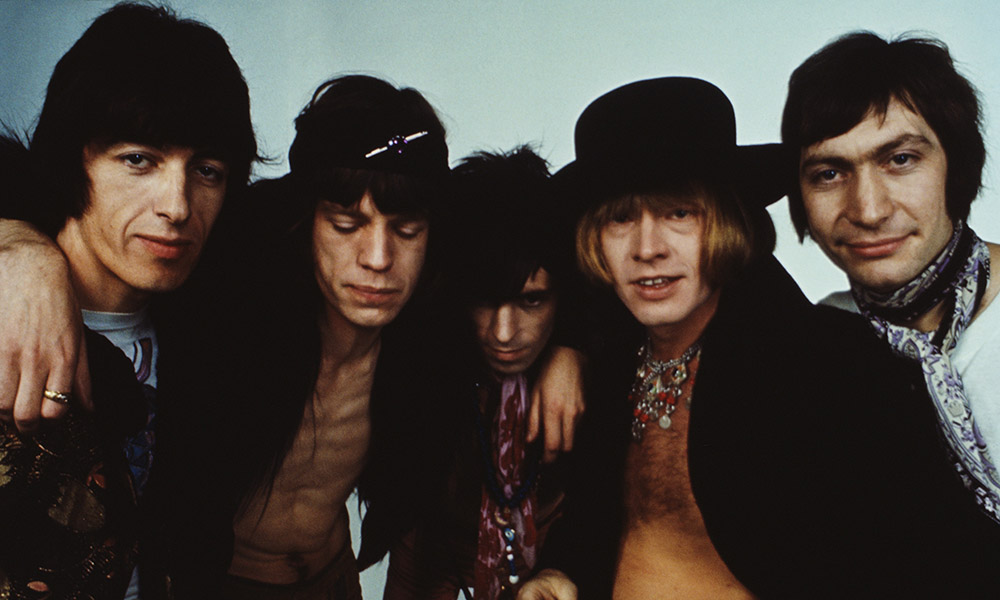
This song is from my personal favorite Rolling Stones album, Beggars Banquet released in 1968. As great as Beggars Banquet is, it could have been considered even better had they included the song they recorded during the early sessions….they released it as a single instead…the song was Jumping Jack Flash.
Jigsaw Puzzle is a great album cut on an album full of them. The song seemed influenced by Bob Dylan. It has Nicky Hopkins on piano, Keith Richards on slide, and Brian Jones on Mellotron. This album was the first of 5 produced by Jimmy Miller.
Rolling Stone ranked it 69th in its countdown of the band’s top 100 songs, calling it “a country-rock blast of Highway 61 Revisited surrealism.”
Non guitar players may not see the significance in this but when Keith Richards found the 5-string open G tuning…some say from Ry Cooder… that changed the Stones future. Without that discovery I don’t think they have the songs or impact they ended up having.
Songs that were written around that tuning was Brown Sugar, Jumping Jack Flash, Start Me Up, Street Fighting Man, and the list goes on and on. If you are a Stones cover band…most songs after 1967 is in this open G tuning…you have no choice but to learn it.
Those songs would not have sounded the same without that tuning or maybe not written at all. Keith showed Mick that tuning and he wrote the music to Brown Sugar. For the guitar players out there….the tuning is G-D-G-B-D staring with the A string after you remove the low E.
Jigsaw Puzzle
There’s a tramp sittin’ on my doorstep Tryin’ to waste his time With his methylated sandwich He’s a walking clothesline And here comes the bishop’s daughter On the other side And she looks a trifle jealous She’s been an outcast all her life
Me, I’m waiting so patiently Lying on the floor I’m just trying to do my jig-saw puzzle Before it rains anymore
Oh the gangster looks so fright’ning With his Luger in his hand But when he gets home to his children He’s a family man But when it comes to the nitty-gritty He can shove in his knife Yes he really looks quite religious He’s been an outlaw all his life
Me, I’m waiting so patiently Lying on the floor I’m just trying to do this jig-saw puzzle Before it rains anymore
Yes, yes now Oh, all right
Me, I’m waiting so patiently Lying on the floor I’m just trying to do this jig-saw puzzle Before it rains anymore
Oh the singer, he looks angry At being thrown to the lions And the bass player, he looks nervous About the girls outside And the drummer, he’s so shattered Trying to keep up time And the guitar players look damaged They’ve been outcasts all their lives
Me, I’m waiting so patiently Lying on the floor I’m just trying to do this jig-saw puzzle Before it rains anymore
Oh, there’s twenty-thousand grandmas Wave their hankies in the air All burning up their pensions And shouting, “It’s not fair!” There’s a regiment of soldiers Standing looking on And the queen is bravely shouting, “What the hell is going on?”
With a blood-curdling “tally-ho” She charged into the ranks And blessed all those grandmas who With their dying breaths screamed, “Thanks!”
Me, I’m just waiting so patiently With my woman on the floor We’re just trying to do this jig-saw puzzle Before it rains anymore
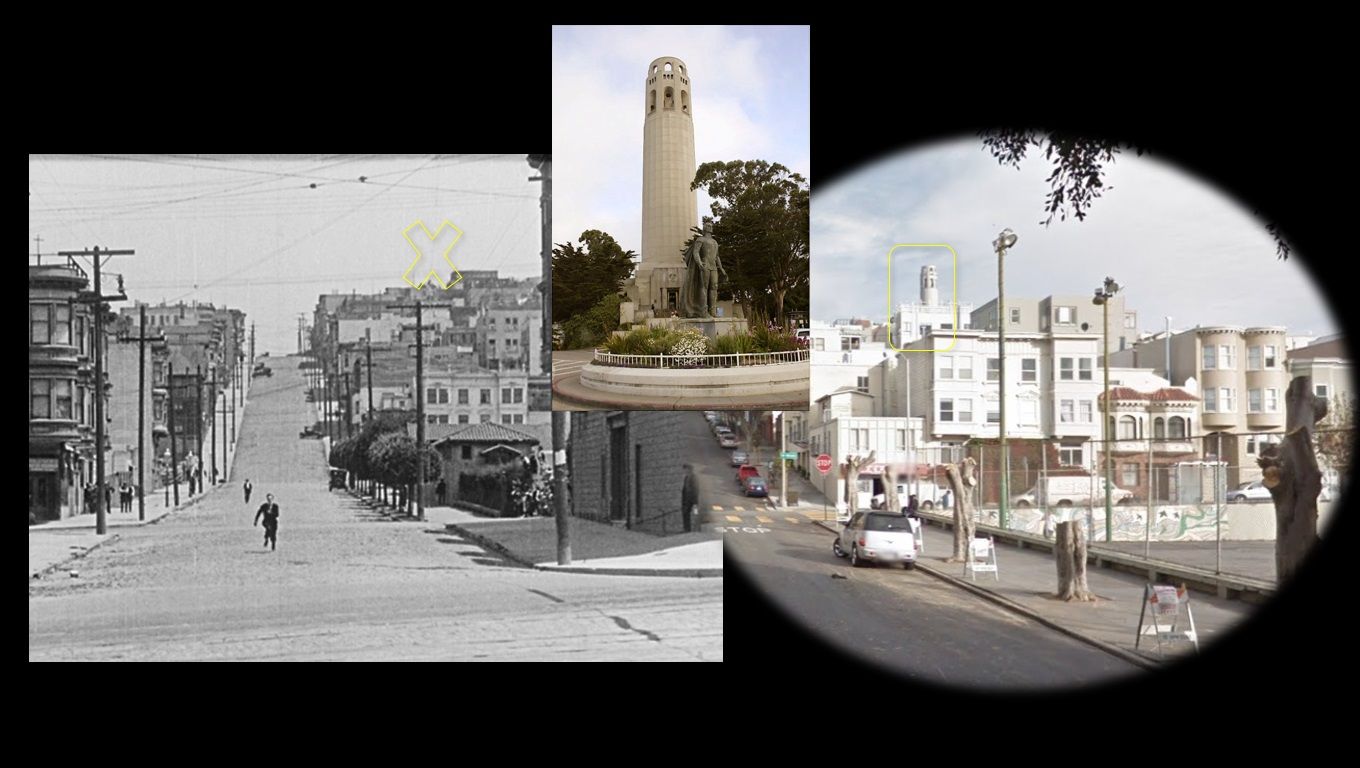
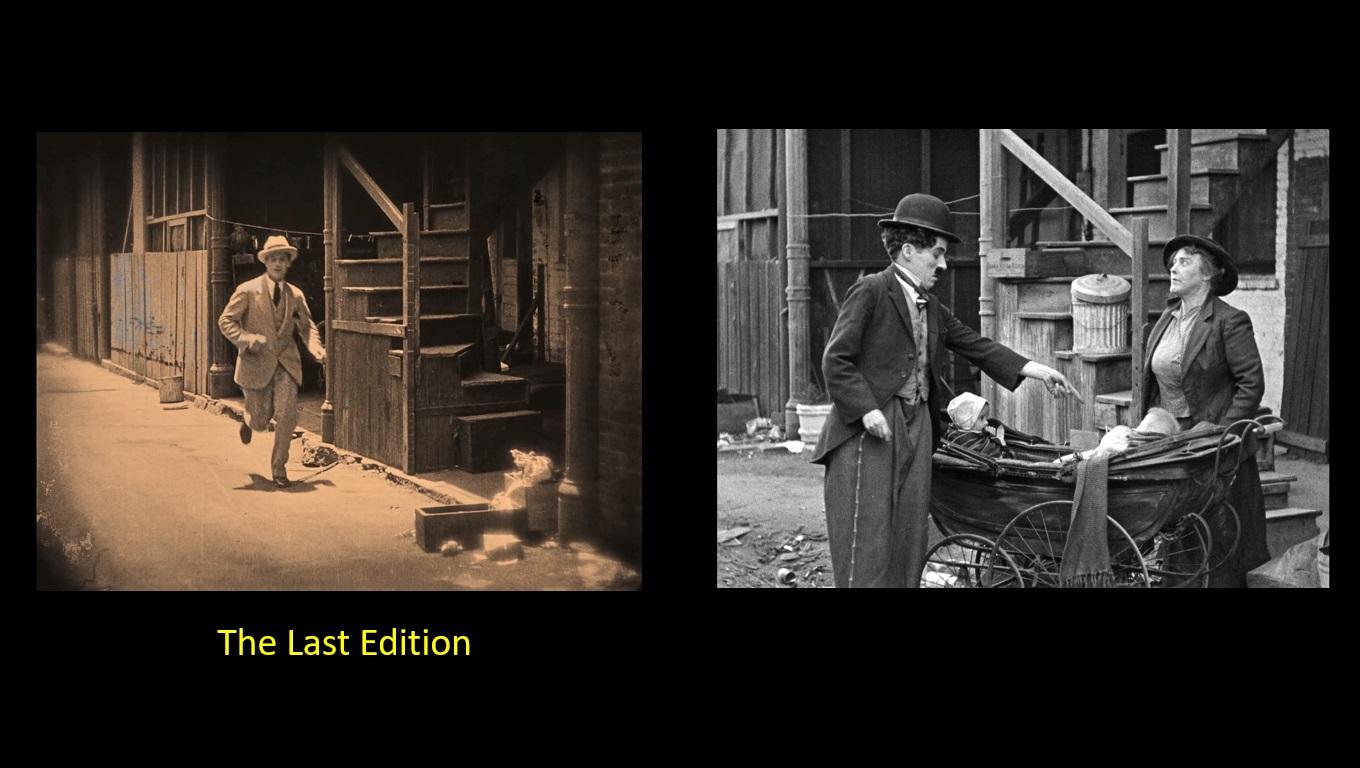
I know some Silent Movie fans follow my blog…if you are interested go to John’s blog for a webinar on June 6th … Hosted by the San Francisco Silent Film Festival, John will be presenting a Silent Footsteps Zoom webinar on Sunday, June 6 at 12:00 noon PST…free for those who register. Please read his blog for more details…
An all-new program, my talk covers in part the hidden interplay between movies filmed in Hollywood and in San Francisco. Buster Keaton filmed scenes adjacent to several San Francisco landmarks, but in each case before they were actually built!
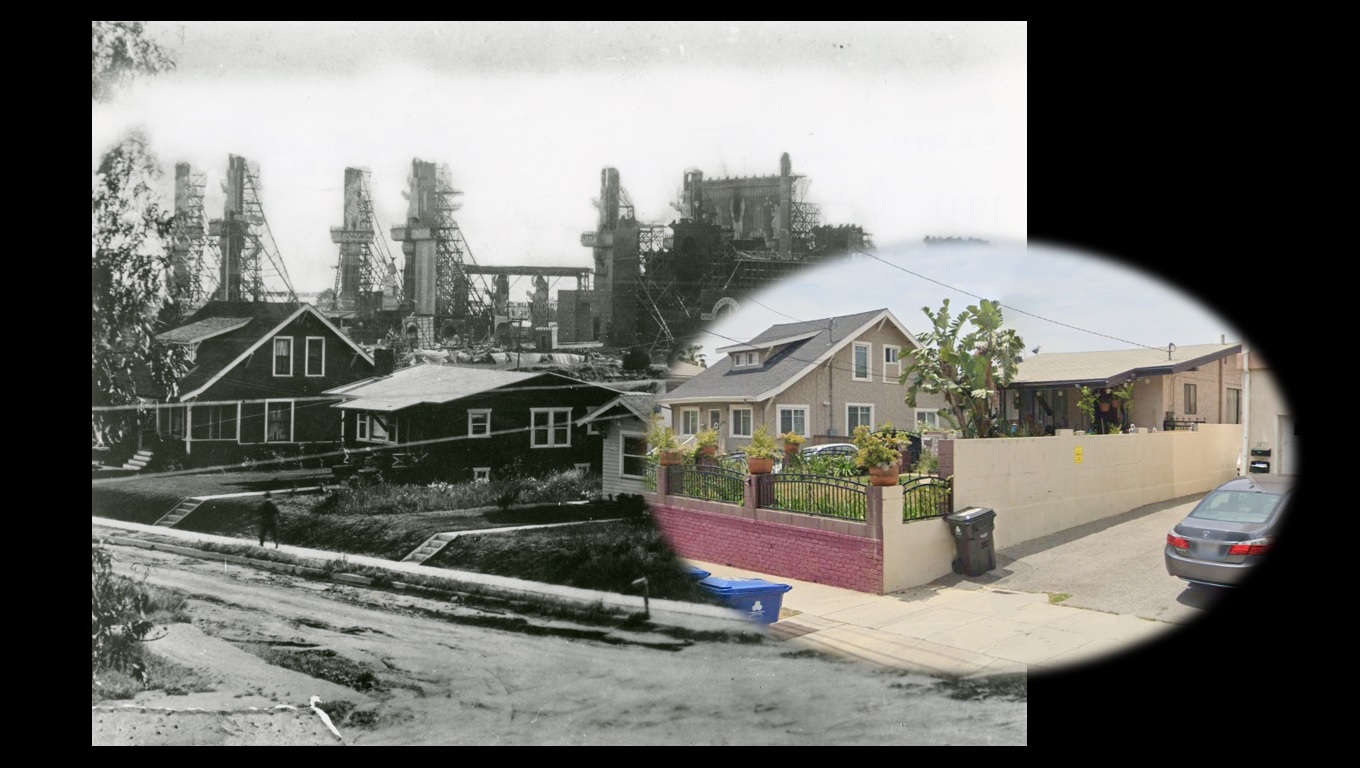
Working with Biograph scholar Russell Merritt, we uncovered surprising vestiges of many important locations from D. W. Griffith’s epic masterpiece Intolerance (1916), hidden for over a century, that will be revealed for the first time during my talk. Above, a teaser of what we’ve discovered.
This is the kind of story that the Twilight Zone excels at. Vanishing into a fantasy world of your own design forever. They explored this plot device more than once in episodes like The Sixteen-Millimeter Shrine and A Stop at Willoughby just to name a few. Don’t worry though because the variations are so good that you would not mind more.
You think Arthur Curtis is just a white-collar worker until you hear the word “cut.” He is an actor on a set but to him…he is the character he is playing. Howard Duff plays Arthur Curtis who is really Gerry Raigan. You get the feeling you would not like Raigan at all. It seems he has a drinking problem and an ex-wife that just despises him. You start seeing the reason why Arthur Curtis was born.
Duff is very believable as Curtis…You see the worried look in his eyes yet he is hanging on to Arthur Curtis.
When Gerry’s ex-wife demands he give her a check, she spells out the last name as “Raigan”. This isn’t the expected way to spell it, which may have been deliberate, so as to not associate the character with Ronald Reagan, the then-President of the Screen Actors Guild.
Look for David White…who became famous a few years later for the character Larry Tate in Bewitched.
This show was written by Richard Matheson
Rod Serling’s Opening Narration:
You’re looking at a tableau of reality, things of substance, of physical material: a desk, a window, a light. These things exist and have dimension. Now this is Arthur Curtis, age thirty-six, who also is real. He has flesh and blood, muscle and mind. But in just a moment we will see how thin a line separates that which we assume to be real with that manufactured inside of a mind.
Summary
Arthur Curtis is sitting his office chatting with secretary about plans for his daughter’s birthday party and that he and his wife will be flying off for a couple of days of rest and relaxation. Suddenly he hears someone yell “cut” and he realizes he on a movie sound stage. He can’t understand what has happened to him. Everyone refers to him as Gerry Reagan, but he insists that he is Arthur Curtis. He runs off but can’t find any of the familiar landmarks he knows such as his house or his place of work. He is desperate to return to the world of Arthur Curtis but that window of opportunity may be closing on him.
Rod Serling’s Closing Narration:
The modus operandi for the departure from life is usually a pine box of such and such dimensions, and this is the ultimate in reality. But there are other ways for a man to exit from life. Take the case of Arthur Curtis, age thirty-six. His departure was along a highway with an exit sign that reads, “This Way To Escape”. Arthur Curtis, en route to the Twilight Zone.
CAST
Howard Duff … Arthur Curtis / Gerry Raigan David White … Brinkley Frank Maxwell … Marty Fisher Eileen Ryan … Nora Raigan Gail Kobe … Sally Peter Walker … Sam Susan Dorn … Marion Curtis Bill Idelson … Kelly (as William Idelson)
This is a great opening track to this famous album. What a way to introduce probably the most famous album ever.
The slicing guitar stands out and the drum sound that Ringo got. Paul McCartney wrote this and sang lead. After recording it, he had the idea of doing the whole album as if Sgt. Pepper was a real band. It became the title track of what was considered a “concept” album, with the songs running seamlessly together on the record.
The title is a parody of American bands who were choosing long names for their bands.
Three days after the album came out, Jimi Hendrix opened a concert with this. McCartney and Harrison were both there, and were very impressed that Hendrix learned it so quickly.
The reprise of the song is right before A Day In The Life.
This song was produced in a rush when The Beatles decided to bring back the theme song to introduce the last track on the album, “A Day In The Life.” The idea to reprise the song came from Neil Aspinall, The Beatles’ friend and road manager.
George Harrison, Paul McCartney, and Ringo Starr played this on May 19, 1979 at Eric Clapton’s wedding. Clapton married Harrison’s ex-wife, Pattie. Pattie didn’t think John Lennon would fly over from America so she never sent an invititation. John Lennon said later he would have come.
From Songfacts
The album was heavily produced and took 129 days and about 700 hours to complete. The Beatles first album, Please Please Me, was recorded in less than 10 hours.
The crowd noise was dubbed in. The Beatles had stopped touring by then.
There really is an apostrophe in this song’s title, although on the album cover, it is rendered without. Since the Lonely Hearts Club Band belongs to Sgt. Pepper, it is possessive, thus “Sgt. Pepper’s.”
This is reprised at the end of the album before the final track, “A Day In The Life.”
This was recorded as one song with “With A Little Help From My Friends.” They flow seamlessly on the album, creating a problem for radio stations that want to play just one of the songs.
Artist Peter Blake designed the album cover as if Sgt. Pepper’s band had just performed a concert. He asked The Beatles who they wanted at the concert, and put them in the cover design.
All living people depicted on the cover were asked permission. Mae West refused at first – she didn’t want to be part of a “Lonely Hearts Club Band” – but The Beatles wrote her a letter and she agreed. Other characters depicted on the album cover include comedic duos Laurel & Hardy and Abbott & Costello, Marilyn Monroe, Shirley Temple and W.C. Field.
Lennon wanted Jesus, Gandhi, and Hitler on the cover. He had recently taken a lot of heat for saying The Beatles were “Bigger than Jesus,” so they decided not to.
It was rumored that the hand that is sticking out above Paul is that of Adolph Hitler. A Hitler cut out was on the set, but if you look at some side shots of the photo session, you can clearly see that the hand belongs to comic Issy Bonn, whose face is seen in between Paul McCartney and George Harrison.
On the cover of this album McCartney is taller than the other Beatles. This added to rumors of his death, since there is also a hand above Paul’s head which is an omen of death. Also, if you take a mirror and put the edge on the center of the Lonely Hearts Club Band drum an arrow will point directly to McCartney.
Sgt. Pepper was the first pop album to come with printed lyrics on the cover.
Twelve years after “Sgt. Pepper’s Lonely Hearts Club Band” and “With a Little Help from My Friends” appeared on the Sgt. Pepper album, they were released together as a two-song medley and reached US #71 and UK #63.
In 2005, Bob Geldof helped organize Live 8, a set of concerts held in eight countries with the goal of promoting activism. The concerts coincided with the G-8 summit, and Geldof was hoping to send a message to world leaders that they should increase aid to Africa and institute fair trade practices. On the London stage, U2 played this with McCartney to kick off the concert. The opening line, “It was 20 years ago today,” was a reference to Live Aid, which Geldof organized for famine relief in 1985.
Sgt. Pepper’s Lonely Hearts Club Band was the first rock album to win a Grammy for Album of the Year.
On the album cover, Paul McCartney is wearing an Ontario Provincial Police (OPP) badge on his right sleeve. You can see this better on the inside artwork.
The hand-painted drum skin used on the cover of the Sgt Pepper album was sold at Christie’s House in London on 10th July 2008 for £541,250 ($1,071,000) – setting a record for non-lyrics Beatles memorabilia.
In 2007, the Beatles Story museum in Liverpool went on a search for real Sgt. Peppers and found seven police or army officers in the UK that were sergeants with the last name Pepper. “Being Sgt. Pepper is awesome but sometimes people think I am bogus when I call them on the phone or introduce myself,” Sgt. Sean Pepper of Highfields said.
Sgt Pepper’s Lonely Hearts Club Band
It was twenty years ago today Sergeant Pepper taught the band to play, They’ve been going in and out of style, But they’re guaranteed to raise the smile, So may I introduce to you, The act you’ve known for all these years, Sergeant Pepper’s Lonely Hearts Club Band.
We’re Sergeant Pepper’s Lonely Hearts Club Band We hope you will enjoy the show Sergeant Pepper’s Lonely Hearts Club Band Sit back and let the evening go Sergeant Pepper’s Lonely Sergeant Pepper’s Lonely Sergeant Pepper’s Lonely Hearts Club Band
It’s wonderful to be here, It’s certainly a thrill You’re such a lovely audience, We’d like to take you home with us, we’d love to take you home
I don’t really want to stop the show, But I thought you might like to know, That the singer’s going to sing a song And he wants you all to sing along, So let me introduce to you The one and only Billy Shears And Sergeant Pepper’s Lonely Hearts Club Band
Oh ha ha Yeah, dress down I feel it, I feel it, I feel it Oh baby now, I feel it, I feel it, I feel it Baby, free now Gotta be free now, gotta be free now, gotta be free Don’t like that I think it’ll probably be another day singing it Yeah so just edit that then, it’s nice Yeah, and what you can do with the bits where you can’t get it ’cause you haven’t got enough breath Just take over, yeah
The Db’s were a great unknown power pop band…who would influence many bands but not sale many records. The band members were Peter Holsapple, Chris Stamey, Will Rigby, and Gene Holder.
All of the members are all from Winston-Salem, North Carolina, but the band was formed in New York City in 1978. They never broke through to the masses but they were heard on college radio in the 80s.
“Black and White,” is the leadoff track to The dB’s debut album Stands for Decibels, and it is pure power pop. The dB’s were signed to the U.K. label Albion, which had trouble licensing the record for American distribution…. and subsequently went un-promoted in radio and only received sporadic play from college radio stations.
The Stands for Decibels album was ranked at number 76 on Pitchfork‘s list of the 100 best albums of the 1980s. The dB’s would released 6 albums in all. The last album was released in 2012 when the members reunited.
The dB’s broke up in 1988 and Peter Holsapple would go on to be an auxiliary guitarist and keyboardist for REM on the Green tour. He then helped in writing and recording their Out Of Time album. Holsapple subsequently worked with Hootie & the Blowfish as an auxiliary musician.
The dB’s worth checking out.
Good story on two of the members meeting two Big Star members:
In May of 1978 two members of the dB’s Will Rigby, Peter Holsapple, and future R.E.M producer Mitch Easter made a pilgrimage to Memphis. They were about the only people in America who, while attending high school in the early ’70s, were under the impression that Big Star was a major band.
Their first stop was Danver’s…a restaurant that former Big Star’s Chris Bell worked at and his father owned. They passed a note to the server to talk to Chris and out he came. He was shocked that fans would track him down. It had been 6 years since the Big Star debut album was released. They were impressed by how nice he was to them.
Bell invited them to join him after work at a ferny bar-café called the Bombay Bicycle Club. Here, while Bell played backgammon with a buddy, the three guys peppered him with questions: What kind of guitar did he play? How did he get those great sounds?
Bell wondered if the boys were up for maybe checking out a Horslips (local rock band) concert. They instead decided to go over to Sam Phillips Recording Service to visit Alex Chilton, Bell’s former Big Star bandmate, then making his experimental album Like Flies on Sherbert. Bell and Chilton exchanged quiet hellos before Bell went home.
A few days later Alex Chilton drove Easter and Rigby (Holsapple had already left) around Memphis, showing them the old Sun Studios building (which had a Corvair parked inside it), and taking them up a bluff overlooking the Mississippi. He pulled out a cassette and played a song on a junky little cassette player that took his visitors by surprise.
Chilton played the guys a Chris Bell song. He was raving about it saying it was Chris’s best song and it was the ultimate “Big Star song “…the song was I Am The Cosmos which the public had not heard at this point.
Chris Bell would die in a car wreck on Decemeber 27, 1978…only 7 months after this happened.
Chris Stamey on Big Star:“They were my favorite, and as far as I knew they were popular all the way across America. At least for that moment, I forgot about Emerson, Lake, and Palmer.”
Peter Holsapple on meeting Chris Bell and I Am The Cosmos:“that the person who made all that beautiful music was a right-on kind of guy, too.” “It’s that kind of rife-with-sadness record, but it’s realized with the same imploding beauty that Big Star had. I mean, I Am the Cosmos-it’s just wry enough to make you turn your head and do a double-take, you know, the first sixteen thousand times you listen to it.”
Black and White
I, I never would hurt you But even if I did you You never would tell me Oh, we are finished As of a long time ago As of a long time ago I stop I don’t enjoy you anymore Well I guess I just don’t enjoy you anymore Well I guess it’s all laid out in black and white You don’t like it at all
Love Love is the answer To no question But thanks for Oh, the suggestion I know I don’t care at all Yeah, I know I don’t know anything at all But I stop
I don’t enjoy you anymore Well, I guess I just don’t enjoy you anymore Well, I guess it’s all laid out in black and white You don’t like it at all You don’t like it at all You don’t like it at all (In black and white)
Dolly Parton: “it makes me so happy that after all of these yearsthey are still Lone Justice with Maria, the greatest girl singer any band could ever have.”
If I could have controlled the outcome of the 80s…Maria McKee and Lone Justice would have been huge. She is one of my favorite singers of that decade. I had friends listening to more commercial music…while I was stuck on Maria.
Lone Justice had all the potential in the world, but ended up more of a cautionary tale. They had a charismatic lead singer with Maria McKee, a big time producer in Jimmy Iovine, the backing of a major label and contributions from Tom Petty, Bob Dylan, Little Steven, and many more. The problem is none of these people knew what to do with their blend of classic country and punk leaving Lone Justice to wither on the vine. One problem is that Geffen just was not patient enough.
Lone Justice was formed in 1982 and played rockabilly and country music as part of the cowpunk scene.
After signing with Geffen, the band recorded their debut album, and hit the road, opening for U2. They hype was in overdrive and the pressure was on.
The critics loved the album but it didn’t sell well. I first noticed them with the song Ways To Be Wicked that was written by Tom Petty and Mike Campbell. I personally thought that one would hit the top ten…I was wrong yet again. The album could not meet the expectations of all of the hype and failed to connect with a rock audience.
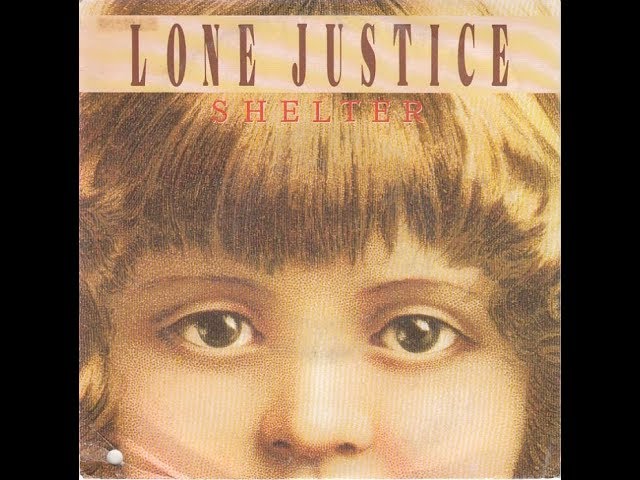
For their 2nd album, a new lineup was thrown together. Their album Shelter was released in November of 1986 and saw the newly assembled group shift away from its rockabilly sound to a more polished pop sound, with synthesizers and drum machines. I will admit I didn’t like this as much as the debut album. The band broke up not too long after this album.
Shelter peaked at #47 in the Billboard 100 and #26 in the Mainstream Rock Tracks.
In 2014 This Is Lone Justice: The Vaught Tapes, 1983 was released…this was pre-Geffen recordings with old country, traditional, and a few originals. I will be posting something from that collection.
Dolly Parton on Lone Justice and Maria McKee:
I have loved Lone Justice and Maria McKee since they first started out as a group. I remember going to see them at The Music Machine in Los Angeles in 1984. I was so impressed that I told everybody about them and encouraged different management people to manage them. I remember that different management groups and record labels wanted to break the group up and record the band and Maria as separate acts. And I remember hearing that they did not want to separate. No matter what might have gone on in the years between, it makes me so happy that after all of these yearsthey are still Lone Justice with Maria, the greatest girl singer any band could ever have. Maria has such charisma and stage presence. I love her voice and her vocal style as well as the way the plays that big ol’ guitar and how she looks while she is playing it. I especially love this new CD. It has some of my favorite old songs on it and some new favorites that I’ve never heard. Hope you enjoy Lone Justice everybody…I know I will.
Respectfully and musically yours.
Dolly Parton
Shelter
Well all right you gave it all up for a dream Fate proved unkind To lock the door and leave no key You’re unsure Well baby I’m scared too When the world crushes you
[Chorus] Let me be you’re shelter shelter From the storm outside Let me be your shelter shelter From the endless tide
Disillusion has an edge so sharp It tears at your soul And leaves a stain upon your heart I need you to wash mine clean You’ve felt it too And you need me
[Chorus]
Your struggle with darkness has left you blind I’ll light the fire in your eyes
[Chorus]
Your struggle with darkness has left you blind I’ll light the fire in your eyes
[Chorus]
Let me be your shelter shelter shelter shelter shelter
A 5-Star Classic… This episode has some alien intervention but not much. This is a wonderful study of human nature at work. The outcome could have happened without aliens. A few paranoid panicky people can start a mob and a mob can become a deadly thing. This episode is so good because you can see it build and build into panic until somebody does something that cannot be undone.
Very good character actors with faces…faces that you remember. You also have Claude Akins as the voice of reason…but even he can get caught up in it. This is a must watch…forget the Twilight Zone twist…just watch suspicion and paranoia grow.
The uniforms worn by the aliens, their spaceship’s ramp, and the shot of the flying spaceship were originally used in Forbidden Planet.
This show was written by Rod Serling
Rod Serling’s Opening Narration:
Maple Street, U.S.A., late summer. A tree-lined little world of front porch gliders, barbecues, the laughter of children, and the bell of an ice cream vendor. At the sound of the roar and the flash of light, it will be precisely 6:43 P.M. on Maple Street…This is Maple Street on a late Saturday afternoon. Maple Street in the last calm and reflective moment—before the monsters came.
Summary
On a pleasant day, the residents of Maple Street feel something akin to a tremor and hear a loud noise. Steve Brand thinks it’s a meteorite though they didn’t hear a create. When young Tommy tells them the science fiction story he read about an alien invasion where they were first sent among humans to live with them in disguise, paranoia sets in. They first suspect Les Goodman and loudmouth Charlie Farnsworth then points the finger at Steve and then Tommy. Events turn on Charlie as everyone runs amok.
Rod Serling’s Closing Narration:
The tools of conquest do not necessarily come with bombs and explosions and fallout. There are weapons that are simply thoughts, attitudes, prejudices…to be found only in the minds of men. For the record, prejudices can kill…and suspicion can destroy…and a thoughtless, frightened search for a scapegoat has a fallout all of its own—for the children and the children yet unborn. And the pity of it is that these things cannot be confined to the Twilight Zone.
CAST
Rod Serling … Narrator (voice)
Claude Akins … Steve Brand
Barry Atwater … Les Goodman
Jack Weston … Charlie Farnsworth
Jan Handzlik … Tommy
Amzie Strickland… Woman
Burt Metcalfe … Don Martin
Mary Gregory … Sally
Jason Johnson … Man
Anne Barton … Myra Brand
Leah Waggner … Mrs. Goodman (as Lea Waggner)
Joan Sudlow … Old Woman
Ben Erway … Pete Van Horn
Lyn Guild … Mrs. Farnsworth
Sheldon Allman … Alien
Bill Walsh … Alien (as William Walsh)
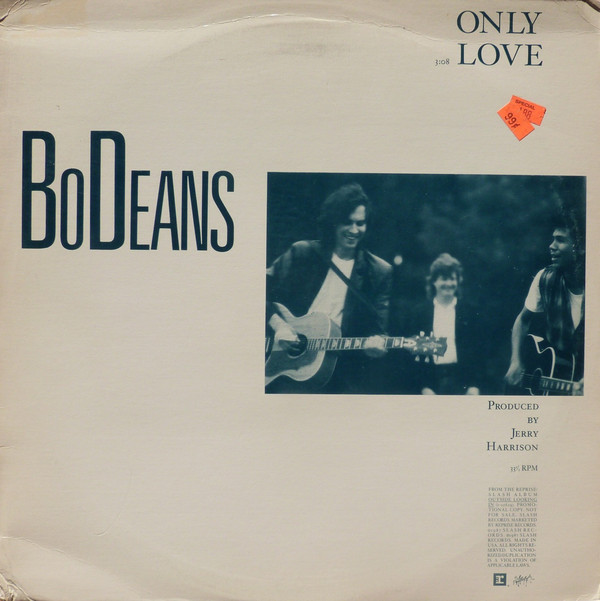
Another band that missed the masses but were a hit on college radio in the 80s.
Only Love was released in 1986. The Bodeans opened up for U2 on their Joshua Tree tour and you would think they would have broken through a little more than they did.
This song was on the album “Outside Looking In” their second album released in 1987. Their first album “Love & Hope & Sex & Dreams” was released in 1986 and it lead to a full-page profile in Time Magazine. The story, written by critic Jay Cocks, quotes Llanas as saying, “We were a big fish in a little pond. Now we’re little fish in a big pond. You’re a local band until you get a record contract, then all of a sudden Bruce Springsteen is your competition.”
In 1977 Sophomores Sam Llanas and Kurt Neumann meet in study hall at Waukesha South High School and bond over a shared love of music. The two later end up playing music together. In 1980 At Neumann’s urging, Llanas dropped out of college to pursue music full-time. The group pursues gigs at small bars, clubs, dances and events. Llanas comes up with the name, Da BoDeans.
Llanas and Neumann added drummer Guy Hoffman (Oil Tasters, Confidentials, later the Violent Femmes) and bass player Bob Griffin (The Agents) to fill out their sound in 1983.
Their first album was referred to as cowpunk, rockabilly, roots-rock, revivalist rock, and as a synthesis of the a Rolling Stones and the Everly Brothers. Band member Sammy Lianas made more modest claims for the group, telling Cosmopolitan columnist Michael Segell, “I’d describe us as a band that writes a lot of good songs in different styles and plays most of them pretty well… . Our biggest influence was mid-sixties radio.
The band was still touring as of 2019 but Kurt Neumann is the only original member left.
Only Love
See you walking down the street now every day Pushing by the people as you make your way You’re walking proud now, baby You got your head held high Want you to know that this whole world Sees your heart cry Now see how hard you try To make yourself believe
It’s only love It’s only love It’s only love It’s only love
Maybe love shouldn’t have to be so hard to take Shouldn’t have to feel that love Until your poor heart breaks So why you tell yourself You know there’s no one else Then it ain’t worth the waiting anymore Don’t you wonder if there’s such a thing
It’s only love It’s only love It’s only love It’s only love
You better look in there Believe it, even if it’s too hard to Someone who’s been waiting Oh, baby, just for you and love It’s only love
If I could, I’d take you, baby, in my arms Take away all love’s blame And all love’s scars Maybe we could ride away Till we get so far away And then I couldn’t see us coming back again Well show me what you think of it Show me what you need
It’s only love It’s only love It’s only love It’s only love It’s only love It’s only love It’s only love It’s only love
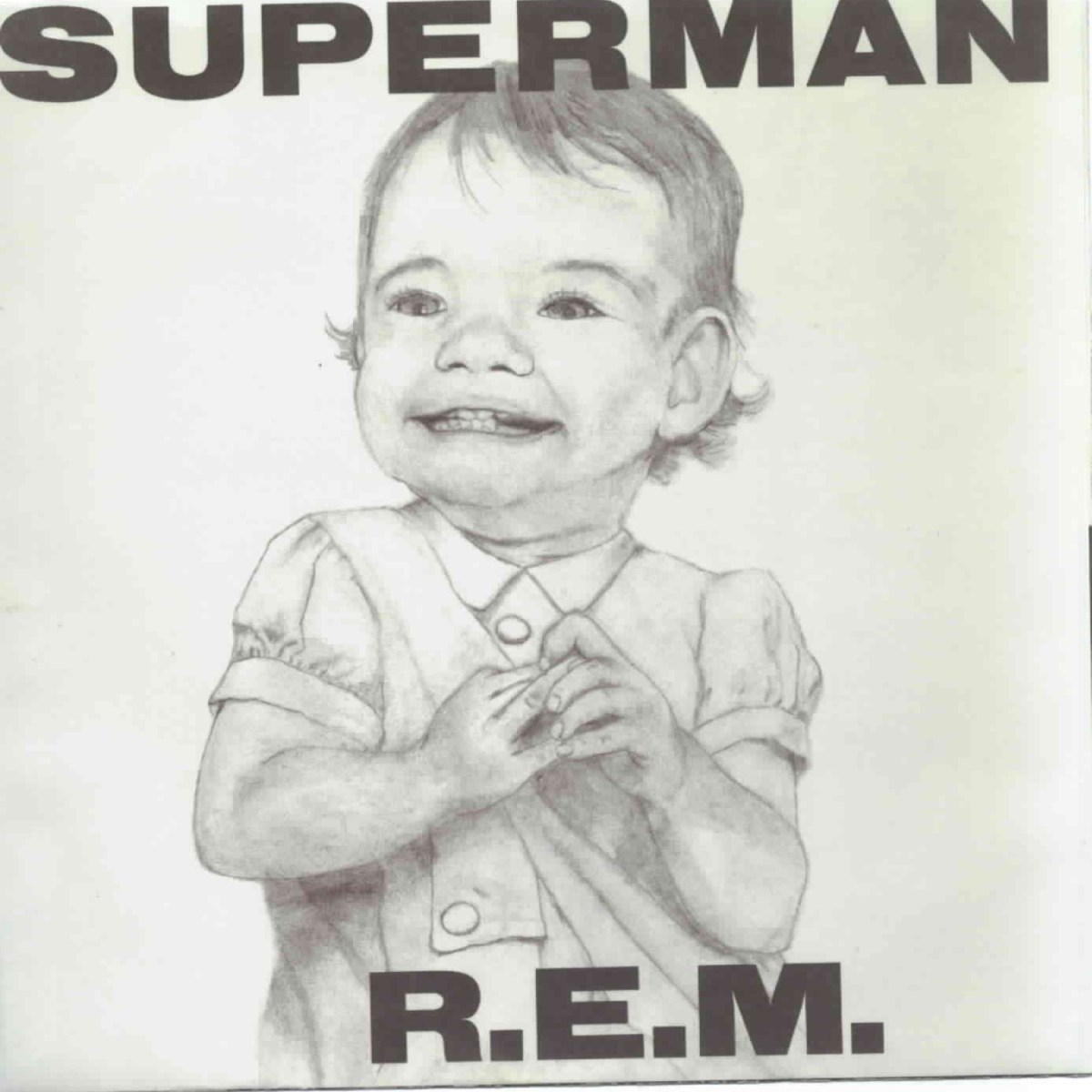
I was surprised back when I found out that REM didn’t write this song. This song was originally recorded by a late 60’s band from Beaumont, Texas called The Clique, who released it as the B-side of their only Top 40 hit… “Sugar On Sunday.” The song was written by the group’s producer Gary Zekley along with Elliot Bottler, Mitchell Bottler and Brandon Chase.
The Clique didn’t have massive success in the charts but they toured nationally with popular acts, including Tommy James and The Shondells, Grand Funk Railroad, Brooklyn Bridge, and The Dave Clark Five. They had a brief reunion in 2008.
I like the Clique’s version of this also. It has a psychedelic vibe to it which is cool. REM stuck close to the original. Mike Mills the bass player is singing lead on this song because Michael Stipe refused to play it in concert. He told a London crowd in 2008 “We’re definitely not doing that one” after a fan request in 2008.
The scratchy spoken intro is credited to a Japanese pull-string Godzilla doll. Translated loosely from the Japanese, it says, “This is a special news report. Godzilla has been sighted in Tokyo Bay. The attack on it by the Self-Defense Force has been useless. He is heading towards the city. Aaaaaaaaagh….”
The song was on the album Life’s Rich Pageant released in 1986. Superman peaked at #17 in the Mainstream Rock Charts. The album peaked at #21 in the Billboard Album Charts, #39 in Canada, #24 in New Zealand, and #43 in the UK.
From Songfacts
This is a slightly stalkerish song about a guy who sees himself as Superman. He believes he can “see right through” the girl (presumably using his X-ray vision) so he knows that she doesn’t really love the guy she’s with. Where it gets a little creepy is when he threatens to find her even if she’s “a million miles away.”
It’s all in good fun though. R.E.M. don’t take it too seriously – Mike Mills sang lead on the track instead of Michael Stipe.
311 covered this song at one of their Halloween shows. Lead singer Nick Hexum dressed up as… you guessed it… Superman. On their DVD Enlarged To Show Detail 2, you can see them practicing it in the bus before the show, and then you see them perform it in concert. 311 site R.E.M. as one of their major influences. Hexum and Doug “S.A.” Martinez have both commented on their love of R.E.M.
Superman
I am, I am, I am Superman and I know what’s happening I am, I am, I am Superman and I can do anything
You don’t really love that guy you make it with now, do you? I know you don’t love that guy ’cause I can see right through you
I am, I am, I am Superman and I know what’s happening I am, I am, I am Superman and I can do anything
If you go a million miles away I’ll track you down, girl Trust me when I say I know the pathway to your heart
If you go a million miles away I’ll track you down, girl Trust me when I say I know the pathway to your heart
I am, I am Superman and I know what’s happening I am, I am, I am Superman and I can do anything
I am, I am, I am Superman and I know what’s happening I am, I am, I am Superman and I can do anything
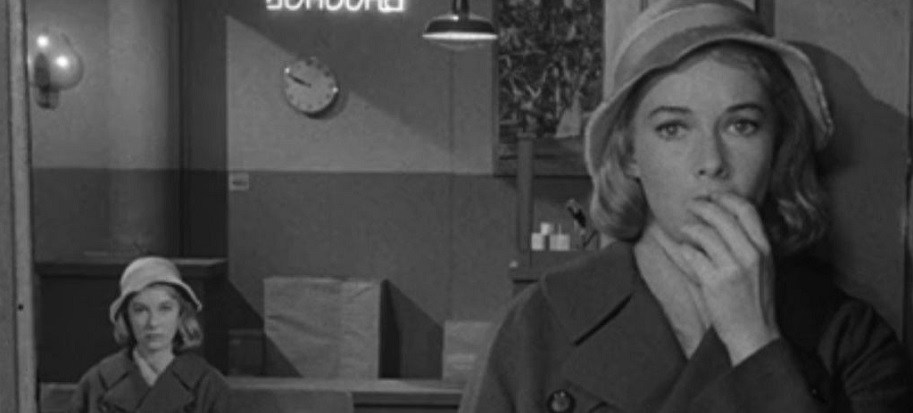
This is an odd one…but odd translates to good in the Twilight Zone. This one has no bad or good people…just an odd bus station where it all happens. What would you do if you looked across the room and saw yourself? That person not only looked just like but also carried a suitcase or bag just like you.
Vera Miles plays Millicent Barnes who swears she has seen herself. She starts to get paranoid and tells Paul Grinstead (Martin Milner) this and she starts to break down…then Grinstead, who obviously likes her and then starts to pity her does what he thinks is best…or so he thought. It could have ended a bit better. I just felt it never resolved itself. A good Twilight Zone and not a failure but not as good as some of the better ones.
A stand out character actor in this one is Joseph Hamilton playing the grumpy put upon Ticket Agent.
The reason I remember this episode so well is because of Martin Milner . He would start filming Route 66 after this and became a star…later on he would become a bigger star known to the world as Pete Malloy on Adam 12.
The cities mentioned in this episode (Cortland, Syracuse, Tully, and Binghamton) all lie along Hwy. 11 in central upstate New York. The use of these places is an homage by Rod Serling to his childhood. He was born in Syracuse and lived in Binghamton until he graduated high school. Even when he lived in Hollywood during his heyday, he maintained a home in Binghamton.
It was after filming this story that Martin Milner went to film the pilot episode of Route 66 (1960), which made him a star.
This show was written by Rod Serling
Rod Serling’s Opening Narration:
Millicent Barnes, age twenty-five, young woman waiting for a bus on a rainy November night. Not a very imaginative type is Miss Barnes: not given to undue anxiety, or fears, or for that matter even the most temporal flights of fantasy. Like most young career women, she has a generic classification as a, quote, girl with a head on her shoulders, end of quote. All of which is mentioned now because, in just a moment, the head on Miss Barnes’ shoulders will be put to a test. Circumstances will assault her sense of reality and a chain of nightmares will put her sanity on a block. Millicent Barnes, who, in one minute, will wonder if she’s going mad.
Summary
Millicent Barnes is waiting in the bus station waiting for her bus to Cortland to arrive. The weather outside is dreadful and the bus is over half an hour late already. When she inquires the station clerk chides her for constantly asking when it will arrive. The only thing is (she thinks) it’s the first time she’s asked him anything. When she goes to the ladies room the cleaning lady suggests she was just in there, she begins to worry that she’s going mad. A good Samaritan, Paul Grinstead, tries to help her out but soon realizes that there may be an explanation for what is happening after all.
Rod Serling’s Closing Narration:
Obscure and metaphysical explanation to cover a phenomenon. Reasons dredged out of the shadows to explain away that which cannot be explained. Call it ‘parallel planes’ or just ‘insanity’. Whatever it is, you’ll find it in the Twilight Zone.
CAST
Rod Serling … Narrator (voice) Vera Miles … Millicent Barnes Martin Milner … Paul Grinstead Joseph Hamilton … Ticket Agent (as Joe Hamilton) Naomi Stevens … Washroom Attendant Therese Lyon … Old Woman (as Terese Lyon) Ferris Taylor … Passenger Edwin Rand … Bus Driver
I am posting a bonus version of 80’s Underground Mondays on a Sunday. I hope you enjoy this one.
Back in the late eighties I was working while going to college. A co-worker of mine kept playing this song and it drove me up the wall. My first reaction was to ask…”what the hell is this and why are you playing it?” By the end of the week I wanted a copy of it so she taped it and gave it to me on cassette. This song was heavily played on college radio in the late 80s.
In the song it sounds like he is making fun of skinheads or poking fun at them. The song in itself doesn’t make much sense but it sure is catchy.
From allmusic…
They described themselves as “surrealist absurdist folk,” the group started in the summer of 1983 when David Lowery and friend Victor Krummenacher (bass) started playing music together around Riverside and Redlands, California. Chris Pedersen (drums) and Chris Molla (guitar) to join the the band… Greg Lisher (guitar) and Jonathan Segel (violins, keyboards, mandolin) were added in 1985.
Their songs were built on acoustic and electric, traditional and punk influences. The band released their 1985 debut, Telephone Free Landslide Victory, on their own Pitch-A-Tent label… it was soon reissued by Independent Project Records, and thanks in part to the college radio success of this song… it made the Top Ten in the 1986 Village Voice Pazz and Jop Poll.
The song peaked at #8 in the UK Indie Charts. The band were mystified that the song became a college radio hit. They would get signed to Virgin Records a little later on.
David Lowery:
I never thought that Take the Skinheads Bowling would become a Hit. If someone had traveled from the future and told me we would have a hit on our first album I would not have picked this song as being the hit. Not in a million years. I would have more likely picked Where the Hell is Bill.
Why? We regarded Take The Skinheads Bowling as just a weird non-sensical song. The lyrics were purposely structured so that it would be devoid of meaning. Each subsequent line would undermine any sort of meaning established by the last line. It was the early 80′s and all our peers were writing songs that were full of meaning. It was our way of rebelling. BTW this is the most important fact about this song. We wanted the words to lack any coherent meaning. There is no story or deeper insight that I can give you about this song.
Lassie and Where the Hell is Bill were silly but there was at least a point to the songs. Plus both songs were pretty jokey. Something that seemed popular at the time.
The band is still together now…sit back and enjoy Take The Skinheads Bowling!
Take The Skinheads Bowling
Every day, I get up and pray to John And he decreases the number of clocks by exactly one Everybody’s comin’ home for lunch these days Last night there were skinheads on my lawn
Take the skinheads bowling Take them bowling Take the skinheads bowling Take them bowling
Some people say that bowling alleys got big lanes Some people say that bowling alleys all look the same There’s not a line that goes here that rhymes with anything I has a dream last night, but I forget what it was
Take the skinheads bowling Take them bowling Take the skinheads bowling Take them bowling
I had a dream last night about you, my friend I had a dreamI wanted to sleep next to plastic I had a dreamI wanted to lick your knees I had a dreamit was about nothing
Take the skinheads bowling Take them bowling Take the skinheads bowling Take them bowling
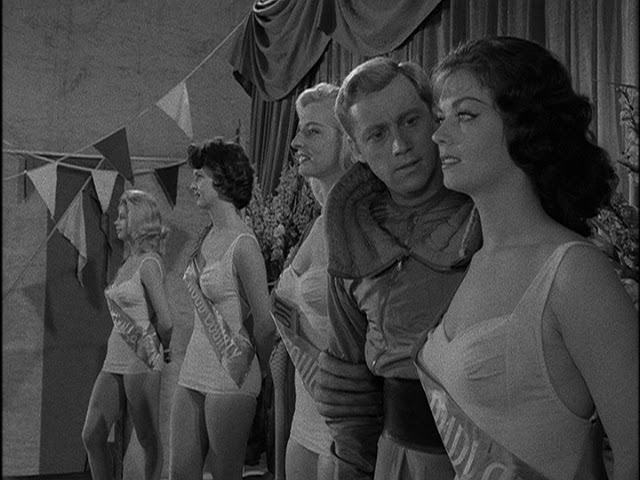
This episode gets to me when I see it. You feel the confusion of the astronauts as they land on a planet that everything is frozen in time…literally frozen in time. Everybody on this strange planet is just standing or sitting still. A beauty pageant is going on, men fishing and they are all still.
After exploring everywhere an older man finally talked to them…Jeremy Wickwire (I love that name). He explains what is going on and where they are… and then does something just terrible.
It’s an good episode and the Twilight Zone will explore this plot a little more in the future. We are certainly on a great streak of shows…only broken by The Fever.
The flashing dials in the spaceship seen right after landing are the same ones used in Forbidden Planet
Charles Beaumont wrote this years earlier under the guidance and influence of Beaumont’s literary mentor, Ray Bradbury…THAT is some mentor.
This show was written by Charles Beaumont
Rod Serling’s Opening Narration:
The time is the day after tomorrow. The place: a far corner of the universe. A cast of characters: three men lost amongst the stars. Three men sharing the common urgency of all men lost. They’re looking for home. And in a moment, they’ll find home; not a home that is a place to be seen, but a strange unexplainable experience to be felt.
Summary
In a far corner of the universe, a spaceship with three astronauts lands on a planet with gravity and air conditions virtually identical to that on Earth. Their surroundings appear as Earth did 200 years ago but the planet has two suns so they’re fairly certain they didn’t somehow end up back home. People however seem to be frozen in time. They eventually stumble upon Jeremy Wickwire, who is the caretaker for the locale. His explanation of what he is and where they are defies belief but in the end, he does grant them their wish.
This one is a good episode. I will admit the first time I watched it…I hadn’t worked out the twist.
Rod Serling’s Closing Narration:
Kirby, Webber, and Meyers, three men lost. They shared a common wish—a simple one, really. They wanted to be aboard their ship headed for home. And fate—a laughing fate—a practical jokester with a smile stretched across the stars, saw to it that they got their wish with just one reservation: the wish came true, but only in the Twilight Zone.
CAST
Cecil Kellaway … Jeremy Wickwire
Jeff Morrow … Kurt Meyers
Don Dubbins … Peter Kirby
Kevin Hagen … Captain James Webber
Walter Bacon … Beauty Contest Guest (uncredited)
Frank Baker … Hotel Guest (uncredited)
George Boyce … Minor Role (uncredited)
Barbara Chrysler Barbara Chrysler … Beauty Contestant (uncredited)
Alphonso DuBois … Minor Role (uncredited)
Joseph Glick … Rally Spectator (uncredited)
Chester Hayes … Ice Cream Man (uncredited)
Jimmie Horan … Minor Role (uncredited)
June McCall … Beauty Contestant (uncredited)
William Meader … Minor Role (uncredited)
Spec O’Donnell … Poker Player (uncredited)
Charles Perry … Spectator at Rally (uncredited)
Joe Ploski … Beauty Contest Guest (uncredited)
Paul Power … Farmer (uncredited)
Rod Serling … Narrator (voice) (uncredited)
Stephen Soldi … Minor Role (uncredited)
Jack Stoney … Finch (uncredited)
Martin Strader … Minor Role (uncredited)
Walton Walker … Minor Role (uncredited)
Sally Yarnell … Waitress (uncredited)
The first time I saw Van Morrison was on November 4, 1978 on Saturday Night Live. I was 11 and didn’t know anything about him. I hadn’t even heard Brown Eyed Girl…I would not hear that song until I was 18 in 1985. That in itself is one of the mysteries of life…how I could of possibly go 18 years without hearing that song.
He was playing the song Wavelength and it sounded great. I would not become a fan until 1985…I bought a compilation album of the sixties and I heard Brown Eyed Girl…it started a Van Morrison record buying frenzy. Since then I’ve been a huge fan. I saw him on March 7, 2006 at the Ryman Auditorium and he didn’t disappoint. If I could sing like anyone in history…it would be Van.
Van has said that this song is about the Voice of America, which is a radio service run by the United States government for political purposes. Morrison said that he listened to the service when he was a kid.
The song peaked at #42 in the Billboard 100 and #63 in Canada in 1978. The album Wavelength peaked at #28 in the Billboard Album Charts, #31 in Canada, #27 in the UK, and #9 in New Zealand in 1978.
Van Morrison:“It’s actually about Europe, because that’s where the station was. It came out of Frankfurt, and the first time I ever heard Ray Charles was on the Voice of America. We tried to get a tape recording of the Voice of America to put on the front of that track, but it didn’t work out. I didn’t get it by the time the album was due to be mixed. But I think it would have made it a lot clearer if the signature thing was on the front of it. It doesn’t click for a lot of people.”
Wavelength
This is a song about your wavelength And my wavelength, baby You turn me on When you get me on your wavelength Yeah, yeah, yeah, yeah, yeah With your wavelength Oh, with your wavelength With your wavelength With your wavelength Oh mama, oh mama, oh mama, oh mama oh mama, oh mama
Wavelength Wavelength You never let me down no You never let me down no
When I’m down you always comfort me When I’m lonely you see about me You are ev’ry where you’re ‘sposed to be And I can get your station When I need rejuvenation
Wavelength Wavelength You never let me down no You never let me down no
I heard the voice of America Callin’ on my wavelength Tellin’ me to tune in on my radio I heard the voice of America Callin’ on my wavelength Singin’ “Come back, baby Come back Come back, baby Come back”
Do do do dou dit do do dou dit do do do do do Do do do dou dit do do dou dit do do do do do
Won’t you play that song again for me About my lover, my lover in the grass, yeah, alright You have told me ’bout my destiny Singin’ “Come back, baby Come back Come back, baby Come back”
On my wavelength Wavelength You never let me down no You never let me down no When you get me on When you get me on your wavelength When you get me Oh, yeah, Lord You get me on your wavelength
You got yourself a boy When you get me on Get me on your wavelength Ya radio, ya radio, ya radio Ya radio, ya radio, ya radio Wave wave wave
They were founded by singer, guitarist, and songwriter Todd Rundgren and bassist Carson Van Osten. Drummer Thom Mooney and vocalist/keyboardist Robert “Stewkey” Antoni would join last.
In celebration of Todd Rundgren getting in the Jann Wenner Rock and Roll Hall of Fame FINALLY…It makes no sense why the guy wasn’t in there 20 years ago. Not just as a performer but as a producer as well. Rundgren not getting in until now is one of the reasons it’s hard for me to take the Hall seriously…but I’m happy he is finally in.
In 2016, Rundgren told an interviewer: “It doesn’t have the same cachet as a Nobel Peace Prize or some historical foundation. If I told you about how they actually determine who gets into the Hall of Fame, you’d think that I was bullshitting you, because I’ve been told what’s involved. … It’s just as corrupt as anything else, and that’s why I don’t care.”
He was asked how he felt about finally being inducted and he said: “I’m happy for the fans. They’ve waited a long time for this.” He was probably more happy about the 2016 Honorary doctorate from Berklee College of Music, where he delivered the commencement address, and an honorary doctorate from DePauw University.
The Nazz self titled album was released in 1968. This was the A side of the single released…the B side was “Hello It’s Me”…yes the same song we know but an early version of it.
They formed in 1967 and their first concert was something to remember…opening for the Doors. Some say the band took its name from the Yardbirds’ 1966 song “The Nazz Are Blue”, other sources say the name came from a 1952 monologue, “The Nazz”, by the American Beatnik comedian Lord Buckley.
The band would release 3 albums after which Rundgren started a solo career.
Open My Eyes peaked at #112 in the Billboard Album Charts and Hello It’s Me peaked at #66 in 1968…
Todd would go on and released Hello It’s Me solo and it was a massive hit. It peaked at # 2 in the Billboard 100 and #17 in Canada in 1973.
He would also form the band Utopia in 1973.
Open My Eyes
Underneath your gaze I was found in The haze I’m wandering around in I am lost in the dark of my own room And I can’t see a thing but the fire in your eyes
Clear my eyes, make me wise Or is all I believe in lies I don’t know when or where to go And I can’t see a thing ’til you open my eyes
I’ve been told by some you’ll forget me The thought doesn’t upset me I am blind to whatever they’re saying And all I can see is the fire in your eyes
Clear my eyes, make me wise Or is all I believe in lies I really don’t know when or where to go And I can’t see a thing ’til you open my eyes Can’t see a thing ’til you open my eyes Can’t see a thing ’til you open my eyes Can’t see a thing ’til you open my eyes
Can’t believe that it’s on your mind To leave me behind
Clear my eyes, make me wise Or is all I believe in lies I really don’t know when or where to go And I can’t see a thing ’til you open my eyes Can’t see a thing ’til you open my eyes Can’t see a thing ’til you open my eyes Can’t see a thing ’til you open my eyes Can’t see a thing ’til you open my eyes










 PowerPop... An Eclectic Collection of Pop Culture