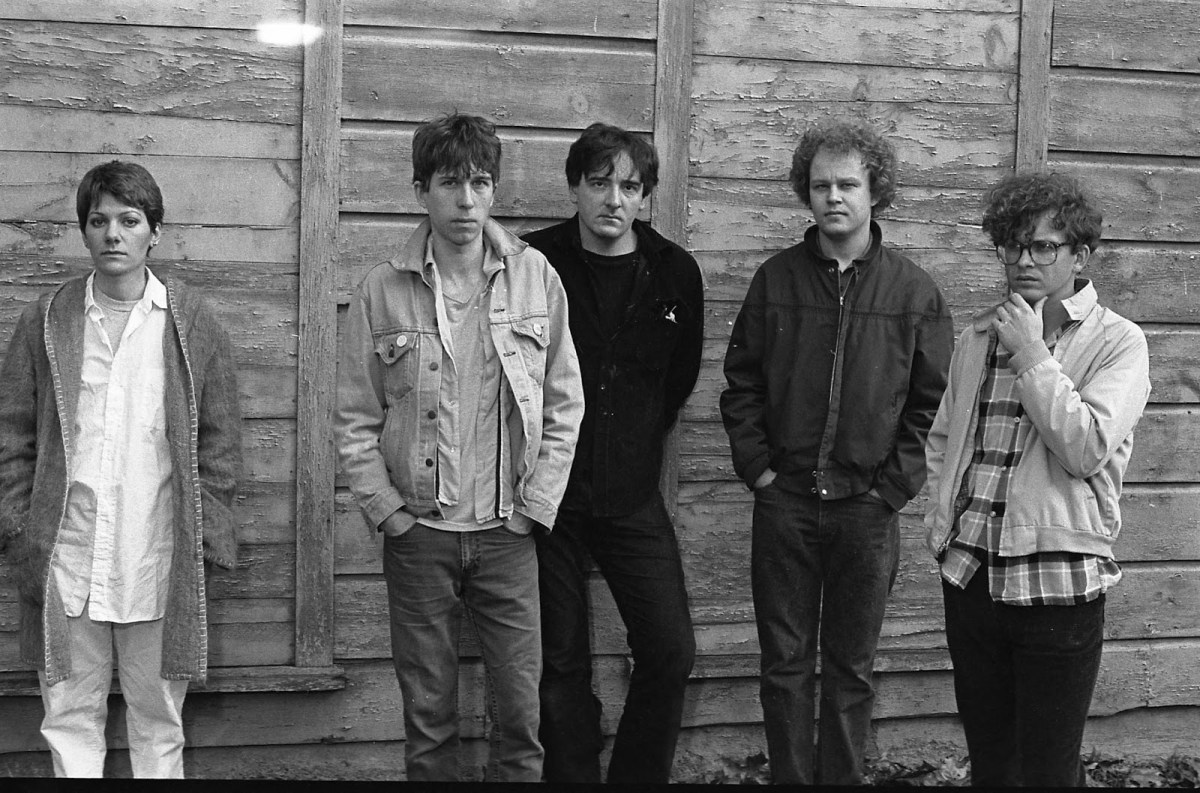
The Feelies were an inspiration to REM and many alternative bands in the 80s. They formed in 1976 and disbanded in 1992 having released four albums. The band reunited in 2008, and most recently released albums in 2011 and 2017.
The band’s name is taken from a fictional entertainment device described in Aldous Huxley’s Brave New World.
The song was released in 1986 on the album The Good Earth with REM’s Peter Buck producing. It was written by members Glenn Mercer and Bill Million. The band toured in support of the album as an opening band for Lou Reed as well as REM that year. The album was one of their most successful albums.
It certainly doesn’t have earth shaking lyrics but it’s a gorgeous over all sound and atmosphere they produce. It reminds me of something that would be on a movie soundtrack…it’s over with before you know it.
Let’s Go
Well alright Well alright Let’s go Let’s go Let’s go Let’s go All night long All night long (spoken?)
Why don’t we ? I know you? Why don’t we ? I know you? Go low (?) Low low (?) Go slow Slow All night long All night long
A favorite of mine. This one is a hidden gem of an episode. Once again casting was superb in this episode. Brian Aherne as Booth Templeton was an excellent choice as a Broadway Star. The “you can’t go home again” theme is explored in the Twilight Zone more than once…to different results.
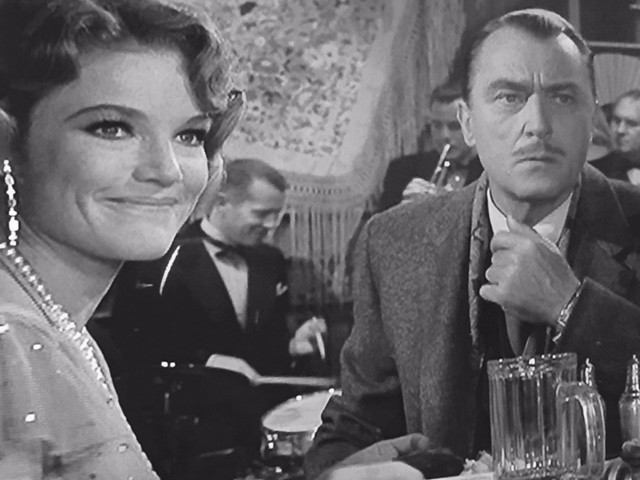
The Trouble With Templeton has in it one of the most visually beautiful scenes of the entire series. This occurs in the crowded, smoke-filled speakeasy in which Templeton leaves Laura. Without giving anything away… the camera pans across the room back to Laura. She steps forward. The expression on her face is one we have not seen before in the episode. It’s stunning and eerie at the same time. It’s one of my favorite scenes ever in a Twilight Zone. That one scene makes the episode worth it but it’s much more than that.
The Director Buzz Kulik said Brian Aherne who played Booth Templeton was a charming, wonderful, delightful, a terribly professional man, and one of the nicest people that he had ever worked with. He was very touched by what he had to do. It was very, very real to him. As for himself, Kulik admits that he too was moved by the material.
This was E. Jack Neuman’s only writing credit on the Twilight Zone.
This show was written by E. Jack Neuman and Rod Serling
Rod Serling’s Opening Narration:
Pleased to present for your consideration, Mr. Booth Templeton; serious and successful star of over thirty Broadway plays, who is not quite all right today. Yesterday and its memories is what he wants, and yesterday is what he’ll get. Soon his years and his troubles will descend on him in an avalanche. In order not to be crushed Mr. Booth Templeton will escape from his theater and his world, and make his debut on another stage, in another world, that we call the Twilight Zone.
Summary
Booth Templeton is a renowned stage actor who has reached a stage in his personal life where he has idealized his past. In particular he has fond memories of his first wife, Laura. After a stressful encounter at the theater, he walks out of the stage door and finds himself in 1927 where he joins his wife and best friend, Barney Fluegler, for dinner. It all reminds him that his past was not as rosy as he may have remembered it
Rod Serling’s Closing Narration:
Mr. Booth Templeton, who shared with most human beings the hunger to recapture the past moments, the ones that soften with the years. But in his case, the characters of his past blocked him out and sent him back to his own time, which is where we find him now. Mr. Booth Templeton, who had a round-trip ticket – into The Twilight Zone.
CAST
Rod Serling … Narrator / Self – Host (uncredited)
Brian Aherne … Booth Templeton
Pippa Scott … Laura Templeton
Sydney Pollack … Arthur Willis
Dave Willock … Marty
King Calder … Sid Sperry
Larry J. Blake … Freddie (as Larry Blake)
David Thursby … Eddie
Charles Carlson … Barney Flueger
I love how this song starts off like I Want To Hold Your Hand and then turns into a 60s mild psychedelia that sounds familiar to ? and the Mysterians the 60s American garage rock band.
They were formed in 1979 in Rochester, New York by the former singer of the Distorted Levels, Greg Provost, an underground music journalist, with Andy Babiuk and keyboardist Orest Guran, the Chesterfield Kings offered their own version of psychedelia.
This song was released in 1984 with the B side I’ve Gotta Way With Girls. She Told Me Lies was written by Andy Babiuk, Cedrick Cona, Doug Meech, Greg Prevost, and Orest Guran.
The band, named after a defunct brand of unfiltered cigarette, was instrumental in sparking the 1980s garage band revival that launched many bands with a heavy 60’s influence that ignored the current trends.
The band was active from 1979 to 2009.
In 2000 they made a movie! From IMDB here is the description:
Its Ed Wood meets A Hard Days Night when Greg, Andy, Mike, Ted, and Jeff, together The Chesterfield Kings take on the evil Andro, a maniacal extraterrestrial bent on world domination. The cosmic showdown sends The Kings racing around the globe, from London to Rome, Las Vegas, and Honolulu in a desperate attempt to reclaim drummer Mike whose held hostage by the deranged alien. Can The Chesterfield Kings find their drummer, halt Andro’s master plan, and save the world, all in a brisk seventy minutes? You’ll have to see it to know for sure, but you can count on some killer tunes along the way including The Chesterfield Kings’ new single “Yes I Understand” and “Where Do We Go From Here” featuring lead vocals by Mark Lindsay formerly of Paul Revere and the Raiders in a cameo appearance.
I really want to see that movie.
Greg Provost:“Even when we were doing the garage stuff, we ended up sounding like the Stones. I love bands like the Sweet or Queen, but we could never sound like them. I can’t sing that good! So, we’re just going to capitalize on the kind of stuff we can sound like.”
She Told Me Lies
She told me lies She left me on my own She told me lies I’ll drive away and hide Yeah she cheated, she lied
She told me lies She hurt my pride She told me lies I’ve got tears in my eyes She told me lies I ain’t got nothing to say Yeah she left me today
She went walking to the door I won’t ever see her face no more I don’t know why she treated me bad She’s the only true love I ever had But now she’s gone
She went walking to the door I won’t ever see her face no more I don’t know why she treated me bad She’s the only true love I ever had But now she’s gone
She told me lies But now she’s gone She left me on my own I’ll drive away and hide Yeah she cheat, she lied
Inger Stevens plays Jana…the same actress who starred in the Hitchhiker. This Twilight Zone has a different look than the previous ones…soon we will find out why. This episode is about comfort and the length man will go to get it. This plot would be later visited in the Stepford wives.
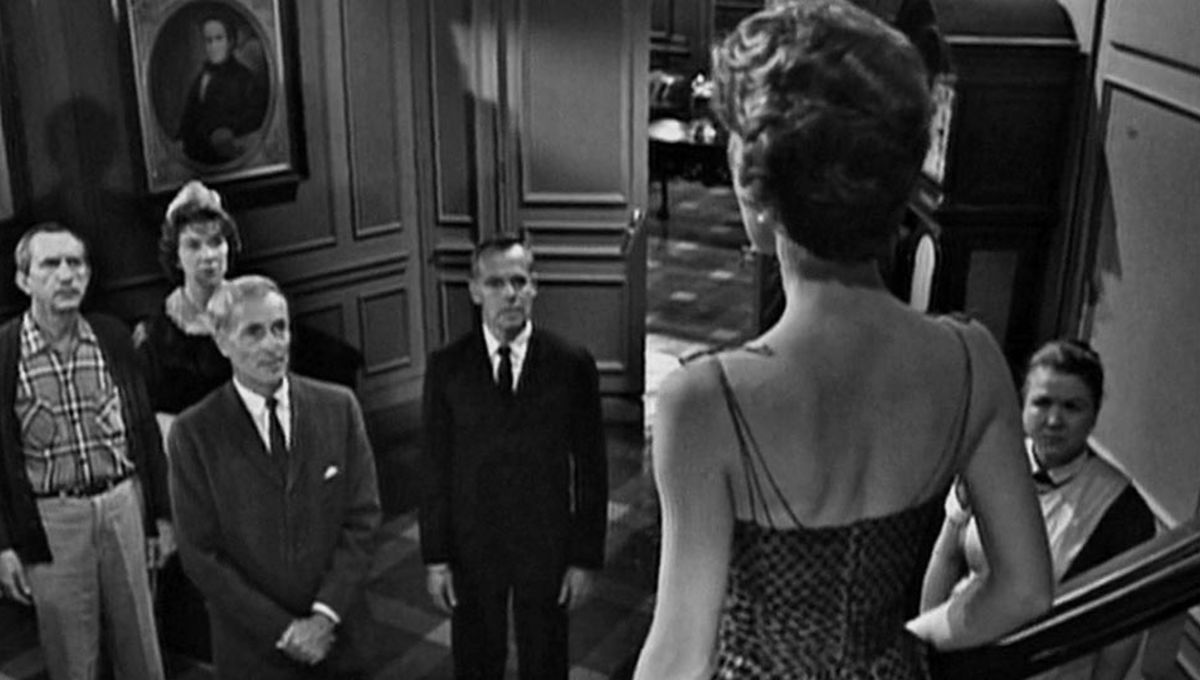
John Hoyt plays Dr. Loren who is a brilliant inventor and has perfected a robot house staff. Every need of his wife and daughter Jana is taken care of every day. His daughter Jana wants a normal life and not have everything so predictable and perfect. You can see the ending coming in this one quite easy but you do have sympathy for Jana.
The first of six The Twilight Zone episodes to be shot on video tape. The network pushed it on Serling because of the cost. This method had its limitations, though. At the time, tape was still at an extremely early stage of its development. Except for the integration of stock footage, none of the taped shows could have any exterior locations; everything had to be shot on a soundstage. Also, since tape couldn’t be edited as cleanly as film, there could be fewer different camera setups and fewer complex camera movements. Obviously, this limited the range of story possibilities. Serling wasn’t happy about this but, the network being the network, he agreed to give it a try.
The six shows were taped at CBS Television City in Los Angeles. They had no director of photography as such. Instead, a technical director sat up in a booth with the director. On the set were the actors, a lighting man, sound men, and four cameramen. The four cameras were hooked up to monitors in the booth. As taping progressed, the technical director, at the command of the director, would switch from one camera to another. Today this is standard procedure for nearly all sitcoms, but in 1960 tape was something quite innovative.
The short-lived experiment resulted in editing and quality issues, and it was ultimately scrapped. Serling did pick the episodes well that he videotaped. Some with special effects would not have worked.
The video taped shows were:
Twenty-Two
Static
The Whole Truth
The Night Of The Meek
The Lateness of the Hour
The Long Distance Call
This show was written by Rod Serling
Rod Serling’s Opening Narration:
The residence of Dr. William Loren, which is in reality a menagerie for machines. We’re about to discover that sometimes the product of man’s talent and genius can walk amongst us untouched by the normal ravages of time. These are Dr. Loren’s robots, built to functional as well as artistic perfection. But in a moment Dr. William Loren, wife and daughter will discover that perfection is relative, that even robots have to be paid for, and very shortly will be shown exactly what is the bill.
Summary
Jana Loren is an attractive young woman who lives at home with her parents. She feels suffocated living there however, surrounded by their many servants – that are in fact human-looking robots created by her inventor father. Her parents are quite happy with the life they lead but realize that they’re going to have to do something about the rebellious Jana.
Rod Serling’s Closing Narration:
Let this be the postscript — Should you be worn out by the rigors of competing in a very competitive world, if you’re distraught from having to share your existence with the noises and neuroses of the twentieth century, if you crave serenity but want it full time and with no strings attached, get yourself a workroom in the basement, and then drop a note to Dr. and Mrs. William Loren. They’re a childless couple who made comfort a life’s work, and maybe there are a few do-it-yourself pamphlets still available… in the Twilight Zone.
CAST
Rod Serling … Narrator / Self – Host (uncredited)
Inger Stevens … Jana
John Hoyt … Dr. Loren
Irene Tedrow … Mrs. Loren
Tom Palmer … Robert
Mary Gregory … Nelda
Valley Keene … Suzanne
Doris Karnes … Gretchen
Jason Johnson … Jensen
Yes Joe you can…When I first heard this in the early 80s on MTV it was such a relief to hear a guitar playing a rock and roll riff. It’s a simple comedic Joe Walsh song… and sometimes that is just what we need.
This is not Joe’s finest work but it’s fun and brings back memories. . After being restrained somewhat with the Eagles it was good to see him let go. This song was on the album You Bought It You Name It. The album has varied styles from reggae, new wave, and rock and roll. The song peaked at #13 on the Billboard Mainstream Rock Airplay list.
The video of Joe trying to kill a fly in a hotel room was burned into my brain as this was on heavy rotation on MTV for a little while. Joe had a deadly aim with the Fender Strat to the television…years of practice I would guess.
In the middle of then current songs such as Safety Dance, Mickey, and Mr. Roboto this minor hit was a welcomed relief to me on MTV and the radio.
I Can Play That Rock and Roll
Well that disco thing can sure get funky All them pretty songs seem too slow I like to sit and pick with them good old boys Maybe New Wave’s in, I just don’t know When the critics try to analyse the current trend I just sit back and watch ’em come and go Cos I can play that rock and roll Oh, now I can play that rock and roll Hey now, I can play that rocking rock and roll
If you, if you wanna party at the next election Only one way to go Put on a rocking rock and roll selection Turn up and vote And you can check out anytime you want Just call me Joe And I can play that rock and roll for ya… Yeah yeah yeah yeah I can play that rock and roll Yeah, now now, I, I, I, well I can play that rock and roll Well I can play that rock and roll I can play that rock and roll
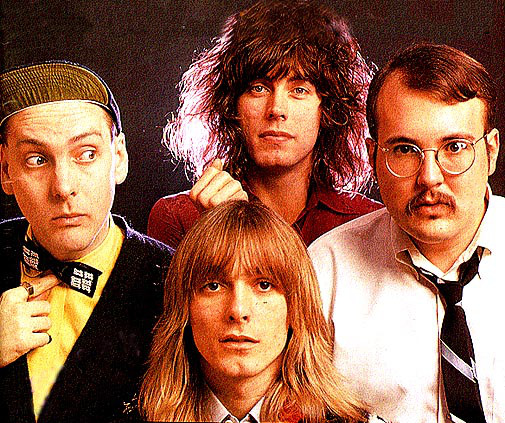
It’s been a while since we covered Cheap Trick and the time has come now. This is a power pop gem from the In Color album released in 1977. Cheap Trick is one of those bands that can cross genres with rock, pop, and heavy metal fans liking them.
This album was released the year before their Cheap Trick at Budokan album that would break their career open. This album has the studio version of I Want You To Want Me that would be a hit off of that live album
This album is a great album as well. It has Southern Girl, Hello There, and The Clock Strikes Ten just to name a few.
In Color peaked at #73 in the Billboard Album Chart in 1977 (I found no Canadian chart for this)…and #30 in Japan…a country which would be important in their career. The song was written by Rick Nielsen.
This song reminds me of a warm seventies evening around twilight cruising with your friends…with a Cheap Trick T-Shirt on of course.
Come On, Come On
Ooo I’m feelin’ good Oh so good Don’t you ruin it tonight, tonight It’s been so long since I don’t know when Ooo treat me, treat me, treat me right Don’t be like sheep and follow the flock Show me you really want to be mine
Ooo I’m feelin’ good Oh so good Don’t you ruin it tonight, tonight It’s been so long since I don’t know when Ooo treat me, treat me, treat me right Don’t be like sheep and follow the flock Show me you really want to be mine
Come on, come on I know you can do it Come on, come on There ain’t nothing to it Come on, come on I know you believe me Come on, come on You can see the real me Every day, every day I need you, I want you Come a little closer to my face Oh little girl I need you now
The song was co-written by brothers Angus and Malcolm Young, and lyricist Bon Scott. The title track of and the third track on the band’s fourth album, it was released as a single in October 1977 backed by “Problem Child.”
George Young (Angus and Malcolm’s brother), acted as producer alongside partner and former bandmate Harry Vanda. In a familiar writing and recording process that was fast, furious and inspired, the entire album was completed in a matter of weeks.
The music video for “Let There Be Rock” was filmed in July 1977. It was recorded in the Kirk Gallery church in Surry Hills, New South Wales and featured Bon Scott, Angus Young, Malcolm Young, Phil Rudd, and Cliff Williams, who replaced Mark Evans as the band’s bassist shortly after the Let There Be Rock album was released.
Angus Young:“I remember the amp literally exploded during the recording session. My brother watched it with crazed eyes, and he told me ‘Come on! Keep on playing!’ while the stuff was steaming.”
From Songfacts
Running to a shade over 6 minutes, it was produced by Harry Vanda and George Young.
In spite of its appearing to be nothing more than a typically mindless rock anthem, this is actually quite a sophisticated track:
In the beginning
Back in 1955
The white man had the schmaltz
The black man had the blues
is an allusion to the birth of rock ‘n’ roll. The genre developed from boogie woogie; the first rock ‘n’ roll song is generally acknowledged to be “Rocket 88,” to which Ike Turner was a very unlikely contributor considering the way his music was to develop, but then the two men who gave rock ‘n’ roll to the world in the first instance were if anything even more unlikely. There was the white man – who had performed as Yodelling Bill Haley – and the black man, a qualified beautician named Chuck Berry. Both Haley’s “Rock Around The Clock” and Berry’s “Maybellene” were released in 1955, and as they say, the rest is history.
An anthem for the band, AC/DC has played this song at every concert since 1978. They often play it very fast and the solo can be extended all the way to 20 minutes as Angus rises above the stage and does the “spasm.”
Let There Be Rock
In the beginning Back in nineteen fifty five Man didn’t know about a rock ‘n’ roll show And all that jive The white man had the smoltz The black man had the blues No one knew what they was gonna do But Tchaikovsky had the news He said
Let there be sound, and there was sound Let there be light, and there was light Let there be drums, and there was drums Let there be guitar, and there was guitar Let there be rock
And it came to pass That rock ‘n’ roll was born All across the land every rockin’ band Was blowing up a storm An the guitar man got famous The businessman got rich And in every bar there was a super star With a seven year itch There were fifteen million fingers Learning how to play And you could hear the fingers picking And this is what they had to say
Let there be light Sound Drums Guitar Let there be rock
One night in a club called the shaking hand There was a ninety two decibel rocking band The music was good and the music was loud And the singer turned and he said to the crowd
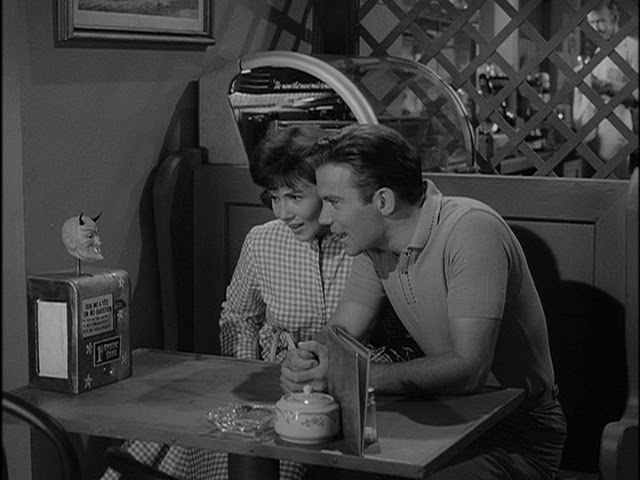
This is one of the two Twilight Zones that William Shatner appeared in. In this one we never know if any thing supernatural is happening or not. It plays on people’s superstitions and beliefs. William Shatner’s character Don Carter is superstitious and comes with a four leaf clover and rabbits foot. That quietly sets up the episode. Although the answers are extremely general, he soon becomes convinced that the machine has correctly predicted two events: his promotion to office manager and a close call he and Pat have while crossing the street.
The couple has to make a decision, will they let the machine decide their destiny or will they try to make it on their own? Both Shatner and Patricia Breslin play this well…although especially Shatner. I never think of him as a great actor but he hits this one out of the park. It’s not just Don that has trouble getting past this possible mystical machine…more believing customers are on their way.
It took me a few viewings to appreciate this episode as much as I do. It works on a Twilight Zone level and beyond that. This one could have easily been on Hitchcock. The suspense builds through out the episode because Shatner and Breslin’s chemistry.
In fact Richard Matheson, said that he wished that Pat Breslin (who played Pat Carter) had been available again to play the wife of Shatner’s character in the season five episode “Nightmare at 20,000 Feet.” That would have been great as the couple would have continued their story.
The Magic 8 Ball comes to mind that were popular in the seventies and even now.
This show was written by Richard Matheson and Rod Serling
Rod Serling’s Opening Narration:
The hand belongs to Mr. Don S. Carter, male member of a honeymoon team on route across the Ohio countryside to New York City. In one moment, they will be subjected to a gift most humans never receive in a lifetime. For one penny, they will be able to look into the future. The time is now, the place is a little diner in Ridgeview, Ohio, and what this young couple doesn’t realize is that this town happens to lie on the outskirts of the Twilight Zone.
Summary
Don and Pat Carter are on their honeymoon when their car breaks down in the small town of Ridgeview, Ohio. They have a few hours to spare while their car is being repaired and spend time in the diner. There they find a fortune-telling machine, a game where you can ask a question and for a penny will spit out an innocuous answer. When the machine apparently begins to predict events – Don’s promotion at work, a near accident on the street outside – a superstitious Don becomes infatuated with the device threatening his marriage and his future with Pat.
Rod Serling’s Closing Narration:
Counterbalance in the little town of Ridgeview, Ohio. Two people permanently enslaved by the tyranny of fear and superstition, facing the future with a kind of helpless dread. Two others facing the future with confidence — having escaped one of the darker places of the Twilight Zone.
CAST
Rod Serling … Narrator / Self – Host (uncredited)
William Shatner … Don Carter
Patricia Breslin… Pat Carter
Guy Wilkerson … Counterman
Stafford Repp … Mechanic
Walter Reed … Man
Dee Carroll … Woman
Robert McCord … Diner Patron (uncredited)
A song that takes me back to being a kid riding in my sister’s Vega…she kept a case of oil in the hatchback because it used it daily…but the AM radio worked great.
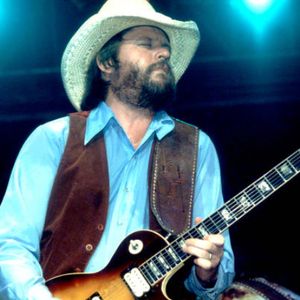
A great song written by the super talented Toy Caldwell. This is the Marshall Tucker Band’s biggest hit on the Pop charts, and remains their best-remembered song.
The song peaked at #14 in the Billboard 100 and #5 in Canada in 1977. It was on their album Carolina Dreams. The album peaked at #23 in the Billboard Album Charts and #7 in Canada.
Toy Caldwell was the soul of that band. He was a Marine in the 60s and served in Vietnam. After getting injured he was able to go home and started to play music with his high school friends. Toy and his brother helped start Marshall Tucker.
Toy stayed with Marshall Tucker until he left in 1984. Contributing to him leaving was the fact that his brother… co-founder of the band and bass guitarist Tommy Caldwell, was killed at age 30 in an automobile accident on April 28, 1980. Toy’s other brother Tim Caldwell, who on March 28, 1980, one month prior to Tommy’s death, was killed at age 25 in a collision in South Carolina.
Toy Caldwell died February 25, 1993.
From Songfacts
In spite of its up tempo, it’s rather sad. Written by Toy Caldwell, the song is about a man who has lived on the road from town to town and affair to affair. Here, he’s been with a woman who’s been good to him and who he actually loves, but he can’t stay with her because the call of the road is too strong.
Toy Caldwell, who died of heart failure in 1993, was the band’s guitarist and wrote most of their songs. His wife Abbie Caldwell told us: “He didn’t read music, and played by ear. He jotted down words on any piece of paper available.”
Mark Chesnutt recorded this as the title track of his 2006 album Heard It in a Love Song.
Heard It In A Love Song
I ain’t never been with a woman long enough for my boots to get old But we’ve been together so long now, they both need re-soled If I ever settle down, you’d be my kind And it’s a good time for me to head on down the line
(Heard it in a love song, heard it in a love song) (Heard it in a love song) can’t be wrong
I’m the kind of man who likes to get away Who likes to start dreamin’ about tomorrow today Never said that I loved you, even though it’s so Where’s that duffle bag of mine, it’s time to go
(Heard it in a love song, heard it in a love song) (Heard it in a love song) can’t be wrong
I’m gonna be leavin’ at the break of dawn Wish you could come but I don’t need no woman taggin’ along Gonna sneak out that door, couldn’t stand to see you cry I’d stay another year if I saw a teardrop in your eye
(Heard it in a love song, heard it in a love song) (Heard it in a love song) can’t be wrong
I never had a damn thing but what I had, I had to leave it behind You’re the hardest thing I ever tried to get off my mind Always something greener on the other side of that hill I was born a wrangler and a rounder and I guess I always will
(Heard it in a love song, heard it in a love song) (Heard it in a love song) can’t be wrong
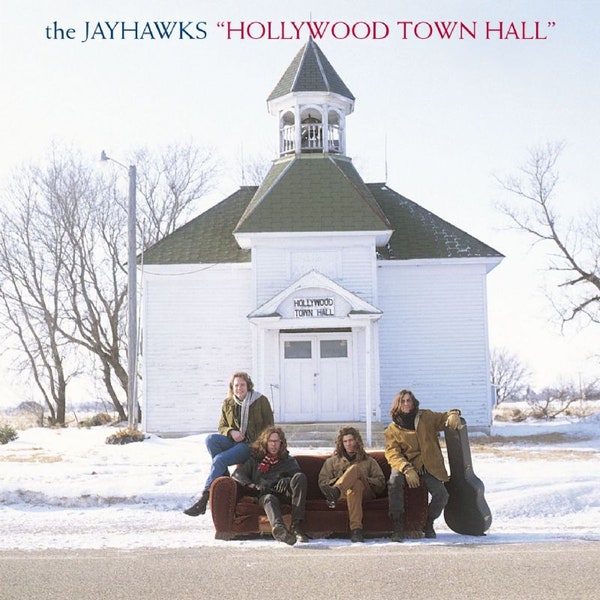
Ever since I heard this band on our alternative radio station in Nashville…Lightning 100 I’ve liked them. The Jayhawk’s writing and voices won me over with songs like Blue and I’m Gonna Make You Love Me.
This song opens up their Hollywood Town Hall album. The album peaked at #192 in the Billboard Album Charts and #11 in the Top Heatseekers Charts.
Benmont Tench, Charley Drayton, and Nicky Hopkins plays on the album with the Jayhawks.
The Jayhawks are an American alternative country and country rock band that emerged from the Minneapolis–Saint Paul music scene in the mid 80s. Minneapolis had a strong scene for bands in the 80s. The Replacements, Husker Du, Soul Asylum, and of course the big one…Prince.
The song, like most of The Jawhawks early cuts, is credited to the band’s guitarist Gary Louris and frontman Mark Olson.
Gary Louris: I didn’t know there was a song called “Waiting for the Sun,” I was not a Doors fan. I like them now, but I didn’t know there was a song called that. Maybe in my subconscious I did.
From Songfacts
According to Mark Derning of Allmusic.com, the song details, “a man who has lost his love under unpleasant circumstances and has hit the road, looking for something better from life and hoping a fair deal from the fates.”
Waiting For The Sun
I was waiting for the sun Then I walked on home alone What I didn’t know Was he was waiting for you to fall
So I never made amends For the sake of no one else For the simple reason That he was waiting for you to fall
It was not lost on me It was not lost on me Walkin’ on down the road Looking for a friend to handout Somethin’ might ease my soul
So I kept my spirits high Entertaining passers-by Wrapped in my confusion While he was waiting for you to fall
It was not lost on me It was not lost on me Walkin’ on down the road Looking for a friend to handout Somethin’ might ease my soul
It was not lost on me It was not lost on me Walkin’ on down the road Walkin’ on down the road Walkin’ on down the road Walkin’ on down the road
I got into Bessie Smith from listening to Janis Joplin and reading about her. Bessie’s voice sends chills up my spine…that is my litmus test. This particular song grabs me because of Smith’s voice and vibe of the recording. She sings it, means it, and she lived it. The sound of the record and her voice is just unbeatable. Yes we have digital now but digital could not give you this sound.
If you are not familiar with her…do yourself a favor and check her out.
I can imagine Dorothy Parker, F. Scott Fitzgerald, and Clara Bow all listening to this in the 20s and 30s.
This song was written by Jimmy Cox in 1923 just as the roaring twenties were taking off. There are many versions but Bessie Smith recorded hers in 1929 with a small trumpet section. It was released right before the stock market crashed and the start of the Great Depression.
Many artists (Peter, Paul and Mary, The Chad Mitchell Trio, Dave Van Ronk, Otis Redding, Popa Chubby, The Allman Brothers Band, Rod Stewart, Janis Joplin, B.B. King, Nina Simone, Sam Cooke, Bobby Womack, Katie Melua, Dutch Tilders, Steve Winwood with The Spencer Davis Group, Emmy Rossum, Leslie Odom Jr.) have covered this song but Bessie’s is my go to version.
She was born in Chattanooga, Tennessee, on April 15, 1894. She lost her dad while she was an infant and her mom when she was 7-8 years old. She was raised by her tough older sister. To help support her orphaned siblings, Bessie began her career as a Chattanooga street musician, singing in a duo with her brother Andrew to earn money to support their poor family.
She is credited with recording more than 160 songs between 1923 and 1933. Smith performed on stage throughout the southern United States and recorded with such jazz greats as Benny Goodman, Louis Armstrong, and Coleman Hawkins.
Before the Great Depression, Bessie was the highest paid black entertainer in the world, collecting as much as two thousand dollars a week to perform. She was accompanied by great musicians such as Louis Armstrong, Lonnie Johnson, and Benny Goodman.
This song was recorded New York City, May 15, 1929.
Mahalia Jackson, Janis Joplin and Norah Jones who have all given her credit as their inspiration.
On September 26, 1937, Smith was severely injured in a car accident while traveling from a concert in Memphis to Clarksdale, Mississippi, with her companion Richard Morgan. She was taken to a hospital, where she died.
By the time of her death, Bessie was known around the world appear with the best players of the day at theaters coast to coast. Bessie’s voice and showmanship drove her from poverty to international fame as a singer of blues tunes, many of which she wrote and co-wrote.
Bessie Smith has been inducted into the Grammy Hall of Fame, winning posthumous awards for her 1923 single “Downhearted Blues,” 1925 single “St. Louis Blues” with Louis Armstrong, and a 1928 single “Empty Bed Blues.” Smith has also been honored with a Grammy Lifetime Achievement Award, was inducted into the Rock and Roll Hall of Fame, the Blues Hall of Fame, and the Big Band and Jazz Hall of Fame.
Janis Joplin:“Back in Port Arthur, I’d heard some Lead Belly records, and, well, if the blues syndrome is true, I guess it’s true about me…So I began listening to blues and folk music. I bought Bessie Smith and Odetta records, and one night, I was at this party and I did an imitation of Odetta. I’d never sung before, and I came out with this huge voice.”
Nobody Knows You’re When You’re Down and Out
Once I lived the life of a millionaire Spending my money, I didn’t care I carried my friends out for a good time Bying bootleg liquor, champagne and wine
Then I began to fall so low I didn’t have a friend, and no place to go So if I ever get my hand on a dollar again I’m gonna hold on to it till them eagle’s green
Nobody knows you when you down and out In my pocket not one penny And my friends I haven’t any But If I ever get on my feet again Then I’ll meet my long lost friend It’s mighty strange, without a doubt Nobody knows you when you down and out I mean when you down and out
Mmmmmmmm…. when you’re down and out Mmmmmmmm… not one penny And my friends I haven’t any Mmmmmmmm… Well I felt so low Nobody wants me round their door Mmmmmmmm… Without a doubt, No man can use you wen you down and out I mean when you down and out
One of the true classic Twilight Zones. The episode is set in a dystopian society. Rod Serling was great at creating them. To be different… means being ostracized with the rest of your kind. It could be set on earth, a far away planet, or in a different time…it doesn’t matter. Undesirables get exiled for the crime of being different.
The ending has an incredible twist. It still holds up through on repeat viewings. What is normal? What is beauty? Who decides that?
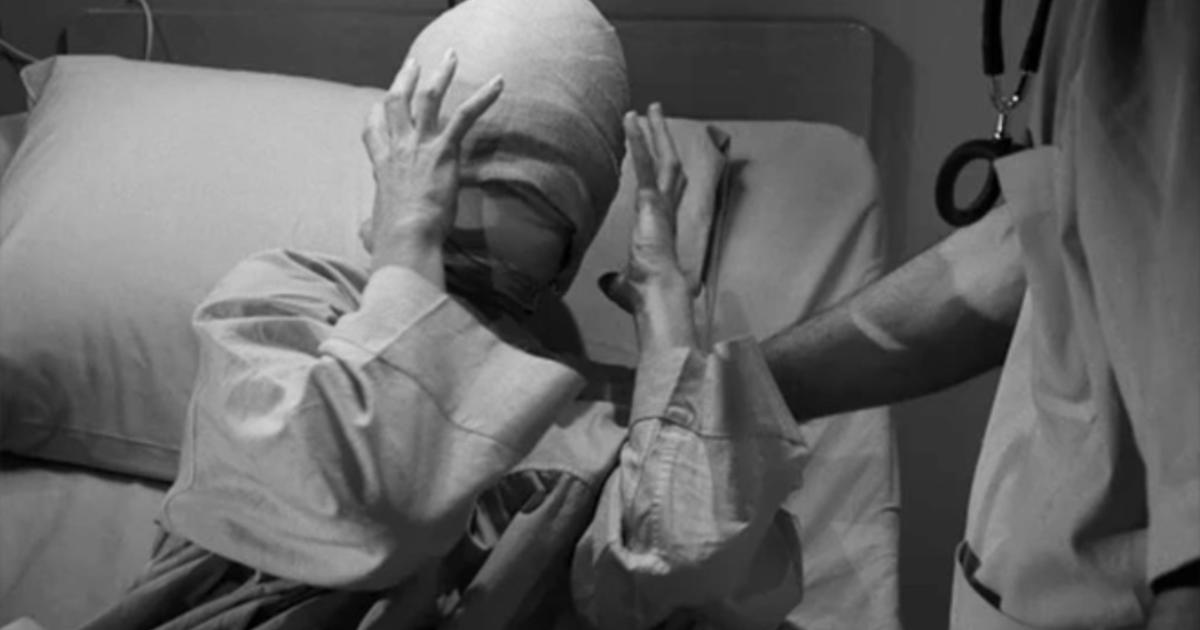
Two actresses play the same character in this episode. Maxine Stuart and Donna Douglas. The first was Maxine Stuart, as Janet Tyler in bandages. The director cast her because of her voice, her voice did not suggest a beautiful girl it suggested a strong, harsh, realistic woman, and therefore the unveiling would be a surprise. She was going to dub her voice over the top of Donna Douglas’s part but Donna’s voice was so similar to they just kept her voice.
A young Donna Douglas plays Janet Tyler. Although not well known at the time, she soon would be, as Jed Clampett’s daughter Ellie on The Beverly Hillbillies. She was not yet known to anybody, but she was absolutely stunning.
I’ve seen this epidsode listed by two names…now I know why. Originally a “The” preceded the title, until television producer Stuart Reynolds threatened to sue Rod Serling for the use of the name because at the time he was selling an educational film of the same name to public schools. Reruns following the initial broadcast featured the title screen “The Private World of Darkness.”
This show was written by Rod Serling
Rod Serling’s Opening Narration:
Suspended in time and space for a moment, your introduction to Miss Janet Tyler, who lives in a very private world of darkness. A universe whose dimensions are the size, thickness, length of the swath of bandages that cover her face. In a moment we will go back into this room, and also in a moment we will look under those bandages. Keeping in mind of course that we are not to be surprised by what we see, because this isn’t just a hospital, and this patient 307 is not just a woman. This happens to be the Twilight Zone, and Miss Janet Tyler, with you, is about to enter it.
Summary
Janet Tyler is in hospital having undergone treatment to make her look normal. It’s her 11th trip to the hospital for treatment and she is desperate to look like everyone else. Some of her earliest childhood memories are of people looking away, horrified by her appearance. Her bandages will soon come off and she can only hope that this, her last treatment, will have done the trick. If not, her doctor has told she will be segregated with a colony of similar looking people. All that to say that truth is truly in the eye of the beholder.
VIDEO SPOILERS
Rod Serling’s Closing Narration:
Now the questions that come to mind: “Where is this place and when is it?” “What kind of world where ugliness is the norm and beauty the deviation from that norm?” You want an answer? The answer is it doesn’t make any difference, because the old saying happens to be true. Beauty is in the eye of the beholder, in this year or a hundred years hence. On this planet or wherever there is human life – perhaps out amongst the stars – beauty is in the eye of the beholder. Lesson to be learned in the Twilight Zone.
CAST
Rod Serling – Narrator
Maxine Stuart – Janet Tyler (under bandages)
Donna Douglas – Janet Tyler (unmasked)
William D. Gordon – Doctor Bernardi
Jennifer Howard – Nurse
Edson Stroll – Walter Smith
I came across Otis’s youtube channel and I think some of you would be interested. He is a singer songwriter but on his channel he has conversations musicians who have played or worked with Bob Dylan, Neil Young, Tom Petty, Waylon Jennings, just to name a few, and his own stories about different musicians. For you music fans it’s worth your time. The guy doesn’t interview people…he lets people talk and tell their stories. He is also a good story teller. I’m hooked on his channel.
He has stories about Jerry Reed, The Replacements, Dan Baird, Merle Haggard, Ry Cooder, Towns Van Zant, Bill Monroe, George Jones, Johnny Paycheck, John Prine, Mike Campbell and more.
He lives in Indiana but interviews many Nashville connected musicians. Check this guy out…His music is VERY good as well. I’m just checking that out more as I go… his music is classified as alt-country.
I just picked a few random youtube videos from his page below.
This one was included in my top 10…but it’s been months now so I thought I would post this with some changes. This weekend will be the best for Twilight Zones so far…two classic episodes. Warning…it’s almost impossible writing this review without spoilers for this particular episode.
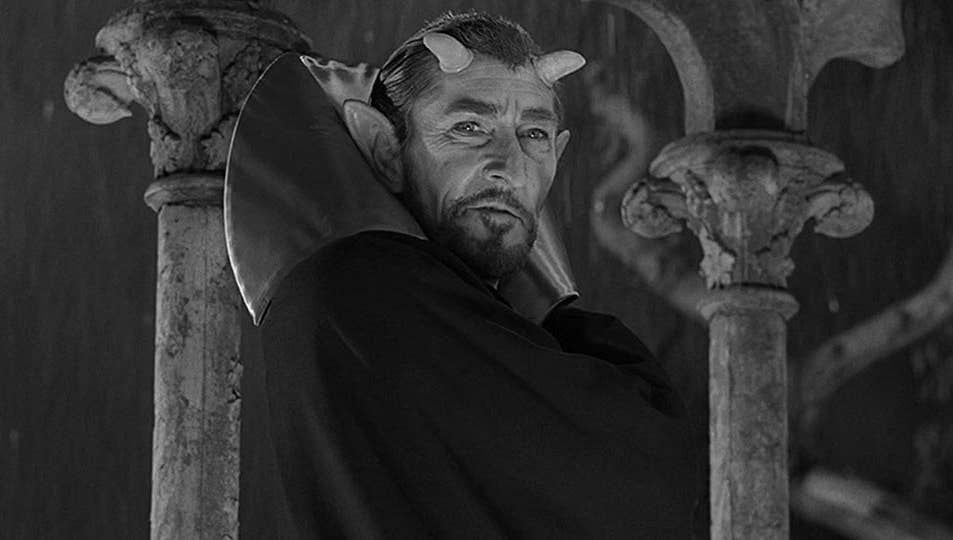
This one is not one of the comedic episodes…it is deadly serious, haunting and chilling. The Howling Man doesn’t have a lot of action but you feel sorry for David Ellington…he realized too late that he has set the devil loose in the world. The special effects of the ragged looking man turning into the devil was spot on. It would look good now in todays time. One well known actor was in this one, John Carradine played Brother Jerome.
This is very much a classic Twilight Zone episode. The set reminds me of those Universal Monster movie sets of the 40s and 50s. The episode tells us that evil can come in many forms and appeal to human weaknesses. As far as David Ellington… the road to hell is paved with good intentions.
Charles Beaumont had originally envisioned the monks would keep the Howling Man imprisoned by putting a cross in front of his cell door. Fearful of a backlash in the religious community, the producers substituted the “staff of truth,” over Beaumont’s objections.
This show was written by Charles Beaumont and Rod Serling
Rod Serling’s Opening Narration:
The prostrate form of Mr. David Ellington, scholar, seeker of truth and, regrettably, finder of truth. A man who will shortly arise from his exhaustion to confront a problem that has tormented mankind since the beginning of time. A man who knocked on a door seeking sanctuary and found, instead, the outer edges of The Twilight Zone.
Summary
David Ellington recounts a story, one that began just after the end of World War I. He was hiking in Europe when he sought refuge during a violent rain storm. The residence is isolated and its head, Brother Jerome, tells him he cannot stay. Ellington is ill however and during his short stay meets someone who is being kept prisoner and howls constantly through the night. Ellington believes the Howling Man is being kept there for no good reason but Brother Jerome tells him of the man’s true nature. The decision Ellington makes will haunt him for the rest of his life.
Rod Serling’s Closing Narration:
Ancient folk saying: “You can catch the Devil, but you can’t hold him long.” Ask Brother Jerome. Ask David Ellington. They know, and they’ll go on knowing to the end of their days and beyond — in the Twilight Zone.
CAST
Rod Serling … Narrator / Self – Host (uncredited)
H.M. Wynant … David Ellington
John Carradine … Brother Jerome
Robin Hughes … The Howling Man
Frederic Ledebur … Brother Christophorus
Ezelle Poule … Housekeeper
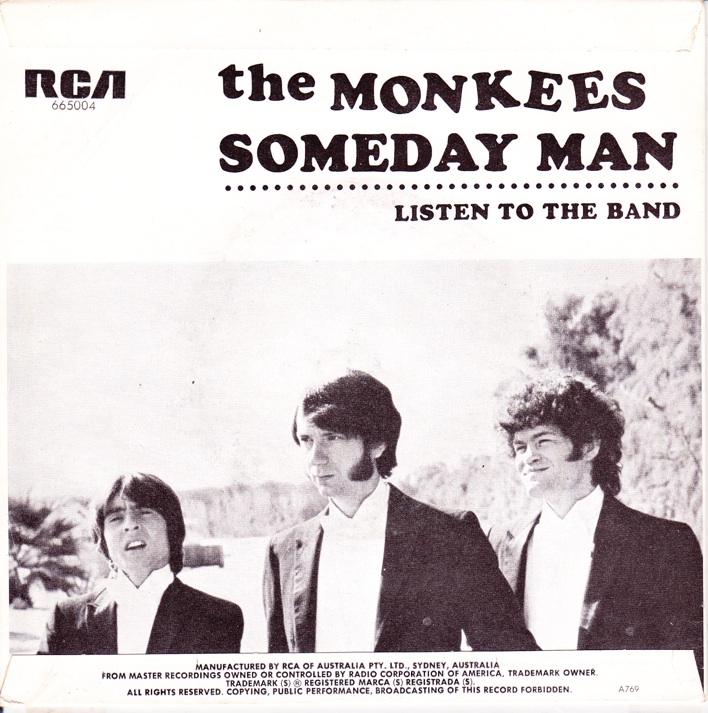
Buddy Miles and the Monkees! Below in one of the clips of this song.
This was the last song they released that I liked…it was at the time Peter Tork quit. The band I was in…this was the lone Monkee song we would do and it always got a good response.
This song was released as a single in 1969. It was the first time Michael Nesmith would sing on a Monkee’s A side…and he was long overdue. He also wrote it and produced it. He started to write it while in Nashville at RCA studios. The song features a brass section that plays during the instrumental section as if the brass were the band.
The Monkees went into MGM studios in November of 1968 to tape their NBC television special 33 1/3 Revolutions Per Monkee, they were just two years away from their commercial peak… selling records by the millions, a hit TV show and battling with the other bands for chart supremacy. But their show went off the air that March, and their psychedelic movie Head flopped in theaters just a couple weeks earlier. They were on the way down.
Their most recent LP, The Birds, The Bees & The Monkees, peaked at #3 on the Billboard Album charts and generated the single “Daydream Believer.” It was enough to get NBC to green light a TV special, though wheels were in motion before critics got a look at Head. The Monkees could have created a television in the same zany, carefree style of their old show in an attempt to win back some old fans, but they decided to double down on psychedelic.
The show was a psychedelic mess that did not restart their career. At this time Peter Tork had grown tired of it all and it was his last appearance with the band. The one clip that was worth it was the clip of this song. Buddy Miles comes in on drums in the middle and really rocks it out.
Listen To The Band
Hey, hey, mercy woman plays a song and no one listens, I need help I’m falling again.
Play the drum a little louder, Tell me I can live without her If I only listen to the band.
Listen to the band!
Weren’t they good, they made me happy. I think I can make it alone.
Oh, mercy woman plays a song and no one listens, I need help I’m falling again.
Play the drum a little bit louder, Tell them they can live without her If they only listen to the band.
Listen to the band!
Now weren’t they good, they made me happy. I think I can make it alone.
Oh, woman plays a song and no one listens, I need help I’m falling again.
C’mon, play the drums just a little bit louder, Tell us we can live without her Now that we have listened to the band.










 PowerPop... An Eclectic Collection of Pop Culture