Not the most pleasant song available from John but it does get your attention. I do like the guitar sound that John and Eric Clapton get in this song.
This song is about drug withdrawal. Quitting “Cold Turkey” means abruptly stopping drug use and the effect it has on your body and mind. John Lennon quit cold turkey because he wanted to get off drugs and start a family with Yoko.
John wanted to record this with the Beatles but they rejected it so he went off and recorded it on his own.
Eric Clapton and John played guitar on this, Ringo drummed, and Klaus Voormann played the bass, It was released as a single in 1969 as The Plastic Ono Band. The song peaked at #30 in the Billboard 100, #14 in the UK, and #30 in Canada.
This was Lennon’s second single away from The Beatles. “Give Peace A Chance” was released a few months earlier. This was also the first song John took complete credit for as he dropped the McCartney from Lennon and McCartney.
Its first public performance on September 13, 1969, was recorded and released on the Live Peace in Toronto 1969 album by the Plastic Ono Band.
John Lennon:“Cold Turkey was banned. They thought it was a pro-drugs song. But I’ve always expressed what I’ve been feeling or thinking at the time. So I was just writing the experience I’d had of withdrawing from heroin. To some it was a rock ‘n’ roll version of The Man With The Golden Arm because it showed Frank Sinatra suffering from drug withdrawal.”
From Songfacts
Lennon performed this on September 13, 1969 at The Toronto Rock and Revival Show, where he introduced his Plastic Ono Band (at least the configuration of it for this show). Eric Clapton was on guitar, Klaus Voorman on bass, and Alan White on drums. Yoko Ono was also part of the act, and she made an impact during “Cold Turkey.” As the song played, she emerged from a bag on stage, stepped up to a microphone, and made turkey-sounding noises (not out of character). The set was released as a live album called Live Peace In Toronto 1969.
Eric Clapton played some of the guitar on this. Lennon asked Clapton to join The Plastic Ono Band, but Eric declined.
Lennon wrote and recorded this song before attending Arthur Janov’s Primal Scream therapy workshop, which played a part in his song “Mother.” The screams he used in “Cold Turkey,” he was actually emulating Yoko singing.
When John Lennon decided to return his MBE (Member of the British Empire) award on November 25, 1969, he sent it to Queen Elizabeth II with a note explaining, “I am returning this MBE in protest against Britain’s involvement in the Nigeria-Biafra thing, against our support of America in Vietnam and against ‘Cold Turkey’ slipping down the charts.”
Cold Turkey
Temperature’s rising Fever is high Can’t see no future Can’t see no sky
My feet are so heavy So is my head I wish I was a baby I wish I was dead
Cold turkey has got me on the run My body is aching Goose-pimple bone Can’t see no body Leave me alone
My eyes are wide open Can’t get to sleep One thing I’m sure of I’m at the deep freeze
Cold turkey has got me on the run Cold turkey has got me on the run
Thirty-six hours Rolling in pain Praying to someone Free me again
Oh I’ll be a good boy Please make me well I promise you anything Get me out of this hell
I always liked this song. It is defiant and cocky and in times like these, we need it.
Before recording Full Moon Fever, an arsonist burned down Tom Petty’s house while he was in it with his family and their housekeeper. They escaped and spent much of the next few months driving between hotel rooms and a rented house, but Petty was badly shaken.
It was on these drives that he came up with many of the songs for the album, and the fire was a huge influence, especially on this song. Petty felt grateful to be alive, but also traumatized – understandable he could have been killed. According to a report, an arsonist had drenched the house’s back staircase in lighter fluid. Petty and his family was deeply disturbed by the fact that someone had wanted to kill them. The case remains unsolved.
The song was on Full Moon Fever which I bought as soon as it was released. The song peaked at #12 in 1989 in the Billboard 100. Full Moon Fever peaked at #3 in the Billboard Album Charts that same year. The song was written by Petty and producer Jeff Lynne.
Tom Petty: “At the session George Harrison sang and played the guitar. I had a terrible cold that day, and George sent to the store and bought a ginger root, boiled it and had me stick my head in the pot to get the ginger steam to open up my sinuses, and then I ran in and did the take.”
I remember loving the video to this song. George Harrison and Ringo appear and guitar player Mike Campbell plays George’s guitar “Rocky” for the solo.
Songfacts
“I Won’t Back Down” was his way of reclaiming his life and getting past the torment – he said that writing and recording the song had a calming effect on him.
The arsonist was never caught, which made Petty’s plight even more challenging. As for motive, there was no direct connection made, but 11 days earlier, Petty won a lawsuit against the B.F. Goodrich tire company for $1 million. Goodrich wanted to use Petty’s song “Mary’s New Car” in a TV commercial, and when he wouldn’t let them, their advertising agency commissioned a copycat song that the judge felt was too similar.
This was the first single from Full Moon Fever, which was produced and co-written by Jeff Lynne. Petty and Lynne worked on the album at Mike Campbell’s house. As guitarist for the Heartbreakers, Mike has written and produced many songs with Petty.
He told us what happened when they brought the album to MCA Records: “We thought it was really good, we were real excited about it. We played it for the record company and they said, ‘Well, we don’t hear any hits on here.’ We were very despondent about the whole thing and we went back and recorded another track, a Byrds song called ‘I’ll Feel A Whole Lot Better,’ thinking at the time that maybe they’ll like this one. In the interim, they changed A&R departments and a whole new group of people were in there. We brought the same record back like six months later and they loved it – they said ‘Oh, there’s three hits on here.’ We were vindicated on that one. It was the same record. We played the same thing for them and they went for it. I guess it’s a situation of timing and the right people that wanted to get inspired about it. At the end of the line, if the songs are good and if the public connects with certain songs, that really is the true test, but you’ve got to get it out there.” (Read more in our interview with Mike Campbell.)
This was Petty’s first single without the Heartbreakers credited as his backing band. Members of the band did play on the album.
The video, directed by David Leland, features Ringo Starr on drums, with George Harrison and Jeff Lynne on guitar. Harrison did play on the track and contributed backing vocals, but Ringo had nothing to do with the song itself – a session musician named Phil Jones played drums on the Full Moon Fever album.
In some shots, Mike Campbell is playing George Harrison’s Stratocaster guitar, which he called “Rocky.” It was Harrison’s suggestion for Campbell to play it.
Around this time, Petty was active in the group The Traveling Wilburys with Lynne, Harrison, Bob Dylan and Roy Orbison.
This is perhaps Tom Petty’s most personal song. In a 2006 interview with Harp, he said, “That song frightened me when I wrote it. I didn’t embrace it at all. It’s so obvious. I thought it wasn’t that good because it was so naked. So I had a lot of second thoughts about recording that song. But everyone around me liked the song and said it was really good and it turns out everyone was right – more people connect to that song than anything I ever wrote. I’ve had so many people tell me that it helped them through this or it helped them through that. I’m still continually amazed about the power a little 3-minute song has.”
Many fans have felt a connection with this song. “The one that most strangers come up and tell me about is ‘I Won’t Back Down,'” Petty told Mojo. “So many people tell me it meant something in their lives.”
Petty played this on September 21, 2001 as part of a telethon to benefit the victims of the terrorist attacks on America. Celebrities at the event included Julia Roberts, Tom Hanks, Bruce Springsteen, and Tom Cruise. Almost 60 million people watched the special in the US.
In response to this being used as a patriotic anthem after September 11th, Petty said: “The song has also been adopted by nice people for good things, too. I just write them, I can’t control where it ends up.”
This was one of four songs Tom Petty and the Heartbreakers played at the halftime show of the Super Bowl in 2008. The others were “American Girl,” “Runnin’ Down A Dream” and “Free Fallin’.”
Tom Petty died on October 2, 2017, the day after a mass shooting at the Route 91 Harvest festival in Las Vegas that killed 58. On October 7, Jason Aldean, who was on stage during the shooting, opened Saturday Night Live with a performance of this song, which served as both a tribute to Petty and a call for togetherness. “When America is at its best, our bond and our spirit is unbreakable,” he said before playing it.
When the shooting took place, Aldean was performing “When She Says Baby,” which was inspired by Petty’s “Here Comes My Girl.”
I Won’t Back Down
Well, I won’t back down No I won’t back down You can stand me up at the gates of hell But I won’t back down
No I’ll stand my ground Won’t be turned around And I’ll keep this world from draggin’ me down Gonna stand my ground
And I won’t back down (I won’t back down) Hey baby, there ain’t no easy way out (I won’t back down) Hey I will stand my ground And I won’t back down Well I know what’s right I got just one life In a world that keeps on pushin’ me around But I’ll stand my ground And I won’t back down (I won’t back down) Hey baby, there ain’t no easy way out (I won’t back down) Hey I will stand my ground (I won’t back down) Hey baby, there ain’t no easy way out (I won’t back down) Hey I won’t back down (I won’t back down) Hey, baby, there ain’t no easy way out (I won’t back down) I will stand my ground And I won’t back down No I won’t back down
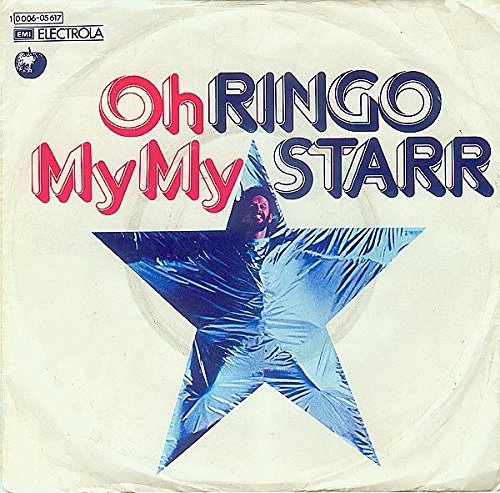
I had this single as a kid from a cousin. The song was off of the 1973 Ringo album that was his most successful album. Three of his former bandmates helped contribute to this album. It contained Photograph, You’re Sixteen, and this one that were hit.
Lennon jokingly sent a telegram to Ringo after the success of this album and said: “Congratulations. How dare you? And please write me a hit song.”
The song peaked at #5 in 1974 in the Billboard 100.
Oh My My
One, two, three, four!
I phoned up my doctor to see what’s the matter, He said, “come on over.” I said, “do i have to?” My knees started shakin’, my wrist started achin’ When my doctor said to me:
“oh my my, oh my my, can you boogie, can you slide? Oh my my, oh my my, you can boogie if you try. Oh my my, oh my my, it’s guaranteed to keep you alive.”
The head nurse she blew in, just like a tornado, When they started dancin’, i jumped off the table. I felt myself healin’ and as i was leavin’, This is what they said to me:
“oh my my, oh my my, can you boogie, can you slide? Oh my my, oh my my, you can boogie if you try. Oh my my, oh my my, it’s guaranteed to keep you alive.”
(oh – yeah hey! All right! Oh! Yeah! Yeah! Yeah! Yeah! Yeah! All right now! Ooh!)
Now if you should slow down and you’re feelin’ low down, Don’t call up your doctor, just grab you a partner. It’s what you’ve been missin’, i’ve got your prescription, That boogie woogie remedy.
“Oh my my, oh my my, you can boogie, you can slide? Oh my my, oh my my, we can boogie ’til we die. Oh my my, oh my my, it’s guaranteed to keep you alive, alright.”
“oh my my, oh my my, watch me boogie, watch me slide, Oh my my, (ow!) Oh my my, born to boogie, born to slide. (can you boogie?) Oh my my, oh my my, oo-wee, boogie, oo-wee, aye. (can you boogie?) Oh my my, oh my my, play that boogie, play that slide. (can you boogie?) Oh my my, oh my my, love that boogie, love that slide. (can you boogie?) Oh my my, oh my my, oh, my boogie, oh, my slide. (can you boogie?) Oh my my, oh my my, come on, baby, come on now. (can you boogie) Oh my my, oh my my, come on, baby, i’m willing to die. (can you boogie?) Oh my my, oh my my, come on, baby, come on, try. (can you boogie?) Oh my my, oh my my.”
Playing For Change, a global nonprofit which helps provide music education to young people around the world has just released a collaborative version of Robbie Robertson‘s “The Weight,” the classic song recorded by The Band in 1968 for their debut album, Music From Big Pink
That simple bass guitar riff hooks me when it comes in during the drum intro.
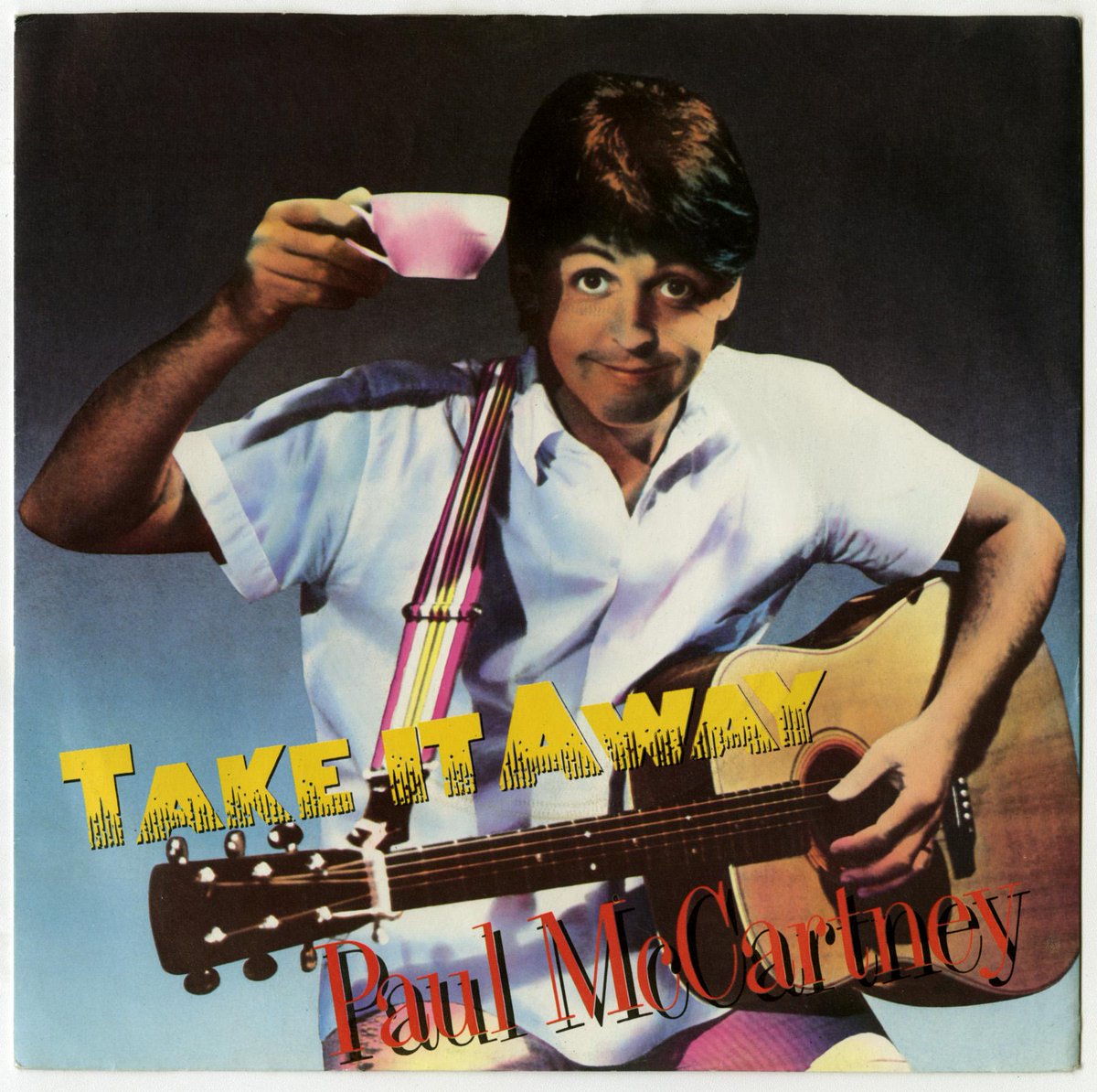
A good pop song from Paul McCartney in the 1980s. This was on an album called Tug of War which peaked at #1 in the Billboard album charts. The highlight to me is another McCartney bass line. The song peaked at #10 in the Billboard 100 in 1982.
Paul played bass, Ringo played drums, and George Martin played electric piano. Eric Stewart from 10cc influenced the layered backup vocals.
Paul McCartney:
“Well, there were a couple of songs that we ended up recording which Ringo asked me to write at a certain period. I was writing some songs for Ringo and “Take It Away” was in amongst those songs. I thought it would suit me better the way it went into the chorus and stuff; I didn’t think it was very Ringo.”
“I mean, the chorus I think, was Ringo, the other bits… but that’s how that comes to be that kind of track I think, I was right in that sort of direction with Ringo in mind actually.”
Take It Away
Take it away Want to hear you play Till the lights go down Take it away Don’t you want to stay Till there’s no one else around?
Take it away Want to hear you play Till the lights go down Take it away Don’t you want to stay Till there’s no one else around?
Lonely driver Out on the road With a hundred miles to go Sole survivor Carrying the load Switches on his radio
Take it away Want to hear you play Till the lights go down (down down) Take it away Don’t you want to stay Till there’s no one else around?
Take it away Want to hear you play Till the lights go down (down down) Take it away Don’t you want to stay Till there’s no one else around?
In the audience Watching the show With a paper in his hand (In his hand, in his hand) Some important impresario Has a message for the band
Oh Take it away Want to hear you play Till the lights go down (down down) Take it away Don’t you want to stay Till there’s no one else around?
You never know who may be Listening to you Never know who may be Listening to you You never know who may be Listening to you Take it away, take it away
After hours Late in the bar By a darkened corner seat Faded flowers wait in the jar Till the evening is complete
This song would make my personal top ten of Beatle songs… Rain was the B side to Paperback Writer. Personally, I like this song better. First off the sound was different compared to previous songs…the bass comes through like never before and Ringo’s drumming complimented the bass so well.
They experimented with a new way of recording bass. This technique involved “using a loudspeaker as a microphone,” explains engineer Geoff Emerick. “We positioned it directly in front of the bass speaker and the moving diaphragm of the second speaker made the electric current.”
The peaked at #23 in the Billboard 100 in 1966.
Ringo on this recording is outstanding and some think it’s his best moment on record. Personally, I like his playing on A Day In The Life but this one is great.
At the end of the song, the vocals are backward. There are different stories on how this happened. One was that a stoned John took the tape home and put it in backward and was astonished at what he heard and wanted the whole song backward. George Martin remembered it differently: “I was always playing around with tapes,” Martin explains, “and I thought it might be fun to do something extra with John’s voice. So I lifted a bit of his main vocal off the four-track, put it onto another spool, turned it around and then slid it back and forth until it fitted. John was out at the time but when he came back he was amazed…They all thought it was marvelous.”
Whichever way it was…it fits this song perfectly
Paul McCartney said this about who wrote the song:
I don’t think he brought the original idea, just when we sat down to write, he kicked it off. Songs have traditionally treated rain as a bad thing and what we got on to was that it’s no bad thing. There’s no greater feeling than the rain dripping down your back. The most interesting thing about it wasn’t the writing, which was tilted 70-30 to John, but the recording of it.
From Songfacts
John Lennon wrote most of “Rain.” It was his first song to get really deep, exploring themes of reality and illusion – after all, rain or shine is just a state of mind.
This was the first song to use a tape played backward, which created the strange audio effect. John Lennon discovered the technique when he put the tape for “Tomorrow Never Knows” on the wrong way. He was stoned at the time, and producer George Martin had to convince him that using a backward recording for the entire song was a bad idea.
Ringo Starr has said this is his best drumming on a Beatles song.
The backward vocal at the end fade out is actually the songs first line: “When the rain comes they run and hide their heads”.
This was one of the first Beatles records to feature loud, booming bass. McCartney’s bassline is extremely recognizable, in contrast to The Beatles’ older records.
This was released as the B-side of “Paperback Writer.” It was recorded during the Revolver sessions.
As part of the studio manipulation that gave this song such an unusual sound, the rhythm track was played fast and then slowed down on tape.
The Beatles shot a video for this song with director Michael Lindsay-Hogg, who was tapped because he worked on the UK music show Ready, Steady,Go!. The videos for “Rain” and “Paperback Writer” were shot at the same time, with some footage recorded at Abbey Road studios, but most of it outdoors at the Chiswick House gardens in London.
These videos were done so The Beatles could promote the single without actually performing on the various TV shows that drew huge audiences and drove sales. In doing so, they set a standard for music videos, as other bands followed suit. The “Rain” video uses many elements that would become commonplace, including candid shots from between takes.
Rain
If the rain comes They run and hide their heads They might as well be dead If the rain comes If the rain comes
When the sun shines They slip into the shade And sip their lemonade When the sun shines When the sun shines
Rain, I don’t mind Shine, the weather’s fine
I can show you That when it starts to rain Everything’s the same I can show you I can show you
Rain, I don’t mind Shine, the weather’s fine
Can you hear me That when it rains and shines It’s just a state of mind Can you hear me Can you hear me
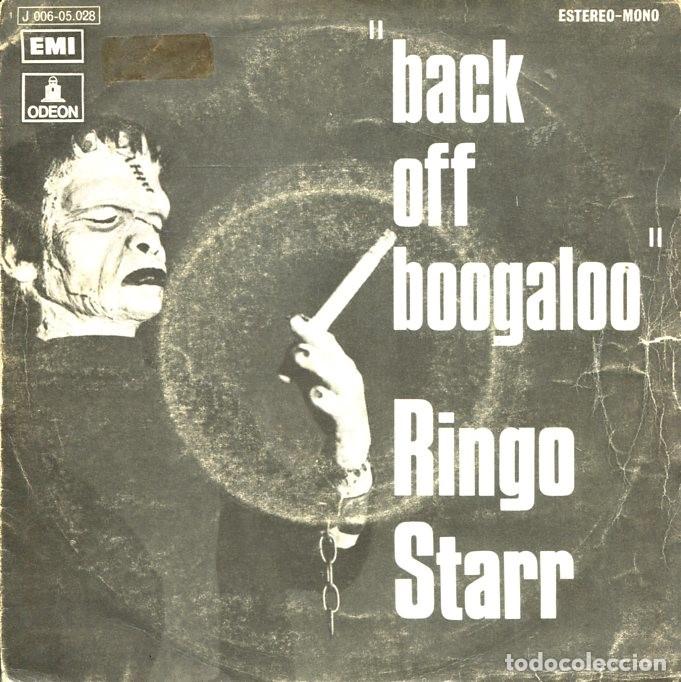
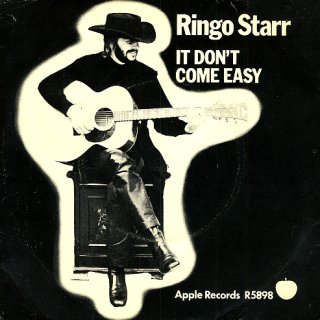
Back Off Boogaloo was Ringo’s follow up to his 1971 hit It Don’t Come Easy. It was released as a single only in 1972.
Some say Ringo wrote this song about Paul McCartney to stop his snide remarks in the press about the other Beatles and also to make better music. I can see why some people saw that in:
Wake up, meat head Don’t pretend that you are dead Get yourself up off the cart
Get yourself together now And give me something tasty Everything you try to do You know it sure sound wasted
That last line was because Paul was very fond of Cannabis at the time. Ringo has since cleared that up and said it was inspired by Marc Bolan of T-Rex. Bolan had often said the word Boogaloo and Ringo wrote the song. Later on, George helped him finish the song but didn’t want songwriting credit as was the case in It Don’t Come Easy.
The song peaked at #9 in the Billboard 100 and #2 in the UK in 1972.
Chris Welch wrote in Melody Maker: “A Number One hit could easily be in store for the maestro of rock drums. There’s a touch of the Marc Bolan in this highly playable rhythmic excursion … It’s hypnotic and effective, ideal for jukeboxes and liable to send us all mad by the end of the week.”
Back Off Boogaloo
Back off, Boo-ga-loo, I said Back off, Boo-ga-loo, come on Back off, Boo-ga-loo, Boo
Back off, Boo-ga-loo What d’yer think you’re gonna do I got a flash right from the start
Wake up, meat head Don’t pretend that you are dead Get yourself up off the cart
Get yourself together now And give me something tasty Everything you try to do You know it sure sound wasted
Back off, Boo-ga-loo, I said Back off, Boo-ga-loo You think you’re a groove Standing there in your wallpapers shoes And your socks that match your eyes
Back off, Boo-ga-loo, I said Back off, Boo-ga-loo, come on Back off, Boo-ga-loo, Boo
One of Ringo’s best songs. This one and It Don’t Come Easy is at the top of my list of Ringo’s solo songs. The song fits Ringo perfectly. Photograph was off of what is Ringo’s best album “Ringo” that peaked at #2 in the Billboard album charts, #7 in the UK and #1 in Canada. Ringo wrote this with George Harrison. Ringo was the lead vocalist and drummer for the track, while Harrison sang harmony vocals and played 12-string guitar.
The song peaked at #1 in the Billboard 100, #1 in Canada, and #8 in the UK in 1973. I saw a John Lennon interview where he said he used to worry about Ringo and what he would do after the Beatles. Suddenly Ringo was on top of the world and John jokingly said he telegrammed Ringo and asked Ringo would he “write me a hit?”
From Songfacts
In this song, the singer laments the loss of his girl. The pain is made more intense by a photograph he has that keeps reminding him of the good times they had.
Ringo performed this song at the Grammy Awards in 2014. Despite the affliction described in the lyric, Ringo did a very joyful rendition, turning the song into one more about nostalgia – old photos from his days with The Beatles were projected on the backdrop to complement this interpretation.
Later in the broadcast, Ringo backed Paul McCartney on drums for Paul’s song “Queenie Eye.”
Photograph
Every time I see your face It reminds me of the places we used to go But all I’ve got is a photograph And I realize you’re not coming back anymore
I thought I’d make it the day you went away But I can’t take it ’til you come home again to stay
I can’t get used to living here While my heart is broke, my tears I cry for you I want you here to have and hold As the years go by, and we grow old and gray
Now you’re expecting me to live without you But that’s not something that I’m looking forward to
I can’t get used to living here While my heart is broke, my tears I cry for you I want you here to have and hold As the years go by, and we grow old and grey
Every time I see your face It reminds me of the places we used to go But all I’ve got is a photograph And I realize you’re not coming back anymore
Every time I see your face It reminds me of the places we used to go But all I’ve got is a photograph And I realize you’re not coming back anymore
Maybe Ringo’s best solo song. Ringo is the only songwriter credited on this, but he had a lot of help from George Harrison, who was very generous in giving him full writing credit. The track (less Ringo’s vocal and horn parts) was already completed when Harrison gave it to him, and it included a scratch vocal by George (youtube video at the bottom).
The song peaked at #4 in the Billboard 100, #1 in Canada and #4 in the UK in 1971.
Pete Ham and Tom Evans from Badfinger are on this track.
If you listen carefully during the guitar solo, the backup singers throw in a “Hare Krishna,” which was mixed way down. This is a nod to George Harrison’s 1970 hit “My Sweet Lord,” where he sings the mantra.
This was Ringo’s first big hit as a solo artist (his cover of “Beaucoups of Blues” made #87 US a year earlier). From 1971-1975 he had a string of hits, including two #1s: “Photograph” and “You’re Sixteen.”
Peter Ham and Tom Evans of Badfinger sang on the intro to this song (“It don’t come easy, ya know it don’t come easy”). Badfinger was signed to The Beatles’ Apple Records, and helped out George Harrison’s first solo album.
This song served Ringo well throughout his career. When he assembled his first “All Starr Band” in 1989 (featuring Dr. John, Clarence Clemmons, Joe Walsh and Billy Preston), this was the opening number on their tour. Throughout several subsequent incarnations of the band, “It Don’t Come Easy” typically remained at the top of setlist when they performed live.
Ringo performed this song with his good friend, musical cohort, and brother-in-law Joe Walsh when he was inducted into the Rock and Roll Hall of Fame in 2015.
Here is the George Harrison version
It Don’t Come Easy
One, two, One, two, three, four!
It don’t come easy You know it don’t come easy It don’t come easy You know it don’t come easy
Got to pay your dues if you wanna sing the blues And you know it don’t come easy You don’t have to shout or leap about You can even play them easy
Open up your heart, let’s come together Use a little love And we will make it work out better
I don’t ask for much, I only want your trust And you know it don’t come easy And this love of mine keeps growing all the time And you know it don’t come easy
Peace, remember peace is how we make it Here within your reach If you’re big enough to take it
Got to pay your dues if you wanna sing the blues And you know it don’t come easy You don’t have to shout or leap about You can even play them easy
Peace, remember peace is how we make it Here within your reach If you’re big enough to take it
I don’t ask for much, I only want your trust And you know it don’t come easy And this love of mine keeps growing all the time And you know it don’t come easy
This is my top ten favorite drummers…I’m sure I’m going to leave some great ones out. Like guitarists, I like drummers with feel more than technique. Anyone who has read this blog knows who my number 1 is without question…
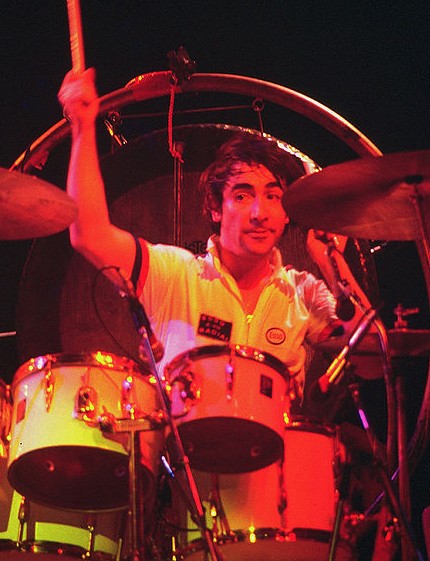
1…Keith Moon, The Who – It’s hard if not impossible to copy this man’s drumming style. He changed the Who completely and was their engine. I’m not a drummer so I really never cared like some drummers do if he played by the rules in drumming…Was he disciplined? No, but it worked well for him and for the songs. Songs like Bargain and Goin’ Mobile are great examples of Keith.
2…John Bonham, Led Zeppelin – Without Bonham, there is no Led Zeppelin as we know them. He was the ultimate groove drummer. He was a bricklayer and had hard hands and hit the drums incredibly hard but with a light touch also.
3…Levon Helm, The Band – Not only was he a great drummer but also a soulful singer. He brought something many drummers didn’t… a bit of the old south.
4…Charlie Watts, Rolling Stones – Charlie and Ringo made their respective groups swing. Charlie can play blues, rock, big band, and jazz. Charlie and his rhythm section partner Bill Wyman were overlooked being in the same band with Mick and Keith. On top of his drumming skills…Charlie grounds the band much like Ringo did for the Beatles.
5…Ringo Starr, The Beatles – He was not Moon or Bonham in flash but he played exactly what was needed…He could have gone overboard and the songs would have suffered. He played for the song. Some have called him the human metronome. I cannot imagine any other drummer for The Beatles. His tom tom work on Sgt Pepper alone is excellent.
6…Mitch Mitchell, Jimi Hendrix Experience – Any holes left in Jimi’s music would be quickly filled in by Mitch. He was a jazz drummer who fused it into rock.
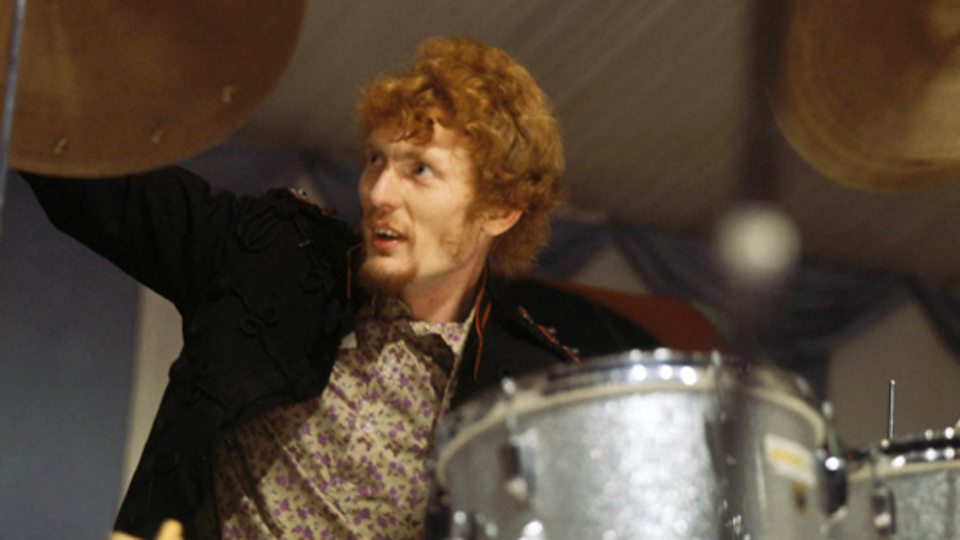
7…Ginger Baker, Cream – If this was a list of “likable people” Ginger would not be in the top 1000 but his drumming was some of the best of the sixties and I’m sure he would say “ever”… He was as big of part of Cream’s sound as Clapton or Bruce.
8…Bobby Elliot, Hollies – Drummer from the Hollies that other drummers have admired. He hit the drums hard and his fills were great… He is often overlooked but he is always spot on.
9…Dave Grohl, Foo Fighters, Nirvana – He can play anything… He fuels those Nirvana songs…and is really great at whatever instrument he plays.
10…Clem Burke, Blondie – An exciting drummer that was heavily influenced by number 1 on this list. He has played with Pete Townshend, Bob Dylan, Iggy Pop, and David Bowie.
Honorable Mention
Gene Krupa, Buddy Miles, Mick Fleetwood, Max Weinberg, “D.J.” Fontana, Benny Benjamin, Stewart Copeland, and Hal Blaine.
Yes, I know… No Neil Peart…yes he is a great drummer…just not my style of music.
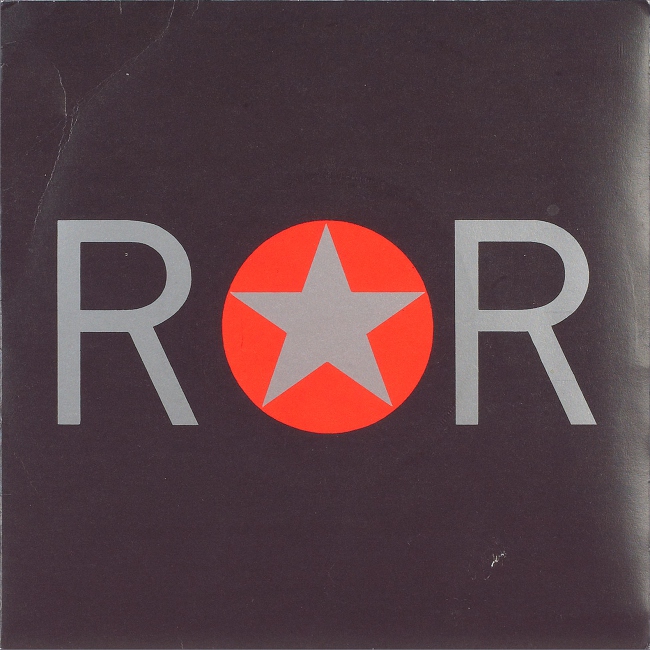
Ringo Starr and Robin Cruikshank formed a partnership in 1969 and they were located in the Beatles Apple building on Savile Row. In 1972 relocated with Apple to 54 St James Street.
Robin had originally worked for Ringo to design a stainless steel fireplace for Ringo and his wife Maureen. Ringo started to give Robin some suggestions and the two started to worked together on furniture and different designs for years after that. The partnership lasted until 1986 and after that Ringo let Robin use the name so Cruikshank could continue different projects.
If you ever run across anything made by RoR you probably have something very valuable.
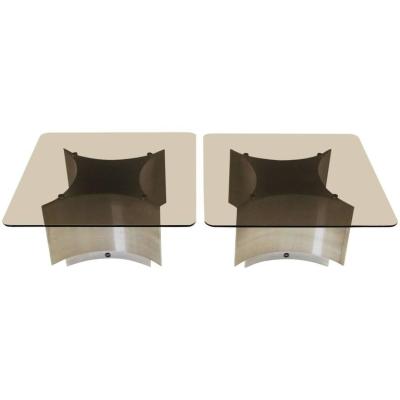
Below was designed by RoR. I can’t imagine what it would have cost. I would take it in a second.
I remember seeing the below item on the news. Very expensive because they didn’t use reproduction parts…they all had authentic Roll Royce grills.
Here are some tables by RoR.
Below is Robin’s website featuring his new designs plus much more history.
You would think this would be a dream come true…but having sudden fame thrown on you without acclimating could be a bad thing.
In June of 1964, Ringo Starr collapsed with tonsillitis with a tour coming up. Ringo had to go to the hospital. The Beatles wanted to cancel the tour rather than go out without their drummer. Brian Epstein and George Martin did not want the momentum they help create to stop and disappoint all of the fans.
George Harrison said it would not be the Beatles without Ringo. As Brian and George Martin tried to reason with them all, George Harrison said that they would have to find two replacements because he would not go without Ringo.
Epstein and Martin pleaded with them and told them about all the fans they would disappoint. It would only be until Ringo was well again.
Someone actually brought up Pete Best’s name. John Lennon said no because that would be bad for him because he would think he was back in the band. George Martin looked up drummers and finally found Jimmie Nicol. He was the drummer for an unknown group called The Shubdubs and also did some studio work. Martin thought he was a good fit so they rang him up.
Jimmie came over to Abbeyroad for the rehearsal. He had played Beatle songs before so he knew the arrangements. The Beatles were welcoming to Jimmie knowing he was in a tough spot. A little over 20 hours later he as playing his first concert with them in Copenhagen. Denmark. He was given the Beatle haircut and he even wore Ringo’s suit. He as reportedly paid 2500 a show…which was a huge amount in 1964.
Sudden fame can be a hard thing to handle. Jimmie said that before he played with the Beatles no girls were interested in him but while he was with them that girls were everywhere. Supposedly Jimmie and John spent a night in a brothel.
Jimmie played eight shows altogether with The Beatles and thirteen days altogether with them… before arriving in Melbourne. Austrailia where Ringo was well enough to play again. During his time with The Beatles, he did help inspire a song 3 years later. Every time John and Paul asked him how he was doing he would always answer “Getting Better.” Paul thought of this in 1967 while walking his dog and ended up with John writing “Getting Better” for Sgt Pepper.
After it was over he declared bankruptcy in 1965 but he eventually joined a band that had some success called The Spotnicks and they did two world tours. He eventually moved to Mexico and then got out of music. Here are a couple of his quotes.
“The day before I was a Beatle, not one girl would look me over. The day after … they were dying just to get a touch of me. Strange and scary all at once. It’s hard to describe the feeling but I can tell you it can go to your head. I see why so many famous people kill themselves.”
The last quote is telling of his character.
“After the money ran low, I thought of cashing-in in some way or other. But the timing wasn’t right. And I didn’t want to step on The Beatles’ toes. They had been damn good for me and to me.”
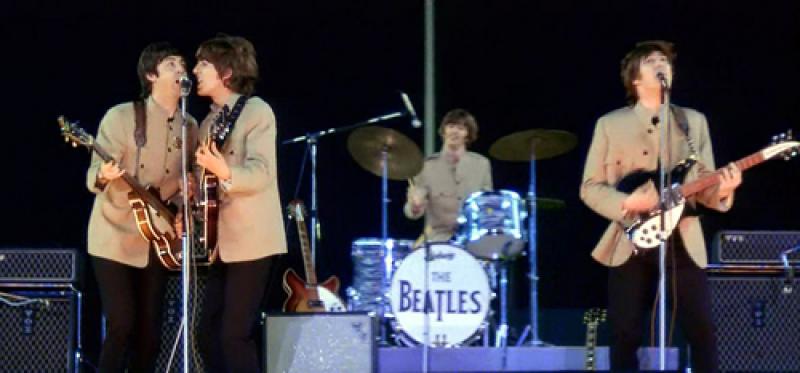
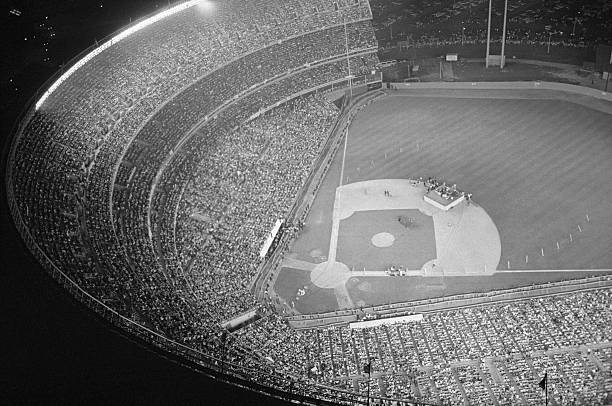
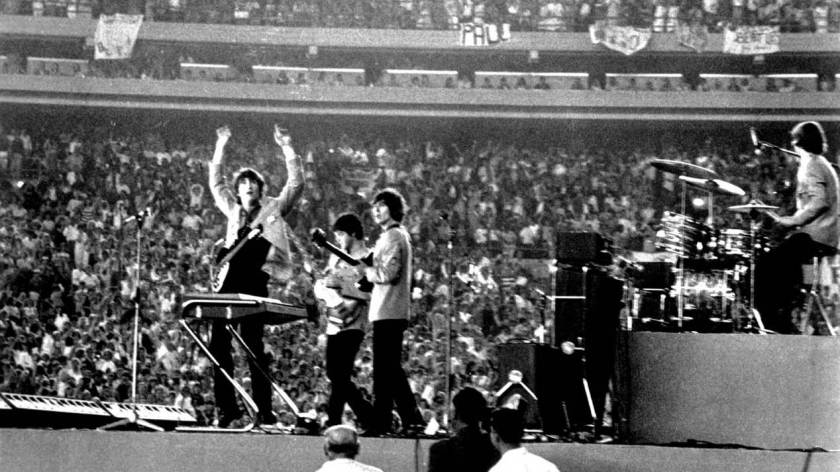
On August 15, 1965 The Beatles played to the largest audience to that point of any rock band. 55,600 fans were in Shea Stadium ready to be entertained by the Beatles.
Looking at the equipment they had…it had to be hard to hear anything. They used 100 Watt Vox amps. They are great amps but they used the house PA in a baseball stadium. I’ve played much smaller outside events with more powerful equipment and most importantly a better PA…but it didn’t matter at the time though as Ringo said:
“We always used to use the house PA,” added Starr. “That was good enough for us, even at Shea Stadium. I never felt people came to hear our show — I felt they came to see us. From the count-in on the first number, the volume of screams drowned everything else out.”
The fans turned Beatle concerts…and especially this one into an event more than a concert. The Beatles were very aware of the magnitude of this concert. ABC filmed the concert and it became a documentary. The looks on the Beatles faces were “Can you believe this?” and they seem to really enjoy this concert. The screams come through when you watch the documentary. They drown out everything. Luckily they plugged the recording equipment into the soundboard so at least you can hear them.
During the closing song, “I’m Down” John was playing the organ and you can tell he was having a great time. He was playing this his arms and cracking up George as well. John once told Sid Berstein who promoted the concert “You know, Sid, that concert in 1965 at Shea Stadium … I saw the top of the mountain on that unforgettable night.'”
The Shea Stadium total was an attendance record that lasted until Led Zeppelin played to 56,800 in Tampa in 1973. That record was soon broken by The Who. The difference being by then the rock crowd had grown up and so had the equipment.
The 12 song Beatles setlist that lasted a whole 30 minutes.
Twist and Shout
She’s a Woman
I Feel Fine
Dizzy Miss Lizzy
Ticket to Ride
Everybody’s Tryin’ to Be My Baby
Can’t Buy Me Love
Baby’s in Black
Act Naturally
A Hard Day’s Night
Help!
I’m Down
Like so many of The Beatles achievements…They were pioneers.
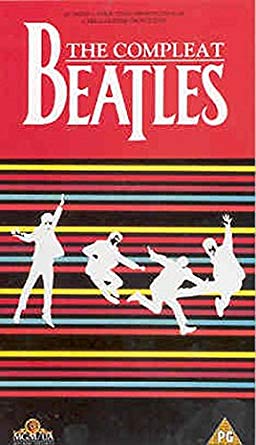
This is what Beatle fans had until the Anthology came out in 1995 and turned a new generation onto the Beatles. I wore out the recorded VHS copy my cousin gave me. It is a two hour documentary of the Beatles. It was narrated by actor Malcolm McDowell (Clockwork Orange) and was well done. I remember watching this and “The Kids Are Alright” in the 80s. It was nice seeing the footage that was not as available as today.
I do remember some small frustrating parts of it. I think it was “Hey Jude” about to begin (David Frost Show) and whoever cut the film placed a George Martin voice over during some of the performance. Remember this was a time when you couldn’t just go on youtube and see performances. Overall it was very well made. I still have a copy of it somewhere. Paul McCartney bought out the negative rights to the film in the 1990s to clear the way for Anthology and below is that story from Wikipedia.
The Compleat Beatles was initially released as a PBS documentary in the United States, and then on VHS, Betamax, CED and Laserdisc that same year on the MGM/UA Home Video label. The 1982 Laserdisc was released in both Analogue and Stereo versions, as well as being released in Japan and England (in PAL format) in 1983.[3]
The film did very well, and in 1984 Delilah Films and Metro-Goldwyn-Mayer arranged for it to be released theatrically in the U.S. by a small distributor named Teleculture. This contributed to its continuing to be a best seller on VHS. Some years later, when Paul McCartney was preparing The Beatles Anthology, he bought the negative and all the rights to the film from Delilah to get it off of the market and clear the way for his production. That, according to the film’s director Patrick Montgomery, is why it is not available on DVD or any newer formats and “probably never will be.”
If you find a copy somewhere buy it…it is worth it. Even if you already have Anthology. The Beatles Anthology is far superior but it does make a good companion piece.
This is from Rolling Stone magazine. It went over the other documentaries of the band. They make a good case for The Compleat Beatles. The link to the page is:
Again nothing has compared to the Anthology but The Compleat Beatles was very well done.
But one Beatles doc you might not know – and its cause has not been helped by not having an authorized DVD release yet – is 1982’s The Compleat Beatles, written by David Silver, directed by Patrick Montgomery, and narrated by Malcolm McDowell, chief droog from Stanley Kubrick’s A Clockwork Orange. Clocking in at two hours – and titled in the spirit of The Compleat Angler, England’s definitive book on fishing, from 1653 – The Compleat Beatles tells the band’s entire story, from pre-fame days, with checkpoints at each album, right up through the breakup. It’s brimming with keen musical analysis, and a coterie of voices you normally don’t get with a Beatles documentary.
For a long time, in the VHS era, it was a staple of high-school music teachers, starting 35 years ago in the summer and fall of ’82. If you were lucky enough to have had the TV set wheeled in by a Beatles-mad instructor, you know this is a special film.
Here are 10 reasons to check out this overlooked masterwork of the Beatles’ cinematic canon.
1. Writer David Silver had a pitch-perfect understanding of the Beatles’ career arc – and importance in their time and beyond. “Poets of a generation, heroes of an era,” The Compleat Beatles begins, with Malcolm McDowell reciting Silver’s lines with Shakespearean gravity. This is to be a proper assessment of a band that was so much more than a rock & roll collective, something we’re made to feel immediately. “Like all poets and heroes, they reflected the spirt of their times.” The early sequences in the film present footage of a bygone Liverpool, which looks pretty grim, as if nothing mercurial could emerge from this seaport. When the opening chords of the Beatles’ cover of Chuck Berry’s “Rock and Roll Music” kick in, the film itself seems to pop with possibility, as if infused with Beatle-esque spirit. There was nothing the band couldn’t do, and now there will be nothing this movie can’t do.
2. Gerry Marsden was an ace witness to what the Beatles were doing. The leader of Gerry and the Pacemakers, perpetual Liverpudlian also-rans, Gerry Marsden was always broad-spirited when it came to talking about the band that so outpaced his own, but you don’t get to hear him very much on film. Here he explains how the Liverpool acts were able to transform skiffle into something far grittier from what he terms the “ackky dacky” sounds of Lonnie Donegan. First he whips out a guitar to show how Donegan would play “Jambalaya,” before remarking “we’d get the record and we’d rock it up a little bit,” entering forth into a cool little demonstration. It’s a great primer for how the Northern bands were able to develop their own sound from what was a reductive, chipper genre in skiffle.
3. Early manager Allan Williams was quite the character. Williams liked his tall tales, and the Beatles basically screwed the guy over after he hooked them up with Hamburg and they jumped ship for Brian Epstein, but Williams clearly loved reminiscing about his relationship with the band, which would continue on for a while still. (And resurface later when the legality of the Hamburg Star Club tapes was in dispute.) He describes a letter from Howie Casey of Derry and the Seniors begging him not to send “that bum group the Beatles” over to Hamburg, for fear that this would mess up everyone else’s good thing. Williams then goes on to (accurately) describe the style of then-drummer Pete Best as not very clever. Hardly a feeling-sparer, which is probably why the likes of John Lennon liked him – at least for a while.
4. George Harrison’s mom deserves serious props. The Compleat Beatles does an excellent job of synthesizing how the Beatles came together in their pre-fame years (complete with an image of John Lennon’s report card decrying his “insolence”), with a clear, concise chronology, and valuable insight directed towards the subject of George Harrison and his mother. Most Beatles studies focus, in terms of maternal subjects, on Lennon and his mother, Julia, and Paul McCartney and his late mother, Mary, but Mrs. Harrison knew a thing or two about rocking out. “To his classmates, George Harrison was the boy whose father drove the bus they all rode to school,” McDowell states. “His mother sat up with him night after night as he taught himself how to play Buddy Holly songs,” with his inclusion in the Quarrymen assured because “his mother could tolerate their noisy rehearsals.” Way to go, Mrs. H.
5. Reeperbahn mainstay Horst Fascher was one badass MF. The Compleat Beatlesmakes commendable use of the underrated Star Club material to soundtrack several scenes, and it’s a delight when self-professed Beatles protector Horst Fascher turns up on camera. He made sure that they didn’t get in too much distress on their first Reeperbahn forays, or, as he puts it in the film, “If you are in trouble with some girls who are prostitutes, and you don’t know the girls are prostitutes, and the pimps find out, you can get in a lot of trouble,” which made Horst the guy to seek out to cure your ills and keep your ass intact, given that he was a former boxer who had been booted from competition for killing a sailor in a street fight. Ah, Hamburg.
6. The Litherland Town Hall show from December 27th, 1960, was the watershed gig of the Beatles’ career.The film also features a number of segments with Bill Harry, a friend of the band who was instrumental in spreading the good word about them in Liverpool – even before they deserved it – with his Mersey Beatmagazine, which documented the comings and goings of life on the local beat scene. Harry gives the backstory for the gig that would change the Beatles’ career. “They came back from Hamburg still as an unknown band,” Harry remembers, but he promoted they hell out of them, “because they were close friends of mine.” This got a promoter to book them at Litherland Town Hall, shortly following Christmas in 1960. Allan Williams was there, too. “The moment the Beatles struck up and did their stomping, every kid froze, and then they ran to the stage and started screaming.” That would be the gist of a lot of what was to follow.
7. According to George Martin, “Yesterday” was the crucial pivot point for the band’s sonic development. Martin is eloquent throughout The Compleat Beatles: erudite, dapper, utterly sure of himself, being interviewed in a recording studio by his console, with no Beatles intruding with misremembered bits of info, something that dogged the Anthology. It’s just Martin, holding a master class in what it was like from his end to work with these guys. “They always wanted to have new ideas and sounds coming through. I found that they were almost more inquisitive than I was. In fact, in the end, it kind of exhausted me. Sometimes they knew what they wanted to do, but more often than not, they didn’t,” coming across like Yoda both frustrated and blown away by the gifts of Luke Skywalker. Regarding “Yesterday”: “It isn’t really a Beatles song,” Martin remembers saying to McCartney, then goes through how he made his pitch for the Beatles to forsake their standard drum-bass-guitar attack, which would become, through various methods, the mode of the future.
8. The doc features the coolest, trippiest, most cost-effective visual evocation of “Tomorrow Never Knows” ever filmed. McDowell’s narration intones that “Two of John’s songs ‘She Said She Said’ and ‘Tomorrow Never Knows’ were the results of his recent experiments with drugs” – fair enough – as a quick tour of Revolver begins, but what follows is brilliant: Using only the cover of the album, director Montgomery, through a series of sweeps, pans and fast dissolves, gives us something of a visual acid trip, as “Tomorrow Never Knows” blasts from the soundtrack. Once you see the effect, it’s hard to disgorge it from your mind each time going forward that you hear that mindblower of a track.
9. The band’s final world tour was pure terror, and no film better evokes it.With a collage of on-the-street interviews, footage from Beatles record burnings and people getting hurt at shows as frantic MCs plead for calm, The Compleat Beatlesprovides a strong sense of why touring had to stop for the band. As the footage unfurls, there’s a low droning figure in the soundtrack, sort of like the protracted hum of the final chord on the Sgt. Pepperalbum stretched out for several minutes. We also get a self-righteous cop in Minneapolis who goes on at some length about how much he hates the Beatles: “As far as Beatle music, I could care about it not one bit personally … one of their group, with the British accent, told us they would never come back to Minneapolis, and I told him that would be too soon for me.”
10. In Martin’s view, the Beatles were fated to become huge. George Martin has a lot of key lines regarding his four upstarts and their career. At one point he states, “Without Brian Epstein, the Beatles wouldn’t have existed,” by which he means that success would not have come to them and they would not be the galvanic entity we all know. But Martin is in downright Socratic mode, though, when he ventures towards a larger explanation for that success. “I think that the great thing about the Beatles was that they were of their time, their timing was right. They didn’t choose it – someone chose it for them. But the timing was right, and they left their mark in history because of it.”
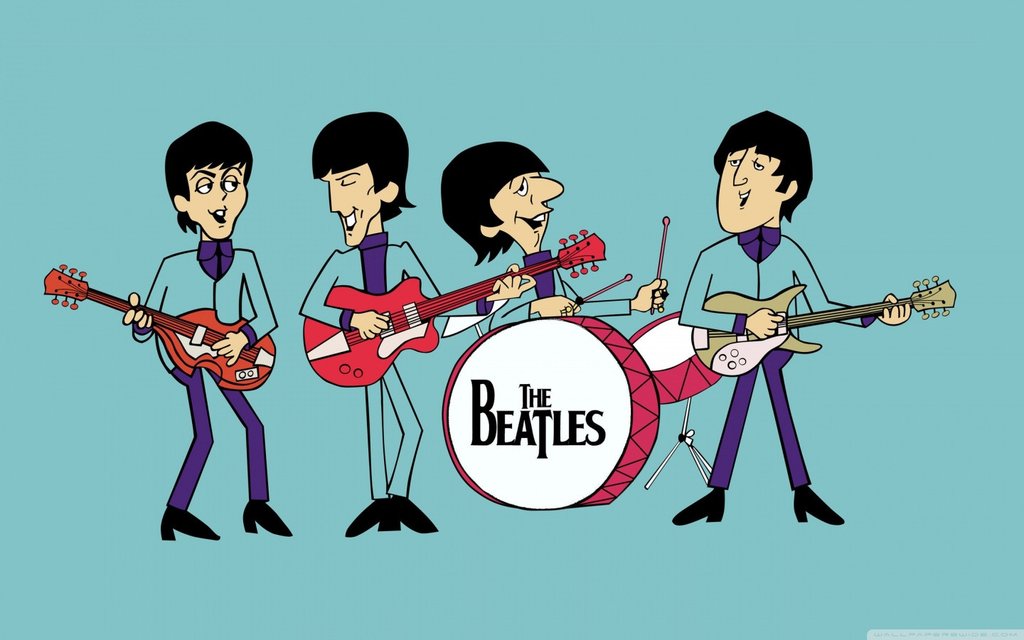
I have all 39 episodes taken from VHS tape but you can view most on youtube. The cartoon reminds me of the style of Rocky and Bullwinkle. John and George were voiced by Paul Frees who did the voice for Boris Badenov on Rocky and Bullwinkle. They ran on ABC from 1965-1969 though only 65-67 were first run episodes.
The show was made on the cheap and the cartoon Beatles were put in usual cartoon situations like a jungle, haunted house, or on a boat. The main thing was to play a Beatle song in the background while our heroes got out or into a jam.
They were a rating success. I watch them now and think…why not get actors with real British accents to voice them? They are silly and fun but George especially had no accent at all. The Beatles had nothing to do with them and didn’t really like them at first when they were first on air. They started to appreciate them more as time went on.
With season 3 you start seeing more pop art being incorporating in the episodes. They have segments where flower power framed the newer songs. Some of the segments looked really good but then they would go back to their younger selves. Some of the episodes could be considered so bad they are good…but I like them.
I never got to see these until the 1980s.
Below is some samples of it.
Below are the episodes descriptions from Wikipedia
Season 1 (1965–66)
1. A Hard Day’s Night / I Want to Hold Your Hand: The Beatles are in Transylvania rehearsing in a haunted house with “monstrous” visitors, including a vampire, a ghost, a werewolf, and a witch, with a parody of Boris Karloff; To hide from their fans, the Beatles run inside a diving bell which drops them into the ocean with a lovesick octopus. Sing Alongs: Not A Second Time / Devil In Her Heart
2. Do You Want To Know A Secret / If I Fell: The Beatles go to Dublin, Ireland for the weekend where they meet a leprechaun named Wilhelmina Morris; John is kidnapped by Dr. Dora Florahyde and Igor, both of whom want John’s brain for their monster. In the I Want To Hold Your Hand Sing Along, Ringo is shown inside a submarine. Sing Alongs: A Hard Day’s Night / I Want To Hold Your Hand
3. Please Mr. Postman / Devil In Her Heart: Ringo loses 15 rings he bought with all of the Beatles’ spendings and they are expecting a telegram from manager Brian Epstein for more money; Ringo wanders into the woods in Transylvania where he meets a witch who wants Ringo for a husband. Sing Alongs: If I Fell / Do You Want To Know A Secret
4. Not A Second Time / Slow Down: The Beatles abandon their flight and land in Africa while trying to get away from their fans, but three girls keep tracking them down. They later encounter a few crocodiles; The Beatles are on the way to the town Ringo Ravine (named after Ringo) until they encounter a donkey that smells gold named “Gold Nose”. Sing Alongs: Baby’s In Black / Misery
5. Baby’s In Black / Misery: Paul gets kidnapped by Professor Psycho who wants Paul to marry his creation Vampiress, half girl and half bat; The Beatles go to a wax museum where a vampire follows them. Sing Alongs: I’ll Get You / Chains
6. You’ve Really Got A Hold On Me / Chains: In Africa, Ringo asks a medicine maker named Jack to help fix the Beatles’ flat tire. He then turns a worm into a snake and it lusts for Ringo; After getting knocked out, Ringo dreams about himself as Captain William Bligh from the movie Mutiny on the Bounty (1962). Sing Alongs: Slow Down / Honey Don’t
7. I’ll Get You / Honey Don’t: The Beatles run into hunter Alan Watermain (a parody of Alan Quartermain) in Africa after escaping from their fans and go out hunting for a lion; Ringo is mistaken as a bull rider, and the cowboys send him to ride on a super-tough bull named Honey. Sing Alongs: You’ve Really Got A Hold On Me / Any Time At All
8. Any Time At All / Twist and Shout: The Beatles imagine themselves as the Three Musketeers (Plus One) while they are on a tour at a museum in France; The Beatles attend an art show where a girl tries to be like other artists. They inspire her with music. Sing Alongs: I’ll Be Back / Little Child
9. Little Child / I’ll Be Back: A Native American girl on a Texas Indian reservation wants to prove that girls are as good at trapping as boys are by trapping the Beatles; The mayor of a Texas town gives Ringo a golden guitar as a gift, only to be stolen by three men, prompting the Fab Four to hunt for the thieves and get the guitar back. (The song “Ticket to Ride” is heard at the beginning of this episode.) Sing Alongs: Long Tall Sally / Twist And Shout
10. Long Tall Sally / I’ll Cry Instead: The Beatles stay at a castle for the night during a fog. John and Ringo try on a couple of cursed armor suits and start to fight each other; After signing too many autographs in Japan, George’s hand gets swollen and suffers “autographitis”. His bandmates take him to a hand doctor but end up in a karate class by mistake. Sing Alongs: I’ll Follow The Sun / When I Get Home
11. I’ll Follow the Sun / When I Get Home: The Beatles’ car breaks down and they are captured by a highwayman who happens to be a car repair man; The Beatles explore the Notre Dame in France where they later meet its famous hunchback Quasimodo. Sing Alongs: I’ll Cry Instead / Everybody’s Trying To Be My Baby
12. Everybody’s Trying To Be My Baby / I Should Have Known Better: The Beatles, spending the night at a temple in Japan during a rainstorm, are mistaken for Japanese ancestors of four girls; The Beatles are in Rome trying to find a theater to rehearse. Their last resort is the Coliseum. Sing Alongs: I’m A Loser / I Wanna Be Your Man
13. I’m A Loser / I Wanna Be Your Man: In Hollywood, Ringo gets hired as a stuntman by Incredible Pictures Inc. and ends up in the hospital after getting pulverized in many scenes; In Rome, the Beatles buy a statue of the Goddess of Musica made from stolen gold coins melted down and sculptured. Sing Alongs: No Reply / I’m Happy Just To Dance With You
14. Don’t Bother Me / No Reply: In Rome, The Beatles are being followed by two spies who are after their songbook, “New Beatle Songs”, marked “Top Secret”. The Beatles movie Help! and Oddjob from the James Bond movie Goldfinger are spoofed; In Japan, The Beatles are warned by a Charlie Chanlookalike about a jewel thief named Anyface. Things become complicated when Anyface shows up disguised as Paul. Sing Alongs: It Won’t Be Long / I Should Have Known Better
15. I’m Happy Just To Dance With You / Mr. Moonlight: The Beatles are in a Roman Street Festival where Paul wins a dancing bear named Bonnie; The Beatles meet Professor Ludwig Von Brilliant who is on a mission to view an eclipse. After being adrift at sea, they escape from an island on a submarine. Sing Alongs: Don’t Bother Me / Can’t Buy Me Love
16. Can’t Buy Me Love / It Won’t Be Long: John is given a friendship ring from a Polynesian tribal chief, which means he must marry the chief’s New York-accented daughter who dislikes pineapples; While picnicking in Japan, John goes for a swim in a pond with shrinking potion in it and gets shrunk. The other Beatles think John is a Beatle doll and chase after him. Sing Alongs: Anna (Go to Him) / Mr. Moonlight
17. Anna / I Don’t Want To Spoil The Party: In Japan, Paul gets lured into a ghost ship called “Ah-Nah”. The other Beatles dash off to the rescue before they might lose Paul for good; Paul, George and Ringo sneak away from John and go to Greenwich Village for some fun time at a Beatnik party rather than going to a museum. Sing Alongs: Matchbox / Thank You Girl
18. Matchbox / Thank You Girl: In Hawaii, John buys a trailer for the group to stay in rather than staying at a hotel so many times. They later encounter a group of Hawaiians who are evacuating from a volcano; The Beatles sneak away from their manager to get something to eat at a French restaurant by enrolling in a cooking course. Sing Alongs: I Don’t Want To Spoil The Party / Help!
19. From Me To You / Boys*: In Hawaii, a surfer named Surf Wolf challenges George to a surfing duel; The Beatles participate in a Mr. Hollywood Contest in California. Sing Alongs: Please Mr. Postman / I Saw Her Standing There Note: The opening title erroneously shows “With Love From Me To You”
20. Dizzy Miss Lizzy / I Saw Her Standing There: John and Paul secretly sign George up to an ice boat race, and he partners up with a girl named Lizzy; In Madrid, John and Paul visit a restaurant where John develops a hot foot with ashes in his boot. Rosita falls for John, and her boyfriend Jose challenges John to a duel. Sing Alongs: Ticket To Ride / From Me To You
21. What You’re Doing / Money*: The Beatles are on a fishing trip, and Ringo runs into gypsies. One of them falls for Ringo and wants to marry him. George comes in as a woman claiming he’s engaged to Ringo to get him back; John puts Ringo in charge to keep their money safe in his jacket pocket. Later Ringo is being followed by a mystery man at a carnival who is after the money. (The song “Help!” is heard at the beginning of this episode.) Sing Alongs: Dizzy Miss Lizzy / All My Loving
22. Komm Gib Mir Deine Hand* / She Loves You: The Beatles visit the Bavarian alps mission is to climb up a mountain with the dog Gunthar to put up their own flag on top; The Beatles are about to rescue a girl who they think is held as a prisoner on a ship. As a result, her boyfriend, a knife thrower, comes to her defense…with knives. Sing Alongs: Bad Boy / Tell Me Why
23. Bad Boy / Tell Me Why: The Beatles visit the Bavarian Alps. They encounter a runaway named Hans who wants to be a Beatle, prompting The Fab Four to run after him with their music (in which Paul plays the bass right-handed) and take him back home. (The song “Slow Down” is heard in the background); In Spain, Ringo is the jockey of a donkey that can run like a horse whenever she hears loud music. Sing Alongs: Please Please Me / Hold Me Tight
24. I Feel Fine / Hold Me Tight: Paul thinks Hollywood’s a phony. Actor Dick Dashing wants to prove Paul he is wrong by putting him in some different movie scenes; In New York, George and Ringo visit the Statue Of Liberty until they have spotted a man with a package which they think is a bomb. Sing Alongs: What You’re Doing / There’s A Place
25. Please Please Me / There’s A Place: In Madrid, a bull named El Taco gets knocked out, and the Beatles decide to help out with the bullfight with Ringo as the matador, and John and Paul as the bull; John’s sympathy helps a trained ape named Mr. Marvelous escape from the television studio and go out to explore the outside world. Sing Alongs: Roll Over Beethoven / Rock And Roll Music
26. Roll Over Beethoven / Rock and Roll Music: The Beatles are on their way home after visiting New York City until Paul gets grabbed by an elephant named Beethoven; The Beatles are invited to play at the Duke’s Palace, but they are mistaken for a string quartet. Sing Alongs: I Feel Fine / She Loves You
Season 2 (1966)
27. Eight Days A Week / I’m Looking Through You: A great movie lover named Lips Lovelace loses his ability to kiss. Paul decides to take his place in the studio with a leading lady who falls for him; The Beatles are in Egypt. They are wandering around in a pyramid until Ringo encounters a ghost who wants a body, and he chooses Ringo’s. Sing Alongs: Run For Your Life / Girl**
28. Help! / We Can Work It Out: Paul and Ringo go to a fashion show in Paris, but the designs are stolen by a thief named Jacques Le Zipper. Paul chases Jacques to the Eiffel Tower, and has trouble with heights; George becomes superstitious. The Beatles encounter the Lucky Wizard who is really a thief trying to give them bad luck and rob their money. Sing Alongs: The Night Before** / Day Tripper
29. I’m Down* / Run For Your Life: The Beatles are on a tour at a wine factory in France where Ringo accidentally knocks down a vat of wine. If it does not get fixed in two hours, the factory will go out of business; The Beatles are on a tour at the Palace of Versailles. Ringo gets knocked out by a statue, and dreams about the days of Marie Antoinette. Sing Alongs: Eight Days A Week / Paperback Writer
30. Drive My Car* / Tell Me What You See*: The Beatles help a young man and his girlfriend get their old jalopy running in a car race, the Popsville Hot Rod Race; While visiting “the man of a thousand faces”, The Beatles fool around with his makeup machine and change into different characters. (John briefly imitates Jimmy Durante and Swee’Pea from “Popeye” makes a cameo.) Sing Alongs: Yesterday** / We Can Work It Out
31. I Call Your Name* / The Word*: Ringo is convinced to release his pet frog Bartholomew in the swamp. Later a movie producer offers a filming deal to Ringo and the frog, and the Fabs have dashed off to find Bartholomew; The Beatles are being punished after gazing at the girls’ unveiled faces. The only way to get out of the situation is to say the password: “love”. Sing Alongs: She’s a Woman** (original broadcast, replaced with a repeat of I Feel Fine) / Wait
32. All My Loving / Day Tripper: The Beatles are in India where they learn how to charm an animal at an “Indian Charm Skool”. When the animal is revealed to be a tiger, they use music to tame it when it is about to claw John and Ringo (The song “Love You To” is heard in the beginning of this episode.); After watching the movie The Way Out Creatures From Planet Glom, the Beatles take a trip out into space with a beautiful woman who is actually an alien taking them on a one-way trip 23 billion miles from Earth. Sing Alongs: I’m Looking Through You / Nowhere Man
33. Nowhere Man / Paperback Writer: The Beatles walk into a cave for some exploring which is a home of a hermit who wants to be alone. He tries to get rid of them, but no luck; Each of the Beatles write fictional stories of how they met with Ringo as a theatre actor, Paul as a scientist, George as a secret agent, and John as a war pilot. Sing Alongs: And I Love Her** / Michelle**
Season 3 (1967)
34. Penny Lane / Strawberry Fields: In a spoof of James Bond, the Beatles are jealous of a detective named James Blonde who gets more attention from many women, so the Fab Four head to their hometown of Liverpool to stop a robbery on Penny Lane so they can be heroes; Traveling with their driver James, the Beatles use music to add color and happiness to the lives of the children at an orphanage, a reference to Strawberry Field in Woolton, a suburb of Liverpool. John sums up the experience with “It’s all in the mind, you know.” Sing Alongs: Good Day Sunshine / Rain**
35. And Your Bird Can Sing / Got To Get You Into My Life: The Beatles and a couple of hunters hunt for a rare bird called a green double-breasted tropical woosted that can sing anything, including “Hound Dog” and “She Loves You”; The Beatles are in India, learning how to escape from their bodies from Swami Rivers. It works, but the problem is that the souls’ bodies are moving by themselves, and they must get them before it’s too late. (“Love You To” is heard in the background) Sing Alongs: Penny Lane / Eleanor Rigby
36. Good Day Sunshine / Ticket To Ride: Ringo thinks he’s a jinx. When the Beatles arrive at Carney Island, it starts to rain. Their music turns the rainy day back into a sunny day which makes Ringo happy. (The song “Little Child” is heard at the end of this episode.); The Beatles each have their own hobby. Paul paints, George builds a three-eyed robot, John writes and Ringo collects “birds” which is an English slang term for girls. Paul releases the only one Ringo caught and he runs after her. Sing Alongs: Strawberry Fields Forever / And Your Bird Can Sing
37. Taxman* / Eleanor Rigby: The Beatles get knocked out while carrying tons of money to the bank, and dream about the days of Robin Hood. Paul exclaims: “It never happened”; A group of children claim that an elderly woman named Eleanor Rigby is a witch. The Fabs tell them the true story about Eleanor Rigby in a song. (The song “I Feel Fine” is heard at the end of this episode.) Sing Alongs: Got To Get You Into My Life / Here, There and Everywhere**
38. Tomorrow Never Knows*/I’ve Just Seen a Face*: The Beatles fall into a well and end up in the inner world with foreign natives. The chief wants the Fabs to marry his daughters, and they began to run away. (The song “Love You To” is heard during this episode.); Ringo loses his singing voice. For treatment, his three mates send Ringo to a haunted house to scare his voice back. Sing Alongs: She Said She Said** / Long Tall Sally (repeat)
39. Wait / I’m Only Sleeping*: The Prince of Krapotkin’s girlfriend is in grave danger. The Beatles help him to save her from the Prime Minister who wants to marry her; John falls asleep while telling a story to a couple of children. In his dream he volunteers to help King Arthur and Merlin slay a vicious dragon. However, John and his mates opt instead to play music to put the dragon to sleep. Sing Alongs: Penny Lane (repeat) / Eleanor Rigby (repeat)
















 PowerPop... An Eclectic Collection of Pop Culture