Paul McCartney came to Nashville in 1974 to record some and promised he would be back to actually play live…well he did although it was 36 years later. 2010 was his first Nashville concert ever. The closest the Beatles got to Nashville was in Memphis in 1966.
A year after he came to Nashville in 1974 I became a very young Beatles fan. Read everything, listened to everything that I could get my hands on, and saw what limited things I could. In the 80s I got to see some of the rooftop Let It Be concert on MTV. It was like the pictures I’d seen coming to life…it made it real…or as real as it got to me.
When the Paul McCartney concert was announced in spring of 2010… I bought tickets right away. I just knew something would happen. The concert would be postponed or something awful would happen…there was no way I was going to see him. My wife, my son Bailey, and I had tickets. Sure enough…on the night of the concert…just a couple of hours before it started… a tornado did damage in Nashville (no injuries) and a warning was out for downtown. While we were there and I just knew…so this is how it’s all going to end…me with a McCartney ticket in my hand.
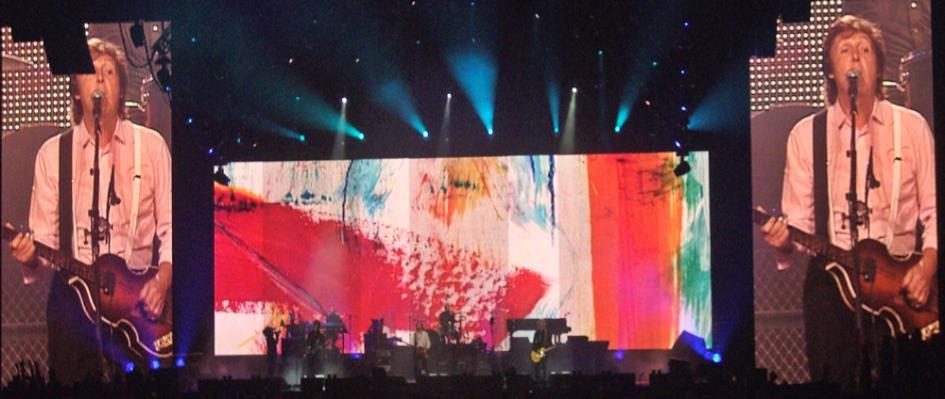
Waiting at the venue…McCartney came on an hour late to wait for all the warnings to die down. When he came on I was pretty much in shock…all the years reading, watching, and listening to the guy…he wasn’t yet real until he broke into “Venus and Mars” an old Wings song. I was 43 and I felt like a 12 year old kid and I was full of emotion. When he started his first Beatles song of the night…All My Loving…it was even more emotion. This is the man who played with Lennon, Harrison, and Starr at the Cavern Club, Hamburg, and all over the world.
I always was jealous of my friends who liked modern bands…who could just go and see them in concert when we were younger and buy their new records. Most of the bands I grew up liking had broken up or changed years ago.
The concert was worth the wait.
This was Bailey’s first concert…his second was Ringo, third was Paul McCartney again, and fourth was The Who…I told him he was lucky…my first concert was REO Speedwagon…no offense to them but there is no comparison. Jennifer actually got to see Elvis for her first concert…when she was a small child in 1976 in West Virginia…
Paul played around three hours of solo, Wings, Fireman, and of course Beatles songs. With as many songs as Paul has…he could have played most of the night without repeating a song. I saw him again in 2014 and again he was great and added a few more songs… but nothing will beat that first time.
Setlist for July 26, 2010
Venus and Mars
Rock Show
Jet
All My Loving
Letting Go
Got to Get You Into My Life
Highway (The Fireman Song)
Let Me Roll It
The Long and Winding Road
Nineteen Hundred and Eighty-Five
Let ‘Em In
My Love
I’m Looking Through You
Tequila (The Champs cover)
Two of Us
Blackbird
Here Today
Dance Tonight
Mrs. Vanderbilt
Eleanor Rigby
Ram On
Something
Sing the Changes (The Fireman song)
Band on the Run
Ob-La-Di, Ob-La-Da
Back in the U.S.S.R.
I’ve Got a Feeling
Paperback Writer
A Day in the Life / (With Give Peace A Chance Snippet)
Let It Be
Live and Let Die
Hey Jude
Encore:
Day Tripper
Lady Madonna
Get Back
Encore 2:
Yesterday
Helter Skelter
Sgt. Pepper’s Lonely Hearts Club Band (Reprise)
The End
This is one of McCartney’s best written songs. Like a lot of other great songs it builds… from McCartney’s lone voice and piano to a giant sing a long at the end. Hey Jude is one of the most famous songs in rock history.
This was their debut single for their new record company Apple. The A side was Hey Jude and the B side was Revolution. That is a great way to start. This was one of the best double A side singles ever.
The song was not on an album at the time. Hey Jude peaked at #1 in the Billboard 100, UK, Canada, and New Zealand in 1968.
Paul McCartney wrote this as “Hey Jules,” a song meant to comfort John Lennon’s 5-year-old son Julian as John and Cynthia were getting a divorce. The change to “Jude” was inspired by the character “Jud” in the musical Oklahoma! Paul went to visit Cynthia and Julian when the divorce was happening and he composed most of it then.
John wanted Revolution released as a single right away but when he heard this song he agreed to have Revolution as the B side.
It was the Beatles longest single, running 7:11. George Martin was afraid radio stations would not play it but John said ‘They will if it’s us.” When this became a hit, stations learned that listeners would stick around if they liked the song, which paved the way for long songs like “American Pie” and “Layla.”Disc jockeys loved it…they got a break.
The Beatles filmed a promotional video for this song, which was directed by Michael Lindsay-Hogg who directed Let It Be. He had the Beatles sing the song (the music was on a backing track) in front of an audience of about 100 people, who sang it with them. This was the closest the Beatles had come to a live performance since they had stopped touring two years earlier.
The clip first aired on the UK program The David Frost Show in 1968, and was quickly picked up by other shows, giving the song a big promotional push.
Paul McCartney:“I thought, as a friend of the family, I would motor out to Weybridge (John’s former home with Cynthia) and tell them that everything was all right: to try and cheer them up, basically, and see how they were. I had about an hour’s drive. I would always turn the radio off and try and make up songs, just in case…I starting singing: ‘Hey Jules – don’t make it bad, take a sad song, and make it better…’ It was optimistic, a hopeful message for Julian: ‘Come on, man, your parents got divorced. I know you’re not happy, but you’ll be OK.’ I eventually changed ‘Jules’ to ‘Jude.’ One of the characters in ‘Oklahoma’ is called Jude, and I like the name.”
Cynthia Lennon: “During the divorce proceedings, I was truly surprised when, one afternoon, Paul arrived on his own. I was touched by his obvious concern for our welfare and even more moved when he presented me with a single red rose accompanied by a jokey remark about our future. ‘How about it, Cyn? How about you and me getting married?’ We both laughed at the thought of the world’s reaction to an announcement like that being let loose. On his journey down to visit Julian and I, Paul composed the beautiful song ‘Hey Jude.’ He said it was for Julian. I will never forget Paul’s gesture of care and concern in coming to see us. It made me feel important and loved, as opposed to feeling discarded and obsolete.”
Paul McCartney:“I finished it all up in Cavendish (Paul’s home) and I was in the music room upstairs when John and Yoko came to visit and they were right behind me over my right shoulder, standing up, listening to it as I played it to them, and when I got to the line ‘The movement you need is on your shoulder,’ I looked over my shoulder and I said, ‘I’ll change that, it’s a bit crummy. I was just blocking it out,’ and John said, ‘You won’t, you know. That’s the best line in it!’ That’s collaboration. When someone’s that firm about a line that you’re going to junk, and he says, ‘No, keep it in.’
John Lennon:“He said it was written about Julian…but I always heard it as a song to me. If you think about it, Yoko’s just come into the picture. He’s saying: ‘Hey, Jude – hey, John.’ I know I’m sounding like one of those fans who reads things into it, but you can hear it as a song to me. The words ‘go out and get her’ – subconsciously he was saying, ‘Go ahead, leave me.’ But on a conscious level, he didn’t want me to go ahead. The angel inside him was saying, ‘Bless you.’ The devil in him didn’t like it at all, because he didn’t want to lose his partner.”
John Lennon:“Well, when Paul first played ‘Hey Jude’ to me…I took it very personally. ‘Ah, it’s me,’ I said, ‘it’s me.” He said, ‘No, it’s me!’ I said, ‘Check, we’re going through the same bit.’ So we all are. Whoever is going through a bit with us is going through it. That’s the groove.”
From Songfacts
This was named as the song most often referred to in literature in a list compiled by culture interpretation website Small Demons. Amongst the 55 books the site says it’s mentioned in are Stephen King’s Wolves of the Calla (“Why do people over here sing Hey Jude? I don’t know”) and Toni Morrison’s Paradise (“Soane had been horrified – and he drove off accompanying Hey Jude on his radio”).
Elvis Presley’s “Heartbreak Hotel” was runner-up on the list and Led Zeppelin’s “Stairway To Heaven” came in third place
In 1987 Julian ran into Paul in New York City when they were staying at the same hotel and he finally heard Paul tell him the story of the song firsthand. He admitted to Paul that growing up, he’d always felt closer to him than to his own father. In Steve Turner’s book The Stories Behind Every Beatles Song, Julian said: “Paul told me he’d been thinking about my circumstances, about what I was going through and what I’d have to go through. Paul and I used to hang out quite a bit – more than Dad and I did… There seem to be far more pictures of me and Paul playing at that age than me and Dad. I’ve never really wanted to know the truth of how Dad was and how he was with me. There was some very negative stuff – like when he said that I’d come out of a whisky bottle on a Saturday night. That’s tough to deal with. You think, where’s the love in that? It surprises me whenever I hear the song. It’s strange to think someone has written a song about you. It still touches me.”
The Beatles inner circle was shifting when Paul McCartney wrote this song. John Lennon had recently taken up with Yoko and cast off his first wife, Cynthia; McCartney had broken off his engagement with his longtime girlfriend Jane Asher. He was the only Beatle to reach out to Cynthia and Julian at this time.
The drive to the Lennon home in Surrey was one of reflection for McCartney, who thought about Julian and how difficult life could be as a child of divorce. He wrote the line, “Don’t make it bad, take a sad song and make it better” thinking about how he could encourage the boy.
Paul was conditioned to think up songs on this trip, as he used to drive to the home for songwriting sessions with John – there were instruments and recording equipment in the attic.
In a 2018 interview with GQ, Paul McCartney talked about how he came up with the idea for this song: “John and his wife Cynthia had divorced, and I felt a bit sorry for their son, who was now a child of a divorce. I was driving out to see the son and Cynthia one day and I was thinking about the boy whose name was Julian – Julian Lennon, and I started this idea, ‘Hey Jules, don’t make it bad, it’s gonna be OK.’ It was like a reassurance song.
So that was the idea that I got driving out to see them. I saw them and then I came back and worked on the song some more. But I like that name, Jude.”
This was the first song released on Apple Records, the record label owned by The Beatles. It was recorded at Trident Studios, London, on July 31 and August 1, 1968 with a 36 piece orchestra. Orchestra members clapped and sang on the fadeout – they earned double their normal rate for their efforts.
Paul McCartney on his songwriting partnership with John Lennon in Observer Music Monthly October 2007: “I have fond flashbacks of John writing – he’d scribble it down real quick, desperate to get back to the guitar. But I knew at that moment that this was going to be a good collaboration. Like when I did ‘Hey Jude.’ I was going through it for him and Yoko when I was living in London. I had a music room at the top of the house and I was playing ‘Hey Jude’ when I got to the line ‘The movement you need is on your shoulder’ and I turned round to John and said: ‘I’ll fix that if you want.’ And he said: ‘You won’t, you know, that’s a great line, that’s the best line in it.’ Now that’s the other side of a great collaborator – don’t touch it, man, that’s OK.”
This song hit #1 in at least 12 countries and by the end of 1968 had sold more than 5 million copies. It eventually sold over 10 million copies in the United States, becoming the fourth-biggest selling Beatles single there. Factoring in the price of records in 1968 vs. 1964, when the top-seller “I Want To Hold Your Hand” was released, “Hey Jude” might be the biggest earner.
When McCartney played this song for John Lennon and Yoko Ono, John interpreted it as being about him; he heard the line “You were made to go out and get her” as Paul imploring him to leave his first wife and go after Yoko (“I always heard it as a song to me,” said Lennon). This was one of Lennon’s more narcissistic moments, as he failed to grasp that the song was written for his son.
This was going to be the B-side to “Revolution,” but it ended up the other way around. It is a testament to this song that it pushed “Revolution” to the other side of the record.
George Harrison wanted to play a guitar riff after the vocal phrases, but Paul wouldn’t let him. Things got tense between them around this time as McCartney got very particular about how Harrison played on songs he wrote.
Julian Lennon didn’t find out that this song was written for him until he was a teenager. It was around this time that he reconnected with his dad, whom he would visit in New York from time to time until his death.
In terms of songcraft, this is one of the most studied Beatles songs. It starts with a vocal – Paul’s voice singing “Hey” – then the piano comes in (an F chord). The song gradually builds, with McCartney alone playing on the first verse, then the sounds of George Harrison’s guitar, Ringo’s tambourine, and harmony vocals by George and John. The drums enter about 50 seconds in, and the song builds from there, reaching a peak of intensity with McCartney delivering the “better… better… better” line punctuated by a Little Richard-style scream, then the famous singalong resolution.
The “na na na” fadeout takes four minutes. The chorus is repeated 19 times.
“Jude” is the German word for “Jew,” but nobody in the Beatles camp knew that. In 1967 and 1968, the group owned a retail store on Baker Street in London called the Apple Boutique, which they closed around the time this song was released. On the shuttered building, an employee scrawled the words “Revolution” and “Hey Jude” to promote the new Beatles single. Without proper context, this proved offensive to Jewish residents, who read it as hateful graffiti.
Wilson Pickett recorded this shortly after The Beatles did. His version hit #16 UK and #23 US and provided the name for his album. Duane Allman played on it and got a huge career boost when the song became a hit. He spent the next year as a session guitarist for many famous singers and then formed The Allman Brothers, who are considered the greatest Southern Rock band of all time.
Thanks to the communal nature of this song, it is sometimes used to pay tribute to those who have passed. When Paul McCartney and Ringo Starr appeared on the 2014 CBS special The Night That Changed America: A Grammy Salute to the Beatles, Paul dedicated the song John Lennon and George Harrison. Musicians who performed earlier in the show joined on stage for the ending, which closed the telecast.
In America, an album called Hey Jude (originally titled “The Beatles Again”) was released in 1970 containing this and several other Beatles songs that were released as singles or B-sides. The album has not appeared as a CD because Apple Records made the decision to copy only the British LP releases onto CD. In the ’60s the American record company managed to get extra LPs off the British releases by cutting down the number of tracks, then putting them out with singles and B-sides as additional albums.
As discussed in the DVD Composing the Beatles Songbook, while Paul wrote this song for Julian, in a lot of ways McCartney wrote this song about his brand-new relationship with Linda Eastman.
After the “Oh” in the crescendo, McCartney sings “YEAH!” in a non-falsetto voice. The note he hits is F Natural above male High C, a very difficult note for a male to hit in a non-falsetto voice.
The original 1968 version was recorded in mono, and many listeners find it far superior to the stereo remake from 1970, which is much more heavily produced.
On The Beatles Anthology 3, there is a version of this song with an introduction spoken by John and Paul: “From the heart of the black country: When I was a robber in Boston place You gathered round me with your fine embrace.”
“Boston place” (mentioned by Paul) is a small London street where The Beatles’ company Apple had just installed an electronics laboratory. In a more familiar scene, Boston Street was that street in which The Beatles ran for the title sequence of their film A Hard Day’s Night. John spoke of the “Black Country,” which was the name of the old smokestack industrial region in the middle of England.
Richie Havens played this at Woodstock when he opened the festival in 1969.
If you listen at about 2:55, you hear a sound from John Lennon while Paul keeps singing. It sounds like “Ohh!” at first, but it is really him saying “…chord!” You can barely hear it, but if you listen really closely, you can hear him say “Got the wrong CHORD.” He says “chord” much louder than the other words. And about two or three counts later, you can hear McCartney say “F**king hell.”
The song debuted at #10 in the Hot 100, and in doing so it made history by becoming the first ever single to reach the top 10 in its first week on the chart.
When the Beatles music was made available for download for the first time – on iTunes November 16, 2010 – “Hey Jude” was the most downloaded Beatles song that day.
McCartney played this at the 2005 Live8 concert in London. He started with “The Long and Winding Road” and flowed it into the end of “Hey Jude,” which closed out the Live8 concert.
Paul McCartney played this at the 2005 Super Bowl halftime show. He performed the year after Janet Jackson’s breast was exposed on stage, causing an uproar. McCartney was deemed a safe and reliable choice for a nudity-free performance.
Sesame Street did a parody of this (and tribute to healthy eating) called “Hey Food.”
With hundreds of crowd favorites to choose from in his catalog, Paul McCartney mixes up his setlists when he plays live, but this one always seems to stick. “I’ll switch up the songs, but I’ve got to do ‘Hey Jude’ because it is such fun and it’s great handing that over to the audience,” he told GQ. The greatest thing is, you feel this sense of community, and in these times when it’s a little dark and people are separated by politics and stuff, it’s so fantastic to see them all come together singing the end of ‘Hey Jude.’ I’m very happy about that, so I keep it in the show.”
This appears frequently throughout Stephen King’s The Dark Tower series, including the first installment, The Gunslinger (1982). The fantasy western is set in a parallel universe where a lone gunslinger is on a quest for revenge. King explained the significance of the song in a 1988 interview with The Guardian: “I see the gunslinger’s world as sort of a post-radiation world where everybody’s history has gotten clobbered and about the only thing anybody remembers anymore is the chorus to ‘Hey, Jude.'”
Hey Jude
Hey Jude, don’t make it bad Take a sad song and make it better Remember to let her into your heart Then you can start to make it better
Hey Jude, don’t be afraid You were made to go out and get her The minute you let her under your skin Then you begin to make it better
And anytime you feel the pain Hey Jude, refrain Don’t carry the world upon your shoulders For well you know that it’s a fool Who plays it cool By making his world a little colder Na-na-na, na, na Na-na-na, na
Hey Jude, don’t let me down You have found her, now go and get her (let it out and let it in) Remember to let her into your heart (hey Jude) Then you can start to make it better
So let it out and let it in Hey Jude, begin You’re waiting for someone to perform with And don’t you know that it’s just you Hey Jude, you’ll do The movement you need is on your shoulder Na-na-na, na, na Na-na-na, na, yeah
Hey Jude, don’t make it bad Take a sad song and make it better Remember to let her under your skin Then you’ll begin to make it better Better better better better better, ah!
Na, na, na, na-na-na na (yeah! Yeah, yeah, yeah, yeah, yeah, yeah) Na-na-na na, hey Jude Na, na, na, na-na-na na Na-na-na na, hey Jude Na, na, na, na-na-na na Na-na-na na, hey Jude Na, na, na, na-na-na na Na-na-na na, hey Jude (Jude Jude, Judy Judy Judy Judy, ow wow!) Na, na, na, na-na-na na (my, my, my) Na-na-na na, hey Jude (Jude, Jude, Jude, Jude, Jude) Na, na, na, na-na-na na (yeah, yeah, yeah) Na-na-na na, hey Jude (yeah, you know you can make it, Jude, Jude, you’re not gonna break it) Na, na, na, na-na-na na (don’t make it bad, Jude, take a sad song and make it better) Na-na-na na, hey Jude (oh Jude, Jude, hey Jude, wa!) Na, na, na, na-na-na na (oh Jude) Na-na-na na, hey Jude (hey, hey, hey, hey) Na, na, na, na-na-na na (hey, hey) Na-na-na na, hey Jude (now, Jude, Jude, Jude, Jude, Jude) Na, na, na, na-na-na na (Jude, yeah, yeah, yeah, yeah) Na-na-na na, hey Jude Na, na, na, na-na-na na Na-na-na na, hey Jude (na-na-na-na-na-na-na-na-na) Na, na, na, na-na-na na Na-na-na na, hey Jude Na, na, na, na-na-na na Na-na-na na, hey Jude Na, na, na, na-na-na na (yeah, make it, Jude) Na-na-na na, hey Jude (yeah yeah yeah yeah yeah! Yeah! Yeah! Yeah! Yeah!) Na, na, na, na-na-na na (yeah, yeah yeah, yeah! Yeah! Yeah!) Na-na-na na, hey Jude Na, na, na, na-na-na na Na-na-na na, hey Jude Na, na, na, na-na-na na Na-na-na na, hey Jude Na, na, na, na-na-na na Na-na-na na, hey Jude
George steps up to the plate on Revolver and knocks it out of the park. If you think you pay too much tax…The Beatles were in a 95% tax bracket.
At the time, high earners paid exorbitant taxes in England. Many successful entertainers left the country so they could keep more of their money. As a result, The Beatles, as well as The Who and The Rolling Stones, spent a lot of time in America and other parts of Europe as tax exiles.
This is a strong one by George and it was the opener for the album. On the song, it wasn’t George that played the solo…it was Paul. It’s a brilliant small solo and adds a lot to the song. Paul played it with an Indian feel for George.
Revolver is the only album on which Harrison has three songs. On all the others he only has two or fewer. On The White Album he had four, but it was a double album so he was only allotted his usual one track per side.
George Harrison:“You are so happy that you’ve finally started earning money – and then you find out about tax. In those days we paid nineteen shillings and sixpence out of every pound (there were twenty shillings in the pound), and with supertax and surtax and tax-tax it was ridiculous – a heavy penalty to pay for making money…It was, and still is, typical. Why should this be so? Are we being punished for something we have forgotten to do?…That was the big turn-off for Britain. Anybody who ever made any money moved to America or somewhere else.”
George Harrison: “‘Taxman’ was when I first realized that even though we had started earning money, we were actually giving most of it away in taxes.”
From Songfacts
George Harrison wrote this song. The music was inspired by the theme song for the popular 1960s TV series Batman, which was written and originally recorded by the conductor/trumpeter Neal Hefti, and covered by the surf rock group The Marketts early in 1966 in a version that hit #17 in the US. Harrison was a big fan of the show.
This was the first track on the Revolver album. It was the first song Harrison wrote that was given such prominent position, indicating that he was capable of writing songs as good as Lennon and McCartney’s.
“Mr. Wilson” and “Mr. Heath” are mentioned in the lyrics. They are British Prime Ministers Harold Wilson and Edward Heath, who were being scorned in the song for contributing to English tax laws. Before this song was released, Wilson had presented The Beatles with the award for England’s Show Business Personalities of 1963 at the Variety Club of Great Britain Annual Show Business Awards held on March 19, 1964 in London.
Over the next few years, George Harrison came to realize that money, when you have lots of it, is a rather ephemeral concept and does not translate to happiness. This played into his spiritual awakening. In 1969, he told BBC Radio: “No matter how much money you’ve got, you can’t be happy anyway. So you have to find your happiness with the problems you have and you have to not worry too much about them.”
The fade-out ending is a reprise of the guitar solo as all completed takes of the song ended with John and Paul singing “Taxman!”
There’s been a lot of confusion over who played lead guitar on this track. Harrison said in his 1977 Crawdaddy interview: “I helped out such a lot in all the arrangements. There were a lot of tracks though where I played bass. Paul played lead guitar on ‘Taxman,’ and he played guitar – a good part – on ‘Drive My Car.”
Jeff Emerick said in his book on recording the Beatles that Harrison just couldn’t get the solo right, so Paul played most of the guitar parts, including the solo. The repeat of the solo at the end of the song was the same “exact” solo by Paul, which Jeff dubbed from the middle of the song to another piece of tape and cut into the fade at the end.
Seth Swirsky, who worked as a staff songwriter before producing the Beatles documentary Beatles Stories, told Songfacts: “I think Paul McCartney was one of the greatest guitar players of the ’60s. Nobody really recognized him as an electric guitar player, or an acoustic guitar player, but his leads on ‘Taxman’ and on different songs that you think George played, they ripped. I think George is great, but when Paul played lead on some songs, they tore. They were just very unique. There’s no one like Paul McCartney in the history of the world.”
The guitar solo at the end is a straight copy of the middle-eight. This same solo was later reused as a tape spool on “Tomorrow Never Knows.” >>
“Weird Al” Yankovic recorded a parody of this song called “Pac-Man” in 1981. It was never officially released on any of his albums (possibly because Pac-Man Fever got there first), but a demo version can be found on Dr. Demento’s Basement Tapes No. 4. The song is very faithful to the Beatles’ original, plus some musical and well-placed Pac-Man sound effects. Sample lyrics:
I used to be a pinball freak
That’s where you’d find me every week
But now it’s Pacman
Yeah it’s the Pacman >>
This wasn’t the last Beatles song to question who else is getting their cash. On their 1969 Abbey Road album, Paul McCartney contributed “You Never Give Me Your Money,” where he takes aim at their unscrupulous business partners.
Blues guitarist Stevie Ray Vaughan covered this song. His version sounds very different, but the lyrics are identical.
Harrison put some math into the lyrics. In the beginning of the song, he sings, “There’s one for you, 19 for me” before “If 5 percent appears too small.” One of 19 is 5 percent.
In his 1987 reminiscence “When We Was Fab,” it was clear that the taxation of long ago was still on George Harrison’s mind, as he sang, “Income tax was all we had.”
In 2002, H&R Block used this in commercials for their tax preparation service. The ads aired shortly after Harrison died.
Taxman
Let me tell you how it will be There’s one for you, nineteen for me ‘Cause I’m the taxman, yeah, I’m the taxman
Should five per cent appear too small Be thankful I don’t take it all ‘Cause I’m the taxman, yeah I’m the taxman
If you drive a car, I’ll tax the street, If you try to sit, I’ll tax your seat. If you get too cold I’ll tax the heat, If you take a walk, I’ll tax your feet.
Don’t ask me what I want it for If you don’t want to pay some more ‘Cause I’m the taxman, yeah, I’m the taxman
Now my advice for those who die Declare the pennies on your eyes ‘Cause I’m the taxman, yeah, I’m the taxman And you’re working for no one but me.
I remember hearing this before I knew who Paul McCartney was…it was unbelievably catchy but I had no clue what it was about…still don’t.
Paul combined pieces of various unfinished songs to create this… in the later years of The Beatles, he helped do this for the Abbey Road Medley. As a result, Uncle Albert – Admiral Halsey contains 12 different sections over the course of its 4:50 running time.
This jumble of character voices, sound effects, and changing tempos turned off a lot of listeners, but many others thought it was brilliant. The song wasn’t released as a single in the UK, but in America, it became McCartney’s first #1 hit as a solo artist.
Albert was Albert Kendall, who married Paul’s aunt Milly (becoming “Uncle Albert”) and provided inspiration for a portion of this song suite. Albert had a habit of getting drunk and reading from The Bible; the only time he read from the Bible was when he was drinking.
The song peaked at #1 in the Billboard 100 and #1 in the UK in 1971.
Stella, the McCartneys’ daughter, would be born a week and a half after “Uncle Albert/Admiral Halsey” topped the charts.
This song won the Grammy Award for Best Arrangement Accompanying Vocalists in 1971.
From Songfacts
Linda McCartney is credited as a co-writer on this song with Paul. She sang background and contributed some of the vocal ideas, but how much she actually wrote on the song is questionable. Paul had some incentive to credit her as a songwriter: under a deal he signed with The Beatles, songs he wrote until 1973 were owned by Northern Songs publishing and Maclen Music. By splitting the credits with his wife, he could keep half the royalties in the family. The publishers brought a lawsuit against Paul for this practice, which was settled out of court.
The flugelhorn solo that leads into the “Hands across the water” section was played by American bebop trumpeter Marvin Stamm.
Uncle Albert – Admiral Halsey
We’re so sorry, Uncle Albert We’re so sorry if we caused you any pain We’re so sorry, Uncle Albert But there’s no one left at home And I believe I’m gonna rain. We’re so sorry but we haven’t heard A thing all day We’re so sorry, Uncle Albert, But if anything should happen We’ll be sure to give a ring
Yeah, yeah,
We’re so sorry, Uncle Albert But we haven’t done a bloody thing all day We’re so sorry, Uncle Albert, But the kettle’s on the boil And we’re so easily called away
Hands across the water (water) Heads across the sky Hands across the water (water) Heads across the sky
Admiral Halsey notified me He had to have a berth or he couldn’t get to sea I had another look and I had a cup of tea and butter pie (butter pie?) The butter wouldn’t melt so I put it in the pie
Hands across the water (water) Heads across the sky Hands across the water (water) Heads across the sky
Live a little, be a gypsy, get around (get around) Get your feet up off the ground Live a little get around Live a little, be a gypsy, get around (get around) Get your feet up off the ground Live a little, get around
Hands across the water (water) Heads across the sky Hands across the water (water) Heads across the sky Ooo——ooo—–
This is one of the best songs from the White Album. George stated that the song was written at his mother’s home in Warrington in the north of England.
Harrison was reading I Ching, the Chinese book of changes, and decided to write a song about the first words he saw, which were “Gently Weeps.”
George wanted a sound he wasn’t getting so he called his friend Eric Clapton to play on the song. It also served another purpose. Much like bringing in Billy Preston on Let It Be…John and Paul behaved much better when a visitor came into the picture. Eric declined at first because he said that no one plays on Beatle records and the others wouldn’t like it. George told him it was his song and he wanted him on it. According to George, the atmosphere changed and the song took off from there.
After hearing the playback Eric said that there was a problem…his guitar wasn’t Beatley enough.’ So it was put through the ADT (Artificial Double Tracking) to wobble it up a bit.
George Harrsion:‘Eric’s going to play on this one,’ and it was good because that then made everyone act better…It’s interesting to see how nicely people behave when you bring a guest in, because they don’t really want everybody to know that they’re so bitchy…Paul got on the piano and played a nice intro and they all took it more seriously…Also it left me free to just play the rhythm and do the vocal…It was a similar situation when Billy Preston came later to play on ‘Let It Be’ and everybody was arguing. Just bringing a stranger in amongst us made everybody cool out.”
Mick Jagger:“It’s lovely, plaintive. Only a guitar player could write that. I love that song.”
George Harrison:“‘While My Guitar Gently Weeps’ was just a simple study based on the theory that everything has some purpose for being there at that given moment…So I open this book and I saw ‘gently weeps.’ I shut the book and then I started the tune.”
From Songfacts
Harrison often had to fight to get his songs on the albums. John Lennon and Paul McCartney were not interested in this song at first, but came around when Harrison brought Clapton to the studio.
This was the first song Ringo played on after leaving the band in frustration a few weeks earlier. He returned to find flowers on his drums to welcome him back.
Clapton used a Les Paul guitar on this track. Later in his career, he switched to a Fender Stratocaster.
Even though this was not a hit, it is one of the most enduring Beatles songs. It remains popular on classic rock radio.
When George Harrison arranged a trip to India for The Beatles to study Transcendental Meditation, they were joined by their good friend Donovan, a singer-songwriter who had hits with “Sunshine Superman” and “Mellow Yellow.” They shared a lot of ideas on this trip, many of which influenced The White Album. In our interview with Donovan, he said that John Lennon wanted to learn the clawhammer guitar style, while Harrison was interested in Donovan’s chord structures. The A minor descents Donovan showed him ended up in “While My Guitar Gently Weeps.”
After working on this song, Eric Clapton became good friends with John Lennon, and played with him on some of his solo work. When George Harrison threatened to leave The Beatles in 1969, Lennon was ready to replace him with Clapton.
This was originally recorded as an acoustic ballad with just Harrison on acoustic guitar and Paul McCartney on organ. This version can be found on some bootlegs and on The Beatles Anthology 3.
The Demo Version
The Studio Version
While My Guitar Gently Weeps
I look at you all, see the love there that’s sleeping While my guitar gently weeps I look at the floor and I see it needs sweeping Still my guitar gently weeps
I don’t know why nobody told you How to unfold your love I don’t know how someone controlled you They bought and sold you
I look at the world and I notice it’s turning While my guitar gently weeps With every mistake we must surely be learning Still my guitar gently weeps
I don’t know how you were diverted You were perverted too I don’t know how you were inverted No one alerted you
I look at you all, see the love there that’s sleeping While my guitar gently weeps Look at you all Still my guitar gently weeps
Great hard bluesy song on one of my favorite Beatle albums…The White Album. This is one reason I like the White Album so much. The variety it gives you is off the charts…but there is no mistaking who the band is in every song. The Beatles kept their style through the lush soft songs to the hard ones.
What I like about it is the rawness. This song and Helter Skelter have enough to spare.
The room they recorded this in was called Room 2A, which was next to the control room of EMI Studio Two and was a mere 8 ft. by 15.5 ft. The room had been used for storing four-track machines before it was emptied. It was very tight quarters for The Beatles once they set everything up. That added to the sound. They jammed together from 7pm to 5am and after 14 takes produced this song.
John Lennon wrote this in India while The Beatles were on a retreat learning meditation with the Maharishi.
Lennon was self-conscious about singing the blues.
John Lennon: “There was a self-consciousness about suddenly singing blues,” John continues. “Like everybody else, we were all listening to Sleepy John Estes and all that in art school (in the late ’50’s). But to sing it, was something else. I was self-conscious about doing it.”
Ringo Starr: “We were just in an 8 foot room, with no separation, just doing what we do best: playing.”
A 9 minute version with Lennon, Eric Clapton, Keith Richards and Mitch Mitchell was performed on the Rolling Stones’ Rock ‘n’ Roll Circus. They called themselves the Dirty Mac.
Yer Blues
Yes, I’m lonely Want to die Yes, I’m lonely Want to die If I ain’t dead already Oh, girl, you know the reason why
In the morning Want to die In the evening Want to die If I ain’t dead already Oh, girl, you know the reason why
My mother was of the sky My father was of the earth But I am of the universe And you know what it’s worth
I’m lonely Want to die If I ain’t dead already Oh, girl, you know the reason why
The eagle picks my eye The worm he licks my bone I feel so suicidal Just like Dylan’s Mr. Jones
Lonely Want to die If I ain’t dead already Oh, girl, you know the reason why
Black cloud crossed my mind Blue mist round my soul Feel so suicidal Even hate my rock and roll
Want to die Yeah, want to die If I ain’t dead already Oh, girl, you know the reason why
I’ve seen Paul in concert twice. Some performers you go and see and you may know a lot of their songs but with Paul…it’s nearly 3 hours of songs that you have heard all of your life.
Paul McCartney was given a copy of the Ian Fleming novel to read and he read the book one Saturday, during a break from sessions for the Red Rose Speedway album before writing the song on the following day.
Live and Let Die was the title song for the eighth James Bond film. It was the first to star Roger Moore as Bond.
George Martin produced this song for Paul, they hadn’t worked together since Abbey Road. The song was nominated for the Academy Award for Best Original Song but lost to Barbra Streisand’s The Way We Were, but George Martin won a Grammy for his work on the song.
“Live and Let Die” was not featured on a McCartney album until the Wings Greatest compilation in 1978.
Live and Let Die peaked at #2 in the Billboard 100, #2 in Canada, #9 in the UK, and #20 in New Zealand.
Denny Seiwell (Wings Drummer) “Everybody thought it was cool that we were doing something for James Bond. I remember what Paul told us – he said a couple weeks before we did the actual recording, he said they wanted him to write the theme to the next James Bond movie, and they sent him the book to read. And we were up at the house one day and he had just read the book the night before, and he sat down at the piano and said, ‘James Bond… James Bond… da-da-dum!’, and he started screwing around at the piano. Within 10 minutes, he had that song written. It was awesome, really. Just to watch him get in there and write the song was really something I’ll remember the rest of my life.”
From Songfacts
The former Beatle recalled the writing of the song in an interview with the October 2010 edition of Mojo magazine: “I got the book and it’s a very fast read. On the Sunday, I sat down and thought, OK, the hardest thing to do here is to work in that title. I mean, later I really pitied who had the job of writing Quantum Of Solace. So I thought, Live And Let Die, OK, really what they mean is live and let live and there’s the switch.
So I came at it from the very obvious angle. I just thought, ‘When you were younger you used to say that, but now you say this.'”
George Martin produced this and arranged the orchestra. Martin produced most of The Beatles work, so this was McCartney’s chance to work with him again.
This was the most successful Bond theme up to that point. Other hits from James Bond movies include “Nobody Does It Better” by Carly Simon (from The Spy Who Loved Me), “For Your Eyes Only” by Sheena Easton, and “A View To A Kill” by Duran Duran.
McCartney performed this on his solo tours in 1989-1990 and 1993.
Live and Let Die
When you were young And your heart was an open book You used to say live and let live You know you did You know you did You know you did But if this ever changin’ world In which we live in Makes you give in and cry Say live and let die (live and let die) Live and let die (live and let die)
What does it matter to ya When you got a job to do you got to do it well You got to give the other fella hell
You used to say live and let live You know you did You know you did You know you did But if this ever changin’ world In which we live in Makes you give in and cry Say live and let die (live and let die) Live and let die (live and let die)
The acoustic guitar part that Paul wrote to this song is iconic now. The first few bars and you know what it is without hearing anything else. This song added to the texture of The White Album. On the same album you had the bone-crunching Helter Skelter, the rock and roll of Back in the USSR, the great pop of Sexy Sadie, the hard blues of Yer Blues, and then you have this song. It was credited to Lennon and McCartney but Paul wrote this one alone. The White Album was released in 1968 and it peaked at #1 in the Billboard 100, #1 in the UK, and #1 in Canada.
Paul McCartney wrote this about the civil rights struggle for African Americans after reading about race riots in the US. He penned it in his kitchen in Scotland after he heard about an incident in Little Rock when the federal courts forced the racial desegregation of the Arkansas capital’s school system.
Paul McCartney met two of the women who inspired the song in 2016.
Paul McCartney: “I was sitting around with my acoustic guitar and I’d heard about the civil rights troubles that were happening in the ’60s in Alabama, Mississippi, Little Rock in particular,” “I just thought it would be really good if I could write something that if it ever reached any of the people going through those problems, it might give them a little bit of hope. So, I wrote ‘Blackbird.'”
Dave Grohl: “It’s such a beautiful piece of music, perfect in composition and performance, and in its lyrics and in the range of his voice. Just learning that song made me a better guitar player and gave me a better appreciation of songwriting. To me it’s just musical bliss.”
From Songfacts
Only three sounds were recorded: Paul’s voice, his Martin D-28 acoustic guitar, and a tapping that keeps time on the left channel.
This tapping sound is a bit of a mystery, although in the Beatles Anthology video McCartney appears to be making the sound with his foot. Some sources have claimed it is a metronome.
The birds were dubbed in later using sound effects from the collection at Abbey Road, where the song was recorded.
McCartney did not have ornithological intentions when he wrote this song. In England, “bird” is a term meaning “girl,” so the song is a message to a black girl, telling her it’s her time to fly:
All your life
You were only waiting for this moment to arise
The guitar accompaniment for this song was inspired by Bach’s Bourrée in E minor for lute. This is often played on classical guitar, an instrument Paul McCartney and George Harrison had tried to learn when they were kids. McCartney told Mojo magazine October 2008: “We had the first four bars (of the Bourrée in E minor) and that was as far as my imagination went. I think George had it down for a few more bars and then he crapped out. So I made up the next few bars, and (sings his four-note variation Bach’s theme) it became the basis of ‘Blackbird.'”
This is one of the songs novice guitar players often try to learn, as it’s one of the most famous finger-style tunes. The singer Donovan claims some credit for teaching The Beatles a technique similar to the one McCartney used here when they were on a retreat to India in early 1968.
The word “bird” had been floating around Paul McCartney’s musical lexicon since 1958 when the Everly Brothers had a hit with “Bird Dog,” a song about a guy trying to steal another dude’s girl. McCartney was a huge fan of the Everly Brothers.
There have been hundreds of covers of this song. Perhaps the most enduring is Brad Mehldau’s instrumental jazz version, released in 1997. The only charting version of the song was by the Cast of Glee, which took it to #37 in 2011. Other notable covers include renditions by José Feliciano, Billy Preston, Sarah Vaughan, Jaco Pastorius, Crosby, Stills & Nash, Bobby McFerrin and Dwight Twilley. The Doves did a cover in 2002 for the soundtrack to the TV series Roswell.
The singer-guitarist Kenny Rankin recorded it for his 1974 album Silver Morning. McCartney was a big fan of Rankin’s rendition: when the Songwriters Hall of Fame induced Lennon and McCartney in 1987, McCartney skipped the ceremony but had Rankin accept the award on his behalf and perform “Blackbird.”
The “broken wings” concept had been fluttering about for a while, notably in Kahlil Gibran’s 1912 story The Broken Wings. (The Beatles song “Julia” uses lines from one of Gibran’s poems, but McCartney has never cited him as an influence on “Blackbird.”) In 1985, the American group Mr. Mister released their #1 hit “Broken Wings,” which was directly inspired by The Broken Wings and like “Blackbird,” used the line, “Take these broken wings and learn to fly.”
At the Academy Awards ceremony in 2016, Dave Grohl performed this song to accompany the “in memoriam” segment, recognizing those in the movie industry who died the previous year.
Blackbird Singing is the title of a book of poems McCartney wrote.
This is one of about 12 Beatles songs that McCartney often played in his live shows throughout his career. It lends itself to live performance because it is rather compact (it runs just 2:18) and can be played with just a guitar.
Blackbird
Blackbird singing in the dead of night Take these broken wings and learn to fly All your life You were only waiting for this moment to arise
Blackbird singing in the dead of night Take these sunken eyes and learn to see All your life You were only waiting for this moment to be free
Blackbird fly, blackbird fly Into the light of a dark black night
Blackbird fly, blackbird fly Into the light of a dark black night
Blackbird singing in the dead of night Take these broken wings and learn to fly All your life You were only waiting for this moment to arise You were only waiting for this moment to arise You were only waiting for this moment to arise
One of the greatest rock guitar riffs…this was credited to Lennon – McCartney and they both worked on it.
This was released as a double-A-sided single with “We Can Work It Out.” It peaked at #1 in the UK and #5 in the Billboard 100.
“We Can Work It Out” got more airplay in the US. In America, the single was released on the same day as the Rubber Soul album, although neither song was on that album. The Beatles were popular enough to support the output…they thought of releasing singles and albums as two different things. What other bands would not place both of these songs on their new album?
A great rock song that still sounds good today.
Paul McCartney: “That was a co-written effort; we were both there making it all up but I would give John the main credit. Probably the idea came from John because he sang the lead, but it was a close thing. We both put a lot of work in on it.”
John Lennon: “Day Trippers are people who go on a day trip, right? Usually on a ferryboat or something. But the song was kind of – you’re just a weekend hippie. Get it?”
From Songfacts
John Lennon’s lyrics were his first overt reference to LSD in a Beatles song. The song can be seen as Lennon teasing Paul McCartney about not taking acid.
In 2004, Paul McCartney did an interview with the Daily Mirror newspaper where he explained that drugs influenced many of The Beatles’ songs. He singled this one out as being about acid (LSD), but also said that people often overestimate the influence of drugs on their music.
The Beatles had some fun with the line, “She’s a big teaser,” which they jokingly worked up as “she’s a prick teaser.” In context with the next line, “She took me half the way there,” it’s pretty clear what’s going on. The group managed to slip in subtle sexual innuendo in a few of their songs, including “I’m Down” and “Please Please Me.”
A short promotional film of The Beatles lip-synching to this song was made for the TV special The Music Of Lennon and McCartney, which first aired December 17, 1965 in the UK. It was one of the first music videos.
Lennon wrote this after their record company demanded a new single. The Beatles were not that happy with the way this song turned out because they had been forced to come up with a new single.
Jimi Hendrix sometimes covered this at his concerts.
James Taylor did a cover version on his album Flag.
With a packed schedule and feverish demand for TV appearances, The Beatles made music videos for five on their songs, including this one, at a one-day shoot at Twickenham Film Studios in London on November 23, 1965. They did three different versions of “Day Tripper,” lip-synching the song while having fun with the set pieces.
Day Tripper
Got a good reason For taking the easy way out Got a good reason For taking the easy way out now She was a day tripper One way ticket, yeah It took me so long to find out And I found out
She’s a big teaser She took me half the way there She’s a big teaser She took me half the way there, now She was a day tripper One way ticket, yeah It took me so long to find out And I found out Ah, ah, ah, ah, ah, ah
Tried to please her She only played one night stand Tried to please her She only played one night stand, now She was a day tripper Sunday driver, yeah It took me so long to find out And I found out
Day tripper, day tripper, yeah Day tripper, day tripper, yeah Day tripper, day tripper, yeah
When I posted a Rockpile song last week… I heard from Sharon E. Cathcart talking about this concert. A few days later Val mentioned this concert on a Little Richard post. I haven’t thought of this concert in years so I thought it would be a great subject.
I did see a copy of this in the 80s at some point. I’ve watched it the last few nights and it is really good. A few facts about the show…The Pretenders debut album was released the day before they played, this was John Bonham’s last appearance on stage in England, and the Wings last concert appearance.
Concert for the People of Kampuchea was a series of concerts in 1979 featuring Queen, The Clash, The Pretenders, Rockpile, The Who, Elvis Costello, Wings, and many more artists. I’ll post the entire lineup at the bottom. These concerts had a great amount of British talent that would not be rivaled until Live Aid in 1985. The proceeds would be directed to the emergency relief work of the U.N. agencies for the civilians in Kampuchea.
The concerts were held at the Hammersmith Odeon in London over 4 days from 26-29 December 1979 to raise money for the victims of war-torn Cambodia (then called Kampuchea). The event was organized by former Beatle Paul McCartney and Kurt Waldheim (who was then Secretary-General of the UN, later Austrian president).
Waldheim initially approached McCartney, hoping his current band Wings would participate. But he also discussed a performance with George Harrison, and then the gossip wheel started turning. The Beatle reunion rumors started to overtake the press for the show itself. Paul had to completely deny it of course. He was quoted saying: “The Beatles are over and finished with,” “None of us is even interested in doing it. There’s lots of reasons. Imagine if we came back and did a big show that wasn’t good. What a drag.” None of the ex Beatles showed…except Paul
An album and EP were released in 1981, and the best of the concerts was released as a film, Concert for Kampuchea in 1980. The album wasn’t released until 1981 and it peaked at #36 and the song Little Sister by Rockpile and Robert Plant peaked at #8.
When Wings’ main set was complete on the last night, McCartney invited a Who’s Who assemblage of British rockers to the stage to play four songs as an encore as the “Rockestra”. The list included three members of Led Zeppelin (Plant, John Bonham and John Paul Jones), Townshend, former Small Faces/Faces bandmates Ronnie Lane and Kenney Jones, Procol Harum’s Gary Brooker, Wings, plus members of Rockpile and the Pretenders, among others.
Here is a complete list.
Piano: Paul McCartney
Keyboards: Linda McCartney, Tony Ashton, Gary Brooker
Guitars: Denny Laine, Laurence Juber, James Honeyman-Scott, Dave Edmunds, Billy Bremner, Pete Townshend, Robert Plant
Bass: Paul McCartney, Bruce Thomas, Ronnie Lane, John Paul Jones
Drums, Percussion: Steve Holley, Kenney Jones, Tony Carr, Morris Pert, Speedy Acquaye, John Bonham
Horns: Howie Casey, Steve Howard, Thaddeus Richard, Tony Dorsey
Vocals: Paul McCartney, Linda McCartney, John Paul Jones, Ronnie Lane, Bruce Thomas, Robert Plant
That is a talented bunch.
McCartney did assemble the above musicians with some more like David Gilmour to record a couple of songs on the Wings Back To The Egg album…So Glad to See You Here and Rockestra Theme.
Here is the complete list of acts who played during the concerts.
The Blockheads
The Clash
Elvis Costello
Ian Dury
The Pretenders
Matumbi
Robert Plant
Queen
Rockpile
The Specials
Wings
The Who
December 26
Queen
December 27
Ian Dury and the Blockheads (with guest Mick Jones on “Sweet Gene Vincent”)
Matumbi
The Clash
December 28
The Pretenders
The Specials
The Who
December 29
Elvis Costello & The Attractions
Rockpile (with guest Robert Plant on “Little Sister”)
Back in the early seventies, there was a line between rock and country. Now that line is blurred quite a bit but when Paul came to Nashville…it was a huge deal here. Some country artists wondered why a Beatle was coming here.
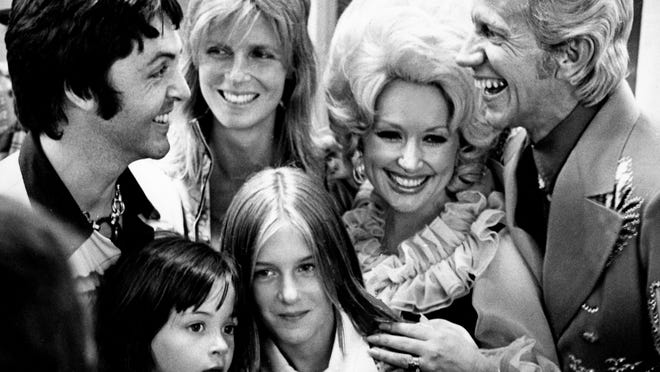
People here still talk about this visit to the city. I was only 7 and it was one year before I got into the Beatles. I faintly remember the newscasts. On June 6, 1974, Paul arrived and said he chose Nashville for his month’s stay as a rehearsal base for an upcoming tour. He also planned to enjoy himself while here, socializing with the community and horseback riding.
Paul said: “I rather fancy the place,” “It’s a musical center. I’ve just heard so much about it that I wanted to see for myself.”
He recorded songs, went to the Grand Ole Opry, met Porter Waggner and Dolly Parton, ate some Kentucky Fried Chicken, and visited Printers Alley. Paul and Linda lived on a farm in Lebanon that Curly Putman Jr rented…that is where the title Juniors Farm came from. Putman was a songwriter who wrote some huge songs like The Green Green Grass of Home, He Stopped Loving Her Today, D-I-V-O-R-C-E, and many more.
I have a cousin that lives down the road from the farm Paul and Linda stayed at…he got this shot but it’s a little dark. They added some columns since 1974.
As his time in Tennessee came to a close, McCartney told a group of local reporters that he hoped to mount a U.S. tour the following year and that if it happened, Music City would definitely be on the itinerary.
McCartney didn’t come back until 36 years later in 2010 and I finally got to see him.
This song was on arguably McCartney’s best album Band On The Run. It didn’t chart but it was released as the B side to the song Band on Run but it was played quite a bit on radio. One of my favorite McCartney album tracks.
Nineteen Hundred And Eighty-Five was never performed live by Wings, and only became part of McCartney’s live set in 2010.
Paul McCartney: With a lot of songs I do, the first line is it. It’s all in the first line, and then you have to go on and write the second line. With Eleanor Rigby I had ‘picks up the rice in the church where the wedding has been.’ that was the one big line that started me off on it. With this one it was ‘No one ever left alive in nineteen hundred and eighty-five.” That’s all I had of that song for months. ”No one ever left alive in nineteen hundred and eighty… six?’ It wouldn’t have worked!
Nineteen Hundred and Eighty-Five
On no one left alive in 1985, will ever do She may be right She may be fine She may get love but she won’t get mine ‘Cause I got you Oh, oh I, oh oh I
Well I just can’t enough of that sweet stuff My little lady gets behind (Shake it, baby, don’t break it)
Oh my mama said the time would come When I would find myself in, love with you I didn’t think I never dreamed That I would be around, to see it all come true Whoa oh oh I, oh oh I
Well I just can’t get enough of that sweet stuff My little lady gets behind
Ah no one left alive in 1985, will ever do She may be right She may be fine She may get love but she won’t get mine ‘Cause I got you Oh oh I, oh oh I
Well I just can’t get enough of that sweet stuff My little lady left behind
I am amazed at how many covers there are to this song. I remember Kermit the Frog singing it long ago. I didn’t know whether to use Bob Dylan’s or others for today. Jimmie Rodgers did a great version of Froggie Went A-Courtin’.
It is on the Dylan album Good as I Been to You that was released in 1992.
Who covered it? Here is a partial list: Jimmie Rodgers, Paul McCartney, Bruce Springsteen, Woody Guthrie, Elvis Presley, Tex Ritter, and Blind Willie McTell.
There is a reference in the Stationer’s Register of 1580 to “A Moste Strange Weddinge of the Frogge and the Mouse.” The oldest known musical version is in Thomas Ravenscroft’s Melismata in 1611.
This great old story song has quite a history. Some people claim that it goes back 400 years to England and that the frog is actually a French Duke while the mouse is Queen Elizabeth I. It has been popular in America since colonial times, and it seems to change a little with each person who performs it.
Alternative names for the song per Wiki
“A Frog He Would a-Wooing Go”
“Crambone”
“Die Padda wou gaan opsit” (Afrikaans version in South Africa)
“Frog in the Well”
“Froggie Went a-Courtin'”
“Froggy Would a-Wooing Go”
“The Frog’s Wooing”
“A Frog Went a-Walkin'”
“King Kong Kitchie Kitchie Ki-Me-O”
“There Lived a Puddie in the Well”
“There Was a Puggie in a Well”
“Y Broga Bach” (Welsh)
“Yo para ser feliz quiero un camión”
Thanks to Observationblogger for helping me to think of this song again.
Froggie Went A-Courtin’
1. Frog went a-courtin’, and he did ride, Uh-huh, Frog went a-courtin’, and he did ride, Uh-huh, Frog went a-courtin’, and he did ride. With a sword and a pistol by his side, Uh-huh.
2. Well he rode up to Miss Mousey’s door, Uh-huh, Well he rode up to Miss Mousey’s door, Uh-huh, Well he rode up to Miss Mousey’s door. Gave three loud raps and a very big roar, Uh-huh.
3. Said, “Miss Mouse, are you within?” Uh-huh, Said he, “Miss Mouse, are you within?” Uh-huh, Said, “Miss Mouse, are you within?” “Yes, kind sir, I sit and spin,” Uh-huh.
4. He took Miss Mousey on his knee, Uh-huh, Took Miss Mousey on his knee, Uh-huh, Took Miss Mousey on his knee. Said, “Miss Mousey, will you marry me?” Uh-huh.
5. “Without my uncle Rat’s consent, Uh-huh “Without my uncle Rat’s consent, Uh-huh “Without my uncle Rat’s consent. I wouldn’t marry the president, Uh-huh
6. Uncle Rat laughed and he shook his fat sides, Uh-huh, Uncle Rat laughed and he shook his fat sides, Uh-huh, Uncle Rat laughed and he shook his fat sides,. To think his niece would be a bride, Uh-huh.
7. Uncle Rat went runnin’ downtown, Uh-huh, Uncle Rat went runnin’ downtown, Uh-huh, Uncle Rat went runnin’ downtown. To buy his niece a wedding gown, Uh-huh
8. Where shall the wedding supper be? Uh-huh, Where shall the wedding supper be? Uh-huh, Where shall the wedding supper be? Way down yonder in a hollow tree, Uh-huh
9. What should the wedding supper be? Uh-huh, What should the wedding supper be? Uh-huh, What should the wedding supper be? Fried mosquito in a black-eye pea, Uh-huh.
10. Well, first to come in was a flyin’ moth, Uh-huh, First to come in was a flyin’ moth, Uh-huh, First to come in was a flyin’ moth. She laid out the table cloth, Uh-huh.
11. Next to come in was a juney bug, Uh-huh, Next to come in was a juney bug, Uh-huh, Next to come in was a juney bug. She brought the water jug, Uh-huh.
12. Next to come in was a bumbley bee, Uh-huh Next to come in was a bumbley bee, Uh-huh Next to come in was a bumbley bee. Sat mosquito on his knee, Uh-huh.
13. Next to come in was a broken black flea, Uh-huh, Next to come in was a broken black flea, Uh-huh, Next to come in was a broken black flea. Danced a jig with the bumbley bee, Uh-huh.
14. Next to come in was Mrs. Cow, Uh-huh, Next to come in was Mrs. Cow, Uh-huh, Next to come in was Mrs. Cow. She tried to dance but she didn’t know how, Uh-huh.
15. Next to come in was a little black tick, Uh-huh, Next to come in was a little black tick, Uh-huh, Next to come in was a little black tick. She ate so much she made us sick, Uh-huh.
16. Next to come in was a big black snake, Uh-huh, Next to come in was a big black snake, Uh-huh, Next to come in was a big black snake. Ate up all of the wedding cake, Uh-huh.
17. Next to come was the old gray cat, Uh-huh, Next to come was the old gray cat, Uh-huh, Next to come was the old gray cat. Swallowed the mouse and ate up the rat, Uh-huh.
18. Mr. Frog went a-hoppin’ up over the brook, Uh-huh, Mr. Frog went a-hoppin’ up over the brook, Uh-huh, Mr. Frog went a-hoppin’ up over the brook. A lily-white duck come and swallowed him up, Uh-huh.
19. A little piece of cornbread layin’ on a shelf, Uh-huh, A little piece of cornbread layin’ on a shelf, Uh-huh, A little piece of cornbread layin’ on a shelf. If you want anymore, you can sing it yourself, Uh-huh.
I’m more of a studio guy when it comes to listening to bands but there are a few live albums I really like. This is my top 10 and a few honorable mentions at the bottom. Very few artists can improve on the studio version but sometimes some manage to pull it off.
10. Led Zeppelin – How the West Was Won – After the disappointing live album The Song Remains The Same, this album released in 2003 contained Led Zeppelin live in 1972 from two shows in top form.
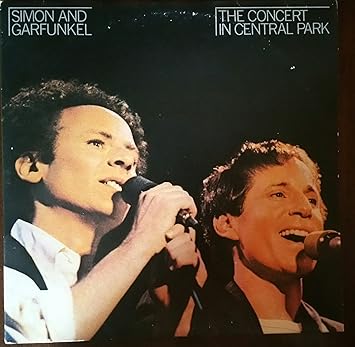
9: Simon And Garfunkel – The Concert In Central Park – This was big for me when it was released. I had by this time worn a groove out in their greatest hits. The band was great and their harmonies were as good as ever.
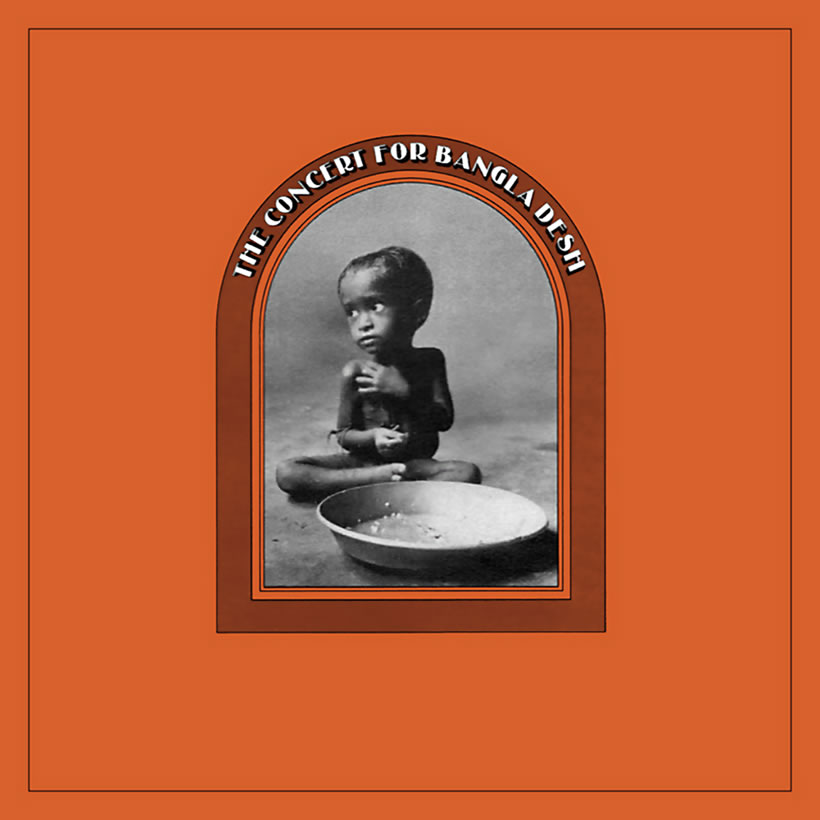
8: George Harrison – The Concert For Bangladesh – Fun to listen to George freed from the Beatles and he sounds great with Dylan, Billy Preston, Ringo, and other friends.
7: The Band: The Last Waltz – One of the best live albums ever. The Band’s last concert with Robbie with a host of talented famous friends. I still don’t get the Neil Diamond selection…nothing against Neil…he didn’t fit in with this atmosphere.
6: The Allman Brothers Band “At Fillmore East” – This album floats up and down this list depending on my mood. It was at number 2 when I first made this list a couple of weeks ago. This band was probably one of the most talented bands in the seventies. I didn’t start heavily listening to them until around 5-10 years ago. They are better live than in the studio. There was not a weak link in this 6 piece band…especially in the Duane version but later incarnations were almost as strong.
5: Bruce Springsteen & the E Street Band, ‘Live/1975-85’ – I listened to this so much in the 80s that I knew the stories Bruce would tell by heart. Later when listening to the studio version of a song I would expect the story that went with it.
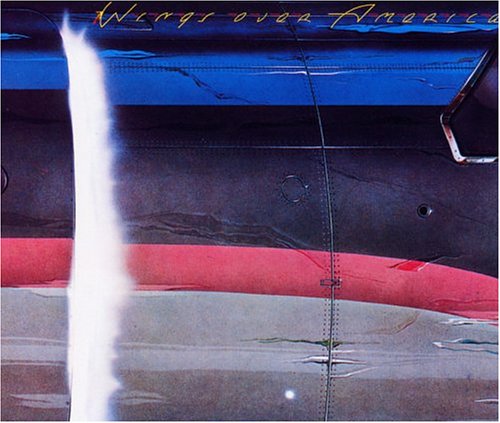
4: Paul McCartney Wings Over America – This triple album set was a live greatest hits. The songs had some edge to them thanks to Jimmy McCulloch the young prodigy guitar player. Paul even broke his silence on the Beatles and included five Beatle songs. Blackbird, I’ve Just Seen a Face, Yesterday, The Long and Winding Road, and Lady Madonna. Unlike the other 3 albums ahead of this on in the list, Paul didn’t mess with the songs too much from the original studio recordings.
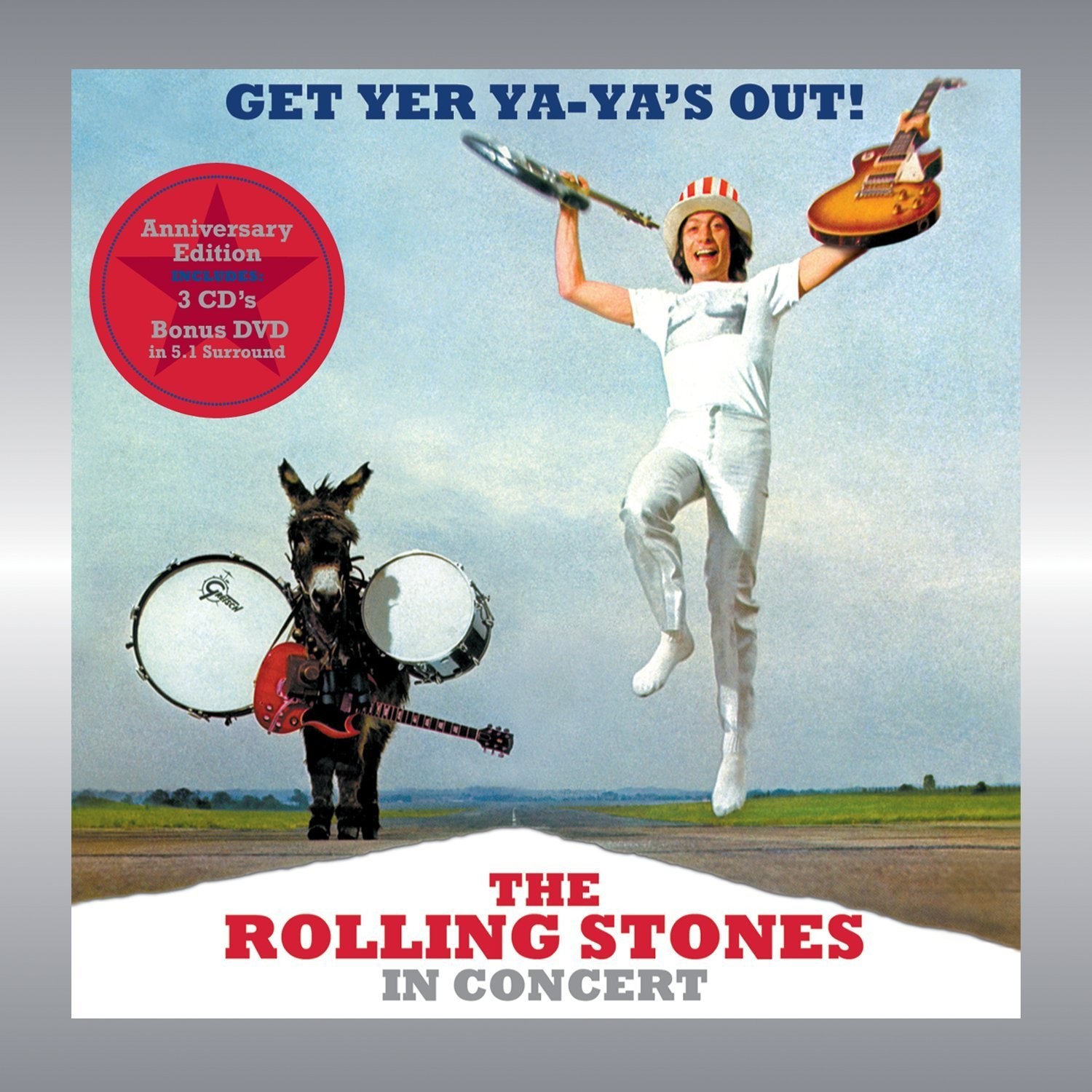
3: The Rolling Stones – ‘”Get Yer Ya-Ya’s Out!” – This tour and the 1972 tour were the Stones at their live peak.
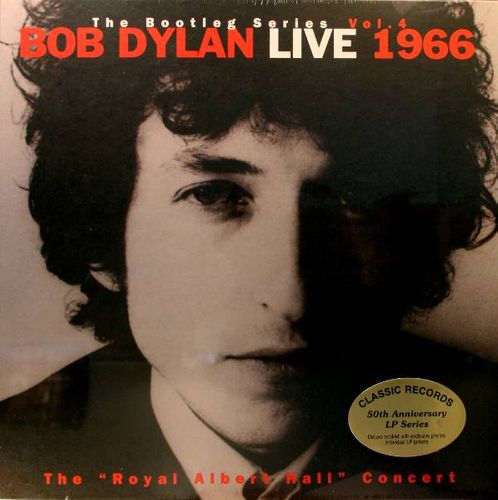
2: Bob Dylan – The Bootleg Series, Vol. 4: Bob Dylan Live 1966, The “Royal Albert Hall” Concert – I have seen Dylan 8 times but if I could pick a tour to see him on…I would go back and this would be the one. With The Band backing him up…minus Levon Helm but Mickey Jones on drums is very powerful.
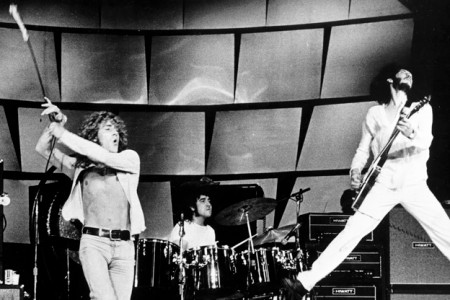
1: The Who – ‘Live at Leeds’ This album highlights The Who at their best. I don’t think I’ve ever heard a rock band so tight. The power of the performance is huge. Pete Townshend told his soundman Bob Pridden to erase all other shows on this tour at the time…Bob did… much to Pete’s regret later on.
Honorable Mentions
Beatles Live At The Star-Club in Hamburg Germany – The quality of the recording is pretty bad but it’s exciting to hear the punkish Beatles before Beatlemania hit.
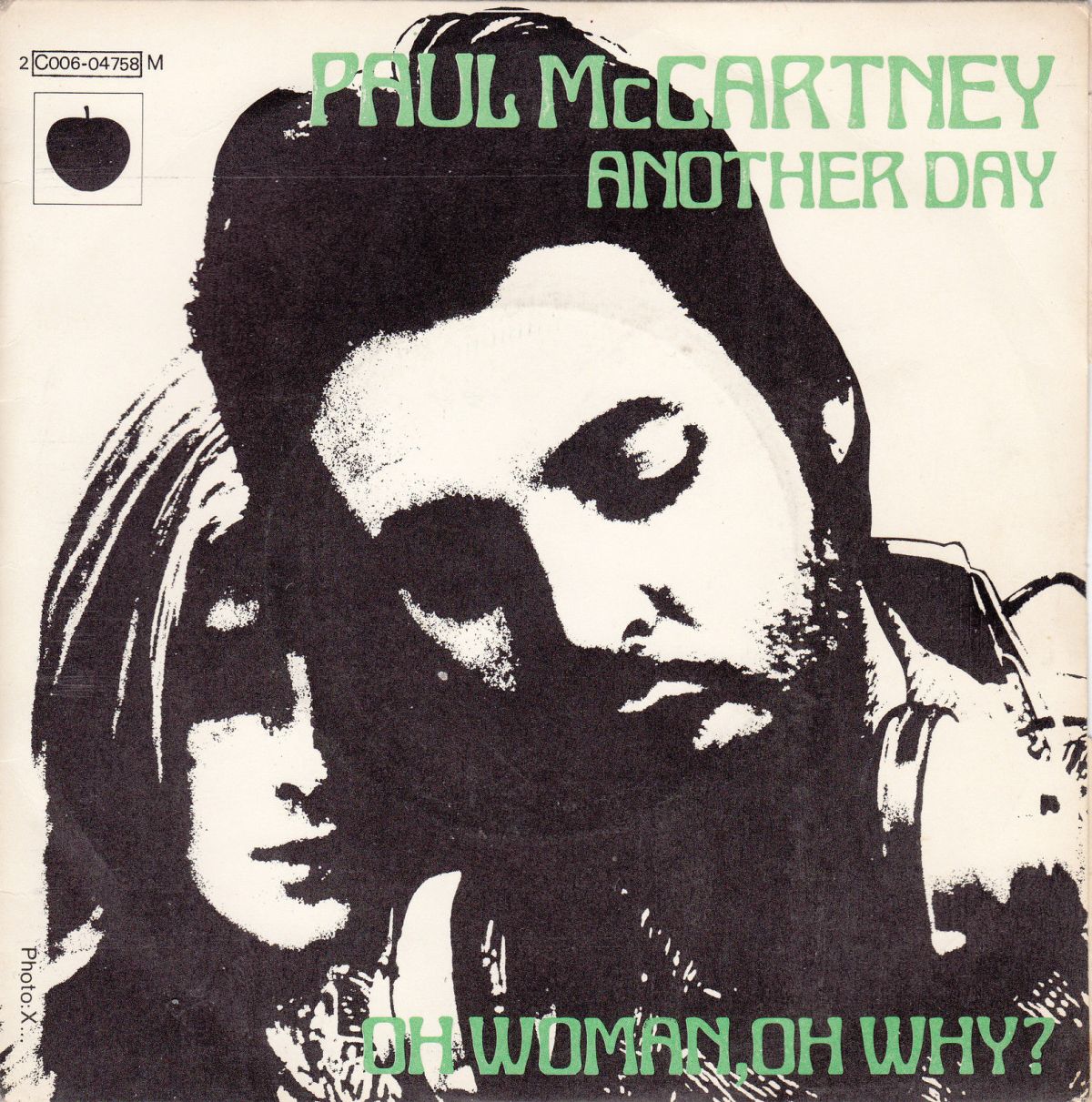
Jim from newepicauthor hosts Song Lyric Sunday and this week the theme is Clothing/Hat/Pants/Scarf/Shirt/Shoes/Tie… so here is Another Day… The song was written by Sir Paul McCartney… though he wasn’t a Sir when he wrote this song.
Slipping into stockings, stepping into shoes
Dipping in the pocket of her raincoat
This song doesn’t get played like some other Paul songs but I’ve always thought it had a charm about it. It always reminded me a little of the song Two Of Us from Let It Be.
Paul recorded this in New York in 1970, during the sessions for his album Ram. Although it was the first single of McCartney’s solo career, “Another Day” was actually written and previewed during The Beatles’ Let It Be Sessions in 1969. It was not included in the original Ram album though.
A reference to this song came from John Lennon’s not so nice song aiming his anger at Paul with this lyric: “The only thing you done was Yesterday, and since you’ve gone you’re just Another Day“
Paul on Another Day: I like the idea of writing songs about ordinary people and day-to-day lives, and Another Day is one of them. We all get up in the morning and do our usual stuff, yet somehow – even through it all – there are often magic moments. We recorded it in New York with the help of Phil Ramone and it was a hit which, at that time, was especially pleasing.
The song peaked at #5 in 1971 on the Billboard 100
Another Day
Every day she takes a morning bath she wets her hair
Wraps a towel around her as she’s heading for the bedroom chair
It’s just another day
Slipping into stockings, stepping into shoes
Dipping in the pocket of her raincoat
It’s just another day
At the office where the papers grow she takes a break
Drinks another coffe and she finds it hard to stay awake
It’s just another day
Do do do do do do, it’s just another day
Do do do do do do, it’s just another day
So sad, so sad
Sometimes she feels so sad
Alone in her apartment she’d dwell
Till the man of her dreams come to break the spell
Ah, stay, don’t stand her up
And he comes and he stays but he leaves the next day
So sad
Sometimes she feels so sad
As she posts another letter to the sound of five
People gather ’round her and she finds it hard to stay alive
It’s just another day
Do do do do do do, it’s just another day
Do do do do do do, it’s just another day
So sad, so sad
Sometimes she feels so sad
Alone in her apartment she’d dwell
Till the man of her dreams come to break the spell
Ah, stay, don’t stand her up
And he comes and he stays but he leaves the next day
So sad
Sometimes she feels so sad
Every day she takes a morning bath she wets her hair
Wraps a towel around her as she’s heading for the bedroom chair
It’s just another day
Slipping into stockings, stepping into shoes
Dipping in the pocket of her raincoat
It’s just another day
Do do do do do do, it’s just another day
Do do do do do do, it’s just another day












:format(jpeg):mode_rgb():quality(90)/discogs-images/R-1333395-1381101639-9694.jpeg.jpg)

 PowerPop... An Eclectic Collection of Pop Culture