This is a well-crafted song written by Russ Ballard and performed by Santana. I’m Winning didn’t have a Latin style like many of his seventies songs…it was more pop/rock and very catchy. It peaked at #17 on the Billboard 100 in 1981. Scottish vocalist Alex Ligertwood sang this song after Greg Walker left the band a little earlier.
It was released on the Zebop! album, a fascinating transitional LP that pushed Santana into the ’80s without completely abandoning the old mojo, “Winning” is anchored by one of the best vocal performances in the band’s catalog. His voice doesn’t just carry the tune; it owns it. He’s not just singing about triumph; he sounds like a man who’s been through the ringer and is finally exhaling.
Musically, this is a curious beast. Carlos’s guitar tone cuts through like sunlight through smoke. He doesn’t showboat, doesn’t shred, he sings with his strings, giving the track an emotional lift that Ballard’s original lacked.
Ligertwood also sang on the hit Hold On the next year.
I’m Winning
One day I was on the ground When I needed a hand Then it couldn’t be found I was so far down that I couldn’t get up You know and one day I was one of life’s losers Even my friends were my accusers In my head I lost before I begun I had a dream but it turned to dust And what I thought was love That must have been lust I was living in style When the walls fell in And when I played my hand I looked like a joker Turn around fate must have woke her Cause lady luck she was waiting outside the door I’m winning I’m winning I’m winning I’m winning and I don’t intend on losing again Too bad it belonged to me It was the wrong time and not meant to be It took a long time and I’m new born now I can see the day that I bleed for If it’s agreed that there’s a need To play the game and to win again
I’ve always liked early Chicago when Terry Kath was part of the band. Love the intro to this song and it takes me back to when I first heard the song. Saturday in the Park peaked at #3 in the Billboard 100 and #2 in Canada. Robert Lamm who wrote the song openly admits he based the melody on The Beatles “You Won’t See Me.”
Robert Lamm on Saturday in the Park
“Saturday in the Park is a prime example of how I take from what I experience in the world. It was written as I was looking at footage from a film I shot in Central Park, over a couple of years, back in the early ‘70s. I shot this film and somewhere down the line I edited it into some kind of a narrative, and as I watched the film I jotted down some ideas based on what I was seeing and had experienced. And it was really kind of that peace and love thing that happened in Central Park and in many parks all over the world, perhaps on a Saturday, where people just relax and enjoy each other’s presence, and the activities we observe and the feelings we get from feeling a part of a day like that.”
Chicago’s main songwriter, Robert Lamm, wrote this after a particularly exhilarating 4th of July spent in New York’s Central Park, where there were steel drum players, singers, dancers and jugglers. Lamm and Peter Cetera sang lead on the track.
like most Chicago singles, this didn’t chart in the UK. In America, however, it was their biggest chart hit to that point and also their first gold single, which at the time meant selling more than a million copies (“25 Or 6 To 4” somehow was never certified gold).
This song contains some of the most famous nonsense singing in rock: after Robert Lamm sings the line, “Singing Italian songs,” he sings some made up words approximating the Italian language.
Saturday In the Park
Saturday in the park, I think it was the Fourth of July Saturday in the park, I think it was the Fourth of July
People dancing, people laughing A man selling ice cream Singing Italian songs Everybody is another Can you dig it (yes, I can) And I’ve been waiting such a long time For Saturday
Another day in the park I think it was the Fourth of July Another day in the park I think it was the Fourth of July
People talking, really smiling A man playing guitar And singing for us all Will you help him change the world Can you dig it (yes, I can) And I’ve been waiting such a long time For today
Slow motion riders fly the colors of the day A bronze man still can tell stories his own way Listen children all is not lost, all is not lost, oh no, no
Funny days in the park Every day’s the Fourth of July Funny days in the park Every day’s the Fourth of July
People reaching, people touching A real celebration Waiting for us all If we want it, really want it Can you dig it (yes, I can) And I’ve been waiting such a long time For the day, yeah yeah
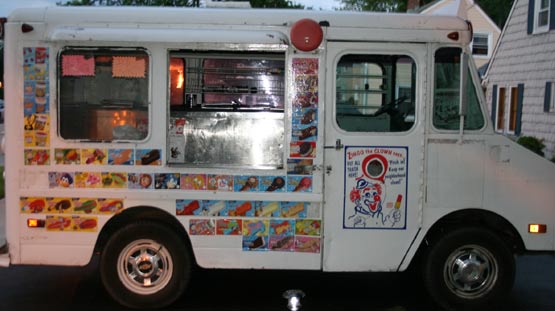
I grew up in a rural area… there was no ice cream man traveling on our dirt road.
I would go visit my grandmother in Nashville on weekends and some weekdays. She lived in the suburbs so we were surrounded by houses and pavement.
I remember the sound and excitement. That sound of the Ice Cream truck coming when I was a kid. I didn’t have anything like that at home. If I was inside my grandmother’s house…which was rare, I could hear that bell and that tune playing no matter what I was doing. Old McDonald or some song like that.
I would bum a quarter off of my grandmother with promises to do anything.
When I grew older and was a teenager and no longer cared about that I started to notice something strange about the new ice cream guy. He drove by ringing the bell to the tune of “Sympathy for the Devil” and 19 and 20-year-olds would stop him down the street… I don’t think a quarter would have bought what he was selling anymore.
I saw him a few more times pass by…ringing the bell to Jumpin’ Jack Flash…a true Stones fan… and then I never saw him again…He was selling a different kind of treat. So Cheech and Chong weren’t that far off…I heard a little later the police didn’t approve of his inventory.
These were fun in the summer. A piece of plastic with a garden hose attached and voilà… a wet fun slide. I would slide down with reckless abandonment until…until I would slide over a sharp rock that was poking through the yellow plastic…then I would slip ‘n slide to first aid but it was fun. It was a great way to spend a summer day and I wouldn’t trade a minute of fun on it for anything.
Slip ‘n Slide was invented by Robert Carrier. Wham-O manufactured it in 1961, the Slip ‘n Slide is still hugely popular today.
Carrier originally sewed 50 foot of Naugahyde and brought it home for his kid to play on and all the kids in the neighborhood came by to slide down the Naugahyde material that he hosed down. He stitched a long tube along one side, sewn shut at one end, with spaces between the stitching so that when you attached the hose, the water pressure would build up and water would squirt out those openings and lubricate the surface of the material.
Wham-O traded the Naugahyde for more cost-efficient plastic (still used today), shortened the length from 50 to 25 feet and took the toy to market in 1961. It was an immediate success: 300,000 were sold within the first six months, and the total reached more than 30 million by its 50th anniversary.
I’ve always liked the lyrics to this song and the overall sound of it. I liked all of the singles released off of their one and only album Boomtown. Welcome to the Boomtown, It Aint So Easy, and Swallowed by the Cracks. I was really looking forward to the follow-up album which never came.
Welcome to the Boomtown peaked at #37 in the Billboard 100 in 1986. Per Wikipedia, the two are planning to make a follow-up album. Over 30 years later…but better late than never.
Welcome to The Boomtown
Miss Christina drives a .944 satisfaction oozes from her pores she keeps rings on her fingers marble on the floor cocaine in her dresser bars on her doors she keeps her back against the wall she keeps her back against the wall so I say I say welcome welcome to the boomtown pick a habit we got plenty to go around welcome to the boomtown and all that money makes such a succulent sound welcome to the boomtown
Handsome Kevin got a little off track took a year off of college and he never went back now he smokes much too much he’s got a permanent hack deals dope out of Denny’s keeps a table in the back he always listens to the ground always listens to the ground so I say I say welcome to the boomtown pick a habit we got plenty to go around welcome to the boomtown and all that money makes such a succulent sound welcome to the boomtown
Well the ambulance arrived too late I guess she didn’t want to wait….
This is will be out of the norm for me and may be boring to some people so you may want to click the back button…but after talking to another blogger I wanted to write it down.
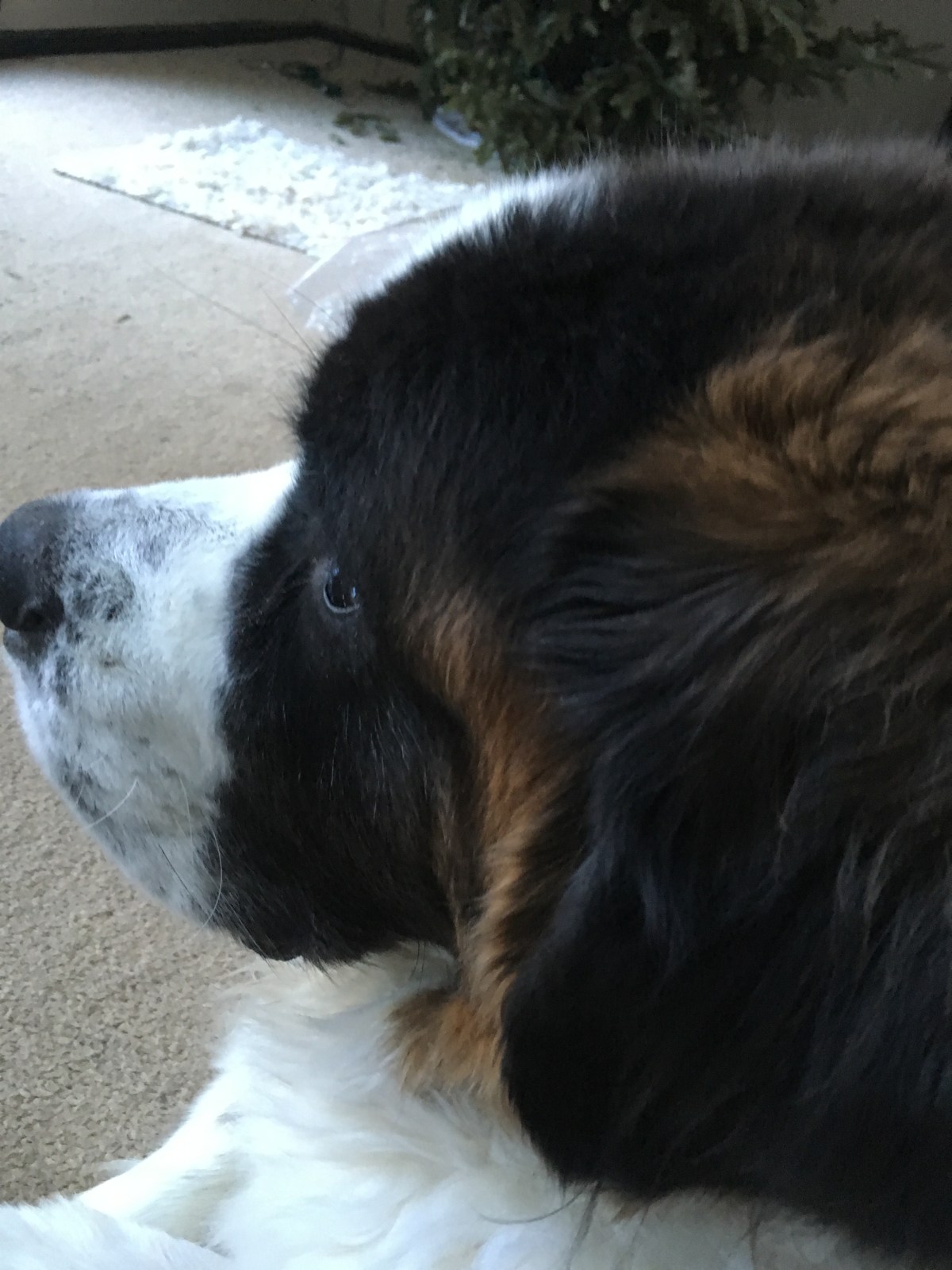
When I was a kid my mom would not let me have any pets in the house. She was a great mom but no pets at all inside. I had outside dogs but none inside. I knew when I got older I wanted a dog in my house…Not just any dog but a great big dog…I guess it was my way of rebelling against those earlier rules.
In 2009 I saw a local ad on the internet for a Saint Bernard puppy. It was the first puppy I ever had in my life. We did have one Saint Bernard before this that we got from a rescue when she was 8 months old. She passed in 2008 after 9 wonderful years.
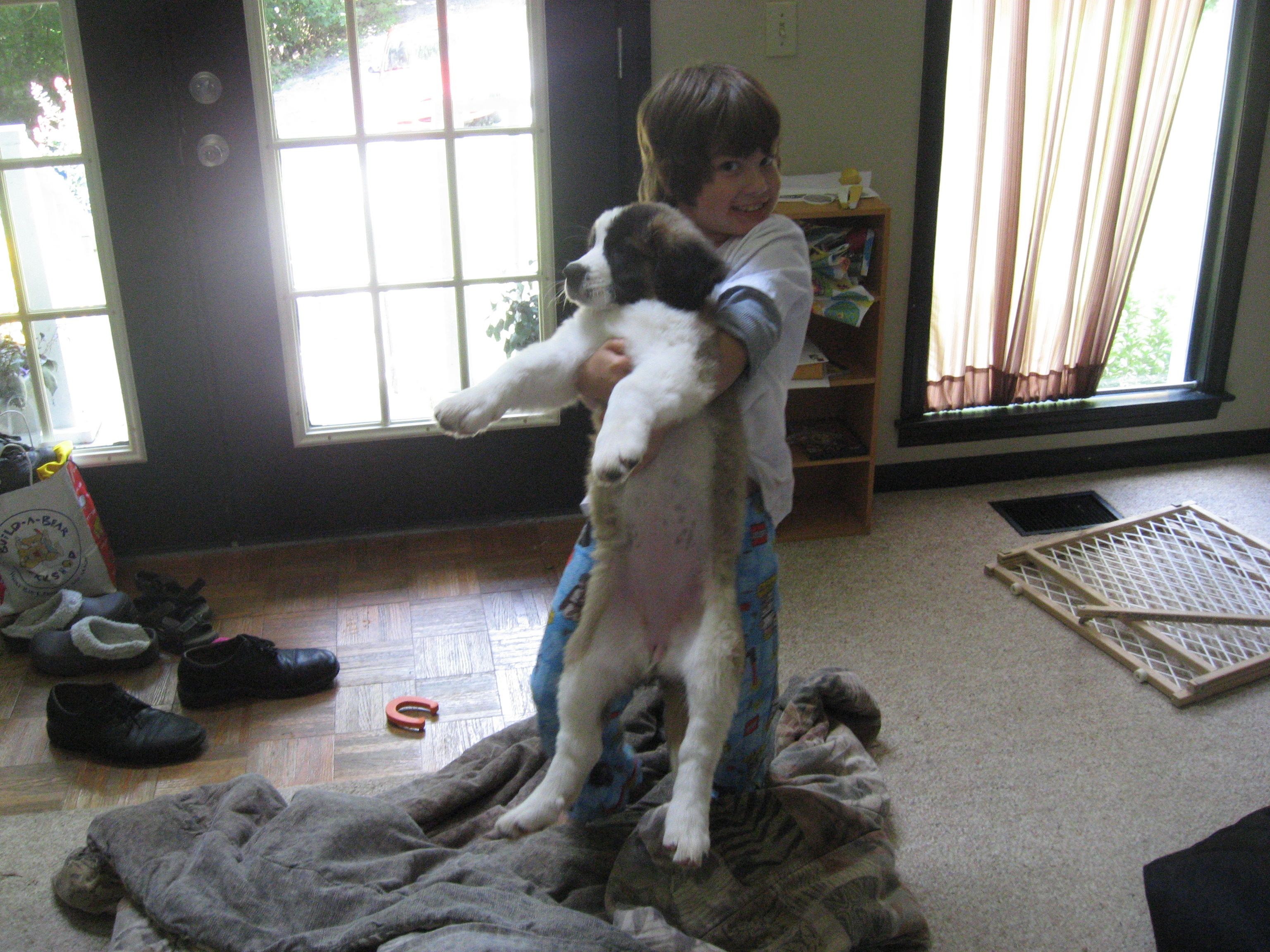
We named this 6-week old puppy Molly and she was the runt of the litter. We took her home and she would not interact with us in the first two days at all.
On that third day…different story. She took off running through my wife’s flower garden and from then on she was ours and we were hers… She had one bad mishap. After a lengthy rain she wanted to go outside and she ran and while running caught her front right leg in a hole…it stretched her tendons…the vet put a cast on her leg for a month but her leg never looked the same but it didn’t stop her from running the rest of her life.
Molly was THE family dog and was one of us. She gave love but she wanted it also… when she thought she was being ignored… out came that giant paw pretty much making you pet her. She never hurt a living animal except for Bees…which she would catch with her mouth and quickly get them out…She didn’t like toys with squeakers because she thought she was hurting something so I had to take the squeakers out of every toy.
She grew very fast like Saints do and Molly was not a runt anymore. She looked after my son like he was her own. My son’s friends would be careful not to play too rough with him or each other…if they did they would get an earful…and Saints bark loud. Scared the hell out of some of them but she was never aggressive…just barked loud at the kids to stop. You could play but no shoving or hitting or she would referee really quick and wanted order.
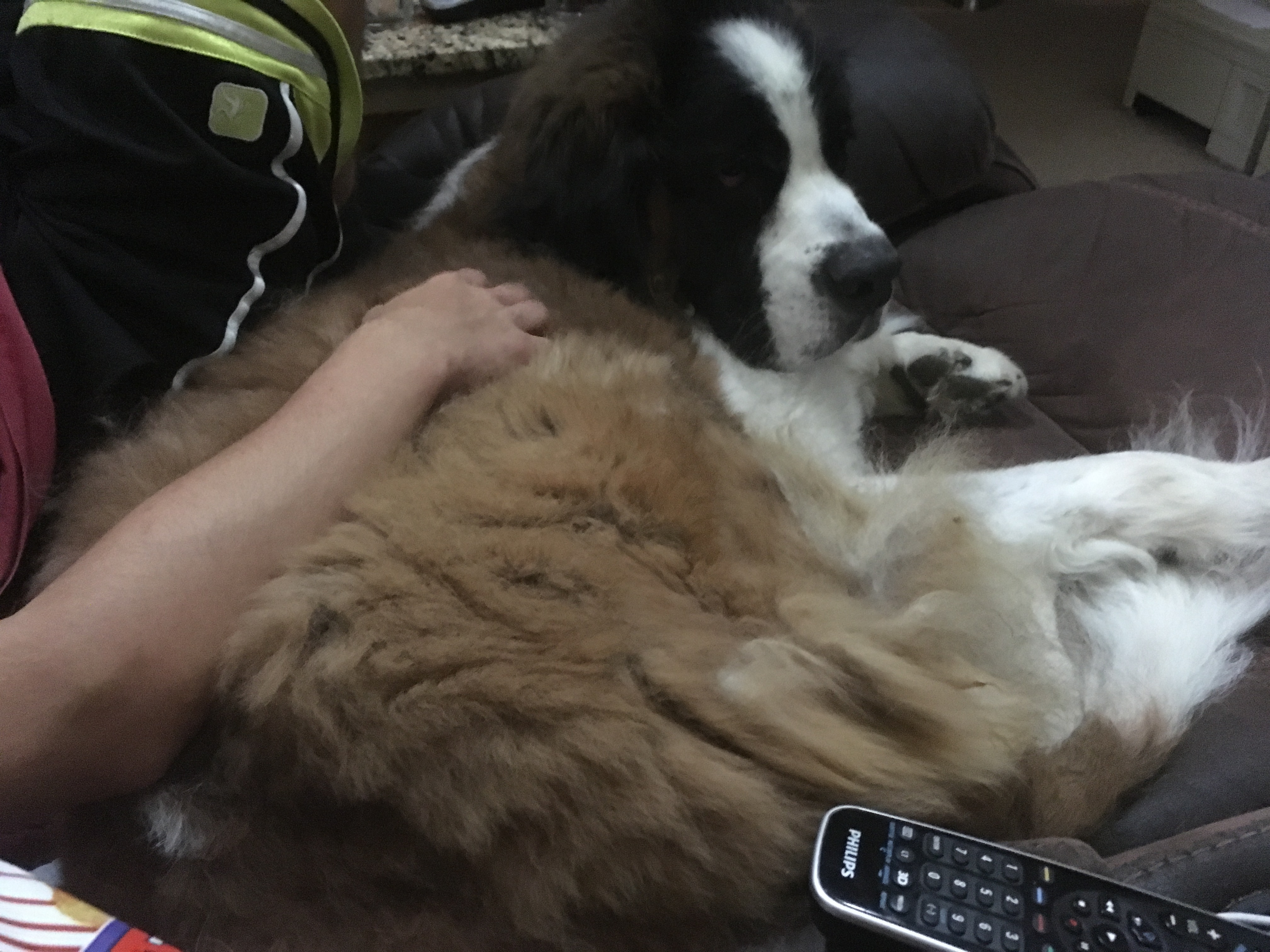
She had the run of our house and many utility people were scared to come in but some braved it and were rewarded with a new friend. It was rare but once in a while, I would wake up with a snoring Molly beside my wife and me in bed. She would lay in the busiest part of the house so you would have no other choice but walk over her.
Last Thursday night my son and I went to dinner and came home to a happy Molly…she was happy because we were all at home safe and sound. She didn’t like when one of us was missing. She was demanding our attention that night and she got it.
The next morning she was breathing heavy and something seemed wrong. She would drink but would not eat. It just kept getting worse over the weekend.
I took off of work Monday to take her to the vet. She had been so lethargic that I thought we would have to get a mobile vet. To my surprise I said the magic words “car ride” and she came to life and followed me to the car…She got in the car and off we went. That was the best she looked in 3 days. We took her in and the vet said she was in poor shape but he wanted to do X-Rays and blood work. After that, he told me to go home and he would call. I foolishly let a little hope creep in.
The call came at 1:30 that Molly had cancer all over and failing kidneys. I don’t like playing God but he said that Molly had put on a brave face for us that morning and showed me the X-Rays and I knew we had to make THAT decision. He said it was a miracle she was walking around at all and she was in extreme pain. We waited for my son to get home at 3 and we traveled to the vet all together to say our goodbyes to our beloved Molly.
It was horrible to see my son hurt so bad and it wasn’t a damn thing I could do. We all hurt but we tried to make the ending happy for Molly. It will be a little while before we get another dog…but when we do we won’t be replacing Molly…it will be to add a new member to our family…Molly will always have her place.
My son will never forget his companion of nine years for the rest of his life…and neither will we.
My 9-year-old son and Molly at 6 weeks old…the day we got her in 2009
My 18-year-old son with Molly at 9 years old sitting close to him.
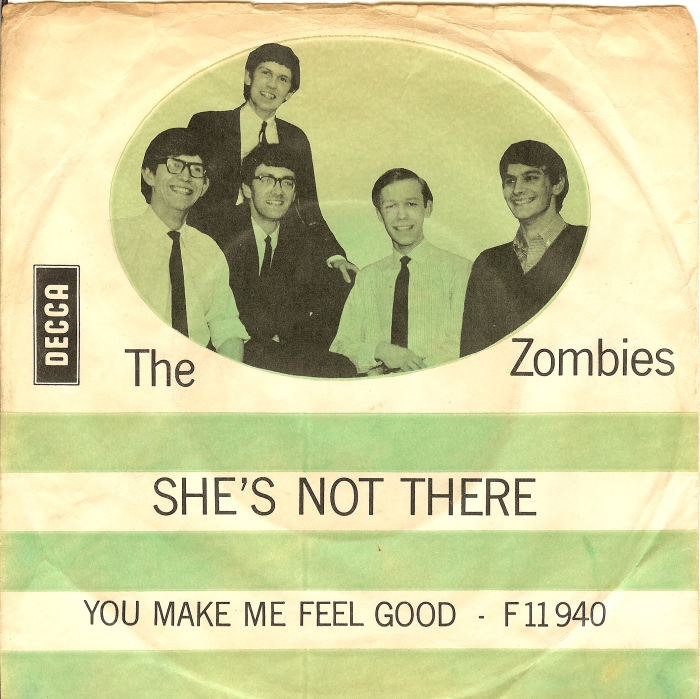
The Zombies were a bands band. They were very talented musicians who had the respect of other bands. The song peaked at #1 in the Billboard 100, #2 in Canada, and #12 in the Uk in 1964. They sounded like no other band at the time with a jazz/pop feel.
The group signed to Decca Records, and their keyboard player Rod Argent came up with this song for the session. It tells the story of an alluring woman who won’t be tied down to one man – the singer wants to tell us all about her, but he can only use words since she’s not there.
This was The Zombies first single. The band also recorded a cover of Gershwin’s “Summertime” for their first album, which was considered for the band’s first single, but “She’s Not There” got the nod. Boosted by radio play on New York powerhouse WINS, the song became a hit in the US.
She’s Not There Well, no one told me about her The way she lied Well, no one told me about her How many people cried
But it’s too late to say you’re sorry How would I know? Why should I care? Please don’t bother trying to find her She’s not there
Well, let me tell you ’bout the way she looked The way she acts and the color of her hair Her voice was soft and cool Her eyes were clear and bright But she’s not there
Well, no one told me about her What could I do? Well, no one told me about her Though they all knew
But it’s too late to say you’re sorry How would I know? Why should I care? Please don’t bother trying to find her She’s not there
Well, let me tell you ’bout the way she looked The way she acts and the color of her hair Her voice was soft and cool Her eyes were clear and bright But she’s not there
But it’s too late to say you’re sorry How would I know? Why should I care? Please don’t bother trying to find her She’s not there
Well, let me tell you about the way she looked The way she acts and the color of her hair Her voice was soft and cool Her eyes were clear and bright But she’s not there
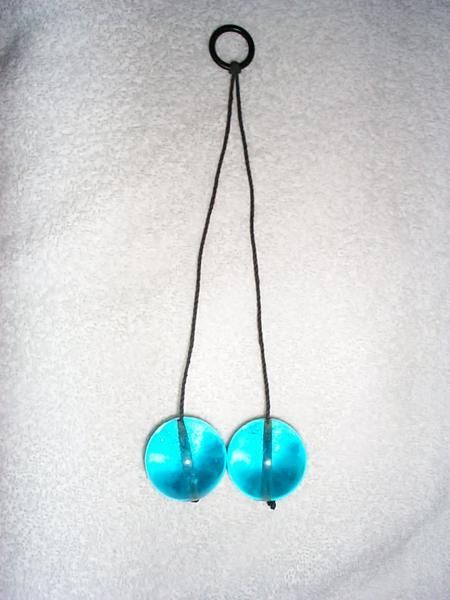
Clackers or… death on a string came out in the 1960s. They were also called Ker-Bangers, Klackers, Click-Clacks, Klik Klaks, Klappers, and Zonkers.
I remember a kid giving me his Clackers. The object I guess was swinging them up and down until they hit each other and made a “clack” sound. The sound I got the most was a thud sound with plastic hitting my skin. They were also known to shatter and the pieces fly in all different directions.
They were similar to Bolas…a weapon used by cowboys to throw at cattle or game to wrap around their legs…sometimes breaking them. Yep…lets redesign this and give it to kids.
I never minded somewhat dangerous toys but I didn’t get too much pleasure out of these.
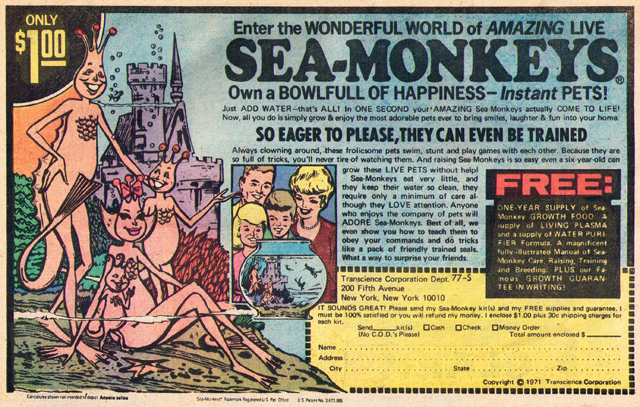
Many young kids were duped into getting these. Yes, I was fooled and fooled badly… In the back of a comic, I tore out the ad and sent a dollar in an envelope for these awesome looking beings. I was going to watch them grow and live. I wanted that “Bowlful of Happiness.”
In a few weeks I got the package and I find out the ugly truth. They are not monkeys or little creatures with three antennas on their head. Sea-Monkeys are a hybrid breed of brine shrimp called Artemia NYOS invented in 1957 by Harold von Braunhut.
Von Braunhut, with the help of marine biologist and microcrustacean expert Anthony D’Agostino, figured out a way to treat tap water with a mix of nutrients (von Braunhut called them “magic crystals” and mixed them in a barn on his property) that would revive the shrimp in a tank at home.
When you buy a packet of Sea-Monkeys, they appear to be lifeless dust. Pour the dust (which is actually brine shrimp eggs) in a tank of purified water, and the Sea-Monkeys spring to life. They grow steadily over the next few weeks, feeding on a diet of yeast and spirulina.
Yes they are alive…but instead of the picture you see in the comic book…they are this
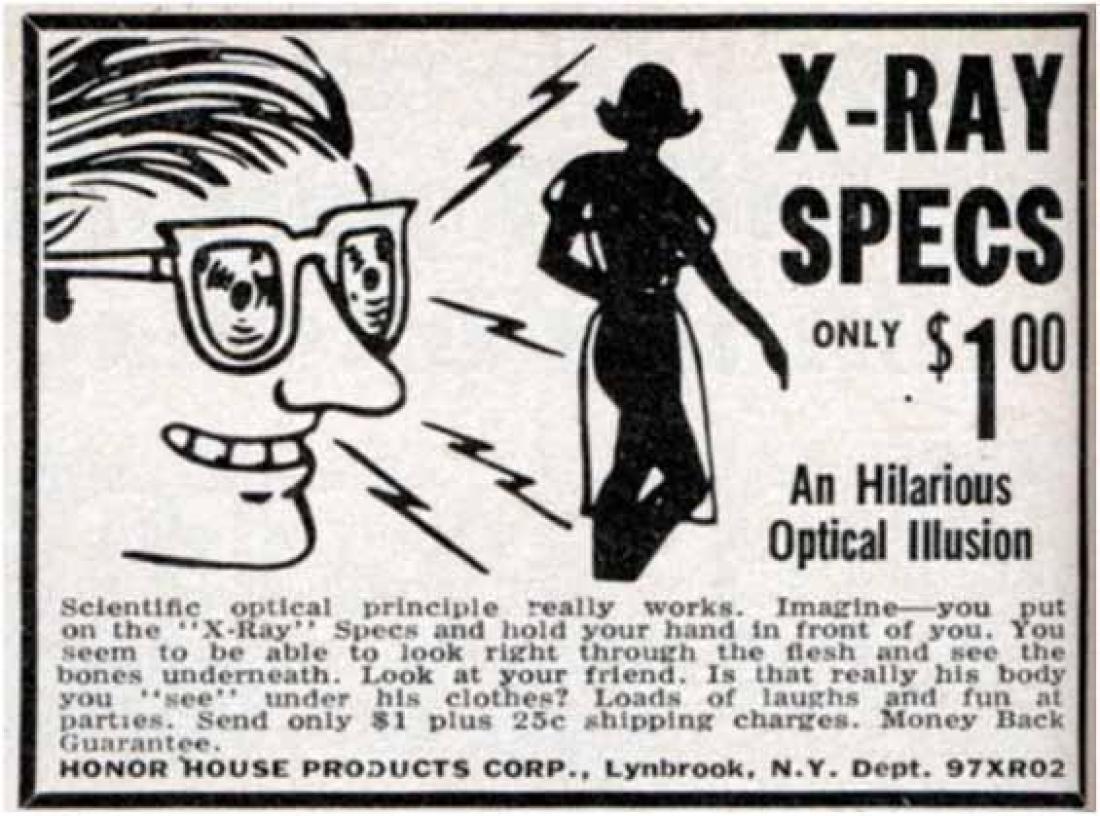
I am happy to say that my younger self-didn’t fall for the X-Ray Specs after the Sea-Monkey debacle.
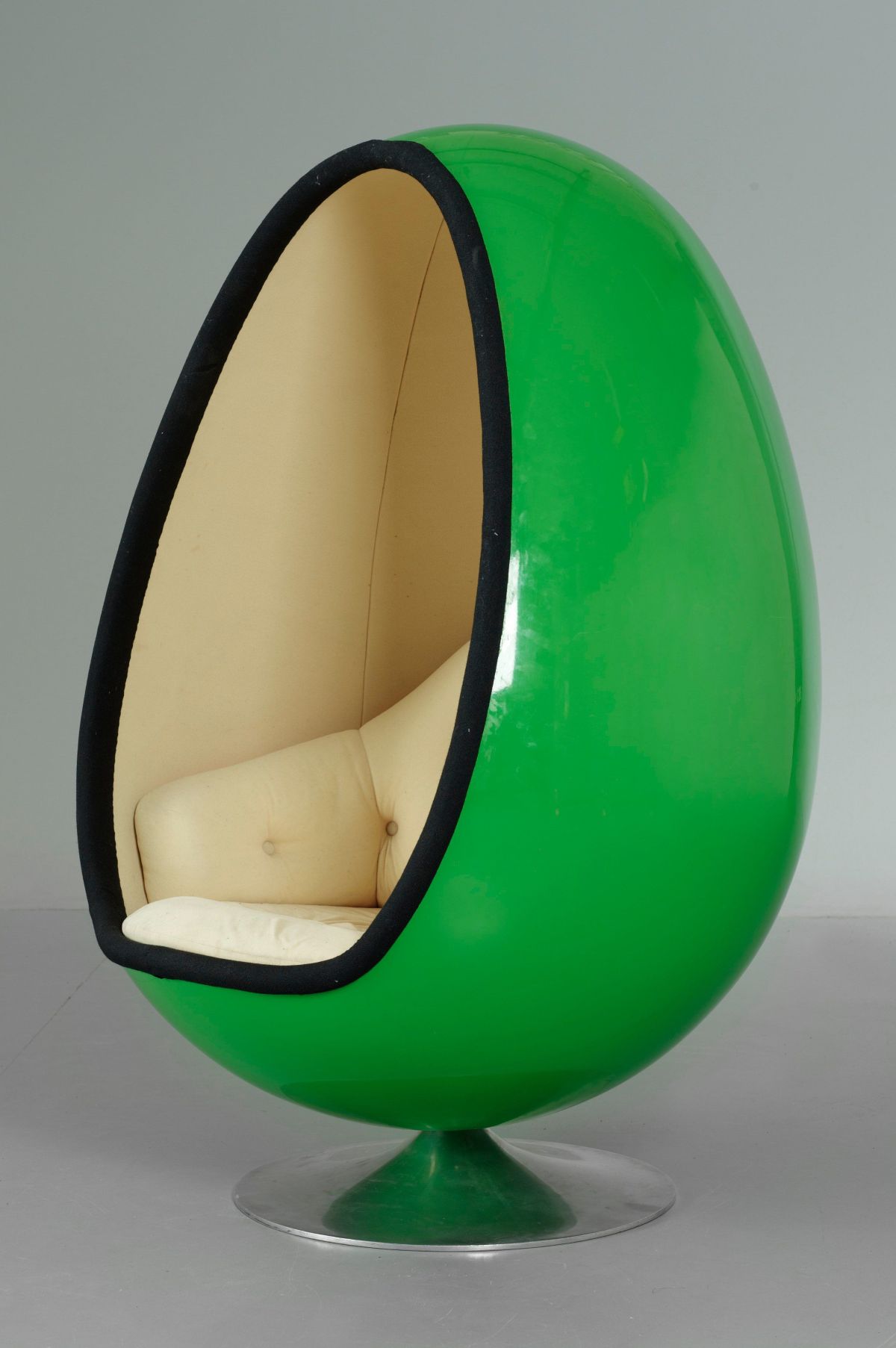
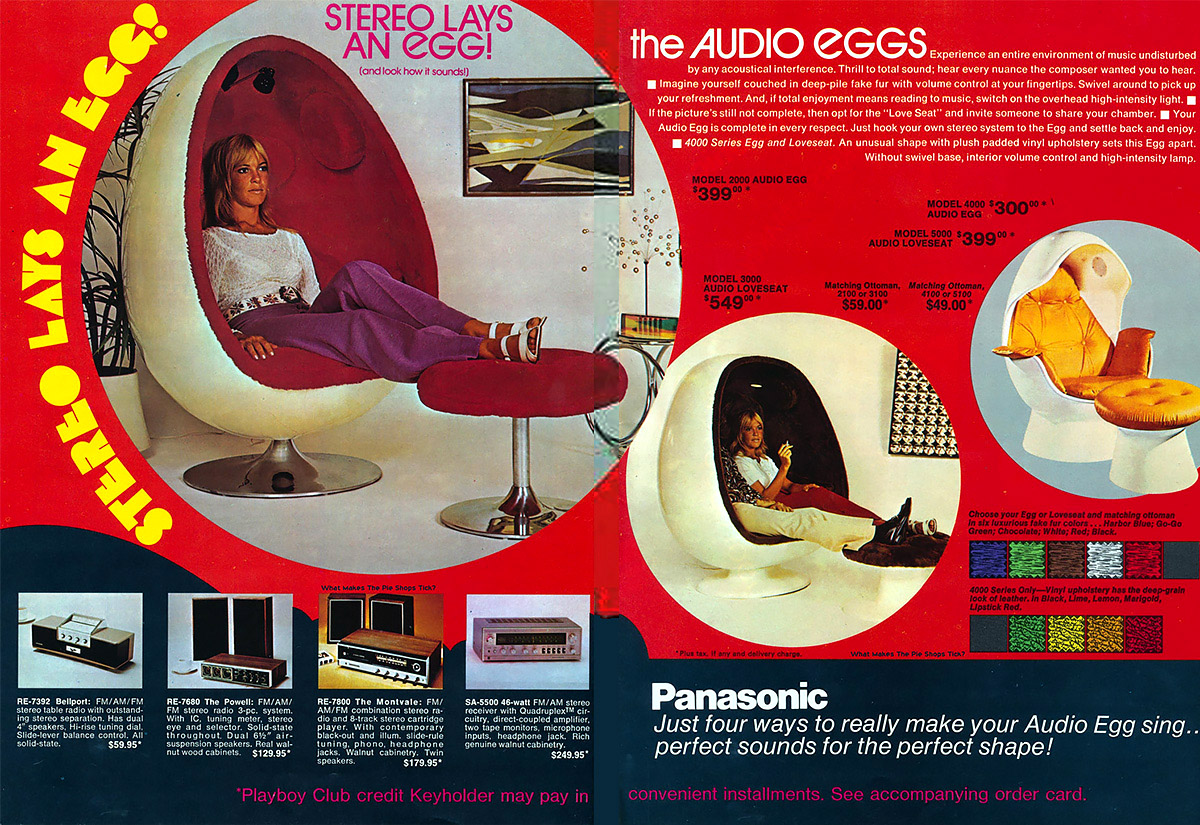
I can’t give a personal story on this chair because it’s something I’ve always wanted but never could find. I missed a chance of buying an authentic one by being a few minutes too late. You can buy new ones now but I’ve always wanted an original one with the stereo speakers.
Arne Jacobsen designed “The Egg” in 1958 and today, it’s been trademarked as the Egg™ Chair… It’s still produced in Denmark, by the original manufacturer, Fritz Hansen.
Henrik Thor-Larsen designed his Ovalia Egg Chair ten years after Jacobsen, in 1968. OVALIA was exhibited for the first time at the Scandinavian Furniture Fair in 1968 and was an immediate success. It caught on and became an iconic piece of furniture of the 1960 and 70s.
I remember seeing one on Mork and Mindy and of course, they got popular again when the movie “Men in Black” featured several egg chairs. I’ve always liked futuristic designs from the 60s and 70s.
I could pick about any ELO song and do fine. Jeff Lynne is one of the best pop/rock songwriters. In my opinion, he can write super catchy songs without being sugary. Telephone Line peaked at #8 in the Billboard 100, #7 in the UK and #1 in Canada in 1977.
Lynne once said that ELO will “Pick up where ‘I Am the Walrus’ left off.”
Telephone Line was originally recorded at Musicland Studios in Munich, Germany during July of 1976. This recording was for the backing track only. The orchestra was recorded later at De Lane Lea Studios, Wembley, England. Just before release, other minor edits (including the muted telephone intro) were done at Cherokee Studios in Los Angeles, California, USA. The early working title was Bad Salad Telephone (a play on the term “sad ballad”), so it appears that the telephone theme was an early concept for the song.
Telephone Effects: The telephone intro for the song has drawn a lot of attention over the years. There are two notable things about it. First, the ringback tone heard (as one would hear when waiting for the line to pick up) is a North American ringback tone which is quite distinctive from that heard in the U.K. at the time. The band was having much greater success in America at the time and this inspired them to use the North American sound rather than the British sound. To get the sound just right, the band called to an office in America in when they knew no one would answer. It was likely to have been the Jet Records office in California because the time zones from England or Germany to America would have likely meant the offices were closed when the call was made. The band did not simply record the tone and insert that into the record as has been stated in some interviews, but rather they studied the sounds and then recreated them on synthesizer. If one listens closely, they are clearly not a match.
The other interesting bit about the intro is the muted, mono telephone sound, as if the listener is listening through the telephone to the song’s intro. This was a very late addition to the song. The recording was completed and Jeff was bringing the tapes from England to California when he got the idea to add the effect to the song. So it was in Cherokee Studios in Los Angeles that engineers Duane Scott and Kevin Gray were instructed to manually add the effect to the completed stereo master. The song plays normally until the very first vocal line of the first verse when the mono, listening-on-the-telephone effect cuts in. This continues, along with the ringback tone, until the “lonely, lonely, lonely, lonely, lonely nights” line when the full stereo version of the song is slowly phased in and the ringback stops. In addition, the ringback tone is again heard mid-song, in the short bridge following the first chorus and before the third verse. In the alternate vocal version heard on the 2007 A New World Record remaster, which has a non-fading end, the ringback tone is heard yet again as the last notes of the song are waning.
Telephone Line
Hello. How are you?
Have you been alright through all those lonely lonely lonely lonely lonely nights?
That’s what I’d say.
I’d tell you everything, if you’d pick up that telephone.
Hey. How you feeling?
Are you still the same?
Don’t you realize the things we did we did were all for real? Not a dream.
I just can’t believe they’ve all faded out of view.
Blue days, black nights
I look into the sky
The love you need ain’t gonna see you through.
And I wonder why
The little things you planned ain’t coming true.
Telephone line, give me some time, I’m living in twilight
Telephone line, give me some time, I’m living in twilight
O.K. So, no one’s answering,
Well can’t you just let it ring a little longer longer longer
I’ll just sit tight, through the shadows of the night
Let it ring for evermore.
Blue days, black nights
I look into the sky
The love you need ain’t gonna see you through.
And I wonder why
The little things you planned ain’t coming true.
Telephone line, give me some time, I’m living in twilight
Telephone line, give me some time, I’m living in twilight
Telephone line, give me some time, I’m living in twilight
Telephone line, give me some time, I’m living in twilight
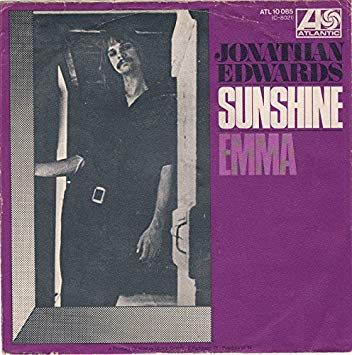
Always loved this song. Edwards sings this song like he means every syllable. This song was written by Edwards and peaked at #4 in the Billboard 100. Sunshine was off of Jonathan’s self-titled debut album in 1971. This would be Edwards only top forty hit.
A song that fit the times and the counterculture perfectly with a Us vs Them mentality.
“I just went, ‘How much does it cost? I’ll buy it.’ I was talking about freedom and talking about authority, my constant questioning of authority. ‘How much does it cost? I’ll buy it? Time is all we’ve lost. I’ll try it. He can’t even run his own life, I’ll be damned if he’ll run mine.’ That just came out as I was playing the song for these people.”
When he performs live, Edwards usually ends the first of his two sets with this song. “I often say, and it’s true, that if I had never done another song in my life, I’ll be happy to have come and gone with that,” he told us. “It was an anthem to many people and it helped a lot of people through Vietnam. It helped a lot of people through the drug culture of the last part of the ’60s and the early ’70s. It helped a lot of people cope with a lot of things that were going on during those tumultuous years. And I feel very proud to have done that and very happy with my contribution to our culture.”
Edwards performed this song at the Mayday protests on May 2, 1971. With the slogan, “If the government will not stop the war, we will stop the government,” the demonstration was organized by a group called the Mayday Tribe, with the goal of shutting down the government by blocking off key areas in Washington, DC. When the protests started on May 1, the government had thousands of troops ready and made mass arrests, which carried into the next day when Edwards played at the Washington Monument. “The sun was coming up and the National Guard was arresting people for protesting, for being on the grounds of the Washington Monument,” he recalled. “It was my turn to play and I just started playing that song. We got to the end and my bass player and I looked at each other and we went, ‘Let’s just start it over again.’ So we just kept playing that song. Because there’s no better song for the soundtrack of that movie. It had just come out. Some people had heard it, some hadn’t, but everyone heard it that morning, including the National Guard.”
Sunshine
Sunshine go away today, I don’t feel much like dancing Some man’s come he’s trying to run my life, don’t know what he’s asking When he tells me I better get in line, can’t hear what he’s saying When I grow up, I’m gonna make him mine, these ain’t dues I been paying
How much does it cost? I’ll buy it! The time is all we’ve lost I’ll try it! He can’t even run his own life, I’ll be damned if he’ll run mine–sunshine
Sunshine, go away today, I don’t feel much like dancing Some man’s come he’s trying to run my life, don’t know what he’s asking Working starts to make me wonder where fruits of what I do are going When he says in love and war all is fair, he’s got cards he ain’t showing
How much does it cost? I’ll buy it! The time is all we’ve lost–I’ll try it! He can’t even run his own life, I’ll be damned if he’ll run mine–sunshine
Sunshine, come on back another day, I promise you I’ll be singing This old world, she’s gonna turn around, brand new bells will be ringing
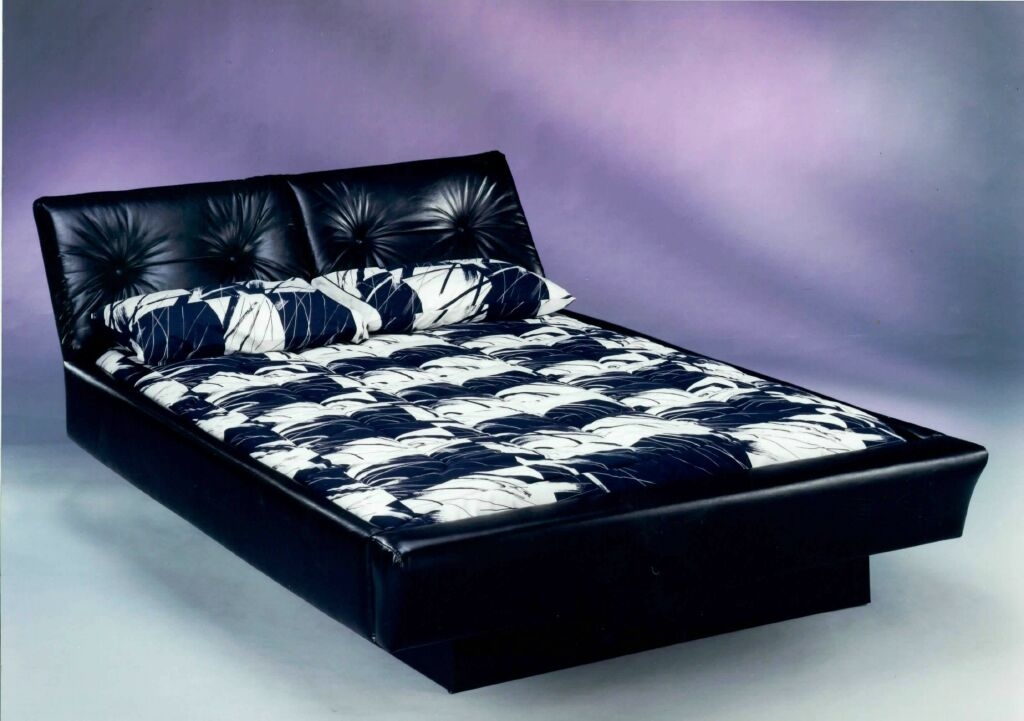
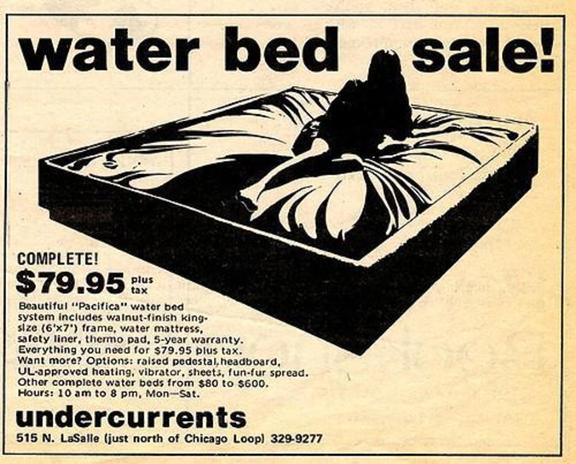
I had a waterbed in the early 80s as a young teen. I always liked it and thought it was comfortable. Two things I didn’t like about it was… if there was a leak you would not know until 2:30 am and on a school night…always. If the heater was either turned down or went out…you would wake up as a human popsicle at…you guessed it… 2:30 am. Nothing ever happened to it at noon on a Saturday.
in the early 1800s. Scottish physician Dr. Neil Arnott devised a water-filled bed to prevent bedsores in invalids.
In 1873, Sir James Paget, of St. Bartholomew Hospital in London, presented the waterbed designed by Dr. Arnott as a treatment and prevention of ulcers, a common condition at this time. Paget found that waterbeds allowed for even pressure distribution over the entire body. The only problem was that you could not regulate the water temperature.
In 1968 Charles Hall presented the waterbed as his Master’s Thesis project to his San Francisco State University design class. While showcasing their work, students rotated through workshops to see each other’s inventions. Once they reached Hall’s project – a vinyl mattress filled with heated water – the class never left. “Everybody just ended up frolicking on the waterbed,” Hall recalls.
Hall’s first waterbed mattress was called ‘the Pleasure Pit’ and it quickly gained popularity with the hippie culture of the 1960’s and 1970’s.
Time Magazine in 1971 about waterbeds. “Playboy Tycoon Hugh Hefner has one–king-size, of course, and covered with Tasmanian opossum. The growing number of manufacturers and distributors, with such appropriate names as Aquarius Products, the Water Works, Innerspace Environments, Joyapeutic Aqua Beds and the Wet Dream, can hardly meet the demand. They have sold more than 15,000 since August.”
Sex always sells… one ad stated. “Two things are better on a waterbed. One of them is sleep.” and “She’ll admire you for your car, she’ll respect you for your position, but she’ll love you for your waterbed.”
By the 80s waterbeds were in the suburbs and gaining in popularity. In 1987, waterbeds had achieved their peak, representing 22 percent of all U.S. mattress sales.
At the end of the 1980s waterbed sales fell off. Some say it was because they were too connected to the 70s that had fallen out of favor (the horror!)… but most think it was because of the maintenance and pain in setting them up and moving them. Also, you had to make sure your floor was braced enough to have one depending on the size and weight of it.
Today you can still buy them but most are designed thinner to hold less water in rolls instead of sleeping on a lake beneath you.
I had mine until I was 20 with plenty of patches but it still held water and me… but I left it behind when I moved.
This egg-shaped one below I would gladly take home now
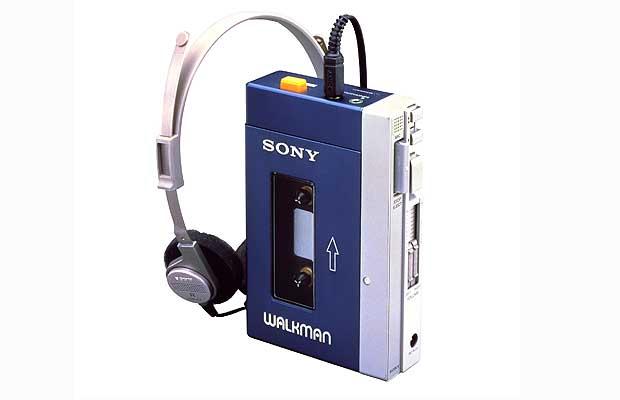
In July of 1979, the Sony Walkman was released to the public. You had portable music anywhere you went. It cost $150 ($546.21 in today’s money).
The 1980s was the Walkman’s decade. Cassettes started to outsell albums and this device was one of the reasons. By 1986 the word “Walkman” had entered the Oxford English Dictionary. Its launch coincided with the birth of the aerobics craze, and millions used the Walkman to make their workouts more entertaining.
Between 1987 and 1997 — the height of the Walkman’s popularity — the number of people who said they walked for exercise increased by 30 percent.
Sony continued to roll out variations on its theme, adding such features as AM/FM receivers, bass boost, and auto-reverse. Sony even made a solar-powered Walkman, water-resistant Sport Walkmans and even devices with two cassette drives. With the introduction of compact discs in 1982, the cassette format began to go the way of the dinosaur.
Sony was fairly quick to jump to new formats: it introduced the D-50 portable CD player a year after the first compact discs were sold, and later rolled out MiniDisc and MP3 players under the Walkman brand.
It caught on with the public in a big way. Today with iPods, iPhones and other devices we take it for granted are descendants from the 1979 Walkman.
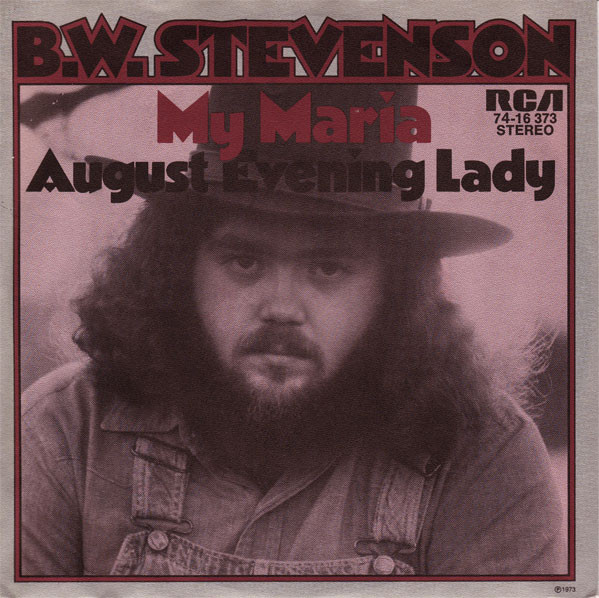
It’s a catchy song with a country slant that was a big hit in 1973. The song was written by Stevenson and Daniel Moore. Daniel Moore wrote the song “Shambala” that Stevenson recorded but it wasn’t a hit until Three Dog Night covered it. This song peaked at #9 in the Billboard 100 and #7 in Canada.
The country duo Brooks and Dunn took the My Maria to #1 in the Country Charts in 1996.
In February 1973, Stevenson released the song “Shambala,” which was written by the composer Daniel Moore. Two weeks later, Three Dog Night released their version of the song, which became the much bigger hit, charting at US #3 while Stevenson’s version stalled at #66. Stevenson and Moore then got together and re-wrote “Shambala” as “My Maria,” changing the lyrics so the song became an ode to a beautiful woman. The ploy worked, and Stevenson had by far his biggest hit – his next closest chart entry was “The River Of Love” at #53, also written by Moore.
“Shambala” was often credited as being written by Stevenson. Moore told us: “My co-writer on ‘My Maria,’ B.W. Stevenson and I got together in 1987 and I busted him for taking credit for writing ‘Shambala.’ He had this big grin on his face and said, ‘I never said that I wrote it.’ Then his grin got bigger and he said, ‘But I also never said that I didn’t write it.’ Poor guy died the next year from a staph infection after a heart valve operation in Nashville. The operation went fine, but 3 days later he got the staph infection and it killed him. So much for the hospitals in Nashville.
I probably would never have finished ‘My Maria’ without B.W.’s assistance. I had been working on the song for two years at the point I showed it to him. Of course, he wrote the rest of the lyrics in about 15 minutes. Bless his heart.”
B.W. Stevenson (B.W. = “Buck Wheat”) was a singer/songwriter from Dallas, Texas who died in 1988 at age 38. “My Maria,” featuring Larry Carlton on guitar, was by far his best-known song. It was a #1 hit on the Adult Contemporary chart.
A 1996 cover version by Brooks & Dunn was a huge Country hit, going to #1 and being named by Billboard as the Country Song of the Year. Their version also made #79 on the Hot 100.
My Maria
My Maria don’t you know I’ve come a long, long way I been longin’ to see her When she’s around she takes my blues away Sweet Maria the sunlight surely hurts my eyes I’m a lonely dreamer on a highway in the skies
Maria, Maria I love you
My Maria there were some blue and sorrow times Just my thoughts about you bring back my piece of mind Gypsy lady you’re a miracle work for me You set my soul free like a ship sailing on the sea She is the sunlight when skies are grey She treats me so right lady take me away
My Maria Maria I love you My Maria Maria I love you











 PowerPop... An Eclectic Collection of Pop Culture