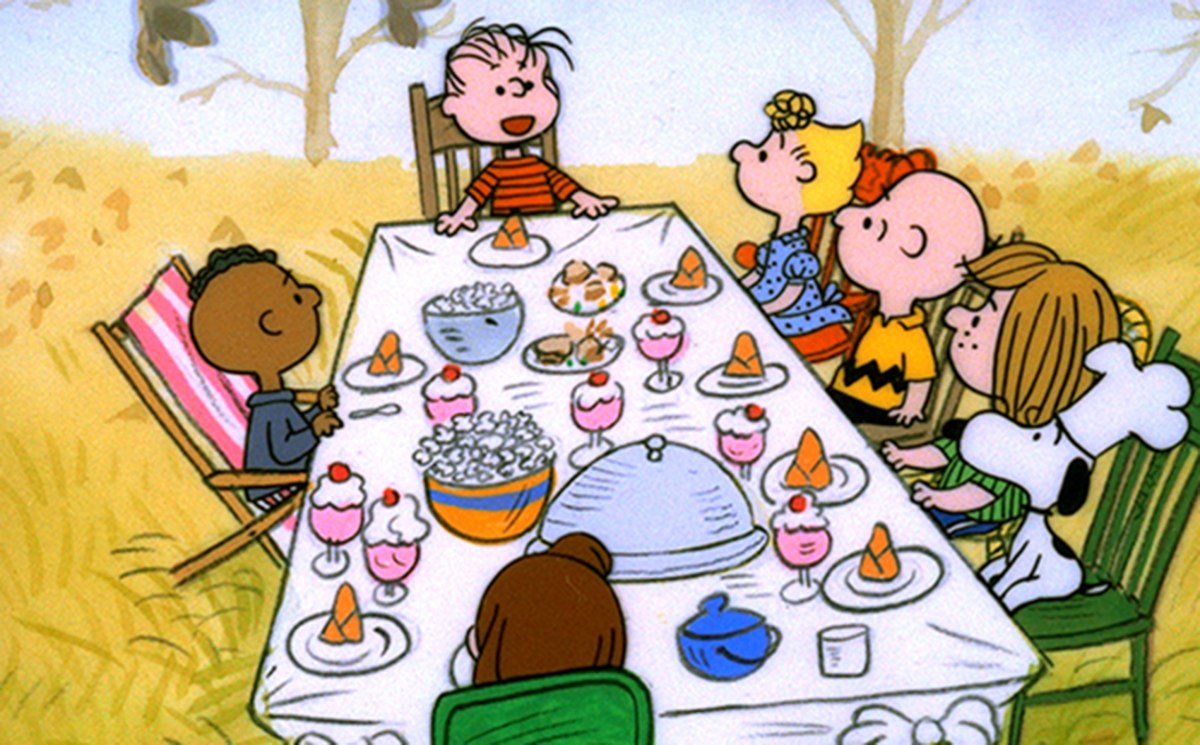
Happy Thanksgiving to everyone. This first premiered on November 20, 1973, on CBS and won an Emmy Award. Great Thanksgiving special as always with the earlier Peanuts.
The Halloween, Thanksgiving, and Christmas Peanuts specials I always looked forward to. The way their world was only for kids where grownups were heard but only as noise in the background.
It starts off with Lucy tempting Charlie Brown with that football. Just one time I wanted to see Charlie kick the football…or Lucy.
It’s Thanksgiving and Peppermint Patty invites herself and Marcie over to Charlie Brown’s house but Charlie and Sally are ready to go to their grandmothers. Charlie talks to Linus and he suggests having two Thanksgiving dinners.
The only thing Charlie can come up with is feeding his friends toast and cold cereal which does not make Peppermint Patty happy whatsoever. She lets Charlie have it really bad until Marcie reminds her that she invited herself over.
Not going to give it away for those who have not seen this wonderful holiday cartoon. The music by Vince Guaraldi is excellent and makes every Peanuts cartoon special.
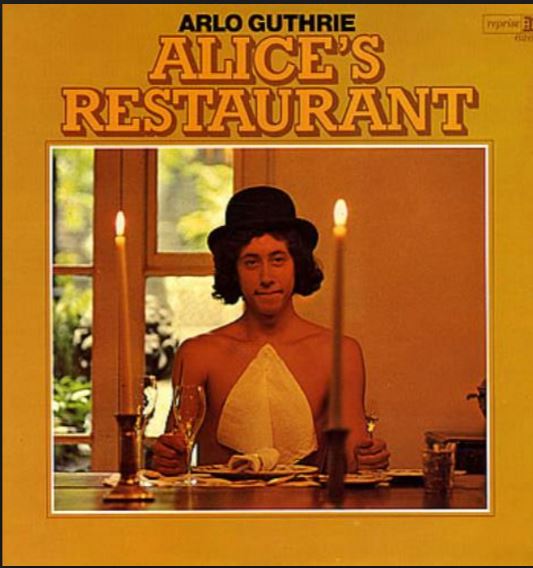
It’s not Thanksgiving without listening to this 1967 song. This song did not chart but he did have another version that did chart…it was called Alice’s Rock and Roll Restaurant that peaked at #97 in the Billboard 100.
Many radio stations play this on Thanksgiving. This is usually the only time they play it, since the song is over 18-minutes long.
There have been mixed reviews about the movie that was made…I’ve always found it enjoyable. It’s not going to be confused with Gone With The Wind but it’s a fun period movie.
In 1991, Arlo bought the church where this took place and set up “The Guthrie Center,” where he runs programs for kids who have been abused.
Below the song facts are Alice’s Rock and Roll Restaurant and Alice’s Restaurant Massacree.
Running 18 minutes and 34 seconds, this song is based on a true story that happened on Thanksgiving Day, 1965. Arlo was 18, and along with his friend Rick Robbins, drove to Stockbridge, Massachusetts to have Thanksgiving dinner with Alice and Ray Brock. Alice and Ray lived in a church – the former Trinity Church on Division Street in Stockbridge – and were used to inviting people into their home. Arlo and Rick had been traveling together, Arlo working his way up in folk singing and Rick tagging along. A number of people, Arlo and Rick included, were considered members of the family, so they were not guests in the usual sense. When Ray woke up the next morning, he said to them, “Let’s clean up the church and get all this crap out of here, for God’s sake. This place is a mess,” and Rick said, “Sure.” Arlo and Rick swept up and loaded all the crap into a VW microbus and went out to the dump, which was closed. They started driving around until Arlo remembered a side road in Stockbridge up on Prospect Hill by the Indian Hill Music Camp which he attended one summer, so they drove up there and dumped the garbage.A little later, the phone rang, and it was Stockbridge police chief William J. Obanhein. “I found an envelope with the name Brock on it,” Chief Obanhein said. The truth came out, and soon the boys found themselves in Obanhein’s police car. They went up to Prospect Hill, and Obie took some pictures. On the back, he marked them, “PROSPECT HILL RUBBISH DUMPING FILE UNDER GUTHRIE AND ROBBINS 11/26/65.” He took the kids to jail.The kids went in, pleaded, “Guilty, Your Honor,” was fined $25 each and ordered to retrieve the rubbish. Then they all went back to the church and started to write “Alice’s Restaurant” together. “We were sitting around after dinner and wrote half the song,” Alice recalls, “and the other half, the draft part, Arlo wrote.”
Guthrie, the son of legendary folk singer Woody Guthrie, greatly exaggerated the part about getting arrested for comic effect. In the song, he is taken away in handcuffs and put in a cell with hardened criminals.
In the song, Guthrie avoids the draft and did not have to serve in Vietnam because of his littering arrest. In reality, he was eligible but wasn’t drafted because his number didn’t come up.
Guthrie performed this song for the first time on July 16, 1967, at the Newport Folk Festival.
This reflected the attitude of many young people in America at the time. It was considered an antiwar song, but unlike most protest songs, it used humor to speak out against authority.
After a while, Guthrie stopped playing this at concerts, claiming he forgot the words. As the song approached its 30th anniversary, he started playing it again.
Guthrie made a movie of the same name in 1969 which was based on the song.
Over the years, Guthrie added different words to the song. He recorded a new, longer version in 1995 at The Guthrie Center
Alice’s Restaurant
This song is called Alice’s Restaurant, and it’s about Alice, and the
Restaurant, but Alice’s Restaurant is not the name of the restaurant,
That’s just the name of the song, and that’s why I called the song Alice’s
Restaurant.
You can get anything you want at Alice’s Restaurant
You can get anything you want at Alice’s Restaurant
Walk right in it’s around the back
Just a half a mile from the railroad track
You can get anything you want at Alice’s Restaurant
Now it all started two Thanksgivings ago, was on – two years ago on
Thanksgiving, when my friend and I went up to visit Alice at the
Restaurant, but Alice doesn’t live in the restaurant, she lives in the
Church nearby the restaurant, in the bell-tower, with her husband Ray and
Fasha the dog. And livin’ in the bell tower like that, they got a lot of
Room downstairs where the pews used to be in. Havin’ all that room,
Seein’ as how they took out all the pews, they decided that they didn’t
Have to take out their garbage for a long time.
We got up there, we found all the garbage in there, and we decided it’d be
A friendly gesture for us to take the garbage down to the city dump. So
We took the half a ton of garbage, put it in the back of a red vw
Microbus, took shovels and rakes and implements of destruction and headed
On toward the city dump.
Well we got there and there was a big sign and a chain across across the
Dump saying, “Closed on Thanksgiving.” And we had never heard of a dump
Closed on Thanksgiving before, and with tears in our eyes we drove off
Into the sunset looking for another place to put the garbage.
We didn’t find one. Until we came to a side road, and off the side of the
Side road there was another fifteen foot cliff and at the bottom of the
Cliff there was another pile of garbage. And we decided that one big pile
Is better than two little piles, and rather than bring that one up we
Decided to throw our’s down.
That’s what we did, and drove back to the church, had a thanksgiving
Dinner that couldn’t be beat, went to sleep and didn’t get up until the
Next morning, when we got a phone call from officer Obie. He said, “Kid,
We found your name on an envelope at the bottom of a half a ton of
Garbage, and just wanted to know if you had any information about it. ” And
I said, “Yes, sir, Officer Obie, I cannot tell a lie, I put that envelope
Under that garbage. ”
After speaking to Obie for about forty-five minutes on the telephone we
Finally arrived at the truth of the matter and said that we had to go down
And pick up the garbage, and also had to go down and speak to him at the
Police officer’s station. So we got in the red vw microbus with the
Shovels and rakes and implements of destruction and headed on toward the
Police officer’s station.
Now friends, there was only one or two things that Obie coulda done at
The police station, and the first was he could have given us a medal for
Being so brave and honest on the telephone, which wasn’t very likely, and
We didn’t expect it, and the other thing was he could have bawled us out
And told us never to be seen driving garbage around the vicinity again,
Which is what we expected, but when we got to the police officer’s station
There was a third possibility that we hadn’t even counted upon, and we was
Both immediately arrested. Handcuffed. And I said “Obie, I don’t think I
Can pick up the garbage with these handcuffs on. ” He said, “Shut up, kid.
Get in the back of the patrol car. ”
And that’s what we did, sat in the back of the patrol car and drove to the
Quote Scene of the Crime unquote. I want tell you about the town of
Stockbridge, Massachusets, where this happened here, they got three stop
Signs, two police officers, and one police car, but when we got to the
Scene of the Crime there was five police officers and three police cars,
Being the biggest crime of the last fifty years, and everybody wanted to
Get in the newspaper story about it. And they was using up all kinds of
Cop equipment that they had hanging around the police officer’s station.
They was taking plaster tire tracks, foot prints, dog smelling prints, and
They took twenty seven eight-by-ten colour glossy photographs with circles
And arrows and a paragraph on the back of each one explaining what each
One was to be used as evidence against us. Took pictures of the approach,
The getaway, the northwest corner the southwest corner and that’s not to
Mention the aerial photography.
After the ordeal, we went back to the jail. Obie said he was going to put
Us in the cell. Said, “Kid, I’m going to put you in the cell, I want your
Wallet and your belt. ” And I said, “Obie, I can understand you wanting my
Wallet so I don’t have any money to spend in the cell, but what do you
Want my belt for? ” And he said, “Kid, we don’t want any hangings. ” I
Said, “Obie, did you think I was going to hang myself for littering?”
Obie said he was making sure, and friends Obie was, cause he took out the
Toilet seat so I couldn’t hit myself over the head and drown, and he took
Out the toilet paper so I couldn’t bend the bars roll out the – roll the
Toilet paper out the window, slide down the roll and have an escape. Obie
Was making sure, and it was about four or five hours later that Alice
(remember Alice? It’s a song about Alice), Alice came by and with a few
Nasty words to Obie on the side, bailed us out of jail, and we went back
To the church, had a another thanksgiving dinner that couldn’t be beat,
And didn’t get up until the next morning, when we all had to go to court.
We walked in, sat down, Obie came in with the twenty seven eight-by-ten
Colour glossy pictures with circles and arrows and a paragraph on the back
Of each one, sat down. Man came in said, “All rise.” We all stood up,
And Obie stood up with the twenty seven eight-by-ten colour glossy
Pictures, and the judge walked in sat down with a seeing eye dog, and he
Sat down, we sat down. Obie looked at the seeing eye dog, and then at the
Twenty seven eight-by-ten colour glossy pictures with circles and arrows
And a paragraph on the back of each one, and looked at the seeing eye dog.
And then at twenty seven eight-by-ten colour glossy pictures with circles
And arrows and a paragraph on the back of each one and began to cry,
’cause Obie came to the realization that it was a typical case of American
Blind justice, and there wasn’t nothing he could do about it, and the
Judge wasn’t going to look at the twenty seven eight-by-ten colour glossy
Pictures with the circles and arrows and a paragraph on the back of each
One explaining what each one was to be used as evidence against us. And
We was fined $50 and had to pick up the garbage in the snow, but that’s not
What I came to tell you about.
Came to talk about the draft.
They got a building down New York City, it’s called Whitehall Street,
Where you walk in, you get injected, inspected, detected, infected,
Neglected and selected. I went down to get my physical examination one
Day, and I walked in, I sat down, got good and drunk the night before, so
I looked and felt my best when I went in that morning. ‘Cause I wanted to
Look like the all-American kid from New York City, man I wanted, I wanted
To feel like the all-, I wanted to be the all American kid from New York,
And I walked in, sat down, I was hung down, brung down, hung up, and all
Kinds o’ mean nasty ugly things. And I waked in and sat down and they gave
Me a piece of paper, said, “Kid, see the phsychiatrist, room 604.”
And I went up there, I said, “Shrink, I want to kill. I mean, I wanna, I
Wanna kill. Kill. I wanna, I wanna see, I wanna see blood and gore and
Guts and veins in my teeth. Eat dead burnt bodies. I mean kill, Kill,
Kill, kill. ” And I started jumping up and down yelling, “kill, kill, ” and
He started jumping up and down with me and we was both jumping up and down
Yelling, “KILL, KILL.” And the Sargent came over, pinned a medal on me,
Sent me down the hall, said, “You’re our boy.”
Didn’t feel too good about it.
Proceeded on down the hall gettin more injections, inspections,
Detections, neglections and all kinds of stuff that they was doin’ to me
At the thing there, and I was there for two hours, three hours, four
Hours, I was there for a long time going through all kinds of mean nasty
Ugly things and I was just having a tough time there, and they was
Inspecting, injecting every single part of me, and they was leaving no
Part untouched. Proceeded through, and when I finally came to the see the
Last man, I walked in, walked in sat down after a whole big thing there,
And I walked up and said, “What do you want?” He said, “Kid, we only got
One question. Have you ever been arrested? ”
And I proceeded to tell him the story of the Alice’s Restaurant Massacre,
With full orchestration and five part harmony and stuff like that and all
The phenome… – and he stopped me right there and said, “Kid, did you ever
Go to court? ”
And I proceeded to tell him the story of the twenty seven eight-by-ten
Colour glossy pictures with the circles and arrows and the paragraph on
The back of each one, and he stopped me right there and said, “Kid, I want
You to go and sit down on that bench that says Group W…. Now kid!! ”
And I, I walked over to the, to the bench there, and there is, Group W’s
Where they put you if you may not be moral enough to join the army after
Committing your special crime, and there was all kinds of mean nasty ugly
Looking people on the bench there. Mother rapers. Father stabbers. Father
Rapers! Father rapers sitting right there on the bench next to me! And
They was mean and nasty and ugly and horrible crime-type guys sitting on the
Bench next to me. And the meanest, ugliest, nastiest one, the meanest
Father raper of them all, was coming over to me and he was mean ‘n’ ugly
‘n’ nasty ‘n’ horrible and all kind of things and he sat down next to me
And said, “Kid, whad’ya get?” I said, “I didn’t get nothing, I had to pay
$50 and pick up the garbage. ” He said, “What were you arrested for, kid? ”
And I said, “Littering.” And they all moved away from me on the bench
There, and the hairy eyeball and all kinds of mean nasty things, till I
Said, “And creating a nuisance.” And they all came back, shook my hand,
And we had a great time on the bench, talkin about crime, mother stabbing,
Father raping, all kinds of groovy things that we was talking about on the
Bench. And everything was fine, we was smoking cigarettes and all kinds of
Things, until the Sargeant came over, had some paper in his hand, held it
Up and said.
“Kids, this-piece-of-paper’s-got-47-words-37-sentences-58-words-we-wanna-
Know-details-of-the-crime-time-of-the-crime-and-any-other-kind-of-thing-
You-gotta-say-pertaining-to-and-about-the-crime-I-want-to-know-arresting-
Officer’s-name-and-any-other-kind-of-thing-you-gotta-say”, and talked for
Forty-five minutes and nobody understood a word that he said, but we had
Fun filling out the forms and playing with the pencils on the bench there,
And I filled out the massacre with the four part harmony and wrote it
Down there, just like it was, and everything was fine and I put down the
Pencil and I turned over the piece of paper, and there, there on the
Other side, in the middle of the other side, away from everything else on
The other side, in parentheses, capital letters, quotated, read the
Following words:
(“KID, HAVE YOU REHABILITATED YOURSELF?”)
I went over to the Sargent, said, “Sargeant, you got a lot a damn gall to
Ask me if I’ve rehabilitated myself, I mean, I mean, I mean that just, I’m
Sittin’ here on the bench, I mean I’m sitting here on the Group W bench
’cause you want to know if I’m moral enough join the army, burn women,
Kids, houses and villages after bein’ a litterbug. ” He looked at me and
Said, “Kid, we don’t like your kind, and we’re gonna send you fingerprints
Off to Washington. ”
And friends, somewhere in Washington enshrined in some little folder, is a
study in black and white of my fingerprints. And the only reason I’m
singing you this song now is cause you may know somebody in a similar
situation, or you may be in a similar situation, and if your in a
situation like that there’s only one thing you can do and that’s walk into
The shrink wherever you are, just walk in say “Shrink, You can get
Anything you want, at Alice’s restaurant. “. And walk out. You know, if
One person, just one person does it they may think he’s really sick and
They won’t take him. And if two people, two people do it, in harmony,
They may think they’re both faggots and they won’t take either of them.
And three people do it, three, can you imagine, three people walking in
Singin a bar of Alice’s Restaurant and walking out. They may think it’s an
Organization. And can you, can you imagine fifty people a day, I said
Fifty people a day walking in singing a bar of Alice’s Restaurant and
Walking out. And friends they may think it’s a movement.
And that’s what it is, the Alice’s Restaurant Anti-Massacre Movement, and
All you got to do to join is sing it the next time it comes around on the
Guitar.
With feeling. So we’ll wait for it to come around on the guitar, here and
Sing it when it does. Here it comes.
You can get anything you want, at Alice’s Restaurant
You can get anything you want, at Alice’s Restaurant
Walk right in it’s around the back
Just a half a mile from the railroad track
You can get anything you want, at Alice’s Restaurant
That was horrible. If you want to end war and stuff you got to sing loud.
I’ve been singing this song now for twenty-five minutes. I could sing it
For another twenty-five minutes. I’m not proud… Or tired.
So we’ll wait till it comes around again, and this time with four part
Harmony and feeling.
We’re just waitin’ for it to come around is what we’re doing.
All right now.
You can get anything you want, at Alice’s Restaurant
Excepting Alice
You can get anything you want, at Alice’s Restaurant
Walk right in it’s around the back
Just a half a mile from the railroad track
You can get anything you want, at Alice’s Restaurant
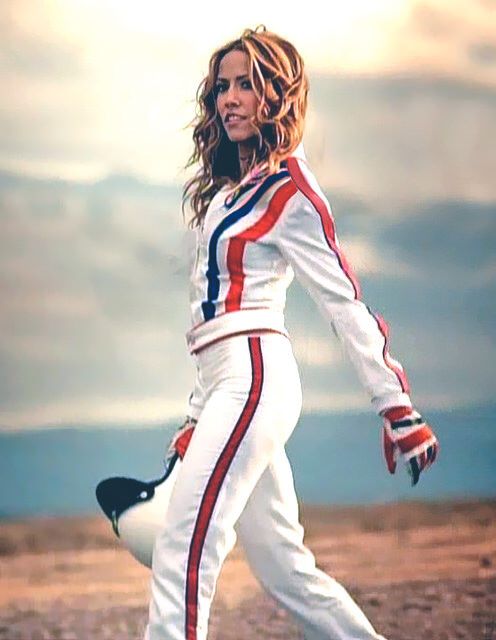
Well, this one was a no brainer. This one wraps up this short series. The song was off of the C’mon, C’mon album which peaked at #2 in 2002.
In the music video for the song, Sheryl Crow recreates the car chase scene from McQueen’s movie “Bullitt” and the motorcycle chase from his film “The Great Escape.”
Sheryl won a Grammy for Best Female Rock Vocal Performance for this song.
Steve McQueen
Well I went to bed in Memphis And I woke up in Hollywood I got a quarter in my pocket And I’d call you if I could But I don’t know why I gotta fly
I want to rock and roll this party I still want to have some fun I want to leave you feeling breathless Show you how the west was won But I gotta fly I gotta fly
Like Steve McQueen All I need’s a fast machine And I’m gonna make it all right Like Steve McQueen Underneath your radar screen You’ll never catch me tonight
I ain’t takin’ shit off no one Baby that was yesterday I’m an all American rebel Making my big getaway Yeah you know it’s time I gotta fly
Like Steve McQueen All I need’s a fast machine And I’m gonna make it all right Like Steve McQueen Underneath your radar screen You’ll never catch me tonight
Like Steve McQueen Like Steve McQueen
We got rock stars in the White House All our pop stars look like porn All my heroes hit the highway They don’t hang out here no more
You can try me on my cell phone You can page me all night long But you won’t catch this free bird I’ll already be long gone
Like Steve McQueen All we need’s a fast machine And we’re gonna make it all right Like Steve McQueen Underneath your radar screen You’ll never catch us tonight
Like Steve McQueen All we need’s a fast machine And we’re gonna make it all right Like Steve McQueen Underneath your radar screen You’ll never catch me tonight
Hollywood is under me, I’m Martin Sheen, I’m Steve McQueen, I’m Jimmy Dean
This song was Michael Stipe’s goodbye to the 20th Century: “This next song is our little valentine to the 20th century and I’m so personally thrilled to be in the 21st century right now, cos the 20th century offered some really great stuff but it offered some really not great stuff.”
The lyrics were inspired by Michael Stipe’s time living in Los Angeles, and his love of the city’s lights as viewed from up above.
Electrolite peaked at #96 in 1997 in the Billboard 100.
The song also mentions Martin Sheen and Stipe told Sheen about it: “I had a dentist in Los Angeles, who was also a dentist to Martin Sheen, and Martin Sheen was in the dentist’s chair, getting his tooth drilled, when I went up to him and said, ‘We have a record coming out in a couple of weeks and you’re mentioned in one of the songs, and I just want you to know that it’s honoring you; I don’t want you to think that we’re making fun of you.’ And he was saying [impression of Sheen speaking with the dentist working on his mouth] ‘Thank you very much!’. He was very nice about it.”
From Songfacts
When R.E.M. performed this at the Hollywood Bowl in Los Angeles, on May 29, 2008, Stipe said: “There’s a funny story about this song. I thought it was not good enough to go on a record, and Peter and Mike convinced me otherwise. They were right, and now it’s one of my favorite songs. The song for me embodies the time I was living in Santa Monica for a couple of years. Every now and then I would go on one of those late night drives when there’s no traffic. We’d climb up into the hills, go up Mulholland and think about the people that have come to this beautiful city.” Stipe was referring to Mulholland Drive, which goes through Santa Monica and Hollywood. Tom Petty sang about the road in his song “Free Fallin’.”
Mike Mills wrote the music for this song on a piano at his then-girlfriend’s apartment in Chicago, he recalled in the liner notes for Part Lies, Part Heart, Part Truth, Part Garbage.
Peter Care and Spike Jonze directed the music video for this at The Ambassador Hotel in Los Angeles where Robert Kennedy was killed. “That place was spooky,” Stipe said. The opening scenes are shot upside down as Stipe performs the song among rubber reindeer, while various people are shown tethered to poles, trash cans, and vehicles throughout the city by lengths of chains.
Your eyes are burning holes through me
I’m gasoline
I’m burnin’ clean
Twentieth century, go to sleep
You’re Pleistocene
That is obscene
That is obscene
You are the star tonight
Your sun electric, outta sight
Your light eclipsed the moon tonight
Electrolite
You’re outta sight
If I ever want to fly
Mulholland Drive
I am alive
Hollywood is under me
I’m Martin Sheen
I’m Steve McQueen
I’m Jimmy Dean
You are the star tonight
Your sun electric, outta sight
Your light eclipsed the moon tonight
Electrolite
You’re outta sight
If you ever want to fly
Mulholland Drive
Up in the sky
Stand on a cliff and look down there
Don’t be scared, you are alive
You are alive
You are the star tonight
Your sun electric, outta sight
Your light eclipsed the moon tonight
Electrolite
You’re outta sight
Twentieth century, go to sleep
Really deep
We won’t blink
Your eyes are burning holes through me
I’m not scared
I’m outta here
I’m not scared
I’m outta here
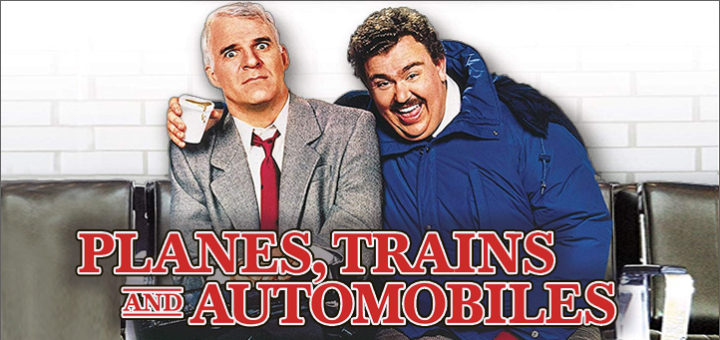
This is my go-to Thanksgiving movie. Steve Martin and John Candy are a great team in this comedy. Personally, I think this is John Candy’s greatest movie. I watch it every year and always looked forward to it.
The movie is full of great scenes and some good lines from Candy and Martin.
John Hughes is the Director and writer. He shot over 3 hours and had to edit it down. Below is a short plot. For those who haven’t seen it…you are missing a funny movie. It was rated R because of a one minute scene with the F-Bomb used 18 times by mostly Martin. The movie was released in 1987.
Short Plot
In New York, a marketing executive Neal Page wants to travel home to Chicago for Thanksgiving. He has difficulties getting a taxi and his flight is canceled. He meets in the airport the clumsy and talkative shower curtain ring salesman Del Griffith who has taken his cab and they travel side-by-side to Chicago. However the bad weather shuts down O’Hare Airport and they land at Wichita, Kansas. They both want to go to Chicago and they decide to travel together. Neal is cursed/blessed with the presence of Del Griffith, shower curtain ring salesman and all-around blabbermouth who is never short of advice, conversation, bad jokes, or company.
Along their journey, Neal changes his viewpoint about Del Griffith and his own behavior.
“Steve walks warily down the street…with the brim pulled way down low. Ain’t no sound but the sound of his feet…machine guns ready to go.”
Supposedly Steve McQueen is Steve in the opening lyrics. Steve died the year this was released on November 7, 1980.
You couldn’t go anywhere in 1980 without hearing someone sing, whistle, or hum this song. I remember the high school band did a version of it.
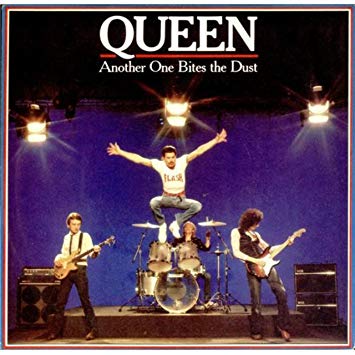
Brian May: “Freddie sung until his throat bled on Another One Bites The Dust. He was so into it. He wanted to make that song something special.”
The song peaked at #1 in 1980 in the Billboard 100. It was on the album The Game…which also peaked at #1 in 1980. While the band and producer Reinhold Mack were mixing the track, Brian May’s roadie suggested it be released as a single; the band didn’t like the idea but were finally talked into doing it when Michael Jackson, after a concert, suggested the same idea.
From Songfacts
This is one of the hardest Queen songs to understand. The opening line reads, “Steve walks warily down the street, his brim pulled way down low. Ain’t no sound but the sound of his feet, machine gun ready to go…” Also, the last phrase spoken in the song is not “Shoot Her” or “Shooter,” but “Shoot Out.”
Though probably not intentional unless someone did an excellent splicing job, the “another one bites the dust” line quite clearly says “decide to smoke marijuana” when played backwards. This is especially clear toward the end of the track when Mercury repeats the line with only the drums playing.
Queen bass player John Deacon wrote this song. All four members of Queen wrote songs, and each wrote at least one hit. Deacon also wrote “You’re My Best Friend.”
Deacon was influenced by the Chic song Good Times. In an interview with the New Musical Express, Chic bass player Bernard Edwards said: “Well, that Queen record came about because that bass player spent some time hanging out with us at our studio. But that’s OK. What isn’t OK is that the press started saying that we had ripped them off! Can you believe that? ‘Good Times’ came out more than a year before, but it was inconceivable to these people that black musicians could possibly be innovative like that. It was just these dumb disco guys ripping off this rock ‘n’ roll song.”
Deacon played most of the instruments on the track: lead and rhythm guitars, bass, reversed piano and additional percussion. Brian May did some guitar effects with harmonizer (in the interlude), and Roger Taylor played the drum loop. Surprisingly, there are no synthesizers.
The drum track and the handclaps were looped. They repeat throughout the song.
John Deacon claimed in a 1980 interview that Roger Taylor opposed the song’s drumbeat. This is backed up by the comments of several figures in the Days of our Lives documentary, who noted that Taylor hated having tape put on his drums to deaden the sound.
However, the drummer denied this in an interview with Mojo magazine in October 2008. He insisted: “I’d already had an ineffectual pop at that kind of music with ‘Fun It,’ on the Jazz album. I was never against ‘Another One Bites The Dust,’ but I was against releasing it as a single.”
In 1998, this was used in a commercial for AIWA sound systems. In the ad, a guy drives around with this blaring from his car stereo. At the end of the commercial, we realize he is driving a hearse.
During the production of the movie Rocky III, this was used in a key scene where Rocky is training for a fight. Producers could not get permission to use the song, so Sylvester Stallone hired Survivor to write an original song instead, which turned out to be “Eye Of The Tiger.”
Queen were originally reluctant to release this as a single, but backstage after a Queen gig at the Los Angeles forum, a visiting Michael Jackson convinced them it would be a hit. “Michael and all his brothers were all going, ‘That’s a fantastic track. You must release it,'” recalled Queen drummer Roger Taylor to Q magazine December 2009.
This meeting lead to several recordings and collaborations between Freddie Mercury and Jackson, all of which remain unreleased.
Weird Al Yankovic got his first chart placing with his parody of this song: “Another One Rides The Bus.” It bubbled under on the Hot 100, placing at #104 in 1981. After a few more minor hits, he landed “Eat It” at #12 in 1984.
This was the single that really broke the band in America, and it garnered a huge following amongst American disco audiences, with many fans and journalists convinced it was a black man singing lead vocals (these people obviously hadn’t heard of Queen before so didn’t know what Freddie looked like). The band occasionally were unsure of how to deal with this – Roger Taylor jokes in the Days of our Lives documentary of having fans shouting “you guys are bad!” in the street, and he had to ask “does that mean good or what?”
This was used in a 2016 commercial for the Hyundai Genesis that first aired on the Super Bowl. In the spot, Kevin Hart uses the Car Finder app to track down the guy who is using it to take his daughter on a date. After tormenting her suitor, Hart says, “A dad’s gotta do what a dad’s gotta do.”
Another One Bites The Dust
Oh, let’s go
Steve walks warily down the street With the brim pulled way down low Ain’t no sound but the sound of his feet, Machine guns ready to go
Are you ready, hey, are you ready for this? Are you hanging on the edge of your seat? Out of the doorway the bullets rip To the sound of the beat
Another one bites the dust Another one bites the dust And another one gone, and another one gone Another one bites the dust Hey, I’m gonna get you, too Another one bites the dust
How do you think I’m going to get along Without you when you’re gone? You took me for everything that I had And kicked me out on my own
Are you happy, are you satisfied? How long can you stand the heat? Out of the doorway the bullets rip To the sound of the beat
Another one bites the dust Another one bites the dust And another one gone, and another one gone Another one bites the dust Hey, I’m gonna get you, too Another one bites the dust
Hey Oh take it Bite the dust Bite the dust Hey Another one bites the dust Another one bites the dust oww Another one bites the dust hey hey Another one bites the dust eh eh
Oh shooter There are plenty of ways that you can hurt a man And bring him to the ground You can beat him, you can cheat him You can treat him bad and leave him when he’s down
But I’m ready, yes, I’m ready for you I’m standing on my own two feet Out of the doorway the bullets rip Repeating to the sound of the beat oh yeah
Another one bites the dust Another one bites the dust And another one gone, and another one gone Another one bites the dust Hey, I’m gonna get you, too Another one bites the dust
I wanted to think of some theme that would be fun and take us through Thanksgiving. I watched Papillon last week and wondered how many songs reference Steve McQueen…the King of Cool.
Those of you who are sensitive to sexual phrases and words…you should STOPNOW. The song is really GRAPHIC
They mention not only Steve McQueen but also his then-wife Ali McGraw and for good measure…John Wayne also.
It’s catchy but it’s the Stones at their most blatant. The F-Bomb is plentiful in this song.
Atlantic Records who distributed the Stones records were afraid of legal troubles with Steve McQueen. They wanted the Stones to change the lyrics…The Stones would not budge and Ahmet Ertegun said “let’s send a copy to McQueen and if he okays it then the single could be released.” He okayed it and the single was released. What is funny, is why Atlantic would not have insisted that Ali McGraw also okay it, however, no one could hear clearly what was actually said on the record.
To most, it sounds like Jagger speaking to the groupie saying ”yeah I’m really not mad with you for” Jagger did not clarify the matter and it slid past. Same with the John Wayne line. Most think that it says “your man” However when one listens to the live bootlegs, the line is clearly Ali McGraw as well as John Wayne. Steve was amused by the song.
A drummer I played with a band in high school wanted to play this song in a fall talent show at school. He said it would really “shake them up”…uh…yea it would have shaken us out of school for 5 days at least. Cooler heads prevailed and we played Jumping Jack Flash instead.
From Songfacts
This song is about groupies. Songwriters often write about subjects they’re familiar with, and Mick Jagger was an expert in this area.
Originally, this was called “Starf–ker,” which is slang for a groupie. Atlantic Records made them change it, eliminating “f–k” from the title, although the band always refers to it by the original title.
Feminist groups were outraged at the negative portrayal of women. Mick Jagger did not apologize, saying he was just describing what he saw.
This contains the lyric, “She’ll get John Wayne before he dies,” but John Wayne refused permission to use his name. Engineer Andy Johns put some echo over the lyric and convinced the record company that it was unrecognizable, which it wasn’t. When Goats Head Soup came out on CD, the lyric was not distorted.
The Stones blew up a giant, inflatable penis when they performed this on their 1975 tour.
This was banned by the BBC.
In contrast to John Wayne, Steve McQueen was reportedly amused by the reference to him in the lyric. In addition to the John Wayne lyric, references to ‘keeping her pu**y clean’ was also distorted at the original release and subsequently restored in later issues (US only..in Europe they came through unscathed).
During The Stones 1975 tour, Mick Jagger said: “People always give me this bit about us being a macho band, and I always ask them to give me examples. “Under My Thumb”… Yes, but they always say Starf–ker, and that just happened to be about someone I knew. There’s really no reason to have women on tour unless they’ve got a job to do. The only other reason is to f–k. Otherwise, they get bored, they just sit around and moan. It would be different if they did everything for you, like answer the phones, make breakfast, look after your clothes and your packing, see if the car was ready, and f–k. Sort of a combination of what (road manager) Alan Dunn does and a beautiful chick.”
Star Star
Baby, baby, I’ve been so sad since you’ve been gone Way back to New York City Where you do belong Honey, I missed your two tongue kisses Legs wrapped around me tight If I ever get back to Fun City, girl I’m gonna make you scream all night
Honey, honey, call me on the telephone I know you’re movin’ out to Hollywood With your can of tasty foam All those beat up friends of mine Got to get you in their books And lead guitars and movie stars Get their toes beneath your hook
Yeah, you’re a star f**ker, star f**ker, star f**ker, star f**ker, star Yeah, a star f**ker, star f**ker, star f**ker, star f**ker, star Star f**ker, star f**ker, star f**ker, star f**ker, star
Yeah, I heard about you Polaroid’s Now that’s what I call obscene Your tricks with fruit was kind a cute I bet you keep your p**** clean Honey, I miss your two tone kisses Legs wrapped around me tight If I ever get back to New York, girl Gonna make you scream all night
Yeah, you’re a star f**ker, star f**ker, star f**ker, star f**ker, star Yeah, a star f**ker, star f**ker, star f**ker, star f**ker, star Star f**ker, star f**ker, star f**ker, star f**ker star Yes you are, yes you are, yes you are
Yeah, Ali McGraw got mad with you For givin’ h**d to Steve McQueen Yeah, you and me we made a pretty pair Fallin’ through the silver screen Honey, I’m open to anythin’ I don’t know where to draw the line Yeah, I’m makin’ bets that you gonna get John Wayne before he dies
Yeah, you’re a star f**ker, star f**ker, star f**ker, star f**ker, star Yeah, a star f**ker, star f**ker, star f**ker, star f**ker, star A star f**ker, star f**ker, star f**ker, star f**ker, star
Yeah you are, a star f**ker, star f**ker, star f**ker, star f**ker, star A star f**ker, star f**ker, star f**ker, star f**ker, star A star f**ker, star f**ker, star f**ker, star f**ker, star
Yeah, a star f**ker, star f**ker, star f**ker, star f**ker, star Star f**ker, star f**ker, star f**ker, star f**ker Star f**ker, star f**ker, star f**ker, star, yes you are, yes you are
I saw this man in the seventies on commercials and game shows but never knew his name. He was always funny and caught my attention. Avery was an actor and comedian. He is best remembered as part of the comedy team of Burns and Schreiber, which he formed with Jack Burns. He was a crowd standout with his huge trademark walrus mustache and thick curly black hair.
Jack Burns, Avery’s partner, played Deputy Warren Ferguson on the Andy Griffith Show. Burns was filling a void left by Don Knotts but it didn’t really work.
At their peak, Schreiber and Burns appeared as regulars on the summer replacement musical variety series “Our Place” (1967), then earned the right to front their own summer series with “The Burns and Schreiber Comedy Hour” (1973).
Schreiber is also remembered for his various Doritos corn chip commercial advertisements in various disguises (chef, sultan, pilot), all of them perturbed by people loudly crunching on the popular chip.
Avery appeared in a number of TV series and movies, including “My Mother the Car” and “Days of Our Lives” on television, and the Mel Brooks’ film “Robin Hood: Men in Tights.”He was a regular guest star on the television comedy “Chico and the Man” and was also a frequent guest on the game show “Match Game” and in a first-season episode of “The Muppet Show.” He continued to work in film, television and the Theater until the time of his death in 2002.
This will wrap up the banned songs I’ve featured this past week. Thank you all for reading. This one I would have never guessed.
Some radio stations found it too suggestive that a man would be at a party wearing only a towel. He is… this close from being naked!
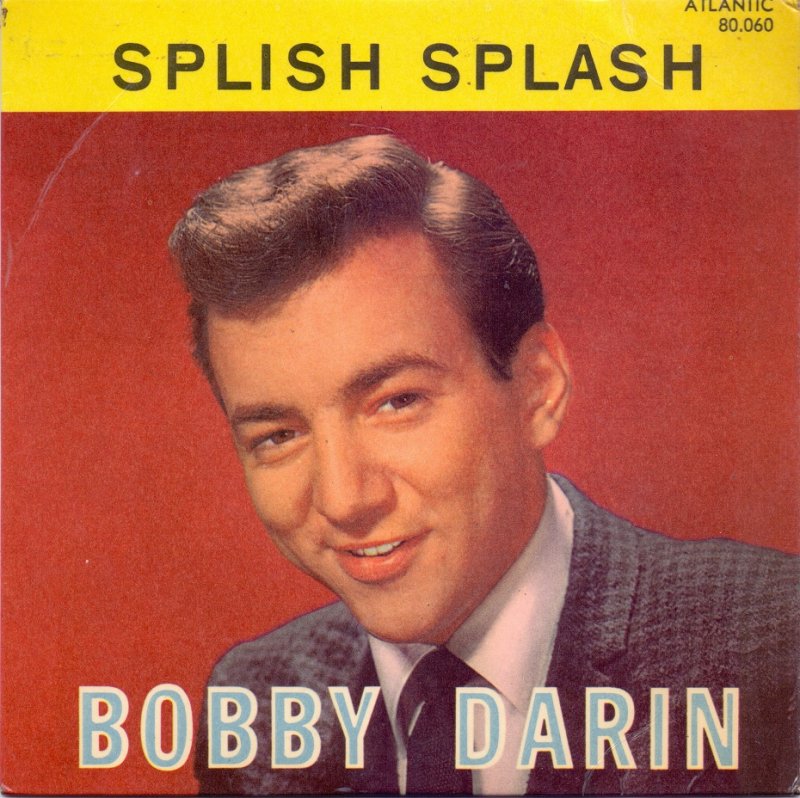
The song was written by Bobby Darin and Murray Kaufman (Murray The K). Kaufman bet Darin that he couldn’t write a song beginning with the words, “Splish Splash, I was takin’ a bath.” Darin accepted the challenge, and they immediately went to work and co-wrote “Splish Splash.” The song’s authorship was credited to Darin and “Jean Murray” (a combination Kaufman and Kaufman’s mother’s name), which was done to avoid any accusations of payola.
The song peaked at #3 in the Billboard 100 in 1958. The lyrics mention several characters from other songs of the period, including “Lollipop,” “Peggy Sue,” and “Good Golly Miss Molly.”
One song I didn’t cover that Listening To Records brought up…Link Wray’s song “Rumble”….an instrumental! I’ve read because the name of the song would incite gang violence.
From Songfacts
This song was written quickly, but it wasn’t written by Darin alone. Peter Altschuler at the Murray the K archives explains:
“The title was suggested by Murray ‘the K’ Kaufman’s mother, Jean, but she also penned the music; Bobby and Murray wrote the lyrics. Murray was a very influential DJ in New York, and had been championing Bobby for awhile, but Darin’s recordings weren’t going anywhere. The two, however, had become good friends and, one weekend, played together in a softball game in Central Park. Afterward, they walked to Murray’s apartment just south of the park and recovered by soaking their feet in basins of Epsom salts.
As she did every day, Murray’s mother Jean called to check on her only son, and Murray told her about the game (a celebrity event to promote some good cause or other) and about ‘the agony of de feet.’ As soon as the call ended, the phone rang again, and Jean, who’d been a piano player in vaudeville, announced she had an idea for a song – ‘Splish, splash, take a bath.’ With that as a starting point, Murray and Bobby worked on the lyrics, Jean collaborated on the tune, and they marched the song over to Atlantic Records, which was Darin’s label. At Atlantic, according to Jerry Wexler when I spoke with him in the mid ’80s, he thought that the song had a chance, but Ahmet Ertegun was dead set against it. Jerry, of course, prevailed, and the tune became Darin’s first of many hits.
Whether Wexler’s story is accurate (Ertegun claimed in a PBS documentary about Darin that he was the song’s defender) is moot. Yet the notion that ‘Splish Splash’ leapt fully formed from Darin’s mind like Athena from the head of Zeus is just as mythological.”
Murray also co-wrote and performed “It’s What’s Happenin’, Baby” (backed with “Sins of A Family” by P.F. Sloan), a song that was done primarily to promote Murray’s signature phrase and his connection to the CBS television special of the same name that he hosted and co-produced in 1965 for the Federal Office of Economic Opportunity. Beyond that, his contribution to the world of pop music was two novelty tunes from the early ’50s: “Out Of The Bushes” (co-written by guitar great Billy Mure who also composed Murray’s “Swingin’ Soiree” theme, which was performed by the Delicates who, later, became the Angels) and “The Crazy Otto Rag” – on which he was the singer, plus “The Lone Twister” which he did as a contest promo for WINS radio, his home from 1958-1965.
In their continuing quest to encourage kids to take baths, Sesame Street has used this on a few of their albums. It is a very popular song for kids, especially when performed by Elmo.
This was released on Atlantic Records at a time when they were struggling to pay their artists. According to Jerry Wexler, who ran the company with Ahmet Ertegun, they had stopped paying themselves and needed money to resign The Clovers when this song and “Yakety Yak” by The Coasters broke through and got the company out of trouble. Atlantic went on to sign Led Zeppelin, Aretha Franklin, Ray Charles, The Rolling Stones and many other legendary artists.
The “Movin’ and a groovin'” lyric was lifted from a 1958 Duane Eddy song called “Moovin’ ‘N’ Groovin’.” Eddy claimed that Darin asked permission to use it, which he happily granted. “That’s just music, sharing little bits of melody and all,” said Eddy.
This was Bobby Darin’s first hit. He had signed with Atlantic Records after an unsuccessful stint at Decca. After three unsuccessful sessions at Atlantic with Herb Abramson producing, Ahmet Ertegun, who was head of the label, decided to produce Darin himself. “Splish Splash” was recorded on April 10, 1958 along with “Judy Don’t Be Moody” and “Queen of the Hop.” The recording took place at Atlantic’s studios in New York with their renowned engineer Tom Dowd at the controls. Darin soon became a star, but left Atlantic for Capitol Records in 1962.
Splish Splash
Splish, splash, I was takin’ a bath Long about a Saturday night, yeah A rub dub, just relaxin’ in the tub Thinkin’ everythin’ was alright
Well, I stepped out the tub I put my feet on the floor I wrapped the towel around me and I Opened the door
And then a-splish, splash I jumped back in the bath Well, how was I to know There was a party goin’ on?
There was a-splishin’ and a-splashin’ Reelin’ with the feelin’ Movin’ and a-groovin’ Rockin’ and a-rollin’, yeah, yeah
Bing, bang, I saw the whole gang Dancin’ on my living room rug, yeah Flip, flop, they was doin’ the bop All the teens had the dancin’ but
There was lollipop with a Peggy Sue Good golly, Miss Molly was-a even there, too A- well-a, splish, splash, I forgot about the bath I went and put my dancin’ shoes on, yeah
I was a-rollin’ and a-strollin’ Reelin’ with the feelin’ Movin’ and a-groovin’ Splishin’ and a-splashin’, yeah
Yes, I was a-splishin’ and a-splashin’ I was a-rollin’ and a-strollin’ Yeah, I was a-movin’ and a-groovin’ We was a-reelin’ with the feelin’ We was a-rollin’ and a-strollin’ Movin’ with the groovin’ Splish, splash, yeah
Splishin’ and a-splashin’ One time I was splishin’ and a-splashin’ Ooh, I was movin’ and a-groovin’ Yeah, I was splishin’ and a-splashin’
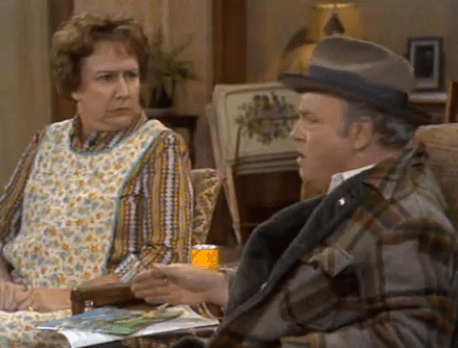
This particular episode was about women going through menopause which today would not receive a second notice…but then, comedy shows just didn’t feature subjects like this. All In The Family had so many great episodes that it is hard picking out one. In this one, the tables are turned and Edith rounds on Archie with a vengeance because of her mood swings caused by menopause.
All in the Family changed the game in sitcoms and television. In the early seventies, many country type sitcoms were canceled when this show debuted in 1971. As Pat Butram of Green Acres said: “CBS canceled everything with a tree including Lassie.”
The show tackled controversial subjects such as racism, rape, gun control, feminism, and homophobia. It was under fire from the first episode for its controversial subject matter. Critics and viewers were divided on what they were seeing…some saw it as comic genius and some as tasteless bigotry. The backlash did not come only from the public and the reviewers. Several actors including Harrison Ford turned down roles in the show because they were offended by the script’s humor.
Lucille Ball lambasted CBS for running such an “Un-American” show on the same network her own series was airing on. I seriously doubt if the show could be made today on network television. The show was a huge success in the seventies.
Mike Stivic: [Edith is going through menopause] What did the doctor say? Archie Bunker: He just said that menopause is a pretty tough time to be going through; especially for nervous types. Mike Stivic: So? Archie Bunker: So he prescribed these here pills. [takes bottle of pills out of paper bag] Mike Stivic: Oh, good. Archie Bunker: I gotta take three of ’em a day.
Edith Bunker: STIFLE STIFLE STIFLE
“If you’re gonna change, Edith, change! Right now! CHANGE!”
All In The Family: Edith’s Problem
Characters: Edith Bunker, Archie Bunker, Mike Stivic, Gloria Stivic, and The Waitress
The Bunker family is thrown into an uproar when the normally docile Edith undergoes several sudden and unexpected mood swings, yelling at her family and displaying a foul temper that makes Archie look like a pussycat! Though the men in the family don’t quite know what is happening, Gloria does: Edith is going through menopause. Perhaps the best and funniest line of the episode is when an upset Archie, who’s frustrated at his wife’s sudden and constantly unpredictable mood changes, yells at Edith: “If you’re gonna change, Edith, change! Right now! CHANGE!”
The short scene starts at 15 seconds.
The complete episode
“Boy, the way Glen Miller played…”
Those Were The Days
Boy, the way Glen Miller played. Songs that made the Hit Parade. Guys like us, we had it made. Those were the days Didn’t need no welfare state. Everybody pulled his weight Gee, our old LaSalle ran great. Those were the days And you knew where you were then Girls were girls and men were men. Mister, we could use a man like Herbert Hoover again. People seemed to be content. Fifty dollars paid the rent. Freaks were in a circus tent. Those were the days Take a little Sunday spin, Go to watch the Dodgers win. Have yourself a dandy day That cost you under a fin. Hair was short and skirts were long. Kate Smith really sold a song. I don’t know just what went wrong Those Were the Days
This was released as a single in December 1967, the same month Jim Morrison was arrested at a show in New Haven when he delivered an on-stage rant against a police officer who confronted him backstage with a young girl.
This incident, combined with the lyrics of “Love Me Two Times,” scared them away from some family-friendly radio stations that refused to play the song. The song was considered to be somewhat risqué for radio airplay, being banned in New Haven for being “too controversial”.
Robby Krieger credited a rather obscure song for inspiring the guitar lick on this song: “Southbound Train” by John Koerner, whose trio Koerner, Ray & Glover was one of Krieger’s favorite acts.
The song peaked at #25 in the Billboard 100 in 1968.
From Songfacts
Doors guitarist Robby Krieger wrote this song after their keyboard player Ray Manzarek implored the band members to go home and write some songs. Krieger came up with this one “Light My Fire” in about an hour. It was a rare Doors song where lead singer Jim Morrison did not contribute lyrics.
Krieger’s lyrics were inspired by both The Doors going on the road and American soldiers going to Vietnam. The theme is sex as a way to survive in strange times, and the need to be “loved two times” before going away. Keyboard player Ray Manzarek called it, “Robby’s great blues/rock classic about love and loss, or multiple orgasms.”
Through most of the song, Jim Morrison left off the “s” in “two times,” creating a double meaning to the phrase.
This continues the theme on Strange Days of an uncertain future. It continues the story of the estranged lover from “You’re Lost Little Girl.”
Although this was released as a single and became a hit, it was recorded for the first Doors album, but didn’t make the cut. When it came time to record the second Doors album Strange Days, “Love Me Two Times” was ready to go.
Ray Manzarek played a clavinet on this track.
Aerosmith recorded this in 1990 for the Air America soundtrack. In 2000, Robby Krieger and Ray Manzarek added slide guitar and keyboards to the existing recording, which was remixed & included on The Doors tribute album Stoned Immaculate. >>
In 2000, the surviving members of the Doors taped a VH1 Storytellers episode with guest vocalists filling in for Morrison. Pat Monahan from Train sang on this.
Love Me Two Times
Love me two time, baby, love me twice today Love me two time, girl, I’m goin’ away Love me two time girl, one for tomorrow, One just for today Love me two times I’m goin’ away Love me one time, could not speak Love me one time, yeah, my knees got weak Love me two time, girl, lasts me all through the week Love me two times, I’m goin’ away Love me two times, I’m goin’ away Alright, yeah Love me one time, could not speak Love me one time, baby, yeah, my knees got weak Love me two times, girl, lasts me all through the week Love me two times, I’m goin’ away Love me two time, babe Love me twice today Love me two time, babe, ’cause im goin’ away Love me two time, girl, one for tomorrow, One just for today Love me two times, I’m goin’ away Love me two times I’m goin’ away Love me two times I’m goin’ away
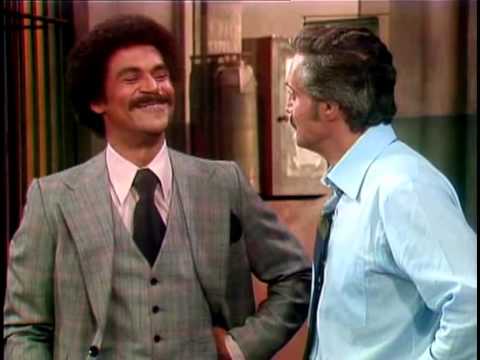
Barney Miller was a brilliant, complex, highly literate, superbly written show with depth and high social commentary. The show was never in the top 10 in ratings but the show has held up well over the years. A few of the reasons the show was not in the top 10 was because of the intelligent writing and the humor wasn’t obvious…also the show was on ABC which at the time was the least popular major network.
The writers also made sure that for the most part, the show followed it’s own history very well. The show is about the Detectives at the 12th Precinct.
One very interesting part of Barney Miller is they had a bunch of good character actors pass through the show. They had a very good excuse because usually the guests were either witnesses or they committed some sort of small crime so it was a natural parade of people passing through.
The show was not all about humor. They had stories dealing with domestic abuse, social, and racial tensions and interaction close to real life.
Det. Phil Fish:First time in 20 years I felt this good and it has to be illegal!
Capt. Barney Miller:Stay home until you feel better. Det. Ron Harris:Okay Barn, I’ll stay, but I ain’t never gonna feel no better.
Det. Sgt. Nick Yemana:[feeling the effects of the brownies] Barney, Barney, Barney… was your mother from Killarney?
Det. Sgt. Nick Yemana: [feeling the effects of the brownies] Hey Barney… let’s go down to the beach and shoot some clams!
Barney Miller: Hash
The Characters: Barney Miller, Stan ‘Wojo’ Wojciehowicz, Dietrich, Phil Fish, Ron Harris, Sgt. Nick Yemana, Carl Levitt, Zbigniew Psczola, Janusz Makowski, and Frank Slater.
Wojo innocently brings hashish-laced brownies his new girlfriend made to the 12th Precinct, getting the detective squad stoned, while an actor and a critic square off with dueling swords.
Sometimes these bans can be head-scratchers, which is true of the 1990s ban on ABBA’s ‘Waterloo’. Due to its connotations with armies and fighting, amidst the ongoing Gulf War, BBC deemed it inappropriate to play, despite few actually connecting this song to literal war.
The song peaked at #6 in 1974 in the Billboard 1oo. All together Abba had 20 top 100 songs, 4 top ten, and one #1 with Dancing Queen. I thought they had more top 10 hits.
This song also reached #1 in Belgium, Finland, Ireland, Norway, South Africa, Switzerland, and West Germany.
From Songfacts
Waterloo is the place where Napoleon Bonaparte met his defeat at an epic battle in 1815. This song uses the battle as a metaphor for a woman who gives in and falls in love with a man – he’s her “Waterloo.”
Originally recorded in Swedish, it was ABBA’s Swedish version that won the Eurovision Song Contest in 1974, giving the band a huge career boost.
This was one of many ABBA hits used in the 1994 movie Muriel’s Wedding.
Even though this song constantly repeats the name of the battle that spelled the end of Napoleon’s empire, the French, like the rest of Europe, was more than happy to buy this song in large quantities. The single spent 12 weeks on the French charts, peaking at #3. In Belgium, where the Battle of Waterloo took place, this song spent five weeks at #1.
ABBA not only recorded this song in their native Swedish and then in English but they also recorded a version in French for the French markets and one in German for the German markets. There is also a version in both French and Swedish that is an overdubbing of both the Swedish and French versions.
Waterloo
My my At Waterloo Napoleon did surrender Oh yeah And I have met my destiny in quite a similar way The history book on the shelf Is always repeating itself Waterloo I was defeated, you won the war Waterloo promise to love you for ever more Waterloo couldn’t escape if I wanted to Waterloo knowing my fate is to be with you Waterloo finally facing my Waterloo
My my I tried to hold you back, but you were stronger Oh yeah And now it seems my only chance is giving up the fight And how could I ever refuse I feel like I win when I lose Waterloo I was defeated, you won the war Waterloo promise to love you for ever more Waterloo couldn’t escape if I wanted to Waterloo knowing my fate is to be with you Waterloo finally facing my Waterloo
So how could I ever refuse I feel like I win when I lose Waterloo I was defeated, you won the war Waterloo promise to love you for ever more Waterloo couldn’t escape if I wanted to Waterloo knowing my fate is to be with you Waterloo finally facing my Waterloo
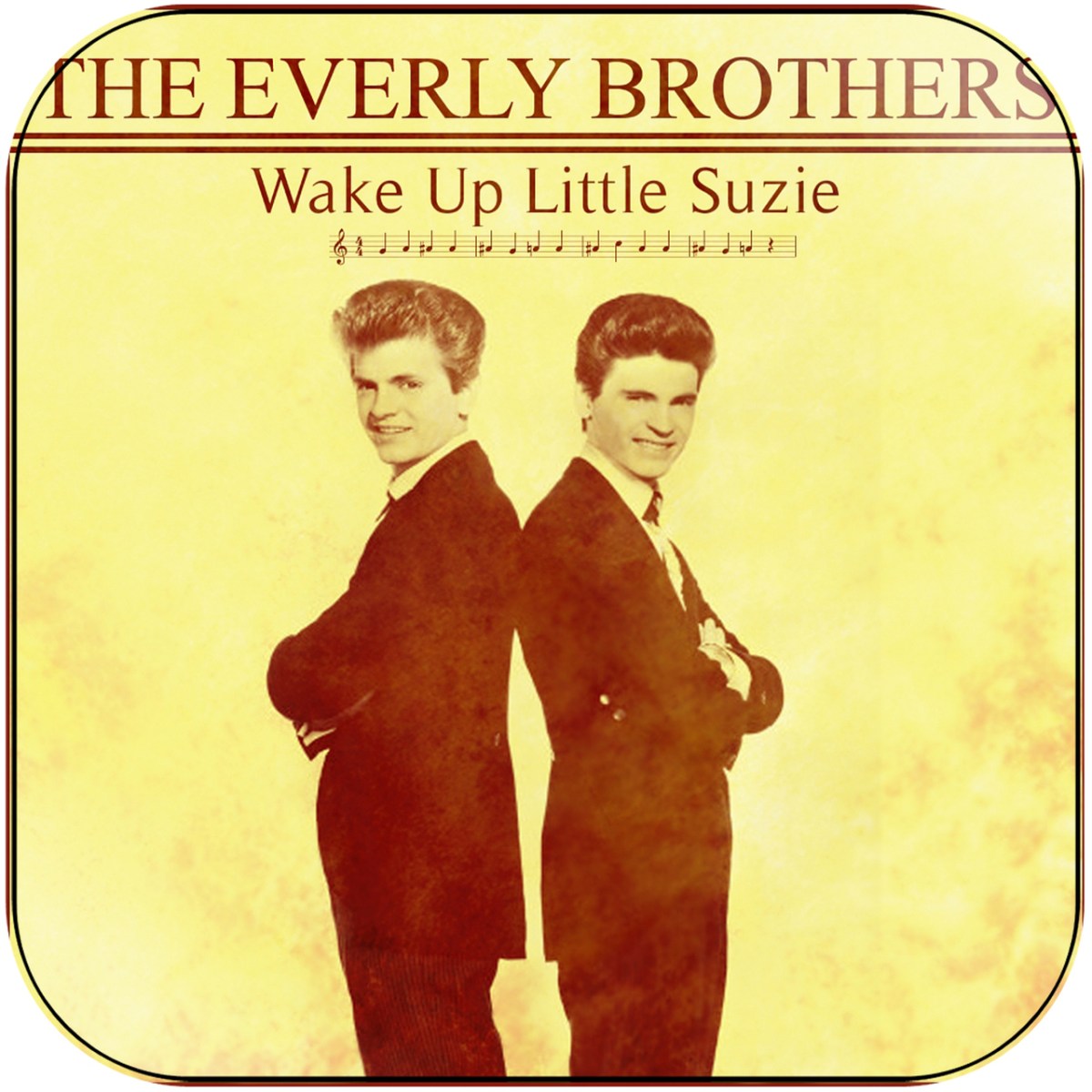
The lines “We both fell sound asleep / Wake up, little Suzie, and weep / The movie’s over, it’s four o’clock / And we’re in trouble deep” were suggestive enough to cause the song to be banned by several radio stations. Although it’s pretty clear the Suzie and her date were at the movies but that didn’t matter.
As with the case of other songs being banned…it only made it more appealing to teenagers at the time. The song peaked at #1 in Billboard and #2 in the UK in 1957.
This was written by the husband and wife team of Felice and Boudleaux Bryant, who wrote most of The Everly Brothers songs in the ’50s. Their songs were also recorded by Bob Dylan, Elvis, and Buddy Holly.
From Songfacts
This is about a young couple who fall asleep at the drive-in, realize they are out past curfew, and make up a story to tell Susie’s parents.
Some Boston radio stations banned this because of the lyrics, which imply that the young couple spent the night together. At the time, staying out late with a girl was a little controversial.
For The Everly Brothers, this was the first of four US #1 hits. It also went to #1 on the Country & Western charts.
At an appearance on The Oprah Winfrey Show while campaigning for President in year 2000, George W. Bush was asked by Oprah what his favorite song was. He said: “Wake Up Little Susie – by Buddy Holly.”
Simon & Garfunkel played this at their 1981 concert in Central Park. The live recording was released as a single the next year and hit #27 in the US.
Chet Atkins played guitar on this. Atkins, who died of cancer in 2001, was a Nashville musician who created a distinctive sound using a three-fingered picking technique.
This was a labor of love for the songwriting duo. “We persevered with ‘Wake Up Little Susie’ for many hours,” Boudleaux recalled to Country Music People. “I started writing one night, kept trying to get my ideas down, but it just wouldn’t happen. Finally I woke Felice, who took one listen to what I had so far achieved and came up with the final touches that I couldn’t get. The Everlys liked the song, but like me had problems with getting it right in the studio. They worked a whole three-hour session on that one song and had to give up, they just couldn’t get it right. We all trooped back to the studio the next day and got it down first take. That’s the way it happens sometimes.”
Wake Up Little Susie
Wake up, little Susie, wake up Wake up, little Susie, wake up we’ve both been sound asleep, wake up, little Susie, and weep The movie’s over, it’s four o’clock, and we’re in trouble deep Wake up little Susie Wake up little Susie, well
Whatta we gonna tell your mama Whatta we gonna tell your pa Whatta we gonna tell our friends when they say ?ooh-la-la? Wake up little Susie Wake up little Susie, well
I told your mama that you’d be in by ten Well Susie baby looks like we goofed again Wake up little Susie Wake up little Susie, we gotta go home
Wake up, little Susie, wake up Wake up, little Susie, wake up The movie wasn’t so hot, it didn’t have much of a plot We fell asleep, our goose is cooked, our reputation is shot Wake up little Susie Wake up little Susie, well
Whatta we gonna tell your mama Whatta we gonna tell your pa Whatta we gonna tell our friends when they say “ooh-la-la” Wake up little Susie Wake up little Susie Wake up little Susie
As far as power-pop songs go this one is in my top 5. I posted this back when I first started to blog but it’s perfect for a Friday.
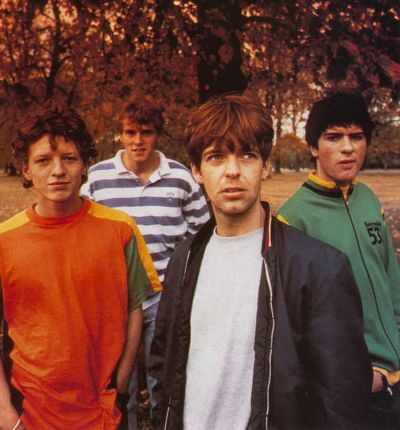
A song by a British band called The La’s. A very good pop song that has no verses…it just repeats the chorus four different ways four different times. The song charted many times in different releases…it peaked at #49 on the 1991 Billboard 100 and #13 on the UK charts in 1990, #65 in 1999, #94 in 2012, and #59 in 1988 in the UK.
It was written by the singer Lee Mavers and recorded in 1988 and remixed and released again in 1990.
Many people think the song was about heroin. Paul Hemmings an ex-guitarist for the band denies that rumor. Either way, it is a perfectly constructed pop song.
It’s been covered by a lot of artists but probably most successfully by Sixpence None the Richer. I’ve always liked The La’s version the best.
From Songfacts
“There She Goes” is a song with one crazy story, so hang on. It was written by the Liverpool singer and guitarist Lee Mavers, and recorded by his band The La’s. The La’s released it on their only album, titled The La’s. “There She Goes” was released as a single, not once, not twice, but four times!
The first release scratched the UK Singles chart in 1988 at #51. The second release in 1990 was the peak, with #13 on the UK Singles and also charting in the US. The third release was in 1999, and it charted the UK Singles at #65. The fourth release was in 2008, on vinyl only for the song’s 20th anniversary, and charted again at #181.
While rumors persist that this song was inspired by “There She Goes Again” by the Velvet Underground, no definitive evidence supports it. The songs do have a similar theme and similar lyric styles, but completely different music. On the other hand, the common knowledge that this song is about heroin seems to be a sure bet. “Racing through my brain” and “Pulsing through my vein” exclude just about everything else, and newspapers in England ran stories about The La’s “ode to heroin.” La’s bassist John Power gave a rather evasive answer when asked about it, while La’s ex-guitarist Paul Hemmings flatly denied it.
La’s frontman Lee Mavers is a pretty enigmatic character. If you examine them closely, you’ll find a lot in common with Velvet Underground’s Lou Reed: Both had limited success with their first band but a steady cult following since, both are evasive of the media and reclusive, both are rumored to have written songs about drugs and to be heavily into drugs, and both are widely cited by other music artists as an influence out of step with their commercial success.
Covers of “There She Goes” include those done by Sixpence None the Richer, Robbie Williams, The Wombats and The Boo Radleys. Film soundtrack appearances include The Parent Trap, Fever Pitch, Girl, Interrupted and So I Married an Axe Murderer.
This song was an ironic airplay favorite in the UK when Maggie Thatcher resigned as Prime Minister in November 1990.
The La’s mainman Lee Mavers is a legendary perfectionist. The legend goes that he didn’t want the vintage studio equipment cleaned so the dust that had accumulated on it from the 1960s would remain.
“There She Goes”
There she goes There she goes again Racing through my brain And I just can’t contain This feeling that remainsThere she blows (there she blows again) There she blows again (there she blows again) Pulsing through my vein (there she blows again) And I just can’t contain This feeling that remainsThere she goes There she goes again She calls my name Pulls my train No one else could heal my pain But I just can’t contain This feeling that remainsThere she goes There she goes again Chasing down my lane And I just can’t contain This feeling that remainsThere she goes (there she goes again) There she goes (there she goes again) There she goes (there she goes again)






 PowerPop... An Eclectic Collection of Pop Culture