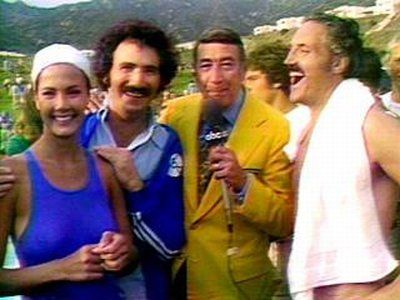
This curiosity was born in the seventies. It was when TV stars were connected with their home network. ABC, CBS, and NBC would all send stars to compete with each other. I will admit it was fun to watch. You would see Telly Savalas, Lynda Carter, Kristy McNichol (remember her?) compete with each other with no other than Howard Cossell announcing.
Regular events included swimming, kayaking, volleyball, golf, tennis, bowling (on custom-made outdoor lanes), cycling, 3-on-3 football, the baseball dunk, running, and the obstacle course. As a pre-teen boy, I still remember Kristy McNichol was great on the obstacle course.
TV now is so fragmented that it would not work. They did try to bring it back in 2017 but it wasn’t the same and fewer viewers viewed with every episode. The networks didn’t want to share their actors with rivals. All of the contestants were from the Disney owned networks or older casts from long ago shows.
The original show ran from 1976 to 1988… Some of the Contestants are below the video.
Some of the Contestants
Howard Cosell
Gabe Kaplan
Darleen Carr
Lynda Carter
Farrah Fawcett
Richard Hatch
Robert Hegyes
Ron Howard
Hal Linden
Penny Marshall
John Schuck
Telly Savalas
Adrienne Barbeau
Gary Burghoff
Kevin Dobson
Pat Harrington Jr.
Bill Macy
Lee Meriwether
Mackenzie Phillips
Loretta Swit
Jimmie Walker
Robert Conrad
Melissa Sue Anderson
Karen Grassle
Tim Matheson
Ben Murphy
Barbara Parkins
Joanna Pettet
Kevin Tighe
Demond Wilson
Mark Spitz
Peter Lawford
Lona Barrett
Caitlyn Jenner
Bob Rosburg
Reggie Jackson
Nadia Comaneci
Joyce Brothers
Robert Stack
Roosevelt Grier
Howard W. Koch
Free ended up being the blueprint for Bad Company. Two of the band members were in the latter group. With a voice Paul Rodgers possesses, I’ve wondered why he isn’t more of a household name outside of the world of rock. He was in successful rock groups such as Free, Bad Company, The Firm, The Law and toured with Queen.
Free was known as a great live band but I’ve only known them as the band before Bad Company. To my surprise by the time they disbanded, they had sold more than 20 million albums around the world. I have never been a fan of some of Rodgers’s songwriting but his voice can carry any song.
Paul Kossoff was the guitar player and influenced a generation of guitar players before and after his early death in 1976.
This song peaked at #13 in the UK charts in 1972. The band formed in 1968 and disbanded in 1973. They are known for their hit All Right Now.
I first heard A Little Bit Of Love on theLife On Mars BBC television show that I have shamelessly plugged since I’ve been posting. It’s only 16 episodes long…if you get a chance to watch it I think you will enjoy it…The UK version NOT the American version.
A Little Bit Of Love
I believe If you give A little bit of love To those you live with A little bit of love Oh oh oh Has gotta come your way.
Well in my mind It’s easy To lose sight of the truth But in my heart I can’t deny My feeling inside
‘Cos I believe If you give A little bit of love To those you live with A little bit of love Oh oh oh Has gotta come your way.
Man in the sky You say you are flying To lose sight of the world You wanna stay high Then don’t deny Your feeling inside
‘Cos I believe If you give A little bit of love To those you live with A little bit of love Oh oh oh Has gotta come your way.
Yeahh! Whooo!
I believe If you give A little bit of love To those you live with A little bit of love Oh! Has gotta come your way.
I believe If you give A little bit of love To those you live with A little bit of love Whooooo Has gotta come your way
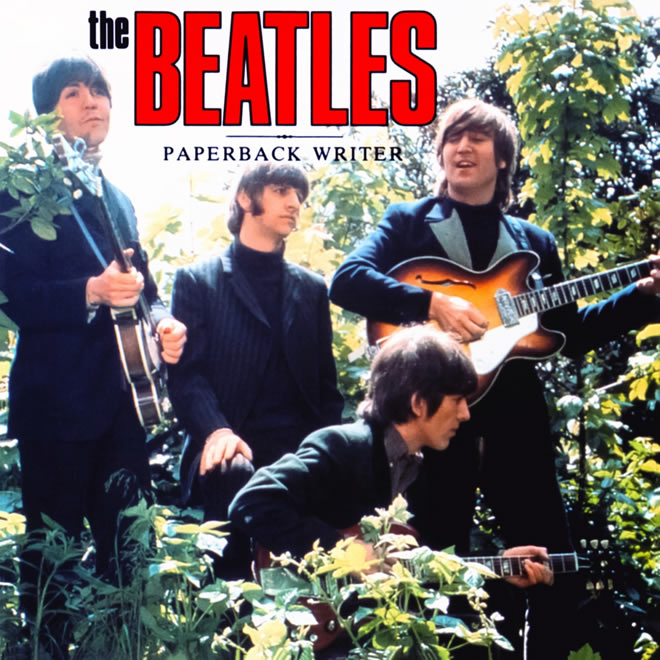
I was eight years old and my cousin introduced me to the Beatles with the American album “Meet The Beatles.” A little later he started to hum a “great” song by the Beatles called Paperback Writer. I asked my mom to take me to a record store…quite a trip from where we lived and I bought a greatest hits album known as Hey Jude or The Beatles Again… Anyway, it had Paperback Writer and I wasn’t disappointed…no offense to my cousin Greg…the real thing was better than the humming and whistling.
Paperback Writer had a terrific guitar riff with the bass sound being more prominent than before. The song peaked at #1 in the Billboard 100, #1 in the UK, and #1 in Canada in 1966.
Speaking of the bass sound…as with the song Rain…The Beatles changed recording techniques.
They experimented with a new way of recording bass. This technique involved “using a loudspeaker as a microphone,” explains engineer Geoff Emerick. “We positioned it directly in front of the bass speaker and the moving diaphragm of the second speaker made the electric current.”
Paperback Writer
Paperback writer Dear Sir or Madam, will you read my book? It took me years to write, will you take a look? Based on a novel by a man named Lear And I need a job, so I want to be a paperback writer, Paperback writer.
It’s the dirty story of a dirty man And his clinging wife doesn’t understand. His son is working for the Daily Mail, It’s a steady job but he wants to be a paperback writer, Paperback writer.
Paperback writer It’s a thousand pages, give or take a few, I’ll be writing more in a week or two. I can make it longer if you like the style, I can change it round and I want to be a paperback writer, Paperback writer.
If you really like it you can have the rights, It could make a million for you overnight. If you must return it, you can send it here But I need a break and I want to be a paperback writer, Paperback writer.
I remember watching this great 1933 movie when I was 10 and loving every minute of it. I loved monster movies and this was a classic one. I was more of a Godzilla guy but King Kong was great.
I always wondered where the model was…well there were four of them. Two survive today. Eugene Hilchey saved one model from the studio, Hilchey entrusted the model to Bison Archives/Productions who brought it to Christie’s where is sold for $200,000 in 2009. The other one is the story below.
Special effects man Willis O’Brien and sculptor Marcel Delgado created two 18-inch-high full-body miniatures of the giant ape. They began by making durable metal armatures, which were covered with sponge rubber for the ape’s muscle structure, and rabbit fur for his hair. They also made one jointed 24-inch model of the same materials for the New York scenes and a small model of lead and fur for the climactic plummeting-down-the-Empire-State-Building shot.
Two of the Kong figures were later cannibalized for parts in other creations. The other armature survived because it was used again in “Son of Kong” (1933), which went into production soon after the first film was released.
The model stayed at RKO until 1962. Animator Phil Kellison rescued the Kong model from the studio. After discovering that the remaining rubber skin was beginning to eat away at the figure’s metal hardware, he had Kong steam-cleaned to its present state – the original bare metal skeleton. Film historian and collector Bob Burns, a friend of Kellison, said that when the person was told what he was cleaning, he began exclaiming “I’m killing King Kong! I’m killing King Kong!”
In 1975, Bob found himself at the place where the artifacts from movies were stored. To Bob’s surprise, he spotted the King Kong armature in a corner, and immediately contacted Phil. After Kellison picked up the prop, Bob was surprised yet again when Phil gave him the armature for his collection – where it resides to this day.
The Smithsonian Institute has tried to borrow or purchase the skeleton from Bob. Fearful of it being lost again, he has refused.
In October of 2005, when director Peter Jackson was finishing his remake of “King Kong,” he flew Bob Burns, his wife Kathy, and the King Kong skeleton to the location in New Zealand. They spent a week as guests of the production, showing off the historic armature to the crew. The animators even filmed the model for reference (animating it probably for the first time since its use in the “Kong” sequel in 1933). And Bob and Kathy were given cameos in the film, screaming at Kong during the film’s climax.
The rhythm of this song drew me in when I was younger. Jive Talkin’ has a strong R&B feel to it. This song started it all for the disco era Bee Gees. This was the first big disco hit for The Bee Gees. They became icons of the era, singing in falsetto harmonies over dance beats.
You couldn’t go anywhere without hearing them blare out of the radio at that time. This song peaked at #1 in the Billboard 100, #1 in Canada, 5 in the UK, and #4 in New Zealand in 1975.
The Bee Gees had an incredible 9 Number 1 hits, 15 Top Ten hits, and 43 songs in the Billboard 100. They have sold more than 220 million records worldwide, making them one of the world’s best-selling artists of all time
From Songfacts
This was called “Drive Talking” in its early stages, but producer Arif Mardin suggested the change to “jive” to play to teenage sensibilities. “Jive Talkin'” is a term for slang.
The rhythm was inspired by the chunka-chunka-chunka sound of a car rolling over a bridge crossing Biscayne Bay near Miami. Robin Gibb explained to The Mail On Sunday November 1, 2009: “We’d already thought up the title for this song, but it wasn’t until Barry, Maurice and I drove from Biscayne Bay to Miami that we realized what the tune was going to be. We had the idea as we passed over a bridge. Some tar noises made a rhythmic sound on the wheels of our car, which created the feel to the type of song we wanted to write. We finished the song at the Criteria studios that day.”
They had seven more #1 hits in the disco era, but the band went out of style at the same time as white leisure suits. The group, which had considerable success before the disco era, took a lot of heat in the press. This criticism would weigh on them in later years as they felt that accusations of selling out and creating popular schlock were out of line. They would often point out that disco became homogenized in the years after they got to it, and that their sound was really an extension of R&B.
This was a comeback song for the group. They were very successful as contemporary singers in the late ’60s and early ’70s, but the two albums they released before Main Course flopped, and it looked like their careers were over.
Knowing that a new Bee Gees single would be met with skepticism by radio programmers, their label sent promotional singles to stations with plain, white labels, giving no indication as to what the name of the song was, or who it was by. The plan worked: the song was added to playlists and revived the fortunes of the group.
Along with several other Bee Gees hits, this was featured on the soundtrack to Saturday Night Fever in 1977. Along with “You Should Be Dancing,” it was one of two previously released Bee Gees songs used – they wrote five more specifically for the film. The set became the best-selling soundtrack album of all time, until it was outsold by The Bodyguard soundtrack.
This was an R&B track that did very well in the black charts in America. The Bee Gees were one of the first white groups to explore that territory.
Former Fugees singer Pras sampled this on his song “Blue Angels.”
Jive Talking
It’s just your jive talkin’ You’re telling me lies, yeah Jive talkin’ You wear a disguise Jive talkin’ So misunderstood, yeah Jive talkin’ You really no good
Oh, my child You’ll never know Just what you mean to me Oh, my child You got so much You’re gonna take away my energy
With all your jive talkin’ You’re telling me lies, yeah Good lovin’ Still gets in my eyes Nobody believes what you say It’s just your jive talkin’ That gets in the way
Oh my love You’re so good Treating me so cruel There you go With your fancy lies Leavin’ me lookin’ Like a dumbstruck fool With all your
Jive talkin’ You’re telling me lies, yeah Jive talkin’ You wear a disguise Jive talkin’ So misunderstood, yeah Jive talkin’ You just ain’t no good
Love talkin’ Is all very fine, yeah Jive talkin’ Just isn’t a crime And if there’s somebody You’ll love till you die Then all that jive talkin’ Just gets in your eye
Jive talkin’ You’re telling me lies,yeah Good lovin’ Still gets in my eyes Nobody believes what you say It’s just your jive talkin’ That gets in the way
Love talkin’ Is all very fine, yeah Jive talkin’, just isn’t a crime And if there’s somebody You’ll love till you die Then all that jive talkin’ Just gets in your eye, yeah yeah
This song changes my mood as soon as it plays. Into the Mystic flows through you…wait… hold on… I’m sounding like a sixties guru but the song is a special one. It was on his album Moondance released in 1970. The album peaked at #29 in the Billboard Album Charts.
Van’s output from the late sixties to mid-seventies was just incredible in quantity and quality. He continues to this day releasing music. In the last 10 years, he has had 3 top ten albums.
I’ve never really tried to interpret this song…I just go where it takes me.
Van Morrsion: “‘Into the Mystic’ is another one like ‘Madame Joy’ and ‘Brown Eyed Girl’. Originally I wrote it as ‘Into the Misty’. But later I thought that it had something of an ethereal feeling to it so I called it ‘Into the Mystic’. That song is kind of funny because when it came time to send the lyrics in WB Music, I couldn’t figure out what to send them. Because really the song has two sets of lyrics. For example, there’s ‘I was born before the wind’ and ‘I was borne before the wind’, and also ‘Also younger than the son, Ere the bonny boat was one’ and ‘All so younger than the son, Ere the bonny boat was won’ … I guess the song is just about being part of the universe.”
From Songfacts
This is about a sailor at sea thinking about returning to his lover, who is back on land. Normally a foghorn signals danger, but in this case it means he is close to home and his love.
There is room for interpretation beyond the superficial meaning. It might be interpreted as expressing an understanding that life is finite (the ship sailing on its round trip) and must be lived to its fullest (“I want to rock your Gypsy soul”), and an acceptance of its inevitable end (“We will magnificently float into the mystic, when the foghorn blows I will be coming home”). When you have seen the world and loved someone, you should have no reason to fear the end because you have lived your life to the fullest.
The original title was “Into the Misty.”
According to Morrison, he couldn’t decide whether the first line should be “We were born before the wind” or “We were borne before the wind.”
This was played in the 1989 Mary Stuart Masterson movie Immediate Family. She played a woman who was young and pregnant and planning to give her baby to Glenn Close and James Woods, who couldn’t have a baby of their own.
According to a BBC survey, because of this song’s cooling, soothing vibe, this is one of the most popular songs for surgeons to listen to whilst performing operations.
Jen Chapin, the daughter of Cat’s In The Cradle singer-songwriter Harry Chapin, covered this on her 2008 CD Light of Mine.
Into The Mystic
We were borne before the wind Also younger than the sun Ere the bonnie boat was won As we sailed into the mystic
Hark, now hear the sailors cry Smell the sea and feel the sky Let your soul and spirit fly into the mystic
And when that foghorn blows I will be coming home And when the foghorn blows I want to hear it
I don’t have to fear it and I want to rock your gypsy soul Just like way back in the days of old And magnificently we will flow into the mystic
When that fog horn blows You know I will be coming home And when that fog horn whistle blows I got to hear it
I don’t have to fear it and I want to rock your gypsy soul Just like way back in the days of old And together we will flow into the mystic Come on, girl
The great hook here that keeps you listening…then comes the catchy chorus that is hard to forget.
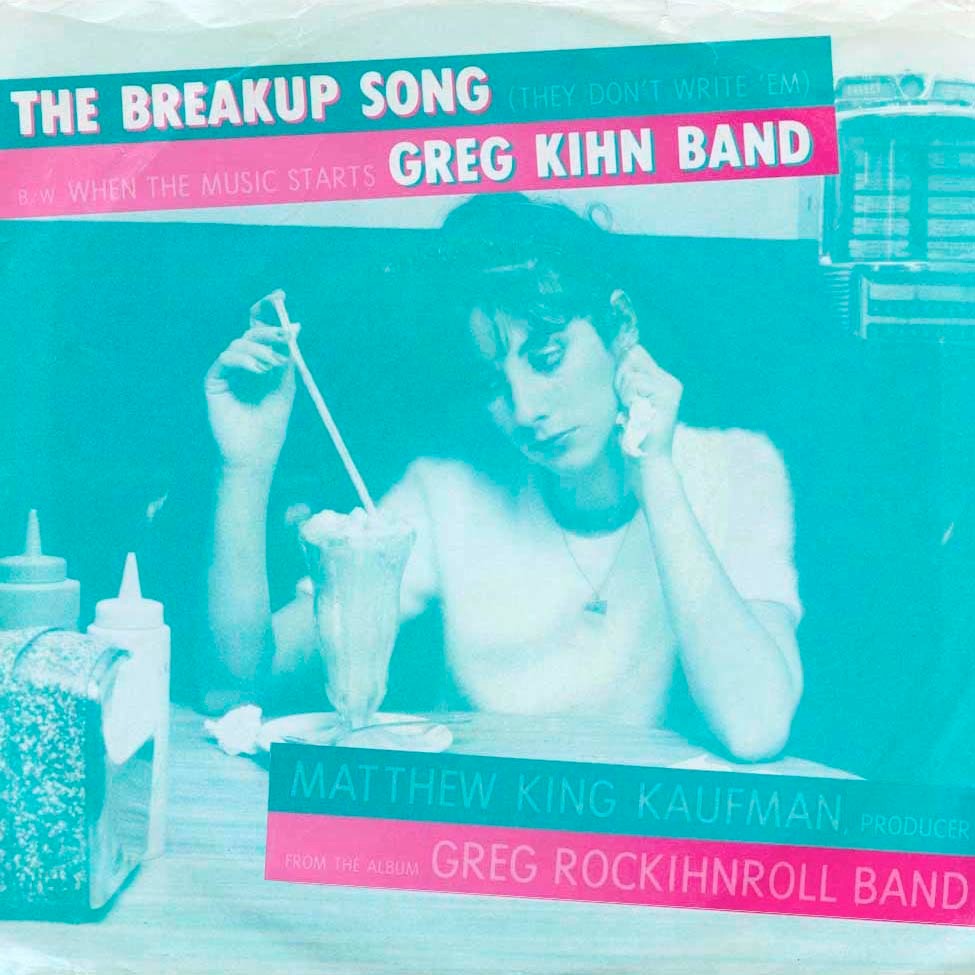
The Breakup song was released in 1981 and peaked at #15 in the Billboard 100. Greg Kihn would later have a top hit ten hit “Jeopardy” when it reached #2 in 1983. Kihn had 7 songs in total in the top 100.
The song was off of the album RocKihnRoll.
This is an interview with Greg Kihn in 2011 about writing the song.
Oh, yeah. There are times in your life that the way is clear. I remember coming home from a gig with the guys. We were in a van, and we pulled up to where I used to live. All of my stuff was piled up on the lawn, and it was raining.
I thought, “Oh, God. My first wife had done it.” We pulled up to the house, and I remember Steve, the bass player, looked at me and just went, “Well, you might as well just keep on going. You’re not going in there.”
There was a Japanese restaurant. I went up there with Stevie, and we were pounding down hot sake. I didn’t know where else to go. It was a cold, rainy night, and we were getting toasted. There was an old Japanese dude there at the sake bar, and he kept saying, “They don’t write ‘em like that anymore.” I thought, Yeah, damn. They don’t, do they? So we got the idea, we wrote that song probably in 15 minutes. All of the great songs are written quickly, by the way.
You have to take a lesson that the stuff that’s real, it’s in you and it’s got to come out like that song. I’d really broken up that very day. It wasn’t like I was trying to feel like what’s a guy like when he’s broken up. I was living it. When things are real, they’re always better than when they’re fiction, if you can dig what I’m saying.
The Breakup Song
We had broken up for good just an hour before Ah ah ah, ah ah ah ah ah And now I’m staring at the bodies as they’re dancing ‘cross the floor Ah ah ah, ah ah ah ah ah And then the band slowed the tempo and the music took me down Ah ah ah, ah ah ah ah ah It was the same old song, with a melancholy sound Ah ah ah, ah ah ah ah ah
They don’t write ’em like that anymore They just don’t write ’em like that anymore
We’d been living together for a million years Ah ah ah, ah ah ah ah ah But now it feels so strange out in the atmospheres Ah ah ah, ah ah ah ah ah And then the jukebox plays a song I used to know Ah ah ah, ah ah ah ah ah And now I’m staring at the bodies as they’re dancing so slow Ah ah ah, ah ah ah ah ah
They don’t write ’em like that anymore They don’t write ’em like that anymore Oh
Hey Now I wind up staring at an empty glass Ah ah ah, ah ah ah ah ah ‘Cause it’s so easy to say that you’ll forget your past Ah ah ah, ah ah ah ah ah
They don’t write ’em like that anymore, no They just don’t write ’em like that anymore They don’t write ’em like that anymore They just don’t write ’em like that anymore They just don’t, no, they don’t No, no, uh-uh
In Jr. High the Go Go’s broke out and got my attention. This song peaked at #20 in 1981 in the Billboard 100. It was on the album Beauty and the Beat that peaked at #1 in the Billboard Album Charts. The album had some good hooks and the songs were mostly written by the band members.
The Go-Go’s are the first all-girl band to write the songs and play the instruments on a #1 US album. The group formed in 1978 in Los Angeles, California. Frontwoman Belinda Carlisle was briefly a member (drummer) of the influential punk band The Germs, but Charlotte Caffey was the only member with much experience – she had been in a band called The Eyes. The group learned on the fly with constant gigs.
Jane Wiedlin on why the band started as punk but soon went to pop: “We, from the beginning, were always kind of enamored with the pop/punk style, like our favorite band, the band that we always tried to emulate was The Buzzcocks, who had that great pop song done in a punky style. So that was kind of what we were going for from the beginning. And for the first few years when we were just learning how to play, I think we sounded probably a lot worse than we meant to, just because we didn’t know what we were doing. And then, slowly as we learned to play, the songs started coming out more and more. It was always trying to sort of straddle the line between pop and punk.”
From Songfacts
Go-Go’s guitarist Jane Wiedlin wrote this with British musician Terry Hall, who was lead singer of The Specials. Wiedlin told Songfacts: “In 1980 we were playing at The Whisky on Sunset Strip, and The Specials were in town from England, and they came to see us, and they really liked us and asked us if we would be their opening act on their tour. I met Terry Hall, the singer of The Specials, and ended up having kind of a romance. He sent me the lyrics to ‘Our Lips Are Sealed’ later in the mail, and it was kind of about our relationship, because he had a girlfriend at home and all this other stuff. So it was all very dramatic. I really liked the lyrics, so I finished the lyrics and wrote the music to it, and the rest is history. And then his band, The Fun Boy Three, ended up recording it, too – they did a really great version of it, also. It was like a lot gloomier than the Go-Go’s’ version.”
Speaking about her relationship with Terry Hall, Wiedlin adds: “Like I said, he had a girlfriend in England, and they were talking about getting married and all this stuff. So I don’t know how I got in the picture. And, you know, that’s something that I did as a teenager, maybe I was 20. That’s something I would never do now, knowingly enter into a relationship with someone who was with someone else. I mean, it was completely screwed on my part. Although I think when people do that, you really have to look at the person who’s in the relationship, and they have to take the burden of the responsibility as well. Anyways, it was one of those things with the tragic letters, ‘I just can’t do this.’ You know, ‘I’m betrothed to another.’ All that kind of stuff.”
This was the first hit for the Go-Go’s, who started as a punk band in the late ’70s, but became pop superstars with the release of their first album, Beauty And The Beat. Unlike most other female pop groups, the Go-Go’s wrote their own songs and were serious musicians. Despite their pure pop sound, they had a confidence and attitude that gave them lots of credibility and set them apart from other bands on the fledgling MTV network.
Jane Wiedlin said in her Songfacts interview: “We’d been together about two years when I wrote that. Some of the songs from the very beginning were songs that ended up part of our repertoire. Others fell by the wayside. I remember when I wrote it, I was really afraid to show it to the band in case they didn’t like it and all this stuff. But luckily they did like it.”
The video was directed by Derek Burbidge, who did the early videos for The Police. It’s low-budget but effective, showing the band performing the song in a small club and also having carefree fun outside on a sunny day. For much of the video they are playing around in a fountain, a trope later popularized in the opening credits of the TV series Friends.
Jane Wiedlin explained: “That was the first single in America. But before we got our record deal with IRS, we actually put out one single in England so that when we toured we had something to sell, and we had like a one single deal with Stiff Records, who were the record company that had signed The Specials and Madness, who also we toured with. We also toured with Madness in England. And then that single was a previous version of ‘We Got The Beat.'” (In our interview with Jane Wiedlin, she talks about another song inspired by a “Euro-guy,” and what happened when she tried to be “The Good Wife.” Her website is janewiedlin.com.)
Terry Hall’s version with his group The Fun Boy Three hit #7 in the UK.
In 2004, Hilary and Haylie Duff recorded this for the movie A Cinderella Story, which starred Hilary.
In the 2002 movie Home Room, high school classmates Alicia (Busy Philipps) and Deanna (Erika Christensen) argue over the meaning of the song. Alicia says, “It’s about a bunch of chicks trying to stay virgins,” and Deanna claims, “It’s about a bunch girls trying to keep a secret.”
Our Lips Are Sealed
Can you hear them? They talk about us Telling lies Well, that’s no surprise
Can you see them? See right through them They have no shield No secrets to reveal
It doesn’t matter what they say In the jealous games people play Our lips are sealed
There’s a weapon That we must use In our defense Silence reveals
When you look at them Look right through them That’s when they’ll disappear That’s when we’ll be feared
It doesn’t matter what they say In the jealous games people play Our lips are sealed
Pay no mind to what they say It doesn’t matter anyway Our lips are sealed
Hush, my darling Don’t you cry Quiet, angel Forget their lies
Can you hear them? They talk about us Telling lies Well, that’s no surprise
Can you see them? See right through them They have no shield No secrets to reveal
It doesn’t matter what they say In the jealous games people play Our lips are sealed
Pay no mind to what they say It doesn’t matter anyway Our lips are sealed Our lips are sealed Our lips are sealed
The Undertones were a Northern Irish punk band led by Feargal Sharkey. This song got them a record deal when British DJ John Peel played it on his show. Peel was a very influential and well-respected DJ, and he raved about this, even playing the song twice in a row, something he never did before. With Peel’s endorsement, it became a punk anthem and got the group signed to Sire Records.
The song peaked at #31 in the UK in 1978. The Undertones had 7 Top 49 UK hits.
From Songfacts
Sharkey: “Our only hope was John Peel, and we sent him a copy – that was the only copy we sent anyone”
Peel died October 25, 2004. This was played at his funeral.
Guitarist John O’Neill (from Q Magazine): “In 1978 we didn’t think ‘Teenage Kicks’ was the best song. True Confessions was the one we thought people would go for and we only named the EP after it because we were teenagers and it seemed appropriate. When John Peel played it twice on his show we were in shock. I came-up with the title. I was an MC5 fan and they had a song called Teenage Lust and we used to cover Route 66, so with the licks in the chorus I just made the connection. I was actually shocked that there wasn’t already a song called Teenage Kicks because it’s an obvious cliché. To be honest, I still don’t think the song;s that good – it’s the band’s performance on record that gives it the special quality. We were just the right age at the right time. It’s the strength of the voice, and the urgency of the drums and guitars, it seemed to capture the moment.”
A boy band called Busted performed this at the Brit Awards in 2003.
The Undertones went on to have several UK hits, including “My Perfect Cousin.” They split in 1983, but reformed in 1999 with Sharkey replaced by former Carralines singer Paul McLoone when Sharkey refused to participate. Sharkey had a solo hit with his cover of the Maria McKee song “A Good Heart,” which went to #1 in the UK in 1985. In the ’90s, Sharkey worked in the business end of the music industry as A&R manager for Polydor Records.
The line, “teenage dreams so hard to beat” from this song was carved on John Peel’s gravestone. His widow, Sheila Ravenscroft said: “We have put the words on the stone that he would have wanted. I wouldn’t dare do anything else.”
Bass player Mickey Bradley never rated the song. He told Mojo magazine April 2013: “We didn’t mind it being released, but we didn’t think it was special on its own. I remember someone at the Casbah saying, ‘Teenage Kicks’ – that’s your big song isn’t it?’ So we recorded some newer songs, which we thought were as good. But they weren’t.”
Teenage Kicks
Are teenage dreams so hard to beat? Everytime she walks down the street Another girl in the neighbourhood Wish she was mine, she looks so good
I wanna hold her, wanna hold her tight Get teenage kicks right through the night
I’m gonna call her on the telephone Have her over ’cause I’m all alone I need excitement, oh, I need it bad And it’s the best I’ve ever had
I wanna hold her, wanna hold her tight Get teenage kicks right through the night, all right
Are teenage dreams so hard to beat? Everytime she walks down the street Another girl in the neighbourhood Wish she was mine, she looks so good
I wanna hold her, wanna hold her tight Get teenage kicks right through the night, all right
I’m gonna call her on the telephone Have her over ’cause I’m all alone I need excitement, oh, I need it bad And it’s the best I’ve ever had
I wanna hold her, wanna hold her tight Get teenage kicks right through the night, all right
I wanna hold her, wanna hold her tight Get teenage kicks right through the night, all right
I hope everyone had a great safe New Year holiday. Now the Thanksgiving, Christmas, and New Year holidays are over…we are back to normal…well as normal as it gets. I’ve been listening to a lot of Stax lately so here ya go with Sam and Dave.
This song was featured in the 1980 movie The Blues Brothers. It plays from a cassette in Jake and Elwood’s car during the first police car chase. John Belushi and Dan Aykroyd modeled their act on Sam & Dave.
On the album and on subsequent compilations, this song is listed as “Hold On, I’m Comin’.” On the single release, it was titled “Hold On! I’m A Comin'” in an effort to make it sound less lascivious.
The song peaked at #21 in the Billboard 100 and #1 in the R&B charts.
From Songfacts
While songwriter/producer David Porter was in the toilet, his songwriting partner Isaac Hayes (later a solo star with “Theme From Shaft”) yelled at him to hurry up so they could get back to work, as he was frustrated by the lack of progress they had made that day. Porter responded, “Hold on man, I’m coming.” The immediately inspired Porter quickly finished his business and excitedly told Hayes that “Hold On, I’m Coming” would be a great title for a song. Hayes has repeated this story in various interviews, including one with Reuters in 2005.
With a frothy delivery by Sam & Dave and a title that is something often heard in the bedroom, this song was deemed too prurient to air by many radio stations, and it stalled at #21 in the US. The lyrics are actually quite innocent, with the duo offering emotional support to help the lady through some tough times – what could be wrong with that?
Sam & Dave recorded for Stax Records, which was a popular soul music label in the ’60s and early ’70s. Isaac Hayes was also on the label, which created a very loose and comfortable atmosphere for their artists – at least until they had a financial meltdown in the mid-’70s. While Motown worked hard on the visual styles and choreography of their artists, Stax left most of that up to the singers, which meant that most of them just came out and sang. Sam & Dave were the exception, doing lots of crazy dancing and improvisation in their stage shows, which was always on display when they performed this song.
Aretha Franklin covered this for her 1981 album, Love All The Hurt Away and earned a Grammy Award for Best Female R&B Vocal Performance – her first Grammy win since her 1974 rendition of “Ain’t Nothing Like The Real Thing” won in the same category.
Hold On I’m Coming
Don’t you ever feel sad, Lean on me when times are bad. When the day comes and you’re down, In a river of trouble and about to drown
Just hold on, I’m comin’, Hold on, I’m comin’.
I’m goin’ my way, your lover. If you get cold I’ll be your cover. Don’t have to worry `cause I’m here, No need to suffer baby, I’m here.
‘Cause hold on, I’m comin’ Hold on, I’m comin’ Hold on, I’m comin’ Hold on, I’m comin’
Reach out to me for satisfaction, Call my name now for quick reaction.
Don’t you ever feel sad, Lean on me when times are bad. When the day comes and you’re down, In a river of trouble and about to drown,
This is the version I like best…and I love Ben E. King’s version. I think it’s the reverb and John’s voice that makes this one the one I listen to the most.
“Stand By Me” was the name of a gospel hymn written by the Philadelphia minister Charles Albert Tindley in 1905. His hymn became popular in churches throughout the American South and was recorded by various gospel acts in the 1950s. The most popular adaptation was by The Staple Singers, who recorded it in 1955. It was this version that Ben E. King heard; he pushed The Drifters to record it, but the group’s manager rejected it.
Ben E. King, Jerry Leiber, and Mike Stoller wrote the song based off the old hymn.
This was on John Lennon’s Rock and Roll album (made up of entirely covers of mostly 50s Rock and Roll). This version peaked at #20 in the Billboard 100 in 1975 for John…and at #4 in 1961 for Ben E. King.
Ben E King: “David Ruffin from the Temptations did a great version of it. And, of course, the one that held up in my head the most was John Lennon’s version. He took it and made it as if it should have been his song as opposed to mine.
From Songfacts
Ben E. King recorded this shortly after leaving The Drifters in 1960. It gave him a solid reputation as a solo artist.
After leaving The Drifters, King auditioned for the wildly successful songwriting/production team of Jerry Leiber and Mike Stoller, singing a few popular songs before doing what he had of “Stand By Me,” which was just a few lines of lyrics with some humming to fill in the words. He agreed to collaborate on the song with Leiber and Stoller, who gave it a more contemporary sound and polished it into a hit. The bassline at the beginning was Stoller’s idea.
The song was credited as being written by Leiber, Stoller and King. Charles Albert Tindley, who composed the original hymn, was left off the composer credits as his work had been sufficiently transformed. This wasn’t the first time Tindley was omitted from the credits of a song he originated: he also wrote “I’ll Overcome Someday,” which eventually became “We Shall Overcome.”
In an interview with the TV station WGBH, Jerry Leiber explained: “Ben E. is not a songwriter, he’s a singer, he might have written two songs in his whole career. I would guess that this comes out of church. The whole ‘stand by me’ and the way the release takes out, it sounds like a gospel-type song.”
This was used in the 1986 movie of the same name starring River Phoenix. The film was based on a short novel by Stephen King called The Body, but that title was a little to gruesome for a movie hoping to appeal to a wide audience.
Rob Reiner, who directed the film, met the song’s co-writter Mike Stoller at a party, and convinced him to play some of his classic songs on a piano while Reiner sang along. Months later, Reiner got the idea to use “Stand By Me” as the title and incorporate it into the movie when he heard the song at his house. This played up the friendship of the young boys in the film and downplayed the role of the dead body they find, which was a good move at the box office. The movie was a hit and propelled the song back to the charts, introducing the track to a new generation.
When this was first released in 1960, it charted US #4 and UK #27. When it was re-released to coincide with the movie, it hit US #9 and UK #1. Now a hit with two generations, the song started showing up at weddings and other special occasions, becoming a timeless classic.
The movie Stand By Me is set in 1959 – a little before this song was released, but pretty close. When Rob Reiner asked to use the song, its composers Leiber and Stoller thought he would want to re-record it with a contemporary artist like Tina Turner, but Reiner wanted the original so it fit the era. It was surprising then when the song vaulted up the charts, since it was the exact same song released in 1961.
According to BMI, this was the fourth most-played track of the 20th Century on American radio and TV.
This song has made an astounding nine appearances on the US Hot 100, plus two more that “bubbled under.” Here’s the breakdown:
1961, #4 – Ben E. King 1964, #102 – Cassius Clay 1965, #75 – Earl Grant 1967, #12 – Spyder Turner 1970, #61 – David & Jimmy Ruffin 1975, #20 – John Lennon 1980, #22 – Mickey Gilley 1985, #50 – Maurice White 1986, #9 – Ben E. King (re-release) 1998, #82 – 4 The Cause 2010, #109 – Prince Royce
Sean Kingston sampled this on his 2007 hit “Beautiful Girls.” Other songs that have used pieces of “Stand By Me” include “A Little Bit of Soap” by De La Soul (1989), “My Darlin'” by Miley Cyrus feat. Future (2013), and “Marvin Gaye” by Charlie Puth (2015).
Dionne Warwick sang backup on this song as part of a trio known as The Gospelaires. Soon after, songwriter Burt Bacharach helped Warwick launch a successful solo career.
This was not released on an album until it had been out as a single for two years.
Cassius Clay (who would later change his name to Muhammad Ali) recorded this in 1963 on an album called I Am The Greatest!. In 1964, when he beat Sonny Liston to become the heavyweight boxing champ, Clay’s version of “Stand By Me” was released as a single, with his spoken-boast song called “I Am The Greatest” as the flip side. The single made the Billboard charts, bubbling under at #102 on the Hot 100.
During an interview with Spinner UK, Now there’s a [Dominican] singer named Prince [Royce] – he has a version out there that I think is brilliant. And then there’s Sean Kingston, with ‘Beautiful Girls’ [chuckles] – that’s another one that did well. So many of them have done well. As a songwriter, it pleases me a lot – you don’t always have a chance to write a song that people can relate to.”
The Bachata singer Prince Royce released a cover of this song (with mostly Spanish lyrics) in 2010 as his first single. Royce had been selling cell phones in New York City when he started shopping his demo CD around. When he got little reaction to the songs he wrote, he decided to record one that was familiar, and he chose “Stand By Me” because it was one of his favorite songs. The ploy worked, as it garnered attention and jumpstarted his career.
Florence + The Machine covered the song for Final Fantasy XV. Her version features in the video game’s trailer. “I’ve always seen Final Fantasy as mythical, beautiful and epic,” Florence Welch said. “‘Stand By Me’ is one of the greatest songs probably of all time and you can’t really improve on it, you just have to make it your own. For me it was just about bringing the song into the world of Florence + The Machine and the world of Final Fantasy.”
In England, this was used in commercials for Levi’s jeans in 1987 before the movie was released there. The exposure helped lift the song to #1 UK. “When A Man Loves A Woman” by Percy Sledge, used in the same group of Levi’s ads, went to #2 at the same time.
Budweiser used a version of this song by Skylar Grey in a commercial that aired during the 2018 Super Bowl between the Philadelphia Eagles and New England Patriots. The spot shows the beermaker’s plant in Cartersville, Georgia transforming to process water as part of disaster relief efforts in the wake of hurricanes and wildfires.
This has been played at countless weddings, but none more prominent than the royal wedding between Prince Harry and Meghan Markle on May 19, 2018. Before exchanging their vows in Windsor Castle, Karen Gibson and The Kingdom Choir performed a stirring gospel rendition of the song, which was chosen by the couple.
An ambient version by the artist Bootstraps (Jordan Beckett) got the attention of music supervisors and landed a number of placements, including the Power Rangers movie (2017) and episodes of MacGyver, Lethal Weapon and Hawaii Five-0.
Bootstraps included the song on his 2016 album Homage at the last minute. In a Songfacts interview, he explained why it works so well in visual media. “A lot of my songs that have done really well in the sync world are pretty linear – they don’t have these big, huge chorus hits,” he said. “‘Stand By Me,’ which has hands down been the biggest sync song I’ve done, has no kick drum. It has a lot of atmospherics, and the chorus is kind of slowly growing into a swell. So it’s really good for an editor, and that’s just the pragmatics of TV and film.”
Stand By Me
When the night has come
And the land is dark
And the moon is the only light we see
No I won’t be afraid
No I won’t be afraid
Just as long as you stand, stand by me
And darling, darling stand by me
Oh, now, now, stand by me
Stand by me, stand by me
If the sky that we look upon
Should tumble and fall
And the mountain should crumble to the sea
I won’t cry, I won’t cry
No I won’t shed a tear
Just as long as you stand, stand by me
And darling, darling stand by me
Oh, stand by me
Stand by me, stand by me, stand by me
Whenever you’re in trouble won’t you stand by me
Oh, now, now, stand by me
Oh, stand by me, stand by me, stand by me
Darling, darling stand by me
Stand by me
Oh stand by me, stand by me, stand by me
Since it’s the new year I’m re-posting this one. A favorite of mine from a favorite band of mine. Everyone I wish you a Happy New Year in 2020. Maybe they will be the roaring 20’s like the last… Thanks for reading in 2019.
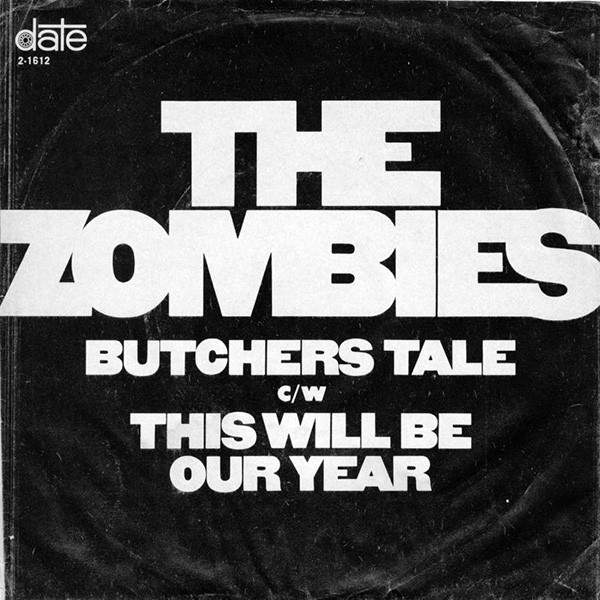
This sounds like it should have been a hit but it was never pushed as a single at the time. It was the B side to Butcher’s Tale (Western Front 1914) which is an experimental song and was a big surprise to the band that it was picked as the first single. Both are from the great album Odessey and Oracle in 1968. There are several songs on this album that could have been in the charts but Time of the Season was the only one that made it and it was a year after the album was released.
Bruce Eder of AllMusic gave the album five stars out of five, calling it “one of the flukiest (and best) albums of the 1960s, and one of the most enduring long-players to come out of the entire British psychedelic boom”.
On recording Odessey and Oracle….Rod Argent
“We had the chance of going in and putting things down in the way we wanted people to hear them and we had a new studio, we walked in just after The Beatles had walked out [after recording Sgt. Pepper]. We were the next band in. They’d left some of their instruments behind … I used John Lennon’s Mellotron, that’s why it’s all over Odessey and Oracle. We used some of their technological advances … we were using seven tracks, and that meant we could overdub for the first time. And it meant that when I played the piano part I could then overdub a Mellotron part, and it meant we could have a fuller sound on some of the songs and it means that at the moment the tour we’re doing with Odessey and Oracle it means we’re actually reproducing every note on the original record by having extra player with us as well.”
This Will Be A Year
The warmth of your love Is like the warmth of the sun And this will be our year Took a long time to come
Don’t let go of my hand Now darkness has gone And this will be our year Took a long time to come
And I won’t forget The way you held me up when I was down And I won’t forget the way you said, “Darling I love you” You gave me faith to go on
Now we’re there and we’ve only just begun This will be our year Took a long time to come
The warmth of your smile Smile for me, little one And this will be our year Took a long time to come
You don’t have to worry All your worried days are gone This will be our year Took a long time to come
And I won’t forget The way you held me up when I was down And I won’t forget the way you said, “Darling I love you” You gave me faith to go on
Now we’re there and we’ve only just begun And this will be our year Took a long time to come
Yeah we only just begun Yeah this will be our year Took a long time to come
Stax’s house band, Booker T & the MGs, provides the backing. Note Booker T’s subtle but effective organ lending the song a spiritual element, while Donald “Duck” Dunn’s bass and Steve Cropper’s tasteful guitar licks ground the track’s rhythm
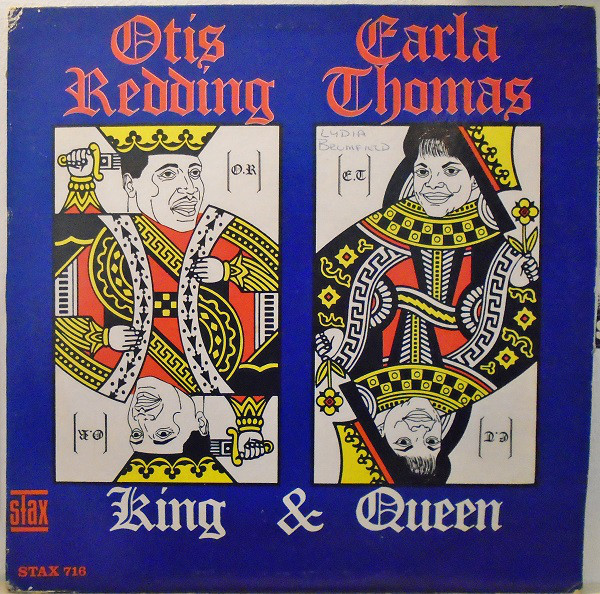
Stax was hoping to replicate the success of Marvin Gaye and Tammi Terrell. Stax paired two of their greatest stars for the 1967 album King & Queen, which produced the hit “Tramp.” The album featured their takes on classics such as “Knock on Wood,” “When Something Is Wrong with My Baby,” “Bring It on Home to Me,” and “It Takes Two”
This song was on the King and Queen album released in 1967. This is the only album they got to make because Otis died in a plane crash on December 10, 1967.
New Year’s Resolution
I hope it’s not too late Just to say that I’m sorry, honey All I want to do Is just finish what we started, baby
Let’s turn over a new leave And baby let’s make promises That we can keep And call it a New Year’s resolution, hmmm
Oh, I’m a woman And woman makes mistakes too But will you, will you forget the changes That I put you through
let’s try it again Just you and me And, baby, let’s see how happy honey, yeah That we can be And call it a New Year’s resolution, yeah, yeah, yeah
Many times we had our ups and downs And times you needed me I couldn’t be found I’m sorry And I’m sorry too I’ll never, never do it again, no, no, no So baby before we fall out Let’s fall on in, yeah, yeah Oh, and we’re gonna try harder Not to hurt each other again, oh Love me baby, huh Week after week And baby let’s make promises That we can keep And call it a New Year’s resolution, yeah, oh I know we can do it Carla I’m gonna keep my promises I’m gonna hold on that we can do it, baby Oh, it’s not too late You’re gonna love me Nobody else Oh Otis let’s finish what we started Talk no mean
Here is to better days to all of you…. in the New Year starting tomorrow.
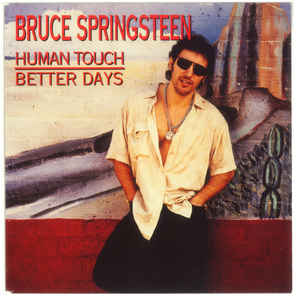
On March 31, 1992, I purchased two albums by Bruce. Lucky Town and Human Touch…both albums released on the same day. I’ve always liked Lucky Town more than Human Touch. Better Days kicked off the album. It was originally released in the United States in March 1992 as a double A-side with “Human Touch”, and peaked at #16 on Billboard 100.
Bruce Springsteen: “With a young son and about to get married (for the last time) I was feelin’ like a happy guy who has his rough days rather than vice versa.”
From Songfacts
This was the only track from Lucky Town included on Springsteen’s 1995 Greatest Hits album.
This is the first track on Lucky Town, which was released the same day as Human Touch. Springsteen decided to do this after Guns N’ Roses simultaneously released their albums Use Your Illusion I and II.
Better Days
Well my soul checked out missing as I sat listening To the hours and minutes tickin’ away Yeah just sittin’ around waitin’ for my life to begin While it was all just slippin’ away I’m tired of waitin’ for tomorrow to come Or that train to come roarin’ round the bend I got a new suit of clothes a pretty red rose And a woman I can call my friend
These are better days baby Yeah there’s better days shining through These are better days baby Better days with a girl like you
Well I took a piss at fortune’s sweet kiss It’s like eatin’ caviar and dirt It’s a sad funny ending to find yourself pretending A rich man in a poor man’s shirt Now my ass was draggin’ when from a passin’ gypsy wagon Your heart like a diamond shone Tonight I’m layin’ in your arms carvin’ lucky charms Out of these hard luck bones
These are better days baby These are better days it true These are better days There’s better days shining through
Now a life of leisure and pirate’s treasure Don’t make much for tragedy But it’s a sad man my friend who’s livin’ in his own skin And can’t stand the company Every fool’s got a reason for feelin’ sorry for himself And turning his heart to stone Tonight this fool’s halfway to heaven and just a mile outta hell And I feel like I’m comin’ home
These are better days baby There’s better days shining through These are better days Better days with a girl like you
These are better days baby These are better days it’s true These are better days Better days are shining through
I thought I would feature one more Monkees song this weekend. This song was a huge hit in the UK where it peaked at #2 but in America, it was not released as a single. As a kid, I really liked this one because it is so catchy. Mickey Dolenz wrote this song while in England. They had just come from a party thrown for them by the Beatles.
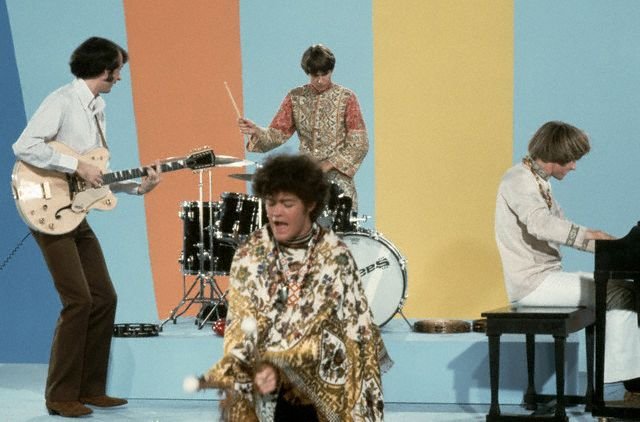
It was on their album Headquarters with the Monkees playing and singing most of the music themselves. On this song… Nesmith is playing guitar, Tork is playing piano, Dolenz drums, Jones is singing backup vocals with Chip Douglas playing bass. The album peaked at #1 in the Billboard 100 in 1967.
When they were going to release it in England, the Monkees were told, ‘You have to change the title.’ The record company said ‘It’s dirty. You have to change it to an alternate title. It was released in England as Alternate Title. It was the title that was found offensive…nothing in the song. Mickey said translated it meant basically “horny, Liverpudlian jerk.”
Micky Dolenz:“Many years ago we had the pleasure of going over to the UK and meeting the royal family: The Beatles. And one night they threw us a party. I’m told I had a great time. After the party, I went back to my hotel room and I noodled around and I wrote a song that I called Randy Scouse Git.”
From Songfacts So in England it became a big hit and it’s called, over in England, ‘Alternate Title.’ Here, it’s still called ‘Randy Scouse Git.’ And loosely translated it means a horny Liverpudlian putz.”
The TV show were Micky Dolenz heard the title phrase was Till Death Us Do Part, a sitcom that aired on the BBC. This program was the basis for the American show All in the Family.
The only offensive aspect of this song is the title, which doesn’t appear in the lyrics. The song itself is stream of observations pieced together by Dolenz during the group’s visit to England. Some of the references in the song:
The “Four Kings of EMI” were The Beatles, who recorded for EMI Records.
“She’s a wonderful lady, and she’s mine, all mine” relates to Micky’s girlfriend at the time, Samantha Juste, who he married in 1968. The couple met when The Monkees performed on the British TV show Top Of The Pops, where Juste was on-air talent.
The “a girl in a yellow dress” was Mama Cass Elliot of The Mamas & the Papas – she was also in England enjoying the scene.
The British slang words in the title, roughly translated, are as follows:
“Randy”: Horny, in search of sex. “Scouse”: A person from the north of England. “Git”: Sort of a jerk, or an idiot.
When The Monkees performed the song on their TV show, Micky Dolenz was out front singing lead behind a tympani, while Davy Jones manned the drums. It was used in the episode “The Picture Frame,” which aired on September 18, 1967.
Randy Scouse Git
She’s a wonderful lady and she’s mine, all mine And there doesn’t seem a way that she won’t come and lose my mind It’s too easy humming songs to a girl in a yellow dress It’s been a long time since the party and the room is in a mess
The four kings of EMI are sitting stately on the floor There are birds out on the sidewalk and a valet at the door He reminds me of a penguin with few and plastered hair There’s talcum powder on the letter and the birthday boy is there
Why don’t you cut your hair? Why don’t you live up there? Why don’t you do what I do, see what I feel when I care?
Now they’ve darkened all the windows and the seats are naugh-a-hyde I’ve been waiting for an hour I can’t find a place to hide The being known as wonder girl Is speaking, I believe It’s not easy trying to tell her That I shortly have to leave
Why don’t you be like me? Why don’t you stop and see? Why don’t you hate who I hate, Kill who I kill to be free?
Why don’t you cut your hair? Why don’t you live up there? Why don’t you do what I do, See what I feel when I care?
Why don’t you be like me? (she’s a wonderful lady) Why don’t you stop and see? (and she’s mine, all mine) Why don’t you hate who I hate, (and there doesn’t seem a way) Kill who I kill to be free? (that she won’t come and lose my mind) Why don’t you cut your hair? (it’s too easy humming songs) Why don’t you live up there? (to a girl in a yellow dress) Why don’t you do what I do, (it’s been a long time since the party) See what I feel when I care? (and the room is in a mess)







 PowerPop... An Eclectic Collection of Pop Culture