Monkees – Valleri

I remember this one off of their show. I like the vocals in the chorus with this one.

Valleri has an interesting history. This song was brought aboard at the very beginning of the Monkees…but it ended up being their last top ten hit. It was recorded with studio musicians at first and placed in a show but…not on an album because it was being saved for the second one. By the time the thought of using it came around…the Monkees had a new contract and per the contract… they had to play on and produce their album so this version of Valleri couldn’t be used.

When it was played in the show… the public wanted a record of it but now the Monkees would have to record it themselves because of the uprising they did to demand to play on their own records.

A couple of disc jockeys recorded the song off of the show and began to play it. They were playing this taped TV version on their radio shows, something that would happen many years later with the Friends theme. Listeners to the stations airing the rough mix of “Valleri” started writing the Monkees’ distributor Colgems Records, asking where they could buy a copy of the record that they had just heard.

Valleri was re-recorded and produced by the Monkees and Tommy Boyce and Bobby Hart the songwriters. It was released as a single in March 1968, 13 months after it was first performed on the TV show. Soon after the release, the Monkee’s TV show was canceled and they released their movie and LP Head. Peter Tork left the group in December 1968.

Valleri peaked at #3 in the Billboard 100, #1 in Canada, #4 in New Zealand, and #12 in the UK in 1968. The album The Birds, The Bees & The Monkees peaked at #3 on the Billboard Album Charts and #6 in Canada.

Valleri

Valleri I love my Valleri
There’s a girl I know who makes me feel so good
And I wouldn’t live without her, even if I could
They call her Valleri
I love my Valleri

Oh yeah, come on

She’s the same little girl who used to hang around my door
But she sure looks different than the way she looked before
I call her Valleri
I love my Valleri

Valleri I love my Valleri
I love my Valleri
I need ya, Valleri

….

Rolling Stones – As Tears Go By

The Stones were covering old blues songs at the start of their career. They needed a hit and one day they ran into two songwriters in 1963. Right in front of the Stones…John Lennon and Paul McCartney wrote a song that was in the Stone’s style. It was called “I Wanna Be Your Man” and became The Stones’ first UK top twenty record. Mick Jagger and Keith Richards were amazed at this display of songwriting prowess, which stuck with them.

The two bands stayed friends after that often coordinating releases so as not to release in the same week. Mick and Keith realized that if they were going to have staying power…they must start writing. Their manager Andrew Oldham locked them in a kitchen and told them they were not getting out until they wrote a song…obviously, it worked.

This was one of the first songs written by Mick Jagger and Keith Richards. The Stones manager gave it to a singer he also managed named Marianne Faithfull, who released it in 1964. It was going to be the B-side of her first single, but the record company decided to make it the A-side and it became her first hit. The Stones recorded it a year later. In 1966 Faithfull became Jagger’s girlfriend and that would last 3-4 years.

The original title was As Time Goes By but they changed it so it wouldn’t be confused with a song with the same title in Casablanca. The song peaked at #1 in Canada and  #6 on the Billboard 100 in 1966. Marianne’s version peaked at #22 in Canada and #9 on the Billboard 100, and #9 in the UK in 1964.

This was released as a single in the US and Canada because ballads were popular there at the time. The release in England was delayed 6 months because they did not want to compete with Yesterday by The Beatles. When they finally did release it there, it was as the B-side of 19th Nervous Breakdown.

Marianne would record this three times. The original version in 1964, for 1987’s Strange Weather, and again on 2018’s Negative Capability.

Keith Richards“suddenly, ‘Oh, we’re songwriters,’ with the most totally anti-Stones sort of song you could think of at the time, while we’re trying to make a good version of (Muddy Waters’) ‘Still A Fool.’ When you start writing, it doesn’t matter where the first one comes from. You’ve got to start somewhere, right? So Andrew locked Mick and myself into a kitchen in this horrible little apartment we had. He said, ‘You ain’t comin’ out,’ and there was no way out. We were in the kitchen with some food and a couple of guitars, but we couldn’t get to the john, so we had to come out with a song. In his own little way, that’s where Andrew made his great contribution to the Stones. That was such a flatulent idea, a fart of an idea, that suddenly you’re gonna lock two guys in a room, and they’re going to become songwriters. Forget about it. And it worked. In that little kitchen Mick and I got hung up about writing songs, and it still took us another six months before we had another hit with Gene Pitney, ‘That Girl Belongs To Yesterday.’ We were writing these terrible Pop songs that were becoming Top-10 hits. I thought, ‘What are we doing here playing the f–king blues, and writing these horrible Pop songs and getting very successful?’ They had nothing to do with us, except we wrote ’em. And it took us a while to come up with ‘The Last Time.’ That was the first one we came up with where Mick and I said, ‘This is one we can lay on the guys.’ At the time we were already borrowing songs from the Beatles – ‘I Wanna Be Your Man’ – because we were really hard up for singles. So they gave us a hand. In retrospect, during the ’60s the Stones and the Beatles were almost the same band, because we were the only ones in that position.”

Mick Jagger: “I wrote the lyrics, and Keith wrote the melody. It’s a very melancholy song for a 21-year-old to write: The evening of the day, watching children play – it’s very dumb and naive, but it’s got a very sad sort of thing about it, almost like an older person might write. You know, it’s like a metaphor for being old: You’re watching children playing and realizing you’re not a child. It’s a relatively mature song considering the rest of the output at the time. And we didn’t think of doing it, because the Rolling Stones were a butch Blues group. But Marianne Faithfull’s version was already a big, proven hit song… It was one of the first things I ever wrote.” 

Marianne Faithfull: “a marketable portrait of me… a commercial fantasy that pushes the right buttons.”

As Tears Go By

It is the evening of the day
I sit and watch the children play
Smiling faces I can see
But not for me
I sit and watch
As tears go by

My riches can’t buy everything
I want to hear the children sing
All I hear is the sound
Of rain falling on the ground
I sit and watch
As tears go by

It is the evening of the day
I sit and watch the children play
Doing things I used to do
They think are new
I sit and watch
As tears go by

Beatles – You Can’t Do That

I love B-sides and this is a good one. I liked You Can’t Do That much better than the A-side Can’t Buy Me Love.

John Lennon never liked his voice. He always wanted George Martin to add echo or anything else to cover it up. I never understood that…for me John was one of the best rock and roll singers out there. His thin nasal voice cut through the music and cuts into you.

I first heard this song on a 1976 compilation album Rock and Roll Music. That was my second ever Beatles album. Capital put together one of the worse covers ever for that album.

Beatles Rock and Roll Music front and backBeatles Rock and Roll Music Gatefold

The cover made the Beatles look like they were from the 50s. A very few of the songs on the album were covers of 50s songs. Ringo Starr said: “It made us look cheap and we never were cheap. All that Coca-Cola and cars with big fins was the Fifties!” John Lennon told Capitol that the cover looked like a Monkees reject. He offered to design the cover but was declined. That doesn’t mean the album didn’t contain great music…a double album full of some great songs.

You Can’t Do That helped popularized the two-measure guitar riff…. a guitar riff that opens a song and continues through it. It laid the foundation for modern rock… with artists such as The Stones to Nirvana. The Beatles would use this frequently in songs such as I Feel Fine, Ticket To Ride, Day Tripper, If I Needed Someone, Paperback Writer and I Want To Tell You. The Stones made a career of it.

The song originally appeared on the UK soundtrack of A Hard Days Night. They recorded this in nine takes on George Harrison’s 21st birthday (February 25, 1964). The song was the B side to Can’t Buy Me Love but managed to peak at #48 in the Billboard 100 and #33 in Canada in 1964. Harry Nilsson covered it in 1967 and that version peaked at #10 in Canada.

This was the first Beatles song on which George Harrison played a 12-string guitar… John played the lead. Lennon said that Wilson Pickett was an influence on this song.

You Can’t Do That

I got something to say that might ’cause you pain
If I catch you talking to that boy again
I’m gonna let you down
And leave you flat
Because I told you before, oh
You can’t do that

Well, it’s the second time I’ve caught you talking to him
Do I have to tell you one more time, I think it’s a sin
I think I’ll let you down (let you down)
And leave you flat
(Gonna let you down and leave you flat)
Because I’ve told you before, oh
You can’t do that

Everybody’s green
‘Cause I’m the one, who won your love
But if they’d seen
You’re talking that way they’d laugh in my face

So please listen to me, if you wanna stay mine
I can’t help my feelings, I’ll go out of my mind
I’m gonna let you down (let you down)
And leave you flat
(Gonna let you down and leave you flat)
Because I’ve told you before, oh, you can’t do that

You can’t do that
You can’t do that
You can’t do that
You can’t do that
You can’t do that

Everybody’s green
‘Cause I’m the one who won your love
But if they’d seen
You’re talking that way they’d laugh in my face

So please listen to me, if you wanna stay mine
I can’t help my feelings, I’ll go out of my mind
I’m gonna let you down (let you down)
And leave you flat
(Gonna let you down and leave you flat)
Because I’ve told you before, oh
You can’t do that

Sweet – Fox On The Run

The Sweet had the ability to sound like a different band on many of their hit singles. Little Willy, Ballroom Blitz, Love Is Like Oxygen, Blockbuster!, and Fox On The Run. My first introduction to this band was a bubblegum single that my sister bought called Little Willy.

There were two different versions of this song. The first one appeared on the European version of the 1974 RCA album Desolation Boulevard album.

The band was stuck with a perception of them being puppets of their songwriters Mike Chapman and Nicky Chin and producer Phil Wainman. They had to battle to play on their own singles at times.  Mike Chapman and Nicky Chin also were their managers. The Sweet were sometimes allowed to write their B sides but that was about it. After Desolation Boulevard was released, the band parted ways with Chapman and Chinn and produced their own material.

Their first effort was a reworking of “Fox On The Run,” which was originally produced by Chapman and Chinn but written by the band. The Sweet proved quite capable on their own, and the new version of Fox on the Run with a bright chorus became a global hit.

The re-worked Fox on the Run appeared on the American version of Desolation Boulevard. Capital Records released this version in America, Canada, and Japan. The album also contained Ballroom Blitz and peaked at #25 in the Billboard Album Charts and #5 in Canada.

The song peaked at #5 in the Billboard 100, #2 in the UK, and #2 in Canada in 1975. It was released in the US as the follow-up to their single Ballroom Blitz.

The song has been covered by the Red Hot Chili Peppers, Girlschool, and the Scorpions to name a few. Fox on the Run was also featured in Guardians of the Galaxy Vol 2.

The original version with Mike Chapman and Nicky Chin

The hit version

“Fox On The Run”

I don’t wanna know your name
‘Cause you don’t look the same
The way you did before
O.K. you think you got a pretty face
But the rest of you is out of place
You looked alright beforeFox on the run
You scream and everybody comes a running
Take a run and hide yourself away
Foxy is on the run
F-foxy
Fox on the run and hide away

You, you talk about just every band
But the names you drop are second hand (second hand)
I’ve heard it all before
I don’t wanna know your name
‘Cause you don’t look the same
The way you did before

Fox on the run
You scream and everybody comes a running
Take a run and hide yourself away
Foxy on the run
F-foxy
Fox on the run and hide away

F-foxy
Fox on the run
You scream and everybody comes a running
Take a run and hide yourself away
Foxy on the run
F-foxy
Fox on the run and hide away
Fox on the run
Fox on the run
Fox on the run
Fox on the run
Fox on the run

Cat Stevens – Father And Son

A truly beautiful song by Cat Stevens. It was used as the B-side of Stevens’ hit Moonshadow in some locations. 

His dad owned a restaurant in London and Cat (known to his dad as Steve Georgiou) worked there as a waiter right up until he signed a record deal at age 17. Stavros was hoping his son would join the family business.

Steven’s storyline for the song as he was writing it from the perspective of a father and son in a Russian family during the Russian Revolution (1917-1923). The son wants to join the revolution but his father wants him to stay home and work on the farm. Stevens, a huge fan of show tunes, wrote it in 1969 for a musical he was working on called Revolussia, which was set during the Russian Revolution. The song ended up on the Tea For The Tillerman album.

This is the song that got Stevens signed to Island Records. His first two albums were issued on Deram, a division of Decca. Stevens met with Island boss Chris Blackwell to talk about the musical he wrote this song for, but when Blackwell heard the song, he set his sights on getting Stevens on his label as an artist. Stevens’ first Island release was Mona Bone Jakon earlier in 1970; it was not just a new label for Stevens, but a new producer as well, with former Yardbird Paul Samwell-Smith taking the helm from Mike Hurst (ex-Springfields), who helped Stevens get his deal with Decca.

I’m really tired of superhero movies but I’m glad many songs of this era were included in Guardians of the Galaxy Vol. 2…including this one. It exposes a new generation to these songs. 

The song peaked at #52 in the UK in 1970. 

Cat Stevens on his dad: “He was running a restaurant and I was a pop star, so I wasn’t following the path that he laid out. But we certainly didn’t have any antagonism between us. I loved him and he loved me.”

Cat Stevens: “I was in a Turkish restaurant one day and it came on the radio, one of my children said, ‘Dad, isn’t that your song?’ I said, ‘Why, yes it is!’ It turned out to be Boyzone. It’s a nice version and I’m grateful it was a clean-cut group who did it. I went to meet them at Top Of The Pops and we had a nice time. They’re a good bunch of lads.”

Cat Stevens: “The song is a testament to the differences we represent to each other, especially in age and traditions. Traditions have a big impact on our lives, and sometimes you’ve got to walk away.”

Father and Son

It’s not time to make a change
Just relax, take it easy
You’re still young, that’s your fault
There’s so much you have to know
Find a girl, settle down
If you want you can marry
Look at me, I am old, but I’m happy

I was once like you are now
And I know that it’s not easy
To be calm when you’ve found
Something going on
But take your time, think a lot
Think of everything you’ve got
For you will still be here tomorrow
But your dreams may not

How can I try to explain?
When I do he turns away again
It’s always been the same, same old story
From the moment I could talk
I was ordered to listen
Now there’s a way
And I know that I have to go away
I know I have to go

It’s not time to make a change
Just relax, take it slowly
You’re still young, that’s your fault
There’s so much you have to go through
Find a girl, settle down
If you want you can marry
Look at me, I am old, but I’m happy

All the times that I’ve cried
Keeping all the things I knew inside
It’s hard, but it’s harder to ignore it
If they were right I’d agree
But it’s them they know, not me
Now there’s a way
And I know that I have to go away
I know I have to go

Sniff ‘n’ the Tears – Driver’s Seat ….Power Pop Friday

This song took a few listens but then I started to like it. It peaked at #15 on the Billboard 100, #17 in Canada, and #42 in the UK charts. The song ended up being Sniff ‘n’ the Tears biggest hit.

The song was a failure in the UK but more successful in the US where it hit the top twenty in 1979. It was a hit almost everywhere but in the UK. In the UK they were set up for success. They managed to snag a Top of the Pops appearance when it came out. They filled in for the Gang of Four who dropped out at the last moment.  The week after it was released… the EMI pressing plant went on strike and you couldn’t buy Driver’s Seat for four or five weeks.

An early version of this song was demoed back in 1973 by singer/guitarist Paul Roberts’ then-band Ashes of Moon for a French label. However, that band broke up, and, at the suggestion of drummer Luigi Salvini, Roberts reformed it as Sniff ‘n’ the Tears with guitarists Laurence “Loz” Netto and Mick Dyche, and bassist Chris Birkin.

They shopped the demo tape and signed with the London indie label Chiswick in 1977. Sniff ‘n’ The Tears found a good audience outside the UK until they broke up in 1983. They reformed in 1992 after Driver’s Seat featured in a Dutch TV ad for Pioneer Stereos. They were truly a one-hit-wonder in the US. They did have a single to peaked at #108 called New Lines on Love.

Paul Roberts (singer): It was a pretty massive hit everywhere apart from Britain, Britain is perverse in some respects, but it did get a lot of radio play. We were accused of ripping off Dire Straits. I never understood that, but I think it was more that we were different to the post-punk scene.

Driver’s Seat

Doing all right
A little jiving on a Saturday night
And come what may
Gonna dance the day away

Jenny was sweet
She always smiled for the people she meet
On trouble and strife
She had another way of looking at life

The news is blue (The news is blue)
Had it’s own way to get to you
What can I do? (What can I do? )
When I remember my time with you

Pick up your feet
Got to move to the trick of the beat
There is no elite
Just take your place in the driver’s seat
Driver’s seat, driver’s seat, yeah
Doing all right
A little jiving on a Saturday night
And come what may
Gonna dance the day away
Driver’s seat, driver’s seat, yeah
Jenny was sweet
There is no elite
Pick up your feet, pick up, pick up
Pick up your feet, gonna dance the day away
Driver’s seat, driver’s seat, yeah

Driver’s seat

John Hammond – Shake For Me

Some rocking blues from John Hammond, Duane Allman, and the Muscle Shoals rhythm section. This one is not a well-known song but it is worth hearing. This was made for vinyl and a turntable. The percussion makes the song jump at you.

The song was written by Willie Dixon. It was recorded in 1969 at Muscle Shoals Sound Studios. Hammond is the son of famous record producer John H. Hammond, who signed some of the most famous musicians ever. A partial list includes Bob Dylan, Bruce Springsteen, Benny Goodman, Harry James, Charlie Christian, Billie Holiday, Count Basie, Teddy Wilson, Big Joe Turner, Pete Seeger, Babatunde Olatunji, Aretha Franklin, George Benson, Freddie Green, Leonard Cohen, Arthur Russell, Jim Copp, Asha Puthli, Stevie Ray Vaughan and Mike Bloomfield. He is also largely responsible for the revival of delta blues artist Robert Johnson’s music.

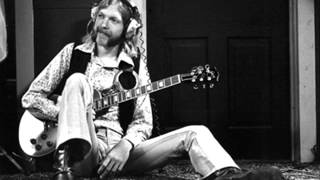
When Duane heard John Paul Hammond was scheduled to record an album at Muscle Shoals Sound in November of 1969, he headed down to meet him.

Hammond come down from New York City to cut a record with Marlin Green, a producer who had worked with Aretha Franklin and Wilson Pickett. He didn’t know what to expect walking into the studio, but he felt an immediate chill from the musicians he had come to play with. He had expected the Muscle Shoals Rhythm Section to be black, and they expected the same of him.

Duane showed up in the middle of this awkward realization that they were a bunch of white dudes. Eddie Hinton, the guitar player, and songwriter was the one guy who was nice to Hammond and understood what he wanted to do. He wanted to record Howlin’ Wolf and Muddy Waters tunes.

“I was getting very frustrated,” Hammond recalled. “On the third day, Duane arrived with Berry Oakley. Duane said, ‘I want to meet this John Hammond guy! I have one of his records!’ Everybody loved him, and when they heard Duane wanted to meet me, they looked at me completely different. The whole mood of the session changed; everything changed. Eddie Hinton turned to me and said, ‘This is Duane Allman. He’s a phenomenal player, and you’re really going to like him.’

“Duane started to play and my mouth dropped open, he was so good. There was a break at the end of the day, and I had an old National steel guitar with me. Duane had never seen one, so I gave it to him to play, and it was in open tuning. He said, ‘Gee what is this?’ And I told him it was an open tuning, an A. He played slide in a straight tuning.

They recorded four songs the next day, and everyone was a winner. In fact, Duane inspired the whole studio band to get it together. The songs were included on the album Southern Fried.

“All of a sudden they understood exactly what I was talking about the day before,” Hammond said. “Duane was born with that magnetism.” It was the beginning of another important friendship for Duane.”

John Hammond: I asked Duane how he got so good and he said, “I took speed every day for three years and played every night all night.” I think this was partly true and partly apocryphal but he really couldn’t get enough. He was just phenomenal.

Shake For Me

Sure you look good
But it don’t mean a thing to me
Oh, you sure look good
But you don’t mean a thing to me
I’ve got a hip shakin’ woman, boy
She shake like a willow tree

You went away baby
You got back just a little too late
You went away baby
You got back just a little too late
I’ve got a hip shakin’ woman, boy
Shake like Jello on a plate

When my baby walks you know
Lord, she’s fighting melow
When my baby walks, you know
Lord, she’s fighting melow
I’ve got a hip shakin’ woman, boy
Her flesh tastes just like Jello

Shake it baby, shake it for me
I’ve got a hip shakin’ woman, boy
Shake like a willow tree

Lovin’ Spoonful – Do You Believe In Magic

All it took was for me to get a greatest hits album by the Lovin’ Spoonful and I was a fan. This song was their debut single and it’s still heard today on the radio and in advertisements. The song peaked at #9 on the Billboard 100 and #3 in Canada in 1965.

They turned down a deal from Phil Spector because they didn’t want to be swallowed up under his name, that was probably a smart move. The Lovin’ Spoonful signed to a new record label called Kama Sutra. This was the first song they recorded for the label, and it was the first of a string of hits for the group

Sebastian said the autoharp intro was inspired by Martha and the Vandellas Heat Wave.  “It had an ascending chord sequence that I was fascinated with. By chance, I was playing the autoharp, experimenting with electrifying it through this big amplifier. I realized that if I turned a few of the major 7ths to minor 7ths, I would have those chords. I also wanted that groove from  ‘Buzz Buzz Buzz.'”

This was written by John Sebastian, who formed The Lovin’ Spoonful with his friend, Zal Yanovsky. Sebastian and Yanovsky were in a group called The Mugwumps and made a name for themselves playing clubs in Greenwich Village.

When the other Mugwumps – Mama Cass Elliot and Denny Doherty – moved to California and formed The Mamas And The Papas, they formed the band and Sebastian began focusing on songwriting. The Lovin’ Spoonful started playing electric instruments to get away from the folk music sound and attract a younger contemporary rock audience.

As the ’60s drew to a close, The Lovin’ Spoonful disbanded and Sebastian started working on a variety of projects. He wrote music for the Care Bear series, published children’s books, made harmonica instruction videos, and, he wrote the theme song to the TV show Welcome Back, Kotter, which was a #1 hit. Dave’s site has a post about this song. 

John Sebastian: “We were playing pretty steadily for the local people from Greenwich Village who were part of the jazz scene or part of the kind of downtown ‘in crowd.’ They were ‘finger poppers,’ guys who played chess, ‘beatniks.’ But there was this one particular night as we were playing, I looked out in the audience and saw this beautiful 16-year-old girl just dancing the night away. And I remember Zal and I just elbowed each other the entire night because to us that young girl symbolized the fact that our audience was changing, that maybe they had finally found us. I wrote ‘Do You Believe In Magic’ the next day.”

Alan Merrill who wrote I Love Rock and Roll: “This was mid-’60s. The Lovin’ Spoonful were starting, and Laura Nyro said, ‘Why don’t you audition for the Lovin’ Spoonful? Now you know how to play bass, they’re looking for a bass player. But you’d have to quit school.’ And I said, ‘I don’t want to quit school.’ So I went over to her house after school one day, and she put this record on, and it was ‘Do You Believe In Magic.’ She just looked at me and said, ‘This is what you didn’t go to do.’ And I was like, ‘Oh, s–t, it’s gonna be a #1 record. I blew it. I could have been the 14-year-old bass player in the Lovin’ Spoonful.'”

I wish I had this set…yea I would love to have it at home…the wife wouldn’t like it but I pick my battles well. And this one I would pick…and I’d take the Saint Bernard that appears also.

Do You Believe In Magic

Do you believe in magic in a young girl’s heart
How the music can free her, whenever it starts
And it’s magic, if the music is groovy
It makes you feel happy like an old-time movie
I’ll tell you about the magic, and it’ll free your soul
But it’s like trying to tell a stranger ’bout rock and roll

If you believe in magic don’t bother to choose
If it’s jug band music or rhythm and blues
Just go and listen it’ll start with a smile
It won’t wipe off your face no matter how hard you try
Your feet start tapping and you can’t seem to find
How you got there, so just blow your mind

If you believe in magic, come along with me
We’ll dance until morning ’til there’s just you and me
And maybe, if the music is right
I’ll meet you tomorrow, sort of late at night
And we’ll go dancing, baby, then you’ll see
How the magic’s in the music and the music’s in me

Yeah, do you believe in magic
Yeah, believe in the magic of a young girl’s soul
Believe in the magic of rock and roll
Believe in the magic that can set you free
Ohh, talking ’bout magic

Do you believe like I believe (Do you believe in magic)
Do you believe like I believe (Do you believe, believer)
Do you believe like I believe (Do you believe in magic)

Replacements – Waitress In The Sky

Songs like this are what made The Replacements the Replacements.

Waitress in the Sky” was written for one of Paul Westerberg’s sisters…Julie. She was a career flight attendant. In the song, Westerberg’s character came on like every stewardess’s nightmare passenger. “I was playing the character of the creep who demands to be treated like a king. I’d heard all the stories from my sister about how [passengers] would yell at the flight attendants and how then they’d ‘accidentally’ spill something on them.”

Later on, when they signed to Warner Bros and an executive told them to make a music video. That is something that they absolutely would not do. Westerberg was willing to compromise though.

He did joke with the executive with a quote worth remembering… ‘Tell you what… if you get The Replacements on Hee-Haw then I’ll lip-synch to ‘Waitress in the Sky.’

Warner Bros were not amused. The conversation did lead to a live TV gig though.  Westerberg didn’t think Warner Brothers would be able to swing a deal for a TV spot so he agreed. He would soon regret his decision. Yes, Warner Bros got them not only a TV gig but a live one. They were then scheduled on SNL and that led to being permanently banned from the show after Westerberg uttered a naughty word on national television.

They were stuck on the 18th floor waiting all day for SNL. To soothe the band’s nerves, soundman Monty Lee Wilkes smuggled some alcohol into the studio in a little road case. As they began to dip in, the show’s host, Harry Dean Stanton, said hello. Harry ended up joining in and becoming quite intoxicated. Word began to circulate that the host was getting drunk mere hours before the live show. Panic ensued until a production assistant dragged Stanton out of the band’s dressing room.

Sufficiently lubricated, their rehearsal set went off smoothly. Bob Stinson shocked everyone by donning a striped lady’s unitard. The only hitch occurred during “Bastards of Young” — Bob was late coming in on the solo. Westerberg would make sure he didn’t miss his cue during the live broadcast. Make sure he did… he cued Bob by saying to Bob, just off mic: “Come on, f****r.”

This was a low point for SNL…Michael Lorne had just returned and the show was rumored to be canceled…so he didn’t take this well. They were permanently banned from playing there again…although Westerberg played there later during his solo career.

The song was on the Tim album released in 1985. Tim was the fourth studio album by  The Replacements. It was released in October 1985 on Sire Records (a subsidiary of Warner Brothers). It was their first major-label release.

Looking back on their career…it gets maddening. They bucked at playing nice with industry figures, purposely tanked do-or-die shows, and antagonized producers until they quit. They wanted to make it on their own terms but ended up sabotaging themselves. They could have been up there with R.E.M. but they couldn’t get out of their own way.

Julie was indeed a lifelong flight attendant…or Waitress in the sky…she retired in 2019 from Delta Airlines

Paul Westerberg's sister Julie, 'Waitress in the Sky' inspiration, retires  after four decades as flight attendant

Their performance on SNL…sorry for the quality but this is the only one the SNL police will allow.

Waitress In The Sky

She don’t wear no pants and she don’t wear no tie
Always on the ball, she’s always on strike
Struttin’ up the aisle, big deal, you get to fly
You ain’t nothin’ but a waitress in the sky
Paid my fare, don’t want to complain
You get to me, you’re always outta champagne
Treat me like a bum, don’t wear no tie
‘Cause you ain’t nothin’ but a waitress in the sky
You ain’t nothin’ but a waitress in the sky, oh hoh
And the sign says, “Thank you very much for not smoking”
My own sign says, “I’m sorry, I’m smokin'”
Don’t treat me special or don’t kiss my ass
Treat me like the way they treat ’em up in first class

Sanitation expert and a maintenance engineer
Garbage man, a janitor and you my dear
A real union flight attendant, my oh my
You ain’t nothin’ but a waitress in the sky

Oh oh, ba ba, oh oh, ba ba, oh oh, ba, ba, oh oh

Grateful Dead – Don’t Ease Me In

I first noticed this song on the concert film The Festival Express a few years ago. I’ve heard the two studio versions but that live version is the one I like best. It’s something about it I really connect to. Garcia and Weir sound great singing together along with Pigpen playing the harmonica. It’s just a simple blues-type song but it works well for me anyway.

As soon as I heard it I took one of my acoustic guitars off the wall and kept running back the video file back and playing with them…I didn’t think they would mind.

This song was first released by the Dead in 1966 as their first single with Stealin on the flip side. That version is good and it reminds me of the band Them…not the voice but the music. They also released it again on their Go To Heaven album in 1980 but that version to me is a little too slick. The version on Festival Express shows all the ragged edges in the best way. It is pure Americana. They would do it live many times later on but I still go back to the Festival version.

They also covered it before they were the Grateful Dead. They started off as a jug band called Mother McCrees Uptown Jug Champions and most likely covered it when they were called the Warlocks.

They might have heard the version of the song by Henry Thomas…an old blues artist that lived from 1874 to around 1930. If you want to learn more in detail about Thomas and this song go here to Jim’s site. It also sounds close to a song by Jelly Roll Morton called Don’t You Leave Me Here. On the Go To Heaven album, it’s credited to “traditional arranged by The Grateful Dead.” The single that was released in 1966 was credited to Garcia but I’ve read where he didn’t authorize that and didn’t ask for a credit.

Speaking of the Festival Express…it was The Transcontinental Pop Festival… better known as the Festival Express. Great idea on paper… rounding up musicians in 1970 and placing them on a train going across Canada and stopping along the way to play festivals. What could go wrong? Actually, I would have loved to have been on that train. The lineup: The Band, The Grateful Dead, Janis Joplin, Buddy Guy Blues Band, The Fly Burrito Brothers, Sha Na Na, and Delaney & Bonnie & Friends.

There were artists that were not in the film like Traffic, Ten Years After, Tom Rush, Ian & Sylvia, Mountain, and more.

A DVD was released of this in 2004. All these musicians were on a train full of liquor and an assortment of drugs… liquor was the popular choice among the musicians on this ride. The tour was to have events in Montreal, Toronto, Winnipeg, Calgary, and Vancouver. The Montreal event was canceled as was Vancouver. In Toronto, protesters were saying the festival promoters were price gouging so The Grateful Dead played a free concert in a park nearby to ease tensions with the protesters.

When watching the film you can see the performers are having a ball jamming with each other because they didn’t get a lot of chances to do that on the road.

Here is the link to the full movie free on youtube…if you have time…it’s worth it!

Bill Kreutzmann (drummer for the Dead): We celebrated Janis Joplin’s birthday at the last stop the traditional way: with birthday cake. In keeping with our own kind of tradition, somebody—within our ranks, I would imagine—had secretly infused the cake with a decent amount of LSD. So it quickly became an electric birthday celebration. Allegedly, some generous pieces of that birthday cake made it to the hands and mouths of the local police who were working the show. “Let them eat cake!” (To be fair, I didn’t have anything to do with that … I was just another cake-eating birthday reveler, that night.)
And that was it for the Festival Express. It was a wonderful time and I think what really made it great was the level of interaction and camaraderie among the musicians, day and night, as we were all trapped on this train careening across the great north. It probably helped that we were all trashed the entire time. Whiskey was in the conductor’s seat on that ride.

I would recommend getting the DVD of this event. It’s a great time capsule of that time in music and culture.

Don’t Ease Me In

Don’t ease, don’t ease, don’t ease me in
I’ve been all night long coming home, don’t ease me in

I was standing on the corner, talking to Miss Brown
When I turned around, sweet mama, she was way across town
So I’m walking down the street, with a dollar in my hand
I’ve been looking for a woman, sweet mama, ain’t got no manDon’t ease, don’t ease, don’t ease me in
I’ve been all night long coming home, don’t ease me inThe girl I love, she’s sweet and true
You know the dress she wears, sweet mama, it’s pink and blue
She brings me coffee, you know she brings me tea
She brings about every damn thing, but the jailhouse keyDon’t ease, don’t ease, don’t ease me in
I’ve been all night long coming home, don’t ease me inDon’t ease, don’t ease, don’t ease me in
I’ve been all night long coming home, don’t ease me in

Talking to Miss Brown
Well I turned around, sweet moma
She was way cross town

So I’m walking down the street
With a dollar in my hand
I’ve been looking for a woman, sweet moma
Ain’t got no man

The girl I love
She’s sweet and true
You know the dress she wears, sweet moma
It’s pink and blue

She brings me coffee
You know she brings me tea
She brings ’bout every damn thing
But the jailhouse key

Steppenwolf – Snowblind Friend

The last time I posted a Steppenwolf song (Sookie Sookie)…a fellow blogger obbverse reminded me of this one and it had been a long time since I heard it.

Snowblind Friend was written by Hoyt Axton, who first released it on his 1969 album My Griffin Is Gone. The song was written about one of his musician friends who died of a drug overdose. Hoyt did not glamorize drug use in this song. He had his own problems with drug addiction and did what he could to warn of the dangers

Stoned on some new potion he found upon the wall
Of some unholy bathroom in some ungodly hall

Hoyt Axton wrote so many songs…one of them was Joy To The World, he wrote it around the same time as Snowblind Friend. Steppenwolf was offered Joy To The World but they passed. It ended up going to Three Dog Night… who took it to number 1. What I wouldn’t give to hear a Steppenwolf version of Joy to the World!

Songs written by Hoyt Axton | SecondHandSongs

This song introduced the word “snowblind” to the rock music lexicon to describe addiction, specifically to cocaine. The insidiousness of the drug and its grip on the user has never been conveyed so accurately and poignantly.

Steppenwolf 7

Snowblind Friend peaked at #60 in the Billboard 100 and #37 in Canada in 1970. It was on the album Steppenwolf 7 and it peaked at #19 in the Billboard Album Charts and #14 in Canada. This would be Steppenwolf’s last top 20 album in their career. They did have a Greatest Hits album that peaked at #24 the following year.

They are not in the Hall of Fame yet but were nominated in 2017 but didn’t make it. In 2018 the Hall did pick “Born to Be Wild” as one of the first five singles that shaped rock and roll to be inducted into the hall in its history.

Altogether they had 13 studio albums, 5 live albums, and 21 singles. 8 of the albums were in the top 40 and 7 of their singles were in the top 40. In Canada they were very popular…they had two #1’s in Born To Be Wild and Magic Carpet Ride and 11 singles in the top 40.

John Kay: “That song spoke to me because I knew the person that the song was written about. That’s why I decided, as a tribute to this young man, that we would do a version of it on the Steppenwolf 7 album.”

This is a TV special on the Steppenwolf 7 album

Snowblind Friend

You say it was this morning when you last saw your good friend
Lyin’ on the pavement with a misery on his brain
Stoned on some new potion he found upon the wall
Of some unholy bathroom in some ungodly hall
He only had a dollar to live on ’til next Monday
But he spent it on some comfort for his mind
Did you say you think he’s blind?

Someone should call his parents, a sister or a brother
And they’ll come to take him back home on a bus
But he’ll always be a problem to his poor and puzzled mother
Yeah he’ll always be another one of us
He said he wanted Heaven but prayin’ was too slow
So he bought a one way ticket on an airline made of snow
Did you say you saw your good friend flyin’ low?
Flyin’ low
Dyin’ slow

Hoyt Axton – Della And The Dealer

I cannot remember the first time I heard this song but I heard it alot growing up. The imagery of the lyrics is a lot of fun. It’s country but it’s also a little rock and a little blues. It’s hard to classify many of his songs although he was mainly known for being a country singer and songwriter. He also ventured out into garage rock, folk, and hard rock with his songs.

Hoyt Axton:  “I’m one of those fringe dudes: half folkie, half hippie, half Okie. My input has been very eclectic. I was always surrounded by all kinds of music, as my family moved around the country: jazz, classical, gospel, whatever… the influences enter from a lot of directions.”

Hoyt Axton was a talented artist. He was a singer, songwriter, and actor. We all know his songs. Joy To The World, Never Been To Spain, Snowblind Friend, The Pusher, The No, No Song, and When the Morning Comes. He was also in a number of movies, commercials, and tv shows. The movie I remember him most for was Gremlins. Axton always came off as incredibly likable.

Hoyt Axton’s mom could write songs herself…Mae Boren Axton, a songwriter, co-wrote the classic rock “Heartbreak Hotel”, which became a major hit for Elvis and an iconic rock song. Now that is a cool mom.

Axton had his big hits with other people singing his songs. His composition “Joy to the World”, as performed by Three Dog Night, was #1 on the charts for six straight weeks in 1971, making it the top hit of the year. He named his record label Jeremiah after the bullfrog mentioned in the song.

Axton had an addiction problem early in his career. He wrote songs about it like Snowblind Friend, The Pusher, and The No No Song which Ringo covered.

There are a lot of theories about this song. The dog and cat are real people. He is being purposely vague as they were all involved in some shady dealings…hanging out with what is obviously a drug dealer and murderer, but the narrator is no snitch….he’s a “cool cat.” There are a lot of theories about the song…it’s a fun story song regardless.

This song was released in 1979 and peaked at #17 on the Billboard Country Charts. It was on his album A Rusty Old Halo that peaked at #27 in the Billboard Country Charts and #14 in the Canada Album Charts.

Hoyt Axton passed away on October 26, 1999, at the age of 61.

On November 1, 2007, Axton and his mother were both inducted posthumously into the Oklahoma Music Hall of Fame in Muskogee, Oklahoma.

Tomorrow I have another Axton song but not with Hoyt singing.

Della and the Dealer

It was Della and the Dealer and a dog named Jake
And a cat named Kalamazoo.
Left the city in a pick up truck,
Gonna make some dreams come true.

Yea, they rolled out west where the wild sunsets
And the coyote bays at the moon.
Della and the Dealer and a dog named Jake
and a cat named Kalamazoo

If that cat could talk what tales he’d tell
About Della and the Dealer and the dog
as well
But the cat was cool, and he never said a mumblin word.

Down Tucson way there’s a small cafe
Where they play a little cowboy tune.
And the guitar picker was a friend of mine
By the name of Randy Boone.

Yea, Randy played her a sweet love song
And Della got a fire in her eye
The Dealer had a knife and the dog had a gun
and the cat had a shot of Rye.

If that cat could talk what tales he’d tell
About Della and the Dealer and the dog
as well
But the cat was cool, and he never said a mumblin word.

Yea, the dealer was a killer,
He was evil and mean
And he was jealous of the fire in her eyes.

He snorted his coke through a century note
And swore that Boone would die.

The stage was set when the lights went out.
There was death in Tucson town.
Two shadows ran for the bar back door
And one stayed on the ground

If that cat could talk what tales he’d tell
About Della and the Dealer and the dog
as well
But the cat was cool, and he never said a mumblin word.

Two shadows ran from the bar that night
And dog and cat ran too.
And the tires got hot on the pick up truck
As down the road they flew.

It was Della and her lover and a dog named Jake
And a cat named Kalamazoo.
Left Tucson in a pick-up truck
Gonna make some dreams come true.

If that cat could talk what tales he’d tell
About Della and the Dealer and the dog
as well
But the cat was cool, and he never said a mumblin word.

Posies – Dream All Day ….Power Pop Friday

Ken Stringfellow and Jon Auer started to write songs together while in High School in Bellingham, Washington in 1986. They were influenced by The Hollies, Hüsker Dü, XTC, Elvis Costello, Squeeze, and Big Star.

When they started out, a cassette of songs Stringfellow and Jon Auer traded back and forth went viral, which in the late ’80s meant copies got passed around and radio stations started playing them. The had one big problem though. They didn’t have an actual band together. Drummer Mike Musberger and bassist Rick Roberts were added as the first Posies rhythm section.

This song was on their third album released in 1993 called Frosting On The Beater. Dave Fox had replaced Rick Roberts by this time on bass. Dream All Day was released as the first single on the album.

The song peaked at #4 on the Billboard  Alternative Airplay Charts and #17 in the Billboard Mainstream Charts in 1993.

The Posies soon got signed to DGC and “Golden Blunders,” the first single from their Dear 23 debut on the label, became enough of a college radio hit that Ringo Starr recorded as part of his 1992 album Time Takes Time.

The made 8 albums altogether with the last one being in 2016.

In 1993 Ken Stringfellow and Jon Auer joined Big Star’s Jody Stephens and Alex Chilton to reform Big Star. They toured and released a Big Star album in 2005 called In Space. It came to an end in 2010 with the death of Alex Chilton.

Dream All Day

I’ve got a lot of thoughts
Got a lot of plans
I lost a lot of sleep
Trying to understand

I could dream all day

In a blackened room
Staring into space
Underneath a thousand blankets
Just to find a place
Where everything is reachable
Imagining is safe
I tried to make it so
I didn’t even know

I could dream all day

I dreamt I was awake
My mouth was colored grey
As the world revolved around me
I could only say

I could dream all day

Bobby Womack – Across 110th Street

I first heard this song in the 80s and later on, I heard it in a Tarantino movie called Jackie Brown. You feel like you are walking down that Street in 1973 with this song. You can see the sights and feel the grime as the song finishes. It’s R&B, Soul, and a touch…just a small touch of Motown in the background.

Across 110th Street
Pimps trying to catch a woman that’s weak
Across 110th Street
Pushers won’t let the junkie go free
Across 110th Street
Woman trying to catch a trick on the street, ooh, baby
Across 110th Street
You can find it all in the street

Bobby Womack’s 1973 hit single Across 110th Street was the title song from Barry Shear-directed movie starring Anthony Quinn for which Womack provided the soundtrack music. The song peaked at #56 on the Billboard 100 and #19 in the R&B Charts. The song was written by Bobby Womack and J.J. Johnson.

It was used in the movie by Quentin Tarantino “Jackie Brown” in 1997 and featured in the 2007 movie “American Gangster.” I’m glad that it has had a revival of sorts and didn’t get lost in history.

Bobby Womack was asked if he noticed his audience changed after this song.

Bobby Womack: I did simply because, at that particular time, that was a change for me, to record with orchestration like that. Across 110th Street had meaning, because although I lived on Central Avenue in Cleveland Ohio [growing up], it was like Across 110th Street. That’s what made me in the frame of mind to write the lyric as I did, because it sort of typified me and my brothers growing up.

Carol Kaye plays bass on this song.

“Across 110th Street”
Ooh, ooh-ooh-ooh, ooh-ooh-ooh
Ooh, ooh-ooh-ooh, ooh-ooh-ooh-ooh

I was the third brother of five
Doing whatever I had to do to survive
I’m not saying what I did was all right
Trying to break out of the ghetto was a day-to-day fight

Been down so long, getting up didn’t cross my mind
But I knew there was a better way of life that I was just trying to find
You don’t know what you’ll do until you’re put under pressure
Across 110th Street is a hell of a tester

Across 110th Street
Pimps trying to catch a woman that’s weak
Across 110th Street
Pushers won’t let the junkie go free
Across 110th Street
Woman trying to catch a trick on the street, ooh, baby
Across 110th Street
You can find it all in the street

Ooh, ooh-ooh-ooh, ooh-ooh-ooh, oh-oh-oh

I got one more thing I’d like to talk to y’all about right now

Hey, brother, there’s a better way out
Snorting that coke, shooting that dope, man, you’re copping out
Take my advice, it’s either live or die
You got to be strong if you want to survive

The family on the upper side of town
Would catch hell without a ghetto around
In every city you’ll find the same thing going down
Harlem is the capital of every ghetto town
Help me sing it

Across 110th Street
Pimps trying to catch a woman that’s weak
Across 110th Street
Pushers won’t let the junkie go free
Oh, across 110th Street
A woman trying to catch a trick on the street, ooh, baby
Across 110th Street
You can find it all
In the street
Yes, you can

Oh, look around you, look around you
Look around you, look around you
Yeah
Yeah

Ooh, ooh-ooh-ooh, ooh-ooh-ooh

Creedence Clearwater Revival – Wrote A Song For Everyone

If I had to pick a favorite song of Creedence Clearwater Revival it would be hard… but this song would be a contender and probably my overall favorite. It’s the way Fogerty wearily sings the lyrics, he sounds so much older than he was at the time. The song is off of the “Green River” album.

Sometimes lines grab my attention and these did. Met myself a comin’ county welfare line. I was feelin’ strung out, Hung out on the line.

The album did very well…the Green River album peaked at #1 in the Billboard Album Charts, #2 in Canada, and #20 in the UK in 1969. If you want proof that life isn’t fair… Green River the title track was kept from #1 because of the novelty bubblegum song “Sugar, Sugar” by The Archies.

With Creedence…you won’t hear any “alternative takes” with the band. Fogerty destroyed all copies of the first version of songs because he never wanted any of his outtakes to make it into the public’s hands. This has been a regular practice of him throughout his career.

The album ended up charting 4 different songs. Green River, Lodi, Bad Moon Rising, and Commotion.  John Fogerty released a new version of the song on his ninth solo studio album, also titled Wrote a Song for Everyone. This version features Miranda Lambert and Tom Morello.

Jeff Tweedy of Wilco has cited this as a song that had a profound influence on him. A huge Fogerty fan, Wilco credits him with forming the foundation of the Americana genre.

John Fogerty: “Inspired by my young wife at the time. It was early ’69, and I was 23 years old. We had our first child, who, at the time, was two and a half. I was sitting in my room, writing the songs, pushing my career. Without the songs, the career ends. You might be a great band, but without the songs, you’re not going anywhere. At one point, my wife and I had a mild misunderstanding, I wouldn’t even call it a fight, She was miffed, taking our young son out, wishing I would be more involved. But there I was, the musician manic and possessed the only guy holding things up. Without me, it all collapses, so I’m feeling quite put upon. As she walks out the door, I say to my self, “I wrote a song for everyone, and I couldn’t even talk to you.” I looked at my piece of paper and changed gears. How many great leaders can’t even manage their own families? So I went with that. “Pharaohs spin the message/Round and round and true/Richmonds about to blow up” referring to nearby Richmond, California. It was actually a true emotion that took on a larger meaning. It’s still a special song in the sense that it keeps my feet on the ground. You sit and write these songs, yet you try to talk to your own son and daughter and maybe you’re totally inadequate, trying to explain life to a child. We used to record our album very quickly and I remember finishing five different songs in one afternoon. The fifth one didn’t work, and that was “Wrote A Song For Everyone.” I had to start over on that one.” 

“Wrote A Song For Everyone”

Met myself a comin’ county welfare line.
I was feelin’ strung out, Hung out on the line.
Saw myself a goin’, down to war in June.
All I want, All I want is to write myself a tune.

[Chorus:]
Wrote a song for ev’ryone,
Wrote a song for truth.
Wrote a song for ev’ryone
And I couldn’t even talk to you.

Got myself arrested, Wound me up in jail.
Richmond ’bout to blow up, communication failed.
If you see the answer, now’s the time to say.
All I want, All I want is to get you down to pray.

[Chorus]

[Chorus]

Saw the people standin’ thousand years in chains.
Somebody said it’s diff’rent now, look, it’s just the same.
Pharoahs spin the message, round and round the truth.
They could have saved a million people, How can I tell you?

[Chorus]
[Chorus]
[Chorus]