Arlo Guthrie – Alice’s Restaurant Massacree

Every Thanksgiving I listen to Alice’s Restaurant and this is the third year in a row that I’ve posted it on the 4th Thursday of November. Sorry if you are tired of it but it’s not Thanksgiving until Alice’s Restaurant is played…and the Last Waltz is watched but that is a different story.

The movie that Arlo movie made called Alice’s Restaurant is a fun watch.

It’s not Thanksgiving without listening to this 1967 song. This song did not chart but he did have another version that did chart…it was called Alice’s Rock and Roll Restaurant that peaked at #97 in the Billboard 100.

Many radio stations play this on Thanksgiving. This is usually the only time they play it, since the song is over 18-minutes long.

There have been mixed reviews about the movie that was made…I’ve always found it enjoyable. It’s not going to be confused with Gone With The Wind but it’s a fun period movie.

In 1991, Arlo bought the church where this took place and set up “The Guthrie Center,” where he runs programs for kids who have been abused.

From Songfacts

Running 18 minutes and 34 seconds, this song is based on a true story that happened on Thanksgiving Day, 1965. Arlo was 18, and along with his friend Rick Robbins, drove to Stockbridge, Massachusetts to have Thanksgiving dinner with Alice and Ray Brock. Alice and Ray lived in a church – the former Trinity Church on Division Street in Stockbridge – and were used to inviting people into their home. Arlo and Rick had been traveling together, Arlo working his way up in folk singing and Rick tagging along. A number of people, Arlo and Rick included, were considered members of the family, so they were not guests in the usual sense. 

When Ray woke up the next morning, he said to them, “Let’s clean up the church and get all this crap out of here, for God’s sake. This place is a mess,” and Rick said, “Sure.” Arlo and Rick swept up and loaded all the crap into a VW microbus and went out to the dump, which was closed. They started driving around until Arlo remembered a side road in Stockbridge up on Prospect Hill by the Indian Hill Music Camp which he attended one summer, so they drove up there and dumped the garbage.A little later, the phone rang, and it was Stockbridge police chief William J. Obanhein. “I found an envelope with the name Brock on it,” Chief Obanhein said. The truth came out, and soon the boys found themselves in Obanhein’s police car. They went up to Prospect Hill, and Obie took some pictures. On the back, he marked them, “PROSPECT HILL RUBBISH DUMPING FILE UNDER GUTHRIE AND ROBBINS 11/26/65.” He took the kids to jail.The kids went in, pleaded, “Guilty, Your Honor,” was fined $25 each and ordered to retrieve the rubbish. Then they all went back to the church and started to write “Alice’s Restaurant” together. “We were sitting around after dinner and wrote half the song,” Alice recalls, “and the other half, the draft part, Arlo wrote.”

Guthrie, the son of legendary folk singer Woody Guthrie, greatly exaggerated the part about getting arrested for comic effect. In the song, he is taken away in handcuffs and put in a cell with hardened criminals. 

In the song, Guthrie avoids the draft and did not have to serve in Vietnam because of his littering arrest. In reality, he was eligible but wasn’t drafted because his number didn’t come up.

Guthrie performed this song for the first time on July 16, 1967, at the Newport Folk Festival.

This reflected the attitude of many young people in America at the time. It was considered an antiwar song, but unlike most protest songs, it used humor to speak out against authority.

After a while, Guthrie stopped playing this at concerts, claiming he forgot the words. As the song approached its 30th anniversary, he started playing it again.

Guthrie made a movie of the same name in 1969 which was based on the song.

Over the years, Guthrie added different words to the song. He recorded a new, longer version in 1995 at The Guthrie Center

Alice’s Restuarant

This song is called Alice’s Restaurant, and it’s about Alice, and the
Restaurant, but Alice’s Restaurant is not the name of the restaurant,
That’s just the name of the song, and that’s why I called the song Alice’s
Restaurant.

You can get anything you want at Alice’s Restaurant
Walk right in it’s around the back
Just a half a mile from the railroad track
You can get anything you want at Alice’s Restaurant

Now it all started two Thanksgivings ago, was on – two years ago on
Thanksgiving, when my friend and I went up to visit Alice at the
Restaurant, but Alice doesn’t live in the restaurant, she lives in the
Church nearby the restaurant, in the bell-tower, with her husband Ray and
Fasha the dog. And livin’ in the bell tower like that, they got a lot of
Room downstairs where the pews used to be in. Havin’ all that room,
Seein’ as how they took out all the pews, they decided that they didn’t
Have to take out their garbage for a long time.

We got up there, we found all the garbage in there, and we decided it’d be
A friendly gesture for us to take the garbage down to the city dump. So
We took the half a ton of garbage, put it in the back of a red vw
Microbus, took shovels and rakes and implements of destruction and headed
On toward the city dump.

Well we got there and there was a big sign and a chain across across the
Dump saying, “Closed on Thanksgiving.” And we had never heard of a dump
Closed on Thanksgiving before, and with tears in our eyes we drove off
Into the sunset looking for another place to put the garbage.

We didn’t find one. Until we came to a side road, and off the side of the
Side road there was another fifteen foot cliff and at the bottom of the
Cliff there was another pile of garbage. And we decided that one big pile
Is better than two little piles, and rather than bring that one up we
Decided to throw our’s down.

That’s what we did, and drove back to the church, had a thanksgiving
Dinner that couldn’t be beat, went to sleep and didn’t get up until the
Next morning, when we got a phone call from officer Obie. He said, “Kid,
We found your name on an envelope at the bottom of a half a ton of
Garbage, and just wanted to know if you had any information about it. ” And
I said, “Yes, sir, Officer Obie, I cannot tell a lie, I put that envelope
Under that garbage. ”

After speaking to Obie for about forty-five minutes on the telephone we
Finally arrived at the truth of the matter and said that we had to go down
And pick up the garbage, and also had to go down and speak to him at the
Police officer’s station. So we got in the red vw microbus with the
Shovels and rakes and implements of destruction and headed on toward the
Police officer’s station.

Now friends, there was only one or two things that Obie coulda done at
The police station, and the first was he could have given us a medal for
Being so brave and honest on the telephone, which wasn’t very likely, and
We didn’t expect it, and the other thing was he could have bawled us out
And told us never to be seen driving garbage around the vicinity again,
Which is what we expected, but when we got to the police officer’s station
There was a third possibility that we hadn’t even counted upon, and we was
Both immediately arrested. Handcuffed. And I said “Obie, I don’t think I
Can pick up the garbage with these handcuffs on. ” He said, “Shut up, kid.
Get in the back of the patrol car. ”

And that’s what we did, sat in the back of the patrol car and drove to the
Quote Scene of the Crime unquote. I want tell you about the town of
Stockbridge, Massachusets, where this happened here, they got three stop
Signs, two police officers, and one police car, but when we got to the
Scene of the Crime there was five police officers and three police cars,
Being the biggest crime of the last fifty years, and everybody wanted to
Get in the newspaper story about it. And they was using up all kinds of
Cop equipment that they had hanging around the police officer’s station.
They was taking plaster tire tracks, foot prints, dog smelling prints, and
They took twenty seven eight-by-ten colour glossy photographs with circles
And arrows and a paragraph on the back of each one explaining what each
One was to be used as evidence against us. Took pictures of the approach,
The getaway, the northwest corner the southwest corner and that’s not to
Mention the aerial photography.

After the ordeal, we went back to the jail. Obie said he was going to put
Us in the cell. Said, “Kid, I’m going to put you in the cell, I want your
Wallet and your belt. ” And I said, “Obie, I can understand you wanting my
Wallet so I don’t have any money to spend in the cell, but what do you
Want my belt for? ” And he said, “Kid, we don’t want any hangings. ” I
Said, “Obie, did you think I was going to hang myself for littering?”
Obie said he was making sure, and friends Obie was, cause he took out the
Toilet seat so I couldn’t hit myself over the head and drown, and he took
Out the toilet paper so I couldn’t bend the bars roll out the – roll the
Toilet paper out the window, slide down the roll and have an escape. Obie
Was making sure, and it was about four or five hours later that Alice
(remember Alice? It’s a song about Alice), Alice came by and with a few
Nasty words to Obie on the side, bailed us out of jail, and we went back
To the church, had a another thanksgiving dinner that couldn’t be beat,
And didn’t get up until the next morning, when we all had to go to court.

We walked in, sat down, Obie came in with the twenty seven eight-by-ten
Colour glossy pictures with circles and arrows and a paragraph on the back
Of each one, sat down. Man came in said, “All rise.” We all stood up,
And Obie stood up with the twenty seven eight-by-ten colour glossy
Pictures, and the judge walked in sat down with a seeing eye dog, and he
Sat down, we sat down. Obie looked at the seeing eye dog, and then at the
Twenty seven eight-by-ten colour glossy pictures with circles and arrows
And a paragraph on the back of each one, and looked at the seeing eye dog.
And then at twenty seven eight-by-ten colour glossy pictures with circles
And arrows and a paragraph on the back of each one and began to cry,
’cause Obie came to the realization that it was a typical case of American
Blind justice, and there wasn’t nothing he could do about it, and the
Judge wasn’t going to look at the twenty seven eight-by-ten colour glossy
Pictures with the circles and arrows and a paragraph on the back of each
One explaining what each one was to be used as evidence against us. And
We was fined $50 and had to pick up the garbage in the snow, but that’s not
What I came to tell you about.

Came to talk about the draft.

They got a building down New York City, it’s called Whitehall Street,
Where you walk in, you get injected, inspected, detected, infected,
Neglected and selected. I went down to get my physical examination one
Day, and I walked in, I sat down, got good and drunk the night before, so
I looked and felt my best when I went in that morning. ‘Cause I wanted to
Look like the all-American kid from New York City, man I wanted, I wanted
To feel like the all-, I wanted to be the all American kid from New York,
And I walked in, sat down, I was hung down, brung down, hung up, and all
Kinds o’ mean nasty ugly things. And I waked in and sat down and they gave
Me a piece of paper, said, “Kid, see the phsychiatrist, room 604.”

And I went up there, I said, “Shrink, I want to kill. I mean, I wanna, I
Wanna kill. Kill. I wanna, I wanna see, I wanna see blood and gore and
Guts and veins in my teeth. Eat dead burnt bodies. I mean kill, Kill,
Kill, kill. ” And I started jumping up and down yelling, “kill, kill, ” and
He started jumping up and down with me and we was both jumping up and down
Yelling, “KILL, KILL.” And the Sargent came over, pinned a medal on me,
Sent me down the hall, said, “You’re our boy.”

Didn’t feel too good about it.

Proceeded on down the hall gettin more injections, inspections,
Detections, neglections and all kinds of stuff that they was doin’ to me
At the thing there, and I was there for two hours, three hours, four
Hours, I was there for a long time going through all kinds of mean nasty
Ugly things and I was just having a tough time there, and they was
Inspecting, injecting every single part of me, and they was leaving no
Part untouched. Proceeded through, and when I finally came to the see the
Last man, I walked in, walked in sat down after a whole big thing there,
And I walked up and said, “What do you want?” He said, “Kid, we only got
One question. Have you ever been arrested? ”

And I proceeded to tell him the story of the Alice’s Restaurant Massacre,
With full orchestration and five part harmony and stuff like that and all
The phenome… – and he stopped me right there and said, “Kid, did you ever
Go to court? ”

And I proceeded to tell him the story of the twenty seven eight-by-ten
Colour glossy pictures with the circles and arrows and the paragraph on
The back of each one, and he stopped me right there and said, “Kid, I want
You to go and sit down on that bench that says Group W…. Now kid!! ”

And I, I walked over to the, to the bench there, and there is, Group W’s
Where they put you if you may not be moral enough to join the army after
Committing your special crime, and there was all kinds of mean nasty ugly
Looking people on the bench there. Mother rapers. Father stabbers. Father
Rapers! Father rapers sitting right there on the bench next to me! And
They was mean and nasty and ugly and horrible crime-type guys sitting on the
Bench next to me. And the meanest, ugliest, nastiest one, the meanest
Father raper of them all, was coming over to me and he was mean ‘n’ ugly
‘n’ nasty ‘n’ horrible and all kind of things and he sat down next to me
And said, “Kid, whad’ya get?” I said, “I didn’t get nothing, I had to pay
$50 and pick up the garbage. ” He said, “What were you arrested for, kid? ”
And I said, “Littering.” And they all moved away from me on the bench
There, and the hairy eyeball and all kinds of mean nasty things, till I
Said, “And creating a nuisance.” And they all came back, shook my hand,
And we had a great time on the bench, talkin about crime, mother stabbing,
Father raping, all kinds of groovy things that we was talking about on the
Bench. And everything was fine, we was smoking cigarettes and all kinds of
Things, until the Sargeant came over, had some paper in his hand, held it
Up and said.

“Kids, this-piece-of-paper’s-got-47-words-37-sentences-58-words-we-wanna-
Know-details-of-the-crime-time-of-the-crime-and-any-other-kind-of-thing-
You-gotta-say-pertaining-to-and-about-the-crime-I-want-to-know-arresting-
Officer’s-name-and-any-other-kind-of-thing-you-gotta-say”, and talked for
Forty-five minutes and nobody understood a word that he said, but we had
Fun filling out the forms and playing with the pencils on the bench there,
And I filled out the massacre with the four part harmony and wrote it
Down there, just like it was, and everything was fine and I put down the
Pencil and I turned over the piece of paper, and there, there on the
Other side, in the middle of the other side, away from everything else on
The other side, in parentheses, capital letters, quotated, read the
Following words:

(“KID, HAVE YOU REHABILITATED YOURSELF?”)

I went over to the Sargent, said, “Sargeant, you got a lot a damn gall to
Ask me if I’ve rehabilitated myself, I mean, I mean, I mean that just, I’m
Sittin’ here on the bench, I mean I’m sitting here on the Group W bench
’cause you want to know if I’m moral enough join the army, burn women,
Kids, houses and villages after bein’ a litterbug. ” He looked at me and
Said, “Kid, we don’t like your kind, and we’re gonna send you fingerprints
Off to Washington. ”

And friends, somewhere in Washington enshrined in some little folder, is a
study in black and white of my fingerprints. And the only reason I’m
singing you this song now is cause you may know somebody in a similar
situation, or you may be in a similar situation, and if your in a
situation like that there’s only one thing you can do and that’s walk into
The shrink wherever you are, just walk in say “Shrink, You can get
Anything you want, at Alice’s restaurant. “. And walk out. You know, if
One person, just one person does it they may think he’s really sick and
They won’t take him. And if two people, two people do it, in harmony,
They may think they’re both faggots and they won’t take either of them.
And three people do it, three, can you imagine, three people walking in
Singin a bar of Alice’s Restaurant and walking out. They may think it’s an
Organization. And can you, can you imagine fifty people a day, I said
Fifty people a day walking in singing a bar of Alice’s Restaurant and
Walking out. And friends they may think it’s a movement.

And that’s what it is, the Alice’s Restaurant Anti-Massacre Movement, and
All you got to do to join is sing it the next time it comes around on the
Guitar.

With feeling. So we’ll wait for it to come around on the guitar, here and
Sing it when it does. Here it comes.

You can get anything you want, at Alice’s Restaurant
Walk right in it’s around the back
Just a half a mile from the railroad track
You can get anything you want, at Alice’s Restaurant

That was horrible. If you want to end war and stuff you got to sing loud.
I’ve been singing this song now for twenty-five minutes. I could sing it
For another twenty-five minutes. I’m not proud… Or tired.

So we’ll wait till it comes around again, and this time with four part
Harmony and feeling.

We’re just waitin’ for it to come around is what we’re doing.

All right now.

You can get anything you want, at Alice’s Restaurant
Excepting Alice
You can get anything you want, at Alice’s Restaurant
Walk right in it’s around the back
Just a half a mile from the railroad track
You can get anything you want, at Alice’s Restaurant

Da da da da da da da dum
At Alice’s Restaurant

Everclear – Father Of Mine

In the 90s I was really into this alt rock band.

Art Alexakis is the lead singer and songwriter of Everclear. This song is a scathing attack on his dad who left his family.

This song is about Art’s childhood when his parents split and it started a difficult life for Alexakis. After spending the first six years of his life living a in a comfortable suburb in Los Angeles area community of Redondo Beach, his parents divorced, leaving Alexakis to be raised by his mother. Left with far less income, his mother moved the family into projects near Culver City.

Alexakis,  no longer had a father in his life, he struggled through childhood. At age 12, his brother, George, died of a heroin overdose. Then Alexakis’ 15-year-old girlfriend committed suicide. He also got into drugs, starting with marijuana and moving on to heroin, cocaine and alcohol before he got clean in 1989.

Everclear formed in 1991 in Portland Oregon. They released their first album World of Noise in 1993. Father of Mine was on the 1997 album So Much for the Afterglow. 

The song peaked at #4 in the Billboard Alternative Charts, and #1 in the Canadian Alternative Charts in 1998.

Art Alexakis: “My feelings for my father haven’t necessarily changed, but my feelings about myself after writing that song have been much better. It was kind of a catharsis to put those feelings into words, it’s a way for me to get things out of my system. The song ‘Wonderful’ is very much like that too.”

Alexakis testified before congress on March 16, 2000 to endorse a child support bill.

From Songfacts

Art doesn’t speak with his father and can’t be sure if he’s heard this or not, but he knows that his stepsisters, who were raised by his dad, weren’t happy about this song. 

As it states in the song, Alexakis really did get Christmas cards from his father containing $5.

This was remixed and included on Hope In Hockeytown, an album celebrating the Detroit Red Wings back-to-back Stanley Cup Victories.

Art talks about the song. 

Father of Mine

Father of mine
Tell me where have you been
You know I just closed my eyes
My whole world disappeared
Father of mine
Take me back to the day
When I was still your golden boy
Back before you went away

I remember the blue skies
Walking the block
I loved it when you held me high
I loved to hear you talk
You would take me to the movie
You would take me to the beach
You would take me to a place inside
That is so hard to reach

Father of mine
Tell me where did you go
You had the world inside your hand
But you did not seem to know
Father of mine
Tell me what do you see
When you look back at your wasted life
And you don’t see me

I was ten years old
Doing all that I could
It wasn’t easy for me
To be a scared white boy
In a black neighborhood
Sometimes you would send me a birthday card
With a five dollar bill
I never understood you then
And I guess I never will

Daddy gave me a name
My dad he gave me a name
Then he walked away
Daddy gave me a name
Then he walked away
My dad gave me a name

Father of mine
Tell me where have you been
I just closed my eyes
And the world disappeared
Father of mine
Tell me how do you sleep
With the children you abandoned
And the wife I saw you beat

I will never be safe
I will never be sane
I will always be weird inside
I will always be lame
Now I’m a grown man
With a child of my own
And I swear I’m not going to let her know
All the pain I have known

Then he walked away
Daddy gave me a name
Then he walked away
My dad gave me a name
Then he walked away
Daddy gave me a name
Then he walked away
My dad gave me a name
Then he walked away

Bob Dylan – The Times They Are A-Changin’

I like this song a lot and I was drawn to it right away when I listened to it on my copy of Bob Dylan’s Greatest Hits…but I cannot connect to it like the listeners did in 64-65. It was more than a pop song.

Dylan wrote this in 1963 when the civil rights movement was underway and demonstrations against the Vietnam War were gearing up. It would become the anthem of his generation.

Sometime songs can sum up the generation and time they are released in and this one is one of the very few that does it.

The song was on Bob Dylan’s 3rd album The Times They Are a-Changin’ released in 1964. The song wasn’t released as a single until 1965 and it peaked at #9 in the UK.

On December 10, 2010 Sotheby’s in New York sold a single rather worn sheet of binder paper on which Bob DylanOffsite Link wrote the original lyrics of his most famous song, The Times They Are A-ChanginOffsite Linkprobably in October 1963. This battered piece of paper with messy writing sold for $422,500.

Bob Dylan

https://www.historyofinformation.com/detail.php?id=2750

The song was ranked number 59 on Rolling Stone‘s 2004 list of the “500 Greatest Songs of All Time.”

Bob Dylan: “I wanted to write a big song, some kind of theme song, with short, concise verses that piled up on each other in a hypnotic way. This is definitely a song with a purpose. I knew exactly what I wanted to say and who I wanted to say it to.” 

From Songfacts

A call to action, “The Times They Are A-Changin'” became an anthem for frustrated youth. It summed up the anti-establishment feelings of people who would later be known as hippies. Many of the lyrics are based on the Civil Rights movement in the US.

Dylan recorded this song in October 1963. He first performed the song at a Carnegie Hall concert on October 26 that year, using it as his opening number.

On November 22, 1963, United States president John F. Kennedy was assassinated, which made this song even more poignant. This also presented a quandary for Dylan, who had to decide if he would keep playing the song; he found it odd when audiences would erupt in applause after hearing it, and wondered exactly what they were clapping for.

Dylan kept the song in his sets. It was issued on the album of the same name on January 13, 1964.

Dylan covered the Carter Family Song “Wayworn Traveler,” writing his own words to the melody and named it “Paths Of Victory”. This recording is featured on “Bootleg Series Vol. 1-3”. After writing that song, he re-wrote the words again, changed the time signature to 3/4, and created this, one of his most famous songs ever.

This was released as a single in the UK in 1965 before Dylan went there to tour. It became his first hit in that territory, climbing to #9 on April 21. British listeners liked what they heard from Dylan and made a run on his second album, The Freewheelin’ Bob Dylan (released in 1963), sending it to #1 on April 11. This marked the first time in two years that an album by a group other that The Beatles or Rolling Stones was #1 in the UK.

Dylan allowed this to be used in commercials for accounting firm Coopers and Lybrand in the ’90s. In 1996, he also licensed it for commercial use by the Bank of Montreal. 

This song appears on the official soundtrack of the 2009 movie Watchmen. A cover of Dylan’s “Desolation Row” by My Chemical Romance also appears on the soundtrack. >>

Simon & Garfunkel covered this on their first album, Wednesday Morning, 3 A.M., in 1964. They were produced at the time by Tom Wilson, who also produced Dylan’s The Times They Are A-Changin’ album.

The Times They Are A-Changin’

Come gather ’round, people
Wherever you roam
And admit that the waters
Around you have grown
And accept it that soon
You’ll be drenched to the bone
If your time to you is worth savin’
And you better start swimmin’
Or you’ll sink like a stone
For the times they are a-changin’

Come writers and critics
Who prophesize with your pen
And keep your eyes wide
The chance won’t come again
And don’t speak too soon
For the wheel’s still in spin
And there’s no tellin’ who
That it’s namin’
For the loser now
Will be later to win
For the times they are a-changin’

Come senators, congressmen
Please heed the call
Don’t stand in the doorway
Don’t block up the hall
For he that gets hurt
Will be he who has stalled
The battle outside ragin’
Will soon shake your windows
And rattle your walls
For the times they are a-changin’

Come mothers and fathers
Throughout the land
And don’t criticize
What you can’t understand
Your sons and your daughters
Are beyond your command
Your old road is rapidly agin’
Please get out of the new one
If you can’t lend your hand
For the times they are a-changin’

The line it is drawn
The curse it is cast
The slow one now
Will later be fast
As the present now
Will later be past
The order is rapidly fadin’
And the first one now
Will later be last
For the times they are a-changin’

Rolling Stones – Emotional Rescue

Good morning everyone… hope you have a great Monday.

I bought the Emotional Rescue single when it was released.  I also bought the album and it was a let down to me after the great Some Girls album. The title track is heavily leaning toward disco and I do like it. What attracted me to the song is the superb bass line in the intro.

Ronnie Wood played bass on the song and Bill Wyman played synthesizer. Ronnie is a great bass player. He played bass on Rod Stewart’s Maggie May. The song peaked at #3 in the Billboard 100, #9 in the UK, and #1 in Canada.

The Stones played this for the very first time in concert on May 3, 2013, 33 years after they recorded the song. Keith Richards was not a fan of the  song and it never made a Stones setlist until the first show of their 50 and Counting tour at the Staples Center in Los Angeles.

Mick Jagger: ‘We were just doing dance music, you know. It was just a dance music lick I was just playing on the keyboard. Charlie has a really nice groove for that.” 

From Songfacts

This alienated many Stones fans who thought it was a sell out to disco, but it was still a Top 10 hit in the US and UK.

Mick Jagger sang much of this in a falsetto, which was the thing to do with disco songs. The Bee Gees did the same thing, but unlike The Stones, were never able to get back the fans they lost to disco.

Bobby Keys’ sax solo and Mick Jagger’s vocals were added almost a year after the rhythm track was recorded.

Jagger wrote this on an electric piano.

The video for this used the same thermal imagery effect as the album cover. It was cutting-edge visual stuff in 1980.

Emotional Rescue

Is there nothing I can say, nothing I can do to change your mind?
I’m so in love with you, you’re too deep in, you can’t get out
You’re just a poor girl in a rich man’s house
Ooh ooh ooh ooh ooh ooh ooh ooh
Yeah, baby, I’m crying over you

Don’t you know promises were never meant to keep?
Just like the night, they dissolve off in sleep
I’ll be your savior, steadfast and true
I’ll come to your emotional rescue
Ooh ooh ooh ooh ooh ooh ooh ooh
Yeah, the other night, cryin’, cryin’ baby yeah I’m cryin
Yeah I’m cryin, I’m your child baby, child,
Yeah I’m a child, I’m a child, I’m a child

You think you’re one of a special breed
You think that you’re his pet Pekinese
I’ll be your savior, steadfast and true
I’ll come to your emotional rescue
Ooh ah ah ah ah ah ah ah
Ah ah ah ah ah ah ah ah
Yeah, I was dreamin’ last night baby
Last night I was dreamin’ that you’d be mine
But I was cryin’ like a child
Yeah I was cryin’, cryin’ like a child
Could be mine, mine, mine, mine, mine all mine
You could be mine, could be mine, could be mine all mine

I come to you, so silent in the night
So stealthy, so animal quiet
I’ll be your savior, steadfast and true
I’ll come to your emotional rescue
Ah ah ah ah ah ah ah ah
Yeah, you should be mine, mine, ooh!

Mmm yes, you could be mine, tonight and every night
I will be your knight in shining armor
Coming to your emotional rescue
You will be mine, you will be mine, all mine

I will be your knight in shining armor
Riding across the desert on a fine Arab charger

Spirit – Nature’s Way

This is a song that I had forgotten about until Aphoristical brought it up on his blog a few months ago. The song that I remember the most by Spirit is the popular I Got a Line on You. I remember hearing this when I was a kid on the radio.

It wasn’t a big hit…it peaked at #111 in the Billboard 100 in 1971. The song was on the album Twelve Dreams of Dr. Sardonicus. It peaked at #63 in the Billboard Album Charts, #49 in Canada, and  #29 in the UK. The album is named after a 1963 horror movie called Dr. Sardonicus.  Five years after its release, and with the original lineup split up, the album went gold.

Spirit guitarist and songwriter Randy California wrote “Nature’s Way” in San Francisco one afternoon while the band waited to perform at the Fillmore Auditorium. That environmental anthem coincided with the inaugural Earth Day celebration, becoming the first pop song to seriously address concerns about pollution and ecological problems.

At 15, Randy California (Randy Craig Wolfe) played guitar for Jimmy James and the Blue Flames, the New York band led by Jimi Hendrix…Hendrix dubbed him Randy California to avoid confusing him with another band member named Randy Palmer.

From Songfacts

This song is a reflection on mortality, and also a lament for the fate of the Earth, as nature is telling us that something is wrong. 

It was a very personal song, and in some ways, his maxim. The song deals with how nature guides you, and that’s just what he did throughout his career. Spirit reached #25 US in 1969 with “I Got A Line On You,” a track from their second album, but the group remained on the fringes of breakout success, in part because they turned down an invitation to play Woodstock.

California got heavy into LSD and became even more mercurial. In 1970, he was riding a horse on the streets of Topanga Canyon when he fell off and fractured his skull. The same year, he wrote “Nature’s Way,” which was included on Spirit’s fourth album, Twelve Dreams of Dr. Sardonicus. California left the group in 1972 and the band splintered soon after. Sardonicus found a following and eventually sold over a million copies, prompting an iff-fated band reunion in 1976. California died in 1997 when he drowned while swimming in Hawaii.

David Briggs, who was one of Neil Young’s producers, produced this track. The back was dealing with a lot of internecine conflict at the time, and Briggs helped keep them focused and productive enough to complete the album.

Randy California recorded various versions of this song as a solo artist. In interviews, he sometimes talked about never being able to get it right.

This song is unusual in that every line begins with the phrase “It’s nature’s way.”

Nature’s Way

It’s nature’s way of telling you something’s wrong
It’s nature’s way of telling you in a song

It’s nature’s way of receiving you
It’s nature’s way of retrieving you
It’s nature’s way of telling you
Something’s wrong

It’s nature’s way of telling you, soon we’ll freeze
It’s nature’s way of telling you, dying trees

It’s nature’s way of receiving you
It’s nature’s way of retrieving you
It’s nature’s way of telling you
Something’s wrong
It’s nature’s way, it’s nature’s way

It’s nature’s way of telling you
Something’s wrong
It’s nature’s way of telling you
In a song, oh-h

It’s nature’s way of receiving you
It’s nature’s way
It’s nature’s way of retrieving you
It’s nature’s way
It’s nature’s way of telling you
Something’s wrong, something’s wrong, something’s wrong

Kinks – Picture Book

The guitar riff to this song is one to remember. When I heard Green Day’s song “Warning”I knew where they got the inspiration for their song.

Ray Davies wrote this about the nostalgic feel that comes from looking through photo albums. The song was originally written for a planned Davies solo project, but he  relented and let The Kinks take a shot at it. It was recorded in May 1968 and released that November  The Kinks Are the Village Green Preservation Society.

Davies, who also acted as producer, wanted the sound of the album to reflect its old-fashioned themes. He wanted it more low-fi.

The song was an album track but The song gained a new popularity when it was used on a Hewlett-Packard 2004 commercial promoting their digital cameras and printers that featured numerous “Pictures Of You” superimposed with each other.

Dave Davies: “Halfway through ‘Picture Book,’ I was trying to do a bit of jazz improvisation like Jo Stafford,”  “You can almost hear Ray mimicking or singing across it, ‘scooby-dooby-doo,’ poking fun at what I was saying. That was quite a spontaneous album.”

From Songfacts

Along with Village Green‘s closing track “People Take Pictures of Each Other,” this song uses photography to drive home the album’s concept about holding onto and appreciating the past. “There’s more value in an old picture than there is now on iPhones,” Ray Davies told Rolling Stone in 2018. “I know a guy. He’s homeless and I chat with him sometimes in the street. He’s got a picture of his family in his pocket, and he’s always got a picture with him, he says, ‘For when things get really low'” (pause) “It’s all gotten cheaper because of iPhones.”

The vocal harmonies for the Village Green Preservation Society album were worked out by Ray Davies, Dave Davies and Pete Quaife round the piano. Dave Davies has fond memories of creating the sweet choirboy vocal harmonies to “Picture Book.”

Picture Book

Picture yourself when you’re getting old,
Sat by the fireside a-pondering on
Picture book, pictures of your mama, taken by your papa a long time ago.
Picture book, of people with each other, to prove they love each other a long ago.
Na, na, na, na, na na.
Picture book.
Picture book.

A picture of you in your birthday suit,
You sat in the sun on a hot afternoon.
Picture book, your mama and your papa, and fat old Uncle Charlie out cruising with their friends.
Picture book, a holiday in August, outside a bed and breakfast in sunny Southend.
Picture book, when you were just a baby, those days when you were happy, a long time ago.
Na, na, na, na, na na.
Picture book.
Picture book.
Picture book.
Picture book.

Picture book,
Na, na, na, na na,
Na, na, na, na na,
A-scooby-dooby-doo.
Picture book,
Na, na, na, na na,
Na, na, na, na na,
A-scooby-dooby-doo.

Picture book, pictures of your mama, taken by your papa a long time ago.
Long time ago,
Long time ago,
Long time ago,
Long time ago,
Yeah, yeah, yeah.

John Mellencamp – Ain’t Even Done With The Night

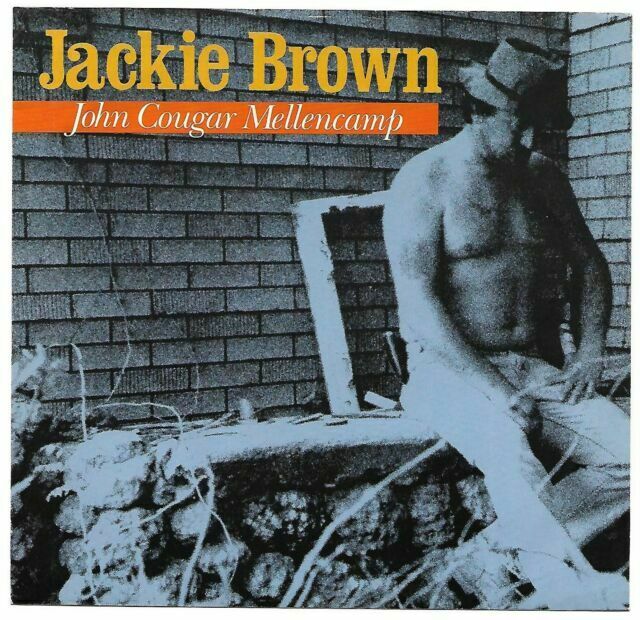
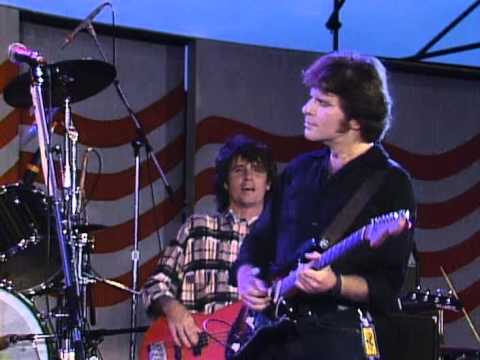
This is John in his “Cougar” days. It was right before the floodgates opened for him with the album American Fool that would come in 1982.

This song came off of his 4th studio album Nothing Matters and What If It Did released in 1980.  Ain’t Even Done With The Night peaked at #17 in the Billboard 100 and #15 in Canada. Mellencamp wrote the song.

Nothin matters and what if it did.JPG

He has been asked what is the worse thing he ever did for success. He replied that would be changing his name to Johnny Cougar but the record company had him in a corner.

In 1983 after the hugely successful American Fool album John had enough leverage to force his record company to use his real name. It would now be John Cougar Mellencamp.

Steve Cropper produced this album…he produced many artists for Stax records.

John Mellencamp: “I have probably never gotten along with any record company executive ever, except maybe one,”  “And if they were such good businessmen, why aren’t they running Coca-Cola or other major corporations now?”

John Mellencamp: “I see things that other people don’t see,” he said in his Plain Spoken DVD. “I pay attention to detail. That’s where my songs come from. They’re not about me.”

From Songfacts

John Mellencamp got married at 18 and had his first child a short time later. He knew the vagaries of young romance and fear of commitment quite well, which certainly qualified him to write this song about a couple deeply in love, with the guy unsure what to do and the girl reassuring him.

This method of songwriting proved very successful and comes into play on this song: There was probably a time when your heart was beating like thunder, etching a memory so powerful you can remember the song that was playing on the radio.

This song came during a transitional period for Mellencamp, after his first hit but before his star turn. In 1978, “I Need A Lover,” a song from his second album, took off in Australia, giving him a leg up on the other young rockers he was competing against. From there, he set out to create hits, which he felt was essential to his survival – he was a strong-willed, hard-headed country boy who didn’t get along with his record label and most industry folks, so unless he could become invaluable, he wasn’t going to make it.

“Ain’t Even Done with the Night” came from his quest to make hit pop songs, and even thought he has shown no affinity for it, the song became one of his most enduring, showing up on playlists decades after it was first released.

It helped keep him on the charts until his breakthrough fifth album, American Fool, with the hits “Hurts So Good” and “Jack & Diane.” After that, he no longer had to care even a little what people think. His songs that followed are the ones he considers his best work.

This song falls smack in the middle of the “John Cougar” years – the name he used from 1979-1983; before that he was “Johnny Cougar.” In 1983 he started using “John Cougar Mellencamp,” then in 1990 just John Mellencamp.

Steve Cropper, who produced Otis Redding and many other acts at Stax Records, produced the Nothin’ Matters And What If It Did album.

Ain’t Even Done With The Night

Well our hearts beat like thunder
I don’t know why they don’t explode
You got your hands in my back pockets
And Sam Cooke’s singin’ on the radio
You say that I’m the boy who can make it all come true
Well I’m tellin’ ya that I don’t know if I know what to do

You say that’s all right, hold tight
Well I don’t even know if I’m doin’ this right
Well all right, hold tight
We can stay out all day or we can run around all night
Well all night, all night
Well it’s time to go home
And I ain’t even done with the night

Well I don’t know no good come-ons
And I don’t know no cool lines
I feel the heat of your frustration
I know it’s burnin you up deep down inside
You say that I’m the boy who can make it all come true
Well I’m tellin ya that I don’t know if I know what to do

You say that’s all right, hold tight
Well I don’t even know if I’m doin’ this right
Well all right, hold tight
We can stay out all day or we can run around all night
Well all night, all night
Well it’s time to go home
And I ain’t even done with the night

Rod Stewart – I Was Only Joking

Of all the Stewart songs from 1976 and after this one may be my favorite.

Rod Stewart co-wrote this with guitarist Gary Grainger.

The Susie alluded to herein was known as Susannah Boffey when she met him as a 17-year-old art student in 1961. At the time, he was an unknown Roderick Stewart. In 1963, she gave birth to his daughter who was fostered out and eventually adopted by a wealthy couple from East Sussex.

Sarah had contact with Rod in the 80s but the two were not close. In 2010, Sarah Streeter was finally admitted to her father’s family, but she has had an on and off again relationship with her birth mother.

Rod’s daughter Sarah in the eighties…and Stewart and Susannah Boffey in the ealry sixties.

Rod Stewart's love child reveals she's reconciled with rocker after kicking  her drug addiction - Mirror OnlineRod Stewart in the early 1960s with Susannah Boffey the mother of Sarah Streeter their daughter

I Was Only Joking was off of the Foot Loose & Fancy Free album released in 1977. The song peaked at #22 in the Billboard 100, #56 in Canada, #5 in the UK, and #35 in New Zealand.

From Songfacts

 Although it is intensely personal, this is a song with which any man of a certain age will identify, especially one who has failed to live up to his potential, lost the love of his life, or screwed up big time. And surely most of us can fill at least one of those categories.

Although written from a male perspective, most women too could say the same. By the time he recorded “I Was Only Joking,” Stewart was already an A-list performer; he would go on to amass a fortune of over $200 million, yet even the mega-successful have regrets.

“I Was Only Joking” alludes too to alcohol, which was only one of the substances he imbibed along the way. Drugs and alcohol are of course an occupational hazard for successful rock musicians due to the lifestyle.

The radio edit runs to 4 minutes 50 seconds while the album version runs to a full 6 minutes 7 seconds. Released as a double-A-side single with “Hot Legs,” it reached #5 in the UK. 

I Was Only Joking

Ever since I was a kid in school
I messed around with all the rules
Apologized, then realized
I’m not different after all

Me and the boys thought we had is sussed
Valentino’s all of us
My dad said we looked ridiculous
But, boy, we broke some hearts

In and out of jobs, running free
Waging war with society
Dumb, blank faces stared back at me
But nothing ever changed

Promises made in the heat of night
Creepin’ home before it got too light
I wasted all that precious time
And blamed it on the wine

I was only joking, my dear
Looking for a way to hide my fear
What kind of fool was I?
I could never win

Never found a compromise
Collected lovers like butterflies
Illusions of that grand first prize
Are slowly wearin’ thin
Susie, baby, you were good to me
Giving love unselfishly
But you took it all too seriously
I guess it had to end

I was only joking, my dear
Looking for a way to hide my fear
What kind of fool was I?
I could never win

Now you ask me if I’m sincere
That’s the question that I always fear
Verse seven is never clear
But I’ll tell you what you want to hear
I try to give you all you want
But giving love is not my strongest point
If that’s the case, it’s pointless going on
I’d rather be alone

‘Cause what I’m doing must be wrong
Pouring my heart out in a song
Owning up for prosperity
For the whole damn world to see

Quietly now while I turn a page
Act one is over without costume change
The principal would like to leave the stage
The crowd don’t understand

Neil Young – Long May You Run

Neil wrote “Long May You Run” in tribute to Mort, his old 1948 Buck Roadmaster hearse.

Neil Young and his band The Squires posing with his hearse Mort (a 1948 Buick Roadmaster hearse Neil had nicknamed Mortimer Hearseburg) in Winnipeg, Manitoba in April 1965

“It had rollers for the coffin in the back, so we just rolled our our amps in and out. It was like they built it for us”  The hearse broke down in Blind River in 1965 where Neil refused to abandon the hearse for two days until he finally gave up.

He soon bought another hearse, Mort Two, which Stephen Stills spotted him driving  in Los Angeles in 1966 when Buffalo Springfield was formed.

Neil would later pay tribute to the original Mort in his song Long May You Run, the title track of The Stills-Young Band album. The album was released in 1976 and peaked at #26 in the Billboard Album Charts, #26 in Canada, and #12 in the UK.

Neil and Stephen Stills toured on this album and Mr. Young decided to leave tour abruptly. He did leave Stills a note: “Dear Stephen, funny how some things that start spontaneously end that way. Eat a peach. Neil.”

The song charted in 1993 from MTV’s Unplugged…it peaked at #34 in the Mainstream Rock Song charts and #28 in Canada.

From Songfacts

Neil was in Canada driving to Sudbury when ‘Mort’ broke down in Blind River, June 1965. (Which is contradictory to the lyrics; “well it was back in Blind River, in 1962, when I last saw you alive”).

In 1976, Stephen Stills and Neil Young formed The Stills-Young Band and released an album called Long May You Run, which turned out to be somewhat ironic when the collaboration quickly stalled.

Stills and Young wrote separately for the album, which Stephen contributing four songs, and Young adding five, including the title track.

Stills is a longtime collaborator of Neil’s, having worked with him first in Buffalo Springfield and then in Crosby, Stills, Nash & Young. However, they had a falling out only nine days into the Long May You Run tour. Young decided to abandon the project, leaving Stills with a mere telegram to explain his departure. It read: “Dear Stephen, funny how some things that start spontaneously end that way. Eat a peach. Neil.”

In addition to Young’s compilation album Decade this also appears on his 1993 album Unplugged

The last ever Tonight Show with Conan O’Brien on Friday January 22, 2010 finished in style when O’Brien’s final musical guest, Neil Young, performed this song in what appeared to be a poke at NBC. O’Brien had been asked to move his slot to 12:05 a.m., and the TV host refused to move his show to such a late hour, and instead negotiated a $45 million exit deal.

Neil Young performed this song at the Closing Ceremonies of the 2010 Vancouver Winter Olympic Games to a rousing ovation of Canadian audience members.

Long May You Run

We’ve been through some things together
With trunks of memories still to come
We found things to do in stormy weather
Long may you run.

Long may you run.
Long may you run.
Although these changes have come
With your chrome heart shining in the sun
Long may you run.

Well, it was back in Blind River in 1962
When I last saw you alive
But we missed that shift on the long decline
Long may you run.

Long may you run.
Long may you run.
Although these changes have come
With your chrome heart shining in the sun
Long may you run.

Maybe The Beach Boys have got you now
With those waves singing “Caroline”
Rollin’ down that empty ocean road
Gettin’ to the surf on time.

Long may you run.
Long may you run.
Although these changes have come
With your chrome heart shining in the sun
Long may you run.

Paul McCartney – Picasso’s Last Words (Drink to Me)

The Spanish artist Pablo Picasso died at the age of 91 on April 8, 1973. News of his passing reached Paul McCartney when he was in Jamaica.

Paul and Linda were in Jamaica on vacation. They were staying at the same hotel as Dustin Hoffman, who was there filming the movie Papillon with Steve McQueen. The trio had dinner together one evening. Hoffman asked Paul, “How do you write songs?” Paul told him they just come out.  Hoffman went on to ask if Paul could write about anything and Paul said yes.

While having dinner there with Paul McCartney, Dustin Hoffman told the story of the death of Pablo Picasso and his famous last words, “Drink to me, drink to my health. You know I can’t drink anymore.” Picasso then went to bed and died in his sleep.

Paul had a guitar with him and immediately played an impromptu chord progression while singing the quote. Thus, “Picasso’s Last Words” was born, later recorded and added to the album Band On The Run in 1973. Hoffman later said said of Paul writing the song in front of him, the experience was “right under childbirth in terms of great events of my life.”

When Paul started to sing it Dustin got excited and said: After a moment he started singing it. Hoffman jumped up, shouting, “Look, he’s doing it! Go*damn it! Holy sh–!”

Paul agreed to do “Picasso’s Last Words” at Ginger Baker’s studio. Baker and some additional people from the studio filled some cans with gravel and shook them for percussion.

From Songfacts

Pablo Picasso (1881-1973) was one of the most inventive and prolific talents in 20th-century art. In his life he created over 20,000 artistic works, including his famous painting, Guernica, a commentary on the bombing of civilians in the Spanish Civil War. Picasso died in Mougins, France, while he and his wife Jacqueline were entertaining friends for dinner. His final words were “Drink to me, drink to my health, you know I can’t drink any more.” Sadly, Picasso’s passing left a legacy of bitterness and confusion as the artist died without leaving a will and his family ended up fighting amongst themselves for control of his billion dollar estate.

Picasso’s Last Words (Drink to Me)

A grand old painter died last night
His paintings on the wall
Before he went, he bade us well
And said goodnight to us all

Drink to me, drink to my health
You know I can’t drink any more
Drink to me, drink to my health
You know I can’t drink any more

Three o’clock in the morning
I’m getting ready for bed
It came without a warning
But I’ll be waiting for you baby
I’ll be waiting for you there

So drink to me drink to my health
You know I can’t drink any more
Drink to me drink to my health
You know I can’t drink any more

Jet, ooo, ooo, ooo
Jet, ooo, ooo, ooo
Jet, ooo, ooo, ooo
Jet, ooo, ooo, ooo

Drink to me, drink to my health
You know I can’t drink any more
Drink to me, drink to my health
You know I can’t drink any more

I’ll be waiting for your baby, yeah yeh

Drink to me, drink to my health
You know I can’t drink any more
Drink to me, drink to my health
You know I can’t drink any moreDrink to me, drink to my health
You know I, hey ho, ho hey ho
Ho hey ho, ho hey ho

Kinks – Working At The Factory

I first heard this song at Tower Records in 1986 while shopping for a Van Morrison album.

The song was on their twenty second studio album Think Visual released in 1986. The album peaked #81 in the Billboard Album Charts in 1986.

In America, the song “How Are You” was released and the B side was Working at the Factory. In the U.S., AOR disc jockeys flipped the single over and played Working At The Factory as though it was the second single. The song ended up peaking at #16 in the Billboard Mainstream Rock Songs chart. The song got a lot of airplay in Nashville at the time.

The Kinks never was as popular as some of their peers as The Beatles, Stones, and The Who. One of the reasons is because during the sixties the Kinks were  banned from touring the US for 4 years due to their on stage antics.  Promoters  complained to the American Federation of Musicians. The union had the power to withhold work permits for British musicians if they misbehaved on stage or refused to perform without good reason. That’s exactly what happened.

The Kinks have sold over 50 million records worldwide and have been cited as a big influence on a number of bands and a key reference point for many Britpop bands. The Kinks were awarded an Ivor Novello Award for Outstanding Service to British Music, and singer Ray Davies received a CBE in 2004, and was knighted in the 2017 New Year Honours for services to the arts.

Working At The Factory

All my life, I’ve been a workin’ man
When I was at school they said that’s all you’ll ever understand
No profession, I didn’t figure in their plans
So they sent me down the factory to be a workin’ man

All I lived for, all I lived for
All I lived for was to get out of the factory
Now I’m here seemingly free, but working at the factory

Then music came along and gave new life to me
And gave me hope back in 1963
The music came and set me free
From working at the factory

All I lived for, all I lived for
Was to get out of the factory
All I lived for, all I lived for
Was to get out of the factory

Never wanted to be like everybody else
But now there are so many like me sitting on the shelf
They sold us a dream but in reality
It was just another factory
I made the music, thought that it was mine
It made me free, but that was in another time
But then the corporations and the big combines
Turned musicians into factory workers on assembly lines

All we live for, all we live for
All we live for is to get out of the factory
We made the music to set ourselves free
From working at the factory

All my life I’ve put in a working day
Now it’s sign the contract, get production on the way

Take the money, make the music pay
Working at the factory
All I lived for was to get out of the factory

Never wanted to be like everybody else
But now there are so many like me sitting on the shelf
They sold us a dream that in reality
Was just another factory

Working at the factory

Bonnie Raitt – Thing Called Love

Thing Called Love was written by John Hiatt for his 1987 album Bring the Family. Bonnie covered this song for her 1989 Nick of Time album.  

Nick of Time was Bonnie Raitt’s breakthrough album. After years of endless touring and making albums it all paid off with this album. Nick of Time peaked at #1 in the Billboard Album Charts and 3× Platinum in Canada.

The song peaked at #11 in the Billboard 100 in 1989. This is the song that really got me into the newer version Bonnie Raitt. I did like her earlier hit Runaway and I’d heard of her music and read about her. She paid her dues and I was happy to see her hit big. She is an extremely gifted slide guitar player and singer.

Bonnie Raitt on the video:

“VH1 was new, and there was an outlet for me to get that kind of exposure. I said that if Dennis Quaid, who was a good buddy of mine, would star in the video as my boyfriend, then I could act more flirty than if I tried to act like that in front of the camera. Because I’m not an actress, and I wasn’t used to videos. The way the song sounds so sexy, I said, that would make me more comfortable and relaxed.

“He said yes, and all my fears went away. Basically I was blushing the whole way, throwin’ it back at him, and he was suckin’ on a toothpick…. The combination of all those things made [the album] Nick of Time an amazing breakthrough.”

Thing Called Love

Don’t have to humble yourself to me,
I ain’t your judge or your king
Baby, you know I ain’t no queen of Sheba
We may not even have our dignity,
This could be just a powerful thing
Baby we can choose you know we ain’t no amoeba

Are you ready for the thing called love
Don’t come from me and you,
It comes from up above
I ain’t no porcupine,
Take off your kid gloves
Are you ready for the thing called love
I ain’t some icon carved out of soap
Sent here to clean up your reputation
Baby, you know you ain’t no prince charming
We can live in fear or act out of hope
For some kind of peaceful situation
Baby, how come the cry of love is so alarming

Ugly ducklings don’t turn into swans
And glide off down the lake
Whether your sunglasses are off or on
You only see the world you make

Are you ready for the thing called love
Don’t come from me and you,
It comes from up above
I ain’t no porcupine,
Take off your kid gloves

Are you ready for it
Are you ready for the thing called love
Don’t come from me and you,
It comes from up above
I ain’t no porcupine,
Take off your kid gloves

Are you ready for it
Are you ready for love, baby
Oooh yeah babe
Are you ready for love

Simon and Garfunkel – April Come She Will

This song is for Song Lyric Sunday for Jim Adams’s blog. This week’s prompt Begin/End/Finish/Start…This song is about the beginning and the end of love affairs.

I watched the Graduate in the mid-eighties and I sat there transfixed watching this classic film. How the music kept the movie going and this song hit me for some reason. I spent weeks (pre internet) tracking down the soundtrack of the film. I went to different record stores but with no luck but finally found it at the Great Escape, a second hand record store.

It was one of the first movies that I recognized how much music can make a movie. It was a great film regardless but without the music the movie would not have been the same.

April Come She Will was composed by Paul Simon. Running just 1:51, it is the shortest track on the album Sounds of Silence released in 1966. It was also on the Graduate soundtrack.

The song was the B side to the Scarborough Fair single.

From Songfacts

This song is also featured in the soundtrack to the film The Graduate. Meant to evoke the capriciousness of a young girl while relating it to how the seasons change, the lyrics were inspired by a nursery rhyme recited by an English girl with whom Simon had an affair. It stands to reason, then, that this would go along with the plot of The Graduate.

Listen for an echo of this song in “For Emily, Whenever I May Find Her,” from S&G’s subsequent album Parsley, Sage, Rosemary & Thyme.

This song isn’t the only one with a classical lyric inspiration on that album; “Richard Cory” is also based on the poem of the same name by American poet Edwin Arlington Robinson.

April Come She Will

April, come she will
When streams are ripe and swelled with rain
May, she will stay
Resting in my arms again
June she’ll change her tune
In restless walks she’ll prowl the night

July, she will fly
And give no warning to her flight
August, die she must
The autumn winds blow chilly and cold
September, I remember
A love once new has now grown old

Beatles – Here Comes The Sun

If you want to hear an optimistic song look no further than this one. This is another Beatles song that was not released as a single. Harrison wrote it and  sang lead, played acoustic guitar and used his newly acquired Moog synthesizer on this track. It was one of the first pop songs to feature a Moog.

George wrote “Here Comes The Sun” after he decided to not show up for a scheduled Apple business meeting in early Spring. He wrote this in Eric Clapton’s garden using one of Clapton’s acoustic guitars enjoying a spring day.

Here Comes the Sun was on the Beatles last studio album Abbey Road. The album contained two of George’s best known songs. Something and Here Comes the Sun. This is one of my favorite George songs.

George Harrison: “‘Here Comes The Sun’ was written at the time when Apple was getting like school, where we had to go and be businessmen: ‘Sign this’ and ‘sign that.’ Anyway, it seems as if winter in England goes on forever; by the time spring comes you really deserve it. So one day I decided I was going to sag off Apple and I went over to Eric Clapton’s house. The relief of not having to go and see all those dopey accountants was wonderful, and I walked around the garden with one of Eric’s acoustic guitars and wrote ‘Here Comes The Sun.'”

When The Beatles’ music was finally made available for download on iTunes in 2010, “Here Comes The Sun” was the top-selling song the first week.

From Songfacts

“It was just sunny and it was all just the release of that tension that had been building up on me,” Harrison said in a 1969 BBC Radio interview. “It was just a really nice sunny day, and I picked up the guitar, which was the first time I’d played the guitar for a couple of weeks because I’d been so busy. And the first thing that came out was that song. It just came. And I finished it later when I was on holiday in Sardinia.”

In the documentary The Material World, Eric Clapton talked about writing this song with Harrison: “It was one of those beautiful spring mornings. I think it was April, we were just walking around the garden with our guitars. I don’t do that, you know? This is what George brought to the situation. He was just a magical guy… we sat down at the bottom of the garden, looking out, and the sun was shining; it was a beautiful morning, and he began to sing the opening lines and I just watched this thing come to life.”

The music begins on the left channel and gradually moves to the right as Harrison’s vocal begins.

The instrumental break is similar to “Badge,” which Harrison helped Clapton write for his band Cream.

John Lennon did not play on this. Around this time, he was making a habit of not playing on Harrison’s compositions as the two were not on the best of terms. The two eventually settled their differences as George contributed quite a bit to Lennon’s album Imagine two years later. 

The Beatles had stopped touring by the time they recorded this song, so they never played it live. The first time Harrison played it live was at the 1971 Concert for Bangla Desh, which he organized to bring aid to that country. He played it at a handful of appearances in the ’70s and ’80s, but didn’t perform it on a tour until 1991, when he joined Eric Clapton for 12 shows in Japan. This version can be heard on the album Live in Japan.

At the Concert for Bangla Desh, Harrison brought Badfinger lead singer Pete Ham to the front of the stage to sing it with him. Badfinger was signed to The Beatles’ Apple Records and had a hit months earlier with “No Matter What.” Harrison had them play on his first post-Beatles solo album, All Things Must Pass, in 1970, and used them as backing musicians at the concert. The Badfinger story, though, had a tragic ending. As Apple Records disintegrated, the group left the label and ended up in legal wranglings that left them angry and broke. Ham committed suicide in 1975.

In 1976, a cover by Steve Harley and Cockney Rebel was a #10 hit in the UK.

Richie Havens covered this in 1971. The Beatles’ version never charted, but his hit #16 in the US. Havens told DISCoveries magazine in 1994: “Fortunately, I can sing things that changed my mind and gave me articulation, like the songs of The Beatles. What they did was, they presented the language we speak in a very straightforward way. The images were totally clear. The influence of clarity – that was the whole influence of the British Invasion.”

Other popular covers were recorded by Nina Simone and Peter Tosh.

On November 20, 1976, Harrison performed this with Paul Simon on Saturday Night Live. On a previous show, producer Lorne Michaels offered The Beatles $3,000 (union minimum), to show up and perform. He said they could split it up any way they wanted, giving Ringo less if they felt like it. Lennon and McCartney were watching together in New York at the time and almost went. On the show when Harrison performed this, there is a skit where he is arguing with Michaels over the money. Michaels tries to explain that the $3000 was for the whole group, and he would have to accept less.

When Harrison died in 2001, many artists performed this at their concerts as a tribute. It was played at the induction ceremonies of the Rock and Roll Hall of Fame as part of the all-star jam.

George Harrison played a guitar solo that was placed at 1:02 into the song, but didn’t make the final cut. Here’s the clip where George Martin and Dhani Harrison listen to it.

Harrison released a follow-up song called “Here Comes The Moon” on his self-titled 1979 album. That song is a tribute to the moon, the “sun’s little brother” that acts like a mirror in the sky, reflecting our light.

In 2006, this was voted by the members of the GeorgeHarrison.com forum as their favorite song of his.

Take That’s Gary Barlow covered this for a 2012 advert for Marks and Spencer. It was the first song he’d recorded as a solo artist since his sophomore album, Twelve Months, Eleven Days in 1999. He said: “It’s a real a privilege to cover such an iconic track. You can’t better perfection but I hope we’ve given it a modern twist that will capture the mood of the nation and provide the perfect anthem for summer 2012.” The song’s exposure on the commercial resulted in the original Beatles recording charting in the UK singles top 75 for the first time.

Paul McCartney was also feeling the pain from Beatles’ business dealings around this time and wrote his own, far more pessimistic, song about it: “You Never Give Me Your Money,” which was also included on Abbey Road.

Tom Petty, who was Harrison’s good friend and played with him in the Traveling Wilburys, said of this song in Rolling Stone: “No piece of music can make you feel better than this. It’s such an optimistic song, with that little bit of ache in it that makes the happiness mean even more.”

At the 2016 Republican National Convention, Ivanka Trump, speaking before her father Donald took the stage, emerged with this song playing. The Harrison estate was not happy and voiced their displeasure on Twitter: “The unauthorized use of #HereComestheSun at the #RNCinCLE is offensive & against the wishes of the George Harrison estate. If it had been Beware Of Darkness, then we MAY have approved it!”

Naya Rivera and Demi Lovato sang this on the 2013 Glee episode “Tina in the Sky with Diamonds.”

Nina Simone’s version was used on the TV series Scandal in the 2015 episode “You Can’t Take Command.”

During the 2020 coronavirus pandemic, many found solace in this song. Some hospitals would play the song when a patient was discharged.

Harrison and Simon on SNL

Here Comes The Sun

Here comes the sun (doo doo doo)
Here comes the sun, and I say
It’s all right

Little darling, it’s been a long cold lonely winter
Little darling, it feels like years since it’s been here

Here comes the sun (doo doo doo)
Here comes the sun, and I say
It’s all right

Little darling, the smiles returning to the faces
Little darling, it seems like years since it’s been here

Here comes the sun
Here comes the sun, and I say
It’s all right

Sun, sun, sun, here it comes

Little darling, I feel that ice is slowly melting
Little darling, it seems like years since it’s been clear
Here comes the sun
Here comes the sun, and I say
It’s all right

Here comes the sun (doo doo doo)
Here comes the sun
It’s all right
It’s all right

Thin Lizzy – Jailbreak

Bruce Springsteen’s Born to Run was released a year before this and it was said to influence this album. The album was Jailbreak and was the bands sixth album. It was their breakthrough album.

The album peaked at #18 in the Billboard Album Charts, #5 in Canada, and #10 in the UK in 1976. The album had three well known Thin Lizzy songs…The Boys Are Back In Town, Cowboy Song, and the title track.

The title track didn’t chart in America but it did peak at #31 in the UK in 1976.

Thin Lizzy was founded in Dublin in 1969 when Lynott and drummer Brian Downey left their group Orphanage to form a new band with musicians formally from the last incarnation of Van Morrison’s Them.

Thin Lizzy’s sound was made of Phil Lynotts songwriting and voice…along with the dual-guitar interplay of Scott Gorham and Brian Robertson.

Jailbreak

Tonight there’s gonna be a jailbreak
Somewhere in this town
See me and the boys we don’t like it
So were getting up and going down

Hiding low looking right to left
If you see us coming I think it’s best
To move away do you hear what I say
From under my breath

Tonight there’s gonna be a jailbreak
Somewhere in the town
Tonight there’s gonna be a jailbreak
So don’t you be around

Don’t you be around

Tonight there’s gonna be trouble
Some of us won’t survive
See the boys and me mean business
Bustin’ out dead or alive

I can hear the hound dogs on my trail
All hell breaks loose, alarm and sirens wail
Like the game if you lose
Go to jail

Tonight there’s gonna be a jailbreak
Somewhere in the town
Tonight there’s gonna be a jailbreak
So don’t you be around

Tonight there’s gonna trouble
I’m gonna find myself in
Tonight there’s gonna be a jailbreak
So woman stay with a friend

You know it’s safer

Breakout!

Tonight there’s gonna be a breakout
Into the city zones
Don’t you dare to try and stop us
No one could for long

Searchlight on my trail
Tonight’s the night all systems fail
Hey you good lookin’ female
Come here!

Tonight there’s gonna be a jailbreak
Somewhere in the town
Tonight there’s gonna be a jailbreak
So don’t you be around

Tonight there’s gonna be trouble
I’m gonna find myself in
Tonight there’s gonna be trouble
So woman stay with a friend