Humble Pie – Black Coffee

Black Coffee was written by Ike and Tina Turner. It originally recorded by R&B duo Ike & Tina Turner for their 1972 album Feel Good.

The Humble Pie version was released in 1973. It was on the double album Eat It that peaked at #13 in the Billboard 100. Each side of this double album is different: Side 1 features Steve Marriott penned rock and roll; Side 2 has classic R&B covers; Side 3 is a collection of acoustic Steve Marriott songs; finally Side 4 features Humble Pie live in concert.

Steve Mariott contacted Venetta Fields and asked her to find two other women to form a trio of backup singers.  Fields chose Clydie King and Billie Barnum. The toured with Humble Pie and they were called the Blackberries.

Steve Marriott: “I just sang it ‘cos I loved the song and it was an interpretation of somebody else’s lyrics. People should have known that I’ve been into black music for years anyway.”

Black Coffee

Black coffee is my name
Black coffee is not a thing
Black coffee, freshly ground and fully packed
Hot black coffee, boys, mmm that’s where it’s at, mean it.

Way back you all know since I don’t know when
See I got hungover before I was 10
You see my skin is white but my soul is black
So hot black coffee, that’s where it’s at.

(Black coffee) That’s what I’m talkin’ about boys
(Black coffee) That’s what I mean
(Black coffee) Ooh you’ve got to feel it in your hand
(Black coffee) Hmm yeah
(Black coffee).

Well you hear that
Some black tea, well it can’t compare with me
Black tea (can’t compare with me) that’s right
Black tea, well it’s as good as, it’s as good as, it’s as good as it can be
But it’s a cup of black coffee that a working man needs to see, yeah.

In America, well it’s the land of the free
You can get what you want if you’ve got some do re me
Well travelling far and I work like a slave
Now I’m independent, and you know I get laid.
I got me a job and I build me a place
I got a spit of black coffee, oh how good it tastes
I said a dime is all it costs in the States
For a cup of black coffee, how good it tastes

(Black coffee) Alright
(Black coffee) Oh
(Black coffee) It’s what I want now, it’s what I need
(Black coffee) To suit my soul, to suit my soul now
(Black coffee) It’s what I want, it’s what I need
(Black coffee) It’s where it’s at, it’s where it’s at
(Black coffee) Oh


https://en.wikipedia.org/wiki/Eat_It_(album)

U2 – Vertigo

Uno, dos, tres, catorce

I remember seeing this in commercials before I heard the song…I knew times were changing. It had been a little while at that time since I really liked a new U2 song…this one I really did.

The song peaked at #31 in the Billboard 100, #2 in Canada, #1 in the UK, and #5 in New Zealand in 2004. It was on the album How to Dismantle an Atomic Bomb and it peaked at #1 in the Billboard Album Charts, Canada, The UK, and New Zealand.

This won three Grammy Awards: Best Rock Song, Best Rock Performance By A Duo Or Group With Vocal and Best Short Form Music Video.

Adam Clayton: “Bono and Edge rewrote it when we started work with Steve Lillywhite. The bass and drums have a little bit of Echo & the Bunnymen in there – a nice wink to where we came from.”


From Songfacts

Vertigo is a sensation of dizziness or a feeling of disorientation. It can be a serious medical condition, but in the context of this song, it seems to be about opening your mind and looking at things in a different way.

This was used in commercials as part of a big promotional deal with Apple. The commercials, where many people first heard the song, promoted Apple’s iPod. Apple also released a special-edition iPod with the signatures of the band members engraved on the back, and made the entire U2 catalog along with special bonus tracks available for download at iTunes for $150.

U2 made many high-profile appearances to promote the album, including performances on Saturday Night Live and the Grammy Awards. In the late ’80s and early ’90s, U2 often stayed away from these kind of appearances to avoid the feeling of commercialism, but by the 2000s, it became clear that these appearances were crucial if U2 was going to continue selling millions of albums and fill arenas.

This song is notorious for its intro, in which Bono says “Uno, dos, tres, catorce,” which is “1, 2, 3, 14” in Spanish. One theory is that Bono was directing listeners to The Bible: 1st Testament, 2nd Book, 3rd Chapter, 14th verse – “And God said unto Moses, I AM THAT I AM: and he said, Thus shalt thou say unto the children of Israel, I AM hath sent me unto you.” Another theory is that he did it because How To Dismantle An Atomic Bomb was U2’s 14th album.

Vertigo is the name of a popular 1958 movie directed by Alfred Hitchcock.

U2 played this when they were inducted into the Rock and Roll Hall of Fame in 2005.

This song was ruthlessly parodied on the South Park episode “More Crap.” The plot of the episode revolved around the character Randy Marsh breaking the world record for largest piece of crap, which was previously held by Bono. Bono is featured throughout the episode trying to beat, and then preserve this record. Almost everywhere he goes (including poor nations in Africa) he sings run around pointing and singing his “yeah, yeah, yeah” outro of “Vertigo.” He also answers his cell phone with the “Hello, hello” part of the chorus. >>

This was originally called “Native Son” and had a very different feel. Adam Clayton explained to Q Magazine November 2004:

Adam Clayton said of this album: “It’s very much a guitar record, ‘Vertigo,’ ‘Love and Peace,’ ‘City of Blinding Lights,’ ‘All Because of You’ – all pretty up, rocky tunes. A lot of them are a kick-back to our very early days, so it’s like with each year we have gathered a little bit more and this is what we are now.”

Vertigo

Unos, dos, tres, catorce
Turn it up loud, captain

Lights go down, it’s dark
The jungle is your head, can’t rule your heart
A feeling’s so much stronger than a thought
Your eyes are wide and though your soul, it can’t be bought
Your mind can wander

Hello, hello (hola)
I’m at a place called Vertigo (¿dónde está?)
It’s everything I wish I didn’t know
Except you give me something
I can feel, feel

The night is full of holes
‘Cause bullets rip the sky of ink with gold
They twinkle as the boys play rock and roll
They know that they can’t dance, at least they know
I can’t stand the beat, I’m asking for the check
Girl with crimson nails has Jesus around her neck
Swinging to the music, swinging to the music (whoa, whoa)
(Whoa, whoa, whoa)

Hello, hello (hola)
I’m at a place called Vertigo (¿dónde está?)
It’s everything I wish I didn’t know
But you give me something
I can feel, feel

Checkmate
Jazz funk
Show made it in, yeah

All of this, all of this can be yours
Just give me what I want and no one gets hurt

Hello, hello (hola)
We’re at a place called Vertigo (¿dónde está?)
Lights go down, and all I know
Is that you give me something
I can feel your love teaching me how
Your love is teaching me how
How to kneel
Kneel

Yeah, yeah, yeah, yeah, yeah, yeah, yeah, yeah

Creedence Clearwater Revival – Travelin’ Band

Seven thirty-seven comin’ out of the sky
Won’t you take me down to Memphis on a midnight ride
I want to move
Playin’ in a travelin’ band

This one is a rocker and doesn’t let up. It came off of perhaps their best album Cosmo’s Factory and was released as a double A-side single with Who’ll Stop The Rain on the other side.

“Travelin’ Band” is very similar in style to the music of Little Richard, which Fogerty saw as a heartfelt tribute to the singer. Specialty Records, which owned Richard’s catalog, saw things differently and sued the band, reaching a settlement to earn some royalties from the song.

After the basic track was cut, John Fogerty went back to the studio and added many of the instrumental parts, including horns and piano, which he played himself.

Travelin’ Band/Who’ll Stop The Rain peaked at #2 in the Billboard 100, #4 in Canada, and #8 in the UK in 1970.

From Songfacts

Written by lead singer John Fogerty, this song is all about the hectic lifestyle of Creedence Clearwater Revival and their road warrior ways. In 1969, the band toured constantly and played many of the major festivals, including Woodstock. There was a rush of excitement in going from place to place, but as their drummer Doug Clifford explained, their baggage was constantly getting lost (“baggage gone, oh well”) and they spent a lot of time waiting around in the heat during those famous festivals. The traveling got easier for the band when they got their own private plane.

The lawsuit claimed the Little Richard’s “Good Golly Miss Molly” was being copied, but Creedence bass player Stu Cook said he thought it sounded more like “Long Tall Sally.” Cook described the song as a combination of ’50s Rock classics, but not a ripoff of any one song.


Travelin’ Band

Seven thirty seven comin’ out of the sky
Won’t you take me down to Memphis on a midnight ride
I want to move
Playin’ in a travelin’ band
Yeah
Well I’m flyin’ ‘cross the land tryin’ to get a hand
Playin’ in a travelin’ band

Take me to the hotel baggage gone, oh well
Come on, come on won’t you get me to my room
I want to move
Playin’ in a travelin’ band
Yeah
Well I’m flyin’ ‘cross the land, tryin’ to get a hand
Playin’ in a travelin’ band

Listen to the radio talkin’ ’bout the last show
Someone got excited, had to call the state militia
Want to move
Playin’ in a travelin’ band
Yeah
Well, I’m flyin’ ‘cross the land, tryin’ to get a hand
Playin’ in a travelin’ band

Here we come again on a Saturday night
With your fussin’ and your fightin’ won’t you get me to the rhyme
I want to move
Playin’ in a travelin’ band
Yeah
Well, I’m flyin’ ‘cross the land, tryin’ to get a hand
Playin’ in a travelin’ band

Playin’ in a travelin’ band
Won’t you give myself a hand?
Playin’ in a travelin’ band
Well, I’m flyin’ ‘cross the land, tryin’ to get a hand
Playin’ in a travelin’ band

Small Faces – All Or Nothing

The Small Faces were very popular in the UK in the 1960s. Because of management they never toured in America. Their best-known songs are Itchycoo Park and Lazy Sunday in America but had many hits in the UK.

All or Nothing was written by Steve Marriott and Ronnie Lane. The song peaked at #1 in the UK in 1966.

The Small Faces would splinter in 1969 and Steve Marriott would start Humble Pie with Peter Frampton. The Small Faces would welcome Ron Wood and Rod Stewart and become the Faces…Kenney Jones would later replace Keith Moon in the Who.

It was said to be written either about Marriott’s break up with his with ex-fiancée Sue Oliver, or for his first wife who once dated Rod Stewart. It is possible that both these explanations may be true…somehow.

Drummer Kenney Jones: “It was us getting to where we wanted to be musically. It wasn’t as poppy as our previous hits, but still commercial enough and better than anything we’d done before.”

Steve Marriott in 1984: “I think ‘All Or Nothing’ takes a lot of beating. To me, if there’s a song that typifies that era, then that might be it.”


From Songfacts

Not to be confused with a later song of the same title, “All Or Nothing” was recorded by the Small Faces in 1966. In his 2004 autobiography Mr Big, their manager at the time, Don Arden, said this was “top-drawer…[and] still gets played on the radio today”. Arden produced the record. Co-written by guitarist Steve Marriott and bass player Ronnie Lane, it was backed by “Understanding” and was written 

For Marriott it was very much all or nothing; he married three times and appears to have sired at least two children out of wedlock. He died in a fire in April 1991, apparently after lighting a cigarette in bed and falling asleep. Prior to his death, he had taken cocaine as well as Valium and alcohol. 

Here are two quotes about the song from 1000 UK #1 Hits by Jon Kutner and Spencer Leigh.

Kenney Jones recalled to Uncut magazine: “We were on tour and staying in the Station Hotel, Leeds, when Steve suddenly run down the corridor screaming, ‘I’ve got it! I’ve just written our next hit!”‘

Jones based his opening drum fill on the intro of Wilson Pickett’s “In The Midnight Hour.”


All Or Nothing

I thought you’d listen to my reason
But now I see, you don’t hear a thing
Try to make you see, how it’s got to be

Yes it’s all, all or nothing
Yeah yeah, all or nothing
All or nothing, for me

Things could work out
Just like I want them to, yeah
If I could have
The other half of you, yeah
You know I would,
If I only could

Yes it’s yeah, all or nothing
Oh yeah, all or nothing
You’ll hear my children say,
All or nothing, for me

I didn’t tell you no lies
So don’t you sit there and cry girl
Yeah, all or nothing
Oh yeah, all or nothing

Do you know what I mean
You got to, got to, go to keep on trying, yeah
All or nothing, mm yeah
All or nothing, to keep on working on to me
All or nothing for me, for me, for me

Come on children, yeah
All or nothing, yeah,yeah, yeah, yeah
All or nothing, I kept on singing to myself
All or nothing, yeah for me, yeah

Pink Floyd – See Emily Play

Recently I’ve been listening to some early Pink Floyd. This was quite a bit different from their more famous 70s-80s output. I like what I’ve heard so far from the Syd Barret days.

Syd Barrett wrote this…he was one of the band’s original members and the group’s leader. He became very unpredictable, sometimes refusing to play at shows.

Barrett claimed “Emily” was a girl he saw when he woke up one night after sleeping in the woods after a gig. It is unclear if she was a real person or a drug-induced hallucination.

David Gilmour was asked by the members of Pink Floyd to join the band to supplement the guitar work of the increasingly erratic Syd Barrett. For a brief time, Syd and David were both members of Pink Floyd at the same time. When Barrett’s mental breakdown made it impossible for him to continue with the group, Gilmour became a permanent, contributing member in time for their second album, 1968’s A Saucerful of Secrets. Syd Barrett contributed one track to that album, his last with Pink Floyd. Syd departed the band soon after that.

The song peaked at #6 in the UK, #134 in Billboard, and #25 in Germany in 1967.

From Songfacts

This was Pink Floyd’s second single. Their first was “Arnold Layne.”

Barrett did the slide guitar work on this song with a Zippo lighter (he used it as a slide, not to set the guitar on fire). 

The original title was “Games For May.” They performed it live a few times before changing it.

This is an example of the psychedelic sound Pink Floyd was known for. Over the next few years, they tried to lose the psychedelic image because they wanted people to know there was much more to their music.

This was included on the 2001 Pink Floyd retrospective album, Echoes. The tracks flow seamlessly together.

The song was inspired in part by 15-year-old schoolgirl Emily Young, who was the daughter of Wayland Young, 2nd Baron Kennet. She recalled to Mojo:

“On Friday night at the Saints Hall, the regular band was the Pink Floyd Sound. I was more into R&B, so their dreamy hippie thing wasn’t exactly my cup of tea, but it was interesting. And the light show was wonderful, and I liked to get stoned and dance. After playing, we’d sit around on grey sofas and pass around joints. I was quite pretty and word got out that I was a lord’s daughter, and apparently the guys in the band called me the ‘psychedelic schoolgirl.'”

“See Emily Play” began life as a Syd Barrett song written for Pink Floyd’s concert-cum-happening Games For May at the Queen Elizabeth Hall on May 12, 1967. Emily missed the event but someone told her all about it. She recalled: “I thought, gosh, that’s nice, a song with my name, but I didn’t think it was about me. And I don’t think it was now because Syd and me didn’t have a love affair and he didn’t really know me. It could have been some other girl who played a part in his dream. It could have been Jenny, but Emily scanned better.”

See Emily Play

Emily tries but misunderstands, ah ooh
She’s often inclined to borrow somebody’s dreams till tomorrow
There is no other day
Let’s try it another way

You’ll lose your mind and play
Free games for May
See Emily play

Soon after dark Emily cries, ah ooh
Gazing through trees in sorrow hardly a sound till tomorrow
There is no other day
Let’s try it another way
You’ll lose your mind and play

Free games for May
See Emily play

Put on a gown that touches the ground, ah ooh
Float on a river forever and ever, Emily (Emily)

There is no other day
Let’s try it another way
You’ll lose your mind and play
Free games for May
See Emily play

Iggy Pop – Real Wild Child (Wild One)

This is probably the first song I remember by Iggy Pop back in the 80s.

This song was originally recorded by Australian rocker Johnny O’Keefe with The Deejays in 1958 as “Wild One.” Deejays saxophonists Johnny Greenan and Dave Owens drafted the song over drinks after a particularly wild concert and Johnny O’Keefe later chipped in.

The song was an immediate hit and made Johnny O’Keefe the first Australian rocker to reach the national charts.  Iggy Pop covered it for his Blah Blah Blah album. Released as a single, it became his only UK Top 10 hit.

The song peaked at #1 in New Zealand, #10 in the UK, #65 in Canada, and #27 in the Mainstream Rock Billboard Charts.

The album Blah Blah Blah peaked at #75 in the Billboard Album Charts, #61 in Canada, #43 in the UK, and #19 in New Zealand in 1986.


From Songfacts

Johnny O’Keefe (1935-1978) was a pioneering Australian Rock singer whose career began in the 1950s and ended with his early death in the late 1970s of barbiturate poisoning. Often referred to by his nickname, “The Wild One,” O’Keefe was the first Australian Rock star.

The lyrics are about youngsters wanting to be cool and wild.

In Australia this has been used as the theme music for the ABC’s all-night music video show Rage for over 20 years.

Iggy Pop’s version has featured in the movies Adventures in Babysitting (1987) and Problem Child 2 (1991).

A cover by Christopher Otcasek featured in Pretty Woman (1989). Other cover versions include “Real Wild Child” by Joan Jett and The Blackhearts (1993), “Wild One” by Status Quo (2003) and Christian pop band Everlife’s “Real Wild Child,” which appears as the theme song in Disney’s The Wild (2006). >>

This is Kesha’s favorite song. She told Spinmagazine: “It’s the last song I play before I walk onstage and the first song I play when I get off stage. It always gets me going.”

Real Wild Child (Wild One)

Well I’m just outta school
Like I’m real real cool
Gotta dance like a fool
Got the message that I gotta be
A wild one
Ooh yeah I’m a wild one

Gotta break it loose
Gonna keep ’em movin’ wild
Gonna keep a swingin’ baby
I’m a real wild child

Gonna met all muh friends
Gonna have our self a ball
Gonna tell my friends
Gonna tell them all
That I’m a wild one
Ooh yeah I’m a wild one

Gotta break it loose
Gonna keep ’em movin’ wild
Gonna keep a swingin’ baby
I’m a real wild child

I’m a real wild one
An’ I like a wild fun
In a world gone crazy
Everything seems hazy
I’m a wild one
Ooh yeah I’m a wild one

Gotta break it loose
Gonna keep ’em movin’ wild
Gonna keep a swingin’ baby
I’m a real wild child

I’m a wild one
I’m a wild one
I’m a wild one
Oh baby
I’m a wild one

Gotta break it loose
Gonna keep ’em movin’ wild
Gonna keep a swingin’ baby
I’m a real wild child


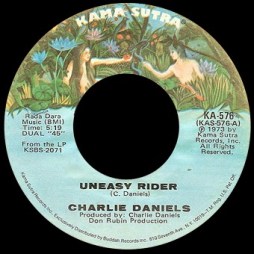
Charlie Daniels (1936-2020) – Uneasy Rider

I said would you believe this man has gone as far
As tearin’ Wallace stickers off the bumpers of cars
And he voted for George McGovern for president

Charlie Daniels passed away on Monday, July 6, 2020. I wrote this up the next day but forgot to post it. He was a country music legend. While I wasn’t a huge fan he was part of my childhood. He was an incredible musician…he played with Dylan, George Harrison, and many other greats… along with having a very successful career himself. The man at 83 had booked a tour this year but it was canceled of course.

Charlie had more serious hits than this… This is a novelty song and not a great representation…it’s spoken word country…but it’s one that is a little different because it captures the time.

I first heard this song in the mid-seventies. It brings back a lot of memories for me as a kid. I thought it was extremely funny although I knew nothing about McGovern, Wallace, John Birch, Tokin’ on a number, or much of anything. I did know what mag wheels and a peace sign was so that was a start. The song is about a long-haired guy that walks into a redneck bar to use a phone. He ends up playing on the conspiracy-minded rednecks there to get free…

I remember we would see hippies (or anyone) harrassed on television shows…My dad would always take their side. “Why are they bothering them…it’s just hair! (as my mom would shake her head) If I was 20 I would grow my hair out”…and he eventually did when he got old. My dad taught me a lot about equality…and to treat everyone the same…no one is better no one is worse.

This song peaked at #9 in the Billboard 100 in 1973. He would go on to have 9 songs in the Billboard 100 and two top 10 hits.

In the country charts, he would have 33 songs in the top 100 and three top ten hits.

Charlie Daniels: “I used to do a little bit of record producing. I used to produce a group called the Youngbloods that were headquartered in San Francisco. And we were doing a live album, and we did part of it at the Fillmore East and West, and we did part of what used to be called a rock festival, in Baton Rouge, Louisiana. It was one of those big three-day affairs where everybody in the world played. And that day I think it was the Youngbloods and the Grateful Dead and the Jefferson Airplane, and I don’t know who else.

And all these people were there at the motel. And they were these long-haired hippie-type people. The movie Easy Rider had not been out very long, and here we were sitting in Baton Rouge, Louisiana, with all these long-haired people, and I think a lot of them had the impression that if they were to get two blocks away, that somebody was going to run out with a pair of shears and cut their hair and threaten their life. I was born in the South, and to me this attitude was just kind of funny, and that’s where the idea came from. I just took a guy and put him in a fictitious situation, and extricated him. But of course there’s no truth to it other than just being around people that kind of had a fear of redneck bars.”

Daniels says the line in the song, “I just reached out and kicked ole Green Teeth right in the knee,”  “He had tartar on his teeth, and they actually turn green if they don’t get it off. I don’t think he practiced very good dental hygiene. And that’s where that came from; he had little spots of green on his teeth.” Daniels did not, however, kick him. “Maybe I should have,” he says, “but I didn’t kick him.”

Uneasy Rider

I was takin’ a trip out to LA,
Toolin’ along in my Chevrolet
Tokin’ on a number and diggin’ on the radio

Just as I cross the Mississippi line
I heard that highway start to whine
And I knew that left rear tire was about to go

Well the spare was flat and I got uptight
‘Cause there wasn’t a fillin’ station in sight
So I just limped down the shoulder on the rim

I went as far as I could and when I stopped the car
It was right in front of this little bar
A kind of a redneck lookin’ joint called the Dew Drop Inn

Well I stuffed my hair up under my hat
And told the bartender that I had a flat
And would he be kind enough to give me change for a one

There was one thing I was sure proud to see
There wasn’t a soul in the place except for him an’ me
And he just looked disgusted an’ pointed toward the telephone

I called up the station down the road a ways
And he said he wasn’t very busy today
And he could have somebody there in just ’bout ten minutes or so

He said now you just stay right where yer at and I didn’t bother
Tellin’ the durn fool
I sure as hell didn’t have anyplace else to go

I just ordered up a beer and sat down at the bar
When some guy walked in an’ said who owns this car
With the peace sign the mag wheels and four on the floor

Well he looked at me and I damn near died
And I decided that I’d just wait outside
So I laid a dollar on the bar and headed for the door

Just when I thought I’d get outta there with my skin
These five big dudes come strollin’ in
With this one old drunk chick and some fella with green teeth

And I was almost to the door when the biggest one
Said you tip your hat to this lady son
An’ when I did all that hair fell out from underneath

Now the last thing I wanted was to get into a fight
In Jackson Mississippi on a Saturday night
‘Specially when there was three of them and only one of me

Well they all started laughin’ and I felt kinda sick
And I knew I’d better think of somethin’ pretty quick
So I just reached out an’ kicked ol’ green-teeth right in the knee

He let out a yell that’d curl your hair
But before he could move I grabbed me a chair
And said watch him folks ’cause he’s a thoroughly dangerous man

Well you may not know it but this man’s a spy
He’s an undercover agent for the FBI
And he’s been sent down here to infiltrate the Ku Klux Klan

He was still bent over holdin’ on to his knee
But everyone else was lookin’ and listenin’ to me
And I laid it on thicker and heavier as I went

I said would you believe this man has gone as far
As tearin’ Wallace stickers off the bumpers of cars
And he voted for George McGovern for president

Well he’s a friend of them long-haired hippie type pinko fags
I betcha he’s even got a Commie flag
Tacked up on the wall inside of his garage

He’s a snake in the grass I tell ya guys
He may look dumb but that’s just a disguise
He’s a mastermind in the ways of espionage

They all started lookin’ real suspicious at him
And he jumped up an’ said just wait a minute Jim
You know he’s lyin’ I’ve been livin’ here all of my life

I’m a faithful follower of Brother John Birch
And I belong to the Antioch Baptist Church
And I ain’t even got a garage you can call home and ask my wife

Then he started sayin’ somethin’ ’bout the way I was dressed
But I didn’t wait around to hear the rest
I was too busy movin’ and hopin’ I didn’t run outta luck

And when I hit the ground I was makin’ tracks
And they were just takin’ my car down off the jacks
So I threw the man a twenty an’ jumped in an’ fired that mother up

Mario Andretti would of sure been proud
Of the way I was movin’ when I passed that crowd
Comin’ out the door and headin’ toward me in a trot

An’ I guess I shoulda gone ahead and run
But somehow I couldn’t resist the fun
Of chasin’ them just once around the parkin’ lot

Well they’re headin’ for their car but I hit the gas
And spun around and headed them off at the pass
Well I was slingin’ gravel and puttin’ a ton of dust in the air

Well I had them all out there steppin’ an’ a fetchin’
Like their heads were on fire and their asses was catchin’
But I figured I oughta go ahead and split before the cops got there

When I hit the road I was really wheelin’
Had gravel flyin’ and rubber squeelin’
An’ I didn’t slow down ’til I was almost to Arkansas

I think I’m gonna re-route my trip
I wonder if anybody think I’d flipped
If I went to LA via Omaha!

Linda Ronstadt – You’re No Good

Great song by the one and only Linda Ronstadt. “You’re No Good” was written by Clint Ballard, Jr., who also wrote songs for Connie Francis and The Hollies.

This song had been around for a while before Linda Ronstadt took it to the top of the chart. It was originally recorded by Dee Dee Warwick in 1963. Her version stalled at #117.

The song was on the album Heart Like A Wheel produced by Peter Asher and it peaked at #1 in the Billboard Album Chart and #7 in Canada.

Heart Like a Wheel became Ronstadt’s first album to hit the top spot on the Billboard Top 200 album chart and spent four weeks at number 1 on the Billboard Country Album chart in early 1975.

The song peaked at #1 in the Billboard 100, #7 in Canada, and #24 in New Zealand in 1975.

Linda Ronstadt:  “I thought the production on ‘You’re No Good’ was very good but [that] I didn’t sing it very well. As a song it was just an afterthought. It’s not the kind of song I got a lot of satisfaction out of singing.”


From Songfacts

One of the most blatant and memorable songs in the “no-good man” milieu,

Betty Everett had more success with her version, which went to #51 in 1964. First released on her 1963 album of the same name, Everett recorded the song at Chess Records in Chicago, with Maurice White on drums (White, who later formed Earth, Wind & Fire, was a staff drummer at Chess early in his career). Everett was a former gospel singer who, like Ronstadt, had a very powerful voice. Her next single, “The Shoop Shoop Song (It’s In His Kiss),” became her biggest hit.

The song made one more chart appearance in 1964 when the British male band Swinging Blue Jeans switched the gender and took the song to #97 in the US and #3 in the UK, where it became the best-known rendition of the song.

A decade later, Ronstadt started performing the song and recorded it with her producer Peter Asher. Released as a single from her fifth album, the song was a huge breakthrough for Ronstadt, whose chart success to this point was sporadic (her biggest hit to then: “Long, Long Time” at #25). She became one of the biggest stars of the ’70s, known for her musical versatility and impressive vocal range. Most of her hits were cover songs, including the follow-up, “When Will I Be Loved,” originally recorded by the Everly Brothers.

This song makes it quite clear that the lowdown guy is no good, but in the second verse, Ronstadt turns it around, as she’s done some bad things herself and deserves some comeuppance:

I broke a heart that’s gentle and true
Well I broke a heart over someone like you
I’ll beg his forgiveness on bended knee
I wouldn’t blame him if he said to me
You’re no good

By the third verse, she’s back to bashing the guy:

I’m telling you now baby and I’m going my way
Forget about you baby ’cause I’m leaving to stay

Heart Like A Wheel was the first album Peter Asher produced for Ronstadt, and the results were spectacular. With his duo Peter & Gordon, Asher had a #1 hit in 1964 with “A World Without Love,” and later became head of A&R at The Beatles’ Apple Records, where he began a longstanding relationship with James Taylor.

In a Songfacts interview with Asher, he explained that getting the most out of Ronstadt meant listening to her and honoring her ideas. “I may have listened to her with a bit more attentiveness than others had in the past,” he said. “There was, particularly back in that era, an element of, ‘Don’t you worry your pretty little head about that, I know what’s best.’ Linda knew a lot and was not given credit for it.”

Van Halen recorded this for their second album. It was one of many successful cover songs by the group; Others include Roy Orbison’s “Pretty Woman,” The Kinks’ “You Really Got Me,” and Martha & the Vandellas’ “Dancing in the Street.” This is the only cover on the album. Between 1978-1983, Van Halen released an album a year. Since they toured constantly, including cover songs on the albums helped ease the songwriting burden.

You’re No Good

Feeling better now that we’re through
Feeling better ’cause I’m over you
I learned my lesson, it left a scar
Now I see how you really are

You’re no good
You’re no good
You’re no good
Baby you’re no good

I’m gonna say it again
You’re no good
You’re no good
You’re no good
Baby you’re no good

I broke a heart that’s gentle and true
Well I broke a heart over someone like you
I’ll beg his forgiveness on bended knee
I wouldn’t blame him if he said to me

You’re no good
You’re no good
You’re no good
Baby you’re no good

I’m gonna say it again
You’re no good
You’re no good
You’re no good
Baby you’re no good

I’m telling you now baby and I’m going my way
Forget about you baby ’cause I’m leaving to stay
You’re no good
You’re no good
You’re no good
Baby you’re no good

I’m gonna say it again
You’re no good
You’re no good
You’re no good
Baby you’re no good
Oh, oh no
You’re no good
You’re no good
You’re no good
Baby you’re no good


https://en.wikipedia.org/wiki/Heart_Like_a_Wheel


Beatles – Revolution

You say you’ll change the constitution
Well, you know
We all want to change your head

This song was the B side to Hey Jude…a heck of a B side. John Lennon wanted it to be the first A-side released on Apple Records, the label The Beatles started, but Paul McCartney’s “Hey Jude” got the honor.

This was the first overtly political Beatles song. It was John Lennon’s response to the Vietnam War.

The “Hey Jude” and “Revolution” videos were shot in a studio setting and meant to look like the band was performing it live. They both aired September 8 on Frost On Sunday, a popular UK show hosted by David Frost, who was at the Twickenham shoot to introduce the clip for the segment on his show, making it appear that the band was really there.

*** A little fun here… I always wondered about the Revolution video. Between 10-13 seconds on the video below you see George say something to Paul. It’s either “John’s mic is sh*t” or something else …what do you think? Any lip readers?

The dirty guitar sound was created by plugging the guitars directly into the audio board and overloading it. The guitar sounded so scratchy that many who bought the 45 RPM single tried to return it, thinking it was defective.

There are two very different versions of this song… a slow version that appears on The White Album, and a fast, loud version was released as a single. In the slow version, Lennon says “count me in” as well as “count me out” when referring to violence. This gives the song a dual meaning.

The song peaked at #12 in the Billboard 100 and #1 in Canada

John Lennon: “I wanted to put out what I felt about revolution,”  “I thought it was about time we spoke about it, the same as I thought it was about time we stopped not answering about the Vietnamese war when we were on tour with Brian Epstein and had to tell him, ‘We’re going to talk about the war this time and we’re not going to just waffle’…That’s why I did it: I wanted to talk. I wanted to say my piece about revolutions. I wanted to tell you, or whoever listens, to communicate, to say, ‘What do you say? This is what I say.'”

Paul McCartney:  “It was a great song, basically John’s…it was an overtly political song about revolution and a great one. I think John later ascribed more political intent to it than he actually felt when he wrote it.”

Continuing, Paul writes: “They were very political times, obviously, with the Vietnam war going on, Chairman Mao and the Little Red Book, and all the demonstrations with people going through the streets shouting ‘Ho, Ho Ho Chi Minh!’ I think he wanted to say you can count me in for a revolution, but if you go carrying pictures of Chairman Mao ‘you ain’t gonna make it with anyone anyhow.’ By saying that I think he meant we all want to change the world Maharishi-style, because ‘Across The Universe’ also had the change-the-world theme.”


From Songfacts

John Lennon wrote this in India while The Beatles were at a transcendental meditation camp with The Maharishi. Lennon told Rolling Stone: “I had been thinking about it up in the hills in India. I still had this ‘God will save us’ feeling about it, that it’s going to be all right (even now I’m saying ‘Hold on, John, it’s going to be all right,’ otherwise, I won’t hold on) but that’s why I did it, I wanted to talk, I wanted to say my piece about revolution. I wanted to tell you, or whoever listens, to communicate, to say ‘What do you say? This is what I say.'”

Revolutionaries take different approaches to reach their goals. In a 1998 interview with Uncut, Yoko One gave her thoughts on Lennon’s approach and how he expressed it in this song: “John’s idea of revolution was that he did not want to create the situation where when you destroy statues, you become a statue. And also what he means is that there’s too much repercussion in the usual form of revolution. He preferred evolution. So you have to take a peaceful method to get peace rather than you don’t care what method you take to get peace, and he was very, very adamant about that.”

The fast version was released as the B-side of “Hey Jude” in August 1968, three months before the slow version appeared on The White Album.

There are so many versions of this song because Paul McCartney didn’t like it. Lennon really wanted this song to be the “A” side of the single instead of “Hey Jude,” and kept changing it around to come up with something that would make Paul see it his way. He basically wrote the song because he felt like he was being pulled in so many directions by different people, all of whom wanted his backing, politically. It was also him questioning his own belief in the revolution that was going on… whether he was “out” or “in.” In truth, he was writing about a revolution of the mind rather than a physical “in the streets” revolution. He truly believed that revolution comes from inner change rather than social violence. (This is discussed in the DVD Composing the Beatles Songbook)

Nike used this for commercials in 1987. Capitol Records, who owned the performance rights, meaning The Beatles version of the song, was paid $250,000. Michael Jackson, who owned the publishing rights, meaning use of the words and music, also had to agree and was paid for the song (Jackson acquired the rights to 251 Beatles songs in 1985 when he outbid Paul McCartney for them, fracturing their friendship in the process).

The commercials caused a huge backlash from Beatles fans who felt that Nike was disrespecting the legacy of John Lennon, who likely would have objected to its use, but the ad campaign, called “Revolution in Motion,” was successful, helping Nike expand their market by featuring ordinary joggers, gym rats and cyclists. “We’re trying to promote the concept of revolutionary changes in the fitness movement and show how Nike parallels those changes with product development,” the company stated. “Because of this ‘revolution,’ we were able to draw a strong correlation with the music and the lyrics in the Beatles song.”

It wasn’t just fans who had beef with the ads: the surviving Beatles, along with Yoko Ono (representing Lennon’s estate), sued Nike, bringing even more publicity to the campaign. The ads ran for about a year, and eventually a settlement was reached in the lawsuit. As years went by, it became more acceptable to use songs in commercials, but Beatles songs remained off-limits, as any use would result in a lawsuit and hostile reaction by fans. What was “revolutionary” about the Nike commercials were that they were the first to do it.

In 2002, “When I’m 64” was used in a commercial for Allstate insurance. Many Beatles fans were not pleased, but it didn’t get nearly the reaction of the Nike commercials, partly because it was not a political song, but also because it was sung by Julian Lennon, which implied endorsement by his father.

On September 4, 1968, The Beatles made a promotional film for this song and “Hey Jude” at Twickenham Studios in London. These were directed by Michael Lindsay-Hogg, who did the previous Beatles videos: “Paperback Writer” and “Rain.”

Unlike those clips, which were shot outdoors, the “Hey Jude” and “Revolution” videos were shot in a studio setting and meant to look like the band was performing it live. They both aired September 8 on Frost On Sunday, a popular UK show hosted by David Frost, who was at the Twickenham shoot to introduce the clip for the segment on his show, making it appear that the band was really there.

Another edit of the footage was later broadcast on Top Of The Pops, and yet another was shown in America on The Smothers Brothers Comedy Hour. When the Beatles compilation 1+ was released in 2015, a restored version of the video was included in the set.

Before this song was used to shill for Nike, Yoko Ono was fine with using John Lennon’s music in commercials; she authorized “Imagine” for a Japanese ad and said it was “making John’s music accessible to a new generation.” Nike bypassed the living Beatles, but went to her for approval, since the lead vocalist (the “principal performer”) of a song needs to grant permission under certain statutes. Also, as the keeper of Lennon’s legacy, it helped to have her consent for publicity purposes. Nike claimed the song was used “with the active support of Yoko Ono Lennon.”

This is one of the Beatles songs (“Help!” and “In My Life” are other examples) where John Lennon’s falsetto makes an appearance. He takes it up high for the word “be” in the line, “You know it’s gonna be all right.”

Nicky Hopkins played the piano. When The Beatles needed keyboards, they usually used Hopkins, Billy Preston, or their producer, George Martin.

 The word “Revolution” is mentioned just once, in the first line.

John Lennon wanted his vocals to have an unusual sound, so he recorded most of them lying on his back in the studio. The famous scream at the beginning is a double-tracked recording of Lennon. >>

The version on the Hey Jude compilation, released in February 1970 in the US, was the B-side of the “Hey Jude” single. The Hey Jude compilation album peaked at #2 in the US and consists of a collection of singles and B-sides that had not previously appeared on US non-soundtrack album releases. The album cover was taken at the final Beatles photo session, at Lennon’s (later Starr’s) country estate in Ascot, England. >>

Thompson Twins performed this song at the Philadelphia stage of Live Aid on July 13, 1985. The concert, which raised money for famine relief in Africa, had a global audience of at least 1.5 billion. Thompson Twins were joined on stage for the performance by Madonna (who contributed backing vocals and tambourine), Steve Stevens (best known as Billy Idol’s guitarist) and Nile Rodgers, who was also on guitar.

Thompson Twins included the song on their album Here’s to Future Days, which was released a few months later and produced by Rodgers.

The Stone Temple Pilots performed this at Madison Square Garden as part of the 2001 special, Come Together: A Night For John Lennon’s Words And Music. Their version was released as a single, with proceeds going to charity.

Revolution

You say you want a revolution
Well, you know
We all want to change the world
You tell me that it’s evolution
Well, you know
We all want to change the world

But when you talk about destruction
Don’t you know that you can count me out
Don’t you know it’s gonna be
All right, all right, all right

You say you got a real solution
Well, you know
We’d all love to see the plan
You ask me for a contribution
Well, you know
We’re doing what we can

But if you want money for people with minds that hate
All I can tell is brother you have to wait
Don’t you know it’s gonna be
All right, all right, all right

You say you’ll change the constitution
Well, you know
We all want to change your head
You tell me it’s the institution
Well, you know
You better free you mind instead

But if you go carrying pictures of chairman Mao
You ain’t going to make it with anyone anyhow
Don’t you know it’s gonna be
All right, all right, all right
All right, all right

Fleetwood Mac – Jewel Eyed Judy

What a beautiful song this is and it was between the Green and the Buckingham/Nicks era. Thanks to Sharon for bringing this wonderful song up. The song was written by Danny Kirwan and was on the album Kiln House released in 1970.

18-year-old guitarist Danny Kirwan joined Fleetwood Mac in 1968 and one of the first recordings he played on was Albatross. He couldn’t take the pressure of touring and eventually fired in 1972.

The album peaked at #69 in the Billboard Album Charts, #67 in Canada, and #39 in the UK. The song didn’t chart. This is the first album after Peter Green left the band. Christine McVie contributed to the album with backup vocals, keyboards, and even cover art. After this album, she became a full member.

It doesn’t really sound like the Peter Green blues era or the later pure pop sound. It has more of a power-pop sound.

Jewel Eyed Judy

Moonshine time
Thoughts of you
Spinning round
As thoughts do
I just wondered if
Your eyes still shine
As they did
When you were mine

I can see
In a dream
Thougts so clear
And jewels that gleam
Would your eyes
Still sparkle then
If we were, once again

Jewel eyed Judy please come home
Jewel eyed Judy don’t leave me alone
Jewel eyed Judy please come home
Jewel eyed Judy don’t leave me alone

Lovely Judy
Can you see
Where it is
You’re meant to be
Where you lay
Your head tonight
May the stars
Find your light
So am I
Sitting here
Moonlight glistens
On my tears
Is this all
That we could find
Chains of memories
Left behind

Jewel eyed Judy please come home
Jewel eyed Judy don’t leave me alone
Jewel eyed Judy please come home
Jewel eyed Judy don’t leave me alone


https://en.wikipedia.org/wiki/Kiln_House


Rolling Stones – Beast Of Burden

This one was always a favorite of mine of the Stones. Keith Richards wrote this, but a lot of the lyrics were improvised in the studio. While the band played, Jagger came in with different lines to fit the music.

This song is a good example of the Rolling Stones tapestry of guitars. Keith and Ron Wood weave their guitars in and out until the two guitars are almost indistinguishable from each other.

The song peaked at #8 in the Billboard 100 and #9 in Canada.

The song was on Some Girls released in 1978. It was perhaps their last great album although I did like Tattoo You. Some Girls peaked at #1 in the Billboard Album Charts and #1 in Canada, and #2 in the UK.

Keith Richards: “Those who say it’s about one woman in particular, they’ve got it all wrong. We were trying to write for a slightly broader audience than just Anita Pallenberg or Marianne Faithfull. Although that’s not to say they didn’t have some influence in there somewhere. I mean, what’s close by is close by! I’ve always felt it’s one of my best soul songs. It was another strict collaboration between Mick and me. I think I had the first verse—‘I’ll never be your beast of burden’—along with the hook, and we were still working very much in our traditional way: Here’s the idea, here’s the song, now run away and fill it in! Some of the theories surrounding it are very intriguing, but they’re about as divorced from reality as can be. I find it quite amusing that there are people in the world who spend a lot of their time trying to decode something that is, at the end of the day, completely undecodable. I mean, even I’ve forgotten the code!”

From Songfacts

Sometimes misunderstood as a putdown, this is a rare Stones song that treats women as equals. Jagger sings that he “Don’t need no beast of burden.”

This isn’t about a specific woman. Most women in Stones’ songs are composites of many.

A live version from their 1981 US tour was used as the B-side of their “Going To A Go-Go” single.

A beast of burden is an animal that labors for the benefit of man, like an ox or a pack mule.

This song could be allegorical – it was written by Keith as a kind of homage to Mick for having to carry the band while Keith was strung out on heroin: “All your sickness I can suck it up, throw it all at me, I can shrug it off.” 

The Chinese ministry of culture ordered The Stones not to play this when they performed there in 2003. It was going to be the first time The Stones played in China, but they canceled because of a respiratory disease that was spreading through the country.

Whilst Richards spent much of the ’70s insulating himself with drugs, former London School of Economics student Jagger was running the band. However, by the time of Some Girls, Richards wanted to share the workload. Mojo magazine January 2012 asked Richards how much this song was about his relationship with Jagger? He replied; “Mick wrote a lot of it but I laid the general idea on him. At the time Mick was getting used to running the band. Charlie was just the drummer, I was just the other guitar player. I was trying to say, ‘OK I’m back, so let’s share a bit more of the power, share the weight, brother.”

Beast Of Burden

I’ll never be your beast of burden
My back is broad but it’s a hurting
All I want for you to make love to me
I’ll never be your beast of burden
I’ve walked for miles my feet are hurting
All I want for you to make love to me

Am I hard enough?
Am I rough enough?
Am I rich enough?
I’m not too blind to see

I’ll never be your beast of burden
So let’s go home and draw the curtains
Music on the radio
Come on baby make sweet love to me

Am I hard enough?
Am I rough enough?
Am I rich enough?
I’m not too blind to see

Oh little sister
Pretty, pretty, pretty, pretty, pretty girls
Uh you’re a pretty, pretty, pretty, pretty, pretty, pretty girl
Pretty, pretty, such a pretty, pretty, pretty girl
Come on baby please, please, please

I’ll tell ya
You can put me out
On the street
Put me out
With no shoes on my feet
But, put me out, put me out
Put me out of misery, yeah

All your sickness I can suck it up
Throw it all at me
I can shrug it off
There’s one thing baby
I don’t understand
You keep on telling me
I ain’t your kind of man

Ain’t I rough enough, ooh baby
Ain’t I tough enough
Ain’t I rich enough, in love enough
Ooh, ooh please

I’ll never be your beast of burden
Never, never, never, never, never, never, never be

I’ll never be your beast of burden
I’ve walked for miles, my feet are hurting
All I want is you to make love to me
Yeah

I don’t need the beast of burden
I need no fussing
I need no nursing
Never, never, never, never, never, never, never be

Big Star – #1 Record…Desert Island Albums

This is my third round choice from Hanspostcard’s album draft…100 albums in 100 days.
2020 ALBUM DRAFT-ROUND 3 PICK 6- BADFINGER20 SELECTS- BIG STAR- #1 RECORD

“Big Star is like a letter that was mailed in 1971 but didn’t arrive until 1985.”
Musician Robyn Hitchcock 

I never travel far, without a little Big Star
The Replacements

“We’ve sort of flirted with greatness, but we’ve yet to make a record as good as Revolver or Highway 61 Revisited or Exile on Main Street or Big Star’s Third.”
Peter Buck

The band didn’t chart a record when they were active. I still hold their music up along with The Who, Beatles. and Kinks…they never had the sales but they did have a giant influence. They released this album as their debut in August of 1972.  I had to stop myself from writing an open love letter (I may have failed) about this band. Was it the mystique of them? Was it the coolness factor of liking a band that not many people knew? No and no. It’s about the music. Mystique and coolness wear off and all you are left with is the music…We are fortunate to have 3 albums by Big Star to enjoy.

In the early eighties, I heard stories from an older brother of a friend about Big Star out of Memphis…but their records were hard to come by.  I loved what little I heard and it got lost in the shuffle but it planted a seed for later. 

By the mid-80s I heard more of their songs. In 1986 The Bangles released “September Gurls” and I knew it sounded familiar…and the DJ said it was a Big Star song…then came the song, Alex Chilton, by The Replacements and  I’m ashamed to say it wasn’t until the early nineties, I finally had Big Star’s music along with the Raspberries and Badfinger. My power-pop fandom kicked into high gear and I have never left that genre.

Big Star was the best band never heard. Such a great band but a long frustrating story. They made three albums that were among the best of the decade that were not heard until much later. They signed with Ardent which was a subsidiary of Stax Records.

A power-pop band on the soul Stax label doesn’t sound like a good idea now and it wasn’t then. Stax was failing at that time and could not distribute the records to the stores. Kids loved the music on the radio only to go to a record store with no Big Star records. Rolling Stone gave them rave reviews…but that doesn’t help if the album is not out there to purchase. They were through by 1974 after recording their 3rd album.

When their albums were finally discovered by eighties bands, they influenced many artists such as REM, The Replacements, Cars, Cheap Trick, Sloan, Matthew Sweet, KISS, Wilco, Gin Blossoms, and many more. They influenced alternative rock of the 80s and 90s and continue to this day.

Listening to this album with each song you think…Oh, that could have been a single. Alex Chilton and Chris Bell wrote most of the songs and wanted to emulate Lennon/McCartney and they did a great job but with an obvious American slant to make it their own. After the commercial failure of this album, Chris Bell quit but the other three continued for one more album and then bass player Andy Hummel quit after the second album, and Chilton and drummer Jody Stephens recorded the third.

I could have gone with ANY three of their albums. I picked this one because of Chris Bell. The songs are a bit more polished on this one than the other two but it fits the songs they present. Chris Bell added a lot to Big Star and after hearing his solo song I Am The Cosmos you see how much. Radio City, their second album, with Chilton in charge many consider their best and their third album, Third/Sister Lovers is not as commercially accessible but I still love it. All three are in Rolling Stone’s top 500 albums of all time.

I’ll go over four songs.

The Ballad Of El Goodo  A song about Vietnam conscientious objector…but it is much more than that. It is one of the most perfect pop/rock songs recorded to my ears. This would make it in my own top 10 songs of all time. The tone of the guitars, harmonies and the perfectly constructed chorus keeps calling me back listen after listen. This is when pop music becomes more.

In The Street is a song that everyone will know. It was used as the theme of That Seventies Show. Cheap Trick covered it for the show. I was not a teenager in the early seventies but with this song, I am there front and center. Steal your car and bring it down, Pick me up, we’ll drive around, Wish we had, A joint so bad.

Thirteen is a song that Chilton finds that spot between the innocence of childhood and the first teenage year where they meet and intertwine with confusion. Won’t you tell your dad, “get off my back” Tell him what we said ’bout “Paint It Black”

When My Baby’s Beside Me has a great guitar riff to open it up. This is power pop at it’s best. A nice rocker that should have been blaring out of AM radios in the 70’s.

I’m not going over every song (but I could easily) because reading this won’t do it…you have to listen if you haven’t already. You will not regret it. Not just these songs but the complete album.

It’s a mixture of songs on the album…rockers, mid-tempo songs, and ballads. Even the weaker song called The India Song is very listenable. My favorites besides the ones I listed are  Watch the Sunrise, Don’t Lie To Me, Feel, and Give Me Another Chance.

I now have rounded out my albums on my island. The variety of The White Album, The rock of Who’s Next, and the ringing power-pop beauty of Big Star…swim or use a boat and come over to my island and we will listen…the Pina Coladas and High Tides (hey it’s an island) are flowing… let’s drink to BIG STAR.

On a side note. If you want to learn more there is a good documentary out about them called: Big Star: Nothing Can Hurt Me.

Feel
The Ballad Of El Goodo
In The Street
Thirteen
Don’t Lie To Me
The India Song
When My Baby’s Beside Me
My Life Is Right
Give Me Another Chance
Try Again
Watch The Sunrise
ST 100/6

  • Chris Bell – guitar, vocals
  • Alex Chilton – guitar, vocals
  • Andy Hummel – bass guitar, vocals
  • Jody Stephens – drums


Who – Behind Blue Eyes

And if I swallow anything evil
Put your finger down my throat
And if I shiver, please give me a blanket
Keep me warm, let me wear your coat

Pete Townshend originally wrote this about a character in his “Lifehouse” project, which was going to be a film similar to The Who’s Tommy and Quadrophenia. Townshend never finished “Lifehouse,” but the songs ended up on the great album Who’s Next.

Townshend was going to use this as the main song in the Lifehouse film for the villain, Jumbo.

I wrote this next part in my review of the album…Behind Blue Eyes is a song that lulls you with a beautiful melody with sparse accompaniment (probably the longest Moon ever sat on his hands while recording) and then it happens…all hell breaks loose and Roger sings…no correction…he doesn’t sing…he demands When my fist clenches, crack it open, Before I use it and lose my cool… it’s like getting hit by a bus that you didn’t see coming…and then it’s over.

The original demo version is a lot quieter and stripped-down. Townshend released this version on his 1983 album Scoop.

The song peaked at #34 in the Billboard 100 and #23 in Canada in 1971.

From Songfacts

Pete Townshend and Roger Daltrey both have blue eyes, but the song is not autobiographical. Townshend has said that he wrote it to show “How lonely it is to be powerful.”

Pete Townshend has explained that he never behaved like a typical rock star when he was on tour, especially when it came to groupies, which he tried to avoid. He says it was a run-in with a groupie that was the impetus for this song. Townshend, who got married in 1968, was tempted by a groupie after The Who’s June 9, 1970 concert in Denver. He says that he went back to his room alone and wrote a prayer beginning, “If my fist clenches, crack it open…” The prayer was more or less asking for help in resisting this temptation. The other words could be describing Townshend’s self-pity and how hard it is to resist. 

Roger Daltrey did a new version of this song with the Irish group The Chieftains, which was released on the group’s 1992 album An Irish Evening. This rendition, which was recorded live at the Grand Opera House in Belfast, features traditional Irish instruments, including fiddle and bodhrán.

The lyrics are based on Townshend’s own feeling of angst – that no one knows what it’s like to be him, with high expectations and pressure to be someone he’s not. Knowing what a miserable sod he can be, he’s telling us not to let himself enjoy it because he doesn’t want to enjoy making us (the fans) happy. It’ll mean we will ask for more!

This is one of the most popular live songs from The Who, played at the majority of their concerts. Pete Townshend has said at various stages of his career that while he believes it’s a great song, he doesn’t get any satisfaction performing it, as he feels it is out of context of his Lifehouse project.

To the horror of many Who fans who turned up their noses at nu-metal, Limp Bizkit covered this song on their 2003 on their album Results May Vary, taking it to #18 UK and #71 US (the only cover version to chart). This version was used in the Halle Berry movie Gothika. Berry appeared in the video, which was directed by Bizkit frontman Fred Durst. Conveniently enough, Durst included a scene where he kisses Berry in the video.

Roger Daltrey’s dog got run over on the day he recorded his vocals for this song – it was the first dog he ever had. The Who singer recalled to AARP The Magazine that he “was desperately trying to hold it together.”

Pete’s Demo Version

Behind Blue Eyes

No one knows what it’s like
To be the bad man
To be the sad man
Behind blue eyes

No one knows what it’s like
To be hated
To be fated
To telling only lies

But my dreams
They aren’t as empty
As my conscience seems to be

I have hours, only lonely
My love is vengeance
That’s never free

No one knows what it’s like
To feel these feelings
Like I do
And I blame you

No one bites back as hard
On their anger
None of my pain and woe
Can show through

But my dreams
They aren’t as empty
As my conscience seems to be

I have hours, only lonely
My love is vengeance
That’s never free

When my fist clenches, crack it open
Before I use it and lose my cool
When I smile, tell me some bad news
Before I laugh and act like a fool

And if I swallow anything evil
Put your finger down my throat
And if I shiver, please give me a blanket
Keep me warm, let me wear your coat

No one knows what it’s like
To be the bad man
To be the sad man
Behind blue eyes

Sloan – The Lines You Amend —-Powerpop Friday

This song is by the Candian band Sloan who I’m liking more with every song I listen to. Sloan has been together since 1986 and has been successful in Canada but never broke through in America…which is America’s loss.

The song has a great keyboard hook to open the song… and the music is very melodic. There is even a Ringo Starr mention in the lyrics about Ringo’s song Photograph.

Although set to power pop music the lyrics are about remembering someone after a suicide.

The song was released in 1996 and it was on their One Chord to Another album. The song peaked at #39 in the Canada RPM Top Singles chart and #12 in the Canada Alternative 30 Charts.


The Lines You Amend

Said you’d found a way to end it peacefully
I remember finding shoes near the lake under a tree
And I’m sittin’ on the shore
I thought I saw your charm float by
It doesn’t matter now
‘Cause all you wanted to do was die

If only you’d stuck around
I never would have made a sound
But now you’re on the ocean floor
And I’ve opened a brand new door
Brand new door

Swimming out to sea
Trying to find something else
While I’m skipping stones
And I’m listening to the shells
And I won’t forget you
If someone else comes along

I found the words you wrote
But I would not dare to quote
My friends, the lines you amend
Like “What’s so bad about dying anyway”

Swimming out to sea
Trying to find something else
While I’m skipping stones
And I’m listening to the shells
And I won’t forget you
If someone else comes along
You’ll always come to mind
Whenever I hear that song

The one about photographs
Sung by Ringo Starr
Especially in the chorus part
You always said, “Now don’t you start”

Don’t you start, yeah yeah
Don’t you start
Don’t you start

Kinks – Sleepwalker

I have always liked the late seventies and mid-eighties Kinks. This was one of the first songs I remembered by them.

This is the title song off of the Sleepwalker album. It was released in 1977 and it marked a comeback in America for the Kinks. The last song they released to peak this high was Apeman in 1970.

Ray Davies had just moved from London to New York during this time and had trouble adapting to the 24 hours schedule of New York…and he wrote Sleepwalker about it.

The song peaked at #48 in the Billboard 100 and #54 in Canada.


Sleepwalker

Ev’rybody got problems, buddy. I got mine.
When midnight comes around, I start to lose my mind.
When the sun puts out the light,
I join the creatures of the night,
Oh yeah.

I’m a sleepwalker.
I’m a night stalker.
I’m a street walker.
I’m a night hawker.

Ev’rybody got secrets that they wanna hide.
When midnight comes along, I take a look inside.
Don’t go talkin’ in your sleep:
I might come in for a peep,
Oh yeah.’

I’m a sleepwalker.
I’m a night stalker.

When ev’rybody’s fast asleep, I start to creep.
Through the shadows of the moonlight, I walk my beat.
Better close your window tight:
I might come in for a bite,
Oh yeah.

When the night time comes, I start to creep.
I prowl around when you’re fast asleep.
I walk around on my tippy toes,
And I get into places that nobody knows.

I’m always around if you wanna meet.
You can find me on almost ev’ry street.
You’ll always get me on the telephone.
I’ll even come to your home if you’re ever alone.

I’m a sleepwalker.
I’m a night stalker.
I’m a street walker.
I’m a night hawker.
[Repeat]