This synth driven song was a memorable one from the In Through The Out Door album. It’s not your usual love song. It’s about Robert Plant’s son Karac who died in 1977 from a stomach virus when he was 5 years old. Robert has said “It was paying tribute to the joy that he gave us as a family.”
Some Zeppelin fans didn’t like this album as much. I have always liked the album but I don’t consider it their best or worse. Like with Who songs…the drums here are a stand out.
John Bonham and Jimmy Page didn’t take to the song too well. They thought it was a little too soft for Zeppelin. Page said it was fine on the album but he would not have wanted to go in that direction in the future.
Robert and John Paul Jones wrote this song.
Robert Plant:“In Through The Out Door wasn’t the greatest thing in the world, but at least we were trying to vary what we were doing, for our own integrity’s sake,” “Of all the (Led Zeppelin) records, it’s interesting but a bit sanitized because we hadn’t been in the clamor and chaos for a long time. In ’77, when I lost my boy, I didn’t really want to go swinging around- ‘Hey hey mama say the way you move’ didn’t really have a great deal of import anymore.”
From Songfacts
Zeppelin vocalist Robert Plant and bass player John Paul Jones wrote this. The band had drifted apart, with guitarist Jimmy Page and drummer John Bonham hanging out together and rarely showing up on time for recording sessions. As a result, many of the songs on In Through The Out Door were put together by Plant and Jones, with Page and Bonham adding their parts late at night.
This changes key on the last chorus.
You don’t hear much synthesizer in Led Zeppelin’s canon, but “All My Love” contains a synth solo played by John Paul Jones. In Through The Out Door was recorded at Polar Studios in Stockholm, which was owned by Abba. Benny Andersson of Abba had a Yamaha GX-1 synth in the studio that Jones used on the track.
This was only played live during Led Zeppelin’s 1980 tour of Germany.
Robert Plant had another son, Logan, in 1979 before In Through The Out Door was released. He has talked about how his images of Logan and Karac sometimes blur together, with his joy for Logan’s life tempered by the pain of Karac’s death. Plant’s 1993 solo track “I Believe” is also about Karac.
All My Love
Should I fall out of love, my fire in the light To chase a feather in the wind Within the glow that weaves a cloak of delight There moves a thread that has no end
For many hours and days that pass ever soon The tides have caused the flame to dim At last the arm is straight, the hand to the loom Is this to end or just begin?
All of my love, all of my love All of my love to you, oh
All of my love, all of my love, oh All of my love to you
The cup is raised, the toast is made yet again One voice is clear above the din Proud Arianne one word, my will to sustain For me, the cloth once more to spin, oh
All of my love, all of my love, oh All of my love to you
All of my love, all of my love, yes All of my love to you
Yours is the cloth, mine is the hand that sews time His is the force that lies within Ours is the fire, all the warmth we can find He is a feather in the wind, oh
All of my love, all of my love, oh All of my love to you
All of my love, ooh yes, all of my love to you now All of my love, all of my love All of my love, love, sometimes, sometimes
Sometimes, sometimes, oh love Hey, hey, hey Hey, hey, hey Ooh yeah, it’s all my love
All of my love, all of my love, to you now
All of my love, all of my love all of my love to, to you, you, you, yeah I get a little bit lonely
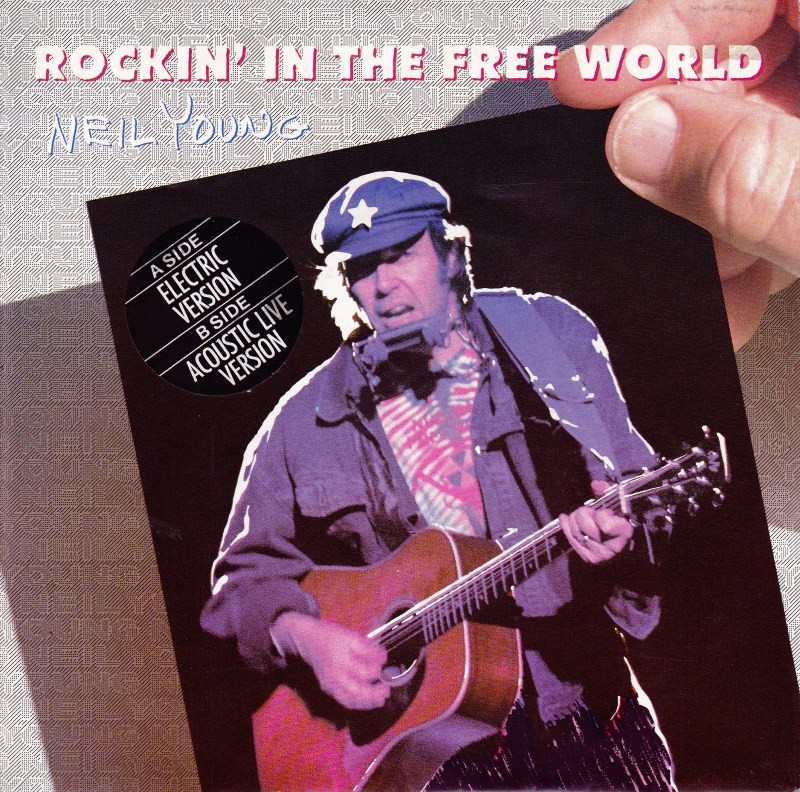
This is from our favorite Canadian Neil Young. It surprised me that this was released in 1989. I remember it the most in the 90s.
This was inspired by the political changes going on at the time, and was highly critical of the George Bush Sr. Some of the lyrics mock Bush’s campaign speeches: “We got 1,000 points of light, for the homeless man,” “We got a kinder, gentler machine gun hand.”
Rocking In A Free World was written in February 1989, as Neil Young toured the Pacific Northwest. Iran’s Ayatollah Khomeni had just issued a fatwa ordering Muslims to kill Salman Rushdie because of his controversial novel The Satanic Verses and Russia had recently withdrawn its forces from Afghanistan.
Pearl Jam have performed this song from time to time with Young, who they said that Neil is their musical mentor. The first time they performed it together was at the 1993 MTV Video Music Awards, where the “Jermey” video won four awards. Young came on as a surprise guest.
Pearl Jam has used this as the closing song in many of their concerts. The band played several times at Young’s Bridge School concerts.
The song peaked at #2 in the Mainstream Rock Chart and #39 in Canada. The song is rated number 216 on Rolling Stone’s 500 Greatest Songs of All Time.
From Songfacts
This was released a few months before the fall of the Berlin Wall. It became kind of an anthem for the event as freedom spread through Eastern Europe.
Meanwhile Young and his guitarist Frank “Poncho” Sampedro, were musing on global events as they traveled to Portland.
“There was supposed to have been a cultural exchange between Russia and United States,” Sampedro recalled to Mojo in a 2018 interview. “Russia was getting Neil Young and Crazy Horse and we were getting the Russian ballet! All of a sudden, whoever was promoting the deal, a guy in Russia, took the money and split. We were all bummed, and I looked at him and said, ‘Man I guess we’re just gonna have to keep on rockin in the free world. He said, ‘Well, Poncho, that’s a good line. I’m gonna use that, if you don’t mind.'”
“So we checked into the hotel in Portland,” the guitarist continued. “And we needed a song. We needed a rocker. We’d written some songs and they were good but we didn’t have a real rocker. I said, ‘Look man, tonight, get in your room, think about all this stuff that’s going down – the Ayatollah, all the stuff in Afghanistan, all these wars breaking out, all the problems in America… “Keep On rockin in the free world,” you got that: put something together man, let’s have a song!’ And the next morning, we got on the bus to leave and he says, ‘OK, I did it!'”
Young used members of his former backing group The Bluenotes to record this.
Young and Pearl Jam proved a great fit, as both eschew convention when it comes to music and promotion, catering instead to their ardent fan bases. The MTV appearance was an anomaly – Pearl Jam didn’t make another video for five years. In 1995, they collaborated on Young’s 1995 album Mirror Ball.
You deserve service as unique as you are. At State Farm, we offer personalized solutions. Like a good neighbor, State Farm is there.
Young performed this at the 7th annual Bridge School benefit in 1993 with all the artists involved joining Young on stage to close the show. Young put on the concert for the school, which serves children with special needs, every year until 2017.
.Neil Young played with Pearl Jam on 1995’s Merkinball, a 2-song EP that featured the songs “I Got ID” on one side and “The Long Road” on the other. Merkinball was a case of Young returning the favor to Pearl Jam. They had served as his “backing band” on his 1995 album Mirrorball. Contractual stipulations prevented Mirrorball from being credited to both artists and recognized as the collaborative effort it actually was (The name “Pearl Jam” was not legally allowed to appear on either the album’s cover or within its liner notes). “I Got ID” and “Long Road” were actually recorded during the Mirrorball sessions.
The song is on occasion used as a pro-America anthem, which ignores many of the ironic overtones of the lyrics. While the chorus does seem to celebrate the United States, it’s juxtaposed with grim verses which paint a haunting portrait of life in modern America – the song is sometimes interpreted as a critique of the “keep on rocking in the free world” sentiment that US citizens use to ignore global problems that don’t concern them.
Much like his seminal “My My, Hey Hey”/”Hey Hey, My My” counterparts, the widely known version of “Rockin’ In The Free World” is a loud, electric reprise of a stripped-down acoustic version that opens the Freedom album.
Rolling Stone rated this #216 on their 500 Greatest Songs of All Time list.
Young is very particular about where his songs are used. He authorized this one for the 2004 Michael Moore documentary Fahrenheit 9/11, and also for the 2015 film The Big Short, which tells the story of the rapacious financial workers who caused the 2008 recession. It also appears in the video game Guitar Hero: Warriors of Rock.
The track was used in Donald Trump’s announcement that he will run as a Republican candidate for the 2016 presidency. Young, a longtime supporter of Bernie Sanders, said that the mogul was not authorized to use the song.
Trump’s campaign responded by saying it did pay to use Neil Young’s tune at the presidential announcement, but won’t use Young’s music at any future events. “Through a licensing agreement with ASCAP, Mr. Trump’s campaign paid for and obtained the legal right to use Neil Young’s recording of ‘Rockin’ In The Free World,'” the statement read. “Nevertheless, there are plenty of other songs to choose from. Despite Neil’s differing political views, Mr. Trump likes him very much.”
Trump later hit back, posting a photo of him and Young shaking hands, and explaining that Young asked him for financing on an audio deal and invited Trump to a concert. In a Tweet, Trump called Young a “total hypocrite,” adding, “‘Rockin’ In The Free World’ was just one of 10 songs used as background music. Didn’t love it anyway.”
Rocking In A Free World
There’s colors on the street Red, white and blue People shufflin’ their feet People sleepin’ in their shoes But there’s a warnin’ sign on the road ahead There’s a lot of people sayin’ we’d be better off dead Don’t feel like Satan, but I am to them So I try to forget it, any way I can.
Keep on rockin’ in the free world, Keep on rockin’ in the free world Keep on rockin’ in the free world, Keep on rockin’ in the free world.
I see a woman in the night With a baby in her hand Under an old street light Near a garbage can Now she puts the kid away, and she’s gone to get a hit She hates her life, and what she’s done to it There’s one more kid that will never go to school Never get to fall in love, never get to be cool.
Keep on rockin’ in the free world, Keep on rockin’ in the free world Keep on rockin’ in the free world, Keep on rockin’ in the free world.
We got a thousand points of light For the homeless man We got a kinder, gentler, Machine gun hand We got department stores and toilet paper Got styrofoam boxes for the ozone layer Got a man of the people, says keep hope alive Got fuel to burn, got roads to drive.
Keep on rockin’ in the free world, Keep on rockin’ in the free world Keep on rockin’ in the free world, Keep on rockin’ in the free world.
Go ego trip’n again tonight Tell the same lies they work all right
Back in 1991, I was going out a lot and I really related to this song. I had the cassette of Whenever We Wanted by Mellencamp and it contained a few hits. This one was a minor hit but the one that I wore out.
It peaked at #36 in the Billboard 100 but was a bigger hit in Canada where it peaked at #8 in 1991. It did make it to #1 on the Mainstream Rock charts.
This album contained Get A Leg Up, Now More Than Ever, Last Chance, and Love and Happiness.
Whenever We Wanted peaked at #17 in the Billboard Album Charts, #8 in Canada, #39 in the UK, and #40 in New Zealand.
Again Tonight
Run in circles again tonight Hump the moon again tonight Gonna wear my dancin’ shoes out tonight Gonna have myself a big time again tonight
[Chorus:] Again tonight Again tonight Again tonight
Girl’s got lightning Underneath her skirt Boys try to touch it For whatever it’s worth In the morning She’s just gonna be hurt She wonders is it worth it again tonight
[Chorus]
Gonna catch that cloud tonight Nine, cloud nine Gonna try and catch that cloud tonight Nine, cloud nine Again tonight
Can you hold me baby again, again tonight Can you sing Can you dance baby Can you sing Can you hold me again tonight Baby can you sing
Go ego trip’n again tonight Tell the same lies they work all right Gonna wear my dancin’ shoes out tonight Probably make a fool of myself again tonight
Beggars Banquet and Between the Buttons were the first two Rolling Stone albums I owned not counting Hot Rocks, the greatest hits collection. I played this album to death. As with most Stones albums you get what you get…rock, blues, and a little country thrown in the mix. I got this album when I was 12 and it opened my eyes wide to the Stones…much more than a collection of their hits would ever do.
This was the first album to start the stretch of 5 albums (Beggars Banquet, Let It Bleed, Sticky Fingers, Exile on Main Street, and Goats Head Soup) that helped make the Stones what they are today. In 1967 after failing to live up to Sgt Pepper with Their Satanic MajestiesRequest (although I do like that album) they came back retooled with a new producer Jimmy Miller.
The Stones got back to doing what they do best…playing the blues…although with a different sound than Little Red Rooster. A weary Brian Jones was still in the band at this time and contributed to all but two songs…but it’s mostly Keith on guitar. Brian, because of the state he was in, was used more as a touch-up artist…filling in some holes with sitar, tambura, guitar, blues harp, and mellotron.
This album is not considered up there with Sticky Fingers or Exile On Main Street but I have the strongest connection to it. I’ve always related Beggars Banquet to the White Album. They were both released in 1968 and both were raw and honest. No studio trickery to either…a big departure from the psychedelic era of 1967.
I don’t think Jimmy Miller gets enough credit for their sound. That is not a knock against the Stones but the Miller produced albums are special.
The Jumping Jack Flash single (also Miller produced) was released in May of 1968 to signal a change was coming and this album followed on December 6, 1968.
Beggars Banquet was delayed for months because of the album cover. The original cover (which is now used) had a dirty toilet covered with graffiti. The photo was taken by Barry Feinstein in a tiny bathroom at a Porsche repair shop above Hollywood Blvd. and Cahuenga Blvd.
Mick and Keith were given crayons to add more graffiti for the back credits. Their record companies for America and the UK would not approve the cover. The Stones finally relented and released a plain “invitation” white cover…which is the cover I owned.
Now for the songs. Sympathy for the Devil and Street Fighting Man are the two most well-known songs off the album. Sympathy for the Devil is perhaps the Stones’ best-written song and with a samba beat that touches on voodoo. Street Fighting Man is maybe the most powerful song they ever wrote. “Well now what can a poor boy do except to sing for a rock n’ roll band?”
Those two songs are classics but this album is a great collection of 10 songs. Prodigal Son has always been a favorite of mine. They really do the old blues well in this one. It’s a song written by Robert Wilkins, a reverend who recorded Delta Blues in the 1920s and 1930s.
No Expectations…Brian Jones’ slide guitar in this is great…it sets the mood for this song. Mick has said it was Brian’s last great contribution to the Stones. One of the best album cuts from the Stones.
Stray Cat Blues…Mick sounds so ominous in this track. The guitar is absolutely filthy as well. I feel the need for a shower after I listen to it. This song would not fly today. It’s raunchy and sleazy…but a great album cut. I hear the click-clack of your feet on the stairs I know you’re no scare-eyed honey
My other favorite songs are Factory Girl, Salt of the Earth, and Jigsaw Puzzle.
The album peaked at #5 in the Billboard Album Charts, #3 in the UK, and #3 in Canada in 1969.
Looks like I have brought the first Stones album to our respective islands. If you get an urge to dance around a fire singing “whoo, whoo… whoo, whoo“…come on over and I’ll drop the needle on the vinyl and shake some maracas.
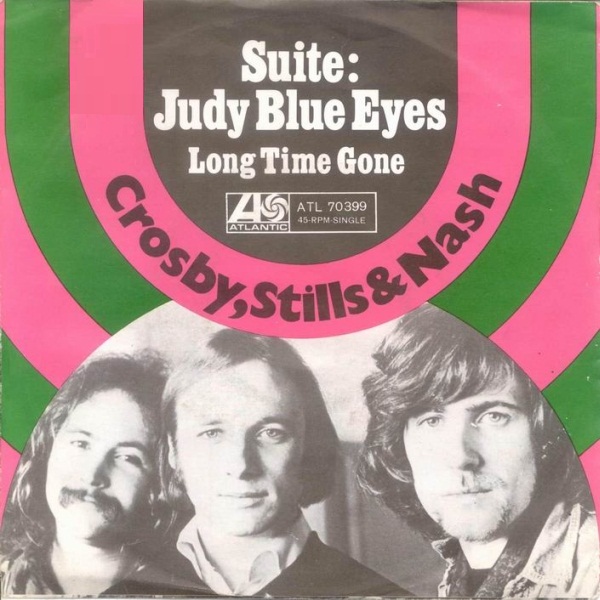
Suite: Judy Blue Eyes is an epic song. It has four distinct sections that are woven together with an acoustic and those harmonies holding it all together.
The last verse is in Spanish and is about Cuba. It was sung in Spanish because Stephen Stills didn’t want it easily understood since it had little to do with the theme of the song.
Here’s the translation: “How nice it will (or would) be to take you to Cuba The queen of the Caribbean Sea I only want to visit you there And how sad that I can’t, damn!”
Stills put that part in simply because the song had gone on forever and he didn’t want it to just lay there at the end.
The song peaked at #21 in the Billboard 100 and #11 in Canada in 1969.
Graham Nash: “When Stephen Stills first played me this song, I wondered what planet he was from,”
Stephen Stills: “It started out as a long narrative poem about my relationship with Judy Collins. It poured out of me over many months and filled several notebooks. I had a hell of a time getting the music to fit. I was left with all these pieces of song and I said, ‘Let’s sing them together and call it a suite,’ because they were all about the same thing and they led up to the same point.”
From Songfacts
This runs 7:22. The single is three minutes shorter then the album version. Many FM radio stations played the album cut.
The title is a play on words. “Suite” is a reference to a part of a classical composition, but it can also be interpreted as “Sweet.”
This wasn’t their first single, or even their biggest, but certainly one of Crosby, Stills & Nash’s most well-known songs. It established the harmony style that would be the group’s trademark for years to come
This opened Crosby, Stills and Nash’s set at Woodstock in 1969. The event ran long, so they didn’t go on stage until 3 a.m. the third night (The Who set a precedent by going on at 5 a.m. the night before). They played 16 songs in their set, the first nine acoustic and the last seven electric. Those who left to get to work Monday morning not only missed Crosby, Stills and Nash, but didn’t see Jimi Hendrix close out the festival.
Crosby, Stills and Nash played this at Live Aid in 1985. Organized by Bob Geldof, Live Aid was a benefit for famine relief in Africa. Crosby, Stills and Nash also played “Teach Your Children” and “Southern Cross.”
Nash Stephen Stills spoke to Rolling Stone magazine about this song: “It was the beginnings of three different songs that suddenly fell together as one. Actually on the demo the middle part is not exactly how they would play. Half of it is it just falls off in its own – but we actually split it in half, and they got started singing and boom, there it went. Once it all was there then we just kept adding parts. When I wrote it I used cardboard shirt-blocking, you know those things from the cleaner’s – ’cause they were harder to lose than pieces of paper and they didn’t crumple up. I could line them up on music stands and they’d stand up.”
Nash revealed to Rolling Stone that of the CS&N trio, Stills was the only to play on this song. All three contributed vocals. Nash was impressed when he heard it.
Judy Collins recalled to Mojo magazine the effect this song had on her after Stills played it in her hotel room. She said: “He sang me Suite Judy Blue Eyes and, you know, broken hearts are a very good inspiration – and I just caved in and I suppose I made promises I couldn’t keep. We both had personal struggles.” Collins’ battle was with alcohol.
Suite Judy Blue Eyes
It’s getting to the point where I’m no fun anymore I am sorry Sometimes it hurts so badly I must cry out loud I am lonely I am yours, you are mine, you are what you are You make it hard Remember what we’ve said and done and felt about each other Oh, babe have mercy Don’t let the past remind us of what we are not now I am not dreaming I am yours, you are mine, you are what you are You make it hard
Oh, oh, oh, oh, oh Tearing yourself away from me now you are free And I am crying This does not mean I don’t love you I do that’s forever Yes and for always I am yours, you are mine, you are what you are You make it hard Something inside is telling me that I’ve got your secret Are you still listening? Fear is the lock and laughter the key to your heart And I love you I am yours, you are mine, you are what you are You make it hard And you make it hard And you make it hard And you make it hard
Friday evening Sunday in the afternoon What have you got to lose? Tuesday morning Please be gone I’m tired of you What have you got to lose? Can I tell it like it is? (Help me I’m sufferin’) Listen to me baby It’s my heart that’s a sufferin’ it’s a dyin’ (Help me I’m dyin’) And that’s what I have to lose (To lose) I’ve got an answer I’m going to fly away What have I got to lose? Will you come see me Thursdays and Saturdays? What have you got to lose?
Chestnut brown canary Ruby throated sparrow Sing a song, don’t be long Thrill me to the marrow
Voices of the angels Ring around the moonlight Asking me said she so free How can you catch the sparrow?
Lacy lilting lady Losing love lamenting Change my life, make it right Be my lady
Que linda me la traiga Cuba La reina de la Mar Caribe Cielo sol no tiene sangreahi Y que triste que no puedo vaya oh va, oh va
The song was written by Chuck Berry, whose version was released as a single in February 1961, with ‘Little Star’ on the b-side.
I first heard the song by the Beatles on the Live! At The Star-Club In Hamburg, Germany; 1962 album released in 1977. I then heard the Chuck Berry version on Ken Burns’s great documentary Baseball.
I’m Talking About You’ was also recorded by a number of other British groups at the time, including The Hollies, The Yardbirds, and The Rolling Stones.
The song was on Chuck Berry’s fifth studio album “New Juke Box Hits.”
I’m Talking About You
Let me tell you ’bout a girl I know I met her walking down a uptown street She’s so fine you know I wished she was mine I get shook up every time we meet
I’m talkin about you Nobody but you Yeah, I do mean you I’m just trying to get a message to you
Let me tell you ’bout a girl I know I tell ya now she looks so good Got so much skills and such a beautiful will She oughta be somewhere in Hollywood
I’m talkin ’bout you Nobody but you Come on and give me a cue So I can get a message to you
Let me tell you ’bout a girl I know She’s sitting right here by my side Lovely indeed that why I asked if she Promised someday she will be my bride
Talkin ’bout you I do mean you Nobody but you Come on, let me get a message through
One of the most famous count offs in history. It’s a great rocker by the early Beatles. This wasn’t released as a single in England. In the US, it was released as the flip side of “I Want To Hold Your Hand,” which was their first hit in the America.
The title was original “Seventeen” until it was changed for the album. There have been many covers of this song…some very good but I’ll take the original every time.
This was one of 10 songs The Beatles recorded in one day (February 11, 1963) for their UK debut album, Please Please Me. It was the first song on the tracklist. Can you imagine that happening today?
I Saw Her Standing There peaked at #14 in the Billboard 100, #1 in New Zealand, and #1 (I Want To Hold Your Hand/I Saw Her Standing There) in Canada in 1964.
This was the last song John Lennon performed for a paid audience. He played it at Madison Square Garden on November 28, 1974 when he took the stage at an Elton John concert. Elton released this version as the B-side of “Philadelphia Freedom” the following year.
Paul McCartney:“Those early days were really cool, just sussing each other out, and realizing that we were good. You just realize from what he was feeding back. Often it was your song or his song, it didn’t always just start from nothing. Someone would always have a little germ of an idea. So I’d start off with [singing] ‘She was just 17, she’d never been a beauty queen’ and he’d be like, ‘Oh no, that’s useless’ and ‘You’re right, that’s bad, we’ve got to change that.’ Then changing it into a really cool line: ‘You know what I mean.’ ‘Yeah, that works.'”
From Songfacts
John Lennon and Paul McCartney started writing this in McCartney’s living room after they skipped school one day, with Paul writing the majority of this song in September of 1962.
The Beatles frequently played this at the Cavern Club, where they often played between 1961-1963. In fact, it was because of the crowd reaction to their live shows that George Martin decided to have them simply record their live show in the studio for their first album. That’s why he kept Paul’s “1, 2, 3, 4” count at the beginning, which was taken from the 9th take and edited on to the first.
The Beatles performed this on their first two Ed Sullivan Show appearances, which took place a week apart in February 1964. Getting on the show was a really big deal because it had a huge audience. About 73 million people watched the first show, which made The Beatles household names.
This became the first Beatles song performed on the TV series American Idol when Jordin Sparks won in 2007 and sang it on the finale with runner-up Blake Lewis. The first line of the song – “She was just 17” – was fitting, as that was Sparks’ age.
Chuck Berry was a big influence on The Beatles, and the bass line of this song borrows from Berry’s track “I’m Talking About You.”
At the 2001 World Series between the New York Yankees and Arizona Diamondbacks, McCartney went to one of the games at Yankee Stadium and was shown between innings singing along as this played in the stadium. It was McCartney’s second visit to Yankee Stadium, and he saw The Yankees win that day, although they eventually lost the World Series.
Tom Cruise and Dustin Hoffman sing this song during a very powerful scene in the 1988 Oscar-winning film Rain Man.
The Who, Daniel Johnston, Santo & Johnny, and The Tubes all covered this song.
With Dave Grohl playing drums, Paul McCartney played this at the Grammy Awards in 2009.
I Saw Her Standing There
(One, two, three, four)
Well, she was just seventeen You know what I mean And the way she looked Was way beyond compare So how could I dance with another Ooh, when I saw her standing there?
Well, she looked at me And I, I could see That before too long I’d fall in love with her She wouldn’t dance with another Ooh, when I saw her standing there
Well, my heart went “boom” When I crossed that room And I held her hand in mine
Oh we danced through the night And we held each other tight And before too long I fell in love with her Now I’ll never dance with another Ooh, since I saw her standing there
Well, my heart went, “Boom” When I crossed that room And I held her hand in mine
Oh, we danced through the night And we held each other tight And before too long I fell in love with her Now I’ll never dance with another Oh, since I saw her standing there Oh, since I saw her standing there Yeah, well since I saw her standing there
What in the world ever became of sweet jane? She lost her sparkle, you know she isn’t the same Livin’ on reds, vitamin see, and cocaine, All a friend can say is “ain’t it a shame?”
This wraps up Drug Reference Week. Thanks to all for reading and commenting…I hope you have enjoyed it.
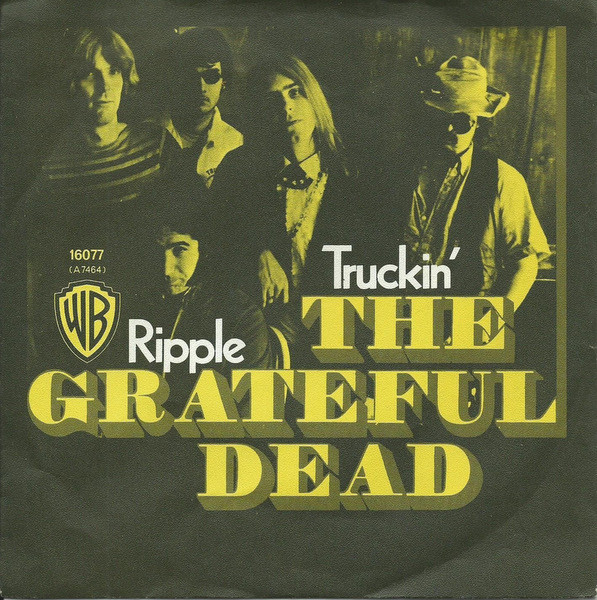
This is the first Grateful Dead song I remember hearing. I heard it before I knew who the Grateful Dead were… the line Busted, down on bourbon street, set up, like a bowlin’ pin stuck with me. The line happened in real life for the band.
Every member of the Dead except Pigpen and Tom Constanten (who left the band immediately after the New Orleans incident) was included in the bust, along with several members of their entourage and some local associates.
Along with the others… Owsley Stanley, then a tech for the band as well as a well-known LSD producer…was arrested.
All of the 19 people caught in the raid were booked for possession of some combination of marijuana, LSD, barbiturates, amphetamines, or other dangerous non-narcotic drugs. It carried a penalty of 5 to 15 years in prison.
New Orleans police seem to fear that their good town will become the next Haight-Ashbury.
After posting bail money, the Dead were almost out of funds. They added an extra show in New Orleans and persuaded Fleetwood Mac to stay for the additional performance as well.
At the gig, a hat was passed around the audience to collect some additional cash for legal expenses. Most of the charges from the New Orleans bust were eventually dropped…but the Dead got a great sound out of the ordeal!
The song was written by Jerry Garcia, Robert Hunter, Phi Lesh, and Bob Weir.
Truckin’ peaked at #64 in the Billboard 100 in 1971.
Jerry Garcia: “They had great fun with us, the southern cops. They had just what they wanted: hippies. Oh, boy.”
From Songfacts
The ’60s was a time for traveling and discovering your place in the world. Sometimes what you found was an empty existence that just keeps repeating itself day to day. Having to deal with everyday life when you were always waiting for some kind of revelation to expand your consciousness was often depressing. The Grateful Dead sang of acceptance of banality and the drive to continue their search for epiphany.
One verse in particular: “What in the world ever became of sweet Jane, she lost her sparkle. Well you know she isn’t the same. Living on reds, vitamin C and cocaine? All a friend can say is ain’t it a shame.” seems to refer to the endless desperation that overtakes some people. They turn to drugs to provide meaning in their lives. This of course fails and spirals their lives into deeper depression. Drugs are for enhancing a good time spent with good friends. They cannot provide answers to the meaning of life. The previous verse speaks to commonplace usage and the consequences of accepting illegal activities as a normal part of your life. You often get “busted” by the police.
Grateful Dead members Jerry Garcia, Phil Lesh and Bob Weir are the credited writers on this track along with their lyricist Robert Hunter.
The line, “Busted, down on Bourbon Street” refers to an incident on January 31, 1970 when members of the band were arrested in a drug bust that netted 19 people in New Orleans. The group was in town to play two shows at a club called the Warehouse, and the raid happened the morning after their first show at the French Quarter hotel where they were staying. Lesh, Weir and drummer Bill Kreutzmann were all arrested along with crew members and fans of the band who had joined them at the hotel.
The story made the front page of the New Orleans Times-Picayune the next day, and drew national attention, with Rolling Stone running an article on the incident. Owsley Stanley, a Dead associate known for his pioneering work with LSD, was also arrested and labeled the “King of Acid” in the Times-Picayune piece. According to the Rolling Stone article, the band paid for bail and legal fees for all 19 arrested.
Truckin’
Truckin’ got my chips cashed in. keep truckin’, like the do-dah man Together, more or less in line, just keep truckin’ on.
Arrows of neon and flashing marquees out on main street. Chicago, new york, detroit and it’s all on the same street. Your typical city involved in a typical daydream Hang it up and see what tomorrow brings.
Dallas, got a soft machine; houston, too close to new orleans; New york’s got the ways and means; but just won’t let you be, oh no.
Most of the cast that you meet on the streets speak of true love, Most of the time they’re sittin’ and cryin’ at home. One of these days they know they better get goin’ Out of the door and down on the streets all alone.
Truckin’, like the do-dah man. once told me “you’ve got to play your hand” Sometimes your cards ain’t worth a dime, if you don’t lay’em down,
Sometimes the light’s all shinin’ on me; Other times i can barely see. Lately it occurs to me what a long, strange trip it’s been.
What in the world ever became of sweet jane? She lost her sparkle, you know she isn’t the same Livin’ on reds, vitamin see, and cocaine, All a friend can say is “ain’t it a shame?”
Truckin’, up to buffalo. been thinkin’, you got to mellow slow Takes time, you pick a place to go, and just keep truckin’ on.
Sittin’ and starin’ out of the hotel window. Got a tip they’re gonna kick the door in again I’d like to get some sleep before i travel, But if you got a warrant, i guess you’re gonna come in.
Busted, down on bourbon street, set up, like a bowlin’ pin. Knocked down, it get’s to wearin’ thin. they just won’t let you be, oh no.
You’re sick of hangin’ around and you’d like to travel; Get tired of travelin’ and you want to settle down. I guess they can’t revoke your soul for tryin’, Get out of the door and light out and look all around.
Sometimes the light’s all shinin’ on me; Other times i can barely see. Lately it occurs to me what a long, strange trip it’s been.
Truckin’, i’m a goin’ home. whoa whoa baby, back where i belong, Back home, sit down and patch my bones, and get back truckin’ on. Hey now get back truckin’ home.
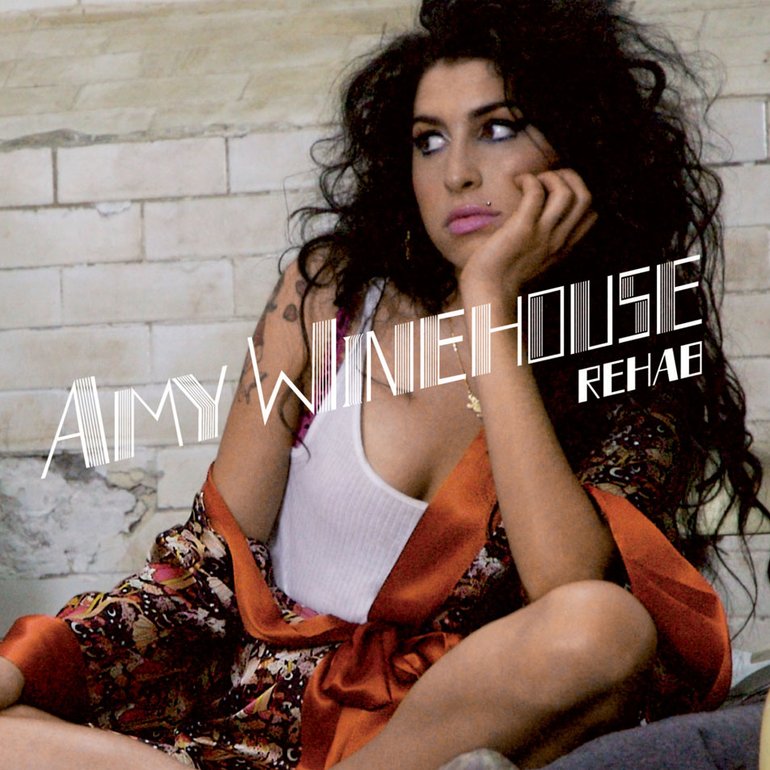
I really liked Winehouse when I first heard her. She combined a retro-soul sound with the 2000s.
Her previous management company wanted her to go into rehab but she said she didn’t need to. Her father agreed, adding that she wasn’t an alcoholic but had been drinking too much because she was lovesick.
The song is heartbreaking in a lot of ways. Winehouse did a few stints in rehab to treat her drug and alcohol addiction, but it was ultimately unsuccessful. She was found dead in her London home on July 23, 2011, of alcohol poisoning. She was one of the most influential singers of the 2000s.
The song peaked at #9 in the Billboard 100, #8 in the UK, #10 in Canada in 2007.
This won a Grammy for Song Of The Year, Female Pop Vocal Performance and Record Of The Year. Winehouse also won for Best New Artist, and performed a medley of songs that were televised from London. Mark Ronson won for producer of the year.
Amy Winehouse: “With ‘Rehab’ I was walking down the street with Mark Ronson, who produced my last album. I just sang the hook out loud. It was quite silly really.”
“Yeah, I sang the whole line exactly as it turned out on the record! Mark laughed and asked me who wrote it because he liked it. I told him that I’d just made it up but that it was true and he encouraged me to turn it into a song, which took me five minutes. It wasn’t hard. It was about what my old management company wanted me to do.”
At only 27 years old, she joined the “27 Club,” which I hope ends it’s membership…it has too many members as it is.
From Songfacts
This song is autobiographical. Many successful musicians are haunted by their own personal demons of drink and drugs, and Winehouse is no exception. In February 2007 her father gave a candid interview to the Sun newspaper in which he denied that his daughter was an alcoholic, although he admitted that like many single women of her age she sometimes overdid the drink. On one occasion, after splitting up with her boyfriend, she fell over and hit her head.
On August 14, 2007, Winehouse entered The Causeway Retreat, a rehab center in Essex, England, with her new husband (and fellow addict), Blake Fielder. Addiction specialists know that admitting a couple to rehab together is a bad idea, but The Causeway was not an ethical institution: it was shut down amid a host of violations in 2010.
In the documentary Amy, Fielder is shown at the facility badgering Winehouse, putting a video camera to her face and asking her to sing “the new, updated version of ‘Rehab,'” presumably making a joke out of it. She refuses.
This won the 2007 Ivor Novello Award for Best Contemporary Song.
Backstage at the Grammy ceremony Mark Ronson recalled to Billboard magazine what it was like playing “Rehab” for Winehouse’s A&R for the first time. “About the first 15 seconds in, he said ‘Rewind, rewind!’ I didn’t think there would be dollar signs lighting up.”
The lines, “I’d rather be at home with Ray” and “There’s nothing you can teach me that I can’t learn from Mr. Hathaway” are references to two of Winehouse’s soul music inspirations: Ray Charles and Donny Hathaway. Hathaway is best known for his duets with Roberta Flack: “Where Is The Love?” and “The Closer I Get To You.”
Winehouse’s label Island Records originally didn’t foresee this song’s success. Island Records president Darcus Beese explained in a Genius annotation:
“When ‘Rehab’ dropped it was just like a newspaper being lit. I wasn’t expecting this song to be the one that did it. We wanted to come in with a cool angle. We thought putting Ghostface Killa on ‘You Know I’m No Good’ would be the big hit. It wasn’t until people heard ‘Rehab’ that they really got it.”
Winehouse was backed by they Brooklyn band The Dap-Kings on this track – longtime fan Mark Ronson hired them. The group, who typically recorded with vocalist Sharon Jones, ended up joining Winehouse on her 2007 US tour. Jones seemed to be left in the lurch, but the wave of interest in Winehouse drew attention to Sharon Jones & the Dap-Kings, earning them many new fans.
Rehab
They tried to make me go to rehab I said, “no, no, no” Yes, I been black But when I come back, you’ll know, know, know I ain’t got the time And if my daddy thinks I’m fine He’s tried to make me go to rehab I won’t go, go, go
I’d rather be at home with a Ray I ain’t got seventy days ‘Cause there’s nothing, there’s nothing you can teach me That I can’t learn from Mr. Hathaway
I didn’t get a lot in class But I know we don’t come in a shot glass
[Chorus]
The man said, “why do you think you here?” I said, “I got no idea.” I’m gonna, I’m gonna lose my baby So I always keep a bottle near He said, “I just think you’re depressed.” This, me, yeah, baby, and the rest
They tried to make me go to rehab But I said, “no, no, no” Yes, I been black But when I come back, you’ll know, know, know
I don’t ever want to drink again I just, oh, I just need a friend I’m not gonna spend ten weeks Have everyone think I’m on the mend
And it’s not just my pride It’s just till these tears have dried
One pill makes you larger, and one pill makes you small And the ones that mother gives you, don’t do anything at all
I want to thank everyone for reading and commenting this week. I’m going to continue this for one more day and we will wrap it up tomorrow. Thanks Again!
This song was on the great album Surrealistic Pillow released in 1967. The intro is around 28 seconds before Slick starts singing. It’s well worth the wait…this song IS the sixties encapsulated in two minutes and thirty-two seconds.
Grace Slick got the idea for this song after taking LSD and listening to the Miles Davis album Sketches Of Spain, especially the opening track, “Concierto de Aranjuez.” The Spanish beat she came up with was also influenced by Ravel’s “Bolero.”
She based the lyrics on Lewis Carroll’s 1865 children’s book Alice In Wonderland (officially Alice’s Adventures in Wonderland).
Slick wrote this song and performed it when she was in a band called The Great Society with her first husband, Jerry Slick. The Great Society made inroads in the San Francisco music scene, but released just one single, “Somebody To Love”, before calling it quits in 1966.
The Great Society version of “White Rabbit” was released in 1968 on an album called Conspicuous Only In Its Absence (credited to “The Great Society With Grace Slick”).
Grace Slick moved on to Jefferson Airplane, and the group recorded both “White Rabbit” and “Somebody To Love.” The songs were the breakout hits for the band, with “Somebody To Love” reaching #5 US and “White Rabbit” peaked at #8 in the Billboard 100 and #1 in Canada in 1967.
Grace Slick: “I always felt like a good-looking schoolteacher singing ‘White Rabbit.’ I’d sing the words slowly and precisely, so the people who needed to hear them wouldn’t miss the point. But they did. To this day, I don’t think most people realize the song was aimed at parents who drank and told their kids not to do drugs. I felt they were full of s–t, but to write a good song, you need a few more words than that.”
From Songfacts
Grace Slick was raised in a tony suburban household in Palo Alto, California, about 30 miles south of San Francisco. This being the 1950s, women were expected to conform to the norms and aspire to be housewives. Slick identified with Alice; moving to San Francisco and forming a rock band was her “rabbit hole” moment. When she joined Jefferson Airplane, that was another journey down the rabbit hole.
Slick claimed to Q that the song was aimed not at the young but their parents. She said: “They’d read us all these stories where you’d take some kind of chemical and have a great adventure. Alice in Wonderland is blatant; she gets literally high, too big for the room, while the caterpillar sits on a psychedelic mushroom smoking opium. In the Wizard of Oz, they land in a field of opium poppies, wake up and see this Emerald City. Peter Pan? Sprinkle some white dust-cocaine-on your head and you can fly.”
This was one of the defining songs of the 1967 “Summer Of Love.” As young Americans protested the Vietnam War and experimented with drugs, “White Rabbit” often played in the background.
The song begins in F-sharp minor, which Slick chose to suit her voice. The minor chords evoke a darkness and uncertainty as Alice finds herself in a strange world. In the “go ask Alice” part, it shifts to major chords to celebrate her courage and resourcefulness as she finds her way.
The Alice character appealed to Slick because she wasn’t the stereotypical damsel in distress. Alice follows her own path to satisfy her curiosity – even when things get sticky.
Did the band ever get sick of this song? Grace Slick answered this question in a 1976 interview with Melody Maker when she replied: “I can play around with a song on stage without ruining it. We stopped doing ‘White Rabbit’ for a couple of years because we were getting bored with it. I like it again and we included it last year ’cause it was the year of the rabbit.”
The words “white rabbit” never show up in the lyric, but are alluded to in the lines:
And if you go chasing rabbits
And you know you’re going to fall
In Alice In Wonderland, the first chapter is “Down the Rabbit-Hole.” On the first page, the White Rabbit appears, leading Alice on her adventure. In 1971, Led Zeppelin released “Black Dog,” another song with a color-animal title that doesn’t appear in the lyric.
The Airplane were frequently found giving free concerts around the Haight-Ashbury area of San Francisco. They shared a large house with several musicians during the psychedelic ’60s, often applying for and receiving parade permits to walk the streets. Grace Slick was always a radical thinker, rejecting “daddy’s money.” She once appeared on The Smothers Brothers Comedy Hour made up in blackface, causing a big controversy.
The line in this song, “go ask Alice,” provided the title of a 1971 book published by an anonymous author. The book was a “diary” of a young girl in the 1960s who had a drug addiction and died. Her name is never given, and the diary is suspected to be fictional despite being promoted as true. The anonymous author is likely Beatrice Sparks, the book’s editor.
This capped off Jefferson Airplane’s set at Woodstock in 1969. They took the stage at 8 a.m. on the second day (or, depending how you look at it, third morning), following a performance by The Who that started at 5 a.m.
According to Grace Slick’s autobiography, the album name came when bandmate Marty Balin played the finished studio tapes to Jerry Garcia of The Grateful Dead, whose first reaction was, “Sounds like a surrealistic pillow.” Slick says that she loves the fact that the phrase Surrealistic Pillow “leaves the interpretation up to the beholder. Asleep or awake on the pillow? Dreaming? Making love? The adjective ‘Surrealistic’ leaves the picture wide open.”
This is used in the stage production The Blue Man Group, and appears on their 2003 album The Complex. Music is a big part of the show, which features three blue guys engaging the audience with a combination of comedy, percussion, and sloppy stunts. They got a lot of attention when they were used in ads for Intel.
Grace Slick wrote this song on an old upright piano she bought for $80. Some of the keys in the upper register were missing, but she didn’t use those anyway.
This song is heard multiple times in the movie The Game with Michael Douglas. It demonstrates the madness Douglas feels as he is being manipulated by forces he can’t control. >>
In the film Fear and Loathing in Las Vegas, there is a scene where Dr. Gonzo is in a bathtub and this song is playing on a tape player. In an effort to end his life, Gonzo implores Raoul Duke to put the tape player in the tub “When White Rabbit peaks.” Instead of doing as instructed, Duke throws a grapefruit at Gonzo and unplugs the tape player. >>
This was used as the theme song for a 1973 movie called Go Ask Alice.
On November 7, 1967, the St. Louis radio station made a bold move, switching from an easy listening format to “real rock radio.” The first song they played after the switch was “White Rabbit,” a clear signal that they were aligning themselves with the counterculture. The song was apropos, as they abandoned their reliable conservative audience to go down the rabbit hole, bringing the movement to the midwest.
The format stuck. KSHE became a vital and transgressive voice, breaking new bands, sometimes letting music play for hours on end without interruption, and doing segments devoted entirely to women in rock (their “American Woman” series).
Recalling the song in a 2016 Wall Street Journal interview, Slick said: “Looking back, I think ‘White Rabbit’ is a very good song… My only complaint is that the lyrics could have been stronger. If I had done it right, more people would have been annoyed.”
The UK version of the album didn’t include this track.
This was used in the first episode of Stranger Things, “The Vanishing Of Will Byers.” It plays as Eleven flees Benny’s diner.
White Rabbit
One pill makes you larger, and one pill makes you small And the ones that mother gives you, don’t do anything at all
Go ask Alice, when she’s ten feet tall
And if you go chasing rabbits, and you know you’re going to fall Tell ’em a hookah-smoking caterpillar has given you the call
And call Alice, when she was just small
When the men on the chessboard get up and tell you where to go And you’ve just had some kind of mushroom, and your mind is moving low
Go ask Alice, I think she’ll know
When logic and proportion have fallen sloppy dead And the white knight is talking backwards And the red queen’s off with her head Remember what the dormouse said Feed your head, feed your head
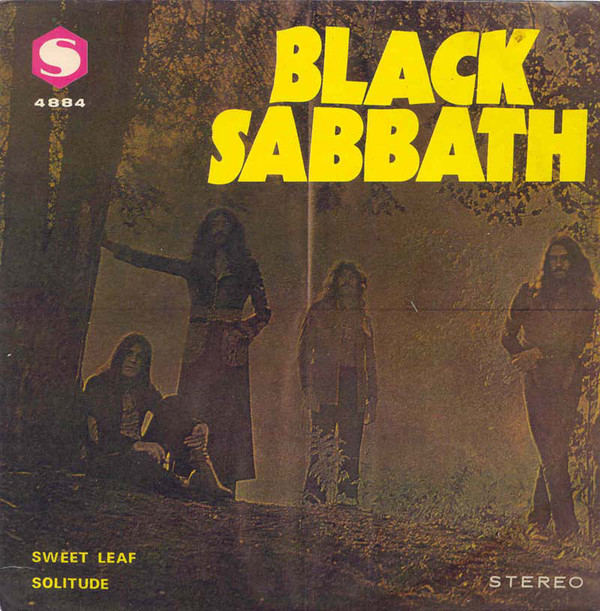
Not a big surprise here…this song is about marijuana, and makes little attempt to disguise it. The band did a lot of marijuana and many other drugs around this time.
The sound at the beginning is Tony Iommi coughing after inhaling marijuana smoke from a bong and it was looped.
They got the name from a pack of Irish Cigarettes that said “It’s the sweet leaf.” They thought that Sweet Leaf was a great description of marijuana, and the entire band wrote the song together.
The song was on Master of Reality. The album peaked at #8 in the Billboard Album Chart, #5 in the UK, and #6 in Canada.
From Songfacts
The guitar riff was taken from Frank Zappa & The Mothers of Invention’s “Hungry Freaks, Daddy.” This riff can also be heard at the end of the Red Hot Chili Peppers song “Give It Away” and is the basis for the song “Rhymin’ and Stealin'” by The Beastie Boys.
A Sabbath tribute band from Denmark is named Sweet Leaf.
This has been covered by Next Step Up, Stock Mojo, Garbage, Ancient, Ugly Kid Joe, Butthole Surfers, Mogwai, Stereolab, Agent Steel, Pimpadelic, Cadaver, and Widespread Panic.
Sweet Leaf
Alright now Won’t you listen?
When I first met you, didn’t realize I can’t forget you, for your surprise You introduced me, to my mind And left me wanting, you and your kind, oh yeah
I love you, oh you know it
My life was empty, forever on a down Until you took me, showed me around My life is free now, my life is clear I love you sweet leaf, though you can’t hear, oh yeah
Come on now, try it out
Straight people don’t know, what you’re about They put you down and shut you out You gave to me a new belief And soon the world will love you sweet leaf, oh yeah baby
Come on now, oh yeah Try me out baby, alright, oh yeah I want you part of this sweet leaf, oh yeah Alright, yeah, yeah, yeah, oh try me out I love you sweet leaf, oh
Rock on gold dust woman Take your silver spoon Dig your grave
Stevie Nicks wrote this song and it’s on their most successful album, Rumours. The album was made in turmoil with everyone going through relationship problems and on top of that…drugs were everywhere…hey this was the mid-seventies.
Nicks has never been clear on the meaning, you can make a good case that it is about cocaine, which the band was consuming in quantity during the Rumours sessions.
This song was the B side to You Make Loving Fun in America…and Don’t Stop in the UK.
Stevie Nicks: Gold Dust Womanwas a little bit about drugs ~ it was about you know keeping going. It was about cocaine. And, uh, you know after all these years since I haven’t done any cocaine since 1986 I can talk about it now you know. But it was ,ah, at that point ~ it was ~ I don’t think I had ever been so tired in my whole life as I was when we were like – doing that. You know I think it was shocking me ~ the whole rock’n’roll life ~ was really heavy and it was so much work and it was so everyday intense you know. Being in Fleetwood Mac was like being in the army. It was like you have to be there. You have to be there and you have to be there as on time as you can be there. And even if there nothing you have to do, you have to be there. So Gold Dust Woman was really my kind of symbolic look at somebody going through a bad relationship, and doing alot of drugs, and trying to just make it ~ trying to live ~ you know trying to get through it to the next thing.
Cris Morris recording assistant on the album: “Recording ‘Gold Dust Woman’ was one of the great moments because Stevie was very passionate about getting that vocal right. It seemed like it was directed straight at Lindsey and she was letting it all out. She worked right through the night on it, and finally did it after loads of takes. The wailing, the animal sounds and the breaking glass were all added later. Five or six months into it, once John had got his parts down, Lindsey spent weeks in the studio adding guitar parts, and that’s what really gave the album its texture.”
From Songfacts
In Mick Fleetwood’s book My Life and Adventures in Fleetwood Mac, he explains that it took Nicks eight takes to get the vocal right, and they were recorded early in the morning. Fleetwood described Nicks as “hunched over in a chair, alternately choosing from her supply of tissues, a Vicks inhaler, a box of lozenges for her sore throat and a bottle of mineral water.”
Among the artists who have recorded this song: Waylon Jennings, Hole, Sheryl Crow and Sister Hazel.
Lindsay Buckingham played a dobro on this track. The dobro is an acoustic guitar with a single resonator with its concave surface uppermost. The inventor of the resonator guitar, John Dopyera, together with his brothers Rudy, Emile, Robert, and Louis, developed the dobro in 1928. They named it as a contraction of Dopyera Brothers’ coupled with the meaning of “goodness” in their native Slovak language. Gibson acquired exclusive use of the dobro trademark in 1993 and the guitar corporation currently produces several round sound hole models under the dobro name. One of these ornate guitars is featured on the cover of Dire Straits’ Brothers In Arms.
For insight on Buckingham’s performance, we spoke with Jerry Douglas, an esteemed dobro player with 14 Grammy Awards to his credit. Said Douglas: “He’s an electric guitar player so I noticed that technique right away. He’s using it for more of a texture. He’s not going to be a bluegrass dobro player and he’s not trying to be. He’s a great guitar player and I think he chose to use the dobro in that situation for a texture more than for a guitar part. It went deeper than that for him. He needed to set that song apart from the rest of the songs and one of the ways to do it and one of the ways to actually get to the subject matter quicker, change it from the rest of the songs, was to use a different kind of guitar, and the dobro was perfect for that.”
Gold Dust Woman
Rock on gold dust woman Take your silver spoon Dig your grave
Heartless challenge Pick your path and I’ll pray
Wake up in the morning See your sunrise loves to go down Lousy lovers pick their prey But they never cry out loud Cry out
Did she make you cry Make you break down Shatter your illusions of love And is it over now do you know how Pick up the pieces and go home.
Rock on ancient queen Follow those who pale In your shadow
Rulers make bad lovers You better put your kingdom up for sale Up for sale
Well did she make you cry Make you break down Shatter your illusions of love And is it over now, do you know how Pickup the pieces and go home.
Well did she make you cry Make you break down Shatter your illusions of love And now tell me Is it over now, do you know how Pickup the pieces and go home Go home Go home
Pale Shadow Of a woman Black widow Pale Shadow Of a dragon Dust woman
Pale Shadow Of a woman Black widow Pale Shadow She’s a dragon Gold dust woman Woman, woman
What a drag it is getting old Kids are different today, I hear every mother say Mother needs something today to calm her down And though she’s not really ill, there’s a little yellow pill
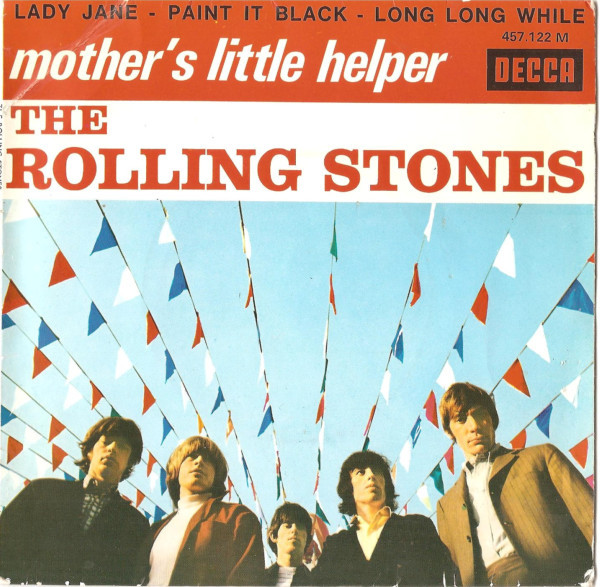
This is one of my favorite periods of the Rolling Stones. You don’t hear this song as much.
Stones guitarist Brian Jones played the sitar on this track… it was one of the first pop songs to use the instrument. The Beatles “Norwegian Wood (This Bird Has Flown),” which came out the year before, was the first.
The Stones missed this experimentation when Brian was gone in my opinion. The song is about house wife’s addictions to Miltown or Valium to help them get through the day. Everybody was pointing their fingers at rock stars because of drugs and the Stones threw it back at them.
The song peaked at #8 in the Billboard 100 and #14 in Canada in 1966. The song was written by Jagger and Richards.
Mick Jagger: “It’s about drug dependence, but in a sort of like spoofy way. As a songwriter, I didn’t really think about addressing things like that. It was just every day stuff that you I’d observe and write about. It’s what writing is for really. There is a sort of naivety, but there’s also a lot of humor in those songs. They’re a lot based on humor. It was almost like a different band, a different world, a different view when we wrote them.”
Mick Jagger: “I get inspiration from things that are happening around me – everyday life as I see it. People say I’m always singing about pills and breakdowns, therefore I must be an addict – this is ridiculous. Some people are so narrow-minded they won’t admit to themselves that this really does happen to other people beside pop stars.”
Keith Richards: “The strange guitar sound is a 12-string with a slide on it. It’s played slightly Oriental-ish. The track just needed something to make it twang. Otherwise, the song was quite vaudeville in a way. I wanted to add some nice bite to it. And it was just one of those things where someone walked in and, Look, it’s an electric 12-string. It was some gashed-up job. No name on it. God knows where it came from. Or where it went. But I put it together with a bottleneck. Then we had a riff that tied the whole thing together. And I think we overdubbed onto that. Because I played an acoustic guitar as well.”
From Songfacts
This condemns the many women in England who were abusing prescription drugs, even though The Stones were becoming heavy drug users themselves. The band wanted to make the point that housewives popping pills what not that much different than rock stars taking smack, even though drug laws in England strongly favored the housewives.
This was the first track on Aftermath, the first Stones album with all original songs. Their earlier albums were full of Blues covers.
In the UK, this wasn’t released as a single. In America, it was the group’s eighth Top 10 hit.
The Stones recorded this in Los Angeles in a custom built studio. It had no windows, because The Stones did not want to know if it was day or night.
Stones drummer Charlie Watts said of this song in In the 2003 book According to the Rolling Stones: “We’ve often tried to perform ‘Mother’s Little Helper’ and it’s never been any good, never gelled for some reason – it’s either me not playing it right or Keith not wanting to do it like that. It’s never worked. It’s just one of those songs. We used to try it live but it’s a bloody hard record to play.”
Mother’s Little Helper
What a drag it is getting old
“Kids are different today” I hear ev’ry mother say Mother needs something today to calm her down And though she’s not really ill There’s a little yellow pill She goes running for the shelter of a mother’s little helper And it helps her on her way, gets her through her busy day
“Things are different today” I hear ev’ry mother say Cooking fresh food for a husband’s just a drag So she buys an instant cake and she burns her frozen steak And goes running for the shelter of a mother’s little helper And two help her on her way, get her through her busy day
Doctor please, some more of these Outside the door, she took four more What a drag it is getting old
“Men just aren’t the same today” I hear ev’ry mother say They just don’t appreciate that you get tired They’re so hard to satisfy, You can tranquilize your mind So go running for the shelter of a mother’s little helper And four help you through the night, help to minimize your plight
Doctor please, some more of these Outside the door, she took four more What a drag it is getting old
“Life’s just much too hard today” I hear ev’ry mother say The pursuit of happiness just seems a bore And if you take more of those, you will get an overdose No more running for the shelter of a mother’s little helper They just helped you on your way, through your busy dying day
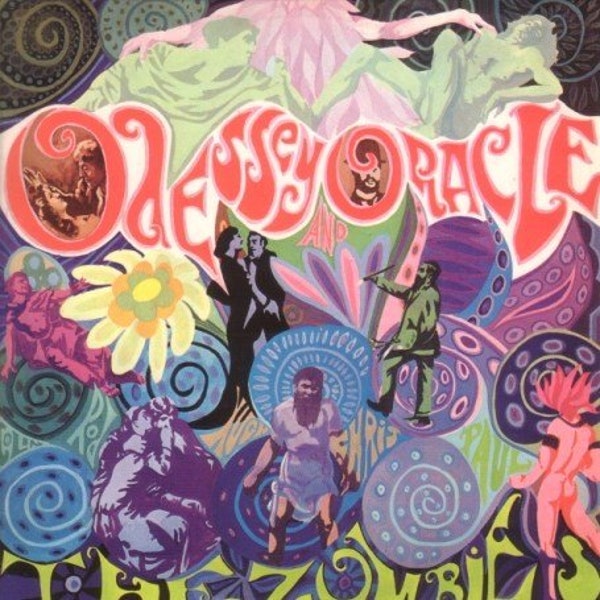
In the early 90s, I purchased the Zombie’s greatest hits. The cd contained the usual songs Tell Her No, She’s Not There, and Time Of The Season. I had read about The Zombies in music books and how other bands admired them for their jazz and classical influences.
They are best remembered for those three hits but also for one album…Odessey and Oracle. With this album, they elevated themselves to new heights…but that took a little while. In Rolling Stone magazine in the 80s and 90s I read great writeups about this album. Finally, I tried it for myself and was more than happy I did. Many critics hailed this album as one of the greatest of the decade and it lived up to their hype.
By the way… The band wanted to call the album “Odyssey and Oracle” but cover artist Terry Quirk accidentally spelled the title wrong and the band decided to run with the misspelling.
By 1967 they were close to being done. They were broke and had to pay for most of the sessions. Tell Her No and She’s Not There were 3 years in the past and in pop music…that was a lifetime.
They got together in Abbey Road studios right after The Beatles finished Sgt Pepper in 1967…even using John Lennon’s Mellotron. They ended up recording one of the best albums of the sixties. April 18, 1968, was the UK release date. It was a little while after that before America heard it.
The album almost didn’t get released in America. Al Kooper worked for Columbia Records as a staff producer in the A&R department. One of his first assignments was to go to London and he bought around 40 albums that could only be bought there. Odessey and Oracle stood out from all of the rest.
Clive Davis was about to sign off on this album not being released in America. Kooper changed his mind and convinced Clive to release the album. That is how the album was released and Time of the Season became a hit. By the time Time Of The Season peaked at #3 in 1969 the band had broken up.
The best way I can describe this album is somewhere between psychedelic pop/rock and baroque pop. I think that is a fair statement. I suggest listening to this album with headphones. The Zombies paid attention to detail and the backup vocals are outstanding. It the year that Sgt Pepper and The Piper at the Gates of Dawn were recorded… Odessey and Oracle belong with those albums.
It’s pure joy to sit and listen to this album. I’ll highlight these songs.
Time of the Season is the big hit off the album and also…there is an official law in the books about this song. If you produce a film about the 1960s this song must be played. The song is great and it does transport you to that time. What’s your name? Who’s your daddy? (He rich) Is he rich like me?
Care Of Cell 44 is the real star of the album to me. The song is arranged beautifully. with part vocal-only arrangements, You can hear Brian Wilson and Paul McCartney’s influence in this recording. Chris White’s (Zombies bass player) bass playing is phenomenal in this song. If Paul McCartney and Brian Wilson had a baby…this is what it would be. Take a listen to this one.
This Will Be Our Year is a wonderful optimistic song. It sounds like it should have been a hit but it was stuck on the B side to Butcher’s Tale (Western Front 1914) which is more of an experimental song and not exactly very commercial…that was a wasted opportunity.
Another song that caught me on the first listen is A Rose For Emily. The theme is very similar to Eleanor Rigby but more subdued. “And as the years go by, she will grow old and die, The roses in her garden fade away, not one left for her grave, not a rose for Emily…”
Put this album on with some headphones and travel back to the sixties.
So far on my island…all the albums are within 4 years (1968-1972) of each other but that suits me fine. I’m sure an album will break that eventually. Odessey and Oracle brings some beautiful pop music to my hut. Grab a coconut and come over…we will listen to the Zombies…btw…Have you seen Mary Ann? I’ve been looking for her.
1. Care Of Cell 44
2. A Rose For Emily
3. Maybe After He’s Gone
4. Beechwood Park
5. Brief Candles
6. Hung Up On A Dream
7. Changes
8. I Want Her She Wants Me
9. This Will Be Our Year
10. Butcher’s Tale (Western Front 1914)
11. Friends Of Mine
12. Time Of The Season
This song has a cool walk down intro along with some harmonics. I like the dynamics of the song when it kicks in.
This one has gotten some significant FM play in my region. It was written by Allen Collins and lead singer Ronnie Van Zant…Van Zant was warning about the dangers of hardcore drugs, which the band was just learning about.
The song was on their sophomore offering Second Helping. The album had their biggest hit, Sweet Home Alabama. They released their debut album the year before and their fan base was growing after opening up on The Who’s Quadrophenia tour. The album peaked at #12 in the Billboard Album Chart and #9 in Canada.
In the 2015 edition of Guitar World Magazine, the solo to this song was listed as the #19 best of all time.
The Needle and The Spoon
Thirty days, Lord, and thirty nights I’m coming home on an airplane flight Mama waiting at the ticket line Tell me son, why do you stand there cryin’?
It was the needle and the spoon And a trip to the moon Took me away Took me away
I’ve been feeling so sick inside Got to get better, Lord, before I die Some doctors couldn’t help my head, they said You’d better quit, son, before you’re dead
Quit the needle, quit the spoon Quit the trip to the moon They gonna take you away Lord, they gonna take you away
It was the needle and the spoon
I’ve seen a lot of people who thought they were cool But then again, Lord, I’ve seen a lot of fools I hope you people, Lord, can hear what I say You’ll have your chance to hit it some day
Don’t mess with a needle or a spoon Or a trip to the moon They’ll take you away
Lord, their gonna bury you boy Don’t mess with the needle Now I know, I know, I know, I know, I know











 PowerPop... An Eclectic Collection of Pop Culture