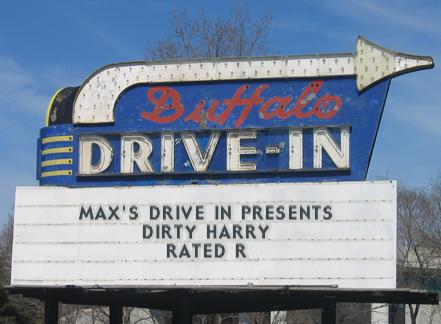
Drive your car up to my place and find your spot….and we won’t even check the trunks for free stowaways (which I was a lot). Sit back while we watch some movies. I will keep each of these as short as possible.
CB sparked this idea…I wanted to review more movies and what better movies than 1960s – 1970s drive-in flicks? I love these movies because they are mostly gritty and realistic looking…you never know what you will see or hear. I will try not to give away the ending of these films because many might not have seen them.
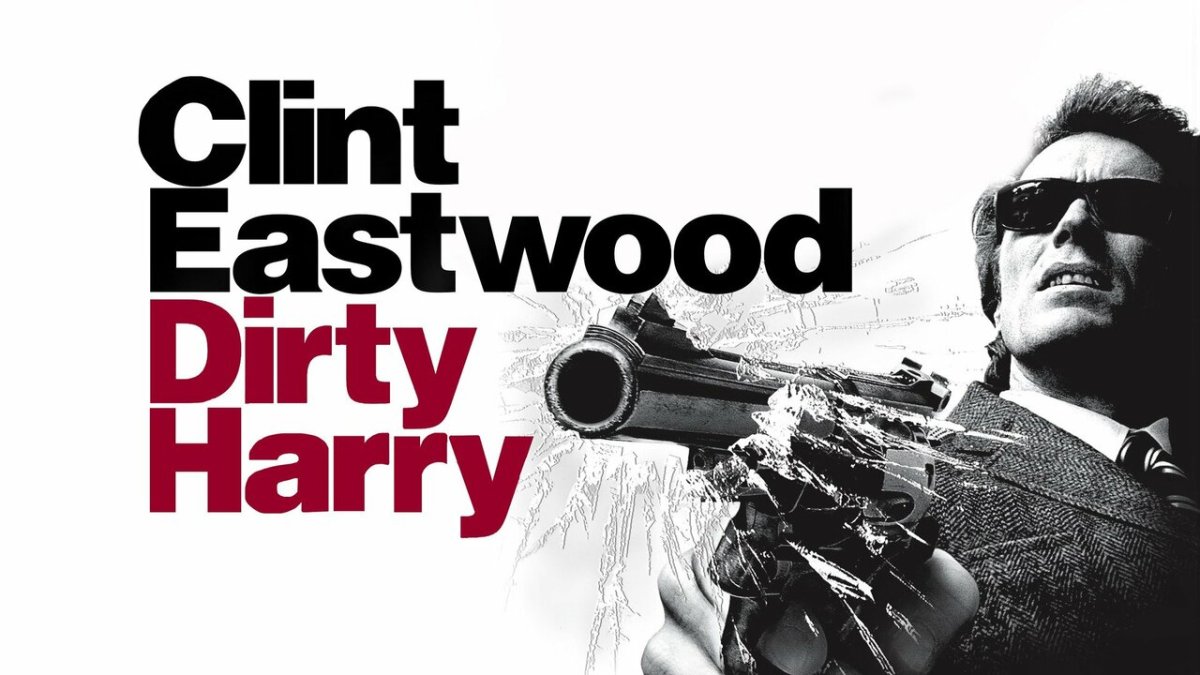
The quotes from this movie alone could fill up a book. This movie and The French Connection helped start the antihero movies of the seventies. I like many Eastwood films especially the Trilogy made in the sixties. In this movie, Dirty Harry has a tough, no-nonsense approach to law enforcement. He is willing to bend or break the rules to get the job done, which often puts him at odds with his superiors and the legal system. His most famous line, “Do you feel lucky, punk?” has become iconic.
The movie is based out of San Francisco and the characters are really tangible. You have the mayor and police chief fighting with Harry over regulations and Harry is single-minded going after the killer. The film was well-received by critics for the most part. It highlights both vigilante justice and the large bureaucracy that holds everything back. It gives you a view of both.
As good as Eastwood is in this movie, it’s Andrew Robinson who really got my attention. Some bad guys are like cartoon caricatures but not this one. He played The Scorpio Killer in this movie. He based some of it off the real Zodiac Killer of the 60s and 70s. Robinson played that part so well that he was stereotyped after the movie’s release. When you saw him on the screen he personified a killer. This is not Jason or slasher films bad guys…this one hit home because he was so real.
Director Don Siegel did a hell of a job directing this movie. “I enjoy the controversy because if you make a film that’s safe, you’re in trouble. I’m a liberal; I lean to the left. Clint is a conservative; he leans to the right. At no point in making the film did we ever talk politics. I don’t make political movies. I was telling the story of a hard‐nosed cop and a dangerous killer. What my liberal friends did not grasp was that the cop is just as evil, in his way, as the sniper.”
My favorite scene… Harry is eating a hotdog and notices a bank getting robbed. He takes action and single-handedly stops the robbers. He teases one robber that he shot.
I’m lifting the short storyline out of IMDB
“Dirty Harry” follows San Francisco Police Inspector Harry Callahan, a tough, rule-bending officer known for his unorthodox methods and willingness to confront criminals head-on. The film’s central antagonist is the Scorpio Killer, a sadistic serial murderer who taunts the police with cryptic messages and demands ransom money in exchange for stopping his killing spree.
Callahan’s pursuit of Scorpio takes him through the streets of San Francisco, leading to intense confrontations and moral dilemmas. As the body count rises, Callahan’s relentless quest for justice puts him at odds with his superiors, who are more concerned with following protocol than stopping the killer by any means necessary.
Favorite Quotes:
The Mayor: Callahan… I don’t want any more trouble like you had last year in the Fillmore district. You understand? That’s my policy.
Harry Callahan: Yeah, well, when an adult male is chasing a female with intent to commit rape, I shoot the bastard – that’s my policy.
The Mayor: Intent? How’d you establish that?
Harry Callahan: When a naked man is chasing a woman through a dark alley with a butcher knife and a hard on, I figure he isn’t out collecting for the Red Cross.
The Mayor: I think he’s got a point.
Harry Callahan: Uh uh. I know what you’re thinking. “Did he fire six shots or only five?” Well to tell you the truth in all this excitement I kinda lost track myself. But being this is a .44 Magnum, the most powerful handgun in the world and would blow your head clean off, you’ve gotta ask yourself one question: “Do I feel lucky?” Well, do ya, punk?
The success of Dirty Harry led to four sequels: “Magnum Force” (1973), “The Enforcer” (1976), “Sudden Impact” (1983), and “The Dead Pool” (1988).
There’s a crack up in the ceiling And the kitchen sink is leaking Out of work and got no money A Sunday joint of bread and honey
I’ve posted a lot by The Kinks but there are always more great songs I never covered and this is one of them. I like this one more than some of their huge hits…it’s a great song…catchy and meaningful.
Another Ray Davies song on the struggles of working-class life in Britain during the 1960s, focusing on themes of poverty, social inequality, and hopelessness. Not only in Britain in the 60s but extends to now as well all over. The title of the song says it all of being in a vicious cycle. This is just another example of Ray Davies’s brilliant songwriting. When you read the Ray Davies quotes at the bottom you will see where he was coming from.
Dead End Street was released in 1966 as a non-album single. It was quite successful peaking at #5 in the UK, #4 in New Zealand, #28 in Canada, and #73 on the Billboard 100. At that time, Ray, Dave, Pete Quaife, and Mick Avory were the Kinks. Also joining them was again…super session piano player Nicky Hopkins. It would be easier to list the songs Hopkins didn’t play on during the sixties. Quaife did not play bass on this song because of a scooter accident but John Daulton subbed for him.
Ray Davies said that Shel Talmy produced the song but he wanted more of a pop beat so they tricked Talmy. Ray Davies said: “He finished the track and said, ‘That’s great,’ and went home. Then we pretended to leave but came back to the studio and re-recorded the song. We played it to him the next day and he said, ‘See what I mean, there’s nothing wrong with it.’ He thought we were playing him his version.”
The video of this song shows the boys dressed as undertakers and it was directed by Ray himself.
Ray Davies: I wrote it around the time I had to buy a house and I was terrified. I never wanted to own anything because my dad had never owned property. He’d inherited from his dad that he had to rent all his life. So I still have inbuilt shame of owning anything. It’s guilt.”
Ray Davies: “My whole feeling about the ’60s was that it’s not as great as everyone thinks it is. Carnaby Street, everybody looking happy, that was all a camouflage. That’s what Dead End Street was about.
Dave Davies: “A song full of character, pathos, yet containing an underlying sense of hope. Reflecting a fondness for the past but at the same time expressing a determination and yearning for change.
“Anguished voices calling to a heartless world. A world where the plight of the ordinary person mattered little. “
Dead End Street
There’s a crack up in the ceiling And the kitchen sink is leaking Out of work and got no money A Sunday joint of bread and honey
What are we living for? Two-roomed apartment on the second floor No money coming in The rent collector’s knocking, tryna get in
We are strictly second class We don’t understand
Why we should be on dead end street (Dead end!) People are living on dead end street (Dead end!) I’m gonna die on dead end street Dead end street (yeah!) Dead end street (yeah!)
On a cold and frosty morning Wipe my eyes and stop me yawning And my feet are nearly frozen Boil the tea and put some toast on
What are we living for? Two-roomed apartment on the second floor No chance to emigrate I’m deep in debt and now it’s much too late
We both want to work so hard We can’t get the chance
People live on dead end street (Dead end!) People are dying on dead end street (Dead end!) I’m gonna die on dead end street Dead end street (yeah!) Dead end street (yeah!)
People live on dead end street (Dead end!) People are dying on dead end street (Dead end!) I’m gonna die on dead end street Dead end street (yeah) Dead end street (yeah)
Dead end street (yeah) Head to my feet (yeah) Dead end street (yeah) Dead end street (yeah) Dead end street (yeah)
How’s it feel? (Yeah) How’s it feel? (Yeah) Dead end street (yeah) Dead end street (yeah) Dead end street (yeah)
This is the second year I’ve posted this on the 4th. I hope you liked the previous post on The Blasters. Hendrix did a great version of The Star Spangled Banner in my opinion. He had served as a paratrooper in the 101st Airborne Division at Fort Campbell in Clarksville Tennessee in the early 60s.
Yes, this is my favorite version of the song. The poem that formed the basis of the lyrics was penned in 1814 during the War of 1812 by Francis Scott Key, a 35-year-old lawyer who was sent to negotiate with the British in an attempt to gain the release of an American prisoner they were holding.
Later, Key watched the bombardment of Fort McHenry from a ship he was on. The next morning he saw the Americans take down the battle-torn US flag at the fort and replace it with a larger one.
Key’s poem was published on September 17, 1814, the day after he returned to Baltimore. The poem was sung to the music of a popular British drinking song called “To Anacreon in Heaven, ” attributed to John Stafford Smith.
Any time someone does an unusual approach to this song…there is always a lot of complaining from people. Once when Jose Feliciano did the song in Game 5 of the MLB World Series in 1968 on guitar and singing…all hell broke loose. Some listeners thought he had “desecrated” and disrespected the national anthem but when asked about it, Feliciano explained that the reason he offered a non-traditional rendition of the anthem was to get people to pay attention to it. It was a great version of the song.
Hendrix took the stage at Woodstock at 8am…only around 30,000 were left out of the huge crowd there. He had been warned not to do the anthem when he toured but did it anyway. He even recorded a studio version and after his death, the takes were put together and released but the Woodstock performance is the one that is best known. What amazes me is when he is imitating bombs dropping…he suddenly goes right back in on time and doesn’t miss a lick.
He didn’t get as much flack as Feliciano did…I think because it wasn’t on prime time during a World Series.
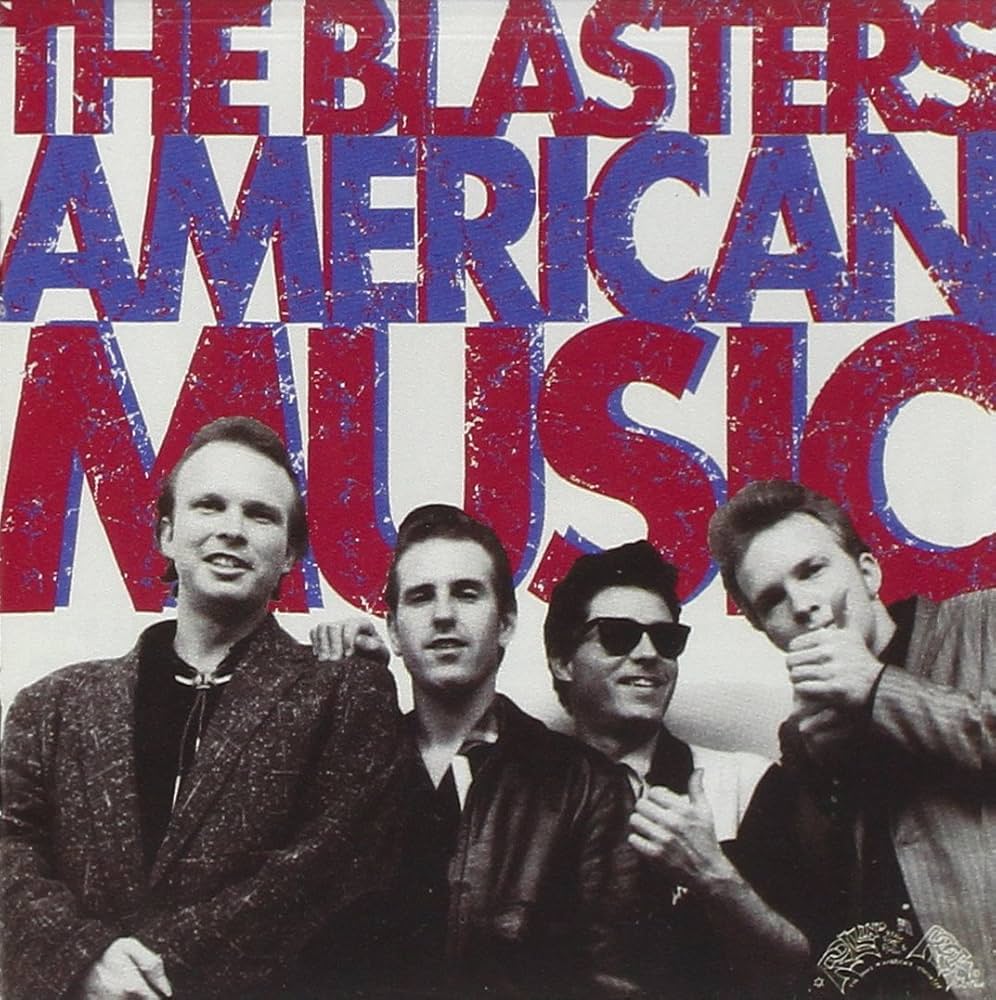
The Blasters play what I would call rockabilly with some Americana thrown in. Some of the descriptions I found were rockabilly, blues, early rock and roll, punk rock, mountain music, rhythm and blues, and country…but in short…they rock.
American Music was first released on the band’s 1980 debut album, the self-titled American Music. The album was independently produced and helped establish The Blasters as a force in the roots rock movement. They recorded 22 songs, and many covers, whittling it down to 13 for the final product. Released in February 1980, it sold out but only 2000 were pressed then.
The Blasters never had mainstream success…but mainstream radio back in the 80s would have been greatly improved by these guys. They were a rock and roll band formed in 1979 in Downey, California, by brothers Phil Alvin (vocals and guitar) and Dave Alvin (guitar), with bass guitarist John Bazz and drummer Bill Bateman.
This sounds like a homage to the American musical heritage, it reflects the band’s influences from blues, rockabilly, and early rock ‘n’ roll. Its lyrics and upbeat tempo celebrate the rich tapestry of American music genres.
Below I have a long quote from Dave Alvin on recording an album that an unknown truck driver complimented the album and meant the world to them.
Dave Alvin: Phil, Bill, John, and I were working day jobs, rehearsing at night in a factory in Garden Grove and trying desperately to find any steady gig that paid more than free beer. Our friends, James Harman and Mike Foresta, had recorded a demo tape of us and we’d taken copies to every “cool” nightclub in the Hollywood/West LA area, but no one was interested in a roots band, especially one from Downey, California, with no hip credentials.
I read somewhere about “Rockin” Ronny Weiser and his small rockabilly label (Rollin’ Rock), so Phil called him about the possibility of recording us. Ronny was skeptical until Phil sang and played guitar over the phone and within an hour Phil and I were sitting in Ronny’s living room playing him our tape. Ronny dug the tape, but still wouldn’t make a commitment to record us because we’d only played in biker and country bars on the decidedly untrendy southeast side of LA County. We knew none of the Hollywood scenesters and tastemakers and they definitely didn’t know us. That is until this truck driver came by Ronny’s to pick up boxes of records to be shipped.
“Who’s this playing?” he asked Ronny.
“It’s us,” Phil said.
“Is this what these records are? If it is, I’ll buy a copy. My wife and I dig this kind of music. You can’t find music like this anymore.”
We couldn’t have asked for more even if we’d paid him a million bucks. Once he left, Ronny quickly discussed when we’d record our first album and within a few weeks we were in Ronny’s garage/studio. James and Mike were with us for moral support. We drank a lot of beer. Phil, the most experienced, led us patiently and sang his heart out. James let me record with a white Fender Stratocaster that he swore once belonged to Magic Sam. I made mistakes I’ll spend the rest of my life trying to forget, but Ronny kept pushing us to quit thinking too much and just keep it rockin’ (and with a rhythm section like John and Bill, that was no problem). After that first day of recording, we drove back to our side of town punching each other in excitement and jumping up and down in the car seats like little boys. we yelled at strangers in passing cars that we’d made a record and we were gonna be famous. I remember at one point all four of us had our heads out the car windows, laughing cursing, screaming, and howling at the moon.
American Music
Well, a U.S. soldier boy on leave in West-Berlin
No music there that rocks, just a thousand violins
They wanna hear some American music
American music
They wanna hear that sound right from the U.S.A
Well, it can be sweet and lovely, it can be hard and mean
One thing’s for sure, it’s always on the beam
They wanna hear some American music
American music
They wanna hear that sound right from the U.S.A
Well, it’s a howl from the deserts, a scream from the slums
The Mississippi rollin’ to the beat of the drums
They wanna hear some American music
American music
They wanna hear that sound right from the U.S.A
We got the Louisiana boogie and the delta blues
We got country, swing and rockabilly, too
We got jazz, country-western and Chicago blues
It’s the greatest music that you ever knew
It’s American music
It’s American music
It’s American music
It’s that crazy sound right from the U.S.A
See pop shows near Nashville
Get tickets as low as $5
In 1974 I was 7 years old and my aunt…who was watching me for the night took me to see Dirty Mary, Crazy Larry, and Gone in Sixty Seconds (the original of course). Car chase movies were popular at the time and this was a good one. The cast includes Peter Fonda, Susan George, Adam Roarke, Roddy McDowall, and Vic Morrow. Kenneth Tobey was in the movie also…not a huge part but really good.
This movie always stuck with me because it is so real. It took a British director named John Hough to film this Americana car movie and he used the low budget to great effect – no studio sets, no process shots, no fakery…
It is a B movie but a fun B movie. Larry Rayder (Peter Fonda) is an aspiring NASCAR driver, Deke Sommers (Adam Roarke) is a mechanic. As they feel they collectively are the best, the only thing that is holding them back is money to build the best vehicle possible. They decide to rob a supermarket and are successful as they steal 150,000 dollars.
Larry’s one-night stand, Mary Coombs (Susan George) talks them into letting her go with them. The best part for me is when they steal a 1969 Dodge Charger R/T from a Flea Market. Fonda lives up to his name in this movie for the most part. Susan George’s character starts to realize this and starts to think that Adam Roarke is the one she should have liked.
Vic Morrow is fantastic in this movie as he always is in his films. A very tangible character that seems real. He was one actor who seemed completely natural in his roles. It was like he wasn’t acting at all.
I love cars and this was a time when cars actually looked different. They used three cars in this movie for the Charger. Two for the stunts and the main one for the normal shots. The color of them was Citron Yellow. A yellow car with a green tint. In the original movie, the car looked banana-yellow because of someone doing a wrong color correction. In the blue ray version, the car is like it was…Citron Yellow.
This is one I found of the color of the car with the original movie after the “color correction.”
The car’s original color before color correction
A lot of the stunts were done by Peter Fonda. Susan George and Fonda both said that in the chase scenes, Fonda would be going over 100 mph with cars bumping into them. George has said that many of her screams were in fact real. The other stunts were done by stunt driver Carey Loftin. All without the aid of CGI, adding to the film’s excitement. That is why it looks so real…because it is.
The budget was 1.4 million and made over 28 million dollars (178 million today) back in 1974. When it was released, the film received mixed reviews from critics. However, it has since gained a cult following, particularly among fans of car chase films and 1970s cinema. It does have a great car chase. My favorite car chase in a movie is a 40-minute one in Gone in Sixty Seconds also released in 1974.
If you are bored and want to watch an entertaining car chase movie, you might like this one. Citizen Kane, it’s not but it’s a fun movie in which Peter Fonda made a fortune from a percentage deal he made. It really caught fire with Drive-In Theaters. If you have seen the movie and want to see a really good film locations video…watch this.
The filming locations were around Stockton California.
Looking through my index…I can’t believe I’ve never posted this one by Cream before. I’m rectifying that mistake today! The song was born from a riff they played in their first rehearsal.
You probably will ask yourself…what did NSU stand for? That would be courtesy of Eric Clapton. He had a venereal disease at the time that was called Non-Specific Urethritis. They thought it would be fun to name the song with the initials.
How this band must have sounded to ears when they first got played. Compared to what was going on it must have sounded like aliens. I would also include Jimi Hendrix with this wash of hard rock psychedelic music.
Cream was formed in 1966 and consisted of Eric Clapton (guitar, vocals), Jack Bruce (bass, vocals), and Ginger Baker (drums). They were one of the first supergroups, with members already having successful careers. Eric had played with The Yardbirds, Bluesbreakers, John Mayall & the Bluesbreakers, Powerhouse, and more. Jack Bruce played with Manfred Mann, Blues Incorporated, and helped form The Graham Bond Organisation. Ginger Baker played with Blues Incorporated, Johnny Burch Octet, and The Graham Bond Organisation before Cream.
The song was on their debut album Fresh Cream released in 1966. The album peaked at #39 on the Billboard Album Charts and #6 in the UK. I can’t find a reliable source but one source has it peaking at #39 in Canada.
This song was written by bassist Jack Bruce.
N.S.U.
Driving in my car, smoking my cigar,
The only time I’m happy’s when I play my guitar.
Singing in my yacht, what a lot I got,
Happiness is something that just cannot be bought.
I’ve been in and I’m out, I’ve been up and down,
I don’t want to go until I’ve been all around.
What’s it all about, anyone in doubt,
I don’t want to go until I’ve found it all out.
I was reading the Master Mix Movie blog and this movie was featured. I have to say it’s very different from the modern Godzilla movies we have had.
I’m a huge Godzilla fan and as far as movies go…but it’s not a monster movie…it’s a movie with a monster in it. The plot is well done and Godzilla never looked better. Toho Studios in Japan made this movie and it even won an Academy Award for Best Visual Effects.
Godzilla is back to being Godzilla. He is not the American anti-hero in this film. He is back to being a massive monster of rage. For one of the few times, I cared about the characters in a Godzilla movie. The original movie came out in 1954. Less than a decade after the atomic bombings of Hiroshima and Nagasaki, a new genre of movies was created. The first movie was a response to the fear of nuclear attack and the trauma suffered by those who were directly affected by the bombs.
I watched this movie with English subtitles and the people in the movie were more than cardboard cutouts. There have been some very good Godzilla movies like the 2014 Godzilla and the 1954 original version was great. This movie I would recommend like I would a normal movie. Godzilla looked so real, not cartoonish like the Hollywood version lately.
I talked to fellow blogger Mitch Teemley about it and he was right about something…a little overacting in this one but that is normal for many Japanese movies.
Something different that the Japanese did that Hollywood forgets…they used CGI as a tool, not as the complete movie. It’s not a buddy movie like the latest Godzilla and King Kong movie of the Monsterverse but a real movie with Godzilla in it. The story would have been great for a movie without the big guy appearing.
If you get a chance…watch this movie. It has a color and black and white version…personally, I think the black-and-white version captures it best.
Feeling as if he unfairly cheated death too many times, Shikishima, a surviving Kamikaze pilot, is attacked on Odo Island along with many war plane engineers by a gargantuan monster. After the engineers die because of Shikishima failing to distract the monster, an overwhelming amount of guilt weighs on him, especially after a homeless woman and a baby move into his home when he returns. Shikishima, now on a personal mission, teams up with a large group of veterans to try to finally take down the monster known as Godzilla.
I really like this song and the pre-hit Steve Miller Band as well. I do like many of his hits but his early catalog is filled with great songs and musicianship. This one has a lot of history. I think Miller’s hits has been a huge victim of radio overplay but I realize that is not his fault…doesn’t mean “Jet Airliner” is not any good…we just have sometimes have heard those songs too much. I have songs like that…but give it some time and I can listen to them again.
His earlier songs have more of a blues feel. The former members of his band has included Boz Scaggs, Nicky Hopkins, Doug Clifford (CCR drummer), Ross Valory, Lonnie Turner, and about a page more of names.
Steve Miller wrote this tune and Paul McCartney played drums, bass, some guitar, and backing vocals. You will also catch the future riff to Fly Like An Eagle in this song. Paul would be credited as Paul Ramone. Paul went by that name on their first tour and that is where the Ramones got their name.
When I read the story of this recording the title would probably match what McCartney was feeling. Allen Klein had just suckered John, George, and Ringo into signing a management contract and he wanted Paul. It was on a Friday afternoon and Paul refused. I’m not always on Paul’s side but in this case…oh yes. He told the other 3 something I find quite funny. Klein wanted 20% of the Beatles earnings and Paul told them wait…The Beatles are kinda big and let him have 10% but John would have none of it. Paul never signed and later on John, George, and Ringo would regret the decision as they all sued Klein and Klein sued them.
On that day, Steve Miller walked into the studio after a giant fight with only Paul left there. I’ll let Paul McCartney tell it: Steve Miller happened to be there recording, late at night, and he just breezed in. ‘Hey, what’s happening, man? Can I use the studio?’ ‘Yeah!’ I said. ‘Can I drum for you? I just had a fucking unholy argument with the guys there.’ I explained it to him, took ten minutes to get it off my chest. So I did a track, he and I stayed that night and did a track of his called My Dark Hour. I thrashed everything out on the drums. There’s a surfeit of aggressive drum fills, that’s all I can say about that. We stayed up until late. I played bass, guitar and drums and sang backing vocals. It’s actually a pretty good track.
It was a very strange time in my life and I swear I got my first grey hairs that month. I saw them appearing. I looked in the mirror, I thought, I can see you. You’re all coming now. Welcome.
The song was on The Steve Miller Band’s album Brave New World released in 1969. The album peaked at a respectable #22 on the Billboard Album Charts and #38 in Canada.
Steve Miller: I got John Lennon’s Epiphone Casino and played through his amp, Paul got on the drums. It was like we’d been playing together forever.
Here is a snippet of Badfinger covering this song live. They were expanding their sound live with longer jams.
My Dark Hour
My dark hour My dark hour You know it’s drivin’ me wild
Well, well, I went to see the doctor And I had my fortune read And you know, the doctor told me “Son, you better stay in bed”
Who’s that comin’ down that road Looks like he’s carryin’ a heavy load What’s that word that he started to say? Wanna come with me on my way?
My dark hour, a mother nature’s child My dark hour, oh, it’s drivin’ me wild
Well, I went (to see the doctor) Just to have (my fortune read) Well, well, well, well, well (The doctor told me) “Son, stay in bed”
So do you think these sinners will fall Or do you think they’ll survive us all? Well, well, well, well, a-down this road Won’t you help me carry my load?
My dark hour, mother nature’s child My dark hour, oh-oh, it’s drivin’ me wild
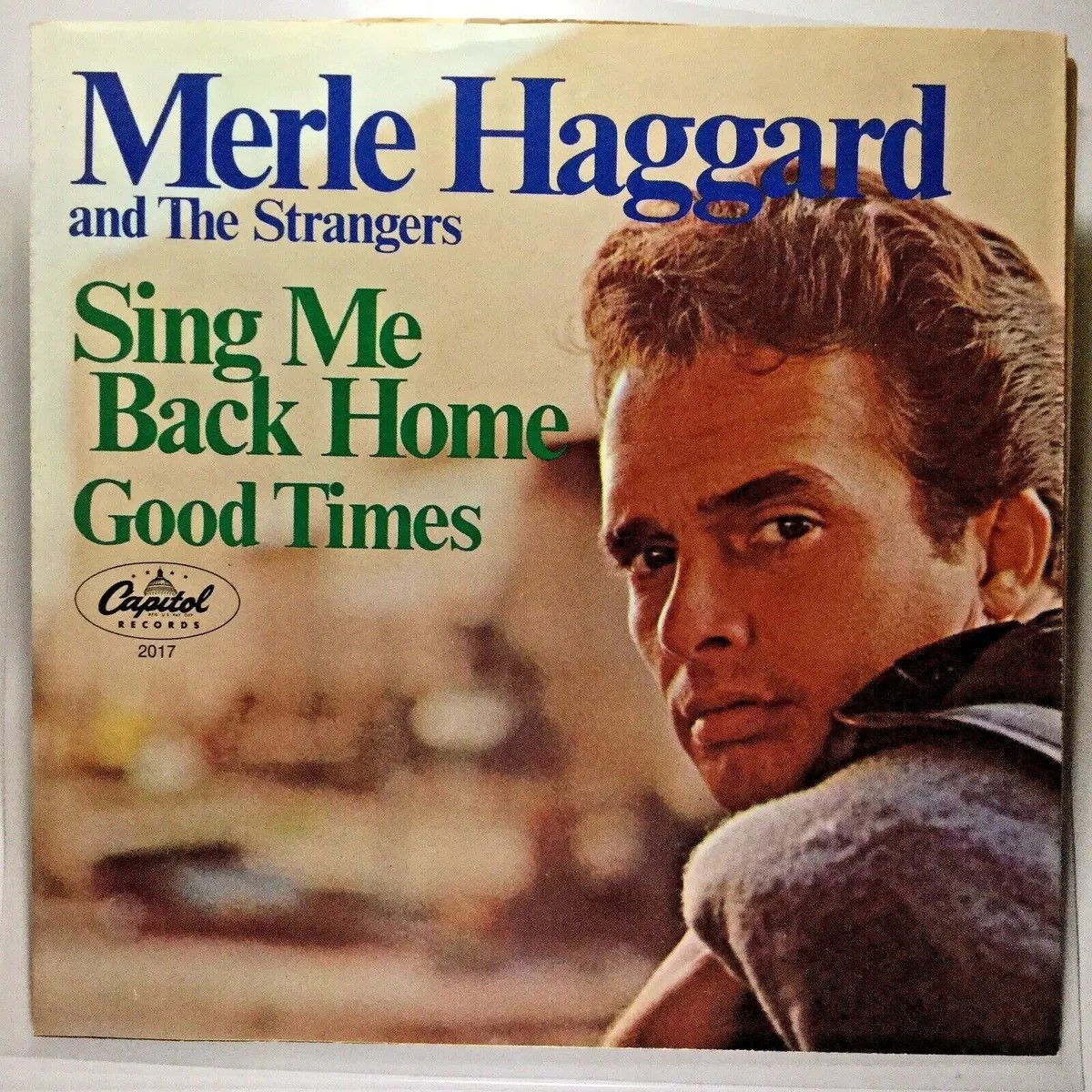
One of the many Haggard songs that my dad would play. This one along with a song called Sam Hill I heard a lot when I was a child. Sing Me Back Home was released in 1967, and it became one of Haggard’s most enduring hits.
Most people know that he spent his early adulthood behind bars for a failed attempt at robbery. While in San Quentin State Prison, Haggard wrote many songs while dreaming of freedom and life beyond the bars of a cell.
Sing Me Back Home was inspired by his fellow inmates James Rabbit and Caryl Chessman. Rabbit was executed in 1961 for killing a California Highway Patrolman, and Chessman was the first modern American executed for a non-lethal kidnapping.
Haggard and James Rabbit hatched a plan one night to escape (they would hide inside a desk he was building in the prison furniture factory), though at the last moment, Rabbit advised Haggard not to take part in the plan. Rabbit escaped, was recaptured, killed an officer, and was brought back to San Quentin to be executed. It was the first of many events to change something in Haggard’s criminal ways.
It is an incredibly sad song and you get it with the first two lines of the song. The warden led a prisoner down the hallway to his doom, I stood up to say goodbye like all the rest. The song was on his Sing Me Back Home album released in 1968. The album peaked at #1 on the Billboard Country Album Charts. The song peaked at #1 on the Billboard Country Charts and #7 on the Canadian Country Charts.
Merle Haggard: “Something happened to me there, I came to the fork in the road and took it, you might say. And I kind of started back in the other direction, trying to make something out of myself rather than to dig myself in a deeper hole.”
Sing Me Back Home
The warden led a prisoner down the hallway to his doom I stood up to say goodbye like all the rest And I heard him tell the warden just before he reached my cell Let my guitar playing friend, do my request
Let him sing me back home with a song I used to hear Make my old memories come alive Take me away and turn back the years Sing me back home before I die
I recall last Sunday morning a choir from ‘cross the street Came to sing a few old gospel songs And I heard him tell the singers There’s a song my mama sang Can I hear once before we move along?
Sing me back home, the song my mama sang Make my old memories come alive Take me away and turn back the years Sing me back home before I die
This song has to have a world record attached to it… song most used in pep rallies. I heard the na na na parts from elementary to high school. It was high school before I heard the actual song.
The original version was by Chris Kenner, a New Orleans R&B singer and songwriter, first recorded and released “Land of 1000 Dances” in 1962 and it only made it to #77 on the Billboard 100. Kenner wrote the song as well. He promised Fats Domino a writing credit if he recorded it…Fats did but it didn’t go anywhere. On some copies, he is listed as a co-writer.
This song has been covered a lot. Secondhandsongs says it has 150 cover versions which is very good. Cannibal and The Headhunters covered it in 1965 and they peaked at #30 on the Billboard 100 but Wilson Pickett had the highest charting position for the song. It’s no telling how many times it’s been played live by famous and nonfamous artists.
Land of 1000 Dances peaked at #6 on the Billboard 100, #6 in Canada, and #22 in the UK in 1966 for Pickett. The sound of this record is great…it has a raw edge that only Stax had at the time.
Land of 1000 Dances
One, two, three
One, two, three
Ow! Uh! Alright! Uh!
Got to know how to Pony
Like Bony Moronie
Mash Potato
Do The Alligator
Put your hand on your hips, yeah
Let your backbone slip
Do the Watusi
Like my little Lucy
Ow! Uh!
Na, na-na na-na
Na-na na-na
Na-na na-na na-na
Na-na na-na
Need somebody help me say it one time!
Na, na-na na-na
Na-na na-na
Na-na na-na na-na
Na-na na-na
Wow!
Ow!
Uh!
You know I feel alright?
Hah!
Feel pretty good, y’all
Uh-hah!
Na, na-na na-na
Na-na na-na
Na-na na-na na-na
Na-na na-na
C’mon y’all, let’s say it one mo’ time!
Na, na-na na-na
Na-na na-na
Na-na na-na na-na
Na-na na-na
Ohh!
Dancin’ in the alley
With Long Tall Sally
Twistin’ with Lucy
Doin’ the Watusi
Roll over on your back
I like it like that
Do that Jerk, oh
Watch me work, y’all
Ow! Do it!
Wow! Do it!
Watch me do it
Ohh, help me!
Ohh, help me!
Ohh, help me!
Ohh, help me!
When I started this blog…I had no idea that I would concentrate on single songs. I was going to cover pop culture and I did at the beginning more. I would like to get one in every now and then.
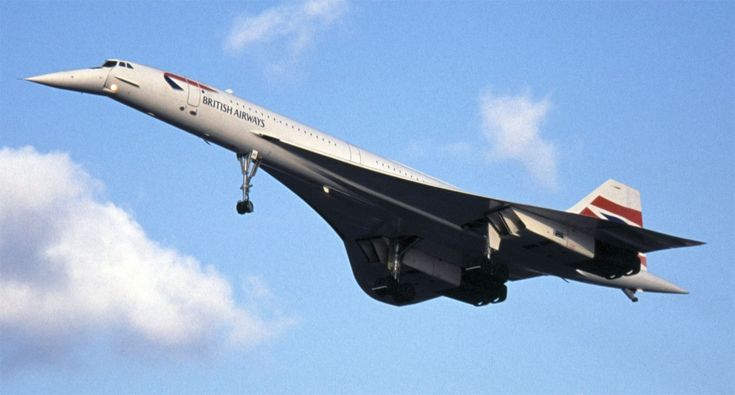
Today… everything seems to be bigger, stronger, and faster. That isn’t true though with a certain passenger airplane. A flight from New York to London now will take around 7 hours and 35 minutes to 8 hours and 10 minutes long. How fast would that flight be in the 1970s on the Concorde? That would take you a cozy three-and-a-half hours. The fastest flight was two hours and fifty-two minutes. It would travel at 1,354 mph. It was more than twice the speed of sound.
I’m not a huge airplane guy but this aircraft fascinated me and I always wanted to ride on one. The nose cone would come down so the pilots could see the runway…it looked like something from a Scifi movie. It would reach Mach 2 between London and New York. I would see pictures of it as a kid or on the news and I thought it was the coolest plane I’d seen. I probably still do. I do remember complaints about the sonic boom.
In November 1962, the British and French governments signed a treaty to jointly develop the Concorde. The Concorde prototype made its maiden flight on March 2, 1969. After some more prototypes, they tested and made modifications, including addressing issues with noise, fuel efficiency, and environmental impact. received its airworthiness certificate in 1975, with the first commercial flights beginning on January 21, 1976, by British Airways and Air France.
There was a plan for a Concorde-type supersonic plane in the US called a Boeing 2707. It would have gone 3 times the speed of sound and held 277 passengers compared to the 100 passengers the Concorde held. It was too expensive to build and was called “the most expensive aircraft never built.” Here is a picture of a 1966 mock-up of the 2707.
Boeing 2707
In 1977, it cost £431 to fly one way onboard Concorde between London and Washington. Adjusted for inflation, that’s about £2,200 ($2,800) in today’s money. However, fare prices gradually went up, and by 1996, a roundtrip across the Atlantic would generally be priced at around $12,500 in today’s money. So it was very expensive. The meals and service were great but it was cramped inside compared to other airplanes at the time. It was also noisy…
All together… two prototypes, two pre-production aircraft, two development aircraft, and 14 production aircraft for commercial service. All of them except the two pre-production builds are preserved in museums.
This all leads us to why the Concorde is in museums now and not in the sky. The price, noise, and it was so expensive to operate. Every hour in the sky had to have 22 hours of maintenance. Also on July 25, 2000, the Concorde crashed. It was shortly after takeoff and 109 people died onboard plus 4 on the ground. That was its only crash. They did go on until 2003 but officially retired the plane that year.
A New York Times writer wrote this about the food served. “What followed the coffee was a breakfast of fresh papaya, guava, pineapple, strawberries and mangoes, croissants and brioche that might have come from a Paris bakery, a pretty good approximation of eggs benedict and a soufflé Gruyère, all washed down with Piper‐Heidsieck Cuvée Diplomatique. The china, of course, was Limoges.”
This video shows the take-off from inside the plane by a passenger.
I have so many songs I want to have on here. I read the original post I did and re-read the comments and took some songs from your suggestions and used them. I haven’t got to all of them…so the others probably will be on the next one. I picked one song and you all picked the rest. Some will be in the next edition that I couldn’t fit in this one.
I hope you are all having a great Sunday.
Jackie Brenston and his Delta Cats – Rocket 88
CB mentioned this one and it should have been on the first one…since this is often said to be the first rock and roll song. It’s only fitting that it was about a car. The recording session happened on March 3, 1951, at Sam Phillips’ Memphis Recording Service in Memphis, Tennessee, which would later become the legendary Sun Studio.
The song was written by Ike Turner and Jackie Brenston. The Delta Cats were actually Ike Turner’s band Turner’s King of Rhythm.
A review from Time Magazine in 1951
Rocket 88 was brash and it was sexy; it took elements of the blues, hammered them with rhythm and attitude and electric guitar, and reimagined black music into something new. If the blues seemed to give voice to old wisdom, this new music seemed full of youthful notions. If the blues was about squeezing cathartic joy out of the bad times, this new music was about letting the good times roll. If the blues was about earthly troubles, the rock that Turner’s crew created seemed to shout that the sky was now the limit.
Commander Cody and His Lost Planet Airmen – Hot Rod Lincoln
The main thing I like about the song is the guitar. It has a slight Chuck Berry feel to it and I like the fills the guitar player throws in. Of course, I like Commander Cody’s (George Frayne) vocal sound as well.
The band signed with Warner Brothers and the label wanted a soft country sound but the band refused to change its raw style.
Hot Rod Lincoln was originally written by Charlie Ryan. It was first recorded and released by Charlie Ryan and The Livingston Brothers in 1955. Commander Cody and His Lost Planet Airmen were a County-Rock group formed at the University of Michigan. Commander Cody is the lead singer and piano player George Frayne. This would be their only top-ten hit. Another song that is well-known by them is Smoke Smoke Smoke.
The Renegades – Cadillac
Fellow blogger HotFox63 mentioned this song when I did a Clash post on Brand New Cadillac so I thought it would be perfect for this. Very cool song that I knew nothing about.
The Renegades were a British rock band formed in Birmingham in 1960. The original lineup consisted of Kim Brown (vocals, guitar), Denys Gibson (guitar), Ian Mallet (bass), and Graham Johnson (drums). Cadillac was released as a single in 1964. The song quickly became a hit in Finland, reaching #1 on the charts. Its success in Finland helped the band gain a substantial following in Scandinavia, and the song’s popularity also spread to other parts of Europe, including Italy.
Rosanne Cash – Black Cadillac
Obbverse mentioned this one. It’s a song from 2005 from an album with the same name. The black Cadillac in the song symbolizes both a funeral car and a connection to her father, who owned a black Cadillac…and about loss, memory, and mourning.
She wrote the album about dealing with the death of her father.
“It certainly crossed my mind that I was opening myself to questions about how much [of the album] was documentary and how much was poetry, I certainly did think about it. But, at the same time, I think that the themes are so universal that it almost doesn’t matter what’s particular to my life. … People can bring their own lives to this subject very easily.”
Beach Boys – 409
Christiansmusicmusings and Halffastcyclingclub both mentioned this one by the Beach Boys. The Beach Boys would be an endless supply of cars and endless summers. This song was written by Brian Wilson, Mike Love, and Gary Usher and was released in 1962.
Thanks to Dave for posting this on his site. Below is the request that we got to write about. “There are many great songs about music, so let’s highlight them. Pick a song you like either about music itself (eg, ‘I love Music’ and so on) or about the life of a musician making music . Or anything else you can think of about music… about music! “
I sometimes go for the B sides or ones that aren’t heard as much. Not this time!
I remember when I was 5-6 years old and listening to this song. The verses I ignored at the time and enjoyed the chorus immensely going around singing it and being told to shut up already by my sister. I guess a six-year-old singing Bye, bye Miss American Pie, Drove my Chevy to the levee but the levee was dry, And them good ole boys were drinking whiskey and rye, Singin’ this’ll be the day that I die, This’ll be the day that I die… would get old but hey…I had good taste anyway (better than my sister).
It’s a song that I don’t get tired of…ever. When I think of it I think of my childhood and also a big dose of pop culture. We all know that the day the music died was pointing to the Buddy Holly, Ritchie Valens, and The Big Bopper plane crash. The rest builds up and between the lines, he sings about a lot of events and artists.
Where do I begin with this one? The song has so many references that it acts as a pop culture index by itself. I have read about college classes just on this song. It has been inspected and dissected since its release. Long after Don McLean leaves this earth…the song will be inspected and dissected again and again.
We do know the song was inspired by Buddy Holly… What does it all mean? While being interviewed in 1991, McLean was asked for probably the 1000th time “What does the song ‘American Pie’ mean to you?,” to which he answered, “It means never having to work again for the rest of my life.” Now that is a great and honest answer by Mclean.
In 2015 he opened up about the song and sold the original lyrics for 1.2 million dollars. This time he answered the question seriously. “It was an indescribable photograph of America that I tried to capture in words and music.” He also said that American Pie was Buddy Holly’s airplane that crashed…it was a made-up name by McLean because the company that owned the plane didn’t name any of them. “People ask me if I left the lyrics open to ambiguity, of course, I did. I wanted to make a whole series of complex statements. The lyrics had to do with the state of society at the time.”
In later years I would buy the single and try to figure out who he was talking about. Some of the lyrics include references to Karl Marx (or Groucho Marx), Vladimir Ilyich Lenin (or John Lennon), the Beatles, Bob Dylan, Buddy Holly, The Byrds; James Dean; Charles Manson; the Rolling Stones; the “widowed bride,” Jackie Kennedy, Jimi Hendrix, the Vietnam War, The Fillmore East, and more.
This song peaked at #1 in the Billboard 100, #1 in Canada, #1 in New Zealand, and #2 in the UK in 1972. If you want more… here is a website PDF that breaks down the song line by line of their interpretation.
I’ll let Don McLean talk about the song: “For some reason, I wanted to write a big song about America and about politics, but I wanted to do it in a different way. As I was fiddling around, I started singing this thing about the Buddy Holly crash, the thing that came out (singing), ‘Long, long time ago, I can still remember how that music used to make me smile.’
I thought, Whoa, what’s that? And then the day the music died, it just came out. And I said, Oh, that is such a great idea. And so that’s all I had. And then I thought, I can’t have another slow song on this record. I’ve got to speed this up. I came up with this chorus, crazy chorus. And then one time about a month later I just woke up and wrote the other five verses. Because I realized what it was, I knew what I had. And basically, all I had to do was speed up the slow verse with the chorus and then slow down the last verse so it was like the first verse, and then tell the story, which was a dream. It is from all these fantasies, all these memories that I made personal. Buddy Holly’s death to me was a personal tragedy. As a child, a 15-year-old, I had no idea that nobody else felt that way much. I mean, I went to school and mentioned it and they said, ‘So what?’ So I carried this yearning and longing, if you will, this weird sadness that would overtake me when I would look at this album, The Buddy Holly Story because that was my last Buddy record before he passed away.”
American Pie
A long long time ago
I can still remember how
That music used to make me smile
And I knew if I had my chance
That I could make those people dance
And maybe they’d be happy for a while
But February made me shiver
With every paper I’d deliver
Bad news on the doorstep
I couldn’t take one more step
I can’t remember if I cried
When I read about his widowed bride
Something touched me deep inside
The day the music died
So
Bye, bye Miss American Pie
Drove my Chevy to the levee but the levee was dry
And them good ole boys were drinking whiskey and rye
Singin’ this’ll be the day that I die
This’ll be the day that I die
Did you write the book of love
And do you have faith in God above
If the Bible tells you so?
Now, do you believe in rock and roll?
Can music save your mortal soul?
And can you teach me how to dance real slow?
Well, I know that you’re in love with him
‘Cause I saw you dancin’ in the gym
You both kicked off your shoes
Man, I dig those rhythm and blues
I was a lonely teenage broncin’ buck
With a pink carnation and a pickup truck
But I knew I was out of luck
The day the music died
I started singin’
Bye, bye Miss American Pie
Drove my Chevy to the levee but the levee was dry
Them good ole boys were drinking whiskey and rye
And singin’ this’ll be the day that I die
This’ll be the day that I die
Now, for ten years we’ve been on our own
And moss grows fat on a rolling stone
But, that’s not how it used to be
When the jester sang for the king and queen
In a coat he borrowed from James Dean
And a voice that came from you and me
Oh, and while the king was looking down
The jester stole his thorny crown
The courtroom was adjourned
No verdict was returned
And while Lennon read a book on Marx
The quartet practiced in the park
And we sang dirges in the dark
The day the music died
We were singin’
Bye, bye Miss American Pie
Drove my Chevy to the levee but the levee was dry
Them good ole boys were drinking whiskey and rye
And singin’ this’ll be the day that I die
This’ll be the day that I die
Helter skelter in a summer swelter
The birds flew off with a fallout shelter
Eight miles high and falling fast
It landed foul on the grass
The players tried for a forward pass
With the jester on the sidelines in a cast
Now the half-time air was sweet perfume
While the sergeants played a marching tune
We all got up to dance
Oh, but we never got the chance
‘Cause the players tried to take the field
The marching band refused to yield
Do you recall what was revealed
The day the music died?
We started singin’
Bye, bye Miss American Pie
Drove my Chevy to the levee but the levee was dry
Them good ole boys were drinking whiskey and rye
And singin’ this’ll be the day that I die
This’ll be the day that I die
Oh, and there we were all in one place
A generation lost in space
With no time left to start again
So come on Jack be nimble, Jack be quick
Jack Flash sat on a candlestick
‘Cause fire is the devil’s only friend
Oh, and as I watched him on the stage
My hands were clenched in fists of rage
No angel born in Hell
Could break that Satan’s spell
And as the flames climbed high into the night
To light the sacrificial rite
I saw Satan laughing with delight
The day the music died
He was singin’
Bye, bye Miss American Pie
Drove my Chevy to the levee but the levee was dry
Them good ole boys were drinking whiskey and rye
Singin’ this’ll be the day that I die
This’ll be the day that I die
I met a girl who sang the blues
And I asked her for some happy news
But she just smiled and turned away
I went down to the sacred store
Where I’d heard the music years before
But the man there said the music wouldn’t play
And in the streets the children screamed
The lovers cried, and the poets dreamed
But not a word was spoken
The church bells all were broken
And the three men I admire most
The Father, Son, and the Holy Ghost
They caught the last train for the coast
The day the music died
And they were singing
Bye, bye Miss American Pie
Drove my Chevy to the levee but the levee was dry
And them good ole boys were drinking whiskey and rye
Singin’ this’ll be the day that I die
This’ll be the day that I die
They were singing
Bye, bye Miss American Pie
Drove my Chevy to the levee but the levee was dry
Them good ole boys were drinking whiskey and rye
Singin’ this’ll be the day that I die
I was talking to a friend of mine who is reading a Gram Parsons book and I learned something from him that I didn’t know about this song. This song is a tragic song about three friends. Linda Ronstadt also appears on this one. The song is credited to Parsons and Harris.
The song is structured as a series of verses recounting the stories of three real individuals, each meeting a tragic end. The first verse of this song is about actor/musician Brandon deWilde. Parsons was friends with deWilde in the sixties and early seventies. He was in films and TV shows such as Shane, The Virginian TV Series, Hawaii Five-O, and many others. He started a music career and Gram Parsons helped him out in the sixties. Some have said no one could sing harmony better with Gram than deWilde excluding Harris.
In 1972 he was in Denver doing a stage production of Butterflies Are Free and he was killed in a camper van that hit a guardrail, truck, and then rolled. He was 30 years old.
The second verse was about Byrds’ extremely gifted guitar player Clarence White. An incredible country guitar player who co-invented with Gene Parsons the B-Bender that Telecasters use. He joined the Byrds around the time that Gram was leaving. He and his brother Roland White were loading equipment in their car and a drunk driver killed Clarence but Roland survived.
The third person was Sid Kaiser, a talent agent and producer in Los Angeles. He died of a heart attack a few days after Clarence White. Gram would pass on a few months after Keiser.
The sessions for “Grievous Angel” took place in 1973, primarily at Wally Heider Studios in Los Angeles. Parsons worked with renowned musicians, including members of Elvis Presley’s TCB Band: James Burton (guitar), Glen D. Hardin (piano), and Ronnie Tutt (drums), among others.
Rock critic Ben Fong-Torres: “Because Gram never lived to see through the details of the album including the order of songs…’Darkness’ was placed at the end of the second side, partly because it made sense, and partly because it could easily be read as a song about Gram himself, in particular, the lines he wrote for Clarence:”
In My Hour of Darkness
In my hour of darkness In my time of need Oh Lord, grant me vision Oh Lord, grant me speed
Once I knew a young man Went driving through the night Miles and miles without a word With just his high beam lights Who’d have ever thought they’d build Such a deadly Denver bend To be so strong, to take so long As it would ’til the end
In my hour of darkness In my time of need Oh Lord, grant me vision Oh Lord, grant me speed
Another young man safely strummed His silver string guitar And he played to people everywhere Some say he was a star But he was just a country boy His simple songs confess And the music he had in him So very few possess
In my hour of darkness In my time of need Oh Lord, grant me vision Oh Lord, grant me speed
Then there was an old man Kind and wise with age And he read me just like a book And he never missed a page And I loved him like my father And I loved him like my friend And I knew his time would shortly come But I did not know just when
In my hour of darkness In my time of need Oh Lord, grant me vision Oh Lord, grant me speed
I believe I first heard this by Eric Clapton in the late seventies when I was a kid. I always liked the song but this version is great as well. It’s the cool rhythm that draws me in. One of the best and most copied rhythms in rock.
In some circles, Otis was known as “the godfather of rhythm and blues.” He was a multi-talented musician, known primarily as a drummer, vibraphonist, pianist, singer, and composer. He led his own band, the Johnny Otis Orchestra, which played a significant role in the development of West Coast rhythm and blues.
He earned that title. He helped in discovering and promoting such musicians as Etta James, Big Mama Thornton, and Jackie Wilson. Otis was a white musician who immersed himself in black music and culture. He was accepted in that community and became an advocate for racial integration and civil rights. Otis was also a popular radio DJ, hosting shows that showcased rhythm and blues music and spreading the word of that genre.
Johnny wrote this song and released it in 1958. It peaked at #1 on the Billboard R&B Charts and #9 on the Billboard 100. It’s one of the most catchy rhythms in rock and roll next to the Bo Diddley rhythm or Who Do You Love…it very well could be called a variation of Bo Diddley.
When he played this live his audience would mimic a dance and clap they had to the song. Some had said that the song was about masturbation…something that Johnny Otis denied until he passed away in 2012 at the age of 90. I think some people spend their lives trying to find something controversial in everything. I guess I’m guilty of it at times.
According to secondhandsongs.com there are 69 versions of this song. Artists that covered the song include Cliff Richard, The Crickets, Sonny Burgess, The Gentrys, The Tremeloes, New Riders of the Purple Sage, Fleetwood Mac, Eric Clapton, George Thorogood, and I’ve heard The Grateful Dead do it live on a few clips I’ve seen.
Willie and the Hand Jive
I know a cat named Way-Out Willie He got a cool little chick named Rockin’ Billie Do you walk and stroll with Susie Q And do that crazy hand jive too?
Papa told Willie “you’ll ruin my home You and that hand jive has got to go” Willie said “papa, don’t put me down Been doin’ that hand jive all over town”
Hand jive, hand jive Hand jive, doin’ that crazy hand jive
Mama, mama, look at uncle Joe, look at him He’s doin’ that hand jive with sister Flo Even gave baby sister a dime, hey, hey Said “do that hand jive one more time”
Well, a doctor and a lawyer and a indian chief They all dig that crazy beat Way-Out Willie gave them all a treat, yeah When he did the hand jive with his feet
Hand jive, hand jive Hand jive, doin’ that crazy hand jive, hey, hey Come on, sugar, yeah!
Well, Willie and Billie got married last fall They had a little Willie Junior and that ain’t all You know that baby got greatness and it’s plain to see, hey, hey Doin’ that hand jive on T.V., come on
Hand jive, hand jive (Why don’t you) hand jive, doin’ that crazy hand jive


 Drive your car up to my place and find your spot….and we won’t even check the trunks for free stowaways (which I was a lot). Sit back while we watch some movies. I will keep each of these as short as possible.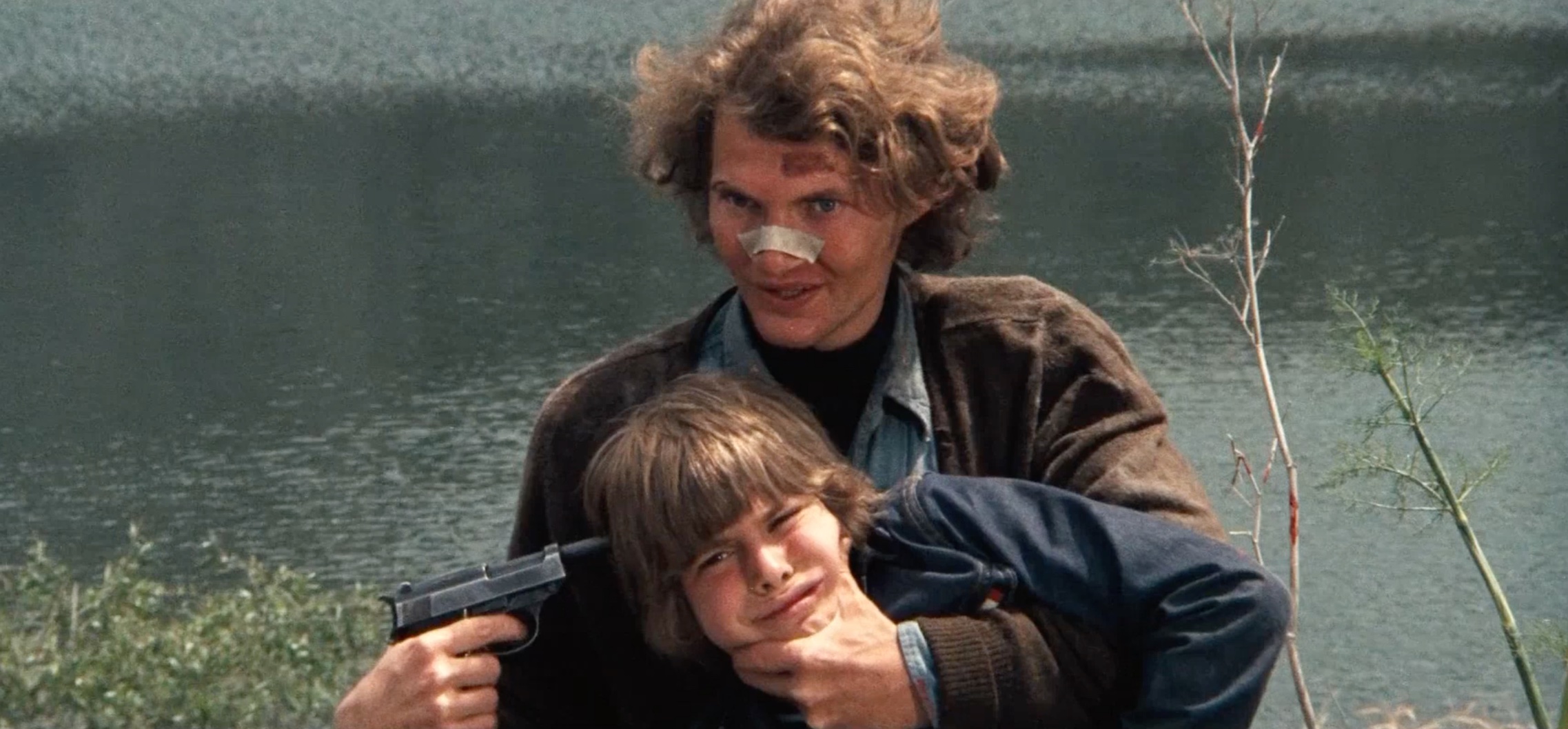







 PowerPop... An Eclectic Collection of Pop Culture