I have had someone ask me my favorite singer from The Band. I always say that it depends on the song. They were brilliant in dividing up who would sing what. Robbie Robertson would write songs for one of their three top-notch singers. He knew exactly how to divide them up. Danko had one of the most recognizable voices of the bunch because it was so soulful and unique.
I first heard this song in The Last Waltz. Martin Scorsese was interviewing Danko in the control room and asked him what he was doing now. He started to play this song and turned it up. It’s always stuck with me. After seeing the film this past Thanksgiving I thought I would write it up.
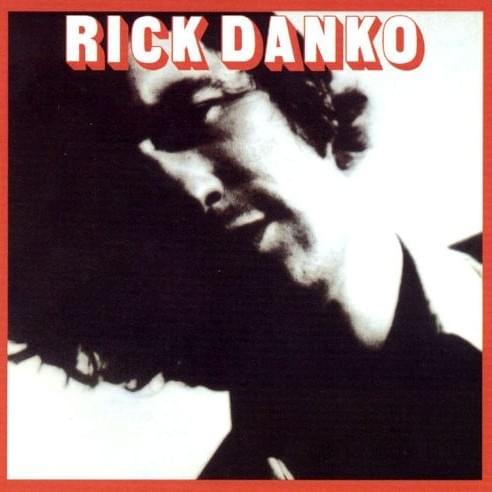
During the Last Waltz, Danko was working on a self-titled solo album. He was the first member of the band to release one. He did have some help with Eric Clapton, Ronnie Wood, Blondie Chapman, Doug Sahm, and members of The Band. An ad for the record claimed, “Once you get a taste of Rick Danko, you’ll never get enough.” Unfortunately, the album didn’t have much commercial success. This song was written by Tim Drummond and was originally called To Lay Down Beside You and it was originally recorded by Joe Simon. Ronnie Wood played the solo on this song.
At the time the album was released in 1977, disco and punk music were dominating the airwaves. The album contains different kinds of genres but not punk and disco.
Rick Danko: “We’ve been together for 15 or 16 years and I for one wouldn’t stop making albums with the Band. Just so long as the Band wants to continue making records, I’ll be there.”
Sip The Wine
I want to lay down beside you I want to hold your body close to mine Like a grape that grows ripe in the sunshine There comes a time when we must sip the wine
I can tell by looking you’re not mine, girl I believe everything I told you was true There’s a child here that wants to start livin’ Well, you know that this child will get its start From me and you
(Close your eyes) Now close your eyes And don’t you think of nothing (Let your thoughts) Let your thoughts remain here Inside this room (Lay your head) Lay your head beside me on my pillow And I will share this night with you
(We must sip the wine) Til it feels alright (We must sip the wine) Into the night (We must sip the wine) Together
The song sounds just like the name! It’s a rocker supreme and the guitar riff to open it up lives up to the name.
My love for blogging is simple…talk to more bloggers and find more artists that I missed. I love finding new artists but I also like finding new/old artists that I missed and this one is a prime example. Dave, Christian, Obbverse, Deke, Lisa, Randy, Phil, Graham, Jeff, CB, and the list goes on and on. They all have turned me on to new artists through the years that I missed so I do want to thank all of them!
On the Carlene Carter post I did last week, CB mentioned something about her guitar player Al Anderson and he was in this band. I have heard of this band but that is about it. I thought they were an 80s band. Oh how wrong I can be. They were formed in 1965 and the NRBQ stands for New Rhythm and Blues Quintet. If you were looking for a band with an eclectic style, look no further than this band. They blend rock, pop, jazz, folk, soul, blues, and country influences.
They also have improvisational live performances and a great sense of humor. They have developed a cult following because of that and it lasts to this day. They were formed by pianist Terry Adams, guitarist Steve Ferguson, and drummer Frank Gadler, with the addition of bassist Joey Spampinato (originally Joey Spampanato) and drummer Tom Staley completing the lineup.
NRBQ released their self-titled debut album in 1969. The album featured that eclectic style I was talking about. The album has both rock-and-roll covers and avant-garde jazz elements. That’s the best way I can describe it. It’s a fun album to listen to.
The band has 24 studio albums, 14 live albums, and 15 compilation albums. Terry Adams, who formed the band, is still with them… to this day. From 1974 to 1994 the band included Adams, Al Anderson, drummer Tom Ardolino, and bassist Spampinato. They were considered the “classic” version of the band but they kept going
In 1970 they released Boppin’ The Blues and they were teamed with Carl Perkins. NRBQ blended their experimental style with the rockabilly style of Carl Perkins. I love that guitar at the beginning and the song really rocks. I couldn’t find Boppin’ The Blues but I found a highlights and rarities album from Spotify. Steve Ferguson wrote this song.
NRBQ live in Chicago in 2017 with Flat Foot Flewzy
Flat Foot Flewzy
I’m so doggone dirty
‘Cause a Flat Foot Flewzy
And I walk like a tweety bird
While I’m singing this bluesy
I got a gal named Lucy
But like to call her Lizzy
She calls her man Flewzy
And she keeps him real busy
Well, I’m Flat Foot Flewzy
It’s alright
“Mr. Flewzy won’t you tell us
About your big flat feet”
Why sure, kinda helps me
With the rock and roll beat
Come along with me
And things’ll be alright
Singing Flewzy woozy boogie
On a Saturday night
Well, I’m so doggone dirty
‘Cause a Flat Foot Flewzy
And I can walk like a tweety birdy
While I’m singing real bluesy
See NRBQ Live
Get tickets as low as $68
You might also like
Sorry Charlie
Carl Perkins
Sure to Fall (In Love with You)
NRBQ
Mayonnaise and Marmalade
NRBQ
I got a gal named Lucy
But like to call her Lizzy
She calls her man Flewzy
And shе keeps him real busy
Well, I’m Flat Foot Flewzy
It’s alright
“Wеll it’s hard to believe
That you walk like a bird”
Well I meant what I said
So I said what you heard
Come along with me
And things’ll be alright
Singing Flewzy woozy boogie
On a Saturday night
The band’s name is either Kat Men or Katmen. I’ve seen it listed both ways.
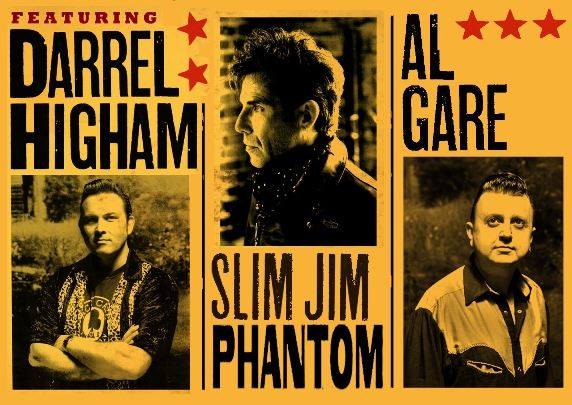
CB mentioned this band in an email and I had to check it out. Pure rockabilly heaven for me. I’ve also checked out Darrel Higham’s guitar playing…he is excellent. He worked with and married Imelda May… his sound can be heard in much of her music.
The band was formed when Slim Jim Phantom and Darrel Higham decided to join forces, they were inspired by a shared love of classic rockabilly music. Phantom’s drumming style is well known for his stint in The Stray Cats, while Higham contributed his incredible guitar skills and an appreciation for rockabilly. Their music has vintage rockabilly vibes with a modern sound.
They formed in 2006 when former Stray Cats drummer Slim Jim Phantom and Imelda May guitarist Darrel Higham met during a jam session at the Oneida Casino, in Wisconsin. In 2012 they hired bassist Al Gare. This guy plays a mean standup bass like no one else I’ve seen.
Higham developed an early interest in rockabilly and 1950s rock ‘n’ roll, his influences were artists like Elvis Presley, Gene Vincent, Eddie Cochran, and guitarist Cliff Gallup. Higham started his professional music career in the late 1980s, performing with various rockabilly and roots bands in the UK.
This song is on their 2013 album The Katmen Cometh. Another song on that album is “We Need Elvis Back.” I HAD to include that song as well in this! Both songs are credited to the band.
A few weeks ago I posted about Mouse and the Traps, a Texas band formed in the 1960s. I thought my fellow blogger friend Phil from Notes from the Cactus Patch may have known them. He did…. so I thought…I would like to write about Phil’s 1960s band. I first heard of Phil from Hanspostcard… he sent me THIS link to Phil’s post about meeting John Sebastian in Texas in the sixties along with the other Lovin Spoonful. He also briefly met Janis Joplin when she cut the food line at the Texas International Pop Festival. ” I survived one-hundred-degree temperatures for three days and got to meet Janis Joplin one late night when this nice gal with a Texas twang asked me if she could cut in line as I was waiting to buy a hot dog. It took a minute for me to realize it was her, but I was cool; it was the sixties, man. That night, ole Janis “took a little piece of my heart, now baby.”
I’m getting most of the info from this post. I urge you to read that because he tells a more complete story. Phil’s Dad, Johnny Strawn played with the Light Crust Doughboys so Phil was surrounded by music when he grew up. He went through a few bands on the way. He formed his first band in 1964 and they were called The Dolphins and in late 65 they became The Orphans. The Orphans lasted until 1967 and the members were Johnny Strawn, vocals and lead guitar – Jarry Davis, vocals and rhythm guitar- Danny Goode, lead vocals and bass – Marshall Sartain, vocals and keyboards- Barry Corbett, vocals.
The music they played was all over the place and everything that kept people on the dance floor. The music they played was Soul Music, Beatles, Bee Gees, Rascals, Hendrix, Doors, Steppenwolf, Cream, Stones, Vanilla Fudge, and Jefferson Airplane. They played all over Texas and parts of Oklahoma…and some of the clubs he mentioned were The Studio Club, LuAnn’s, Strawberry Fields, Phantasmagoria, The Cellar, The Box, and more. This was when three of the band were still in high school.
Phil Strawn: We used to do a lot of double bills at The Studio Club and LuAnn’s; that was a big thing back then. I remember playing a lot of them with Southwest F.O.B. We were playing at LuAnn’s one weekend when during the Jimi Hendrix song Fire, our drummer put lighter fluid on his cymbals, lit his drum sticks, then hit the cymbals and ignited them. It got a little out of hand and it burned up his drums. That kind of stuff wouldn’t fly nowadays, but back then, we didn’t think of the repercussions. The crowd loved it, sort of like The Who, only with real fire and smoke. Miss Lou Ann was not pleased and banned us from the club for about six months. We eventually worked our way back into her good graces. Ron Chapman the famous DJ on KLIF and KVIL remembered us as the band that nearly burned down LuAnn’s. Some legacy.
They met a guy named Mark Lee who became their manager. After they signed with him their gigs increased. They even opened up for Iron Butterfly at a place called Strawberry Fields. The Orphans committed a cardinal sin by learning an Iron Butterfly song called Possession and nailed it while opening for Iron Butterfly. Lee put them up to it because he knew it would get under Iron Butterfly’s skin…and it did! They ended up swiping Phil’s Vox Wah Wah pedal and a velvet Nehru suit from their drummer.
In 1968 they had to change their name. The drummer, Jerry Deaton, had a friend who wanted to manage them but they were happy with Mark Lee. The guy went out and had “The Orphans” copyrighted and told the band he would sue them if they continued so they changed their name. Phil said: “We liked ATNT {Alice talks “n” talks} and Jerry’s mother was the inspiration for that name. Later, we found out that he had managed another band called the Orphans for a while, so that was the reason for all the drama. He copyrighted the name so we had to change.”
Check out this 1968 Flower Fair entertainment. ATNT played and look at the other artists as well. Spencer Davis, Jimmy Reed, Mitch Ryder, The Lemon Pipers, and Neil Diamond. The Doors were going to play but they had scheduling conflicts.
In 1966 they recorded a song that Phil wrote called “Leader of My Mind” which was a Byrds-type song with harmonica but no one can find any copies. In 1968 they recorded two songs called “No One Told Me About Her” with the flipside Cobblestone Street.
They also did a couple of appearances on Mark Stevens TV Show which they lipsynced to their songs. Phil quit in the late sixties because of a disagreement with the rhythm guitar player. He had to make a choice and his final exams were coming up and Phil decided to study rather than just practice with the band.
After that, Phil said he didn’t play much until around 1974 when he started to play in the progressive country music scene in Austin and Dallas. I played with various people around town and some in south Texas and did some pick-up and studio work. I joined the Trinity River Band in late ’79 and played with them until ’85. I also played with The Light Crust Doughboys from time to time and did some studio work on the five-string banjo. I was fortunate to play on the Light Crust Doughboys album, ” One Hundred-Fifty Years of Texas Music.”
Phil Strawn: The A side is “Cobblestone Street,” written and sung by myself and our drummer Barry Corbett. The B side is ” No One Told Me About Her,” written and sung by our lead singer and bass player, Danny Goode. The two producers, Marvin Montgomery and Artie Glenn, suggested we add horns to get a Chicago Transit Authority sound. Before the brass was added, Cobblestone Street was loud and raw with loud guitars and organs. After adding the horns, we returned to the studio and tweaked the cuts. I purposely untuned my Gibson 335 a bit to give the guitar break a bit of an out-of-tune carnival sound. Marvin, who went by the name of Smokey, was a member of the Light Crust Doughboys since the 1930s and played with Bob Wills. He produced Paul and Paula and Delbert McClinton. Artie Glenn wrote the famous Elvis hit “Crying In The Chapel” and many others; he was also a Light Crust Doughboy western swing musician. These two men were top-shelf record producers, so we listened when they suggested.
Phil Strawn: It was absolutely the best time of my life. How could you not enjoy being a teenager in the ’60s and playing in a popular rock band? The people we met and played with, the experience that we will all carry with us the rest of our lives. It was just a part of life that helped shape us into what we are now – being part of that change in our country, that decade. It was a time of turmoil, but it was also the last year of the innocence we grew up with. Teenagers these days are so hardened. The music then was happy and said a lot. It would move you, whether you played it or danced to it. The music now has a meaner, harder edge, and reflects the times we live in.
Phil Strawn: I am a project manager in commercial construction, and do a lot of painting and artwork – mostly Texas art. After 35 years, Danny Goode, who I played with in ATNT and the Orphans, called me and asked me to be part of their group, The American Classics. I joined them about two years ago and that’s what we do nowadays. The band consists of Danny Goode, bass and lead vocals; John Payne, lead guitar and keyboards; Jordan Welch, drums; and me on rhythm guitar and vocals. We play about once a month or so around Dallas Fort Worth, mostly private parties. We recently played in Deep Ellum, and will probably be back down there soon. We stick to mostly ’60s music – it’s what we know well. It’s good to still be playing rock music at this age. You really never outgrow it.
I love the horns in this song but I would also love to hear what it sounded like with loud guitars as well.
Happy Thanksgiving! Watching The Last Waltz is just as part of Thanksgiving as the meal with the family…that and listening to Alice’s Restaurant.
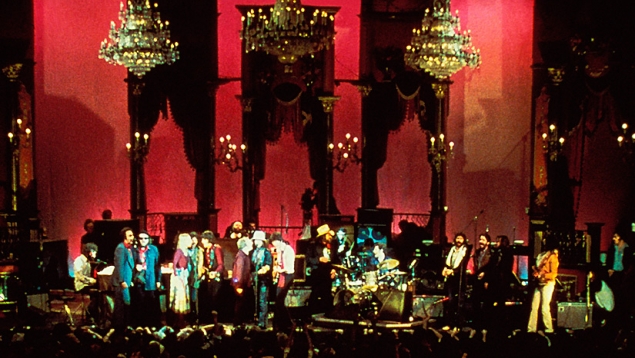
The Band on Thanksgiving in 1976 at Winterland. The film starts off with THIS FILM MUST BE PLAYED LOUD! A cut to Rick Danko playing pool and then it then to the Band playing “Don’t Do It”…the last song they performed that night after hours of playing. Through the music and some interviews, their musical journey and influences are retraced.
This film is considered by many the best concert film ever made. It was directed by Martin Scorsese. I love the setting with the chandeliers that were from the movie Gone With The Wind. The quality of the picture is great because it was shot with a 35-millimeter camera which wasn’t normally done with concerts.
Before the Band and guests hit the stage, Bill Graham, the promoter, served a Thanksgiving dinner to 5000 people that made up the audience with long tables with white tablecloths.
The Band’s musical guests included
Ronnie Hawkins, Bob Dylan, Neil Young, Dr. John, Paul Butterfield, Van Morrison (my favorite performance), Joni Mitchell, Eric Clapton and Muddy Waters
The Staple Singers and Emmylou Harris also appear but their segments were taped later on a sound stage and not at the concert.
Robbie wanted off the road earlier and that is what the Last Waltz was all about…the last concert by The Band with a lot of musical friends. He was tired of touring and also the habits the band was picking up… drugs and drinking. Richard Manuel, in particular, was in bad shape and needed time.
The rest of the Band supposedly agreed but a few years later all of them but Robbie started to tour as The Band again. Richard Manuel ended up hanging himself in 1986. Rick Danko passed away in 1999 at the end of a tour of a heart attack attributed to years of drug and alcohol abuse. Levon Helm died of cancer in 2012.
The Band sounded great that night and it might be the best version you will ever hear of The Night They Drove Old Dixie Down.
The Last Waltz is a grand farewell to a great band and a film that I revisit at least twice a year… once always around Thanksgiving.
The complete concert is at the bottom…without cuts.
I first heard Del Amitri in the 90s. I remember hanging out in West End of Nashville at that time. It’s near Vanderbilt University and was a really hip place to be. I was looking for some Roger McGuinn glasses. Those small rectangle glasses that were very popular in the ’60s. I searched shop after shop and could not find them. I finally found them around closing time. Anyway…boy that was a long story but I remember that is when I heard Del Amitri for the first time…hey it stuck with me!
Some songs I hear and I think…I wish so much I would have written this song. This is one of those songs because it’s catchy without being too sweet. Not a profound lyric (teenage angst) in this one but clever and it’s the overall sound…right up my cobbled power pop alley. The crunchy and jangly guitars mesh with each other. This wasn’t as big as their other song Roll To Me but I always favored this one by a long shot.
I would have never guessed this wasn’t an American band. They formed in Glasgow, Scotland in 1980. The band was larger in the UK than here. This song is from the album Some Other Sucker’s Parade which peaked at #6 in the UK and #160 on the Billboard 100 in 1997. This song was played on our main rock station and got quite a bit of alternative play…if it came out today I would buy it.
The band was started by Justin Currie (vocals, bass) and a group of schoolmates. Currie became the constant band member over time. When they started they were influenced by Joy Division and The Cure. They switched to power pop and released their self-titled debut album in 1985. Waking Hours (1989) was their commercial breakthrough, featuring the hit single “Nothing Ever Happens”, which became a chart success and fan favorite. They have had 5 top-ten albums in the UK. They also had an astounding 15 top 40 hits in the UK. A shout out to CB who sent me a few of their songs and I’ve been happily getting reacquainted with this band.
It’s funny how some bands can get back on your radar. The Replacements are one of those bands that I rediscovered because of blogs. When I hear Del Amitri I think of a modern Badfinger because of the crunch and jangle of the guitar that feeds my inner power pop soul.
They took a break in 2002 but reunited in 2014 for a series of live shows. They continued to tour periodically in the following years. In 2021, they released Fatal Mistakes, their first studio album in nearly two decades, which was well-received by critics and fans alike.
Justin Currie: We’ve never pretended we didn’t want to be in the mainstream. I don’t mean in terms of sales, but in terms of everybody should be able to get our music. To me, that’s one of the functions of pop music. You bring everybody together in a room to sing along to a catchy tune.
Rhythm Guitar player Iain Harvie: “Probably about 80 per cent of the songs on this record don’t have overdubs, apart from the vocals obviously, with all the harmonies, and maybe the guitar solo if there was a really dreadful mistake in the middle that we just couldn’t live with. Wherever possible, we recorded with our live format of bass, drums, two guitars and keyboards for most of the songs.”
Not Where I’m At
With some girls it don’t matter who you hang with With some girls it don’t matter how you talk And some girls they are easy to be yourself with But the one girl that I want Ain’t easy to please with what I’ve got
With some girls it don’t matter where you’re aiming With some girls it don’t matter how you act And some girls they don’t care what car you came in But the one girl that I want She wants that one bit of geography I lack
Yeah, she don’t want me ‘Cause I’m not where it’s at Yeah I’m not where it’s at
And some girls they will worry about reactions And some girls they don’t give a damn for that But somehow I ain’t ever in on the action ‘Cause the one girl that I want She wants that one little quality I lack
Yeah she don’t want me ‘Cause I’m not where it’s at Yeah I’m not where it’s at
I don’t have my finger on the pulse of my generation I just got my hand on my heart I know no better location
Yeah she don’t want me ‘Cause I’m not where it’s I’m not where it’s I’m not where it’s at Yeah I’m not where it’s at
I want to thank Aphoristic Album Reviews for featuring this band in his Nuggets series. I loved the song he posted so I found a few more that I like from this band. I am guilty of having too much trivia in my head, but I never heard of this band, not in reading about obscure bands or their music. I like their music and the sound of their lead singer. I would have liked them no matter what just because of that name.
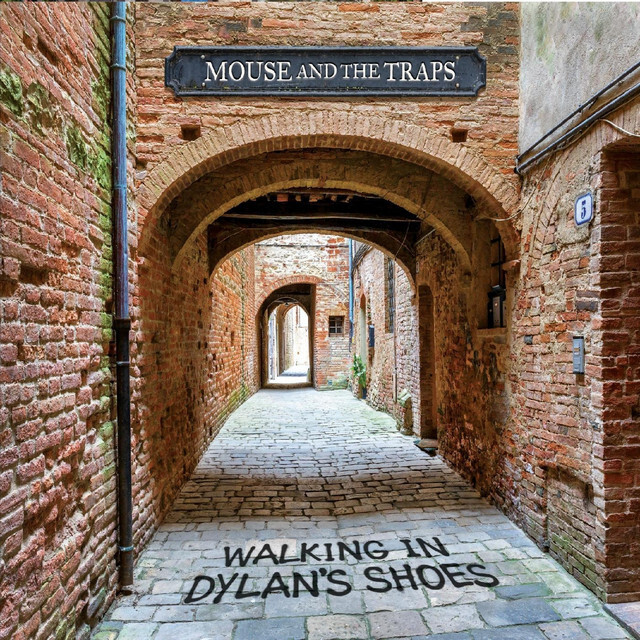
Mouse and the Traps is an American garage rock band from Tyler, Texas, active mainly during the 1960s. They gained a cult following for their gritty sound that represented garage rock well. The band is best known for their 1966 hit single, A Public Execution, which is really Dylanesque plus some Byrds thrown in.
They began their career releasing “A Public Execution” under the name of Mouse. That was the nickname of their lead singer Ronnie “Mouse” Weiss. Their second single in 1966 was called Maid of Sugar-Maid of Spice and they added “And the Traps.” They have had different members through the years but a constant from their original lineup is Ronnie Weiss, Dave Stanley, and Ken (Nardo) Murray.
Much like Phil from Notes From The Cactus Patch did in the 1960s…Mouse and the Traps toured around Texas, especially Dallas. They toured around the state feverishly, playing clubs, colleges, parties, and even proms. There were occasional touring dates out of Texas, but, for the most part, they remained a very popular regional band.
They have released a bunch of singles and a few collection albums that were released in 1982, 1995, 1997, and 2009. They finally released an album in 2020 called Walking In Dylan’s Shoes. In 1972 they were added to Lenny Kayes Nuggetscompilation album of different garage bands.
Graham from Aphoristic Album Reviews wrote: Mouse and the Traps surely hold the record for the longest gap between a debut single and a debut album. ‘A Public Execution’ was released in 1966 (although it was credited solely to their frontman). Their debut album, Walking in Dylan’s Shoes, was released in December 2020.
I’ve listened to their 2020 Dylan cover album Walking In Dylan’s Shoes and I have to admit…it’s really good!
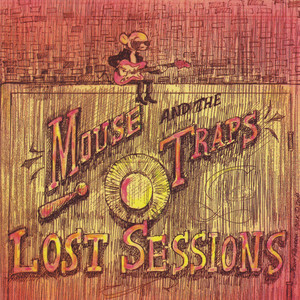
The song I picked, You’re Gonna Miss Me, is off of their Lost Sessions Album released in 2009. I’m not sure which era it’s from although because of the quality…I would guess the 80s or 90s. They were together off and on in the 1960s – 2020. I’m also posting the song that Graham did with Maid of Sugar-Maid of Spice (1966) along with You’re Gonna Miss Me (?).
I’m also going to post Mouse and the Traps Lost Sessions album…give a listen to a few of them…they are awesome! Hit The Bricks and Bottom Line got my attention right away.
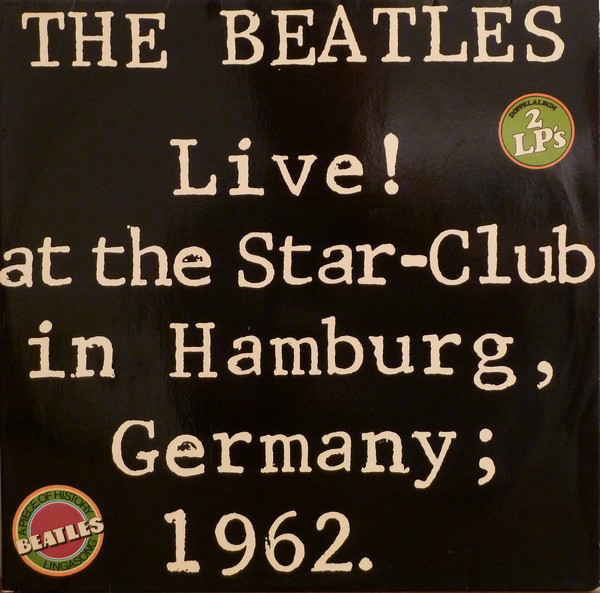
When I got this album I loved it but at first didn’t understand why the quality was so low but the music makes up for it. The recordings are from 1962 in their last engagement in Hamburg and they didn’t want to be there. I have mentioned this album with some posts but never really went over it.
These are the punk Beatles. Raw and relentless playing fast and furious. The Beatles before the world was paying attention to them. This was recorded on an old reel-to-reel recorder at the slowest speed to conserve tape. It was not meant to be an album or anything commercial. A friend named Ted “King Sized” Taylor the leader of a band called the Dominoes, put a microphone near the stage to record them. The quality is poor, to say the least.
Peter Jackson has mentioned that he would love to work on this album. He could improve the sound a lot using modern technology and I wish they would let him try it. It was released in 1977 and the record company sunk 100,000 dollars just to make the audio listenable. Ted Taylor did ask the Beatles before he recorded and they had no qualms with it. Later on, they tried to sue to block its release but obviously were unsuccessful. I’m glad they were…this is a fun and historic listen.
The Beatles were playing to an audience of sailors, prostitutes, drunks, and gangsters. They would rip through songs at such a speed that only 2 songs on this double album are over 3 minutes long. It was like the Beatles doing a future Ramones imitation. They were “enhanced” by prellies (Preludin) that sped them up quite a bit.
They are a great band here. You catch them with their guard down and acting completely natural. The Beatles were on their last club dates in Hamburg. They had already recorded Love Me Do and it was on the charts. They did not want to be back in Hamburg but they honored a previous agreement and were there. They didn’t mail the performances in but they were loose and relaxed.
It contains mostly cover songs with very few originals. The track listing is at the bottom of the post. This is close to what Brian Epstein heard when he first saw them, this is why they took over Liverpool and this is why they got signed.
Casual fans will not want this album but serious Beatles fans will love it. This is more than a low-fidelity album…it is history. John Lennon always said that the world didn’t hear the best of the Beatles live…I agree. By this time in Hamburg they were getting lazy as well. They didn’t want to be there because they were sitting on Please Please Me waiting for it to get released in the following year.
After they became THE Beatles…they could not hear themselves play because of the long constant jet taking off screaming. On this album, you hear them as they were before the screams. I was 11 when I bought this and I didn’t get the importance until a few years later.
This is out of the book Tune In… Without a doubt the best book out on the Beatles. It’s the first of three volumes.
Their playing is adept and hyper-energetic, and the microphone catches many important moments. The tape’s value has been downplayed on the basis that the Beatles are musically sloppy and perhaps even lazy, knowing they’ve one foot out of the door, but this is to ignore its virtues. The Beatles did hate being in Hamburg this last time … but the recording shows them still cutting the mustard on stage. They’re sloppy because, here, they can be, but they’re not lazy, and they’re not playing with extra care because they’re being recorded: this is an authentic eavesdrop on their club act, not something fizzed-up for the tape machine.
At least three sets were recorded, and because the Beatles rarely repeated themselves in Hamburg, there are only five duplicates among the thirty-seven songs. The repertoire is a real surprise. The only self-written pieces are “Ask Me Why” and “I Saw Her Standing There” (twice), so there’s no “Love Me Do,” “PS I Love You,” “Please Please Me,” “One After 909” or any of several other possibilities, and there are few of the songs from the spine of their all-conquering 1962 stage sets—no “Some Other Guy,” “Soldier of Love,” “Please Mr. Postman,” “Don’t Ever Change,” “A Shot of Rhythm and Blues,” “Devil in Her Heart,” “Baby It’s You,” “Will You Love Me Tomorrow,” “If You Gotta Make a Fool of Somebody,” “Hey! Baby, A Picture of You,” and so on. What’s here is an idiosyncratic selection of old rock numbers all played at breakneck speed—Prellies pace. The nights of half-hour “What’d I Say” marathons are past: everything is high velocity, only three numbers tipping into three minutes.
Side one
Introduction/”I Saw Her Standing There” (John Lennon, Paul McCartney) – 0:34/2:22
“Roll Over Beethoven” (Chuck Berry) – 2:15
“Hippy Hippy Shake” (Chan Romero) – 1:42
“Sweet Little Sixteen” (Berry) – 2:45
“Lend Me Your Comb” (Kay Twomey, Fred Wise, Ben Weisman) – 1:44
“Your Feet’s Too Big” (Ada Benson, Fred Fisher) – 2:18
Side two
“Twist and Shout” (Phil Medley, Bert Russell) – 2:03
“Mr. Moonlight” (Roy Lee Johnson) – 2:06
“A Taste of Honey” (Bobby Scott, Ric Marlow) – 1:45
CB sent this band to me and they are raw and powerful with a unique singer. I really love garage type bands. Bands like this were big in the sixties and turned toward punk in the 70s. They made a comeback in the 80s against the synth based mainstream at the time. The alternative rock scene was born which I liked more than the then top 40 with The Replacements, REM, The Dead Kennedys, and more.
The hardest part about this post was picking out which song to highlight. The album I’ve listened to is The Detroit Cobras: The Original Recordings which rocks. All of their covers are loud raw and catchy like garage rock is. I loved how they picked the songs they covered. Songs that went under the radar when they were originally released.
This song…not to be confused with Ain’t That A Shame was originally recorded by Question Mark and The Mysterians. The song was written by their drummer Robert Martinez and released in 1969.
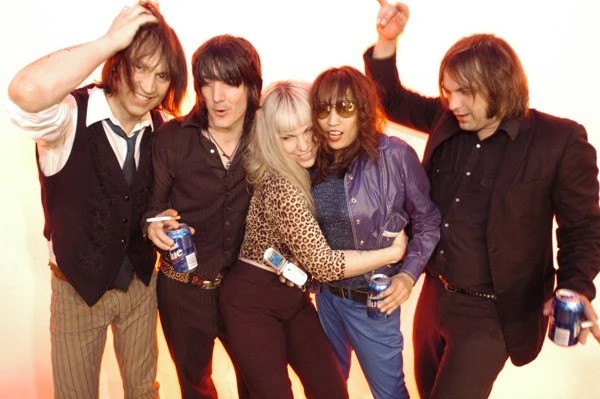
The Detroit Cobras were known for their reinterpretations of classic R&B, rock, and soul songs. Guess where they are from? They emerged in the mid-1990s and added to the garage rock revival movement of that era. They came out of the same Detroit scene as the White Stripes did.
The band was formed in 1994 by guitarist Steve Shaw and drummer Jeff Meier but lead vocalist Rachel Nagy and guitarist Mary Ramirez would become the core of the band. The Cobras set themselves apart by reimagining lesser-known songs from the 1950s and 1960s rather than writing their own original material.
John turned his Kustom K200/A Amp up to 11 with this song. It’s a little harder than their radio hits and they dip into blues rock with this cut. It was never released as a single but has become a fan favorite, especially among those who appreciate CCR’s rock album tracks.
It featured on their 6th studio album Pendulum released in 1970. This album was the last to feature Tom Fogerty, the band’s rhythm guitarist and older brother of lead singer John Fogerty. He would leave the band band after this one. The album departed from the band’s previous work in several ways. Fogerty’s songs are strong throughout and are made more interesting by the addition of horns and keyboards
It was recorded at Wally Heider’s studio in San Francisco, it took a month to record which was a long time for a Creedence album. , was down to the fact that the initial take on each song was performed by all four members, this was then followed by overdubbing by John. The overdubs included a horn section, keyboards, and additional backing vocals, all of which were played and sung by John.
The album was met with mixed reviews from critics. Some praised the deeper sound they had in their songs. Some wanted the rawer energy they had on their previous 5 albums. It included the two hits Have You Ever Seen The Rain and Hey Tonight. Pagan Baby does have that earlier CCR energy.
Pendulum peaked at #5 on the Billboard Album Charts, #2 in Canada, and #8 in the UK in 1970. Their next album Mardi Gras was the only CCR album to be panned by critics and fans alike…including John Fogerty.
Pagan Baby
Pagan baby, won’t you walk with me? Pagan baby, come on home with me. Pagan baby, take me for a ride. Roll me, baby, roll your big, brown eyes.
Yeah! ooh! ooh!
Pagan baby, let me make your name. Drive it, baby, drive your big love game. Pagan baby, what you got, I need.
Don’t be savin’, spread your love on me.
Aah! mm-mm-mm!
Pagan baby, now won’t you rock with me? Pagan baby, lay your love on me.
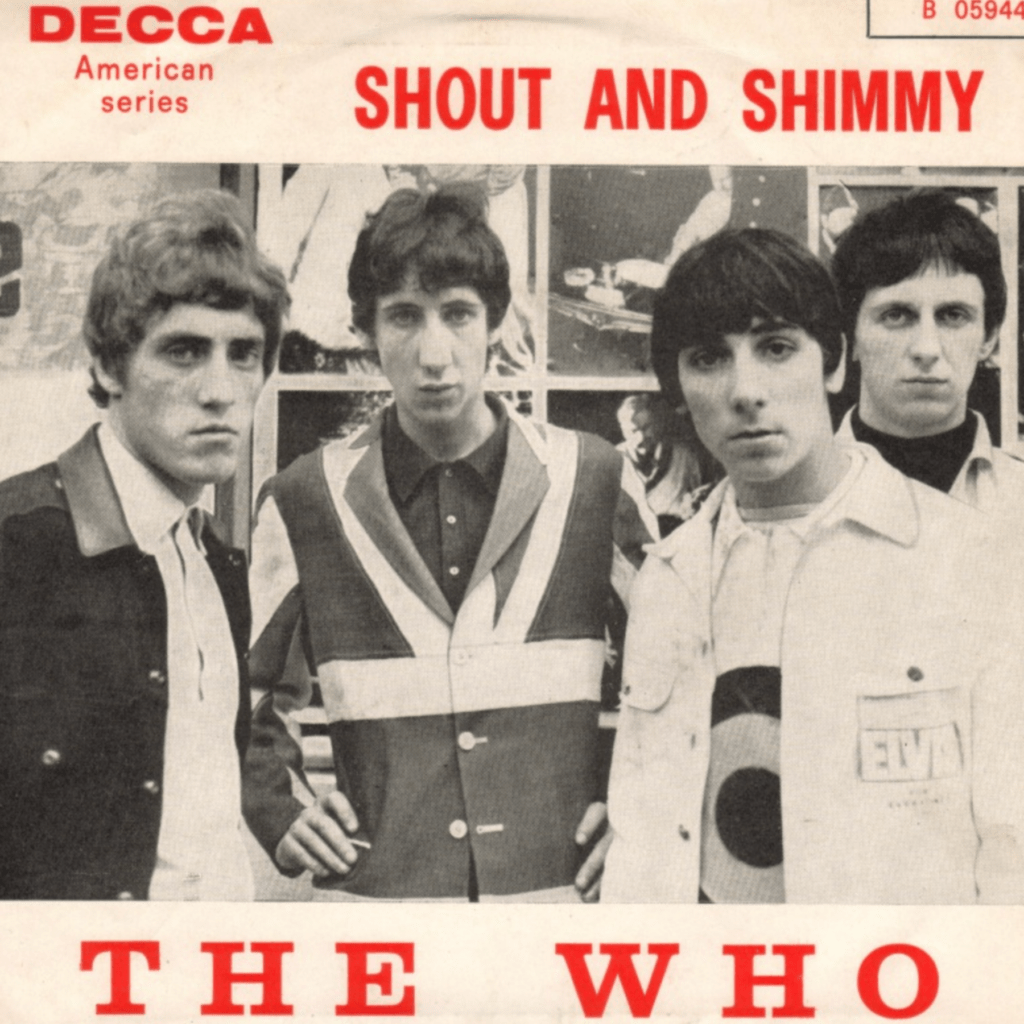
If this song doesn’t get you up nothing will! I’ve probably covered The Who more than any other band but I’ve missed this excellent cover they did back in 1965. In this post, we will look at the song and the original drummer of The Who.
This is a cover of a lively James Brown original from 1962. The Who recorded in 1965, it was on their My Generation album. It was also part of their appearance on the music show Ready, Steady, Go! alongside the song Anyway, Anyhow, Anywhere. Shout and Shimmy did not achieve widespread fame, it reflects the band’s devotion to R&B and soul, influences that heavily shaped their early sound. They also covered the Marvelettes song Heat Wave which was a part of the Mod culture. James Brown wrote and released Shout and Shimmy in 1962.
The Who’s rendition captures the raw energy of their early sound. Keith Moon in the live cut of this is a blur on drums. He was 19 years old and joined The Who the year before replacing The Who’s original drummer Doug Sandom.
Sandom was a good guy and a solid drummer but he was 34 in 1964 and considered far too old for The Who by the record company. Pete Townshend wrote a moving forward to Sandom’s book in 2014: Had we continued together back in 1964 with Doug on drums we may never have become as successful as we are today. Keith Moon was a born publicist as well as a highly eccentric performer. But I have no doubt that personally, I would have been happier as a young man. Partly because I think we would have continued to put music and friendship first in our band because that was Doug’s way. With Doug as my friend, I believe I could have been a better man.
Doug drummed for them as The Detours and The Who. He had this to say about The Detours changing to The Who: “We were setting up our gear when the Ox arrived and told us there was another band called The Detours and they’d already been on TV so we had to change our name. That night we all went back to a friend of Pete’s – a wonderful chap called Richard Barnes (an author and has worked with the Who for decades), or Barnsy, to try to find a new name.
Barnsy initially suggested The Group and Pete favoured The Hair. Someone else suggested No One until we imagined a compere on stage saying: ‘Ladies and gentlemen, please welcome No One.’ We’d have been a laughing stock. It was Barnsy who came up with The Who. Pete tried to compromise by suggesting The Hair And The Who until it was pointed out that it made us sound like a pub. Anyway, Roger came round to mine the next day and said it was to be The Who.”
On one of their recording dates, Townshend and Sandom were not in good moods and Sandom retold it: “He had a terrible go at me, snarling, ‘What’s wrong with you? If you can’t get it right then you’re out.’ I just got up from my stool and said, ‘That’s it, I quit.’ It was the biggest mistake of my life.
Sandom stayed in touch with the band until he passed in 2019 at the age of 89 years old.
I always try to give a studio and live version…but in this case…live is the way to go. Around 1:29 is where Moon kicks in.
Shout and Shimmy
Do you feel alright? Well do you feel alright children? Do you feel alright? You know you make me want to shout shimmy, oh yeah you gonna shout shimmy, Oh yeah you gonna shout shimmy, oh yeah you gonna shout shimmy, Oh yeah you know I walk up to the front, I try to do the flop, I walk up to the back, and I move on side to side, Then I stop, oh yeah and then I drop, Oh yeah and then I drop, oh yeah and then I do a little thing ?????, Do you feel alright? Do you feel so good? Do you feel so good? Do you feel alright? Do you feel alright? Tell me now, tell me now, Do you feel alright? Do you feel alright? Everybody do you feel so good? You know I feel alright, you know you make me want to shout shimmy, Oh yeah you gonna shout shimmy, oh yeah you gonna shout shimmy, Oh yeah you gonna shout a little bit soft, shout a little bit quieter, Shout a little bit soft, come on soft, shout a little bit soft, A little bit soft, cool down, cool down, come on, cool it down, I feel so good, I feel alright, drum on, drum on, drum on drummer, Everybody everybody everybody clap your hands, come on clap your hands, Clap your hands, a little bit harder, a little bit louder, A little bit harder, a little bit louder, a little bit louder, Come on and shout, everybody, come on and shout, come on and shout baby, Come on and shout baby, do you feel alright? Do I feel so good? Do you feel alright? Do I feel so good? Call a doctor, call a doctor, Do you feel alright? Do you feel alright? Do you feel alright? Do you feel alright? Do you feel alright? You know I feel so good I’m gonna shout and shimmy all night, I feel all, you know I feel alright.
This is the last Kinks day. I’m going to finish up with one of my favorite Kinks songs. I want to thank everyone who wrote and everyone who read the posts! I thought I would be lucky to get 10-12 people to do this… so I was shocked with 18 Kinks songs. I’ll be listening to The Kinks for months now. I did this song back in 2018 or 19 but I wanted to make sure it got covered during this Kinksathon so I revamped it.
We are the Sherlock Holmes English-speaking Vernacular. God save Fu Manchu, Moriarty, and Dracula. We are the Office Block Persecution Affinity. God save little shops, china cups, and virginity.
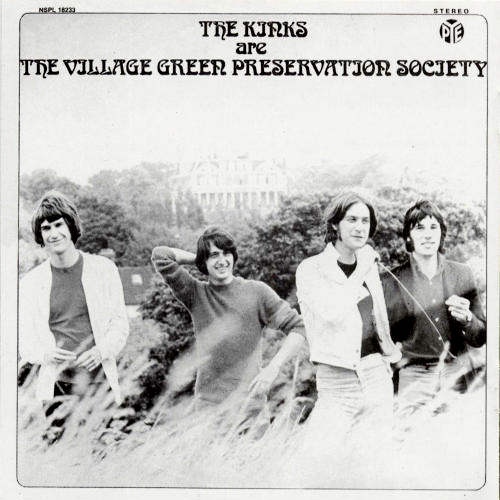
Some songs can be written by anyone and some can be very popular but generic. Some can only be written by certain songwriters. This would be one of those songs. Ray Davies’s songs have their own DNA. This was on the great 1968 album The Kinks Are the Village Green Preservation Society. The album is a concept album reflecting on the loss of the old England that Ray remembered, he captures older village life, tradition, and the impact of the rapid changes happening in British society during the 1960s.
One thing that makes this song and many Kinks songs stand out is Dave Davies…I’m not talking about his highly underrated guitar playing. It’s his high-pitched harmony singing with Ray that compliments the songs so well. Without Dave’s voice, the Kinks would not sound like The Kinks.
This nostalgic song is a favorite of mine. This is a big jump from You Really Got Me to…”We are the Sherlock Holmes English-speaking Vernacular, God save Fu Manchu, Moriarty, and Dracula.”
I learned a lot about older British Culture with this song. Desperate Dan, Mrs. Mopp, and Mother Riley… he fits the words like a jigsaw puzzle that magically falls into place. There are no forced lyrics and with these lyrics…that is not easy. This song to me, is up there with their best songs.
Ray Davis: “The people in it are all characters I liked as a kid or people my family could relate to, like Old Mother Riley and Mrs Mopp. Because I used to love listening to the BBC Light Programme on Sundays, like Round The Horne with Kenneth Williams. A time when the population was allowed to be trivial.”
Ray Davies: “You have to remember that North London was my village green, my version of the countryside. The street and district I grew up in was called Fortis Green, and then there was Waterlow Park and the little lake. I sang in the choir at St James’s Primary School until I was about 10, then I trained myself to sing out of tune so I could hang around with a gang called the Crooners instead. Our Scottish singing teacher Mrs. Lewis said, ‘Never mind, Davies – I hear crooners are making a lot of money these days.'”
Pete Townshend: “The Kinks were much more quintessentially English. I always think that Ray Davies should be one day, be Poet Laureate. You know, he invented a new kind of poetry. A new kind of language for Pop writing, which I think, influenced me from the very, very beginning. (It was) very strange that I should be so directly influenced because it was from sideways. We were moving forward together. But I was very influenced by him.”
“I think that Dave Davies is also very underestimated. When we started, I used to feel that. Well, it’s obvious that Dave couldn’t have done the kind of innovation that I did. Because I was with Jim Marshall building the bloody amplifiers. Somehow The Kinks adopted some of that as well. They didn’t actually use the Marshall-size amps that we used. But they were loud, they were raucous. The guitar sound was similar, there was feedback there.”
I added a live version which for me is superior to the studio cut but that is just me. This is a rare time when I liked the live over the studio. I heard this live version before the studio recording. The horns add a lot to this song.
We are the Draught Beer Preservation Society.Amen, Ray…
Village Green Preservation Society
We are the Village Green Preservation Society.
God save Donald Duck, vaudeville and variety.
We are the Desperate Dan Appreciation Society.
God save strawberry jam and all the different varieties.
Preserving the old ways from being abused.
Protecting the new ways, for me and for you.
What more can we do?
We are the Draught Beer Preservation Society.
God save Mrs. Mopp and good old Mother Riley.
We are the Custard Pie Appreciation Consortium.
God save the George Cross, and all those who were awarded them.
Oooh…
We are the Sherlock Holmes English-speaking Vernacular.
God save Fu Manchu, Moriarty and Dracula.
We are the Office Block Persecution Affinity.
God save little shops, china cups, and virginity.
We are the Skyscraper Condemnation Affiliates.
God save Tudor houses, antique tables, and billiards.
Preserving the old ways from being abused.
Protecting the new ways, for me and for you.
What more can we do?
We are the Village Green Preservation Society.
God save Donald Duck, vaudeville and variety.
We are the Desperate Dan Appreciation Society.
God save strawberry jam and all the different varieties.
Today we have CB from https://cincinnatibabyhead.wordpress.com/ who is posting his Kinks song. Go visit his site for some cool music and movies. I’ve been influenced by all of you bloggers. You opened my eyes and ears to new music and styles. CB has been one of those influences by getting me out of my former comfort zone and enjoying new/old music that I wouldn’t have heard otherwise… Take it away CB…
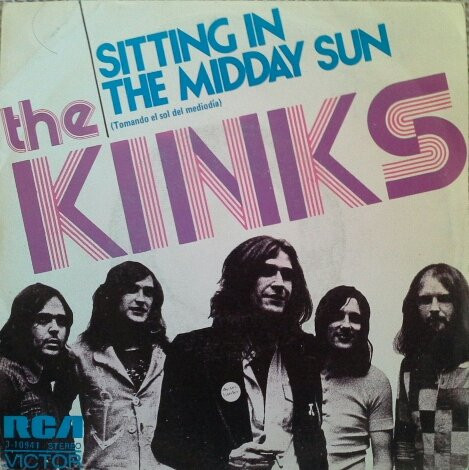
Six Kinks songs popped into my head right away when Max ran this idea by me. I stuck a pin in this one.
One of those everyman songs Ray sings. The song’s character (From Preservations Act I) observing the world as he sees it. He’s happy and that makes the listener happy. Kind of a Sunny Afternoon vibe. Ray did like certain themes and summer/sunshine was one of them. This song has been in regular rotation in my head for a long time. It just puts me in a good mood and reminds me to chill out.
“I’ve got no home
I’ve got no money
But who needs a job when it’s sunny”
I just love the lyrics and the music that goes with it. Sets the mood. CB wants to be the character in this song. Just watching the world go by.
Lets live in the moment with the Kinks and celebrate one of life’s pleasures. Soaking up some rays and taking it easy. I’m in. No one does it better than the Kinks.
So sing along
“So I’m just sitting in the midday sun
Just soaking up that currant bun
With no particular purpose or reason
Sitting in the midday sun”
Note: My son (Big Earl) was over for a visit. I told him I was taking part in a discussion on Kinks songs. I asked him if he had a couple favorites and without hesitation he said “Waterloo Sunset and “Till The End Of The Day” The Kinks are still reaching new ears.
Note 2: For years I thought “currant Bun” has something to do with the sun. I finally found out it does “The Sun” a tabloid in England. There you go Max, I did some homework for you.
Note 3: I’m a big fan of the Kinks concept albums Soap Opera, Preservations Acts I and II, Schoolboys In Disgrace. Not well received commercially but they were full of really good stuff.
Note 4: I’ve enjoyed opening these takes everyday and seeing what all you good people have to say on the Kinks. I was not disappointed. Great stuff. Max is a beauty.
He started the blog halffastcycling.club to chronicle a coast-to-coast bike trip and I’ll let him tell you the rest. Recently retired from a series of careers (in co-ops, plumbing, and health care), I spend my time riding my bike (once across the continent wasn’t enough so I quit working to do it again), paddling, writing about bikes and whatever pops into my head, and sitting on the front porch in a rocking chair. I’m old enough that I remember this music when it was new, not from oldies stations. The first hit records I remember hearing were by Little Richard (78 RPM). (I have older siblings.) My intro to live music (besides high school dances) was through BB King (followed quickly by Willie Dixon, Muddy Waters, Luther Allison, Bonnie Raitt, Pete Seeger, and the Grateful Dead, among others). I wrote a high school term paper on the Beatles (after reading the new Hunter Davies bio in 1968) and got a D.
Muswell Hillbilly
The Buddha said that life is suffering and suffering arises from desire.
Pop culture, one could argue, is the packaging and selling of fantasy. Hell, one could argue that all of capitalism involves packaging and selling fantasy. And by fantasy, I mean the objects of desire.
One of the more insidious forms of fantasy is nostalgia…a desire for what was or, more commonly, what never was but what we imagine to have been.
Make America Great Again sells us the fantasy that there once was a time that the USA was great and that it is no longer. When was it great? That’s never specified, but maybe it was 1776 or maybe 1956. When did it stop being great? That’s implied, but might be when folks other than white, property-owning men wanted their share.
Carol Hanisch wrote a paper that was published in 1970 with the title “The Personal is Political”. She argued that “There are no personal solutions at this time. There is only collective action for a collective solution.”
What does this have to do with The Kinks? In 1964 they released “You Really Got Me” and “All Day and All of the Night”, two songs that led some 11 year olds I know to think we could be rock and rollers. The Beatles were unreachable to us, but we thought we could be The Kinks. Some of us only fantasized. Some went out and bought instruments. None of us became rock and roll musicians. (At least not that particular group of 11 year olds.)
By the time “Muswell Hillbillies” was released in 1971, rock music had gained sophistication, musically and lyrically. It was no longer enough to sing “I wanna hold your hand” or “Girl, I want to be with you in the daytime”, even if we added “nighttime” (“nudge-nudge, wink-wink, say no more”).
A critique of mainstream society was an element of rock by then. In 1969 The Jefferson Airplane sang:
We are forces of chaos and anarchy. Everything they say we are we are. And we are very Proud of ourselves.
The world of rock music had moved on from selling 2 minute singles to selling albums. Albums then became more than a collection of singles and filler. The Kinks had already embraced that by 1968’s “The Kinks are the Village Green Preservation Society” as well as 1970’s “Lola Versus Powerman and the Moneygoround, Part One”. “Lola” was both a critique of the music industry and an exploration of sexuality and gender. I hope this series will cover both of these songs or albums. (If not, check out this and this from Powerpop five years ago.)
Muswell Hill is a suburban district of North London, the childhood home of Ray and Dave Davies. It is also the location of St Luke’s Woodside Hospital for Functional Nervous Disorders, a branch of the former St. Luke’s Hospital for Lunatics (1751-1916).
Muswell Hillbillies
explores alienation and mental illness. “Acute Schizophrenia Paranoia Blues” is sung from the viewpoint of a man who is “too terrified to walk out of my own front door”.
He sings:
They’re watching my house and they’re tapping my telephone. I can’t trust nobody, but I’m much too scared to be on my own. And the income tax collector’s got his beady eye on me. Oh, there ain’t no cure for acute schizophrenia disease.
In “Catch-22″ (1961), Joseph Heller wrote, “Just because you’re paranoid doesn’t mean they aren’t after you.”
In the US, COINTELPRO (1956-71) targeted anyone the FBI considered subversive. That originally meant suspected communists, then mostly Black people but also the New Left. They aimed to disrupt organizations via planting false information, creating conflict, infiltration; in short, by making people paranoid. MKUltra (1953-73), a CIA program, dosed people with LSD and other psychedelics without their knowledge. So is the protagonist of Muswell Hillbillies crazy, or does he just think he is, or is there no difference?
In “20th Century Man”, he sings:
This is the age of machinery, A mechanical nightmare, The wonderful world of technology, Napalm, hydrogen bombs, biological warfare.
He has confirmed Hanisch’s assertion that “the personal is political”. He is paranoid but the solution is not an individual one because the problem is not an individual one. Therapy is not going to fix this.
In the title track (you knew we’d get to that eventually, right?) the singer is nostalgic for a USA that he has never seen. US culture is dominant so he knows “Oklahoma” the musical, he knows roots music, and it sounds like he listened to “Rocky Raccoon” for some of his US education, or maybe it was cowboy movies:
Cos I’m a Muswell Hillbilly boy, But my heart lies in old West Virginia, Never seen New Orleans, Oklahoma, Tennessee, Still I dream of the Black Hills that I ain’t never seen.
He’s headed for the mental hospital:
They’ll move me up to Muswell Hill tomorrow, Photographs and souvenirs are all I’ve got, They’re gonna try and make me change my way of living, But they’ll never make me something that I’m not.
He knows he doesn’t fit in but he’s not certain that that is his problem. He recognizes that this is bigger than he is but feels powerless to stop it:
They’re putting us in identical little boxes, No character just uniformity, They’re trying to build a computerised community, But they’ll never make a zombie out of me.
But maybe he can resist individually, even if he can’t stop the train. He doesn’t have the power to change society but maybe he can maintain some personal integrity. He is a little bit RP McMurphy from “One Flew Over the Cuckoo’s Nest” (1962, Ken Kesey). [Spoiler Alert: They make a zombie out of RP McMurphy via frontal lobotomy. Of note, the novel was written under the influence of LSD when Ken Kesey was a voluntary subject of MKUltra and working nights in a VA hospital psychiatric unit. He didn’t know it was a CIA project but did know he was getting free LSD.]
By 1971, the Left in the US was in disarray. By 1971, the Left in the US was in disarray. The 1970 bombing of the Army Math Research Center (AMRC), in the wake of the National Guard killing of students at Kent State and Jackson State, had brought the war home in a way no one expected, as someone was accidentally killed in the bombing. The Kent State killings had galvanized mainstream opposition to the war. [Killing people of color was a long-standing US tradition.] After Army Math, revolution no longer seemed to be just around the corner; and this shit was getting serious. Were we still, like the Jefferson Airplane, “very proud of ourselves”?
COINTELPRO and MKUltra had not yet been exposed and were still active. The American Dream seemed to be a nightmare. Paranoia is no fun. [Many in Madison, WI – home of AMRC – feared that the Grand Jury investigation would be a fishing expedition into the New Left and “We Won’t Talk” bumperstickers appeared around town. Were we paranoid? Were they after us?] Nostalgia began to look good – certainly in the US, probably equally in the UK.
The Muswell Hillbilly is paranoid, but that doesn’t mean they aren’t after him. He wants to live in a nostalgic fantasy world where life is simpler
But in her dreams, she is far away In Oklahoma, USA.
– but instead he is being packed off to a mental hospital. He feels the alienation of modern life and continues to resist in any way that he can. When faced with a world we don’t want, what are our choices? We can capitulate, we can resist, we can escape to a fantasy world. We can organize, but even that looks hopeless to him.
This post is by John from https://thesoundofonehandtyping.com . John’s blog has different subjects and he will post songs that I had completely forgot about. I like talking guitars with John also…He is an internet disc jockey, lover of old TV (especially the commercials), inveterate wise guy.
I’m not a huge Kinks fan, as I told Max, but there is one song I’m familiar with that I’m rather fond of…
Back in the late 1960’s and early 1970’s, Warner Brothers Records would advertise sample albums on the inner sleeves of their albums. They were cheap as chips (maybe $2 for a double album), and had songs from albums they were trying to sell. That’s where I first heard this song, “When I Turn Off The Living Room Light.” At the time, the song was marked as “unreleased,” but it later appeared on the band’s 1973 Reprise album, The Great Lost Kinks Album. Wikipedia (https://en.wikipedia.org/wiki/The_Great_Lost_Kinks_Album), which, as everyone knows, is The Blogger’s Best Friend (trademark), tells the story of that album…
On 2 July 1969, Ray Davies and manager Robert Wace delivered numerous tracks to Reprise Records’s offices. Most of them were for the Kinks’ 1969 studio album, Arthur, as well as a potential Dave Davies solo album. They delivered an extra reel of twelve songs, marked as “spare tracks” and not assigned a master tape number, indicating they were likely not planned for an immediate release. Author Doug Hinman suggests the additional songs’ delivery was likely due to a contractual obligation that the Kinks provide the label a set number of songs over a scheduled period. Ray Davies later expressed he was hesitant to deliver them because he did not feel they were up to standard and wanted to include a note explaining, “please, we’re just fulfilling our contract, just put it in a vault somewhere.”
In 1971, the Kinks’ seven-year contract with Reprise was set to expire. Disappointed with several clauses in the band’s contract, Davies opted to instead sign the band with RCA Records. The same year, Reprise rejected the Percy soundtrack album for US release, finding it lacked commercial potential in the American market. Because they did not release Percy, executives at Reprise determined that the Kinks contractually owed the label one more album.
All that said, here’s the song. I will warn you that the first line implies that Jewish women aren’t attractive. At the time, I was in high school where a significant number of my classmates were Jewish girls, many of whom were VERY attractive, so I don’t know what he was talking about… Anyway, the lyrics are in the video…







 PowerPop... An Eclectic Collection of Pop Culture