Keith Richards once said about the Black Crowes…” they have me down pretty well.” The riff in this song was played in open G tuning. Many musicians have played in that tuning but Keith Richards made a career out of it. Songs like Start Me Up, Can You Hear Me Knocking, etc… were wrote in that tuning and has a certain sound that you can only get with that.
Rich Robinson the guitar player and brother Chris the singer wrote this song and it does have a Stones feel to it.
The Black Crowes album Shake Your Money Maker was released in 1990. This album shocked me when I heard it. After longing for something with that 70’s tone…here it was with this new band. I always thought they sounded like The Stones/Faces musically with a Rod Stewart type lead singer.
Jealous Again was the first single off of the album. It only peaked at #75 in the Billboard 100 in 1990. After this single they released “Hard To Handle” and it recieved much more airplay.
Jealous Again
Cheat the odds that made you Brave to try to gamble at times Well I feel like dirty laundry Sending sickness on down the line Tell you why
‘Cause I’m jealous, jealous again Thought it time I let you in Yeah, I’m jealous, jealous again Got no time, baby
Always drunk on Sunday Try’n to feel like I’m at home Smell the gasoline burning Boys out feeling nervous and cold
[Repeat 1st Chorus]
Stop, understand me I ain’t afraid of losing face Stop, understand me I ain’t afraid of ever losing faith in you
Never felt like smiling Sugar wanna’ kill me yet Find me loose lipped and laughing Singing songs ain’t got no regrets
[Repeat 1st and 2nd Chorus]
Don’t you think I want to Don’t you think I would Don’t you think I’d tell you baby If I only could Am I acting crazy Am I just too proud Am I just plain lazy Am I, Am I, Am I, ever
This song is a pure joy to listen to although the song is about Iggy Pop’s life as a heroin addict. He was trying to get clean around this time and was somewhat sober.
David Bowie co-wrote this song with Pop, with Bowie composing the music on a ukulele. It was inspired by the opening to the American Forces Network News, which they listened to in Berlin.
The song was released in 1977 but didn’t chart. The song was re-released as a single in 1996, featured on the soundtrack for the British film Trainspotting.
While the song didn’t chart when it was first released, this reissue peaked at #26 in the UK in 1996.
Iggy Pop: “Once a week the Armed Forces Network would play Starsky & Hutch and that was our little ritual. AFN would broadcast an ID when they came on the air, a representation of a radio tower, and it made a signal sound, ‘beep-beep-beep, beep-beep-ba-beep.’ And we went, ‘Aha we’ll take that!’. David grabbed his ukulele, worked out the chords, and away we went.”
Lust For Life
Here comes johnny yen again With the liquor and drugs And the flesh machine He’s gonna do another strip tease. Hey man, where’d ya get that lotion?
I’ve been hurting since I’ve bought the gimmick About something called love Yeah, something called love. Well, that’s like hypnotizing chickens.
Well, I’m just a modern guy Of course, I’ve had it in the ear before. I have a lust for life ‘Cause of a lust for life.
I’m worth a million in prizes With my torture film Drive a g.t.o Wear a uniform
All on a government loan. I’m worth a million in prizes Yeah, I’m through with sleeping on the sidewalk No more beating my brains
No more beating my brains With liquor and drugs With liquor and drugs.
Well, I’m just a modern guy Of course, I’ve had it in my ear before Well, I’ve a lust for life (lust for life) ‘Cause of a lust for life (lust for life, oooo)
I got a lust for life (oooo) Got a lust for life (oooo) Oh, a lust for life (oooo) Oh, a lust for life (oooo)
A lust for life (oooo) I got a lust for life (oooo) Got a lust for life.
Well, I’m just a modern guy Of course, I’ve had it in my ear before Well, I’ve a lust for life ’cause I’ve a lust for life.
Here comes johnny yen again With the liquor and drugs And the flesh machine He’s gonna do another strip tease.
Hey man, where’d ya get that lotion? Your skin starts itching once you buy the gimmick About something called love Love, love, love Well, that’s like hypnotizing chickens.
Well, I’m just a modern guy Of course, I’ve had it in the ear before And I’ve a lust for life (lust for life) ‘Cause I’ve a lust for life (lust for life)
Got a lust for life Yeah, a lust for life I got a lust for life A lust for life Got a lust for life Yeah a lust for life I got a lust for life
Lust for life Lust for life Lust for life Lust for life Lust for life
To those that it applies…Happy Independence Day! I’ll have a couple of songs coming up related to Independence Day.
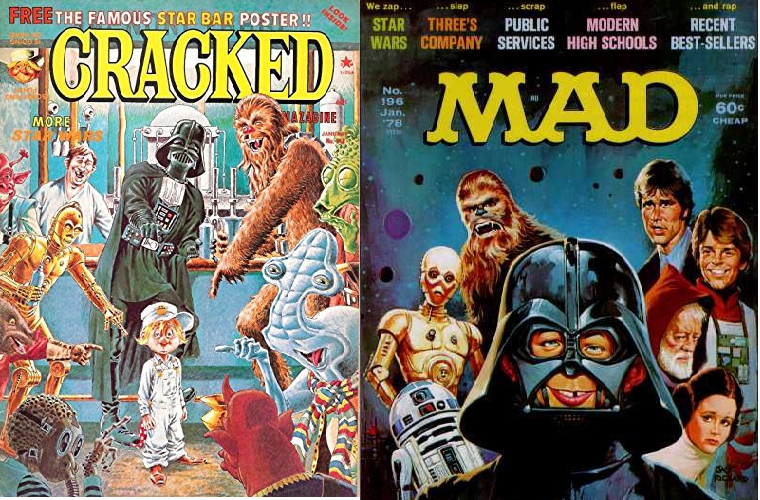
I never got into comic books like Marvel or DC…I would save up my allowance for Cracked and Mad magazine…and records of course. Mad Magazine was by far the most popular out of all of the satire comic magazines. William Gaines was the publisher of Mad magazine and was brilliant.
1952 – Present…now you an only get Mad from Comic Book Shops or order it. The new editions consist of mostly material from their archive.
Cracked was known as the poor man’s Mad but I still liked it and the magazines shared some writers and artists through the years. I bought my first Cracked Magazine when Mad was sold out but I never missed an issue after that.
1958-2007 Now the name is alive on a website but no longer a comic.
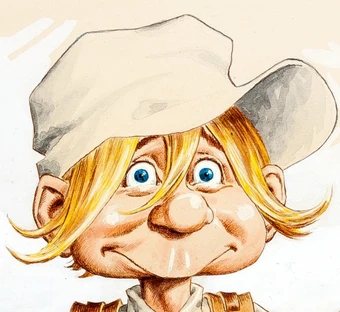
Alfred E Newman and Sylvester P. Smythe
Don Martin was my favorite artist. He was one of Mad’s most famous artists. He was there from 1956 to 1988. He was known as “Mads Maddest Artist” and then moved to Cracked and was jokingly known as “Cracked’s Crackedest Artist.”
Fellow Cracked artist Dan Clowes: “As far as I could tell, he was happy, don’t think he ever seemed to notice that Mad was respected, whereas Cracked was loathed.”
This is the band’s highest-charting single to date in the United States. During their subsequent world tour, thousands of “Angus Bucks” were dropped on the audience during the song.
If you have one of those dollar bills…don’t’ quit your day job…they are worth around 3 bucks….of real money.
This was somewhat of a comeback for AC/DC when they recorded The Razors Edge album, it outsold their previous three by a wide margin. On this album, Angus and Malcolm Young wrote not only the music but also the lyrics, a task that fell to lead singer Brian Johnson in the past. Johnson didn’t have a problem with it…he said he was out of ideas at the time.
Thunderstruck was popular but they never did release that as a single.
Moneytalks peaked at #23 in 1991 in the Billboard 100,
The Razor’s Edge peaked at #2 in the Billboard Album Charts, #4 in the UK, and #1 in Canada.
From Songfacts
Money talks, bulls–t walks. But AC/DC has little regard for what Angus Young called “the rich and the faceless,” the guys in suits smoking cigars and enjoying their luxury lifestyles. The big chorus on its own sounds like a salute to money, but a listen to the verses reveals the opposite: it’s a takedown of those who flaunt their wealth, and commentary on how money divides us. AC/DC got very rich, but they stayed grounded.
“Thunderstruck” was the lead track on The Razors Edge and the most enduring song from the album, but it wasn’t sold as a single in America. “Moneytalks” was, reaching a very respectable #23 in the States.
Also, Malcolm Young got sober after a bout with alcoholism, and drummer Chris Slade joined the band, replacing Simon Wright. They also used a new producer, Bruce Fairbairn, a Canadian who helmed hit albums for Aerosmith, Bryan Adams and Bon Jovi.
AC/DC printed their own dollar bills to promote this song, putting Angus Young on the front in place of George Washington. On the Razors Edge tour, these “Angus Bucks” would blow onto the crowd; the music video opens with one set on fire.
AC/DC took some liberties with the title, turning the phrase “money talks” into one word. They also played fast and loose with the grammar on the album title, leaving out the apostrophe in The Razors Edge.
Around the same time, there was a song with a similar title on the charts: “Dirty Cash (Money Talks)” by The Adventures Of Stevie V. That one has a similar sentiment but is an R&B tune.
Moneytalks
Tailored suits, chauffeured cars Fine hotels and big cigars Up for grabs, up for a price Where the red hot girls keep on dancing through the night The claim is on you The sights are on me So what do you do That’s guaranteed Hey little girl, you want it all The furs, the diamonds, the painting on the wall
Come on, come on, love me for the money Come on, come on, listen to the moneytalk Come on, come on, love me for the money Come on, come on, listen to the moneytalk
A French maid, foreign chef A big house with king size bed You’ve had enough, you ship them out The dollar’s up, down, you’d better buy the pound The claim is on you The sights are on me So what do you do That’s guaranteed Hey little girl, you broke the laws You hustle, you deal, you steal from us all
Come on, come on, love me for the money Come on, come on, listen to the moneytalk Come on, come on, love me for the money Come on, come on, listen to the moneytalk
Moneytalks, yeah, yeah
Money talks, B.S. walks Money talks, come on, come on
Come on, come on, love me for the money Come on, come on, listen to the moneytalk Come on, come on, love me for the money Come on, come on, listen to the moneytalk
Come on, come on, love me for the money (moneytalks) Come on, come on, listen to the moneytalk (moneytalks) Come on, come on, love me for the money (I hear it talk) Come on, come on, listen to the moneytalk (yeah, yeah) Moneytalk
As you may have guessed by now I’m an extreme fan of power pop. This list was hard to write…I kept changing most of it… but I knew the top choice and worked from there.
I just gave my self ten choices or I would have gone on and on. A lot of artists and their songs were left off…such as Todd Rundgren, The Cars, Sloan, The Lemon Twigs, The Flamin’ Groovies, The Shivvers, The Jayhawks, and too many more to mention.
10. The Ride – Twisterella– 1992 – I found this a few months back and have been listening to it ever since.
9. The Records – Starry Eyes– 1979 – Great song. Starry Eyes would end up being The Record’s best-known song. Robert John “Mutt” Lange produced their debut album for The Records.
8. The La’s – There She Goes– 1990 – A very good power pop song that has no verses…It just repeats the chorus four different ways four different times…but that doesn’t matter.
7. Cheap Trick – Voices– 1980 – One of my top Cheap Trick songs. Robin Zanders voice sounds great in this Beatlesque song.
6. The Who –Pictures of Lily– 1967 – When this song came out Pete Townshend coined the name “power pop” and this song is about the childhood…lusts…of a boy.
5. Raspberries – Overnight Sensation (Hit Record)– 1974 – An epic song by the Raspberries. Not their most popular…that would be “Go All The Way” but this encapsulates everything power pop is about. Bruce Springsteen on Overnight Sensation: It’s one of the best little pop symphonies you’ll ever hear.
4. Big Star – The Ballad of El Goodo – 1972 – The tone of the guitars, harmonies and the perfect constructed chorus keeps me coming back listen after listen.
3. Badfinger –No Matter What– 1971 – The only band to make this list twice. Why? because this song defines the crunchy power pop of bands like Cheap Trick to come.
2. Tom Petty – American Girl– 1977 – The Rickenbacker, the hook, and a Byrds sounding track.
Badfinger – Baby Blue – 1972 – The number one song was the easiest decision of the list. The rest were changed a few times…this one for me is a no-brainer. This song is the perfect power pop song…strong vocals, Crunchy Brit guitar, great hook, and great melody
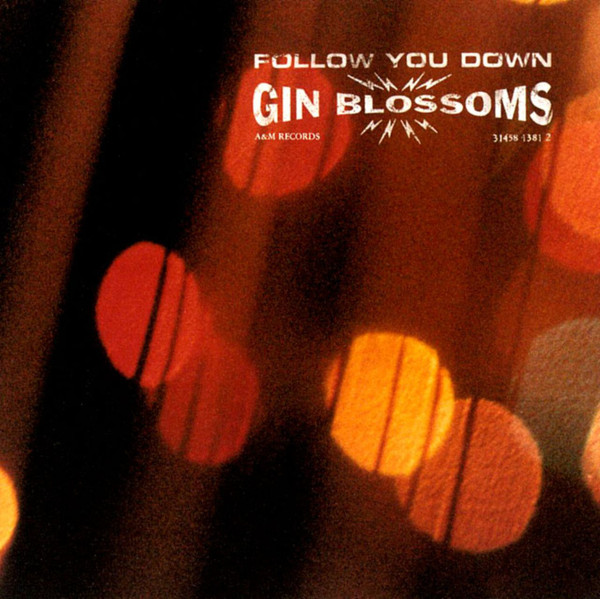
The Gin Blossoms made some good power pop in the 90s.
This song was released in 1996 and was part of a double A-side with Til I Hear It From You. The song peaked at #7 in the Billboard 100, #1 in Canada, and #30 in the UK in 1996. Billboard lists the song as Follow You Down/Til I Hear It From You. It did hit #1 in the Billboard Alternative Charts.
The song was on the album Congratulations… I’m Sorry and it peaked at #10 in the Billboard Album Charts in 1996.
The song was written by D. Scott Johnson, Jesse M. Valenzuela, Phillip Rhodes, Phillip N. Rhodes, Robin Wilson, and William Leen.
The Gin Blossoms broke up in early 1997 but reunited in 2002. They still perform to this day but with some personnel changes.
Follow You Down
Did you see the sky? I think it means that we’ve been lost Maybe one last time is all we need I can’t really help it If my tongue’s all tied in knots Jumping off a bridge is just the farthest That I’ve ever been
Anywhere you go, I’ll follow you down Anyplace but those I know by heart Anywhere you go, I’ll follow you down I’ll follow you down, but not that far
I know we’re headed somewhere I can see how far we’ve come But still I can’t remember anything Let’s not do the wrong thing And I’ll swear it might be fun It’s a long way down When all the knots we’ve tied have come undone
Anywhere you go, I’ll follow you down Anyplace but those I know by heart Anywhere you go, I’ll follow you down I’ll follow you down, but not that far
How you gonna ever find your place Running in an artificial pace Are they gonna find us lying face down in the sand So what the hell now we’ve already been forever damned
Anywhere you go, I’ll follow you down Anyplace but those I know by heart Anywhere you go, I’ll follow you down I’ll follow you down, but not that far
I thought the Counting Crows were refreshing when I heard Mr. Jones. I liked Adam Duritz’s voice a lot. The music press went over the top on hype though for The Counting Crows. Round Here was on their debut album August And Everything After which peaked at #4 in 1994 in the Billboard Album Charts.
The song peaked at #7 in the Billboard US Alternative Songs Charts, #70 in the UK, and #6 in Canada in 1994
This song won Best Rock Performance By A Duo Or Group With Vocal and one for Best New Artist
Adam Duritz:“This is a song about me,” “The song begins with a guy walking out the front door of his house and leaving behind this woman. But the more he begins to leave people behind in his life, the more he feels like he’s leaving himself behind as well, and the less substantial he feels about himself. That’s sort of what the song’s about: even as he disappears from the lives of people, he’s disappearing more and more from his own life.”
From Songfacts
This song dates back to Adam Duritz’ days in a band called the Himalayans, which he joined when he was a student at the University of California. That band – guitarist Dan Jewett, bass player Dave Janusko and drummer Chris Roldan – wrote the music for the song, to which Duritz added lyrics. The song became their most popular at concerts, and when Duritz formed Counting Crows, he brought the song with him. With his new bandmates Steve Bowman, David Bryson, Charlie Gillingham and Matt Malley, he worked up a new version of the song that was included on their first album, August And Everything After. Duritz made sure to credit everyone in both bands with writing the song, so “Round Here” has eight different writers listed on the composer credits.
The theme of childhood promises not panning out is one that shows up a lot in Duritz’ lyrics. In the chorus of this song, he lists some sayings that our parents often say: “Around here we always stand up straight,” “Around here we’re carving out our names.”
Said Duritz: “You’re told as a kid that if you do these things, it will add up to something: you’ll have a job, you life. And for me, and for the character in the song, they don’t add up to anything, it’s all a bunch of crap. Your life comes to you or doesn’t come to you, but those things didn’t really mean anything.
By the end of the song, he’s so dismayed that he’s screaming out that he gets to stay up as late as he wants and nobody makes him wait; the things that are important to a kid – you don’t have to go to bed, you don’t have to do anything. But they’re the sort of things that don’t make any difference at all when you’re an adult. They’re nothing.”
At the time, Counting Crows didn’t release singles in America, and it wasn’t until 1998 that Billboard allowed songs to chart on their Hot 100 that weren’t released as singles. As a result, the song is a chart anomaly: a very popular song that never showed up. It did make #31 on the Airplay chart, which was later integrated in the Hot 100. The group didn’t release singles so listeners would be compelled to buy the albums – a far more lucrative purchase, and arguably a more complete listening experience.
The band often plays extended versions of this song at concerts, which can be heard on the 10 minute performance on the song on their 2013 live album Echoes of the Outlaw Roadshow. “I think one of the nice things about playing music is a sense that whatever I want to do is okay,” Adam Duritz said in our 2013 interview. “As long as I’m really expressing something, then any way I want to express the song, it’s fine.”
Counting Crows made a video for this song, which was directed by Mark Neale, who would later direct The Verve Pipe’s video for “The Freshman” and the documentary Faster. It was the second video the band made (following “Mr. Jones”), and the last one they made for the album, since Adam Duritz wanted the band to scale back promotion when they became wildly popular. “I saw people around me putting out records that got a little too big, and that was the end of them,” Duritz told us. “I didn’t want that for us, so I stopped it.”
Round Here
Step out the front door like a ghost Into the fog where no one notices The contrast of white on white.
And in between the moon and you The angels get a better view Of the crumbling difference between wrong and right.
I walk in the air between the rain, Through myself and back again. Where? I don’t know Maria says she’s dying. Through the door, I hear her crying Why? I don’t know
‘Round here we always stand up straight ‘Round here something radiates
Maria came from Nashville with a suitcase in her hand She said she’d like to meet a boy who looks like Elvis And she walks along the edge of where the ocean meets the land Just like she’s walking on a wire in the circus She parks her car outside of my house, takes her clothes off, Says she’s close to understanding Jesus She knows she’s more that just a little misunderstood She has trouble acting normal when she’s nervous
‘Round here we’re carving out our names ‘Round here we all look the same ‘Round here we talk just like lions But we sacrifice like lambs ‘Round here she’s slipping through my hands
Sleeping children got to run like the wind Out of the lightning dream Mama’s little baby better get herself in Out of the lightning
She says, “It’s only in my head.” She says, “Shh, I know it’s only in my head.”
But the girl on the car in the parking lot Says: “Man, you should try to take a shot Can’t you see my walls are crumbling.”
Then she looks up at the building And says she’s thinking of jumping. She says she’s tired of life; She must be tired of something.
‘Round here she’s always on my mind ‘Round here (hey man) I got lots of time ‘Round here we’re never sent to bed early And nobody makes us wait ‘Round here we stay up very very very very late
I can’t see nothing, nothing Around here You catch me if I’m falling You catch me if I’m falling Will you catch me because I’m falling down on here I said ” I’m under the gun” ‘Round here. Oh man I said “I’m under the gun” ‘Round here. And I can’t see nothin’, nothin’. ‘Round here.
Bonnie Raitt hit really big 1989 and the early nineties. She is an excellent slide guitar player. I was happy to see her so popular. She had been working since the early seventies and had some minor success in 1977 with a remake of Runaway.
In 1989 she released Nick of Time and had success with “Thing Called Love.” In 1990 she released the album Luck of the Draw which “Something To Talk About” was on.
The song peaked at #5 in the Billboard 100, #3 in Canada, and #33 in New Zealand 1991.
This was written by the Canadian singer Shirley Eckhard, who had recorded in the Jazz and Country genres but has had her most success as a songwriter, with songs recorded by Chet Atkins, Cher, Anne Murray, and Rita Coolidge.
Raitt was looking for songs for her next album after the success of Nick of Time. She said that the tape by Eckhard could have been sitting on her shelf for two years. She loved Shirley’s songs. Raitt waited to call her until she recorded the song. When she did she called Shirley and played the recording on Eckhard’s answering service.
This won a Grammy Award for Best Female Pop Vocal Performance.
From Songfacts
This song is about small-town gossip and the effect it has on the singer and the guy she’s secretly in love with. It turns out that they’re rumored to be having an affair, and since the rumor-spreaders already think that the two people are involved, the song asks, why not have an affair anyway, thus giving them “something to talk about.”
According to Anne Murray’s 2009 book All of Me, Anne wanted to record this song in 1986, but her producers didn’t think it would be a hit. She called her 1986 album “Something to Talk About” even though it did not include this song. Anne said she was happy that Bonnie Raitt made it a big hit five years later. >>
For Raitt, this was by far her biggest chart hit in the United States.
This is a very popular Karaoke song, and is often performed by American Idol contestants. Season 3 winner Fantasia Barrino performed the song on the show, as did Idol notables Kellie Pickler and Sanjaya Malakar.
Something To Talk About
People are talkin’, talkin’ ’bout people I hear them whisper, you won’t believe it They think we’re lovers kept under covers I just ignore it, but they keep saying We laugh just a little too loud We stand just a little too close We stare just a little too long Maybe they’re seeing something we don’t, darlin’
Let’s give them something to talk about Let’s give them something to talk about Let’s give them something to talk about How about love?
I feel so foolish, I never noticed You’d act so nervous Could you be falling for me? It took a rumor to make me wonder Now I’m convinced I’m going under Thinking ’bout you every day Dreaming ’bout you every night Hoping that you feel the same way Now that we know it, let’s really show it, darlin’
Let’s give them something to talk about A little mystery to figure out Let’s give them something to talk about How about love, love, love, love?
Let’s give them something to talk about, baby A little mystery to figure out Let’s give them something to talk about How about love, love, love, love?
(Something to talk about) (Something to talk about) How about love, love, love, love?
I remember Columbo well when I was a kid but I never watched it much…until the lockdown that we all are going through. Now I know why this show was popular. A detective show that shows you “who done it” before you are into it for 10 minutes. You get enjoyment out of seeing how Columbo can find the killer. Back in the early seventies…Columbo was one of the most popular characters on television.
Peter Falk played Columbo for 35 years and in five different decades (1968-2003) counting the pilots. He looked like a walking unmade bed but was brilliant at solving cases. He would pester his suspect to death…very polite with “I’m sorry” and the main phrase as he was walking away…”There’s just one more thing.” that is followed by “There’s something that bothers me” and so on.
The killer would end up confessing or probably wanting to beg for jail simply to escape him.
The show lasted for 69 episodes. Each episode was over an hour long. It was part of The NBC Mystery Movie program that worked on a rotating basis – one per month from each of its shows. The shows were McMillian and Wife, McCloud, Hec Ramsey, and Columbo. Columbo was taken off the air in the late seventies but came back on the air in the eighties.
Falk had to wear a glass eye because his eye was taken out because of a tumor when he was 3 years old. That made Columbo’s trademark squint. He wore his raincoat and later on had a basset hound. Stories of his wife were always at hand all the while studying his suspect to see if they would slip.
Falk really made that role. If you get a chance to see it…try it. The stories are interesting and you will see some stars you might have forgotten about.
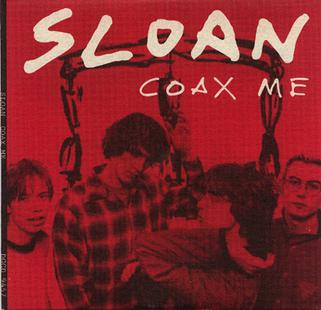
Sloan got its start in Halifax during the early ‘90s. The band played around the Nova Scotia College of Art and Design before moving to Toronto.
The band made their recording debut on the Halifax, Canada CD compilation “Hear & Now” with the song “Underwhelmed” before releasing their debut EP “Peppermint” in 1991 on their own label Murderecords. In 1992 Sloan signed with Geffen Records and released their full-length debut “Smeared”. The album had somewhat of a grunge style.
Coax Me was on their second album Twice Removed. They changed their style with the second album with a more power pop feel. Geffen didn’t like the change and pulled a lot of support but it did peak at #25 in the Canadian Album Charts. Coax Me peaked at #6 in the Canadian RPM Charts in 1994.
DeKe mentioned this band and their style is right up my alley. I’ve listened to a few of their songs and I really liked what I’ve heard so far.
Coax Me
It all seemed to happen so fast Will you ever believe the way he passed away I saw his widow speak on her fortune She was feelin’ pretty apathetic
Coax me, cajole me Coax me, cajole me
If I drink concentrated OJ Can I think Consolidated’s okay? It’s not the band I hate, it’s their fans Three cans of water perverts me
Coax me, cajole me Coax me, cajole me Coax me, cajole me
And after he died By rights she’d have cried I gave mine away I gave mine away
I saw a widow’s peak on her forehead It was full of lines and sinkers
Coax me, cajole me Coax me, cajole me Coax me, cajole me
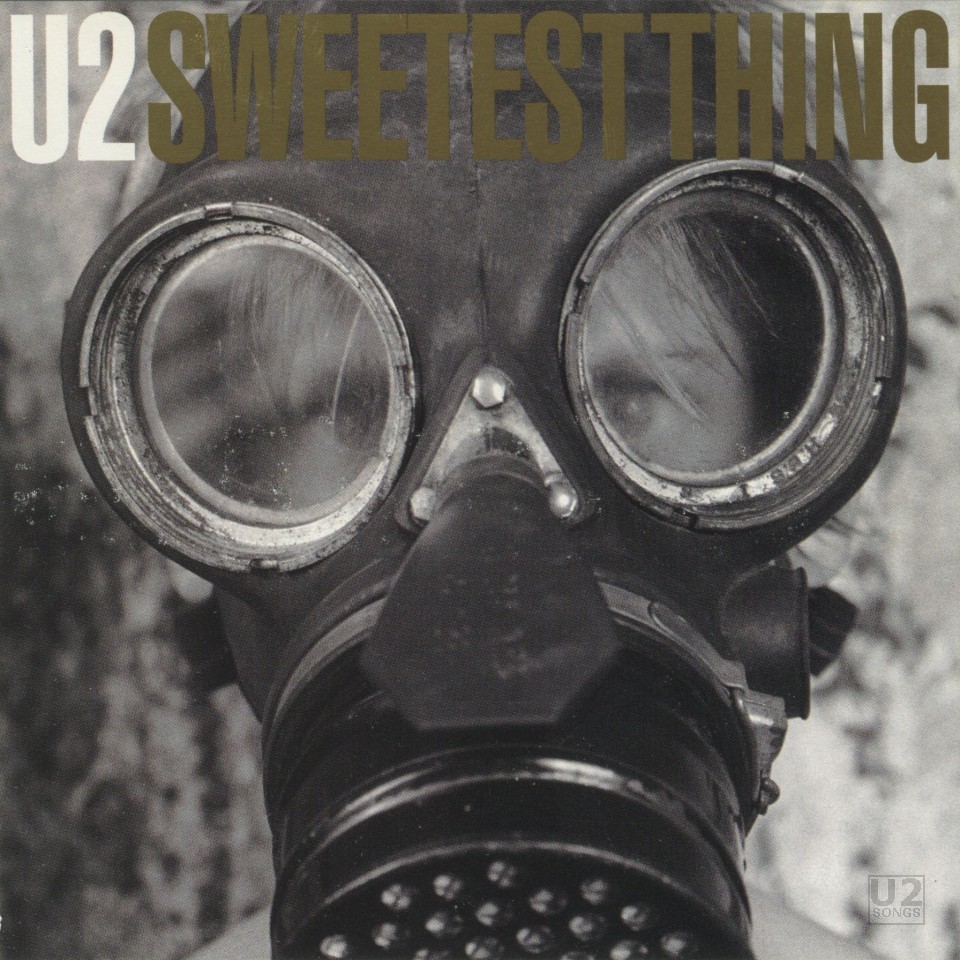
Bono wrote this as a birthday present to his wife, Ali. On her birthday, he was working on recording The Joshua Tree, so he was trying to make up for it. It was originally released as a B-side on the “Where the Streets Have No Name” single in 1987. The song was later re-recorded and re-released as a single in October 1998 for the band’s compilation album The Best of 1980–1990.
The song peaked at #63 in the Billboard 100 in 1998.
All proceeds from the song were given to the charity “The Children of Chernobyl”, which was chosen by Ali as her chosen charity, an organization that brought children affected by the Chernobyl disaster to visit and stay with Irish families.
Bono about his wife: “I’m a bit of a stray dog. I would not have been in the queue to get married had I not met someone as extraordinary as Ali. I always felt more myself with her than with anybody.” He describes the first time he saw her: “I thought she looked Spanish, a rose for sure, dark with blood-red lips.”
From Songfacts
U2 recorded this for The Joshua Tree, but left it off because they felt it did not fit in on the album. It was originally released as the B-side to a 7″ single that also included “Where The Streets Have No Name” and “Silver And Gold.”
This was rerecorded and released on U2 The Best Of 1980-1990 in 1998.
In 1998, this was released as a single with proceeds going to Children Of Chernobyl, the favorite charity of Bono’s wife, Ali.
The video shows Bono orchestrating an elaborate apology to Ali, who appears at the beginning of the clip getting into a horse-drawn carriage. The camera then cuts to Bono, who is facing her, and stays on him as they go for a ride down a street in Dublin. Along the way, Bono makes various outlandish offerings to win her favor, starting with the Irish group Boyzone, who climb on board. Next comes a marching band, a fire engine (with firemen), a string section, Irish step dancers from Riverdance, and an elephant. It’s not clear if the apology works, but he sure made an effort.
It looks like the Bono section is all one shot, but there are actually several edits made where the light flares come in. Kevin Godley, who directed it, did something similar on U2’s video for “Numb,” where the camera stays on The Edge for almost the entire time.
U2 didn’t play this live until March 17, 2000, when they played it a ceremony in Dublin where they were being honored. The following year, it made the setlist for their Elevation tour, then was mothballed until 2015 for their Innocence + Experience tour.
Boyzone star Ronan Keating revealed to co-host Harriet Scott on the Magic Radio Breakfast Show that Bono initially offered the song to him, but he insisted that U2 take it instead. Keating said: “It was U2’s, they had to sing it, I knew they had to sing it.
The Sweetest Thing
My love she throws me like a rubber ball Oh oh oh, the sweetest thing She won’t catch me or break my fall Oh oh oh, the sweetest thing Baby’s got blue skies up ahead But in this I’m a rain cloud You know she likes a dry kind of love Oh oh oh, the sweetest thing
I’m losing you I’m losing you Ain’t love the sweetest thing
I wanted to run but she made me crawl Oh oh oh, the sweetest thing Eternal fire, she turned me to straw Oh oh, the sweetest thing You know I got black eyes But they burn so brightly for her This is a blind kind of love Oh oh oh, the sweetest thing
I’m losing you Oh oh oh, I’m losing you yeah Ain’t love the sweetest thing Ain’t love the sweetest thing Oh oh, yeah, oh
Blue-eyed boy meets a brown-eyed girl Oh oh oh, the sweetest thing You can sew it up but you still see the tear Oh oh oh, the sweetest thing Baby’s got blue skies up ahead And in this I’m a rain cloud Oh this is a stormy kind of love Oh oh oh, the sweetest thing
Oh oh, the sweetest thing Oh oh oh, the sweetest thing
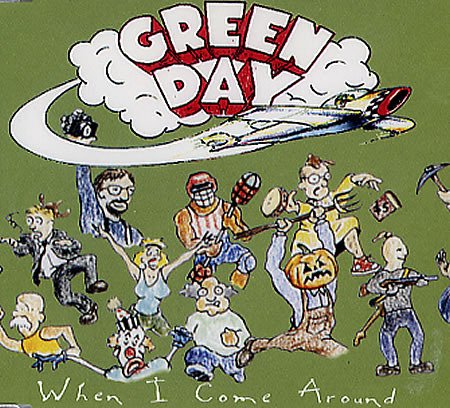
This was my first introduction to Green Day. The more albums they released the more I liked them. American Idiot is probably my favorite album but this song was a good introduction to the band for me.
Billie Joe Armstrong, Mike Dirnt, and Tré Cool are listed as writers of this song.
This song was not released as a single, which was a strategic move by Green Day’s label Reprise to goose sales of the album. Airplay pushed the song to peak at #6 in the Billboard 100, #3 in Canada, #33 in New Zealand, and #27 in the UK in 1995.
When performing this song at Woodstock ’94, a fan threw a clump of mud on stage and Billie Joe stuck it in his mouth. This caused the fans to keep throwing mud and started the infamous mud fight. Many fans look back at Woodstock ’94 fondly, calling it “Mudstock ’94” largely because of this incident.
From Songfacts
A track from Green Day’s first major-label album, this is a very personal song lead singer Billie Joe Armstrong wrote about being away from his girlfriend, Adrienne Nesser, and the frustrations they both felt when he was on the road. Billie Joe met Adrienne in 1990 when Green Day performed in Minnesota, where she lived. He was just 18, and found it difficult to maintain a long-distance relationship, especially with his touring schedule. In this song, he affirms his devotion for her, assuring her that when he does get to see her (when he “comes around”) he will make it up to her.
Billie Joe and Adrienne got married in July 1994, a few months after Dookie was released and right in the midst of the band’s rapid ascent to stardom (the band was touring at the time). The marriage endured, and couple had two children together.
MTV aired two different videos for this song. A concept video for the song was directed by Mark Kohr, and MTV also showed a live version from Green Day’s infamous Woodstock ’94 performance (lots of mud was in the air). They used this video to promote the MTV Woodstock ’94 retrospective videotape.
Jason White, who sometimes played as a second guitarist for Green Day, is in this video. He’s the guy kissing the girl.
The Woodstock ’94 version is included on the festival’s live album, Woodstock 1994.
When I Come Around
I heard you crying loud, all the way across town Cause you been searching for that someone And it’s me out on the prowl As you sit around feeling sorry for yourself
Well, don’t get lonely now, and dry your whining eyes I’m just roaming for the moment Sleazin’ my back yard so don’t get So uptight you been thinking about ditching me
No time to search the world around ‘Cause you know where I’ll be found When I come around
Well, I heard it all before, so don’t knock down my door I’m a loser and a user so I don’t need no accuser To try and slag me down because I know you’re right
So go do what you like, make sure you do it wise You may find out that your self-doubt means nothing Was ever there You can’t go forcing something if it’s just not right
No time to search the world around ‘Cause you know where I’ll be found When I come around
No time to search the world around ‘Cause you know where I’ll be found When I come around
REM really let loose on their album Monster. I love the tone on Peter Bucks guitar and the loud in your face production. Peter Buck played the late Kurt Cobain’s Fender Jag-Stang, which he plays upside-down because Cobain was left-handed.
This song is about an incident that took place on October 4, 1986, when the CBS news anchor Dan Rather was attacked on a New York City sidewalk by a crazed man yelling “Kenneth, what is the frequency.” The man turned out to be William Tager, who was caught after he killed a stagehand outside of the Today show studios on August 31, 1994. Tager, who was sentenced to 25 years in prison, said he was convinced the media was beaming signals into his head, and he was on a mission to determine their frequencies.
Lead singer Michael Stipe says this is an attack on the media, who overanalyze things they don’t understand.
The song slows down at the end because of bassist Mike Mills. They noticed he was in pain, but everyone followed him and finished the track. After they were done, Mills was taken to the hospital and it was discovered he had appendicitis. They never got back to redo the song.
This song peaked at #21 in the Billboard 100 in 1994.
From Songfacts
When Michael Stipe wrote the lyrics, Tager had not yet been identified as Rather’s assailant. He wrote the song after becoming intrigued by the case and the media reaction to it, calling it “The premier unsolved American surrealist act of the 20th century.”
Tager got out of jail in 2010.
After this song came out, “What’s the frequency, Kenneth” became a catchphrase and was a running joke on The David Letterman Show (for a short time, “Kenneth” also became a term used for a clueless person). Rather had a good sense of humor about it and later appeared on the show, singing this with R.E.M. backing him.
Peter Buck remembered the experience in the liner notes for In Time: The Best of R.E.M. 1988–2003: “I like Dan Rather. He’s a fine newsman, an interesting person to talk to, and quite a bit nuttier than most of those media types (I consider that a good thing). That said, nothing in my rich and varied life prepared me for the experience of performing behind him as he ‘danced’ and ‘sang’ ‘What’s the Frequency, Kenneth?'”
There is a song by Game Theory on their 1987 album Lolita Nation called “Kenneth, What’s the Frequency?” It was produced by Mitch Easter, who was R.E.M.’s producer for Chronic Town, Murmur, and Reckoning. Coincidence?
Despite his painful ordeal, Mills notes this as “one of my favorite rockers in our canon, touching on pop culture and yet with balls” in Part Lies, Part Heart, Part Truth, Part Garbage 1982–2011.
The line, “Richard said, ‘Withdrawal in disgust is not the same as apathy,'” refers to Richard Linklater, director of Slacker (1991) and Dazed and Confused (1993). More recently, he directed Waking Life (2001) and the acclaimed “Before” trilogy: Before Sunrise (1995), Before Sunset (2004) and Before Midnight (2013).
In the liner notes for the compilation album Part Lies, Part Heart, Part Truth, Part Garbage 1982–2011, Stipe says he quoted the director “to aid in a fictional narrative that details a generational belly flop the size of Lake Michigan.”
This was the first single released from the album, which indicated the harder edge that R.E.M. took on Monster, their ninth album.
This single was the first piece of music to be released by R.E.M. that included a lyric sheet. The first R.E.M. album to include printed lyrics was Up, from 1999.
The music video, directed by Peter Care, shows the band performing this song under multicolored flashing lights and is notable for debuting new looks for Michael Stipe, who shaved his head, and Mike Mills, who grew out his hair and decked himself out in a rhinestone suit borrowed from Gram Parsons.
This was featured on Friends in the episode “The One with Two Parts: Part 2” and on Beavis and Butt-Head in “Wet Behind the Rears,” both in 1995. It was also used in the 1999 Martin Scorsese film Bringing Out the Dead, starring Nicolas Cage and Patricia Arquette.
What’s The Frequency Kenneth?
“What’s the frequency, Kenneth?” is your Benzedrine, uh-huh I was brain-dead, locked out, numb, not up to speed I thought I’d pegged you an idiot’s dream Tunnel vision from the outsider’s screen
I never understood the frequency, uh-huh You wore our expectations like an armored suit, uh-huh
I’d studied your cartoons, radio, music, TV, movies, magazines Richard said, “Withdrawal in disgust is not the same as apathy” A smile like the cartoon, tooth for a tooth You said that irony was the shackles of youth
You wore a shirt of violent green, uh-huh I never understood the frequency, uh-huh
“What’s the frequency, Kenneth?” is your Benzedrine, uh-huh Butterfly decal, rearview mirror, dogging the scene You smile like the cartoon, tooth for a tooth You said that irony was the shackles of youth
You wore a shirt of violent green, uh-huh I never understood the frequency, uh-huh You wore our expectations like an armored suit, uh-huh I couldn’t understand
You said that irony was the shackles of youth, uh-huh I couldn’t understand You wore a shirt of violent green, uh-huh I couldn’t understand I never understood, don’t fuck with me, uh-huh
My sister got lucky, married a yuppie Took him for all he was worth
As soon as I heard those two lines I knew I was going to like the song.
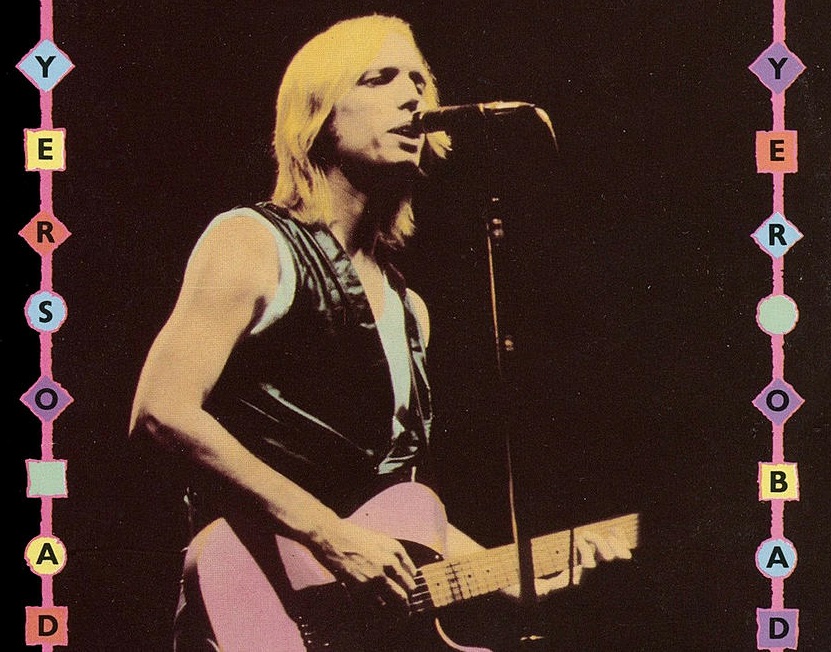
Tom Petty had gotten to know Lynne through George Harrison, who brought the Electric Light Orchestra leader to produce Harrison’s 1987 comeback LP Cloud Nine. That led to the three artists taking part in the Traveling Wilburys supergroup. One day, Petty played “Yer So Bad”; he had all the words down but was stuck on the music for the chorus.
“Jeff showed me this little part,” Petty recalled. “E minor to C, and said, ‘You could do this.’ And I said, ‘That’s great!’ And I was so elated, because I had been working on the song for days, and I couldn’t get from the verse to the chorus somehow. And he showed me this little bit, and I said, ‘Great! Will you produce this?'”
Petty wanted Howie Epstein (bass player for the Heartbreakers) to help on the harmonies but Howie said he didn’t like the song so Petty told him he didn’t need him then. That is when he knew it was going to be a solo album.
This was the last fifth single released from the album. Yer So Bad peaked at #5 in the Billboard Album Rock Tracks and #44 in Canada in 1990.
Yer So Bad
My sister got lucky, married a yuppie Took him for all he was worth Now she’s a swinger dating a singer I can’t decide which is worse[Chorus:] But not me baby, I’ve got you to save me Oh yer so bad, best thing I ever had In a world gone mad, yer so badMy sister’s ex-husband can’t get no lovin’ Walks around dog-faced and hurt Now he’s got nothin’, head in the oven I can’t decide which is worse
I remember this show in the late seventies and early eighties. The performers included The Who, Rolling Stones, Bruce Springsteen, David Bowie, AC/DC, Elton John, Tom Petty, and more. You could tune in on the radio and hear concerts and interviews.
It all started on Feb. 18, 1973, when the King Biscuit Flower Hour debuted on the D.I.R. Radio Network…on FM stations across the U.S. The innovative Sunday night series featured recorded concerts and interviews with rock’s biggest stars. King Biscuit would expand its reach to more than 300 stations before it ceased the weekly production of new shows in 1993. Reruns continued until 2005.
The first KBFH show was broadcast on February 18, 1973 and featured Blood, Sweat & Tears, the Mahavishnu Orchestra, and Bruce Springsteen. Columbia Records was one of the sponsors of the first shows, along with Pioneer High Fidelity and Scotch recording tape.
The concerts were usually recorded with a mobile multi-track recording truck, then mixed and edited for broadcast on the show within a few weeks. In the 1970s, the show was sent to participating radio stations on reel-to-reel tape. They soon switched from tape to album and then to CDs.
Although closely associated with classic rock in its later years, the King Biscuit Flower Hour dedicated much air time to new and emerging artists, including new wave and modern rock artists in the late 1970s and early 1980s.
In 1982, a three-alarm fire damaged the Manhattan office tower that housed D.I.R. Broadcasting. Reportedly, many of the King Biscuit Flower Hour recordings were lost in the fire.
By the end of the KBFH series and the sale of its assets to Wolfgang’s Vault, DIR had impressively amassed over 850 rock concerts, approximately 200 live interviews, and almost 400 country music concerts, which the company recorded on its separate Silver Eagle brand, along with 150 comedy shows.
In 2006, the King Biscuit tape archives were acquired by Wolfgang’s Vault which began streaming concerts online and has made some available for download.
There weren’t many options back then to see or hear rock performers…Don Kirshner Rock Concert, Midnight Special, and some on SNL..and maybe a few specials.













 PowerPop... An Eclectic Collection of Pop Culture