Chris Isaak – Wicked Game

When I first heard this song…I thought this song was very different. It’s almost like its origin was in a dream. I can imagine this song being a soundtrack to a fever dream easily. It’s that guitar with its sliding and bending notes. The guitar player was James Calvin Wilsey who played that haunted-sounding lead.

I remember hearing Isaak before this hit from a friend who had his Silvertone album. I really liked a song called Gone Ridin’. It was rockabilly with a modern twist. I talked to my friend recently and we talked about Isaak. He agreed with me that we never saw the success of Wicked Game coming.

Most of the time, songs that go out on a limb and are different are not heard as much. My blog is full of those songs but this one actually reached the masses. Along with that guitar is Isaak’s haunting but strong voice. He wrote it one night when a troubled lady was coming over to his house (see quote at bottom).

The song peaked at #6 on the Billboard 100, #3 in Canada, #7 in New Zealand, and #10 in the UK. It also reached #2 on the Billboard Alternative Charts in 1990. The song was on the 1989 album Heart Shaped World.

When the song was placed in a movie it took off. An instrumental version was used in the David Lynch film called Wild At Heart in 1990. That certainly helped the song as well. I’m a huge David Lynch fan and Chris had this to say about him. “I enjoy talking about David Lynch because he’s such a great guy. The question I get about him is, ‘How is David Lynch? Is he scary or spooky or something?’ I don’t think it’s ever guys who make films like David makes or who have that kind of weird bent in their artwork–those guys are probably the nicest guys in real life because they’ve expressed all of their weird angles. The guys you have to watch are the guys who go, ‘I’m a scout master, the proud father of two children, and I’m also a deacon in the church.’ Then you go, ‘Be careful.’ If he’s out in the back yard at night with a shovel, be careful because he’s burying something.”

Chris Isaak: “This one I wrote really late at night and it was written in a short time, because I remember that a girl had called me and said, ‘I want to come over and talk to you,’ and ‘talk’ was a euphemism. And she said, ‘I want to come over and talk to you until you’re no longer able to stand up.’ And I said, ‘Okay, you’re coming over.’ And as soon as I hung up I thought, ‘Oh, my God. I know she’s gonna be trouble. She’s always been trouble. She’s a wildcat. And here I am, I’m going to get killed, but I’m doing this.’ And I wrote ‘Wicked Game’: ‘world’s on fire and no one can save me but you.’ It’s like you start thinking about it, and by the time she came over to the house, I had the song written. And I think she was probably upset because I was more excited by the song. (Laughing) I was like, ‘Yes, you’re gorgeous, baby. But listen to this song!'”

Chris Isaak:  “I think that sometimes you get easy ones that come very quick and you’re really glad – you go, ‘Wow, where’d this come from?’ It’s so fast to write. And then there’s other songs that you do and it’s like doing your homework. It’s like you really are working and biting the pencil and working on that third verse. Most of the time you do work. But sometimes you get lucky.”

Wicked Game

The world was on fire and no one could save me but youIt’s strange what desire will make foolish people doI never dreamed that I’d meet somebody like youAnd I never dreamed that I’d lose somebody like you

No, I don’t wanna fall in love (this world is only gonna break your heart)No, I don’t wanna fall in love (this world is only gonna break your heart)With youWith you(This world is only gonna break your heart)

What a wicked game you play, to make me feel this wayWhat a wicked thing to do, to let me dream of youWhat a wicked thing to say, you never felt this wayWhat a wicked thing to do, to make me dream of you

And I don’t wanna fall in love (this world is only gonna break your heart)No, I don’t wanna fall in love (this world is only gonna break your heart)With you

The world was on fire and no one could save me but youStrange what desire will make foolish people doI never dreamed that I’d love somebody like youAnd I never dreamed that I’d lose somebody like you

No, I don’t wanna fall in love (this world is only gonna break your heart)No, I don’t wanna fall in love (this world is only gonna break your heart)With you (this world is only gonna break your heart)With you (with you)(This world is only gonna break your heart)

No, I (this world is only gonna break your heart)(This world is only gonna break your heart)

Nobody loves no one

Alone in the Wilderness…documentary

If you ever watch something I recommend…please give this short one-hour film a chance.  Someone brought a DVD of this for me to watch around 7 years ago. I thought it was going to be boring. I ended up watching it twice in one sitting. It will draw you in. I watch it at least once every year or two. 

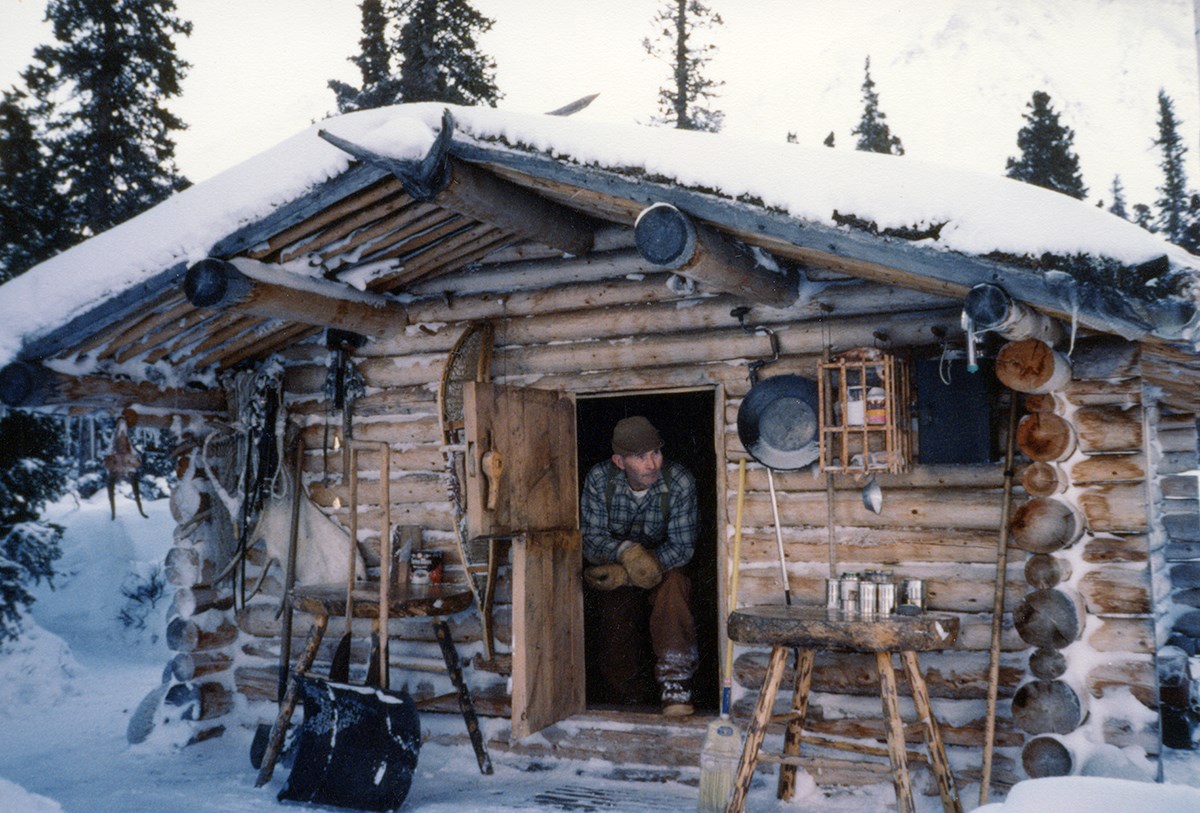
A 50-year-old man named Dick Proenneke is in Twin Lakes Alaska in 1968 and films himself building a retirement cabin. He starts out by staying in a friend’s cabin. He starts gathering wood and making some of the tools he uses as he goes.  This man…is a real man. if he needs a spoon…he starts carving himself out one. He builds this cabin and makes everything including wood hinges for the door. He also made hinges out of his tin containers. He gathers rocks from somewhere down the lake and brings them back… then he starts building his chimney.

He is by himself and sets up the camera everywhere he goes. He goes out fishing when he is hungry and hunting for meat for the winter only taking what he needs. He uses just what he needs and doesn’t take more from nature than he could use. He makes almost everything from scratch. He uses his tin canisters for different things. He buries one and covers for a refrigerator. The only help he receives is a pilot friend who lands every now and again to deliver supplies. He was a master craftsman, to say the least.

He also filmed all the wildlife around. Rams, wolves, bears, birds, and Caribou. He also gets some great shots of the area around Twin Lakes. The snowy mountains were breathtaking. 

It doesn’t sound that special but I have watched it at least 6 more times since the night I watched it twice… sometimes showing it to other people. He makes it look so easy. He filmed enough to have a few more short documentaries which were released but nothing matches that first one. This man made me feel like a mouse, a kid, a beginner, a slouch. He is so talented and tough.

He ended up staying there until 1999 alone and then left to live with his brother at age 82. Dick passed away at 86 in 2003. The cabin is still there and is on the National Register of Historic Places. People come from all over the world to visit it. 

I wish YouTube had the complete documentary but they don’t. I watch modern YouTube videos of people visiting the cabin now. They see his cache in the back, his sled, and all the cabin parts. You see him in 1968 building those items. Like I said earlier, there are more documentaries on him but start with this one. This one is great. I’ve never had someone tell me they were disappointed in it. 

The cabin now

Here is the first 9:34 minutes or so

The Concorde

When I started this blog…I had no idea that I would concentrate on single songs. I was going to cover pop culture and I did at the beginning more. I would like to get one in every now and then.

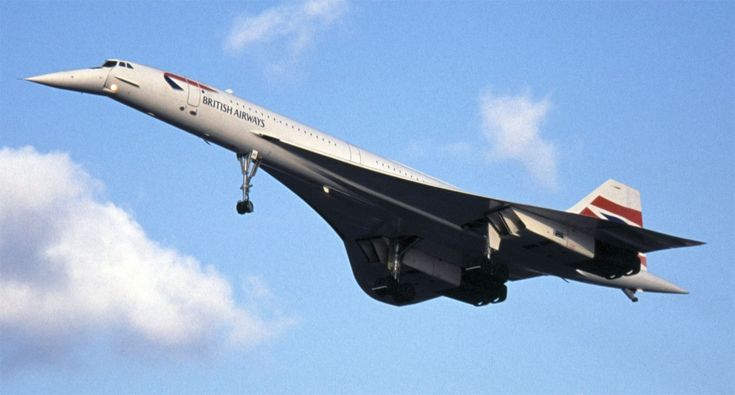
Today… everything seems to be bigger, stronger, and faster. That isn’t true though with a certain passenger airplane. A flight from New York to London now will take around 7 hours and 35 minutes to 8 hours and 10 minutes long. How fast would that flight be in the 1970s on the Concorde? That would take you a cozy three-and-a-half hours. The fastest flight was two hours and fifty-two minutes. It would travel at 1,354 mph. It was more than twice the speed of sound.

I’m not a huge airplane guy but this aircraft fascinated me and I always wanted to ride on one. The nose cone would come down so the pilots could see the runway…it looked like something from a Scifi movie. It would reach Mach 2 between London and New York. I would see pictures of it as a kid or on the news and I thought it was the coolest plane I’d seen. I probably still do. I do remember complaints about the sonic boom.

In November 1962, the British and French governments signed a treaty to jointly develop the Concorde. The Concorde prototype made its maiden flight on March 2, 1969. After some more prototypes, they tested and made modifications, including addressing issues with noise, fuel efficiency, and environmental impact. received its airworthiness certificate in 1975, with the first commercial flights beginning on January 21, 1976, by British Airways and Air France.

There was a plan for a Concorde-type supersonic plane in the US called a Boeing 2707. It would have gone 3 times the speed of sound and held 277 passengers compared to the 100 passengers the Concorde held. It was too expensive to build and was called “the most expensive aircraft never built.” Here is a picture of a 1966 mock-up of the 2707.

Boeing 2707
Boeing 2707

In 1977, it cost £431 to fly one way onboard Concorde between London and Washington. Adjusted for inflation, that’s about £2,200 ($2,800) in today’s money. However, fare prices gradually went up, and by 1996, a roundtrip across the Atlantic would generally be priced at around $12,500 in today’s money. So it was very expensive. The meals and service were great but it was cramped inside compared to other airplanes at the time. It was also noisy…

All together… two prototypes, two pre-production aircraft, two development aircraft, and 14 production aircraft for commercial service. All of them except the two pre-production builds are preserved in museums.

This all leads us to why the Concorde is in museums now and not in the sky. The price, noise, and it was so expensive to operate. Every hour in the sky had to have 22 hours of maintenance. Also on July 25, 2000, the Concorde crashed. It was shortly after takeoff and 109 people died onboard plus 4 on the ground. That was its only crash. They did go on until 2003 but officially retired the plane that year.

A New York Times writer wrote this about the food served. “What followed the coffee was a breakfast of fresh papaya, guava, pineapple, strawberries and mangoes, croissants and brioche that might have come from a Paris bakery, a pretty good approximation of eggs benedict and a soufflé Gruyère, all washed down with Piper‐Heidsieck Cuvée Diplomatique. The china, of course, was Limoges.”

This video shows the take-off from inside the plane by a passenger.

Sports Songs

CB mentioned a song on this list and this list came to life…so thanks CB. Some songs about sports or sports figures. I managed to get in baseball, boxing, and even Cricket. I can see a part II in the future.

The songs I know the most about are Baseball theme songs because that is the sport I follow the most.

John Fogerty – Centerfield

Along with “Talkin’ Baseball” and “Take Me Out To The Ballgame,” this quickly became one of the most popular baseball songs ever. It’s a fixture at ballparks between innings of games and plays at the Baseball Hall of Fame in Cooperstown, New York.

Fogerty mentions 3 huge baseball stars…”So say, Hey Willie, tell Ty Cobb and Joe DiMaggio.” He was influenced by Chuck Berry’s Brown Eyed Handsome Man with the lyrics  “Rounding third he was heading for home, it was a brown eyed handsome man,” which is lifted from Berry’s song “Brown Eyed Handsome Man.”

John Fogerty: “I’d hear about Ruth and DiMaggio, and as my dad and older brothers talked about the Babe’s exploits, their eyes would get so big. When I was a little kid, there were no teams on the West Coast, so the idea of a Major League team was really mythical to me. The players were heroes to me as long as I can remember.”

Paul Kelly – Bradman

I’ll be the first to admit I  know little nothing about Cricket but the song is great. It’s about Sir Donald Bradman, arguably…. the greatest ever cricketer (and definitely the greatest ever Australian cricketer). This one peaked at #51 in Australia in 1987 and was part of a double A-sided single along with the song Leaps and Bounds.

Chris Gaffney – Eyes of Roberto Duran

This song was written by Tim Russell and it’s covered here by Chris Gaffney. Gaffney had a terrific voice and I discovered him when I covered The Hacienda Brothers last week. This song was on the 1995 album Loser’s Paradise. 

Roberto Durán, a Panamanian boxer, is widely regarded as one of the greatest fighters of all time. Known as “Manos de Piedra” (Hands of Stone) for his punching power, Durán’s career lasted from 1968 to 2001. That is a long long career for a boxer.

Durán has talked about an incident from his childhood that left him with a unique trait. As a young boy, he was hit in the eye with a rock, resulting in a permanent droop in his left eyelid. This injury gave Durán a distinctive look, contributing to his fierce ring presence. Despite this, his vision was not significantly impaired.

Bob Dylan – Hurricane

Hurricane is a protest song by Bob Dylan co-written with Jacques Levy, released in 1976 on Dylan’s album Desire. The song tells the story of Rubin “Hurricane” Carter, a middleweight boxer who was wrongfully convicted of a triple murder in Paterson, New Jersey, in 1966. Dylan’s song played a huge role in bringing Carter’s case to public attention.

Warren Zevon – The Ballad of Bill Lee

This song is about one of the most colorful baseball players ever. Bill Lee was called Spaceman because of his views on the world. He was from the 1960s counterculture when most baseball players were straight-laced. When asked about mandatory drug testing, Lee saidI’ve tried just about all of them, but I wouldn’t want to make it mandatory.”

This is from Warren Zevon’s 1980 album “Bad Luck Streak in Dancing School.” The song is a tribute to Bill “Spaceman” Lee.

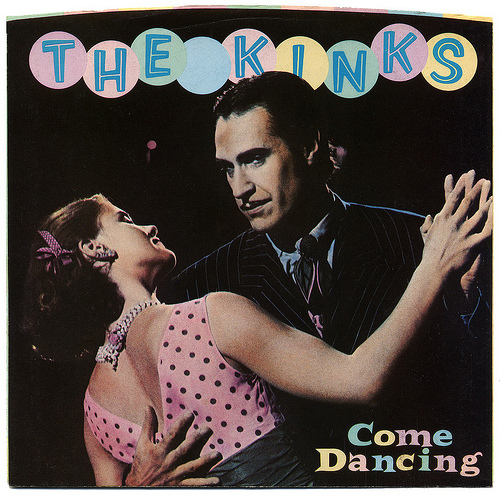
Kinks – Come Dancing

I saw the Kinks on this tour. This remains one…if not the best concert I’ve ever attended. They were in their early forties and all over the stage. In 1983 this song peaked at #6 on the Billboard 100, #6 in Canada, and #12 in the UK.

Heineken Beer Bottle

When I was watching them, Ray kept drinking from a Heineken green bottle. He ended up tossing that bottle to a person in the audience.  During intermission, I went to the lobby and I talked to the guy that had the bottle. He said he would keep that forever…he was an intense Kinks fan. I bet that guy still has that bottle somewhere…and I would have done the same thing.

This song got heavy play on MTV at a time when I would watch the channel. I’ve always liked the Kinks. They get forgotten but deserve their place beside the Beatles, Who, and Stones…I used to say those three bands are the holy trinity of rock…but I have to add the Kinks…making it the 4 walls that hold the building up.

It was on their State of Confusion album. I bought it as it came out without hearing a song because I loved Give The People What They Want so much. It’s par for the course that Davies met resistance from record company head Clive Davis on this single. Davis didn’t want this song released as a single…he thought it was too British and vaudevillian

He wrote it as a reflection on his childhood and the dance halls of his youth. The song is particularly personal to him, as it was inspired by his older sister, Rene, who had a profound impact on his early life. Rene had given Ray his first guitar that he had tried to talk his parents into. On that same night, Rene passed away from a heart attack on her way to the  Lyceum Ballroom…a dance hall on Ray’s 13th birthday.

Ray Davies: Clive Davis didn’t want to put it out, because he thought it was too vaudevillian, too English. It was only the video that convinced him. It went on MTV when it first started, and they couldn’t stop rotating it.

Ray Davies:  “I wanted to regain some of the warmth I thought we’d lost, doing those stadium tours. ‘Come Dancing’ was an attempt to get back to roots, about my sisters’ memories of dancing in the ’50s.”

Come Dancing

They put a parking lot on a piece of land
When the supermarket used to stand
Before that they put up a bowling alley
On the site that used to be the local pally
That’s where the big bands used to come and play
My sister went there on a Saturday
Come dancing
All her boyfriends used to come and call
Why not come dancing, it’s only natural
Another Saturday, another date
She would be ready but she’s always make him wait
In the hallway, in anticipation
He didn’t know the night would end up in frustration
He’d end up blowing all his wages for the week
All for a cuddle and a peck on the cheek
Come dancing
That’s how they did it when I was just a kid
And when they said come dancing
My sister always did
My sister should have come in a midnight
And my mom would always sit up and wait
It always ended up in a big row
When my sister used to get home late
Out of my window I can see them in the moonlight
Two silhouettes saying goodnight by the garden gate
The day they knocked down the pally
My sister stood and cried
The day they knocked down the pally
Part of my childhood died, just died
Now I’m grown up and playing in a band
And there’s a car park where the pally used to stand
My sister’s married and she lives on an estate
Her daughters go out, now it’s her turn to wait
She knows they get away with things she never could
But if I asked her I wonder if she would
Come dancing
Come on sister, have yourself a ball
Don’t be afraid to come dancing
It’s only natural
Come dancing
Just like the pally on a Saturday
And all her friends will come dancing
Where the big bands used to play

Bruce Springsteen – Pink Cadillac

It’s no secret…Springsteen loves cars and what they represent. In this one, I think of the Pink Cadillac that Elvis gave his mom in the 1950s. I always liked this song and it was one of the first songs I did the lead vocals on in front of people. To sing it you have to stay monotone and not get too excited but it’s a fun one to do. I think I was around 17 and playing in a bar in 1984. 

My favorite line to sing in it was But my love is bigger than a Honda
yeah, it’s bigger than a Subaru hey man there’s only one thing
and one car that will do. I mean how many times do you get to sing a song with the word “Subaru” in it? Plus we tacked on “Bang A Gong (Get It On)” at the end of Pink Cadillac and they blended perfectly into each other. 

It’s a rockabilly type song that stood out on the radio in 1984…even from Born in the USA. It has been covered 39 times by artists including Natalie Cole and Jerry Lee Lewis. What makes this song so good is Bruce’s storytelling with lines like They say Eve tempted Adam with an apple, But man I ain’t going for that
I know it was her pink Cadillac. 

The production on this one was low-keyed and flat sounding…and I don’t mean that badly. Compare this to the tracks on Born in the USA…those tracks have a sonic quality from the mix by Bob Clearmountain…this one keeps a 50s-style rockabilly sound. 

Bruce Springsteen first recorded an acoustic version of this song for his Nebraska album but it didn’t make the cut. I think it would have fit Nebraska perfectly. He recorded this version during the sessions for his 1984 album Born in the U.S.A., though it didn’t make the cut on that album either. Instead, it was released as the B-side to the hit single Dancing in the Dark in 1984. It would not be featured on an album until Tracks, released in 1998. 

The song peaked at #27 on the Billboard Mainstream Rock charts in 1984. 

Natalie Cole recorded it in 1987 and it peaked at #5 on the Billboard 100. 

Here is a version that Jerry Lee Lewis did with Bruce. 

Pink Cadillac

Well now you may think I’m foolish
For the foolish things I do
You may wonder how come I love you
When you get on my nerves like you do
Well baby you know you bug me
There ain’t no secret ’bout that
Well come on over here and hug me
Baby I’ll spill the facts
Well honey it ain’t your money
‘Cause baby I got plenty of that
I love you for your pink Cadillac
Crushed velvet seats
Riding in the back
Cruising down the street
Waving to the girls
Feeling out of sight
Spending all my money
On a Saturday night
Honey I just wonder what you do there in back
Of your pink Cadillac
Pink Cadillac

Well now way back in the Bible
Temptations always come along
There’s always somebody tempting
Somebody into doing something they know is wrong
Well they tempt you, man, with silver
And they tempt you, sir, with gold
And they tempt you with the pleasures
That the flesh does surely hold
They say Eve tempted Adam with an apple
But man I ain’t going for that
I know it was her pink Cadillac
Crushed velvet seats
Riding in the back
Oozing down the street
Waving to the girls
Feeling out of sight
Spending all my money
On a Saturday night
Honey I just wonder what it feels like in the back
Of your pink Cadillac
Pink Cadillac

Now some folks say it’s too big
And uses too much gas
Some folks say it’s too old
And that it goes too fast
But my love is bigger than a Honda
Yeah, it’s bigger than a Subaru
Hey man there’s only one thing
And one car that will do
Anyway we don’t have to drive it
Honey we can park it out in the back
And have a party in your pink Cadillac
Crushed velvet seats
Riding in the back
Cruising down the street
Waving to the girls
Feeling out of sight
Spending all my money
On a Saturday night
Honey I just wonder what you do there in back
Of your pink Cadillac
Pink Cadillac
Pink Cadillac
Pink Cadillac
Pink Cadillac
Pink Cadillac
Pink Cadillac
Pink Cadillac
Pink Cadillac

Guadalcanal Diary – Always Saturday

I found this band in 2019 when I was covering alternative bands from the 80s. So many great bands from that era that never made it to the mainstream. It is a shame that these bands didn’t have a larger audience. They had many songs that were better than what the mainstream was providing. Some of the alternative bands of 2024 sound like their 1980s predecessors.

These bands didn’t get the 1980s production memos. They sounded different from their mainstream counterparts and added a sixties jangle with a much smaller production. It’s not as easy to date them…the music was a little more timeless.

This band came from Marietta, Georgia, a suburb of Atlanta, but they were often billed as being from Athens, Georgia, and were lumped in with the other Athens acts like REM. They were a college Alternative Band.

I blogged about this band years back. Watusi Rodeo and Trail Of Tears off their debut album Walking In The Shadow of the Big Man. I would recommend that album to anyone for catchy songs and good lyrics. It is one of the best debut albums I’ve listened to.

Still in high school, singer/guitarists Murray Attaway and Jeff Walls became musical partners when they joined the punk band Strictly American. Electing to strike out on their own, they formed the Emergency Broadcast System (I love that name!). Walls was teaching Rhett Crowe bass at the time and she was asked to join the band. Crowe accepted the offer and quickly suggested a name change to Guadalcanal Diary (based on the 1940s movie).

The band formed in 1981 and disbanded in 1989. They reformed in 1997 but never recorded any new material. After going on hiatus in 2000, Guadalcanal Diary temporarily reunited for a second time in 2011 for Athfest, where they celebrated their 30th anniversary.

They released this song in 1989. It was on the album Flip Flop. The song was written by Murray Attaway & Jeff Walls. The song charted at #7 on the Billboard Alternative Chart in 1989. It stayed around for 10 weeks on the chart. It was their most successful and remembered song.

Though Guadalcanal Diary never achieved the same level of commercial success as some of their peers, they left a lasting impact on the alternative rock scene of the 1980s.

The Chicago Tribune on the album Flip Flop – Terrific mainstream rock, a shade quirkier than John Mellencamp or Tom Petty but no less deserving of Top 40 status.

The Los Angeles Times: “One of the most underrated, overlooked and inaccurately compared to R.E.M. bands around doesn’t offer much to change that on its fourth album.”

The Northwest Florida Daily News: Artsy rock ‘n’ roll that doesn’t stray too far from homespun melodies and twangy guitars.

Always Saturday

Waterfall pavement shimmering
Sunshine washes everything
A basket of light, I am trusting
To water the lawn is a wondrous thing

If I could have it this way I know I’d
I’d wanna live where it’s like today
I’d wanna live where it’s always this way
I wanna live where it’s always Saturday

A chorus of laughter fills the air
Everyone’s going everywhere
So many choices it’s not fair
I hop in the car and I just sit there

I don’t need, need to think about how much I
I wanna live where it’s all the same
I wanna live where it’s all just like today
I wanna live where it’s always Saturday
In the shops are shining things

I can I can see them glittering
I wish that I could buy them all
I wish I lived in a shopping mall

Shady back yard afternoon
Summer clothes and tennis shoes
When the light begins to fade
A porch swing creaks with lemonade

A shower of whispers glow and bloom
Late night movie fills the room
Streetlights twinkling like dew
I close my eyes, it ends too soon

All in dreams, I can dream now oh how I
I wanna live where it’s like today
I wanna live where it’s always this way
I wanna live where it’s always Saturday

Replacements – Alex Chilton

I never travel far, without a little Big Star

The Replacements are up there to me with the Beatles, Who, Kinks, Badfinger, Big Star, and The Stones. I wrote this for Dave’s site last year when he wrote a post about Hüsker Dü for my site. It’s catchy, great lyrics, and one of my favorite songs of the 1980s. 

The Replacement’s tribute song about Big Star and Box Tops lead singer, Alex Chilton. The song was off the album Please To Meet Me.

It was 1985 and the Replacements had a gig at CBGB’s. This was not an ordinary gig though. Their reputation as a great live band had grown and in the audience were a lot of record company representatives. They knew this and refused to play the game. They spotted Gene Simmons coming in the door and The Mats played a terrible version of the KISS song Black Diamond…Simmons got out very quickly. The band followed up with an X-rated version of the “Ballad of Jed Clampett,” then whistled their way through the theme from The Andy Griffith Show before finally leaving the stage.

The Replacements and Alex Chilton shared a booking agent named Frank Riley. He watched the Replacements at CBGBs doing an absolutely self-sabotaging drunk set. Chilton had a grin plastered on his face. After the show, both Jesperson (manager) and Chilton were waiting to get paid by CBGB owner Hilly Kristal. Jesperson offered to buy breakfast the next morning. Chilton accepted.

The next morning Jesperson stopped by Westerberg’s room to remind him of the day’s interview schedule. Still sleepy and hungover, Westerberg asked where Peter was going. When he found out, Paul shot out of bed, threw on his clothes, and tagged along.

Paul did not impress easily, but he was very impressed with Alex Chilton. They took a taxi to the Gem Spa newsstand on Second Avenue and St. Mark’s Place. “He was standing by a trash can with a bag full of matches,” said Westerberg. “He was playing a game . . . pretending, ‘I’m Alex the Weirdo.’ I sucked up to it, and played the role.”

While eating breakfast…Chilton leaned over to Jesperson. “Man, I gotta tell you I thought they were great last night,” he said. “I’d love to work in the studio with them someday.” He did get to work with the band later on and played on “Can’t Hardly Wait.” The band avoided the awkwardness of playing “Alex Chilton” whenever Chilton was around.

This was around 1985 and Seymour Stein signed them up to Sire Records. They released their 4th album, Tim. For the first time, they were on a major label. Chilton was going to produce Tim but the negotiations fell through. He did help out on their next album recorded in his hometown.

The Replacements recorded their fifth album Pleased To Meet Me in Memphis at Ardent Studios in 1986, the same studio as Big Star. The man behind the board was Jim Dickinson, who produced the storied third    Big Star album. It was probably their most radio-accessible album.
The record company loved the song but wanted the band to change the title and theme to a more famous person. The song was credited to Paul Westerberg, drummer Chris Mars, and bass player Tommy Stinson.

Per Wiki: Kory Grow of Rolling Stone called the song one of the two “all-time classics” from Pleased to Meet Me, the other being “Can’t Hardly Wait.” Kristine McKenna of Los Angeles Times was similarly glowing in her praise of the song, writing, “It’s hard to think of a more deserving pop hero [than Chilton], and if Pleased achieved nothing more than to revive interest in the criminally underrated Chilton it would justify its existence.”

Paul Westerberg: “It’s one of those where melody and chord changes were there and the lyrics changed over the course of six months or so. By the time we were down in Memphis we had already met Alex and I steered it toward him. Of course it was as the legend goes ‘George from Outer Space’ was the first working title, but that just didn’t grab it quite as well. I just thought it would be fun to write a song about a living person and we’ve been through this, Al and I, and I sort of regret the albatross that it’s came with… I was certainly trying to like, I guess, hip the outside world on who this guy might be publicly, but he didn’t need that. It would kind of hurt if he was always known as Alex Chilton of that song.”

Alex Chilton

If he was from Venus, would he feed us with a spoon?
If he was from Mars, wouldn’t that be cool?
Standing right on campus, would he stamp us in a file?
Hangin’ down in Memphis all the while.

Children by the million sing for Alex Chilton when he comes ’round
They sing I’m in love. What’s that song? I’m in love with that song.

Cerebral rape and pillage in a village of his choice.
Invisible man who can sing in a visible voice.
Feeling like a hundred bucks, exchanging good lucks face to face.
Checkin’ his stash by the trash at St. Mark’s place.

Children by the million sing for Alex Chilton when he comes ’round
They sing “I’m in love. What’s that song? I’m in love with that song.”

I never travel far, without a little Big Star

Runnin’ ’round the house, Mickey Mouse and the Tarot cards.
Falling asleep with a flop pop video on.
If he was from Venus, would he meet us on the moon?
If he died in Memphis, then that’d be cool, babe.

Children by the million sing for Alex Chilton when he comes ’round
They sing “I’m in love. What’s that song? I’m in love with that song.

I’m in love. What’s that song? I’m in love with that song.

Lightnin’ Hopkins – Shotgun Blues

You know I’m gonna shoot my woman
Cause she’s foolin’ around with too many men

Before I start this I want to thank Randy from Mostly Music Covers. While writing this up the song title I had was “Bring Me My Shotgun” but I couldn’t find the album it was on. I’m a babe in the woods with blues…so I asked Randy and Shotgun Blues was recorded in 1948. As far as I can tell he did re-record many of his songs and this one around 1960. I’ll include the earlier version of Shotgun Blues and the 1960 version named Bring Me My Shotgun..at least for this post. He would change up the lyrics in some versions. What made it confusing was that he changed the way he did the vocals a little as well… again thank you, Randy.

I’m sitting with headphones on listening to Lightnin’ Hopkins and it’s like he is in the room with me. I’ve never posted anything about him before but I wanted to clear that up today.

He was born in Texas and He grew up in a musical family and learned the blues from his older cousin, country blues legend Blind Lemon Jefferson. Jefferson and Hopkins started to play together at church gatherings. Hopkins started performing in the 1920s and 1930s in the local Texas blues scene. By the mid-30s Hopkins was sent to a prison farm but the reason is unknown. He described working on a road gang and being shackled to his bunk at night.

In the mid-1940s he was teamed with a Houston piano player named Wilson “Thunder” Smith. They were known as Thunder an’ Lightnin’ and they had a local hit named Katie May with Aladdin Records. Hopkins would record with many different labels throughout the rest of his life. The Folk-Blues revival was stirring in 1959, and Folkways producer Sam Charters persuaded Lightning (with the help of a bottle of gin!) to record 10 tracks in the shabby room where he had been living in Houston. I have one of them below called “Hopkins Sky Hop.” Bring Me My Shotgun was released in 1960.

He started to get popular, especially with the British white soon-to-be musicians. He worked the College and club circuit, toured Europe with the Folk/Blues Festival, and starred at the Newport Folk Festival in 1965. He found an appreciative new audience of rock fans who heard this great guitarist who lived the blues.

He later headlined over the Jefferson Airplane and he played with the Grateful Dead a few times. He recorded dozens of albums through the 60s and 70s. He finally left us in 1982.

Bring Me My Shotgun

Woah, go bring me my shotgun
Oh I’m gonna start shootin’ again
Go bring me my shotgun
You know I just got to start shootin’ again
You know I’m gonna shoot my woman
Cause she’s foolin’ around with too many men

Yes bring me my shotgun
Yes man and a pocket full of shells
Yes go bring me my shotgun
Yes man and a pocket full of shells
Yeah you know I’m gonna kill that woman
I’m gonna throw her in that old deep dug well
Hide her from everybody they won’t know where she at

That woman said Lightnin’ you can’t shoot me
She said now you is dead of tryin’
I don’t take a day off for nobody
She said Lightnin’ you can’t shoot me
She said yes and you dare to try
I said the only reason I don’t shoot you little woman
My double barrel shotgun, it just won’t fire

Great Buildings – Hold On To Something

I had never heard of this band but I like this song. You probably have heard of the song that two of the members made when this band was over.

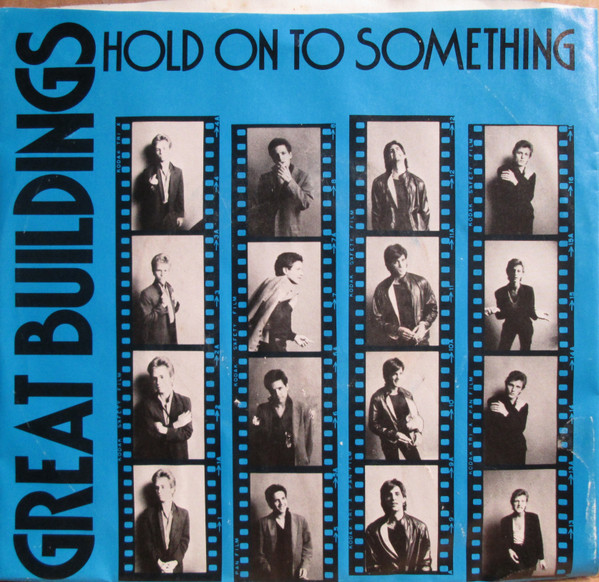
Danny Wilde and Phil Solem originally met each other at a party, where they bonded over a stack of David Bowie, Brian Eno, Roxy Music, and Cheap Trick records. At the time, Solem and Wilde were just 20. Solem was performing around Los Angeles with a power pop band called Loose Change. Wilde was playing in a power-pop band The Quick.  When the Quick dissolved, Wilde and his Quick bandmate, bassist Ian Ainsworth, formed Great Buildings and recruited Solem to join, adding vocals and guitar work that created

In the early eighties, they were the LA band with the best shot at Top 40 radio. From the start, the band kept a relatively low profile on the local club circuit and got their big break with Columbia and released their album Apart From The Crowd in 1981.

Well Apart From The Crowd was ignored by radio programmers and the public in general. You would think right after The Knack had exploded on the scene…these guys would get some play…but that didn’t happen. Hold On To Something is pure power pop and a good bit of ear candy. It sounds very radio-friendly.

After Great Buildings broke up, members Danny Wilde and Phil Solem, started The Rembrandts and would make considerable waves around the globe with their hit (and Friends theme song) “I’ll Be There For You,” while Ainsworth would make a name for himself as a producer.

Phil Solem: “Our m.o. is to only put out things that have a timeless kind of quality to it, that isn’t going to be time-stamped in some era,” Solem says. “And, so far, our records have done pretty well with that.”

Hold On To Something

Late night, the house is empty still
Wish I could hold you close to me
No right to leave me here this way
I thought love was here to stay tonight
Tonight

Hold on, hold on
Just hold on to something
Hold on, hold on
Hold on, hold on
Just hold on to something
Hold on, hold on

Ha!

Pressure, so you refuse to share
And you forget to care at all
Something, something besides just you
And no matter if it’s true tonight
Tonight

Hold on, hold on
Just hold on to something
Hold on, hold on
Hold on, hold on
Just hold on to something
Hold on, hold on

You might also like
…And The Light Goes On
Great Buildings
…And The Light Goes On
Great Buildings
Cupid (Twin Version)

I’ve got to deny myself once
Just ignore the fronts that keep me from you
Oh, you
Oh

Hold on, hold on
Just hold on to something
Hold on, hold on
Hold on, hold on
Just hold on to something
Hold on, hold on

Hold on, hold on
Baby, you just gotta hold on
Hold on, hold on
Well, hold on
Well, hold on, hold on
Baby, baby, baby, hold on
Hold on, hold on, hold on
Yeah!

Hold on, hold on (H

Field Of Dreams

If you build it they will come

I was reminded of this movie while reading John’s blog on Saturday. This movie appeals to more than baseball fans. It’s sci-fi, fantasy, and drama with a little baseball. It would probably be in my top twenty movies of all time. I’ve always thought that baseball is the perfect sport to film a movie around. More than any other sport it lends itself to drama and comedy. You do not have to be a baseball fan to enjoy this movie.

It has a little bit of everything. Historical figures, time travel, baseball, and a great soundtrack. Some don’t know but Moonlight Graham was a real ball player. His name was Archibald Wright “Moonlight” Graham and he played one game in 1905 without getting an at bat for the New York Giants. John McGraw was his manager. He retired from baseball after that and became a doctor.

The movie makes me think of my father who passed away in 2005. He got me interested in baseball. While growing up he was a Brooklyn Dodger fan while his brothers liked The Yankees. My dad’s favorite player was Jackie Robinson. He loved the way he could disrupt a game with his baserunning. He passed that along to me and I’ve passed it to Bailey my son. I think at times…he could have been a Yankees fan like his brothers. That would have been different. I would have actually liked Reggie Jackson.

As far as baseball movies go…this one tops the list for me. I also would recommend The Natural, The Sandlot, Bull Durham, A League of Their Own, Pride of The Yankees, Eight Men Out, The Bad News Bears (Only the original), and Major League…in no order.

Kevin Costner has experience in baseball movies…Bull Durham, For The Love Of The Game, and this one. Like John said…he had his best reviews in them. What a cast this movie has. Kevin Costner, James Earl Jones, Ray Liotta, Amy Madigan, Burt Lancaster, and more.

The two actors that made a big impression on me were James Earl Jones and Burt Lancaster. They dissolved into their characters and became Terrance Mann and Moonlight Graham respectively. I will also add that Amy Magidan plays the most understanding wife on the planet.

My only problem with the movie…this would not affect anyone else sane from enjoying it but…Shoeless Joe Jackson was LEFT-HANDED for goodness sake. Why couldn’t they have turned Ray Liotta around when he hit in the movie. Ok…I know that is being picky…but come on.

The field built for the film is still there in Dubuque County, Iowa. There was a MLB game played there in 2021. MLB plans to return there. 

Here is a summary from IMDB.

“If you build it, he will come,” is what thirty-six-year-old novice farmer Ray Kinsella hears several times over the course of days from a bodiless voice emanating from somewhere in the cornfield on his Iowa farm. Later, he has a vision that the “it” is a baseball field, the “he” is Shoeless Joe Jackson, who was infamous for his association in the Chicago 8, the eight players of the 1919 White Series who were banned for life from the sport for throwing games in exchange for money from gamblers. Although it was proved that Jackson did take money, it was never proved that he participated in throwing any of the games. Ray grew up with baseball, his long-deceased father, John, who played in the minor leagues, lived in Chicago during that infamous year, and told stories to Ray about it and Jackson when he was growing up.

He was estranged from his father at the time of his death, something that he now regrets. With the moral support of his wife, Annie, he tears up part of their cornfield to build that baseball field. He eventually hears the voice telling him other things, always without a clear understanding on his part of what it all means. One he believes it has to do with is famed ’60s writer Terence Mann, now a recluse who stopped writing because he, renowned as the voice of his generation, didn’t always want to be the answer to his generation’s problems. Another he believes has to do with it is Archie “Moonlight” Graham, who played only one half of one inning of one major league game in 1922 and died in 1972.

Ray’s voice-led path may be difficult to achieve since cynical Mann may not have the same direction of the voice as him and Graham is dead. He will have to work through these puzzles to understand the full meaning of what the voice wants for him, which may not happen if he and Annie lose the farm and thus the baseball field, a real possibility due to the latter taking away from earning income from the farm, especially as Annie’s cutthroat brother, Mark, who says he is looking out for her best interest, will do whatever needed to get Ray back to what he considers reality of earning a living from the farm.

Plimsouls – Lost Time

I thought I would live up to my blog’s name today and feature some power pop. I featured A Million Miles Away a few years ago by the Plimsouls but I just listened to their debut album and it’s great…so I thank CB for bringing them up again.

Peter Case began his musical career in the late 1970s in Los Angeles, where he formed The Nerves, a pioneering power pop/punk rock trio. The Nerves are best known for their song “Hanging on the Telephone.” It was later covered by Blondie, and it reached #5 on the UK singles chart.

After The Nerves disbanded, Case formed The Plimsouls in 1978. The band released several albums and EPs and gained a dedicated following for their live performances. They released their self-titled debut album in 1981 and it contained this song. The album peaked at #153 on the Billboard Album Charts.

This is the common story of Power Pop bands for some reason. A few bands that play Power Pop will break through and stay there like The Cars and Cheap Trick. Most bands though continually release good albums but never catch on more than once or twice. The Plimsouls continued to release music and tour throughout the 1980s, but they never achieved mainstream commercial success on the level of some of their peers. One In A Million was their most successful song because it was in the movie Valley Girl in 1983.

The band broke up after their 1983 album Everywhere At Once. They reunited without drummer Louie Ramírez to make an album called Kool Trash in 1995. They did get one of the best drummers in rock to replace Ramirez though. Clem Burke of Blondie played with them for a short while.

Lost Time

I still remember those days
Inside the school house
Dreaming out the windows
Like the words were never all

Counting hours,
Praying on my knees
All i need was being
Cared for my beliefs

From the first step that i took outside
I made it to ya in a straight line
Catching up, up for lost time

(get dressed) we’re making up for lost time

(get dressed) we’re making up for lost time

who’s got a minute that’s been waiting for the green light
but catch you in it and they’ll keep you awake all night
i catch it still long enough to show my hands
i got no time to spend waiting for the plans

from the first step that i took outside
i made it to ya in a straight line
catching up, up for lost time

(get dressed) we’re making up for lost time

i tried living, day to day
what you get ain’t what you see
i tried breakin every way
but they always got their hands on me

from the first step that i took outside
i made it to ya in a straight line
we’re catching up, up for lost time

(get dressed) we’re making up for lost time

(get dressed) we’re making up for lost time
(get dressed) we’re making up

up up for lost time
up up for lost time
up up for lost time

Lyle Lovett – If I Had A Boat

But Tonto he was smarterAnd one day said kemo sabeWell, kiss my ass, I bought a boatI’m going out to sea

Since I have been going over Texas Songwriters…I have saved Lovett for a while. I knew of him because his name is huge where I live and I’ve seen him on differrent shows throughout my life. So I started to listen to some of his music recently with high anticipation and was not disappointed.

The thing about these songwriters I like so much are the lyrics. What surprised me were the lovely melodies that sold those lyrics to listeners. You can write the best set of lyrics in the world but without a good melody they will just stay just lyrics.

He was born in the German farming community of Klein, Texas and was influenced by blues and country greats such as Ray Charles, Hank Williams, Willie Nelson, and more. His music has a little bit of everything in it.  Western, folk, swing, jazz, bebop, blues, and gospel music. Lovett earned two degrees from Texas A&M University in Journalism and German, and music was his career of choice. One of his roommates in college was no other than fellow Texas songwriter Robert Earl Keen.

Lovett said that this song was based on a true story. He did try to cross a pond on a pony but he wished he had a boat when it happened. This song was about getting away from things and not being tied down.

This song was released in 1987 on the album Pontiac. The song peaked at #66 on the Billboard Country Charts. The album peaked at #12 on the Billboard Country Album Charts, #18 in Canada,  and #117 on the Billboard Album Charts.

He was asked if him and Robert Earl Keen were trying to carry on with the tradition that Townes Van Zandt and Guy Clark started. He answered: There’s a direct line from those guys to Robert and me. We learned how to play those Guy Clark songs from Guy’s first record, and we sought out Guy and Townes as we came up, because we admired them so much, and got to know them. So their version of storytelling, their take on what a song was supposed to be, was something that Robert and I actively pursued.

On what Texas is to him: Texas is just home. I’m tethered here and lack perspective. My whole experience, every day in my life, is wrapped up in being from here. I’m what in the horse business we call barn blind. I really like my horses better than anybody else’s.

Lyle Lovett: Somehow you can tell the difference when a song is written just to get on the radio and when what someone does is their whole life. That comes through in Bob Dylan, Paul Simon, Willie Nelson. There is no separating their life from their music.

If I Had A Boat

And if I had a boatI’d go out on the oceanAnd if I had a ponyI’d ride him on my boatAnd we could all togetherGo out on the oceanI said me upon my pony on my boat

If I were Roy RogersI’d sure enough be singleI couldn’t bring myself to marrying an old DaleWell, it’d just be me and TriggerWe’d go riding through them moviesThen we’d buy a boat and on the sea we’d sail

And if I had a boatI’d go out on the oceanAnd if I had a ponyI’d ride him on my boatAnd we could all togetherGo out on the oceanI said me upon my pony on my boat

The mystery masked man was smartHe got himself a Tonto‘Cause Tonto did the dirty work for freeBut Tonto he was smarterAnd one day said kemo sabeWell, kiss my ass, I bought a boatI’m going out to sea

And if I had a boatI’d go out on the oceanAnd if I had a ponyI’d ride him on my boatAnd we could all togetherGo out on the oceanI said me upon my pony on my boat

And if I were like lightningI wouldn’t need no sneakersI’d come and go wherever I would pleaseAnd I’d scare ’em by the shade treeAnd I’d scare ’em by the light poleBut I would not scare my pony on my boat out on the sea

And if I had a boatI’d go out on the oceanAnd if I had a ponyI’d ride him on my boatAnd we could all togetherGo out on the oceanI said me upon my pony on my boatI said me upon my pony on my boat

Paladins – Keep On Lovin Me Baby

I hope you are all doing well on this Saturday! This will fill your rockabilly quota of the day. 

Here is some 1980’s roots rockabilly. What caught my attention is the relentless guitar on this track plus the groove. The guitar player is Dave Gonzalez and the tone reminds me of Stevie Ray Vaughn. This song was written by blues guitarist and songwriter Otis Rush. 

The Paladins are from San Diego and were into rockabilly. They billed their music as Western Bop. They played a combination of rockabilly and vintage country together with a blues groove. They were founded in 1980 by guitarist Dave Gonzalez and bass player Thomas Yearsley.

Dave Gonzalez’s initial influences came from his mother, who listened to  Carl Perkins, Elvis Presley, Roy Orbison, and the Rolling Stones. He mixed this with his father’s love of country singers Buck Owens and Merle Haggard who also made a strong impression on him. As he got older he got into blues artists like  B.B. King, Muddy Waters, and Johnny Winter.

Put that all together and you come up with a varied roots style.

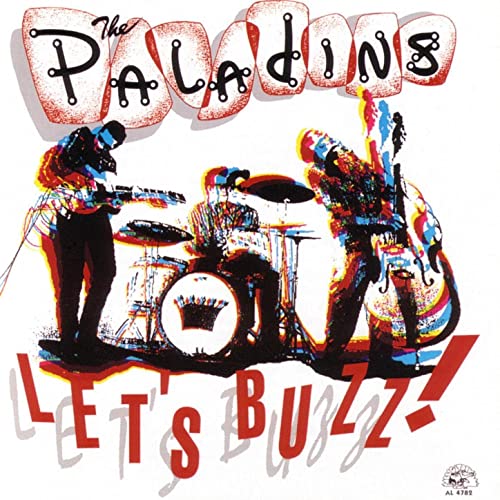
They did some tours with Stevie Ray Vaughan, Los Lobos, The Blasters, and the Fabulous Thunderbirds. This song was on the Let’s Buzz! album released in 1990. They were nominated for the  1990 Entertainer Music Awards but lost out to the Beat Farmers…but they won two years later.

Dave Gonzalez and bass player Thomas Yearsley along with drummer Brian Fahey are still a top attraction at clubs at the present time. They have recorded five singles, nine full-length studio records, and three live albums.

Keep On Lovin Me Baby

I want you to love me (repeat) woh yeah.
Oh baby i’m so glad youre mine…
I want you to kiss me…
Woh baby i’m so glad you’re mine…

Early every morning, sometimes late at night i can
Feel your tender lips they make me feel alright.

Keep on loving me baby…
Woh baby i’m so glad you’re mine…

Ronnie Dawson

Again…a big thank you again to Phil Strawn who gave me the necessary information so the story could be told and much of it from a personal view.

One of the performers in The Big D Jamboree was Ronnie Dawson. He was from Dallas Texas and was nicknamed “The Blonde Bomber.” His father Pinkie showed him how to play the mandolin, drums, and bass guitar. Dawson attended Southwestern Bible Institute in Waxahachie but was expelled. After that, he appeared regularly on the Big D Jamboree Radio Show in Dallas in 1958 as Ronnie Dee and the D Men.  Dawson was known to be highly energetic on stage. Many thought he got it from Elvis but he said no, he learned it from the dynamic Pentecostal revivals he attended.

The Jack Rhodes song “Action Packed” was Dawson’s first release in 1958 on the Backbeat label. After that came the 1959 Rockin’ Bones and this time it was on the Rockin’ Records label. It was issued under Ronnie’s own name with “The Blond Bomber” added. Though Ronnie toured nationally with Gene Vincent and appeared on TV, his records gained no more than regional airplay.

The next 3 paragraphs are from Phil. Back in the early ’60s, there was a club on Mockingbird Lane in Dallas called The Levee. It was a sing-along Dixieland place that was popular at the time. The band was banjos, a doghouse bass and a clarinet and sax. Burgers and pitchers of beer made up the menu. Southern Methodist University was two blocks away, across Highway 75, so most of the clientele were students and couples in their twenties. The famous Egyptian Lounge was next door. It served the best Italian food in Dallas and was a known hangout for the Dallas Mafia and other wise guys.

EPSON MFP image
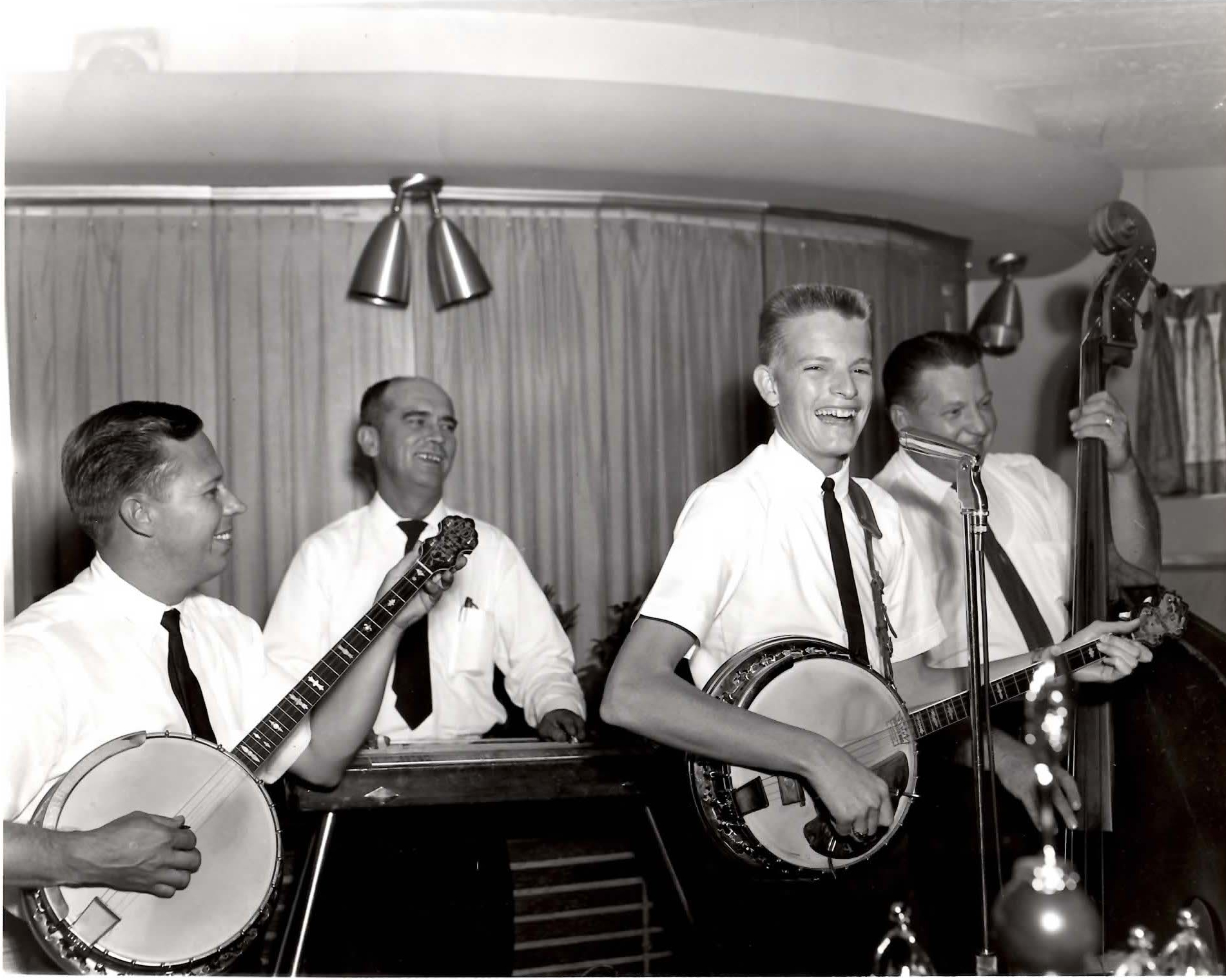
At a Levee Singers gig at the Adolphus Hotel in Dallas, around 1961 or 62. Phil’s dad is also playing a tenor banjo, as is Ronnie.

Smokey Montgomery, the banjo player for the Light Crust Doughboys, started the Levee with Ed Burnett, who was also his partner in Summit Sounds, a well-known recording studio on Greenville Ave. Ronnie was playing with the Doughboys, so Smokey asked him to play with the banjo band in order to add some youth to the mix. He was a huge hit, and the business tripled. The coeds loved him; their boyfriends hated him. The Levee bounced along all through the 60s until the fad went flat. In the mid-70s, Ronnie was into the progressive country music scene and started a band called The Steel Rail. I don’t remember the drummer, lead, or bass players’ names, but the legendary Tommy Morrell played the pedal steel while Ronnie sang and tore up his Strat.

The old Levee club was empty, so Ronnie leased the space and opened a club called “Aunt Emma’s,” a nod to his favorite aunt. On opening night, Ronnie asked my dad to come down and add some fiddle to the band, which he did. I took my guitar, just in case he needed another player. The place was full up, with a line down past the Egyptian. Around 11 pm, Johnny Paycheck strolled in the door. He had finished a gig in Dallas and heard about Ronnie’s new club, so he stopped by to sit in. Of course, he did all of his hits and played for at least an hour. After that, word got around that Aunt Emma’s was the place to go for the new outlaw country; it out-drew Willie Nelson’s Whiskey River which was a few blocks away on Greenville Ave. 

He made several singles in the early sixties with Dick Clark’s Swan Records. He also did some session work. He played on Paul & Paula’s “Hey Paula. After Elvis died rockabilly started to make a comeback.

Dawson’s career experienced periods of obscurity. However, he continued to perform and record music throughout his life, earning a cult following among rockabilly enthusiasts. In the 1980s and 1990s, he experienced a resurgence of interest in his music, performing at festivals and recording new albums.

In the 1980s Ronnie was just beginning. A fifties revival was happening in the UK and he became popular there. This led Dawson to tour Britain for the first time in 1986. He was blown away by the audience’s reception. Dawson sounded purer than most of his peers from the 1950s and he put on a more energetic show.

He recorded new material for No Hit Records, the label of British rockabilly fan Barry Koumis, which was leased in the USA to Crystal Clear Records. No Hit Records also reissued his recordings from the 1950s and early 1960s on a 16-track LP called “Rockin’ Bones” and an extended 2-CD version of which was released by Crystal Clear in 1996.

Ronnie was still performing until the early 2000s when health problems started.  He passed away in Dallas on September 30, 2003, at the age of 64.

Phil Strawn: He was a great guy and close friend. After his death from lung cancer, which shocked us all because he never smoked cigarettes but did partake of other smokable plants, his wife, Chris, held a wake at the Sons of Herman Hall in Deep Ellum. You couldn’t stir the musicians and rock stars with a stick; the ballroom on the second floor was packed. I remember Billy Joe Shaver, Ray Wylie Hubbard, Michael Martin Murphy, Robert Earl Keen, and Robert Duvall being there. George Gimarc, a noted Texas music historian, has a treasure trove of photos and reel-to-reel recording tapes of Ronnie dating back to the Big D Jamboree and American Bandstand. He refuses to share or part with any of his collections. I told him, that’s okay, leave a few to me when you bite the dust. There is no need for me to approve of your article; you write great music history, and Ima sure this one will also be stellar.

Ronnie Dawson:  “At that point in my life, I was so ready to get out of Dallas. I was really ready to go, and I just blew up when I got over there. … I couldn’t believe it. All these people started embracing me. I was in heaven. I didn’t want to go home.”

He was inducted into the Rockabilly Hall of Fame, in 1998.