I didn’t first hear this song when it was originally released in 1981. I had a friend who played it to me a few years later after it was re-recorded. It was an important song in REM’s career…it broke them on the charts…not super high but on the charts just the same.
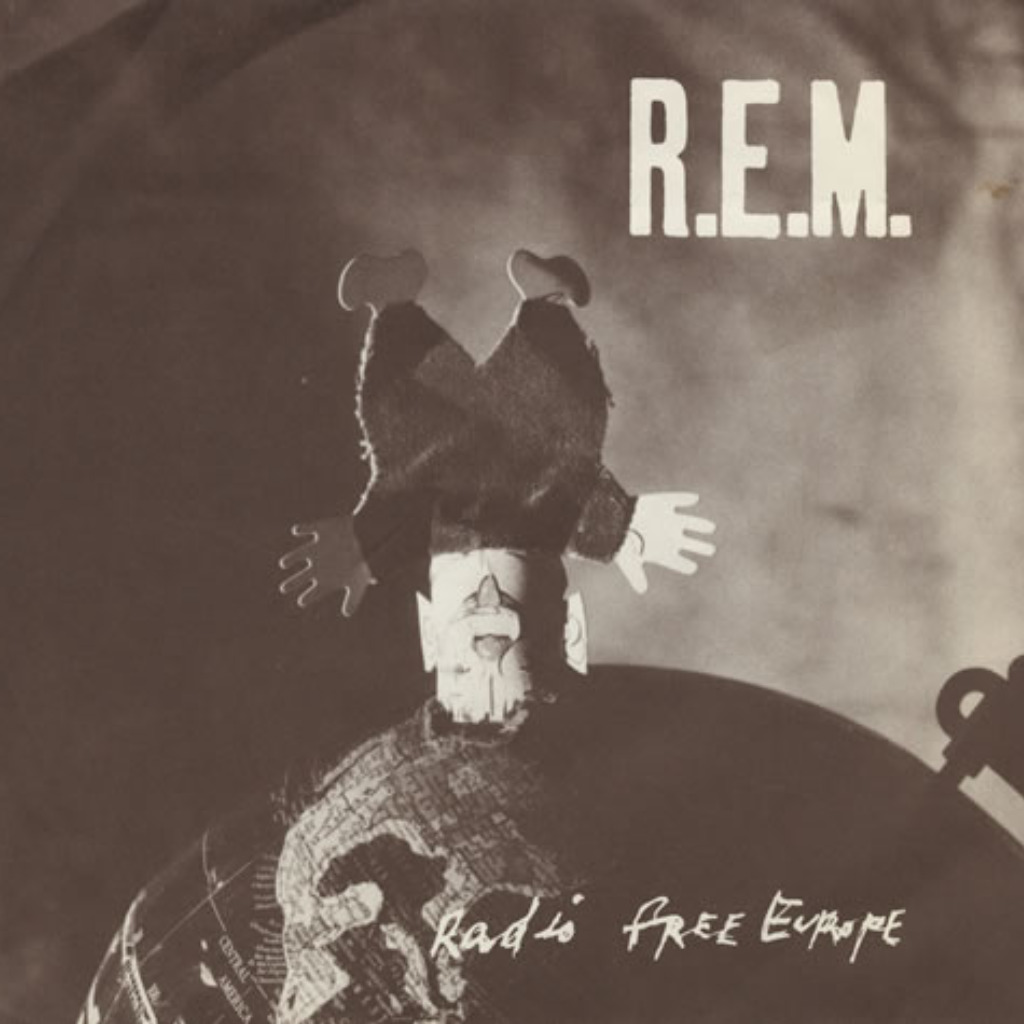
This song was R.E.M.’s first single, released in 1981 on the short-lived independent record label Hib-Tone. The single received critical acclaim, and its success earned the band a record deal with I.R.S. Records. R.E.M. re-recorded the song for their 1983 debut album Murmur.
The re-recording was released by a larger I.R.S. and peaked at #78 in the Billboard 100 and #25 on the Mainstream Rock Chart.
Radio Free Europe is a radio network run by the United States government that broadcasts to Europe and the Middle East. The mission of the broadcasts is to promote democracy and freedom, but R.E.M. makes the point that this can easily cross the line into propaganda.
Drummer Bill Berry: “This song was pivotal to the continuation of our career,” “Most fans may not realize that for two years before Murmur was released, we barely made financial ends meet by playing tiny clubs around the southeast. Our gasoline budget prevented us from venturing further. Put simply, our existence was impoverished. College radio and major city club scenes embraced this song and expanded our audience to the extent that we moved from small clubs to medium-sized venues and the additional revenue made it possible to logically pursue this wild musical endeavor. I dare not contemplate what our fate would have been had this song not appeared when it did.”
From Songfacts
There was a good reason for Michael Stipe’s infamously indecipherable lyrics on this song: he hadn’t finished them by the time they recorded it. In a 1988 NME interview, Stipe described the lyrical content as “complete babbling.”
R.E.M. lead singer Michael Stipe said in a 1983 interview with Alternative America: “We were all so scared of what the other one would say, that everyone nodded their head in agreement to anything to come up. The earlier songs were incredibly fundamental, real simple, songs that you could write in five minutes. Most of them didn’t have any words. I just got up and howled and hollered a lot.
That’s true. I’ve got to write words for ‘Radio Free Europe,’ because we’re going to re-record that for the album. It still doesn’t have a second or third verse. I think there are actually lyrics to every song on the EP.”
Stipe noted being apparently unaware of his own genius: “The guys always said I do something harmonically here that made them all go ‘whoa,’ because it was so advanced … or something, in the ‘straight off the boat’ part. I wonder if I tricked them by accident? I still have no idea what it is they’re talking about.”
The video for this song, directed by Arthur Pierson, was shot in the famed Paradise Gardens, a folk art sculpture garden crafted by artist Howard Finster in Pennville, Georgia. Finster, a Baptist minister, also painted the album art for R.E.M.’s second album, Reckoning.
This version is the original Hib-Tone version.
Radio Free Europe
Beside yourself if radio’s gonna stay Reason: it could polish up the gray Put that, put that, put that up your wall That this isn’t country at all
Raving station, beside yourself
Keep me out of country and the word Deal the porch is leading us absurd Push that, push that, push that to the hull That this isn’t nothing at all
Straight off the boat Where to go?
Calling on in transit Calling on in transit Radio Free Europe Radio
Beside defying’ media too fast Instead of pushin’ palaces to fall Put that, put that, put that before all That this isn’t fortunate at all
Raving station, beside yourself
Calling on in transit Calling on in transit Radio Free Europe Radio
Decide yourself Calling on a boat Media’s too fast
Keep me out of country and the word Disappointers into us absurd
Straight off the boat Where to go?
Calling on in transit Calling on in transit Radio Free Europe Radio Free Europe
This song has a very garage band sound. It was a minor hit in 1986. The Del Fuegos were an alternative band that was eventually signed to RCA later in their career. They were touring the same circuit as REM and The Replacements.
The Zanes brothers Dan and Warren formed the band in Boston in the early eighties. The brothers had a hard time getting a long and supposedly still do. Tom Petty became a fan of them and appeared on one of their songs. They also opened up for Tom Petty and the Heartbreakers on a tour.
Warren quit the band after the 3rd album. He went to college and received a Ph.D in Visual and Cultural Studies. Zanes is the former vice president of education and public programs for the Rock and Roll Hall of Fame and Museum. He ended up writing Tom Petty’s biography shortly before Petty’s death.
This song was written by lead singer Dan Zanes and bass player Tom Lloyd, it was one of the first hits for the band. The Del Fuegos got some attention when Miller beer featured them in a national beer commercial as part of their “Made the American Way” campaign, which got them a lot of exposure and also some critical scorn, as commercials were seen as selling out at the time.
After that commercial their creditability suffered. In the current time having your song in a commercial helps you tremendously and no one things anything about it…but in the 20th century it didn’t go over well. The band would hear “sell out” on tour.
After the commercial though… they did get better tours and more money. This song peaked at #87 in the Billboard 100 in 1986.
I Still Want You
Seasons change and lessons get learned It’s been awhile, but my heart burns It said, I still want you
And that’s all I’ll do Spend my time just thinking about you Said, I still want you
The car we bought together just started to rust The world we made came between the two of us I still want you
When the day was through We drive through town my arm around you Said, I still want you
I tried so hard just to fill your cup I tried so hard just to fill it up But you only drift away, you drift away Now you only drift away, you drift away
I hear the rain coming down The leaves start to fall I hear your voice I remember it all Said, I still want you
And that’s all I’ll do Spend my life just thinking about you Said, I still want you
I tried so hard, tried to fill your cup I tried so hard just to fill it up But you only drift away, you drift away
And baby, I still want you I still want you I said, I still want you
To kick off reviewing the Twilight Zone episodes… I thought this was appropriate.
This song was a great example of MTV’s clout. It was in heavy rotation and it paid off for the band. It peaked at #10 in the Billboard 100 and #13 in Canada in 1983.
I have to wonder how the landscape of music would have changed without MTV in the 80s. Some bands hated videos because it could change the songs perception. Many wanted people to make up their own mind about songs and not think of “guitarists in leather pants.”
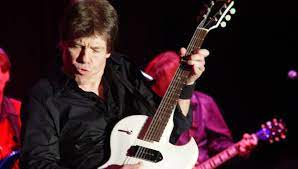
TheTwilight Zone was written by Golden Earring’s lead guitarist George Kooymans. He was inspired not by the famous TV series of the same name, but by the Robert Ludlum novel The Bourne Identity, which would later be turned into a popular movie.
The song’s intro will stick in your head for days…kind of like the intro to the Twilight Zone TV series a repeating riff. I was happy to hear this song at the time. I knew them for Radar Love and any seventies rock group in the 80s was nice to hear.
Golden Earring was a Dutch band and they were formed in Hauge in 1961. They were a long lasting band. George Kooymans sadly announced this year that he is suffering from ALS and the band officially dissolved.
From Songfacts
Right out front, note that this song has nothing to do with Manhattan Transfer’s “Twilight Zone.” One is not a cover of the other.
The song and especially the video tell the story of an espionage agent, on the run from enemy spies before being cornered. The cover of the album Cut (from which this was the only single) shows a scene repeated in the video, of a bullet slicing through the Jack of Diamonds playing card. The card is supposed to represent the rogue agent.
Interestingly, there was at least one episode of the original Twilight Zone TV series which was also a spy drama. Namely, episode #149 from season five, “The Jeopardy Room,” is about a Soviet KGB agent who wants to defect, but he ends up pinned in a hotel room under surveillance from a hit man and his accomplice, who sadistically make him play a game for his life. And it’s one of the few episodes where a gun is fired – “When the bullet hits the bone,” indeed!
Get ready for a nostalgia blast: This song was also used as the theme to the Twilight Zone pinball machine. This was part of Bally Midway’s series of “Superpin” arcade pinball games that were based on TV shows – other pinball games in the series were based on Star Trek and The Addams Family.
Fittingly, this song is also sometimes used as bumper music for the radio show Coast to Coast AM, the all-night paranormal talk show which also more frequently uses “A Hazy Shade of Winter.”
The video is yet another whose early airplay on MTV paid off. In MTV Ruled the World – The Early Years of Music Video, Rick Springfield talks about the MTV Effect: “The difference that I saw was, before MTV, you’d have to be on like your third successful album before people started recognizing you at the airport. But once MTV hit, you had that one hit single, and you were as recognizable as if you were around for three or four years. It was so instant. That was the power of television.
Twilight Zone
Somewhere in a lonely hotel room there’s a guy Starting to realize that eternal fate has turned its back on him It’s two A.M.
It’s two A.M. (It’s two A.M.) Fear is gone (fear is gone) I’m sitting here waiting The Gun still warm (the gun still warm) Maybe my connection is tired of taking chances
Yeah, there’s a storm on the loose Sirens in my head Wrapped up in silence, all circuits are dead Cannot decode, my whole life spins into a frenzy
Help, I’m steppin’ into the twilight zone Place is a madhouse, feels like being cold My beacon’s been moved under moon and star Where am I to go now that I’ve gone too far? (Oh oh oh)
Help, I’m steppin’ into the twilight zone Place is a madhouse, feels like being alone My beacon’s been moved under moon and star Where am I to go now that I’ve gone too far?
So you will come to know When the bullet hits the bone So you will come to know When the bullet hits the bone
I’m fallin’ down a spiral, destination unknown Double crossed messenger, all alone Can’t get no connection, can’t get through Where are you?
Well the night weighs heavy on his guilty mind This far from the borderline When the hitman comes He knows damn well he has been cheated
And he says Help, I’m steppin’ into the twilight zone Place is a madhouse, feels like being cold My beacon’s been moved under moon and star Where am I to go now that I’ve gone too far? (Oh oh oh)
Help, I’m steppin’ into the twilight zone Place is a madhouse, feels like being alone My beacon’s been moved under moon and star Where am I to go now that I’ve gone too far?
So you will come to know When the bullet hits the bone So you will come to know When the bullet hits the bone When the bullet hits the bone
Help, I’m steppin’ into the twilight zone Place is a madhouse, feels like being cold My beacon’s been moved under moon and star Where am I to go now that I’ve gone too far? (Oh oh oh)
Help, I’m steppin’ into the twilight zone Place is a madhouse, feels like being alone My beacon’s been moved under moon and star Where am I to go now that I’ve gone too far?
So you will come to know When the bullet hits the bone So you will come to know When the bullet hits the bone So you will come to know When the bullet hits the bone So you will come to know When the bullet hits the bone When the bullet hits the bone When the bullet hits the bone When the bullet hits the bone When the bullet hits the bone When the bullet hits the bone When the bullet hits the bone When the bullet hits the bone When the bullet hits the bone
This song was one of the most pivotal songs in their career. MTV’s refusal to play it hurt the chances of the album Please To Meet Me… which The Replacements released in 1987. The album was critically praised as were most of their other albums. With no MTV or radio support, the single didn’t go anywhere.
This song had radio potential and their record company Sire was gearing up a campaign but the song is about suicide and MTV would not touch it. A month before the album was released, the Bergenfield Suicide Pact (4 New Jersey teens took part in a suicide pact) happened. It understandably got a lot of press. Paul Westerberg was not happy with the decision. “MTV feels the lyrics are detrimental to the youth of America,” said Westerberg “But for them to play Mötley Crüe and not play our video … if it had a bunch of sexist bullshit, they would’ve played it. But if it’s something deeper, if it’s emotions, it’s taboo.”
The song hinted at Paul Westerberg’s own teenage overdose attempt and the suicide of his high school friend John Zika. Sitting home in the fall of 1986, he wrote The Ledge in forty-five minutes, from the perspective of a jumper looking down at a gathering crowd below.
It was recorded in Memphis with Jim Dickinson producing. The band worked as a trio as Bob Stinson was let go by this time. After the album was finished they would get Bob “Slim” Dunlap on lead guitar.
Paul Westerberg: It’s written not necessarily out of personal experience because I’m still here. It’s an observation. And if anyone wants to read anything into it other than that, then that’s their problem. And the lyrics, they just came. I didn’t have to sit, I didn’t have to think. It was just wham wham wham, I turned on the little tape recorder, I had it on an ironing board. And it was partially out of the way I had felt at certain times in my life. I figure if you’re gonna kill yourself, you kill yourself, but I had tried to commit suicide once I think when I was younger and I can still feel how I felt then. I mean not like now that I’m totally a-ok and the happiest guy in the world, I’m doing fine, but I can feel for people that feel totally lost and have no one to turn to. So it was written sort of half of my own experience and half of maybe me trying to feel how it is to be up there on the ledge. And it’s not written in any way to condone that kind of stuff. Obviously it’s bullshit, it’s wrong, but to someone who does it…
The Ledge
All eyes look up to me High above the filthy streets Heed no bullhorn when it calls Watch me fly and die, watch me fall
I’m the boy they can’t ignore, For the first time in my life, I’m sure All the love sent up high to pledge Won’t reach the ledge
Wind blows cold from the west I smell coffee, I smell doughnuts for the press (on their breath?) A girl that I knew once years ago Is tryin’ to be reached on the phone
I’m the boy she can’t ignore, For the first time in my life, I’m sure All the love sent up high to pledge…
(Repeat)
Priest kneels silent, all is still Policeman reaches from the sill Watch him, watch him try his best There’ll be no medal pinned to his chest
I’m the boy they couldn’t ignore, For the first time in my life, I’m sure
(Repeat)
I’m the boy for the last time in my life
All the love that they pledge For the last time will not reach the ledge…
Wanted Man was written by Bob Dylan and it is a favorite of mine. I first heard it by George Thorogood. The first time I heard it was not the studio version that George did…it was when he played it on the 30th Anniversary Bob Dylan concert held in 1993. George’s version of Wanted Man was left off of the CD for some reason…but I knew I had to find that Dylan song as soon as I heard it.
This was pre-internet and I finally found out that Dylan never recorded it for an album. To this day I’ve never heard a version of only Bob singing it… not even a demo of just him.
From what I’ve read about the song Bob Dylan wrote Wanted Man for Nashville Skyline but no complete version of the song was recorded at those sessions. Johnny Cash covered the song and he announced it as a song that him and Dylan wrote together but the records show that Dylan copyrighted it according to a couple of websites.
Cash debuted “Wanted Man” on his 1969 live album, At San Quentin, and would later release a studio version.
George Thorogood released his version on his 1982 Bad To The Bone album released in 1982. The word play in this song is great.
Below I have George’s version of course but I also have Johnny Cash and Bob Dylan demo of the song.
Wanted Man
Wanted man in California Wanted man in Ohio Wanted man in Kansas City Wanted man in Buffalo
Wanted man in Oklahoma Wantd man in old Cheyenne Wherever you might look tonight You might see this wanted man
Well, I might be in Colorado Or Georgia by the sea Workin’ for some man who may not know who I might be Yeah, and if you see me comin’ And you know who I am Don’t you breathe it to nobody Cause you know I’m on the lam
Wanted man by Lucy Watson Wanted man by Jeannie Brown Wanted man by Nelly Johnson Wanted man in this Tex town
And I’ve had all that I’ve wanted Of a lot of things I’ve had And a lot more than I’ve needed Of some things that turned out bad
Well, I got sidetracked in El Paso Stopped to get myself a map I went the wrong way into Juarez With Juanita on my lap And I went to sleep in Shreveport Woke up in Abilene Wonderin’ why the hell I’m wanted At some town halfway between
Wanted man in Albuquerque Wanted man in Baton Rouge Wanted man in Tallahassee Wanted man in Syracuse
And there’s somebody sent to grab me Anywhere that I might be Wherever you might look tonight You might get a glimpse of me
Wanted man in California Wanted man in Ohio Wanted man in Kansas City Wanted man in Buffalo Wanted man in Oklahoma Wanted man in old Cheyenne Wherever you might look tonight You might see this wanted man
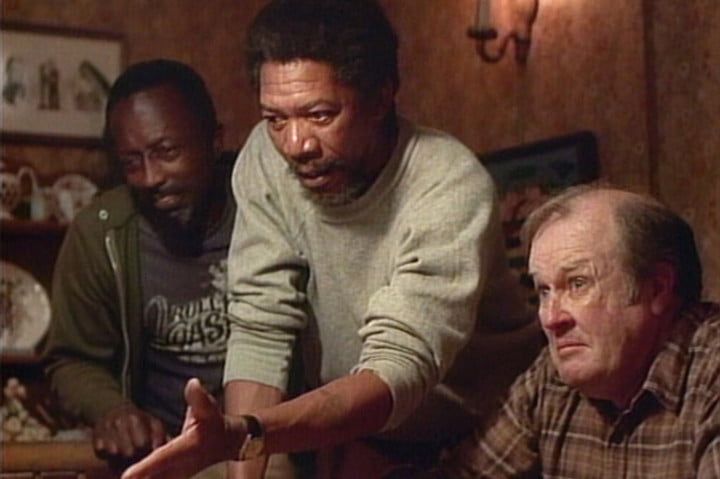
I’m not counting the Twilight Zone reboots in my top 10 but this is a fun 1985 Twilight Zone. It has a younger Morgan Freeman along with original SNL alumni Garret Morris…along with Dan Hedaya, Barney Martin, and M. Emmet Walsh. This version of the Twilight Zone is hit and miss. There are a few that are really good. I would not compare anything to the original though.
Some very good character actors and the episode is a fun one. I found the complete episode online…if you have 20 or so minutes give it a try.
Five men playing poker…not unusual right? However, one of the men is the devil himself, masquerading as an acquaintance of one of them. He’s there to collect the soul of one of the men, but which one? As the personalities of the men gradually come out, it’s clear that Pete is the one the Devil is there to collect. Pete tries to bet his way out of going with Nick, hoping to beat the Devil at his own game.
CAST
Morgan Freeman – Tony
Dan Hedaya – Nick
M. Emmet Walsh – Pete
Garret Morris – Jake
Barney Martin – Marty
Out of all of the tracks on Steel Wheels…this one sounded like the old Stones. The open G chord that Keith Richards made famous is in full display on the intro. This is the first track from Steel Wheels, an album that brought The Stones back together.
With the album Dirty Work, the Stones did look like it could be over. Jagger and Richards were not getting along. They took shots at each other in the press. Jagger released two albums, She’s The Boss and Primitive Cool. Keith Richards also released a solo album…a very good album Talk Is Cheap.
Keith and Mick finally took time out to talk to each other and get the band back together. Bill Wyman, Charlie Watts, and Ron Wood joined them and this would be Bill’s last album and tour. Bill has had musical projects since then and he has rejoined the Stones onstage a few times.
The song peaked at #14 in the Mainstream Rock Tracks in 1989. Mixed Emotions was the big hit off of the album.
Charlie Watts helped write this, but as was custom for The Stones, it was credited only to Jagger/Richards.
From Songfacts
The horns were played by the Brass ensemble The Kick Horns.
Ron Wood played bass. Bill Wyman, The Stones bassist, had to deal with the press after announcing his engagement to 18-year-old Mandy Smith, and was not available. Wyman and Smith divorced soon after their marriage.
Sad Sad Sad
Fling you out into orbit No one’s gonna hear you shout And fools ain’t gonna follow You don’t need to sleaze about
Now you’re sad sad sad Sad sad sad Sad sad sad But you’re gonna be fine
The elephant’s in the bedroom Throwing all his weight about And I’m locked in the bathroom Your screams are gonna drown me out
Now you’re sad sad sad Sad sad sad Sad sad sad But you’re gonna be fine
Oh, yeah
I got a cold chill I get a cool thrill Are you ready for the gilded cage? Are you ready for the tears of rage? Come on baby, don’t let them drown you out
Sad sad sad Bad bad bad Sad sad sad But you’re gonna be fine
Sad sad sad Sad sad sad Sad sad sad But you’re gonna be fine
You’re gonna be fine You’re gonna be fine You’re gonna be fine fine fine fine You’re gonna be fine fine fine fine Fine fine fine fine
Ooh, yeah Ooh, yeah Ooh, yeah Gonna be fine fine fine fine Fine fine fine fine Fine fine fine fine
Bring your own lampshade Somewhere there’s a party
This song has just a slight early sixties vibe and shows their expanding repertoire.
Paul Westerberg has said Swingin Party drew on Sinatra’s version of Rodgers and Hart’s standard “Where or When” and The Springfield’s “Flying on the Ground Is Wrong.” It had a trace of Frank and Nancy Sinatra’s “Somethin’ Stupid” and Brian Hyland’s “The Joker Went Wild.” He said if you steal from everything nobody can put a finger on you.
The song’s oscillating rhythms and guitars provided a perfect backdrop for the lyrics.
This song was on their 4th studio album Tim. Yes, they named the album Tim which is pretty funny. It would be the last album founding member and lead guitarist Bob Stinson worked on.
Paul Westerberg:“We named it Tim for no reason at all”.This was the first time we named an album after it was done.We sat around a bar,we were gonna call it Whistler’s Mammy,Van Gogh’s Ear,or England Schmingland.”I think I said Tim and we sat and laughed for a few minutes and then we said,”Why not?”
Paul Westerberg:“One of the reasons we used to drink so much is that it was scary going up onstage. That’s one of the things ‘Swingin Party’ is all about” “The funny thing is, people think you must have all this confidence to get up onstage.”
New Zealand singer Lorde covered Swingin Party”= as the B-side to her second single, “Tennis Court.” The song peaked at #10 in the New Zealand singles chart in 2013.
Swingin’ Party
Bring your own lampshade Somewhere there’s a party Here it’s never ending Can’t remember when it started Pass around the lampshade There’ll be plenty enough room in jail
If being alone’s a crime I’m serving forever Being strong’s your kind I need help here with this feather If being afraid is a crime We hang side by side At the swingin’ party down the line
On the prairie pavement Losing proposition Quitting school and going to work And never going fishing Water all around Never learn how to swim now
If being alone’s a crime I’m serving forever Being strong’s your kind Then I need help here with this feather If being afraid is a crime We hang side by side At the swingin’ party down the line At the swingin’ party down the line
Bring your own lampshade Somewhere there’s a party Here it’s never ending Can’t remember when it started Pass around the lampshade There’ll be plenty of room in jail
If being alone’s a crime I’m serving forever Being strong is what you want Then I need help here with this feather If being afraid is a crime We hang side by side At the swingin’ party down the line At the swingin’ party down the line Catchin’ time At the swingin’ party down the line
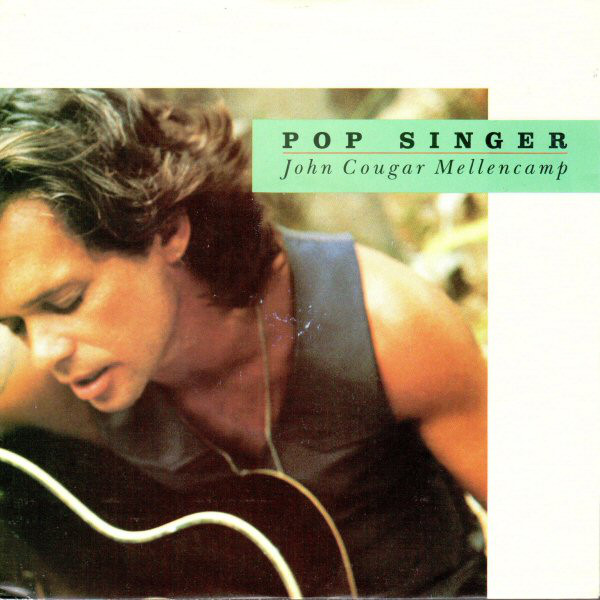
This song was off of the 1989 album Big Daddy. The two radio songs that got me to buy the album were Jackie Brown and this one.
In this song John didn’t want to be a pop or rock star. He didn’t want to do what the stars had to do to have hits. He wanted to be taken seriously and real. He had been through all of that when a manager renamed him to “Johnny Cougar” but he did remake his career by releasing more roots music and
This song peaked at #15 in the Billboard 100 and #1 in Canada in 1989.
John Mellencamp:“Everybody wanted to be a rock star in the ’80s,” he said. “Everybody but me.”
From Songfacts
“The most crucial thing for me is that I want it to be real.”
That’s what Mellencamp told Creem magazine in 1987. Two years later, he released a song about it. In “Pop Singer,” he explains that the music is what is important to him, and that he has no use for the gladhanding, trend-following or fan interaction that is expected of Pop Stars.
Mellencamp wasn’t always so “real” – his manager had him use the stage name “Johnny Cougar,” which took him years to reverse. He soon took control of his career, however, and did things on his terms. Any part of the job that isn’t related to making or performing music is something Mellencamp avoids. He will begrudgingly do promotion, but refuses corporate music traditions like radio station concerts and meet-and-greets. This stance didn’t endear him to industry types, but many fans found his candor refreshing and appreciated his authenticity and devotion to his craft.
When he wrote this song, Mellencamp was going through a divorce with his second wife, Victoria Granucci. “I was questioning the importance of music,” he told Rolling Stone. “Everybody was having to kiss everybody’s ass. If you want to be on MTV, then come here and do this. All these backroom deals were getting made. I was like, ‘I don’t want any part of this.'”
Mellencamp articulated his position in this song in his 2018 DVD Plain Spoken, where he explained that what he was after was a creative life away from his hometown of Seymour, Indiana. Had he become a painter, he would have been just as fulfilled, but when his demo got him a management deal, he was drawn toward music.
This song runs just 2:46, which is appropriate, as hit pop songs tend to be short, in part so radio stations can play more of them.
Pop Singer
Never wanted to be no pop singer, Never wanted to write no pop songs. Never had no weird hair to get my songs over. Never wanted to hang out after the show. Pop singer (writing) of pop songs.
Never wanted to have my picture taken. Now, who would want to look into these eyes? Just want to make it real – good, bad or indifferent. That’s the way that I live and that’s the way that I’ll die (As a) Pop singer (of) pop songs.
Pop singer, writing of pop song.
Never wanted to be no pop singer, Never want to write no pop songs. Never wanted to have a manager over for dinner. Never wanted to hang out after the show.
Pop singer, writing pop songs. Never wanted to be no pop singer, of pop songs. A pop singer. Never wanted to write no pop songs.
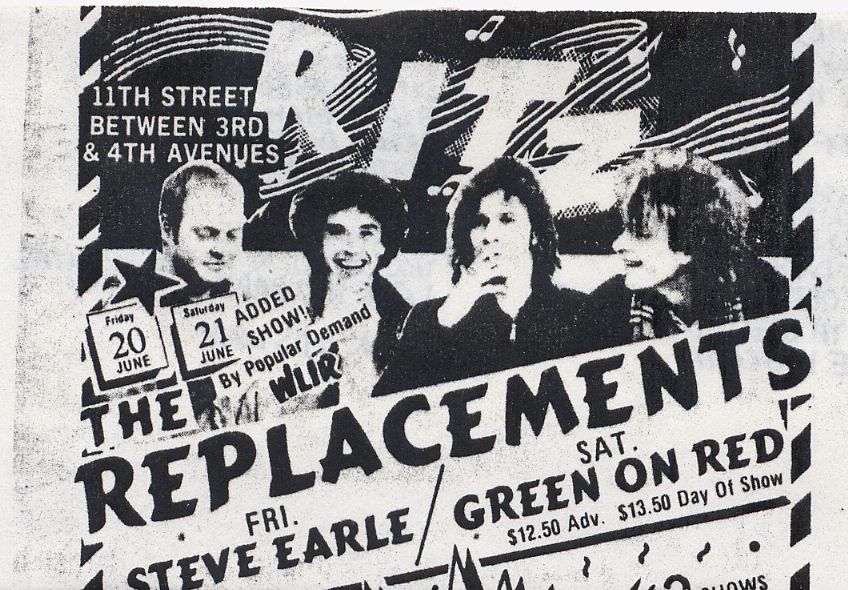
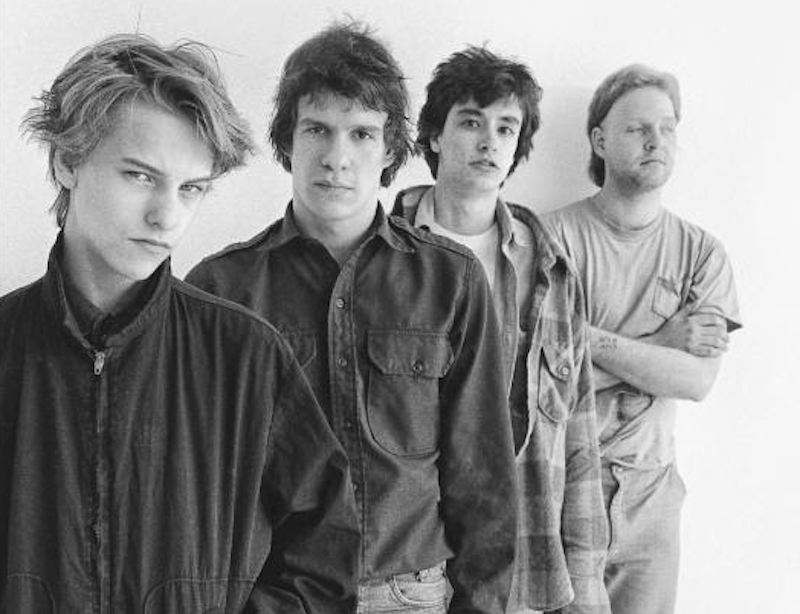
This Replacements song was inspired by U2’s I Will Follow. Paul Westerberg had seen U2 perform on April 1981 at bar named Sam’s, where they actually played the song twice in their set.
He liked the sound of “I Will Follow,” but he balked at what he considered its unrealistic message. The kids he knew weren’t going blindly forth, their faith steadfast, their belief unwavering in the face of adversity.
They were still in their punk phase but on the next album they would start expanding their sound. I’ve been listening to their albums in order and the first three I wasn’t as familiar with but I’ll be posting at least one song off of each album as I go.
The song was on their second release…an ep called Stink. It was released in 1982 on Twin/Tone Records.
The intro to the song was not made in the studio, it was a real party where the police was called because of the noise.
The Replacements were playing at a rent-party for visual artist Don Holzschuh, opening for the the band Warheads. It was a massive multi-keg affair attended by a lot of underage kids. The Replacements’ noise levels drew a visit and warning from the local police. Not long after they’d finished their set, the Minneapolis police decided to end the fun entirely.
As a uniformed officer took the microphone to disperse the crowd, Replacements’ soundman Terry Katzman pressed record on his tape player. “This is the Minneapolis Police . . . the party is o-ver,” he announced, to a collection of boos.
Future Soul Asylum singer Dave Pirner was at the party and he was one of the kids harassing the police. He has taken credit for being the one to yell “Hey, f**k you, maaaan!” starting at around 7 seconds below on the song.
Don Holzschuh talks about the party where the intro came from…
Kids Don’t Follow
Go home…..this is the Minneapolis police….the party’s over…if you all just grab your stuff & leave there won’t be any hassle..the party’s been closed….etc.
One, two, three, four
Kids won’t listen To what you’re sayin’ Kids ain’t wondering Kids ain’t praying Mo says he’s worried He says talk away He says yeah I’ve been cured
I need some attention No house of detention I’d love some attention Don’t start again
Kids don’t need that Kids don’t want that Kids don’t need nothing of the kind Kids don’t follow
What you’re doin’ In my face out my ear Kids won’t follow What you’re sayin We can’t hear
Can’t stop looting Can’t stop smoking Kids ain’t wondering Can’t stop choking Kids won’t stand still Kids won’t shut up Kids won’t do it You talk to ’em now
Kids don’t follow What you’re doin’ In my face and out my ear Kids won’t follow What you’re saying We can’t hear
Kids won’t follow What you’re saying In my face out my ear Kids don’t follow What you’re sayin’ We can’t hear What you say Not tomorrow Not today
Johnny always needs more than he takes
Forgets a couple of chords, forgets a couple of breaks
And everybody tells me that Johnny is hot
Johnny needs something, what he ain’t got
Almost anything off of a Replacements album is going to be an album cut. This one is off of their debut album Sorry Ma, Forgot to Take Out the Trash. The album was released on the small Minneapolis, Minnesota label Twin Tone in 1981.
I listened to them in the mid 80s but lost touch until recently. I’m going through all of their albums so I will be post some from every album coming up. I never knew their first album too much but I like it a lot. It’s punkish, rock, raw, with some great lyrics by Paul Westerberg. On this one Bob Stinson’s guitar playing feels like it may break down at anytime but stays on course and I love what he plays.
This song is about punk guitarist Johnny Thunders (John Anthony Genzale) who was a founding member of the New York Dolls. He also played with the punk band The Heartbreakers. He was in Minneapolis in 1980 with his band Gang War playing in a bar. The Replacements desperately wanted to open, but were beat out for the gig by Hüsker Dü.
He was physically struggling through the show, while battling an audience hurling objects, Thunders had been rendered a prisoner of his own addictions and cult infamy. Westerberg was in the audience and wrote this song about him.
You don’t see this happen everyday…I mean writing about “Johnny’s Gonna Die” when the guy is alive. Thunders did live a little longer…he died in 1991.
Paul Westerberg on watching Johnny Thunders: “He was frightening and beautiful and mean at the same time,” he said. “Like a child.”
“When Johnny was playing, it looked like he was walking dead, It was pitiful, like watching a guy in a cage.”
Johnny’s Gonna Die
Johnny always takes more than he needs Knows a couple chords, knows a couple leads Johnny always needs more than he takes Forgets a couple of chords, forgets a couple of breaks And everybody tells me Johnny is hot Johnny needs something that he ain’t got
And Johnny’s gonna die Johnny’s gonna die Johnny’s gonna die
Everybody stares and everybody hoots Johnny always needs more than he shoots Standing by a beach and there ain’t no lake He’s got friends without no guts, friends that never ache In New York City, I guess it’s cool when it’s dark There’s one sure way Johnny you can leave your mark
And Johnny’s gonna die Johnny’s gonna die Johnny’s gonna die
For me…this was one of those landmark songs that started a change in music. I liked it because it was a guitar players dream and it was raw without much of the 80’s production. I never was a big fan of them but I did like the throw back to the more rawer rock.
The song peaked at #7 in the Billboard 100 and #24 in the UK in 1988. When this was released as a single in 1987, it charted in the UK but flopped in America. It finally became a hit in the US when they re-released it in 1988 after “Sweet Child O’ Mine” hit #1.
The album Appetite for Destruction was huge. It peaked at #1 in the Billboard Album Charts, #3 in Canada, and #5 in the UK.
The video was shot at Park Plaza and 450 South La Brea in Hollywood. The band’s first video, it was very successful, winning at the 1988 MTV Video Music Awards for Best New Artist Video. Guns N’ Roses performed the song on the show.
Slash:“I was at my house and I had that riff happening and Axl came over and he got those lyrics together, and then the band sort of arranged it. We got an arrangement for the whole band, ’cause that’s how we work. Someone comes in with an idea and someone else has input and in that way everyone’s happy. That came together really quickly too, that was arranged in one day.”
From Songfacts
This song is about Los Angeles. It exposes the dark side of the city many people encounter when they go there to pursue fame. Guns N’ Roses knew this side of the city well: in 1985, they lived in a place on Sunset Boulevard in Los Angeles that they called “Hell House.” The house was often filled with drugs, alcohol and groupies.
Axl Rose wrote the lyrics when he was in Seattle, which gave him some perspective on the size of Los Angeles.
In 2007 Rolling Stone magazine ran a feature on the 20th anniversary of Appetite For Destruction. They explained that a famous lyrics from this song originated when Axl Rose spent a night in a Queens schoolyard before joining the band. Said Rose: “This black guy said, ‘You’re in the jungle! You gonna die.'”
On 93.1 WIBC FM, a radio station in Indianapolis, Indiana, Jake Query, a friend of Axle Rose, gave a different account, saying: “When Axl Rose hitchhiked to Los Angeles, California, on the last leg, a truck driver drove him to Los Angeles, and when Rose got out of the truck, the truck driver said, ‘Welcome to the Jungle.” >>
This was used in the 1988 Clint Eastwood movie The Dead Pool, where the band makes a cameo. It also plays in the opening sequence of the 1989 film Lean On Me, about an inner-city high school reformed by principal Joe Clark. Other movies to use the song include:
The Lego Ninjago Movie (2017) How to Be Single (2016) The Interview (2014) Megamind (2010) Selena (1997) The Program (1993)
This was the second UK single and third US single from Appetite For Destruction. The first single, “It’s So Easy,” was a flop.
Numerous college and pro sports teams use this to intimidate their opponents at home games. The Cincinnati Bengals of the NFL were probably the first. The Norwegian Soccer team Lillestrom SK uses this song before every home game.
This was the first track on Appetite For Destruction, which caused controversy because of its cover, a drawing of a robot apparently raping a woman.
The album was a raging success, selling 18 million copies in America by 2008, making it the best-selling debut album in history until 2018, when the RIAA certified Cracked Rear View by Hootie & the Blowfish at 21 million.
Slash re-recorded his guitar parts as he was dissatisfied with his first attempts. To produce the vicious yet pure tone, the Guns N’ Roses gunslinger used a Les Paul ’59 replica plugged into a Marshall JCM, aided most likely by some Jack Daniel’s.
This was used in the 2017 movie Jumanji: Welcome to the Jungle and the next installment, Jumanji: The Next Level (2019). The films are set in a virtual jungle.
When Axl says “my serpentine,” he’s describing his famous dance, which he copied from Richard Black, lead singer of the band Shark Island.
Slash left the band in 1996, leaving Axl Rose firmly in control. Rose kept the band going with new members and in 2001 got in yet another dispute with Slash when producers of Black Hawk Down wanted to use “Welcome To The Jungle” in the movie. According to Slash, Axl refused unless he could re-record it with the current members of Guns N’ Roses, meaning Slash and the rest of the Appetite For Destruction lineup would have lost out on royalties.
The song never made it into the film, which tells the story of an ill-fated US raid on Mogadishu in 1993. It was going to be used in a scene where Army Rangers are preparing for the raid – in real life, they really did blast the song before heading out. The Faith No More song “Falling To Pieces” was used in its place.
Guns N’ Roses made a surprise appearance at the 2002 MTV Video Music Awards where they performed this song. At the time Axl Rose was the only original member in the band, but there was great anticipation for their album Chinese Democracy, which was expected soon. The album finally appeared in 2008.
This song is used in the soundtrack to the Playstation 2 game Grand Theft Auto: San Andreas. Axl lends his voice to one of the radio stations.
In 2007, three teens at Booth Free School in Roxbury, Connecticut (one of them a janitor), were messing around with the public address system when one of them sang some lyrics to this song, including “You’re in the jungle baby; you’re gonna die.” This freaked out one teacher, who thought it was a threat, barricaded herself in a classroom and called the police, who came in and detained the three teens until they could clear up the misunderstanding.
A line from this song became a bit of a catch phrase for Axl Rose, who began screaming at crowds when performing it at shows, “Do you know where the f–k you are!?” Axl said it in 2006 when he introduced The Killers at the MTV Video Music Awards.
Guns N’ Roses opened for Aerosmith in the summer of 1988, culminating in a show on September 15 at the Pacific Amphitheatre in Costa Mesa, California. At this final show, Aerosmith’s road crew had some fun by dressing up in gorilla costumes and messing around on stage when G N’ R performed this song. It was all in good fun, as the bands got along great, with Axl expressing his admiration for Aerosmith at every show. When Aerosmith took the stage that night, they had Guns N’ Roses join them for an extended jam of “Mama Kin,” a song Guns often covered.
By the end of the tour, Guns N’ Roses was the hotter band – “Sweet Child O’ Mine” hit #1 the week the tour ended.
Slash’s gear for the entire Appetite For Destruction album was a Kris Derrig-built 1959 Les Paul replica guitar, and a rented S.I.R. (known to S.I.R. as Stock #36) Marshall 1959 Superlead Metal Panel modded by Frank Levi and Glenn Buckley (based on Tim Caswell’s modification to Stock #39).
This soundtracked a 2016 Super Bowl commercial for the Taco Bell Quesalupa featuring basketball player James Harden, soccer star Neymar, actor George Takei and “Texas Law Hawk” Bryan Wilson. In the spot, we learn that the cheesy treat will be bigger than Tinder, drones, and possibly even football.
Welcome To The Jungle
Welcome to the jungle We’ve got fun ‘n’ games We got everything you want Honey, we know the names We are the people that can find Whatever you may need If you got the money, honey We got your disease
In the jungle Welcome to the jungle Watch it bring you to your Knees, knees I wanna watch you bleed
Welcome to the jungle We take it day by day If you want it you’re gonna bleed But it’s the price you pay And you’re a very sexy girl That’s very hard to please You can taste the bright lights But you won’t get them for free
In the jungle Welcome to the jungle Feel my, my, my, my serpentine I, I wanna hear you scream
Welcome to the jungle It gets worse here everyday You learn to live like an animal In the jungle where we play If you got a hunger for what you see You’ll take it eventually You can have anything you want But you better not take it from me
In the jungle Welcome to the jungle Watch it bring you to your Knees, knees I’m gonna watch you bleed
And when you’re high you never ever wanna come down, so down, so down, so down, yeah!
You know where you are? You’re in the jungle, baby You’re gonna die
In the jungle Welcome to the jungle Watch it bring you to your Knees, knees
In the jungle Welcome to the jungle Feel my, my, my, my serpentine
In the jungle Welcome to the jungle Watch it bring you to your Knees, knees
In the jungle Welcome to the jungle Watch it bring you to your…
Back in 1981 I bought the album that this song is the title track to. I had their greatest hits of mostly their sixties hits and this album was the first new Kinks album I ever bought.
The song is a pure rock song with a huge punk edge. I read where a critic wrote that The Kinks were a great punk band who could actually play their instruments and with this song you see that.
This song is my favorite song off the album. While writing Low Budget, their previous album, Ray was watching American TV including “That’s Incredible” where people did dangerous and insane stunts. He writes a fair statement about the viewing public…now and then. Parts of it are crude but is true to life. When Oswald shot Kennedy, he was insane, But still we watch the re-runs again and again, We all sit glued while the killer takes aim…
The song tells the truth…violence sells.
Ray Davies:“What happens is the consumer is being used to entertain, to get high ratings, to sell products to consumers. It was going around in a circle. That’s a real con. And good shows were being dropped from TV. I’ve just written an outline, and I hope we’re going to get some money from RCA to do a videodisc because it’s a media-based album.”
From Songfacts
The title track to The Kinks 1981 album, “Give The People What They Want” was written by their frontman Ray Davies in response to what he saw on American TV when he was writing songs for their previous album, Low Budget. He noticed that TV was getting more and more sensational, and that viewers were fascinated with violence and tragedy – similar to how Romans watched Christians get fed to the lions.
One show Davies watched was That’s Incredible, where regular people performed dangerous stunts.
Ray Davies said that he took out the following verse:
The French Revolution was a crazy scene
All those aristocrats getting guillotined
The promoters cleaned up
The expenses were low
An execution costs nothing
It’s a wonderful show
Taken at face value with just the title for reference, this song can appear to be about The Kinks making an effort to please their audience by delivering a hit. That interpretation is way off, however, as the song is much more a social commentary on those who pander to the masses.
The Kinks went for a monster drum sound on this one in an effort to make it arena-friendly. To get his sound, they placed corrugated iron around the walls of Konk Studios in London, where they recorded the album.
Give The People What They Want
Hey, hey, hey Give the people what they want
Well, it’s been said before, the world is a stage A different performance with every age Open the history book to any old page Bring on the lions and open the cage
Give the people what they want You gotta give the people what they want The more they get, the more they need And every time they get harder and harder to please
The Roman promoters really did things right They needed a show that would clearly excite The attendance was sparse so they put on a fight Threw the Christians to the lions, it sold out every night
Give the people what they want You gotta give the people what they want The more they get, the more they need And every time they get harder and harder to please
Give ’em lots of sex, perversion and rape Give ’em lots of violence, and plenty to hate Give the people what they want Give the people what they want
When Oswald shot Kennedy, he was insane But still we watch the re-runs again and again We all sit glued while the killer takes aim “Hey Mom, there goes a piece of the president’s brain!”
Give the people what they want You gotta give the people what they want Blow out your brains, and do it right Make sure it’s prime time and on a Saturday night You gotta give the people what they want You gotta give the people what they want Give the people what they want Give the people what they want Give the people what they want
I posted a song from Face Dances a little while ago and Deke brought up a song on that album called The Quiet One. I really like that song also. It was written by who I think was the best bass player in rock ever…John Entwistle.
When I bought the album this is one of the songs I zeroed in on. I’ve always liked John’s writing that got overshadowed by Pete. John had had some black humor and wit in his songs.
This song was the B side to the hit You Better You Bet released in 1981. On their farewell tour in 1982 he replaced his older song “My Wife” with this one on stage. In the later tours, this song was never played again… “My Wife” was brought back.
John Entwistle: “It’s me trying to explain that I’m not really quiet. I started off being quiet and that’s the pigeon hole I’ve been stuck in all these years. It started when I heard Kenney playing a drum riff and I thought ‘that would be really great for a song and give Kenney a chance to play that on stage.’ So I got Kenney to put down about three minutes of that and I worked along with it and came up with the chorus of ‘The Quiet One.’ I wrote ‘Quiet One’ especially to replace ‘My Wife’ onstage. I had gotten tired of singing that and ‘Boris the Spider.'”
The Quiet One
Everybody calls me the quiet one You can see but you can’t hear me Everybody calls me the quiet one You can try but you can’t get near me I ain’t never had the gift of gab But I can’t talk with my eyes When words fail me you won’t nail me My eyes can tell you lies
Still waters run deep so be careful I don’t drown you You’ve got nothing to hear I’ve got nothing to say Sticks and stones may break your bones But names can never down you It only takes two words to blow you away
Everybody calls me the quiet one But you just don’t understand You can’t listen you won’t hear me With your head stuck in the sand I ain’t never had time for words that don’t rhyme My headd is in a cloud I ain’t quiet – everybody else is too loud
Still waters run deep so be careful I don’t drown you You’ve got nothing to hear I’ve got nothing to say Sticks and stones may break my bones But names can never down you It only takes two words to blow you away.
Big Train (From Memphis)” was the B-side of “The Old Man Down the Road”, the first 45 rpm single John Fogerty released in 1984. It was his first single release since “You Got The Magic” in 1976.
John Fogerty’s album Centerfield was released in 1985. No one was sure if Fogerty would release anything again at that point. This song has a Sun Records rockabilly feel.
Despite being in the middle of the eighties, Fogerty didn’t really alter his style for this album. Many of these songs would have fit perfectly well on a Creedence Clearwater Revival album. John played all the instruments himself on this album.
It peaked at #38 in the Billboard Country Charts. The Centerfield album peaked at #1 in the Billboard Album Charts, #2 in Canada, and #48 in the UK in 1985. The song was recorded at The Plant Studios in San Francisco.
Big Train (From Memphis)
When I was young, I spent my summer days playin’ on the track. The sound of the wheels rollin’ on the steel took me out, took me back.
[CHORUS:] Big Train from Memphis, Big Train from Memphis, Now it’s gone gone gone, gone gone gone.
Like no one before, he let out a roar, and I just had to tag along. Each night I went to bed with the sound in my head, and the dream was a song.
[CHORUS]
Well I’ve rode ’em in and back out again – you know what they say about trains; But I’m tellin’ you when that Memphis train came through, This ol’ world was not the same.