Another band that missed the masses but were a hit on college radio in the 80s.
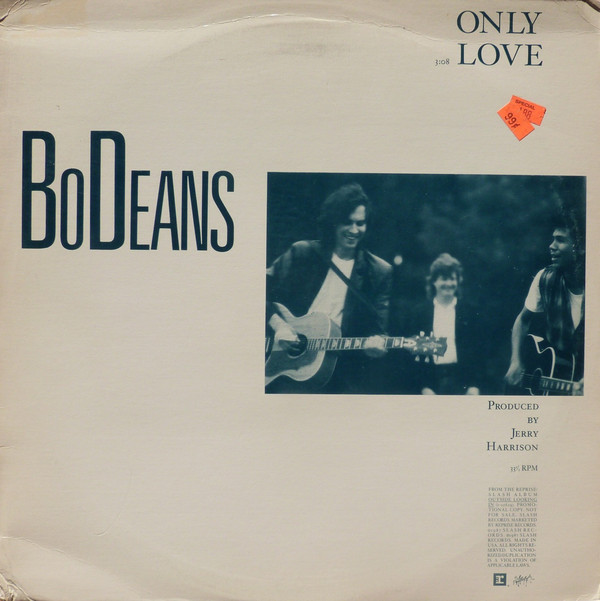
Only Love was released in 1986. The Bodeans opened up for U2 on their Joshua Tree tour and you would think they would have broken through a little more than they did.
This song was on the album “Outside Looking In” their second album released in 1987. Their first album “Love & Hope & Sex & Dreams” was released in 1986 and it lead to a full-page profile in Time Magazine. The story, written by critic Jay Cocks, quotes Llanas as saying, “We were a big fish in a little pond. Now we’re little fish in a big pond. You’re a local band until you get a record contract, then all of a sudden Bruce Springsteen is your competition.”
In 1977 Sophomores Sam Llanas and Kurt Neumann meet in study hall at Waukesha South High School and bond over a shared love of music. The two later end up playing music together. In 1980 At Neumann’s urging, Llanas dropped out of college to pursue music full-time. The group pursues gigs at small bars, clubs, dances and events. Llanas comes up with the name, Da BoDeans.
Llanas and Neumann added drummer Guy Hoffman (Oil Tasters, Confidentials, later the Violent Femmes) and bass player Bob Griffin (The Agents) to fill out their sound in 1983.
Their first album was referred to as cowpunk, rockabilly, roots-rock, revivalist rock, and as a synthesis of the a Rolling Stones and the Everly Brothers. Band member Sammy Lianas made more modest claims for the group, telling Cosmopolitan columnist Michael Segell, “I’d describe us as a band that writes a lot of good songs in different styles and plays most of them pretty well… . Our biggest influence was mid-sixties radio.
The band was still touring as of 2019 but Kurt Neumann is the only original member left.
Only Love
See you walking down the street now every day Pushing by the people as you make your way You’re walking proud now, baby You got your head held high Want you to know that this whole world Sees your heart cry Now see how hard you try To make yourself believe
It’s only love It’s only love It’s only love It’s only love
Maybe love shouldn’t have to be so hard to take Shouldn’t have to feel that love Until your poor heart breaks So why you tell yourself You know there’s no one else Then it ain’t worth the waiting anymore Don’t you wonder if there’s such a thing
It’s only love It’s only love It’s only love It’s only love
You better look in there Believe it, even if it’s too hard to Someone who’s been waiting Oh, baby, just for you and love It’s only love
If I could, I’d take you, baby, in my arms Take away all love’s blame And all love’s scars Maybe we could ride away Till we get so far away And then I couldn’t see us coming back again Well show me what you think of it Show me what you need
It’s only love It’s only love It’s only love It’s only love It’s only love It’s only love It’s only love It’s only love
I was surprised back when I found out that REM didn’t write this song. This song was originally recorded by a late 60’s band from Beaumont, Texas called The Clique, who released it as the B-side of their only Top 40 hit… “Sugar On Sunday.” The song was written by the group’s producer Gary Zekley along with Elliot Bottler, Mitchell Bottler and Brandon Chase.
The Clique didn’t have massive success in the charts but they toured nationally with popular acts, including Tommy James and The Shondells, Grand Funk Railroad, Brooklyn Bridge, and The Dave Clark Five. They had a brief reunion in 2008.
I like the Clique’s version of this also. It has a psychedelic vibe to it which is cool. REM stuck close to the original. Mike Mills the bass player is singing lead on this song because Michael Stipe refused to play it in concert. He told a London crowd in 2008 “We’re definitely not doing that one” after a fan request in 2008.
The scratchy spoken intro is credited to a Japanese pull-string Godzilla doll. Translated loosely from the Japanese, it says, “This is a special news report. Godzilla has been sighted in Tokyo Bay. The attack on it by the Self-Defense Force has been useless. He is heading towards the city. Aaaaaaaaagh….”
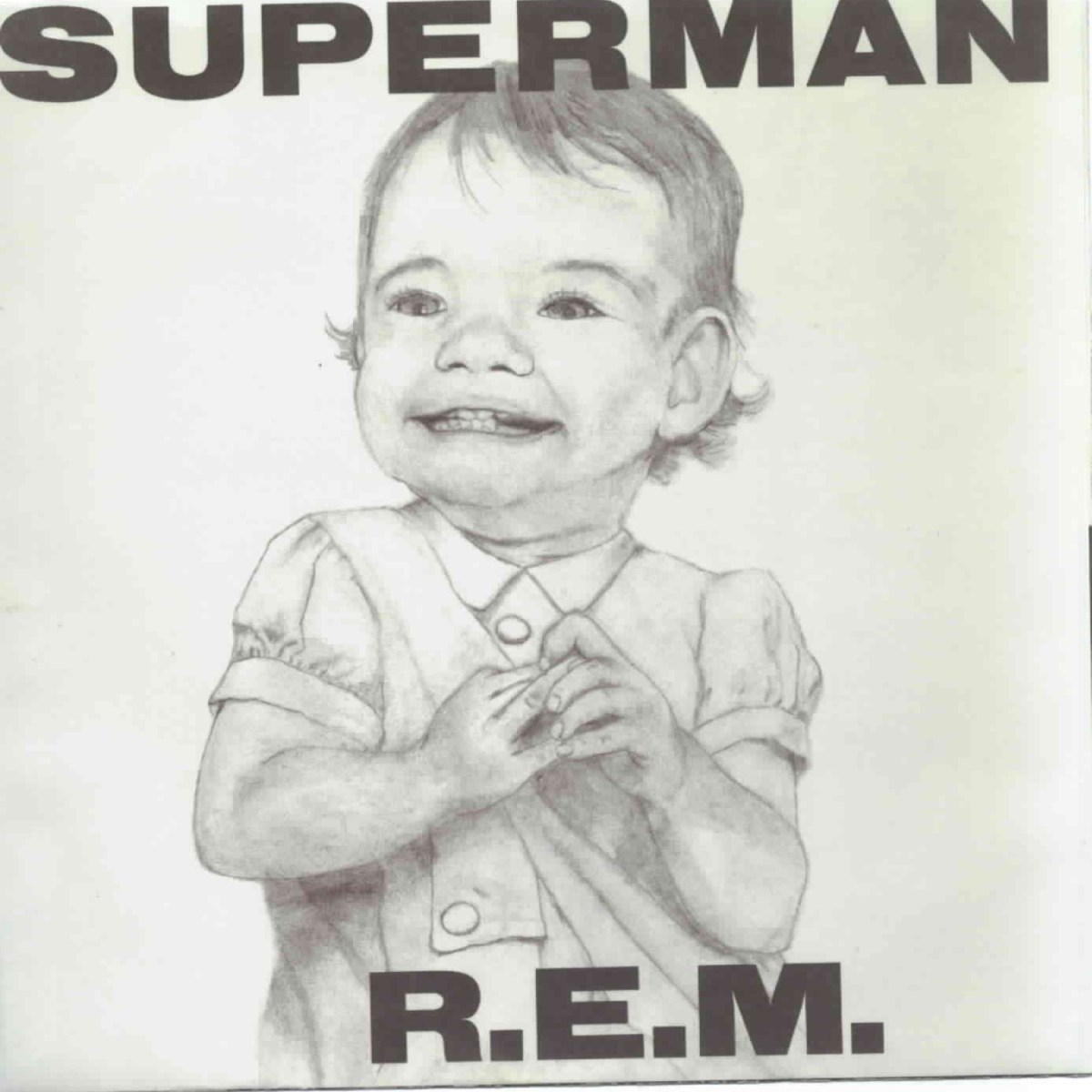
The song was on the album Life’s Rich Pageant released in 1986. Superman peaked at #17 in the Mainstream Rock Charts. The album peaked at #21 in the Billboard Album Charts, #39 in Canada, #24 in New Zealand, and #43 in the UK.
From Songfacts
This is a slightly stalkerish song about a guy who sees himself as Superman. He believes he can “see right through” the girl (presumably using his X-ray vision) so he knows that she doesn’t really love the guy she’s with. Where it gets a little creepy is when he threatens to find her even if she’s “a million miles away.”
It’s all in good fun though. R.E.M. don’t take it too seriously – Mike Mills sang lead on the track instead of Michael Stipe.
311 covered this song at one of their Halloween shows. Lead singer Nick Hexum dressed up as… you guessed it… Superman. On their DVD Enlarged To Show Detail 2, you can see them practicing it in the bus before the show, and then you see them perform it in concert. 311 site R.E.M. as one of their major influences. Hexum and Doug “S.A.” Martinez have both commented on their love of R.E.M.
Superman
I am, I am, I am Superman and I know what’s happening I am, I am, I am Superman and I can do anything
You don’t really love that guy you make it with now, do you? I know you don’t love that guy ’cause I can see right through you
I am, I am, I am Superman and I know what’s happening I am, I am, I am Superman and I can do anything
If you go a million miles away I’ll track you down, girl Trust me when I say I know the pathway to your heart
If you go a million miles away I’ll track you down, girl Trust me when I say I know the pathway to your heart
I am, I am Superman and I know what’s happening I am, I am, I am Superman and I can do anything
I am, I am, I am Superman and I know what’s happening I am, I am, I am Superman and I can do anything
I am posting a bonus version of 80’s Underground Mondays on a Sunday. I hope you enjoy this one.
Back in the late eighties I was working while going to college. A co-worker of mine kept playing this song and it drove me up the wall. My first reaction was to ask…”what the hell is this and why are you playing it?” By the end of the week I wanted a copy of it so she taped it and gave it to me on cassette. This song was heavily played on college radio in the late 80s.
In the song it sounds like he is making fun of skinheads or poking fun at them. The song in itself doesn’t make much sense but it sure is catchy.
From allmusic…
They described themselves as “surrealist absurdist folk,” the group started in the summer of 1983 when David Lowery and friend Victor Krummenacher (bass) started playing music together around Riverside and Redlands, California. Chris Pedersen (drums) and Chris Molla (guitar) to join the the band… Greg Lisher (guitar) and Jonathan Segel (violins, keyboards, mandolin) were added in 1985.
Their songs were built on acoustic and electric, traditional and punk influences. The band released their 1985 debut, Telephone Free Landslide Victory, on their own Pitch-A-Tent label… it was soon reissued by Independent Project Records, and thanks in part to the college radio success of this song… it made the Top Ten in the 1986 Village Voice Pazz and Jop Poll.
The song peaked at #8 in the UK Indie Charts. The band were mystified that the song became a college radio hit. They would get signed to Virgin Records a little later on.
David Lowery:
I never thought that Take the Skinheads Bowling would become a Hit. If someone had traveled from the future and told me we would have a hit on our first album I would not have picked this song as being the hit. Not in a million years. I would have more likely picked Where the Hell is Bill.
Why? We regarded Take The Skinheads Bowling as just a weird non-sensical song. The lyrics were purposely structured so that it would be devoid of meaning. Each subsequent line would undermine any sort of meaning established by the last line. It was the early 80′s and all our peers were writing songs that were full of meaning. It was our way of rebelling. BTW this is the most important fact about this song. We wanted the words to lack any coherent meaning. There is no story or deeper insight that I can give you about this song.
Lassie and Where the Hell is Bill were silly but there was at least a point to the songs. Plus both songs were pretty jokey. Something that seemed popular at the time.
The band is still together now…sit back and enjoy Take The Skinheads Bowling!
Take The Skinheads Bowling
Every day, I get up and pray to John And he decreases the number of clocks by exactly one Everybody’s comin’ home for lunch these days Last night there were skinheads on my lawn
Take the skinheads bowling Take them bowling Take the skinheads bowling Take them bowling
Some people say that bowling alleys got big lanes Some people say that bowling alleys all look the same There’s not a line that goes here that rhymes with anything I has a dream last night, but I forget what it was
Take the skinheads bowling Take them bowling Take the skinheads bowling Take them bowling
I had a dream last night about you, my friend I had a dreamI wanted to sleep next to plastic I had a dreamI wanted to lick your knees I had a dreamit was about nothing
Take the skinheads bowling Take them bowling Take the skinheads bowling Take them bowling
If I’m feeling a need of some old school driving Rock and Roll/Rockabilly…I look no further than the Blasters. No studio embellishments, no gimmicks, no tricks…just rock and roll.
The Blasters never had mainstream success…but popular radio back in the 80s would have been greatly improved by these guys.
The Blasters are a rock and roll band formed in 1979 in Downey, California, by brothers Phil Alvin (vocals and guitar) and Dave Alvin (guitar), with bass guitarist John Bazz and drummer Bill Bateman.
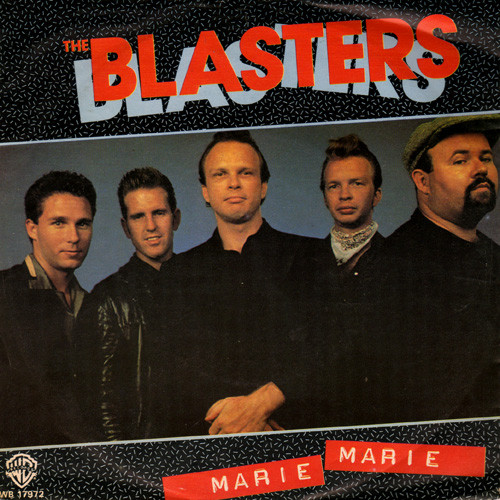
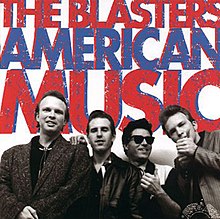
Marie Marie was released in 1980 on The Blaster’s debut album American Music on the small independent label Rollin’ Rock. It was then re-recorded a year later for The Blaster’s second album The Blasters, released by Slash Records and distributed by Warmer Bros.
The artist Shakin Stevens covered the song in 1980 and his version had chart success. Steven’s version peaked at #19 in the UK, 28 in Ireland, and #18 in Germany in 1981.
The song was written by Dave Alvin…here he is talking about how he wrote it.
Dave Alvin:“About 30 minutes before we left to go to rehearsal, I sat down at our kitchen table and I just wrote the lyrics – just came to me. I was kind of – I remember being a little kid and we were driving down this road up near the Puente Hills. And there was an old Victorian farmhouse and there was a girl sitting on the porch with a guitar. And for whatever reason, that image stuck with me and so I just wrote that. So in like 20 minutes we had [the song].”
Phil Alvin:“I thought Joe Turner’s backup band on Atlantic records – I had these 78s – I thought they were the Blues Blasters. That ends up it was Jimmy McCracklin. I just took the ‘Blues’ off and Joe finally told me, that’s Jimmy McCracklin’s name, but you tell ‘im I gave you permission to steal it.”
Marie Marie
Marie Marie Playing guitar on the back porch I sit in my car While she sings so sad Marie Marie It’s so lonely in these farmlands Please come with me To the bright lights downtown Marie Marie I said, “Hey, pretty girl Don’t you understand I just want to be your loving man” Marie Marie The sun is down in the corn fields The evening is dark And you sing so sad Marie Marie
Marie Marie I got two weeks in back pay There’s gas in my car And your folks say I must go I said, “Hey, pretty girl Don’t you understand I just want to be your loving man” Marie Marie Marie Marie Playing guitar on the back porch I leave in my car While you sing so sad Marie Marie
I knew a few songs from The Smiths in the 80s but I found out more in the last few years from bloggers like Dave from A Sound Day. This intro is just plain epic. The Smiths had difficulty playing this song live. Johnny Marr, had troubles recreating the guitar effect in concert. The tremolo is perfect in this song.
Bassist, Andy Rourke, called the song “the bane of The Smiths’ live career.”
The song was released in 1985 and it peaked at #24 in the UK, #39 in New Zealand, an d #36 in the US Dance Chart… The single was re-released in 1992 and it peaked at #16 in the UK.
This incridble song was the B side to William, It Was Really Nothing. It was on the album Hatful of Hollow. The album was a compilation album released in 1984 and it peaked at #7 in the UK. In 2000, Q magazine placed the album at No. 44 on its list of the “100 Greatest British Albums Ever”.
Guitarist Johnny Marr has described this song as The Smiths’ “most enduring record.” It is supposedly about their singer’s Morrissey’s crippling shyness. It has since become an anthem for the alienated and socially isolated.
Johnny Marr:“I wanted an introduction that was almost as potent as ‘Layla.’ When it plays in a club or a pub, everyone knows what it is.”
Johnny Marr:“I wanted it to be really, really tense and swampy, all at the same time. Layering the slide part was what gave it the real tension. The tremolo effect came from laying down a regular rhythm part with a capo at the 2nd fret on a Les Paul, then sending that out in to the live room to four Fender Twins. John was controlling the tremolo on two of them and I was controlling the other two, and whenever they went out of sync we just had to stop the track and start all over again. It took an eternity.”
From Songfacts
Marr wrote this song, “William, It Was Really Nothing” and “Please, Please, Please, Let Me Get What I Want” over a productive four-day period in June 1984.
The Smiths installed red lightbulbs in their London studio to create the perfect atmosphere to record this song in.
The oscillating guitar has been compared to the one heard in The Rolling Stones’ cover of Bo Diddley’s song, “I Need You Baby (Mona).” This would not be the last time that Marr would steal a riff from the Stones!
This song was named after a question posed in Marjorie Rosen’s feminist film study, Popcorn Venus – one of Morrissey’s favorite books.
Morrissey lifted the line, “The heir to nothing in particular,” from the 19th century novel, Middlemarch, by George Eliot.
Marr told The Guardian newspaper that the producer, John Porter, misjudged this song’s opening lyric: “I remember when Morrissey first sang, ‘I am the son and the heir…’ John Porter went, ‘Ah great, the elements!’ Morrissey continued, ‘…of a shyness that is criminally vulgar.’ I knew he’d hit the bullseye there and then.”
Unlike many British acts, The Smiths hadn’t made any music videos. By 1985, MTV was very popular in America and a key to promoting songs to a young audience, so Jeff Ayeroff, who was in charge of video promotion at Warner Music, parent to The Smith’s US label Sire, commissioned a video. Video directors weren’t easy to come by at the time unless you had a substantial budget, and Ayeroff only wanted to shell out $5,000. He hired Paula Greif, who had been designing album covers, to make the video, giving her the instruction, “Find some performance footage and put a girl in it.”
Greif did just that, using footage from a show in Leicester shot in 1984 by the band’s live sound engineer, Grant Showbiz. She combined this with Super 8 video she shot of a female model dancing as if she was at the show. The band had no involvement.
Morrissey told Creem magazine that he detested the video. “It had absolutely nothing to do with The Smiths,” he said. “Quite naturally we were swamped with letters from very distressed American friends saying, ‘Why on earth did you make this foul video?’ And of course it must be understood that Sire made that video, and we saw the video and we said to Sire, ‘You can’t possibly release this… this degrading video.’ And they said, ‘Well, maybe you shouldn’t really be on our label.’ It was quite disastrous.”
Morrissey and Marr receive 25% of the royalties for the Soho hit, “Hippychick,” which interpolates this song’s guitar riff.
The band Love Spit Love, which included Psychedelic Furs members Richard and Tim Butler, recorded a new version of this song for the 1996 movie The Craft, which is about a coven of strikingly attractive teenage witches. In 1998, this same cover version was used as the theme song to the TV series Charmed, which is about a coven of strikingly attractive teenage witches.
The song also appears in the movies The Wedding Singer (1998) and Closer (2004).
The Russian duo t.A.T.u. of “All The Things She Said” fame covered this song in 2002. Marr slammed the “silly” cover, though Morrissey called it “magnificent.” Their version was used in the 2008 episode of Gossip Girl, “Pret-a-Poor-J.”
This song featured in a commercial for Pepe Jeans in 1988, also appeared in a 1999 commercial for the Nissan Maxima (without lyrics).
This was the B-side to the “William, It Was Really Nothing” single, which was released in 1984. After British radio picked up on the song, it was released as a standalone single in 1985, when it charted at an underwhelming #24, much to the disappointment of Morrissey, who bemoaned to Creem magazine: “It’s hard to believe that ‘How Soon Is Now’ was not a hit. I thought that was the one.” It was reissued for a third time in 1992, when it charted at #16.
The single artwork was a still of the actor, Sean Barrett, from the 1958 film, Dunkirk. Barrett was praying in the image, but because he also looked like he was holding his crotch, the sleeve was deemed to be offensive and was consequently banned in the US.
How Soon Is Now
I am the son And the heir Of a shyness that is criminally vulgar I am the son and heir Of nothing in particular
You shut your mouth How can you say I go about things the wrong way? I am human and I need to be loved Just like everybody else does
I am the son And the heir Of a shyness that is criminally vulgar I am the son and heir Of nothing in particular
You shut your mouth How can you say I go about things the wrong way? I am human and I need to be loved Just like everybody else does
There’s a club if you’d like to go You could meet somebody who really loves you So you go and you stand on your own And you leave on your own And you go home and you cry And you want to die
When you say it’s gonna happen “now” When exactly do you mean? See I’ve already waited too long And all my hope is gone
You shut your mouth How can you say I go about things the wrong way? I am human and I need to be loved Just like everybody else does
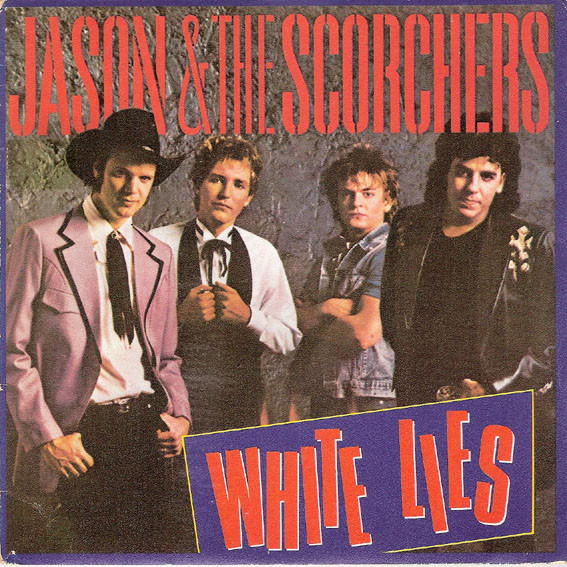
In the mid eighties I had a friend who were into Jason and the Scorchers so I gave them a listen. They were big on college radio and they had many ties with Nashville and played here quite often.
I first heard them do a live version of “The Race Is On”…the old George Jones song and it won me over. They were really a big deal in the southeast in the middle eighties and should have spread more. Their music seemed to have a kinship to the Georgia Satellites but they were a little more country. They did have some MTV play with this song and Golden Ball and Chain.
The band was formed in 1981. They were together through the 80s till the drummer Perry Baggs was diagnosed with diabetes and could not finish a 1990 tour. They have regrouped since then off and on and altogether have released 15 albums with the last one being in 2010. In 2012 Perry Baggs passed away because of diabetes.
They played a mixture between country and rock and fell into the cracks. They seemed too rock for country and too country for rock. Live they were unbeatable.
This song was released in 1985 on the album Lost and Found.
AllMusic’s Mark Deming called Lost & Found“the best record this fine band would ever make.”
Below is the reunited band on the Conan show in 1998…promoting a live album.
White Lies
White lies Every evening when I walk through the door I hear the same old lies that I’ve heard before: You’re going out for the evening, going out with a friend. Do you really want me to believe that again? You’re telling white lies, you’re telling white lies. I can see right through that this disguise. Can’t you tell I can tell when you’re telling white lies? Take these chains and set me free, Release me from this misery. Now, don’t you waste my time with your alibis ’cause your heart can’t hide what I see in your eyes. You’re telling white lies, you’re telling white lies. I can see right through that thin disguise. Can’t you tell I can tell when you’re telling white lies? Every evening when I walk through that door I get the same old lies that I’ve heard before: You’re going out for the evening, going out with a friend. Do you really want me to believe that again? You’re telling white lies, you’re telling whire lies. I can see right through that thin disguise. Can’t you tell I can tell when you’re telling white lies? You’re telling white lies, you’re telling white lies. I can see right through that thin disguise. Can’t you tell I can tell when you’re telling white lies? White lies White lies White lies
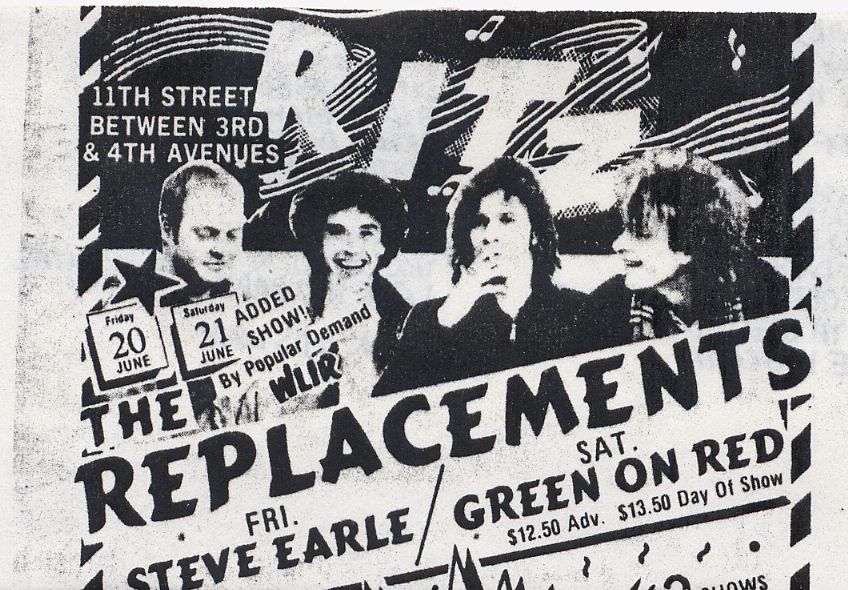
Since I finished the Replacements as far as taking one song off each of their albums… I’m going to put aside Mondays for some 1980s alternative college radio music for the next few weeks.
I really like the riff underneath this song being framed by the sixties sounding organ.
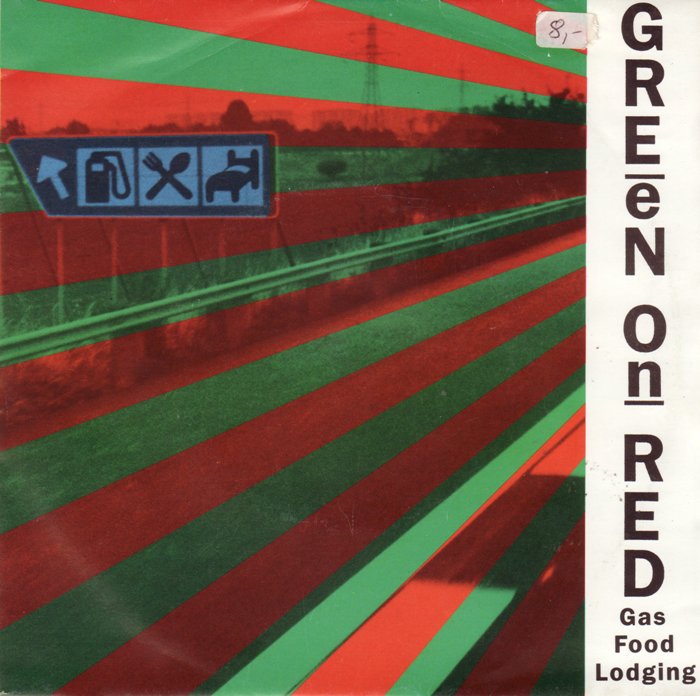
I’ve read where someone said about this band…it’s alt.country meets the Replacements. In some songs that is true. Some of their songs sound epic and they were reaching for something big…and many times pulled it off.
Green On Red have been described as Desert Rock, Paisley Underground, Alternative Country-Rock, ‘Garage-Country, and ‘Country-Punk. They made their mark in the 80s touring college towns on the circuit with REM, Replacements, and other alternative bands.
Earlier records have the wide-screen psychedelic sound of first-wave desert rock, while later releases tended more towards traditional country rock. They did not pigeon hole themselves into one style.
This song was on the album “Gas Food Lodging” which becomes their biggest seller and will eventually be credited as a forerunner to alt-country/americana. They would be produced by some great producers such as Jim Dickenson, Glyn Johns, and Al Kooper but could not connect with the masses.
They were active between 1979 to 1992 and they reunited in 2005 to 2006. They shared a bill with a lot of different musicians.
Sixteen Ways
16 kids 16 ways They shot my babies by mistake I’m all alone on a midnight ride My 16 kids all have died
Chorus They ain’t coming back It’s too late They shot my babies but They killed my faith
I haven’t slept in 14 days Now it’s time to barricade Myself in these four walls My 16 kids all are gone
Chorus
I worked so hard for 40 years I told myself I had nothing to fear Then one by one they got shot down The youngest one held a gun to his ear
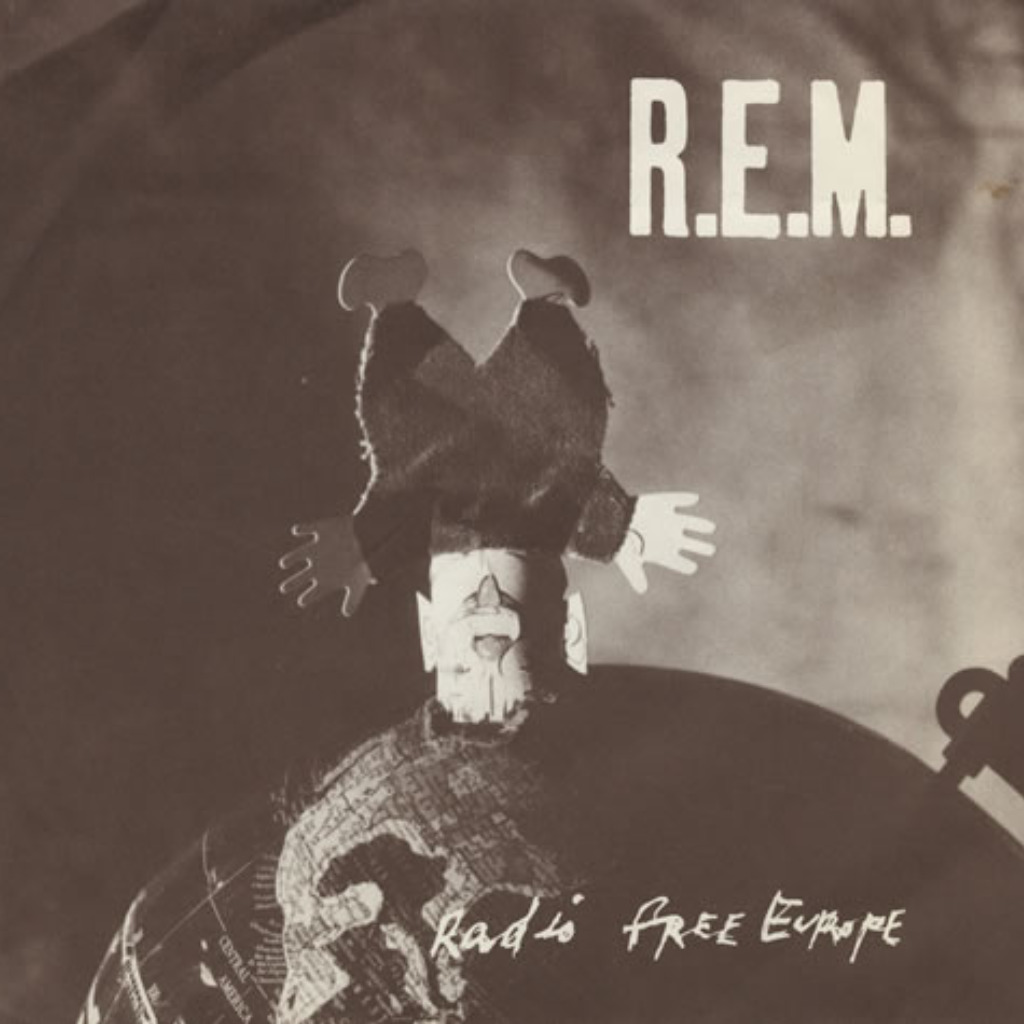
I didn’t first hear this song when it was originally released in 1981. I had a friend who played it to me a few years later after it was re-recorded. It was an important song in REM’s career…it broke them on the charts…not super high but on the charts just the same.
This song was R.E.M.’s first single, released in 1981 on the short-lived independent record label Hib-Tone. The single received critical acclaim, and its success earned the band a record deal with I.R.S. Records. R.E.M. re-recorded the song for their 1983 debut album Murmur.
The re-recording was released by a larger I.R.S. and peaked at #78 in the Billboard 100 and #25 on the Mainstream Rock Chart.
Radio Free Europe is a radio network run by the United States government that broadcasts to Europe and the Middle East. The mission of the broadcasts is to promote democracy and freedom, but R.E.M. makes the point that this can easily cross the line into propaganda.
Drummer Bill Berry: “This song was pivotal to the continuation of our career,” “Most fans may not realize that for two years before Murmur was released, we barely made financial ends meet by playing tiny clubs around the southeast. Our gasoline budget prevented us from venturing further. Put simply, our existence was impoverished. College radio and major city club scenes embraced this song and expanded our audience to the extent that we moved from small clubs to medium-sized venues and the additional revenue made it possible to logically pursue this wild musical endeavor. I dare not contemplate what our fate would have been had this song not appeared when it did.”
From Songfacts
There was a good reason for Michael Stipe’s infamously indecipherable lyrics on this song: he hadn’t finished them by the time they recorded it. In a 1988 NME interview, Stipe described the lyrical content as “complete babbling.”
R.E.M. lead singer Michael Stipe said in a 1983 interview with Alternative America: “We were all so scared of what the other one would say, that everyone nodded their head in agreement to anything to come up. The earlier songs were incredibly fundamental, real simple, songs that you could write in five minutes. Most of them didn’t have any words. I just got up and howled and hollered a lot.
That’s true. I’ve got to write words for ‘Radio Free Europe,’ because we’re going to re-record that for the album. It still doesn’t have a second or third verse. I think there are actually lyrics to every song on the EP.”
Stipe noted being apparently unaware of his own genius: “The guys always said I do something harmonically here that made them all go ‘whoa,’ because it was so advanced … or something, in the ‘straight off the boat’ part. I wonder if I tricked them by accident? I still have no idea what it is they’re talking about.”
The video for this song, directed by Arthur Pierson, was shot in the famed Paradise Gardens, a folk art sculpture garden crafted by artist Howard Finster in Pennville, Georgia. Finster, a Baptist minister, also painted the album art for R.E.M.’s second album, Reckoning.
This version is the original Hib-Tone version.
Radio Free Europe
Beside yourself if radio’s gonna stay Reason: it could polish up the gray Put that, put that, put that up your wall That this isn’t country at all
Raving station, beside yourself
Keep me out of country and the word Deal the porch is leading us absurd Push that, push that, push that to the hull That this isn’t nothing at all
Straight off the boat Where to go?
Calling on in transit Calling on in transit Radio Free Europe Radio
Beside defying’ media too fast Instead of pushin’ palaces to fall Put that, put that, put that before all That this isn’t fortunate at all
Raving station, beside yourself
Calling on in transit Calling on in transit Radio Free Europe Radio
Decide yourself Calling on a boat Media’s too fast
Keep me out of country and the word Disappointers into us absurd
Straight off the boat Where to go?
Calling on in transit Calling on in transit Radio Free Europe Radio Free Europe
Calling on in transit Calling on in transit Radio Free Europe Radio Free Europe
This song has a very garage band sound. It was a minor hit in 1986. The Del Fuegos were an alternative band that was eventually signed to RCA later in their career. They were touring the same circuit as REM and The Replacements.
The Zanes brothers Dan and Warren formed the band in Boston in the early eighties. The brothers had a hard time getting a long and supposedly still do. Tom Petty became a fan of them and appeared on one of their songs. They also opened up for Tom Petty and the Heartbreakers on a tour.
Warren quit the band after the 3rd album. He went to college and received a Ph.D in Visual and Cultural Studies. Zanes is the former vice president of education and public programs for the Rock and Roll Hall of Fame and Museum. He ended up writing Tom Petty’s biography shortly before Petty’s death.
This song was written by lead singer Dan Zanes and bass player Tom Lloyd, it was one of the first hits for the band. The Del Fuegos got some attention when Miller beer featured them in a national beer commercial as part of their “Made the American Way” campaign, which got them a lot of exposure and also some critical scorn, as commercials were seen as selling out at the time.
After that commercial their creditability suffered. In the current time having your song in a commercial helps you tremendously and no one things anything about it…but in the 20th century it didn’t go over well. The band would hear “sell out” on tour.
After the commercial though… they did get better tours and more money. This song peaked at #87 in the Billboard 100 in 1986.
I Still Want You
Seasons change and lessons get learned It’s been awhile, but my heart burns It said, I still want you
And that’s all I’ll do Spend my time just thinking about you Said, I still want you
The car we bought together just started to rust The world we made came between the two of us I still want you
When the day was through We drive through town my arm around you Said, I still want you
I tried so hard just to fill your cup I tried so hard just to fill it up But you only drift away, you drift away Now you only drift away, you drift away
I hear the rain coming down The leaves start to fall I hear your voice I remember it all Said, I still want you
And that’s all I’ll do Spend my life just thinking about you Said, I still want you
I tried so hard, tried to fill your cup I tried so hard just to fill it up But you only drift away, you drift away
And baby, I still want you I still want you I said, I still want you
To kick off reviewing the Twilight Zone episodes… I thought this was appropriate.
This song was a great example of MTV’s clout. It was in heavy rotation and it paid off for the band. It peaked at #10 in the Billboard 100 and #13 in Canada in 1983.
I have to wonder how the landscape of music would have changed without MTV in the 80s. Some bands hated videos because it could change the songs perception. Many wanted people to make up their own mind about songs and not think of “guitarists in leather pants.”
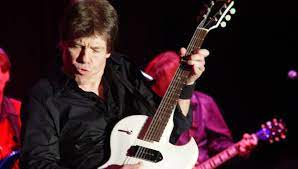
TheTwilight Zone was written by Golden Earring’s lead guitarist George Kooymans. He was inspired not by the famous TV series of the same name, but by the Robert Ludlum novel The Bourne Identity, which would later be turned into a popular movie.
The song’s intro will stick in your head for days…kind of like the intro to the Twilight Zone TV series a repeating riff. I was happy to hear this song at the time. I knew them for Radar Love and any seventies rock group in the 80s was nice to hear.
Golden Earring was a Dutch band and they were formed in Hauge in 1961. They were a long lasting band. George Kooymans sadly announced this year that he is suffering from ALS and the band officially dissolved.
From Songfacts
Right out front, note that this song has nothing to do with Manhattan Transfer’s “Twilight Zone.” One is not a cover of the other.
The song and especially the video tell the story of an espionage agent, on the run from enemy spies before being cornered. The cover of the album Cut (from which this was the only single) shows a scene repeated in the video, of a bullet slicing through the Jack of Diamonds playing card. The card is supposed to represent the rogue agent.
Interestingly, there was at least one episode of the original Twilight Zone TV series which was also a spy drama. Namely, episode #149 from season five, “The Jeopardy Room,” is about a Soviet KGB agent who wants to defect, but he ends up pinned in a hotel room under surveillance from a hit man and his accomplice, who sadistically make him play a game for his life. And it’s one of the few episodes where a gun is fired – “When the bullet hits the bone,” indeed!
Get ready for a nostalgia blast: This song was also used as the theme to the Twilight Zone pinball machine. This was part of Bally Midway’s series of “Superpin” arcade pinball games that were based on TV shows – other pinball games in the series were based on Star Trek and The Addams Family.
Fittingly, this song is also sometimes used as bumper music for the radio show Coast to Coast AM, the all-night paranormal talk show which also more frequently uses “A Hazy Shade of Winter.”
The video is yet another whose early airplay on MTV paid off. In MTV Ruled the World – The Early Years of Music Video, Rick Springfield talks about the MTV Effect: “The difference that I saw was, before MTV, you’d have to be on like your third successful album before people started recognizing you at the airport. But once MTV hit, you had that one hit single, and you were as recognizable as if you were around for three or four years. It was so instant. That was the power of television.
Twilight Zone
Somewhere in a lonely hotel room there’s a guy Starting to realize that eternal fate has turned its back on him It’s two A.M.
It’s two A.M. (It’s two A.M.) Fear is gone (fear is gone) I’m sitting here waiting The Gun still warm (the gun still warm) Maybe my connection is tired of taking chances
Yeah, there’s a storm on the loose Sirens in my head Wrapped up in silence, all circuits are dead Cannot decode, my whole life spins into a frenzy
Help, I’m steppin’ into the twilight zone Place is a madhouse, feels like being cold My beacon’s been moved under moon and star Where am I to go now that I’ve gone too far? (Oh oh oh)
Help, I’m steppin’ into the twilight zone Place is a madhouse, feels like being alone My beacon’s been moved under moon and star Where am I to go now that I’ve gone too far?
So you will come to know When the bullet hits the bone So you will come to know When the bullet hits the bone
I’m fallin’ down a spiral, destination unknown Double crossed messenger, all alone Can’t get no connection, can’t get through Where are you?
Well the night weighs heavy on his guilty mind This far from the borderline When the hitman comes He knows damn well he has been cheated
And he says Help, I’m steppin’ into the twilight zone Place is a madhouse, feels like being cold My beacon’s been moved under moon and star Where am I to go now that I’ve gone too far? (Oh oh oh)
Help, I’m steppin’ into the twilight zone Place is a madhouse, feels like being alone My beacon’s been moved under moon and star Where am I to go now that I’ve gone too far?
So you will come to know When the bullet hits the bone So you will come to know When the bullet hits the bone When the bullet hits the bone
Help, I’m steppin’ into the twilight zone Place is a madhouse, feels like being cold My beacon’s been moved under moon and star Where am I to go now that I’ve gone too far? (Oh oh oh)
Help, I’m steppin’ into the twilight zone Place is a madhouse, feels like being alone My beacon’s been moved under moon and star Where am I to go now that I’ve gone too far?
So you will come to know When the bullet hits the bone So you will come to know When the bullet hits the bone So you will come to know When the bullet hits the bone So you will come to know When the bullet hits the bone When the bullet hits the bone When the bullet hits the bone When the bullet hits the bone When the bullet hits the bone When the bullet hits the bone When the bullet hits the bone When the bullet hits the bone When the bullet hits the bone
This song was one of the most pivotal songs in their career. MTV’s refusal to play it hurt the chances of the album Please To Meet Me… which The Replacements released in 1987. The album was critically praised as were most of their other albums. With no MTV or radio support, the single didn’t go anywhere.
This song had radio potential and their record company Sire was gearing up a campaign but the song is about suicide and MTV would not touch it. A month before the album was released, the Bergenfield Suicide Pact (4 New Jersey teens took part in a suicide pact) happened. It understandably got a lot of press. Paul Westerberg was not happy with the decision. “MTV feels the lyrics are detrimental to the youth of America,” said Westerberg “But for them to play Mötley Crüe and not play our video … if it had a bunch of sexist bullshit, they would’ve played it. But if it’s something deeper, if it’s emotions, it’s taboo.”
The song hinted at Paul Westerberg’s own teenage overdose attempt and the suicide of his high school friend John Zika. Sitting home in the fall of 1986, he wrote The Ledge in forty-five minutes, from the perspective of a jumper looking down at a gathering crowd below.
It was recorded in Memphis with Jim Dickinson producing. The band worked as a trio as Bob Stinson was let go by this time. After the album was finished they would get Bob “Slim” Dunlap on lead guitar.
Paul Westerberg: It’s written not necessarily out of personal experience because I’m still here. It’s an observation. And if anyone wants to read anything into it other than that, then that’s their problem. And the lyrics, they just came. I didn’t have to sit, I didn’t have to think. It was just wham wham wham, I turned on the little tape recorder, I had it on an ironing board. And it was partially out of the way I had felt at certain times in my life. I figure if you’re gonna kill yourself, you kill yourself, but I had tried to commit suicide once I think when I was younger and I can still feel how I felt then. I mean not like now that I’m totally a-ok and the happiest guy in the world, I’m doing fine, but I can feel for people that feel totally lost and have no one to turn to. So it was written sort of half of my own experience and half of maybe me trying to feel how it is to be up there on the ledge. And it’s not written in any way to condone that kind of stuff. Obviously it’s bullshit, it’s wrong, but to someone who does it…
The Ledge
All eyes look up to me High above the filthy streets Heed no bullhorn when it calls Watch me fly and die, watch me fall
I’m the boy they can’t ignore, For the first time in my life, I’m sure All the love sent up high to pledge Won’t reach the ledge
Wind blows cold from the west I smell coffee, I smell doughnuts for the press (on their breath?) A girl that I knew once years ago Is tryin’ to be reached on the phone
I’m the boy she can’t ignore, For the first time in my life, I’m sure All the love sent up high to pledge…
(Repeat)
Priest kneels silent, all is still Policeman reaches from the sill Watch him, watch him try his best There’ll be no medal pinned to his chest
I’m the boy they couldn’t ignore, For the first time in my life, I’m sure
(Repeat)
I’m the boy for the last time in my life
All the love that they pledge For the last time will not reach the ledge…
Wanted Man was written by Bob Dylan and it is a favorite of mine. I first heard it by George Thorogood. The first time I heard it was not the studio version that George did…it was when he played it on the 30th Anniversary Bob Dylan concert held in 1993. George’s version of Wanted Man was left off of the CD for some reason…but I knew I had to find that Dylan song as soon as I heard it.
This was pre-internet and I finally found out that Dylan never recorded it for an album. To this day I’ve never heard a version of only Bob singing it… not even a demo of just him.
From what I’ve read about the song Bob Dylan wrote Wanted Man for Nashville Skyline but no complete version of the song was recorded at those sessions. Johnny Cash covered the song and he announced it as a song that him and Dylan wrote together but the records show that Dylan copyrighted it according to a couple of websites.
Cash debuted “Wanted Man” on his 1969 live album, At San Quentin, and would later release a studio version.
George Thorogood released his version on his 1982 Bad To The Bone album released in 1982. The word play in this song is great.
Below I have George’s version of course but I also have Johnny Cash and Bob Dylan demo of the song.
Wanted Man
Wanted man in California Wanted man in Ohio Wanted man in Kansas City Wanted man in Buffalo
Wanted man in Oklahoma Wantd man in old Cheyenne Wherever you might look tonight You might see this wanted man
Well, I might be in Colorado Or Georgia by the sea Workin’ for some man who may not know who I might be Yeah, and if you see me comin’ And you know who I am Don’t you breathe it to nobody Cause you know I’m on the lam
Wanted man by Lucy Watson Wanted man by Jeannie Brown Wanted man by Nelly Johnson Wanted man in this Tex town
And I’ve had all that I’ve wanted Of a lot of things I’ve had And a lot more than I’ve needed Of some things that turned out bad
Well, I got sidetracked in El Paso Stopped to get myself a map I went the wrong way into Juarez With Juanita on my lap And I went to sleep in Shreveport Woke up in Abilene Wonderin’ why the hell I’m wanted At some town halfway between
Wanted man in Albuquerque Wanted man in Baton Rouge Wanted man in Tallahassee Wanted man in Syracuse
And there’s somebody sent to grab me Anywhere that I might be Wherever you might look tonight You might get a glimpse of me
Wanted man in California Wanted man in Ohio Wanted man in Kansas City Wanted man in Buffalo Wanted man in Oklahoma Wanted man in old Cheyenne Wherever you might look tonight You might see this wanted man
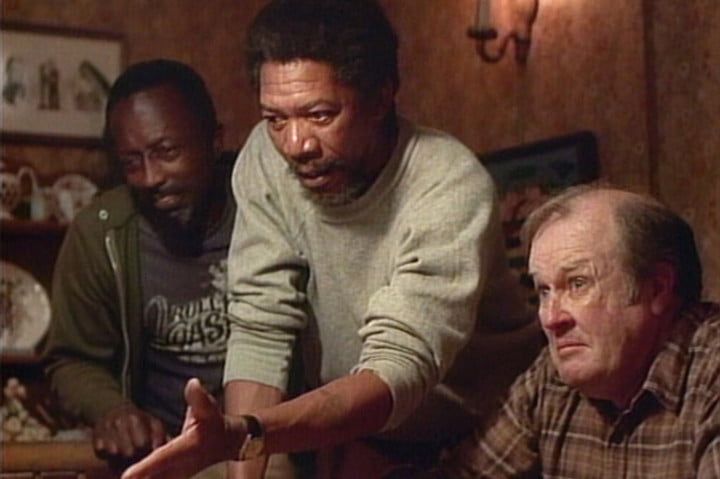
I’m not counting the Twilight Zone reboots in my top 10 but this is a fun 1985 Twilight Zone. It has a younger Morgan Freeman along with original SNL alumni Garret Morris…along with Dan Hedaya, Barney Martin, and M. Emmet Walsh. This version of the Twilight Zone is hit and miss. There are a few that are really good. I would not compare anything to the original though.
Some very good character actors and the episode is a fun one. I found the complete episode online…if you have 20 or so minutes give it a try.
Five men playing poker…not unusual right? However, one of the men is the devil himself, masquerading as an acquaintance of one of them. He’s there to collect the soul of one of the men, but which one? As the personalities of the men gradually come out, it’s clear that Pete is the one the Devil is there to collect. Pete tries to bet his way out of going with Nick, hoping to beat the Devil at his own game.
CAST
Morgan Freeman – Tony
Dan Hedaya – Nick
M. Emmet Walsh – Pete
Garret Morris – Jake
Barney Martin – Marty
Out of all of the tracks on Steel Wheels…this one sounded like the old Stones. The open G chord that Keith Richards made famous is in full display on the intro. This is the first track from Steel Wheels, an album that brought The Stones back together.
With the album Dirty Work, the Stones did look like it could be over. Jagger and Richards were not getting along. They took shots at each other in the press. Jagger released two albums, She’s The Boss and Primitive Cool. Keith Richards also released a solo album…a very good album Talk Is Cheap.
Keith and Mick finally took time out to talk to each other and get the band back together. Bill Wyman, Charlie Watts, and Ron Wood joined them and this would be Bill’s last album and tour. Bill has had musical projects since then and he has rejoined the Stones onstage a few times.
The song peaked at #14 in the Mainstream Rock Tracks in 1989. Mixed Emotions was the big hit off of the album.
Charlie Watts helped write this, but as was custom for The Stones, it was credited only to Jagger/Richards.
From Songfacts
The horns were played by the Brass ensemble The Kick Horns.
Ron Wood played bass. Bill Wyman, The Stones bassist, had to deal with the press after announcing his engagement to 18-year-old Mandy Smith, and was not available. Wyman and Smith divorced soon after their marriage.
Sad Sad Sad
Fling you out into orbit No one’s gonna hear you shout And fools ain’t gonna follow You don’t need to sleaze about
Now you’re sad sad sad Sad sad sad Sad sad sad But you’re gonna be fine
The elephant’s in the bedroom Throwing all his weight about And I’m locked in the bathroom Your screams are gonna drown me out
Now you’re sad sad sad Sad sad sad Sad sad sad But you’re gonna be fine
Oh, yeah
I got a cold chill I get a cool thrill Are you ready for the gilded cage? Are you ready for the tears of rage? Come on baby, don’t let them drown you out
Sad sad sad Bad bad bad Sad sad sad But you’re gonna be fine
Sad sad sad Sad sad sad Sad sad sad But you’re gonna be fine
You’re gonna be fine You’re gonna be fine You’re gonna be fine fine fine fine You’re gonna be fine fine fine fine Fine fine fine fine
Ooh, yeah Ooh, yeah Ooh, yeah Gonna be fine fine fine fine Fine fine fine fine Fine fine fine fine
Bring your own lampshade Somewhere there’s a party
This song has just a slight early sixties vibe and shows their expanding repertoire.
Paul Westerberg has said Swingin Party drew on Sinatra’s version of Rodgers and Hart’s standard “Where or When” and The Springfield’s “Flying on the Ground Is Wrong.” It had a trace of Frank and Nancy Sinatra’s “Somethin’ Stupid” and Brian Hyland’s “The Joker Went Wild.” He said if you steal from everything nobody can put a finger on you.
The song’s oscillating rhythms and guitars provided a perfect backdrop for the lyrics.
This song was on their 4th studio album Tim. Yes, they named the album Tim which is pretty funny. It would be the last album founding member and lead guitarist Bob Stinson worked on.
Paul Westerberg:“We named it Tim for no reason at all”.This was the first time we named an album after it was done.We sat around a bar,we were gonna call it Whistler’s Mammy,Van Gogh’s Ear,or England Schmingland.”I think I said Tim and we sat and laughed for a few minutes and then we said,”Why not?”
Paul Westerberg:“One of the reasons we used to drink so much is that it was scary going up onstage. That’s one of the things ‘Swingin Party’ is all about” “The funny thing is, people think you must have all this confidence to get up onstage.”
New Zealand singer Lorde covered Swingin Party”= as the B-side to her second single, “Tennis Court.” The song peaked at #10 in the New Zealand singles chart in 2013.
Swingin’ Party
Bring your own lampshade Somewhere there’s a party Here it’s never ending Can’t remember when it started Pass around the lampshade There’ll be plenty enough room in jail
If being alone’s a crime I’m serving forever Being strong’s your kind I need help here with this feather If being afraid is a crime We hang side by side At the swingin’ party down the line
On the prairie pavement Losing proposition Quitting school and going to work And never going fishing Water all around Never learn how to swim now
If being alone’s a crime I’m serving forever Being strong’s your kind Then I need help here with this feather If being afraid is a crime We hang side by side At the swingin’ party down the line At the swingin’ party down the line
Bring your own lampshade Somewhere there’s a party Here it’s never ending Can’t remember when it started Pass around the lampshade There’ll be plenty of room in jail
If being alone’s a crime I’m serving forever Being strong is what you want Then I need help here with this feather If being afraid is a crime We hang side by side At the swingin’ party down the line At the swingin’ party down the line Catchin’ time At the swingin’ party down the line