A Novelty Song from the 70s – Wildwood Weed

I usually don’t post novelty songs, but I grew up with this one. It still makes me laugh to this day and contains one of my favorite lines, Take a trip and never leave the farm.

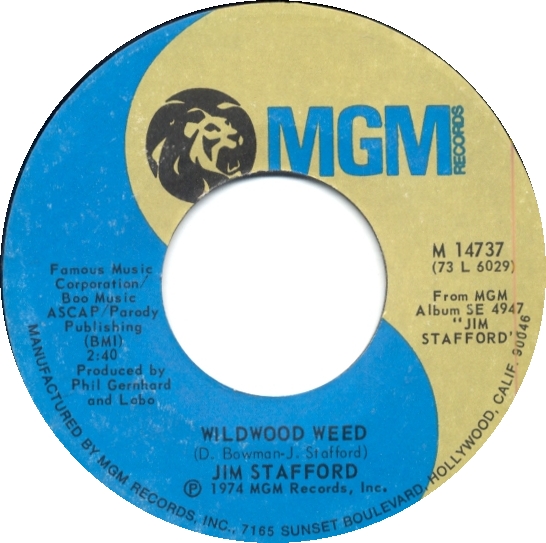
This song made me laugh as a kid. It’s about as corny as you can get but fun all the same. Jim Stafford had some novelty hits. His prime was 1973-1974. I had in my possession (from my sister) three of his hits. The Wildwood Weed, Swamp Witch, and his biggest hit, “Spiders and Snakes.”

It was a left-field slice of Southern-fried pop comedy that somehow crashed the charts in the middle of an era dominated by singer-songwriters and serious rock men. Now let’s be clear: “Wildwood Weed” isn’t a song so much as a story, a little slice of country funk narrated by a hayseed philosopher who sounds like he might’ve just rolled off the porch with a mason jar in hand. Over a shuffling, easygoing country-blues vamp, Stafford drawls out the tale of two good ol’ boys who discover a mysterious plant growing in the fields. They dry it, smoke it, and before long they’re laughing, dancing, and finding themselves “sittin’ on that sack of seeds.”

Jim has a sense of humor.

It didn’t take a genius to know what Wildwood Weed was about but the first time I heard it as an eight-year-old, an older neighbor had to tell me about it. It peaked at #7 on the Billboard charts. It actually made it to #57 on the country charts, which surprises me, knowing how conservative country was at that time.

Wildwood Weed
Jim Stafford

The wildwood flower grew wild on the farm,
And we never knowed what it was called.
Some said it was a flower and some said it was weed,
I never gave it much thought ……
One day I was out there talking to my brother,
Reached down for a weed to chew on,
Things got fuzzy and things got blurry,
And then everything was gone!
Didn’t know what happened,
But I knew it beat the hell out of sniffin’ burlap.

I come to and my brother was there,
And he said, What’s wrong with your eyes?
I said, I don’t know, I was chewing on a weed.
He said, Let me give it a try.
We spent the rest of that day and most of that night,
Trying to find my brother, Bill.
Caught up with him, ’bout six o’clock the next morning,
Naked, swinging on the wind mill!
He said he flew up there.
I had to fly up there and bring him down,
He was about half crazy …..

The very next day we picked a bunch of them weeds,
And put ’em in the sun to dry.
Then we mashed ’em up and chopped ’em up,
And put ’em in the corncob pipe.
Smokin’ that wildwood flower got to be a habit,
We didn’t see no harm.
We thought it was kind of handy,
Take a trip and never leave the farm!

All good things gotta come to an end,
And it’s the same with the wildwood weed.
One day this feller from Washington came by,
And he spied it and turned white as a sheet.
Then they dug and they burned,
And they burned and they dug,
And they killed all our cute little weeds.
Then they drove away,
We just smiled and waved ……….
Sittin’ there on that sack of seeds!

Y’all come back now, hear?

Glen Campbell – Rhinestone Cowboy

I remember this song all over the place when I was 8 years old. Probably one of the first songs I remember blanketing radio and TV at the same time. Glen Campbell sang this song written by  Larry Weiss and it was playing on top 40 radio and country alike. It peaked at #1 in the Billboard 100, #1 in the US Billboard Hot Country Singles, #1 in Canada and #4 in the UK.

As big as the song was…I never hear it much now.

From Songfacts

For Campbell, this was a very important song, and one he would call “maybe the best song I’ve ever sung.” It came at a time when his career had gone flat: His popular TV show had been canceled, acting gigs dried up, and he hadn’t had a hit since 1971. The story of the faded star who perseveres in the song held a lot of meaning for Campbell.
This sold over 4 million units and hit #1 on the Hot 100, Country, and Adult Contemporary charts in the summer of 1975, becoming the first song since “Big Bad John” by Jimmy Dean to reach the apex of all three charts. “Rhinestone Cowboy” gained three Grammy nominations and was the Country Music Association’s Song of the Year for 1976. In 1977, the song earned Weiss the Nashville Songwriters’ Association International’s Songwriter of the Year award.

“Rhinestone Cowboy”

I’ve been walkin’ these streets so long
Singin’ the same old song
I know every crack in these dirty sidewalks of Broadway
Where hustle’s the name of the game
And nice guys get washed away like the snow and the rain
There’s been a load of compromisin’
On the road to my horizon
But I’m gonna be where the lights are shinin’ on meLike a rhinestone cowboy
Riding out on a horse in a star-spangled rodeo
Like a rhinestone cowboy
Getting cards and letters from people I don’t even know
And offers comin’ over the phone

Well, I really don’t mind the rain
And a smile can hide all the pain
But you’re down when you’re ridin’ the train
That’s takin’ the long way
And I dream of the things I’ll do
With a subway token and a dollar tucked inside my shoe
There’ll be a load of compromisin’
On the road to my horizon
But I’m gonna be where the lights are shinin’ on me

Like a rhinestone cowboy
Riding out on a horse in a star-spangled rodeo
Rhinestone cowboy
Gettin’ cards and letters from people I don’t even know
And offers comin’ over the phone

Like a rhinestone cowboy
Riding out on a horse in a star-spangled rodeo

Like a rhinestone cowboy
Gettin’ cards and letters from people I don’t even know….

Thoughts on Elton John in the 70s

Some people tend to forget how big Elton was back in the early to mid-seventies. The songs just kept coming one after another. I’ve been watching some seventies sitcoms and shows recently and there was Valerie Bertinelli on “One Day at a Time” dressed like Elton John. He was everywhere back then. Some today remember him only by Candle in the Wind…the 1997 version for Lady Diana.

It seemed that everything he touched turned to gold. He covered Pinball Wizard and Lucy in the Sky with Diamonds and turned them into hits…some people like those versions better than the originals.

Elton John was pop/rock but he had some Liberace elements in showmanship. The sparkling pianos and even a Donald Duck suit. Elton is a very good piano player, songwriter and performer…but I think it’s his voice that sets him apart. It was a combination of all but he had a style all his own.

Bernie Taupin and Elton wrote those great singles that kept coming year after year. He has had 9 number 1 hits, 27 top ten hits, and 67 songs in the top 100. 1971 – 1975 was my favorite period… some of the singles were Your Song, Levon, Tiny Dancer, Honey Cat, Rocket Man, Crocodile Rock, Daniel, Saturday Nights Alright for Fighting, Goodbye Yellow Brick Road, Candle in the Wind, Bennie and the Jets, Philadelphia Freedom, The Bitch is Back and Don’t Let The Sun Go Down on Me… this much success could fill up 5 different careers… hard to believe it happened in a four year period.

Bernie Taupin was just as important as Elton. They stopped writing together around 1977 and Elton’s output was not as successful. They started to work together again a little later and still had hits but that stretch in the early seventies would be impossible to match.

I did like some Elton John songs after the mid-seventies but in the eighties, many of his songs just didn’t have the quality of his earlier ones to me. One standout was a song about John Lennon called Empty Garden. It is one of my favorite songs about John Lennon.

I knew Elton by his singles but he released some huge albums. Goodbye Yellow Brick Road, Honky Château, Don’t Shoot Me I’m Only the Piano Player, Captain Fantastic and the Brown Dirt Cowboy, Caribou and the list goes on and on. This is a good piece on some of Elton’s top albums. 


Don Williams – Tulsa Time

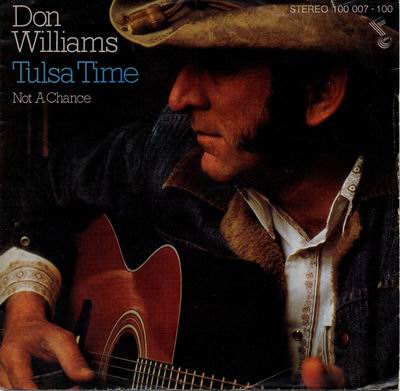
I met Don Williams many times. I can’t say I really knew the man well but he was as down to earth as you could get. When I was growing up he would mow the High School baseball field and the City Park fields where I live just to help out. He gave back to the community and always would be nice to anyone.

Tulsa Time was released in 1978 and peaked at #1 in the Billboard Hot Country Songs charts and #1 in Canada RPM Country Tracks. “Tulsa Time” was Williams’ eighth of 17 number ones. He had 45 top ten hits.

Eric Clapton and Pete Townshend were admirers of Don Williams and both covered his songs. Eric Clapton would cover this song and take it to #30 in the Billboard 100.

Tulsa Time was written by Chuck Flowers.
“I wrote ‘Tulsa Time’ in about a half an hour in a motel in Tulsa. There was a big snowstorm, and we had the night off because we couldn’t work. I wrote it while watching The Rockford Files [a dramedy private eye NBC series starring James Garner]. So, I played it for Don, and a few months later I played it for Eric. I never even made a demo or put it on tape or anything. They both just went and recorded it ‘cuz it’s so simple.”

“Tulsa Time”

I left Oklahoma, drivin’ in a Pontiac
Just about to lose my mind
I was goin’ to Arizona
Maybe on to California
Where the people all live so fine.

My baby said, I’z crazy
My mama called me lazy
I was gonna show ’em all this time
‘Cause you know I ain’t no fool
And I don’t need no more schoolin’
I was born to just walk the line.

Livin’ on Tulsa time
Well, you’ll know I been through it
When I set my watch back to it
Livin’ on Tulsa Time.

Well, there I was in Hollywood
Wishin’ I was doin’ good
Talkin’ on the telephone line
But they don’t need me in the movies
And nobody sings my songs
Guess, I’m just a wastin’ time.

Well, then I got to thinkin’
Man I’m really sinkin’
An I really had a flash this time
I had no business leavin’
An nobody would be grievin’
If I just went on back to Tulsa time.

Livin’ on Tulsa time
Gonna set my watch back to it
‘Cause you know I been through it
Livin’ on Tulsa time.

Livin’ on Tulsa time
Gonna set my watch back to it
‘Cause you know I been through
Livin’ on Tulsa time.

Al Kooper: Backstage Passes Backstabbing Bastards

This is an autobiography of Al Kooper. Al has worked with many people in the music industry. He was a songwriter, musician, producer, A&R man and everything in between.

His book is well written and Al uses humor all the way through.

A few of his career highlights are helping to form Blood, Sweat, and Tears, playing the organ on “Like a Rolling Stone” (although he didn’t know how to really play organ), organized the Super Sessions with Stephen Stills and Mike Bloomfield, found and signed a band while in Atlanta named Lynyrd Skynyrd. While in Atlanta he started a record label called “Sounds of the South” in conjunction with MCA records.

He goes over working with Lynyrd Skynyrd and how their first three albums were recorded and why they parted company. Another band that he signed was Mose Jones who was going to be his Beatles type group to counterpoint the Lynyrd Skynyrd Stones sound for his label. Mose Jones ended up being ignored my MCA.

There is so much musical history this man was involved in…he makes light of getting called Alice Cooper on many occasions.

In Al Kooper’s words 

Let’s clear the air.
This is not a book by or about Vincent Furnier (né Alice Cooper.) It is a book by and about Al Kooper. If you don’t know who Al Kooper is, that’s fine. But don’t let that stop you from perusing these eye-opening accounts of encounters with Bob Dylan, Jimi Hendrix, Gene Pitney, The Royal Teens, Bill Graham, Quincy Jones, Blood, Sweat & Tears, Mike Bloomfield, The Rolling Stones, Lynyrd Skynyrd, George Harrison, Miles Davis, The Tubes, Nils Lofgren, Stevie Ray Vaughan, and all the other wonderful people I’ve been fortunate enough to cross paths with over the last forty years.

What was really interesting to me is he shared the same manager (Stan Polley) as Badfinger and was able to get out of his clutches with at least some of his money intact. I picked the book up cheap and I really have enjoyed it. I would recommend this to music fans. Many funny stories and he is such a talented musician.

Another quote from Kooper on the Like A Rolling Stone Session… Tom Wilson was the producer who knew Kooper didn’t normally play the organ.

Thirty seconds into the second verse of the playback, Dylan motioned toward Tom Wilson. “Turn the organ up,” he ordered. “Hey, man,” Tom said, “that cat’s not an organ player.” Thanks, Tom. But Dylan wasn’t buying it: “Hey, now don’t tell me who’s an organ player and who’s not. Just turn the organ up.” He actually liked what he heard!

Al Kooper and Bob Dylan

alkooper bob.jpg

George Harrison, Ringo Starr, Barbara Bach, and Al Kooper

alkoopergeorgeharrison.jpg

Jimi Hendrix and Al Kooper

alkooper_jimihendrix.jpg

Al Kooper…he wanted to set the record straight

alkooperalice.png.

Ranking Led Zeppelin Albums #1 – #5

Led_Zeppelin_-_Led_Zeppelin_III.png

5. Led Zeppelin III – 1970

This album was a disappointment to some fans when it was released because it wasn’t as hard as the previous album. This record leaned heavy on acoustic and mixed with hard that Led Zeppelin IV would have to perfection. My favorite songs off this album are Tangerine, Immigrant Song and Since I’ve Been Loving You.

Tracklist

Immigrant Song
Friends
Celebration Day
Since I’ve Been Loving You
Out On The Tiles
Gallows Pole
Tangerine
That’s The Way
Bron-Y-Aur Stomp
Hats Off To (Roy) Harper


Houses_of_the_Holy.jpg

4. Houses of the Holy – 1973

The band was determined not to repeat themselves after the success of IV. This album is diverse with songs Over The Hills and Far Away, The Ocean, The Rain Song and the funk of The Crunge. This album was a perfect gateway into their next album.

Tracklist

The Song Remains The Same
The Rain Song
Over The Hills And Far Away
The Crunge
Dancing Days
D’yer Mak’er
No Quarter
The Ocean

Physical_Graffiti.jpg

3. Physical Graffiti – 1975

It’s big, bloated, self indulgent…and great. This album had a big variety with the classic rock Kasmir (possibly their best song), the funky Trampled Under Foot and a song that would have fit on a Stones album…Night Flight.

Tracklist
Custard Pie
The Rover
In My Time Of Dying
Houses Of The Holy
Trampled Under Foot
Kashmir
In The Light
Bron-Yr-Aur
Down By The Seaside
Ten Years Gone
Night Flight
The Wanton Song
Boogie With Stu
Black Country Woman
Sick Again


Led_Zeppelin II.jpg

2. Led Zeppelin II – 1969

Nicknamed the “Brown Bomber” this album is explosive. The album was recorded in sections while on tour. It has a live feel to it. Classic songs such as Heartbreaker, Whole Lotta Love, Livin’ Lovin’ Maid, and the album never lets up. After this album, the band starts to change into more of their famous light heavy feel.


Tracklist

Whole Lotta Love
What Is And What Should Never Be
The Lemon Song
Thank You
Heartbreaker
Livin’ Lovin’ Maid (She’s Just A Woman)
Ramble On
Moby Dick
Bring It On Home


Led_Zeppelin_IV.jpg

1. Led Zeppelin IV – 1971

No suspense here. This album is nearly perfect. The light and heavy were perfectly balanced. If I never hear Stairway to Heaven again I’ll be happy but I could listen to just the drums to When The Levee Breaks… all day. A Great album at the peak of their career.

Tracklist 

Black Dog
Rock And Roll
The Battle Of Evermore
Stairway To Heaven
Misty Mountain Hop
Four Sticks
Going To California
When The Levee Breaks

Ranking Led Zeppelin Albums #6 – #10

Led Zeppelin has produced some of the best albums in the history of rock. I will include the original live album of “The Song Remains the Same”… Not the remastered version of that one. Below is the way I would rank them. Ten albums in all including Coda released after John Bonham died. 1-5 coming tomorrow.


The_Song_Remains_the_Same.jpg

10. The Song Remains The Same – 1976

This was recorded at the end of their 1973 American tour but was not released until 1976. They sound tired. It’s a good history marker looking back, but far from their best live performance. Not until long after the band broke up though nothing was officially released except this. I still prefer this over the movie of the same name.

Tracklist

Rock And Roll
Celebration Day
The Song Remains The Same
Rain Song
Dazed And Confused
No Quarter
Stairway To Heaven
Moby Dick
Whole Lotta Love


Coda.jpg

9.  Coda – 1982

The album spans the band’s entire career, from live performances just after their debut album to unused songs from In Through the Out Door sessions. My favorites are Ozone Baby, Wearing and Tearing and Walter’s Walk. Personally, I like this album more than Presence but the playing is not as tight.

Tracklist

We’re Gonna Groove
Poor Tom
I Can’t Quit You Baby
Walter’s Walk
Ozone Baby
Darlene
Bonzo’s Montreaux
Wearing and Tearing

Presence.jpg

8.  Presence – 1976

This album was made when Robert Plant was recuperating from injuries he and his wife suffered in a car wreck. He was singing from a wheelchair. Jimmy Page was keeping the band busy recording this since they could not tour. The playing on this album is great and tight but the songs are not as strong as their predecessors. After Physical Graffiti, this one paled in comparison. Technically this could be one of Jimmy Pages best performance on an album. It was recorded and mixed in 18 days.

Tracklist

Achilles Last Stand
For Your Life
Royal Orleans
Nobody’s Fault But Mine
Candy Store Rock
Hots On For Nowhere
Tea For One

In_Through_the_Out_Door.jpg

7.  In Through The Out Door – 1979

It was not the typical Led Zeppelin album. Page and Bonham were having substance difficulties during this album. Plant and Jones wrote much of the album and Jones used his new synthesizer. This was a change in direction and some Zeppelin fans hated it but it did foreshadow the synthesizer coming in the eighties. I liked a lot of songs on this album like In The Evening, Fool In the Rain, All of My Love and the fun Hot Dog.

Tracklist

In the Evening
South Bound Suarez
Fool In the Rain
Hot Dog
Carouselambra
All My Love
I’m Gonna Crawl

Led_Zeppelin.png

6.  Led Zeppelin – 1969

One of the best debut albums of any band. The classic Dazed and Confused, Good Times Bad Times, etc… The album went to #7 in the Billboard 100, #6 in the UK and #11 in Canada. Some people wonder why the band didn’t like critics…this is what Rolling Stone said about the album.

The latest of the British blues groups so conceived offers little that its twin, the Jeff Beck Group, didn’t say as well or better three months ago, and the excesses of the Beck group’s Truth album (most notably its self-indulgence and restrictedness), are fully in evidence on Led Zeppelin’s debut album.

In their willingness to waste their considerable talent on unworthy material the Zeppelin has produced an album which is sadly reminiscent of Truth. Like the Beck group they are also perfectly willing to make themselves a two- (or, more accurately, one-a-half) man show. It would seem that, if they’re to help fill the void created by the demise of Cream, they will have to find a producer (and editor) and some material worthy of their collective attention.”

The album is hard-hitting as it is fused Rock and Blues…it was very heavy and had a great sonic quality…

Tracklist

Good Times Bad Times
Babe I’m Gonna Leave You
You Shook Me
Dazed And Confused
Your Time Is Gonna Come
Black Mountain Side
Communication Breakdown
I Can’t Quit You Baby
How Many More Times

Hall and Oats – Rich Girl

I remember watching “Cheech and Chong’s Next Movie” and hearing this song…this song was their first number 1 hit on the Billboard 100 and it peaked at #5 in Canada in 1977. This song and Sara Smile are my favorites by them.

This song had a strange connection to the Son of Sam… from songfacts.

Daryl Hall was shocked to find out that the infamous serial killer David “Son Of Sam”

Berkowitz claimed he was inspired to murder by this song. It is unlikely that this song actually compelled Berkowitz to kill, as it was released after he started his killing spree, and Berkowitz cited many influences, including his neighbor’s dog, when asked why he killed. Nonetheless, it was very disturbing for Hall and Oates to have their song associated with Berkowitz, and they made reference to this in their 1980 song “Diddy Doo Wop (I Hear the Voices)” from their Voices album in the lyrics: “Charlie liked The Beatles, Sam he liked Rich Girl.”

“Rich Girl”

You’re a rich girl, and you’ve gone too far
‘Cause you know it don’t matter anyway
You can rely on the old man’s money
It’s a bitch girl but it’s gone too far
‘Cause you know it don’t matter anyway
Say money but it won’t get you too far
Get you too far

Don’t you know, don’t you know
That it’s wrong to take what is given you
So far gone, on your own
You can get along if you try to be strong
But you’ll never be strong ’cause

You’re a rich girl, and you’ve gone too far
‘Cause you know it don’t matter anyway
You can rely on the old man’s money
It’s a bitch girl and it’s gone too far
‘Cause you know it don’t matter anyway
Say money but it won’t get you too far
Get you too far

High and dry, out of the rain
It’s so easy to hurt others when you can’t feel pain
And don’t you know that a love can’t grow
‘Cause there’s too much to give, ’cause you’d rather live
For the thrill of it all, oh

You’re a rich girl, and you’ve gone too far
‘Cause you know it don’t matter anyway
You can rely on the old man’s money
It’s a bitch girl and it’s gone too far
‘Cause you know it don’t matter anyway
Say money but it won’t get you too far
Get you too far

And you say
You can rely on the old man’s money
You’re a rich girl, a rich girl
Oh, you’re a rich, rich girl yeah
Say money but it won’t get you too far
Oh, get ya too far

John Lennon – Rock and Roll Album

This album originated because of a lawsuit against John Lennon. On ‘Come Together’, John sings, “Here come old flattop”, a line that was originally in Chuck Berry’s 1956 hit, ‘You Can’t Catch Me’. When it was used, music publisher Morris Levy filed a lawsuit for copyright infringement against John.

To settle out of court John agreed to cover three songs that Morris Levy had publishing rights on. John started to work on this when he separated from Yoko in the early seventies. John picked songs that influenced him before the Beatles.

Phil Spector agreed to produce the album and the album started in October of 1973.  The sessions dragged on. Phil Spector, as he often does, acted erratically during the sessions which included shooting a gun through the studio ceiling… Phil then disappeared with the tapes. Lennon could not get the tapes back. After that Spector was involved in a car wreck in March of 74 and was in a coma.

This should have been an easy thing to do… record some covers right? No, John couldn’t get the tapes back so he started on an album of mostly original material called Walls and Bridges which would include the #1 hit “Whatever Gets You Thru the Night.” He would come back to the covers album afterward.

Now Lennon was getting sued by Levy because Levy already expected the Rock and Roll album to be out. Lennon explained what was going on and John did record one of the three songs on Walls and Bridges called Ya Ya with his son Julian.

John finally got the tapes back from Spector and started the album with the same musicians. He gave Levy some demos to show him the progress that was being made…Levy turns around and has the demos pressed and released them as a record called “Roots: John Lennon Sings the Great Rock & Roll Hits.” They were sold on TV for 3 days before EMI filed an injunction and stopped the record.

Lennon_Roots.jpg

Lennon then finished the real album in 5 days with John himself producing. It was released in February 1975. Only four songs are used on the album that was produced with Spector. I will say this about the record. This isn’t just some star singing old hits…you can tell John loved the songs and treated all of them with reverence.

The album made it to #6 in the Billboard 200, #6 in the UK, and #5 in Canada. Stand By Me made it to #20 in the Billboard 100. John Lennon did not make another album until Double Fantasy in 1980.

The cover features a young John Lennon while in Hamburg.

I’m taking nothing away from the Ben E King’s version of Stand By Me because I love it… but for me, this is my go-to version. Lennon’s voice cuts through the song like a knife.

Led Zeppelin’s Ascent and Descent

Led Zeppelin ruled the hard rock landscape of the 1970s. Critics didn’t like them and they didn’t like the press. They sold tons of records and their concerts were instant sellouts. They spawned a lot of bad imitators in their wake. By 1975 things started to go wrong for the band and soon by the start of the new decade they were done.

Led Zeppelin formed in 1968 while Jimmy Page was still with the Yardbirds but with only bass player Chris Dreja and he still left in the group. To fill other gig obligations Page formed the New Yardbirds with Robert Plant and his recommendation for drummer John Bonham. Chris Dreja dropped out so studio bassist John Paul Jones filled the bass position.

After a change of name, they were off and running. They made their first self-titled album and signed a huge deal with Atlantic Records. The album had bad reviews but sold very well. The band made their reputation off of live performances.

Their manager at this point was Peter Grant and with him made their mark on the industry. Peter made sure his band made money and no one would stand in the way. He told promoters the band was to get 90 percent of the gate…which was unheard of at the time. The promoters gave in because they would rather have ten percent of that than 100 percent of nothing.

The musicians were great. Robert Plant could sing and wail like no other. John Bonham was a groove extraordinaire who had his own style. John Paul Jones was a great underrated bass and keyboard player. Jimmy Page was one of the best studio guitarists there was at the time. Similar to The Who…it was like a Rock All-Star lineup.

Zeppelin’s first three albums were building up to the fourth. You can see it build with the first and second album’s electric hard edge to the third where the acoustic is introduced more and a more folk side is shown. It all peaked with the classic 1971 Led Zeppelin IV with the perfect combination of the two.

Songs that came off that album are classics like Stairway to Heaven, Black Dog, Four Sticks, Rock and Roll, Going to California, When the Levee Breaks, The Battle of Evermore, and my favorite Misty Mountain Hop. This album and the Who’s Who’s Next came out within months of each other and both of these albums are the foundation of classic rock radio.

More great albums were to follow like Houses of the Holy and Physical Graffiti though none would match the fourth album. After Physical Graffiti things started to go south for Zeppelin.

Their reputation kept growing and it was not all about their music. Wild stories about groupies, Peter Grant stopping at nothing if he perceived an injustice toward his band and there was the Jimmy Page strong occult interest that followed the band like a dark cloud. John Bonham was described as a nice family man until he started to drink. When drunk he would turn into “The Beast” (as bandmates called him) and could terrorize anyone near the band. They did a series of concerts in 1975 at Earl’s Court and after that The Zeppelin started to descend.

In 1975 Robert Plant and his wife were in a serious car wreck and it would take Plant a few months to recuperate and soon the band would record the album Presence with Plant still not able to walk without assistance. The band would not tour in 1976 because of Plants injuries but started an American tour beginning in April 1977.

When Zeppelin started in 1968 critics didn’t like them and Zeppelin didn’t trust the press. Critics thought their first two albums were the work of blues-ripoff artists. Led Zeppelin never forgot that. This was one set of rules in 1977 shared with the press covering the band.

1. Never talk to anyone in the band unless they first talk to you.
1a. Do not make any sort of eye contact with John Bonham. This is for your own safety.
2. Do not talk to Peter Grant or [Tour Manager] Richard Cole — for any reason.
3. Keep your cassette player turned off at all times unless conducting an interview.
4. Never ask questions about anything other than music.
5. Most importantly, understand this — the band will read what is written about them.

The tour was beset with problems with rowdy crowds, Pages increasing heroin intake, and Bonham’s drinking. Peter Grant had hired a British gangster named John Bindon to handle security. Zeppelin’s security crew and John Bonham attacked one of promoter’s Bill Graham’s staff after Grants 11-year-old son was pushed down… After that incident in Oakland, they flew to New Orleans for the next show and Plant received a phone call from back home informing him that his five-year-old son Karac died from a stomach infection. The entire tour was immediately canceled as Plant flew home to be with his family. The last Oakland concert was the last time they played in America.

In 1979 they would get back together and release “In Through the Out Door“, a softer more synthesizer-based album. Plant and Jones did the majority of the writing on the album. Zeppelin did two great shows at Knebworth in 1979 and a short European tour in 1980. While rehearsing for the American tour John Bonham died of asphyxiation in his sleep after a night of heavy drinking in Page’s home on September 25, 1980. Unlike the Who, who continued on without their one of a kind drummer, Led Zeppelin was no more.

The band regrouped three times for one-off concerts. Once in 1985 for Live Aid with two drummers (Phil Collins and Tony Thompson )and in 1988 for the Atlantic Records 40th Anniversary with Jason Bonham on drums. Neither of those turned out too well.
They did regroup in 2007 for a  concert with Jason Bonham drumming. This time they sounded comparable to their younger days and their fans clamored for a reunion and tour…Plant all but ruled that out.

I like most of their albums and consider them one of the biggest rock bands ever…They have made some of the best albums in Rock history. I just never got into them like The Who, Beatles, Stones, Cream, and Kinks. The more I learn about them the more distant they get. Their mystique and image became larger than their music at times.

I’m going to attempt to rank 10 of Led Zeppelin’s albums coming up this week.

Led Zeppelin 02.jpg


Pattie Boyd…The Muse

Pattie Boyd is a beautiful woman who was the inspiration for many great songs. She was married to George Harrison and then to Eric Clapton.  The three most well-known songs were Something (Beatles), Layla (Derek and the Dominos…Eric Clapton) and Wonderful Tonight. 
Other songs include

I Need You (Beatles)
She’s Waiting (Eric Clapton)
For You Blue (Beatles)
It’s All Too Much (Beatles)
Why Does Love Got To Be So Sad ((Derek and the Dominos…Eric Clapton)
So Sad (George Harrison)
If I Needed Someone (Beatles)

pattie2.jpg

She worked in London, New York, and Paris, side by side with the world’s top models. Boyd appeared in the UK and Italian editions of Vogue magazine, as well as in several commercials. George Harrison met Pattie while filming “A Hard Day’s Night” in 1964 and they married in 1966. George and Patti were a hip couple in 1960’s Swinging London.

pattie hdn.jpgpatgeor.jpg

By the early seventies, George and Pattie were having problems and it didn’t help that Eric Clapton was pursuing Pattie and that is when Layla was written.

In 1974 Pattie ran off with Eric with George’s blessings. George and Eric remained friends and would visit and work with each other in the future. A quote from Pattie “The first Christmas after I’d left him, in 1974, just as Eric and I were sitting down to lunch, George burst in, uninvited,” Boyd says in her autobiography. “He had some wine and Christmas pudding with us. I couldn’t believe how friendly he and Eric were towards each other.” Pattie and George’s divorce was final in 1977 and George married Olivia Trinidad Arias. They would stay married until George’s death.

George stayed friends with Pattie till the end.

pattie and george.jpg

Pattie and Eric were married in 1979. At the reception, Paul, George, and Ringo played together but there is confusion on why John Lennon was not invited other than he lived in America at the time. Later it was reported that John did say he would have loved to be there.

pattie and eric.jpg

The marriage was a painful one for both. Clapton had a drinking problem through most of the marriage. Pattie left Eric in 1986 after Lory Del Santo had Clapton’s child. Ironically, it was Clapton who once said that his marriage had suffered because he and Boyd couldn’t have children. Practicing with others was clearly not a solution.

Pattie Boyd’s autobiography is an interesting read. 

pattie book.jpg

Pattie would say that being married during the Beatles years was not an easy thing. If she went to the concerts she and the other wives and girlfriends would sometimes be chased, kicked, and pushed by jealous fans.

This is part of an interview with Taylor Swift interviewing Pattie Boyd. Read the full interview here.

Taylor Swift: I remember seeing a picture of the house, and Mick Jagger and Marianne Faithfull had spray-painted their names on the wall with the words mick and marianne were here. I read a book about Richard Burton and Elizabeth Taylor recently, and how there was this crazy frenzy surrounding them. In the book, Elizabeth is quoted as saying, “It could be worse, we could be the Beatles.” You are one of the only people who can say they experienced what Beatlemania was like from the inside. How did that feel for you?

Pattie BoydIn my first experience, I found it absolutely terrifying. I got to see the Beatles play at a theater in London, and George told me that I should leave with my friends before the last number. So before the last song, we got up from our seats and walked toward the nearest exit door, and there were these girls behind me. They followed us out, and they were kicking me and pulling my hair and pushing us all the way down this long passageway.


Tootsie Roll Pop Commercial

The commercial came out in 1968 – 1970 and I still see it every once in a while. The spot leaves us with a puzzling question…How many licks does it take to get to the Tootsie Roll center of a Tootsie Pop?

The original commercial was 60 seconds long and that one is not seen as much…it was edited down to 15 seconds and all we see is the boy and  Mr. Owl…but the original had more….here is the script…

Boy: Mr. Cow…
Mr. Cow: Yeeeeesss?
Boy: How many licks does it take to get to the Tootsie Roll center of a Tootsie Pop?
Mr. Cow: I don’t know, I always end up biting. Ask Mr. Fox, for he’s much clever than I.
Boy: Mr. Fox, how many licks does it take to get to the Tootsie Roll center of a Tootsie Pop?
Mr. Fox: Why don’t you ask Mr. Turtle, for he’s been around a lot longer than I? Me, hee hee hee, I bite.
Boy: Mr. Turtle, how many licks does it take to get to the Tootsie Roll center of a Tootsie Pop?
Mr. Turtle: I’ve never even made it without biting. Ask Mr. Owl, for he is the wisest of us all.
Boy: Mr. Owl, how many licks does it take to get to the Tootsie Roll center of a Tootsie Pop?
Mr. Owl: A good question. Let’s find out. A One… A.two-HOO…A three…
(crunch sound effect)
Mr. Owl: A Three!
Boy: If there’s anything I can’t stand, it’s a smart owl.
Narrator: How many licks does it take to get to the Tootsie Roll center of a Tootsie Pop?
(crunch sound effect)
Narrator: The world may never know.

After the commercial, Mr. Owl became the mascot for Tootsie Roll Pops, appearing in marketing campaigns and on the packaging.

Researchers at New York University and Florida State University conducted a study in 2015 to find out how many times one would need to lick a Tootsie Pop to reach the center. Their findings revealed that 997 licks are needed to get there… Mr. Owl was off by 994!
However…many other colleges tested it with different results…I guess we will never know the answer…and I thought Bigfoot was hard to prove. 

The original 60 second commercial with Mr. Cow, Mr, Fox, Mr. Turtle, and Mr. Owl.

My favorite Tootsie Roll commercial was this one from 1977

The world looks mighty good to me

Cause Tootsie Rolls are all I see

Whatever it is I think I see

Becomes a Tootsie Roll to me

Tootsie Roll, how I love your chocolatey chew

Tootsie Roll, I think I’m in love with you

Whatever it is I think I see  Becomes a Tootsie Roll to me

The Skylab is Falling!

In 1979 I was twelve and hearing on the news that a space workstation named Skylab was falling to earth. It was exciting to me…I was hoping that a piece of it would fall near so I could touch something that had been flying through space.

That didn’t happen because unless I was Australian I was not going to see any debris. In school, our science teacher went over the event and I do remember people wearing Skylab t-shirts, hats, and buttons.

Watching the news…there were some people panicking and…some people partying. This is from Newsweek in 1979

In various parts of the country, wags painted X’s on their neighbors’ roofs or sported T-shirts with targets on the back. Entrepreneurs sold plastic helmets and Skylab survival kits compete with bags for collecting stray parts of the spacecraft and letters suing NASA for damages. “I don’t know how much we’re making, but we’re having fun,” said Steven Danzig, 25, of Bloomington, Ind., who sold more than 20,000 such kits. In Washington, a bar called Mr. Smith’s sold a concoction dubbed the Chicken Little Special.

Around the U.S., there were Skylab parties to coincide with the crash, and betting pools on precisely when or where the debris would come streaking back to earth.

skylabshirt.jpgskylabhelmet.jpg

Skylab was designed to go up but not come back down. It was launched in 1973 and was occupied for almost 24 weeks. There was a lot of time and money spent on how to get it up there but not much time on how to get it down. It only had a 9-year life span, to begin with. In 1979 it was clear that Skylab was rapidly descending orbit.

On July 12, 1979, Skylab came back to earth in the Indian Ocean and in Western Australia. No one was injured by the falling debris.

The San Francisco Examiner offered a $10,000 reward for anyone bringing a part of Skylab to their office. They knew it wasn’t going to hit America so it was a safe bet they would not have to pay…but Stan Thornton…an Australian truck driver heard about the reward, grabbed a piece of debris and jumped on a plane to San Francisco and got the reward.

stan thornton.jpg
Stan Thornton collecting his $10.000

skylabadvertistment.jpg

skylabfalling.png


Alice Cooper – Under My Wheels

This song was off the Killer album. It peaked at #59 in the Billboard 100. One of my favorites of Alice Cooper. The song wasn’t a giant success but it has remained in Alice’s set since it was released in 1971.

From Songfacts. 

This track was written by the group’s guitarist Michael Bruce and bass player Dennis Dunaway along with producer Bob Ezrin. Bruce and Dunaway also co-wrote “School’s Out” and “I’m Eighteen.”

Dennis Dunaway about writing the song.

This was another song that I wrote. I remember singing the song to Glen Buxton about this guy who’s just bought a brand new car and he’s going over to pick up his girlfriend and take her to the movies. Glen was like, ‘We don’t do girl songs!’ And I was like, ‘No, the guy runs over the girl.’ So he said, ‘Oh, OK.’ Ha ha! Anyway, Under My Wheels is about a guy who accidentally runs over his girlfriend, who he’s trying to impress with his new car. It was a fairly decent hit in America, and we also plugged it in Britain. We did a Killer tour over there when the single had just been released.


“Under My Wheels”

The telephone is ringing you got me on the run I’m driving in my car now anticipating fun
I’m driving right up to you babe I guess that you couldn’t see yeah yeah 
But you were under my wheels why don’t you let me be
’cause when you call me on the telephone saying take me to the show
And then I say honey I just can’t go old lady’s sick and I can’t leave her home
The telephone is ringing you got me on the run I’m driving in my car now
I got you under my wheels I got you under my wheels I got you under my wheels 
Got you under my wheels yeah yeah I got you under my wheels
Aah the telephone is ringing you got me on the run I’m driving in my car now anticipating fun
I’m driving right up to you babe I guess that you couldn’t see yeah yeah
But you were under my wheels why don’t you let me be
Yeah yeah got you under my wheels yeah yeah I got you under my wheels 
I got you under my wheels got you got you got you got you
Under my wheels got you under my wheels wheels wheels wheels

PONG

I had board games when I was a kid like Monopoly, Break the Ice, Sorry, Trouble (with the new and improved the Pop -O- Matic Bubble!) and Pay Day. Board games were a part of life when friends came over or at family events. We would either have fun or a fight over the games.

In 1977 that I got my first video game. That would be Pong. I loved it and spent hours playing the version of paddling the ball against the wall when a friend was not around to play. This was a new concept entirely to plug this console into our Curtis Mathes television and start playing table tennis on the TV screen.

This didn’t stop the board games, but it did mark a change that was coming. In the next couple of years, I would go to the “Pizza Hangout” (a pizza place where the kids hung out in our small town) and play Space Invaders, Asteroids, and Defender after school with friends. By the 80s, video games were everywhere…and this simple black and white digital ping-pong game helped push it along.

Pong was invented by Nolan Bushnell and Ted Dabney who worked at Atari. Pong was first commercially released in 1972. It was a black and white screen with paddles and the objective was pretty clear… You would have to go to an arcade to play it.

Atari released Home Pong in a limited release in 1975, which you could get through Sears. It sold around 150,000 units that Christmas season.

Because of the success, other companies came out with consoles. Magnavox rereleased their Odyssey, also Coleco, and soon Nintendo.