Clackers

Clackers or… death on a string came out in the 1960s. They were also called Ker-Bangers, Klackers, Click-Clacks, Klik Klaks, Klappers, and Zonkers.

I remember a kid giving me his Clackers. The object I guess was swinging them up and down until they hit each other and made a “clack” sound. The sound I got the most was a thud sound with plastic hitting my skin. They were also known to shatter and the pieces fly in all different directions.

They were similar to Bolas…a weapon used by cowboys to throw at cattle or game to wrap around their legs…sometimes breaking them. Yep…lets redesign this and give it to kids.

I never minded somewhat dangerous toys but I didn’t get too much pleasure out of these.

The toy was recalled in 1985

https://www.cpsc.gov/Recalls/1985/dangerous-toys-seized-by-us-marshal-in-phoenix


ELO – Telephone Line

I could pick about any ELO song and do fine. Jeff Lynne is one of the best pop/rock songwriters. In my opinion, he can write super catchy songs without being sugary. Telephone Line peaked at #8 in the Billboard 100, #7 in the UK and #1 in Canada in 1977.

Lynne once said that ELO will “Pick up where ‘I Am the Walrus’ left off.”

http://www.jefflynnesongs.com/telephoneline/

Telephone Line was originally recorded at Musicland Studios in Munich, Germany during July of 1976. This recording was for the backing track only. The orchestra was recorded later at De Lane Lea Studios, Wembley, England. Just before release, other minor edits (including the muted telephone intro) were done at Cherokee Studios in Los Angeles, California, USA. The early working title was Bad Salad Telephone (a play on the term “sad ballad”), so it appears that the telephone theme was an early concept for the song.

Telephone Effects: The telephone intro for the song has drawn a lot of attention over the years. There are two notable things about it. First, the ringback tone heard (as one would hear when waiting for the line to pick up) is a North American ringback tone which is quite distinctive from that heard in the U.K. at the time. The band was having much greater success in America at the time and this inspired them to use the North American sound rather than the British sound. To get the sound just right, the band called to an office in America in when they knew no one would answer. It was likely to have been the Jet Records office in California because the time zones from England or Germany to America would have likely meant the offices were closed when the call was made. The band did not simply record the tone and insert that into the record as has been stated in some interviews, but rather they studied the sounds and then recreated them on synthesizer. If one listens closely, they are clearly not a match.

The other interesting bit about the intro is the muted, mono telephone sound, as if the listener is listening through the telephone to the song’s intro. This was a very late addition to the song. The recording was completed and Jeff was bringing the tapes from England to California when he got the idea to add the effect to the song. So it was in Cherokee Studios in Los Angeles that engineers Duane Scott and Kevin Gray were instructed to manually add the effect to the completed stereo master. The song plays normally until the very first vocal line of the first verse when the mono, listening-on-the-telephone effect cuts in. This continues, along with the ringback tone, until the “lonely, lonely, lonely, lonely, lonely nights” line when the full stereo version of the song is slowly phased in and the ringback stops. In addition, the ringback tone is again heard mid-song, in the short bridge following the first chorus and before the third verse. In the alternate vocal version heard on the 2007 A New World Record remaster, which has a non-fading end, the ringback tone is heard yet again as the last notes of the song are waning.

Telephone Line

Hello. How are you?
Have you been alright through all those lonely lonely lonely lonely lonely nights?
That’s what I’d say.
I’d tell you everything, if you’d pick up that telephone.

Hey. How you feeling?
Are you still the same?
Don’t you realize the things we did we did were all for real? Not a dream.
I just can’t believe they’ve all faded out of view.

Blue days, black nights

I look into the sky
The love you need ain’t gonna see you through.
And I wonder why
The little things you planned ain’t coming true.

Telephone line, give me some time, I’m living in twilight

O.K. So, no one’s answering,
Well can’t you just let it ring a little longer longer longer
I’ll just sit tight, through the shadows of the night
Let it ring for evermore.

Blue days, black nights

I look into the sky
The love you need ain’t gonna see you through.
And I wonder why
The little things you planned ain’t coming true.

Telephone line, give me some time, I’m living in twilight

Telephone line, give me some time, I’m living in twilight


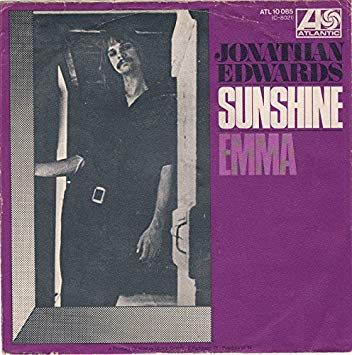
Jonathan Edwards – Sunshine

Always loved this song. Edwards sings this song like he means every syllable. This song was written by Edwards and peaked at #4 in the Billboard 100. Sunshine was off of Jonathan’s self-titled debut album in 1971. This would be Edwards only top forty hit.

A song that fit the times and the counterculture perfectly with a Us vs Them mentality.

From Songfacts.

Jonathan explained

“I just went, ‘How much does it cost? I’ll buy it.’ I was talking about freedom and talking about authority, my constant questioning of authority. ‘How much does it cost? I’ll buy it? Time is all we’ve lost. I’ll try it. He can’t even run his own life, I’ll be damned if he’ll run mine.’ That just came out as I was playing the song for these people.”

When he performs live, Edwards usually ends the first of his two sets with this song. “I often say, and it’s true, that if I had never done another song in my life, I’ll be happy to have come and gone with that,” he told us. “It was an anthem to many people and it helped a lot of people through Vietnam. It helped a lot of people through the drug culture of the last part of the ’60s and the early ’70s. It helped a lot of people cope with a lot of things that were going on during those tumultuous years. And I feel very proud to have done that and very happy with my contribution to our culture.”

Edwards performed this song at the Mayday protests on May 2, 1971. With the slogan, “If the government will not stop the war, we will stop the government,” the demonstration was organized by a group called the Mayday Tribe, with the goal of shutting down the government by blocking off key areas in Washington, DC. When the protests started on May 1, the government had thousands of troops ready and made mass arrests, which carried into the next day when Edwards played at the Washington Monument. “The sun was coming up and the National Guard was arresting people for protesting, for being on the grounds of the Washington Monument,” he recalled. “It was my turn to play and I just started playing that song. We got to the end and my bass player and I looked at each other and we went, ‘Let’s just start it over again.’ So we just kept playing that song. Because there’s no better song for the soundtrack of that movie. It had just come out. Some people had heard it, some hadn’t, but everyone heard it that morning, including the National Guard.”


Sunshine

Sunshine go away today, I don’t feel much like dancing
Some man’s come he’s trying to run my life, don’t know what he’s asking
When he tells me I better get in line, can’t hear what he’s saying
When I grow up, I’m gonna make him mine, these ain’t dues I been paying

How much does it cost? 
I’ll buy it! 
The time is all we’ve lost
I’ll try it!
He can’t even run his own life, 
I’ll be damned if he’ll run mine–sunshine

Sunshine, go away today, I don’t feel much like dancing
Some man’s come he’s trying to run my life, don’t know what he’s asking
Working starts to make me wonder where fruits of what I do are going
When he says in love and war all is fair, he’s got cards he ain’t showing

How much does it cost? 
I’ll buy it! 
The time is all we’ve lost–I’ll try it!
He can’t even run his own life, 
I’ll be damned if he’ll run mine–sunshine

Sunshine, come on back another day, 
I promise you I’ll be singing
This old world, she’s gonna turn around, 
brand new bells will be ringing

When Waterbeds were cool

I had a waterbed in the early 80s as a young teen. I always liked it and thought it was comfortable. Two things I didn’t like about it was… if there was a leak you would not know until 2:30 am and on a school night…always. If the heater was either turned down or went out…you would wake up as a human popsicle at…you guessed it… 2:30 am. Nothing ever happened to it at noon on a Saturday.

in the early 1800s. Scottish physician Dr. Neil Arnott devised a water-filled bed to prevent bedsores in invalids.

In 1873, Sir James Paget, of St. Bartholomew Hospital in London, presented the waterbed designed by Dr. Arnott as a treatment and prevention of ulcers, a common condition at this time. Paget found that waterbeds allowed for even pressure distribution over the entire body. The only problem was that you could not regulate the water temperature.

In 1968 Charles Hall presented the waterbed as his Master’s Thesis project to his San Francisco State University design class. While showcasing their work, students rotated through workshops to see each other’s inventions. Once they reached Hall’s project – a vinyl mattress filled with heated water – the class never left. “Everybody just ended up frolicking on the waterbed,” Hall recalls.

Hall’s first waterbed mattress was called ‘the Pleasure Pit’ and it quickly gained popularity with the hippie culture of the 1960’s and 1970’s.

Time Magazine in 1971 about waterbeds. “Playboy Tycoon Hugh Hefner has one–king-size, of course, and covered with Tasmanian opossum. The growing number of manufacturers and distributors, with such appropriate names as Aquarius Products, the Water Works, Innerspace Environments, Joyapeutic Aqua Beds and the Wet Dream, can hardly meet the demand. They have sold more than 15,000 since August.”

Sex always sells… one ad stated. “Two things are better on a waterbed. One of them is sleep.” and “She’ll admire you for your car, she’ll respect you for your position, but she’ll love you for your waterbed.”

waterbedad.jpg

By the 80s waterbeds were in the suburbs and gaining in popularity. In 1987, waterbeds had achieved their peak, representing 22 percent of all U.S. mattress sales.

At the end of the 1980s waterbed sales fell off. Some say it was because they were too connected to the 70s that had fallen out of favor (the horror!)… but most think it was because of the maintenance and pain in setting them up and moving them. Also, you had to make sure your floor was braced enough to have one depending on the size and weight of it.

Today you can still buy them but most are designed thinner to hold less water in rolls instead of sleeping on a lake beneath you.

I had mine until I was 20 with plenty of patches but it still held water and me… but I left it behind when I moved.

This egg-shaped one below I would gladly take home now

waterbedegg.jpg

COME NOW! TO THE WATERBED WAREHOUSE!

Keith Moon talks about a waterbed

https://en.wikipedia.org/wiki/Waterbed

The Walkman

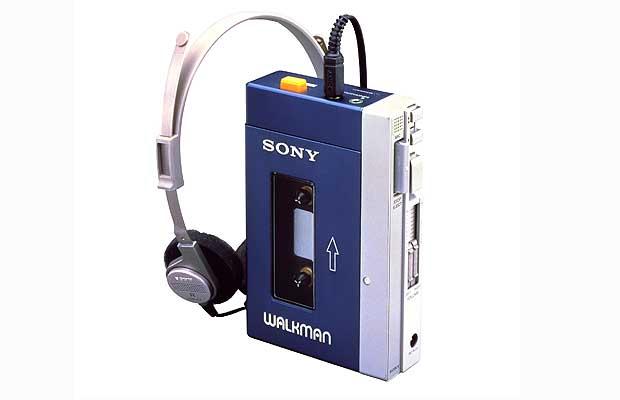
In July of 1979, the Sony Walkman was released to the public. You had portable music anywhere you went. It cost $150 ($546.21 in today’s money).

The 1980s was the Walkman’s decade. Cassettes started to outsell albums and this device was one of the reasons. By 1986 the word “Walkman” had entered the Oxford English Dictionary. Its launch coincided with the birth of the aerobics craze, and millions used the Walkman to make their workouts more entertaining.

Between 1987 and 1997 — the height of the Walkman’s popularity — the number of people who said they walked for exercise increased by 30 percent.

Sony continued to roll out variations on its theme, adding such features as AM/FM receivers, bass boost, and auto-reverse. Sony even made a solar-powered Walkman, water-resistant Sport Walkmans and even devices with two cassette drives. With the introduction of compact discs in 1982, the cassette format began to go the way of the dinosaur.

Sony was fairly quick to jump to new formats: it introduced the D-50 portable CD player a year after the first compact discs were sold, and later rolled out MiniDisc and MP3 players under the Walkman brand.

It caught on with the public in a big way. Today with iPods, iPhones and other devices we take it for granted are descendants from the 1979 Walkman.


https://www.theverge.com/2014/7/1/5861062/sony-walkman-at-35


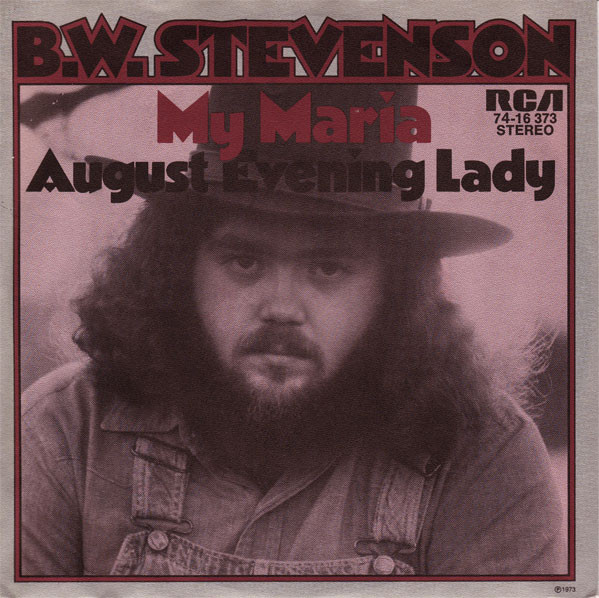
B.W. Stevenson – My Maria

It’s a catchy song with a country slant that was a big hit in 1973. The song was written by Stevenson and Daniel Moore. Daniel Moore wrote the song “Shambala” that Stevenson recorded but it wasn’t a hit until Three Dog Night covered it. This song peaked at #9 in the Billboard 100 and #7 in Canada.

The country duo Brooks and Dunn took the My Maria to #1 in the Country Charts in 1996.

From Songfacts.

In February 1973, Stevenson released the song “Shambala,” which was written by the composer Daniel Moore. Two weeks later, Three Dog Night released their version of the song, which became the much bigger hit, charting at US #3 while Stevenson’s version stalled at #66. Stevenson and Moore then got together and re-wrote “Shambala” as “My Maria,” changing the lyrics so the song became an ode to a beautiful woman. The ploy worked, and Stevenson had by far his biggest hit – his next closest chart entry was “The River Of Love” at #53, also written by Moore.

“Shambala” was often credited as being written by Stevenson. Moore told us: “My co-writer on ‘My Maria,’ B.W. Stevenson and I got together in 1987 and I busted him for taking credit for writing ‘Shambala.’ He had this big grin on his face and said, ‘I never said that I wrote it.’ Then his grin got bigger and he said, ‘But I also never said that I didn’t write it.’ Poor guy died the next year from a staph infection after a heart valve operation in Nashville. The operation went fine, but 3 days later he got the staph infection and it killed him. So much for the hospitals in Nashville.

I probably would never have finished ‘My Maria’ without B.W.’s assistance. I had been working on the song for two years at the point I showed it to him. Of course, he wrote the rest of the lyrics in about 15 minutes. Bless his heart.”

B.W. Stevenson (B.W. = “Buck Wheat”) was a singer/songwriter from Dallas, Texas who died in 1988 at age 38. “My Maria,” featuring Larry Carlton on guitar, was by far his best-known song. It was a #1 hit on the Adult Contemporary chart.

A 1996 cover version by Brooks & Dunn was a huge Country hit, going to #1 and being named by Billboard as the Country Song of the Year. Their version also made #79 on the Hot 100.

My Maria

My Maria don’t you know I’ve come a long, long way
I been longin’ to see her
When she’s around she takes my blues away
Sweet Maria the sunlight surely hurts my eyes
I’m a lonely dreamer on a highway in the skies

Maria, Maria I love you

My Maria there were some blue and sorrow times
Just my thoughts about you bring back my piece of mind
Gypsy lady you’re a miracle work for me
You set my soul free like a ship sailing on the sea
She is the sunlight when skies are grey
She treats me so right lady take me away

My Maria
Maria I love you
My Maria
Maria I love you

My Maria

Johnny Nash – I Can See Clearly Now

One of the best feel-good songs of all time. The reggae-influenced I Can See Clearly Now by Johnny Nash. The song peaked at #1 in the Billboard 100, #1 in Canada and #5 in the UK in 1972. The song was written by Johnny Nash and a hit again for Jimmy Cliff in 1993.

It’s one of the first songs I remember.

From Songfacts.

Johnny Nash is a Texas singer/songwriter who recorded reggae-influenced music. In 1967 he went to Jamaica and recorded his song “Hold Me Tight” and a cover of Sam Cooke’s “Cupid” with a local rhythm section. Both songs became hits in Jamaica, and over the next two years also charted in England and the United States. By 1972, “Cecilia” and “Mother And Child Reunion” found some success in the States incorporating reggae rhythms, and Nash followed that trend with “I Can See Clearly Now.”

Nash had legitimate reggae credentials: Bob Marley (before he became crazy famous) was an assistant producer and session player on the album, and also wrote three of the songs, including “Stir It Up,” which became Nash’s next – and final – hit.

A cover version by Jimmy Cliff (for a time, a bigger reggae star than Bob Marley) went to #18 in the US in 1994. His version was used in the John Candy movie Cool Runnings, about the Jamaican bobsled team.

I Can See Clearly Now

I can see clearly now, the rain is gone,
I can see all obstacles in my way
Gone are the dark clouds that had me blind
It’s gonna be a bright (bright), bright (bright)
Sun-Shiny day.

I think I can make it now, the pain is gone
All of the bad feelings have disappeared
Here is the rainbow I’ve been prayin’ for
It’s gonna be a bright (bright), bright (bright)
Sun-Shiny day.

Look all around, there’s nothin’ but blue skies
Look straight ahead, nothin’ but blue skies

I can see clearly now, the rain is gone,
I can see all obstacles in my way
Gone are the dark clouds that had me blind
It’s gonna be a bright (bright), bright (bright)
Sun-Shiny day.

A Quick visit to Captain Kangaroo

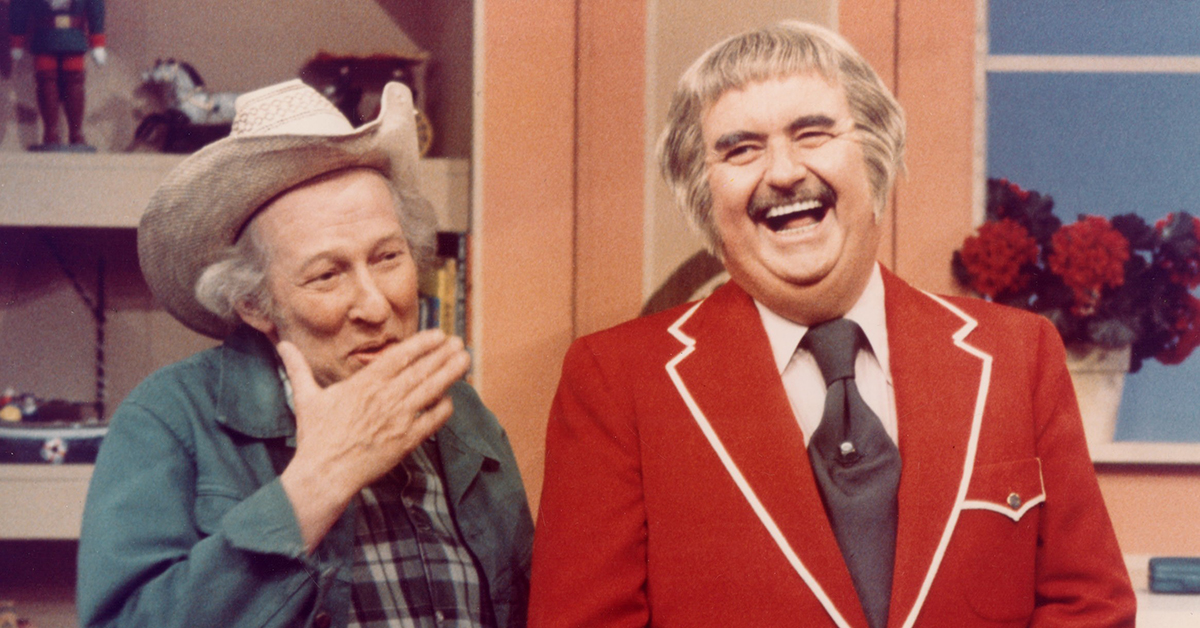
Bob Keeshan played Clarabell on the Howdy Doody Show. In 1955 CBS offered Keeshan his own children’s show, which became Captain Kangaroo. Captain Kangaroo ran from 1955 to 1984. The show spanned many generations of kids during that time.

Keeshan was Captain Kangaroo and every morning I would look forward to seeing The Captain, Mr. Green Jeans, Bunny Rabbit, Dancing Bear, and Mr. Moose. I knew that Mr. Moose was setting the Captain up for the ritual ping-pong drop on the Captain’s head that never got old.

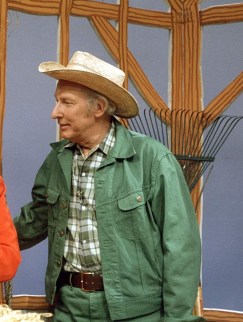
Mr. Green Jeans (Hugh Brannum) would have different animals at times to show. He also portrayed the Professor, Greeno the Clown, the New Old Folk Singer, and Mr. Bainter on the show.

The Painter was played by Gus “Cosmo” Allegretti who also handled the puppets and Dancing Bear.

Untitled.jpgRelated image

One one of my favorite sections was the cartoon “Simon in the Land of Chalk Drawings” that would appear on some shows. Simon had a magic blackboard and anything he drew became real.

Image result for Simon in the Land of Chalk Drawings

Mr. Moose could be a slight smart aleck so I did like him. He also hung out with Bunny Rabbit and the Dancing Bear.

Related image

Captain Kangaroo’s place with his cast of characters was a nice place to visit as a kid.

Badfinger – Baby Blue

Baby Blue never gets old to me…it is the perfect powerpop song. It has the right combination of crunch and pop with an irresistible guitar riff. I love the way they used the song in Breaking Bad that fit the scene perfectly. The song peaked at #14 in the Billboard 100 in 1972. The “Dixie” in the song was Pete Ham’s ex-girlfriend, Dixie Armstrong.

peteham&babyblue

Dixie Armstrong and Pete Ham…I got this picture from http://soref.tv/the-true-story-behind-badfingers-baby-blue/

The song came off of the album “Straight Up” that also contained the hit “Day After Day” and it is considered by many their best album. I’m happy that Breaking Bad showcased this song so that another generation knows the song and hopefully that will lead more to learn about Badfinger.

Baby Blue

Guess I got what I deserved
Kept you waiting there too long, my love
All that time without a word
Didn’t know you’d think that I’d forget or I’d regret
The special love I had for you, my baby blue

All the days became so long
Did you really think, I’d do you wrong?
Dixie, when I let you go
Thought you’d realize that I would know
I would show the special love I have for you, my baby blue

What can I do, what can I say
Except I want you by my side
How can I show you, show me the way
Don’t you know the times I’ve tried?

guitar solo

Guess that’s all I have to say
Except the feeling just grows stronger every day
Just one thing before I go
Take good care, baby, let me know, let it grow
The special love you have for me, my Dixie, dear.

Big Wheel

Now, this was cool. I had a few friends with one but it was one thing I could not get. We lived on a dirt road with a gravel driveway. Big Wheels didn’t really work on gravel and dirt too well. I loved the pull-up brake you could engage on one wheel while you were coming to a stop and spin around.

You were low to the ground and with a good hill, you could really go. If it rained you would pedal that plastic wheel and go nowhere until you caught some traction.

The Big Wheel was developed by Louis Marx and Company in 1969. The toy was hugely popular in the 70s and 80s because of its low cost and partly because consumer groups said it was a safer alternative to the traditional tricycle or bicycle.

Different versions came out as it was copied by other companies. The Green Machine made by Huffy was a version of the Big Wheel.

Image result for 1978 green machine

Just in case you want to own an iconic 1970s Big Wheel…not just a Big Wheel but a Big Wheel Deluxe with the box…no problem just shell out $2,500.

ebaybigwheel.jpg

Pure Prairie League – Amie

This is a great country – rock song and its acoustic feel is great. The song peaked at #27 in the Billboard 100 and #40 in Canada in 1975.

This is an article from the Tennessean about Amie… written by Dave Paulson in 2016

“Amie, what you want to do? I think I could stay with you for a while, maybe longer if I do.”

“Aime” certainly has stuck around. The Pure Prairie League song — recorded in 1972 — took three years to turn into a hit, but has since endured for decades. The band’s Craig Fuller told the story of “Aime” to Bart Herbison of Nashville Songwriters Association International.

Let’s take it back. Pure Prairie League is a band out of Ohio. You’ve done it the hard way; you’ve played the clubs, been on the road for years. In 1971 you finally attract the attention of RCA.

CF: RCA New York. They came to see us play a festival in Cleveland. … I think they brought the (A&R) fellow back with the power to sign. Then we played on the front porch of our house and they said, “Oh, that’s good, let’s do that.”

So you recorded the album “Bustin’ Out.” In terms of musicianship, it’s still one of my favorite records ever. It still actually sells CDs. And RCA signed you, but then they drop you. But “Amie” gets some airplay on country stations and airplay on pop stations and college stations and AOR stations. … So in 1975 they re-sign the band and put the single out.

CF: Well, when we recorded it in that mecca of country music Toronto, Canada, it was longer, and I think they edited it for radio and got it shorter. I guess you’re right. It kept bubbling there along and they decided to give it another shot promotion-wise.

Who is Amie?

CF: Just a song I wrote. Just an exercise in song craftsmanship.

Boy, people really dissect that song — about what it’s about. I’ll give you my take on it: The guy may have waited too long. You don’t know what you’ve got ‘til it’s gone.

CF: That’s just as fair as my take on it, because all I was doing was stringing words and music together.

There’s some genius to it. You fell into one, Craig, I’m telling you.

CF: I think the track on that song had a lot to do with it. We were up there luxuriating (with) a large budget for back then. We were in Toronto all summer right across from Maple Leaf Gardens. It took us all summer to record that record. It wasn’t even mixed yet and at that time Gordon Lightfoot came in. We had the whole (studio) blocked out in the days and Gordon Lightfoot would come in and record in the evening. He did a record in two weeks. Stompin’ Tom Connors, who was a guy from Canada, country kind of guy, he did a record in two nights. So we were just up there having a good time.

So tell me about the resilience of that song. Through the decades you’ve played it around the world. That’s one that everybody recognizes. So the lead singer of Evanescence, Amy Lee, apparently was named after that song, even though she spells it with a Y. I told you we were just in D.C. lobbying for songwriters two or three weeks ago and ran into another Amie that allegedly was named after that song. You’ve got to hear that a lot.

CF: I’ve had mothers come up and say, “I named my daughter Amie — and she named her daughter Amie.”

Wow. That means it’s been a while, right?

CF: Exactly. That was the joke.

So one last question, Craig. In your mind’s eye, did you get back with Amie?

CF: Amie is just a song so I get along with Amie really well.

Yeah, but did you get back with her? Have you ever thought about that?

CF: Does the character?

Yeah, does the character get back with her? Do they end up happily ever after or is it a hard lesson learned for him for the rest of his life?

CF: I suppose the protagonist of the song is just laying it out and then it’s up to her.

I love that version. 

Amie

I can see why you think you belong to me,
I never tried to make you think,
Or let you see one thing for yourself,
And now you’re off with someone else and I’m alone,
You see I thought I might keep you for my own.

Amie, what you wanna do?
I think I could stay with you,
For a while maybe longer if I do.

Don’t you think the time is right for us to find,
That all the things we thought weren’t proper could be right in time,
Can’t you see which way we should turn together or alone,
I can never see what’s right or what is wrong,
‘Cause that take too long to see now.

Amie, what you wanna do?
I think I could stay with you,
For a while maybe longer if I do.

Come on now,
Amie, what you wanna do?
I think I could stay with you,
For a while maybe longer if I do.

Now it’s come to what you want, you’ve had your way,
And all the things you thought before just faded into gray,
And can you see that I don’t know if it’s you or it’s me,
But if it’s one of us I’m sure we both will see, yeah,
Won’t you look at me and tell me.

Amie, what you wanna do?
I think I could stay with you,
For a while maybe longer if I, longer if I do.

Amie, what you wanna do?
I think I could stay with you,
For a while maybe longer if I do.

I keep fallin’ in and out of love with you,
Fallin’ in and out of love with you,
Don’t know what I’m gonna do,
I keep fallin’ in and out of love with you.

Jim Stafford – Swamp Witch

Since it is Halloween I thought I would post this song by Jim Stafford. It reached #39 in the Billboard 100 and #46 in Canada in 1973. My sister had this single but to this six-year-old it was scary. The song described a town by the bayou with an uneasy relationship with the local Witch…which seems to be a prerequisite of a town near the bayou.

The town gets hit with a plague and the Witch (Hattie) helps the town out but not before they all thought Hattie caused the plague to begin with… She cures them and after that, they decide to fetch her from the woods…bad idea.

I think the lesson here is…leave well enough alone.

Swamp Witch

Black water Hattie lived back in the swamp
Where the strange green reptiles crawl
Snakes hang thick from the cypress trees
Like sausage on a smokehouse wall
Where the swamp is alive with a thousand eyes
An’ all of them watching you
Stay off the track to Hattie’s Shack in the back of the Black Bayou

Way up the road from Hattie’s Shack
Lies a sleepy little Okeechobee town
Talk of swamp witch Hattie lock you in when the sun go down
Rumors of what she’d done, rumors of what she’d do
Kept folks off the track of hattie’s shack
In the back of the Black Bayou

One day brought the rain and the rain stayed on
And the swamp water overflowed
Mosquitoes and the fever grabbed the town like a fist
Doctor Jackson was the first to go
Some say the plague was brought by Hattie
There was talk of a hang’n too
But the talk got shackled by the howls and the cackles
From the bowels of the Black bayou

Early one morn ‘tween dark and dawn when shadows filled the sky
There came an unseen caller on a town where hope run dry
In the square there was found a big black round
Vat full of gurgling brew
Whispering sounds as the folk gathered round
“It came from the Black Bayou”

There ain’t much pride when you’re trapped inside
A slowly sink’n ship
Scooped up the liquid deep and green
And the whole town took a sip
Fever went away and the very next day the skies again were blue
Let’s thank old Hattie for sav’n our town
We’ll fetch her from the Black Bayou

Party of ten of the town’s best men headed for Hattie’s Shack
Said Swamp Witch magic was useful and good
And they’re gonna bring Hattie back
Never found Hattie and they never found the shack
And they never made a trip back in
‘Twas a parchment note they found tacked to a stump
Said don’t come look’n again

Toss Across

I had this as a kid and would play it at family gatherings at our house. I bought an original one from 1969 from eBay a couple of years ago and still once in a while will play it. It plays like a carnival game. My son didn’t think much of it at first but when he started to play it…he liked it.

The game came out in 1969 by the Ideal Toy Company. The game was designed by Marvin Glass and Associates and created by Hank Kramer, Larry Reiner, and Walter Moe.

They still sell a version of it today. POOF Outdoor Games Chuck-O Tic Tac Toss


It’s tic tac toe with bean bags…that about sums it up. Go Go Go for 3 in a row!

Now… please tell me what the little girl says after the dog drops the bag…please


https://en.wikipedia.org/wiki/Toss_Across

Stretch Armstrong

I remember having Stretch and stretch him I did. He lasted a few months before it happened. Mr. Armstrong sprung a leak and out came this gooey liquid everywhere.

Jesse Horowitz designed Stretch… he tried a sumo wrestler but it was too big and he dropped the idea. He thought about a stretch woman to rival Barbie but smartly dropped that idea.

In 1976  Stretch Armstrong was sold to the masses, and the $11 toy that made Kenner over $50 million in revenue had a secret: He was basically just a big sack of corn syrup… but to a kid…a fun $11 big sack of corn syrup.

The fad wore out after a while other companies started to do their own Stretch dolls. The Mega company started their own line with Batman, Spider-Man, and Superman stretchable figures. Kenner sued but by the time anything was done Stretch’s time in the sun was over and his popularity faded.

Maybe I shouldn’t have stretched Stretch so much…

Armstrong dolls in a box that aren’t leaking profusely from ’70s wounds can fetch over $1000 on auction sites, with especially rare versions or prototypes worth more.

8-Track Tapes

I  had a stereo that had a record-able 8-track system built in. I would record straight off the radio to the 8-track and from records. I will add that it could be a miserable format to listen to music. If you had a favorite song that you wanted to hear a couple times in a row…get ready to wait till it came back around and then for the infamous “click” and you would switch tracks…and either wait some more or miss the beginning.

But there is more… you may be listening to a song and suddenly the song fades out for a while because it’s too long for the track and then finally the “click” and it finishes out on the next track.

William Powell Lear, the man behind LearJet, was also the inventor of the 8-track cartridge tape system. In 1964 William Lear convinced Ford to install the 8-track in their cars.

In September 1965, Ford Motor Company offered 8-track players as an option in their 1966 model cars.  A Ford spokesperson reported that 65,000 players were installed in the first year.  As a result of the popularity, the 8-track player soon became standard in all Ford cars.

In 1966 home units and portable units were offered. Now people could share their tapes with each other. The peak years of the eight-track were 1967 through 1975. Then, improvements in the tape quality of smaller cassettes and decreasing quality in eight-tracks led consumers away from the eight-track tape.

The last official release on 8-track was Fleetwood Mac’s Greatest Hits in 1988. By then though Compact Disc had taken over the market.

I did have quite a collection of official 8-tracks and self-made 8-tracks. I also have an old 8-track system in my closet…hey you never know.

This video is a must. It shows an Eight Track Museum. It is interesting.


https://en.wikipedia.org/wiki/8-track_tape