Walter and Eric said they’d put him on a network TV show The White House said, “Put the thing in the blue room” The Vatican said, “No, it belongs to Rome” And Jody said, it’s mine but you can have it for seventeen million
This is one Creedence song that you don’t hear everyday…that doesn’t make it any less of a song than their others.
It’s about a farmer called Jody who finds a UFO and become famous. The event first triggers fear and later greed. Between the lines, there’re also sarcastic remarks on American show business, media and politics.
The character of “Jody” comes up in other songs of John Fogerty. Jody is in Almost Saturday Night, Hey Tonight and this one of course.
The song name checks different people and places. Ronald Reagan, Spiro Agnew, The White House, Hollywood, and the Vatican. Also in the mix are news reporters Walter Cronkite and Eric Sevareid.
It Came Out Of The Sky was never released as a single in America. In the UK it was backed with Side of the Road. It didn’t get much airplay there and didn’t chart.
The song was on the album Willy and the Poor Boys…a great album that peaked at #3 in the Billboard Album Charts, #2 in Canada, and #10 in the UK in 1970. Creedence had 18 songs in the top 100 and 9 top 10 hits yet no number 1’s in the Billboard 100…which I still find hard believe.
The song appeared in an episode of Better Call Saul and WKRP…the classic episode of Turkey’s Away.
It Came Out Of The Sky
Oh, it came out of the sky, landed just a little south of Moline Jody fell out of his tractor, couldn’t believe what he seen Laid on the ground and shook, fearin’ for his life Then he ran all the way to town screamin’ it came out of the sky
Well, a crowd gathered ’round and a scientist said it was marsh gas Spiro came and made a speech about raising the Mars tax The Vatican said, “Woe, the lord has come” Hollywood rushed out an epic film And Ronnie the popular said it was a communist plot
Oh, the newspapers came and made Jody a national hero
Walter and Eric said they’d put him on a network TV show The White House said, “Put the thing in the blue room” The Vatican said, “No, it belongs to Rome” And Jody said, it’s mine but you can have it for seventeen million
Oh, it came out of the sky, landed just a little south of Moline Jody fell out of his tractor, couldn’t believe what he seen Laid on the ground a shakin’, fearin’ for his life Then he ran all the way to town screamin’ it came out of the sky Oh
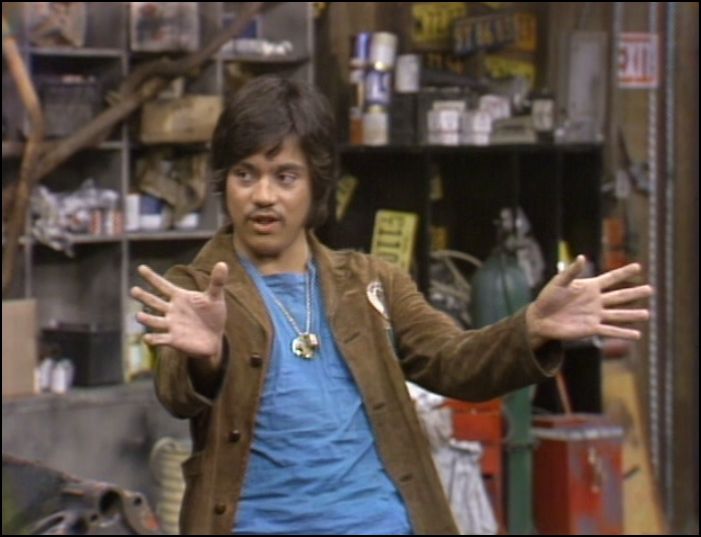
Growing up I watched Chico and the Man and I still do occasionally. I remember that Freddie Prinze was a huge star. He was a hit with kids and adults a like.
Freddie became a star practically overnight and burned brightly…but unfortunately, it was only for a brief amount of time. I was just 10 when he died and it seemed unreal a talented twenty-two year old tv star/comedian would kill himself.
He was a comedian whose real name was Frederick Karl Pruetzel. He was born in 1954 in New York. His mother was of Puerto Rican descent and his father was of Hungarian roots…two things he used in his comedy.
He worked in clubs in the early seventies and then he got his break. He appeared on the Tonight Show with Johnny Carson on December 6, 1973, and Johnny called him over to his couch to talk to him. That was a dream to performers then. Being called to the couch meant Johnny liked you and could make your career. Remember no internet or other exposure to this big of an audience. He became a star overnight. Freddie was 19 years old.
Within a few months, he was starring with Jack Albertson on the hit show Chico and the Man.
The show had a supporting cast of Scatman Crothers and Della Reese. It had a cool factor with teenagers at the time because of Freddie. Chico and the Man was not the greatest sitcom ever but a good one that captured a talented young comedian on his way up.
Freddie came out with a 70’s catchphrase “Looking Good” with a comedy album of the same name. He appeared in one TV movie called The Million Dollar Rip-Off and an HBO On Location: Freddie Prinze and Friends.
He suffered from depression and he had a dependency on drugs that kept growing like his fame.
Through all of this, he got married and had a son…the actor Freddie Prinze Jr… His wife started to move toward a divorce and a despondent Prinze shot himself in a hotel room and died the next day on January 29, 1977, only 3 years after his introduction to the world by Johnny Carson.
People don’t remember how big Freddie was then. He was so young and vibrant when he made it…he was just 22 years old when he died.
Don’t you think it’s sometimes wise not to grow up?
100 Years Ago has a good melody and it changes it’s focus in the last three-quarters of the way through…a good song with an interesting outro. It’s an album cut and you never hear much on the radio. It’s worth a listen. If you see them in concert and want to hear this song…don’t hold your breath.
It was only played on the first two performances of European Tour of 1973, and has not been performed live since. Come on guys! Play it again…it’s not like the world can’t do without another version of Satisfaction.
I took an instant liking to this song. It starts with a little country influence and then ends with a funky free for all. I have the new version of Goats Head Soup and this one cleaned up really well.
The album peaked at #1 in the Billboard 100, The UK, and Canada in 1973.
The Stones recorded this at Kingston’s Dynamic Sound Studios in November and December, 1972. Jagger performs lead vocals and is accompanied by Mick Taylor on backing. Taylor performs the song’s guitars while Keith Richards and Charlie Watts perform bass and drums, respectively. Nicky Hopkins provides piano while Billy Preston performs clavinet.
“100 Years Ago”
Went out walkin’ through the wood the other day And the world was a carpet laid before me The buds were bursting and the air smelled sweet and strange And it seemed about a hundred years ago Mary and I, we would sit upon a gate Just gazin’ at some dragon in the sky What tender days, we had no secrets hid away Well, it seemed about a hundred years ago Now all my friends are wearing worried smiles Living out a dream of what they was Don’t you think it’s sometimes wise not to grow up? Wend out walkin’ through the wood the other day Can’t you see the furrows in my forehead? What tender days, we had no secrets hid away Now it seems about a hundred years ago Now if you see me drinkin’ bad red wine Don’t worry ’bout this man that you love Don’t you think it’s sometimes wise not to grow up? You’re gonna kiss and say good-bye, yeah, I warn you You’re gonna kiss and say good-bye, yeah, I warn you You’re gonna kiss and say good-bye, oh Lord, I warn you And please excuse me while I hide away Call me lazy bones Ain’t got no time to waste away Lazy bones ain’t got no time to waste away Don’t you think it’s just about time to hide away? Yeah, yeah!
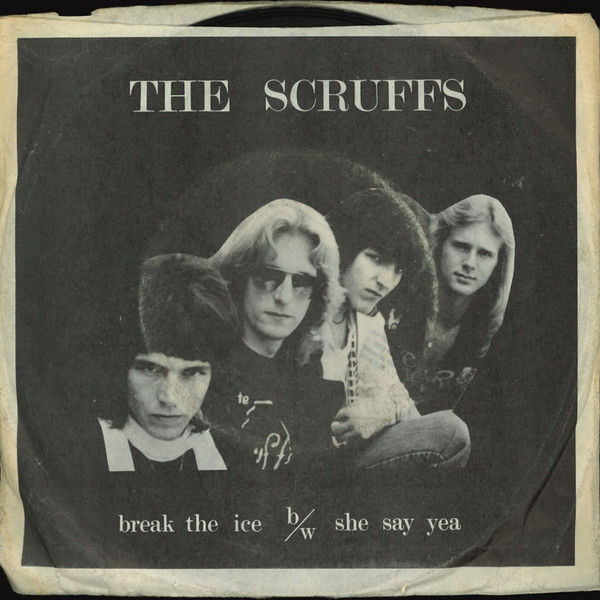
Introducing the Scruffs. I love that name for a band. They have been around since the 70s and have released an album in 2011.
Big Star wasn’t the only power pop band in Memphis in the 70s. This band formed in Memphis in 1974. It was started by writer/guitarist/vocalist Stephen Burns along with guitarist David Branyan, bassist Rick Branyan, and drummer Zeph Paulson.
“She Say Yea” was influenced by the Beatles and Byrds but also early 70s American power pop greats like the Raspberries and Big Star.
They used Big Star’s same studio (Ardent) and their producer Jim Dickinson who along with Big Star worked with the Rolling Stones, Carmen McRae, Delaney & Bonnie, Jerry Jeff Walker, Dee Dee Warwick, Ronnie Hawkins, Sam & Dave, Dion, Brook Benton, Lulu, Sam the Sham and others.
I have heard some great power pop in the last 10 years but for me the golden era of Power Pop was in the 70s and 80s…I do believe in the last ten years it has made a comeback with newer bands…but I love these seventies bands that with a little more luck could have had major success.
The Scruffs released their debut album in 1977 named Wanna Meet the Scruffs? The single from the album was Break the Ice with She Say Yea as the B side. Another single off the album was Shakin’ / Teenage Girls…we will go over that one in a few weeks.
All 13 tracks were written by guitarist Stephen Burns though lead guitarist Dave Branyan gets partial credit for three numbers.
The imagery flows like water with Greetings From Ashbury Park, Bruce’s debut album in 1973… It’s not very polished but that adds to it. The songs have a stream of consciousness feel to them. It was critically praised but did not have huge sales. The album only peaked at #60 in the Billboard Album Charts.
I was around 19 (1986) or so when I found this album, or when the album found me, and I was going through an angry young man phase. I had just bought a 1976 Fender Musicmaster guitar (I still have it) and a black leather jacket. This album fit my mood at the time perfect. I wasn’t really angry but just realized I was considered a man now in the world but wasn’t sure what that meant and where I fit in. I listened to the album and it just seemed right.
I had this album picked and almost presented it with the 3rd or 4th pick but something told me to go with Big Star and the Zombies and wait. I originally bought this album in fall so it seems right that this pick will be my first pick in fall…if only I still had that leather jacket.
Now on to the album…Bruce’s manager Mike Appel (who is another story) and John Hammond (who signed Bruce, Dylan and many others) wanted a more singer songwriter album, while Springsteen and Jimmy Cretecos (co-producer) preferred a band dominated album. A compromise was reached but when Clive Davis listened to the album he said there wasn’t a commercial single…Bruce wrote a couple of songs to include on the album. Blinded By The Light and Spirit in the Night. They were no doubt band oriented songs…so the album swung that way…but it still is very sparse with instruments. No big screaming guitars or anything like that. The melodies and lyrics are the focus.
Springsteen picked out the musicians who would help him out on this album. David Sancious, Gary Tallent, Vini Lopez and Steve Van Zandt were a few. However, Van Zandt barely participated because of a prior commitment to tour as a member of The Dovells backing group. Other musicians who would help out were Clarence Clemons, Richard Davis, and others.
I hear Dylan and a very strong Van Morrison influence on this album. It is rough and raw and unpredictable. When we first started this draft I knew this album would be in it either by me or someone else. I feel luck y that it fell this far down.
The most famous song on the album is “Blinded By The Light” which was covered later by Manfred Mann Earth’s Band that peaked at #1 in 1977. I just want to say…Bruce’s lyrics were “cut loose like a deuce, another runner in the night” a “deuce” is a hot rod car…that is all I’ll say… Well I jumped up, turned around, spit in the air, fell on the ground, Asked him which was the way back home, He said take a right at the light, keep goin’ straight until night, and then boy, you’re on your own
“It’s Hard to be a Saint in the City” is another great track and one of the most powerful songs he ever wrote. The devil appeared like Jesus through the steam in the street, Showin’ me a hand I knew even the cops couldn’t beat I felt his hot breath on my neck as I dove into the heat
“Does This Bus Stop At 82nd Street?” is a journey through an enjoyable play of words. This song is about as wordy and catchy as you can get. It was written about a bus journey to a girlfriend’s house. I listened to it so many times that I know every word to this day. I was surprised to see that he still plays this in concert every now and then…but you can’t beat the studio version. Wizard imps and sweat sock pimps, interstellar mongrel nymphs Oh, Rex said that lady left him limp, love’s like that (It sure is)
My personal favorite is “Spirit of the Night.” This song hints at some of the characters and places that start populating Bruce’s musical world. Well, Billy slammed on his coaster brakes, And said, “Anybody wanna go on up to Greasy Lake? It’s about a mile down on the dark side of Route 88 I got a bottle of rosé so let’s try it
This is a crazy good debut album. His first two albums were building up to everything that was crystallized in his third…Born to Run. That doesn’t make the first two any less. Greetings doesn’t “sound” as well as Born To Run but Bruce delivers.
After his second album The Wild, the Innocent & the E Street Shuffle, Bruce made his career making album Born To Run. He never has returned to the free form lyrics of his first two albums. I do wish he would try a song or two like these again…but maybe you have to be a certain age to write these types of songs and free of life distractions…After Blonde on Blonde, Dylan also left this style of song behind and he was 25 years old. Bruce was 24 in 1973 when he released Greetings from Ashbury Park and The Wild, the Innocent & the E Street Shuffle.
I really love the albums on the island and with this one I’ll enjoy the characters of Crazy Janey, Mary Lou, Broadway Mary, Wild Billy, Hazy Davy, and Killer Joe. All these characters grew up through his albums and we knew our own versions of these people… they matured in front of our eyes and ears…much like Bruce did and we all grew together…and this album was the beginning of the story that we are still following.
Blinded By The Light
Growin’ Up
Mary Queen Of Arkansas
Does This Bus Stop At 82nd Street?
Lost In The Flood
The Angel
For You
Spirit In The Night
It’s Hard To Be A Saint In The City
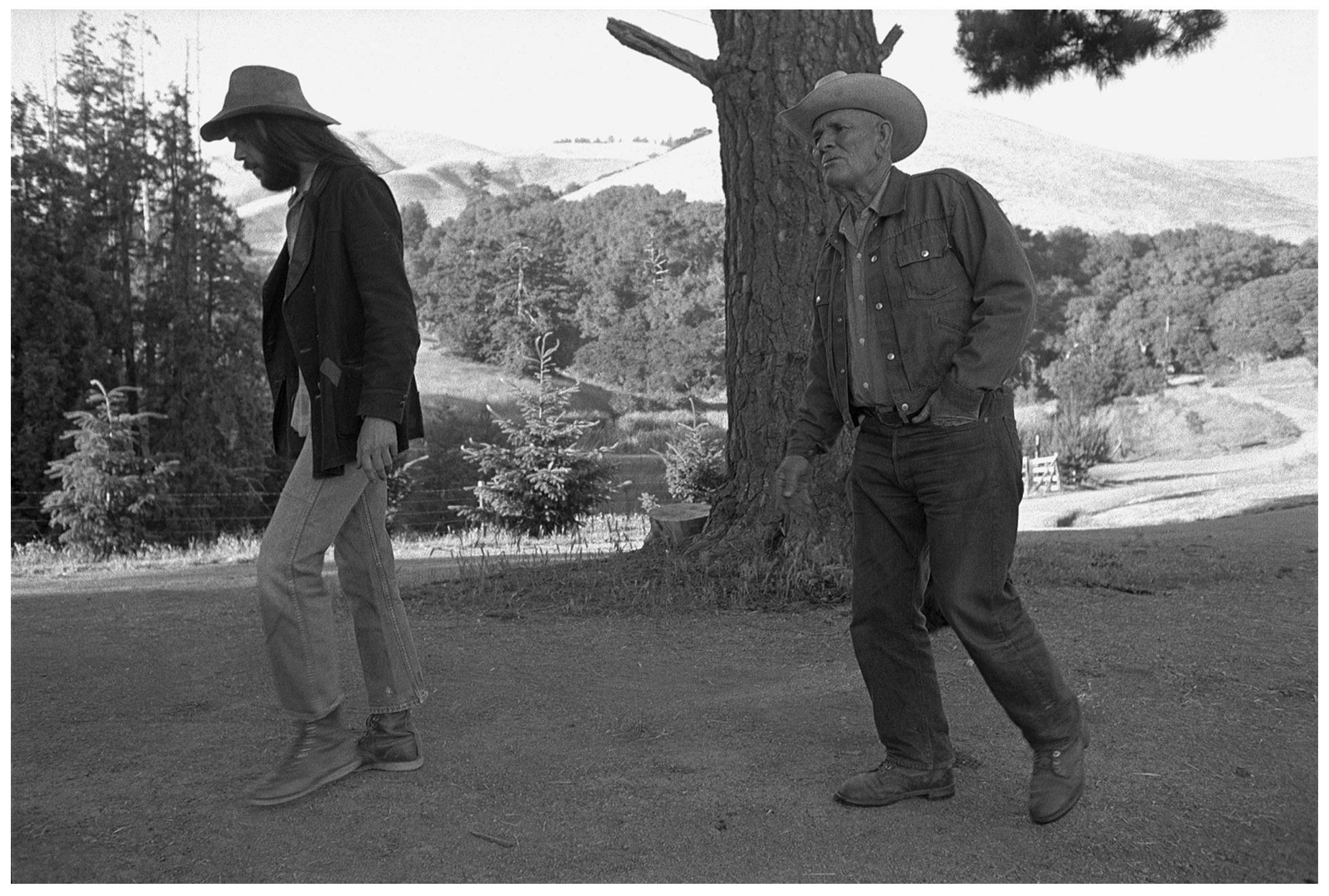
Neil Young wrote this about the caretaker of the ranch he bought in 1970.
His name was Louis Avila. The ranch was the Broken Arrow Ranch, purchased for $350,000 in 1970 (I have to wonder what it would cost now). Reportedly, Avila was giving Young a tour of the place and asked him how a young man like him could afford a place like this. Young, aged 25, replied “Well, just lucky, Louie, just real lucky.’ And Louis said, ‘Well, that’s the darndest thing I ever heard.’
Linda Ronstadt and James Taylor sang backing vocals on Old Man and another Harvest track, Heart of Gold. James Taylor played six-string banjo.
Old Man peaked at #31 in the Billboard 100 and #4 in Canada in 1972. Looks like Canada got this right.
Linda Ronstadt: “I can’t remember why Neil wanted me to sing with him – I guess he just figured I was there and could do it but we went in there and they were doing ‘Heart of Gold’ and ‘Old Man’ and I thought they were such beautiful songs. I loved them.
And I knew how to do harmonies. I’d listened to the Buffalo Springfield harmonies and I knew how to get that 7th they always used. I don’t think we started until midnight and it was dawn when we came out, and it was snowing – we came out to this beautiful snow storm in the rising sun. It was really exciting. I just thought I’ve been part of something really wonderful.”
Neil Young:About that time when I wrote (Heart of Gold), and I was touring, I had also — just, you know, being a rich hippie for the first time — I had purchased a ranch, and I still live there today.
And there was a couple living on it that were the caretakers, an old gentleman named Louis Avala and his wife Clara. And there was this old blue Jeep there, and Louis took me for a ride in this blue Jeep. He gets me up there on the top side of the place, and there’s this lake up there that fed all the pastures, and he says, ‘Well, tell me, how does a young man like yourself have enough money to buy a place like this?’
And I said, ‘Well, just lucky, Louie, just real lucky.’ And he said, ‘Well, that’s the darndest thing I ever heard.’
From Songfacts
This was the first song recorded for the Harvest album. Neil Young arranged the session the previous night when he was at a party held at Quadrafonic Studios in Nashville (he was in town to record a segment for Johnny Cash’s TV show). The studio owner Elliot Mazer was also a producer who had worked with a band Young admired called Area Code 615. Young asked if he could record there the next day, and Mazer complied, supplying not just the studio, but also the musicians.
The session took place on Saturday, February 6, 1971 with a group of Music City studio pros: Ben Keith on pedal steel guitar, Tim Drummond on bass and Kenny Buttrey on drums.
It was never the metric on which he wanted to be judged, but “Old Man” was the second-biggest hit for Neil Young as a solo artist, reaching #31 on the Hot 100. His biggest hit, by far, was his previous single, the Harvest track “Heart of Gold,” which went to #1.
There was some conflict over a hi-hat when Young recorded this song. When drummer Kenny Buttrey played it, Young told him not only to refrain from the hi-hat, but to only play with his left hand, which Buttrey thought was ridiculous. The drummer complied, however, literally sitting on his right hand to resist temptation. Buttrey later quipped: “He hires some of the best musicians in the world and has them play as stupid as they possibly can.”
It was immediately after the success of “Old Man” and the Harvest album that Danny Whitten, central to Young’s band Crazy Horse, passed away. Young invited Whitten to audition for his backing band the Stray Gators on the condition that he cleaned up his substance abuse. Young gave him a trial, but it looked to be the same old story with Whitten, so he fired him. Whitten promptly went home and overdosed, found dead with Valium and alcohol in his system.
Young got the call that night, and was devastated. Whitten’s death was part of the darkening of Neil Young’s act during the time following “Old Man;” it wasn’t just the success or being “headed for the ditch.”
Young told Jimmy McDonough that the line “Does it mean that much to me, to mean that much to you?” is meant to be directed towards the audience.
James Taylor is credited with playing “guitar-banjo” on this song. Taylor, who along with Linda Ronstadt was in the studio recording vocals, saw the banjo and started playing it. The instrument belonged to Young; it was a called a “guitar-banjo” because it was a banjo tuned like a guitar.
Bob Dylan covered this song throughout his 2002 tour.
This song has appeared in various films over the years, including Due Date, Lords of Dogtown, and Wonder Boys.
2015 The Voice champion Sawyer Fredericks covered the song during the show’s finale. The following week his version reached #63 on the Hot 100.
In 2018, a 72-years Young said during a concert in Chicago: “It’s hard to do ‘Old Man’ now. It’s like, ‘Old man take a look at my life, I’m a lot like I am.”
At the memorial service for actor Heath Ledger, “Old Man” was chosen as the song to play over a slideshow showing his various roles and life.
Old Man
Old man, look at my life I’m a lot like you were Old man look at my life I’m a lot like you were
Old man, look at my life Twenty four and there’s so much more Live alone in a paradise That makes me think of two
Love lost, such a cost Give me things that don’t get lost Like a coin that won’t get tossed Rolling home to you
Old man, take a look at my life, I’m a lot like you I need someone to love me the whole day through Ah, one look in my eyes and you can tell that’s true
Lullabies, look in your eyes Run around the same old town Doesn’t mean that much to me To mean that much to you
I’ve been first and last Look at how the time goes past But I’m all alone at last Rolling home to you
Old man, take a look at my life, I’m a lot like you I need someone to love me the whole day through Ah, one look in my eyes and you can tell that’s true
I was lucky to see Robin Trower in Clarksville Tennessee in the early nineties. In a three week span I went to three concerts…Santana, Eric Clapton, and I wrapped it up Robin Trower in a club called the Cannery…three really good guitar players in that three week span.
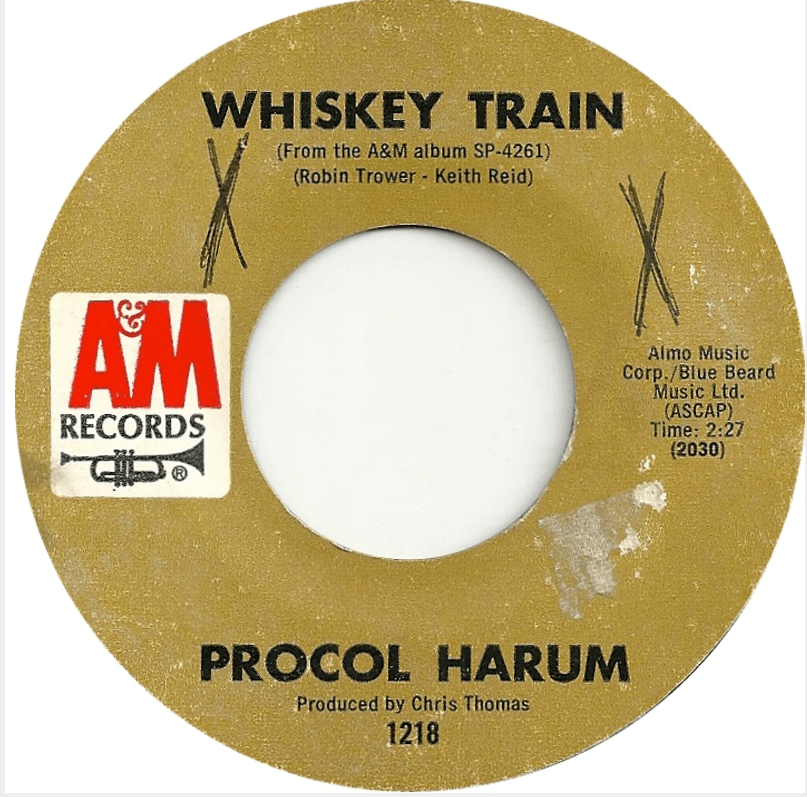
This song was released in 1970 and the opposite of their best-known hit “A Whiter Shade Of Pale.” The band had some personnel changes by this time. This wasn’t a big hit or a hit at all but I’ve always loved it as a rock and roll song. The riff is a classic guitar riff.
The song was on the album Home released in 1970. The album peaked at #34 in the Billboard Album Charts and #49 in the UK.
Whiskey Train was written by guitarist Robin Trower and Keith Reid. Great rock and roll song. Leslie West and Blackfoot also covered this song but I’ll stick with the original.
Whiskey Train
Ain’t gonna ride that whisky train Ain’t gonna burn up no more flame Throw away my bottle down the drain Ain’t gonna ride that whisky train To think that I could be so wrong To be so sick and still go on The way I drink it’s been too long Don’t see much point in carrying on I’m gonna lose these drinking blues I’m gonna find a girl to make me choose Between lovin’ her and drinking booze I’m gonna lose these drinking blues Ain’t gonna ride that whisky train I’m tired of burning in the flame Throw away my bottle down the drain Ain’t gonna ride that whisky train
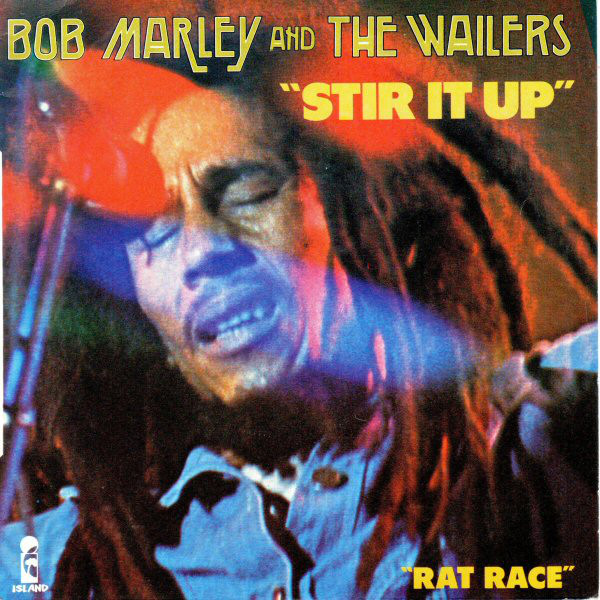
This song got me into Bob Marley. He wrote this song in 1967 and recorded it that year and released it as a single. It was later covered by Johnny Nash in 1972 and it peaked at #12 in the Billboard 100 for Johnny.
Bob Marley and the Wailers re-recorded it in 1973 for the “Catch the Fire” album. The Nash version was Bob’s first success outside of Jamaica.
It has been said that Bob Marley wrote this song for his wife Rita.
Bob Marley on Johnny Nash
“He’s a hard worker, but he didn’t know my music. I don’t want to put him down, but Reggae isn’t really his bag,” he said. “We knew of Johnny Nash in Jamaica before he arrived, but we didn’t love him that much: We appreciated him singing the kind of music he does – he was the first US artist to do reggae – but he isn’t really our idol. That’s Otis or James Brown or Pickett, the people who work it more hard.”
From Songfacts
Texas-born singer-songwriter Johnny Nash released his final US hit as a follow-up to his signature tune “I Can See Clearly Now.” Both singles were infused with the reggae sound he brought back from a 1967 trip to Jamaica, where he met up-and-comer Bob Marley. Not only was Marley an assistant producer on Nash’s album, but he also contributed a handful of tunes, including “Stir It Up,” a love song about stirring up desire that Marley wrote for his wife, Rita.
Nash’s version would become Marley’s first hit outside of Jamaica, but he originally recorded it with his own group, The Wailers. After Nash’s success, The Wailers recorded it again for their 1973 album, Catch a Fire. Marley’s version came to the forefront when it appeared on his greatest hits collection Legend in 1984, three years after his death.
In the UK, this was released as the first single, followed by the Nash-penned “I Can See Clearly Now.”
On this track, Nash is backed by the reggae band the Fabulous Five Inc.
A year before the album was released, Marley and Nash collaborated on the score for the Swedish film Vill sa garna tro, which cast Nash in a starring role – but things didn’t go as planned, mainly because no one could find Marley. John “Rabbit” Bundrick, Nash’s keyboardist and co-composer on the score, recalled in the liner notes for Marley’s Songs of Freedom: “I really don’t know what happened to Bob. All I do know is that his air ticket, Johnny’s guitar, and Johnny’s tape recorder all disappeared, along with Bob. Johnny never forgave him for taking his guitar. Bob disappeared as magically as he had arrived.”
Nash put his anger aside when “Stir It Up” became a hit, and invited Marley on a tour of the UK to promote the album.
Diana King covered this for the 1993 comedy Cool Runnings, about a Jamaican bobsled team competing in the Winter Olympics.
In the 2007 movie I Am Legend, Will Smith plays a Bob Marley-obsessed virologist who has survived a zombie apocalypse. When he finally meets another non-infected human, he is horrified to learn she’s never heard of Marley, so he puts on the Legend CD (note the album and movie titles), tells her it’s the best album ever made, and plays “Stir It Up.” Marley’s music is a theme throughout the film, as Smith’s character draws on it for faith. In the film, his daughter is named Marley.
“Stir It Up”
Stir it up; little darlin’, stir it up. Come on, baby. Come on and stir it up: little darlin’, stir it up. O-oh!It’s been a long, long time, yeah! (stir it, stir it, stir it together) Since I got you on my mind. (ooh-ooh-ooh-ooh) Oh-oh! Now you are here (stir it, stir it, stir it together), I said, it’s so clear There’s so much we could do, baby, (ooh-ooh-ooh-ooh) Just me and you.
Come on and stir it up; …, little darlin’! Stir it up; come on, baby! Come on and stir it up, yeah! Little darlin’, stir it up! O-oh!
I’ll push the wood (stir it, stir it, stir it together), then I blaze ya fire; Then I’ll satisfy your heart’s desire. (ooh-ooh-ooh-ooh) Said, I stir it every (stir it, stir it, stir it together), every minute: All you got to do, baby, (ooh-ooh-ooh-ooh) Is keep it in, eh!
(Stir it up) Oh, little darlin’, Stir it up; …, baby! Come on and stir it up, oh-oh-oh! Little darlin’, stir it up! Wo-oh! Mm, now, now.
Quench me when I’m thirsty; Come on and cool me down, baby, when I’m hot. (ooh-ooh-ooh-ooh) Your recipe is, – darlin’ – is so tasty, When you show and stir your pot. (ooh-ooh-ooh-ooh)
So: stir it up, oh! Little darlin’, stir it up; wo, now! Come on and stir it up, oh-ah! Little darlin’, stir it up! — [Guitar solo] — Oh, little darlin’, stir it up. Come on, babe! Come on and stir it up, wo-o-a! Little darlin’, stir it up! Stick with me, baby! Come on, come on and stir it up, oh-oh! Little darlin’, stir it up. [fadeout]
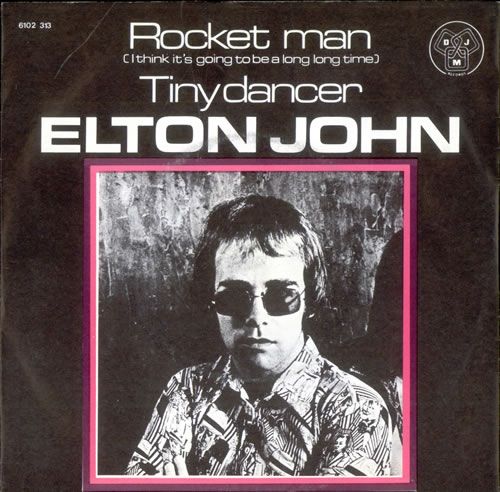
Great single by Elton John released in 1972. It was off of his album Honky Château. Like Bennie and the Jets there are some words that I had no clue in what he was singing. The most commonly misheard lyric in this song is “Rocket Man, burning out his fuse up here alone.” I would mumble words through that until I caught a word somewhere down the line.
The inspiration for Bernie Taupin’s lyrics was the short story The Rocket Man, written by Ray Bradbury. The sci-fi author’s tale is told from the perspective of a child, whose astronaut father has mixed feelings at leaving his family in order to do his job. It was published as part of the anthology The Illustrated Man in 1951.
This was produced by Gus Dudgeon, who worked with David Bowie on his 1969 song “Space Oddity.” Both songs have similar subject matter. Elton practically owned the early seventies. Elton had 9 No. 1 Hits, 7 Top 10 Hits, and 67 Songs in the Billboard 100 so far.
The song peaked at #6 in the Billboard 100, #8 in Canada, and #2 in the UK in 1972.
From Songfacts
Space exploration was big in 1972; the song came out around the time of the Apollo 16 mission, which sent men to the moon for the fifth time.
Bradbury’s story was the basis for another song called “Rocket Man,” which was released by the folk group Pearls Before Swine (fronted by Tom Rapp) in 1970. Taupin says that song gave him the idea for his own “Rocket Man” (“It’s common knowledge that songwriters are great thieves, and this is a perfect example,” he said). In the Pearls Before Swine song, a child can no longer look at the stars after his astronaut father perishes in space.
The opening lyrics came to Bernie Taupin while he was driving near his parents’ house in Lincolnshire, England. Taupin has said that he has to write his ideas down as soon as they show up in his head, or they could disappear, so he drove though some back roads as fast as he could to get to the house where he could write down his thought: “She packed my bags last night, pre-flight. Zero hour, 9 a.m., and I’m gonna be high as a kite by then.”
From there he came up with the song about a man who is sent to live in space as part of a scientific experiment.
The song can be interpreted as a symbol of how rock stars are isolated from their friends, family and from the real world by those with power in the music industry. Some lyric analysis as part of the rock star isolation theory:
“I’m burning out his fuse up here alone” – Rocketing through space on stage.
“Higher than a kite” – Feeling outside the box called normal.
“Mars” – “The place he is when he’s high; don’t need to be raising children when you’re an addict. It’s a “cold” place, being an addict and larger than life when you want to be “Normal” and a “Rocketman” at the same time.
“Rocket Man” became a nickname for Elton John. As song-based nicknames go, it’s a good one, and Elton embraced it (Madonna hates the “Material Girl” moniker). In 1973, he started a record company called Rocket Records, which was the label that released Neil Sedaka’s comeback songs. In 2019, a biopic (billed as a “musical fantasy”) called Rocketman was released starring Taron Egerton as Elton John.
Around the 2:20 mark, some synthesizer comes into the mix, accentuating the space motif. Elton didn’t dabble in synths, so a studio engineer named Dave Hentschel played it. Hentschel operated an ARP 2500 synthesizer at Trident Studios in London, where producer Gus Dudgeon did overdubs and mixing for the album. When Dudgeon found out they had the synth, which was introduced in 1971, he had Hentschel play it and ended up using it in the final mix.
Hentschel got the call again on the Goodbye Yellow Brick Road album when Dudgeon had him create the opening section to “Funeral For A Friend / Love Lies Bleeding” on the ARP. In the 1977 movie Close Encounters Of The Third Kind, an ARP 2500 plays the notes that summon the aliens.
When Elton played the Soviet Union in 1979, this was listed on the program as “Cosmonaut.”
This was Elton’s biggest hit to that point, outcharting his first Top 10 entry, “Your Song.” It had a huge impact on his psyche, as it gave him the confidence to know that he could sustain his career in music.
Baseball pitcher Roger Clemens’ nickname was “The Rocket,” which led to lots of highlight videos of him pitching in slow motion with this song playing in the background. He earned the nickname because of his outstanding fastball, but later came under scrutiny when the league learned that his rocket fuel may have been steroids. Clemens denied the allegations and was never convicted of steroid use.
Kate Bush covered this in 1991 for an Elton John tribute album called Two Rooms (a reference to John and Taupin writing separately). Her version hit #12 in the UK.
Bush told NME that this is one of her favourite songs of all time. “I remember buying this when it came out as a single by Elton John,” she said. “I couldn’t stop playing it – I loved it so much. Most artists in the mid seventies played guitar but Elton played piano and I dreamed of being able to play like him.”
When years Elton and Bernie Taupin asked Bush to record one of their songs for Two Rooms, she chose “Rocket Man.” They gave her complete creative control which was both exciting and a bit daunting for the singer. “I wanted to make it different from the original and thought it could be fun to turn it into a reggae version,” she said. “It meant a great deal to me that they chose it to be the first single release from the album.”
William Shatner performed a spoken-word version of this song at the 1978 Science Fiction Film Awards, for which he was the host. Bernie Taupin did the introduction.
At a show in Anaheim, California on August 22, 1998, Jim Carrey joined Elton for a duet of this song. Carey gave a real performance before sitting at the piano and bashing his head into the keys.
On an episode of the television show Family Guy, Stewie does a spoken version of this song.
This was used in a 2017 commercial for Samsung’s Gear VR where an ostrich learns to fly after using the flight simulator on the device.
Speaking at the United Nations on September 19, 2017, American president Donald Trump excoriated North Korean leader Kim Jong Un, referring to him as “Rocket Man” because of his missile program. “Rocket Man is on a suicide mission for himself,” Trump declared. This song immediately began trending.
This wasn’t the first time the phrase was used in this context: The Economist put Kim Jong Un’s father, Kim Jong Il, on the cover of their July 8, 2006 issue with the headline “Rocket Man.”
American country group Little Big Town covered the song for the 2018 Elton John tribute album Restoration. Their version features sounds from NASA’s Mission Juno. The Juno project explored the planet Jupiter unlocking some of the secrets of the planet and the sounds from Juno’s Waves radio instrument were weaved throughout Little Big Town’s harmonies.
“One of the main reasons why we chose ‘Rocket Man’ was because we were so intrigued by not just, of course, Elton John, but by using the sounds from the Juno project so we had all these Jupiter noises,” said Little Big Town’s Karen Fairchild.
Rocket Man
She packed my bags last night pre-flight Zero hour nine AM And I’m gonna be high as a kite by then I miss the earth so much I miss my wife It’s lonely out in space On such a timeless flight
And I think it’s gonna be a long long time ‘Till touch down brings me round again to find I’m not the man they think I am at home Oh no no no I’m a rocket man Rocket man burning out his fuse up here alone
And I think it’s gonna be a long long time ‘Till touch down brings me round again to find I’m not the man they think I am at home Oh no no no I’m a rocket man Rocket man burning out his fuse up here alone
Mars ain’t the kind of place to raise your kids In fact it’s cold as hell And there’s no one there to raise them if you did And all this science I don’t understand It’s just my job five days a week A rocket man, a rocket man
And I think it’s gonna be a long long time ‘Till touch down brings me round again to find I’m not the man they think I am at home Oh no no no I’m a rocket man Rocket man burning out his fuse up here alone
And I think it’s gonna be a long long time ‘Till touch down brings me round again to find I’m not the man they think I am at home Oh no no no I’m a rocket man Rocket man burning out his fuse up here alone
And I think it’s gonna be a long long time And I think it’s gonna be a long long time And I think it’s gonna be a long long time And I think it’s gonna be a long long time And I think it’s gonna be a long long time And I think it’s gonna be a long long time And I think it’s gonna be a long long time And I think it’s gonna be a long long time
A couple of years ago I was at Pam’s (All Things Thriller) site and read her character profiles on The Soprano’s characters…I liked it so much that when I thought about covering All In The Family…I asked Pam if she would consider covering Archie, Edith, Gloria, and Mike in the same way.
She not only agreed, but she has given me permission to post her writing on my site.
All In The Family changed the landscape of television and pop culture in the 70s. Some have said All In The Family was essentially a mirror held up to America at the time. It ran from 1971 – 1979 on CBS. The show was based on Til Death Us Do Part, a British sitcom about a conservative father and his liberal son-in-law. All In The Family may have been the most important television show in the 20th century.
The series spent five consecutive years at number one in the Nielsen ratings.
We will do these in installments on a Saturday. Today will be featuring Archie Bunker. The next will be following in the coming weeks. Hope you enjoy.
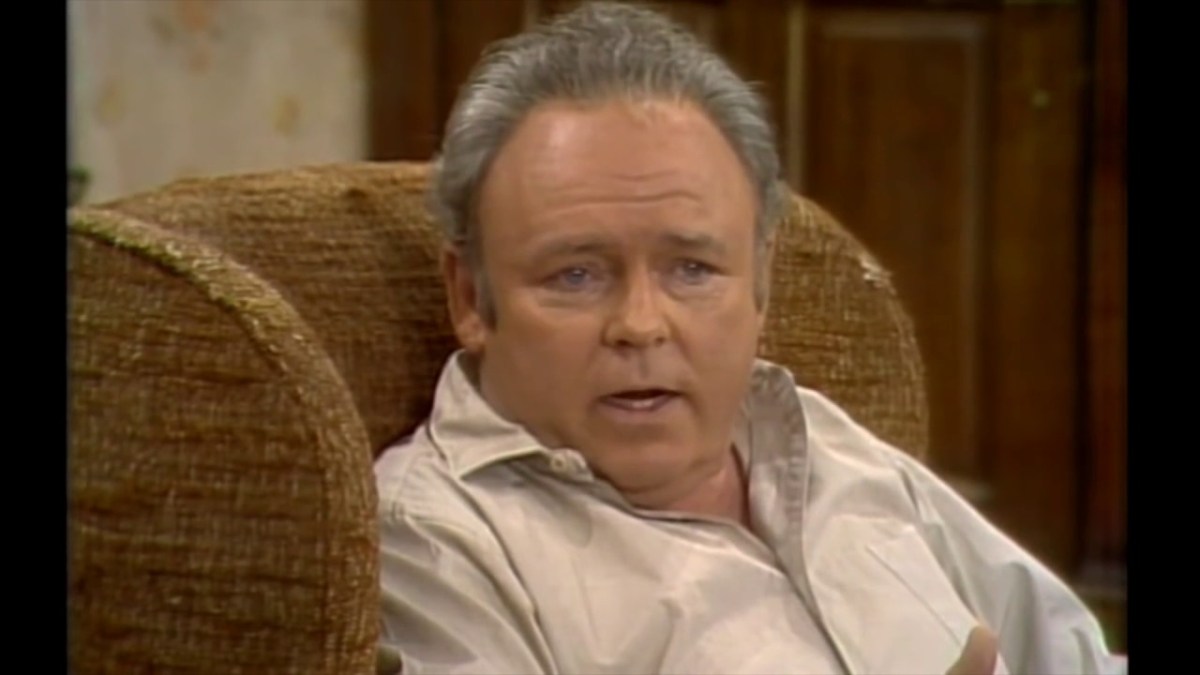
Remember Archie Bunker? If you’re around my age–mid forties to mid fifties–or older you do. And if you didn’t know him personally, you knew someone like him.
Your uncle…Your grandfather…The neighbor across the street.
The country was full of men like him back in the day.
Archie was a grumpy old man, except he really wasn’t that old. He was a middle aged guy stuck in a time warp of sameness…prematurely gray, paunchy, always in work pants, he looked the same when he was fifty as he did when he was thirty and vice versa
He enjoyed his paper, his beer…boxing and baseball on television….fat cigars and his chair. Especially his chair. Nobody could sit in that chair but Archie. Nobody.
And it wasn’t even that great of a chair…at least it was better than his wife’s. Edith. Her chair looked flat out uncomfortable.
Edith was a nice lady. And Archie loved her. He really did…Oh, he talked badly to her. Abusively… He was so domineering. And controlling.
I’m not saying that he cursed her, or, God forbid, raised his hand to her. He didn’t…He would have never done that, but the way he would tell her to stifle herself when she said something he didn’t like or if she was just getting on his nerves..
That kind of stuff wouldn’t fly today. And it shouldn’t.
Should have never flown then. Sadly, those attitudes weren’t that unusual in the 70s. There was a lot of backlash to the civil rights movement in the suburbs then…to women’s lib…to the intelligentsia…There were a lot more blue collar middle class people in the suburbs then.
The Bunkers lived in Queens, in a two bedroom, one bath, row house. They were probably about two rungs, on the plus side, from being lower middle-class. But they weren’t and that’s what counted.
Archie worked hard as a dock foreman to provide for his family. He really did. And he took good care of them.
It wasn’t easy for him either. He had to drop out of high school so he could work and take care of his mother when his dad died. From there he served in the Army Air Corps during WWII where he received the purple heart for being shot in the butt…
Yeah, that’s right. Archie got shot in the butt, but here’s the deal…he was on some cushy gig where he didn’t have to see combat, only he did see it. And when he saw it, he defended his country. And his friends. And himself.
He was a good father to Gloria, too. Of course, he wanted a boy, but from the moment she was born she had him wrapped around her finger.
Oh, he groused at her, too. A lot. But when Gloria miscarried her first baby–Archie’s grandson that he was so excited about–all he really cared about was her.
The way he sat on the side of her bed…and for the first time in his life, probably, he was speechless…the way he looked at her, so worried, just wanting her to be okay, said it all.
He was like that with Edith too. Very loyal to her.
And sometimes, ever so rarely, Edith would let him have it. She’d put her foot down and put him in his place. Those times were priceless.
But in the same way that Archie was misogynistic–because, make no mistake, he was–he was racist, too. He was unapologetically racist, though he would tell you that he wasn’t.
The fact is, Archie Bunker was so racist–it came so naturally to him–that he didn’t know the difference. To him, the Ku Klux Klan was racist, yes, but he was completely numb to the reality that they–the Ku Klux Klan–espoused 90% of his own political views…
That he was an equal opportunity insulter…he ribbed his son-in-law Mike, mercilessly about being Polish…he upbraided Catholics for being Catholic and Puerto Ricans for being Puerto Rican…that he believed there should be no violence and that there were some good people who were minorities was enough to keep him humane, but just barely.
Racism. Misogyny. Inexcusable then and inexcusable now.
Should it matter that he was a hard working, faithful husband and father that was wounded while serving his country during wartime? Are those enough attributes, enough mitigating factors to push Archie over the Mason/Dixon Line and onto the good side?…
That’s right, fellow Southerners, I said the good side. The South–during the Civil War–were the bad guys. Get over it..
I say yes.
Then again, I’m a middle aged white woman. I would say yes.
Rick Danko conveys so much hurt, loneliness and heartache in this song. You can feel his pain with every word he sings. It’s one of the best vocals of pure suffering I’ve ever heard. He sounds like a man at the end of his tether because of a hopeless love affair.
The Band’s later material sometimes gets neglected since their first two albums were so good. This song was on the Northern Lights – Southern Cross album released in 1975.
The album peaked at #26 in the Billboard 100 and #27 in Canada.
Robbie Robertson: “I thought about the song in terms of saying that time heals all wounds,” he said. “Except in some cases, and this was one of those cases.”
Robbie Robertson: “I wrote this song specifically for Rick to sing, and when we first started discovering the possibilities, it kept expanding to more levels of emotion. What Garth and I could add to finalize the statement of this song was purely instinctual.”
From Songfacts
This was included on the soundtrack to The Last Waltz, a 1978 documentary about The Band directed by Martin Scorsese, named after the group’s 1976 concert at the Winterland Ballroom in San Francisco. The group also performed the song during the concert, which was a basis for the film.
This was included on the sound Solomon Burke covered this on the 2005 album Make Do With What You Got. Other covers include My Morning Jacket on the 2007 album Endless Highway: The Music of The Band and the 2012 album Love for Levon, and Over the Rhine on the 2013 album Meet Me at the Edge of the World.
It Makes No Difference
It makes no difference where I turn I can’t get over you and the flame still burns It makes no difference, night or day The shadow never seems to fade away
And the sun don’t shine anymore And the rains fall down on my door
Now there’s no love As true as the love That dies untold But the clouds never hung so low before
It makes no difference how far I go Like a scar the hurt will always show It makes no difference who I meet They’re just a face in the crowd On a dead-end street And the sun don’t shine anymore And the rains fall down on my door
These old love letters Well, I just can’t keep Cause like the gambler says Read ’em and weep And the dawn don’t rescue me no more
Without your love I’m nothing at all Like an empty hall it’s a lonely fall Since you’ve gone it’s a losing battle Stampeding cattle They rattle the walls
And the sun don’t shine anymore And the rains fall down on my door
Well, I love you so much It’s all I can do Just to keep myself from telling you That I never felt so alone before
The song was written by Chips Moman and Bobby Emmons. Waylon Jennings was in Moman’s American Studios in Nashville recording Luckenbach, Texas when Willie Nelson happened to drop by for no particular reason.
Jennings saw him and asked him to sing with him on this. So Willie ended up adding his voice to the final verse, providing a couple of lyrical changes in the process.
Chips Moman used reverse psychology on Waylon to get him to record this song. Chips told him “here’s a song that you can’t cut because I’ve got it promised to someone else, but can I get your opinion on it?” It worked, Waylon took the bait and told Moman “I’m gonna cut that song.”|
Suddenly the tiny town of Luckenbach was besieged by network reporters and camera crews. Over one hundred city-limit signs have been stolen from the town since Jennings’ famous record was first released in 1977, and ironically neither Waylon nor the song’s writers Chips Moman and Bobby Emmons ever made their way to Luckenbach, Texas.
The song peaked at #1 in the Billboard Country Charts, #25 in the Billboard 100, and #1 in the Canadian Country Charts, and #46 in the Canadian RPM Charts in 1977.
Luckenbach Texas
Let’s go to Luckenbach, Texas With Waylon and Willie and the boys This successful life we’re livin’ Got us feuding like the Hatfields and McCoys Between Hank Williams’ pain songs and Newbury’s train songs and “Blue Eyes Cryin’ in the Rain” Out in Luckenbach, Texas, ain’t nobody feelin’ no pain
So baby, let’s sell your diamond ring Buy some boots and faded jeans and go away This coat and tie is choking me In your high society, you cry all day We’ve been so busy keepin’ up with the Jones Four car garage and we’re still building on Maybe it’s time we got back to the basics of love
Let’s go to Luckenbach, Texas With Waylon and Willie and the boys This successful life we’re livin’ got us feudin’ Like the Hatfield and McCoys Between Hank Williams’ pain songs and Newbury’s train songs and “Blue Eyes Cryin’ in the Rain” Out in Luckenbach, Texas, ain’t nobody feelin’ no pain
Let’s go to Luckenbach, Texas Willie and Waylon and the boys This successful life we’re livin’s got us feudin’ Like the Hatfield and McCoys Between Hank Williams’ pain songs And Jerry Jeff’s train songs and “Blue Eyes Cryin’ in the Rain” Out in Luckenbach, Texas, there ain’t nobody feelin’ no pain
Last Train to London was on the Discovery album released in 1979. Dave (A Sound Day) covered this album and he has some great trivia on who the model was on the cover. Click on there and see who it was…it will probably surprise you.
I had this album and there are two songs I really liked off of it other than the big hits. One of them is this one and the other was The Diary of Horace Wimp.
Jeff was happy to admit that he appreciated disco. Shine a Little Love and Last Train To London certainly pointed that way.
This album generated four top-ten UK singles, a successful new milestone in spite of the fact that this was the first which the group did not support with a tour.
Last Train To London peaked at #39 in the Billboard 100, #28 in Canada, and #8 in the UK.
Discovery peaked at #5 in the Billboard Album Chart, #1 in the UK and #3 in Canada.
Jeff Lynne: “I love disco. I love it and I always have loved it, ever since I first heard that ‘bang, bang, bang, bang!’ And I realized, ‘Wow! You just keep the bangs in and fill the holes in with something else.’ And it worked. I mean Shine A Little Love is the perfect example, right there. And Last Train To London. I really enjoyed doing disco.”
Last Train To London
It was 9-29, 9-29 back street big city The Sun was going’ down, there was music all around It felt so right
It was one of those nights One of those nights when you feel the world stop turning You were standing there, there was music in the air I should have been away, but I knew I’d have to stay
Last train to London, just heading out Last train to London, just leaving town But I really want tonight to last forever I really wanna be with you Let the music play on down the line tonight
It was one of those nights One of those nights when you feel the fire is burning Everybody was there, everybody to share, it felt so right
There you were on your own Looking like you were the only one around I had to be with you, nothing else that I could do I should have been away, but I knew I’d have to say
Last train to London, just heading out Last train to London, just leaving town But I really want tonight to last forever I really wanna be with you Let the music play on down the line tonight
Underneath a starry sky Time was still but hours must really have rushed by I didn’t realize, but love was in your eyes I really should have gone, but love went on and on
Last train to London, just heading out Last train to London, just leaving town But I really want tonight to last forever I really wanna be with you Let the music play on down the line tonight
H.R. Pufnstuf Who’s your friend when things get rough? H.R. Pufnstuf Can’t do a little ’cause he can’t do enough
I wasn’t old enough to catch the first run of this but I caught the show reruns in the mid-seventies. It was so colorful and intriguing. I always loved this show. Jack Wild did a great job as Jimmy who sails his ship to this God forsaken island. Talking trees, flute, mushrooms, and Witchiepoo always trying to nab Jimmy’s gold talking flute. The mayor of the island was H.R. Pufnstuf…a dragon type creature I think.
The character HR Pufnstuf was created for the 1968 World’s Fairin San Antonio, Texas. The show lasted one season…1969-1970. They made 17 episodes and replayed them over and over. The show was an immediate hit, so NBC renewed it for a second season, but it had become such an overwhelming money pit for the producers that they declined and the network was forced to air reruns.
It’s long been rumored that the Krofft brothers were deeply influenced by marijuana and LSD when they were making H.R. Pufnstuf…uh…”Hand Rolled Puffin’ Stuff.” Despite these obvious parallels, the brothers deny using drugs – at least during work hours.
Marty Krofft: “We screwed with every kid’s mind,”such as H.R. Pufnstuf, Lidsville and Land of the Lost — that he created with brother Sid in the early 1970s. “There’s an edge. Disney doesn’t have an edge.”
Marty Krofft: “No drugs involved. You can’t do drugs when you’re making shows. Maybe after, but not during. We’re bizarre, that’s all.”
On a side note… The Kroffts sued McDonalds for copyright infringement because Mayor McCheese and Big Mac bore a strong resemblance to H. R. Pufnstuf. They also noted similarities between the living trees and apple pie trees…McDonalds clearly did borrow from H.R. Pufnstuff.
H.R. Pufnstuf
H.R. Pufnstuf Who’s your friend when things get rough? H.R. Pufnstuf Can’t do a little ’cause he can’t do enough
Once upon a summertime Just a dream from yesterday A boy and his magic golden flute Heard a boat from off the bay “Come and play with me, Jimmy Come and play with me And I will take you on a trip Far across the sea”
But the boat belonged to a kooky old witch Who had in mind the flute to snitch From her broom-broom in the sky She watched her plans materialize She waved her wand The beautiful boat was gone The skies grew dark, the sea grew rough And the boat sailed on and on and on and on and on and on
H.R. Pufnstuf Who’s your friend when things get rough? H.R. Pufnstuf Can’t do a little ’cause he can’t do enough
But Pufnstuf was watching, too And knew exactly what to do He saw the witch’s boat attack And as the boy was fighting back He called his rescue racer crew As often they’d rehearsed And off to save the boy they flew But who would get there first?
H.R. Pufnstuf Who’s your friend when things get rough? H.R. Pufnstuf Can’t do a little ’cause he can’t do enough
But now the boy had washed ashore Puf arrived to save the day Which made the witch so mad and sore She shook her fist and screamed away
H.R. Pufnstuf Who’s your friend when things get rough? H.R. Pufnstuf Can’t do a little ’cause he can’t do enough
Here are a few short Keith Moon stories. If you want an entertaining book…get Full Moon by Keith Moon’s assistant. Peter “Dougal” Butler.
I didn’t get all the Keith Moon posts out yesterday so I wanted to post this today…I made sure all of these were short so it would not take too much time.
Helen Mirren’s Keith Moon Story
Alice Cooper “If you could live with him…he was the best drummer of all time”









 PowerPop... An Eclectic Collection of Pop Culture