Ringo Starr and Robin Cruikshank formed a partnership in 1969 and they were located in the Beatles Apple building on Savile Row. In 1972 relocated with Apple to 54 St James Street.
Robin had originally worked for Ringo to design a stainless steel fireplace for Ringo and his wife Maureen. Ringo started to give Robin some suggestions and the two started to worked together on furniture and different designs for years after that. The partnership lasted until 1986 and after that Ringo let Robin use the name so Cruikshank could continue different projects.
If you ever run across anything made by RoR you probably have something very valuable.
Below was designed by RoR. I can’t imagine what it would have cost. I would take it in a second.
I remember seeing the below item on the news. Very expensive because they didn’t use reproduction parts…they all had authentic Roll Royce grills.
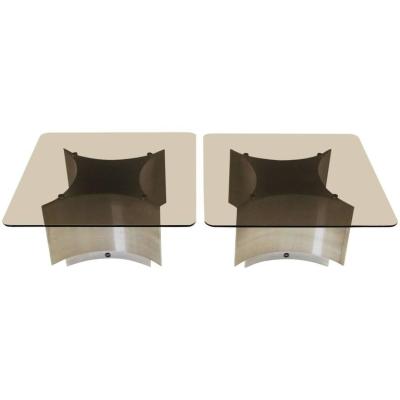
Here are some tables by RoR.
Below is Robin’s website featuring his new designs plus much more history.
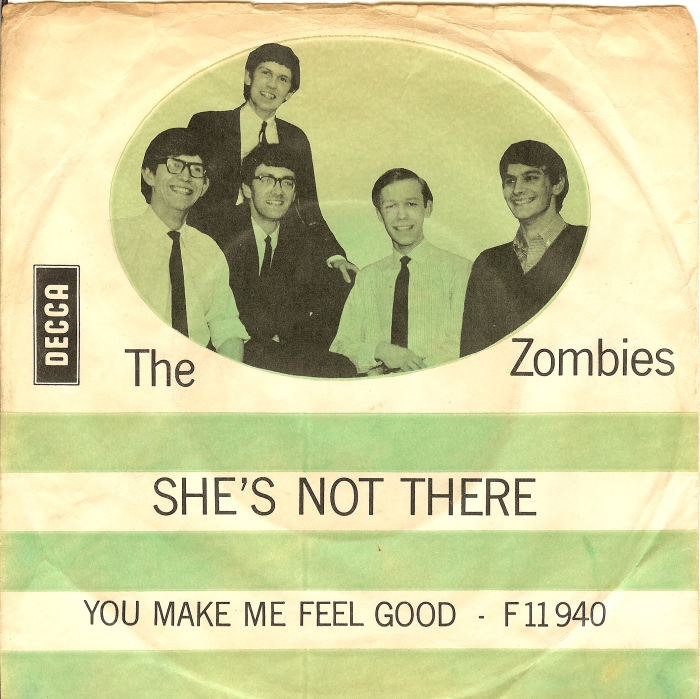
The Zombies were a bands band. They were very talented musicians who had the respect of other bands. The song peaked at #1 in the Billboard 100, #2 in Canada, and #12 in the Uk in 1964. They sounded like no other band at the time with a jazz/pop feel.
The group signed to Decca Records, and their keyboard player Rod Argent came up with this song for the session. It tells the story of an alluring woman who won’t be tied down to one man – the singer wants to tell us all about her, but he can only use words since she’s not there.
This was The Zombies first single. The band also recorded a cover of Gershwin’s “Summertime” for their first album, which was considered for the band’s first single, but “She’s Not There” got the nod. Boosted by radio play on New York powerhouse WINS, the song became a hit in the US.
She’s Not There Well, no one told me about her The way she lied Well, no one told me about her How many people cried
But it’s too late to say you’re sorry How would I know? Why should I care? Please don’t bother trying to find her She’s not there
Well, let me tell you ’bout the way she looked The way she acts and the color of her hair Her voice was soft and cool Her eyes were clear and bright But she’s not there
Well, no one told me about her What could I do? Well, no one told me about her Though they all knew
But it’s too late to say you’re sorry How would I know? Why should I care? Please don’t bother trying to find her She’s not there
Well, let me tell you ’bout the way she looked The way she acts and the color of her hair Her voice was soft and cool Her eyes were clear and bright But she’s not there
But it’s too late to say you’re sorry How would I know? Why should I care? Please don’t bother trying to find her She’s not there
Well, let me tell you about the way she looked The way she acts and the color of her hair Her voice was soft and cool Her eyes were clear and bright But she’s not there
Clackers or… death on a string came out in the 1960s. They were also called Ker-Bangers, Klackers, Click-Clacks, Klik Klaks, Klappers, and Zonkers.
I remember a kid giving me his Clackers. The object I guess was swinging them up and down until they hit each other and made a “clack” sound. The sound I got the most was a thud sound with plastic hitting my skin. They were also known to shatter and the pieces fly in all different directions.
They were similar to Bolas…a weapon used by cowboys to throw at cattle or game to wrap around their legs…sometimes breaking them. Yep…lets redesign this and give it to kids.
I never minded somewhat dangerous toys but I didn’t get too much pleasure out of these.
I had a waterbed in the early 80s as a young teen. I always liked it and thought it was comfortable. Two things I didn’t like about it was… if there was a leak you would not know until 2:30 am and on a school night…always. If the heater was either turned down or went out…you would wake up as a human popsicle at…you guessed it… 2:30 am. Nothing ever happened to it at noon on a Saturday.
in the early 1800s. Scottish physician Dr. Neil Arnott devised a water-filled bed to prevent bedsores in invalids.
In 1873, Sir James Paget, of St. Bartholomew Hospital in London, presented the waterbed designed by Dr. Arnott as a treatment and prevention of ulcers, a common condition at this time. Paget found that waterbeds allowed for even pressure distribution over the entire body. The only problem was that you could not regulate the water temperature.
In 1968 Charles Hall presented the waterbed as his Master’s Thesis project to his San Francisco State University design class. While showcasing their work, students rotated through workshops to see each other’s inventions. Once they reached Hall’s project – a vinyl mattress filled with heated water – the class never left. “Everybody just ended up frolicking on the waterbed,” Hall recalls.
Hall’s first waterbed mattress was called ‘the Pleasure Pit’ and it quickly gained popularity with the hippie culture of the 1960’s and 1970’s.
Time Magazine in 1971 about waterbeds. “Playboy Tycoon Hugh Hefner has one–king-size, of course, and covered with Tasmanian opossum. The growing number of manufacturers and distributors, with such appropriate names as Aquarius Products, the Water Works, Innerspace Environments, Joyapeutic Aqua Beds and the Wet Dream, can hardly meet the demand. They have sold more than 15,000 since August.”
Sex always sells… one ad stated. “Two things are better on a waterbed. One of them is sleep.” and “She’ll admire you for your car, she’ll respect you for your position, but she’ll love you for your waterbed.”
By the 80s waterbeds were in the suburbs and gaining in popularity. In 1987, waterbeds had achieved their peak, representing 22 percent of all U.S. mattress sales.
At the end of the 1980s waterbed sales fell off. Some say it was because they were too connected to the 70s that had fallen out of favor (the horror!)… but most think it was because of the maintenance and pain in setting them up and moving them. Also, you had to make sure your floor was braced enough to have one depending on the size and weight of it.
Today you can still buy them but most are designed thinner to hold less water in rolls instead of sleeping on a lake beneath you.
I had mine until I was 20 with plenty of patches but it still held water and me… but I left it behind when I moved.
This egg-shaped one below I would gladly take home now
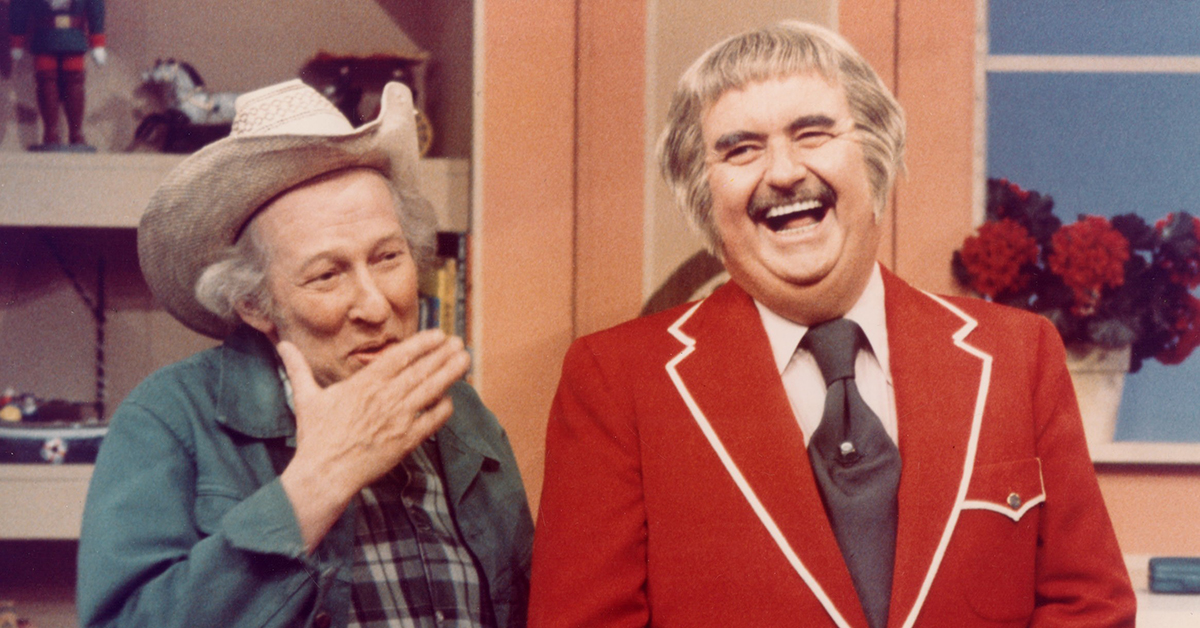
Bob Keeshan played Clarabell on the Howdy Doody Show. In 1955 CBS offered Keeshan his own children’s show, which became Captain Kangaroo. Captain Kangaroo ran from 1955 to 1984. The show spanned many generations of kids during that time.
Keeshan was Captain Kangaroo and every morning I would look forward to seeing The Captain, Mr. Green Jeans, Bunny Rabbit, Dancing Bear, and Mr. Moose. I knew that Mr. Moose was setting the Captain up for the ritual ping-pong drop on the Captain’s head that never got old.
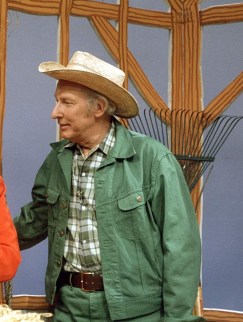
Mr. Green Jeans (Hugh Brannum) would have different animals at times to show. He also portrayed the Professor, Greeno the Clown, the New Old Folk Singer, and Mr. Bainter on the show.
The Painter was played by Gus “Cosmo” Allegretti who also handled the puppets and Dancing Bear.
One one of my favorite sections was the cartoon “Simon in the Land of Chalk Drawings” that would appear on some shows. Simon had a magic blackboard and anything he drew became real.
Mr. Moose could be a slight smart aleck so I did like him. He also hung out with Bunny Rabbit and the Dancing Bear.
Captain Kangaroo’s place with his cast of characters was a nice place to visit as a kid.
I just rediscovered this song from watching Breaking Bad recently.
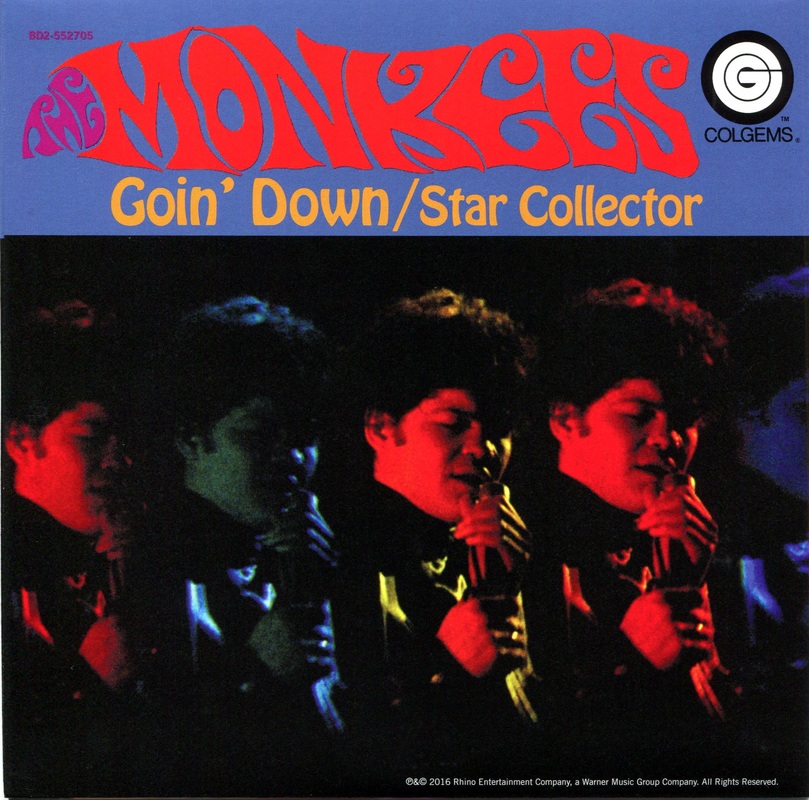
The Monkees “Goin’ Down” was released as the B side to Daydream Believer and reached only #104 in the Billboard 100. It was written by all four members of the Monkees and Diane Hildebrand. Micky Dolenz has a good pop/rock voice.
From Wiki
In 2012, the composition met with controversy for its unexpected use in the television show, Breaking Bad. Dolenz, who was unaware an abridged version of “Goin’ Down” was to be featured on the show, commented, “‘Goin’ Down’ has nothing to do with drugs, obviously. And I certainly don’t condone meth — that is nasty stuff that kills a lot of people and ruins a lot of lives. … On the other hand, I like the TV show, it’s very well-made. … And no, I didn’t make a penny”.
Peter Tork says this was based on Mose Allison’s “Parchment Farm.” It’s about a drunken guy who “ends it all” by jumping into the river, and immediately regrets it as he’s “Goin’ Down.”
Drummer Micky Dolenz sang lead.
All the Monkees got writer’s credit on this song.
This was released as the B-side of “Daydream Believer.”
Goin’ Down
Sock it to me…
Floatin’ down the river, With a saturated liver, And I wish I could forgive her, But I do believe she meant it, When she told me to forget it, And I bet she will regret it, When they find me in the morning wet and drowned. And the word gets ’round. I’m goin’ down I’m goin’ down
A-comin’ up for air, It’s pretty stuffy under there, I’d like to say I didn’t care, But I forgot to leave a note, And it’s so hard to stay afloat, I’m soakin’ wet without a boat, And I knew I should have taken off my shoes. Ah, it’s front-page news. Goin’ down Goin’ down
Hep Hep Hep Hep Hep Hep Hep Hep Hep Hep Hep Hep Hep
I wish I had another drink, It wouldn’t be so hard to sink, I should have taken time to think, Besides I got the picture straight, She must have had another date, I didn’t need this extra weight, I wish that I could see the way to shore. I don’t want no more. Goin’ down I’m goin’ down
And now I see the life I led, I slept it all away in bed, I shoulda learned to swim instead, And now it’s really got me stumped, I can’t remember why I jumped, I’d like to get my tummy pumped, I can’t believe they drink this stuff in town. This dirty brown. Goin’ down Goin’ down
I’m goin’ down, hep Goin’ down Hep Hep Goin’ down Dga Goin’ down goin’ down Goin’ down goin’ down Goin’ down
I wish I’d looked before I leaped, I didn’t know it was so deep. Been down so far I don’t get wet, I haven’t touched the bottom yet. This river scene is gettin’ old, I’m hungry, sleepy, wet and cold. She told me to forget it nice, I should’ve taken her advice. I only want to go on home, I’d gladly leave that girl alone. Wha-what a way to spend the night, If I don’t drown, I’ll die of fright. My pappy taught me how to float, But I can’t swim a single note. He threw me in to teach me how, I stayed there floatin’ like a mama cow. And now I’ve floated way down stream, I know this has to be a dream. If I could find my way to shore, I’d never, never do this anymore. I’ll give you three; I’ve been down nine, I’m goin’ down just one more time. Goin’ down Ah dga, goin’ down Dga goin’ down Gah gah, goin’ down I’m goin’ down Go-go-go-goin’ down Back back back back home Back back back home Back back back back home Goin’ down Goin’ down I’m goin’ down I’m goin’ back home Back to my friends Back to the one Back to the truth I’m goin’ home Aahh
Now the sky is gettin’ light, And everything will be all right. Think I’ve finally got the knack, Just floatin’ here lazy on my back. I never really liked that town, I think I’ll ride the river down. Just movin’ slow and floatin’ free, There’s a river swingin’ under me. Waving back to the folks on shore, I should have thought of this before. I’m floatin’ on down to New Orleans, Gonna pick up on some swingin’ scenes. I’m gonna know me a better day, I’ll go down groovin’ all the way. Goin’ down A-ahh Go-go-goin’ down
I’m goin’ down Back back back to New Orleans Back back back back home I’m go-goin’ down A-hep hep hep, hep I’m goin’ on down Hep, hep, hep, hep I’m go-go-go-goin’ down I’m goin’ down Goin’ down Go go Auhh Hep, hep hep, hep Hep, hep hep Dga, dga dga, dga Dga, dga dga, dga Dga, dga dga, dga Dga, dga dga Got ta go Got ta go Got ta go back home I’m goin’ down-down-down-down-down-down the river Down-da-down-down-down the river, yeah Gotta go gotta go Gotta go gotta go Down-nh-nh-nh Hep, auh, hep, hep (Fade out)
I had this as a kid and would play it at family gatherings at our house. I bought an original one from 1969 from eBay a couple of years ago and still once in a while will play it. It plays like a carnival game. My son didn’t think much of it at first but when he started to play it…he liked it.
The game came out in 1969 by the Ideal Toy Company. The game was designed by Marvin Glass and Associates and created by Hank Kramer, Larry Reiner, and Walter Moe.
They still sell a version of it today.
It’s tic tac toe with bean bags…that about sums it up. Go Go Go for 3 in a row!
Now… please tell me what the little girl says after the dog drops the bag…please
Always been one of my favorites of the Small Faces. It came off the great album Ogdens’ Nut Gone Flake. The Small Faces didn’t intend to release this song. Marriott was against his manager Andrew Loog Oldham’s decision to release this as a single and that was one reason why he left the group shortly afterward. The band didn’t take the song seriously and made it into a joke. Steve sang some of the voices with a cockney accent.
They were touring Germany and they picked up a music paper and saw it was not only released but a hit. Steve wanted a tougher image for the band and this was more of a pop song.
This Steve Marriott penned song has a traditional East End of London Music Hall sound. Keyboardist Ian McLagan recalled to Uncut magazine: “When Steve came in with this it was slower. We started taking the piss out of it while he was out of the room. The ‘Root-ti-doo-ti-di-day’ thing stop and he laughed when he came back in and heard us. So we cut it like that. It was a piss take!”
Marriott sang much of the song in a greatly exaggerated cockney accent. Drummer Kenney Jones told Uncut : “Steve had been a child actor, he was the first Artful Dodger in Lionel Bart’s Oliver in the West End. He brought back that theatricality to this.”
Lazy Sunday
A-wouldn’t it be nice to get on with me neighbours? But they make it very clear, yhey’ve got no room for ravers They stop me from groovin’, they bang on me wall They doing me crust in, it’s no good at all, ah Lazy Sunday afternoon I’ve got no mind to worry I close my eyes and drift away-a Here we all are sittin’ in a rainbow Gor blimey, hello Mrs. Jones, how’s old Bert’s lumbago? (he mustn’t grumble) (Tweedle-dee) I’ll sing you a song with no words and no tune (twiddly-dee) To sing in your party while you souse at the moon (oh yeah) Lazy Sunday afternoon, I’ve got no mind to worry Close my eyes and drift away-a
Root-de-doo-de-doo, a-root-de-doot-de-doy-di A-root-de-doot-de-dum, a-ree-de-dee-de-doo-dee (doo-doo, doo-doo) There’s no one to hear me, there’s nothing to say And no one can stop me from feeling this way, yeah Lazy Sunday afternoon I’ve got no mind to worry Close my eyes and drift away Lazy Sunday afternoon I’ve got no mind to worry Close my eyes and drift a- Close my mind and drift away, close my eyes and drift away
The title alone made me want to listen to this song. This song went to #2 in the U.S. Billboard Hot Country Singles chart and #1 in the Canadian Country Charts in 1968. Rod Stewart also made a great cover of this song. The Stewart version is the one I listen to the most, but I like both versions.
Jerry Lee Lewis took the song to #94 in the Billboard 100 in 1968, but that’s the only version of the song to chart in that country. Rod Stewart’s 1972 rendition was a much bigger hit in the UK, even though the song is very American in its subject matter.
This was written by Glen Sutton, who was the first husband of country singer Lynn Anderson. They married in 1968 and divorced in 1977. Anderson recorded a version on her 1971 album How Can I Unlove You.
It’s late and she is waiting, and I know I must go home, But every time I start to leave, they play another song, Then someone buys another round and whatever drinks are free, What made Milwaukee famous has made a loser out of me.
Baby’s begged me not to go, so many times before, She said love and happiness can’t live behind those swingin’ doors, Now she’s gone and I’m to blame, too late I finally see, What made Milwaukee famous has made a loser out of me.
Baby’s begged me not to go, so many times before, She said love and happiness can’t live behind those swingin’ doors, Now she’s gone and I’m to blame, too late I finally see, What made Milwaukee famous has made a loser out of me.
What made Milwaukee famous has made a loser out of me, What made Milwaukee famous has made a loser out of me. What made Milwaukee famous has made a loser out of me.
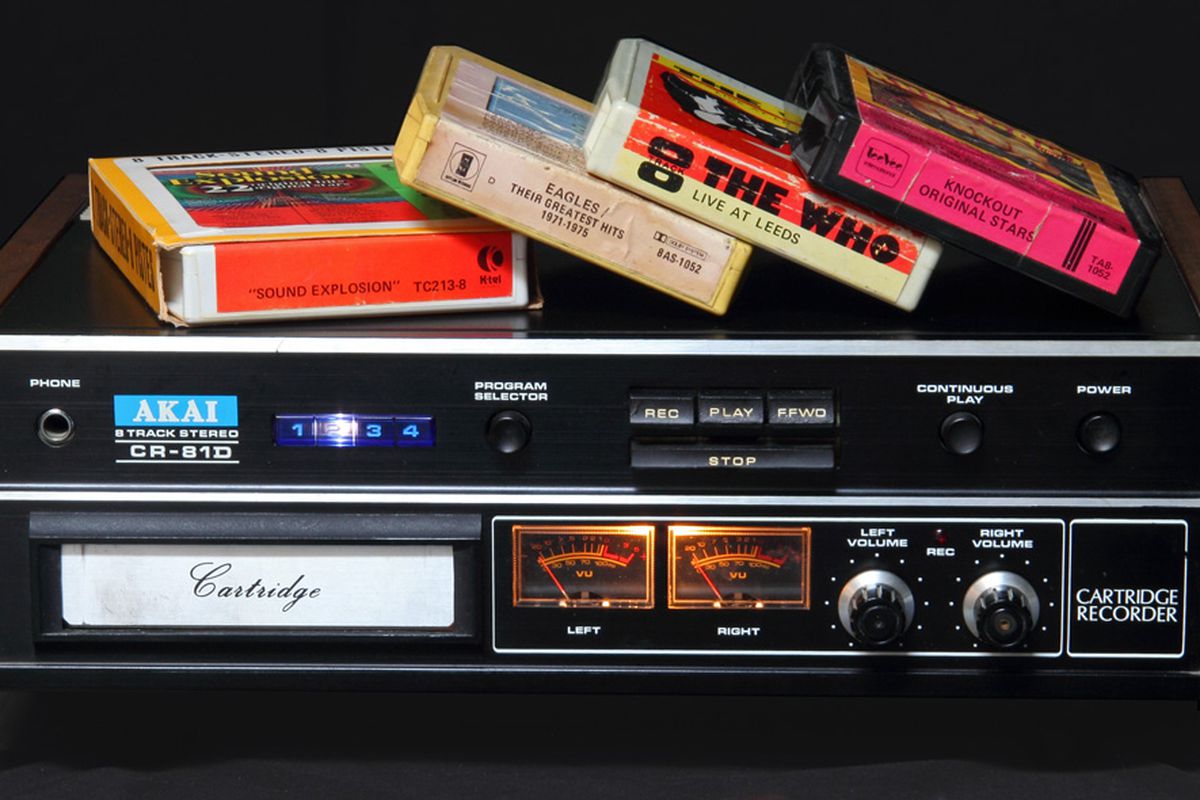
I had a stereo that had a record-able 8-track system built in. I would record straight off the radio to the 8-track and from records. I will add that it could be a miserable format to listen to music. If you had a favorite song that you wanted to hear a couple times in a row…get ready to wait till it came back around and then for the infamous “click” and you would switch tracks…and either wait some more or miss the beginning.
But there is more… you may be listening to a song and suddenly the song fades out for a while because it’s too long for the track and then finally the “click” and it finishes out on the next track.
William Powell Lear, the man behind LearJet, was also the inventor of the 8-track cartridge tape system. In 1964 William Lear convinced Ford to install the 8-track in their cars.
In September 1965, Ford Motor Company offered 8-track players as an option in their 1966 model cars. A Ford spokesperson reported that 65,000 players were installed in the first year. As a result of the popularity, the 8-track player soon became standard in all Ford cars.
In 1966 home units and portable units were offered. Now people could share their tapes with each other. The peak years of the eight-track were 1967 through 1975. Then, improvements in the tape quality of smaller cassettes and decreasing quality in eight-tracks led consumers away from the eight-track tape.
The last official release on 8-track was Fleetwood Mac’s Greatest Hits in 1988. By then though Compact Disc had taken over the market.
I did have quite a collection of official 8-tracks and self-made 8-tracks. I also have an old 8-track system in my closet…hey you never know.
This video is a must. It shows an Eight Track Museum. It is interesting.
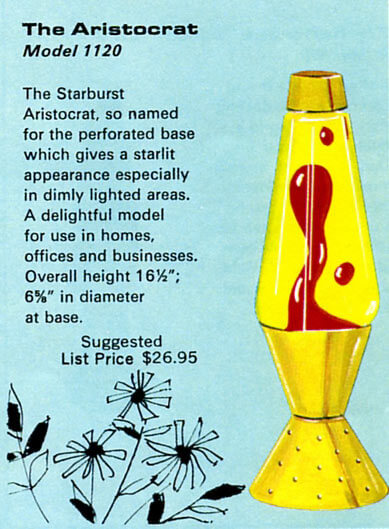
I own a couple of lava lamps and I run them quite a bit. I didn’t get my first one until the 80s and I still have it. They do nothing but do their thing…and they create a mood. I have one in my office at work…it helps at times.
The lava lamp was invented in 1963 by Edward Craven Walker. He was passing the time in a pub when he noticed a homemade egg timer crafted from a cocktail shaker filled with alien-looking liquids bubbling on a stove top. Craven Walker’s company was manufacturing millions of “Astro Lamps,” as he called them, per year. In 1965, he sold the U.S. manufacturing rights to a company called Lava Lite.
Lava lamps caught on in the sixties and continued to be big to the late seventies. The sales cooled off until the Austin Power movies and the sales started to pick up again in the hundreds of thousands a year. Now Lava Lite supplies millions of lava lamps to retailers.
Oh, how this toy teased me as a kid. I would start drawing something halfway decent and then I would hit a wall because I would get so close to what I wanted and then make a wrong move…then came the shake part and start all over again. The definition of insanity would be this toy in my hands…but yet I still tried. Some people can do interesting things with it…I’m not one of those people.
In the late 50s French electrical technician André Cassagnes applied his experience with the clinging properties of an electrostatic charge to invent a drawing toy with no spare parts.
The Ohio Art Company took a look at the toy and invested $25,000. It has sold more than 175 million units worldwide since it hit stores on July 12, 1960.
They have new versions of it now with more options.
One of my favorite toys growing up. To this day I like collecting any vintage lighting fixture like soft drink clocks or signs probably because of this toy. They came with designs that you could use to create different cartoons and clowns but I never used those. I liked to create my own masterpieces.
This toy allowed you to be creative in a very different way. It brought out the artistic side in you. You could design different things and it would light up your room in the dark with colors.
Lite-Brite was invented by Joseph M. Burck, a senior designer at Chicago toy and game design company Marvin Glass and Associates.
Of course…when I got older I would make crude messages on the Lite Brite for friends.
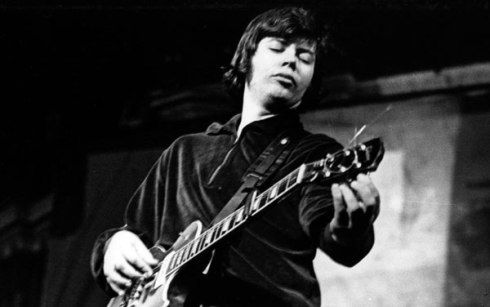
Alan Wilson is a forgotten figure who was a gifted musician. He died in 1970 under strange circumstances outdoors in a sleeping bag near his band’s lead singer’s (Bob Hite) house. He was dead at the age of 27. Jimi Hendrix would die in a couple of weeks and Janis Joplin would follow a month later…all of them were age 27.
Alan grew up in Boston, Massachusetts where he became a music major at Boston University. He was a frequent player at the Cambridge coffeehouse folk-blues circuit. Alan ended up a blues scholar. He had a massive collection of old blues records and was a walking encyclopedia of the blues. Wilson’s nickname, “Blind Owl,” was bestowed upon him by friend John Fahey during a road trip in 1965 from Boston to Los Angeles and was a reference to the extra-thick lenses Wilson wore.
Alan moved to Los Angeles and met Bob “The Bear” Hite and in 1965 started Canned Heat. The group decided to take their name from “Canned Heat Blues,” an obscure 1928 track by bluesman Tommy Johnson that described the drug high achieved through drinking the household product Sterno.
In 1967, after appearing at the Monterey Pop Festival, Canned Heat signed to Liberty Records. They made a self-titled album that year and it peaked at #76 on the Billboard Charts. In 1968 they released “Boogie with Canned Heat” which made it to number 16. They followed that album with “Living the Blues”(#18) and in 1969 released album Hallelujah(#37).
Their appearance at Woodstock raised their stock higher. They had two hit singles both sung by Alan Wilson, Going Up Country (1968 ) and On The Road Again (1969). Alan wasn’t the lead singer of Canned Heat but he sang the two best-known singles by them. They were both written by him and based off old blues songs. His unusual voice came from him trying to mimic the voice of old blues singers.
He was very intelligent, awkward, suffered from depression and was not a prototypical rock star. Alan was a serious environmentalist trying to save the Redwood trees. He would sleep outside often to be alone with nature. Alan Wilson was a superb slide guitar and harmonica player. John Lee Hooker said that Wilson was “the greatest harmonica player who ever lived.”
He was a big fan of Eddie James House, Jr. who was was better known as “Son House,” the great blues artist who had retired. He not only retired but was an alcoholic and had not played guitar in years and could not remember his old songs and slide parts from the 20s and 30s.Son House is said to have tutored Robert Johnson. John Hammond asked Alan Wilson to teach the 63-year-old Son House how to play like Son House again. Wilson knew his old records and licks and taught them to Son House who relearned them. House was later signed to a contract.
It gave Son House a career again and he kept playing till he retired again in 1974 after being rediscovered by a new generation. You can hear them both together on the Son House album John the Revelator: The 1970 London Sessions.
Alan died on September 3, 1970. No one knows if it was a suicide or an accidental overdose of Seconal.
Canned Heat continues to this day but they were never as successful after Alan passed away.
For a complete look at Alan Wilson go here to http://www.blindowl.net/index.html
it’s a great site. Below is an essay he wrote in 1970 about the Redwoods.
“Grim Harvest”
“The redwoods of California are the tallest living things on earth, nearly the oldest, and among the most beautiful to boot. They dominated the woods of the northern hemi-sphere in the time of the dinosaurs, a time when no mammal, flower, or blade of grass had yet appeared on earth. The Ice Age nearly exterminated them – of the once vast redwood forest only a remnant was spared by the immense glaciers which covered most of Europe, Asia, and North America in the not-too-distant evolutionary past.
Walking through this forest is an experience unique on earth. Here the sun’s rays are intercepted three hundred feet and more above the ground and are broken into tiny shimmering beams which descend among the towering pillars to play, at length, on the forest floor. Fern and wildflower bathe in the soft glow of a thousand muted spotlights which flicker on and off as the trees’ upper boughs sway majestically in a gentle wind.
2.000.000 acres of virgin redwood forest greeted the white man’s civilization as he completed his sweep of North America. In the last 100 years 1,800,000 acres of these have been logged, and of the remaining 200,000 only 75,000 are presently safe from devastation in state and national parks. At a time when these parks campsites must be reserved months in advance, the remaining 125,000 acres are being “harvested” (as the lumber-men put it), for uses which other trees could fulfill.
At the current rate of “harvest,” these remaining acres will be cleared within the next ten years.”
I never thought I would ever post a trucker song, but here I am, posting a trucker song! It was one of the first singles I remember playing as a child. When I was a kid, this story scared me to death. There’s something about a good ghost story that never leaves you, especially when it’s told in a Southern drawl through the crackle of a CB radio. This Red Sovine song is one of those perfect country songs that is Americana, part Twilight Zone, and part 1960s country storytelling at its finest.
An eerie monologue about a hitchhiker picked up by a kind-hearted trucker named Big Joe. The kid hops out at a truck stop, orders a cup of coffee, and the waitress gives him the shocker: Big Joe died ten years ago, crashing his rig to save a school bus full of children. The twist lands like a punchline from beyond the grave. “Son, you just met Big Joe and the Phantom 309.” 4-year-old Max got goosebumps every time.
How this record was in my house when I was 4 is a mystery to me. My dad had Merle Haggard music, and my mom had Elvis albums, and my sister would never have this. Not one of them was into trucking songs…but there it was all the same. It was released in 1967… The song peaked at #9 on the Country Charts.
It inspired covers by artists from Tom Waits to the punkabilly of Mojo Nixon. Even Pee-wee’s Big Adventure tipped a hat to it when Pee-wee hitched a ride with “Large Marge.” That alone belongs in the Twilight Zone.
Phantom 309
I was out on the West Coast, tryin’ to make a buck And things didn’t work out, I was down on my luck Got tired a-roamin’ and bummin’ around So I started thumbin’ back East, toward my home town.
Made a lot of miles, the first two days And I figured I’d be home in week, if my luck held out this way But, the third night I got stranded, way out of town At a cold, lonely crossroads, rain was pourin’ down.
I was hungry and freezin’, done caught a chill When the lights of a big semi topped the hill Lord, I sure was glad to hear them air brakes come on And I climbed in that cab, where I knew it’d be warm.
At the wheel sit a big man, he weighed about two-ten He stuck out his hand and said with a grin “Big Joe’s the name”, I told him mine And he said: “The name of my rig is Phantom 309.”
I asked him why he called his rig such a name He said: “Son, this old Mack can put ’em all to shame There ain’t a driver, or a rig, a-runnin’ any line Ain’t seen nothin’ but taillights from Phantom 309.”
Well, we rode and talked the better part of the night When the lights of a truck stop came in sight He said: “I’m sorry son, this is as far as you go ‘Cause, I gotta make a turn, just on up the road.”
Well, he tossed me a dime as he pulled her in low And said: “Have yourself a cup on old Big Joe.” When Joe and his rig roared out in the night In nothin’ flat, he was clean out of sight.
Well, I went inside and ordered me a cup Told the waiter Big Joe was settin’ me up Aw!, you coulda heard a pin drop, it got deathly quiet And the waiter’s face turned kinda white.
Well, did I say something wrong? I said with a halfway grin He said: “Naw, this happens every now and then Ever’ driver in here knows Big Joe But son, let me tell you what happened about ten years ago.
At the crossroads tonight, where you flagged him down There was a bus load of kids, comin’ from town And they were right in the middle, when Big Joe topped the hill It could have been slaughter, but he turned his wheel.
Well, Joe lost control, went into a skid A nd gave his life to save that bunch-a kids And there at that crossroads, was the end of the line For Big Joe and Phantom 309
But, every now and then, some hiker’ll come by And like you, Big Joe’ll give ’em a ride Here, have another cup and forget about the dime Keep it as a souvenir, from Big Joe and Phantom 309!”
























 PowerPop... An Eclectic Collection of Pop Culture