Whenever I hear this man’s voice, it takes me back to my dad, who would listen to his songs in our red Plymouth Valiant. Songs like Sam Hill, Swinging Doors, and others, he would have blasting at 7 in the morning.
Merle was genuine through and through. He didn’t run from his past but used it to tell stories and warn people about going the wrong way. Merle wasn’t posing; he was the real deal. This song helped shape the outlaw country movement before it had a name.
Most people know that he spent his early adulthood behind bars for a failed attempt at robbery. While in San Quentin State Prison, Haggard wrote many songs while dreaming of freedom and life beyond the bars of a cell.
He knew a couple of inmates, James Rabbit and Caryl Chessman. Haggard and James Rabbit hatched a plan one night to escape (they would hide inside a desk he was building in the prison furniture factory), though at the last moment, Rabbit advised Haggard not to take part in the plan. Rabbit escaped, was recaptured, killed an officer, and was brought back to San Quentin to be executed. It was the first of many events to change something in Haggard’s criminal ways.
What is surprising is that Merle did not write this song. It was written by Liz Anderson and her husband, Casey Anderson, a songwriting couple who were fans of Haggard and knew of his prison past. When they sent the song his way, it clicked instantly. Haggard later said he related to it so personally that he felt like it had to be his.
The song peaked at #1 on the Billboard Country Charts, and the album of the same name peaked at #3 on the Billboard Country Album Charts.
One of my biggest concert regrets is that I never saw this great artist live.
I’m A Lonesome Fugitive
Down every road there’s always one more city I’m on the run, the highway is my home
I raised a lot of cane back in my younger days While mama used to pray my crops would fail Now I’m a hunted fugitive with just two ways Outrun the law or spend my life in jail
I’d like to settle down but they won’t let me A fugitive must be a rolling stone Down every road there’s always one more city I’m on the run, the highway is my home
I’m lonely but I can’t afford the luxury Of having one I love to come along She’d only slow me down and they’d catch up with me For he who travels fastest goes alone
I’d like to settle down but they won’t let me A fugitive must be a rolling stone Down every road there’s always one more city I’m on the run, the highway is my home I’m on the run, the highway is my home
This song is so ominous with that noise and then tremolo guitar opening. I’m ready to follow whatever comes next after that. What came after was the other instrument in the band that no other band had or could match, John’s voice. I think of Little Richard, but with a little more control. We will revisit Richard in this post. The song was the B side to Proud Mary and never did chart, but it remains one of their best-remembered songs. It should be a law, you have to wear headphones with the volume at 11 when you listen to this song. Fogerty’s voice will amaze you.
When you listen to the song, you are in a bayou, whether you want it or not. You have hound dogs barking, rolling with a Cajun Queen, running through the backwoods bare, and all the inhabitants of the bayou within your reach. Although none of the band members were from Louisiana (they were based in California), Fogerty created a vivid, swampy Southern sound that came to define CCR’s identity with this song.
John Fred was a singer (Judy In Disguise), and he played a part in this song. Fred was from Louisiana, and when Creedence played a show in Baton Rouge in 1969, he met Fogerty at a rehearsal and offered to take him to a real bayou. They drove 15 minutes to Bayou Forche, where they ate some crabs and crayfish, which helped give Fogerty the idea for this song.
The song was on their album Bayou Country, released in 1969. The album contained Proud Mary and one of my favorite CCR songs Bootleg. On making the album, John said: Everybody wanted to sing, write, make up their own arrangements, whatever, right? This was after ten years of struggling. Now we had the spotlight. Andy Warhol’s fifteen minutes of fame. ‘Susie Q’ was as big as we’d ever seen. Of course, it really wasn’t that big…I didn’t want to go back to the carwash.” The album peaked at #7 on the Billboard album charts, #14 in Canada, and #62 in the UK.
I found one of the most interesting covers of this song. Little Richard (I have it below) covered it in 1971. After a 2:00 spoken intro, his voice blasts into it, and it feels just right.
John Fogerty: “We were the #7 act on the bill, bottom of the totem pole. And as the first guys to go on, we were the last to soundcheck before they opened the doors. It was like, ‘Here’s the drums, boom, boom; here’s the guitar, clank, clank.’ I looked over at the guys and said, ‘Hey, follow this!’ Basically, it was the riff and the attitude of ‘Born on the Bayou,’ without the words.”
John Fogerty: “Born on the Bayou,” “Proud Mary,” and “Choolgin'” were all connected in John Fogerty’s mind. In Bad Moon Rising, he said, “I was writing these at night, and I remember that Bobby Kennedy got killed during this time. I saw that late at night. They kept showing it over and over. ‘Bayou’ and ‘Proud Mary’ and ‘Chooglin” were all kind of cooking at that time. I’d say that was when the whole swamp bayou myth was born—right there in a little apartment in El Cerrito. It was late at night and I was probably delirious from lack of sleep. I remember that I thought it would be cool if these songs cross-referenced each other. Once I was doing that, I realized that I was kind of working on a mythical place.”
If you want to hear a live version by CCR, I couldn’t find a good video except the audio right here.
Born on the Bayou
Now, when I was just a little boy Standin’ to my daddy’s knee My papa said, “Son, don’t let the man get you And do what he done to me” ‘Cause he’ll get you ‘Cause he’ll get you now, now
And I can remember the fourth of July Runnin’ through the backwood bare And I can still hear my ol’ hound dog barkin’ Chasin’ down a hoodoo there Chasin’ down a hoodoo there
Born on the bayou Born on the bayou Born on the bayou, Lord, Lord
Wish I was back on the bayou Rollin’ with some Cajun Queen Wishin’ I were a fast freight train I’m just a chooglin’ on down to New Orleans
Born on the bayou Born on the bayou, mm, mm, mm Born on the bayou, do it, do it, do it, do it Alright
Oh, get back, boy
And I can remember the fourth of July Runnin’ through the backwood bare And I can still hear my ol’ hound dog barkin’ Chasin’ down a hoodoo there Chasin’ down a hoodoo there
Born on the bayou Born on the bayou, oh, oh Born on the bayou Alright, do it, do it, do it, do it
And there’s no one I’d rather be But I just wish that I’d never been born
I have to thank obbverse and CB for their enthusiasm for this version of the band. It really made me look back into their catalog more and find these great songs. This song in particular, really hit me hard lyrically and musically. Incredibly haunting and beautiful. After a couple of listens, it has stuck with me ever since.
The more I hear this early stuff by Fleetwood Mac, the more I like it. I knew about it from friends growing up who had these albums, but never really explored them until around 5-6 years ago. This song really shows how much soul Peter Green had in him. This song was part song, part confession, and so genuine. The song peaked at #2 in the UK in 1968. This version of the band was rooted in British blues and driven by the Green.
He wrote this song during a time he was getting wary of the fame, wealth, and the music business. A song that someone who appears to have everything but is lost. Green was battling depression and had begun experimenting heavily with LSD. Within a year, he would walk away from Fleetwood Mac entirely, unable to cope with the spotlight and pressure. What followed was a long period of mental health struggles, hospitalization, and silence for many years.
This song was released as a standalone single in April 1969. It marks one of Green’s most poignant personal songs, a ballad that stands apart from the blues-heavy sound the band was known for during its early years.
Peter Green quit Fleetwood Mac a year after this was released and gave all his money away to charity. He played some with Fleetwood Mac in 1971 but vanished. In 1977, Mick Fleetwood arranged a record deal for Green, but it fell through when Peter refused to sign the contract.
Mick Fleetwood: “It’s a sad song. Had we known what Peter was saying… What’s that line? ‘How I wish that I’d never been born.’ You know, whoa. It’s pregnant with passion, it’s a prayer, it’s a crying out.”
Shall I tell you about my life They say I’m a man of the world I’ve flown across every tide And I’ve seen lots of pretty girls
I guess I’ve got everything I need I wouldn’t ask for more And there’s no one I’d rather be But I just wish that I’d never been born
And I need a good woman To make me feel like a good man should I don’t say I’m a good man Oh, but I would be if I could
I could tell you about my life And keep you amused I’m sure About all the times I’ve cried And how I don’t want to be sad anymore And how I wish I was in love
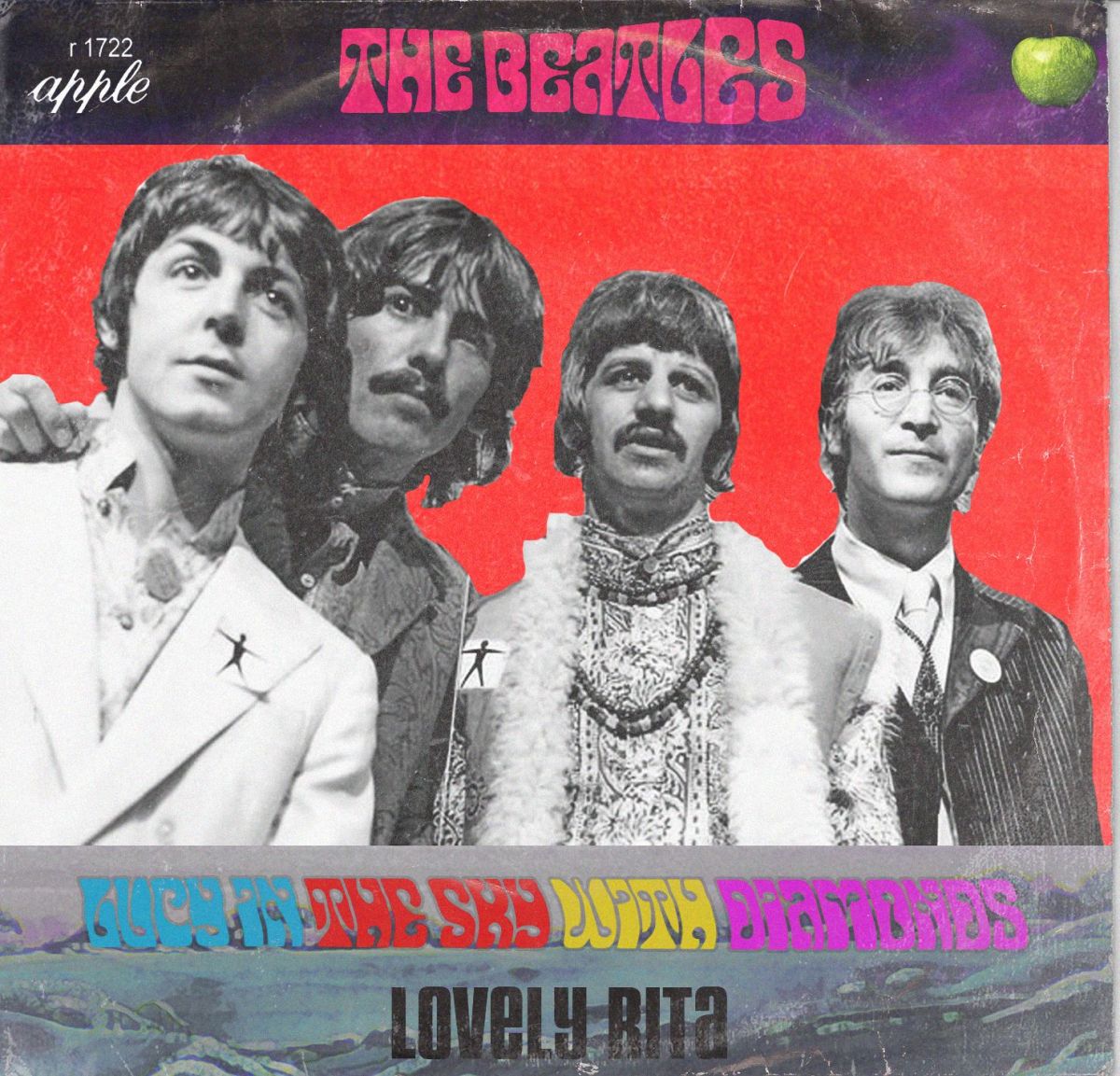
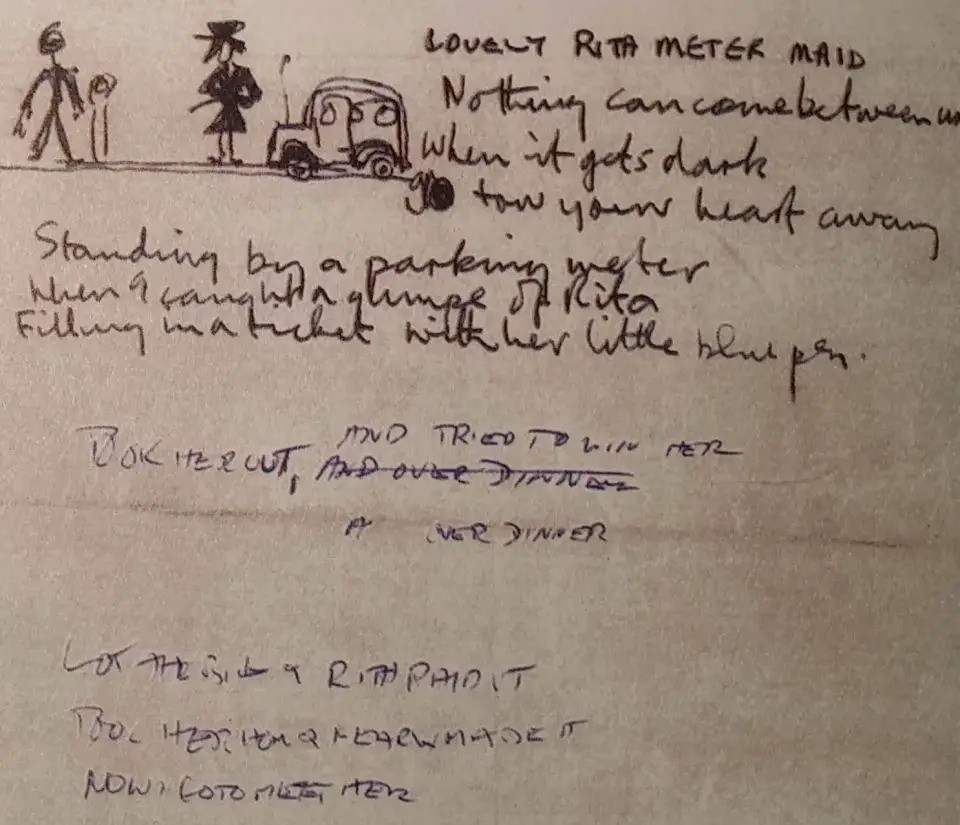
I got Sgt Pepper in 1977 when I was 10. I sat there for hours, staring at the cover and listening to this music I had never heard before. This is one of the songs that grabbed my attention. I liked Lucy in the Sky with Diamonds, Good Morning, Good Morning, and Lovely Rita, but that quickly expanded.
This song isn’t about a real person. It was Paul making up the character (I have his quote below) after hearing in America that they called Parking Meter Women “Meter Maids.” John didn’t particularly like the song because he liked songs about real things. He hardly ever just made things up…Lennon would write about people he knew or his experiences.
The Beatles recorded their debut album, Please Please Me, in a remarkably short amount of time. The entire recording process for the album took approximately 9 hours and 45 minutes of studio time. Now let’s fast forward 5 years from 1962 to 1966-67.
The Beatles spent up to 700 hours in the studio recording Sgt. Pepper’s Lonely Hearts Club Band. One of the main reasons was their desire to go beyond the limitations of the standard four-track recorder. To achieve this, they linked two four-track machines together—an innovative move at the time—and experimented throughout the process. While this technique wasn’t commonly used, it allowed them to push the boundaries of what was possible in the studio. Sgt. Pepper’s remains one of the most important albums in music history, not just for its songs, but for the groundbreaking recording techniques that helped shape the future of music.
The following year, The Band changed the course of music in some ways. They released Music From The Big Pink and influenced a generation. Bands started to play more earthy…more roots-oriented music. The Beatles did that by recording the rootsy White Album.
Paul McCartney: “I was bopping about on the piano in Liverpool when someone told me that in America, they call parking-meter women meter maids. I thought that was great, and it got to ‘Rita Meter Maid’ and then “Lovely Rita Meter Maid’ and I was thinking vaguely that it should be a hate song: ‘You took my car away and I’m so blue today’ and you wouldn’t be liking her; but then I thought it would be better to love her and if she was very freaky too, like a military man, with a bag on her shoulder. A foot stomper, but nice. The song was imagining if somebody was there taking down my number and I suddenly fell for her, and the kind of person I’d be, to fall for a meter maid, would be a shy office clerk and I’d say, ‘May I inquire discreetly when you are free to take some tea with me.’ Tea, not pot. It’s like saying ‘Come and cut the grass’ and then realizing that could be pot, or the old teapot could be something about pot. But I don’t mind pot and I leave the words in. They’re not consciously introduced just to say pot and be clever.”
John Lennon: That’s Paul writing a pop song. He made up people like Rita, like a novelist. You hear lots of McCartney influence going on now on the radio: these stories about boring people being postmen and writing home.
Lovely Rita
(Lovely Rita, meter maid) (Lovely Rita, meter maid)
Lovely Rita, meter maid Nothing can come between us When it gets dark I tow your heart away
Standing by a parking meter When I caught a glimpse of Rita Filling in a ticket in her little white book In a cap she looked much older And the bag across her shoulder Made her look a little like a military man
Lovely Rita, meter maid May I inquire discreetly When are you free to take some tea with me?
Rita
Took her out and tried to win her Had a laugh and over dinner Told her I would really like to see her again
Got the bill and Rita paid it Took her home, I nearly made it Sitting on the sofa with a sister or two
Oh, lovely Rita, meter maid Where would I be without you Give us a wink and make me think of you
(Lovely Rita, meter maid) (Lovely Rita, meter maid) (Lovely Rita, meter maid) (Lovely Rita, meter maid)
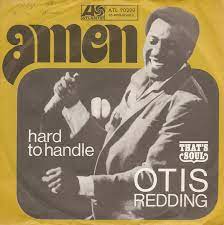
I first heard this song in 1989 or 1990 by the Black Crowes. I loved it from the minute I heard it. It was great to hear a rock/soul song on the radio at the time, with a throwback feeling to the early seventies. I soon found out that it was an Otis Redding song when a friend played me a video of Pigpen of the Dead singing the song and told me.
This song was recorded in 1967, just months before Redding’s tragic death in a plane crash on December 10th of that year. He never got to see the song’s success. It was one of several tracks released posthumously as part of his 1968 album The Immortal Otis Redding, which compiled unreleased material from his final sessions. The song was written by Otis Redding, Allen Jones, and Al Bell. Jones and Bell were key figures at Stax Records. Bell was a top executive, and Jones was a prolific producer and songwriter.
The song by Otis peaked at #51 on the Billboard 100 (this is why charts don’t matter all of the time), #38 on the Billboard R&B Charts, and #15 in the UK in 1968. It must be said, though, it was released as the B side to a song called Amen, a terrific soul/gospel song, so it didn’t get the full exposure it could have with an A-side slot.
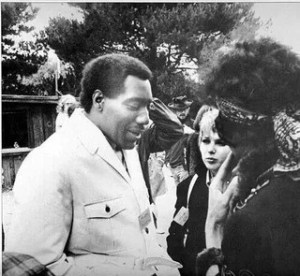
I just saw a picture I had never seen before. Jimi Hendrix and Otis Redding are talking, probably at Monterey.
Otis’s live reputation was growing stronger after Monterey. I would have loved to have heard Jimi Hendrix and Otis Redding play together. It’s not like one wasn’t enough, but I could only imagine what they would have sounded like.
The Dead with Pigpen doing lead vocals.
Hard To Handle
Baby, here I am, I’m a man on the scene I can give you what you want But you got to go home with me I’ve got some good old loving And I got some in store When I get through throwing it on you You got to come back for more
Boys and things will come by the dozen That ain’t nothing but drug store loving Pretty little thing, let me light your candle ‘Cause mama, I’m sure hard to handle, now, yessir’am
Action speaks louder than words And I’m a man with a great experience I know you got another man But I can love you better than him Take my hand, don’t be afraid I’m wanna prove every word I say I’m advertising love for free So won’t you place your ad with me?
Boys will come a dime by the dozen But that ain’t nothing but ten cent loving Pretty little thing, let me light your candle ‘Cause mama I’m sure hard to handle, now, yessir’am
Baby, here I am, I’m a man on the scene I can give you what you want But you come go home with me I’ve got some good old loving And I got here in store When I get through throwing it on you You got to come back for more
Boys will come a dime by the dozen But that ain’t nothing but drug store loving Pretty little thing, let me light your candle ‘Cause mama, I’m sure hard to handle, now, yessir’am
Give it to me, I got to have it Give it to me, good ol’ loving Some of your good loving
I was so much older then, I’m younger than that now
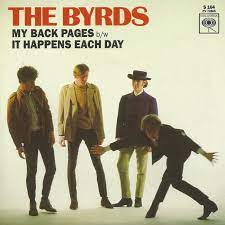
This is my favorite song by the Byrds. I like the Byrds’ arrangement of this great Bob Dylan song. Roger McGuinn’s voice plus Rickenbacker is always a winning combination. Dylan recorded his version in 1964 on his Another Side of Bob Dylan album. I fell for the song because of the line, I was so much older then, I’m younger than that now. Just a great phrase from a catalog that is full of them.
On the countless Dylan songs that are covered, I will usually like Dylan’s version better…on this one, I prefer the Byrds. The song peaked at #30 on the Billboard 100 in 1967. It’s one of those songs that I so wish I could have written. Even the title is cool because “My Back Pages” is not uttered in the song.
Bob Dylan helped the Byrds a lot with Mr. Tambourine Man and other songs. The Byrds, in turn, helped widen Bob’s popularity to the new rock audience that was developing, which may not have heard some of these songs as much.
In 1992 the Bob Dylan 30th Anniversary Concert happened, and my cousin had the complete concert on VHS. He had a satellite, so I didn’t have to wait for it to be released almost a year later. I’ll never forget this song being played with Roger McGuinn sharing the stage with Dylan, Tom Petty, George Harrison, Eric Clapton, and Neil Young.
Roger McGuinn: “I don’t try to interpret what Bob meant when he wrote the song. He doesn’t do that, and to do that, you spoil it for people who have a different meaning of the song.”
The song being played at Bob Dylan’s 30th Anniversary concert. Bob Dylan, Roger McGuinn, Neil Young, George Harrison, Eric Clapton, and a bunch more.
My Back Pages
Crimson flames tied through my ears Rollin’ high and mighty traps Countless with fire on flaming roads Using ideas as my maps We’ll meet on edges, soon, said I Proud ‘neath heated brow
Ah, but I was so much older then I’m younger than that now Half-wracked prejudice leaped forth Rip down all hate, I screamed Lies that life is black and white Spoke from my skull I dreamed Romantic facts of musketeers Foundationed deep, somehow Ah, but I was so much older then I’m younger than that now
In a soldier’s stance, I aimed my hand At the mongrel dogs who teach Fearing not that I’d become my enemy In the instant that I preach Sisters fled by confusion boats Mutiny from stern to bow Ah, but I was so much older then I’m younger than that now
Ah, but I was so much older then I’m younger than that now
My guard stood hard when abstract threats Too noble to neglect Deceived me into thinking I had something to protect Good and bad, I define these terms Quite clear, no doubt, somehow Ah, but I was so much older then I’m younger than that now
I had forgotten about this song until I read about it in a biography. I remember working in the 1980s and listening to an oldies channel, and I heard this one quite a bit. I just learned the title from the book. It’s a song that just makes you feel good.
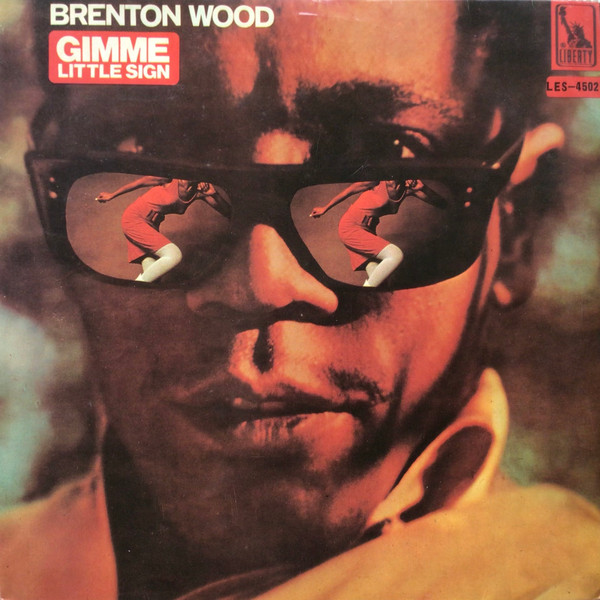
This song has been covered and sampled by many. Unlike Motown and Stax…Wood came in from left field with a whole different vibe in the late 1960s. He is known primarily for The Oogum Boogum Song and this song. He was born Alfred Jesse Smith and adopted the stage name of Brenton Wood…possibly from the Los Angeles neighborhood Brentwood.
He stayed active from the sixties on and released his last album in 2009 called Lord Hear My Prayer. He had a few more top 40 songs in the 60s, but never hit the top ten again.
This song peaked at #9 on the Billboard 100, #17 in Canada, #8 in the UK, and #20 in New Zealand in 1967. Giimme Little Sign was written by Alfred Smith, Joe Hooven, and Jerry Winn. Brenton got a resurgence in popularity in the new century with his songs’ inclusion in various films and television shows, such as Almost Famous, Don’t Worry Darling, and Big Little Lies.
We lost Mr. Wood on January 3, 2025, at the age of 83.
Gimme Little Sign
If you do want me, gimme little sugar If you don’t want me, don’t lead me on girl But if you need me, show me that you love me And when I’m feeling blue and I want you There’s just one thing that you should do
Just gimme some kind of sign girl Oh, my baby To show me that you’re mine girl Oh, yeah
Just gimme some kind of sign girl Oh, my darling To show that you’re mine girl All right
If you do want me, gimme little sweet talk If you don’t want me, don’t lead me on girl But if you need me, show me that you love me And when I’m feeling down, wearing a frown You be there when I look around
Just gimme some kind of sign girl Oh, my baby To show me that you’re mine girl All right
Just gimme some kind of sign girl Oh, my baby To show me that you’re mine girl Oh, yeah
Just gimme some kind of sign girl Oh, my darling To show me that you’re mine girl All right
Just gimme some kind of sign, sign Just gimme some kind of sign girl Oh, my baby To show me that you’re mine girl All right
The first thing I noticed was the guitar part at the beginning. I thought to myself, the style sounded familiar. Two people came to mind, and I can’t believe I guessed it. The two people that I thought of were Curtis Mayfield and Jimi Hendrix. After researching the song, I was batting 500…it was Jimi Hendrix, but 2 years before he was The Jimi Hendrix.
I read about Don Covay and how he wrote Chain of Fools for Aretha Franklin and more songs in the ’60s through the ’80s. Covay wrote the number 1 hit for Chubby Checker called Pony Time and also co-wrote Peter Wolf’s first solo album in the early eighties with good success.
Covay was the son of a Baptist preacher. He began his musical career singing gospel with his family’s group, the Cherry Keys.Following his father’s death, the family relocated to Washington, D.C., where Covay’s musical interests expanded into the soul/R&B genre.
He was a great songwriter. His songs have been covered by Gene Vincent, Wanda Jackson, Chubby Checker, Connie Francis, Steppenwolf, The Daughters of Eve, Bobby Womack, the Rolling Stones, Wilson Pickett, Small Faces, Grant Green, Bonnie Raitt, and Peter Wolf.
The song peaked at #35 on the Billboard 100 in 1964. The Rolling Stones covered this song on their album Out of Our Heads in 1965. It was the lead-off track of the album.
Curtis Knight: Jimi Hendrix, and I all used to live in the same apartment building – around 81st Street [near the A1 Studio] … Don Covay came around shopping for a record deal. He used to go down to the Harlem clubs looking for somebody to use … on songs he was looking to sell to Atlantic [Records]. He’d say, ‘I got this tune I want you to help me with … come on down to the studio … Can you sing this part? Can you play this part?
Steve Cropper: I hadn’t worked with Don [Covay] yet, but I asked Jimi to show me that great lick he played. [Later] Jimi took my guitar and started playing that sucker upside down. I laughed and told him, ‘I can’t learn that lick by looking at it that way.
Mercy, Mercy
Have mercy Have mercy, baby Mmm, have mercy Have mercy on me
Well, I went to see a gypsy and had my fortune read She said, “Don, your baby’s gonna leave you” Her bag is packed up under the bed and I cried
Have mercy Have mercy, baby, yeah Have mercy, yeah Have mercy on me
I said if you leave me, baby, girl, if you put me down Well, I’m a goin’ to the nearest river, child And jump (jump) overboard And drown, but don’t leave me (jump, jump, jump, jump)
Have mercy Have mercy, baby, mercy Yeah, have mercy Have mercy on me
Well, now, hey, hey baby, hey, hey now What you tryin’ to do, huh? Hey, hey, baby, hey, hey now Please don’t say we’re through
I said if you stay here, baby, I tell you what I’m gonna do I’m gonna work two jobs seven days a week And bring my money home to you (bring it, bring it)
Well, I said mercy (mercy), mercy (mercy) Mercy (mercy), mercy (mercy) Mercy (mercy)
When I hear this song, I think of it as an early punk song. It’s a song that garage bands can sink their teeth into. I Fought The Law is pure rebellion. At the same time, it has a Buddy Holly feel, and there is a reason for that. The Crickets’ Sonny Curtis wrote this song, and he played with Holly off and on, and when Buddy died, he took over the lead guitar for The Crickets. Earl Sink was brought in to sing it and to sound like Buddy. Thanks to Randy for that info!
The Crickets recorded this song in 1959 with Sonny Curtis playing guitar and singing. In 1962, Paul Stefen and the Royal Lancers recorded it, and it was a local hit in Milwaukee, but it didn’t break nationally. Sammy Masters released a version in 1963 as well.
Bobby Fuller was a Texas-born rock & roller heavily influenced by Buddy Holly. He formed The Bobby Fuller Four in El Paso before moving to L.A. Bobby was DIY before DIY was cool, he built a home studio in his parents’ house in El Paso and recorded local singles there with his brother Randy Fuller.
In the early ’60s, Bobby moved to Los Angeles to chase bigger opportunities. He signed to Mustang Records (run by Bob Keane, who also discovered Ritchie Valens). He then formed The Bobby Fuller Four with his brother Randy and other rotating members. In 1965, the band recorded I Fought the Law with a tighter arrangement, crisp guitar work, and Fuller’s vocals. It was released in late 1965 but hit the charts in 1966.
Fuller was found dead in the front seat of his mother’s car shortly after I Fought The Law became a national hit. His death was ruled a suicide, but there were signs of foul play, and the investigation was tainted, leaving the circumstances of his death a mystery, and rumors continue to run rampant to this day. The song peaked at #9 on the Billboard 100, #11 in Canada, and #33 in the UK in 1966. Sonny Curtis would later write “Love Is All Around,” The Mary Tyler Moore Theme.
The Clash covered this song in 1979 and changed the lyrics from “I left my baby” to “I killed my baby.” So they made it quite a bit darker. Their version got them noticed in the US.
Rick Stone (roadie for Fuller): My mom, Mary Stone, wrote music with Bobby at our home at 7420 Catalpa Lane in El Paso, Texas. Bobby did NOT have gas in his mouth when he was found in the car, but he did die of asphyxiation. Bobby had “I Fought The Law” released on his own label in El Paso two years earlier where it was a Top 10 Hit regionally. The original lyric was “Robbin’ people with a six gun,” but he would sing it as “Zip Gun,” “Shotgun” or “Six Gun,” and joked about other guns when he sang it live.
I Fought The Law
I’m breakin’ rocks in the hot sun I fought the law and the law won I fought the law and the law won
I needed money ’cause I had none I fought the law and the law won I fought the law and the law won
I left my baby and I feel so sad I guess my race is run But she’s the best girl I’ve ever had I fought the law and the law won I fought the law and the law won
Robbin’ people with a six-gun I fought the law and the law won I fought the law and the law won
I miss my baby and the good fun I fought the law and the law won I fought the law and the law won
I left my baby and I feel so sad I guess my race is run But she’s the best girl I’ve ever had I fought the law and the law won I fought the law and the law won
When I’m reading a music bio, everyone knows what I’m reading by reading my blog. I just finished the Peter Wolf book, and I cannot recommend it enough. I have never posted this song before, and I’m shocked that I haven’t. I’ve always liked this song and was reminded of it when I watched the movie The Wedding Singer. I remember in the 70s listening to J Geils with Must Have Got Lost and Give It To Me on AM radio, and they sounded great.
Of all the songs that I did vocals onstage with…this one has to be the most fun I had with a song. The crowd always roared back in the chorus…you could count on it. I was going to post this on Valentine’s Day, but forgot about it.
The J Geils Band started in 1967. They were originally called The J Geils Blues Band, and Peter Wolf saw them perform and joined with his band’s (The Hallucinations) drummer, Stephen Jo Bladd. A fan named Seth Justman soon joined on keyboards. Wolf and Justman soon became the two prominent songwriters of the band. The members were John Geils guitarist, Peter Wolf lead singer, Seth Justman keyboards, Danny Klein bass player, Richard Salwitz harp, trumpet, and saxophone.
They signed a contract with Atlantic Records that was VERY friendly to Atlantic Records. They started to open up for The Allman Brothers, BB King, The Who, The Stones, The Byrds, and just about everyone on the music scene at the time. They built their live reputation up and had a loyal fanbase. They were constantly touring and were known for high-energy shows and music. Peter Wolf was one of the best, if not the best, frontmen in rock. You also had Richard Salwitz (Magic Dick) playing blues harp, trumpet, and saxophone and gave the band a sound.
By their third album, Bloodshot, released in 1973, scored a hit with Give It To Me and the album peaked at #10 on the Billboard 100 and #17 in Canada. The album that set that album up was Live Full House. That album is one of the best live albums I’ve ever listened to. It was released in 1972 and established their live reputation for the rest of their career. As the decade went on, they did have some hits like my favorite Must Of Got Lost. Their Atlantic record contract was up in 1977.
They signed with EMI, and their commercial fortunes turned around with the new label. Their first album with EMI was Sanctuary, and it had a hit called One Last Kiss. Then came the Love Stinks album, and although there were no top 10 hits, this album had two songs that hit and are still played today: Love Stinks and Come Back hit the top 40, and their audience started to grow.
It was their 10th studio album, Freeze Frame, that blew the lid off. Some songs were the #1 Centerfold, #4 Freeze Frame, top 40 Angel in Blue, and a popular dance track called Flamethrower. Their popularity was at an all-time high. They opened for the Stones’ massive tour that year. They had been headlining since Love Stinks…but then…it was all over.
Peter Wolf didn’t like the way they were going into synth pop and wanted to get back to their roots. They pretty much told him to go his way, and they would go their way. They kept rejecting songs he brought, and many of the songs they rejected ended up on his album Lights Out. Listening to Freeze Frame now…you can hear the R&B in the song Freeze Frame and some of the others.
They decided to make an album called Even While I’m Gettin’ Odd, without Peter, and when I listen to it, I can see why Wolf didn’t want to go that way. They wanted to go much further into the 80s pop production than Freeze-Frame. The punch and live feeling of Freeze-Frame and Love Stinks was gone. The album failed and it would be their last. They have regrouped off and on through the years for live shows but never made another album.
The Love Stinks album was released in 1980 and peaked at #18 on the Billboard Album Charts and #4 in Canada. The title track peaked at #15 in Canada and #38 on the Billboard 100.
Peter Wolf on the breakup: Frank Barsalona, our agent, took me out for dinner after his final meeting with the other band members. In disbelief, he said, “After all these years, the band finally made it. It’s really quite unbelievable. I’ve dealt with the craziest of the crazies; the drugs, the girlfriends, the managers—nothing even comes close to this. Nothing as stupid, as senseless, and as wasteful in what these guys are insisting on doing. So, Peter, let’s start thinking about your solo career.”
Here is a version that I love…a bluegrass rendition of the song by Peter Wolf, and I like it.
Here they are in the Netherlands in 1980, live. Peter Wolf has a black eye and broken ribs after being ambushed in a pub. They headlined the Pinkpop Festival.
Love Stinks
You love her But she loves him And he loves somebody else You just can’t win And so it goes ‘Til the day you die This thing they call love It’s gonna make you cry
I’ve had the blues The reds and the pinks One thing for sure (Love stinks)
Love stinks, yeah, yeah (Love stinks) Love stinks, yeah, yeah (Love stinks) Love stinks, yeah, yeah (Love stinks) Love stinks, yeah, yeah
Two by two, and side by side Love’s gonna find you, yes, it is You just can’t hide You’ll hear it call Your heart will fall Then love will fly It’s gonna soar
I don’t care for any casanova thing All I can say is (Love stinks)
Love stinks, yeah, yeah (Love stinks) Love stinks, yeah, yeah (Love stinks) Love stinks, yeah, yeah (Love stinks) Love stinks, yeah, yeah
I’ve been through diamonds I’ve been through minks I’ve been through it all (Love stinks)
Love stinks, yeah, yeah (Love stinks) Love stinks, yeah, yeah
Love stinks Love stinks, yeah, yeah (Love stinks) Love stinks (love stinks), yeah, yeah (Love stinks)
Love stinks, yeah, yeah (Love stinks) Love stinks, yeah, yeah (Love stinks) Love stinks (love stinks), yeah, yeah (Love stinks) Love stinks (love stinks), yeah, yeah (Love stinks) Love stinks (love stinks)
Randy had a series called Three Piece (Suits Me) that ran a few weeks ago. Thank you, Randy, for inviting me to do this! I’ll take any excuse to write about Cream. When I think of a power trio…no offense to ZZ Top, but Cream is the first one that comes to mind. It was an all-star band that was super aggressive live and translated well in the studio. Either one of the members could have been musically the star of any band.
Cream was widely regarded as the first supergroup in rock history. They consisted of three legendary musicians: Eric Clapton, Jack Bruce, and Ginger Baker. Cream was formed in July 1966 when Clapton, Bruce, and Baker—all already established musicians—came together to create a band that fused blues, rock, jazz, and psychedelia. The name “Cream” signified that they were the “cream of the crop” in the British music scene. They each had a rich history before Cream.
Clapton had played with The Yardbirds and John Mayall’s Bluesbreakers..Bruce and Baker had been part of The Graham Bond Organization. Bruce also had briefly worked together with Manfred Mann. Clapton and Baker were forming the band and Eric had just played with Jack Bruce and wanted him in this. Clapton said: When Ginger invited me to join, I asked him who else was in the band. He said, “I don’t know yet. So I suggested Jack. He said, “No, what did you have to go and mention him for?” I said, “Because I just played with him and he’s a great bass player and you guys played together with Graham Bond and Alexis, so I thought you’d be pleased.” And he said, “No, we don’t get on very well at all.” So I withdrew at that point. Then I said I would only go in with Ginger if he would go in with Jack. So he had to say OK.
Eric Clapton was confident in his guitar playing but less so in his singing. Early on, it was decided that Jack Bruce would take on the role of the band’s primary singer and songwriter. However, as time went on, Clapton contributed more as both a writer and vocalist. Bruce collaborated with poet Pete Brown to write the band’s songs.
Cream’s debut album, Fresh Cream, was released in 1966, featuring tracks like I Feel Free, NSU, and Spoonful. While the album made an impact, it was their second release, Disraeli Gears, that truly propelled them to fame, with standout songs like “Sunshine of Your Love” and “Strange Brew.”
Released in 1968, Wheels of Fire featured Cream’s iconic cover of Crossroads and White Room, which became one of their signature songs. However, behind the scenes, tensions between Jack Bruce and Ginger Baker were escalating, proving too much for the more laid-back Eric Clapton.
By the end of the year, the band decided to call it quits, playing a farewell concert at the Royal Albert Hall and releasing a final album fittingly titled Goodbye. The album included Badge, one of my favorite Cream songs, co-written by George Harrison.
Cream had a huge influence on rock, blues, metal, and bands such as Led Zeppelin, Deep Purple, Black Sabbath, Rush, and Van Halen. At the time the only other band like them was another trio called The Jimi Hendrix Experience with Hendrix, Mitch Mitchell, Noel Redding, and later Billy Cox replacing Redding.
They did reunite a few times through the years. The first time was not publicized or open to the public. In 1979 Eric Clapton married Pattie Boyd and he invited Cream, three Beatles, Mick Jagger, Bill Wyman, Elton John, and David Bowie. Cream did play and so did Paul, George, and Ringo. Pattie said that somehow Lennon wasn’t sent an invite but he said he would have gone if he would have known.
In 1993 they reunited at the Rock and Roll Hall of Fame when they were inducted. They also reunited for two sets of shows in 2005. One with four shows at the Royal Albert Hall and three shows at Madison Square Garden. Yes, there was still friction between Bruce and Baker at that time. That fact made it impossible for them to do any more shows. Bruce passed away in 2014 and Baker in 2019…effectively ending Cream.
I will say they made the most out of their short window. They influenced countless rock and roll bands through the years. Eric Clapton never sounded as good again as he did with Cream. Part of that reason is he was pushed because of the trio format that we are celebrating today!
Today I’m having a Badfinger day. Christian got me into a Badfinger mood with his Baby Blue Post. I would suggest you read a more detailed version of their story when you can. Their story will draw you in.
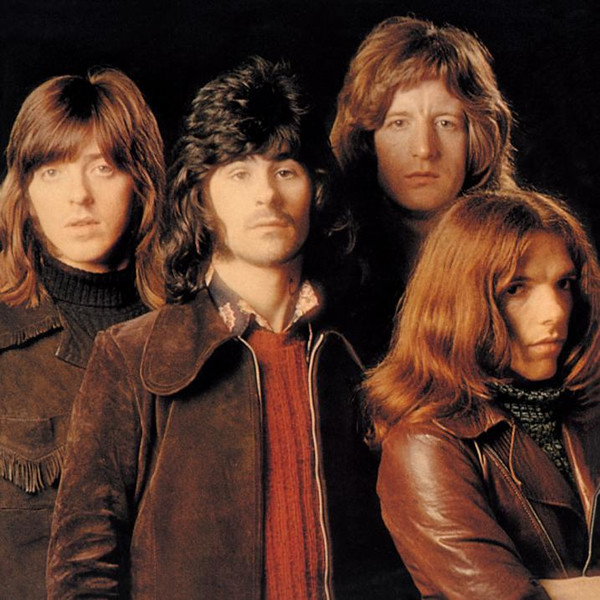
Badfinger was a very talented band that had a gift and curse of sounding like The Beatles. Their songs are remembered today but not the band which is a shame. They made some very good albums and at least one great one. This band’s story is a cautionary tale that other bands must consider. This is what signing with a bad manager can do to you.
The members were Pete Ham, Tom Evans, Mike Gibbins, and Joey Molland (who replaced Ron Griffiths).
They started out as the Iveys and signed with the Beatle’s new label…Apple. They released Maybe Tomorrow as the Iveys which was a minor hit. After that, they changed their name to Badfinger. Paul McCartney wrote their first big hit single”Come and Get It” and after that, they were writing themselves. The hits kept coming… No Matter What, Baby Blue, and Day after Day. They also wrote Without You…a small blues song that Harry Nilson covered…it became a monster worldwide hit. Mariah Carey also covered it and was again a giant hit.
They signed with a manager named Stan Polley and got a massive contract with Warner Brothers after leaving Apple. Things were looking really good. They had hits but they never made it over the hump in being a big-time group. Warner Brothers could have pushed them over the hump…Polley set up an escrow account for the band with the advance money and the money disappeared.
He told the band that he was planning for their future etc…He put them on a small salary and embezzled the rest. He really swindled them and their royalties for their songs were tied up for decades. The band was basically broke. With all of their self-written hits, they should have been set financially for years.
Pete Ham didn’t have the money to pay his mortgage and with a baby on the way, drunk and depressed at the fatal age (for rock stars) of 27 he hanged himself in his garage in 1975. In 1983, after scrambling for gigs, Tom Evans broke and not able to get to any of the royalties due him from co-writing Without You with Pete…hanged himself also.
Pete was a trusting soul and never would believe Polley was cheating them until the very end. His suicide note read…
“I will not be allowed to love and trust everybody. This is better P.S. Stan Polley is a soulless bastard. I will take him with me.”
They all wrote to some degree but Pete Ham was a great songwriter. He had so much potential. He also was a great guitar player and singer. The other members did write some very good songs but Pete was the special one.
Stan Polley died in 2009… escaping other scandals without punishment.
Their albums were
Magic Christian Music – This was the soundtrack to the movie The Magic Christian. Come and Get It is on this album and a minor hit called Maybe Tomorrow which is a good pop song.
No Dice – No Dice is where Badfinger starts to be themselves. No Matter What and Without You came off of this album. It also has some other great songs… I Can’t Take It, Blodwyn, We’re for the Dark, Better Days, and my favorite of the album and possibly of Badfinger…Midnight Caller.
Straight Up – This is my favorite album by them. It has Baby Blue and Day after Day but a host of other good songs. Take It All, Money, Name of the Game, Suitcase, Sweet Tuesday Morning, and I’d Die Babe. Joey Molland’s songwriting and singing were very good on this album.
Ass – Their last album for Apple Records and the start of the downward spiral. The songs I would recommend are Apple of My Eye and Icicles.
Badfinger – They just signed a new record deal with Warner Brothers and this was the first album. They recorded this album as soon as they finished their previous album Ass for Apple which was too soon. They should have waited a while before recording this album. This album didn’t do well, and one of the reasons is that it was competing with their previous album. They were released within months of each other because Polley wanted something out. The songs I like are I Miss You and Shine On.
Wish You Were Here – The album was released in late 1974 and was pulled in early 1975 before it had time to do anything because of litigation between their manager and the Warner Brothers. It was released and pulled in a matter of weeks. Warner Brothers saw the money was missing and yanked the album off of the shelves. The songs I like are Dennis and Just a Chance. This album should have been a giant hit. It had hit songs on there waiting to be played. Dennis is one of their best songs.
Head First – They recorded this album after Wish You Were Here with Bob Jackson after Joey Molland had quit. The album was stuck in limbo for 26 years never released. It wasn’t released until 2000. I went out and bought this the day it was out at Tower Records when I read they were releasing it. On some songs, you can tell they are having problems with their management. The songs that stand out to me are Lay Me Down, Hey Mr. Manager, Rock N’ Roll Contract, and Keep Believing. A good album and I wish it would have had a chance at the time.
They did make a couple of albums after Pete died called Airwaves and Say No More. The song Lost Inside Your Love is the only song that approaches the Badfinger early quality.
Without Pete, the biggest talent was gone. That is not a knock on the others but he was just that good. Tom Evans was a good singer, songwriter, and musician who worked with Pete well and had a great voice. Joey Molland was a good guitar player, singer, and songwriter. The band didn’t lack talent.
In 1997 a CD was released of Pete Hams demos called 7 Park Avenue. It was various demos from his entire career. A follow-up was released in 1999 called Golders Green. The melodies he had rivaled McCartney. He was an amazing songwriter.
Go out and Google Badfinger and more importantly, listen to them. This band needs to be remembered.
Baby Blue… Maybe the most perfect power pop song ever in my opinion.
No Matter What…around 2:02-2:06…Tommy Evans does a cool backup. Not hard but very effective.
Down in Louisiana, where the alligators grow so mean Lived a girl, that I swear to the world Made the alligators look tame
This song is just plain badass. It could have been extremely corny, but it’s not at all. It’s that groove that is impossible to escape and the lyrics just follow so nicely. Amos Moses, a song by Jerry Reed, is in this vein as well.
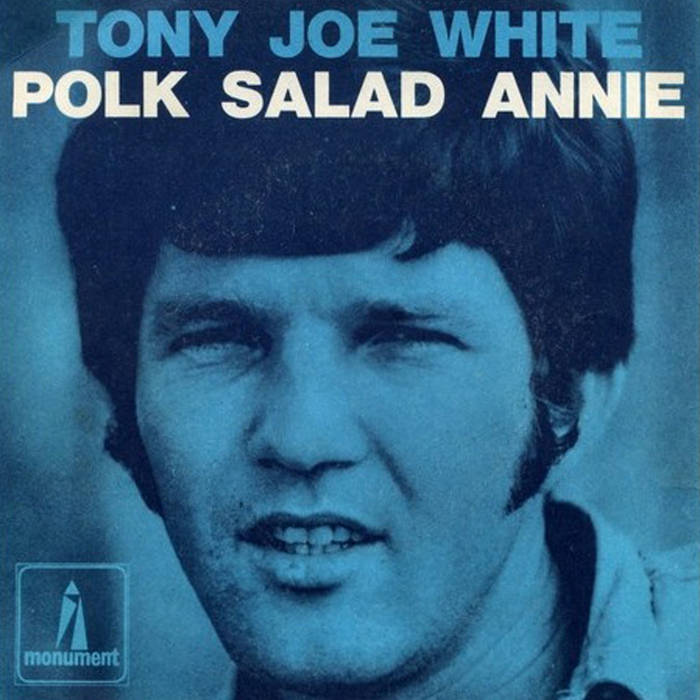
This song could very well be called Swamp Rock. It blends blues, rock, and country with a Southern feel. Tony Joe White, often called “The Swamp Fox,” built much of his career around this style, influencing later artists like Creedence Clearwater Revival and The Black Keys.
The song was on his 1969 album called Black and White. The album peaked at #51 on the Billboard 100, but the single did much better. Polk Salad Annie peaked at #8 on the Billboard 100 and #10 in Canada in 1969.
White was what you would call a one-hit wonder, but he wrote many more hits than this one. He wrote A Rainy Night In Georgia, Willie and Laura Mae Jones, Steamy Windows, and others. Artists such as Willie Nelson, Elvis Presley (where I heard the song first), Ray Charles, and Tina Turner.
Elvis Presley released the song in 1973. It wasn’t released as a single in America, but it did manage to peak at #23 in the UK.
Polk Salad Annie
If some of ya’ll never been down south too much Some y’all never been down s- I’m gonna tell you a little story so’s you’ll understand what I’m talkin’ about Down there we have a plant that grows out in the woods, and the fields And it looks somethin’ like a turnip green Everybody calls it polk salad Now that’s polk salad Used to know a girl lived down there and she’d go out in the evenings and Pick her a mess of it Carry it home and cook it for supper Because that’s about all they had to eat But they did all right
Down in Louisiana, where the alligators grow so mean Lived a girl, that I swear to the world Made the alligators look tame Polk salad Annie, gators got your granny Everybody said it was a shame Because her momma was a workin’ on the chain gang A mean vicious woman
Everyday before supper time, she’d go down by the truck patch And pick her a mess of polk salad, and carry it home in a tow sack Polk salad Annie, the gators got your granny Everybody says it was a shame Because her momma was a workin’ on the chain gang A wretched, spiteful, straight-razor totin’ woman Lord have Mercy, pick a mess of it
Sock a little polk salad to me
Her daddy was lazy and no-count, claimed he had a bad back All her brothers were fit for Was stealin’ watermelons out of my truck patch Polk salad Annie, the gators got your granny Everybody said it was a shame Because her momma was a workin’ on the chain gang
Yeah, sock a little polk salad to me, you know I need me a mess of it Sock a little
Sock a little polk salad to me, you know I need a real mess of it (chick-a-boom) Sock a little polk salad, you know I need a real (chick-a-boom) Ching-ching-ching-ching-a-ling (chick-a-boom) Ching-ching-ching-ching-a-ling (chick-a-boom) Ching-ching-ching-ching-a-ling (chick-a-boom) Ching-ching-ching-ching-a-ling (chick-a-boom) Ching-ching-ching-ching-a-ling (chick-a-boom) Ching-ching-ching-ching-a-ling (chick-a-boom) Ching-ching-ching-ching-a-ling (chick-a-boom) Ching-ching-ching-ching-a-ling (chick-a-boom)
In Turntable Talk Dave said: This time around, we’re going Sans Sophomore Slump. We all remember the triumphant debuts to the scene by The Knack, Meat Loaf, the Ramones…but how many recall, let alone listen to ‘But the Little Girls Understand’, ‘Dead Ringer’s or ‘Leave Home’… the follow-ups for them? In other words a great 2nd album by any artist. Many times, that 2nd album is rushed, or the artist used all of their songs for the first album. The example I use is The Knack. It was a great fun first album and a bad second.
Thank you, Dave, for including me in this so I can talk about this great album. There were a few that came to mind while doing this. The Who’s A Quick One, Van Morrison’s Astral Weeks, Carole King Tapestry, and many more but I decided on this great Americana band that was actually most Canadian. The album is called The Band, and its nickname is The Brown Album. Their first album was Music From Big Pin,k and it was released in 1968. This album was released in 1969.
They recorded this album not in a recording studio but at Sammy Davis’s house in California. They remodeled the adjacent pool house into a recording studio. The Band fashioned a makeshift workshop environment similar to the one at their former home, Big Pink. The album peaked at #2 in Canada, #9 on the Billboard 100, and #25 in the UK.
The album is said to be a concept album about a past America. It’s an album that every rock fan should own. While even novice fans of the group likely know classics like “The Night They Drove Old Dixie Down” and “Up on Cripple Creak,” the record is an amazing listening experience from beginning to end. Robbie Robertson’s lyrics weave fluidly from one song to the next, while the musical accompaniment never disappoints.
Robertson wasn’t just a songwriter. He was more of a director and screenwriter, tailoring roles that played to the strengths of his three leading men. He did have 3 lead singers to work with who could have fronted 3 other bands. They knew each other so well that he could pick who sang what and when. His songwriting process had more in common with films than rock songs. Robertson would go to flea markets and antique stores to purchase screenplays. That’s how he wrote songs…like it was a screenplay.
The man not only was a great storyteller, but many of his songs were mini-movies you could visualize. Who couldn’t imagine the drunkard and his sweetheart defender Bessie betting on horses up on Cripple Creek? Those are not just songs; they are visual pictures sent through music that only Robertson could write. We continue to benefit from his hard work and gift…and always will.
Manuel was the most versatile singer in the Band. He was called the lead singer if someone asked. Manuel took the lead vocals on Across The Great Divide, Rockin’ Chair, and Jawbone, and shared it in King Harvest. Of all the singers, Manuel is overlooked more than the other two. It’s probably because he wasn’t singing lead on the huge “hits” such as The Weight, Up On Cripple Creek, and The Night They Drove Old Dixie Down. He does sing on one of my favorite Band songs ever…King Harvest (Has Surely Come). I didn’t realize how great a voice he had until I heard him sing Georgia On My Mind.
Levon had that great southern voice that was earthy and soulful. Robertson knew just when to use Levon, and he did strengthen Robertson’s songs. Rick Danko had the most vulnerable voice of all three. I never quite heard a voice like his before or since. The amount of talent they had was staggering. I’m talking about voices here, but I haven’t even mentioned the musical skills of these guys. Garth Hudson, who recently passed, played keyboards like NO other. I mean no other. He made a massive wall of sound in the background that identified them from other bands. His approach to his sound was so unique that it’s not copied much because it has to be in the right musical surroundings. Robertson has said that there was no one like him period.
This album contains some of their best-known and best tracks. Let’s look at some of the tracks. Now, is this as good as Music from Big Pink? I think so and in some ways, I like it more. I think it was their best album when all is said and done. I could yack and yack more…but just listen to the album!
Across The Great Divide, Rag Mama Rag, The Night They Drove Old Dixie Down, Up On Cripple Creek, Whispering Pines, King Harvest (Has Surely Come), When You Are Awake, Jemima Surrender, Rockin’ Chair, Look Out Cleveland, Jawbone, and The Unfaithful Servant.
The Animals were one of the many British bands I learned through reading about the Beatles. A friend had House of the Rising Sun and I was mesmerized by the lead singer’s voice. Eric Burdon’s voice was huge and commanding. The Animals may have had the hardest edge of any of the British Invasion bands with the exception of the lesser-known Them with Van Morrison.
This song was written by Carl D’Errico and Roger Atkins specifically for The Animals. Eric Burdon didn’t like the song at all but changed a few words and he recorded it. This song starts off with Chad Chandler’s bass line and it sets the tone for the rest of the song. Eric Burdon sounds tough, determined, and cocky through the verses. The song peaked at #23 on the Billboard 100, #7 in the UK, and #2 in Canada in 1965.
They formed in 1963, from the fusion between two rival bands, one headed by bassist Chas Chandler, the other headed by organist Alan Price, stage veteran, former jazz pianist, and disciple of Ray Charles. Eric Burdon, who had played with Price until 1962, was hired as the singer. The Kontours changed their name first to The Alan Price Combo, after adding drummer John Steel, and then to The Animals, after adding guitarist Hilton Valentine.
The original lineup only recorded three albums, yet nevertheless broke out eight Top 40 hits between 1964 and 1966. Alan Price left in 1965, and John Steel the following year. Also in 1966, Chandler left to start managing artists, and he discovered Jimi Hendrix in Greenwich Village. Now a very different group, they were known as Eric Burdon & The Animals and had six additional Top 40 hits before finally disbanding in 1968.
It’s My Life
It’s a hard world to get a break in All the good things have been taken But girl there are ways to make certain things pay Though I’m dressed in these rags, I’ll wear sable some day
Hear what I say I’m gonna ride the serpent No more time spent sweatin’ rent Hear my command I’m breakin’ loose, it ain’t no use Holdin’ me down, stick around
But baby (baby) Remember (remember) It’s my life and I’ll do what I want It’s my mind and I’ll think what I want Show me I’m wrong, hurt me sometime But some day I’ll treat you real fine
There’ll be women and their fortunes Who just want to mother orphans Are you gonna cry, when I’m squeezin’ the rye Takin’ all I can get, no regrets When I, openly lie And leave only money Believe me honey, that money Can you believe, I ain’t no saint No complaints So girl go out Hand it out
And baby (baby) Remember (remember) It’s my life and I’ll do what I want It’s my mind and I’ll think what I want Show me I’m wrong, hurt me sometime But some day I’ll treat you real fine
(It’s my life and I’ll do what I want) Don’t push me (It’s my mind and I’ll think what I want) It’s my life (It’s my life and I’ll do what I want) And I can do what I want (It’s my mind and I’ll think what I want) You can’t tell me (It’s my life and I’ll do what I want) I’ll do what I want