The Drifters are a perfect group to take on a date with you. My father had the greatest hits of them and The Platters but I never dived into them as much as I should have. I’ve always liked them and lately have been listening to them more. To my great surprise, this song was a B-Side to the A-side Nobody But Me. On American Bandstand…Dick Clark flipped the single and the song hit.
Doc Pomus and Mort Shuman wrote this song. They wrote songs such as A Teenager In Love, Surrender (Elvis), Little Sister, Young Blood, and more. This song was inspired by Pomus’ own life experiences. Pomus, who had polio and used crutches and a wheelchair, wrote the song for his wife, Willi Burke, a Broadway actress and dancer. At their wedding, Pomus watched his bride dance with other guests and was inspired by the moment to pen the heartfelt message that she should save the final dance of the evening for him.
This one is a classic fantastic song. The lead singer for the Drifters on this one was no other than Ben E. King. After the Atlantic Records leader, Ahmet Ertegun told King how Pomus and Shuman wrote this song he tried to reflect that in his vocals.
The song peaked at #1 on the Billboard 100, #1 on the Billboard R&B Charts, #1 in Canada, #1 in New Zealand, and #2 in the UK in 1960.
Save The Last Dance For Me
You can dance
Every dance with the guy
Who gives you the eye
Let him hold you tight
You can smile
Every smile for the man
Who held your hand
‘Neath the pale moonlight
But don’t forget who’s taking you home
And in whose arms you’re gonna be
So darlin’
Save the last dance for me, hmm
Oh, I know (oh, I know)
That the music’s fine (yes, I know)
Like sparkling wine (oh, I know)
Go and have your fun (yes, I know, oh, I know)
Laugh and sing (yes, I know)
But while we’re apart (oh, I know)
Don’t give your heart (yes, I know)
To anyone (oh, I know, yes, I know)
But don’t forget who’s taking you home
And in whose arms you’re gonna be
So darlin’
Save the last dance for me, hmm
Baby, don’t you know I love you so?
Can’t you feel it when we touch?
I will never, never let you go
I love you, oh, so much
You can dance (you can dance)
Go and carry on (you can dance)
‘Till the night is gone (you can dance)
And it’s time to go (you can dance, you can dance)
If he asks (you can dance)
If you’re all alone (you can dance)
Can he take you home (you can dance)
You must tell him, no (you can dance)
‘Cause don’t forget who’s taking you home
And in whose arm’s you’re gonna be
So darlin’
Save the last dance for me
‘Cause don’t forget who’s taking you home
And in whose arm’s you’re gonna be
So darlin’
Save the last dance for me, hmm
Save the last dance for me, hmm-hmm
Save the last dance for me, hmmm
Save
If you ever watch something I recommend…please give this short one-hour film a chance. Someone brought a DVD of this for me to watch around 7 years ago. I thought it was going to be boring. I ended up watching it twice in one sitting. It will draw you in. I watch it at least once every year or two.
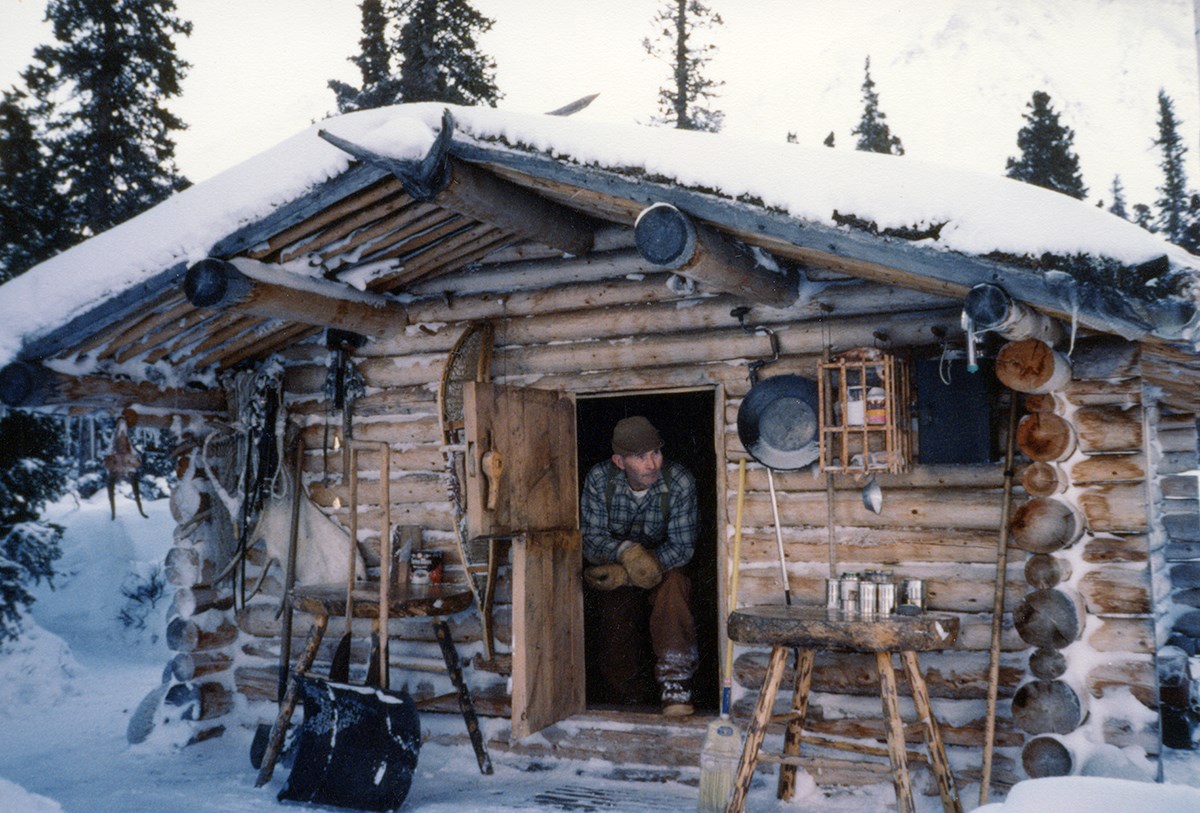
A 50-year-old man named Dick Proenneke is in Twin Lakes Alaska in 1968 and films himself building a retirement cabin. He starts out by staying in a friend’s cabin. He starts gathering wood and making some of the tools he uses as he goes. This man…is a real man. if he needs a spoon…he starts carving himself out one. He builds this cabin and makes everything including wood hinges for the door. He also made hinges out of his tin containers. He gathers rocks from somewhere down the lake and brings them back… then he starts building his chimney.
He is by himself and sets up the camera everywhere he goes. He goes out fishing when he is hungry and hunting for meat for the winter only taking what he needs. He uses just what he needs and doesn’t take more from nature than he could use. He makes almost everything from scratch. He uses his tin canisters for different things. He buries one and covers for a refrigerator. The only help he receives is a pilot friend who lands every now and again to deliver supplies. He was a master craftsman, to say the least.
He also filmed all the wildlife around. Rams, wolves, bears, birds, and Caribou. He also gets some great shots of the area around Twin Lakes. The snowy mountains were breathtaking.
It doesn’t sound that special but I have watched it at least 6 more times since the night I watched it twice… sometimes showing it to other people. He makes it look so easy. He filmed enough to have a few more short documentaries which were released but nothing matches that first one. This man made me feel like a mouse, a kid, a beginner, a slouch. He is so talented and tough.
He ended up staying there until 1999 alone and then left to live with his brother at age 82. Dick passed away at 86 in 2003. The cabin is still there and is on the National Register of Historic Places. People come from all over the world to visit it.
I wish YouTube had the complete documentary but they don’t. I watch modern YouTube videos of people visiting the cabin now. They see his cache in the back, his sled, and all the cabin parts. You see him in 1968 building those items. Like I said earlier, there are more documentaries on him but start with this one. This one is great. I’ve never had someone tell me they were disappointed in it.
I first heard this song through Jason and the Scorchers giving it a high-octane slant. On my Car Songs post the other day Lisa recommended this one and instead of waiting to include it in part 3…I thought I would write a post on it.
When I think of George Jones I think of the voice. I would be lying if I didn’t also say that I think of the lawnmower story and some of the stories that I heard from some session musicians. My guitar tech had many come in his shop and they would tell stories about the country stars. They always spoke highly of George Jones, adding he was down-to-earth and a good guy. He could be a lot of fun and wild…and match his rock counterparts.
It has often been said that he had the purest country voice ever. Frank Sinatra called Jones “The second-best singer in America.” When Keith Richards (who is a huge Jones fan) heard this, he asked…who’s the first Frank?
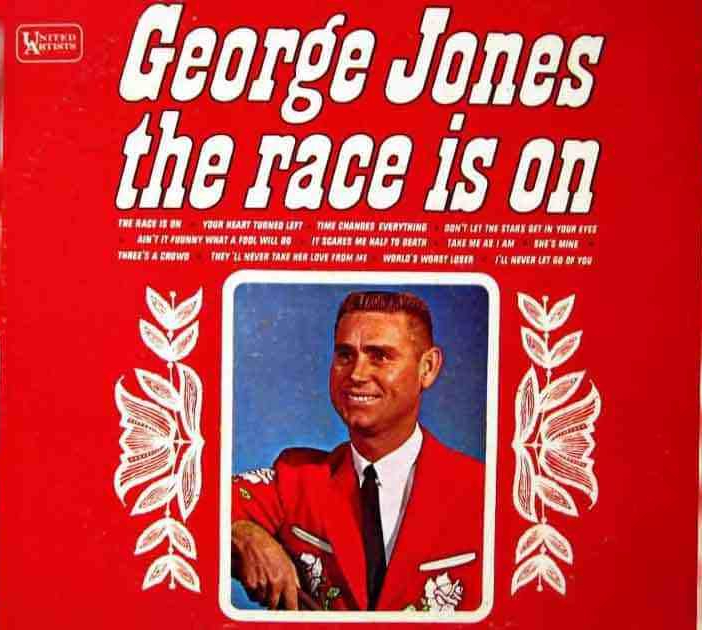
Don Rollins, a Nashville songwriter, wrote The Race Is On with a cool twist, comparing the end of a romantic relationship to a horse race.
The song was a huge hit in Country Music. It peaked at #3 on the Billboard Country Charts in 1964.
Keith Richards on recording a duet with George Jones: There was another wonderful expedition to record a duet with George Jones at the Bradley Barn sessions, “Say It’s Not You,” a song that Gram Parsons had turned me on to. George was a great guy to work with, especially when he had the hairdo going. Incredible singer. There’s a quote from Frank Sinatra, who says, “Second-best singer in this country is George Jones.” Who’s the first, Frank? We were waiting and waiting for George, for a couple of hours, I think. By then I’m behind the bar making drinks, not remembering that George is supposed to be on the wagon and not knowing why he was so late. I’ve been late many times and so no big deal. And when he turns up, the pompadour hairdo is perfect. It’s such a fascinating thing. You can’t take your eyes off it. And in a fifty-mile-an-hour wind it would still have been perfect. I found out later that he’d been driving around because he was a bit nervous about working with me. He’d been doing some reading up and was uncertain of meeting me.
George Jones on Keith Richards: “I’ll be honest with you: I love Keith Richards more than anything as a person. He’s a character – just fun to be around.”
Dolly Parton:Anyone who knows or cares anything about real country music will agree that George Jones is the voice of it.
The Race Is On
I feel tears wellin’ up Cold and deep inside Like my heart’s sprung a big break And a stab of loneliness sharp and painful That I may never shake Now, you might say that I was takin’ it hard Since you wrote me off with a call But don’t you wager that I’ll hide the sorrow When I may break right down and bawl
Now the race is on And here comes pride up the backstretch Heartaches are goin’ to the inside My tears are holdin’ back They’re tryin’ not to fall My heart’s out of the runnin’ True love’s scratched for another’s sake The race is on and it looks like heartache And the winner loses all
One day I ventured in love Never once suspectin’ What the final result would be How I lived in fear of wakin’ up each mornin’ And findin’ that you’re gone from me There’s ache and pain in my heart For today was the one I hated to face Somebody new came up to win her And I came out in second place
Now the race is on And here comes pride up the backstretch Heartaches are goin’ to the inside My tears are holdin’ back They’re tryin’ not to fall My heart’s out of the runnin’ True love’s scratched for another’s sake The race is on and it looks like heartaches And the winner loses all
This song has to have a world record attached to it… song most used in pep rallies. I heard the na na na parts from elementary to high school. It was high school before I heard the actual song.
The original version was by Chris Kenner, a New Orleans R&B singer and songwriter, first recorded and released “Land of 1000 Dances” in 1962 and it only made it to #77 on the Billboard 100. Kenner wrote the song as well. He promised Fats Domino a writing credit if he recorded it…Fats did but it didn’t go anywhere. On some copies, he is listed as a co-writer.
This song has been covered a lot. Secondhandsongs says it has 150 cover versions which is very good. Cannibal and The Headhunters covered it in 1965 and they peaked at #30 on the Billboard 100 but Wilson Pickett had the highest charting position for the song. It’s no telling how many times it’s been played live by famous and nonfamous artists.
Land of 1000 Dances peaked at #6 on the Billboard 100, #6 in Canada, and #22 in the UK in 1966 for Pickett. The sound of this record is great…it has a raw edge that only Stax had at the time.
Land of 1000 Dances
One, two, three
One, two, three
Ow! Uh! Alright! Uh!
Got to know how to Pony
Like Bony Moronie
Mash Potato
Do The Alligator
Put your hand on your hips, yeah
Let your backbone slip
Do the Watusi
Like my little Lucy
Ow! Uh!
Na, na-na na-na
Na-na na-na
Na-na na-na na-na
Na-na na-na
Need somebody help me say it one time!
Na, na-na na-na
Na-na na-na
Na-na na-na na-na
Na-na na-na
Wow!
Ow!
Uh!
You know I feel alright?
Hah!
Feel pretty good, y’all
Uh-hah!
Na, na-na na-na
Na-na na-na
Na-na na-na na-na
Na-na na-na
C’mon y’all, let’s say it one mo’ time!
Na, na-na na-na
Na-na na-na
Na-na na-na na-na
Na-na na-na
Ohh!
Dancin’ in the alley
With Long Tall Sally
Twistin’ with Lucy
Doin’ the Watusi
Roll over on your back
I like it like that
Do that Jerk, oh
Watch me work, y’all
Ow! Do it!
Wow! Do it!
Watch me do it
Ohh, help me!
Ohh, help me!
Ohh, help me!
Ohh, help me!
When I started this blog…I had no idea that I would concentrate on single songs. I was going to cover pop culture and I did at the beginning more. I would like to get one in every now and then.
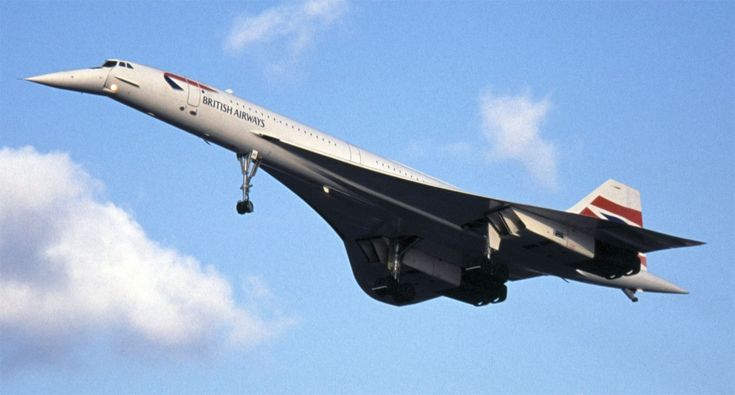
Today… everything seems to be bigger, stronger, and faster. That isn’t true though with a certain passenger airplane. A flight from New York to London now will take around 7 hours and 35 minutes to 8 hours and 10 minutes long. How fast would that flight be in the 1970s on the Concorde? That would take you a cozy three-and-a-half hours. The fastest flight was two hours and fifty-two minutes. It would travel at 1,354 mph. It was more than twice the speed of sound.
I’m not a huge airplane guy but this aircraft fascinated me and I always wanted to ride on one. The nose cone would come down so the pilots could see the runway…it looked like something from a Scifi movie. It would reach Mach 2 between London and New York. I would see pictures of it as a kid or on the news and I thought it was the coolest plane I’d seen. I probably still do. I do remember complaints about the sonic boom.
In November 1962, the British and French governments signed a treaty to jointly develop the Concorde. The Concorde prototype made its maiden flight on March 2, 1969. After some more prototypes, they tested and made modifications, including addressing issues with noise, fuel efficiency, and environmental impact. received its airworthiness certificate in 1975, with the first commercial flights beginning on January 21, 1976, by British Airways and Air France.
There was a plan for a Concorde-type supersonic plane in the US called a Boeing 2707. It would have gone 3 times the speed of sound and held 277 passengers compared to the 100 passengers the Concorde held. It was too expensive to build and was called “the most expensive aircraft never built.” Here is a picture of a 1966 mock-up of the 2707.
Boeing 2707
In 1977, it cost £431 to fly one way onboard Concorde between London and Washington. Adjusted for inflation, that’s about £2,200 ($2,800) in today’s money. However, fare prices gradually went up, and by 1996, a roundtrip across the Atlantic would generally be priced at around $12,500 in today’s money. So it was very expensive. The meals and service were great but it was cramped inside compared to other airplanes at the time. It was also noisy…
All together… two prototypes, two pre-production aircraft, two development aircraft, and 14 production aircraft for commercial service. All of them except the two pre-production builds are preserved in museums.
This all leads us to why the Concorde is in museums now and not in the sky. The price, noise, and it was so expensive to operate. Every hour in the sky had to have 22 hours of maintenance. Also on July 25, 2000, the Concorde crashed. It was shortly after takeoff and 109 people died onboard plus 4 on the ground. That was its only crash. They did go on until 2003 but officially retired the plane that year.
A New York Times writer wrote this about the food served. “What followed the coffee was a breakfast of fresh papaya, guava, pineapple, strawberries and mangoes, croissants and brioche that might have come from a Paris bakery, a pretty good approximation of eggs benedict and a soufflé Gruyère, all washed down with Piper‐Heidsieck Cuvée Diplomatique. The china, of course, was Limoges.”
This video shows the take-off from inside the plane by a passenger.
I have so many songs I want to have on here. I read the original post I did and re-read the comments and took some songs from your suggestions and used them. I haven’t got to all of them…so the others probably will be on the next one. I picked one song and you all picked the rest. Some will be in the next edition that I couldn’t fit in this one.
I hope you are all having a great Sunday.
Jackie Brenston and his Delta Cats – Rocket 88
CB mentioned this one and it should have been on the first one…since this is often said to be the first rock and roll song. It’s only fitting that it was about a car. The recording session happened on March 3, 1951, at Sam Phillips’ Memphis Recording Service in Memphis, Tennessee, which would later become the legendary Sun Studio.
The song was written by Ike Turner and Jackie Brenston. The Delta Cats were actually Ike Turner’s band Turner’s King of Rhythm.
A review from Time Magazine in 1951
Rocket 88 was brash and it was sexy; it took elements of the blues, hammered them with rhythm and attitude and electric guitar, and reimagined black music into something new. If the blues seemed to give voice to old wisdom, this new music seemed full of youthful notions. If the blues was about squeezing cathartic joy out of the bad times, this new music was about letting the good times roll. If the blues was about earthly troubles, the rock that Turner’s crew created seemed to shout that the sky was now the limit.
Commander Cody and His Lost Planet Airmen – Hot Rod Lincoln
The main thing I like about the song is the guitar. It has a slight Chuck Berry feel to it and I like the fills the guitar player throws in. Of course, I like Commander Cody’s (George Frayne) vocal sound as well.
The band signed with Warner Brothers and the label wanted a soft country sound but the band refused to change its raw style.
Hot Rod Lincoln was originally written by Charlie Ryan. It was first recorded and released by Charlie Ryan and The Livingston Brothers in 1955. Commander Cody and His Lost Planet Airmen were a County-Rock group formed at the University of Michigan. Commander Cody is the lead singer and piano player George Frayne. This would be their only top-ten hit. Another song that is well-known by them is Smoke Smoke Smoke.
The Renegades – Cadillac
Fellow blogger HotFox63 mentioned this song when I did a Clash post on Brand New Cadillac so I thought it would be perfect for this. Very cool song that I knew nothing about.
The Renegades were a British rock band formed in Birmingham in 1960. The original lineup consisted of Kim Brown (vocals, guitar), Denys Gibson (guitar), Ian Mallet (bass), and Graham Johnson (drums). Cadillac was released as a single in 1964. The song quickly became a hit in Finland, reaching #1 on the charts. Its success in Finland helped the band gain a substantial following in Scandinavia, and the song’s popularity also spread to other parts of Europe, including Italy.
Rosanne Cash – Black Cadillac
Obbverse mentioned this one. It’s a song from 2005 from an album with the same name. The black Cadillac in the song symbolizes both a funeral car and a connection to her father, who owned a black Cadillac…and about loss, memory, and mourning.
She wrote the album about dealing with the death of her father.
“It certainly crossed my mind that I was opening myself to questions about how much [of the album] was documentary and how much was poetry, I certainly did think about it. But, at the same time, I think that the themes are so universal that it almost doesn’t matter what’s particular to my life. … People can bring their own lives to this subject very easily.”
Beach Boys – 409
Christiansmusicmusings and Halffastcyclingclub both mentioned this one by the Beach Boys. The Beach Boys would be an endless supply of cars and endless summers. This song was written by Brian Wilson, Mike Love, and Gary Usher and was released in 1962.
I love horror anthologies. They were really big in the early seventies. The Amicus Productions company made quite a few good ones. I remember some of these as a kid…especially Tales from the Crypt. I’m going to list my top 5 of only Amicus today.
I am working on a post that lists my favorite 5-10 Anthologies of all time. Today I want to focus on the British film company Amicus. One actor that they depended on a lot was Peter Cushing. He is in all of the ones below except for Vault Of Horror.
Amicus Productions was a British film production company specializing in horror and suspense anthology films during the 1960s and 1970s. The company was founded in 1962 by Americans Milton Subotsky and Max Rosenberg, who aimed to replicate the success of Hammer Film Productions, another prominent British studio known for its horror films.
Despite their success, Amicus struggled financially in the late 1970s due to changing audience tastes and the declining popularity of horror anthology films. Milton Subotsky eventually left the company in 1975, and without his creative leadership, Amicus gradually faded from the spotlight.
The good news though… it was announced in 2023 that Amicus will be coming back to film production…they are trying to make a film called In The Grip of Terror.
Below are the 5 and most descriptions I got from IMDB. My favorite anthology horror is at the bottom.
Asylum 1972
A young psychiatrist interviews four inmates in a mental asylum to satisfy a requirement for employment. He hears stories about 1) the revenge of a murdered wife, 2) a tailor who makes a suit with some highly unusual qualities, 3) a woman who questions her sanity when it appears that her brother is conspiring against her, and 4) a man who builds tiny toy robots with lifelike human heads.
Vault Of Horror 1973
Five strangers board a descending lift, one by one, in a modern office block in London. They reach the sub-basement and find a large, elaborately furnished room that appears to be a gentlemen’s club. Resigned to waiting for help, they settle down with drinks and talk. The conversation turns to dreams, and each man tells of a recurring nightmare. Tom Baker is in the last episode of this one. My personal favorite Doctor of the Doctor Who franchise.
The complete movie!
From Beyond The Grave
The first tale, titled “The Gate Crasher” stars David Warner and has a sort of Hellraiser feel about it, as he buys an old mirror from the antique store and it turns out to be inhabited by a ghost-like thing that entices Warner into bringing it fresh blood. It’s not a bad story, though I feel that more could have been made of it. 2) Story number two is the best and focuses on a man who steals a war medal from the antique store to impress a former army man and ends up getting more than he bargained for. This tale is very strange and stars Donald Pleasance in one of his weirder roles. It’s imaginative and inventive, and therefore interesting as it’s impossible to tell where it’s going. 3) Story number three, “The Elemental” is a fun little story, though there isn’t really a great deal of point to it. 4) The fourth and final tale appears to be the centerpiece and focuses on an old wooden door that gives way to an expansive blue room. This is a decent little story and we get to watch Lesley-Anne Down wielding an axe, which makes it worthwhile.
Overall, From Beyond the Grave is everything an anthology should be: it’s fun and interesting in the right places. There are plenty of plot holes, but also no need to pay them any mind. From Beyond the Grave comes highly recommended to horror fans!
The House That Dripped Blood
Peter Cushing, Christopher Lee, Joss Ackland, Jon Pertwee all star in this 4 story anthology.
A Scotland Yard investigator looks into four mysterious cases involving an unoccupied house and its tragic previous tenants: 1) A hack novelist encounters a strangler who’s the villain of his books, leading his wife to question his sanity, 2) Two men are obsessed with a wax figure of a woman from their past, 3) A little girl with a stern, widowed father displays an interest in witchcraft, and 4) An arrogant horror film actor purchases a black cloak which gives him a vampire’s powers.
Here is the complete movie!
Tales From The Crypt
Joan Collins, Peter Cushing are among the actors in the movie. To me… this is the best anthology horror. Five people meet deep in a cave and they don’t know how they got there. They soon find out how and why and what is about to happen to them.
Five people come upon a catacomb and take the tour. After they get lost, they find they’re trapped, and they see The Crypt Keeper (Sir Ralph Richardson). He asks them each to see why they’re there: (1) And All Through the House: Christmas Eve, Joanne Clayton (Dame Joan Collins) kills her husband (Martin Boddey) expecting to receive his insurance. She hears on the wireless that the police are seeking an escaped homicidal maniac posing as Santa. When the man knocks on her door, she can’t phone the Police, and she has a Christmas surprise. (2) Reflection of Death: Carl Maitland (Ian Hendry) leaves his wife (Susan Denny) and children for his mistress, but something happens during his journey. (3) Poetic Justice: the widowed janitor, Arthur Edward Grimsdyke (Peter Cushing) is a good man who spends his leisure time with the children from the neighborhood. His heartless neighbor doesn’t like him and destroys his life, leading Grimsdyke to commit suicide on Valentine’s Day. A year later, Grimsdyke rises from his tomb seeking revenge. (4) Wish You Were Here: dirty businessman Ralph Jason (Richard Greene) is bankrupt, and his lawyer and friend, Charles Gregory (Roy Dotrice), tells him he must sell his real estate. When he tells his wife Enid (Barbara Murray), she recalls they have a statue with a legend; it’ll grant three wishes to the owner. She makes the wishes, and leads Ralph to eternal damnation. (5) Blind Alleys: cruel Major Rogers (Nigel Patrick) comes to the Elmridge home for the blind, with his dog, to be the new director. He tortures the internees until the day they get revenge. Soon, the internees discover they’re at the gate of Hell.
I first heard Tim Buckley on, of all things, The Monkees television show. As a kid I remember hearing how great his voice was. I was around 7 so I had no clue who he was. Here is that clip that I saw around 1974. The first time I saw Frank Zappa was on the Monkees as well. At the end of the Monkee’s second and final season, they had almost full control and they used it as much as possible to promote artists they liked.
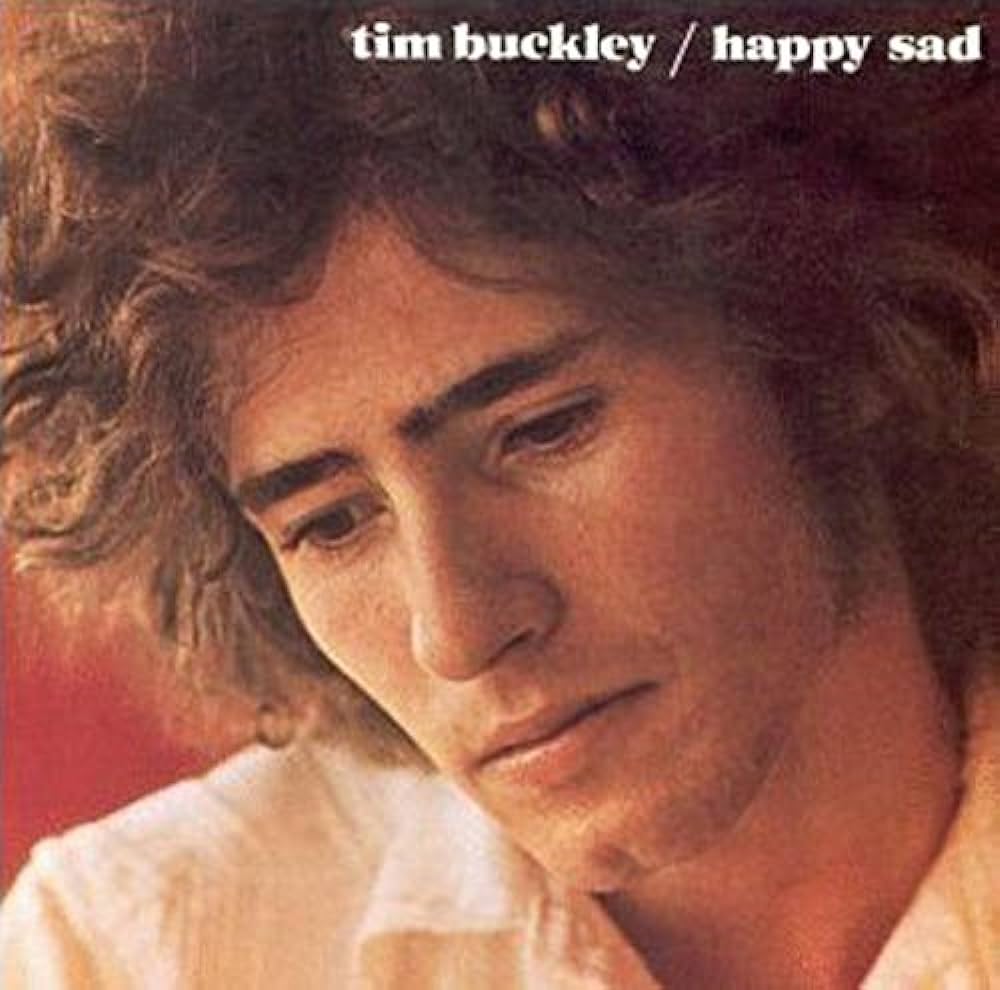
Buzzin’ Fly was released in 1969 on the Happy Sad album. On this album, he was transitioning from his earlier folk sound to a more jazz-influenced and experimental style. The album was produced by former Lovin’ Spoonful members Zal Yanovsky and Jerry Yester.
This was released at the height of his popularity. The album peaked at #81 on the Billboard Album Charts in 1969. When he started experimenting and moving away from his folk sound it upset some of his long-time fans. After this album, his popularity decreased because he moved toward a jazz feel.
This song was written before the other songs on the album. Buzzin’ Fly was written around 1966. It was performed with his high school band Harlequin 3, with bassist Jim Fielder and later lyricist, Larry Beckett.
The song became one of the most requested songs in concert that he had at the time. Gregg Allman called Tim Buckley and wanted to do an album with him in 1975 and Buckley agreed…but the world would lose Tim Buckley after an overdose in June of 1975 at age 28.
Buzzin’ Fly
Just like a buzzin’ fly I come into your life Now I float away Like honey in the sun Was it right or wrong I couldn’t sing that song anyway
Oh, but darlin’ Now I remember How the sun shown down And how it warmed your prayin’ smile When all the love was there
You’re the one I talk about You’re the one I think about Everywhere I go And sometimes honey In the mornin’ Lord, I miss you so
That’s how I know I found a home That’s how I know I found a home
Oh, hear the mountains singing Lord, I can hear them ringing, darlin’, Out your name And tell me if you know Just how the river flows Down to the sea
Now I wanna know Everything about you I wanna know Everything about you
What makes ya smile What makes ya wild What makes ya love me this way Darlin’ I wanna know Darlin’ I wanna know
You’re the one I talk about You’re the one I think about Everywhere I go And sometimes honey In the mornin’ Lord, I miss you so
That’s how I know I found a home That’s how I know I found a home
A-walkin’ hand in hand And all along the sand A seabird knew your name He knew your love was growin’ Lord, I think it knows it’s flowin’ Thru you and me
Ah, tell me darlin’ When I should leave you, Ah, tell me darlin’ I don’t want to grieve you…
Just like a buzzin’ fly I come into your life Now I float away Like honey in the sun Was it right or wrong I couldn’t sing that song anyway
Oh, but darlin’ Now I remember How the sun shown down And how it warmed your prayin’ smile When all the love was there
You’re the one I talk about You’re the one I think about Everywhere I go And sometimes honey In the mornin’ Lord, I miss you so…
You know I’m gonna shoot my woman Cause she’s foolin’ around with too many men
Before I start this I want to thank Randy from Mostly Music Covers. While writing this up the song title I had was “Bring Me My Shotgun” but I couldn’t find the album it was on. I’m a babe in the woods with blues…so I asked Randy and Shotgun Blues was recorded in 1948. As far as I can tell he did re-record many of his songs and this one around 1960. I’ll include the earlier version of Shotgun Blues and the 1960 version named Bring Me My Shotgun..at least for this post. He would change up the lyrics in some versions. What made it confusing was that he changed the way he did the vocals a little as well… again thank you, Randy.
I’m sitting with headphones on listening to Lightnin’ Hopkins and it’s like he is in the room with me. I’ve never posted anything about him before but I wanted to clear that up today.
He was born in Texas and He grew up in a musical family and learned the blues from his older cousin, country blues legend Blind Lemon Jefferson. Jefferson and Hopkins started to play together at church gatherings. Hopkins started performing in the 1920s and 1930s in the local Texas blues scene. By the mid-30s Hopkins was sent to a prison farm but the reason is unknown. He described working on a road gang and being shackled to his bunk at night.
In the mid-1940s he was teamed with a Houston piano player named Wilson “Thunder” Smith. They were known as Thunder an’ Lightnin’ and they had a local hit named Katie May with Aladdin Records. Hopkins would record with many different labels throughout the rest of his life. The Folk-Blues revival was stirring in 1959, and Folkways producer Sam Charters persuaded Lightning (with the help of a bottle of gin!) to record 10 tracks in the shabby room where he had been living in Houston. I have one of them below called “Hopkins Sky Hop.” Bring Me My Shotgun was released in 1960.
He started to get popular, especially with the British white soon-to-be musicians. He worked the College and club circuit, toured Europe with the Folk/Blues Festival, and starred at the Newport Folk Festival in 1965. He found an appreciative new audience of rock fans who heard this great guitarist who lived the blues.
He later headlined over the Jefferson Airplane and he played with the Grateful Dead a few times. He recorded dozens of albums through the 60s and 70s. He finally left us in 1982.
Bring Me My Shotgun
Woah, go bring me my shotgun
Oh I’m gonna start shootin’ again
Go bring me my shotgun
You know I just got to start shootin’ again
You know I’m gonna shoot my woman
Cause she’s foolin’ around with too many men
Yes bring me my shotgun
Yes man and a pocket full of shells
Yes go bring me my shotgun
Yes man and a pocket full of shells
Yeah you know I’m gonna kill that woman
I’m gonna throw her in that old deep dug well
Hide her from everybody they won’t know where she at
That woman said Lightnin’ you can’t shoot me
She said now you is dead of tryin’
I don’t take a day off for nobody
She said Lightnin’ you can’t shoot me
She said yes and you dare to try
I said the only reason I don’t shoot you little woman
My double barrel shotgun, it just won’t fire
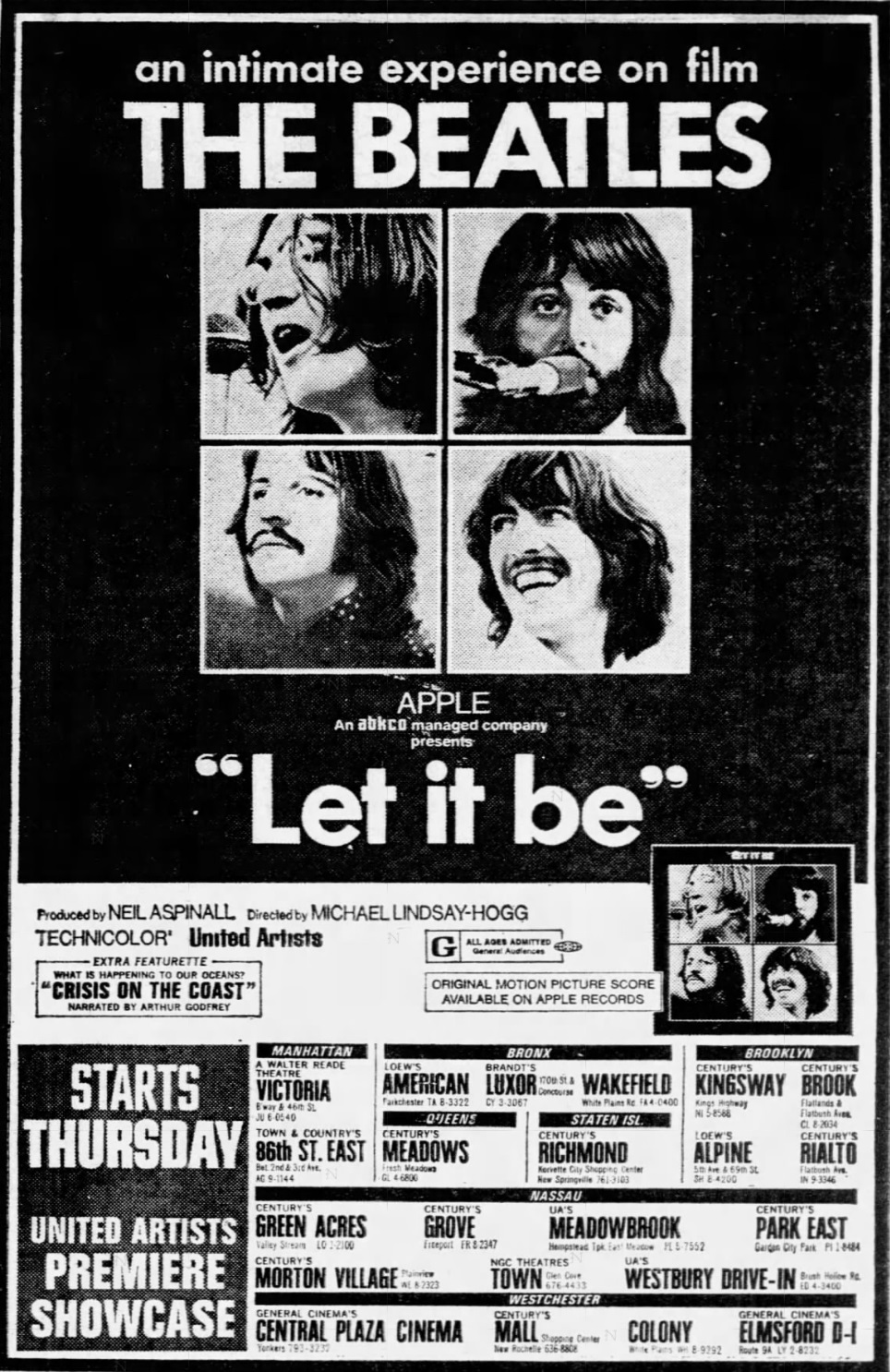
Apple has released a clean version of the Let It Be film. Today they dropped a new video of the song Let It Be. I have had this movie since the 80s but you could only get a terrible quality version. This video shows how clear it will be as in The Get Back film a few years ago.
My only complaint is I wish the Let It Be version would have included George’s distorted solo.
This is the video of the title song they just released today.
When I first saw the Michael Myers character Austin Powers I automatically thought of Peter Asher. I learned about them in the 80s while listening to an oldies channel at where I used to work. Peter and Gordon were Peter Asher and Gordon Waller.
The first song I remember hearing and liking from them was I Go To Pieces. They were part of the British Invasion to come in after The Beatles. Peter Asher had a secret weapon. His sister was going out with Paul McCartney and McCartney was living at the Ashers at this time in a room beside Peters.
McCartney first gave the duo a song called A World Without Love that John Lennon rejected because of the first line he didn’t like (Please lock me away). The record was huge… it peaked at #1 in the US, Canada, New Zealand, and the UK in 1964. Paul wrote “World Without Love,” Nobody I Know,” “I Don’t Want To See You Again,” and “Woman” for the group. Woman though was different than the others.
Paul didn’t want the Lennon/McCartney name on this song. People were saying they were only hits because of who wrote the song. Peter and Gordon were told they were only jumping on the Beatle bandwagon. When this song was released it first got credited to A. Smith and then Bernard Webb. The song was rising up the charts but only after two weeks, it was traced back to Lennon and McCartney’s publishing company Northern Songs so it was exposed.
The song was a hit regardless peaking at #14 on the Billboard 100, #1 in Canada, #28 in the UK, and #7 in New Zealand in 1966. The duo would have other hits not written by McCartney like I Go To Pieces and Lady Godiva. They had a longer career than I first thought. Their success lasted until 1967 but not before they amassed 10 top 40 hits in America alone.
Peter Asher would later become head of A&R for Apple Records in 1968. He signed, produced, and managed James Taylor. After Allen Klein destroyed what was left of Apple Records, Asher packed up and moved to California. He took James Taylor with him and produced him through the seventies. He also picked up another artist and produced her…Linda Rondstadt. He also produced albums by J. D. Souther, Andrew Gold, and Bonnie Raitt. He also worked with Cher and 10,000 Mainiacs.
He became Senior Vice-President, of Sony Music Entertainment in 1995 and held that job until 2002 when he went back to artist management. .
Peter and Gordon reunited in 2005 and played concerts when they had time. They did this up until Gordon’s death in 2009 of a heart attack. Peter would go on to Sirus Radio doing a Beatle show on their Beatles channel called “From Me To You. ”
He also wrote a book on The Beatles called The Beatles From A to Zed. I just read it and it is really good. It’s not a biography on the Beatles or any dirt though…it’s a fun book and he goes through the alphabet and names Beatles songs, places, things, and etc corresponding to whatever letter he is on.
Woman
Woman, do you love me?
Woman, if you need me then
Believe me I need you
To be my woman
Woman, do you love me?
Woman, if you need me then
Believe me I need you
To be my woman
And should you ask me how I’m doing?
What shall I say? Things are okay
But I know that they’re not
And I still may have lost you
Woman, do you love me?
Woman, if you need me then
Believe me I need you
To be my woman
I guess you’ll take your time and tell me
When we’re alone, love will come home
I would give up my world
If you’ll say that my girl is my woman
I’ve got plenty of time (I’ve got plenty of time)
Time just to get through it
Once again you’ll be mine (once again you’ll be mine)
I still think we can do it
And you know how much I love you
Woman, don’t forsake me
Woman, if you take me then
Believe me I’ll take you
To be my woman
As a 6-year-old I watched the Monkees show in re-runs intently dreaming of one day forming a band and living all together. Most of that dream came true except the all living together…which we probably wouldn’t still like each other if that had happened. This song was popular with me because I remember the TV show and liked this song. The Monkees had their own MTV before MTV…their show would not only play videos of hits but album cuts as this was…and it’s a good one.
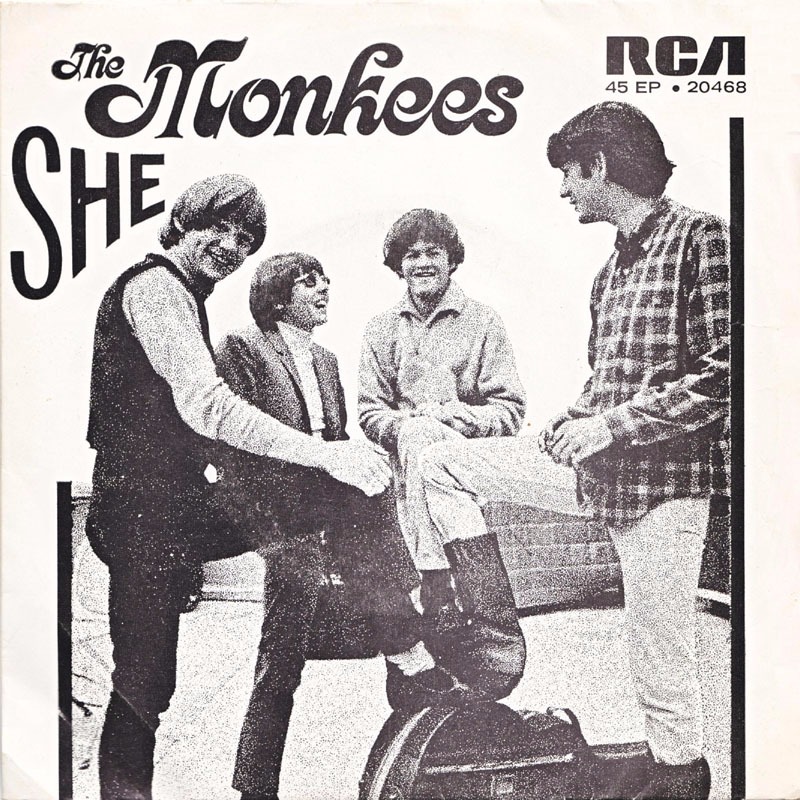
This song was written and produced by Tommy Boyce and Bobby Hart with lead vocals by Mickey Dolenz. He had one of the best pop voices in the sixties. “She” was on The Monkees’ second album More of the Monkees. This album was the last one they would not have much control over. The album was released without the band’s knowledge. They discovered it while they were in Cleveland, Ohio on tour. They were not happy at all. This album’s release was the key moment that started Mike Nesmith’s fight for control.
After the album was released Nesmith and the others met with Don Kirshner (the show and music creator). They met him in the Beverly Hills Hotel and Nesmith punched a hole in the wall and told Kirshner and his lawyer…“That could have been your face!” After that Nesmith was told to read his contract so Nesmith did the only thing he could do to break free from the control…he threatened to quit.
Kirshner refused to allow them to play instruments on their records, hiring seasoned studio musicians instead…although Nesmith and Tork did get to play some instruments on their first two albums. After Nesmith threatened to quit…the executives took notice. They dropped Kirshner from The Monkees completely. After he was dismissed from the Monkees…he created the Archies…because he said “I want a band that won’t talk back.”
Four months after More of the Monkees was released…The Monkees released their album Headquarters in May of 1967. This time they were in control and played their own instruments with no Kirshner to be found.
More of the Monkees peaked at #1 on the Billboard 100, in Canada, and The UK in 1967. Their first album with them playing everything…Headquarters peaked at #1 on the Billboard 100, #1 in Canada, and #2 in the UK. It tops some people’s Monkee album lists.
By the way…their next album after Headquarters, again playing most of the instruments themselves Pisces, Aquarius, Capricorn & Jones Ltd. also peaked at #1 on the Billboard 100 in 1967. So for those who are keeping score…that is three #1 albums released in 1967.
Here are quotes about the Rock and Roll Hall of Fame by each member of the Monkees.
Peter Tork: [Wenner] doesn’t care what the rules are and just operates how he sees fit. It is an abuse of power. I don’t know whether the Monkees belong in the Hall of Fame, but it’s pretty clear that we’re not in there because of a personal whim. Jann seems to have taken it harder than everyone else, and now, 40 years later, everybody says, ‘What’s the big deal? Everybody else does it.’ [Uses studio artists or backing bands.] Nobody cares now except him. He feels his moral judgment in 1967 and 1968 is supposed to serve in 2007.
Michael Nesmith:“I can see the HOF (Hall of Fame) is a private enterprise. It seems to operate as a business, and the inductees are there by some action of the owners of the Enterprise. The inductees appear to be chosen at the owner’s pleasure. This seems proper to me. It is their business in any case. It does not seem to me that the HOF carries a public mandate, nor should it be compelled to conform to one.”
Davy Jones:“I’m not as wealthy as some entertainers, but I work hard, and I think the best is yet to come. I know I’m never going to make the Rock and Roll Hall of Fame, but maybe there’s something else for me in show business. I’ve been given a talent—however big or little—that has given me many opportunities. I’ve got to try to use it the best way I can. A lot of people go days without having someone hug them or shake their hand. I get that all the time.”
Micky Dolenz:“As far as the Rock & Roll Hall of Fame I’ve never been one to chase awards or anything like that; it’s never been very important to me. I was very proud to win an Emmy for The Monkees, having come out of television as a kid. When we won the Emmy for best TV show in ’66 or ’67 that was a huge feather in my cap. But I’ve never chased that kind of stuff. I’ve never done a project and thought, ‘What do I do here to win an award?’ Specifically as far as the Rock & Roll Hall of Fame I’ve been very flattered that the fans and people have championed the Monkees. Very flattered and honored that they do. If you know anything about the organization, and I’ve done charity work for the foundation, the Hall of Fame is a private club.”
She
She, she told me that she loved me,
And like a fool I believed her from the start.
She, she said she’d never hurt me,
But then she turned around and broke my heart
Why am I standing here,
Missing her and wishing she were here.
She only did me wrong;
I’m better off alone.
She, she devoured all my sweet love,
Took all I had and then she fed me dirt.
She, she laughed while I was cryin’.
It was such a joke to see the way it hurt.
Why am I standing here,
Missing her and wishing she were here.
She only did me wrong;
I’m better off alone.
And now I know just why she
Keeps me hangin’ ’round.
She needs someone to walk on,
So her feet don’t touch the ground.
But I love her,
I need her,
I want her.
Yea! Yea! Yea! Yea! Yea! Yea! She!
[Instrumental]
Why am I standing here,
Missing her and wishing she were here.
She only did me wrong now;
I’m better off alone.
This is an interesting list to make. Everyone knows I’m a huge fan but there are some that I won’t listen to…not because they are burned out…I won’t even list those…these are ones I never really liked since I was a kid.
Some of you will notice that one “song” or experiment is not in here…that’s because I count Revolution #9 as an experiment and not a true song. I find it fascinating…a sound collage. I looked up the usual suspects… Yellow Submarine, Good Day Sunshine, Don’t Pass Me By, Rocky Raccoon, and Ob-La-Di, Ob-La-Da but I like those.
These are songs I’ll never post except this once.
5: Little Child – This was on their Meet The Beatles album in the US. Never liked it as a kid, teen, or now. But I did find a version I like by The Inmates that I just found recently.
4: Mister Moonlight – This song was written by someone else but I just never took to it at all…although John did a great vocal on it.
3: Can’t Buy Me Love – I know…this one seems out of place on this list but it was on the first Beatle album I ever bought (Hey Jude Again) and I skipped it even as an eight-year-old.
2: Maxwell’s Silver Hammer – I’ve heard my share of jokes about this song with me being named Max. I would like to use that damn hammer on every recording of this. I’ll never forgive Paul for introducing Maxwell to the world. The other three Beatles felt the same. There are some that really like it…more power to them!
1: Now the number 1 song…it’s the only one on the White Album I cannot and will not listen to. Wild Honey Pie. This song makes Revolution #9 look like Stairway to Heaven. I have to think they did this as a joke and just left it on. Patti Harrison liked this one so Paul left it on. Paul is the only one on this song.
This post is more personal for me. Jimmy Simpson was my uncle…my mom’s brother. The man got around and had an interesting life. He was an extra in some movies (the one I know is The Alamo) because of his friendship with John Wayne and James Arness. He was built like them and reminded me of both.
He was born in 1928 and moved out of Tennessee in the early 50s and went to Florida and ended up in Texas working in oil fields while playing at night at clubs. He would go to gigs in Tennessee, Arkansas, Florida, Louisana, Texas, and everything in between. He wasn’t an amateur…he played with some big players like Jim Reeves’ Blue Boys.
He recorded some singles while living in Nashville and Texas. Jimmy and his wife got to know Jimmie Rodger’s widow which this below sounds like it’s heavily influenced by.
He then moved to Alaska in the late 50s to mine for gold which he was successful at. He bought into a snowmobile factory there and played country music in bars in Alaska and Canada. He also released a few albums and charted on local charts in Alaska and Canada.
Nashville, mid-1950s. From left: Billy Byrd, Ernest Tubb, Jimmy Simpson. Courtesy Jimmy Simpson.
My dad’s side of the family made guitars and they gave Jimmy an acoustic. Gower guitars are compared to Martins and still get really high prices at shops and on eBay. He had that guitar stolen while playing in Alaska…he finally chased the guy down and got the guitar back. The man tore out one of the serial numbers inside the guitar but didn’t get by with it…and knowing my uncle Jimmy the dude was probably missing some teeth afterward. My uncle was a man’s man. He told me about it…“Max…you don’t mess with a man’s guitar…you just don’t.”
Around six months before my uncle passed away in 2014, he came by and gave me that guitar and another one his daughter once owned that our family made. I asked him why because he treasured those guitars (his daughter passed away a few years earlier) and he said, “I want you to have them before I pass away to make sure you get them.” He was 86 at the time. I will treasure them and I play them a lot. I would include a picture but they are getting serviced right now.
He also had an autobiography published in the mid-90s called A Vanishing Breed: The Gold Miner that I read and he lived 3 lifetimes in one. I remember as a kid him showing me this bag of gold…pieces as big as a quarter and very thick. You know it’s a shame…so many questions I would love to ask the man now.
Here is one recording from 1956… I’ll copy what it says from the wired-for-sound.blogspot.com. It’s called “Blue As I Can Be“…it has a little of the Johnny Cash sound in it.
Jimmy Simpson, Tennessee honky tonk singer, Texas oilfield wildcatter, and Canadian gold digger made this one superb session in a West Monroe, Louisiana radio station studio in 1956 with Bobby Garrett (steel) and Leo Jackson (lead guitar), both on hiatus from Jim Reeves’ Blue Boys. Records and gigs weren’t paying Jimmy’s rent, so he picked up jobs working in Texas oil fields for much of the 1950s, before moving to Alaska in 1957.
“I lived at Greggton, Texas (in 1956-57),” Jimmy said in an interview. “We were on our way back from Nashville to San Angelo, and we stopped at Greggton…little town just out of Longview. We had everything we owned in the car. I had my work shoes and my hardhat, ‘cause I could always go to work on an oil rig if everything else failed. In a little restaurant there in Greggton, there was a driller in there that was short-handed, and I overheard ‘em talking. I walked over there and said, “You looking for a derrick man?” He said, “Yeah. You got your work shoes and hardhat with you?” I said, “I got it all underneath the trunk of my car.”
At the time of this session, Jimmy was appearing at the famed Reo Palm Isle club in Longview. “That’s Bobby and Leo (on the session). I forget who that bass player was. He was from Monroe. I’m on rhythm guitar. I didn’t carry a fiddle at that time, but when I was in San Angelo at the Peacock Club, I had two steels and a fiddle. Everybody else would talk about two fiddles. I didn’t make any money up there myself. I was working on an oil rig. But I thought it would be different… Jiffy (Fowler) was a jukebox operator. I just kind of stumbled into him. It was a disc jockey there in Monroe, Ed Hamilton, who set us up in there and turned us loose…You know why that ‘Blue As I Can Be’ come by? Johnny Horton’s ‘I’m a Honky-Tonk Man.'” Two other songs recorded at this session were released on Big State 595 in the Starday custom series.
I was browsing through songs to write about and this title jumped out at me. I had to listen to it and I recognized it right away. It’s probably been the 70s since I heard this one last. Who ever recorded the bass in this song knew what they were doing…it’s crystal clear in front.
Crow was a blues rock band from Minneapolis and their first band name was South 40. They formed in 1967 and their members were brothers guitarist Dick Wiegand and bassist Larry Wiegand, singer David Wagner, keyboardist Kink Middlemist, and drummer Harry Nehls who was replaced by Denny Craswell.
Crow gained popularity locally in Minneapolis and then expanded their reach by touring regionally. They built a strong reputation for their live performances and powerful blues-rock sound. In 1969, Crow signed a record deal with Amaret Records.
This song was on their debut album called Crow Music. It was their only big hit. and peaked at #15 in Canada and #17 on the Billboard 100 in 1969. Many people will know the song because Black Sabbath covered it with the name of just Evil Woman and it was their first single.
The band broke up in 1972…they reformed in 1980 with a different lineup. In 2005, they were inducted into the Minnesota Rock/Country Hall of Fame and, in 2009, the Iowa Rock & Roll Music Hall of Fame. I had no clue they had those Hall of Fames in those states. They still play once in a while in the Midwest.
Larry Wiegand bass player: “It was not a fictional story but had the same inspiration as Michael Jackson’s “Billie Jean.” Both tell the story of a guy who was accused of being the father of a gal’s baby. He claims he isn’t the father. ‘Evil woman, don’t play those games with me’ is his response to her accusations. Not an uncommon story for young folks – then or now. All the Crow songs were about what young folks had to deal with at one time or another. I like to think each song is a snapshot of what was happening to us at the time.”
Black Sabbath’s cover
Evil Woman (Don’t Play Your Games With Me)
I see the look of evil in your eyes
You’ve been filling me all full of lies
The morrow will not change your shameful deed
You will be someone else’ fertile seed
Evil woman, don’t play your games with me
Evil woman, don’t play your games with me
Now I know just what your looking for
You want me to claim this child you bore
But I know that it was he, not me
And you know just how it’s got to be
Evil woman, don’t play your games with me
Evil woman, don’t play your games with me
Wickedness lies in your moistened lips
Your body moves just like the crack of a whip
Black cats lay atop your satin bed
You sure wish that you could see me dead
Evil woman, don’t play your games with me
Evil woman, don’t play your games with me










 PowerPop... An Eclectic Collection of Pop Culture