Ricky Nelson – Stood Up

Around 1984 or so I really started to get into Ricky Nelson. Song after song of quality. At first, I only knew Garden Party but it’s his 50s catalog where many of his best songs are found…and I love Garden Party.

By 1957, Ricky Nelson was already a well-known actor from his role on “The Adventures of Ozzie and Harriet”, a TV show that starred his real-life family. His transition into music was initially seen as a part of his television character, but he quickly proved his talents as a serious musician. The show helped him of course but also hurt his credibility as a rock and roll artist.

Stood Up was part of a string of hits he was enjoying in the late 50s. The song was written by Dub Dickerson and Erma Herrold. The great James Burton, who would later lead Elvis’s TCB Band,  played guitar on this song.

The song peaked at #2 on the Billboard 100 and #27 in the UK in 1957. Stood Up was his second #2 single and the next year he would have his first number one with Poor Little Fool. Poor Little Fool featured The Jordanaires, who were Elvis Presley’s backing singers.

Throughout the 1960s, Nelson continued to record rockabilly and evolve as an artist. He shifted to a more folk-rock sound and formed The Stone Canyon Band and in 1972 he had the hit Garden Party.

Stood Up

Well, I’ve been waitin’ ever since eightGuess my baby’s got another dateStood up, broken-hearted, again

I’ll bet she’s out havin’ a ballNot even thinkin’ of me at allStood up, broken-hearted, again

Well, I know just what I oughta doI oughta find somebody newBut, baby, I couldn’t forget about youStood up, broken-hearted, again, mm

Why must I always be the oneLeft behind never havin’ any fun?Stood up, broken-hearted, again

But I guess I’ll go on bein’ a foolSittin’ around just waitin’ for youStood up, broken-hearted, again

Well, I know just what I oughta doI oughta find somebody newBut, baby, I couldn’t forget about youStood up, broken-hearted, again

Stood up, broken-hearted, againStood up, broken-hearted, again

.

Car Songs… Part 4

This is part 4 of this series and I thought it was about time to do another installment. I found some more rare songs this time except for Mr. Berry. 

Kinks – Cadillac

I think all of these I do must have Cadillac in at least one song. This one was on their debut album and it was written and recorded by Bo Diddley in 1960. The Kinks debut album Kinks was released in 1964. 

 Gene Vincent – Pink Thunderbird

This song was written by Tex Davis and Paul Peek. It was released by Gene Vincent in 1957. Gene Vincent’s voice and slap back echo go together perfectly. Every rock artist after Gene Vincent has gone after that sound including Springsteen.

Cliff Gallup played some great guitar on this recording. He recorded 35 tracks with Vincent including Be-Bop-A-Lula

Chuck Berry – Maybellene

Chuck Berry was THE first guitar hero in Rock and Roll. He was also rock’s first poet. This song evolved out of “Ida Red,” a hillbilly song by Bob Wills and The Texas Playboys from the early ’50s. Berry heard that song on the Country radio station KMOX in St. Louis but didn’t know who recorded it.

Not only is the music great with the steady beat… but those lyrics. The motor cooled down the heat went down, And that’s when I heard that highway sound, the Cadillac a-sittin’ like a ton of lead, a hundred and ten half a mile ahead, the Cadillac lookin’ like it’s sittin’ still, and I caught Mabellene at the top of the hill

You can see what is happening in the song in your head with no problem… no MTV story video needed. He was one of the best descriptive lyricist rock and roll has ever had.


The Three Milkshakes – Jaguar

They were a rockabilly band from the 1980s led by singer Mark Kermode, who is now well-known as a British film critic. The group specialized in vintage rock ‘n’ roll and rockabilly music, covering songs in a classic ’50s style. They were part of the vibrant rockabilly revival scene in the UK during that time.

Bob Dylan – From A Buick 6

This song is from Bob Dylan’s album Highway 61 Revisited released in 1965. This song was the B side to the single Positively 4th Street. It’s a cool bluesy song that has those Dylan lyrics going everywhere. It resembles Sleepy John Estes’ Milk Cow Blues.

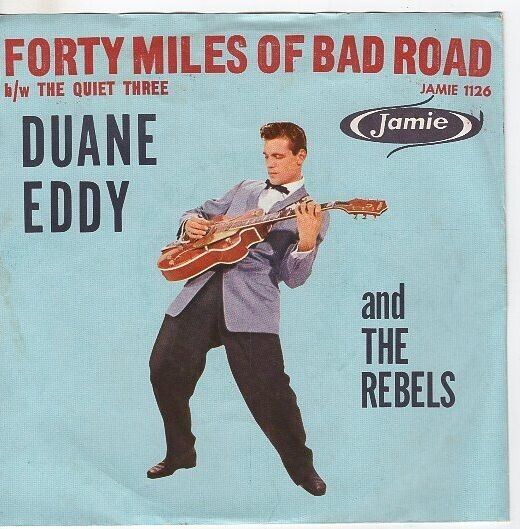
Duane Eddy – Forty Miles Of Bad Road

I made a playlist of instrumentals and took recommended ones from the 1950s. I think the heyday of instrumentals was the fifties and sixties. Here is one that caught my ear… Forty Miles Of Bad Road

I have a soft spot for that twangy reverb guitar. Eddy played a major role in shaping the surf rock genre and influenced many following guitarists. The song peaked at #11 in the UK, #4 in Canada, and #9 on the Billboard 100 in 1959. This song was written by Duane Eddy and Al Casey. The song was on the compilation album $1,000,000 Worth of Twang. Damn, that is a great name for an album! Not to mention the title of the song as well.

The phrase was apparently inspired by a comment overheard by Duane Eddy and his producer Lee Hazlewood while in line at a movie theater. They heard two guys talking about one of their blind dates. He said she looked like 40 miles of bad road. Of course, they looked at each other and said that has to be the title of our new song.

This (and many of his songs) was recorded in a Phoenix studio which had an echo chamber that was originally a large water tank. A single speaker was placed at one end of the tank, the microphone at the other, and the guitar was piped in there. The title was referenced in a REM song called Crush With Eyeliner…instead of 40 miles…”She’s Three Miles of Bad Road.”

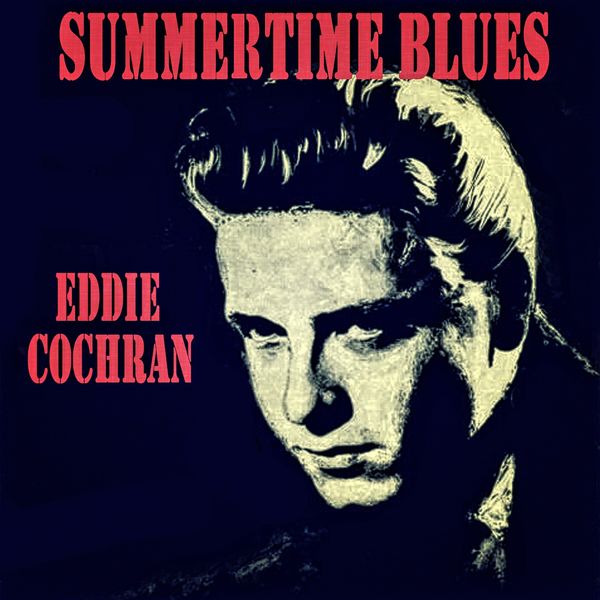
Eddie Cochran – Summertime Blues

In my love for the Who, I never posted this version of this great song. I found out about Eddie Cochran through the movie The Buddy Holly Story where he was played by Jerry Zaremba. I then remember him in La Bamba when Brian Setzer played him to a tee. 

After that, I heard The Who’s version of this song and our band played it that way. I then heard Cochran’s version and loved it just as well. The song that really made me connect to Cochran was Twenty Flight Rock when I heard the Stones do it. 

Eddie Cochran was a huge influence on the up-and-coming British guitar players of the sixties. Jimmy Page, Jeff Beck, John Lennon, and Pete Townshend. He was huge in the UK. He was one of the big 50s guitar heroes. He broke through with this song Summertime Blues in 1958 peaked at #8 on the  Billboard 100, #10 in Canada, and #18 in the UK. He also did well with C’mon Everybody. He was never really big in America… he was a bigger star in Europe.

He didn’t use his guitar as a prop like some did…he played it and played it well. He also worked as a session musician. He helped bring rock guitar along in more ways than just his playing. He was one of the first to modify his pickups and he did away with the wound G string on the guitar. He replaced it with an unwound string which made it easier to bend. Many future musicians were paying attention, sitting on the front row of his British tour.

In 1960, Cochran and Gene Vincent were in a hired car and it  hit a lamp post and Eddie was thrown from the car and suffered a head injury and died in a hospital. He was only 21 years old. Gene Vincent received injuries to his already bad leg and walked with a limp after the crash. Eddie was the only one to die.

Eddie’s girlfriend Sharon Sheeley was a songwriter. She wrote Ricky Nelson’s first hit “Poor Little Fool” and a couple of songs (Love Again and Cherished Memories) for Cochran. She also got injured in the crash. 

Summertime Blues

I’m a-gonna raise a fuss
I’m a-gonna raise a holler
About a-workin’ all summer
Just to try to earn a dollar

Every time I call my baby
Try to get a date
My boss says, “No dice, son
You gotta work late”

Sometimes I wonder
What I’m a-gonna do
But there ain’t no cure
For the summertime blues

Oh, well, my mom and papa told me
“Son, you gotta make some money
And if you wanna use the car
To go a-ridin’ next Sunday”

Well, I didn’t go to work
Told the boss I was sick
“Well, you can’t use the car
‘Cause you didn’t work a lick”

Sometimes I wonder
What I’m a-gonna do
But there ain’t no cure
For the summertime blues

I’m gonna take two weeks
Gonna have a fine vacation
I’m gonna take my problem
To the United Nations

Well, I called my congressman
And he said, quote
“I’d like to help you, son
But you’re too young to vote”

Sometimes I wonder
What I’m a-gonna do
But there ain’t no cure
For the summertime blues

Buddy Holly – I’m Gonna Love You Too

The guy was only with us for a few short years but boy he made a huge mark. I had a Buddy Holly marathon while painting and this song stood out. Without Buddy, rock music would have been drastically different. Buddy was a self-contained artist who wrote, arranged, and recorded his own songs. His chord changes and melodies were different from fellow rockers Jerry Lee Lewis, Little Richard, and Chuck Berry. I have always thought that Buddy was the father of power pop. 

The song was credited to Joe B. Mauldin, Niki Sullivan, and Norman Petty but some think Holly wrote the majority of it. It was also covered by Blondie on their Parallel Lines Album. Holly released the song in 1957. It’s on the self-titled Buddy Holly album released on Coral Records. This album contained the classics Peggie Sue, Everyday, Rave On, and Worlds of Love. 

William Ruhlmann, who is an American rock critic, said this about the ownership of the song. The song is credited to Joe B. Mauldin, Holly’s bass player; Norman Petty, his producer; and Nikki Sullivan, his sometime rhythm guitarist (who was not heard on the recording). There have long been questions about the songwriting credits assigned to the original songs Holly recorded, and Jerry Allison, his drummer, has gone on record stating that “I’m Gonna Love You Too” actually was written primarily by Holly, with Allison composing the bridge. Certainly the song sounds characteristic of the man who wrote “That’ll Be the Day.” It is another up-tempo number with an infectious tune and boastful lyrics that only thinly veil heartbreak.

Buddy Holly was among the first group of inductees to the Rock and Roll Hall of Fame in 1986. In 2004, Rolling Stone ranked Holly #13 among “The 100 Greatest Artists of All Time”.

What really hurts about Holly’s career is that he was just getting started. He had matured and was experimenting more than his rocking peers. Fortunately for all of us, he left behind a significant musical catalog that still influences new and old artists today.

I’m Gonna Love You Too

Ah-ha, ha-ah-ha-ha-haAh-ha, ha-ah-ha-ahAh-ah, ha-ah-ha-ah-ah-ha

A-you’re gonna say you’ve a-missed meA-you’re gonna say you’ll a-kiss meYes, you’re gonna say you’ll a-love me‘Cause I’m a-gonna love you too

I don’t care what you a-told meA-you’re gonna say you’ll a-hold meYes, you’re gonna say you’ll a-love me‘Cause I’m a-gonna love you too

After all, another fella took youBut I still can’t overlook youI’m a-gonna do my best to hook yaAfter all is said and a-done

You’re gonna say you’ve a-missed meA-you’re gonna say you’ll a-kiss meYes, a-you’re gonna say you’ll a-love me‘Cause I’m a-gonna love you too

Ah-ha, ha-ah-ha-ha-ahAh-ha, ha-ah-ha-ahAh-ha, ha-ah-ha-ah-ah-haAh-ha, ha-ah-ha-ha-ahAh-ha, ha-ah-ha-haAh-ha, ha-ah-ha-ha-ha-ha

It’s a-gonna happen, a-some dayYou’re gonna see things a-my wayYes, you’re gonna say you’ll a-love me‘Cause I’m a-gonna love you too

A-you’re gonna tell me a-sweet thingsYou’re gonna make a-my heart singYes, a-you’re gonna hear those a-bells ring‘Cause I’m a-gonna love you too

After all, another fella took youBut I still can’t overlook youI’m a-gonna do my best to hook yaAfter all is said and done

A-you’re gonna say you’ve a-missed meA-you’re gonna say you’ll a-kiss meYes, you’re gonna say you’ll a-love me‘Cause I’m a-gonna love you tooI’m a-gonna love you tooI’m a-gonna love you too

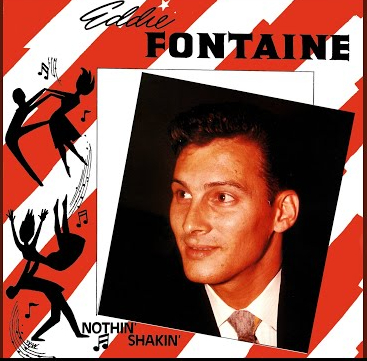
Eddie Fontaine – Nothin’ Shakin’ (But the Leaves on the Trees)

I’ve been reading about the Beatle’s early days when they were leather-bound hoodlums on the streets of Hamburg and Liverpool. Liverpool had a lot of bands and they tended to do the same songs. The Beatles broke out of that by picking B sides rather than playing a top 40 hit every time. They had excellent taste. They played this one in Hamburg at the Star Club. If you haven’t heard the low-quality album Beatles Live At the Star Club…it’s worth listening to. It’s The Beatles in rock/punk mode.

Eddie Fontaine, singer and actor, released this song in 1958. It has it all…twangy 1950s guitar and a cool lyric to boot. Eddie Fontaine never became a major name in rock and roll but his song left an impression on a generation of young rockers.

Eddie was from Massachusetts and RCA signed him in 1954 as a vocalist. He first gained attention as a singer with his single Cool It, Baby in 1956, which had moderate success. It was featured in the film The Girl Can’t Help It.  However, Nothin’ Shakin in 1958 brought him more recognition, especially within the rockabilly crowd.

Eddie was an actor as well. He has 27 actor credits in IMDB. He appeared in TV shows like 77 Sunset Strip, The Wild Wild West, Ironside, Kojak, Planet of the Apes, Baretta, and many more.

This song peaked at #64 on the Billboard 100 in 1958. Below is a more refined Beatles version they did on the BBC radio and the original by Eddie himself.

Nothin’ Shakin’

I’m finding out what love is all aboutAnd every day at three when school lets outI see my baby I get weak in the kneesThere’s nothin’ shakin’ but the leaves on the treesWhy must she be such a doggone tease?There’s nothin’ shakin’ but the leaves on the trees

We meet the gang and go to Rockin’ Joe’sThe cats are stompin’ on their heels and toesI grab my baby, tried to give her a squeezeNothin’ shakin’ but the leaves on the treesMy daddy told me there’d be times like theseThere’s nothin’ shakin’ but the leaves on the trees

She’s got a way that makes me act like a foolOh, she spends my money then she plays me cruelI’m beggin’ her for kisses on bended kneesGimme some lovin’ baby, please, please, please

But I keep trying hard to make her mineSomeday the wind will blow, the sun will shineUntil that time she puts my heart at easeThere’s nothin’ shakin’ but the leaves on the treesShe locked my heart and threw away the keysThere’s nothin’ shakin’ but the leaves on the treesHa ha ha!

Nothin’ shakin’ but the leaves on the treesShe’s got a way that makes me act like a foolOh, spends my money then she plays me cruelI’m beggin’ for her kisses on bended kneesWhy don’t ya gimme some lovin’ baby, please, please, please

But I keep trying hard to make her mineSomeday the wind will blow, the sun will shineUntil that time she puts my heart at easeThere’s nothin’ shakin’ but the leaves on the treesWhy must she be such a doggone tease?There’s nothin’ shakin’ but the leaves on the treesNothin’ shakin’ but the leaves on the treesNothin’ shakin’, oh shakin’

Brothers At Arms – Johnny and Dorsey Burnette

We all know the great album Brothers in Arms from Dire Straits, but sometimes those brothers are “at arms” rather than in them. In this series from myself and Randy, have discussed “Rock ‘Em Sock ‘Em” Siblings. This week Randy talks about the Burnette brothers. They were at it while most of the other brother’s acts were still in diapers. The original post is here.

“Tear It Up” by Johnny Burnette and The Rock ‘n Roll Trio (1956) written by Paul Burlison, Dorsey Burnette, and Johnny Burnette. Covered 40 times including Rod Stewart in 1981.

Dorsey William Burnett Jr. (December 28, 1932 – August 19, 1979) and his younger brother John Joseph Burnette (March 25, 1934 – August 14, 1964) along with Paul Burlison (February 4, 1929 – September 27, 2003) were the original Rockabilly band. One thing The Rock ‘n Roll Trio loved almost as much as music, was fighting.

Dorsey and Johnny grew up in the housing projects of Memphis where being tough was a distinct advantage. They both took to boxing and became Golden Glove Champions. In 1949 while working on oil barges on the Mississippi they met another Golden Glove champ, Paul Burlison, also from Tennessee. After work the three began playing in bars at night and in 1952 they formed a band.

After several wins at Amateur contests they landed a record deal with Coral Records. Unfortunately their national TV debut on the Ted Mack Amateur Hour aired on ABC the same night as Elvis’s September 9, 1956 Live appearance on CBS that had 82% of the viewing audience. Misadvised I would say, they performed “Hound Dog” that Elvis had released in July. They appeared on a few other shows but they struggled to gain wide spread fame, but they never gave up.

“Rock Billy Boogie” (1956) by Johnny Burnette and The Rock ‘n Roll Trio, written by Dorsey Burnette, Johnny Burnette, George Hawkins and Henry Jerome.

First cover of “Rock Billy Boogie” was by Robert Gordon in 1979.

The two brothers never entirely gave up ‘boxing’ either. Life on the road was tough and the tensions would lead to some nasty fistfights between Dorsey and Johnny. Sometimes the fights started on stage and would spread into the audience. Apparently one night the three of them took on everyone in the place, and won. This led to several bans from bars and tours. One night in August of 1956 in Niagara Falls, NY the brothers had a brutal fight. The next day Dorsey left the band and it was just days before their big break to appear in the Alan Freed movie Rock! Rock! Rock!

Johnny quickly recruited Bill Black’s (Elvis’s bass player) younger brother Johnny Black and the appearance went ahead. The record company credited their next release with Johnny Burnette at the front and even when Dorsey returned a year later that’s how they were billed. They would then pursue solo careers and continue to write some great rock and roll songs. Johnny would die in a boating accident in 1964. His original recording of “You’re Sixteen” appears on the American Graffiti Movie Soundtrack. Covered over 90 times and of course by Ringo Starr that hit #1 on the Hot 100 in 1973.

“You’re Sixteen” (1960) by Johnny Burnette reached #8 on the Hot 100, written by Richard Sherman and Robert B. Sherman. The Sherman brothers would go on to write all those amazing songs for Disney Movies such as “Chim Chim Cheree”, “I Wan’na Be Like You (The Monkey Song)”, “Super-Cali-Fragil-Istic-Expi-Ali-Docious”, “It’s a Small World” and dozens more.

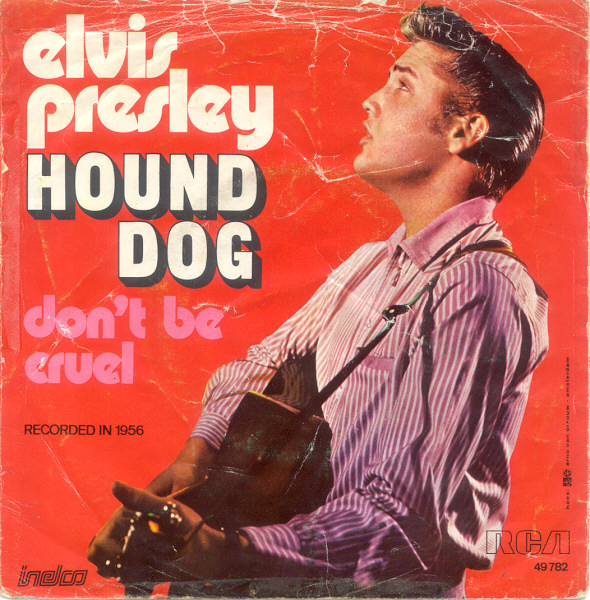
Elvis Presley – Hound Dog

The Big E was at his best in the fifties before the Army and films changed him. This is the song that I first heard by him and it made me a fan when I was around 5 or so. The song brought up images to kids and was easy to understand in a kid’s sort of way…and it rocked. 

I think it’s one of the best rock singles ever released. Do you want a double A-side? Try Hound Dog backed with Don’t Be Cruel. It doesn’t get much better than that. 

Those early Elvis songs were magical. Hound Dog, That’s Alright, I Forgot To Remember To Forget, Mystery Train, Heartbreak Hotel, Don’t Be Cruel, and the list goes on. Many artists have played rock and roll but it’s hard as hell to beat these primal songs. I think one of the reasons is they were mostly recorded live in a studio. They don’t have 100 overdubs…just simplicity at its best and it hits its target. 

Hound Dog was first recorded by Willie Mae Big Mama Thornton and was a number 1 rhythm & blues hit in 1953. Her voice is incredible in this song. She nailed it and so did Elvis. Elvis’s version is a little faster than Thornton’s version…but that made room for her dynamic voice. 

Elvis Presley’s version didn’t do too bad. It peaked at #1 on the Hot 100, #1 on the Billboard R&B Charts, and #2 in the UK in 1956 (I could not find Canada). The song was written by teenagers Jerry Leiber and Mike Stoller. They would go on to write many more chart hits for everyone…including Elvis with Jailhouse Rock. 

Jerry Leiber and Mike Stoller:  “We’d actually written ‘Hound Dog’ 90 percent on the way over in the car. I was beating out a rhythm we called the ‘buck dance’ on the roof of the car. We got to Johnny Otis’s house and Mike went right to the piano… didn’t even bother to sit down. He had a cigarette in his mouth that was burning his left eye, and he started to play the song. We took the song back to Big Mama and she snatched the paper out of my hand and said, ‘Is this my big hit?’ And I said, ‘I hope so.’

Next thing I know, she starts crooning ‘Hound Dog’ like Frank Sinatra would sing ‘In The Wee Small Hours of the Morning.’ And I’m looking at her, and I’m a little intimidated by the razor scars on her face, and she’s about 280-320 pounds, and I said, ‘It don’t go that way.’ And she looked at me like looks could kill and said – and this was when I found out I was white – ‘White boy, don’t you be tellin’ me how to sing the blues.’ We finally got through it.

Johnny brought Mike back in the room and asked him to sit down at the piano, which was not easy because Johnny had this female piano player who was built like Arnold Schwarzenegger. They finally exchanged seats and did the song the way it was supposed to sound. And that was one of those where we said, ‘That’s a hit.’ And I thought immediately: We both said it, it’s gonna put a hex on it!”

Hound Dog

You ain’t nothin’ but a hound dogCryin’ all the timeYou ain’t nothin’ but a hound dogCryin’ all the timeWell, you ain’t never caught a rabbitAnd you ain’t no friend of mine

Well, they said you was high-classedWell, that was just a lieYeah, they said you was high-classedWell, that was just a lieYeah, you ain’t never caught a rabbitAnd you ain’t no friend of mine

You ain’t nothin’ but a hound dogCryin’ all the timeYou ain’t nothin’ but a hound dogCryin’ all the timeWell, you ain’t never caught a rabbitAnd you ain’t no friend of mine

Well, they said you was high-classedWell, that was just a lieYeah, they said you was high-classedWell, that was just a lieWell, you ain’t never caught a rabbitAnd you ain’t no friend of mine

Well, they said you was high-classedWell, that was just a lieYa know they said you was high-classedWell, that was just a lieWell, you ain’t never caught a rabbitAnd you ain’t no friend of mine

You ain’t nothin’ but a hound dogCryin’ all the timeYou ain’t nothin’ but a hound dogCryin’ all the timeWell, you ain’t never caught a rabbitYou ain’t no friend of mine

You ain’t nothin’ but a hound dog

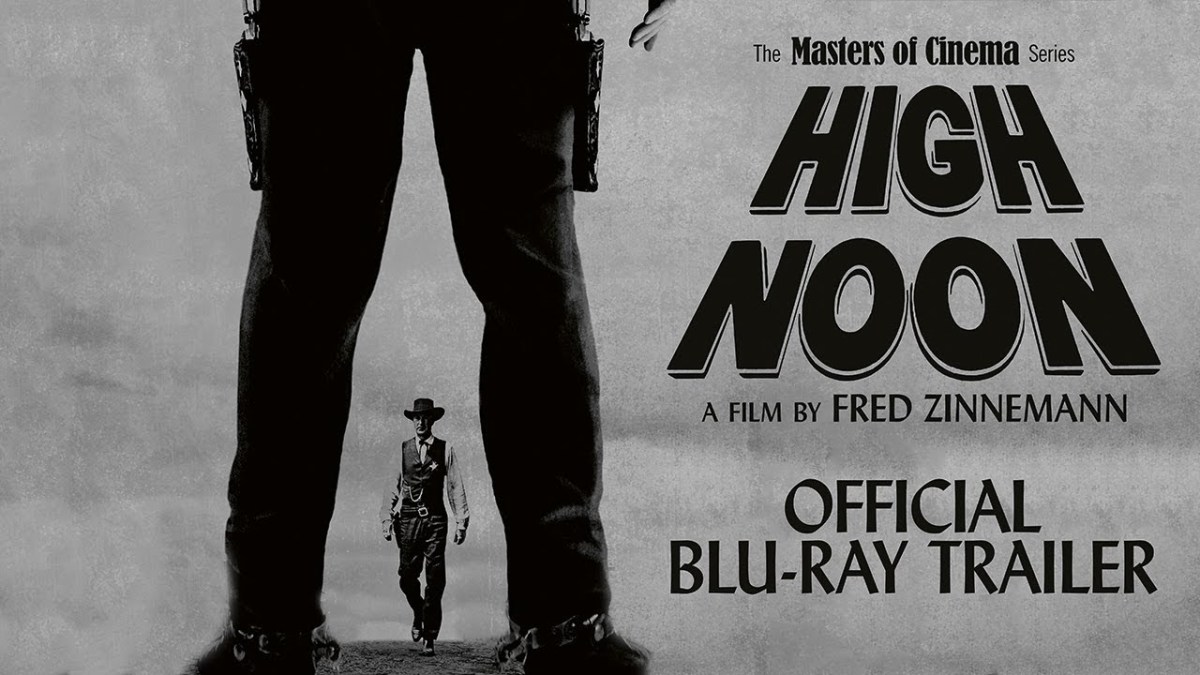
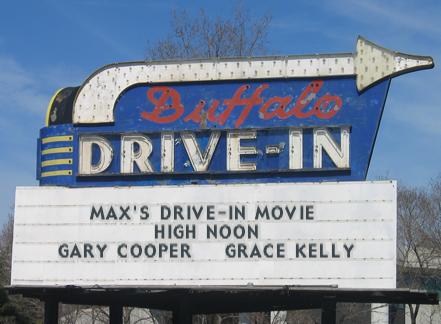
Max’s Drive-In Movie – High Noon

When I see Gary Cooper I think of one person…and that is Lou Gehrig because he did a great job portraying him in Pride of the Yankees. Gary Cooper plays Sheriff Will Kane in this western on his wedding day. Grace Kelly plays his Quaker’s new wife and she is stunning. Katy Jurado is also great in the role of Helen Ramírez, a beautiful and successful woman. 

High Noon theater

There are other excellent Westerns like The Unforgiven, Pat Garrett and Billy the Kid, The Eastwood Trilogy, The Searchers, and Tombstone…this is right up there with them. It’s very uncluttered and doesn’t have 20 plotlines going on at once…it’s simple but exciting. I’ve watched this movie around 5 times and I always find something I didn’t before.

The Killer Frank Miller is due on the noon train and his first order of business is to kill Kaine, a man who Kane helped send to prison five years ago and swore blood vengeance at the time. The three members of his gang are waiting at the depot. Miller escaped hanging, got a long sentence, and some idiots on the parole board turned him loose.

Cooper is a man’s man in this one…a badass but a laid-back one. He refuses to run away from a fight despite having no help from the town members who say he once saved the town. He visits the bar and The church and gets nothing. He takes them on himself.

The 40s and 50s had some great character actors. One in this movie I always have liked…Thomas Mitchell, was in some Capra films, including It’s A Wonderful Life. You have other actors that you have heard of. Harry Morgan of Dragnet and M*A*S*H. Future movie stars Lloyd Bridges and Lon Chaney Jr.

Give this one a watch…it’s only 85 minutes long and Cooper just oozes goodness in many roles including this one. He is not an anti-hero but a man who stands for what is right no matter the cost. This film explores the best and worst of mankind.

The fictional Tony Soprano : Let me tell ya something. Nowadays, everybody’s gotta go to shrinks, and counselors, and go on “Sally Jessy Raphael” and talk about their problems. What happened to Gary Cooper? The strong, silent type. That was an American. He wasn’t in touch with his feelings. He just did what he had to do.

..,

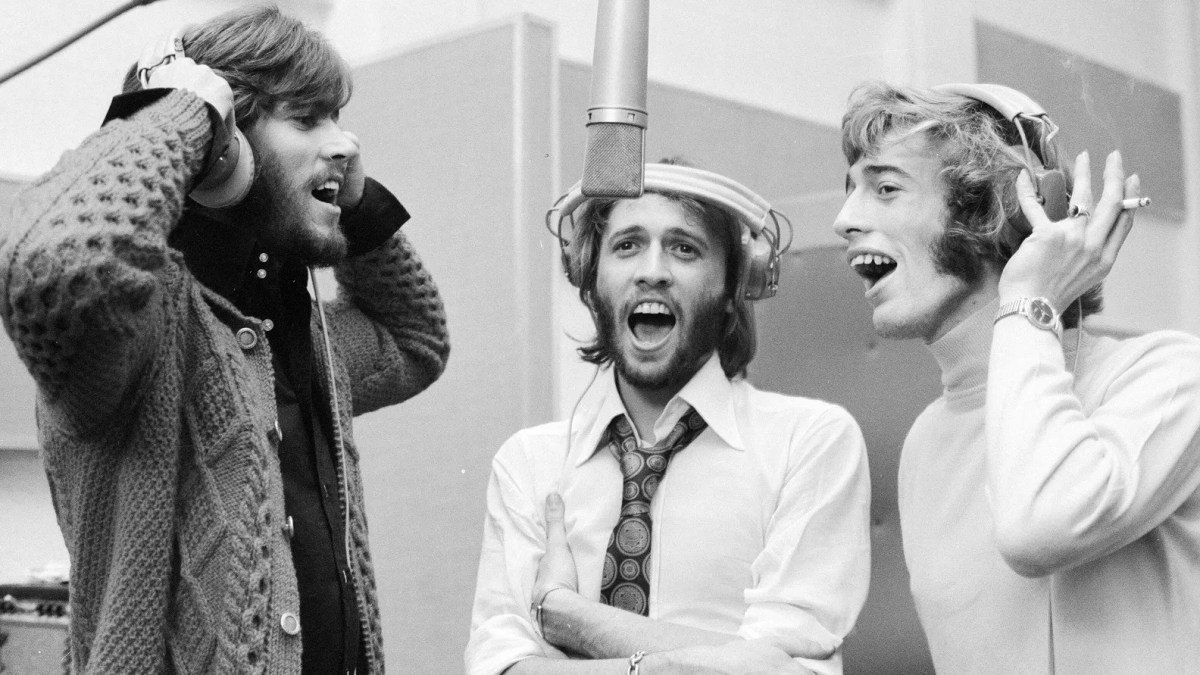
Brothers At Arms – The Bee Gees

We all know the great album Brothers in Arms from Dire Straits, but sometimes those brothers are “at arms” rather than in them. In this part of the mini-series Randy, from mostlymusiccovers.com, talks about the “Rock ‘Em Sock ‘Em” Siblings of the Bee Gees.

“To Love Somebody” was written by Robin and Barry Gibb. It was released as a single in 1967 and reached #41 in their native UK. The song did better elsewhere making several top 10s and #17 on the Hot 100. It would be a cover by Michael Bolton released in 1992 that put it at #1 on the Adult Contemporary charts in Canada and the US. It has endured to become a classic with over 210 versions of the song.

Formed in 1958 with brothers Barry, Robin and Maurice. After the family’s move to Australia they found their first success, just the three boys returned to their native UK in 1967. They would go on to sell an estimated 200 million records, post nine #1s on the Hot 100 and entered the top five of the most successful bands in history.

Life was not so easy, with an unreliable father they became the bread winners for the family at a very young age. Despite the pressures the boys got on quite well, until the dreaded “S” word enter in. Success. Their first #1 in the UK was “Massachusetts” in 1967. Robin sang lead on it and it was a position he was not willing to give up. The in-fighting began.

This is not perhaps the level of fighting on the same scale as some of our other brother groups, but they were not producing any hits and Robin was really at the heart of a split up in 1969. The reconciliation produced their first US #1 Hot 100 hit, “How Can You Mend a Broken Heart” in 1971. It was very much an autobiographical song. Success is fleeting in the music business and another downturn followed as their next album was a flop. By 1975 they had all moved to the US. Both Robin and Maurice struggled mightily with addiction problems. Robin seemed to tolerate the more democratic Barry becoming the defacto leader, but there were tensions. Not enough though to stop them from reinventing themselves yet again.

The Disco era and Saturday Night Fever saw them rise to incredible worldwide success with eight Hot 100 #1 hits in the mid to late 1970s. Younger brother Andy would join in the success. Everyone knows the rise and fall of Disco, and no one paid a heavier price than the Bee Gees. All of a sudden no one wanted to hear a Bee Gees song. In fact, they were and are still hated by some. I was not a disco fan, but I was a Bee Gees fan, and I took my fair share of ribbing for it.

Despite all this turmoil surrounding them, only minor tensions erupted, and Barry, Maurice and Robin would discover other people respected their songwriting abilities. First came “Woman in Love” by Barbra Streisand, and then “Islands in the Stream” by Dolly Parton and Kenny Rogers, both worldwide #1 smash hits. And also, songs for Dionne Warwick, Diana Ross and others. So, the brothers Gibb had risen from the ashes for yet a third time but as songwriters. And then remarkably a fourth time, as recording success returned once again and they placed four more songs in the top 10 in the UK in the 90s.

Maurice would die at age 53 in 2003 and despite attempts to regroup, the band that was the Bee Gees were effectively no more. Younger brother Andy had died in 1988 and Robin in 2012. Barry the oldest, has continued to record and perform.

Gunsmoke, the Early Years

I’m reading a book on James Arness…or Matt Dillion from Gunsmoke. When you watch these beginning shows you see Arness turn into a fine actor. He was in many movies before Gunsmoke but he looked a little uncomfortable in the first season. By the second season, you could see a huge change. Arness said he wasn’t comfortable and he got an acting teacher to help refine his acting for television.

I liked the show because I grew up watching the hour-long color episodes (seasons 12-20) of Gunsmoke in reruns. The first 6 seasons were black and white and 30 minutes long. Seasons 7-11 were one-hour black and white shows. As I said seasons 12-20 were one-hour color shows. 

gunsmoke 1

Now I’m watching the first 6 seasons for about the 6th time… There is no Festus or Newly…we have Chester (Dennis Weaver), who is a refreshing character. They never played these episodes on television when I was younger. There still is Doc Adams  (Milburn Stone)and the astonishing Kitty Russell (Amanda Blake).

These episodes dealt with murder, rape, human trafficking, and plenty of Matt Dillon (James Arness) decking bad guys with his fist or the butt of his gun. They are 30 minutes long which is great. They got to the point quickly. Some of the stories were grim but matched the look of the series. It was an adult show at this time.

I was surprised at how rough, violent, and authentic they were and that is not knocking the later episodes but there is a huge difference. The violence was toned down as the series continued. The later color episodes centered more around the guest stars and the old black and white ones centered more on the local residents of Dodge City. That was by design because of the hour format…and some shows had some filler in them in that format.  

Have Gun Will Travel was also on CBS along with Gunsmoke. You will see some of the same character actors and sets. Some Have Gun Will Travel scenes were filmed in a redecorated Long Branch… Too bad there wasn’t a crossover at least once.

Chester…I’ve always liked Dennis Weaver as an actor…in McCloud, Duel, and anything he was in… He brings his character Chester alive as a real person. Chester had a limp on the show and Dennis Weaver said he would take yoga classes so he could do things like putting on a boot to look believable with a bad leg…he also put a pebble in his boot on his right foot so he would not forget which leg was lame. He said it took him months after Gunsmoke not to use the limp on camera because he was so used to it.

Chester could be lazy but he was invaluable and loyal to a fault to Matt Dillon. Dennis Weaver left the show after the 9th season with no explanation on what happened to Chester as was the way back then with TV shows. He was mentioned one time in the 20th season. Burt Reynolds joined the show for two years in seasons 8 and 9. He said it was his best experience in entertainment. The cast was extremely close. 

If you are a fan and have seen only the later episodes…check these out. It puts a new light on the show. Unlike other Westerns, Native Americans were not usually the bad guys in Gunsmoke. Matt Dillion was a good friend to many of them.

Here is a badly recorded clip of Matt Dillion, Chester, and Ken Curtis who would later take Chester’s place in the show and play Festus.

Bill Haley – Crazy Man, Crazy

In my first 6 years of blogging, I posted one Bill Haley song. Now in the past 5-6 months, this makes my 3rd. That’s what happens when Max reads books.

If there was ever a fifties phrase…this is it. This song was released in 1953…two years before the popularity of Rock Around The Clock. It was Haley’s first time in the top twenty. He said he got this phrase from a teenager when he asked her if she liked what she heard in rock and roll.

The song has that western swing/big band sound to it…but also had its toe in the rock and roll water. This song peaked at #12 on the Hot 100 and #66 on the R&B Charts in 1953.

Haley always dreamed of fame but he was extremely private. Those two things don’t go together well. He turned down opportunities to make himself more known time after time. He originally said no to having Rock Around The Clock in a movie. He had to be talked into it. Coke also offered him 250,000 dollars (2,667,967.13 now) to appear in a few advertisements when he and the Comets needed the money….he again said no. All in all, he was unable to capitalize on his popularity like his peers were able to do.

Things started to fall apart in the late ‘50s, mostly due to mismanagement and Bill’s loyalty to friends from the neighborhood who were way over their heads in business affairs.

He has a lot to be remembered for…he joined Country, Big Band,  and R&B and called it “Country Jive.” He remained popular in the UK. His last tour there in 1979  included an appearance before the Queen on the Royal Variety Performance.

The B-Side… What’cha Gonna Do?

Crazy Man, Crazy

Crazy man crazyCrazy man crazyCrazy man crazyOh, man, that music’s gone, goneSaid crazy man crazyCrazy man crazyCrazy man crazyOh, man, that music’s gone, gone

When I go out and I want a treatI find me a band with a solid beatTake my chick and we dance aboutWhen they start rockin’, boy, we start to shout, we shout

Crazy man crazyCrazy man crazyCrazy man crazyMan, that music’s gone, goneGo, go, go everybodyGo, go, go everybodyGo, go, go everybodyGo, go, go, go, go, go, go

Crazy man crazyCrazy man crazyCrazy man crazyMan, that music’s gone, goneSaid crazy man crazyCrazy man crazyCrazy man crazyMan, that music’s gone, gone

They play it soft, they play it strongThey play it wild and they play it longThey just keep playin’ ’til the break of dayTo keep them rockin’ all you gotta say is

Crazy man crazyCrazy man crazyCrazy man crazyMan, that music’s gone, goneGo, go, go everybodyGo, go, go everybodyGo, go, go everybodyGo, go, go, go, go, go, go

Brothers At Arms – Don and Phil Everly

Randy from mostlymusiccovers.com and I teamed up to write about different brothers in rock and roll through the years. This is the first one of the series. I combined the introduction with this first post. I will post these on Sunday mornings.

We all know the great album Brothers in Arms from Dire Straits, but sometimes those brothers are “at arms” rather than in them. In a periodic mini-series Randy, from mostlymusiccovers.com, and I will explore some “Rock ‘Em Sock ‘Em” Siblings. As it happens the Knopfler brothers are among many sets and while we can’t talk about all of them, we will feature some of the better-known sibling rivalries. Two, three, and sometimes even more brothers in a band, well, stop being a band of brothers. How many more cheesy puns can we come up with? Just some of the names Randy and I discussed were; The Everly’s, The Fogerty’s, The Gibb’s, to the Gallagher’s, Allmans, and the Davies.

For those of you who have not checked out Randy and his blog, you really need to. He has been writing a blog about Cover Songs, music genres, and artists since early 2018. He gets in-depth with many artists You can read about the origins of Rock and Roll, Blues, R&B, and Country Music. There are Cover Song and Chart statistics as well, all with a focus on the 1950s, 60s, and 70s at MostlyMusicCovers.com. He has also helped me out with blues artists and Canadian Charts in general.

While we can’t get too in-depth as literally books have been written, we can give a good thumbnail sketch of the bash ups and the break ups. A few days ago Randy mentioned that brothers Doug and Rusty Kershaw had split, but I did not read about it being that acrimonious, more of a creative differences situation. Our brother stories have a bit more ‘punch’ to them.

This is the first post in a periodic mini-series where Randy from mostlymusiccovers.com and I will explore some “Rock ‘Em Sock ‘Em” Siblings. The original post is here. Randy tells us about Don and Phil Everly.

“Bye, Bye, Love” The Everly Brothers first big hit from 1957.

Don was born in 1937 (2021) and Phil in 1939 (2014), raised in Kentucky, the brothers would move to Nashville in 1955 to pursue a recording career. As in the above clip it was “Bye, Bye, Love” in 1957 that sent the brothers skyrocketing. Written by Felice and Boudleaux Bryant it was #1 on the Country chart, #2 in the US and Canada, #6 in the UK and 14 in Australia, and #14 on the R&B chart. Their next song “Wake Up Little Susie” was #1 in the US and Canada, #2 in the UK, and #3 in Australia.

They toured with Buddy Holly in 1957 and 1958 and became very close, Buddy’s death, Feb. 3, 1959 would have a devastating impact on the pair. Don wrote their next and last #1 hit “Cathy’s Clown” in 1960. This was after a dispute with the record/publishing company, leaving Acuff/Rose and unfortunately songwriters Felice and Boudleaux Bryant.

Still, they had a busy schedule, the demands of touring and the pressures of performing and recording, the inevitable happened. The use of amphetamines was rampant in the business and they both got hooked.

By the mid 1960’s they fought over just about everything and of the two it was Don that had the most severe drug problem. Chart success was eluding them and the brothers were not getting along, but it was kept a closely guarded secret that they were able to hold for several years. Don attempted to go solo in 1970 but had no success. Things finally came to a head and in 1973 they agreed their July 14/15 show would be the last one.

Don was drunk before the show started, part way into the show Phil smashed his guitar and walked off stage. Don would finish the show and perform solo the next night. They did not speak for nearly ten years. They would reunite in 1983, had a great reunion concert, and released an album EB84, produced and named in his style 1 by Dave Edmunds that charted #38 on Billboard and #24 on the Country Album chart. They continued to perform periodically, and in 2003 they toured with Paul Simon. They remained close until Phil’s death at age 74 in 2014. Don passed in 2021 at age 84.

“On the Wings of a Nightingale” written for The Everly Brothers by Paul McCartney

Despite the battles and the hardship, they gave us some of the most remarkable harmonies ever-ly recorded.

Dave Edmunds released his 7th Studio album called D.E. 7th in 1982.

T-Bone Walker – T Bone Shuffle

I’ve heard his name most of my life but never heard him. I’ve really enjoyed what I’ve been hearing going over his catalog. T-Bone Walker singing T-Bone Shuffle is so smooth. He has a blues and jazz thing going on and it’s hard to beat. It was released in 1949. He wrote the song and it’s been covered 42 times by The Robert Cray Band to Jools Holland.

T-Bone Walker (Aaron Thibeaux Walker) in Linden, Texas, Walker grew up in a musical family and began performing in his teens. He was influenced by Blind Lemon Jefferson, whom he often played with. Walker’s parents were musical and encouraged him to play. He could play several instruments including guitar, piano, and banjo.

In 1929, Walker made his recording debut under the name “Oak Cliff T-Bone,” recording Wichita Falls Blues and Trinity River Blues. He is credited with being one of the first musicians to use the electric guitar as a lead instrument. His 1942 recording of Mean Old World featured his pioneering electric guitar work.

1971, he won a Grammy Award for Best Ethnic or Traditional Recording for his album Good Feelin’. He was inducted into the Blues Hall of Fame in 1980 and the Rock and Roll Hall of Fame in 1987. He passed away in 1975 following a stroke.

I added a bonus pick today…Two Bones and a Pick was recorded in 1955 and released as part of the T-Bone Blues album in 1959.

T-Bone Shuffle

Let your hair down babyLet’s have a natural ballLet your hair down babyLet’s have a natural ballCause when you’re not happyIt ain’t no fun at all

You can’t take it with youThat’s one thing for sureYou can’t take it with you babyThat’s one thing for sureThere’s nothing wrong with ya babyThat a good T-Bone shuffle can’t cure

Have fun while ya canFate’s an awful thingHave fun while ya canFate’s an awful thingYou can’t tell what might happenThat’s why I love to sing

Bo Diddley – Road Runner

The bands I was in always did this song. I didn’t know this version at the time though…it was The Who’s version that we went by. That riff was a powerful guitar riff that kicked in after edging down the strings.

This song was written by Bo Diddley who came up with the ultimate riff with the song Bo Diddley. This song was released in 1959 and it peaked at #20 in the Billboard R&B Charts and #75 on the Billboard 100. It has been covered by many artists over the years and featured in various movies, TV shows, and commercials.

Bo Diddley was born Ellas Bates. He had his name changed to Ellas McDaniels when he was adopted. He took his stage name from a one-stringed Deep South instrument, the Diddley Bow.

You can be cool… but not Bo Diddley playing his square guitar cool… he was a great guitarist and showman.

Bo Diddley guitar

I always loved his square guitar. He built a guitar that looked like no other. He designed and constructed a custom-built square-shaped guitar for himself, he then commissioned Gretsch Guitars and Kinman Guitar Electrix to build further custom-built square-shaped models for him.

Road Runner

I’m a road runner honey,Beep! Beep!

I’m a road runner honey,And you can’t keep up with me,I’m a road runner honey,And you can’t keep up with me,Come on, let’s race,Baby baby, you will see,Here I come,Beep! Beep!

Move over honey,Let me by,Move over baby,Let this man by,I’m gonna show you baby, look out your head,Gonna put some dirt in your eye,Here I go!

Oh yea, how am I doin?Beep! Beep!

Take my hand baby,I’m gonna prove to you that I’m a road running man,I wanna show you something,That I’m the fastest in the land,Now let me by,Beep! Beep!Oh yea, you said you’s fast,But it don’t look like you gonna last,Goodbye! I’ve got to put you down,I’ll see you some day,Baby, somewhere hangin’ around.