Peggy Sue Got Married was the sequel to Holly’s hit Peggy Sue. The original hit was named after the girlfriend of Crickets drummer Jerry Allison.
Buddy Holly recorded this alone, on acoustic guitar, in his New York City apartment, along with “Crying, Waiting, Hoping,” “That’s What They Say,” “What to Do,” “Learning the Game” and “That Makes it Tough” which would be his last songs. After his tragic death, these recordings would be overdubbed to become the Holly songs we know today.
A little more than five months after Holly’s death, Coral Records on July 20, 1959 released “Peggy Sue Got Married.” It appeared as a B-side to Buddy Holly’s “Crying, Waiting, Hoping.”
Below is the demo of the song and the released version which Buddy would never hear.
The real Peggy Sue… Peggy Sue Gerron passed away at 78 years old in 2018.
From Songfacts
In this song, Holly finds out that the girl from his 1957 hit “Peggy Sue” has gotten married. It was one of the first sequels of the Rock Era.
This song provided the title for the 1986 movie Peggy Sue Got Married, starring Kathleen Turner and Nicolas Cage. In the movie, Holly’s demo version with just his voice and acoustic guitar was used.
When producer Jack Hansen augmented Holly’s demo of this tune and made a hit out of it, it was the first instance of an entirely ‘new’ unheard song being completed and released after a star’s death. Later instances of songs of deceased acts being revived and “completed” include tunes by The Beatles, the Carpenters, The Doors, Lynyrd Skynrd, Bob Marley, Charlie Parker, Frank Sinatra, Biggie Smalls, Tupac and Hank Williams.
Demo
Released Version
Peggy Sue Got Married
Please don’t tell No, no, no Don’t say that I told you so I just heard a rumor from a friend
I don’t say That it’s true I’ll just leave that up to you If you don’t believe I’ll understand (understand)
You recall a girl that’s been in nearly every song This is what I heard of course the story could be wrong
She’s the one I’ve been told Now she’s wearing a band of gold Peggy Sue got married not long ago
You recall a girl that’s been in nearly every song This is what I heard of course the story could be wrong
She’s the one I’ve been told Now she’s wearing a band of gold Peggy Sue got married not long ago Peggy Sue got married not long ago
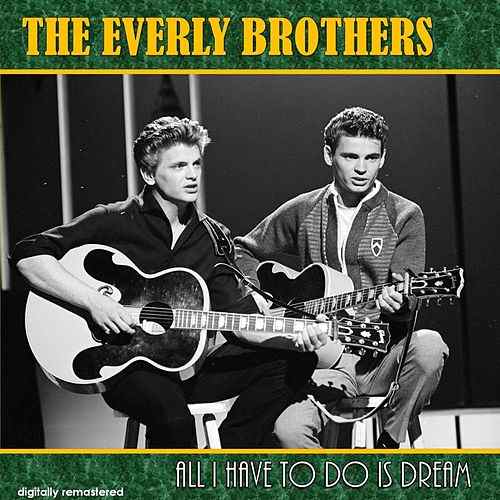
This is a gorgeous song. The harmonies that the brothers had were close to perfect.
The song was written by Boudleaux Bryant and released by the Brothers in 1958. This song predates the Hot 100 launch but it was #1 in the Country and R&B Charts.
I checked the Billboard Charts and found this note… Note that because their career predates the Hot 100’s 1958 launch, some of their best-known earlier hits aren’t on the list, including 1957’s “Bye Bye Love” and “Wake Up Little Susie” and 1958’s “All I Have to Do Is Dream.”)
Phil Everly: “I remember hearing ‘All I Have To Do Is Dream’ on acetate with Boudleaux’s version on it, and I said, at the time, they could have put Boudleaux’s out and it would have been a hit. It’s just a great, great song. It’s beautiful. Boudleaux was the main man who wrote all the great songs for us, and we love him.”
Boudleaux wrote sometimes by himself but other times he wrote with his wife Felice Bryant…they formed a very successful songwriting team. They wrote successful songs for the Everly Brothers and other artists, including “Bye, Bye Love,” “Wake Up Little Susie,” “Bird Dog,” “Devoted to You,” and many more…
From Songfacts
This song, which sold over a million copies, was written by Boudleaux Bryant, who was half of the world famous husband-and-wife songwriting team, Boudleaux and Felice Bryant. Together, this talented couple penned many huge hits for the Everly Brothers and other artists, including “Bye, Bye Love,” “Wake Up Little Susie,” “Bird Dog,” “Devoted to You,” “Hey Joe,” “Love Hurts,” “Raining In My Heart,” and “Rocky Top.”
Chet Atkins played tremolo-style guitar chords on the song, providing an interesting musical backing to the Everly Brothers’ unique vocal harmonies.
Boudleaux Bryant said regarding the phrase “Only trouble is, gee whiz”: “I can’t explain why I put that in there. It was just a lucky rhyme fall.”
The song reached the US charts in four straight decades: The Everly Brothers took it to #1 in 1958. Richard Chamberlain’s version went to #4 in 1963. Glen Campbell and Bobby Gentry reached #27 with it in 1970 and The Nitty Gritty Band landed at #66 in 1975. Andy Gibb and Victoria Principal peaked at #51 in 1981.
According to Billboard magazine, the song took just 15 minutes to write.
Boudleaux was literally the man of Felice’s dreams. When she first met him, Boudleaux was playing a gig with his jazz band at the Sherwood Hotel in Milwaukee, where Felice was working as an elevator operator. But she saw him years earlier – in a dream when she was 8 years old. She told Country Music People in 1981: “When I was eight years old, I dreamt of this man. He and I were dancing to ‘our song,’ and I remembered this man’s face. So when I saw Boudleaux I recognized him! I don’t know if you can call it love at first sight or ‘My god, you friend, I was wondering when you’d come along.’ But I just clung on to him. He didn’t know who the hell I was, but somehow I knew who he was.”
All I Have To Do Is Dream
Drea-ea-ea-ea-eam, dream, dream, dream Drea-ea-ea-ea-eam, dream, dream, dream When I want you in my arms When I want you and all your charms Whenever I want you, all I have to do is Drea-ea-ea-ea-eam, dream, dream, dream
When I feel blue in the night And I need you to hold me tight Whenever I want you, all I have to do is Drea-ea-ea-ea-eam
I can make you mine, taste your lips of wine Anytime night or day Only trouble is, gee whiz I’m dreamin’ my life away
I need you so that I could die I love you so and that is why Whenever I want you, all I have to do is Drea-ea-ea-ea-eam, dream, dream, dream Drea-ea-ea-ea-eam
I can make you mine, taste your lips of wine Anytime night or day Only trouble is, gee whiz I’m dreamin’ my life away
I need you so that I could die I love you so and that is why Whenever I want you, all I have to do is Drea-ea-ea-ea-eam, dream, dream, dream Drea-ea-ea-ea-eam, dream, dream, dream
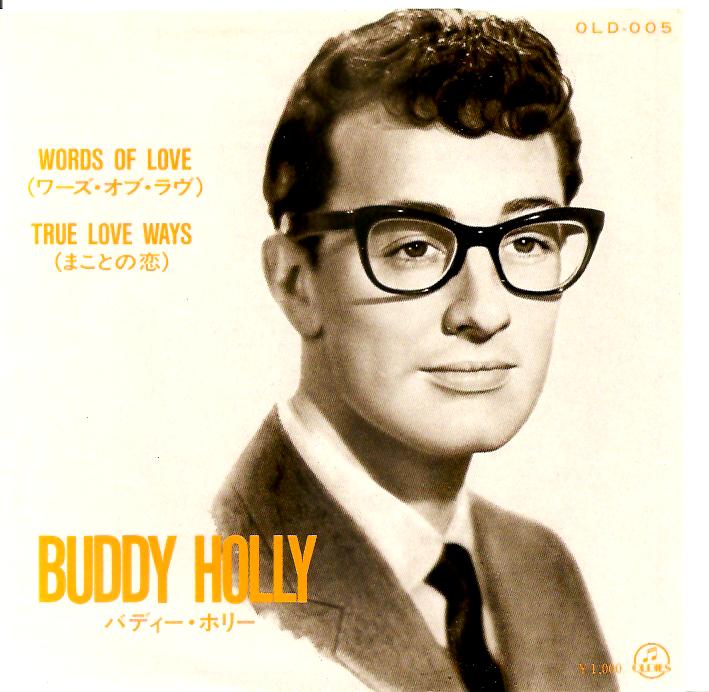
Buddy recorded and released this song in 1957. This was not one of Buddy’s biggest hits but a good song all the same. It was recorded on April 8th, 1957 and included a revolutionary gimmick for its time. He recorded his vocals twice and combined the results, thereby harmonizing with himself in the fashion of The Everly Brothers. This was one of the first released pop record to feature vocal overdubbing.
Canadian quartet The Diamonds as a successful follow-up to their #2 hit “Little Darlin’.” Their version of “Words Of Love” peaked at #13 in July of 1957.
I first heard this song by The Beatles. They had covered the song live between 1958-1962 and decided to record it for the Beatles for Sale album in 1964.
Paul McCartney about writing their own songs. “People these days take it for granted that you do, but nobody used to then. John and I started to write because of Buddy Holly. It was like, ‘Wow! He writes and is a musician.'” Paul McCartney purchased the publishing rights to Buddy Holly’s catalog in 1976.
John Lennon on Buddy Holly: “Buddy Holly was great and he wore glasses, which I liked,” “Buddy Holly was the first one that we were really aware of in England who could play and sing at the same time – not just strum, but actually play the licks.”
Words of Love
Hold me close and tell me how you feel Tell me love is real Words of love you whisper soft and true Darling I love you
Let me hear you say the words I long to hear Darling when you’re near Words of love you whisper soft and true Darling I love you
I did Part 1 over a year ago and it was a fun post. I’ve been meaning to do this again. I remembered some of the lyrics suggested by my friends hanspostcard and allthingsthriller on the last post…I have added those to list. Thanks to both of you.
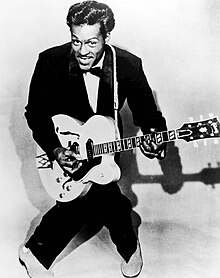
I saw her from the corner when she turned and doubled back, And started walkin toward a coffee colored Cadillac… Chuck Berry
Freedom’s just another word for nothin’ left to lose, And nothin’ ain’t worth nothin’ but it’s free… Janis Joplin/Kris Kristofferson
And I need you more than want you, And I want you for all time… Jimmy Webb
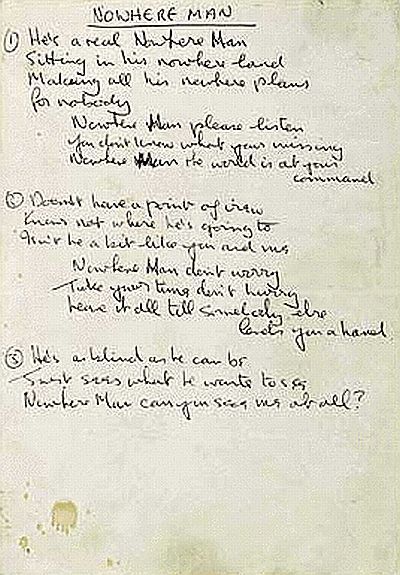
Doesn’t have a point of view / Knows not where he’s going to / Isn’t he a bit like you and me…The Beatles
Met myself a coming county welfare line,I was feeling strung out, Hung out on the line…Creedence Clearwater Revival
And you’ve got to learn to live with what you can’t rise above…Bruce Springsteen
He’d end up blowing all his wages for the week / All for a cuddle and a peck on the cheek…Kinks
Well it’s too late, tonight, To drag the past out into the light, We’re one, but we’re not the same, We get to carry each other, Carry each other…U2
You can blow out a candle but you can’t blow out a fire…Peter Gabriel
Living is easy with eyes closed,misunderstanding all you see…The Beatles
Where you drink champagne and it tastes just like cherry cola, C-O-L-A Cola…Kinks
It was gravity which pulled us down and destiny which broke us apart…Bob Dylan
A drunkard’s dream if I ever did see one… The Band
And the sign said, The words of the prophets, are written on the subway walls, and tenement halls… Simon and Garfunkel
I lit up from Reno, I was trailed by twenty hounds, Didn’t get to sleep that night Till the morning came around…Grateful Dead
When I said that I was lying, I might have been lying…Elvis Costello
Though nothing will keep us together/We can be heroes/Just for one day…David Bowie
Lose your dreams and you. Will lose your mind…Rolling Stones
It’s a town full of losers, I’m pulling out of here to win…Bruce Springsteen
The motor cooled down, the heat went down, and that’s when I heard that highway sound…Chuck Berry
We were the first band to vomit at the bar, and find the distance to the stage too far…The Who
Jim…https://wordpress.com/read/feeds/64726988 asked me to contribute a song to a song lyric Sunday. This weekend I had some time so I told Jim I would be happy to contribute a song. The theme is Wedding/Marry/Diamond/Ring/Cake so I thought of this Elvis song.
The song peaked at #2 in the Billboard 100 in 1958. The song was written by Bert Carroll and Russell Moody and released April. 1, 1958. This was at the period where everything Elvis touched turned to gold. I remember going to my cousin’s home and listening to an Elvis compilation of his 50s songs in the mid-70s when I was around 8-9. This song and All Shook Up, Hound Dog, Don’t Be Cruel and many more.
Elvis recorded this song on February 1, 1958, at Radio Recorders, Hollywood, California. The musicians were Guitar: Scotty Moore, Tiny Timbrell, Elvis Presley. Bass: Bill Black. Drums: D.J. Fontana. Piano: Dudley Brooks. Vocals: The Jordanaires.
In this song, Presley wants his girlfriend to wear his ring around her neck. Of course, the ring would be on a chain…as was the custom in the 1950s to signify they are going steady. Hope you enjoyed the song and have a great Sunday.
Wear My Ring Around Your Neck
Won’t you wear my ring around your neck To tell the world I’m yours, by heck Let them see your love for me And let them see by the ring around your neck
Won’t you wear my ring around your neck To tell the world I’m yours, by heck Let them know I love you so And let them no by the ring around your neck
They say that goin’ steady is not the proper thing They say that we’re too young to know the meaning of a ring I only know that I love you and that you love me too So, darling, please do what I ask of you
Won’t you wear my ring around your neck To tell the world I’m yours, by heck Let them see your love for me And let them see by the ring around your neck
Let them know I love you so And let them know by the ring around your neck
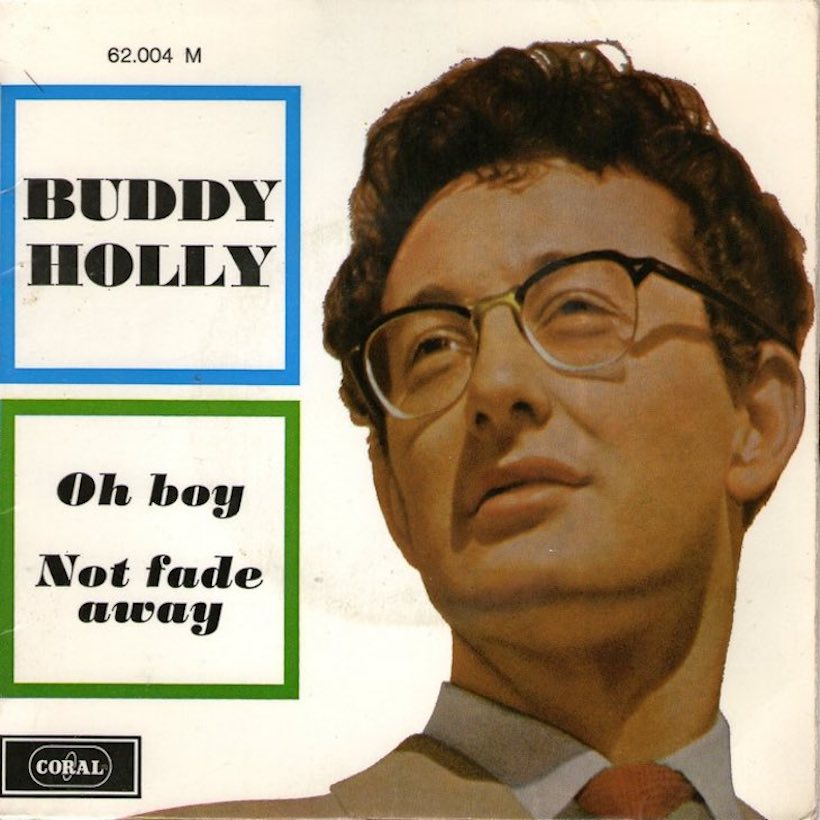
This was recorded June 29-July 1, 1957 at Petty Studios in Clovis, New Mexico. Oh Boy was written by Sunny West, Bill Tilghman, and Norman Petty. Norman was Holly’s producer and owned the studio where this was recorded.
This song played live is very powerful along with Buddy’s other songs. In the 90s I saw a musical play called Buddy that was touring the country. In the musical, there was just “Buddy”, a bass player and a drummer and the songs exploded off the stage. Buddy arranged these songs to sound so big with just a few instruments.
This rocker is a simple song but there is so much going on in the background. From the Crickets backups to the pounding drums of Jerry Allison. Buddy’s Strat comes through clear as he plays against the drums.
The song peaked at #19 in the US Hot 100 and #3 in the UK. This song was paired with the “b” side Not Fade Away…which later became very popular when the Rolling Stones covered it in 1964.
From Songfacts
Background vocals were added later by The Picks (Bill & John Pickering, Bob Lapham).
This was released as a single with “Not Fade Away” as the B-side. While this song did fade away, the B-side has become one of Holly’s well-known songs. It got a boost when it was covered by The Rolling Stones in 1964.
This was credited to The Crickets, who were Holly’s band.
Holly and The Crickets performed this on their second and final Ed Sullivan Show appearance on January 26, 1958. Sullivan was not happy with the song selection, as he considered it too raunchy, but Holly insisted on performing it. Possibly in retaliation, Sullivan introduced him as “Buddy Hollet,” and Holly can be seen trying to turn up his guitar, which had been set too low. While most musical guests were given 2 songs, Holly got just the one.
Buick spun this into the jingle “Oh, Buick!” for a 1987 commercial.
Oh Boy
All of my love All of my kissin’ You don’t know what you’ve been a-missin’ Oh boy, when you’re with me Oh boy, the world can see That you, were meant, for me
All of my life I’ve been a-waitin’ Tonight there’ll be no, hesitatin’ Oh boy, when you’re with me Oh boy, the world can see That you, were meant, for me
Stars appear and shadows a-falling You can hear my heart a-calling A little bit a-lovin’ makes everything right And I’m gonna see my baby tonight
All of my love All of my kissin’ You don’t know what you’ve been a-missin’ Oh boy, when you’re with me Oh boy, the world can see That you, were meant, for me
All of my love All of my kissin’ You don’t know what you’ve been a-missin’ Oh boy, when you’re with me Oh boy, the world can see That you, were meant, for me
All of my life I’ve been a-waitin’ Tonight there’ll be no, hesitatin’ Oh boy, when you’re with me Oh boy, the world can see That you, were meant, for me
Stars appear and shadows a-falling You can hear my heart a-calling A little bit a-lovin’ makes everything right I’m gonna see my baby tonight
All of my love All of my kissin’ You don’t know what you’ve been a-missin’ Oh boy, when you’re with me Oh boy, the world can see That you, were meant, for me
Maybe Baby” was was written by Buddy Holly and the producer Norman Petty and recorded by Holly and the Crickets in 1957. The song peaked at #17 in the US Charts, #4 in the UK, and #8 in Canada in 1958.
In 1957 they recorded this song in the Officers Club at Tinker Air Force Base in Oklahoma City. The Crickets were scheduled to perform at the Oklahoma City Municipal Auditorium on Sept. 29 as one of the acts with the Show of Stars ’57.
I’ve always looked at Buddy Holly as one of the founding members of power pop.
From Songfacts
This was recorded Sept, 1957 at Tinker Air Force Base in Oklahoma. Background vocals were added later at Petty Studios in Clovis, NM.
Charles Hardin and Norman Petty wrote this. Hardin is Buddy Holly (real name Charles Hardin Holley) and Petty was his producer and manager. Holly’s first 2 singles flopped, but he had a string of hits after he started working with Petty.
This was credited to The Crickets, who were Holly’s band. Holly had a deal with Decca Records where some songs were released under his name and others credited to the band.
Decca is a name the company made up. It was chosen because it was easy to say and pronounced the same way in any language.
The album The Buddy Holly Story is a compilation of his songs that was released a few weeks after he died in a plane crash.
Maybe Baby
Maybe baby, I’ll have you Maybe baby, you’ll be true Maybe baby, I’ll have you for me (all for me)
It’s funny honey, you don’t care You never listen, to my prayer Maybe baby, you will love me some day (someday)
Well, you are the one that makes me glad And you are the one that makes me sad When some day, you’ll want me Well, I’ll be there, wait and see
Maybe baby, I’ll have you Maybe baby, you’ll be true Maybe baby, I’ll have you for me (all for me)
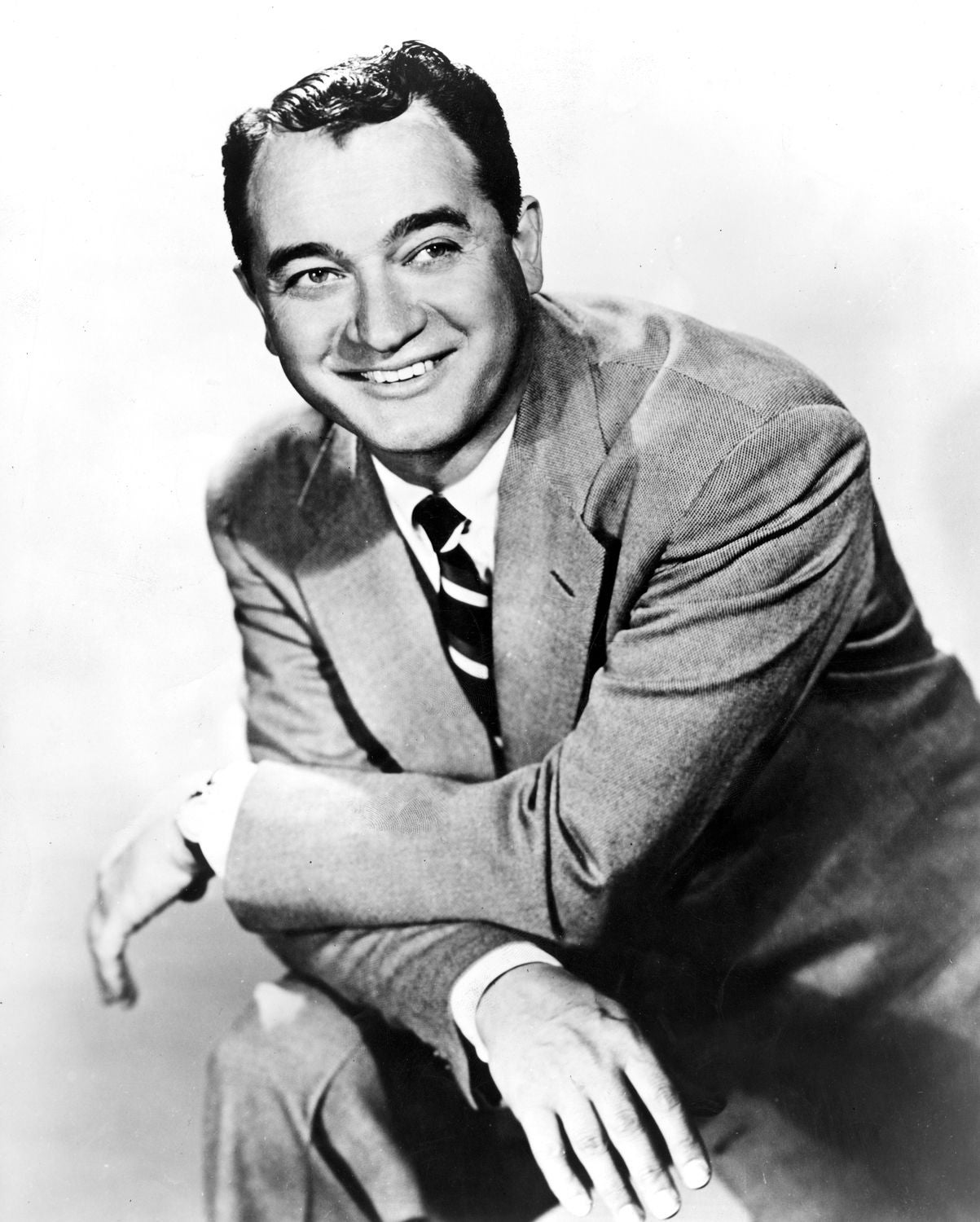
June 7th was Ken Osmond’s birthday and he turned 76 years old. It’s hard to believe Eddie Haskell is that old when he is frozen in time in the never-ending reruns of Leave It To Beaver. There were rumors that Osmond was Alice Cooper. Another rumor was that Ken was Porno Star, John Holmes.
In reality, Ken Osmond joined the LAPD in 1970 and later Osmond retired from the police department in 1988, eight years after being shot by a suspected car thief. Two bullets reportedly hit his bulletproof vest and he was protected from the third bullet by his belt buckle.
Eddie Haskell was one of the great characters of television. Not likable… pretty much the opposite but he was very familiar because we probably all know our own Eddie Haskell.
Eddie was always so nice to adults…Really too nice. The Ward Cleaver character once said…”The boy is unamerican…he is just too nice.” and always tormenting his friends and kids. Eddie was the ultimate two face… all smiles and yeses to authority, but quite the trouble-maker with his peers.
We all probably had an Eddie Haskell in our friendship circles. A guy who was always trying to grow up faster than anyone else. Someone who would give you advice and then criticize you when you took the advice and things went sideways. You stay friends with them because occasionally they will do something decent and you will think… he turned a corner… only to be fooled yet again.
Sometimes I guess we need an Eddie Haskell to blame our troubles on.
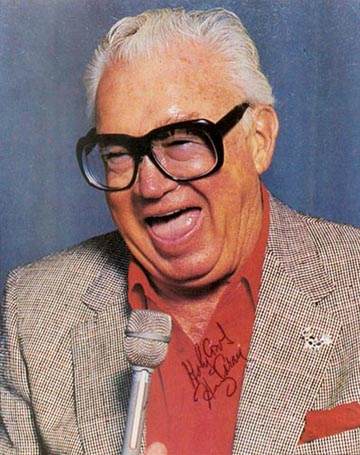
This list will be different for every baseball fan. Many times it’s your team’s announcer and other times it’s a network announcer you grew up with. I tend to like announcers who are not complete homers although some I like… like Harry Caray. He made it fun even though he openly rooted for the Cubs…and Budweiser.
There are many more that could be on this list.
5:Harry Caray – He injected fun into the game. It was like a fan announcing the game. He wasn’t technically the best baseball announcer but he was enjoyable.
4:Mel Allen – I remember Mel when I was a kid on “This Week in Baseball.” That voice was a part of my childhood.
3:Bob Uecker – “Just a bit outside” the more I listen to him the more I appreciate him.
2:Jack Buck – NOT Joe… You could hear his excitement for the game in his voice. For me, the best is between Jack and…
1: Vin Scully – Being a Dodgers fan I was spoiled by Vin Scully… my number 1 favorite. If you tuned into a Dodger game you would not know who employed Mr. Scully. He would not root for the Dodgers and he knew when not to say anything and let the action speak for itself.
Poodle skirts and pink Cadillacs is what I think of when I hear this song.
In the ’50s, high school dances in America were often referred to as “the hop.” Sometimes, these dances would be “sock hops” because school administrators would make the kids take off their shoes so they didn’t scuff up the floor of the gymnasium, where the dance was usually held.
This song stayed on the top of US charts for seven weeks in 1958, longer than any other song that year. For four of those weeks, it held “Great Balls of Fire” off the top spot…
From Songfacts
This was written by Dave White and John Madara, who were songwriter/producers based in Philadelphia – White was a member of Danny and the Juniors. Madara explained in an interview with Forgotten Hits: “‘At The Hop’ originally was recorded by myself, with Danny and The Juniors (who at the time were called The Juvenairs) singing background. It was titled ‘Do The Bop,’ with the B Side, ‘Sometimes,’ also with me singing lead and Danny and The Juniors singing background. I was under contract at the time to Prep Records and had just had a record, ‘Be My Girl,’ which had made the national charts.
Prep had me all set up to record again with a producer who was working with Paul Anka, Sid Feller, when I had the idea to write a song ‘Do The Bop.’ I wanted to do something that had a piano featured like ‘Whole Lotta Shakin’ Goin’ On.’ So, off we go to the recording studio, with me singing lead, Danny and The Juniors singing background, and my 45 record ‘A Whole Lotta Shakin’ Goin’ On’ to set the tone of what I was shooting for. I paid for the session, sat in the control room, told the engineer what to do, played the Jerry Lee Lewis record for the musicians and that is how ‘Do The Bop’ was created. After the recording, we played the record for Prep.
They didn’t care for it. They still wanted me to record with Sid Feller. So we went back to Philadelphia where ‘Do The Bop’ was played for Dick Clark, who suggested that The Bop wasn’t really happening around the country and why don’t we change it to something about record hops. So with some additional lyric changes, and because I was under contract with Prep, we went back into the studio with Danny and The Juniors. Danny, who was their lead singer, sang lead, using a lot of the same phrasing that I did on ‘Do The Bop.’ Of course, the rest is rock and roll history.”
Danny & the Juniors were the Philadelphia group of Danny Rapp, Dave White, Frank Maffei and Joe Terranova. At the time, they were known as The Juvenairs. They were on a street corner singing when a someone who worked at a recording studio heard them and brought them in to sing. The “Bah”‘s go in this order of singers:
Bah 1, Terranova (also does the Oh, Baby)
Bah 2, Rapp (Lead Singer and choreographer. He committed suicide in 1983 in a Holiday Inn in Arizona with a shotgun, he owned a black 1958 Impala Convertible with a continental kit)
Bah 3, Maffei (First Tenor)
Bah 4, White (Second Tenor)
Danny and the Juniors hit the US Top 40 three more times, including “Rock And Roll Is Here To Stay,” but this was their only hit in England.
This was used in the 1973 film American Graffiti, which is set in 1962 and features lots of music from early in the Rock Era.
Artie Singer also has a composer credit on this song. In the Forgotten Hits interview, Madara said: “Artie Singer, who had been my vocal coach, took all of the credit for the production (and production monies and all of the publishing), put his name on as a songwriter and publisher and has tried to take credit for producing ‘At The Hop’ all these years. I have read on many websites that Artie Singer went out and got Leon Huff to help with the production and play piano. This is totally, one hundred percent false. I discovered Leon Huff in 1963 playing with a band called ‘The Lavenders,’ and at that time he was about 18 years old. He would have had to have been 12 years old to be involved with ‘At The Hop.'”
Sha-Na-Na played this at Woodstock in 1969. They were relatively unknown at the time and performed covers of ’50s hits and doo-wop songs. Their Woodstock performance, which preceded Jimi Hendrix, helped launch their career, which led to their own TV show in 1977.
At The Hop
Bah-bah-bah-bah, bah-bah-bah-bah
Bah-bah-bah-bah, bah-bah-bah-bah, at the hop!
Well, you can rock it you can roll it
You can stop and you can stroll it at the hop
When the record starts spinnin’
You chalypso when you chicken at the hop
Do the dance sensation that is sweepin’ the nation at the hop
Ah, let’s go to the hop
Let’s go to the hop, (oh baby)
Let’s go to the hop, (oh baby)
Let’s go to the hop
Come on, let’s go to the hop
Well, you can swing it you can groove it
You can really start to move it at the hop
Where the jockey is the smoothest
And the music is the coolest at the hop
All the cats and chicks can get their kicks at the hop
Let’s go!
Let’s go to the hop
Let’s go to the hop, (oh baby)
Let’s go to the hop, (oh baby)
Let’s go to the hop
Come on, let’s go to the hop
Let’s go!
Well, you can rock it you can roll it
You can stop and you can stroll it at the hop
When the record starts spinnin’
You chalypso when you chicken at the hop
Do the dance sensation that is sweepin’ the nation at the hop
You can swing it you can groove it
You can really start to move it at the hop
Where the jockey is the smoothest
And the music is the coolest at the hop.
All the cats and chicks can get their kicks at the hop.
Let’s go!
Let’s go to the hop
Let’s go to the hop, (oh baby)
Let’s go to the hop, (oh baby)
Let’s go to the hop
Come on, let’s go to the hop
Bah-bah-bah-bah, bah-bah-bah-bah
Bah-bah-bah-bah, bah-bah-bah-bah, at the hop!
Whenever I start reading about someone (In this case Elvis Presley) I usually dive deep into them. I’ve watched a few documentaries on youtube and the Comeback Special.
Last week Slightly Charming (I highly recommend checking out her blog) recommended this documentary on Elvis and it is the best one I’ve watched about him. It’s an HBO production with commentary by Priscilla Presley, Bruce Springsteen, Tom Petty, Robbie Robertson, and many others.
It is a two-part documentary around 3 hours long both combined. Much like the Peter Guralnick books I’ve been reading it is very even-handed but it doesn’t pull any punches.
Elvis was an interesting person. A poor southern boy who gained fame and fortune quickly and handled it well considering what he was going through until his mother passed away. After that came the Army stint in Germany and from there while his fortune and fame grew his artistic credibility went down. In the mid-sixties, while The Beatles, Dylan, and the Stones dominated the charts…Elvis, a big influence to all three was stuck in a cycle of bad movies and bad soundtracks that he didn’t want to do.
The documentary goes over Colonel Tom Parker his manager, The infamous Memphis Mafia, Las Vegas, and the failed marriage to Priscilla.
The one thing this film does is concentrate on his music and not the parody he turned into at the end of his life. I found myself rooting for him during the 1968 Comeback Special. He had the spark back again and his voice was the Elvis we heard in the fifties. After the dismal movie soundtracks, he made this great comeback special but then it slowly started to go down. There was still good music to come but the end was in sight.
This great documentary is worth the time to check out.
I’ve been reading a biography of Elvis and I recently have been watching a documentary about him. My son told me Saturday he was operating the lights for a play in his High School and wanted me to go. Saturday night I go and the play is a musical called…All Shook Up…set in the fifties using Elvis songs. Everywhere I turn there is Elvis.
No telling how many times I’ve heard this song but I really paid attention to it for the first time. Yes, Elvis had a great voice we know that but this voice is untamed and wild. It has a scratchy, driving, and go for your throat voice that he seemed to lose as he got older (well he did find it on the 68 comeback special) and tried to please too many people. This is rock and roll at it’s purest form…
The song peaked at #1 in the Billboard Hot 100 in 1957 at the time but now it’s not counted as a number 1. I could not understand why it was listed as a #1 record and on the Billboard site, it does not list it as such.
I found this about the change
Billboards latest ruling is based on the fact that the Billboard Hot 100 Chart was first launched on August 4th 1958 and so number one hits counted by other means on differently named charts prior to this date [But still ‘the Billboard chart of the day’] should not be counted.
From Songfacts
This was written by Jerry Leiber and Mike Stoller, who also wrote “Hound Dog,” which became a huge hit when Elvis recorded it. Leiber and Stoller excelled at writing catchy pop songs with elements of blues music. Their songs could be very funny and clever, and often take place in unusual situations. Some of their other hits include “Love Potion #9” and “On Broadway.” Mike Stoller played piano on this track.
This was featured in the Elvis movie of the same name, where Elvis plays a wrongly accused convict who becomes a star when he gets out. The film, which is considered one of the best of his 31 movies, is famous for the scene where Elvis performs this song in an elaborate dance number taking place in prison.
The movie score was the first one that Leiber and Stoller wrote. Stoller recalled to Mojo magazine April 2009: “We flew in to New York from LA, where were living at that time, and we had a hotel suite. We had a piano put in, in case the muse struck us, and Jean Aberbach – he and his brother (Julian) owned Hill & Range Songs and they had to deal with Colonel Parker but created Gladys Music and Elvis Presley Music-handed us a script for a movie. We threw it in the corner with the tourist magazines that you get in hotels. We were having a ball in New York, going to the theatre, going to jazz clubs to hear Miles Davis and Thelonious Monk, doing a lot of drinking. On a Saturday morning- we’d been there about a week – Jean knocked on the door and said, in a very Viennese accent, ‘Vell boys, you vill haf my songs for the movie.’ Jerry said, ‘Don’t worry Jean, you’ll have them’ Jean said, ‘I know.’ And he pushed a big chair in front of the door and sat down and said, ‘ I’m going to take a nap and I’m not leaving until you have my songs.’ So we wrote four songs in about five hours and then were free to go out.”
The four songs the duo composed were “Jailhouse Rock,” “(You’re So Square) Baby I Don’t Care,” “Treat Me Nice” and “I Want to Be Free.”
The movie got its name from this song. When Leiber and Stoller wrote it, the film was titled Ghost of a Chance. The duo had the script and wrote the song for the scene where inmates put on a show in the prison.
After the song was recorded, it was clear that it was going to be a hit, so the movie was renamed Jailhouse Rock. The single was released in September 1957 and reached #1 on October 21. The film was released on November 8.
The line, “Number 47 said to number 3, You’re the cutest jailbird I ever did see,” is a sly reference to prison sex but was not offensive enough to create any controversy over the song.
This was a massive hit. It was #1 on the US pop charts for seven weeks, and also reached #1 on the country and R&B charts. In the UK, it entered the charts at #1, becoming the first song to do so.
“Jailhouse Rock” has one of the most memorable intros in rock history: two guitar chords with snare drum hits. The intro last just six seconds, but the pattern repeats throughout the verses, establishing a firm musical hook that remains the envy of songwriters.
ABC television ran a series of educational cartoons called “Schoolhouse Rock” in the ’70s. Millions of kids learned about grammar, history, and astronomy from them. The title was a play on this song.
Ozzy Osbourne played a heavy metal version in 1987 when he did a tour of prisons.
Sha-Na-Na played this at Woodstock in 1969. Very few of the attendees saw their performance, as they didn’t go on until Monday morning (the event was scheduled to end at midnight on Sunday, but ran long). Jimi Hendrix followed Sha-Na-Na to close out the festival.
January 2005 marked what would have been Elvis Presley’s 70th birthday. In commemoration, Elvis’ record label re-released this in the UK where it went straight to #1, making it the oldest recording ever to top the UK charts. It also became the third single to hit #1 twice in the UK, following “Bohemian Rhapsody” and “My Sweet Lord,” both of which were also posthumous re-releases.
In 2007, Chris Rock performed this on the Movies Rock TV special, where modern pop artists performed classic movie songs. Brown re-created Elvis’ scene from the movie.
The Cramps recorded a version of this on the CD The Last Temptation of Elvis. All profits went to a music therapy charity. >>
On November 4, 1957, this topped both the pop and R&B charts. In an odd twist, the next five positions on both charts were also the same songs: “Wake Up Little Susie” by the Everly Brothers, “You Send Me” by Sam Cooke, “Silhouettes” by the Rays, “Be-Bop Baby” by Ricky Nelson, and “Honeycomb” by Jimmie Rodgers.
This song was covered by the Blues Brothers, and featured at the end of the movie of the same name. The brothers and the band are seen playing this song to their fellow inmates.
Mötley Crüe included a live version recorded at a show in Long Beach, California on their 1987 album Girls, Girls, Girls.
Elvis’ real-life band members DJ Fontana, Scotty Moore and Bill Black played his character’s band in the movie, along with Mike Stoller on piano.
In the Leiber and Stoller autobiography Hound Dog, written with David Ritz, Leiber explained he was originally supposed to play the role in the movie because the casting director thought he looked more like a piano player than Stoller. When Leiber and Elvis both protested, the man insisted, “All he has to do is run his fingers over the keys. Any fool can do that.” But when the first day of filming started, Leiber came down with a toothache and had to visit the dentist, so Stoller stepped in. Because he wasn’t a member of the Screen Actors Guild, he wasn’t allowed any dialogue throughout the movie. He also had to shave his goatee because it was “a scene stealer.”
Ever wonder how this jail party ends? Possibly with the inmates peacefully returning to their cells, but it could also have a more violent conclusion. In the 10cc song “Rubber Bullets,” a #1 UK hit in 1973, they sing about a similar jailhouse party, but theirs ends with riot police taking action.
Jailhouse Rock
The warden threw a party in the county jail The prison band was there and they began to wail The band was jumpin’ and the joint began to swing You should’ve heard them knocked-out jailbirds sing
Let’s rock everybody, let’s rock Everybody in the whole cell block Was dancin’ to the Jailhouse Rock
Spider Murphy played the tenor saxophone Little Joe was blowin’ on the slide trombone The drummer boy from Illinois went crash, boom, bang The whole rhythm section was the Purple Gang
Let’s rock everybody, let’s rock Everybody in the whole cell block Was dancin’ to the Jailhouse Rock
Number forty-seven said to number three “You’re the cutest jailbird I ever did see I sure would be delighted with your company Come on and do the Jailhouse Rock with me”
Let’s rock everybody, let’s rock Everybody in the whole cell block Was dancin’ to the Jailhouse Rock
Sad sack was sittin’ on a block of stone Way over in the corner weepin’ all alone The warden said, “hey, buddy, don’t you be no square If you can’t find a partner, use a wooden chair”
Let’s rock everybody, let’s rock Everybody in the whole cell block Was dancin’ to the Jailhouse Rock
Shifty Henry said to Bugs, “For Heaven’s sake No one’s lookin’ now’s our chance to make a break” Bugsy turned to Shifty and he said, “Nix, Nix I want to stick around a while and get my kicks”
Let’s rock everybody, let’s rock Everybody in the whole cell block Was dancin’ to the Jailhouse Rock
Dancin’ to the Jailhouse Rock Dancin’ to the Jailhouse Rock Dancin’ to the Jailhouse Rock Dancin’ to the Jailhouse Rock Dancin’ to the Jailhouse Rock
Holly recorded this on May 1957 with The Crickets at Norman Petty Studios in Clovis, NM. It was written by Charles Hardin and Norman Petty, “Charles Hardin” being Buddy Holly, whose real name was Charles Hardin Holley.
One of my favorite songs that recycle the great Bo Diddley riff.
This song was credited to The Crickets. Until the end of his career, Holly recorded with his group, The Crickets, but he set up a deal with their record company, Decca Records, to release some songs under his name and have others credited to the group. This was credited to The Crickets and released on the Brunswick subsidiary. Songs credited to Buddy Holly came out on Coral Records.
The song was the B side to “Oh Boy.”
From Songfacts
This was one of the first pop songs to feature the “Bo Diddley” sound, a series of beats (da, da, da, da-da da) popularized by Diddley, who used it on his first single, the egotistically named “Bo Diddley.” The signature beat originated in West Africa and was adopted by Diddley in the US, where many artists have used it since. For more, check out the Songfacts on “Bo Diddley”.
The Grateful Dead covered this on their Rockin’ The Rhein album.
Florence and the Machine recorded a new version of the song for the Buddy Holly tribute album Rave On Buddy Holly, which was issued for the 75th anniversary of Holly’s birth. Florence Welch had a transformative moment when her grandmother took her to see the movie The Buddy Holly Story when she was a kid, and Welch was happy to contribute to the tribute, recording the song in New Orleans with local Cajun musicians.
Drummer Jerry Allison played a cardboard box for percussion on this. He’d heard Buddy Knox’ drummer do the same on “Party Doll.”
Not Fade Away
Bop-bop-bop-bop Bop-bop-bop-bop
I’m gonna tell you how it’s gonna be ‘Bop-bop-bop-bop You’re gonna give your love to me Bop-bop-bop-bop I want to love you night and day ‘Bop-bop-bop-bop You know my loving not fade away Bop-bop-bop-bop Well you know my loving not fade away ‘Bop-bop-bop-bop ‘Bop-bop-bop-bop ‘Bop-bop-bop-bop Bop-bop-bop-bop
My love bigger than a Cadillac ‘Bop-bop-bop-bop I’ll try to show it when you’re driving me back ‘Bop-bop-bop-bop Your love for me got to be real ‘Bop-bop-bop-bop For you to know just how I feel ‘Bop-bop-bop-bop A love for real not fade away ‘Bop-bop-bop-bop ‘Bop-bop-bop-bop ‘Bop-bop-bop-bop ‘Bop-bop-bop-bop
I’m gonna tell you how it’s gonna be ‘Bop-bop-bop-bop You’re gonna give your love to me ‘Bop-bop-bop-bop Love to last more than one day ‘Bop-bop-bop-bop Love is loving and not fade away Bop-bop-bop-bop Love is loving and not fade away ‘Bop-bop-bop-bop ‘Bop-bop-bop-bop Bop-bop-bop-bop Bop-bop-bop-bop Bop-bop-bop-bop Bop-bop-bop-bop
This is the song that started it all for Elvis. After trying many songs on the same night and not coming up with much, Scotty Moore, Bill Black, and Elvis Presley started to play this song and Sam Phillips knew he had recorded something different. Sam didn’t know what to think of the song…or how to classify it. That ni
On June 7, 1954, WHBQ Radio in Memphis became the first station to play this song when their disc jockey Dewey Phillips aired it on his Red, Hot and Blue show the day after Elvis recorded it.
Phillips was a pioneering DJ who played a mix of black and white music that attracted a large and diverse following. Elvis recorded “Blue Moon of Kentucky” the next night and it was the B side to this single.
The song didn’t chart nationally in 1954 but it was re-released in 2004 and peaked at #3 in the UK Charts. Scotty Moore’s solo in this record is fantastic. It’s simple but very effective.
From Songfacts
This was Elvis’ first single, and it came out of his first recording session. Elvis was a 19-year-old truck driver when he came to Sun Records in Memphis to record a song as a gift for his mother. Sun was owned by Sam Phillips, who his assistant, Marion Keiser, knew was looking for a “white man who sounds like a black man.” She alerted her boss to Elvis, and Phillips arranged some sessions with some local session players: bassist Bill Black and guitarist Scotty Moore.
The trio tried a few different songs in various styles, finally hitting the mark when they informally started playing Arthur “Big Boy” Crudup’s obscure 1946 blues song “That’s All Right,” in a fast, innovative style. Phillips liked what he heard and had them record the song this way. This uptempo Blues variation led some music historians to consider it the first rock song.
Presley told Rolling Stone magazine, “I said if I ever got to the place where I could feel all old Arthur felt, I’d be a music man like nobody ever saw.”
This song was only the second time Elvis and lead guitarist Scotty Moore played together. It was also the first song Elvis played in concert: On July 30, 1954, Elvis opened for Slim Whitman in Memphis’ and performed “That’s All Right, Mama,” “Blue Moon Of Kentucky,” and “I’ll Never Let You Go (Little Darlin’).” >>
According to Scotty Moore, this session wasn’t so smooth. He says Elvis started jumping around, “acting the fool,” which drew the ire of Sam Phillips, who owned the label and recording studio. Phillips made them start over, and it was this second take that was the keeper.
I slipped in the Beatles version in…
That’s Alright Mama
Well, that’s all right, mama That’s all right for you That’s all right mama, just anyway you do Well, that’s all right, that’s all right That’s all right now mama, anyway you do
Mama she done told me Papa done told me too ‘Son, that gal your foolin’ with She ain’t no good for you But, that’s all right, that’s all right That’s all right now mama, anyway you do
I’m leaving town, baby I’m leaving town for sure Well, then you won’t be bothered with Me hanging ’round your door Well, that’s all right, that’s all right That’s all right now mama, anyway you do
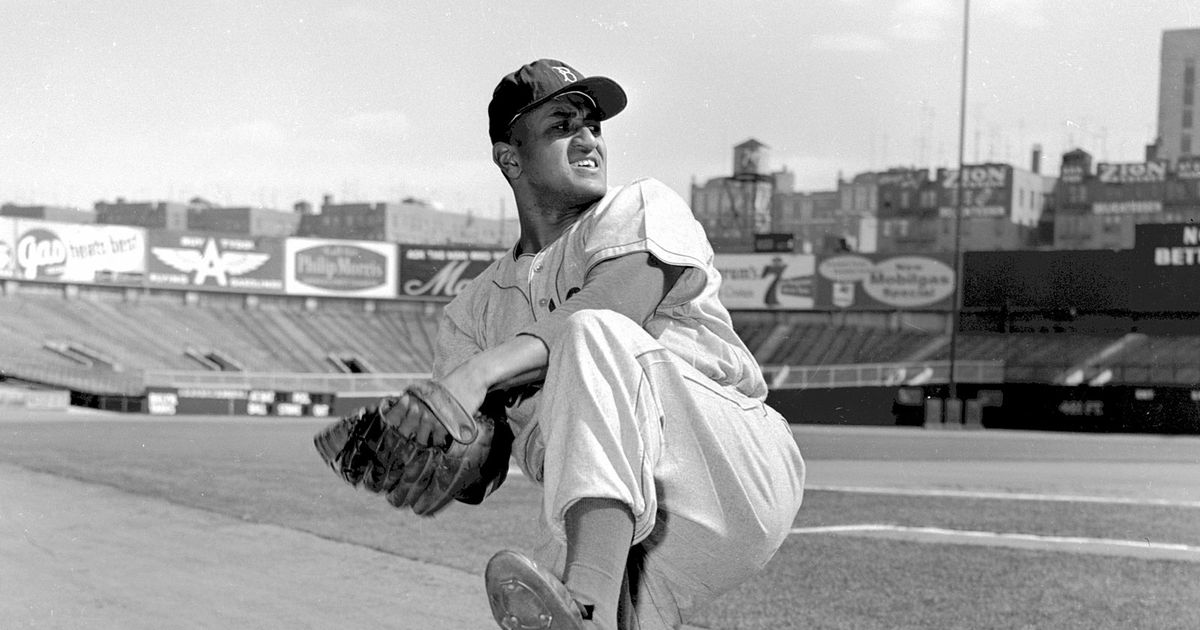
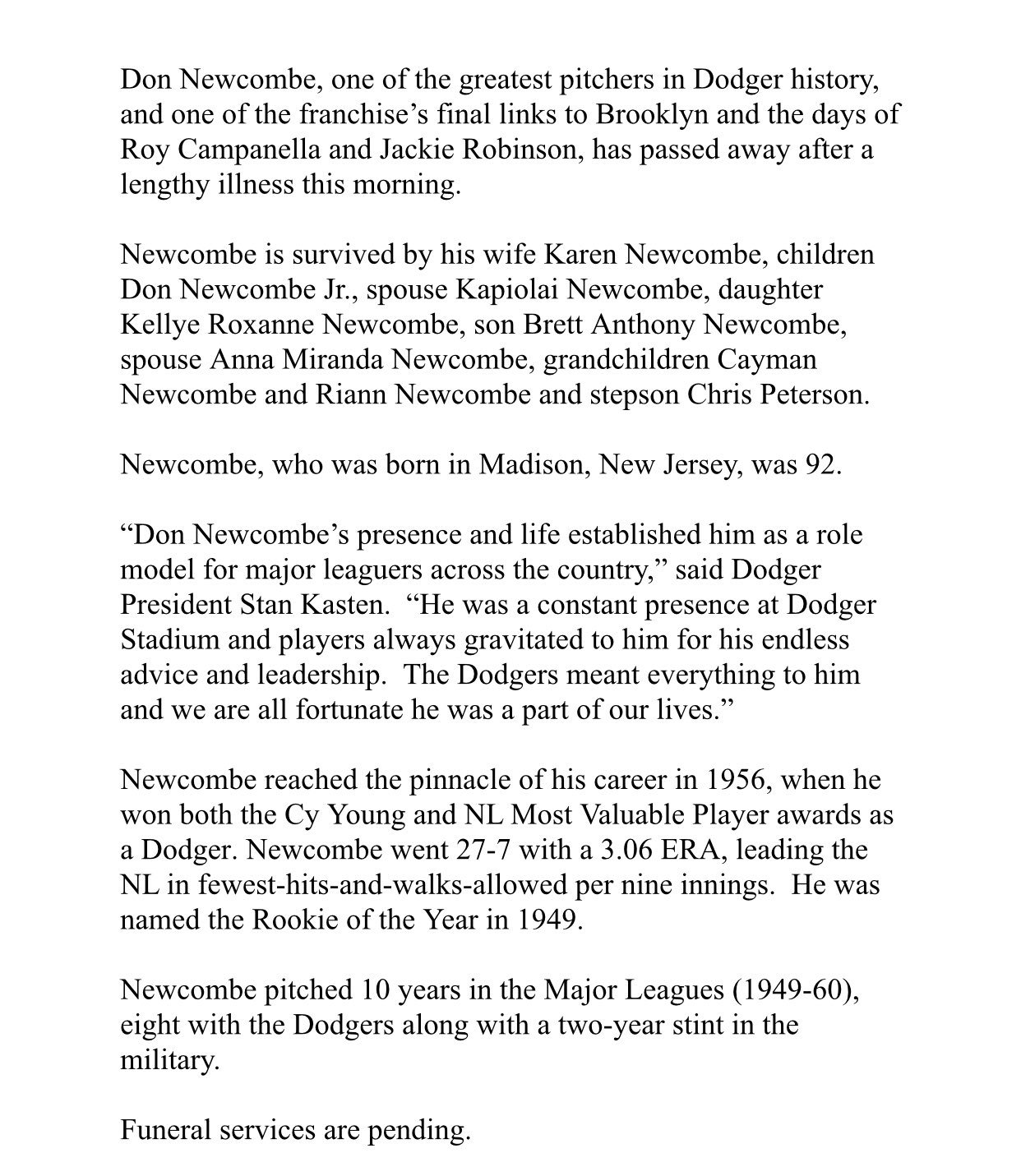
Don Newcomb passed away yesterday February 19, 2019. I don’t remember him playing because I’m too young. Being a Dodger fan all of my life I have read about his playing days and him talking to and mentoring the younger players with today’s Dodgers.
He was born on June 14, 1926, and played in the Negro Leagues finally making it to the Major Leagues in 1949 with the Brooklyn Dodgers winning Rookie of the Year. He won a World Series (the only one Brooklyn won) in 1955. He won the Cy Young Award in 1956. He battled alcoholism in the 50s and 60s. He mentored everyone from Maury Wills, Steve Garvey, Orel Hershiser, Mike Piazza, to current players Kenley Jansen, Clayton Kershaw and manager Dave Roberts.
At 92 he would still come to the ballpark and talk to the Dodgers and opposing players.















 PowerPop... An Eclectic Collection of Pop Culture