Power Pop fan, Baseball, Beatles, Alternative music, old movies, and tv show fan. Also anything to do with pop culture in the 60s and 70s... I'm also a songwriter, bass and guitar player. Not the slightest bit interested in politics at all.
Robbie Robertson: “a cultural treasure of the Canadian nation.”
From now until Friday it’s going to be Canadian Week…with all Canadian artists. Two of which I’ve never posted on before and one at the very end…were all Canadian except a certain southern drummer. I hope you will join me this week whether you are Canadian or not…there will be some great artists.
I grew up with Lightfoot’s songs. He was one of the very few respected artists my sister liked so I was hearing his songs when I was around 5 or 6. The Wreck of the Edmund Fitzgerald is still a go-to song for me. From Sundown to If You Could Read My Mind and all the ones in between. This particular song is such a perfectly written number. I first heard this by Elvis Presley when I was a kid.
Bob Dylan covered this song on his Self Portrait album and it helped Gordon’s career. So many have covered this song. Here is a link to the second-hand songs website if you want to see them all. Elvis Presley, Dylan, Jerry Reed, Steve Forbert, Jerry Lee Lewis, Peter Paul and Mary, and a TON more. You know you have written a great song when you have those quality artists covering it.
It didn’t chart for Lightfoot but other artists took the song to the charts. According to Wiki… Ian and Sylvia #1 on the Canada AC Charts in 1965, Peter, Paul, and Mary #39 in Canada and #91 on the Billboard 100, George Hamilton IV #9 on the Billboard Country Charts in 1971, Oliver #28 in the Billboard AC Charts in 1971, Paul Weller #40 in the UK in 2005… even the Grateful Dead covered this song.
Gordon died on May 1, 2023. The music world lost a huge legend with Gordon Lightfoot. It’s hard to put into words how great of a songwriter the man was.
Gordon Lightfoot on Bob Dylan recording this song: “I was totally blown away that he would record one of my songs in the first place. It helped my career – I’d not had a hit single myself at that point. His cover was a linchpin in that whole process because it made people in the industry aware that I was producing good songs.”
Robbie Robertson: “a cultural treasure of the Canadian nation.”
Bob Dylan: “I can’t think of any Gordon Lightfoot song I don’t like. Every time I hear a song of his, it’s like I wish it would last forever. “
Bob Dylan: Lightfoot died “without ever having made a bad song”
Early Morning Rain
In the early mornin’ rain
With a dollar in my hand
With an aching in my heart
And my pockets full of sand
I’m a long ways from home
And I missed my loved one so
In the early mornin’ rain
With no place to go
Out on runway number nine
Big seven o seven set to go
Well I’m stuck here on the grass
With a pain that ever grows
Where the liquor tasted good
And all the women all were fast
There, there she goes my friend
She’s rolling down at last
Hear the mighty engines roar
See the silver wing on high
She’s away and westward bound
For above the clouds she’ll fly
Where the mornin’ rain don’t fall
And the sun always shines
She’ll be flying over my home
In about three hours time
This ol’ airport’s got me down
It’s no damn good to me
And I’m stuck here on the ground
As cold and drunk as I can be
Can’t jump a jet plane
Like you can a freight train
So I best be on my way
In the early mornin’ rain
Can’t jump a jet plane
Like you can a freight train
So I best be on my way
In the early mornin’ rain
If you want to see where we are…and you missed a few…HERE is a list of the episodes in my index located at the top of my blog.
This show was written by Gene Roddenberry and D.C. Fontana
An episode I’ve always liked a lot. We meet Spock’s parents in this one. The actress that played his mom was Jayne Wyatt. To show you how bizarre this show was in the 1960s…Wyatt never watched the show before and after she read the script…she thought it was a comedy. That is until she got on set and saw how everyone took the show so seriously.
I think it’s this episode, more than any other, in which Spock’s lonely place in the Trek universe is spelled out. We, as the audience, had already gathered as much during the past forty or so episodes, but here, Spock’s mother, the ideal choice to voice such concerns out loud, makes apparent the pain Spock has endured during his life – in terms we had only guessed at earlier.
She had known since he was a little boy that he belongs in neither the human nor the Vulcan worlds and, as a mother, she had no choice but to feel his pain, that ultimate form of alienation – but, as a human, her feelings are much more obvious to us. Nimoy gives another subtly excellent performance; his demeanor is slightly different when speaking with his mother about ‘the situation’ between himself and his father. Despite the Vulcan reserve, you sense his discomfort and sadness.
The personal story is played out as part of a larger plot element involving diplomatic negotiations among ambassadors on board the Enterprise headed toward the planetoid Babel. Competing interests among the representatives threaten (and eventually lead to) hostilities, as the impending conference will decide whether planets of the Coridan System will become part of the Federation. If that wasn’t enough going on, a third party is presented as a foil in order to profit from the dissension…but the story centers around the Vulcans and their relationship.
While describing this episode I realized what a deep episode this is. There’s a lot of plot to it and a lot of new alien species and characters. The introduction of Spock’s parents was interesting and I really enjoy the dynamic that Spock has with his mother especially. While the politics of the Federation is the focal point of this episode, it really focuses more on Spock’s relationship with his parents.
From IMDB:
For two weeks after the airing of this episode, Mark Lenard received more fan mail than Leonard Nimoy.
In the first episode to feature Spock’s parents, actors Mark Lenard and Jane Wyatt asked Leonard Nimoy for advice on how the two of them could display their affection for one another in a subtle way since the Vulcans supress their emotion. Since it was Nimoy who had devised the Vulcan neck pinch and the Vulcan salute, Nimoy suggested they touch and stroke each others hand by the index and middle finger.
Gene Roddenberry wrote the scene in which Amanda tells Kirk of the rift between Spock and Sarek. Writer D.C. Fontana felt that it would be inappropriate for her to discuss this with someone she had just met. But Roddenberry wanted Kirk to be more involved with the story.
This episode introduces the Andorians and the Tellarites. Later episodes established that, along with Humans and Vulcans, they are two of the four founding members of the United Federation of Planets.
Actor John Wheeler, in character as Gav, had so much trouble seeing through the prosthetics over his eyes that he was forced to raise his head to see his castmates. This added to the early mythos that all Tellarites were arrogant as well as belligerent and aggressive.
Jane Wyatt would only play Spock’s mother one more time, in the film Star Trek IV: The Voyage Home (1986). In Star Trek: The Animated Series: Yesteryear (1973), to save costs, Majel Barrett voiced the role. Mark Lenard, however, reprised his role of Sarek in the animated series and again in the films Star Trek III: The Search for Spock (1984), Star Trek IV: The Voyage Home and Star Trek VI: The Undiscovered Country (1991), as well as the Star Trek: The Next Generation episodes Star Trek: The Next Generation: Sarek (1990) and Star Trek: The Next Generation: Unification I (1991).
Writer D.C. Fontana chose the name “Amanda” for Spock’s mother because it means “worthy of love” in Latin.
Mark Lenard had also been a potential candidate for the recasting of Spock if Leonard Nimoy were to quit the series.
Though they play father and son, Mark Lenard was 42 years old at the time and Leonard Nimoy was 36.
Jane Wyatt has said that some years after “Journey to Babel” first aired, while waiting in an airport she heard someone cry out the name Amanda. Wyatt said that at first she had no idea it was a fan trying to get her attention, as she had completely forgotten the name of the character she had played.
The original script called for an establishment shot of the city Sarek and his party travelled from. However, painting a matte to depict the city became budget prohibitive. Likewise, Sarek was initially to be beamed aboard the Enterprise, but use of existing shuttle craft stock footage was cheaper than employing Transporter effects.
Amanda’s description of Spock being bullied by other children for his human heritage was later shown in animated form in Star Trek: The Animated Series: Yesteryear (1973), and in live action form in the movie Star Trek (2009).
In the original draft script, there was a banquet scene featuring the three main diplomats: Sarek (the Vulcan), Shras (the Andorian), and Gav (the old Tellarite). When this scene was scrapped, the dialog was inserted into the final version of the buffet scene. Other dialog was scrapped that would have indicated that Sarek was an engineer before he became a diplomat, and that he was the son of the famous Vulcan diplomat Shaleris.
As a tribute to her long and distinguished career, Jane Wyatt is called “Miss Jane Wyatt” in the closing credits.
In the remastered version, the Enterprise shuttlebay and landing sequence was completely redone digitally, featuring a number of background actors visible within the viewing galleries. Also revamped were shots of Vulcan (now more closely resembling its appearance in Star Trek: Enterprise) and the battle between the Enterprise and the Orion ship, now featuring a more identifiable design.
The Andorians cock their heads for better visual acuity. According to Star Trek lore, the Andorian antennae are sensitive light beyond the normal human spectrum. Thus, Andorian vision is literally quadroscopic.
Before he was cast as Sarek, Mark Lenard played the first major Romulan character seen on Star Trek, the Romulan Commander in Star Trek: Balance of Terror (1966).
Scotty does not appear in this episode. Other characters refer to him as being nearby, but he never has to appear on-camera.
D.C. Fontana had become curious about past references to Spock’s background, and was inspired to more fully flesh them out. In particular, Fontana was inspired by information Spock had revealed about his parents in Star Trek: This Side of Paradise (1967). Fontana also felt such an episode would be an interesting way to reflect issues relating to the Generation Gap.
Many of the costumes worn by extras in the hallway and reception room scenes were recycled from several first season episodes, including the outfits worn by Galactic High Commissioner Ferris in Star Trek: The Galileo Seven (1967) and by Lazarus in Star Trek: The Alternative Factor (1967).
This is listed as one of the “Ten Essential Episodes” of TOS in the 2008 reference book “Star Trek 101” by Paula M. Block and Terry J. Erdmann.
Russ Peek, who plays one of Sarek’s aides, also appeared as mirror Spock’s Vulcan bodyguard in Star Trek: Mirror, Mirror (1967).
The Orion ship was recycled as the missile in Star Trek: Patterns of Force (1968), although this has been changed in the remastered version of the latter.
If one goes by airing order, this is the first episode in which Vulcans are mentioned to have a longer lifespan than humans. If one goes by production order, that title goes to Star Trek: The Deadly Years (1967).
The matte shot of Uhura appearing on the screen in engineering is one of the smallest mattes ever used in the series, until the view discs in Star Trek: All Our Yesterdays (1969).
Star Trek: Metamorphosis (1967) starring Elinor Donahue and Journey to Babel starring Jane Wyatt aired back-to-back. Both actresses had been regular cast members on Father Knows Best (1954), where Donahue played Wyatt’s daughter.
The Tantalus field controls used in Star Trek: Mirror, Mirror (1967) can be seen behind McCoy while Amanda is inquiring about Sarek’s condition.
The noise of the coded message sent by Thelev is also used in Star Trek: Miri (1966).
Bill Blackburn, in an unused make-up scheme for the Tellarites from a make-up test, can be seen in the end credits of Star Trek: The Deadly Years (1967) and Star Trek: A Private Little War (1968).
Mark Lenard, who played the 102-year-old Sarek, was 42 at the time of filming.
Summary
The Enterprise is transporting several diplomatic delegations to a conference on Babel regarding the future of the mineral-rich planet Coridan. Among the passengers are Spock’s parents, Ambassador Sarek and Amanda. There is obviously a chill between father and son owing to Spock’s choice of pursuing a career in Starfleet. Unknown to Spock or his mother is the fact that Sarek is seriously ill. There is also much tension among the delegations and a spy on board is transmitting coded messages to a ship that attacks the Enterprise. With Captain Kirk wounded in an earlier knife attack, Spock is in temporary command just as his father needs a transfusion that only he can provide.
CAST
William Shatner … Captain James Tiberius ‘Jim’ Kirk Leonard Nimoy … Mister Spock DeForest Kelley … Dr. McCoy Jane Wyatt … Amanda (as Miss Jane Wyatt) Mark Lenard … Sarek Nichelle Nichols … Uhura William O’Connell … Thelev Majel Barrett … Nurse Chapel Walter Koenig … Chekov John Wheeler … Gav James X. Mitchell … Josephs Reggie Nalder … Shras Bill Blackburn … Lieutenant Hadley (uncredited) John Blower … Babel Conference Attendee (uncredited) Jerry Catron … Montgomery (uncredited) Billy Curtis … Small Copper-Skinned Ambassador (uncredited) Frank da Vinci … Vulcan Aide (uncredited) Jeannie Malone … Purple-Skinned Delegate (uncredited) Jerry Maren … Small Copper-Skinned Ambassador (uncredited) Eddie Paskey … Lieutenant Leslie (uncredited) Russ Peek … Sarek’s 2nd Vulcan Aide (uncredited) Kai J. Wong … Doctor (uncredited)
In 1969 Duane Allman hand-picked the members he wanted in his band. The first member he picked was drummer Johnny Lee Johnson…better known as Jaimoe or Jai Johanny Johanson. He then looked at a band called “The 2nd Coming” and he got members guitarist Dickey Betts and bassist Berry Oakley out of that band and continued. He also picked another drummer named Butch Trucks out of the band The 31st of February.
Duane wanted the best band possible. People were confused that he wanted two drummers and a guitar player who could play almost better than him. He didn’t care about that as much at all…as long as it sounded good. Dickey Betts was not the easiest person to get along with but he respected Duane so much that they never had any problems. They spurred each other live to go further.
They needed a singer and Duane automatically thought of this brother Gregg. Gregg was living in LA at this point with Jackson Browne sharing an apartment. He told Gregg to come to Macon Georgia with this band. Gregg came armed with songs and walked into the door. He heard the band and didn’t know if he was good enough to do it. The big brother Duane jumped on Gregg and told him not to embarrass him and get behind the keyboards and do his thing. Gregg as always listened to Duane and of course, he fit perfectly. Duane knew exactly what he was doing.
On a side note…the band had a keyboard player named Reese Wynans. Reese knew his stint with the band was done with Gregg joining. They already had two guitarists and two drummers…they didn’t need another keyboard player with Gregg joining. Duane helped him get some studio work and hooked him up with other musicians. Reese’s career was only starting. Later on, Reese joined Stevie Ray Vaughan and Double Trouble in 1985, playing keyboards on Soul to Soul and In Step. He performed live with the group until Stevie’s death in 1990.
He moved to Nashville, Tennessee in 1992, Reese has played keyboards for a number of country artists including Brooks & Dunn, Trisha Yearwood, Martina McBride, and Hank Williams Jr. He has also played for blues artists Buddy Guy, John Mayall, Kenny Wayne Shepard, Colin James, Ana Popovic, Dudley Taft, Eli Cook, and Los Lonely Boys. I personally met Reese at my guitar tech’s business… a great guy.
The Allman Brothers toured relentlessly through 1969-1971 playing at clubs and also doing free shows in the park in what town they were at…the same thing that The Grateful Dead did also. Money wasn’t the thing…they built a grass roots following and they were probably more popular in New York than anywhere else.
This song was on their debut album The Allman Brothers Band released in 1969. The album was hailed by critics but it didn’t sell but 35,000 copies at the time. When you look at the album now…it’s full of songs that would be their bedrock for years. Whipping Post, Dreams, and Trouble No More to name but a few.
Gregg Allman was the main songwriter in the band at first. Dicky Betts would soon start writing more around the second album. Allman wrote this about a girlfriend and wrote a song called Blackhearted Woman about that same girlfriend. They recorded the album in two weeks total…played it and mixed it.
They would release their second album the following year. That album did a little better but it still didn’t take off despite having many songs (Midnight Rider, In Memory of Elizabeth Reed, and more) that would make them famous later. It was in 1971 when they released At Fillmore East that all the years of touring paid off. It was a massive hit peaking at #13 and they were set up for a great career. Up until then, the record company had been advancing them money since 1969 and that album paid everything off. They finally had money coming in and the ability to get what they wanted.
Then on October 29, 1971, Duane Allman was killed on a motorcycle in Macon Georgia. They thought about breaking up but they stayed together and had a huge career with albums Eat A Peach (which Duane is on a few tracks) and the massive Brothers and Sisters. Around a year later…their bassist Berry Oakley died on a motorcycle within a few blocks of where Duane crashed.
When punk came in the late seventies they struggled because no one wanted blues jams anymore even if the musicianship was top notch and it was. That is something about the punk and New Wave movement I didn’t like. Some bands like this who were musically superior got swept away for a while.
Classic radio started to get popular and all of these bands that were ignored during punk and new wave were sought after again. In the late eighties, Gregg had a huge hit with I’m No Angel and the band reformed and played until Oct. 28, 2014 when they officially retired as a band.
I truly think they had more talent in that band than most of their peers. I have to add that I think Gregg could be the best white blues singer of his era.
It’s Not My Cross To Bear
Yeah, yeah, yeah
I have not come, yeah
To testify
About our bad, bad misfortune
And I ain’t here a wond’rin’ why
But I’ll live on and I’ll be strong
‘Cause it just ain’t my cross to bear
I sat down and wrote you a long letter
It was just the other day
Said, sure as the sunrise, baby
Tomorrow I’ll be up and on my way
But I’ll live on
And I’ll be strong
‘Cause it just ain’t my cross to bear
Oh no
Oh, but I’ll live on and I’ll be strong
‘Cause it just ain’t my cross to bear
Yes now baby
But in the end, baby
Long towards the end of your road
Don’t reach out for me, babe
‘Cause I’m not gonna carry your load
But I’ll live on and I’ll be strong
‘Cause it just ain’t my cross to bear
Yeah, yeah
Yeah yeah, yeah yeah, yeah yeah, yeah yeah, yeah yeah, yeah yeah
If you want to see where we are…and you missed a few…HERE is a list of the episodes in my index located at the top of my blog.
This show was written by Gene Roddenberry and Gene L. Coon
One of my top episodes of Star Trek. This one was directed by Ralph Senensky. I’ve mentioned Ralph before… he will be 100 years old on May 1st of this year. He has a website and still posts about his adventures in directing many episodes of Star Trek and so many other shows including The Twilight Zone, The Waltons, Mission Impossible, and too many to mention. Please visit his site…he has a lot of fun stories about each episode he directed.
This one has everything you could want from a Star Trek episode. Great acting, writing, and even romance.
Kirk, Spock, and Dr. McCoy are traveling with Commissioner Hedford, trying to get her back to the Enterprise so that they can hopefully cure her of a rare and deadly disease that she has. They are pulled down to a planet. They meet Zefram Cochrane, who supposedly died 150 years ago.
He tells them that he had been out in space because he had gotten old and his wish was to die in space. However, he and his ship had been brought down to the planet just as they were. An alien entity he calls the companion was responsible for this as well as for rejuvenating him and making him back to around the age of 35. This companion has been able to keep him healthy, well, and at the same age for all these years.
They find a way to have a direct conversation with the companion. Spock is wanting to spend time asking the companion questions so that they can learn more about it. It is a very different species and part of their mission is to find new species and learn about them. I concur with Spock on this. Of course, because they made an error when writing this and made it so that the companion cannot heal the commissioner, Kirk stops Spock from asking the questions, pointing out that they need to hurry and try to get the companion to let them go so that they can get to the Enterprise, hopefully in time, to heal the commissioner.
Strong performances from Glenn Corbett and Elinor Donahue help raise this episode to classic status. A touching love story between a man isolated on a planet by himself, and a caring, alien life form he refers to as ” the Companion” is a thoughtful and moving story.
From IMDB:
A few scenes featuring Elinor Donahue had to be re-shot, because the original film negatives were damaged and couldn’t be used. Portions of the planet set had to be rebuilt, since other episodes were shot there by that time, using different sets. Meanwhile, Donahue got pneumonia and lost ten pounds. To hide this, they put Hedford’s scarf around her neck and upper body. However, her weight loss is still visible on her face. The re-shots were not directed by Ralph Senensky.
This is the first story to feature Zefram Cochrane, inventor of warp drive technology and an important figure in Federation history. He would later re-appear in Star Trek: First Contact (1996) and Star Trek: Enterprise: Broken Bow, Part 1 (2001), played by James Cromwell.
A view of the starship from dead center in front of the saucer section is used only in this episode.
This is the only episode in the first two seasons in which Captain Kirk is not on the Enterprise at any time during the plot. Likewise, the Enterprise does not appear until twenty-seven minutes into the episode. In four third season shows, Kirk also spends the entire episode off-ship: Star Trek: The Paradise Syndrome (1968), Star Trek: Plato’s Stepchildren (1968), Star Trek: Whom Gods Destroy (1969), and Star Trek: All Our Yesterdays (1969).
The scenes of Cochrane communicating with the Companion were all shot at one time. The set was then completely redone with his house added for all of the sequences with Kirk and company. The inconsistencies between the two versions of the same set can be seen in alien trees that are near Cochrane in one view and absent in the next.
To give an illusion of open space to a confined stage set, wide angle lenses were used. Although Glenn Corbett appears to be hundreds of yards away when he first runs toward the shuttle, he is much closer. Strategically placed rocks also allowed the camera to be very far away without seeing the edges of the set.
In the first draft, the Enterprise is temporarily commanded by Sulu, and the helmsman is an officer with an African background, named Lieutenant Ackrumba. The character later appeared in the novel “Mission to Horatius” by Mack Reynolds.
In the first draft script, Scotty is also on board the shuttlecraft (here called the Edison) with Kirk, Spock, McCoy, and Hedford. It was originally he who was to encounter the Companion while attempting to repair the shuttlecraft.
In a rare effect, slowly moving “clouds” were blown in from hidden vents, adding a touch of reality to the usually static planet set. This was also used in Star Trek: Obsession (1967).
George Takei disappears from the cast for the next 9 episodes after this one as he was off filming The Green Berets (1968) at the time.
Elinor Donahue recalled about this episode, “I remember watching it at home. And I am quite often nervous about watching something I’m in because there is nothing you can do about it once it’s out there. But I was very pleased with it; very happy.”
This was George Duning’s first Star Trek score, the strength of which got him rehired for many more assignments, including Star Trek: Patterns of Force (1968), Star Trek: Return to Tomorrow (1968), Star Trek: And the Children Shall Lead (1968), Star Trek: Is There in Truth No Beauty? (1968), and Star Trek: The Empath (1968). Portions of the score were reheard throughout the season, but the love themes were reused only once more, in Star Trek: The Gamesters of Triskelion (1968).
Ralph Senensky named this episode as his favorite among those he directed. Senensky recalled, praising the work of Gene L. Coon, “I just thought the script was absolutely wonderful. As I remember Gene, he was the least author-y type of person. He just didn’t seem like an author. He didn’t present that kind of sensitivity that his writing had expressed. It was just a deep, deep script and scene after scene had so many angles to come at it from. It was a complex script.”
The sparkling effects of the Companion would be reused in Star Trek: The Apple (1967) when the Enterprise fires phasers at Vaal, and again in Star Trek: Obsession (1967) inside of the deadly vampire cloud.
All the footage of the shuttlecraft in outer space was reused from Star Trek: The Galileo Seven (1967), some with the Companion animation added in post-production.
Technically, Zefram Cochran is 237 years old (87 plus the 150 years the Companion kept him young.)
When Kirk asks Cochrane for his first name, he replies, “Zefram”. Kirk then asks him if he is from Alpha Centauri and the inventor of the “space warp”. Cochrane then confirms he is. Yet in the movie Star Trek: First Contact (1996), Zefram Cochrane is from Earth. However, having invented the warp drive, it is conceivable that he went there and took up residence. It is possible he left to “die in space” from there. Therefore, he could be described as “from Alpha Centauri.”
A Gold Key Comics comic book was released as a sequel to this episode, #49: “A Warp in Space”.
The original voice of the Companion was too emotionless and robotic, and all of her dialog had to be re-recorded by another actress (apparently Elizabeth Rogers).
The Companion was designed by Richard Edlund at Westheimer photographic effects company.
Summary
While transporting ailing Assistant Federation Commissioner Nancy Hedford to the Enterprise aboard a shuttlecraft, Captain Kirk, Spock and Dr. McCoy encounter a gaseous creature that forcibly takes them to a planet with only one human inhabitant. The man turns out to be Zephram Cochrane, the inventor of the warp drive who supposedly died 150 years ago at the ripe old age of 87. The creature, whom he calls the Companion, found and brought him to the planet where it rejuvenated him and kept him alive. They can communicate but only on a non-verbal, empathic level, (which unintentionally lead to the shuttlecraft’s abduction when the man conveyed to it his loneliness). As Commissioner Hedford’s condition rapidly deteriorates, they need to free themselves to get her back to the Enterprise before it’s too late.
CAST
William Shatner … Captain James Tiberius ‘Jim’ Kirk Leonard Nimoy … Mister Spock DeForest Kelley … Dr. McCoy Glenn Corbett … Zefram Cochrane Elinor Donahue … Nancy Hedford James Doohan … Scott George Takei … Sulu Nichelle Nichols … Uhura Bill Blackburn … Lieutenant Hadley (uncredited) Lisabeth Hush … The Companion (voice) (uncredited) Eddie Paskey … Lieutenant Leslie (uncredited)
Ever since I heard him in the mid to late 80s I liked Steve Earle. He opened up for Bob Dylan in 1988 and he was fantastic. His music was between country, folk, and rock. You can’t really put Earle in a box…and you shouldn’t. I’ve read reviewers compare him to Randy Newman, Bruce Springsteen, and Waylon Jennings in the same review. That is a great span of artists.
The song is about escaping the town you are living in. I knew a lot of people who wanted to escape the small town I grew up in. The song reminds me a little of The River by Bruce Springsteen in content. It’s a song that many people will be able to relate to.
The song was from his debut album Guitar Town. I remember he was being played on country radio and WKDF…Nashville’s number-one rock station back in the 80s. The album is ranked 489 on Rolling Stone Magazine’s top 500 albums. They called it a rocker’s version of country. The album peaked at #1 on the Billboard Country Charts, #89 on the Billboard Album Charts, and #82 in Canada.
Four singles were pulled off of that album. Hillbilly Highway, Guitar Town, Someday, and Goodbye’s All We Got Left. All were in the top 40 in the Billboard Country Charts and two of them were top 10. Someday peaked at #28 on the Billboard Country Charts and #31 on the Canada Country Charts.
His next album Exit-0 is one that pushed him closer to the rock genre. His third album Copperhead Road broke him in the rock genre. Earle himself calls his music the world’s first blend of heavy metal and bluegrass…according to Wiki…Rolling Stone magazine called his music “Power Twang.”
Someday
There ain’t a lot that you can do in this town
You drive down to the lake and then you turn back around
You go to school and you learn to read and write
So you can walk into the county bank and sign away your life
I work at the fillin’ station on the interstate
Pumpin’ gasoline and countin’ out of state plates
They ask me how far into Memphis son, and where’s the nearest beer
And they don’t even know that there’s a town around here
Someday I’m finally gonna let go
‘Cause I know there’s a better way
And I want to know what’s over that rainbow
I’m gonna get out of here someday
Now my brother went to college cause he played football
I’m still hangin’ round cause I’m a little bit small
I got me a 67 Chevy, she’s low and sleek and black
Someday I’ll put her on that interstate and never look back
Somebody needs to know the time, glad that I’m here Watching the skirts you start to flirt now you’re in gear
I was 10 when I bought Sgt Peppers Lonely Hearts Club Band…10 years after it was released. It came with the same cutouts as it did in 1967. I remember taking hours and looking over the album cover. You would find faces you didn’t see before and I remember spotting Stuart Sutcliffe, the former Beatles bassist and the man who was most responsible for coming up with the band’s name.
Here is Stuart (left) on the cover and the picture they took it from.
The Cutout page that came with Sgt Pepper.
The song started out with a rooster crowing and ends with a chicken clucking. Good Morning Good Morning was inspired by a Corn Flake commercial. Lennon would always leave the TV on and sometimes with the volume turned down. He saw an ad for Corn Flakes and the song came to him. “Good Morning Good Morning…the best to you each morning.” I’ll have the video at the bottom of the post.
As a youngster, I enjoyed this song and Lovely Rita. The only song that was hard for me to grasp on the album was Within You Without You…because it was so different. In time, it became one of my favorites on the album.
I love the horns in this song and McCartneys stinging guitar solo in this one. Ringo’s drumming also stands out on this track…the sound and the playing are outstanding. His cymbols sound like a steam engine with the compression they ran on them.
This song is one of the most technically challenging songs they wrote. It was highly aggressive and complex, with a loud french horn, animal noises, pounding drums, strong vocals, and a large amount of intricate strumming guitars. The time signature to this song is all over the place…3/4, 5/4, 4/4, 12/8… but the song doesn’t sound forced or disjointed. This track is an example of how great Ringo is as a drummer. This and his work on A Day In The Life. He had to play in many different styles because John, Paul, and George wrote so many different styles of songs.
One of the most interesting things about the song is the end of it. Various animal sounds are put together but they had a purpose. The animal sounds were dubbed in from a sound effects disc. They were arranged in order of creatures capable of eating or chasing the one before, at Lennon’s request. And at the very end…was a very cool effect. A clucking chicken suddenly turns into a guitar lick when it melts into Sgt Pepper’s Reprise.
Six brass players were involved in this session, three saxophonists, two trombonists, and one French horn player. George Martin was excellent at mixing horns with Beatle songs. Got To Get You Into My Life is another example of that. They are not regulated to the background like other songs. They are upfront and have a fat sound to them.
This song was also the first song The Beatles ever licensed, while they were together, to be used in a show. It was in the last Monkees episode (“The Frodis Caper”) which was totally surreal…not like the formula driven episodes of the first season. It was kinda like The Simpsons meet Green Acres.
John Lennon: “I often sit at the piano, working at songs, with the telly on low in the background, if I’m a bit low and not getting much done, then the words on the telly come through. That’s when I heard ‘Good morning, good morning.’ It was a corn flakes advertisement. I was never proud of it. I just knocked it off to do a song.”
Paul McCartney:“John was feeling trapped in suburbia and was going through some problems with Cynthia, it was about his boring life at the time. There’s a reference in the lyrics to ‘nothing to do’ and ‘meet the wife’; there was an afternoon TV soap called ‘Meet The Wife’ that John watched, he was that bored, but I think he was also starting to get alarm bells and so ‘Good morning, good morning.’”
Micky Dolenz (drummer for the Monkees): “And I’ll never forget it. John Lennon looks up at me and says, ‘Hey Monkee Man!…You want to hear what we’re working on?’…And he points up to George Martin and I remember this so clearly…He’s wearing a three-piece suit…and he pushes a button on a four-track tape recorder and I hear the tracks to ‘Good Morning Good Morning.’…And then we sit around and then I remember some guy with a white coat and tie came in with tea…’Tea time, eh!’ And we sat around a little table and had really God-awful tea. And then everybody sat around and then we were chatting – ‘What’s it like, The Monkees?,’ me again trying to be so cool. And then I think it was John that went, ‘Right lads, down in the mines.’ And they went back to work.” .
Just in case you wanted to know who was who on the cover.
This is the commercial that inspired John Lennon
I couldn’t find a version of Good Morning Good Morning going into the Sgt Pepper Reprise. You have to listen to the end of Good Morning and the beginning of the Reprise to hear it. The album of course plays them together…there is no space between the songs.
Good Morning Good Morning
Nothing to do to save his life call his wife in
Nothing to say but what a day how’s your boy been
Nothing to do it’s up to you
I’ve got nothing to say but it’s okay
Good morning, good morning
Going to work don’t want to go feeling low down
Heading for home you start to roam then you’re in town
Everybody knows there’s nothing doing
Everything is closed it’s like a ruin
Everyone you see is half asleep
And you’re on your own you’re in the street
Good morning, good morning
After a while you start to smile now you feel cool
Then you decide to take a walk by the old school
Nothing has changed it’s still the same
I’ve got nothing to say but it’s okay
Good morning, good morning
People running round it’s five o’clock
Everywhere in town is getting dark
Everyone you see is full of life
It’s time for tea and meet the wife
Somebody needs to know the time, glad that I’m here
Watching the skirts you start to flirt now you’re in gear
Go to a show you hope she goes
I’ve got nothing to say but it’s okay
Good morning, good morning
cat, dogs barking, horses, sheep, lions, elephants, a fox being chased by dogs with hunters’ horns being blown, then a cow and finally a hen.
This was part two of Steve Rushin’s memoir of his childhood. The first one Sting-Ray Afternoons was about 1969-1980 and this one follows him from 1980 to the end of the decade. High School, College, and then a job at Sports Illustrated.
I probably should have combined this review with Stingray Afternoons but this one is in a totally different decade and a different period of his life. As much as I could relate to the first one…I am Steve’s age so this really hits home with my teenage years. He mentions all of the 1980s milestones and disasters such as The Challenger explosion and John Lennon’s murder.
Like the first book…it brings back a lot of insecurities and fun I had in the 1980s with high school and college. I was able to relate to Rushin because he was just an ordinary guy in the 80s…living a normal life like most of the rest of us. His humor and witty observations keep this book moving. He rarely sticks in one place…he keeps his story moving.
Just to be clear…this book touches on pop culture like music, sports, movies, events, and the teen years. It doesn’t really dwell on anything in particular but his life. It’s not a fact book, music book, or a sports book…he mostly uses them for a time reference point. He does mention how as time went on…Sting-Rays when out of favor for dirt bikes like Huffy. Then the car soon replaced all of that when you turned 16.
His father stands out in these books. He is hilarious…a very good dad and he would tell things like they were. They had 5 kids…4 boys and 1 red-headed girl. His dad would tell people when asked about his kids…yea we have 4 sh*theads and 1 red-head.
If you get Stingray Afternoons you almost have to get this one…it’s pretty much the sequel and it lives up to the original…just a different era and time of a person’s life.
If you want to see where we are…and you missed a few…HERE is a list of the episodes in my index located at the top of my blog.
This show was written by Gene Roddenberry, Stephen Kandel, and David Gerrold
It’s a comic turn for guest star Roger C. Carmel. This was Carmel’s second appearance as Harry Mudd, a futuristic enterprising con man and he thinks he’s found heaven. I think this sequel was better than the one that Carmel did originally, Mudd’s Women.
In an attempt to get revenge on the Enterprise, he plans on having a planet of robots take the entire crew prisoner in order to serve them–whether they want it or not. The robots feel that the human race is very chaotic and must have the robots run their lives for their own good (they might just be on to something here). So, thousands of robots are ready, willing, and able to cater to humans’ every need. That reminds me of computers and cell phones.
My favorite scene was with Chekov. Chekov contemplates being with two such androids as he realizes they were programmed by a man as depraved as Mudd. The look on his face is priceless.
The resolution here is a bit corny (plus it was used before) but the concepts brought up are undeniably fascinating and really do the Mudd character justice. The entire crew has to act illogically and even Spock joins in on the fun.
It’s not a great episode but is a humorous one. Like I said before…I do think it’s much better than the first one with the Mudd character. The ending is poetic justice also with Mudd.
Gene Roddenberry really liked the character. Carmel was slated to reprise his role as Harry Mudd in a first-season episode of Star Trek: The Next Generation, but died before filming started. He was in the 1973 Star Trek: The Animated Series in the episode of Mudd’s Passion. The animated series of Star Trek with the original cast is worth tracking down!
The character Harry Mudd returned to Star Trek Discovery played by Rainn Wilson from The Office. He was in two episodes in the first season…the 1st Choose Your Pain (2017) and Magic To Make The Sanest Man Go Mad (2017). He also appeared as Mudd again in “The Escape Artist” in Star Trek Short Treks released in 2019.
Rainn Wilson:I read about it in the paper that they were going to reboot Star Trek at CBS/Paramount. Bryan Fuller was the original creator [of Star Trek: Discovery] and I met with Bryan and some other folks. I said, “Hey, just so you know, I want to throw my hat in the ring.” I love Star Trek. I’d love to be a part of this somehow. I don’t know what that looks like. I’m not sure I want to move to Toronto for years. I’m not sure I want to sit in a chair and get makeup put on for two hours every morning. Because that’s brutal, what Doug [Jones] does, but it’s amazing. And then I didn’t hear anything and things came and went, and up and down. And and then, fortunately, they gave a call, “What about Harry Mudd?” It was fantasic!
From IMDB:
During the filming, casting director Joseph D’Agosta was in a panic because he needed at least two female identical twins and couldn’t find any suitable for the show. Then one night while driving home he saw Alyce Andrece and Rhae Andrece walking down a street. D’Agosta literally pulled up beside them, jumped out of his car and told them that they were going to be on television! (In some tellings of the story Gene Rodenberry is substituted for D’Agosta, but Steven Whitfield’s “The Making Of Star Trek” confirms it was D’Agosta.)
A third-season appearance of Harry Mudd was planned but axed due to the producers’ desire to move away from comedy episodes. However, Roger C. Carmel would reprise the role of Mudd as a cartoon voice in Star Trek: The Animated Series: Mudd’s Passion (1973). Mudd was considered for a return during the Star Trek movies in the 1980s, but Carmel’s failing health nixed that.
This was Roger C. Carmel’s favorite Star Trek episode.
With the exception of those actors who played members of the Enterprise crew, Roger C. Carmel was the only actor to play the same character in more than one episode of Star Trek the Original Series.
According to Walter Koenig, NBC considered making a Harry Mudd spin-off show after the success of “I, Mudd.” They assigned Gene Roddenberry to develop the idea, but being busy with Star Trek and other projects, he didn’t have time for it, and the series was never conceived.
David Gerrold did an uncredited rewrite on this episode. One of the significant changes he made, at Gene L. Coon’s request, was to get the crew on to the planet by the end of the first act. Other notable contributions were the gag of the five hundred identical female robots, and more material relating to Stella. Coon offered to submit the script for arbitration so that Gerrold would receive credit and residuals. However, Gerrold declined as he felt it would be stealing from Stephen Kandel, who had created Harry Mudd.
Using identical twins for each android “series” aided the photographic-effects budget for the episode. With imaginative use of twins and split screens, as many as six of one model were shown at once, while two of the same model required nothing but an additional costume. This ultimately gave the illusion of a planet of thousands of androids.
This episode marks George Takei’s last appearance in the series until Star Trek: Return to Tomorrow (1968). During his nine episode absence, Takei was on the East Coast filming The Green Berets (1968).
The first draft of the script devoted more attention to Norman’s act of diverting the Enterprise to Mudd, with the crew only arriving at the end of the second act. After an examination revealed Norman as an android, Scotty expressed an urge to take Norman apart – quickly adding that it was “nothing personal.” Norman understood.
While searching for identical twins to play androids, casting director Joseph D’Agosta found two young girls (apparently prostitutes) walking on Hollywood Boulevard with their pet wild cat, Marlon. He brought the two girls to meet producer Gene L. Coon and associate producer Robert H. Justman. While they inspected the girls (who were ultimately deemed unsuitable for the role), Coon had to hold Marlon, which consequently scratched him with its claws and tore his entire shirt.
At approximately 5 minutes and 35 seconds, this episode’s teaser is the longest in the original series.
As a result of its unusual use of several pairs of twins, this episode was featured in an article in TV Guide for the week it aired.
The piece of equipment found in Norman’s lab and workshop would be recycled for future episodes, appearing in the corridors of the Enterprise. Parts of the device that contained the nanopulse laser were later seen in Dr. McCoy’s lab.
The body suits worn by the male androids were later reused on Bele and Lokai in Star Trek: Let That Be Your Last Battlefield (1969).
The Maisie series and the Barbara series androids are wearing costumes left over from Star Trek: Mudd’s Women (1966), worn by Karen Steele and Maggie Thrett respectively.
Although ‘I, Claudius’ may be an inspiration for the title, a more likely source is Isaac Asimov’s ‘I, Robot’.
The title, referring to the absurd “king” of the robots, spoofs the 1934 Robert Graves historical novel “I, Claudius,” about the fourth emperor of the Roman Empire, who ruled between Caligula and Nero.
The Trudy series android is wearing a costume worn by an Argelian woman in Star Trek: Wolf in the Fold (1967).
Stella Mudd is wearing a dress (with slight modifications), which was seen on Martha Leighton in Star Trek: The Conscience of the King (1966).
Near the end, Dr. McCoy says, “It’s worked so far, but we’re not out yet.” This line was sampled on the song “What’s on Your Mind (Pure Energy)” on Information Society’s titular 1988 album.
Although there are 500 Alice models, we only see fifteen or sixteen. In order of appearance, they are: 1, 2, 66, 99, 19, 263, 118, 322, 471, 210, 27, 11, 3, 73 and 500. The number of the Alice that throws Scott into Kirk’s group is too far away to read (although it does seem to be a double-digit figure.)
The Annabelle series android is wearing the costume originally worn by Marlys Burdette in Star Trek: Wolf in the Fold (1967).
This takes place in 2268.
In his review of this episode in ‘The Star Trek Compendium’, author Allen Asherman states that many of the actors had great difficulty keeping their composure while filming. However, actor Richard Tatro (Norman) had successfully performed his scenes without ever breaking character.
Roger C. Carmel would later voice the G1 Decepticon Stunticon leader Motormaster in the animated series ‘The Transformers’ (1984.)
Summary
When an android takes control of the Enterprise, Kirk and his crew spend four days traveling at warp speed to an uncharted planet. When they beam down they find none other that Harry Mudd, the apparent ruler of the planet made up entirely of androids. It turns out there is one major problem with Harry’s idyllic existence: the androids who serve him hand and foot simply won’t allow him to leave. Kirk and Spock devise a way to disable the androids but have their own special plans for Harry.
CAST
William Shatner … Captain James Tiberius ‘Jim’ Kirk Leonard Nimoy … Mister Spock DeForest Kelley … Doctor Leonard ‘Bones’ McCoy Roger C. Carmel … Harry Mudd Richard Tatro … Norman Alyce Andrece … Alice #1 through 250 Rhae Andrece … Alice #251 through 500 James Doohan … Lieutenant Commander Montgomery ‘Scotty’ Scott Nichelle Nichols … Lieutenant Nyota Uhura George Takei … Lieutenant Hikaru Sulu Walter Koenig … Ensign Pavel Chekov Kay Elliot … Stella Mudd Mike Howden … Lt. Rowe Michael Zaslow … Jordan Bobby Bass … Android (uncredited) Bill Blackburn … Android (uncredited) Marlys Burdette … Female Android (uncredited) Roger Holloway … Lt. Lemli (uncredited) Ted LeGarde … Herman Series (uncredited) Tom LeGarde … Herman Series (uncredited) Jeannie Malone … Yeoman (uncredited) Bob Orrison … 1st Engineer (uncredited) Eddie Paskey … Lieutenant Leslie (uncredited) Colleen Thornton … Barbara Series (uncredited) Maureen Thornton … Barbara Series (uncredited) Starr Wilson … Maisie Series (uncredited) Tamara Wilson … Maisie Series (uncredited)
I really liked this song in the 90s as VH1 would play Natalie’s video almost non-stop through a certain period.
I had no idea that this song was a cover song. Natalie Imbruglia is an Australian actress who was on the Aussie soap opera Neighbours from 1992-1994 Imbruglia was making the leap from soap opera actress to singer and recorded Torn as her debut single. The song was a phenomenon and shot the then-22-year-old to worldwide fame. I always thought she wrote this song.
It was actually written by Los Angeles musicians Anne Preven, Scott Cutler, and producer Phil Thornalley in 1993 – and later released by their band Ednaswap. It had been covered twice before Imbruglia recorded it. It has more of a rock edge to it and I like it a lot.
Anne Preven said the demo they did of the song was more like the pop version done by Imbruglia. She said they didn’t want to be labeled as a pop band when Nirvana and harder bands were popular at the time.
The Imbruglia version peaked at #42 on the Billboard 100, #1 in Canada, #2 in the UK, #5 in New Zealand…. and #1 on the US Billboard Hot 100 Airplay, #1 Adult Contemporary, and #1 on Mainstream Top 40 Billboard Charts. in 1997-98. I am shocked it didn’t peak higher on the Billboard 100…well there is a reason for that.
The song was released only as a radio promo single, however, as Imbruglia’s label withheld the availability of a single in the hope that consumers would instead purchase her album. Songs that were not available for purchase as singles were ineligible for the Hot 100 until December 5, 1998, when Billboard revised the policy, allowing songs not available at retail to appear on the chart with airplay factored into the ranking. Torn was at the end of its run at this point, but still managed to make the chart at #42 that week before dropping off two weeks later.
At first, no American label wanted to release the song. That is until it started to get popular in other countries.
Anne Preven: We didn’t want to be a little pop-act, so we were overly self-conscious about it. And in retrospect, now that I’m older and I can see, I think… God we’re such idiots. [But] I don’t regret it now at all. The song changed both Scott’s and my life in terms of everything. It showed us we should stick to songwriting and not waste too much time in the band. And that all worked out great for us.
Producer and co-writer Phil Thornalley: We didn’t think anything of Natalie’s version… we thought it was just another European cover. And we really didn’t give it another thought, until, all of a sudden, we get a call saying it’s number one in the UK. For Scott and me it was obviously a mixed bag. We were thrilled to have a hit. But it was also bittersweet because it wasn’t our band.
Scott Cutler:Natalie’s version was very much the version we wrote. It was just a couple beats per minute faster. And a little bit higher, I think. In the moment I thought it was little light. I love it now – when I hear it I get it. Seeing the video I remember thinking, ‘Oh she’s really got it made. She just looked cool – she had the jumper on, there was just something about the video. I got the video.
Scott Cutler on the money it brought in: It’s just some phenomenal amount of money. For one song… It comes in spits and spurts, but it starts out slow and then one day you get a check for like $300,000 or some crazy number. And you think it’s a mistake. Like, I have a check here for $297,000? [You think] someone added one zero too many and some day they’re going to come ask for their money back. And then it starts doing this crazy thing for about a year or two. And then it just becomes this yearly thing where every year you get a check every quarter and it stays up in a decent number – it’s not ending.
Even now…years after the song was released…the songwriters receive around $150,000 a year each from Natalie Imbruglia’s version.
Here is the version that Imbruglia heard
Here was the rock version released by Ednaswap
Torn
I thought I saw a man brought to life
He was warm, he came around like he was dignified
He showed me what it was to cry
Well, you couldn’t be that man I adored
You don’t seem to know, or seem to care what your heart is for
But I don’t know him anymore
There’s nothin’ where he used to lie
The conversation has run dry
That’s what’s goin’ on
Nothing’s fine, I’m torn
I’m all out of faith
This is how I feel
I’m cold and I am shamed
Lying naked on the floor
Illusion never changed
Into something real
I’m wide awake and I can see
The perfect sky is torn
You’re a little late
I’m already torn
So I guess the fortune teller’s right
Should’ve seen just what was there and not some holy light
But you crawled beneath my veins and now
I don’t care, I had no luck
I don’t miss it all that much
There’s just so many things
That I can touch, I’m torn
I’m all out of faith
This is how I feel
I’m cold and I am shamed
Lying naked on the floor
Illusion never changed
Into something real
I’m wide awake and I can see
The perfect sky is torn
You’re a little late
I’m already torn
Torn
There’s nothing where he used to lie
My inspiration has run dry
And that’s what’s goin’ on
Nothing’s right, I’m torn
I’m all out of faith
This is how I feel
I’m cold and I am shamed
Lying naked on the floor
Illusion never changed
Into something real
I’m wide awake and I can see
The perfect sky is torn
I’m all out of faith
This is how I feel
I’m cold and I’m ashamed
Bound and broken on the floor
You’re a little late
I’m already torn
Torn
Oh
The post starts with John Denver and ends with Frank Zappa and Dee Snider from Twisted Sister…
John Denver’s reputation went down after the 70s and really unfairly. He was noted as square and sometimes rejected by his musical peers. That is sad to me because he was a great songwriter, guitarist, and singer. He didn’t get much street cred until…you will see at the bottom.
During the “We Are The World” filming featuring dozens of pop stars, Willie Nelson cracked, “If a bomb hit this building, John Denver would be No. 1 again.” Everybody laughed – and sneered. And the image of Michael Jackson, Kenny Rogers and others mocking Denver is a sad one. It showed just how low he’d fallen on the barometer of pop music.
Denver was an easy target for critics and peers. Robert Christgau dubbed him “the blandest pop singer in history,” and compared him to James Taylor… “If James is a wimp, John is a simp, and that’s even worse.” I don’t think all the criticism was fair. Some of his music was really good to great like Rocky Mountain High, Sunshine on My Shoulders, and Take Me Home Country Roads.
Denver was a huge star in the early to mid-seventies. I’m not a huge fan by any means but he did have a few songs I liked. He was a songwriter, musician, activist, and actor, and he sold millions of records (over 33 million). He was never known to be cool or hip but he was John Denver and he did things his way.
9/23/1971, NOV 8 1971 Dies of Cancer – Mrs. Lyn Helton, 20 the mother who tape-recorded her thoughts on death as cancer was taking her life, died Sunday at Denver’s Children’s Hospital. Credit: Denver Post (Denver Post via Getty Images)
Denver wrote this song in Minnesota on a rainy spring day. It first appeared on John Denver’s 1971 album Poems, Prayers & Promises. This song got a big boost when it was used in a November 1973 made-for-TV movie called Sunshine, a tale about a woman dying of cancer who recorded tape messages for her child in her final days. It was based on a true story of Lyn Helton who would listen to John Denver’s music.
The song peaked at #1 on the Billboard 100 and #1 in Canada in 1973. It was included in his Greatest Hits album that year.
The PMRC (Parents Music Resource Center) was a group founded by Tipper Gore that was designed to provide censorship and/or warning of offensive material in regard to music albums that had things that parents would find offensive such as profanity, obscene images, lyrics, descriptions of sexual and/or violent matters, etc.
In 1985, several hearings were held to discuss the possibility of certain albums being required to have a ‘Parental Advisory’ sticker placed on the cover. Many musicians were understandably against this action, and some of those musicians were even invited to come and speak their minds about this issue. Three stand out in particular. Dee Snider of Twisted Sister, Frank Zappa, and maybe most notably, John Denver.
Frank and Dee spoke out against it of course and they were afraid of John Denver being in favor of it…and Congress was counting on it. Well, that didn’t happen. John gave arguably the sharpest testimony out of anyone who testified. He was eloquent and blunt. The looks on the faces of Congress say it all. Inviting John Denver to testify backfired for Congress.
John Denver on the TV Movie: “It was the true story of Lyn Helton, an incredibly courageous lady who chose to live her short life to the fullest even though she knew she would die of a rare bone cancer in a matter of months. It seems that in the last year of her life she found some happiness in my music. I was most honored to have my songs used as part of that television show.”
John Denver: “On one level it was about the virtues of love. On another, more deeply felt level, it reached for something the whole world could embrace.”
Dee Snider of Twisted Sister talks about John Denver. It should start at the place Dee talks about Frank and John.
Sunshine On My Shoulders
Sunshine on my shoulders makes me happy Sunshine in my eyes can make me cry Sunshine on the water looks so lovely Sunshine almost always makes me high
If I had a day that I could give you I’d give to you a day just like today If I had a song that I could sing for you I’d sing a song to make you feel this way
Sunshine on my shoulders makes me happy Sunshine in my eyes can make me cry Sunshine on the water looks so lovely Sunshine almost always makes me high
If I had a tale that I could tell you I’d tell a tale sure to make you smile If I had a wish that I could wish for you I’d make a wish for sunshine all the while
Sunshine on my shoulders makes me happy Sunshine in my eyes can make me cry Sunshine on the water looks so lovely Sunshine almost always makes me high Sunshine almost all the time makes me high Sunshine almost always
The song hits you like a sack of bricks when the piano intro concludes. It’s powerful, strong, and perfectly pieced together. It reminds me a little of Band On The Run (or the other way around)… as the song is in sections.
I’ve been posting songs, movies, and pop culture posts since 2017 but somehow I’ve missed posting anything about Jethro Tull. I thought today would be the day to correct that…the voice, guitar, and the flute…yea rock and roll flute. Ian Anderson wrote the song but it took a few tries to record it. Anderson explained to the band to imagine a boiler building up pressure until it explodes or a train going off the tracks after gaining speed. He said he wrote it about the overpopulation on Earth.
The song was released in 1971 on the album Aqualung. The song didn’t chart. It was re-released in 1976 and this time it was a different story. The song peaked at #62 on the Billboard 100 and #85 in Canada and has come a classic radio staple. The album Aqualung was huge… it peaked at #7 on the Billboard Album Charts, #5 in Canada, and #4 in the UK.
The song was recorded in pieces and put together and everything fell into place. I feel very safe in saying that it contains one of the best flute solos in rock…of course, that list is not long.
I will say this about Ian Anderson. Like David Byrne, Van Morrison, Freddie Mercury, Neil Young, and a few more…you know when Anderson opens his mouth to sing that it’s him…and very distinctive voice…and the best rock flute player ever!
Ian Anderson:“When I wrote it, I wasn’t deliberately setting out to write a piece of music on a particular subject. But it evolved during the writing process into being not terribly specific but about the issues of overcrowding – the rather claustrophobic feel of a lot of people in a limited space. And the idea of the incessant unstoppable locomotive being metaphor for seemingly the unstoppable population expansion on planet Earth.
When I look at it today, it does, for me, become very crystallized in being a song about unmanageable population expansion. It’s something that concerns me even more today than it did back when I wrote it, when the population of planet Earth was only about two thirds of what it is today. So in my lifetime alone, we’ve seen an enormous increase in population, and an enormous increase in the degree to which we devour our limited resources. So the idea of population planning and management is something that I think we ought to be thinking about a lot more than we do. Does that mean I think we should sterilize everybody after the age of 30? No, of course not. The size of the family you want to have is going to be your choice. But, you should make that choice knowingly, wisely, and responsibly.”
Locomotive Breath
In the shuffling madness
Of the locomotive breath
Runs the all-time loser
Headlong to his death
Oh, he feels the piston scraping
Steam breaking on his brow
Old Charlie stole the handle
And the train it won’t stop
Oh no way to slow down
He sees his children jumping off
At the stations one by one
His woman and his best friend
In bed and having fun
Oh, he’s crawling down the corridor
On his hands and knees
Old Charlie stole the handle
And the train it won’t stop going
No way to slow down
Hey
He hears the silence howling
Catches angels as they fall
And the all-time winner
Has got him by the balls
Oh, he picks up Gideons bible
Open at page one
I thank God he stole the handle
And the train it won’t stop going
No way to slow down
No way to slow down
No way to slow down
No way to slow down
No way to slow down
No way to slow down
No way to slow down
No way to slow down
If you want to see where we are…and you missed a few…HERE is a list of the episodes in my index located at the top of my blog.
This show was written by Gene Roddenberry, Robert Bloch, and D.C. Fontana
A black cat, witches, fog, and a spooky castle.
I saw this in a comment elsewhere and it’s true. If you understand the premise of this episode, that the black cat, witches, zombies skeletons, magic, etc. were derived from the aliens’ mistaken interpretation of human nightmares, rather than human reality, then, this episode does make sense.
This 1967 Halloween episode is not just about Trick or Treat – It’s about the clash of two cultures that meet in passing. It’s about how badly things can go wrong when communication is set aside to make room for personal wants and desires that can become greed.
There is truly a great line in this episode. When the crew faces the 3 witches from Macbeth. When the witches are done reciting their lines, Kirk says to Spock, “Spock . . . comment.” “Very bad poetry, Captain,” Spock replies to Kirk’s obvious annoyance. I loved that.
When they beam down, they see thick fog, 3 witches, an eerie castle, and a black cat entering the castle. They meet Korob and Sylvia, end up in a dungeon, and find that Scotty and Sulu are in a trance of sorts and obeying the will of the two sorcerers.
The sorcerers use their magic against the Enterprise, Bones ends up in a trance-like state while Kirk and Spock try to figure out a way to beat the sorcerers and save their ship and crew. Sylvia becomes very cruel and disputes with Korob. Korob decides to help Kirk and his crew because he feels that Sylvia is going way too far.
This episode is Star Trek Halloween special basically… The crew land on a weird foggy world complete with monsters…
From IMDB:
The voices of the little creatures in the final scene are the sounds made by newly-hatched alligators calling for their mother.
A detailed metal prop miniature of the Enterprise was created for this episode, then laminated in lucite as one of Korob’s tricks. The miniature was donated to the Smithsonian National Air and Space Museum by Gene Roddenberry.
First appearance of Pavel Chekov, though not the first one broadcast. That honor goes to Star Trek: Amok Time (1967). Notice that Walter Koenig was still growing his hair out and therefore had to wear a rather unconvincing wig.
The title of this episode, “Catspaw”, is a term that describes a person used by another as a dupe. As McCoy points out, Scott and Sulu are used as catspaws to lure more crewmen down.
Fittingly, the episode was first aired during the week of Halloween.
James Doohan (Scotty) lost his right middle finger during World War II. Most of his scenes are shot to hide it; however, it is very noticeable here. When Scotty is holding a phaser pistol on Kirk and Spock, only two fingers are holding the butt of the phaser.
Scotty’s only dialogue is the statement, “Everything’s vanished”. Sulu doesn’t speak at all; he simply nods “yes” and “no” when queried by Kirk, and later cries “aha!” before engaging Kirk in hand-to-hand combat.
This is the first episode to feature all 7 of the “classic” cast members who would be brought back for future big screen adventures: Kirk, Spock, McCoy, Scotty, Uhura, Sulu, and Chekov, although they do not all appear in the same scene together.
The three witches seen towards the start of the episode were intended to be shown as floating severed heads. Hence the reaction from the landing party at their appearance. The characters wore black turtlenecks against a black backdrop, with light shining directly up into the face. Unfortunately, the effect did not work and the turtlenecks worn by the actors can clearly be seen. Even in the remastered version of the episode, this oversight is still present.
Theodore Marcuse (Korob) died in a car accident one month after “Catspaw” aired.
Korob and Sylvia refer to their leaders as the Old Ones, and imply that they are close by. Horror writer H.P. Lovecraft referred to the inhuman gods in his short stories as Old Ones; their being “nearby” was standard fare in his writings. Episode author Robert Bloch was a friend and disciple of Lovecraft. A similar reference occurs in Bloch’s Star Trek: What Are Little Girls Made Of? (1966).
The ornithoid lifeforms were marionettes composed of blue fluff, pipe cleaners, crab pincers, and other materials. The marionettes were operated with thick, black threads that were clearly visible; most of this was corrected in the remastered version of the episode.
When Gene Roddenberry originally outlined the chain of command, Lt Uhura was fourth in command. One of the reasons Dr Martin Luther King Jr convinced her to continue in the role (which she was considering quitting) was that he thought it was progress for a black woman to have such a prominent role for that time, although he was probably unaware that she was to be fourth in command. In the original script, Lt Uhura was to be in command when Kirk, Spock and Scott were all on any planet, but NBC was against having a female in charge of the Enterprise.
The Three Witches are iconic characters from William Shakespeare’s Macbeth, a play which inspired frequent allusions throughout this series.
The role of Crewman Jackson was played by regular Trek stuntman Jay Jones. Jones is credited as “Jimmy Jones”, whom some sources believed was Jones’ brother. However, in a 1996 retrospective interview, Jay claimed he played Jackson, as his first assignment on Star Trek, and makes no mention of a brother named Jimmy being involved on the show.
First time Assistant Chief Engineer, Lt. DeSalle was in command of Enterprise. Captain Kirk and second-in-command Mr. Spock beamed down on the planet Pyrus VII to rescue third-in-command Chief Engineer Scotty and fourth-in-command helmsman Sulu, leaving the command to Lt. DeSalle. Lt. DeSalle became fifth officer in charge of Enterprise command. Also, this was the third and last appearance of Lt. DeSalle in the show. He had appeared previously in Star Trek: The Squire of Gothos (1967) and Star Trek: This Side of Paradise (1967).
First episode produced for the second season.
This is the first episode in which a scope can be seen at the engineering station on the bridge. The science station scope was slightly altered for this episode; it is of a lighter color than the science scope used in episodes of the first season and has a circular control added to its left side. This dial control, as first seen in this episode, would remain throughout Seasons 2 and 3.
Robert Bloch based this episode very loosely on his own short story “Broomstick Ride”. Bloch also wrote Star Trek: What Are Little Girls Made Of? (1966) In both episodes, the “Old Ones” figure into the guest characters’ backstories.
One of the cat’s roars was recycled as the trademark growl for Bowser in various games such as Mario Party (1998) and Mario Golf (1999).
The short scene of crewmen in turtleneck uniforms walking in a corridor during red alert is stock footage from Star Trek: Where No Man Has Gone Before (1966). This marks the last time that these uniforms are worn by Enterprise crewmembers.
This is Sulu’s only non-speaking appearance in the entire series.
This episode marks several changes to the episode credits. From this point on, the episode titles and end credits are in the same typeface as the main title of the series. Directors and writers are credited at the beginning of Act One instead of the end of the last act. DeForest Kelley’s name is added to the opening credits. Also, Gene Roddenberry is credited as series creator in the opening credits.
Several bloopers from this episode can be found in the second season blooper reel.
The robe worn by Theodore Marcuse as “Korob” was previously worn by Bob Denver as “Fairy Godfather” in a dream sequence in Gilligan’s Island: Lovey’s Secret Admirer (1967) ten months before. So either the Trek Wardrobe Department borrowed it, even though the shows were produced by different studios, or they loved the design so much they copied it.
In this episode, DeSalle wears a red engineering tunic, unlike the gold command tunic he wore in Star Trek: The Squire of Gothos (1967) and Star Trek: This Side of Paradise (1967). The character started out as a navigator in the former, then served as a science officer in the latter, ending up as an engineer here.
The blue planet used in this episode as Pyris VII (albeit a darker blue, to illustrate the spookiness of the planet) was reused in subsequent episodes, representing Argelius II in Star Trek: Wolf in the Fold (1967), Sigma Iotia II in Star Trek: A Piece of the Action (1968), Troyius in Star Trek: Elaan of Troyius (1968) and Scalos in Star Trek: Wink of an Eye (1968) which were all lighter blue.
‘Catspaw’ introduces two plot elements that were revisited in stories later in season 2. First, Star Trek: By Any Other Name (1968) explored the theme of extra-galactic aliens taking human form and then becoming inundated with human sensations. Second, Star Trek: Assignment: Earth (1968) revolved around an eccentric man with uncommon powers, who is accompanied by an apparently intelligent black cat which later turns into a black-haired woman.
Body Count: 3, and he isn’t wearing a red shirt, it’s yellow. Given that Scotty, Sulu, and Jackson all beamed down to the planet and that only Jackson was killed, it is unusual that Jackson wasn’t a red shirt, as a red shirt’s life expectancy is typically shorter than a crewman’s who is a gold or blue shirt. The other 2 casualties were not Enterprise crew members at all.
This was the first of two times that Captain Kirk and Spock were cornered by a giant cat. The second was in Star Trek: The Animated Series: Once Upon a Planet (1973).
Spock’s reference to the witches’ “very bad poetry” echoes his earlier remarks about the Air Force’s “poor photography” in Star Trek: Tomorrow Is Yesterday (1967).
Summary
When Captain Kirk and his landing party arrive on Pyrus VII, they are met by eerie mists, a dark castle, wailing witches, zombies and a black cat. They soon learn that they are under the influence of a wizard, Korob, who tries to bend them to his will. They also soon learn that the black cat they saw is more than she appears and is in fact a powerful witch in her right. This beautiful witch, Sylvia, who wears a diamond pendant on her black dress, explains that they are explorers from another galaxy; however, Kirk and Spock must find a means to escape their grasp before they return to the Enterprise.
CAST
William Shatner … Captain James Tiberius ‘Jim’ Kirk Leonard Nimoy … Mister Spock DeForest Kelley … Doctor Leonard ‘Bones’ McCoy Antoinette Bower … Sylvia Theodore Marcuse … Korob (as Theo Marcuse) James Doohan … Lieutenant Commander Montgomery ‘Scotty’ Scott George Takei … Lieutenant Hikaru Sulu Nichelle Nichols … Lieutenant Nyota Uhura Walter Koenig … Ensign Pavel Chekov Michael Barrier … DeSalle (as Mike Barrier) John Winston … Lieutenant Kyle Rhodie Cogan … First Witch Gail Bonney … Second Witch Maryesther Denver … Third Witch Jay D. Jones … Crewman Jackson (as Jimmy Jones) Bill Blackburn … Lieutenant Hadley (uncredited) Jeannie Malone … Yeoman (uncredited) Eddie Paskey … Lieutenant Leslie (uncredited)
This is a very sophisticated complex pop song…the melody and the way everything connects just fit so perfectly. This was released as a non-album single in between 1967’s Something Else by the Kinks and 1968’s The Kinks Are the Village Green Preservation Society.
I love hearing this song around Autumn. Out of all the seasons, Fall is my favorite season of all. Like spring…it doesn’t last long enough. With Fall comes the relief of 95+ temps and 90 percent humidity here.
Ray has said the words were influenced by his Dad’s old drinking buddy named Charlie. Remember me saying that it was a complex song? It has around 19 different chords in it…songs written around this time had around oh… 3 to 5 chords. Comparing it to another Kinks song Dedicated Follower of Fashion… which had around 5 chords.
The best way I’ve heard this song described is by Andy Partridge (I have the entire long quote at the bottom) of XTC…he said it was like a miniature movie, basically, that unravels itself as you are listening to it...that is a perfect way of describing it.
The song was released in 1967 and it peaked at #3 in the UK, #13 in Canada, and #17 in New Zealand. At that time The Kinks were Ray Davies, Dave Davies, Pete Quaife, and Mick Avory on drums. On this recording, the in-demand session man Nicky Hopkins played the Mellotron.
Ray Davies:“The words were inspired by Charlie, my dad’s old drinking mate, who cleaned up my garden for me, sweeping up the leaves. I wrote it in early autumn, yeah, as the leaves were turning color.”
Andy Partridge of XTC on the song: It’s a miniature movie, basically, that unravels itself as you are listening to it, and it has all these little movements or scenes. And they all seem to take place in the kind of mythical cozy London that the Ealing studios always had in their films, like The Lavender Hill Mob. The song just keeps turning and changing; you see a new facet every few seconds. But there’s nothing unsettling about the fact that there are so many parts. Normally that would just be the death of a song, it would just scramble peoples brains.
The lyrics are very everyday. There’s no “calling occupants of interplanetary craft” in it. All the language in it is what you’d say over a cup of tea. It’s like a roller-coaster, but it’s not a high-speed chromium-plated space-age roller-coaster – it’s this slow creaking wooden baroque kind of roller-coaster. There are some lovely moments in it, like that sections that starts “Friday evening…..” It starts off in this mournful minor thing, and you think, “Oh dear, Friday evening, the end of something,” and then suddenly: “People get together” – it clicks into major, and becomes very optimistic. It just lifts your heart up another rung. And there’s something very plain and uplifting about [from the chorus] “yes, yes, yes,” this repetition of the affirmative.
The woodiness of “Autumn Almanac” is really appealing. Everything sounds like sticks and branches and planks. The whole song is wallpapered in dead leaves, as far as I’m concerned. The [the Kinks] touched on this same sort of thing later on, in “Shangri-La” and “Lavender Hill,” but it was more mannered, a bit more ponderous.
Damn, I wish I’d written this song. I’ll probably spend my life trying to. It’s such a huge ghost; my entire songwriting career has been trying to exorcise it.
Dave Davies:“I was playing through ‘Autumn Almanac’ [recently] and it’s a phenomenal recording. You can understand why it has lasted so long.”
Autumn Almanac
From the dew-soaked hedge creeps a crawly caterpillar
When the dawn begins to crack
It’s all part of my autumn almanac
Breeze blows leaves of a musty-colored yellow
So I sweep them in my sack
Yes, yes, yes, it’s my autumn almanac
Friday evenings, people get together
Hiding from the weather
Tea and toasted, buttered currant buns
Can’t compensate for lack of sun
Because the summer’s all gone
La-la-la-la, la-la-la-la
Oh, my poor rheumatic back
Yes, yes, yes, it’s my autumn almanac
La-la-la-la, la-la-la-la
Oh, my autumn almanac
Yes, yes, yes, it’s my autumn almanac
I like my football on a Saturday
Roast beef on Sundays, all right
I go to Blackpool for my holidays
Sit in the open sunlight
This is my street, and I’m never gonna leave it
And I’m always gonna to stay here
If I live to be ninety-nine
‘Cause all the people I meet
Seem to come from my street
And I can’t get away
Because it’s calling me (come on home)
Hear it calling me (come on home)
La-la-la-la, la-la-la-la
Oh, my autumn Armagnac
Yes, yes, yes, it’s my autumn almanac
La-la-la-la, la-la-la-la
Oh, my autumn almanac
Yes, yes, yes, yes, yes, yes, yes, yes
If you want to see where we are…and you missed a few…HERE is a list of the episodes in my index located at the top of my blog.
This show was written by Gene Roddenberry and Norman Spinrad
A true 5-star episode. This would be in my top 5 Star Trek episodes of all time. The story is about obsession…if you get too caught up in it…it can hurt you or worse. This could be the most well-written episode.
The crew of the Enterprise comes across the wrecked hull of the Constellation with only its commander, Commodore William Windom aboard. His crew was sent down to a planet that no longer exists because it was destroyed by a Doomsday device, a miles-long machine that looks like a hollowed-out log floating through space. It’s not floating and it isn’t hollow. It is self-fueling feeding on the planets and other objects in its path and its hull is impervious to starship phaser fire. It doesn’t look like it but it’s one of the best weapons I’ve ever seen. When it comes to your galaxy…you would have no galaxy left.
Commodore William Windom is in shock, for good reason, and he is beamed to the Enterprise so the doctor can take a look at him.
While Kirk is away trying to repair the other ship, communications are circumvented, allowing Dekker, crazy as he is, to take over the Enterprise. He decides to wage war with this gaint eater of planets, endangering another crew. The episode draws on some wonderful twists and turns as Kirk has to deal with Dekker and then with the force that is now a danger to everyone.
The cosmic threat of this huge alien weapon, while exciting in itself, takes on a much more darker tone thanks to the presence of Decker on the bridge of the Enterprise. The whole plot seems to take a back seat, for a while at least, to the strange, awful relationship between Dekker and this unfeeling machine. Everyone else becomes an incidental side player to the conflict between these two, but, of course, it’s Decker who sees this thing as his personal devil who killed his crew.
Spock didn’t give up power easily but he had to when faced with Starfleet rules. Dekker wants to kill a machine with phasers that he knows won’t hurt it. On the communicator, Kirk gives Spock the command to relieve Dekker of power…against regulations but Spock complies and the following exchange takes place…video below of this.
Capt. Kirk: Mr. Spock, relieve Commodore Decker immediately. That’s a direct order.
Matt Decker: You can’t relieve me and you know it, according to regulations…
Capt. Kirk: BLAST REGULATIONS! Mr. Spock, I order you to assume command on my personal authority as Captain of the Enterprise.
Mr. Spock: Commodore Decker, you are relieved of command.
Matt Decker: I don’t recognize your authority to relieve me.
Mr. Spock: You may file a formal protest with Starfleet Command, assuming we survive to reach a Starbase, but you are relieved. Commodore, I do not wish to place you under arrest.
Matt Decker: You wouldn’t dare.
[Mr. Spock signals two security guards who immediately step forward at his command]
Matt Decker: You’re bluffing.
Mr. Spock: Vulcans never bluff.
Matt Decker: [sadly] No. No, I don’t suppose that they do. Very well, Mr. Spock, the bridge is yours.
It’s a well-written episode and the acting by William Windom as Dekker is flawless. If I say too much more it will give it away…watch this episode.
From IMDB:
James Doohan’s favorite episode for its highlighting of the engineering aspects of the Star Trek world.
According to William Windom, he did not enjoy working on the show. He said that William Shatner and Leonard Nimoy were not getting along at the time, which made the set’s atmosphere tense. He also said that he felt that the episode was silly so he purposely overacted. It was not until many years later that he realized that his character was a reference to Captain Ahab from Herman Melville’s “Moby Dick”.
This episode marks the first time Scotty is heard cursing in Gaelic. He later utters the same expletive in Star Trek: I, Mudd (1967) and Star Trek V: The Final Frontier (1989).
This is the most effects-heavy episode of the second season. When the series was digitally remastered for its 2007 DVD release, the upgrade required nearly 200 new effects shots.
According to William Windom, he had Decker compulsively twiddle with “cassette cartridges” (sic; data tapes) as an homage to Humphrey Bogart, who did the same thing with ball-bearings as Captain Queeg in The Caine Mutiny (1954).
Norman Spinrad was displeased with the model used for the planet killer. As he told Allen Asherman in The Star Trek Interview Book, he envisioned a doomsday machine bristling with all sorts of evil-looking weapons. For budgetary reasons, the actual Doomsday Machine model was made by dipping a windsock in cement.
Director Marc Daniels finished this episode in five days instead of the usual schedule of six. Daniels made a bet with the producers that he could finish the episode in five days. When he succeeded, he got a $500 bonus.
Nichelle Nichols does not appear in this episode. Uhura’s duties were assumed by Lt. Palmer, played by Elizabeth Rogers. Walter Koenig is also absent.
This episode was nominated for a Hugo Award for Best Dramatic Presentation, at the 1968 World Science Fiction Convention.
When Spock describes the two innermost planets of the solar system that was destroyed, he says “The surface temperature of the inner planet is that of molten lead. The other has an atmosphere poisonous to human life”. Commodore Decker says he beamed his crew down to the third planet. This accurately describes the first three planets in our solar system.
The first of two appearances of Elizabeth Rogers as communications officer Lt. Palmer, the other being season three’s Star Trek: The Way to Eden (1969).
This episode marks the debut of the re-designed engineering set. The dilithium crystal storage units now occupy the center of the floor (complete with recycled Horta eggs), a ladder and upper level have been added into what was just a high bank of lighted panels in the first season. The set also is entered through a short spur hallway now, rather than as a side door off a main corridor. The console across from the forced-perspective end of the set has been replaced by a doorway and moved to the main wall to the left of the red grid. The huge structures among which Kirk’s evil self and Ben Finney once hid are not seen in detail again, but the emergency manual monitor set was built on stilts on that spot, making its debut in Star Trek: Mirror, Mirror (1967).
Besides the Constellation and the Enterprise, the other Constitution class ships seen in the original series are Hood, Potemkin, Excalibur, Lexington, Defiant, and the Exeter.
Re-used stock footage of Scott being tossed around engineering is from Star Trek: Tomorrow Is Yesterday (1967). A console that appears only in that episode can be seen. Scott wears a tricorder throughout this episode. But, when the old footage of him being thrown against the grating in “Tomorrow is Yesterday” is spliced in, the tricorder vanishes.
Captain Willard Decker from Star Trek: The Motion Picture (1979), played by Stephen Collins, is the son of Commodore Decker from this episode. In the William Shatner vehicle T.J. Hooker: Second Chance (1982) there was a character named Decker.
Commodore Decker’s first name was originally to be Curt, but it was felt that it sounded too much like “Kirk”, so it was changed to Matt.
This is the first appearance in the series of another vessel identical to the Enterprise. The Constellation is a Constitution class vessel which is virtually the same as the Enterprise. Its registry number is NCC-1017, which implies that it was produced earlier than the Enterprise. Kirk said in an earlier show that there were only 12 Constitution class ships in service.
Writer Norman Spinrad recycled a short story of his called “The Planet Eater” which had been roundly rejected by publishing houses, despite being heavily influenced by “Moby Dick”. He was able to convince Gene Roddenberry that it would make a viable subject for an episode.
Although considered to be a classic episode by fans and critics alike, story editor D.C. Fontana named this as her least favourite episode.
This was one of very few episodes to have its entire score composed specifically for it. Sol Kaplan’s outstanding music was subsequently used in several of the other best episodes of the 2nd season, including Star Trek: The Immunity Syndrome (1968), Star Trek: Obsession (1967) and Star Trek: The Ultimate Computer (1968). Many listeners have noted similarities between its “planet killer” theme and the “shark” theme of John Williams’ score for Jaws (1975).
Strangely, there are two armed red-shirt guards posted on the bridge throughout much of this episode, even though there is no apparent reason requiring their presence. This doesn’t happen on any other episode of the series, unless there is an apparent security threat.
Norman Spinrad has expressed disappointment that the actor whom he envisioned playing Decker, Robert Ryan, was not cast. Ryan was a fan of the series and wanted to do the episode. Scheduling conflicts prevented this, so William Windom was cast.
The auxiliary control room is first seen in this episode aboard the Constellation. Its large viewing screen was previously used in the briefing room in Star Trek: The Menagerie: Part I (1966), Star Trek: The Menagerie: Part II (1966), and Star Trek: Space Seed (1967), and on the bridge set used in Star Trek: Where No Man Has Gone Before (1966).
The character of Lt. Washburn (played by Richard Compton) was named after the show’s longtime assistant director, Charles Washburn.
In the original script, Enterprise actually fires several phaser shots into the machine’s mouth, but the beams just ricochet around harmlessly, if energy beams can be said to ricochet. (‘Reflect’ is probably a better word.)
In Norman Spinrad’s original version, Spock makes an unusual comment after the machine has been destroyed. He calls the weapon “not very efficient”, pointing out that a fusion bomb disguised as space rubble could be easily fed to another version of the machine, should one appear.
The picture of the star field on the bulkhead of the transporter room makes its last appearance in this episode.
Kirk’s second season green wraparound tunic debuts in this episode and will appear intermittently throughout the season. In contrast with the first season version, the collar is now edged with gold piping, although it lacks the black trim that it will gain for later (shooting order) second-season episodes such as Star Trek: The Apple (1967) and Star Trek: The Immunity Syndrome (1968). The other key difference is the location of the rank braids: these were seen on the shoulders in the first season, whereas this version of the tunic sports the standard braids on the sleeves. Kirk never wore the green tunic in the third season.
In many of its profile shots, the planet killer is semi-transparent and stars show through it. This was an overlay of film footage of the doomsday machine model over an existing star field. This money-saving technique also was used in Star Trek: The Squire of Gothos (1967) when Trelane’s planet blocks the Enterprise’s path.
The modified Nuclear-Chicago Model 2586 Radiation Survey Meter is again used by a member of the landing party as a sensor device.
In the Star Trek novel “Vendetta”, author Peter David related that the planet-killer was actually a prototype for a much larger version. The weapon had been built by a race called The Preservers, who were fighting (and losing) a war with the Borg.
The three crewmen who beam over to the Constellation with Kirk, McCoy, and Scott were named after three of the series’ assistant directors. Washburn’s namesake was Charles Washburn; Russ’ was Rusty Meek, and Elliott’s was Elliot Schick.
The digitally remastered episode shows a much better idea of the doomsday machine’s ominous design. There is also a believable view of the disabled and heavily damaged Constellation.
This episode has six alumni from The Twilight Zone (1959): William Shatner, Leonard Nimoy, James Doohan, George Takei, William Windom, and Jerry Catron.
The trident scanner Scott pulls out of the new storage area near the doorway to engineering is the same prop Spock uses in Star Trek: Metamorphosis (1967) as he works on the shuttlecraft, and which Ensign Harper uses to plug in the M-5 multitronic unit in Star Trek: The Ultimate Computer (1968). It is identified in The Making of Star Trek as a “Ray Generator and Energy Neutralizer (Spock-Built).”
Here we see a Federation style of martial art in the fight scene between Mr. Montgomery and Commodore Decker. In most episodes, the fighting is not as structured. Two of Kirk’s default moves are to use a knife-hand strike to the neck (strike with the side of the hand, commonly known as a ‘karate chop’) and a flying side kick.
One of the legendary “bloopers” occurred during the filming of this episode: Spock says to Decker, “If you don’t veer off, I shall relieve you on that basis!” In the blooper, Leonard Nimoy forgets part of his line and says, “If you don’t veer off, I shall…blow my brains out!”
Summary
While on patrol, the Enterprise approaches a recently mapped solar system only to find that all but two of its planets have been destroyed. They also find another starship, the USS Constellation, floating in space and apparently abandoned. Beaming aboard the Constellation, they find only one occupant, Kirk’s friend and the ship’s commander, Commodore Matt Decker, who tells them of his encounter with a huge planet-killing machine. With Kirk attempting to re-start the Constellation’s engines, Decker takes command of the Enterprise and, in his irrational state, announces he is going to try and destroy the doomsday machine.
CAST
William Shatner … Captain James Tiberius ‘Jim’ Kirk Leonard Nimoy … Mister Spock DeForest Kelley … Doctor Leonard ‘Bones’ McCoy William Windom … Commodore Decker James Doohan … Lieutenant Commander Montgomery ‘Scotty’ Scott George Takei … Lieutenant Hikaru Sulu Elizabeth Rogers … Lt. Palmer John Winston … Lieutenant Kyle Richard Compton … Washburn John Copage … Elliott Tim Burns … Russ Jerry Catron … Montgomery Bill Blackburn … Lieutenant Hadley (uncredited) Roger Holloway … Roger Lemli (uncredited) Jeannie Malone … Yeoman (uncredited) Eddie Paskey … Lieutenant Leslie (uncredited)
A song by the band Big Star. This song was on Radio City and released in 1974…their second album and follow-up to their debut…Big Star #1 Record. Although Chris Bell had quit the band after the release of #1 Record.
After the failure of their first album, singer/songwriter guitar player Chris Bell quit Big Star. Alex Chilton didn’t know if Big Star was going to make another album. He continued making demos because he could always do a solo album. The two other members, drummer Jody Stephens and bass player Andy Hummel weren’t sure either what was going to happen. They had talked about ending the band.
Their record company Ardent was under the Stax umbrella. They sent out invitations to all of the major rock journalists of the day in 1973. They invited them to Memphis to see Ardent’s roster of bands but most of all Big Star. The rock writers loved Big Star. Many legendary writers were there including Lester Bangs. They played at Lafayette’s Music Room.
Radio City is not as polished as their debut album but it’s just as good and many say better. Chilton remained the constant variable that made the band’s music soar. His September Gurls is among the band’s finest songs and one of the prototypical power pop songs.
This song was the B side to one of their most famous songs, September Gurls. They released 3 studio albums in the seventies. All three are in Rolling Stone’s top 500 albums of all time. For a band that never charted a record that isn’t too bad. When their albums were finally discovered by later bands, they influenced many artists such as The Replacements, REM, The Cars, Cheap Trick, Sloan, Matthew Sweet, KISS, Wilco, Gin Blossoms, and many more. They influenced alternative rock of the 80s and 90s and continue to this day.
Big Star did returned in 1993 with a new lineup when guitarist Jon Auer and bassist Ken Stringfellow joined Chilton and Stephens. Auer and Stringfellow remained members of the Posies. In 2005 the reformed band released their last album called In Space.
Whenever I write about this band, I always have to stop myself from gushing about them. Was it the mystique of them? Was it the coolness factor of liking a band that not many people know? No, and no. It’s about the music. Mystique and coolness wear off and all you are left with is the music…We are fortunate to have 3 albums by the original Big Star to enjoy.
Drummer Jody Stephens: “All of a sudden I’m playing with these guys that can write songs that are as engaging to me as the people I’d grown up listening to, so I felt incredibly lucky.”
Alex Chilton:“I really loved the mid-’60s British pop music, all two and a half minutes long, really appealing songs. So I’ve always aspired to that same format, that’s what I like.”
Mod Lang
I can’t be satisfied
What you want me to do?
And so I moan
Had to leave my home
Love my girl, oh yeah
She got to save my soul
I want a witness, I want to testify
How long can this go on?
How long can this go on?
All night long I was howling
I was a barking dog
A-how, a-how
I can’t be satisfied
What you want me to do?
I want a witness, I want to testify
How long can this go on?
How long can this go on?
All night long I was howling
I was a barking dog
I want a witness, I want to testify




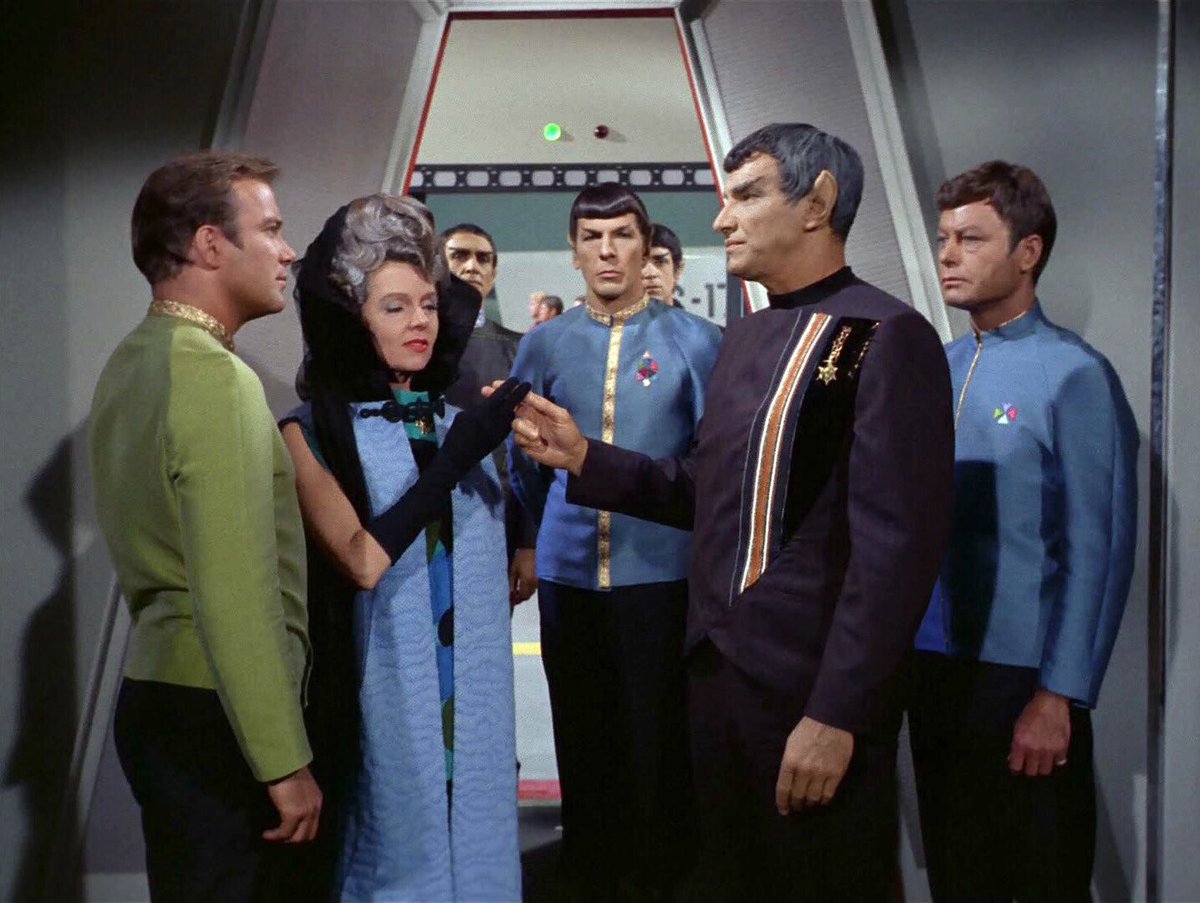
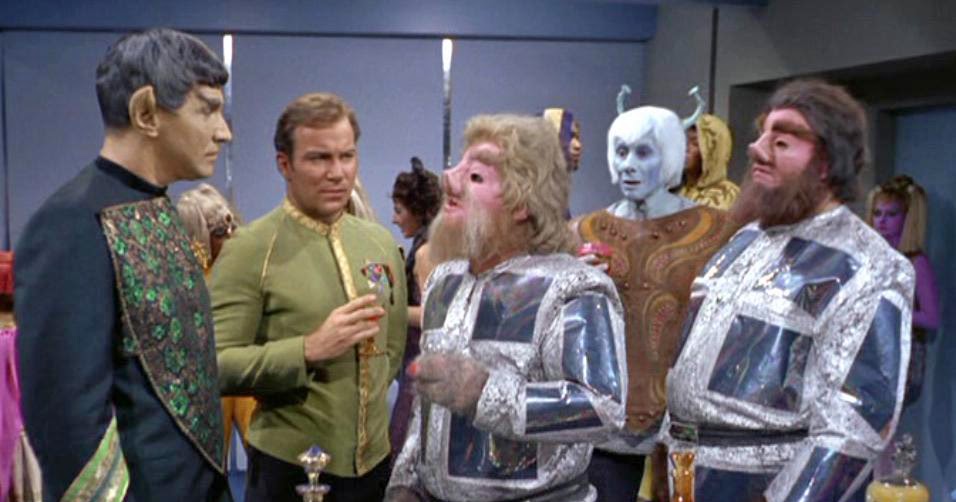

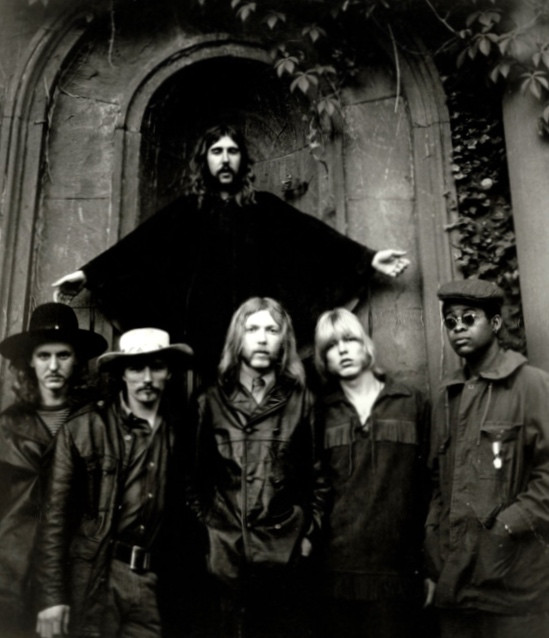

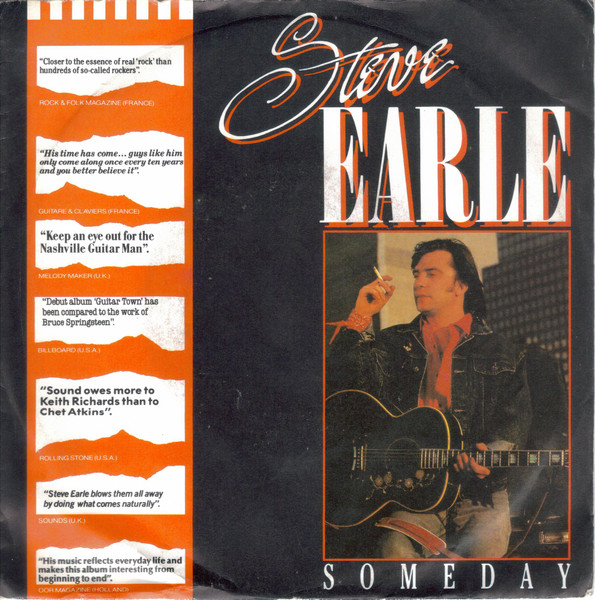


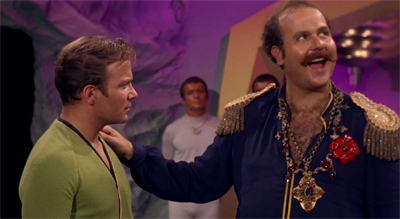
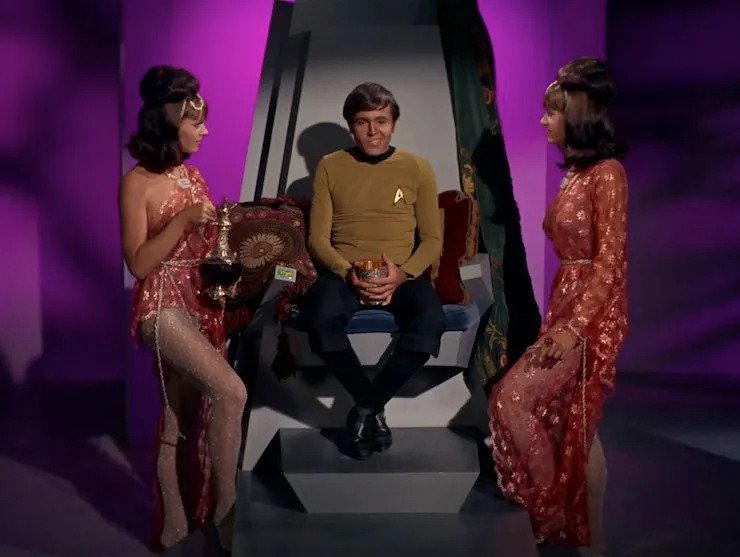
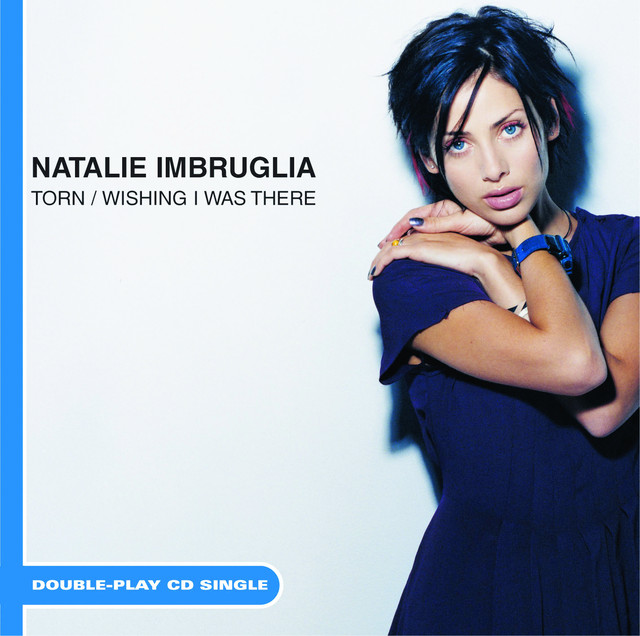
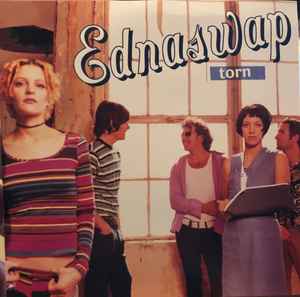


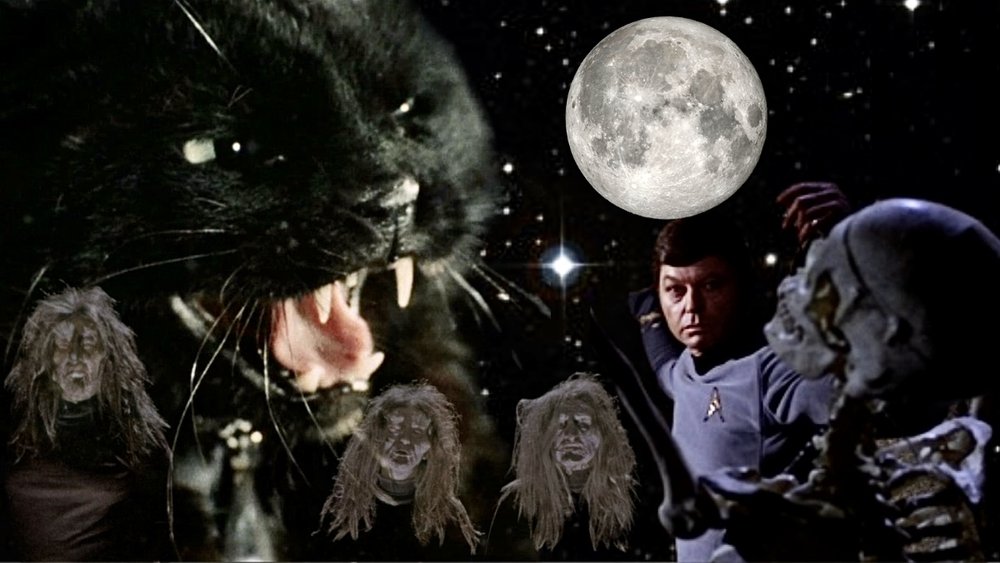

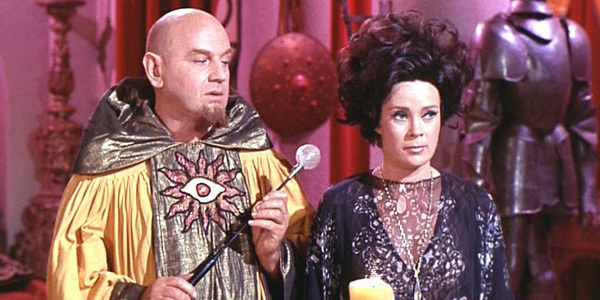


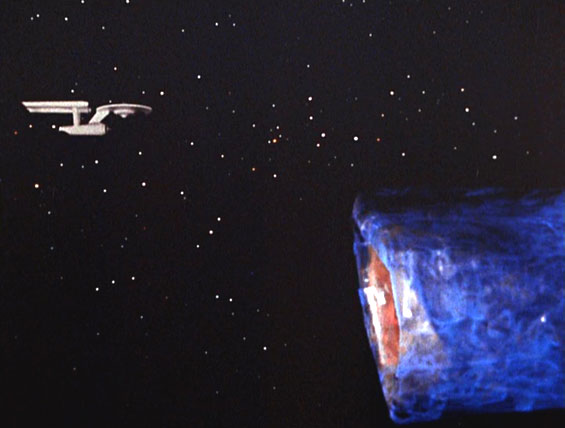
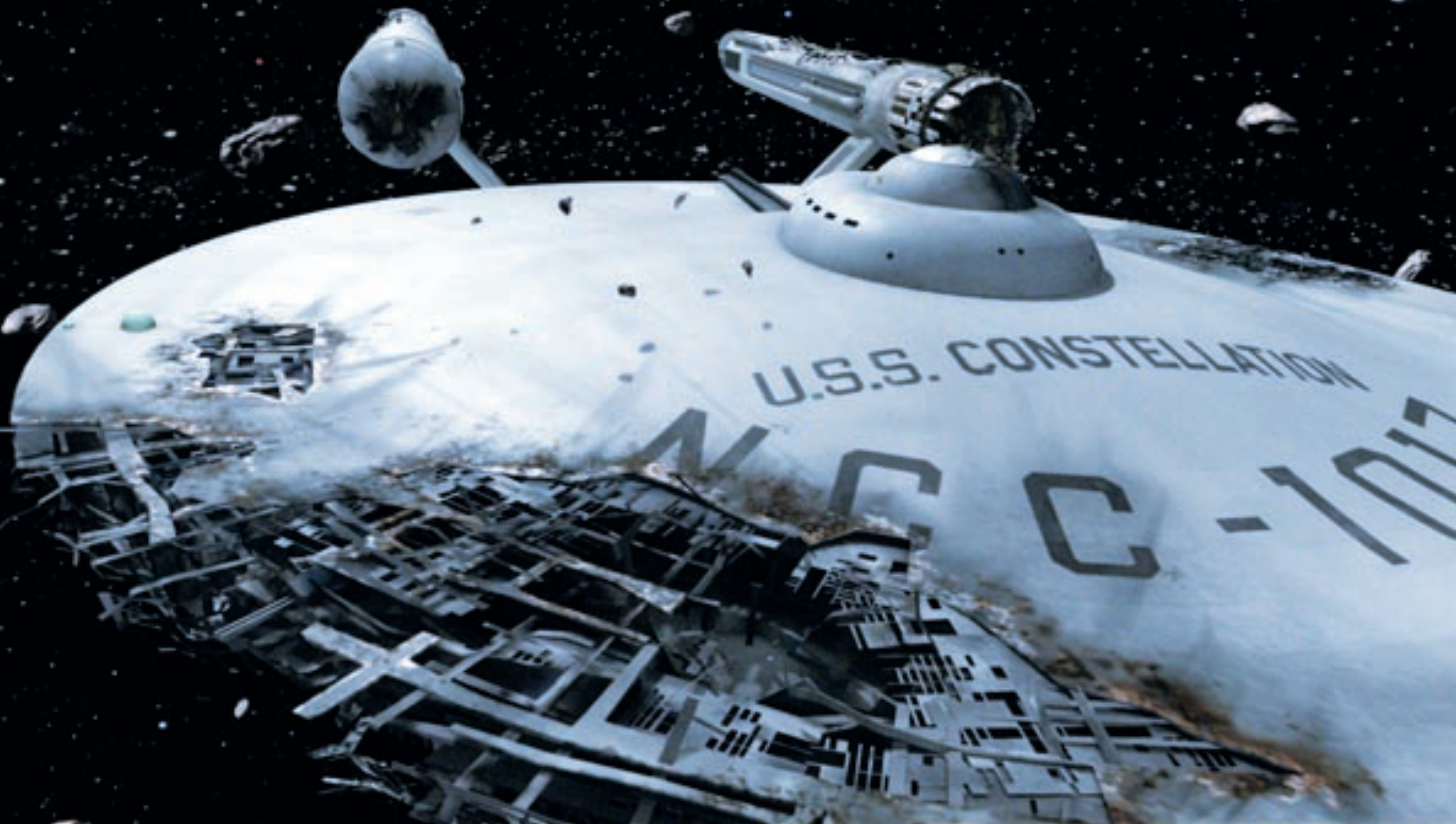
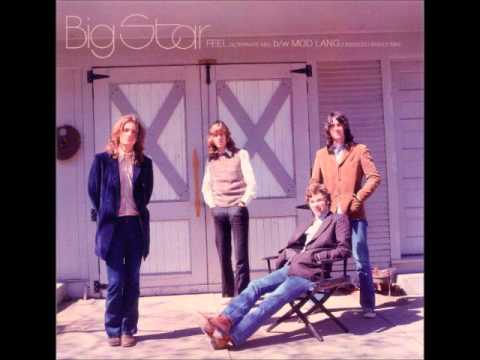

 PowerPop... An Eclectic Collection of Pop Culture