Power Pop fan, Baseball, Beatles, Alternative music, old movies, and tv show fan. Also anything to do with pop culture in the 60s and 70s... I'm also a songwriter, bass and guitar player. Not the slightest bit interested in politics at all.
If you want to see where we are…HERE is a list of the episodes.
I’m really liking this series. It’s a shame it only lasted 1 season, but I can see why. It was so different for the time.
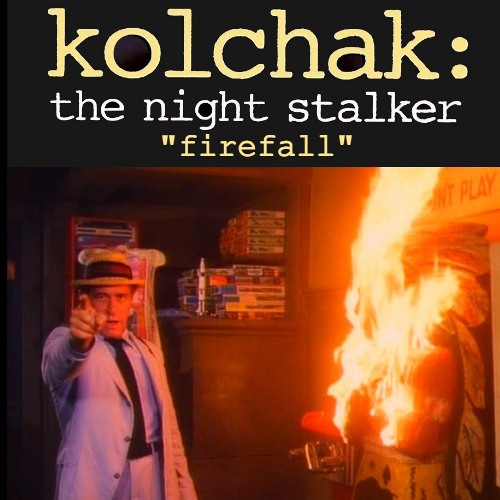
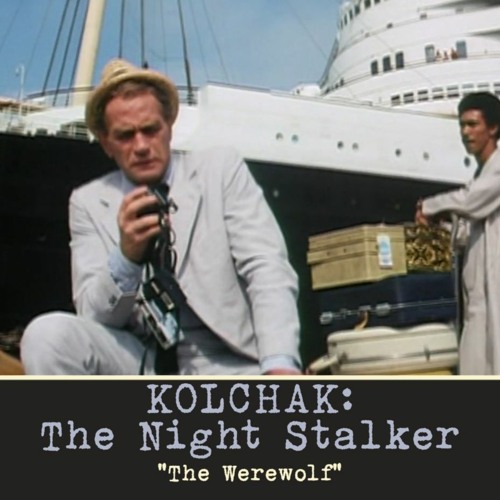
This episode isn’t as cut and dry as the others so far. Unlike the zombie, vampire, or werewolf stories that had clear monster traditions, here the writers took a sharp turn into sci-fi, giving us a story about mysterious cattle mutilations, vanishing zoo animals, and an unseen extraterrestrial presence wandering through Chicago. I have said before how this show influenced the X-Files, none more than this episode.
The episode begins with odd reports: animals in the zoo are vanishing, bones are found curiously stripped clean, and a trail of strange electromagnetic interference follows the incidents. Naturally, Carl Kolchak, with his nose for weird stories, senses a huge story. His digging leads him to discover that the culprit may not be human at all.
As always, Kolchak’s determined spirit and undeterred methods make for the typical conflict with authorities, but in this one, that conflict is much more subdued and believable as the police bosses are as much in the dark as he, and prone to benefit from what Kolchak learns on his own.
Written by Dennis Clark and directed by Allen Baron, the episode was praised for its eerie, almost minimalist approach. The producers intentionally avoided showing the alien much, knowing that the limited 1970s TV budget would probably betray the effect. In other words, they didn’t make the same mistake that Star Trek would make at times. The choice worked in their favor; what we don’t see is far scarier.
A funny subplot, as the hometown Cubs are battling the Boston Red Sox in the World Series (both would have to wait decades to end their respective droughts). Darren McGavin later cited this as one of his favorite episodes because it strayed from the usual monster formula and went for something more mysterious and unsettling.
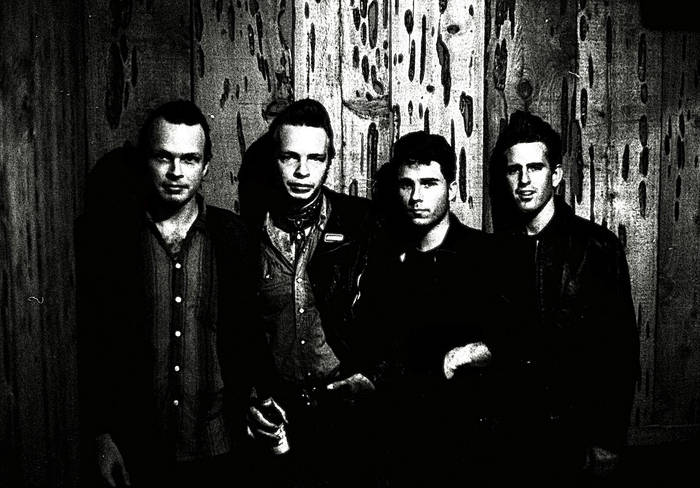
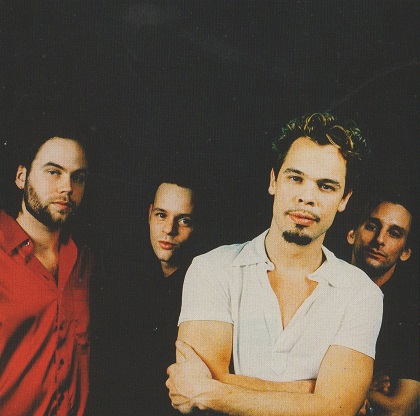
This band is a natural for me. I’ve read about them a lot, and now I’m listening to them much more. They fit into why I love rock and roll. The band is fronted by Tommy Stinson of The Replacements. Stinson started playing bass at age 11 and at 13 years old, played with the Replacements. After they broke up, he played bass for Guns N’ Roses for 16 years. He also played with Soul Asylum off and on. Before he joined Guns N’ Roses, he formed this band, which he would reform a few times in the future.
In 1993, Bash & Pop released their debut album: Friday Night Is Killing Me. It wasn’t another Replacements album. It was more Faces than Replacements. Paul Westerberg was the main writer of the Replacements, and here Stinson wasn’t trying to rewrite Let It Be or Tim. Instead, he played into a ragged, Keith Richards-type vibe that owed as much to the Stones and Faces as to his original band. The songs were loose and built around Stinson’s raspy vocals. I can’t get enough of this album.
This was released at a time when grunge was dominating radio, so it got lost in the shuffle. But for those who found it, the record became a classic. It showed that Tommy Stinson could front a band and write quality songs with soul. They don’t have that slick commercial sound to it, and I applaud that.
Tommy Stinson wrote most of the songs on the album, except one, Fast and Hard, which he co-wrote with Steve Foley. This album could be considered power pop, but a rough, as hell raw version of it, which I love! I’m super excited about this album as a whole. I really missed out in real time with this one.
I’ve picked two songs off the album to highlight (Loose Ends and Never Aim To Please), and a link to Spotify to the source album. It is one of those records you hand to someone who thought rock was dead by the early ’90s. It’s alive here and full of heart. This album is for the fans of The Replacements, The Faces, or anyone who likes rock music and some great hooks.
I usually don’t mention critics, but here are two. AllMusic wrote that “decades after its release, the album feels like a bit of the hangover from the ’80s, a celebration of irreverent roots rock performed with an audible grin.”Magnet considered it “the best batch of songs by any Replacement since 1987’s Pleased To Meet Me.”
Loose Ends
Miss come-and-go Where you been now? Put a red light on the rest And wondered why and how Your love it grows But no one knows Who’s on your mind, who’s on your lap Don’t they look the same yet It’s alright
Early morning, drinking tea, a slice of whole wheat Another lesson you should’ve learned, you had to wait You care too much, you care less Headin’ for a better view, fail to impress Well, I guess you’ve got too far to stray No place particular is where you end your day You know I got no, the pavement holds no one
It’s time to tie your loose ends up Never mind which way Time to tie your loose ends up (Tie ’em up) No one left to blame, oh yeah
Butterflies that turn to knots In your guts around your neck You get ’em too tight and they slip again ‘Cause you look too far, ’cause you fall too fast It’s a raincheck for a date, but you’ve no interest Guess you’ve got too far to stray Your heart’s breakin’ all over the place You know I got no, the pavement holds no one
It’s time to tie your loose ends up (Tie ’em up) How much you gonna take? So time to tie your loose ends up (Tie ’em up) You’ve got too much to shake
When mom comes home at last It’s a whisper through the glass Can’t you hear the voices screamin’ Yeah, I’m screamin’, “Go ahead and tie ’em up!”
You fall apart before my eyes I’ll sweep the mess And the shortcut through the dirt is always best You look too far, you look to the west Heading time is all you needed I know best And I guess you got too far to stray (stray) No place particular is where you end your day (your day), oh no And the pavement holds no one
Time to tie your loose ends up (Tie ’em up) Never mind which way, yeah Time to tie your loose ends up (Tie ’em up) No one left to blame (Tie ’em up) Time to tie your loose ends up (Tie ’em up) How much you gonna take? (Tie ’em up) Time to tie your loose ends up (Tie ’em up) You got a lot to shake (Tie ’em up) Time to tie your loose ends up (Tie ’em up) Time to tie your loose ends up (Tie ’em up) Time to tie your loose ends up (Tie ’em up)
This title track was my first introduction to Ian Hunter. I had no clue he had been with Mott the Hoople when I heard it. In the eighties, I heard this on our local rock station, WKDF, daily, and I fell for it. It’s one of those songs I never hear now, except maybe at a grocery store, and it’s a shame. It is a nice jangly song in the synth-heavy 1980s, an underrated song. For a bonus, we have Clarence Clemmons doing the sax solo. The video, as well, got my attention with a take on the movie Arthur.
Hunter had moved from Cleveland to New York by this point, being influenced by his new city. He later said that the recording reflected his uneasy stance in the musical landscape of that time. His longtime guitarist, Mick Ronson, wasn’t in the picture for this album (although he played on one song); Hunter instead used Robbie Alter and New York session players.
There were two versions of this song: the version most radio stations played and a slow version. What I liked about this song, too, is that the version I heard sounded out of step with 1983, and I appreciated that. Many of his fans often point to it as one of his most underrated tracks, and I totally agree.
This song peaked at #25 on the Billboard Mainstream Rock Songs chart in 1983. I had the album and the cassette that I wore out in my car tape deck.
All Of The Good Ones Are Taken
Girl, things ain’t been goin’ too good for me Girl, I’m living in the middle of a mystery You’re the one that can turn me on ‘N’ now that you’re gone I said Girl, I’m livin’ in the middle of your memory Girl, you’re still the figure in my favorite fantasy I know you know that’s the way it goes And still my love grows
I said all o’ the good all o’ the good ones are taken All o’ the good all o’ the good ones are taken
I’m hangin’ around with my head in the air Watchin’ the lovers go by I had a lover, but she never cared All you could say was goodbye Maybe I was mistaken, maybe I got it wrong But all of the good ones are taken from now on ‘N’ girl, I’m livin’ in the middle of a broken dream I said girl all this fallin’ in love ain’t like it seems Out in the rain can’t you feel my pain Again ‘n’ again ‘n’ again ‘n’ again ‘n’ again All of the good all o’ the good ones are taken Maybe I was mistaken, maybe I got it wrong But all of the good ones are taken in my song
This is the album’s opening track, and it doesn’t so much kick down the door as quietly invite you in. If you only know the Layla album for the title track, you might miss how the whole journey begins with this two-and-a-half-minute sigh of regret.
Unlike Clapton’s past work in Cream or Blind Faith, this wasn’t about ripping incredible riffs. The melody flows with a natural grace, closer to something from The Band than the psychedelic guitar Clapton had been known for.
Derek and the Dominos was a band formed in the spring of 1970 by guitarist and singer Eric Clapton, along with keyboardist Bobby Whitlock, bassist Carl Radle, and drummer Jim Gordon. All four musicians also worked with George Harrison on his All Things Must Pass album. Clapton didn’t want his name in the title and had hoped to keep his involvement as low-key as possible.
The album peaked at #16 in 1970 on the Billboard 100. Although Derek and the Dominos were poised to record a follow-up album in 1971, because of tensions and drug abuse among the band members, along with the tragic death of Duane Allman later that year, this remained their sole album.
This song and Bell Bottom Blues are my two favorites off the album. Everyone knows Layla, but these other songs are great as well. Eric Clapton and Bobby Whitlock wrote this song. As with most of the songs on this album, Patti Harrison was the main inspiration.
I Looked Away
She took my hand And tried to make me understand That she would always be there, But I looked away And she ran away from me today; I’m such a lonely man. It came as no surprise to me That she’d leave me in misery. It seemed like only yesterday She made a vow that she’d never walk away. First Verse And if it seemed a sin To love another man’s woman, baby, I guess I’ll keep on sinning Loving her, Lord, till my very last day. But I looked away And she ran away from me today; I’m such a lonely man.
I first found this band because of this song. This is my favorite Prince song by a long shot. They do a super cover of it with the rawness I like. They weren’t a band in the traditional sense, no tours, just a one-off gathering of talented artists who happened to be in the right studio at the right time.
The beginning of Hindu Love Gods started in the mid-1980s Athens scene, where REM were quickly rising. Michael Stipe, Peter Buck, Mike Mills, and Bill Berry often participated in jam sessions with other local players. One of those orbiting figures was Warren Zevon. With REM, he found collaborators.
The name Hindu Love Gods first surfaced around 1984 when members Buck, Berry, and Mills backed up a local singer named Bryan Cook. That version fizzled, but the name stuck. When Zevon began working with REM’s rhythm section in the late ’80s, the name resurfaced, this time attached to something much more intriguing.
This song was written by Prince, and his version was released the year I graduated in 1985. This version came out in 1990 on the self-titled album. This song peaked at #23 on Billboard’s Modern Rock Tracks. The album peaked at #168 on the Billboard 100.
Warren Zevon on Letterman
Raspberry Beret
I was workin’ part-time in a 5-and-dime The boss was Mr. McGee He told me several times that he didn’t like my kind ‘Cause I was a bit too leisurely I always was busy doin’ somethin’ close to nothin’ But different than the day before That’s when I saw her, oh, I saw her Walk in through the out door, out door
She wore a raspberry beret The kind you’d find in a second-hand store Raspberry beret When it was warm, she didn’t wear much more Raspberry beret, I think I love her, love
I’m built the way she was, she had the nerve to ask me If I meant to do her any harm So I put her on the back of my bike and We went riding down by Old Man Johnson’s farm Now rainy days never turned me on But something ’bout the way the clouds and her mixed She wasn’t too bright, but you know the way she kissed me I knew she knew how to get her kicks, yeah
She wore a raspberry beret The kind you find in a second-hand store Raspberry beret And when it was warm, she didn’t wear much more Raspberry beret, I think I love her, yeah!
Raspberry beret The kind you find in a second-hand store Raspberry beret And when it was warm, she didn’t wear much more Raspberry beret, I think I love her A raspberry beret The kind you find in a second-hand store Raspberry beret And when it was warm, she didn’t wear much more Raspberry beret, I think I love her A raspberry beret The kind you find in a second-hand store Raspberry beret
I played this single so much when I was around 7 years old. I wore it out and know every nuance of this song. Just a great vocal by Withers on this. The simple piano riff makes this song so powerful to me. Still one of my favorite songs. Sometimes less is better.
It’s been covered by many other artists, but this is my go-to version. Bill Withers wrote this song after he left his childhood town of Slab Fork, West Virginia, to live in Los Angeles in a poor section of town. Members of the Watts 103rd Street Rhythm Band were used on the recording.
Producer Ray Jackson (who doubled as the keyboard player) and engineer Bob Potter kept the recording dry and uncluttered. No strings, no brass, no unnecessary sweetening. Just voice, piano, bass, drums, and a touch of guitar. It’s like Bill is in your living room singing to you.
What’s remarkable is how this song has transcended its era. It’s been sung at weddings, funerals, movies, and classrooms. It’s part of the American pop culture now, standing shoulder-to-shoulder with songs such as Amazing Grace and This Land Is Your Land.
The musicians on this recording were Ray Jackson, Benorce Blackmon, Melvin Dunlap, and James Gadson. Some of these musicians were in The Watts 103rd Street Rhythm Band. The song peaked at #1 on the Billboard 100, #18 in the UK, and #20 in Canada in 1972.
Bill Withers: “This was my second album, so I could afford to buy myself a little Wurlitzer electric piano. So I bought a little piano and I was sitting there just running my fingers up and down the piano. In the course of doing the music, that phrase crossed my mind, so then you go back and say, ‘OK, I like the way that phrase, Lean On Me, sounds with this song.’ So you go back and say, ‘How do I arrive at this as a conclusion to a statement? What would I say that would cause me to say Lean On Me?’ At that point, it’s between you and your actual feelings, you and your morals and what you’re really like. You probably do more thinking about it after it’s done.”
Lean On Me
Sometimes in our lives we all have pain We all have sorrow But if we are wise We know that there’s always tomorrow
Lean on me, when you’re not strong And I’ll be your friend I’ll help you carry on For it won’t be long ‘Til I’m gonna need Somebody to lean on
Please swallow your pride If I have faith you need to borrow For no one can fill those of your needs That you won’t let show
You just call on me brother, when you need a hand We all need somebody to lean on I just might have a problem that you’ll understand We all need somebody to lean on
Lean on me, when you’re not strong And I’ll be your friend I’ll help you carry on For it won’t be long ‘Til I’m gonna need Somebody to lean on
You just call on me brother, when you need a hand We all need somebody to lean on I just might have a problem that you’ll understand We all need somebody to lean on
If there is a load you have to bear That you can’t carry I’m right up the road I’ll share your load
If you just call me (call me) If you need a friend (call me) call me uh huh(call me) if you need a friend (call me) If you ever need a friend (call me) Call me (call me) call me (call me) call me (Call me) call me (call me) if you need a friend (Call me) call me (call me) call me (call me) call me (call me) call me (call me)
If you want to see where we are…HERE is a list of the episodes.
This episode was written by David Chase, yes, the same David Chase who would go on to create The Sopranos; the script is one of the tightest of the entire run. You can already see Chase’s fascination with mobsters, moral issues, and revenge from beyond the grave.
In the first two movies and the first episode, we have been visiting different cities in each one. This time, it opens with a string of mob-related murders and he is still in Chicago. At first, the killings look like standard gangland executions, but Kolchak quickly uncovers that something darker is at play: the mob has wronged a Haitian family, and in retaliation, a dead man has been raised from the grave to exact revenge.
This episode leans more on pure horror than the others. Where the pilot movies (The Night Stalker and The Night Strangler) established Kolchak’s mix of noir and horror, The Zombie proved the series could have frights. The scenes of the zombie slowly rising in the mortuary are classic TV horror, low budget, yes, but brilliantly lit and paced.
When this was aired, blaxploitation movies were all the rage, and this does borrow some from them. One actor in this one was Antonio Fargas, who would later become widely known to television audiences as restaurant owner and informant Huggy Bear on Starsky & Hutch.
In a comedy subplot, Vincenzo wants Kolchak to show an executive’s niece from New York the ropes of journalism. Little does she know that it will involve seeing the mangled corpses of mob enforcers lying in the street. This was creepy, moody, and more disturbing than network TV usually allowed in the mid-1970s. A must-watch for fans of horror television.
Well, I had found a full episode of this one, but they took it down. Most of them I will be able to supply, but I struck out on this one. If any of you find it, please tell me.
Here is a video of someone talking about the show, but it plays a lot of the show. I would put my version here, but I know I would violate some copyright.
I have to thank deKE for this one. After posting Barney Bantell, he mentioned that this song was on the radio around the same time. Sometimes a song hits hard, loud, and ready to throw its weight around. It is a no-apology bar song, full speed ahead.
What hooked me up was the opening guitar riff. This was built for FM radio in the late 80s, big guitars, bigger hooks, and just enough power to make you roll the windows down and sing along at a red light. This song isn’t meant to change the world, but just to enjoy yourself.
The song itself is pure swagger. Conwell doesn’t mince words; he’s telling you upfront that he is a bad boy, and it’s wrapped with a crunchy riff, with the Rumblers behind him turning on the gas. Since it was the 1980s, it was given a polish for that era by Rick Chertoff, the same producer who helped shape The Hooters at the time.
They went on big tours with acts like Robert Palmer and Stevie Ray Vaughan. And while mainstream fame didn’t happen, this song remains their signature song. The song peaked at #1 on the Billboard Mainstream Rock Tracks and #74 on the Billboard 100 in 1988.
I’m Not Your Man
Baby before hang around this old moldy Mildewy ‘n’ crappy scene holding hands with you There’s a whole list of things you’re gonna have to do
Jump off the Empire State in a paper sack Talking lovey-dovey to a camel scare the hump off his back Get the Queen of England’s golden shoes Put ’em on your feet and sing the St. Louis blues Look here
Seven days a week with you is more than I can handle Seven nights of love and dirty laundry on your floor Baby, I can see this whole thing heading into trouble I’m out the door
I’m not your man ‘Cause you’re looking for a hero Baby, it ain’t me, I’m not your man I ain’t nothing to hold on to Baby, I ain’t what you need
It’s easy being here but I’ve got ground to cover There’s nothing you can do to make me wanna stay Though I’ve been here awhile don’t think that I’ve stopped moving, I’m on my way
I love classic garage rock music, and this is one of the bands that started that genre. This is why I love it, because it’s raw and unpolished music. Warts and all, it has spirit and drive.
They formed in Tacoma, Washington, in 1960. A band of teenagers who didn’t care about technique and weren’t interested in following the normal pop/rock rules. They just wanted to be loud and dangerous.
The original lineup, Gerry Roslie, Larry Parypa, Andy Parypa, Rob Lind, and Bob Bennett, came together with one mission: to play harder and wilder than anyone else on the Pacific Northwest scene. The Kingsmen were in this scene as well with their hit Louie, Louie. The Sonics never cracked the national charts, but in the Pacific Northwest, they were very popular. They were on AM radio throughout the area and hit the joints and dance halls.
Their first album was in 1965 called Here Come The Sonics!!!. The sessions were done at Audio Recording, Inc. in Seattle, a modest studio that had nowhere near the cutting-edge equipment of Abbey Road or other studios. That limitation helped make their sound. Engineer Kearney Barton placed the microphones farther away, letting the room’s natural reverb and bleed create a live sound. Barton sharpened edges rather than smoothing them. That rough edge is exactly why the song still sounds so alive today. You can put it next to The Stooges, The Ramones, or Nirvana, and it fits right in.
Their debut album, Here Are the Sonics, was released in 1965 and is still a pre-punk landmark. The Sonics reunited in the 2000s with most of the original lineup, playing festivals and recording new material that still carried the old sound.
Here is a reunited Sonics in 2015
Psycho
Whoa baby, you’re driving me crazy I said baby, you’re driving me crazy Oh, well you turn me on, then you shut me down Oh well, tell me baby, am I just your clown? Psycho Ow, oh wow, baby, you’re driving me crazy I said I’m losing my mind, you treat me so unkind Psycho Ow! Whoa! Ow, oh wow, baby, you’re driving me crazy I’m going out of my head, and now I wish I was dead Psycho Whoa baby, whoa you’re driving me crazy I’m going out of my head, now I wish I was dead Whoa, psycho Whoa, psycho Whoa, psycho Whoa, psycho Whoa, whoa
The more I listen to this band, the more I like them. I have to give credit to halffastcyclingclub, who recommended them, and I’ve been meaning to post on them for 6 months now. A big thank you to him. This song took just one listen, and I was hooked.
The original idea came from the Texas Tornados’ management team, who envisioned a rotating cast of stars celebrating Mexican roots music. The first lineup in 1998 was crazy great: Freddy Fender, Flaco Jiménez, David Hidalgo and Cesar Rosas of Los Lobos, Rick Treviño, Joe Ely, and Ruben Ramos. Their self-titled debut was heavily into traditional rancheras, boleros, and Tex-Mex standards. This song was written by David Hidalgo and Louie Pérez.
This was definitely a supergroup, and supergroups can be hit or miss. Sometimes they collapse because of too many egos, and sometimes they just fizzle out. But every once in a while, the chemistry works. That’s what happened in the late 1990s when this band made their self-titled debut album.
What makes Los Super Seven so unique is that they never pretended to be a touring band or a permanent outfit. Each record is like a snapshot, different players but the same spirit. If the name Los Super Seven sounds like a superhero crew, well… in a way, it was. Instead of capes and masks, this revolving crew came armed with guitars, voices, and deep roots in the music of Texas, Mexico, and beyond.
The album peaked at #1 on the US Billboard Regional Mexican Albums and #8 on the US Billboard Top Latin Albums in 1998. The album also won them the Grammy Award for Best Mexican-American Performance at the 41st Grammy Awards.
Los Super Seven – Rìo De Tenampa
I sat at a table and wrote a good song About eyes as blue as the sea Drank down the whiskey And let out a sigh And thought of how things used to be Children played on the floor near the bar With toys made of wood and string Lovers kissed and others laughed As the band would strum and sing
Speak to me Rio de Tenampa Sing to me songs of valor In this rincon of heaven I leave my love and love
And I passed once a place we’d go To escape the heat of the day Tell all the stories of good times and bad And hear the violins play
Speak to me Rio de Tenampa Sing to me songs of valor In this corner of heaven I leave my affection and love
Remember the story about a lady on the hill Gave roses to an Indian boy Ran down to tell eveyone he knew About his love and his hope and joy
I want to thank a commenter named purplegoatee2684b071ed for recommending this song after reading my Joe Turner post. Just listen to the piano playing of Pete Johnson on this track and Joe Turner’s voice. It would raise the roof off any joint. Knowing it was made in 1938 makes it more special. Pete Johnson and Joe Turner were credited for writing this song.
Pete Johnson had been playing in Kansas City joints with his percussive style, while Joe Turner worked as a bartender and occasional singer. When the two paired up, it was dynamite. Producer John Hammond heard about them and invited the duo to Carnegie Hall for his “Spirituals to Swing” concert in 1938. Joe and Pete’s performance of this song stunned the crowd and announced that the blues and boogie-woogie weren’t just barroom music; they were the foundation of a new kind of American sound.
Listening today, you can hear the roots of countless rock and R&B records hiding within this track. The drive, it’s Little Richard before Little Richard, it’s Jerry Lee Lewis before Jerry Lee Lewis. This 1938 song is a sign that says… rock and roll is on its way. This may not have been a chart single in the way we think of hits today, but its influence rolled (pun intended) across decades.
I’m going to include a live Blasters version because they knew Joe Turner. Dave and Phil Alvin knew and spent time with Big Joe Turner, whom they regarded as a friend and mentor. As teenagers in the 1960s, the brothers followed Turner around the Los Angeles area, going to his gigs and eventually befriending him.
Roll ‘Em Pete
Well, I got a gal, she lives up on the hill Well, I got a gal, she lives up on the hill Well, this woman’s tryin’ to quit me, Lord, but I love her still
She’s got eyes like diamonds, they shine like Klondike gold She’s got eyes like diamonds, they shine like Klondike gold Every time she loves me, she sends my mellow soul
Well, you’re so beautiful, you’ve got to die someday Well, you’re so beautiful, you’ve got to die someday All I want’s a little loving, just before you pass away
Pretty baby, I’m goin’ away and leave you by yourself Pretty baby, I’m goin’ away and leave you by yourself You’ve mistreated me, now you can mistreat somebody else
I always had a soft spot for this song. It is a swirl of guitar phasing and a droning riff that seems tailor-made for the late 1960s.
Their manager, John Schroeder, who’d worked with Motown acts in the UK, booked studio time at Pye Records’ Marble Arch facility. The Pye studios were initially designed as a service for Pye Records, but also encouraged recording by outside artists. Schroeder not only produced the track but was also the one who encouraged Francis Rossi to push forward with this strange little song he’d written at home.
One of the fascinating things about Pictures of Matchstick Men is that it represents a “what if” moment in Status Quo’s history. Had they continued down this psychedelic path, you wonder how long it would have lasted. Instead, after a few more singles, they turned into a rocking boogie band.
Listening today, the song feels like an anomaly. It’s not representative of the band’s long career, but it’s a classic slice of psychedelic pop that holds its own. It was the first taste of chart success, the beginning of a 50-year run, and yet it’s also the sound of a band that almost became something completely different.
This song’s riff will stick with you. Once the riff is up, it washes over you with a psychedelic feel. The song peaked at #12 on the Billboard 100, #8 in Canada, and #7 on the UK Charts in 1968. This was their only hit in America. One quirky detail: the inspiration for the lyric came from wallpaper. Rossi was sitting in the bathroom, staring at the bathroom wall, and saw patterns that reminded him of the artist L.S. Lowry’s “Matchstick Men” paintings.
Pictures Of Matchstick Men
When I look up to the skies I see your eyes a funny kind of yellow I rush home to bed I soak my head I see your face underneath my pillow I wake next morning tired still yawning See your face come peeking through my window Pictures of matchstick men and you Mirages of matchstick men and you All I ever see is them and you
[guitar intro]
Windows echo your reflection When I look in their direction gone When will this haunting stop Your face it just wont leave me a-lone Pictures of matchstick men and you Mirages of matchstick men and you All I ever see is them and you You in the sky you with this guy you make men cry you lie You in the sky you with this guy you make men cry you lie
Pictures of matchstick men, Pictures of matchstick…
To view our current progress, click here for a list of episodes.
What better way to kick this series off than by dragging one of history’s most infamous villains out of the fog and dropping him right in 1970s Chicago? The pilot episode, The Ripper, set the tone for the whole series: a mix of supernatural, dark humor, and the persistence of Mr. Carl Kolchak.
Carl Kolchak, now in Chicago working for INS (International News Service) with his old boss Tony Vincenzo (Simon Oakland), is still involved in supernatural cases. This first episode deals with a rash of murders that have all the trademarks of the London murderer, Jack the Ripper. It has to be a copycat killer, right? Don’t ever count anything out in this series.
The direction and atmosphere are strong here, with nighttime chases through shadowy alleys, and grim murders are more suggestion rather than gore. It’s shot in a way that feels both television-tight and surprisingly cinematic; it shows how much the show did with a limited budget. The Ripper character himself is handled with restraint, making him scarier: he’s often seen in fleeting glimpses, an unstoppable figure who seems both human and otherworldly.
This is one of the best examples of why this show became such a cult classic. It combines a timeless horror with Kolchak’s pursuit of the truth, all wrapped in that 1970s mix of camp and creepiness. That’s the thing about this show: it can be very creepy. While some of the effects may feel dated today, it still works; the suspense and Darren McGavin’s performance more than carry it. For fans of horror television, this episode remains a must-watch, a great marriage of folklore and late-night chills.
*Sorry, I’m late on this post, but work was chaotic this week and looks to be for a while. So, I’ll probably do this post on Fridays instead. I’m sorry about changing it mid-stream, but Fridays will be the best day.
The entire episode is in the link below. It’s on Daily Motion, and if I embed it, it plays automatically and will drive people crazy when they open their browser.
Turn on the lava lamps and sit back and relax to some music that has sitar sounds in it, and I’m always up for sitar. When you think of Genesis in the mid-1970s, you don’t immediately picture them as a singles band like the later incarnation. This was the Peter Gabriel era, long concept pieces that made up an album. However, as we will see, not everything was that simple.
This was on their 1973 album Selling England by the Pound, a quirky song that became their first charting single in the UK. The song is only about four minutes long (short by Genesis standards at the time), and it grooves along nicely. The band was almost embarrassed by a hit. Gabriel joked in later interviews that it was Genesis goes Top of the Pops, but the song showed that their long studio work could deliver something catchy and not be super long.
The lineup was Peter Gabriel (vocals, flute), Steve Hackett (guitars), Tony Banks (keyboards), Mike Rutherford (bass/guitars), and Phil Collins (drums/vocals). They were coming off the success of their last album Foxtrot, and there was pressure from their record company to deliver something more commercially accessible without ditching their progressive roots. That is a lot harder than it sounds. The sessions were long and argumentative. Genesis were perfectionists, which paid off with this album.
The song peaked at #21 on the UK Charts in 1974. The album Selling England by the Pound peaked at #3 on the UK Charts and #70 on the Billboard Album Charts. For me, it’s one of those tracks that feels like a bridge, still theatrical but also radio-friendly.
I Know What I Like (In Your Wardrobe)
It’s one o’clock and time for lunch, When the sun beats down and I lie on the bench I can always hear them talk
There’s always been Ethel: “Jacob, wake up! You’ve got to tidy your room now.” And then Mister Lewis: “Isn’t it time that he was out on his own?” Over the garden wall, two little lovebirds – cuckoo to you! Keep them mowing blades sharp…
I know what I like, and I like what I know; getting better in your wardrobe, stepping one beyond your show
Sunday night, Mr Farmer called, said: “Listen son, you’re wasting your time; there’s a future for you in the fire escape trade. Come up to town!” But I remebered a voice from the past; “Gambling only pays when you’re winning” – I had to thank old Miss Mort for schooling a failure Keep them mowing blades sharp…
I know what I like, and I like what I know; getting better in your wardrobe, stepping one beyond your show
When the sun beats down and I lie on the bench, I can always hear them talk. Me, I’m just a lawnmower – you can tell me by the way I walk
Back in the 1990s, I remember hearing these guys on the radio. Songs like What A Crying Shame and All You Ever Do Is Bring Me Down sounded so good. What caught me was Raul Malo’s voice. His voice is always on and distinctive. But I always wondered, what are they? Are they country, pop, or Tex-Mex? Then I thought, why does it matter? Forget the box, I want to put them in and just enjoy.
The song, co-written by Malo and Mavericks bassist Robert Reynolds, hit a cool older mood. From the opening guitar chords, it feels less like a country song and more like a strong Roy Orbison sound, which is always welcoming to my ears. The band didn’t sound like anyone else in Nashville. And when they released this song in 1995, they proved that country could be a mixture of things and still be radio-friendly.
It was released as a single from the band’s 4th album, Music for All Occasions, and it became one of their most remembered tracks. It even won them a Grammy Award for Best Country Performance by a Duo or Group with Vocal in 1996. Not too bad for a band that Nashville music insiders didn’t quite know how to categorize (like me). Were they country? Rockabilly? Pop? Tex-Mex? They were all of those, and this song shows how well they could blend them all together.
For me, this song feels like the point where The Mavericks’ sound matured into something really timeless. They are still working today, which is great news. The song peaked at #22 on the Billboard Country Charts and #4 on the Canadian Country Charts. The album peaked at #9 on the Billboard Country Album Charts, #3 on the Canadian Country Album Charts, and #58 on the Billboard Album Charts, and #54 in Canada.
Here Comes The Rain
Your love’s a heartache That’s torn me apart You’ve watched my heart break Right from the start You took everything you wanted And now that you are gone
Here comes the rain Falling down on me I’m showered in pain Nothing remains Of what used to be
Here comes the night Dark as my soul There’s no end in sight No shining light No love to hold Here comes the rain
I must have been dreaming I must have been blind But I never thought you Could be so unkind Tomorrow I’ll forget you But I can’t forget you now
Here comes the rain Falling down on me I’m showered in pain Nothing remains Of what used to be
Here comes the night Dark as my soul There’s no end in sight No shining light No love to hold Here comes the rain
Here comes the rain Falling down on me I’m showered in pain Nothing remains Of what used to be
Here comes the night Dark as my soul There’s no end in sight No shining light No love to hold Here comes the rain