Power Pop fan, Baseball, Beatles, Alternative music, old movies, and tv show fan. Also anything to do with pop culture in the 60s and 70s... I'm also a songwriter, bass and guitar player. Not the slightest bit interested in politics at all.
Jerry Lee Lewis put the Rock in Rock and Roll. When I see those old clips of Elvis, he is tame compared to Jerry Lee Lewis. He was nicknamed the Killer for good reason. On a side note…if you want to hear one of the best live albums ever…give Jerry Lee Lewis, ‘Live at the Star Club, Hamburg’ (1964) a try.
By 1957 Lewis was on fire…he was set with three previous top ten hits Whole Lotta Shakin, Breathless, and Great Balls of Fire. He released High School Confidential in 1957. It was riding up the charts when news of Lewis’ marriage to his 13-year-old second cousin broke out. Upon hearing this, Sun Records canceled distribution of the record to DJs and it stalled on the charts. Not a good career move Jerry…but he was just warming up.
This was the title track to a movie in which Lewis appeared. There was a sequel to the movie called College Confidential, but Lewis didn’t appear in that one. The song peaked at #21 in the Billboard Charts and #12 in the UK. Lewis wrote this song and it probably would have made it in the top ten until it was pulled.
He released a few more songs but they didn’t go anywhere until he reinvented himself into a country artist. In 1967 He had a #2 Billboard Country hit and also the #1 Canada country song in What’s Made Milwaukee Famous (Has Made a Loser Out of Me). After that, he continued to chart country hits well into the 1980s.
I love reading descriptions of Lewis’s personality. I see menacing, seductive, dangerous, aggressive, and most of all…dangerous.
As far as musically…he is a great piano player that influenced many and was a super performer…one if not the best of his generation.
High School Confindential
Well open up, honey It’s your lover boy me that’s a knockin’ Why don’t you listen to me, sugar All the cats are at the High School rockin’
Honey, get your boppin’ shoes Before the juke box blows a fuse Hey everbody hoppin’, everybody boppin’ Boppin’ at the High School Hop Boppin’ at the High School Hop Shakin’ at the High School Hop
Hoppin’ at the High School Hop Rockin’ at the High School Hop Everybody’s hoppin’, everybody’s boppin’ Boppin’ at the High School Hop
Come on little baby, let’s rock a little bit tonight Woo, I got get with you, sugar, let’s shake things up tonight Well the heart beatin’ rhythm And my feet are moving smooth and light
Boppin’ at the High School Hop Boppin’ at the High School Hop Shakin’ at the High School Hop Movin’ at the High School Hop Everybody’s hoppin’, everybody’s rocking Boppin’ at the High School Hop
Well, let me tell you something baby I’m gonna give you some good news Lookee here, sweet mama, let’s burn off both our shoes My hearts beatin’ rhythm and my soul is singin’ the blues
Boppin’ at the High School Hop Boppin’ at the High School Hop Jumpin’ at the High School Hop Rollin’ at the High School Hop Everybody’s hoppin’, everybody’s boppin’ Boppin’ at the High School Hop
Boppin’ at the High School Hop Boppin’ at the High School Hop Shaking’ at the High School Hop Movin’ at the High School Hop Everybody’s boppin’, everybody’s hoppin’ Boppin’ at the High School Hop
This show closed out the 4th season and the one hour long experiment was over. The Bard is my least favorite episode of the entire series. I’ve seen some lists where it’s the bottom or near the bottom. On the other hand, I’ve seen some have it high. It’s a comedy episode that just doesn’t work. One thing that is interesting about this episode is the appearance of Burt Reynolds playing a Marlon Brando character. That added a star in my rating but even Burt couldn’t save this one.
Jack Weston plays Julius Moomer and the character is a no-talent writer who uses black magic to bring William Shakespeare back to write a television program. Even typing it sounds cringe-worthy. The plot had some good elements of a Twilight Zone but Weston’s character is just not likable. It might have worked in a shorter format with a different script.
Some may think this is a hilarious episode…I just never did.
From IMDB: William Shakespeare (John Williams) quotes lines from his plays nine times with a trumpet flourish sounding each time, and most of the time, him telling what play, act, and scene the quote came from. Three from ‘Romeo & Juliet,’ two from ‘Twelfth Night,’ and one each from ‘Troilus and Cressida,’ ‘As You Like It,’ and ‘A Mid-Summer’s Night Dream’, plus a partial one from ‘Hamlet’ (cut short when Shakespeare forgets the end of the “To be or not to be” line.
Cora (Judy Strangis) looks at the book , “Ye Book of Ye Black Art”, Julius (Jack Weston) is using to conjure black magic and refers to him as Faust. In a classic German legend based on Johann Georg Faust, he makes a pact with the devil, exchanging his soul for unlimited knowledge and worldly pleasures. The devil sends his representative, Mephistopheles. He makes a bargain with Faust: Mephistopheles will serve Faust with his magic powers for a set number of years, but at the end of the term, the Devil will claim Faust’s soul, and Faust will be eternally enslaved.
Burt Reynolds’s character is clearly an amalgam of Marlon Brando and Paul Newman.
Rod Serling’s Opening Narration:
You’ve just witnessed opportunity, if not knocking, at least scratching plaintively on a closed door. Mr. Julius Moomer, a would-be writer, who if talent came 25 cents a pound, would be worth less than car fare. But, in a moment, Mr. Moomer, through the offices of some black magic, is about to embark on a brand-new career. And although he may never get a writing credit on the Twilight Zone, he’s to become an integral character in it.
Julius Moomer, a talentless, but relentless, self-promoting hack who dreams of becoming a successful television writer, uses a book of magic to summon William Shakespeare to write dramatic teleplays that Moomer will pass off as his own. Shakespeare becomes irritated by Moomer’s lack of appreciation and is even more appalled when he discovers the changes wrought on his plays by cynical television executives.
Rod Serling’s Closing Narration:
Mr. Julius Moomer, a streetcar conductor with delusions of authorship, and if the tale just told seems a little tall, remember a thing called poetic license, and another thing called the Twilight Zone.
CAST
Rod Serling … Narrator / Self – Host (uncredited) Jack Weston … Julius Moomer John Williams … William Shakespeare Burt Reynolds … Rocky Rhodes Henry Lascoe … Gerald Hugo John McGiver … Mr. Shannon Howard McNear … Bramhoff Judy Strangis … Cora Marge Redmond … Secretary Doro Merande … Sadie William Lanteau … Dolan Clegg Hoyt … Bus driver John Newton … TV interviewer John Bose … Daniel Boone (uncredited) Rudy Bowman … Robert E. Lee (uncredited)
I’m always looking for more rockabilly artists that I haven’t heard. This one came from Phil from…Notes from the Cactus Patch.
I started to listen to his music and it was good…vocals, guitar, everything. The rhythm to this song is worth a listen.
Ronnie appeared on American Bandstand twice and later in the 1990s… twice on the Conan O’Brien show. He had regional success but even after Bandstand in 1960 could not break nationally.
He was from Dallas Texas and was nicknamed “The Blonde Bomber.” His father Pinkie showed him how to play the mandolin, drums, and bass guitar. Dawson attended Southwestern Bible Institute in Waxahachie but was expelled. After that, he appeared regularly on the Big D Jamboree Radio Show in Dallas in 1958 as Ronnie Dee and the D Men. Dawson was known to be highly energetic on stage. Many thought he got it from Elvis but he said no, he learned it from the dynamic Pentecostal revivals he attended.
The Jack Rhodes song “Action Packed” was Dawson’s first release in 1958 on the Backbeat label. After that came the 1959 Rockin’ Bones and this time it was on the Rockin’ Records label. It was issued under Ronnie’s own name with “The Blond Bomber” added. Though Ronnie toured nationally with Gene Vincent and appeared on TV, his records gained no more than regional airplay.
He also played off and on with The Light Crust Doughboys who are a Western Swing Band and Ronnie became a good country artist. You talk about longevity? The Light Crust Doughboys have been playing since 1931…they just celebrated their 90th anniversary as different versions have played through the years.
He made several singles in the early sixties with Dick Clark’s Swan Records. He also did some session work. He played on Paul & Paula’s “Hey Paula. After Elvis died rockabilly started to make a comeback. The Cramps covered Rockin’ Bones.
In the 1980s Ronnie was just beginning. A fifties revival was happening in the UK and he became popular there. This led Dawson to tour Britain for the first time in 1986. He was blown away by the audience’s reception. Dawson sounded purer than most of his peers from the 1950s and he put on a more energetic show.
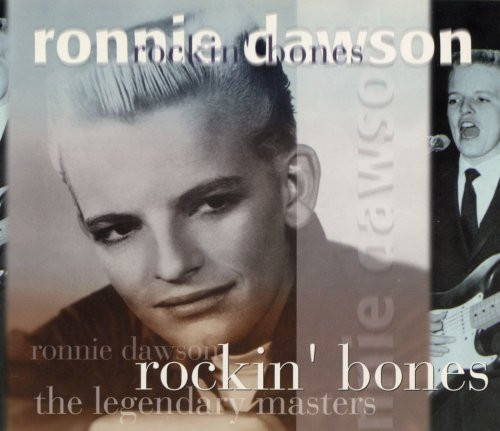
He recorded new material for No Hit Records, the label of British rockabilly fan Barry Koumis, which was leased in the USA to Crystal Clear Records. No Hit Records also reissued his recordings from the 1950s and early 1960s on a 16-track LP called “Rockin’ Bones” and an extended 2-CD version of which was released by Crystal Clear in 1996.
Ronnie Dawson:“At that point in my life, I was so ready to get out of Dallas. I was really ready to go, and I just blew up when I got over there. … I couldn’t believe it. All these people started embracing me. I was in heaven. I didn’t want to go home.”
He was inducted into Rockabilly Hall of Fame, 1998.
Ronnie was still performing until the early 2000s when health problems started. He passed away in Dallas on September 30, 2003, at the age of 64.
Rockin’ Bones
Roll on, rock on, raw bones
Well, there’s still a lot of rhythm in these
Rockin’ bones
I wanna leave a happy memory when I go
I wanna leave something to let the whole world know
That the rock in roll daddy has a done passed on
But my bones will keep a-rockin’ long after I’ve gone
Roll on, rock on, raw bones
Well, there’s still a lot of rhythm in these
Rockin’ bones
Well, when I die don’t you bury me at all
Just nail my bones up on the wall
Beneath these bones let these words be seen
This is the b***** gears of a boppin’ machine
Roll on, rock on, raw bones
Well, there’s still a lot of rhythm in these
Rockin’ bones
I ain’t a worried about tomorrow, just a-thinkin’ ’bout tonight
My bones are gettin’ restless, gonna do it up right
A few more times around the hardwood floor
Before we turn off the lights and close the door
Roll on, rock on, raw bones
Well, there’s still a lot of rhythm in these
Rockin’ bones
When I first started to listen to Cream, what stood out was not Clapton’s guitar or Baker’s drumming…no it was Jack Bruce’s bass. There are three bass players I listened to while starting out playing. John Entwistle, Jack Bruce, and Paul McCartney. Those three covered the chaotic, the sliding, and melodic. Jack Bruce had all of these traits.
Cream recorded this and released it on their 1968 album Wheels Of Fire. It was written by Booker T Jones and William Bell for Albert King. King released it on his first Stax album Born Under A Bad Sign in 1967. Clapton stuck close to King’s guitar style on this song.
The Wheels of Fire album peaked at #1 in the Billboard Album Charts, #1 in Canada, and #3 in the UK in 1968.
Cream played this when they were inducted into the Rock and Roll Hall of Fame on January 12, 1993, in tribute to Albert King, who died the previous year. It was one of two times the band has played together since they broke up in 1968. The first time was at Clapton’s wedding in 1979…three Beatles also played together at his wedding.
Booker T Jones:“My recollection is that we wrote it in my den, late the night before the session. We had been trying to come up with something for Albert. He was coming to town and it was the last opportunity we had to write a song. But you know, now that I think of it, the fact that the song was in D flat, there is definitely an Indiana influence because, you know, a blues song in d flat? I tell you, I learned the value of flat keys and sharp keys and how to use them for emotional value so I could have more range and capacity for touching the human heart. I think that was one of the reasons that song became as huge as it did. Because it was in D flat.”
King’s song is also included in the Rock and Roll Hall of Fame’s list of the “500 Songs That Shaped Rock and Roll”
From Songfacts
When Albert King signed with Stax Records in Memphis, Booker T. Jones, who was a member of the Stax house band Booker T. & The MGs, was assigned his producer. In an interview with National Public Radio (NPR), Jones explained: “At that time, my writing partner was William Bell. He came over to my house the night before the session. William wrote the words and I wrote the music in my den that night. That was one of my greatest moments in the studio as far as being thrilled with a piece of music. The feeling of it, it’s the real blues done by the real people. It was Albert King from East St. Louis, the left-handed guitar player who was just one of a kind and so electric and so intense and so serious about his music. He just lost himself in the music. He’s such a one of a kind character. I was there in the middle of it and it was exhilarating.”
The “bad sign” is an astrology reference: if you’re “born under a bad sign,” it means the stars are aligned against you from birth. It was the song’s co-writer William Bell who came up with the title – he wanted to do a blues song about astrology.
Born Under A Bad Sign was Albert King’s first album released by Stax. It became King’s signature song, with the classic lyrics, “If it wasn’t for bad luck, I wouldn’t have no luck at all.”
The song harkens back to blues of the ’30s and ’40s which had similar lyrical content.
King was an American blues musician. Known for his size (6′ 4″, 250 pounds) and custom-made, left-handed Gibson guitar, he died in 1992.
Their guitarist, Eric Clapton, idolized American blues artists and often performed their songs. It marked a change of guitar style for Clapton, who adopted a harder, attacking style on this song in place of the sweeter, sustaining notes he called “woman tone,” which were more apparent on Cream’s first two albums.
The Paul Butterfield Blues Band played this at Woodstock in 1969. They went on Monday morning, two sets ahead of Jimi Hendrix.
Jimi Hendrix and Buddy Miles, recorded an instrumental cover in 1969 as a tribute to King.
This song’s lyricist William Bell performed it at the Grammy Awards in 2017 with Gary Clark Jr. “When you spend your life making music, you were born under a good sign, Bell said when they finished the song.” Bell won the award for Best Americana Album.
Janis Joplin’s guitarist Sam Andrew borrowed the riff for Big Brother & The Holding Company’s song “I Need A Man To Love.”
Christian posted this video in the comments…I thought I would add it…
Born Under A Bad Sign
Born under a bad sign Been down since I begin to crawl If it wasn’t for bad luck You know I wouldn’t have no luck at all
Hard luck and trouble is my only friend I’ve been on my own ever since I was ten Born under a bad sign Been down since I begin to crawl If it wasn’t for bad luck You know I wouldn’t have no luck at all
I can’t read, haven’t learned how to write My whole life has been one big fight Born under a bad sign I been down since I begin to crawl If it wasn’t for bad luck I say I wouldn’t have no luck at all
I ain’t no lyin’
You know if it wasn’t for bad luck I wouldn’t have no kinda luck If it wasn’t for real bad luck I wouldn’t have no luck at all
You know, wine and women is all I crave A big-legged woman is gonna carry me to my grave Born under a bad sign I been down since I begin to crawl If it wasn’t for bad luck I tell I wouldn’t have no luck at all
Yeah, my bad luck boy Been havin’ bad luck all of my days, yes
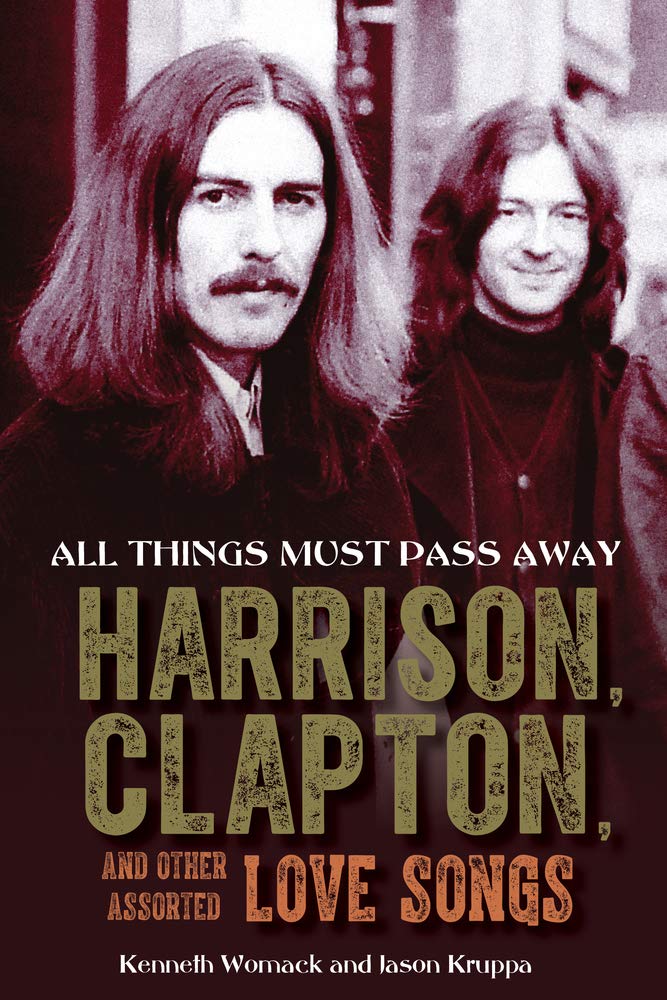
As a huge Beatles and Clapton fan, I was hoping to find out things I didn’t know…I certainly did. No revelation about The Beatles but many about George who just started his life without them.
I’m more familiar with Harrison than Clapton but I did know some about him. They go through each artist’s history up until around 1972 and then do highlights after that. The book centers around the making of Harrison’s album All Things Must Pass and Clapton’s Derek and the Dominos Layla and Assorted Love Songs and their friendship.
The authors picked a point in time to concentrate on (70-72) …and they did in detail. From Phil Spector to the “Apple Scruffs” outside the studio’s door. They also cover Duane Allman, Tom Dowd, and more helping out Clapton on the Layla album.
Harrison and Clapton had a genuine and later complicated friendship that started in earnest in 1966 when they met while Clapton was in Cream and George in the Beatles. Out of the two, George had a better childhood with a caring family and later his family with the Beatles. The Beatles were tight like brothers and although they fought…it was a love and closeness there.
Clapton had a rocky childhood where he was raised by his grandparents and his sister, he found out later, was really his mom. He felt abandoned and that partly explains the reason Clapton never stayed in a band more than a few years. He never wavered in his friendship with Harrison though.
The book would not be complete without getting into the Patti Boyd-George Harrison-Eric Clapton triangle. Clapton wanted Patti for years, but she resisted him, and he turned into a heroin addict. They didn’t get together until Harrison and Boyd split up and Clapton got off heroin. The cause of the Harrison Boyd separation was said not to have anything to do with Clapton. Drugs and a certain affair that they could not get past was part of it.
They remained friends for the rest of their lives and while they always got along…George would occasionally throw a verbal jab about Boyd and Clapton…which was his sense of humor but uncomfortable sometimes for Clapton and those around, but he never said anything publicly about it.
George and Eric helped each other musically throughout their careers. Clapton formed a backing band for a tour of Japan in the early 90s for Harrison.
After George’s death…George’s wife Oliva called on Clapton to put together a show… Concert for George…with musicians from Harrison’s past. That show was Concert for George. There were many special moments in that show. The one for me personally would be Paul McCartney singing All Things Must Pass.
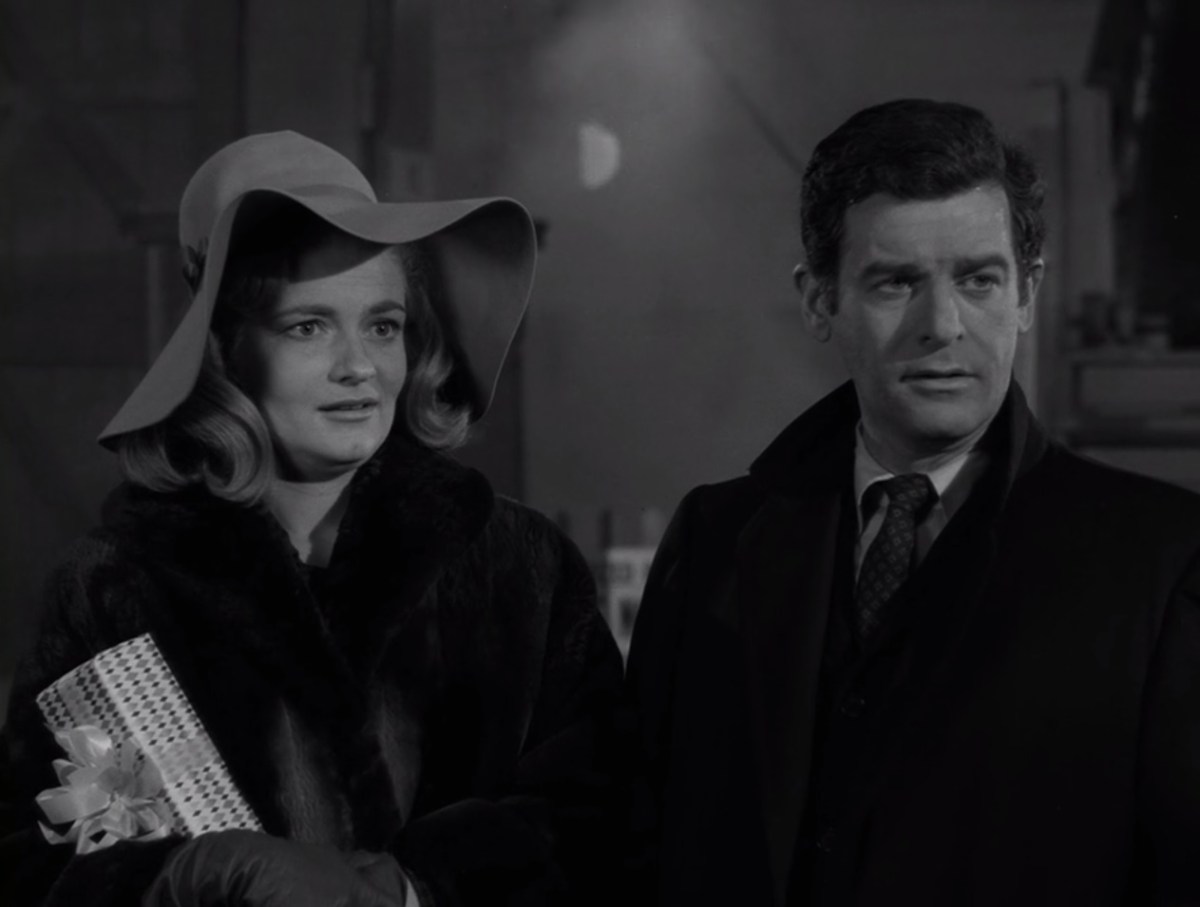
The story is not really scary but the setting will remind you of a horror movie. It takes place on a ship that is surrounded by fog. Mix that with black and white and the Wolfman film comes to mind. This is the first hour-long episode I watched many years ago. This episode benefits from the hour format. You see a couple who are teetering on breaking up decide on a cruise. Throughout the episode, you see the gradual healing and the companionship replacing turmoil. Their older fellow passengers help them both along the way. This story could not have been made as well in a half-hour-long format.
I would strongly recommend this and there is a twist but the twist is a little ambiguous. This is not an episode where a bad person gets cosmically punished for doing bad things. It does show real-life problems that you can relate to today. The cinematographer and set designers deserve praise in this episode.
From IMDB: Because of the large number of well-known actors in this episode, the closing theme featured a credit roll of cast names instead of the usual still frames. The remaining non-cast credits were then done with standard still frames. This was the only episode of the series to ever use a credit roll.
This was the last Charles Beaumont Twilight Zone screenplay to be actually fully written by Beaumont himself. Around the time this episode was made, Beaumont (then only 34) began suffering from the rapid onset of a degenerative neurological disorder (believed to be either Alzheimer’s and/or Pick’s Disease) which affected his speech, memory, and concentration, as well as causing him to physically age very rapidly. As the disease progressed, Beaumont was soon unable to meet his writing commitments. A number of his writer friends, including Jerry Sohl and William F. Nolan, supported Beaumont by ghostwriting stories with or for him and submitting them in his name, although Beaumont insisted on splitting the fees with his helpers. His last screen credit (also probably ghostwritten) was in 1965, by which time he was too ill to work at all, and he died on 21 February 1967, aged only 38, although his son later recounted that his father “looked ninety-five” at the time of his death.
This show was written by Rod Serling and Charles Beaumont
Rod Serling’s Opening Narration:
Portrait of a honeymoon couple getting ready for a journey – with a difference. These newlyweds have been married for six years, and they’re not taking this honeymoon to start their life but rather to save it, or so Eileen Ransome thinks. She doesn’t know why she insisted on a ship for this voyage, except that it would give them some time and she’d never been on one before – certainly never one like the Lady Anne. The tickets read ‘New York to Southampton,’ but this old liner is going somewhere else. Its destination – the Twilight Zone.
Summary
Eileen and Alan Ransome’s marriage is going through a bad patch and they decide to go on a holiday to London. Eileen insists on traveling by ship and they book passage on the Lady Anne, an old ship that is not recommended by the travel agent but is leaving quite soon. When they arrive at the port terminal another passenger, Mr. McKenzie, insists strenuously that the young couple has made a mistake and tries to discourage them from coming along on what is a “private cruise”. Mrs. McKenzie keeps her own counsel but clearly shares her husband’s sentiments. Another passenger, Burgess, tries to warn them off as well. He and McKenzie offer them money, eventually $10,000, to leave immediately. The Ransomes take umbrage and refuse. The couple finds that all of the other passengers are quite elderly but unsurprisingly have a good deal of wisdom to dispense to the young couple. Alan and Eileen are just beginning to really enjoy the trip when the captain suddenly puts them off the ship at gunpoint with provisions and a promise to notify the authorities of their location. They are rescued but as for the Lady Anne and her other passengers — well, there’s the rub
Rod Serling’s Closing Narration:
The Lady Anne never reached port. After they were picked up by a cutter a few hours later, as Captain Protheroe had promised, the Ransomes searched the newspapers for news – but there wasn’t any news. The Lady Anne with all her crew and all her passengers vanished without a trace. But the Ransomes knew what had happened, they knew that the ship had sailed off to a better port – a place called the Twilight Zone.
CAST
Rod Serling … Narrator / Self – Host (uncredited) Gladys Cooper … Millie McKenzie Wilfrid Hyde-White … Toby McKenzie Cecil Kellaway … Burgess Lee Philips … Alan Ransome Joyce Van Patten … Eileen Ransome Alan Napier … Capt. Protheroe Cyril Delevanti … Officer Jack Raine … Officer Colin Campbell … Addicott Don Keefer … Spierto Frank Baker … Otto Champion (uncredited) Sam Harris … Mersia Jones (uncredited) Freda Jones … Ship Passenger (uncredited) Colin Kenny … Ship Passenger (uncredited) Carl M. Leviness … Ship Passenger (uncredited) Scott Seaton … Ship Passenger (uncredited) Arthur Tovey … Ship’s Greeter (uncredited)
I went through a Ricky Nelson phase when I graduated in 1985. I purchased a greatest hits package and was learning more songs by him. I wanted to go see him perform that year and I kept waiting for him to appear somewhere because I heard he was touring. This was before the internet and you had to look at the newspapers for any announcements and listen to the radio. Musicians would play at places and you would never know sometimes.
I never got a chance to see him because on December 31, 1985 his chartered jet crashed killing him and six other passengers.
Ricky was a rockabilly guy and a good one. He gets lost in the shuffle because he was a huge teenage actor at the time on his family’s show…The Adventures of Ozzie and Harriet.
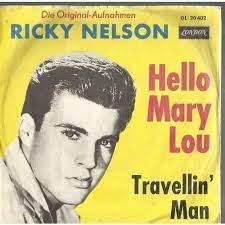
This was part of a super single. In America, this was released on the B side of Travelin’ Man, which peaked at #1 in the Billboard 100. At the time, most artists put hastily produced or unwanted songs on the flip sides of singles, but Nelson took his B-sides seriously, figuring the singles would sell better if he did. The Beatles would do that later.
This song peaked at #9 in the Billboard 100, #1 in New Zealand, and #2 in the UK despite being on the B side in 1961.
The song was written by Gene Pitney and Cayet Mangiaracina. Cavet was given credit later because his music pubishing company sued for plagrism because of the similiar titled Merry, Merry Lou.
From Songfacts
One of Ricky Nelson’s most popular songs, in “Hello Mary Lou” he gets a case of love at first sight, as she steals his heart at first glance. It’s a very simple tune but quite memorable, with 14 mentions of the melodious Mary Lou packed into a 2:17 running time. The song begins and ends with the chorus, with another between the two verses.
There are two credited writers of this song: Gene Pitney and Cayet Mangiaracina.
Pitney is a rock legend whose biggest hits as an artist – “Only Love Can Break A Heart” and “(The Man Who Shot) Liberty Valance” were written by the Burt Bacharach-Hal David team. Pitney also wrote some hits for other artists, including “He’s A Rebel” for The Crystals and “Rubber Ball” for Bobby Vee. He wrote and recorded “Hello Mary Lou,” but he had another single out so his record company didn’t release it. Meanwhile, his publisher shopped the song around to various artists, including Ricky Nelson, whose version became a huge hit.
In 1957, a New Orleans group called The Sparks released a song called “Mary, Mary Lou,” which goes:
Mary, Mary Lou
Why must you do
The things that you always do
In this song, Mary Lou runs off to marry another man, leaving our hero heartbroken.
Cayet Mangiaracina, who was a member of The Sparks, wrote it in 1954 and the band started playing it at their gigs. Mangiaracina, who said there was no Mary Lou and that the lyric just sounded good, left the band in 1956, but the following year they won a “battle of the bands” competition that earned them a deal with Decca Records to record the song and release it as a single. The Sparks version went nowhere, but Bill Haley and Sam Cooke both covered it, Haley in 1957 and Cooke the following year.
After “Hello Mary Lou” became a hit, Cayet Mangiaracina’s publisher, Champion Music, took legal action and got a share of the song, with Mangiaracina listed as a co-writer along with Pitney. Mangiaracina became priest and claimed to give royalties from the song to the Southern Dominican Province, where he served.
Pitney, who died in 2006, never spoke of Mangiaracina or the lawsuit.
This was a huge hit in Australia, where it went to #1. In the UK, it was also very popular, reaching #2.
Nelson’s father Ozzie, a popular bandleader and star (along with Ricky and the rest of his family) of the TV series The Adventures of Ozzie & Harriet, played tenor guitar on this song. The solo is by Nelson’s guitarist James Burton, who later joined up with Elvis Presley.
Gene Pitney claimed to be baffled by this song’s success. “I’ve spent a lifetime trying to analyze why it was as big as it was,” he said.
Several acts have done popular covers of this song, including Brownsville Station, New Riders of the Purple Sage and Creedence Clearwater Revival. When Ricky Nelson entered the Rock and Roll Hall of Fame in 1987, he was inducted by John Fogerty.
Nelson’s voice sounds very full and ambient thanks to overdubs in the studio. Producer Jimmie Haskell joked that he used “15 layers of overdubbing.”
Queen played this on their 1986 tour, their last with Freddie Mercury. It was part of a tribute to American rock from the ’50s that also included “Tutti Frutti.”
Hello Mary Lou
“Hello Mary Lou Goodbye heart Sweet Mary Lou I’m so in love with you
I knew Mary Lou We’d never part So hello Mary Lou Goodbye heart”
You passed me by one sunny day Flashed those big brown eyes my way And ooh I wanted you forever more Now I’m not one that gets around I swear my feet stuck to the ground And though I never did meet you before
I said “hello Mary Lou Goodbye heart Sweet Mary Lou I’m so in love with you
I knew Mary Lou We’d never part So hello Mary Lou Goodbye heart”
I saw your lips I heard your voice Believe me I just had no choice Wild horses couldn’t make me stay away I thought about a moonlit night Arms around you, good an’ tight All I had to see for me to say
I said “hello Mary Lou Goodbye heart Sweet Mary Lou I’m so in love with you
I knew Mary Lou We’d never part So “hello Mary Lou Goodbye heart Yes, hello Mary Lou Goodbye heart Well, hello Mary Lou Goodbye heart”
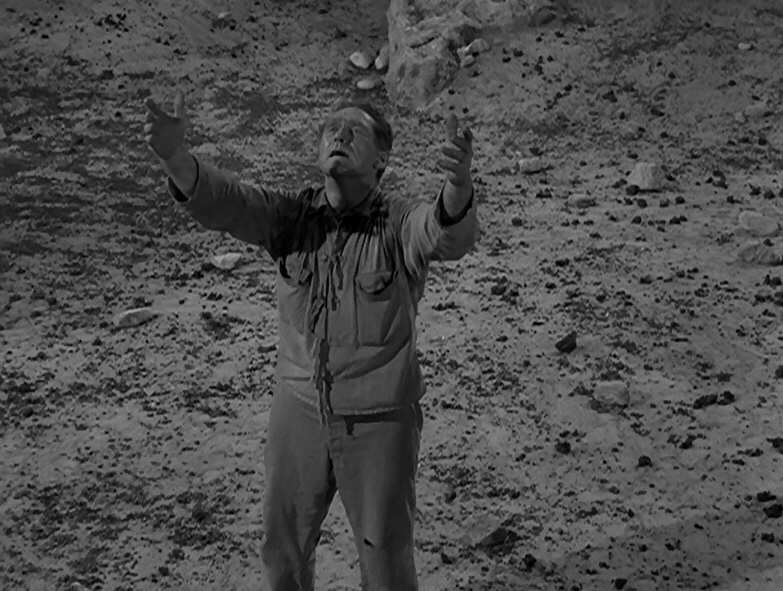
This is a not just a great episode…it’s a classic one. The episode takes place in 2021. James Whitmore plays Captain William Benteen and his acting in this is top notch. The writing also is one of Rod Serling’s best scripts. Captain Benteen reminded me of a cult leader…he doesn’t make the Jim Jones jump but he is similiar. Loving, caring, power hungry, narcissistic, and dictatorial. You see all phases and you also see regret but only when it’s too late.
The people in this episode are a remnant society who left the Earth looking for an Eden, a place without war, without jeopardy, without fear. What they found was quite different. They have been here 30 years. The planet is a nightmare place of two suns, unending day and terrible meteor storms. Despair prevails among the 187 survivors of the original colony and suicide is not uncommon. Their thirty-year survival is attributable to one source: the iron leadership of Benteen, their self-appointed Captain.
If you only watch one hour long episode of the Twilight Zone…make it this one. Human nature is on full display in this episode…both the best and the worse. This is a science-fictional examination of the positive and negative uses of power.
From IMDB: The cave that the colonists use as their meeting hall was originally the underground lair of the Morlocks in The Time Machine (1960).
When the rescue ship from Earth arrives, several colonists ask about various places on Earth during a meeting between the ship’s crew and the colonists. One of the questions is about the Finger Lake District of New York. This area had a special significance to script writer Rod Serling. It is located close to his home town of Binghamton, he and his family vacationed there frequently, and Serling named his company that produced “The Twilight Zone,” Cayuga Productions, after one of the lakes. He later taught at Ithaca College for the last five years before his death.
The striking diorama backgrounds of the planet, the model and the large-scale prop of the rescue ship sent to bring the colonists home, and the uniforms of the rescue crew were all originally created for Forbidden Planet (1956). This was a recurring feature on “The Twilight Zone” which was frequently filmed at MGM Studios, and often prominently featured recycled props and set pieces from “Forbidden Planet”. The previous episode, “The Incredible World of Horace Ford” featured copies of the original blueprints of designs for Robby the Robot, created by MGM production designer Robert Kinoshita.
This show was written by Rod Serling
Rod Serling’s Opening Narration:
This is William Benteen, who officiates on a disintegrating outpost in space. The people are a remnant society who left the Earth looking for a millennium, a place without war, without jeopardy, without fear, and what they found was a lonely, barren place whose only industry was survival. And this is what they’ve done for three decades: survive; until the memory of the Earth they came from has become an indistinct and shadowed recollection of another time and another place. One month ago a signal from Earth announced that a ship would be coming to pick them up and take them home. In just a moment we’ll hear more of that ship, more of that home, and what it takes out of mind and body to reach it. This is the Twilight Zone.
Summary
The colonists of Pilgrim I, Earth’s first space colony, have spent 30 years on their new home. It’s a lonely, barren place more akin to hell then Eden. Now, they’re awaiting the arrival of a ship to take them to Earth. Some colonists are at their wits’ end; another – the 9th in 6 months – commits suicide. Their leader, William Benteen, a tough drill sergeant-type, who they call Captain, does his best to keep them together. When the ship arrives, they’re given 3 days to prepare to leave. As the day of departure approaches, Benteen’s assumption that the community will stay together on Earth, is wrong; most will go their own way once on earth. Hearing this, Benteen decides they should stay. When the group decides otherwise, Benteen’s left with only one option.
Rod Serling’s Closing Narration:
William Benteen, who had prerogatives: he could lead, he could direct, dictate, judge, legislate. It became a habit, then a pattern and finally a necessity. William Benteen, once a god, now a population of one.
CAST
Rod Serling … Narrator / Self – Host (uncredited) James Whitmore … Captain William Benteen Tim O’Connor … Colonel Sloane James Broderick … Al Paul Langton … George Jo Helton … Julie Mercedes Shirley … Joan Russ Bender … Hank Danny Kulick … Jo-Jo (as Daniel Kulick) Madge Kennedy … Colonist John Ward … Colonist Shirley O’Hara … Colonist Tony Benson … Colonist (as Anthony Benson) Lew Gallo … Lt. Engle
I had this one in my scheduled folder and heard the news this morning.
I grew up listening to AM radio with my sister and you couldn’t help but hear this song. When I found out he passed away at 74 years old I was saddened because he seemed like such a good guy.
He was a staple of late 1970’s radio. I was not the biggest fan but the guy was different and multitalented. I still watch the The Rocky Horror Picture Show once in a while and he is great in that.
He was born Marvin Lee Aday . There are many stories on how he got his nickname. His football coach, his dad, and one story I found…which I don’t believe goes like this. When he was a child, Aday was messing around with some friends, and he bragged that his head was so thick and strong that a Volkswagen could run over it and he’d be fine. Another kid said no way, that his head would “turn into meatloaf.” Supposedly Aday put his head on the ground and was run over but a volkswagon…and nothing happened.
Meatloaf 2016: “I was born bright red, so the doctor suggested that they should keep me in the hospital for a few days. My dad actually spoke like this…” “’So, uh, I want you to name my son there ― because he looks like nine-and-a-half pounds of ground chuck ― I want you to put a name tag on the front of that plastic crib and it say ‘Meat’ on it.’”
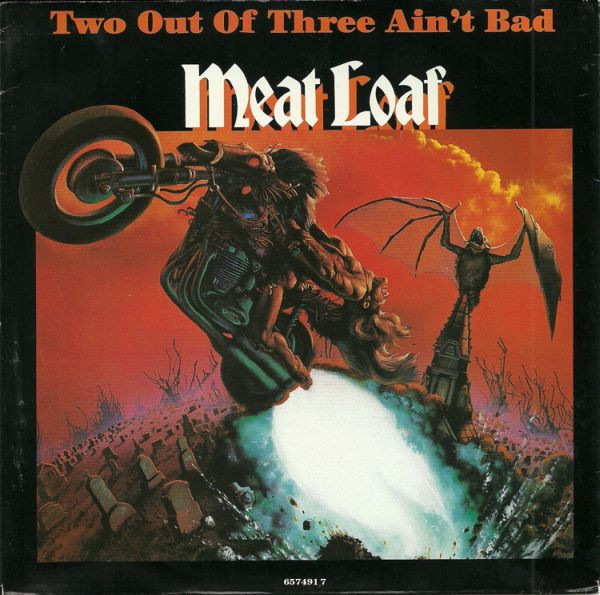
Two Out Of Three Ain’t Bad is a good pop song and I still listen to it. Jim Steinman wrote this song after his friend, the actress Mimi Kennedy, suggested that he write a ballad along the lines of the Elvis Presley song “I Want You, I Need You, I Love You.” She was implying she was implying he write something simple but Steinman, as his other songs show, didn’t work that way. This is one of the most straightforward Steinman songs that I know about.
Two Out Of Three Ain’t Bad was off of the Bat Out OF Hell album and it was huge. The album peaked at #14 in the Billboard Album Charts, #1 in New Zealand, and #9 in the UK in 1977.
The song peaked at #11 in the Billboard 100, #5 in Canada, #9 in New Zealand, and #32 in the UK.
Todd Rundgren produced the album. On this song, he used the other three members of his band Utopia: Kasim Sulton on bass, Willie Wilcox on drums, and Roger Powell on synthesizer. Rundgren played guitar and also sang backup on this song.
I found a story a few years ago about where he was when JFK was assisinated. He was at Parkland Hospital when JFK arrived. I have the video down below of him telling the story…listen if you have time…it’s very interesting.
From Songfacts
“Two out of three ain’t bad” is a trite cliché often used for comic effect. (“How was your date?” “He was tall, handsome, and incredibly boring.” “Well, two out of three ain’t bad.)
Jim Steinman, who was Meat Loaf’s songwriter, turned the saying into a song about the elusive nature of love. The song begins with Meat Loaf getting kicked to the curb by his girl, presumably because he won’t tell her he loves her. He makes the case that even though he will never love her, he’s good enough, since after all he does want her and need her, and happy endings are only for fairy tales.
We then learn that his commitment issues step from a previous relationship – one with the only woman he will ever love. She once left him with the same explanation: I want you, I need you, but I’ll never love you.
In America, this was the second single released from the Bat Out Of Hell album. The first single, “You Took the Words Right Out of My Mouth,” didn’t chart, but by the time “Two Out of Three” was issued in March 1978, the album was picking up steam and the song rose up the charts, peaking at #11 on July 8.
The single was edited down to 3:58 from the 5:23 album version.
This song got a big boost when Meat Loaf performed it on Saturday Night Live on March 25, 1978.
Two Out Of Three Ain’t Bad
Baby we can talk all night But that ain’t getting us nowhere I told you everything I possibly can There’s nothing left inside of here
And maybe you can cry all night But that’ll never change the way that I feel The snow is really piling up outside I wish you wouldn’t make me leave here
I poured it on and I poured it out I tried to show you just how much I care I’m tired of words and I’m too hoarse to shout But you’ve been cold to me so long I’m crying icicles instead of tears
And all I can do is keep on telling you I want you I need you But there ain’t no way I’m ever gonna love you Now don’t be sad ‘Cause two out of three ain’t bad Now don’t be sad ‘Cause two out of three ain’t bad
You’ll never find your gold on a sandy beach You’ll never drill for oil on a city street I know you’re looking for a ruby In a mountain of rocks But there ain’t no Coupe de Ville hiding At the bottom of a Cracker Jack box
I can’t lie I can’t tell you that I’m something I’m not No matter how I try I’ll never be able to give you something Something that I just haven’t got
There’s only one girl that I have ever loved And that was so many years ago And though I know I’ll never get her out of my heart She never loved me back, ooh I know I remember how she left me on a stormy night She kissed me and got out of our bed And though I pleaded and I begged her Not to walk out that door She packed her bags and turned right away
And she kept on telling me She kept on telling me She kept on telling me I want you I need you But there ain’t no way I’m ever gonna love you Now don’t be sad ‘Cause two out of three ain’t bad I want you I need you But there ain’t no way I’m ever gonna love you Now don’t be sad ‘Cause two out of three ain’t bad Don’t be sad ‘Cause two out of three ain’t bad
Baby we can talk all night But that ain’t getting us nowhere
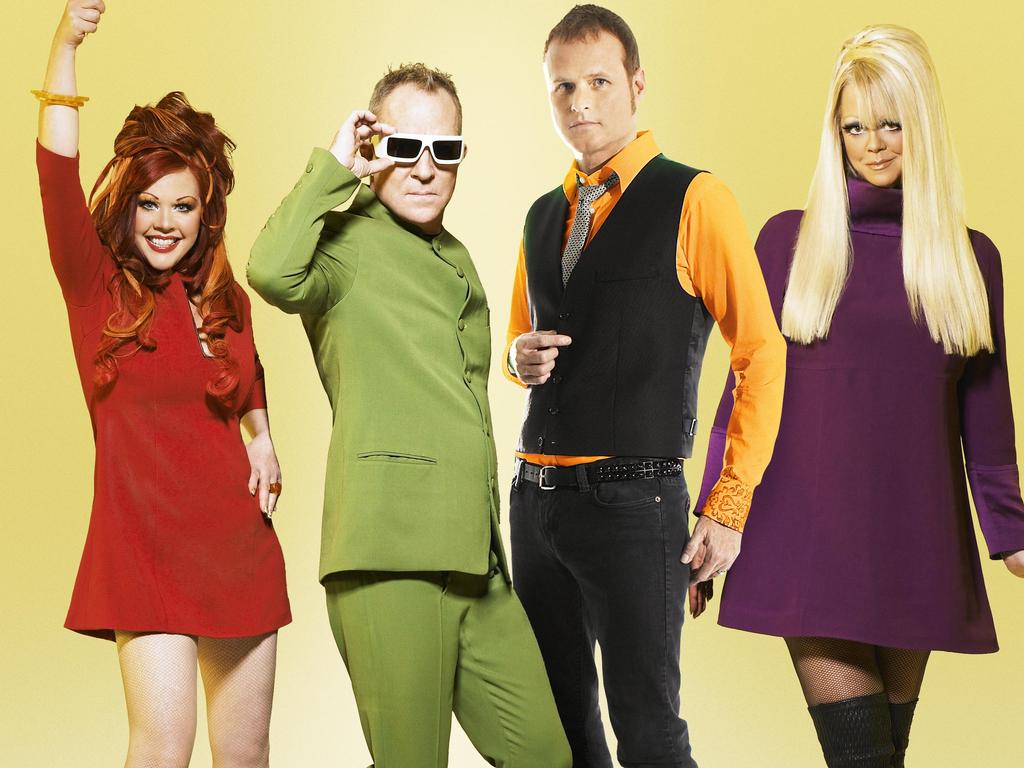
Love or hate this band…the one thing you have to give them is orginality. I can’t listen to them for hours but a song every now and then is great.
Kate Pierson has sai, the actual Love Shack is where she lived in the ’70s… a five-room cabin with a tin roof in Athens, Georgia. The band would sometimes work up songs there, including “Rock Lobster.” It really was set way back in the middle of a field (off of Jefferson River Road), with no plumbing or running water. The shack was later renovated, but in 2004 it burned down.
The band drew inspiration from the club in the movie The Color Purple, and also from a real club outside of Athens, Georgia, called the Hawaiian Ha-Le, where they would hang out.
The line, “The love shack is a little old place where we can get together” originally showed up just once in the song, but producer Don Was convinced the band to repeat that line and it became the hook. Kate Pierson credits Don Was with turning this song into a hit.
It was on the 1989 album Cosmic Thing. The album was a huge hit…because of this song and Roam.
The album peaked at #4 in the Billboard Album Charts, #8 in Canada, #1 in New Zealand, and #8 in the UK.
The song peaked at #3 in the Billboard 100, #5 in Canada, #1 in New Zealand, and #2 in the UK.
This was a global hit, but not in Japan, where a band with the name of an American bomber would not a good fit to say the least. The band was named after a hairstyle Pierson and Wilson wore, but there was no way to get that message across.
Cindy Wilson:“When you’re jamming, everybody is conjuring up their own images. Sometimes we’re all singing at the same time and later you go back and you hear what you’re doing. I personally was thinking about this bar that was out in the country [the Hawaiian Ha-Le]. It was a really cool place – a run-down love shack kind of thing, but it was a disco. It was a really interesting place.”
Love Shack
If you see a faded sign at the side of the road that says Fifteen miles to the, love shack, love shack yeah I’m headin’ down the Atlanta highway Lookin’ for the love getaway Headed for the love getaway, love getaway I got me a car, it’s as big as a whale And we’re headin’ on down to the love shack I got me a Chrysler, it seats about twenty So hurry up and bring your jukebox money
The love shack is a little old place where We can get together Love shack baby A love shack baby Love shack, baby love shack Love shack, baby love shack Love shack, baby love shack Love shack, baby love shack
Sign says, woo, stay away fools ‘Cause love rules at the love shack Well it’s set way back in the middle of a field Just a funky old shack and I gotta get back Glitter on the mattress Glitter on the highway Glitter on the front porch Glitter on the hallway
The love shack is a little old place where We can get together Love shack, baby Love shack, baby Love shack, that’s where it’s at Love shack, that’s where it’s at
Huggin’ and a-kissin’, dancin’ and a-lovin’ Wearin’ next to nothing ’cause it’s hot as an oven The whole shack shimmies Yeah the whole shack shimmies The whole shack shimmies when everybody’s movin’ around And around and around and around Everybody’s movin’, everybody’s groovin’ baby Folks linin’ up outside just to get down Everybody’s movin’, everybody’s groovin’ baby Funky little shack Funky little shack
Hop in my Chrysler, it’s as big as a whale And it’s about to set sail I got me a car, it seats about twenty, so come on And bring your jukebox money
The love shack is a little old place where We can get together Love shack baby A love shack baby Love shack, baby love shack Love shack, baby love shack Love shack, baby love shack (oh baby that’s where it’s at) Love shack, baby love shack (baby that’s where it’s at)
Bang bang bang on the door baby! Knock a little louder baby! Bang bang bang on the door baby! I can’t hear you Bang bang bang on the door baby! Knock a little louder sugar! Bang bang bang on the door baby! I can’t hear you
Bang bang bang on the door baby, knock a little louder Bang bang on the door baby, bang bang! On the door baby, bang bang! On the door, bang bang! On the door baby, bang bang!
You’re what? Tin roof Rusted!
Love shack, baby love shack! Love shack, baby love shack! Love shack, baby love shack! Love shack, baby love shack!
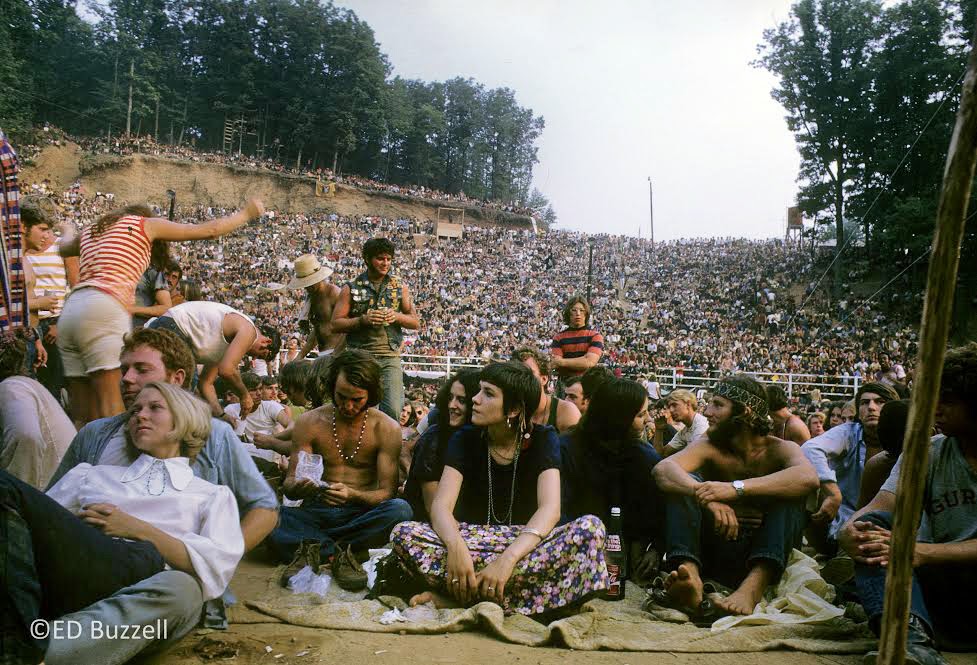
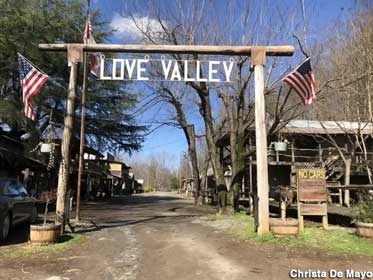
By the summer of 1970, the spirit of Woodstock was still echoing across the American counterculture, and a small mountain town in North Carolina decided it wanted a piece of that magic, or at least its own funky version. Enter: the Love Valley Rock Festival, an improbable blend of peace, pot, rock ‘n’ roll… and cowboys. It went down in July 1970 like a haywire Southern cousin to Woodstock, with more horses, and a whole lotta Allman Brothers.
What a festival this was, and what a town it still is. It happened in Love Valley, North Carolina. The headliners were The Allman Brothers, who at that time only had one album out and were largely unknown to the masses. This huge festival was soon known as Woodstock South. Between 100,000 and 200,000 showed up.
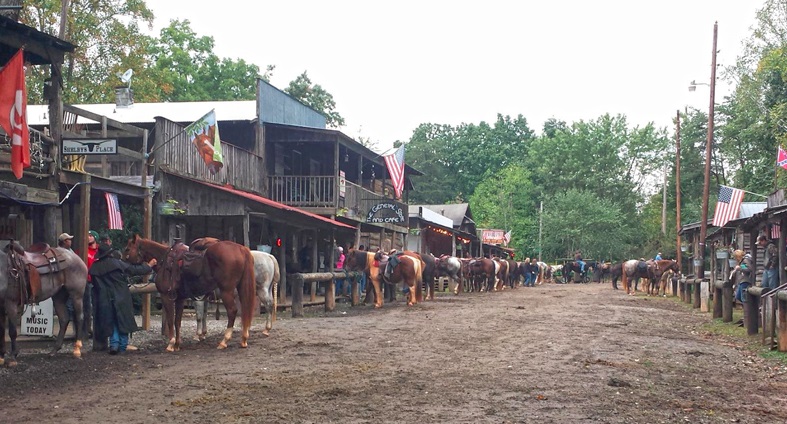
A man named Andy Barker always wanted to live in a western town. At the age of 29, he purchased some land in 1954 and relocated his family there. The land was in Iredell County, and he built the town, which was chartered in 1963. It has a saloon, hitching posts, a small church, and more. No cars are allowed in town…you can walk or ride a horse through.
It’s the place for riding horses, rodeos, and hiking trails with 2000 acres to cover. The population of Love Valley is currently 96. Through the years, it seems to stay around 100.
In 1969, Andy’s daughter Tonda wanted to go to Woodstock, but he thought she was too young. So he asked her and her 16-year-old brother, Jet Barker, to organize a festive concert in Love Valley. While in college, she had worked with an entertainment coordinator at the college and knew the ropes. She managed to secure the Allman Brothers Band, who at the time were known in the south but that is about it. They also got some more local bands to fill it out…it was a large bill. It took place on Thursday, July 16-18, 1970.
One interesting thing that happened was that the Hell’s Angels and Outlaws showed up to do battle with each other. According to witnesses, Andy Barker stopped them and confiscated a chain and ax from each and told them there would be no trouble here. They seemed to respect this man because after that, the gangs dispersed, and some camped out with no reported trouble. The festival went off without any major hitches.
Tonda:“It was perfect, it was like a dream. We had worked so hard and we could finally just sit down and enjoy it.”
Andy planned to make a documentary of it, but it didn’t happen. All we have to look at is some grainy footage, but that grainy footage shows Duane Allman a year before At Fillmore East was released. They were finishing up their second album, Idlewild South, at this time. Some very nice bootlegs are out there from their multiple sets.
Along with the Allman Brothers, the line up consisted of these bands: Big Brother and the Holding Company (without Janis), Radar, Peace Core, Wet Willie, Johnny Jenkins, Tony Joe White, Hampton Grease Band, Donnydale, Catfish Freedom, Sundown, Chakra, Hot Rain, Kallabash, Warm Stone Blind, Captain John’s Fishmarket. There were over 40 bands over that weekend.
Some, like Wet Willie, would go on to have a few hits. Tony Joe White had a top ten hit with Polk Salad Annie the year before.
The Love Valley Festival doesn’t get the press that Altamont or even Atlanta Pop did. There’s no movie, no official recordings, no box set retrospective. Just faded photos, whispered stories, and a ghost-town memory of the time the South went psychedelic under the watchful eye of a cowboy mayor with a dream.
It’s part of what makes digging through this era so damn fun. Not all the magic happened on the coasts. Sometimes it galloped in on horseback, plugged into a wall of amps, and raised a little hell in the Carolina hills.
Ed Buzzell was a UPI stringer and took these photographs…they are amazing. They don’t show many bands…just the people…you feel like you are there. (Unfortunately, Ed Buzzell or someone else took them down.) If you know where they are now, or if they are anywhere, please let me know in the comments.
Pat Hingle who plays Horace Ford is emotionally little more than an oversized child, lives with his wife Laura and his mother. He spends most of his time reminiscing about what he recalls as an idyllic childhood that was all play and no responsibility. This one is similar to “Walking Distance” but just not as effective…Horace isn’t as mature as the Martin Sloan characer in that episode. He fails to get the viewer’s compassion because of his imaturity.
When looking back on childhood with rose colored glasses… Horace may get a chance to peel back the nostalgia and find out what really happened in his youth. It does have a good story but some will be put off by the exaggerated aspect of Pat Hingle’s performance. I liked it and the more times I’ve watched this episode the more I appreciated it.
I have to ask this before I end. Pat Hingle who plays Horace Maxwell Ford…does he not look like Nick Nolte? It’s too bad when Hingle got older he didn’t play Nolte’s dad in a movie.
The writer to this one is Reginald Rose who wrote the great 12 Angry Men.
Reginald Rose:What I meant to do with The Incredible World of Horace Ford, was to tell a simple horror story about an everyday man with a somewhat exaggerated but everyday kind of problem and, in so doing, point out that the funny, tender childhood memories we cling to are often distorted and unreal. What happened to Horace when he finally made it back to his childhood was typical of what actually happened to so many of us again and again when we were children. He was ridiculed, rejected, beaten up. These are all familiar experiences to us, yet somehow we tend only to remember, as Horace did, the joys of swiping pomegranates from Ippolitos.
From IMDB:
This was not an original screenplay for The Twilight Zone (1959). It’s a remake of Studio One: The Incredible World of Horace Ford (1955), which was a live TV version starring Art Carney and Jason Robards.
This episode revisits themes used in The Twilight Zone: Walking Distance (1959) and The Twilight Zone: The Trouble with Templeton (1960) – namely, a person’s propensity to romanticize and try to relive a past that may not have been at all as good as they like to remember it.
The blueprints of Harold’s new robot toy are copies of the actual blueprints Bob Kinoshita made for the design of Robbie the Robot in Forbidden Planet.
This show was written by Rod Serling and Reginald Rose
Rod Serling’s Opening Narration:
Mr. Horace Ford, who has a preoccupation with another time, a time of childhood, a time of growing up, a time of street games, stickball and hide-‘n-go-seek. He has a reluctance to check out a mirror and see the nature of his image: proof positive that the time he dwells in has already passed him by. But in a moment or two he’ll discover that mechanical toys and memories and daydreaming and wishful thinking and all manner of odd and special events can lead one into a special province, uncharted and unmapped, a country of both shadow and substance known as the Twilight Zone.
Summary
Toy designer, Horace Ford’s very enthusiastic about what he does, and his memories of childhood are beginning to become an obsession. But, those childhood moments which brought him great joy aren’t remembered by anytime else – even his mother. She doesn’t recall their time living on Randolph Street as such a great time. Horace goes to visit the old neighborhood, but when he gets there, he seems to have stepped back in time, and the past starts to spill over into the present. He returns to the street several times, and the scene repeats itself. He begins to realise -his childhood wasn’t the wonderful one he remembered
Exit Mr. and Mrs. Horace Ford, who have lived through a bizarre moment not to be calibrated on normal clocks or watches. Time has passed, to be sure, but it’s the special time in the special place known as the Twilight Zone.
CAST
Rod Serling…Narrator / Self – Host (uncredited) Pat Hingle…Horace Maxwell Ford Nan Martin…Laura Ford Ruth White…Mrs. Ford Phillip Pine…Leonard O’Brien Vaughn Taylor…Mr. Judson Jerry Davis…Hermie Brandt Billy Hughes…Kid Mary Carver…Betty O’Brien Jim E. Titus…Horace…a boy
Well it’s one for the money, two for the show Three to get ready, now go cat go
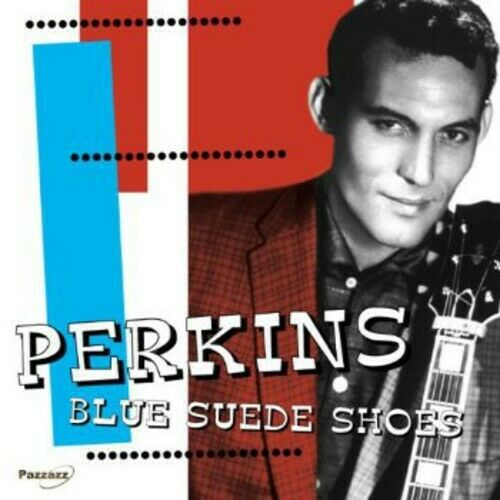
This song could be the definition of rock and roll. One of the many great Sun records that were released. Carl Perkins is a guitar hero to me with his rockabilly style that he never lost. I see why George Harrison and a generation was such a fan of the man. This song is up there with Johnny B Good as a Rock and Roll standard.
This song was written by Carl and it soon became a rock and roll anthem. This is another song that by law…you have to know if you are in a rock band. It’s probably better known by a singer from Memphis…named Elvis. I always favored this version…it has Carl playing guitar and that is all I need.
Carl recorded this in Memphis in 1955 for Sam Phillips at Sun Records. As he was driving to make his first national appearance to promote it on the Perry Como Show, he got into an accident that seriously injured him and killed his brother. He later said he was 85 miles away from being the first rockabilly on national television.
Perkins never fully recovered, either emotionally or career-wise. With Perkins unable to touring and promote it, Elvis’ cover version became a massive hit. Presley’s copy was done at RCA studios in Nashville. Perkins did have some hits after this but nothing like Blue Suede Shoes. Interestingly enough…Elvis’s version only made it to #20 in the pop charts.
This single was released in 1956. The B side was Honey Don’t. The single peaked at #2 in the US Charts and #1 in the Country charts.
I always wondered about blue suede shoes and what was so special about them. Blue suede shoes were a luxury item in the South…you would only wear them on a special night out. . You had to be careful with them though, since suede isn’t easy to clean.
Perkins never owned a pair, but Johnny Cash told him a story about someone who did. Cash told Perkins a story from his days serving in the Air Force in Germany. Cash’s sergeant…C.V. White. He would wear his military best when he was allowed off base, and at one point said to Cash, “don’t step on my blue suede shoes.” The shoes were really just Air Force-issued black, but white would say, Tonight they’re blue suede!
The story Perkins told is that later on, he was playing at a high school sorority dance when he came across a guy who wasn’t paying much attention to his date, but kept telling everyone not to stop on his “suedes,” meaning his blues suede shoes. At 3 a.m. that night, Perkins woke up and wrote the lyrics based on what happened that night and the story he heard from Cash. He couldn’t find any paper, so he wrote it on a potato sack.
Perkins based the beginning of this song on a nursery rhyme One For The Money: “One for the money, two for the show, three to get ready and four to go.”
Sam Phillips, the owner of Sun Records, came up with the idea of changing the line “Go, man, go” to “Go, cat, go.” He thought the change would make it seem like less of a country song and more of a rocker…it worked!
From Songfacts
Sam Phillips discovered Elvis Presley but sold his contract to RCA for $35,000. The money helped Phillips finance this and other records by artists like Johnny Cash and Roy Orbison, but Elvis became The King. Elvis recorded this later in 1956. His version hit US #20 and UK #9.
This was the only Top 40 hit for Perkins on the pop charts, but his influence reaches much further. He was extremely influential to other artists, including Elvis, The Beatles, and Johnny Cash. Perkins was inducted into the Rock and Roll Hall of Fame in 1987.
The lyrics describe some of the things that Perkins would prefer over getting his shoes scuffed, and the list includes some derelict behavior: stepping on his face, stealing his car, burning down his house and drinking his liquor. Some in the Sinatra-loving older generation were horrified, and used the song to back their case that rock ‘n’ roll was the Devil’s music.
This was the first song to hit the US Pop, Country, and R&B charts at the same time. Released on January 1, 1956, the song made a slow climb up the charts, appearing on all three in May, which is when it reached its peak of #2 on the Pop charts.
In Perkins’ original version of this song, there are two deliberate beats after each of the first two lines: “One for the money… bomp, bomp; two for the show… bomp, bomp.” The Elvis version eliminates the pause between the lines and speeds it up considerably.
Dave Edmunds, who later toured with Perkins, tells a story about recording the song with the rock legend for a segment to air on The South Bank Show, a UK program. According to Edmunds, Perkins played the intro without the beats between lines, insisting that when he recorded it, that was a mistake. Edmunds began pleading with him to do it as he did on that record, but then realized the absurdity of explaining to Carl Perkins how to play “Blue Suede Shoes.”
In later appearances, Perkins did play the song in line with his original recording, often with Edmunds by his side. One of his last appearances was with Edmunds performing the song on The Jay Leno Show in 1997 (Perkins died the next year).
The B-side of the single was “Honey Don’t,” which was covered by The Beatles.
This song was a family affair: Perkins’ brother Jay played rhythm guitar on the track, and his other brother Clayton played bass (W.S. “Fluke” Holland was Perkins’ drummer). Jay died from a brain tumor in 1957, and Clayton took his own life in 1974.
The charting versions of this song in America were by:
Carl Perkins – #2, 1956 Elvis Presley – #20, 1956 Boyd Bennett – #63, 1956 Johnny Rivers – #38, 1973
Pat Boone, Conway Twitty, The Dave Clark Five and Merle Haggard are among the many to record it. A version by Buddy Holly surfaced in 1964 on an album of outtakes called Showcase.
The “better not step on my shoes” trope found its way back to the zeitgeist when Spike Lee included a scene in his 1989 movie Do The Right Thing where a character gets very upset when someone steps on his Air Jordan sneakers.
Perkins, backed by Lee Rocker and Slim Jim Phantom of The Stray Cats, recorded a new version of this song in 1985 for the soundtrack of the movie Porky’s Revenge! The soundtrack was produced by Dave Edmunds, who also got Willie Nelson, Jeff Beck and George Harrison to record songs for it, leading to a gaping disparity in quality between the film and the soundtrack.
Later in the year, Edmunds spearheaded the “Carl Perkins and Friends” concert special, recorded October 21 in London and aired January 1, 1986 on Cinemax. Harrison, Ringo Starr, Eric Clapton and Rosanne Cash were among the “friends.”
The Count performed this song on an episode of Sesame Street. It became a counting exercise (one, two, Blue Suede Shoes).
Blue Suede Shoes
Well it’s one for the money, two for the show Three to get ready, now go cat go But don’t you, step on my blue suede shoes You can do anything but lay off of my blue suede shoes
But you can knock me down, step in my face Slander my name all over the place And do anything that you want to do But uh uh honey lay off of my shoes And don’t you step on my blue suede shoes You can do anything but lay off of my blue suede shoes
Oh let’s go cat!
But you can burn my house, steal my car Drink my liquor from an old fruit jar Do anything that you want to do But uh uh honey lay off of them shoes And don’t you, step on my blue suede shoes You can do anything but lay off of my blue suede shoes
Rock!
Well it’s one for the money, two for the show Three to get ready, now go cat go But don’t you, step on my blue suede shoes You can do anything but lay off of my blue suede shoes
Well it’s blue, blue, blue suede shoes Blue, blue, blue suede shoes yeah Blue, blue, blue suede shoes baby Blue, blue, blue suede shoes You can do anything but lay off of my blue suede shoes
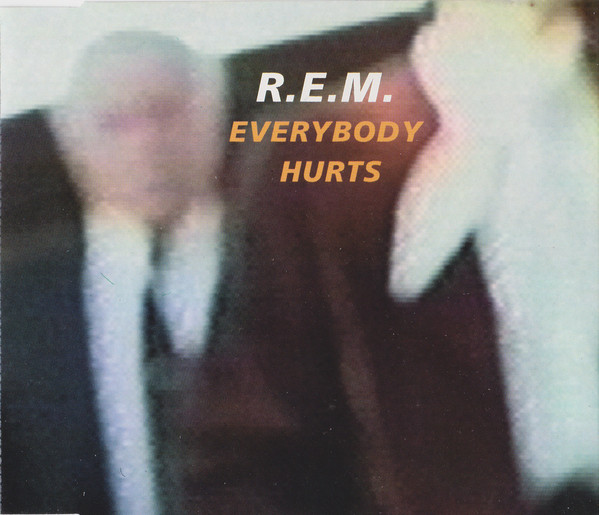
When I heard this song in the 90s…I knew then it was one of those songs that would become an instant classic.
Most of this song was written by R.E.M. drummer Bill Berry. It is an anti-suicide song. Berry wanted to reach out to people who felt they had no hope. He quit the band in 1997 shortly before recording their album Up after an aneurysm. After that album, the band almost broke up, but decided to continue as a trio.
While he wrote this, he did not actually play on it. They used a Univox drum machine. R.E.M. bass player Mike Mills claims he bought Univox drum machine for $20, but it was perfect for the song’s metronome-ish feel.
It was on the album Automatic For The People, considered by some as the best album they ever released. The album peaked at #2 in the Billboard Album Charts, #1 in the UK, #4 in Canada, and #1 in New Zealand.
The album title was inspired by Weaver D’s soul food diner in Athens, Georgia. They had a sign that said “Delicious Fine Foods – Automatic For The People.”
The song peaked at #29 in the Billboard 100, #8 in Canada, #7 in the UK, and #12 in New Zealand in 1993. I’m shocked now that it wasn’t in the top 10 in Billboard.
The string arrangement was done by no other than Led Zeppelin bassist John Paul Jones.
Michael Stipe:“It saved a few. People have told me. And I love hearing that. That’s for me, that’s my Oscar, that’s my gold on a shelf right there… that something we did impacted someone’s life in such a profound way. That’s a beautiful thing.”
Mike Mills:Mike (Stipe) and I cut it live with this dumb drum machine which is just as wooden as you can get. We wanted to get this flow around that: human and non-human at the same time.”
Peter Buck: The reason the lyrics are so atypically straightforward is because it was aimed at teenagers.
From Songfacts
On many R.E.M. songs, Michael Stipe purposefully sings indecipherably. He sang very clearly on this one though, because he didn’t want his message getting lost. “I don’t remember singing it,” he noted in Part Lies, Part Heart, Part Truth, Part Garbage 1982-2011, “but I still kind of can’t believe my voice is on this recording. It’s very pure. This song instantly belonged to everyone except us, and that honestly means the world to me.”
The Nevada legislature commended R.E.M. for “encouraging the prevention of teen suicides,” noting this song as an example (Nevada has a high rate of teen suicide).
The music video was directed by Jake Scott, son of movie director Ridley Scott, famous for movies like Blade Runner (1982) and Gladiator (2000). Filmed on Interstate 10 in San Antonio, Texas, the clip is set during a traffic jam where people’s thoughts are revealed through subtitles.
The video won four MTV Video Music Awards: Breakthrough Video, Best Direction, Best Editing and Best Cinematography. When it won for Best Direction, Adam Yauch of the Beastie Boys, who were nominated for “Sabotage,” got to the podium before Michael Stipe. Dressed in character as his Swiss alter ego Nathanial Hornblower, he went on a rant, calling it a “farce” before being ushered off.
Disrupting an award for such a somber song is in poor taste, but it was hard to take this awards show seriously. Hosted by Roseanne Barr, it is best remembered for a cringe-worthy kiss between newlyweds Michael Jackson and Lisa Marie Presley. MTV didn’t harbor any resentment: they gave the Beastie Boys the Video Vanguard award in 1998.
This was used on an episode of The Simpsons when Marge is walking in a thunderstorm and thinks she has no friends.
In February 2010 a charity cover was recorded by a collection of artists, Helping Haiti, to raise money for the victims of the earthquake that devastated the country. It sold over 200,000 copies in its first two days making it one of the quickest selling singles of the 21st century in the United Kingdom. Joseph Kahn directed a music video for the cover that features cameos from the performers and footage from the earthquake’s aftermath. Kahn is known for directing clips for the likes of Eminem, Britney Spears, Lady Gaga, and Taylor Swift.
This topped a poll compiled by PRS For Music, which collects and pays royalties to musicians in the UK, of the songs most likely to make a grown man cry. Second in the list came Eric Clapton’s “Tears In Heaven” followed by Leonard Cohen’s “Hallelujah.” PRS chairman Ellis Rich said: “From this chart, it is clear that a well-written tear-jerker is one that people can relate to and empathise with. It is this lyrical connection that can reach deep down emotionally and move even the strongest of men.”
In a rare authorized comedic use of this song, Mayim Bialik’s character on The Big Bang Theory plays this on the harp when she is upset over being left behind by her two girlfriends, who are shopping for bridesmaids dresses. Her “boyfriend,” played by Jim Parsons, comes by to cheer her up, resulting in an awkward cuddle scene.
Peter Buck likens the vibe of this song to Otis Redding’s “Pain in My Heart.” He wrote in the liner notes for Part Lies, Part Heart, Part Truth, Part Garbage 1982-2011: “I’m not sure if Michael would have copped that reference, but to a lot of our fans it was a Staxxy-type thing.”
This was used in the 1992 film version of Buffy the Vampire Slayer, starring Kristy Swanson, Luke Perry and Rutger Hauer. Speaking of the subsequent TV series, starring Sarah Michelle Gellar, Peter Buck said: “I’ve never watched Buffy the Vampire Slayer, but the idea that high school is a portal to hell seems pretty realistic to me.”
Pink and Kelly Clarkson sang this to open the 2017 American Music Awards. They were introduced by Jamie Foxx, who said the purpose was to “pay respect to all those affected by the events of the past year,” meaning the hurricanes, shootings and hate rallies that took place.
Another comedic use was on The Office in the season 2 episode “The Fire,” where Dwight retreats to his car and blasts the song after Michael takes Ryan’s side in a business discussion.
Everybody Hurts
When your day is long And the night The night is yours alone When you’re sure you’ve had enough Of this life Well hang on Don’t let yourself go ‘Cause everybody cries And everybody hurts sometimes
Sometimes everything is wrong Now it’s time to sing along When your day is night alone (hold on) (Hold on) if you feel like letting go (hold on) If you think you’ve had too much Of this life Well, hang on
‘Cause everybody hurts Take comfort in your friends Everybody hurts Don’t throw your hand Oh, no Don’t throw your hand If you feel like you’re alone No, no, no, you’re not alone
If you’re on your own In this life The days and nights are long When you think you’ve had too much Of this life To hang on
Well, everybody hurts sometimes Everybody cries And everybody hurts sometimes And everybody hurts sometimes So, hold on, hold on Hold on, hold on Hold on, hold on Hold on, hold on








 PowerPop... An Eclectic Collection of Pop Culture