Monkees – The Porpoise Song

This was not one of their well-known TV songs.

This was on the soundtrack to their 1968 trippy movie Head. Where else would you find Annette Funicello, The Monkees, and Frank Zappa in the same movie?

They may have been seeking some countercultural acceptance after their show ended. The movie blew the image of the Monkees up…some say deconstruction of the Monkees completely. It was a stream of consciousness black comedy that mocks war, America, Hollywood, television, the music business, and the Monkees themselves.

If kids went into the theater expecting the Monkees TV show…they were in for a big surprise. On the other hand, kids couldn’t watch the movie because of its R rating.

Carole King and Gerry Goffin wrote this song and Goffin produced it…even recording a porpoise for good measure.

I’ve watched the movie and it’s interesting but you have to remember what kind of movie it is. Jack Nicolson help write it with the band along with Bob Rafelson. Nicholson hung out with The Monkees for several weeks, even going with them on tour. Once this movie was made, Rafelson abandoned The Monkees and went off to bigger projects, starting with Easy Rider.

Mickey Dolenz – “It wasn’t so much about the deconstruction of the Monkees, but it was using the deconstruction of the Monkees as a metaphor for the deconstruction of the Hollywood film industry”

The Porpoise Song

My, my, the clock in the sky
Is pounding away
And there’s so much to say

A face, a voice
An overdub has no choice
An image cannot rejoice

Wanting to be
To hear and to see
Crying to the sky

But the porpoise is laughing
Goodbye, goodbye
Goodbye, goodbye, goodbye

Clicks, clacks, riding the backs of giraffes for laughs
S’alright for a while

sings of castles
And kings and things that go
With a life of style

Wanting to feel
To know what is real
Living is a, is a lie

The porpoise is waiting
Goodbye, goodbye
Goodbye, goodbye, goodbye

Twilight Zone – The Parallel

★★★★1/2 March  14, 1963, Season 4 Episode 11

If you want to see where we are…HERE is a list of the episodes.

I kept saying that the 4th season was not a great season of the Twilight Zone. As someone (Paul) pointed out…there are some really good to great episodes. He was right…there are some great episodes in the season. This is one of them. After watching this season over…it’s much better than I gave it credit for. Is it as good as 1, 2, 3, or 5? No, it’s just different with the hour format. Not apples to oranges, just different.

This could be a 5 star…I went back and forth with the rating. The small details in this episode keep it interesting. 

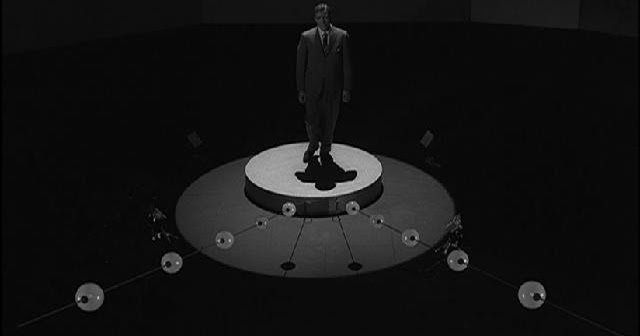
This one is about a Parallel world. Steve Forrest who plays Major Robert Gaines is an astronaut that returns home from a troubled mission. He notices things wrong when he gets back…a different president, a gate around his yard that wasn’t there before, and small things that are wrong. His family also starts noticing little things…little things that only a loved one can see. 

From IMDB: Steve Forrest played the protagonist, Major Robert Gaines, in this episode while his elder brother Dana Andrews played the protagonist, Paul Driscoll, in the preceding episode The Twilight Zone: No Time Like the Past 

There is a moment after Maj. Gaines has spent the night with Mrs. Gaines where they attempt to embrace and she gives him a hard, questioning stare. According to producer Bert Granet, the intent of this interchange was to imply that sexual relations on the parallel world were slightly different from those of Maj. Gaines’ world, and that this had told Mrs. Gaines that he was no longer her husband. Unfortunately, in 1963 no direct mention of sexual behavior, even between spouses, was permissible, so that the scene is really too subtle to communicate this implication.

In the parallel universe, no one has ever heard of John F. Kennedy. The identity of the President of the United States in that universe is not revealed.

This show was written by Rod Serling and Richard Matheson

Rod Serling’s Opening Narration: 

In the vernacular of space, this is T minus one hour. Sixty minutes before a human being named Major Robert Gaines is lifted off from the Mother Earth and rocketed into the sky, farther and longer than any man ahead of him. Call this one of the first faltering steps of man to sever the umbilical cord of gravity and stretch out a fingertip toward an unknown. Shortly, we’ll join this astronaut named Gaines and embark on an adventure, because the environs overhead—the stars, the sky, the infinite space—are all part of a vast question mark known as the Twilight Zone.

Summary

Astronaut Major Robert Gaines is the latest to orbit the Earth but something happens while there. Ground control loses all contact with him and although he returns safely, he apparently blacked out and has no recollection of what may have happened. Nor can he explain how the craft landed on land – completely undamaged – when it was meant to splash down in the ocean. When Gaines returns home he finds that little things are different: he’s now a full colonel and has been for some time; his house now has a picket fence; he no longer seems to take sugar in his coffee; and even his wife senses he is different after she kisses him. It is soon apparent that Gaines has returned to an Earth in an alternate universe

Rod Serling’s Closing Narration:

Major Robert Gaines, a latter-day voyager just returned from an adventure. Submitted to you without any recommendations as to belief or disbelief. You can accept or reject; you pay your money and you take your choice. But credulous or incredulous, don’t bother to ask anyone for proof that it could happen. The obligation is a reverse challenge: prove that it couldn’t. This happens to be the Twilight Zone.


CAST

Rod Serling … Narrator / Self – Host (uncredited)
Steve Forrest … Major Robert Gaines
Jacqueline Scott … Helen Gaines
Frank Aletter … Colonel William Connacher
Paul Comi … Psychiatrist
Shari Lee Bernat … Maggie Gaines
Morgan Jones … Captain
William Sargent … The Project Manager
Philip Abbott … General Stanley Eaton
Fred Crane … News Anchorman (uncredited)

Adding Ads on WordPress

In late December I added Ads to my site. I have thought about just having them around long enough to make $100 (my subscription is $90 but it doesn’t pay until you reach $100)… I could then stop them and start them again next January.

Please let me know if they are obnoxious and I will tone them down. At the rate that they are going…I’ll have it by 4-5 months. $90 a year is not a big deal, but it’s the principle of it… it would be nice to let the site pay for itself.

I don’t want it to be a chore to read what I have…that defeats the whole purpose. Making a profit or any money has never been the motivating idea behind this site…or I would be homeless! I do it for the love of the music, movies, books, tv shows, and pop culture in general.

The reason I don’t do the free subscription of WordPress is that I like some of the features the Premium edition offers. I wanted to have more space to store pictures and other things.

Please tell me if they are in the way and I will stop some of them from running…and if they still get too much in the way…I’ll just stop them altogether. If you have time check it out and give me some feedback if you can.

Thank You

Max

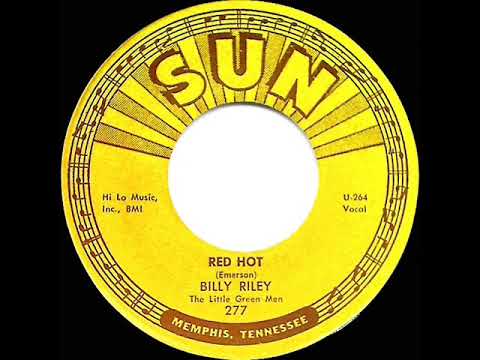
Billy Lee Riley – Red Hot

I first heard this song by the ‘Beatles in Hamburg on the Star Club album. They took the song and injected it with steroids…George ripped through it. The quality is terrible but the energy is not.

“Red Hot” featured Jerry Lee Lewis on piano. The song was written by Billy “The Kid” Emerson. Emerson had already had a minor hit when Elvis Presley recorded “When It Rains It Really Pours“. “Red Hot” was showing a lot of promise as a big hit record, but Sam Phillips pulled Sun Records promotion for the single and switched it to “Great Balls Of Fire” by Jerry Lee Lewis.

Riley earned notoriety throughout the South with his wild live performances, and in the late’50s his shows were banned by various town councils and college administrators who worried that Riley’s raucous “devil’s music” would corrupt the souls of innocent teenagers. Riley’s backing band, The Little Green Men, were the main Sun studio band. They were Riley, Roland Janes, J.M. Van Eaton, Marvin Pepper, and Jimmy Wilson, later joined by Martin Willis.

These are the kind of singles that the Beatles liked to cover…not massive hits but good songs that not many bands were covering.

Red Hot

My gal is red hot
Your gal ain’t doodly squat
Yeah, my gal is red hot
Your gal ain’t doodly squat
Well, she ain’t got no money
But man, she’s a-really got a lot

Well, I got a gal, six feet four
Sleeps in the kitchen with her feet out the door, but

My gal is red hot
Your gal ain’t doodly squat
Yeah, my gal is red hot
Your gal ain’t doodly squat
Well, she ain’t got no money
But man, she’s a-really got a lot

Well, she walks all night, talks all day
She’s the kinda woman who’ll have her way, but

My gal is red hot
Your gal ain’t doodly squat
Yeah, my gal is red hot
Your gal ain’t doodly squat
Well, she ain’t got no money
But man, she’s a-really got a lot

Well, she’s the kinda woman who louds around
Spreadin’ my business all over town, but

My gal is red hot
Your gal ain’t doodly squat
Yeah, my gal is red hot
Your gal ain’t doodly squat
Well, she ain’t got no money
But man, she’s a-really got a lot

Well, she’s a one man’s woman, that’s what I like
But I wish she wasn’t gonna change her mind everynight, but

My gal is red hot
Your gal ain’t doodly squat
Yeah, my gal is red hot
Your gal ain’t doodly squat
Well, she ain’t got no money
But man, she’s a-really got a lot

Twilight Zone – No Time Like The Past

★★★1/2 March 7, 1963 Season 4 Episode 10

If you want to see where we are…HERE is a list of the episodes.

I love time travel episodes. I wanted so much to love this one. No Time Like The Past has it’s charms but the hour long format works against it. It’s 4 time travel stories in this one. It could have been split up into two 30 minute episodes with the first three time jumps and the second episode the final jump. I think it would have been better for the hour long format to flesh out the first three time jumps. 

It was an interesting concept…to go back to the atom bomb dropping in Japan, the Lusitania sinking, and to try to kill Hitler. One of the flaws in this episode is he only gives himself a small amount of time to accomplish his tasks. In this case too much wasn’t a good thing. To sum it up…I wish they would have focused either on Hitler, Japan, and The Lusitania or the 1881 small town of Homeville, Indiana. The most interesting part of the episode is the 1881 Indiana story. 

Dana Andrews who played Paul Driscoll was a star in the 1940s in movies with Henry Fonda, Tyrone Powers, and more. 

From IMDB: Dana Andrews played the protagonist, Paul Driscoll, in this episode while his younger brother Steve Forrest played the protagonist, Major Robert Gaines, in the succeeding episode The Twilight Zone: The Parallel .

This episode takes place in 1963, in Hiroshima, Japan on August 6, 1945, in Berlin, Germany in August 1939, aboard the RMS Lusitania off the Old Head of Kinsale, Ireland on May 7, 1915 and in Homeville, Indiana from July 1 to July 3, 1881.

This show was written by Rod Serling

Rod Serling’s Opening Narration: 

Exit one Paul Driscoll, a creature of the twentieth century. He puts to a test a complicated theorem of space-time continuum, but he goes a step further, or tries to. Shortly, he will seek out three moments of the past in a desperate attempt to alter the present, one of the odd and fanciful functions in a shadowland known as the Twilight Zone.

Summary

Paul Driscoll does not much like the way the 20th century has developed thus far and decides to go back in time to change mankind’s future. He first travels to Hiroshima and tries to warn an English-speaking policeman of what is to come, but to no avail. He then travels to Nazi Germany and attempts to assassinate Adolf Hitler but is thwarted when his rifle misfires. He then finds himself aboard the Lusitania but again is unable to convince the ship’s captain to alter course before it is torpedoed. When he returns to the present, he agrees with his colleague Harvey that the past cannot be changed. He still does not like the present, so decides to go back to July 1881 to live his life in the small town of Homeville, Indiana. Unfortunately he learns yet again that past events cannot be changed

Rod Serling’s Closing Narration:

Incident on a July afternoon, 1881. A man named Driscoll who came and went and, in the process, learned a simple lesson, perhaps best said by a poet named Lathbury, who wrote, ‘Children of yesterday, heirs of tomorrow, what are you weaving? Labor and sorrow? Look to your looms again, faster and faster fly the great shuttles prepared by the master. Life’s in the loom, room for it. Room.’[1] Tonight’s tale of clocks and calendars in the Twilight Zone.


CAST

Rod Serling … Narrator / Self – Host (uncredited)
Dana Andrews … Paul Driscoll
Patricia Breslin … Abigail Sloan
Malcolm Atterbury … Prof. Eliot
Robert Cornthwaite … Hanford
John Zaremba … Horn Player
C. Lindsay Workman … Bartender (as Lindsay Workman)
Marjorie Bennett … Mrs. Chamberlain
Tudor Owen … Captain of Lusitania
James Yagi … Japanese Police Captain
Robert F. Simon … Harvey
Adolf Hitler … Self (archive footage)
Gene Coogan … Fire Spectator Restraining Driscoll (uncredited)
Peter Humphreys … Steward on Lusitania (uncredited)
Robert McCord … Man Hearing About Garfield (uncredited)
Bobs Watson … Man at Dining Room Table (uncredited)

Beatles – Penny Lane

I love the visuals in this song. I’ve never had the pleasure of being there but it feels like I’m standing in the middle of Penny Lane in 1967.

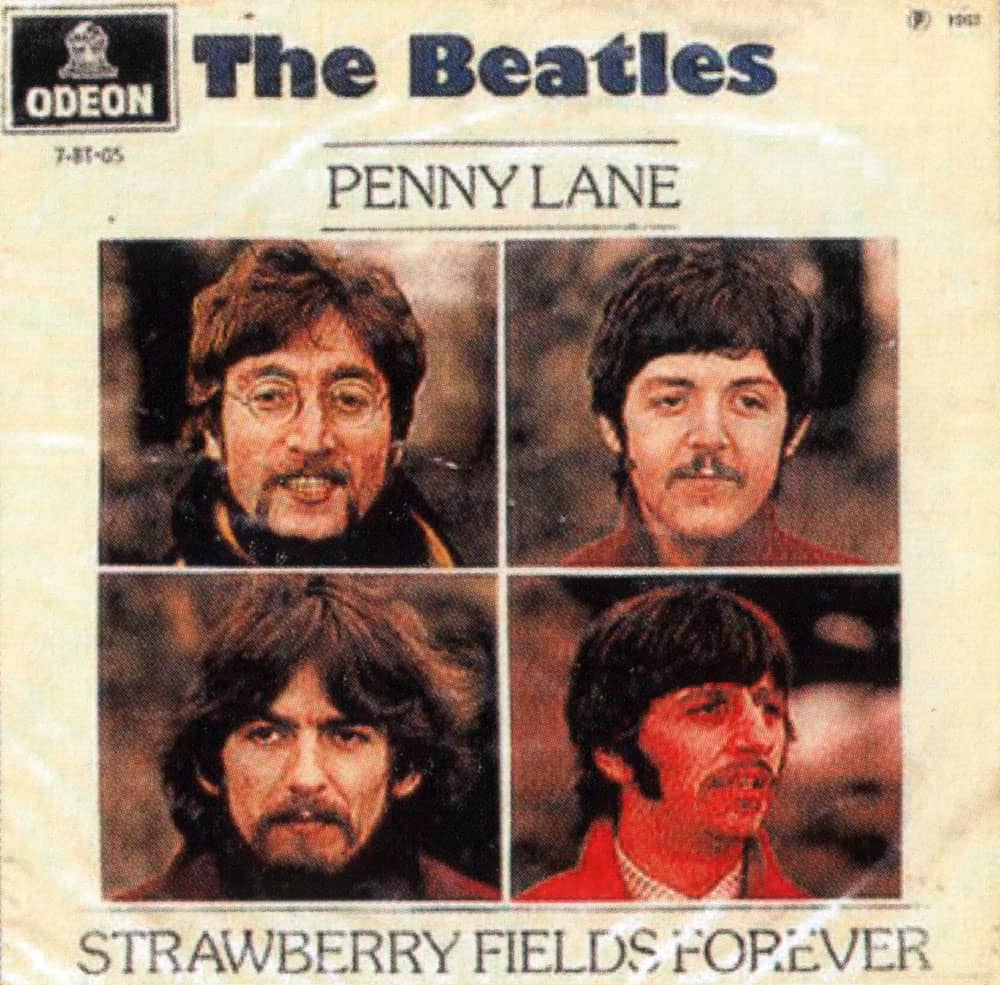
This song was part of what I think was the best single ever released. Penny Lane/Strawberry Fields. Both of the songs are connected with Liverpool. Both John and Paul wrote about places where they grew up.  Paul explained that Penny Lane was a suburban district where, until age four, he lived with his mother and father.

The Beatles did not include these two songs on Sgt Pepper. They recorded singles and albums separately for the most part. They ended up on the Magical Mystery Tour album in America.

Lennon and McCartney were competitive and for the most part it was a good competitiveness that resulted in timeless songs that will be still remembered 100 years from now.

They made promotional films for both songs. This must have been a shock to some people. They had not seen the Beatles since the year before…they had ditched the mop tops and gone weird…that must have been in some people’s minds. The music had a sophistication that earlier songs didn’t have.

The single only made #2 in the UK…it was locked out of the #1 position by no other than Elbert Humperdinck with Release Me. It did peak at #1 in the Billboard 100, #1 in Canada, and #1 in New Zealand in 1967.

In 1967, Capitol released Beatles music on a new but short-lived format called “Playtapes.” These tape cartridges did not have the capabilities to include entire albums, so a truncated four-song version of “Magical Mytery Tour” was released in early 1968 in this portable format, some rare copies having a picture from the “Help!” soundtrack album on the front of the tape. “Penny Lane” was one of the four songs on this release. These Playtapes are highly collectable today.

Paul McCartney: “When I came to write it, John came over and helped me with the third verse, as often was the case. We were writing childhood memories: recently faded memories from eight or ten years before, so it was a recent nostalgia, pleasant memories for both of us. All the places were still there, and because we remembered it so clearly we could have gone on.” John himself relates: “We really got into the groove of imagining Penny Lane, you know – the bank was there, and that was where the tram sheds were and people waiting and the inspector stood there, the fire engines were down there. It was just reliving childhood.” In John’s Playboy interview of 1980, he concurs about his input in writing the song: “I wrote some of the lyrics. I can’t remember which. It was all Paul’s melody.”

“There was a barber shop called Bioletti’s with head shots of the haircuts you can have in the window and I just took it all and arted it up a little bit to make it sound like he was having a picture exhibition in his window. It was all based on real things; there was a bank on the corner so I imagined the banker, it was not a real person, and his slightly dubious habits and the little children laughing at him, and the pouring rain. The fire station was a bit of poetic license; there’s a fire station about half a mile down the road, not actually in Penny Lane, but we needed a third verse so we took that and I was very pleased with the line ‘It’s a clean machine.’ I still like that as a phrase, you occasionally hit a lucky little phrase and it becomes more than a phrase. So the banker and the barber shop and the fire station were all real locations.”

Here are the two videos…Strawberry Fields and Penny Lane… See those glasses that John Lennon slips on in the Penny Lane Video? The square ones…I have some identical from that time period…they are really cool.

Penny Lane

In Penny Lane, there is a barber showing photographs
Of every head he’s had the pleasure to know
And all the people that come and go
Stop and say, “Hello”

On the corner is a banker with a motorcar
And little children laugh at him behind his back
And the banker never wears a mac
In the pouring rain, very strange

Penny Lane is in my ears and in my eyes
There beneath the blue suburban skies
I sit, and meanwhile back
In Penny Lane there is a fireman with an hourglass
And in his pocket is a portrait of the Queen
He likes to keep his fire engine clean
It’s a clean machine

Penny Lane is in my ears and in my eyes
A four of fish and finger pies
In summer, meanwhile back
Behind the shelter in the middle of the roundabout
The pretty nurse is selling poppies from a tray
And though she feels as if she’s in a play
She is anyway

In Penny Lane, the barber shaves another customer
We see the banker sitting waiting for a trim
And then the fireman rushes in
From the pouring rain, very strange

Penny Lane is in my ears and in my eyes
There beneath the blue suburban skies
I sit, and meanwhile back
Penny Lane is in my ears and in my eyes
There beneath the blue suburban skies
Penny Lane!

George Harrison – All Those Years Ago

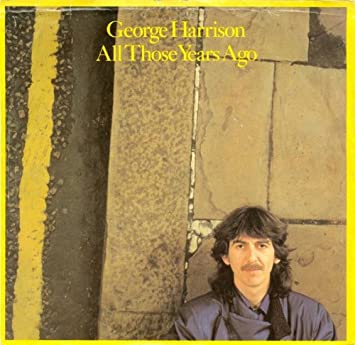
I remember this George Harrison song well in 1981. This song was tribute to John Lennon, who was shot and killed the year before. The song had a bouncy melody and it was originally wrote for Ringo. After Lennon was murdered George re-wrote the lyrics to show is feelings for John.

Ringo did end up playing on the track with Paul and Linda McCartney, and Denny Laine from McCartney’s band Wings. Long time Beatle producer George Martin produced this for Harrison. Geoff Emerick, one of The Beatles sound engineers, also had a hand in this tune.

This appeared on the album Somewhere In England. I bought the single and then the album. The album peaked at #11 in the Billboard Album Charts, #13 in the UK, and #14 in Canada. The song peaked at #2 in the Billboard Album Charts, #13 in the UK, and #3 in Canada in 1981.

Al Kooper: “George was in the kitchen, white as a sheet, real shook up. We all had breakfast. He took calls from Paul and Yoko, which actually seemed to help his spirit, and then we went into the studio and started the day’s work. Ray and I kept George’s wine glass full all day…”

All Those Years Ago

I’m shouting all about love
While they treated you like a dog
When you were the one who had made it so clear
All those years ago

I’m talking all about how to give
They don’t act with much honesty
But you point the way to the truth when you say
All you need is love

Living with good and bad
I always looked up to you
Now we’re left cold and sad
By someone the devil’s best friend
Someone who offended all

We’re living in a bad dream
They’ve forgotten all about mankind
And you were the one they backed up to the wall
All those years ago
You were the one who imagined it all
All those years ago

All those years ago
All those years ago

Deep in the darkest night
I send out a prayer to you
Now in the world of light
Where the spirit free of lies
And all else that we despised

They’ve forgotten all about God
He’s the only reason we exist
Yet you were the one that they said was so weird
All those years ago
You said it all though not many had ears
All those years ago
You had control of our smiles and our tears
All those years ago

All those years ago

All those years ago

All those years ago

BARBARA – Single Review: “Rainy Days in June”

A cool 70’s sounding current pop song. Jeff mentions John Sebastian in his write up and it does have that feel about it.

EclecticMusicLover's avatarECLECTIC MUSIC LOVER

Barbara is the music project of Henry and John Tydeman, two charismatic brothers from Brighton and Hove, England. Bucking the current music trends of hip hop, dancepop, 80s revival, post punk and godawful bro-country, their sunny, uplifting sound is a charming and anachronistic blend of – in their own words – “a bit of 70s US AM radio, a dash of English music hall, the effortless catchiness of a Broadway musical, a sprinkling of sequined power pop, luscious Disney strings and glorious golden harmonies.” Listening to their songs, I’d say that’s a fitting description I cannot improve upon.

The guys released their wonderful debut single “BRB” this past January, then followed in May with “New Communications”, a lighthearted take on the pitfalls of social media. Both songs garnered support by BBC Introducing and Louder Than War, and this past summer, they had the pleasure of performing at…

View original post 335 more words

Twilight Zone – Printer’s Devil

★★★★★ Febraury 28, 1963 Season 4 Episode 9

If you want to see where we are…HERE is a list of the episodes.

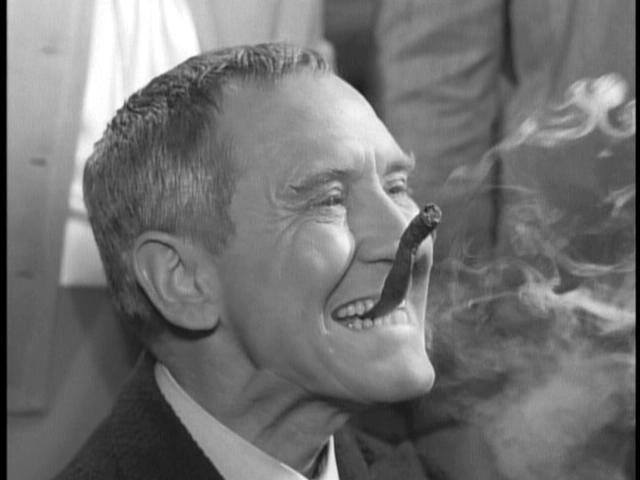
I’ve always liked sell your soul to the devil stories. This one has Burgess Meredith and that means chances are it’s a great one. Three out of four Twilight Zones he is in are classics. Time Enough At Last, The Obsolete Man, and this one are remembered episodes of the Twilight Zone. His eyebrows were pointing slightly upward, a twisted cigar in his mouth, he certainly looks the part. He is a grinning, leering Devil, full of subtleties. His interpretation goes well beyond the lines. Meredith is also listed as one of the writers. 

Robert Sterling plays Douglas Winter, a down on his luck newspaper owner who is about to get pushed out by a larger paper. Pat Crowley plays Jackie Benson who is Douglas’s much more acute girlfriend. The hour format doesn’t hurt this one at all…in fact it helps a bit. The fourth season is not full of classic episodes but I have always considered this one…one of the best. 

Ralph Senensky directed this episode. I want to use this opportunity to tell everyone who is interested that he has a blog and talks about all the shows he directed. The Waltons, Night Gallery, Twilight Zone, and much more. His memories are insightful about those old shows. He still posts and he is around 98 years old. 

Ralph Senensky: Actors like Burgess Meredith fascinated me with the preparation they brought to their roles. They didn’t just memorize their lines. As Beulah Bondi once said to me, “After the lines are learned, that’s when the work begins.”  I’m sure Burgess took his cue for how to work at the linotype machine from one of Jackie’s lines: “If he doesn’t play Chopin’s Polonaise, I’m going to be disappointed.”

This show was written by Robert Sterling, Pat Crowley, and Burgess Meredith

Rod Serling’s Opening Narration: 

Take away a man’s dream, fill him with whiskey and despair, send him to a lonely bridge, let him stand there all by himself looking down at the black water, and try to imagine the thoughts that are in his mind. You can’t, I can’t. But there’s someone who can—and that someone is seated next to Douglas Winter right now. The car is headed back toward town, but its real destination is the Twilight Zone.

Summary

Douglas Winter, the editor of The Courier, a failing newspaper, feels there is nothing to live for after a number of employees quit, including the Linotype operator. On a bridge while drunk, he looks down into the inviting water below. When he is going to commit suicide, he is approached by one “Mr. Smith”, who comments that it’s a short fall and probably wouldn’t do a very good job. He then asks Doug for a light, and, if he wasn’t quite ready, a ride into town. Amused and forgetting about suicide, Winter gives him a lift to a café, where Mr. Smith agrees to provide the editor with money to pay off debts and continue the operation of the newspaper. Mr. Smith also signs up to replace the linotype operator and be the sole reporter. With nothing to lose, Doug agrees to the proposition.

Rod Serling’s Closing Narration:

Exit the infernal machine, and with it his satanic majesty, Lucifer, prince of darkness—otherwise known as Mr. Smith. He’s gone, but not for good; that wouldn’t be like him—he’s gone for bad. And he might be back, with another ticket….to The Twilight Zone.

CAST

Rod Serling…Narrator / Self – Host (uncredited)
Burgess Meredith…Mr. Smith
Robert Sterling…Douglas Winter
Pat Crowley…Jackie Benson
Ray Teal…Mr. Franklin
Charles P. Thompson…Andy Praskins
Doris Kemper…Landlady
Camille Franklin…Molly

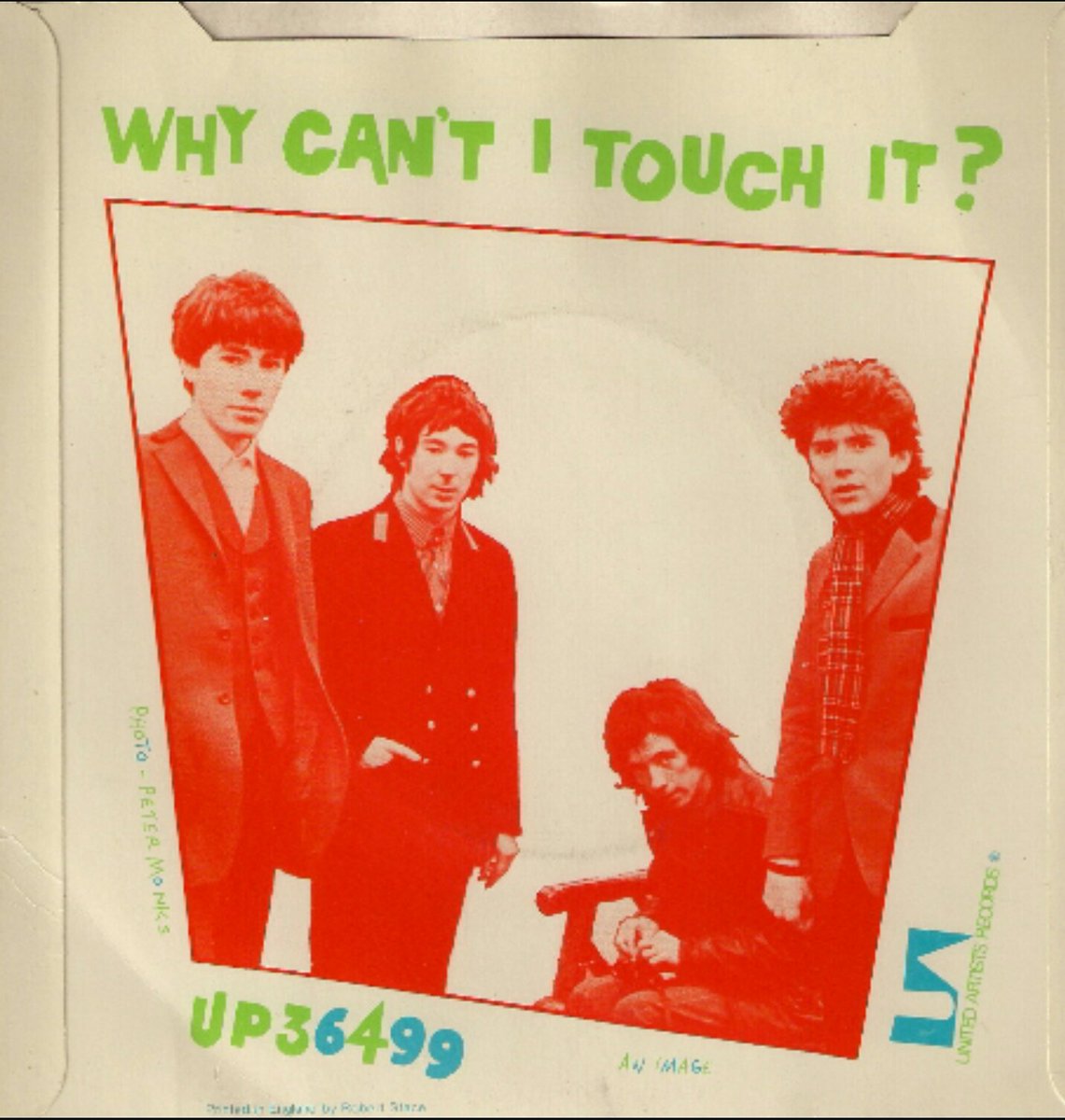
Buzzcocks – Why Can’t I Touch It

This song is tight and very likable right off the bat. The band was punk but with a pop sensibility…a great combination.

The song didn’t appear on a studio album….it was the B side to Everybody’s Happy Nowadays. The single peaked at #29 in the UK in 1979. This is too good to be a B side…the song has been included on movie soundtracks and The Guardians of the Galaxy: The Telltale Series video game. It also was featured on  Entourage in 2009.

The Buzzcocks formed in Bolton, England in 1976 by singer-songwriter-guitarist Pete Shelley and singer-songwriter Howard Devoto.  They chose the name Buzzcocks after reading the headline, “It’s the Buzz, Cock!”, in a review of the TV series Rock Follies in Time Out magazine. The “buzz” is the excitement of playing on stage; “cock” is northern English slang meaning friend.

Why Can’t I Touch It was written by Steve Diggle, Steve Garvey, John Maher, and Pete Shelley.

Why Can’t I Touch It

Well, it seems so real I can see it
And it seems so real I can feel it
And it seems so real I can taste it
And it seems so real I can hear it

So why can’t I touch it?

But then it looks so real I can see it
And it feels so real I can feel it
And it tastes so real I can taste it
And it sounds so real I can hear it

So why can’t I touch it?

Then it looks so real I can feel it
And it feels so real I can taste it
And it tastes so real I can hear it
And it sounds so real I can see it

So why can’t I touch it?

Now, it is so real I can see it
And it is so real I can feel it
And it is so real I can hear it
And it is so real I can be it

So why can’t I touch it?

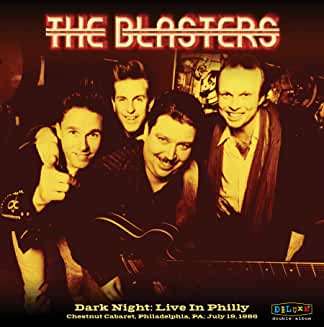
Blasters – Dark Night

The guitar intro to this song is worth the price of admission.

Some rockabilly bands, or roots rock bands, sound like they came in on a nostalgia wave from the 1950s. There is nothing wrong with that but…not the Blasters. They sounded contemporary in the 80s even in the middle of a period where production was at its height. Their music still sounds timely now…years after it was released.

Just the intro to this song sends shiver up my spine. This song was on the Hard Line album released in 1985. This album featured Stan Lynch from Tom Petty and the Heartbreakers on a few tracks and Blasters fan John Mellencamp wrote and co-produced a track (Colored Lights) also.  Hard Line was the Blasters’ final studio album with their original lineup.

Dave Alvin wrote all the songs on the album except the Mellencamp song. He left the band in 1986 for a solo career. He has played in some other bands like X and with The Flesh Eaters. Now he occasionally will rejoin The Blasters on reunion tours with the original lineup.

The song has gained recognition for its appearances in several films and tv shows with its most famous being in the 1996 vampire movie From Dusk Till Dawn of which it is the main theme.

The song was also used in an episode of Miami Vice in 1985.

Dark Night

Hot air hangs like a dead man
From a white oak tree
People sitting on porches
Thinking how things used to be
Dark night
It’s a dark night
Dark night
It’s a dark night

The neighborhood was changing
Strangers moving in
A new boy fell for a local girl
When she made eyes at him

She was young and pretty
No stranger to other men
But windows were being locked at night
Old lines were drawn again

I thought these things
Didn’t matter anymore
I thought all that blood
Had been shed long ago
Dark night
It’s a dark night

He took her to the outskirts
And pledged his love to her
They thought it was their secret
But someone knew where they were

He held her so close
He asked about her dreams
When a bullet from a passing car
Made the young girl scream

I thought these things
Didn’t happen anymore
I thought all that blood
Had been shed long ago

Dark night
It’s a dark night
Dark night
It’s a dark night

Heaven and Hell – by Don Felder and Wendy Holden…Book

Let me start this out by being completely truthful. I am not an Eagles fan whatsoever but I like biographies and I do respect the band as musicians and songwriters. This is a good book for Eagles fans and rock fans in general. It covers a lot of history of the Eagles and rock in the 60s and 70s.

Felder by far was the most versatile of the band. He was offereded a teaching job at Berklee College of Music in Boston before he even joined the Eagles.

What made me want to read this book was…the documentary on the Eagles released in 2013 (I also love rock documentaries). One of the reasons they made the documentary was because of this book! Don Henley and Glenn Frey were livid about Heaven and Hell and wanted to tell their side. The funny thing is… they ended up proving Don Felder right on most of what he wrote.

It’s a good book…I liked it because it helped document an important time in rock music…the sixties and seventies. The book is interesting for more reasons than the Eagles. Florida in the 1960s was a hotspot for future rock and roll stars. Don Felder, Tom Petty, Allman Brothers, Stephen Stills, and Lynyrd Skynyrd just to name a few were all playing clubs on both coasts of Florida.

Don Felder grew up in Gainesville Florida and worked at a music store. He gave young Tommy his first guitar lessons…that Tommy would be Tom Petty. He played in a band with Stephen Stills in high school. He then met future Eagle Bernie Leadon and they started to play in bands together. Felder was taught slide guitar by no other than Duane Allman! They played many of the clubs that the Allman Joys did.

It’s worth reading just for his pre-Eagle days.

When the Eagles first formed, their goal was to divide the writing and singing equally. That way, they reasoned, nobody would become a star or feel like a sideman. That had happened in their previous bands, and they didn’t create the Eagles to go through all that again. After a while that plan went out the window and the problems started.

You learn about the dynamics of the Eagles and how everything changed after Hotel California. Henley and Frey took over the band and called the shots. The problem was Felder was a full member (owner) in the band unlike Timothy B Schmit and Joe Walsh who were just paid employees then and now. When Felder would sugggest something or would want to know where the money was going…he was ignored or pushed off to Irving Azoff the manager by Henley and Frey.

He also covers the problems that Bernie Leadon and Randy Meisner had with Frey and Henley….and the close friendship that he had with Joe Walsh.

This is not a gossip book. Felder doesn’t use the book just to slam Frey and Henley. Felder has faults and we see them in this book. He does seem to try to be even handed. As I’ve mentioned before…one look at the Eagles documentary and most of what he says will be verified. He covers their career…up until he was let go.

It’s an enjoyable book and I would recommend it. As I said, I’m not an Eagles fan but I enjoyed it.

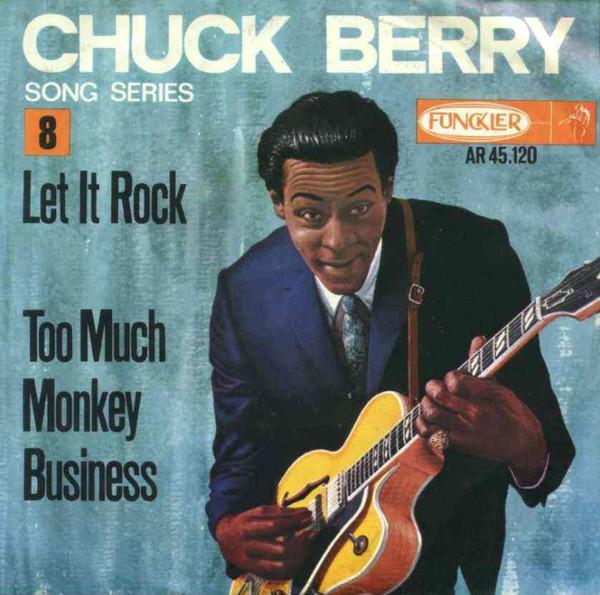
Chuck Berry – Too Much Monkey Business

Love the Chuck’s bright guitar intro! Chuck is the father of rock and roll guitar. Everything comes from him. Rockabilly, pop, rock, hard rock, and heavy metal…Chuck is at the core.

The guitar influence he has over rock music is obvious but his rock and roll poetry shouldn’t be forgotten either. While Keith Richards was listening to his guitar closely…Bob Dylan was also listening to his poetry about life.

Too Much Monkey Business was released in September 1956 as the B-side of Brown Eyed Handsome Man. I love how Chuck spits out the lyrics to this song. Bob Dylan did something simiiar on Subterranean Homesick Blues a little later in the sixties.

Berry made up a word in this song, singing, “I don’t want your botheration.” This wasn’t the first time he used his own language: In Maybellene he sings about motorvating.

Too Much Monkey Business peaked at #9 in the Hot Billboard 100, #4 in the US R&B Charts, and #36 in the UK in 1956.

It’s incredible when you look at the output of Chuck Berry in the 50s.

From Songfacts

 In his comprehensive Berry-ography Long Distance Information: Chuck Berry’s Recorded Legacy, Berry fan Fred Rothwell says this is a song about “the everyday hassles of the average working stiff” and asks, “Who but Chuck Berry would consider writing about such an everyday irritant as losing change in a payphone, and who else would do it so succinctly…”

This echoes Berry’s sentiments; in his autobiography he says the song was meant to describe most of the kinds of hassles a person encounters in everyday life. 

Bob Dylan is one of the many musicians to draw influence from Berry. When Berry won a PEN Award for song lyrics in 2012, Dylan sent him a note saying, “That’s what too much monkey business will get ya.”

Too Much Monkey Business

Runnin’ to-and-fro, hard workin’ at the mill
Never fail in the mail, yeah, come a rotten bill
Too much monkey business, too much monkey business
Too much monkey business for me to be involved in

Salesman talkin’ to me, tryin’ to run me up a creek
Says you can buy now, gone try, you can pay me next week, ahh
Too much monkey business, too much monkey business
Too much monkey business for me to be involved in

Blonde haired good looks, tryin’ to get me hooked
Want me to marry, get a home, settle down, write a book
Too much monkey business, too much monkey business
Too much monkey business for me to be involved in

Same thing every day, gettin’ up, goin’ to school
No need for me to complain, my objection’s overruled, ahh
Too much monkey business, too much monkey business
Too much monkey business for me to be involved in

Take home, something wrong, dime gone, will hold
Order suit, hoppered up for telling me a tale, ahh
Too much monkey business, too much monkey business
Too much monkey business for me to be involved in

Been to yokohama, been fightin’ in the war
Army bunk, army chow, army clothes, army car, aah
Too much monkey business, too much monkey business
Too much monkey business for me to be involved in

Workin’ in the fillin’ station, too many tasks
Wipe the windows, check the tires, check the oil, dollar gas
Too much monkey business, too much monkey business
Don’t want your botheration, get away, leave me

Too much monkey business for me

Zombies – This Will Be Our Year

Next to Auld Lang Syne this is my favorite New Years Song. A favorite of mine from a favorite band of mine. Everyone… I wish you a Happy New Year in 2022.

You didn’t have to read my blog but you did and I really appreciate it…I want to thank all of you for reading and commenting in 2021.

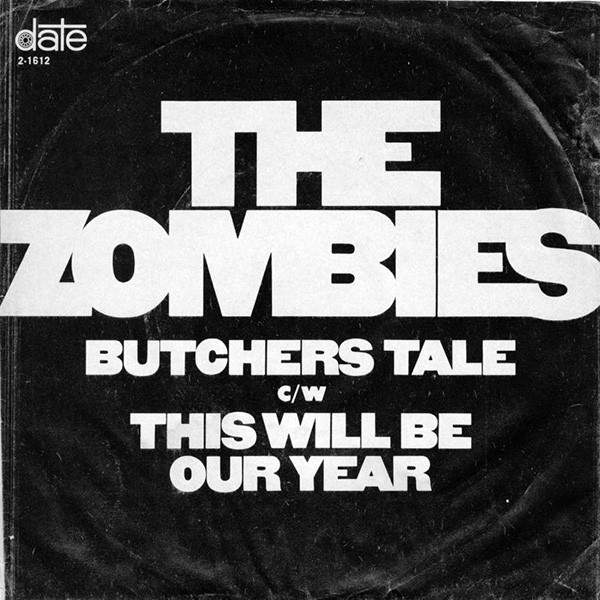
This song sounds like it should have been a hit but it was never pushed as a single at the time. It was the B side to Butcher’s Tale  (Western Front 1914) which is an experimental song and was a big surprise to the band that it was picked as the first single. Both are from the great album Odessey and Oracle in 1968. There are several songs on this album that could have been in the charts but Time of the Season was the only one that made it and it was a year after the album was released.

Bruce Eder of AllMusic gave the album five stars out of five, calling it “one of the flukiest (and best) albums of the 1960s, and one of the most enduring long-players to come out of the entire British psychedelic boom”.

On recording Odessey and Oracle….Rod Argent

“We had the chance of going in and putting things down in the way we wanted people to hear them and we had a new studio, we walked in just after The Beatles had walked out [after recording Sgt. Pepper]. We were the next band in. They’d left some of their instruments behind … I used John Lennon’s Mellotron, that’s why it’s all over Odessey and Oracle. We used some of their technological advances … we were using seven tracks, and that meant we could overdub for the first time. And it meant that when I played the piano part I could then overdub a Mellotron part, and it meant we could have a fuller sound on some of the songs and it means that at the moment the tour we’re doing with Odessey and Oracle it means we’re actually reproducing every note on the original record by having extra player with us as well.”

This Will Be A Year

The warmth of your love
Is like the warmth of the sun
And this will be our year
Took a long time to come

Don’t let go of my hand 
Now darkness has gone
And this will be our year 
Took a long time to come

And I won’t forget 
The way you held me up when I was down
And I won’t forget the way you said, 
“Darling I love you”
You gave me faith to go on

Now we’re there and we’ve only just begun
This will be our year
Took a long time to come

The warmth of your smile
Smile for me, little one
And this will be our year
Took a long time to come

You don’t have to worry
All your worried days are gone
This will be our year
Took a long time to come

And I won’t forget 
The way you held me up when I was down
And I won’t forget the way you said, 
“Darling I love you”
You gave me faith to go on

Now we’re there and we’ve only just begun
And this will be our year
Took a long time to come

Yeah we only just begun
Yeah this will be our year
Took a long time to come

Foo Fighters – Next Year

Well…it is “Next Year” today…I hope 2022 is a great year for all of us. 

You could call this a power ballad. It sounds a little like Britpop and Dave Grohl has criticized the song…no not critize…he HATES the song but it’s one of my favorites by them.

Dave Grohl: ‘Next Year’ is a piece of shit! That song is so stupid! It’s weird.”

I like weird Dave…

The song was released in December of 2000. It was on the album There Is Nothing Left to Lose. It peaked at #14 in the US Alternative Airplay Charts, #12 in Canada, and #42 in the UK in 2000-2001. 

The video is great… it remakes the Apollo 11 mission with clips around that time. It ends with the Foo Fighters in astronaut gear similiar to this Led Zeppelin photo. 

Led Zeppelin's 25 Greatest Deep Cuts : Napster

Next Year - Wikiwand

From Wiki: The opening of “Next Year” was used as the theme song for the NBC television series Ed (2000–2004). The show’s creators, Rob Burnett and Jon Beckerman (formerly of the Late Show with David Letterman) used the song despite knowledge of production company Viacom’s insistence that they own the rights to the show’s theme song. “Next Year” was thus ultimately replaced by Clem Snide’s “Moment in the Sun” during the second season. As a result of outcries from Burnett and Beckerman, however, Viacom relented and “Next Year” returned as the theme song in the third and fourth seasons.

Next Year

I’m in the sky tonight
There I can keep by your side
Watching the wide world riot
And hiding out
I’ll be coming home next year

Into the sun we climb
Climbing our wings will burn white
Everyone strapped in tight
We’ll ride it out
I’ll be coming home next year

Come on, get on, get on
Take it till life runs out
No one can find us now
Living with our heads underground

Into the night we shine
Lighting the way we glide by
Catch me if I get too high
When I come down
I’ll be coming home next year

I’m in the sky tonight
There I can keep by your side
Watching the whole world wind
Around and round
I’ll be coming home next year

Come on, get on, get on
Take it till I fall down
No one can find us now
Living with our heads underground

I’ll be coming home next year
Everything’s all right up here
And if I come down
I’ll be coming home next year

Say goodbye
Say goodbye
Say goodbye
Say goodbye

I’ll be coming home next year
Everything’s all right up here
And if I come down
I’ll be coming home next year