It’s funny how we find music, movies, and TV Shows. As I’ve said before I first watched a TV show in 2007-2008 called Life On Mars and not only was the show great but I also found some music I never heard before. The show was about Sam Tyler…a 2006 cop that got hit by a car and woke up in 1973. It remains one of my favorite shows of all time.
Life On Mars was based on a UK seventies cop show… this show… called The Sweeney. It took me a few years but I decided to check The Sweeney out. I love it. It’s gritty, dirty, and realistic. No cop shows at the time in America could be compared to this one. Shows like Kojak were more sanitized than The Sweeney. Filmed right on the streets of London, with plenty of graphic violence, the series nearly defines the expression “gritty drama.”
Many episodes had a bittersweet ending, with perhaps one villain caught, but justice rarely served for everyone, and plenty of loose ends as the credits rolled. And you could count on the heroes getting a pretty good thrashing in most episodes, though they gave as good as they got in fights.
The two main characters were Jack Regan (John Thaw) and George Carter (Dennis Waterman). Jack was Detective Inspector Regan who had little regard for protocol and would not think twice about getting criminals legally or otherwise. Detective Sargant George Carter worked under Regan and tended to go more by the rules and was sometimes Regan’s conscious…when he listened.
As the series went along you could see the characters grow and even Regan started to go more with the guidelines. It’s a great show and the writing from episode to episode is consistent.
The show ran from 1974 through 1978 with 54 episodes plus two full length movies released in 1977 and 1978. Although it was extremely popular, a combination of high production costs and creator burnout meant that it only lasted for four years.
For those of you who have seen Life On Mars…Gene Hunt was Regan…Hunt was more bombastic but the thread is there between the two. I could even draw comparisons to Sam Tyler and Carter trying to convince their boss to do the right thing. Life On Mars even used a Ford Capri as The Sweeney did.
This show would probably be an HBO series now if it were produced today…give it a try.
I remember this song as a teenager by George Thorogood. Bo Diddley was a little funkier than his rock and roll peers. He developed that wonderful riff that will live on forever where ever rock and roll is played. I could play this over and over on the guitar and never get tired of it. You can be a beginner at guitar but once you learn this…it sounds better than any other riff you can play…you can play it soft or loud…it doesn’t matter. The riff or beat has been called “The Bo Diddley Beat.”
The rhythm to this version is just infectious. Bo Diddley (Ellas McDaniel) wrote this song. It was released in 1956 but did not reach the charts…that boggles the mind.
In 2004, Rolling Stone magazine ranked Bo Diddley’s original song at number 133 on their list of the “500 Greatest Songs of All Time.”
You can be cool… but not Bo Diddley playing his square guitar cool… great guitarist and showman.
I always loved his square guitar. He built a guitar that looked like no other. He designed and constructed a custom built square shaped guitar for himself, he then commissioned Gretsch Guitars and Kinman Guitar Electrix to build further custom built square shaped models for him.
From Songfacts
The title is a play on the word “Hoodoo,” which is a folk religion similar to Voodoo and also popular in the American South. Many blues musicians mentioned Hoodoo in their songs and like Diddley, conjured up images of the skulls, snakes and graveyards.
George Thorogood And The Destroyers recorded a popular cover on their 1978 album Move It On Over. In 1982, Diddley appeared in Thorogood’s video for “Bad To The Bone.” It was good timing, since MTV was new didn’t have many videos.
British blues rockers Juicy Lucy had a #14 hit in the UK in 1970 with their version of this song.
Who Do You Love?
I walk forty-seven miles of barbed wire I use a cobra snake for a necktie I got a brand new house on the roadside Made from rattlesnake hide I got a brand new chimney made on top Made out of a human skull Now come on take a walk with me, Arlene And tell me, who do you love?
Who do you love? Who do you love? Who do you love? Who do you love? Who do you love?
Tombstone hand and a graveyard mind Just twenty-two and I don’t mind dying
Who do you love? Who do you love? Who do you love? Who do you love?
I rode a lion to town, used a rattlesnake whip Take it easy Arlene, don’t give me no lip
Who do you love? Who do you love? Who do you love? Who do you love?
Night was dark, but the sky was blue Down the alley, the ice-wagon flew Heard a bump, and somebody screamed You should have heard just what I seen
Who do you love? Who do you love? Who do you love? Who do you love?
Arlene took me by my hand And she said ooo-wee, Bo, you know I understand
Who do you love? Who do you love? Who do you love? Who do you love?
I’m going to write about my top 10 favorite TZ episodes in the next few weeks…Most of the Twilight Zones are like songs to me…to be enjoyed over and over. The Twilight Zone is not really an ordinary TV show. It’s THE TWILIGHT ZONE. This is my personal choice for #8 on my list.
Probably one of the creepiest Twilight Zones. The way it ends keeps you thinking after the show is done. This was the final episode of The Twilight Zone to be filmed, although two episodes filmed earlier were aired afterwards.
Rod Serling Intro:Mr. Floyd Burney, a gentleman songster in search of song, is about to answer the age-old question of whether a man can be in two places at the same time. As far as his folk song is concerned, we can assure Mr. Burney he’ll find everything he’s looking for, although the lyrics may not be all to his liking. But that’s sometimes the case – when the words and music are recorded in the Twilight Zone.
Richard Donner wrote this episode. This one wasn’t rated as high as some of the others but it stuck with me for a long time. The desperation in Mr. Floyd Burney is something to remember.
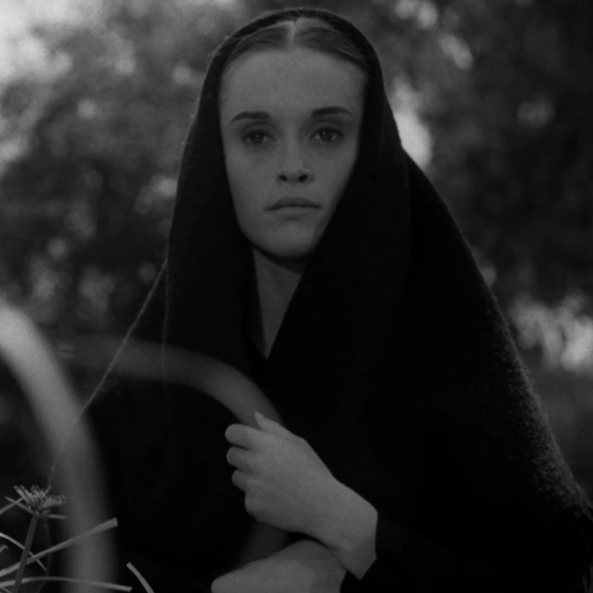
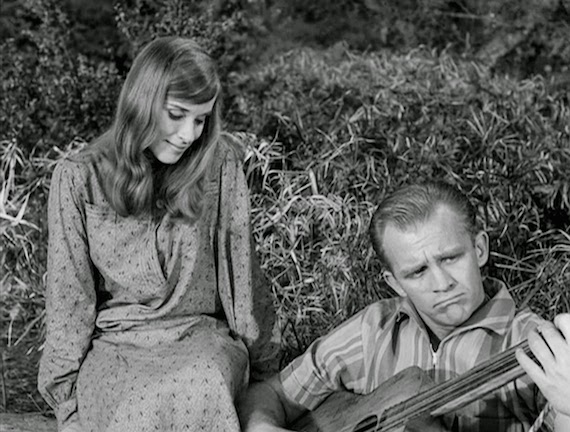
Come Wander With Me: Singer Floyd Burney, a rockabilly singer, goes deep into the back woods hoping to find a folk song to buy and release. As soon as he arrives he hears a beautiful singing voice which draws him deeper into the woods. He eventually meets Mary Rachel who tells him the song he heard belonged to someone and that she’s forbidden to tell anyone about it. When she finally reveals it to him, Floyd learns that his future might be preordained. And the outcome might make him wish he never roamed into this strange place.
Gary Crosby (Bing Crosby’s son) plays Floyd Burney and is very realistic as a fast talking rockabilly singer. Bonnie Beecher is the mystery of this show. She didn’t do much acting after this…her voice was used for the main song and it was beautiful. She ended up marrying Hugh Nanton Romney Jr. (Wavy Gravy) who was an entertainer and peace activist and was seen on the film Woodstock.
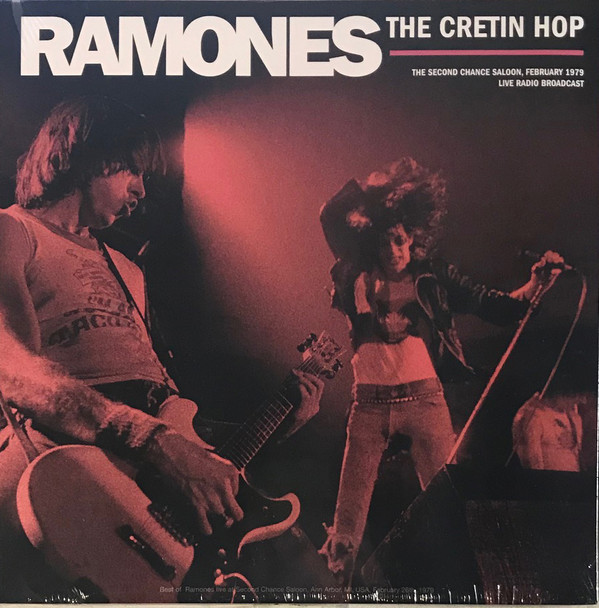
In 1977 you had disco nearing it’s peak and slick pop going on everywhere…and you also had the Ramones. They bucked the trend of radio at the time. When they were recording the album they first heard the Sex Pistols album.
Rocket to Russia was the album this song was on. They had a bigger budget on this album. Johnny Ramone had just heard the Sex Pistols album and wasn’t happy. He said: “These guys ripped us off and I want to sound better than this.” They recorded most of the album in one take so the rest of the money went toward production.
The album peaked at #49 in the Billboard 100, #36 in Canada, and #60 in the UK in 1977.
Joey Ramone: “‘Cretin Hop’ came from when we were in St. Paul, Minnesota. We went some place to eat and there were just all these cretins all over the place. And there was a Cretin Avenue, where we drove into the city.”
From Songfacts
The Ramones bucked the trends of the ’70s with simplistic rock songs, often about freaks and deviants. It didn’t make them rich, but it appealed to core group of fans that fell in with this culture. This being the disco era, songs like “Cretin Hop” were completely at odds with what was getting airplay. The Ramones were later rewarded for their skewed view and stewardship of their genre when they were inducted into the Rock and Roll Hall of Fame in 2002.
Cretin Hop
There’s no stoppin’ the cretins from hoppin’ You gotta keep it beatin’ for all the hoppin’ cretins
Cretin, cretin I’m gonna go for a whirl with my cretin girl My feet won’t stop doin’ the Cretin Hop Cretin, cretin
One-two-three-four, cretins want to hop some more Four-five-six-seven, all good cretins go to heaven
There’s no stoppin’ the cretins from hoppin’ You gotta keep it beatin’ for all the hoppin’ cretins
Cretin, cretin I’m gonna go for a whirl with my cretin girl My feet won’t stop doin’ the Cretin Hop Cretin, cretin
One-two-three-four, cretins want to hop some more Four-five-six-seven, all good cretins go to heaven
Johnny always needs more than he takes
Forgets a couple of chords, forgets a couple of breaks
And everybody tells me that Johnny is hot
Johnny needs something, what he ain’t got
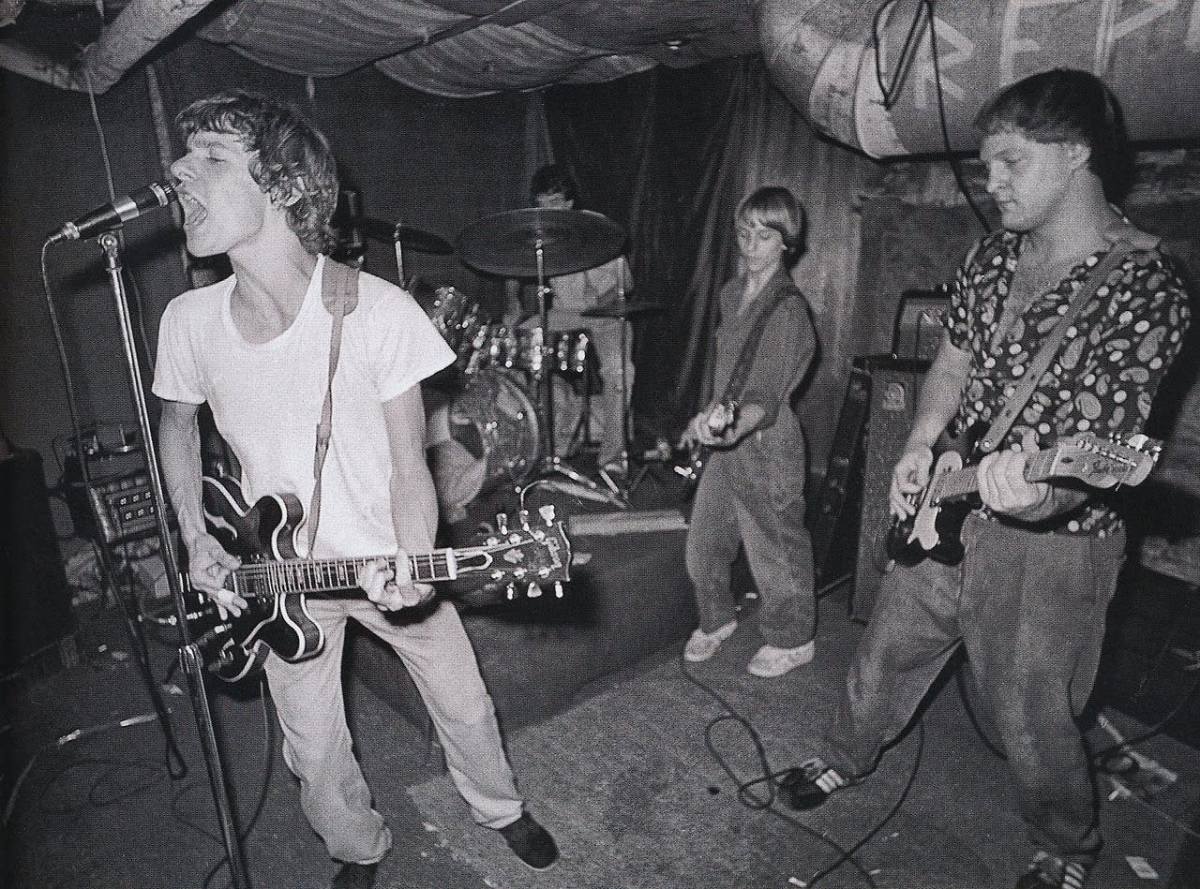
Almost anything off of a Replacements album is going to be an album cut. This one is off of their debut album Sorry Ma, Forgot to Take Out the Trash. The album was released on the small Minneapolis, Minnesota label Twin Tone in 1981.
I listened to them in the mid 80s but lost touch until recently. I’m going through all of their albums so I will be post some from every album coming up. I never knew their first album too much but I like it a lot. It’s punkish, rock, raw, with some great lyrics by Paul Westerberg. On this one Bob Stinson’s guitar playing feels like it may break down at anytime but stays on course and I love what he plays.
This song is about punk guitarist Johnny Thunders (John Anthony Genzale) who was a founding member of the New York Dolls. He also played with the punk band The Heartbreakers. He was in Minneapolis in 1980 with his band Gang War playing in a bar. The Replacements desperately wanted to open, but were beat out for the gig by Hüsker Dü.
He was physically struggling through the show, while battling an audience hurling objects, Thunders had been rendered a prisoner of his own addictions and cult infamy. Westerberg was in the audience and wrote this song about him.
You don’t see this happen everyday…I mean writing about “Johnny’s Gonna Die” when the guy is alive. Thunders did live a little longer…he died in 1991.
Paul Westerberg on watching Johnny Thunders: “He was frightening and beautiful and mean at the same time,” he said. “Like a child.”
“When Johnny was playing, it looked like he was walking dead, It was pitiful, like watching a guy in a cage.”
Johnny’s Gonna Die
Johnny always takes more than he needs Knows a couple chords, knows a couple leads Johnny always needs more than he takes Forgets a couple of chords, forgets a couple of breaks And everybody tells me Johnny is hot Johnny needs something that he ain’t got
And Johnny’s gonna die Johnny’s gonna die Johnny’s gonna die
Everybody stares and everybody hoots Johnny always needs more than he shoots Standing by a beach and there ain’t no lake He’s got friends without no guts, friends that never ache In New York City, I guess it’s cool when it’s dark There’s one sure way Johnny you can leave your mark
And Johnny’s gonna die Johnny’s gonna die Johnny’s gonna die
A few days ago this song has come up in conversation with a friend of mine. We talked about it and then my friend Dave from A Sound Day posted about it a few days later.
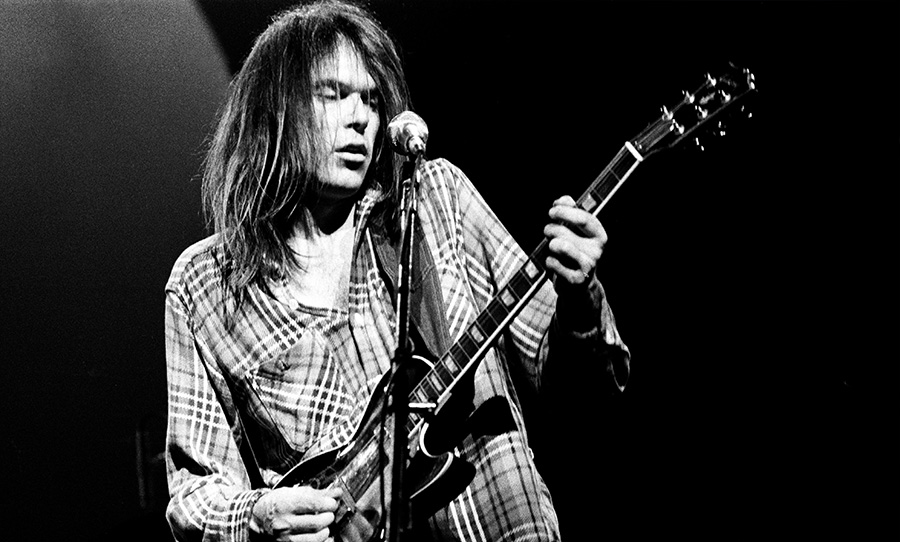
I love the power of the song and I’ve learned it on guitar but as a southern person… I think Neil generalized too much. Even Neil thinks that now. His quote on the song now is “I don’t like my words when I listen to it. They are accusatory and condescending, not fully thought out, and too easy to misconstrue.” Are there people like that in the world? Certainly but they are not all located in the south.
Lynyrd Skynyrd replied to this song with their biggest hit Sweet Home Alabama. Neil was quite happy with “Sweet Home Alabama.” He said, “They play like they mean it, I’m proud to have my name in a song like theirs.”
Young is mentioned in the line “I hope Neil Young will remember, a Southern man don’t need him around anyhow.” Lynyrd Skynyrd were big fans of Young. “Sweet Home Alabama” was meant as a good-natured answer to this, explaining the good things about Alabama. Skynyrd lead singer Ronnie Van Zandt often wore Neil Young T-shirts while performing and he was thinking of covering a Young song called Powderfinger before his death in the crash.
The song was on “After the Gold Rush” released in 1970.
Neil Young: “Oh, they didn’t really put me down! But then again, maybe they did! (laughs) But not in a way that matters. S–t, I think ‘Sweet Home Alabama’ is a great song. I’ve actually performed it live a couple of times myself.”
From Songfacts
In the liner notes for his greatest hits album Decade, Young wrote: “This song could have been written on a civil rights march after stopping off to watch Gone With The Wind at a local theater.”
Young was backed by his band Crazy Horse on this track:
Danny Whitten – guitar Jack Nitzsche – piano Nils Lofgren – guitar Billy Talbot – bass Ralph Molina – drums
Nils Lofgren, a guitarist by trade, played piano on this song, an instrument he never played before After The Gold Rush. Young tasked Lofgren with playing piano as a “special trial,” according to Jimmy McDonough’s Shakey.
In trying to get the piano down, Lofgren tapped into his background with accordion. “I used to be an accordion player, and accordion’s all ‘oompah oompah,'” he said. “So I started doin’ the accordion thing on piano.”
To Lofgren’s surprise, Young loved it.
“That’s the sound I was looking for,” Young said. “I didn’t want to hear a bunch of f–kin’ licks. I don’t like musicians playing licks.”
Director Jonathan Demme first cut the opening sequence of his movie Philadelphia to this song in an effort to get Young to write a song like it for the film. Young gave him “Philadelphia,” which he used over the end. Bruce Springsteen’s contribution, “Streets Of Philadelphia,” was used over the open.
Young was married to his first wife, Susan Acevedo, when he wrote this song in his Topanga Canyon studio. They were not getting along, and Young’s foul mood translated into this track, which he described as “an angry song.”
Randy Newman felt that “Southern Man” was one of Young’s least interesting songs. “‘Southern Man,’ ‘Alabama’ are a little misguided,” he said. “It’s too easy a target. I don’t think he knows enough about it.”
During a filmed performance of this song at London’s Hammersmith Odeon, Crazy Horse’s Billy Talbot and Frank “Poncho” Sampredro dropped acid. “I can vividly remember ‘Southern Man,'” Sampredro’s said in Shakey. “It was wildly out of control – fast, slow, up, down, everywhere. At the end we were singing, I had my eyes closed and I hear this little tiny voice and I turn around and it was just me. Everybody else had quit even playing.”
Southern Man
Southern man, better keep your head. Don’t forget what your good book said. Southern change gonna come at last. Now your crosses are burning fast.
Southern man.
I saw cotton and I saw black. Tall white mansions and little shacks. Southern man, when will you pay them back?
I heard screamin’ and bullwhips cracking. How long? How long?
Southern man, better keep your head. Don’t forget what your good book said. Southern change gonna come at last. Now your crosses are burning fast.
Southern man.
Lily Belle, your hair is golden brown. I’ve seen your black man comin’ round. Swear by God, I’m gonna cut him down!
I heard screamin’ and bullwhips cracking. How long? How long?
I’m asked quite a bit…Max what is your favorite Beatle song? It’s hard to tell you because it changes from day to day. I would have to say A Day In The Life if I had to give one answer… but on certain days…this one would be it. Lennon to me was one of the best all time rock singers. He could do rock and pop/rock with ease. He never liked his voice and always wanted the producer George Martin to cover it up with echo or some effect.
The story behind this one is known to Beatle fans. They were in India with the Maharishi and were asked to meditate all day. Mia Farrow and her sister Prudence was there. Prudence was taking this very seriously and would not come out of her quarters and John wrote this song to cheer her up.
American flautist Paul Horn, who was also with them in Rishikesh said that Prudence was a highly sensitive person, and by jumping straight into deep meditation, against the Maharishi’s advice, she had allowed herself to fall into a catatonic state.
Horn stated, “She was ashen-white and didn’t recognize anybody. She didn’t even recognize her own brother who was on the course with her. The only person she showed any slight recognition towards was Maharishi. We were all concerned about her and Maharishi assigned her a full-time nurse.”
The song was on their massive double album album “The Beatles” or better known as the White Album released in 1968. On this album you get a little bit of everything. 20’s style music, pop, folk, Avant Garde, rock, to hard rock.
Donovan was also there and taught John and Paul and guitar picking style called “clawhammer.” The clawhammer style, is played with the strumming hand formed into a claw, using the backs of the fingernails to strum down on the strings.
The song was not released as a single but remains a favorite album track.
Donovan: “He was so fascinated by fingerstyle guitar that he immediately started to write in a different color and was very inspired” “That’s what happens when you learn a new style.”
Prudence Farrow:“They were trying to be cheerful, but I wished they’d go away. I don’t think they realized what the training was all about.”
From Songfacts
While Mia Farrow inspired such men as Andre Previn, Frank Sinatra and Woody Allen, her sister Prudence left her mark on John Lennon. According to Nancy de Herrera’s book, All You Need Is Love, Prudence met The Beatles on a spiritual retreat with their guru, Maharishi Mahesh Yogi, in India, which she attended with Mia. When Prudence, suffering depression, confined herself to her room, Lennon wrote this song hoping to cheer her up. It did.
Prudence Farrow wanted to “Teach God quicker than anyone else,” according to John Lennon. She would lock herself in her room trying to meditate for hours and hours. From A Hard Day’s Write, by Steve Turner: “At the end of the demo version of Dear Prudence John continues playing guitar and says: ‘No one was to know that sooner or later she was to go completely berserk, under the care of Maharishi Mahesh Yogi. All the people around were very worried about the girl because she was going insane. So, we sang to her.'”
Ringo had left the group as the White Album sessions got very tense, so Paul McCartney played drums. When Ringo came back a short time later, there were flowers on his drum kit welcoming him back.
According to the singer-songwriter Donovan, who was on the retreat in India with The Beatles, he taught John Lennon a “clawhammer” guitar technique that he used on this track.
John Lennon’s handwritten lyrics were auctioned off for $19,500 in 1987.
Lennon considered this one of his favorites.
Siouxsie And The Banshees covered this in 1983. Their version went to #3 in the UK and became their biggest hit.
“Dear Prudence” was the second Beatles song that the Banshees had covered from their White Album. Previously, they’d recorded a version of “Helter Skelter” for their 1978 LP The Scream.
“Helter Skelter was very much part of our live show before we recorded it,” mused Siouxsie Sioux to TeamRock. “The great thing was that the two Beatles songs we chose – ‘Helter Skelter’ and ‘Dear Prudence’ – were not originally singles by The Beatles, so it wasn’t necessarily a surefire: ‘Oh, they’re doing a Beatles song.’ And it was also a bit irreverent as well, I suppose. A good test of doing a cover version is when people think that you’ve written it. Quite a lot of people thought Dear Prudence was an original.”
This song was in the movie Across the Universe, which was based on The Beatles music. In the movie, Prudence (played by T.V. Carpio) locked herself in a closet after discovering that Sadie and JoJo were together when she thought she loved Sadie. Lucy (Evan Rachel Wood), Jude (Jim Sturges), Sadie (Dana Fuges) and Max (Joe Anderson) sing this to make her feel better. It gets her out of the closet and they end the song at a anti-Vietnam War rally.
Siouxsie and the Banshees’ take on the song added to The Beatles’ simple original arrangement. “It was kind of an undeveloped song on the White Album,” Siouxsie said. “and so there was a lot of scope to put in your own stuff, really. What did I want to bring? Oh, some psychedelic transformation there [laughing].”
“No, I think that actual track’s fairly restrained, simple and understated on the White Album,” she added. “I was listening to singles like Itchycoo Park by the Small Faces, so I think it was wanting to capture the 60s, and all that kind of phasing. Also, it was where we were at the time.”
Dear Prudence
Dear Prudence, won’t you come out to play? Dear Prudence, greet the brand new day The sun is up, the sky is blue It’s beautiful and so are you Dear Prudence, won’t you come out to play?
Dear Prudence, open up your eyes Dear Prudence, see the sunny skies The wind is low, the birds will sing That you are part of everything Dear Prudence, won’t you open up your eyes?
Dear Prudence, let me see you smile Dear Prudence, like a little child The clouds will be a daisy chain So let me see you smile again Dear Prudence, won’t you let me see you smile?
Dear Prudence, won’t you come out to play Dear Prudence, greet the brand new day The sun is up, the sky is blue It’s beautiful and so are you Dear Prudence, won’t you come out to play?
I found out about Webb Wilder in the late eighties early nineties. There is a thread through his music that attaches with The Blasters, Red on Green, those rockabilly, punk, rock bands. His web site mentions his music as “”Swampadelic”, “Service-station attendant music”, “Uneasy listening”, and”Psychobilly.”
It also has elements of the 80s cowpunk music and just good rock and roll. I saw him twice through the nineties and he was excellent each time I saw him. This song was released in 1986 and it was on the album It Came From Nashville.
This song I first heard on our local then rock radio station WKDF in Nashville. Poolside is what first drew me in. After I saw him in Nashville at a street fair I was a fan for life. I like unique…and Webb is unique…God bless him…
Webb Wilder:“I came to Nashville as kind of a hunch, an educated guess that it would be a good place for me. Rock ‘n’ roll and country have more in common than not. We don’t have the typical Nashville country sound, but we thought we could use that to our advantage. It’s sorta like we’re a roots band for rock ‘n’ roll fans and a rock band for roots fans”
Poolside
I got a nice apartment, got a window with a view I get up every morning and I go down to the pool Everybody’s pretty, everybody’s nice Everybody’s got a little something on ice I never go swimming, cause that ain’t cool But every day you’re gonna find me hanging round the pool
Poolside baby, laying in the sun With my dark sunglasses, and the radio on Sittin’ in a chaise lounge, greased down, turning brown Let it hit a hundred and three I’ll be poolside, if you’re lookin’ for me
Every woman in the place, has got a novel in her face You know they didn’t come here to read Now they’re looking for a man, with a dark suntan And every now and then I catch them looking at me
I got a little white styrofoam cooler I got an ice cold beer in my hand You know I really got it made Nobody puts me in the shade I got a full-time job, working on my tan
Poolside baby, laying in the sun With my dark sunglasses, and the radio on Sittin’ in a chaise lounge, greased down, turning brown Let it hit a hundred and three I’ll be poolside, if you’re lookin’ for me
Ah yeah, look at me, I’m luxurating now, aw it’s too good
Now it’s a wonderful world we live in Just a few basic common sense rules: No running, no pushing, no profanity And no dogs, no dogs, no dogs, no dogs. At
Poolside, laying in the sun With my dark sunglasses, and the radio on Sittin’ in a chaise lounge, greased down, turning brown Let it hit a hundred and three I’ll be poolside, strictly on the cool side Baby, I’ll be poolside, if you’re lookin’ for me I’ll be poolside, strictly on the cool side Baby, I’ll be poolside, if you’re lookin’ for me I’ll be poolside, if you’re lookin’ for me
For me…this was one of those landmark songs that started a change in music. I liked it because it was a guitar players dream and it was raw without much of the 80’s production. I never was a big fan of them but I did like the throw back to the more rawer rock.
The song peaked at #7 in the Billboard 100 and #24 in the UK in 1988. When this was released as a single in 1987, it charted in the UK but flopped in America. It finally became a hit in the US when they re-released it in 1988 after “Sweet Child O’ Mine” hit #1.
The album Appetite for Destruction was huge. It peaked at #1 in the Billboard Album Charts, #3 in Canada, and #5 in the UK.
The video was shot at Park Plaza and 450 South La Brea in Hollywood. The band’s first video, it was very successful, winning at the 1988 MTV Video Music Awards for Best New Artist Video. Guns N’ Roses performed the song on the show.
Slash:“I was at my house and I had that riff happening and Axl came over and he got those lyrics together, and then the band sort of arranged it. We got an arrangement for the whole band, ’cause that’s how we work. Someone comes in with an idea and someone else has input and in that way everyone’s happy. That came together really quickly too, that was arranged in one day.”
From Songfacts
This song is about Los Angeles. It exposes the dark side of the city many people encounter when they go there to pursue fame. Guns N’ Roses knew this side of the city well: in 1985, they lived in a place on Sunset Boulevard in Los Angeles that they called “Hell House.” The house was often filled with drugs, alcohol and groupies.
Axl Rose wrote the lyrics when he was in Seattle, which gave him some perspective on the size of Los Angeles.
In 2007 Rolling Stone magazine ran a feature on the 20th anniversary of Appetite For Destruction. They explained that a famous lyrics from this song originated when Axl Rose spent a night in a Queens schoolyard before joining the band. Said Rose: “This black guy said, ‘You’re in the jungle! You gonna die.'”
On 93.1 WIBC FM, a radio station in Indianapolis, Indiana, Jake Query, a friend of Axle Rose, gave a different account, saying: “When Axl Rose hitchhiked to Los Angeles, California, on the last leg, a truck driver drove him to Los Angeles, and when Rose got out of the truck, the truck driver said, ‘Welcome to the Jungle.” >>
This was used in the 1988 Clint Eastwood movie The Dead Pool, where the band makes a cameo. It also plays in the opening sequence of the 1989 film Lean On Me, about an inner-city high school reformed by principal Joe Clark. Other movies to use the song include:
The Lego Ninjago Movie (2017) How to Be Single (2016) The Interview (2014) Megamind (2010) Selena (1997) The Program (1993)
This was the second UK single and third US single from Appetite For Destruction. The first single, “It’s So Easy,” was a flop.
Numerous college and pro sports teams use this to intimidate their opponents at home games. The Cincinnati Bengals of the NFL were probably the first. The Norwegian Soccer team Lillestrom SK uses this song before every home game.
This was the first track on Appetite For Destruction, which caused controversy because of its cover, a drawing of a robot apparently raping a woman.
The album was a raging success, selling 18 million copies in America by 2008, making it the best-selling debut album in history until 2018, when the RIAA certified Cracked Rear View by Hootie & the Blowfish at 21 million.
Slash re-recorded his guitar parts as he was dissatisfied with his first attempts. To produce the vicious yet pure tone, the Guns N’ Roses gunslinger used a Les Paul ’59 replica plugged into a Marshall JCM, aided most likely by some Jack Daniel’s.
This was used in the 2017 movie Jumanji: Welcome to the Jungle and the next installment, Jumanji: The Next Level (2019). The films are set in a virtual jungle.
When Axl says “my serpentine,” he’s describing his famous dance, which he copied from Richard Black, lead singer of the band Shark Island.
Slash left the band in 1996, leaving Axl Rose firmly in control. Rose kept the band going with new members and in 2001 got in yet another dispute with Slash when producers of Black Hawk Down wanted to use “Welcome To The Jungle” in the movie. According to Slash, Axl refused unless he could re-record it with the current members of Guns N’ Roses, meaning Slash and the rest of the Appetite For Destruction lineup would have lost out on royalties.
The song never made it into the film, which tells the story of an ill-fated US raid on Mogadishu in 1993. It was going to be used in a scene where Army Rangers are preparing for the raid – in real life, they really did blast the song before heading out. The Faith No More song “Falling To Pieces” was used in its place.
Guns N’ Roses made a surprise appearance at the 2002 MTV Video Music Awards where they performed this song. At the time Axl Rose was the only original member in the band, but there was great anticipation for their album Chinese Democracy, which was expected soon. The album finally appeared in 2008.
This song is used in the soundtrack to the Playstation 2 game Grand Theft Auto: San Andreas. Axl lends his voice to one of the radio stations.
In 2007, three teens at Booth Free School in Roxbury, Connecticut (one of them a janitor), were messing around with the public address system when one of them sang some lyrics to this song, including “You’re in the jungle baby; you’re gonna die.” This freaked out one teacher, who thought it was a threat, barricaded herself in a classroom and called the police, who came in and detained the three teens until they could clear up the misunderstanding.
A line from this song became a bit of a catch phrase for Axl Rose, who began screaming at crowds when performing it at shows, “Do you know where the f–k you are!?” Axl said it in 2006 when he introduced The Killers at the MTV Video Music Awards.
Guns N’ Roses opened for Aerosmith in the summer of 1988, culminating in a show on September 15 at the Pacific Amphitheatre in Costa Mesa, California. At this final show, Aerosmith’s road crew had some fun by dressing up in gorilla costumes and messing around on stage when G N’ R performed this song. It was all in good fun, as the bands got along great, with Axl expressing his admiration for Aerosmith at every show. When Aerosmith took the stage that night, they had Guns N’ Roses join them for an extended jam of “Mama Kin,” a song Guns often covered.
By the end of the tour, Guns N’ Roses was the hotter band – “Sweet Child O’ Mine” hit #1 the week the tour ended.
Slash’s gear for the entire Appetite For Destruction album was a Kris Derrig-built 1959 Les Paul replica guitar, and a rented S.I.R. (known to S.I.R. as Stock #36) Marshall 1959 Superlead Metal Panel modded by Frank Levi and Glenn Buckley (based on Tim Caswell’s modification to Stock #39).
This soundtracked a 2016 Super Bowl commercial for the Taco Bell Quesalupa featuring basketball player James Harden, soccer star Neymar, actor George Takei and “Texas Law Hawk” Bryan Wilson. In the spot, we learn that the cheesy treat will be bigger than Tinder, drones, and possibly even football.
Welcome To The Jungle
Welcome to the jungle We’ve got fun ‘n’ games We got everything you want Honey, we know the names We are the people that can find Whatever you may need If you got the money, honey We got your disease
In the jungle Welcome to the jungle Watch it bring you to your Knees, knees I wanna watch you bleed
Welcome to the jungle We take it day by day If you want it you’re gonna bleed But it’s the price you pay And you’re a very sexy girl That’s very hard to please You can taste the bright lights But you won’t get them for free
In the jungle Welcome to the jungle Feel my, my, my, my serpentine I, I wanna hear you scream
Welcome to the jungle It gets worse here everyday You learn to live like an animal In the jungle where we play If you got a hunger for what you see You’ll take it eventually You can have anything you want But you better not take it from me
In the jungle Welcome to the jungle Watch it bring you to your Knees, knees I’m gonna watch you bleed
And when you’re high you never ever wanna come down, so down, so down, so down, yeah!
You know where you are? You’re in the jungle, baby You’re gonna die
In the jungle Welcome to the jungle Watch it bring you to your Knees, knees
In the jungle Welcome to the jungle Feel my, my, my, my serpentine
In the jungle Welcome to the jungle Watch it bring you to your Knees, knees
In the jungle Welcome to the jungle Watch it bring you to your…
This song was off the album Straight Up which is in my top 5 of power pop albums.
George Harrison helped produce and mix this album and was impressed by this song. It was earmarked to be the first single off the album. That got cancelled. Not that the song couldn’t be a single because it is that good. Day After Day and Baby Blue were the first two singles and I can’t fault George for that.
There were many possible singles from this album. Suitcase, Sweet Tuesday Morning, Take It All and I’d Die Babe are songs that could have been considered.
If you are new to Badfinger and would like to start with an album that is not a greatest hits package…Straight Up is the album to purchase.
Name of the Game
I saw the railway master and I looked him in the eye I said, “Would you go much faster if you thought that you would die?” He said, “Not me sir, I could not care, in fact, I would not try. For protest would not take me far. It’s different, me not being a star.” I lock my feelings in a jar until another day
Oh, comfort me, dear brother, won’t you tell me what you know? For somewhere in this painful world is a place where I can go Oh, long awaiting mother, is it time to make a show? And take your babies to your breast No, we never passed the test And all our sins should be confessed before we carry on
[CHORUS:] Oh, don’t refuse me If you choose me, you’ll follow my shame No, don’t confuse me For I know it’s the name of the game
I got up off my pillow and I looked up at the sun I said, “You can see quite clearly, now, the things that we have done We burned your sacred willow and our battles we have won. But did we get so very far? It’s different, me not being a star.” I lock my feelings in a jar until we go away
In my childhood I played the Monkees to death…all along thinking they were still together and playing but they had broken up years before. On their first two albums they were not allowed to play their own instruments (other bands had this problem also) but by the third album they fought for their freedom and won it.
I remember the show this song was in…Julie Newmar was in it…I didn’t forget Julie Newmar.
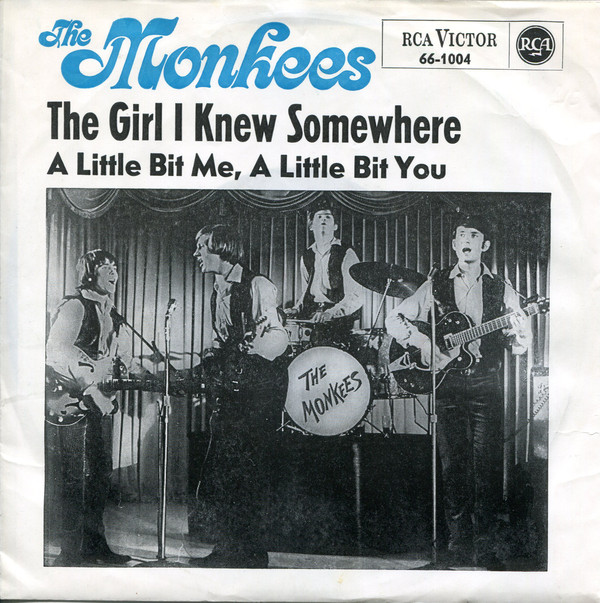
“The Girl I Knew Somewhere” was the first song recorded by the Monkees containing instruments performed by the band members. The song was written by Monkee;’s guitar player Mike Nesmith. Mike also wrote the hit A Different Drum for the Stone Ponys…Linda Ronstadt’s band.
When it was recorded Mike Nesmith recorded the lead vocals but later on Mickey Dolenz put his lead vocals down for more of a commercial sound.
The song was a B side to A Little Bit Me, A Little Bit You (#2 in the Billboard 100). It was not on an album but The Girl I Knew Somewhere peaked at #39 in the Billboard 100 in 1967.
The video for the show was a winner with Julie Newmar
The Girl I Knew Somewhere
You tell me that you’ve never been this way before. You tell me things I know that I’ve heard somewhere. You’re standing in the places and you’re staring down through faces, that bring to mind traces of a girl, a girl that I knew somewhere.
I just can’t put my finger on what it is that says to me “Watch out! Don’t believe her.” I can’t give any reasons girl, my thoughts are bound down in a whirl. I just can’t think who in the world was that girl; I know I met her somewhere.
Someway, somehow this same thing was done. Someone, somewhere did me this same wrong.
Well, goodbye dear, I just can’t take this chance again. My fingers are still burning from the last time. And if your love was not a game, I only have myself to blame. That’s as may be, I can’t explain.
I have played this song in a club with a 4 piece band and it actually very well received. You don’t have to have the full orchestra for it to sound good…it’s that good of song. Our bass player actually recited the poem to applause. Even after peeling off the layers of music, the song stood.
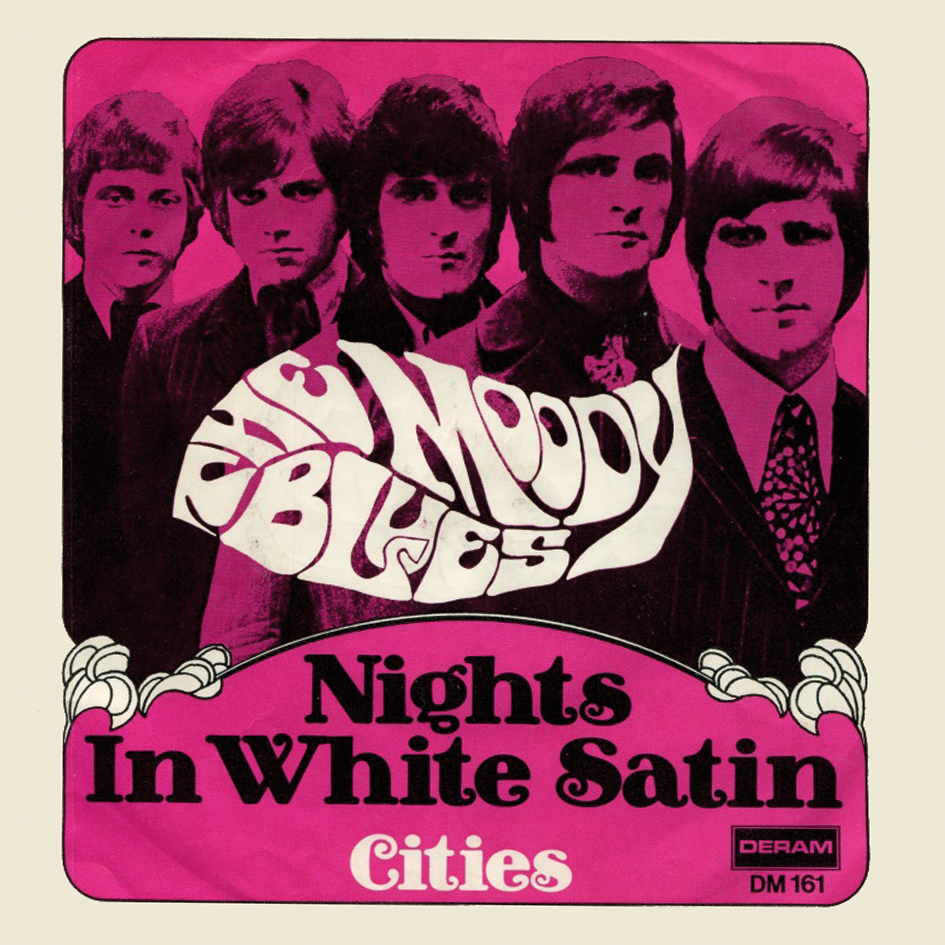
Justin Hayward wrote this song after he joined the band after Denny Laine had left. It is said that he got the idea for the song after someone gave him a set of white satin sheets, and wrote it in his bed-sit at Bayswater.
The poem at the end was recorded separately. It is called Late Lament and was written by their drummer, Graeme Edge. The poem was read by keyboard player Mike Pinder. Edge wrote another poem that appeared early on the album called Morning Glory.
This song ushered in a new sound for this band who were formally more of a blues band. “Nights in White Satin” was originally released in 1967, charting at #19 in the UK, but topping out at #103 in America, where six-minute songs were a tough sell. In 1972, after songs like “Hey Jude ” and “Layla” paved the way for long, dramatic tunes (and The Moody Blues became more popular), the song was re-released in the US and became a hit, peaking at #2 in the Billboard 100 and #1 in Canada.
Justin Hayward: “I wrote our most famous song, ‘Nights in White Satin’ when I was 19. It was a series of random thoughts and was quite autobiographical. It was a very emotional time as I was at the end of one big love affair and the start of another. A lot of that came out in the song.”
From Songfacts
The Moody Blues recorded the album with The London Festival Orchestra, which never actually existed – it was the name given to the musicians put together to make the Days of Future Passed album. The orchestral parts were performed separately and edited between and around the Moody Blues parts, so the orchestra did not actually accompany the group. The original idea was for the group and orchestra to record a rock version of Dvorak’s “New World Symphony,” which their record company would use to demonstrate enhanced stereo sound technology.
Before joining The Moody Blues, a teenaged Justin Hayward signed a deal with Lonnie Donegan’s publishing company, which ended up giving Donegan the lion’s share of the royalties for this and other songs Hayward wrote at the time. Donegan was star in the ’50s, famous for his skiffle sound that influenced The Beatles and The Who. In the ’60s, he became more involved in the business side of the industry and formed his publishing company Tyler Music.
Days of Future Passed is a concept album based around different times of day. For example, “Dawn Is A Feeling” and “Tuesday Afternoon.” This song was last on the album because it represents nighttime.
Justin Hayward was inspired by Moody Blues keyboard player Mike Pinder’s composition “Dawn Is A Feeling.” Since Pinder had done “The Morning” for the concept album, Hayward tried to do “The Night.”
Fans have come up with many interpretations of this song, which is just fine with Justin Hayward, who fells that the receiver gives life to the transmission. “It’s the listeners who bring the magic and the interpretations to these songs,” he said in his 2016 Songfacts interview.
This song introduced a new sound for the band. When they formed, they were more of a blues band, and had a hit in 1965 with a cover of Bessie Banks’ “Go Now.” With the songs on Days of Future Passed, they distinguished themselves with original songs in a more psychedelic/orchestral sound.
In the UK, the song made two more chart appearances, going to #9 in 1972 and #14 in 1979.
The Dickies 1979 Punk version reached #39; the Moody Blues used to use The Dickies version sometimes when doing a sound check.
The week of December 2, 1972, this song plunged from #17 to completely out of the Hot 100, setting a record for the biggest drop out of that chart in a single week. Drastic chart disappearances became more common in the ’10s, and the Glee Cast version of “Toxic” made the fall from the #16 spot in 2010.
Talking about the experiences that inspired the lyrics to this song, Justin Hayward said: “About an audience in Glastonbury, a flat in Bayswater and the ecstasy of an hour of love.”
Among the many artists to record this song are Procol Harum, Eric Burdon, Percy Faith, Nancy Sinatra and Il Divo. When we spoke with Justin Hayward in 2013, he told us that the best cover he heard of this song was by the soul singer Bettye LaVette. “She covered ‘Nights,’ and somebody sent it to me as an MP3, a link,” he explained. “I was sitting in bed with my laptop waking up to my emails, and I clicked on this link and I burst into tears. My wife came in and she said, ‘What the hell’s the matter with you?’ And I said, ‘You’ve got to listen to this.’ She didn’t cry. But I heard the lyric for the first time. There have been hundreds, maybe thousands of covers of ‘Nights in White Satin,’ but that was the first time I heard it for real.”
The Moody Blues enjoyed a long and illustrious career that took them well into the 2010’s, and included thousands of performances, most of which featured this song. How does Justin Hayward handle the repetition? “I never lose the emotion of songs like that,” he told us. “I’m lucky enough not to have lost the emotion or the motivation, because it’s a wonderful thing to be able to share. And the audience provides the emotion around that. Because you do it in sound check and it’s fine, but when there’s an audience there, it completely transforms the experience.”
Nights In White Satin
Nights in white satin Never reaching the end Letters I’ve written Never meaning to send
Beauty I’d always missed With these eyes before Just what the truth is I can’t say any more
‘Cause I love you Yes I love you Oh how I love you
Gazing at people, some hand in hand Just what I’m going through they can’t understand Some try to tell me, thoughts they cannot defend Just what you want to be, you will be in the end
And I love you Yes I love you Oh how I love you Oh how I love you
Nights in white satin Never reaching the end Letters I’ve written Never meaning to send
Beauty I’ve always missed With these eyes before Just what the truth is I can’t say any more
‘Cause I love you Yes I love you Oh how I love you Oh how I love you ‘Cause I love you Yes I love you Oh how I love you Oh how I love you
Back in 1981 I bought the album that this song is the title track to. I had their greatest hits of mostly their sixties hits and this album was the first new Kinks album I ever bought.
The song is a pure rock song with a huge punk edge. I read where a critic wrote that The Kinks were a great punk band who could actually play their instruments and with this song you see that.
This song is my favorite song off the album. While writing Low Budget, their previous album, Ray was watching American TV including “That’s Incredible” where people did dangerous and insane stunts. He writes a fair statement about the viewing public…now and then. Parts of it are crude but is true to life. When Oswald shot Kennedy, he was insane, But still we watch the re-runs again and again, We all sit glued while the killer takes aim…
The song tells the truth…violence sells.
Ray Davies:“What happens is the consumer is being used to entertain, to get high ratings, to sell products to consumers. It was going around in a circle. That’s a real con. And good shows were being dropped from TV. I’ve just written an outline, and I hope we’re going to get some money from RCA to do a videodisc because it’s a media-based album.”
From Songfacts
The title track to The Kinks 1981 album, “Give The People What They Want” was written by their frontman Ray Davies in response to what he saw on American TV when he was writing songs for their previous album, Low Budget. He noticed that TV was getting more and more sensational, and that viewers were fascinated with violence and tragedy – similar to how Romans watched Christians get fed to the lions.
One show Davies watched was That’s Incredible, where regular people performed dangerous stunts.
Ray Davies said that he took out the following verse:
The French Revolution was a crazy scene
All those aristocrats getting guillotined
The promoters cleaned up
The expenses were low
An execution costs nothing
It’s a wonderful show
Taken at face value with just the title for reference, this song can appear to be about The Kinks making an effort to please their audience by delivering a hit. That interpretation is way off, however, as the song is much more a social commentary on those who pander to the masses.
The Kinks went for a monster drum sound on this one in an effort to make it arena-friendly. To get his sound, they placed corrugated iron around the walls of Konk Studios in London, where they recorded the album.
Give The People What They Want
Hey, hey, hey Give the people what they want
Well, it’s been said before, the world is a stage A different performance with every age Open the history book to any old page Bring on the lions and open the cage
Give the people what they want You gotta give the people what they want The more they get, the more they need And every time they get harder and harder to please
The Roman promoters really did things right They needed a show that would clearly excite The attendance was sparse so they put on a fight Threw the Christians to the lions, it sold out every night
Give the people what they want You gotta give the people what they want The more they get, the more they need And every time they get harder and harder to please
Give ’em lots of sex, perversion and rape Give ’em lots of violence, and plenty to hate Give the people what they want Give the people what they want
When Oswald shot Kennedy, he was insane But still we watch the re-runs again and again We all sit glued while the killer takes aim “Hey Mom, there goes a piece of the president’s brain!”
Give the people what they want You gotta give the people what they want Blow out your brains, and do it right Make sure it’s prime time and on a Saturday night You gotta give the people what they want You gotta give the people what they want Give the people what they want Give the people what they want Give the people what they want
Bobby said he’d pull out Bobby stayed in Janey had a baby it wasn’t any sin They were set to marry on a summer day Bobby got scared and he ran away
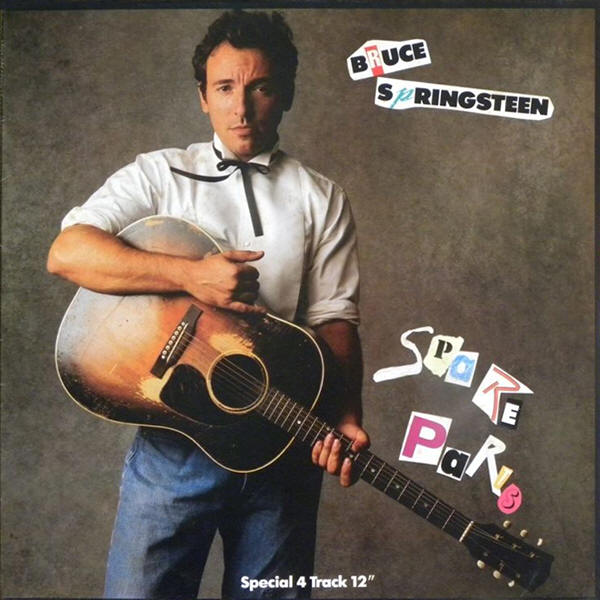
This song was off of the 1987 album Tunnel of Love. This is really the last album I really loved of Springsteen. He has had some good albums since but this one was an end of an era to me.
It was not released as a single in America. It did peaked at #26 on the Mainstream Rock Charts.
This album is a more grown up Springsteen after just being married and as you can tell from some songs on the album…heading for a divorce. This song is a in your face song with a great blues harp.
Spare Parts features LA Blues artist James Woods on harmonica…he got the gig through co-producer Chuck Plotkin whom he has known since high school.
James Woods: “Chuck said, Jimmy, do you still have your blues musician’s Union card?” “I did this chugging thing that is sort of a trademark of mine,” “I wish I was louder in the mix” (laughs).
James Woods got a lot of subsequent session work afterwards, “because I was the first non-E Street cat to play harp on a Springsteen record.”
From Songfacts
The studio version of this song runs 3:44 seconds, but there is a much longer version (available on YouTube) recorded live in Sheffield in 1988 for the Bruce Springsteen: Video Anthology 1978-1988, which was released in January 1989. In the extended piano introduction Springsteen explains: “This is a song about a woman struggling to understand the value of her own independent existence… trying to find something new, and beautiful and meaningful in her life today.” The first verse is sexually explicit in a covert sort of way.
The live version features Nils Lofgren on slide guitar and backing by a full brass section. Although singer-songwriter Springsteen is not renowned for his guitar work, The Boss lets rip at the end of this track with a guitar solo.
Spare Parts
Bobby said he’d pull out Bobby stayed in Janey had a baby it wasn’t any sin They were set to marry on a summer day Bobby got scared and he ran away Jane moved in with her ma out on Shawnee Lake She sighed Ma sometimes my whole life feels like one big mistake She settled in in a back room time passed on Later that winter a son came along
CHORUS Spare parts And broken hearts Keep the world turnin’ around
Now Janey walked that baby across the floor night after night But she was a young girl and she missed the party lights Meanwhile in South Texas in a dirty oil patch Bobby heard ’bout his son bein’ born and swore he wasn’t ever goin’ back
CHORUS
Janey heard about a woman over in Calverton Put her baby in the river let the river roll on She looked at her boy in the crib where he lay Got down on her knees cried till she prayed Mist was on the water low run the tide Janey held her son down at the riverside Waist deep in water how bright the sun shone She lifted him in her arms and carried him home As he lay sleeping in her bed Janey took a look around at everything Went to a drawer in her bureau and got out her old engagement ring Took out her wedding dress tied that ring up in its sash Went straight down to the pawn shop man and walked out with some good cold cash
I first heard this song by the Linda Ronstadt version. She did a great job and this was one of the first songs the Beatles covered.
The movie “The Searchers” starring John Wayne inspired this song. This song peaked at #1 in the US Hot 100, #2 in the US R&B, and #1 the UK in 1957.
Holly and bandmate Allison wrote the song. Norman Petty took a writing credit on this because he produced it. This meant Holly and Allison had to share royalties with him.
Buddy Holly and his band The Three Tunes recorded this in Nashville in 1956, but Decca records didn’t like the result and refused to release it. A year later, Holly re-recorded it with The Crickets in a studio in Clovis, New Mexico owned by his new producer, Norman Petty.
Backup vocalists were brought in and the key was lowered to fit Holly’s voice a little better. This version became a huge hit and made Holly a star that summer in 1957.
From Songfacts
Holly had been kicking around his home town in Lubbock, Texas trying to write a hit song for his small rockabilly band since he had attended an Elvis Presley gig at his High School some time in 1955. His band in those days consisted of him on lead vocals and guitar, Jerry Allison on the drums and Joe B. Maudlin on upright bass. He and Jerry decided to get together and go see The Searchers, a Western movie staring John Wayne. In the movie, Wayne keeps replying, “That’ll be the day,” every time another character in the film predicts or proclaims something will happen when he felt it was not likely to happen. The phrase stuck in Jerry’s mind, and when they were hanging out at Jerry’s house one night, Buddy looked at Jerry and said that it sure would be nice if they could record a hit song. Jerry replied with, “That’ll be the day,” imitating John Wayne in the film.
This was Holly’s first hit, but it was credited to The Crickets, Holly’s band. They worked with two record labels, with one releasing Holly’s songs as The Crickets and the other as Buddy Holly. Both labels were subsidiaries of Decca Records.
This inspired the British 1973 movie of the same name, about a young man with dreams of becoming a rock star.
This was the first song John Lennon learned to play on guitar. American rock stars like Holly and Little Richard were a big influence on The Beatles.
The movie that inspired Holly and Allison to write this also provided the name for the British group The Searchers in 1964.
When this became a hit, Decca records released Holly’s earlier version as well.
“That’ll Be The Day” was the first song John Lennon, Paul McCartney and George Harrison recorded together. In 1958, when they were still known as the Quarrymen, they pooled their money, recorded the song at a local studio, and pressed one copy on a 78rpm disc, which they shared. The disc ended up in the possession of Duff Lowe, the piano player in group. In the early ’80s, he sold it to McCartney; it was first heard in a 1985 documentary on Buddy Holly, and was released in 1995 on the Anthology 1 collection.
Linda Ronstadt released her version as the lead single from her 1976 album Hasten Down the Wind. This came at the suggestion of her producer, Peter Asher, who recorded the song completely live, just as Holly’s version was done in the days before multitracking. The song went to #11 in the US and marked a shift for Ronstadt away from country rock.
On this version, listen for the guitar solo – Waddy Wachtel played the first four bars, then Andrew Gold took over for the last four. Wachtel’s performance helped raise his profile in the Los Angeles music scene, where he soon became one of the top session players.
In the US, a version by the Everly Brothers reached #111 in 1965; Pure Prairie League took it to #106 in 1976.
That’ll Be The Day
Well, that’ll be the day, when you say goodbye Yes, that’ll be the day, when you make me cry You say you’re gonna leave, you know it’s a lie ‘Cause that’ll be the day when I die
Well, you give me all your loving and your turtle doving All your hugs and kisses and your money too Well, you know you love me baby, until you tell me, maybe That some day, well I’ll be through
Well, that’ll be the day, when you say goodbye Yes, that’ll be the day, when you make me cry You say you’re gonna leave, you know it’s a lie ‘Cause that’ll be the day when I die
Well, that’ll be the day, when you say goodbye Yes, that’ll be the day, when you make me cry You say you’re gonna leave, you know it’s a lie ‘Cause that’ll be the day when I die
Well, when Cupid shot his dart he shot it at your heart So if we ever part and I leave you You sit and hold me and you tell me boldly That some day, well I’ll be blue
Well, that’ll be the day, when you say goodbye Yes, that’ll be the day, when you make me cry You say you’re gonna leave, you know it’s a lie ‘Cause that’ll be the day when I die
Well, that’ll be the day, woo ho That’ll be the day, woo ho That’ll be the day, woo ho That’ll be the day







 PowerPop... An Eclectic Collection of Pop Culture