Rolling Stones – Monkey Man

Yeah, I’m a sack of broken eggs
I always have an unmade bed
Don’t you?

This song is a great album cut. The way I would describe the song?  It is the actual sound of sleaze, and that is a compliment. It was used well in Goodfellas, the 1990 movie, in a scene where the gangsters are trafficking cocaine. One of my favorite Stone songs. I always liked the Stones album cuts more than their hits. This is when they had the perfect producer (Jimmy Miller), the perfect guitar player (Keith Richards), and the perfect sound. This is the Stones I love, their golden period. 

What makes this song is Keith Richards’ riff, and it is menacing and on the prowl, practically alive in this song, stalking you outside your bedroom window. Only Keith could make a riff sound dangerous, and it builds up through the song. Richards laid down the main riff on a late-night jam, a hypnotic riff, with just enough space for Nicky Hopkins to work in his piano. Hopkins’ playing on this is greatness: melodic and sinister all at once. He reportedly improvised much of it, adding those runs that make the song snarl.

This song was on Let It Bleed, and it was recorded after Brian Jones was fired and before Mick Taylor replaced him. On Monkey Man, Keith Richards played electric and slide electric guitar, Bill Wyman played bass, and producer Jimmy Miller assisted drummer Charlie Watts on tambourine. Mick Jagger and Keith Richards wrote “Monkey Man” as a tribute to Italian pop artist Mario Schifano, whom they met on the set of his movie Umano Non Umano! (Human, Not Human!).

This song is the Let It Bleed track I always come back to when I want to feel the Stones at their most human and feral. 

Monkey Man

I’m a fleabit peanut monkey
And all my friends are junkies
That’s not really true

I’m a cold Italian pizza
I could use a lemon squeezer
What you do?

But I’ve been bit and I’ve been tossed around
By every she-rat in this town
Have you babe?

But I am just a monkey man
I’m glad you are a monkey woman too

I was bitten by a boar
I was gouged and I was gored
But I pulled on through

Yeah, I’m a sack of broken eggs
I always have an unmade bed
Don’t you?

Well I hope we’re not too messianic
Or a trifle too satanic
But we love to play the blues

But well I am just a monkey man
I’m glad you are a monkey woman too
Monkey woman too babe

I’m a monkey man
I’m a monkey man
I’m a monkey man
I’m a monkey man
I’m a monkey
I’m a monkey
I’m a monkey
I’m a monkey
Monkey, monkey
Monkey

Monkey
I’m a monkey

Rolling Stones – Rocks Off

The sunshine bores the daylights out of me

This song is a hell of an album opener. I wrote this last weekend, and I was going to post it for Jim’s SLS Sunday  great album openers but I didn’t get to post it. This era was probably the pinnacle of the Stones’ career, both in the studio and live. 

By the summer of 1971, the band had officially become British tax exiles. Facing crippling tax rates back home, they scattered across Europe, with Keith Richards renting Villa Nellcôte, a grand 19th-century mansion in Villefranche-sur-Mer, on the French Riviera. When I say renting, I mean turning it into a 24-hour rock ‘n’ roll asylum.  The basement, humid, airless, and filled with cigarette smoke, became the main recording space. Mobile studio trucks parked outside ran cables through windows and stairwells. 

Despite the drug use and long hours, they got it done. It would be hard to replicate this album because of how it was recorded. Many of the songs sound low-fi and make them even dirtier-sounding. The vocals on this song are not steady in volume, but that adds to it. This, to me, is how the Stones should sound. If they are too clean-sounding, it just doesn’t work for me in the studio or live. Mick Taylor’s guitar is a huge reason this album sounds so good as well. 

This song opened their great Exile On Main Street album. Part of the charm is the muddiness of the recordings.  It was recorded in the middle of heavy drugs, hangers-on, and a band fleeing from the taxes of England. It’s a wonder they got a song out of it, much less an album that some consider their best. 

What you hear in those opening moments, Keith’s ragged riff tumbling down the stairs like it’s late for work, completely works. This song is sloppy yet tight and a bit menacing. It was a great opener for this album. It clearly told you what was coming next. 

Exile On Main Street peaked at #1 on The Billboard Album Charts, Canada, and the UK in 1972. This was released as a single in Japan only. 

Rocks Off

I hear you talking when I’m on the street
Your mouth don’t move but I can hear you speak

What’s the matter with the boy?
He don’t come around no more
Is he checking out for sure?
Is he gonna close the door on me?

And I’m always hearing voices on the street
I want to shout, but I can hardly speak

I was making love last night
To a dancer friend of mine
I can’t seem to stay in step
‘Cause she come ev’ry time that she pirouettes over me

And I only get my rocks off while I’m dreaming
(Only get them off, only get them off, only get them off)
I only get my rocks off while I’m sleeping
(Only get them off, only get them off, only get them off)

I’m zipping through the days at lightning speed
Plug in, flush out and fire the fuckin’ feed

Heading for the overload
Splattered on the nasty road
Kick me like you’ve kicked before
I can’t even feel the pain no more

And I only get my rocks off while I’m dreaming
(Only get them off, only get them off, only get them off)
I only get my rocks off while I’m sleeping
(Only get them off, only get them off, only get them off)

Feel so hypnotized, can’t describe the scene
It’s all mesmerized all that inside me

The sunshine bores the daylights out of me
Chasing shadows moonlight mystery

Heading for the overload
Splattered on the dirty road
Kick me like you’ve kicked before
I can’t even feel the pain no more

And I only get my rocks off while I’m dreaming
(Only get them off, only get them off, only get them off)
I only get my rocks off while I’m sleeping
(Only get them off, only get them off, only get them off)

And I only get my rocks off while I’m dreaming
(Only get them off, only get them off, only get them off)
I only get my rocks off while I’m sleeping
(Only get them off, only get them off, only get them off)

And I only get my rocks off while I’m sleeping
(Only get them off, only get them off, only get them off)

Don Covay – Mercy, Mercy

The first thing I noticed was the guitar part at the beginning. I thought to myself, the style sounded familiar. Two people came to mind, and I can’t believe I guessed it. The two people that I thought of were Curtis Mayfield and Jimi Hendrix. After researching the song, I was batting 500…it was Jimi Hendrix, but 2 years before he was The Jimi Hendrix.

I read about Don Covay and how he wrote Chain of Fools for Aretha Franklin and more songs in the ’60s through the ’80s. Covay wrote the number 1 hit for Chubby Checker called Pony Time and also co-wrote Peter Wolf’s first solo album in the early eighties with good success.

Covay was the son of a Baptist preacher. He began his musical career singing gospel with his family’s group, the Cherry Keys. Following his father’s death, the family relocated to Washington, D.C., where Covay’s musical interests expanded into the soul/R&B genre.

He was a great songwriter. His songs have been covered by Gene Vincent, Wanda Jackson, Chubby Checker, Connie Francis, Steppenwolf, The Daughters of Eve, Bobby Womack, the Rolling Stones, Wilson Pickett, Small Faces, Grant Green, Bonnie Raitt, and Peter Wolf.

The song peaked at #35 on the Billboard 100 in 1964. The Rolling Stones covered this song on their album Out of Our Heads in 1965. It was the lead-off track of the album.

Curtis Knight: Jimi Hendrix, and I all used to live in the same apartment building – around 81st Street [near the A1 Studio] … Don Covay came around shopping for a record deal. He used to go down to the Harlem clubs looking for somebody to use … on songs he was looking to sell to Atlantic [Records]. He’d say, ‘I got this tune I want you to help me with … come on down to the studio … Can you sing this part? Can you play this part?

Steve Cropper:  I hadn’t worked with Don [Covay] yet, but I asked Jimi to show me that great lick he played. [Later] Jimi took my guitar and started playing that sucker upside down. I laughed and told him, ‘I can’t learn that lick by looking at it that way.

Mercy, Mercy

Have mercyHave mercy, babyMmm, have mercyHave mercy on me

Well, I went to see a gypsy and had my fortune readShe said, “Don, your baby’s gonna leave you”Her bag is packed up under the bed and I cried

Have mercyHave mercy, baby, yeahHave mercy, yeahHave mercy on me

I said if you leave me, baby, girl, if you put me downWell, I’m a goin’ to the nearest river, childAnd jump (jump) overboardAnd drown, but don’t leave me (jump, jump, jump, jump)

Have mercyHave mercy, baby, mercyYeah, have mercyHave mercy on me

Well, now, hey, hey baby, hey, hey nowWhat you tryin’ to do, huh?Hey, hey, baby, hey, hey nowPlease don’t say we’re through

I said if you stay here, baby, I tell you what I’m gonna doI’m gonna work two jobs seven days a weekAnd bring my money home to you (bring it, bring it)

Well, I said mercy (mercy), mercy (mercy)Mercy (mercy), mercy (mercy)Mercy (mercy)

The Dick Cavett Show

I remember being a kid and how ABC, which was our “channel 2,” never came in clearly. The picture was snowy, but I still recall catching glimpses of The Dick Cavett Show. Of course, I also remember Johnny Carson—he and Cavett were the two big talk show hosts of the time. While it might be sacrilegious to say, I always favored Cavett over Carson. Even as a kid, Cavett seemed more interesting.

The Dick Cavett Show on ABC was a smart alternative to The Tonight Show with Johnny Carson. Cavett frequently booked intellectuals and gave them time for extended, in-depth conversations. You truly got to know his guests—he took more than 10 minutes, unlike the rushed format of today. There were no distractions, no flashy sets, just meaningful conversations. That was the key: Cavett didn’t just interview his guests… he had real conversations with them. No gimmicky skits, just an authentic exchange.

Cavett had his critics. Some called him a snob, a name-dropper, or too controversial. All three were true—and I loved it. Yes, he went to Yale, and yes, he dropped names. But honestly, if I’d spent time with people like Groucho Marx, I’d name-drop too. Cavett’s guest list was legendary: John Lennon, Jimi Hendrix, Katharine Hepburn, Bette Davis, and so many more. He embraced the counterculture, but he also joked about the counterculture, staying balanced in his approach. In modern times, Conan O’Brien and David Letterman came closest to that spirit…and Charlie Rose as far as having conversations. 

One of Cavett’s trademarks was his unique mix of guests. Where else would you see Janis Joplin, Raquel Welch, and Gloria Swanson sharing the same stage? His early 1970s ABC show was the pinnacle of his career. When he booked a rare or special guest, he often dedicated the entire episode to them. Bette Davis and Katharine Hepburn each had an entire show to themselves. Can you imagine that happening today? Is it because today’s stars aren’t as compelling, or has the audience’s attention span shrunk too much to appreciate such depth?

Cavett also thrived on risk. He hosted Norman Mailer and Gore Vidal, who famously clashed, and another episode featured Salvador Dalí, Lillian Gish, and Satchel Paige. These combinations were bold, and they worked. Even Johnny Carson admitted that Cavett was the only talk show host who could’ve seriously challenged him, though ABC’s third-place standing in the network race kept Cavett from overtaking Carson’s dominance.

This isn’t a knock on Johnny at all—his show set the blueprint for today’s talk shows. But Cavett offered something different: a smarter, more thoughtful experience. Watching his episodes now feels like opening a time capsule. While some moments are tied to their time, much of it remains timeless. Hearing from legends like Marlon Brando and Katharine Hepburn, who rarely did talk shows, is especially fascinating.

It wasn’t one of those “Hi, my name is Miss/Mr. So-and-So, my favorite color is blue, and goodbye until next time I have something to promote” situations. With Dick Cavett, you really got to know the person. He had a knack for drawing out something truly interesting. My favorite interview is the one with George Harrison. It didn’t seem promising at first—George wasn’t particularly eager to be on any show at the time—but Dick managed to get him to open up. You could see Cavett’s relief when George finally warmed up. This interview, which came right after John and Yoko’s appearance, turned out to be one of George’s best.

Here are some YouTube comments for these older talk shows:

I’m amazed when I go back and watch interviews from older talk shows, because it’s more quiet and the celebrity hosts and celebrity guests actually engage in authentic conversation with pure respect.

Jimmy Fallon should watch this video. No stupid laughing constantly, no sound effects and no fake laughter from the host. Just a meaningful conversation

Man no wonder podcasts have taken over. This interview was far more interesting and informative than any late night tv interview we get these days.

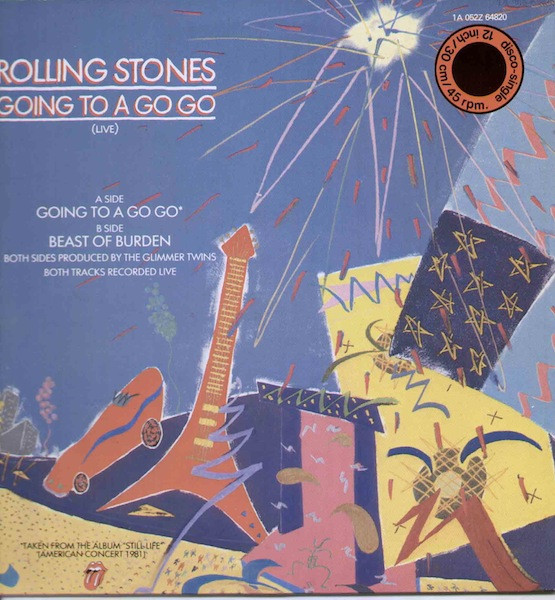
Rolling Stones – Going To A Go-Go

Tattoo You was released in 1981 and they did a massive tour that didn’t come near Nashville. Back then no big band like The Who or Stones would come here. Vanderbilt was the only place big enough and they went through a period where they didn’t allow concerts. In 1972 they did come to Nashville to the Municipal Auditorium and Stevie Wonder opened up for them. I still tell my sister…you could have seen Stevie Wonder and The Stones but you picked the Osmonds and David Cassidy! It doesn’t phase her.

In 1982 they released this single off of their live album Still Life. It was a good album and entry to point to a lot of people…the problem was the live album I knew was Get Your Ya Ya’s Out…which ranks among the best live albums ever. I did like the album though and bought two singles from it before I got the album. I think it has the definitive version of Time Is On My Side and this song…Going To A Go-Go. It was a feel-good live album and the joke was going around on how incredibly old they were…hmmm if only we knew!

This was the last tour you could actually see JUST The Stones and not a stage full of other musicians. They always carried a keyboard player which is cool but after this, they carried backup singers and a huge entourage of players on stage. I never liked that…I would rather hear Keith’s thin backup vocals than professional singers.

I remember watching Friday Night Videos and seeing a clip of Keith Richards clubbing a guy over the head with his guitar. The guy deserved it…remember this was 1981, a year after their good friend John Lennon was murdered. Intruders on stage were not welcomed. Here is a small clip of it.

Going to a Go-Go peaked at #25 on the Billboard 100, #4 in Canada, #24 in New Zealand, and #26 in the UK in 1982. Jagger and Richards didn’t write this one. It was written by Smokey Robinson, Pete Moore, Bobby Rogers, and Marvin Tarplin.  Smokey Robinson and The Miracles released in the song in 1965 and it peaked at #11 on the Billboard 100.

The two singles from the album were  Time Is On My Side and  Going to a Go Go. Time Is On My Side hit the top 10.

Going To A Go Go

Going to a go go, everybody
Going to a go go, c’mon now
Going to a go go, everybody
Going to a go go, c’mon now

Well there’s a brand new place I found
People coming from miles around
They come from everywhere
If you drop in there
You see everyone in town

Going to a go go, everybody
Going to a go go, c’mon now
Don’t you wanna go
And that’s alright tell me

Going to a go go, everybody
Going to a go go

It doesn’t matter if you’re black
It doesn’t matter if you’re white
Take a dollar fifty
A six pack of beer
And we goin’ dance all night

Going to a go go, everybody
Going to a go go, c’mon now
Don’t you wanna go
And that’s alright, tell me

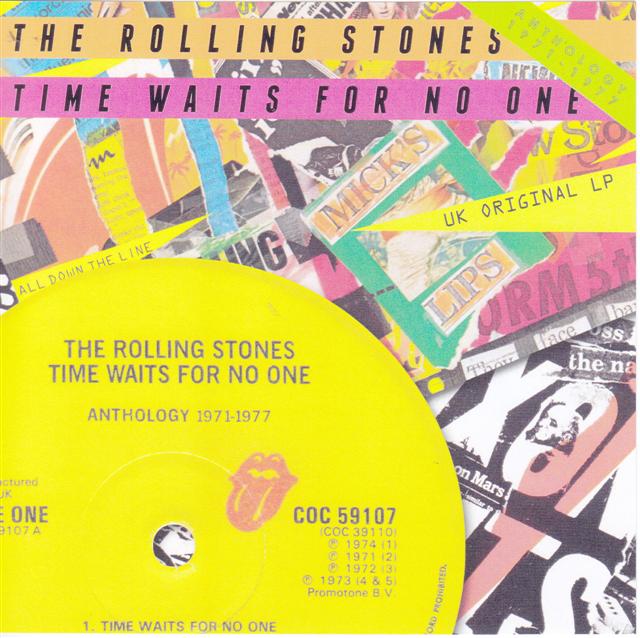
Rolling Stones – Time Waits For No One

You could blindfold me and I could tell you if Mick Taylor was playing with The Stones live. He had his own unique sound because of the Les Paul he played. He made those songs in the classic Stones period go.

Many people think that Mick Taylor went uncredited on this and many songs. The melody doesn’t sound like a Keith melody but in any case, Jagger/Richards get credited with this one. They rarely if ever play it live.

The solo in this song is great by Mick Taylor. It reminds me a little of Carlos Santana. He quit shortly after this album was released and it was the end of the classic Stones era. They would never sound the same again after this. The song was on It’s Only Rock and Roll which was a good album but not up to the level of the five preceding albums. A big reason was because of the absence of producer Jimmy Miller.

So why did Mick Taylor leave the band? I’ve read different things from him and others. Taylor felt underappreciated and frustrated that he didn’t receive proper credit for his contributions to the band’s music. He claimed to have co-written several songs, such as Sway and Moonlight Mile but Jagger and Richards would not give a songwriting credit to him. I do believe that because Brian Jones and Ronnie Wood also had the same problem.

His health and well-being were also factors in his decision to leave. The intense touring schedule and the pressures of being in The Stones took a toll on him. Besides pot…he said he didn’t take drugs when he joined the band but like others before and after him…he slowly started to do harder drugs while with the band. When he quit the band it took him a while to get off of heroin.

The song is a favorite among many Stones fans I know and it should be more well known.

Time Waits For No One

Yes, star-crossed in pleasure, the stream flows on byYes, as we’re sated in leisure, we watch it fly, yes

And time waits for no one, and it won’t wait for meAnd time waits for no one, and it won’t wait for me

Time can tear down a building or destroy a woman’s faceHours are like diamonds, don’t let them waste

Time waits for no one, no favors has heTime waits for no one, and he won’t wait for me

Men, they build towers to their passingYes, to their fame everlastingHere he comes, chopping and reapingHear him laugh at their cheating

And time waits for no man, and it won’t wait for meYes, time waits for no one, and it won’t wait for thee

Drink in your summer, gather your cornThe dreams of the nighttime will vanish by dawn

And time waits for no one, and it won’t wait for meAnd time waits for no one, and it won’t wait for meNo, no, no, not for me, no, not for me

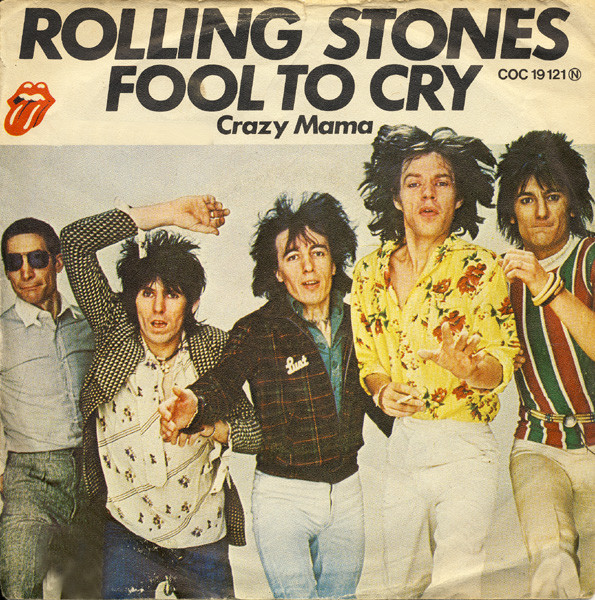
Rolling Stones – Fool To Cry

This song was on the forgotten Black and Blue album. My all-time favorite Stones song is on that album…Memory Motel.

This album was made when the best guitarist the Stones ever had…left them. That’s no knock on Keith, Brian, or soon-to-be Ronnie Wood at this time…Mick Taylor was just that good. He was on 4 of the 5 classic albums they are mostly known for. Another significant person left before Taylor did…Jimmy Miller produced the albums Beggars Banquet, Let It Bleed, Sticky Fingers, Exile On Main Street, and Goats Head Soup. He was the most important producer they worked with. He gave them a sound that they did not have before.

Ronnie Wood is not the guitar player in this song. They were auditioning guitar players on this album. The three guitar players were Wayne Perkins, Harvey Mandel, and Ronnie Wood. Wayne Perkins, a super-session player, was the lead guitar player on this song. He didn’t get the job because he was from Alabama. Keith said that was hard to get over because they wanted the Stones to remain an English band. Wayne Perkins was probably the best guitar player they auditioned…but Ronnie Wood looked the part and fit in.

The album was not as well received but still peaked at #1 on the Billboard Album Charts, #2 in Canada, #2 in the UK, and #4 in New Zealand in 1976.

Fool To Cry peaked at #10 on the Billboard 100, #11 in Canada, #6 in the UK, and #38 in New Zealand.

Mick Jagger has said of this song: This dates from the period when I had a young child, my daughter Jade, around a lot, calling me daddy and all that. It’s another of our heartmelting ballads, a bit long and waffly at the end maybe, but I like it.

Keith Richards: “I was just glad somebody in the band could sing that falsetto. I got a pretty good falsetto myself. But when you got a singer and he can hit those notes, baby go for it. And Mick was always fascinated with the falsetto Soul singers like Aaron Neville. That’s crafty stuff, you know what I mean? But he’d been listening to so many people. It’s kinda like what goes in, will come out. You’ll just hear a phrase or a piece of music. And one way or another it’s part of your experience. And a lot of the time it comes out what you do without even realizing it. I don’t really like to think about these things too much. It’s more to do with feeling than intellectualizing about it.” 

Keith Richards: Ronnie wasn’t necessarily a shoo-in as our new guitarist, despite our closeness at the time. He was still, for one thing, a member of the Faces. We tried other players before him–Wayne Perkins, Harvey Mandel. Both great players, both of them are on Black and Blue. Ronnie turned up as the last one, and it was really a toss-up. We liked Perkins a lot. He was a lovely player, same style, which wouldn’t have ricocheted against what Mick Taylor was doing, very melodic, very well-played stuff. Then Ronnie said he had problems with the Faces. So it came down to Wayne and Ronnie. Ronnie’s an all-rounder. He can play loads of things and different styles, and I’d just been playing with him for some weeks, so the chips fell there. It wasn’t so much the playing, when it came down to it. It came down to the fact that Ronnie was English! Well, it is an English band, although you might not think that now. And we all felt we should retain the nationality of the band at the time. Because when you get on the road, and it’s “Have you heard this one?,” you’ve all got the same backgrounds. Because of being London-born, Ronnie and I already had a built-in closeness, a kind of code, and we could be cool together under stress, like two squaddies. Ronnie was damn good glue for the band. He was a breath of fresh air. We knew he’d got his chops, we knew he could play, but a big decider was his incredible enthusiasm and ability to get along with everybody. Mick Taylor was always a bit morose. You’ll not see Mick Taylor lying on the floor, holding his stomach, cracking up with laughter for anything. Whereas Ronnie would have his legs in the air.

Fool To Cry

When I come home baby
And I’ve been working all night long
I put my daughter on my knee, and she says
Daddy what’s wrong?
She whispers in my ear so sweet
You know what she says, she says
Ooh, daddy you’re a fool to cry
You’re a fool to cry
And it makes me wonder why

Daddy you’re a fool
You know, I got a woman (daddy you’re a fool)
And she lives in the poor part of town
And I go see her sometimes
And we make love, so fine
I put my head on her shoulder
She says, tell me all your troubles
You know what she says?
She says, ooh, daddy you’re a fool to cry
You’re a fool to cry
And it makes me wonder why

Daddy you’re a fool to cry
Yeah, she says
Oh, Daddy you’re a fool to cry
You’re a fool to cry
And it makes me wonder why

She says, ooh, daddy you’re a fool to cry
Ooh, daddy you’re a fool to cry

Even my friends say to me sometimes
And make out like I don’t understand them
You know what they say?
They say, ooh daddy you’re a fool to cry
You’re a fool to cry
And it makes me wonder why, ah

I’m a fool baby, ah ya
I’m a certified fool, ah yeah
Gotta tell ya, baby
I’m a fool baby, ah yeah
Whoo
Certified fool for ya, mama, ya, yeah, come on, yeah
I’m a fool, yeah

Rolling Stones – I Think I’m Going Mad

A drummer I played with before was a huge Rolling Stones fan. He and I would cruise around together as teenagers and listen to The Beatles and Stones endlessly. He pointed out this song for me and I fell in love with it. He met me in school when he saw me wearing a John Lennon shirt and we started to talk. He didn’t know I played and I didn’t know he was a drummer…and we needed one.  and we needed a drummer…so it fit rather well.

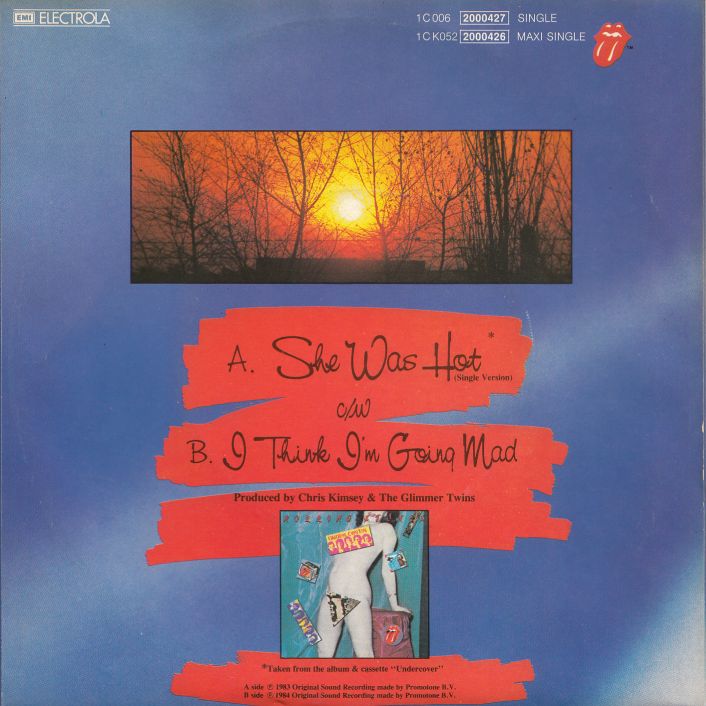
The song was the B side of the single She Was Hot released in 1984. I Think I’m Going Mad was an outtake from the Emotional Rescue album from a few years before. It was recorded in January-February 1979, November-December 1982 & June-August 1983 at Compass Point Studios, Nassau, Bahamas; Pathé Marconi Studios, Paris, France; and The Hit Factory, New York City.

I liked this ballad better than the A-side She Was Hot off of the album Undercover. The single She Was Hot/I Think I’m Going Mad peaked at #44 on the Billboard 100, #42 in the UK, and #46 in New Zealand in 1984.

I Think I’m Going Mad is like a cross between Fool To Cry and Beast of Burden. It was written by Jagger/Richards. 

The A side…She Was Hot… I will admit…I DO like the video! The song is a run-of-the-mill Stones song in my opinion.

I Think I’m Going Mad

Think I’m going mad and I think I’m going mad
Life goes by so fast, time whirls by so fast
And I drink my wine and so all the women come and go
Think I’m going mad, think I’m going mad, think I’m going crazy
All the highs and lows don’t mean a thing to me, don’t give a damn

Every season that’ll pass, think gonna be my last
I know my mind’s afloat, sometimes I feel so young and sometimes I feel so old
Think I’m going mad and I think I’m going mad, think I’m going crazy
All the highs and lows don’t mean a thing to me, don’t give a damn, think I’m going

Yeah, you want to see, you want to see all the kids all laugh
And I’m thinking, I think I’m going crazy
I think and I think I’m going crazy
All the highs and lows don’t mean a thing to me, don’t give a damn

And I think I’m going crazy, think I’m going crazy
I think I been drinking lots of cups of coffee
I think I lost my head
And I think I should be sacrificed
Think I should be put away
Save yourself pretty baby
And I think and I think I’m going
And I think I’m going mad
Think I’m going nuts
Think, think I’m going crazy

Max Picks …songs from 1981

1981

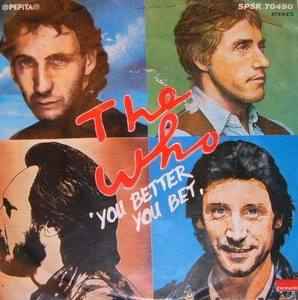
The Who – You Better You Bet..I always thought of this song as the sister song to Who Are You. You Better You Bet was on the album Face Dances. This was the first album without Keith Moon and with Kenney Jones on drums.

Pete Townshend has said he wrote it “over several weeks of clubbing and partying” while the still-married guitarist was dating a younger woman. He said: “I wanted it to be a great song because the girl I wrote it for is one of the best people on the planet.”

Rolling Stones – Start Me Up…I was over at my friend Kenny’s house and I heard this song. Kenny loved animals and had a tarantula, piranha, and other sorts of fun animals. I think it was his radio alarm that went off but I heard this song and knew exactly who it was and I was hooked. This was before it was worn completely out. The opening riff is straight out of the 5-string open G tuning for all of you guitarists. That tuning helped Keith come up with all of those great riffs.

All the news at the time was on their tour. They were called old and over the hill…funny now thinking back…they were only in their late 30s and early 40s. Nowadays that is a young band. I went out and bought the album and loved it. The next year I bought the live (from that tour) Time is On My Side and Going To A Go-Go singles. I then broke down and bought the Still Life live album they came from. This video is amusing…it’s a video a high school band would make with one take but it worked for them. Charlie’s expressions are worth watching alone.

Kim Carnes – Bette Davis Eyes – More than any other song at that time…this one seemed so different and I knew music was changing in the 80s. I still liked it and I bought the single. Just like with Bonnie Tyler and It’s A Heartache…my first thought when hearing this was Rod Stewart. I really like Carne’s raspy voice more than the pop singers at the time…and now. Now I’d love to hear a duet with Kim Carnes and Bonnie Tyler.

“Bette Davis Eyes” was originally recorded by Jackie DeShannon on her 1975 album New Arrangement. DeShannon wrote the song with the songwriter Donna Weiss. According to DeShannon, she got the idea after watching the 1942 Bette Davis movie Now Voyager. It was Donna Weiss who submitted the demo to Carnes, who along with her band and producer Val Garay, came up with the hit arrangement for the song.

Rick James – Super Freak..Me being a bass player…this song is impossible to resist. The movie Little Miss Sunshine used this song to great effect. When James exclaims, “Blow, Danny!,” he’s talking to his sax player Daniel LeMelle just before his solo.

The song featured backup vocals by The Temptations.  You will hear James point it out in the song when he says: “Tempations sing.” Temptation member Melvin Franklin was Rick James’ uncle.

One story bout Rick James… He dodged the Vietnam War draft by heading across the Canadian border from his hometown of Buffalo. But as soon as he got into Toronto, three drunk guys tried to beat him up for going AWOL. Some other guys came over to help Rick out… Two of those guys were Garth Hudson and Levon Helm, then playing backup for Ronnie Hawkins…later The Band. He also became friendly with Joni Mitchell and she introduced him to Neil Young…Rick and Neil would soon form a band called the Mynah Birds.

Talking Heads – Once in a Lifetime… David Byrne at his visual performance best with this video. According to David Byrne’s own words, this song is about how we, as people, tend to operate half-awake or on autopilot. Or perhaps a better way of explaining that statement is that we do not actually know why we engage in certain actions that come to define our lives.

The members of Talking Heads…David Byrne, Tina Weymouth, Chris Frantz and Jerry Harrison – all contributed to the writing of this song along with the track’s producer, Brian Eno. And “Once in a Lifetime” itself originated from jam sessions. With this album the band wanted a more democratic process instead of Byrne writing all of the songs.

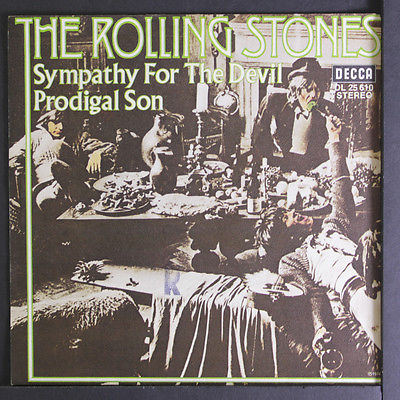
Rolling Stones – Prodigal Son

It’s nice to be back to normal… no holiday is mentioned in this song!

When I bought Beggars Banquet I knew about Sympathy for the Devil and Street Fighting Man… this song drew me into the rest of the album. I love the acoustic blues played by Keith. It sounds old…really old. This album doesn’t have a bad track on it to me.

This sounds like what influenced the Stones in the first place. This album is one of the Stones’ great ones and the first one produced by Jimmy Miller. Prodigal Son has remained one of my favorite Stones tracks.

Beggars Banquet peaked at #5 in the Billboard Album Charts, #3 in the UK, and #3 in Canada in 1969.

This song was written by Robert Wilkins, a reverend who recorded Delta Blues in the 1920s and 1930s. Keith Richards enjoyed Blues music and admired the work of Wilkins in the ’60s, which is how The Stones came across this song. Robert Wilkins’ original version was titled “That’s No Way To Get Along.” The Stones gave their version the title “Prodigal Son.”

The Prodigal Son is a story told in the Bible (Luke 15: 11-32) about a father who has two sons. The younger son asks for his inheritance early and goes off to spend the money on hedonistic pursuits. After wasting all the money, he comes home repentant, and the father welcomes him with a feast in his honor. This doesn’t go over well with the older son, who feels that he should be rewarded for good behavior, but the father stresses the value of forgiveness.

Prodigal Son

Well a poor boy took his father’s bread and started down the road
Started down the road
Took all he had and started down the road
Going out in this world, where God only knows
And that’ll be the way to get along

Well poor boy spent all he had, famine come in the land
Famine come in the land
Spent all he had and famine come in the land
Said, “I believe I’ll go and hire me to some man”
And that’ll be the way I’ll get along

Well, man said, “I’ll give you a job for to feed my swine
For to feed my swine
I’ll give you a job for to feed my swine”
Boy stood there and hung his head and cried
Cause that is no way to get along

Said, “I believe I’ll ride, believe I’ll go back home
Believe I’ll go back home
Believe I’ll ride, believe I’ll go back home
Or down the road as far as I can go”
And that’ll be the way to get along

Well, father said, “See my son coming home to me
Coming home to me”
Father ran and fell down on his knees
Said, “Sing and praise, Lord have mercy on me”
Mercy

Oh poor boy stood there, hung his head and cried
Hung his head and cried
Poor boy stood and hung his head and cried
Said, “Father will you look on me as a child?”
Yeah

Well father said, “Eldest son, kill the fatted calf,
Call the family round
Kill that calf and call the family round
My son was lost but now he is found
Cause that’s the way for us to get along”
Hey

Max Picks …songs from 1978

1978

I remember this year well. The Dodgers repeated a World Series trip but also repeated losing to the Yankees.

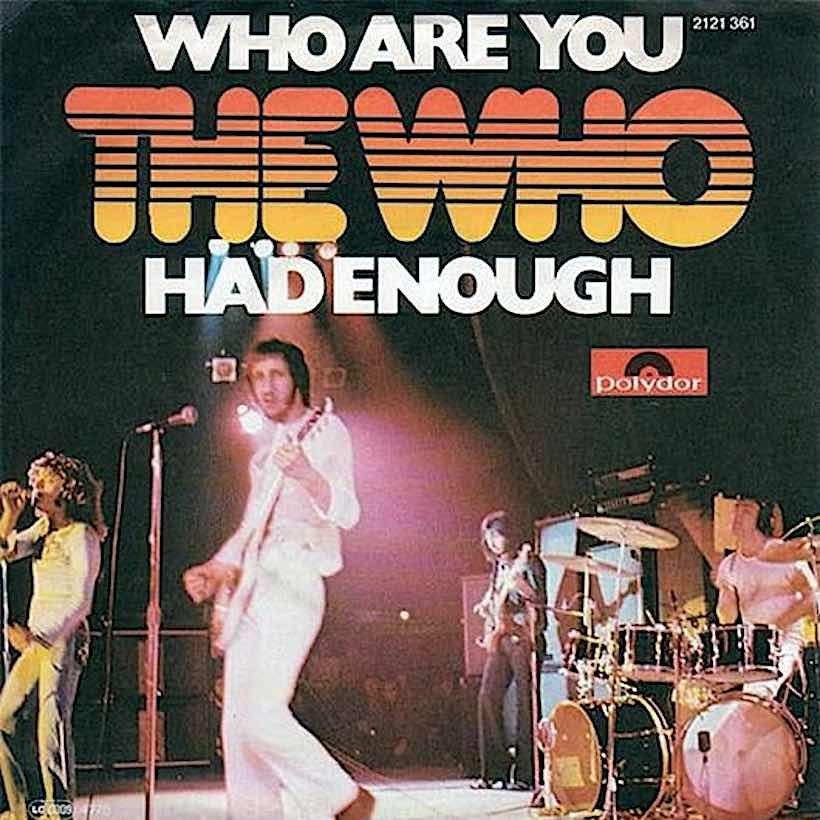
Great song by The Who on their last album with Keith Moon. Keith was not in the best shape by this time but his drumming on this is still fantastic. The song is about real events that happened to Pete Townshend down to being passed out drunk at night and asking a policeman that knew Pete’s name, Who the F**k are you? You can still hear Daltrey sing the expletive on classic radio stations.

This one was always a favorite of mine of the Rolling Stones. Keith Richards wrote this, but a lot of the lyrics were improvised in the studio. While the band played, Jagger came in with different lines to fit the music.

This song is a good example of the Rolling Stones tapestry of guitars. Keith and Ron Wood weave their guitars in and out until the two guitars are almost indistinguishable from each other.

Warren Zevon was a very clever songwriter. He went were other songwriters don’t often go. This track was produced by Jackson Browne. The songwriters were LeRoy Marinell, Waddy Wachtel, and Warren Zevon. John McVie and Mick Fleetwood played on this song.

This song is one of the best pop singles of the 1970s. It was on the album City To City. This was Rafferty’s first release after the breakup of his former band Steeler’s Wheel. Gerry Rafferty had been unable to release any material due to disputes about the band’s remaining contractual recording obligations, and his friend’s Baker Street flat was a convenient place to stay as he tried to remove himself from his Stealers Wheel contracts. It was his second solo album, the first being Can I Have My Money Back? released in 1971.

The album and song were about life on the road in all its glory and squalor. To emphasize this notion even further, Jackson Browne literally recorded the album on the road, in hotel rooms, on buses, and, in the case of “Running On Empty,” on stage.

Rolling Stones – Shine A Light

This song was on the Exile On Main Street album. The original lyrics were started in 1968 about Brian Jones while he was still a member. It was about his drug habits and decline as a musician and human.  After Brian died, Mick rewrote some of the lyrics and we got this gospel-sounding song with the help of Billy Preston and Leon Russell. Leon and Mick Jagger recorded an early version of this song called “(Can’t Seem To) Get a Line on You.”

Keith Richards and Charlie Watts are not on this song. Mick Taylor has claimed to play guitar and bass. Bill Wyman later said that he played bass on the song, not Taylor but Taylor did play guitar. The producer Jimmy Miller played drums on this track with Billy Preston on piano and organ. Clydie King, Joe Greene, Venetta Fields, and Jesse Kirkland sang back up.

Allen Klein owned all of the rights to Stones’ songs written before 1970. Somehow he fooled Mick and Keith into signing all of their rights away to their sixties catalog. Klein got wind of five songs on this album that were written in the 60s and yes…he sued them and got a share of the profits on this album. The songs were Sweet Virginia, Loving Cup, All Down the Line, Shine a Light, and Stop Breaking Down. Although this song is credited to Jagger-Richards…Leon Russell is said to have co-written it with Mick.

The song gave its name to a 2008 Martin Scorsese film chronicling the Stones’ Beacon Theatre performances on the latter tour, and the 2006 performance is included on the soundtrack album. Mick Jagger has named this his favorite song on Exile on Main Street.

Mick Jagger:  “When I was very friendly with Billy
Preston in the ’70s I sometimes used to go to church with him in Los
Angeles, it was an interesting experience because we
don’t have a lot of churches like that in England. I hadn’t had a lot of firsthand experience of it.”

Mick Jagger:  “It was quite an early one from Olympic Studios London, with Billy Preston. Once it was finished, we never played it on stage for years and years. Then it became this favorite after we recorded it for the Stripped album. So ‘Shine A Light’ was this funny thing that started off as something you did once at that time and never went back to.”

 (Can’t Seem To) Get a Line on You with Jagger and Russell in 1969. 

Shine A Light

Saw you stretched out in Room ten oh nine
With a smile on your face and a tear right in your eye
Whoa, come see to get a line on you, my sweet honey love
Berber jewelry jangling down the street
Making bloodshot eyes at every woman that you meet
Could not seem to get high on you, my sweet honey love

May the good Lord shine a light on you
Make every song (you sing) your favorite tune
May the good Lord shine a light on you
Warm like the evening sun

When you’re drunk in the elevator, with your clothes all torn
When your late night friends leave you in the cold gray dawn
Just seen too many flies on you, I just can’t brush them off

Angels beating all their wings in time
With smiles on their faces and a gleam right in their eyes
Whoa, thought I heard one sigh for you
Come on up, come on up, now, come on up now

May the good Lord shine a light on you, yeah
Make every song you sing your favorite tune
May the good Lord shine a light on you, yeah
Warm like the evening sun

Come on up now, come on up now, come on up now, come on up, come on

May the good Lord shine a light on you
Make every song you sing your favorite tune
May the good Lord shine a light on you
Warm like the evening sun, yeah, yeah

Chuck Berry – Let It Rock

Pick up you belongings boys and scatter about
We’ve got an off-schedule train comin’ two miles out

Great title for Mr. Chuck Berry. My only complaint about this song is it’s way too short. He borrowed liberally from Johnny B. Good but that is alright…hell it’s his song to borrow from. Just think how many artists have taken this riff, especially the rhythm track, and used it over and over again. The Rolling Stones, Animals, and Beatles owe a large part of their success to this man.

Speaking of the Rolling Stones…they recorded this song live as a B-side in the UK for the single Brown Sugar. It was recorded live in March 1971 at the University of Leeds in England. Right around the time when The Who recorded possibly the best rock live album ever…Live At Leeds. The Stones do a good job on this song…it’s in their wheelhouse completely.

This song is not about teenagers. Chuck wrote this from the perspective of a railroad worker in Alabama. The phrase “Let It Rock” won’t be found in the lyrics. Supposedly the train that is coming is Rock and Roll.

The musicians on this album are Johnnie Johnson on piano, Willie Dixon on double bass, and Fred Below on drums. Johnnie Johnson was one of the best boogie-woogie piano players around at the time.

Johnnie Johnson never got his due for these wonderful riffs that he helped Chuck create. When Keith Richards wanted him to play in Hail Hail Rock and Roll in the mid-80s…he was driving a bus in Saint Louis. Chuck gave his OK and Johnnie was in the band. After he appeared in the movie he worked for the rest of his life as a musician.

This song has been covered by The Connection, The Grateful Dead, Rockpile, The Rolling Stones, Motörhead, Jerry Garcia, Hasil Adkins, Skyhooks, The Yardbirds, Widespread Panic, The MC5, Bob Seger, the Stray Cats, George Thorogood, The Head Cat, Shadows of Knight, John Oates, The Georgia Satellites, and Jeff Lynne to name a few.

The song peaked at #18 on the Billboard R&B Charts and #64 on the Billboard 100 Charts in 1959.

Have a great day and Let It Rock!

Let It Rock

In the heat of the day down in Mobile Alabama
Working on the railroad with the steel driving hammer
I gotta get some money to buy some brand new shoes
Tryin’ to find somebody to take away these blues
“She don’t love me” hear them singing in the sun
Payday’s coming and my work is all done

Well, in the evening when the sun is sinking low
All day I been waiting for the whistle to blow
Sitting in a tee pee built right on the tracks
Rolling them bones until the foreman comes back
Pick up you belongings boys and scatter about
We’ve got an off-schedule train comin’ two miles out

Everybody’s scrambling, running around
Picking up their money, tearing the tee pee down
Foreman wants to panic, ’bout to go insane
Trying to get the workers out the way of the train
Engineer blows the whistle loud and long
Can’t stop the train, have to let it roll on

Rolling Stones – Honky Tonk Women

Of all the Rolling Stones songs I have posted…B sides and album cuts…I’m astonished that I haven’t posted this one. This is one of the Stones’ best 60s singles. It’s B side was You Can’t Always Get What You Want. I consider Jumping Jack Flash, Honky Tonk Women, and Brown Sugar their best rock singles. A case could be made for Satisfaction and Start Me Up as well.

When the Stones finished this recording on June 8, 1969…they drove to Brian Jones’s house to fire him. By this time he was trying to get himself clean of drugs and actually was getting better. He also had an arrest on his record that would stop the Stones from touring at the time. He started to record demos on his own and other people have said that it sounded like Creedence Clearwater Revival and that style. He would die on July 3, 1969, from drowning in his pool under a lot of controversy that still is questioned to this day. The song was released on July 4, 1969

This song was also the track that introduced Stones fans to guitarist Mick Taylor. The former member of John Mayall’s Bluesbreakers was brought in to replace founding member Brian Jones. Taylor, only 20 at the time, provided the glue for the song, helping the transition from verse to chorus. Guitarist Ry Cooder also was an inspiration for the song.

The song started on a trip that Richards and Mick Jagger took to Brazil. Inspired by the cowboys working the ranch where they were vacationing, the two started knocking together a Hank Williams/Jimmie Rodgers-inspired tune, with Jagger using the countrified tone of the music as inspiration for his lyrical ode to the working women of the Old West. That version you can hear in Country Honk on the Let It Bleed album. Honky Tonk Women was released as a non-album single.

The song peaked at #1 on the Billboard 100, in the UK, in New Zealand, and #2 in Canada in 1969.

Keith Richards: ‘Honky Tonk Women’ started in Brazil. Mick and I, Marianne Faithfull and Anita Pallenberg who was pregnant with my son at the time. Which didn’t stop us going off to the Mato Grasso and living on this ranch. It’s all cowboys. It’s all horses and spurs. And Mick and I were sitting on the porch of this ranch house and I started to play, basically fooling around with an old Hank Williams idea. ‘Cause we really thought we were like real cowboys. Honky tonk women. And we were sitting in the middle of nowhere with all these horses, in a place where if you flush the john all these black frogs would fly out. It was great. The chicks loved it. Anyway, it started out a real country honk put on, a hokey thing. And then couple of months later we were writing songs and recording. And somehow by some metamorphosis it suddenly went into this little swampy, black thing, a Blues thing. Really, I can’t give you a credible reason of how it turned around from that to that. Except there’s not really a lot of difference between white country music and black country music. It’s just a matter of nuance and style. I think it has to do with the fact that we were playing a lot around with open tunings at the time. So we were trying songs out just to see if they could be played in open tuning. And that one just sunk in.”

Honky Tonk Women

I met a gin-soaked, bar-room queen in Memphis
She tried to take me upstairs for a ride
She had to heave me right across her shoulder
‘Cause I just can’t seem to drink you off my mind

It’s the honky tonk women
Gimme, gimme, gimme the honky tonk blues

I laid a divorcée in New York City
I had to put up some kind of a fight
The lady then she covered me with roses
She blew my nose and then she blew my mind

It’s the honky tonk women
Gimme, gimme, gimme the honky tonk blues
It’s the honky tonk women
Gimme, gimme, gimme the honky tonk blues

It’s the honky tonk women
Gimme, gimme, gimme the honky tonk blues

Max Picks …songs from 1968

1968

It was a turbulent year, to say the least. We lost two proponents of peace—Martin Luther King, Jr., and Robert F. Kennedy. Other events include the Vietnam War’s Tet Offensive, riots in Washington, DC, the Civil Rights Act of 1968, and heightened social unrest over the Vietnam War, values, and race.

The music was also toughened up by moving away from psychedelic music. The social climate and The Band’s album Music from Big Pink had a lot of influence on this. You still had psychedelic music released but overall, music was more stripped down to the basics.

Let’s start off with The Band…Music From Big Pink was one of the most important albums ever released. Its influence was everywhere. The song The Weight was also later included in the movie Easy Rider.

The Beatles would release the super single Hey Jude/ Revolution and The White Album. I could go with many songs like Lady Madonna, Hey Jude, Back in the USSR, Helter Skelter, Dear Prudence,  and the list is almost endless… but I’ll go with Revolution. This song was written by John Lennon and Paul McCartney…but mostly Lennon.

The Rolling Stones released what some considered their best song ever with Jumping Jack Flash. It was written by Keith Richards and Mick Jagger.

Maybe the first supergroup in rock…Cream with White Room. Pete Brown wrote the lyrics and Jack Bruce wrote the music. Bruce was inspired by a cycling tour that he took in France. The “white room” was a literal place: a room in an apartment where Pete Brown was living.

Now we will go with the legendary Otis Redding singing (Sittin’ On) The Dock Of The Bay.

The song is a true classic. Stax guitarist Steve Cropper wrote this with Redding. Cropper produced the album when Redding died, including this track with various songs Redding had recorded the last few years.

Redding died in a plane crash on December 10, 1967, a month before this song was released (January 8, 1968) and three days after he recorded it. It was by far his biggest hit and was also the first-ever posthumous #1 single in the US.