Never a Dull Moment 1971 by David Hepworth

This is a good book about music and pop culture in 1971. The author turned 21 in that year and claims it was the best year musically come to age… He is certain it was the year that produced more great music than any other. He makes a compelling case. Many classic rock albums came out that year…to name a few

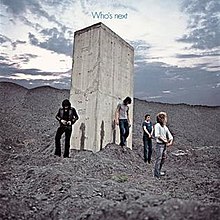
Who’s Next – The Who
Led Zeppelin IV (ZoSo) – Led Zeppelin
Hunky Dory – David Bowie
What’s Going On – Marvin Gaye
Sticky Fingers – Rolling Stones
Blue – Joni Mitchell
Imagine – John Lennon
At Fillmore East – Allman Brothers
There’s A Riot Going On – Sly and the Family Stone
Tapestry – Carole King

Every month he goes through the politics, movies, televisions shows (or the lack of)
and mostly how rock music grew up. He writes with some detail on Marvin Gaye recording “What’s Going On,” Carole King and Tapestry, Rolling Stones “Sticky Fingers” and etc…

He highlights the events of that year with plenty of his opinion. It is a fun read and it is written from a UK point of view and covers plenty. One thing I will say…He does lack objectivity at times but you can feel his enthusiasm when he writes about being a teenager in that era.

I’m a sucker for books on music especially in that period…so maybe I lack objectivity but I enjoyed it. If you like classic rock music and the pop culture that goes with it…you should enjoy this.

1971-–-Never-A-Dull-Moment-770x436.jpg

tapestry080512w.jpg

Eddie and the Cruisers

This movie was based on the 1980 novel by P. F. Kluge. I’ve always liked the 1983 film. At the time the movie came out the rumors of Jim Morrison still alive and Elvis sightings were everywhere and the movie fulfilled some fantasies of “What If.”

It’s about an early sixties band that played fifties type music and were gaining a following. They meet Frank Ridgeway an awkward backward pianist that played classical music. Eddie Wilson sees his potential and starts teaching him how to play rock and roll.

Eddie’s musical vision is ahead of its time. He uses Frank’ classical background to start working on an album called “Season in Hell.” When you hear snippets of the album it is years ahead of their time period. Most of the band hated the new music. The record company rejected the album because it was to “dark and strange.”

After that Eddie’s car crashed through a railing on a bridge and his body was never found. Did Eddie die?

The film picks up in the 80s when a reporter is asking the former Cruisers questions about the lost album.

I really liked this movie. The sequel not as much.

The soundtrack was by John Cafferty and the Beaver Brown Band. A hit song was released off the soundtrack. “On The Darkside” peaked at #7 on the Billboard Hot 100 chart.

The movie flopped at the box office but when played on HBO it became a cult classic.

The Cast…

Tom Berenger
Michael Paré
Joe Pantoliano
Helen Schneider
David Wilson
Kenny Hopkins
Michael “Tunes” Antunes
Ellen Barkin
Kenny Vance

“On The Dark Side”
The dark side’s callin’ now, nothin’ is real 
She’ll never know just how I feel 
From out of the shadows she walks like a dream 
Makes me feel crazy, makes me feel so mean 

Ain’t nothin’ gonna save you from a love that’s blind 
When you slip to the dark side you cross that line 
On the dark side, oh yeah 
On the dark side, oh yeah

The Beatles at Shea Stadium 1965

On August 15, 1965 The Beatles played to the largest audience to that point of any rock band. 55,600 fans were in Shea Stadium ready to be entertained by the Beatles.

Looking at the equipment they had…it had to be hard to hear anything. They used 100 Watt Vox amps. They are great amps but they used the house PA in a baseball stadium. I’ve played much smaller outside events with more powerful equipment and most importantly a better PA…but it didn’t matter at the time though as Ringo said:

“We always used to use the house PA,” added Starr. “That was good enough for us, even at Shea Stadium. I never felt people came to hear our show — I felt they came to see us. From the count-in on the first number, the volume of screams drowned everything else out.”

The fans turned Beatle concerts…and especially this one into an event more than a concert. The Beatles were very aware of the magnitude of this concert. ABC filmed the concert and it became a documentary. The looks on the Beatles faces were “Can you believe this?” and they seem to really enjoy this concert. The screams come through when you watch the documentary. They drown out everything. Luckily they plugged the recording equipment into the soundboard so at least you can hear them.

During the closing song, “I’m Down” John was playing the organ and you can tell he was having a great time. He was playing this his arms and cracking up George as well. John once told Sid Berstein who promoted the concert “You know, Sid, that concert in 1965 at Shea Stadium … I saw the top of the mountain on that unforgettable night.'”

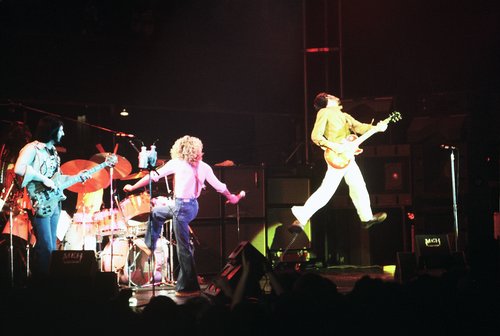
The Shea Stadium total was an attendance record that lasted until Led Zeppelin played to 56,800 in Tampa in 1973. That record was soon broken by The Who. The difference being by then the rock crowd had grown up and so had the equipment.

The 12 song Beatles setlist that lasted a whole 30 minutes.

  1. Twist and Shout
  2. She’s a Woman
  3. I Feel Fine
  4. Dizzy Miss Lizzy
  5. Ticket to Ride
  6. Everybody’s Tryin’ to Be My Baby
  7. Can’t Buy Me Love
  8. Baby’s in Black
  9. Act Naturally
  10. A Hard Day’s Night
  11. Help!
  12. I’m Down

Like so many of The Beatles achievements…They were pioneers.

shea.jpg

Shea3.jpg

shea4.gif

Martin Briley – Salt In My Tears

With a line like “You Ain’t Worth The Salt In My Tears” in a song…how could you not listen? This song was released in 1983 and reached #36 on the Billboard Charts. I liked the song because it had a catchy guitar riff which stood out at the time with all the synth music going on.

Martin Briley is a talented musician… below is from Wikipedia

Briley has received orchestral commissions, and has written songs for such artists as Céline Dion, *NSYNC, Dream, Michael Bolton, Mietta, Kenny Loggins, Pat Benatar, Jessica Andrews, Five Star, Jeff Healey, Rebecca St. James, Nana Mouskouri, Willie Nile, Gregg Allman, Night Ranger, David Hasselhoff, Patrick Swayze, Michael Monroe, Chastity Bono, Peter Tork, Nikki Webster, Hope Partlow, Natascha Sohl, Ballas Hough, Phil Stacey, Orianthi, The Maine and Barry Manilow.

Salt In My Tears

I never did it, no, I won’t admit it
Why should I lie for you anymore
You never loved me
You pushed and shoved me
I see the woman I never saw

I saw you laugh when the knife was twisted
It still hurts but the pain has shifted
I’m looking back at the time that drifted by
But I won’t cry for the wasted years
Cause you ain’t worth the salt in my tears

Feeling neglected, used and rejected
You need a shoulder to lean upon
Baby you picked him, found your next victim
Don’t worry, someone will come along

I broke the spell that you kept me under
I had enough of the rain and thunder
I lost track of the time and I wonder why
But I won’t cry for the wasted years
Cause you ain’t worth the salt in my tears

I’ll sit around and drink a few more beers
Until the memory just disappears
Cause you ain’t worth the salt in my tears

I saw you laugh when the knife was twisted
It still hurts but the pain has shifted
I’m looking back at the time that drifted by
But I won’t cry for the wasted years
Cause you ain’t worth the salt in my tears

Cause you ain’t worth the salt in my tears

Harold and Maude

I first watched this around 10 years ago. I had read that it was a dark comedy. I started to watch it not knowing what to expect. Well…it was a movie I’ll never forget. It’s an extreme May-December romance. In this movie young Harold equals death and Older Maude equals living.

Harold (Bud Cort) is a 20-year-old son of a wealthy woman who stages fake suicides to get her attention. She simply ignores him after he fakes cutting himself, hanging his self, and drowning etc. He annoys her more than anything else.

Harold’s mom starts trying to set him up girls and Harold sabotages the meetings. Harold is obsessed with death. He goes to strangers funerals on a regular basis and that is where he meets 79-year-old Maude. Maude is full of life and she steals Harold’s hearse…yes he has a  hearse and offers him a ride.

Maude is very much about living in the now.  Harold and Maude start seeing each other.

Ruth Gordon who plays Maude brings the spark to the movie. She lives in a train car, liberates a city tree to the country, and does what she pleases.

I would strongly recommend this movie to anyone who likes dark or offbeat comedies.

The movie was directed by Hal Ashby. The soundtrack was performed by Cat Stevens. The music was a perfect fit for this movie.

Both Bud Cort and Ruth Gordon were nominated for Best Actor/Actress in a Motion Picture -Comedy in the Golden Globes.

harold and maude2.jpg


The Clash – Train In Vain

I’ve always liked the Clash. Love the London Calling album and really started to listen to them when Combat Rock came out. I’ve never known much about them. This was the first song I ever knew by the Clash when I heard it on the radio in 1980.

They started off as a punk band but The Clash, unlike some other Punk bands, could really play and sing well…and above all else write some great songs. This song was written by

The song was released in 1979 and reached #23 on the Billboard Charts. It is listed by Rolling Stone Magazine at 298 in the top 500 songs of all time. Train in Vain was written by Mick Jones and Joe Strummer.

https://www.rollingstone.com/music/music-lists/500-greatest-songs-of-all-time-151127/the-clash-train-in-vain-50718/

From songfacts about Train In Vain.

On the original vinyl copy of the album “Train Is Vain” isn’t listed on the tracklisting on the sleeve. The story is that the song was recorded for an NME promotional flexi-disc once the London Calling sessions were done, and the flexi-disc idea then fell through, leaving the song with no home. The band hastily tacked the song onto the end of the album just before vinyl pressing, but the sleeve had already been designed and there was no time to add it to the tracklisting. The only clue of it’s existence is in the run-out groove on Side 4, where the name is carved into the vinyl. On all subsequent releases (including the CD copy) “Train In Vain” is included on the tracklisting on the sleeve.


The Bob Newhart Show

Probably my personal favorite sitcom of the seventies. It would not be rated as the best by many people or critics…I just like Newhart’s dry sense of humor. Bob Newhart also was in a sitcom in the 80’s called “Newhart”  that was set in Vermont that sometimes people confuse with this show.

This show was set in Chicago with Bob playing psychologist Bob Hartley. He lived with his wife Emily Hartley in an apartment complex. He worked in an office building with a receptionist named Carol and an Orthodontist name Jerry. There is also a neighbor named Howard Borden…who sometimes can be just a little too out there (or dumb) but he is more like Bob and Emily’s child at times.

The show ran from 1972 – 1978 with 142 episodes. It was never a Nielson Rating giant despite following the Mary Tyler Moore Show but it was in the top 20 in it’s first few years.

A college drinking game originated from this show. Every time you heard “Hi Bob” you would consume alcohol…sounds like a better time than Yahtzee.

The show’s plot takes place usually in three different places. Bob at home with Emily, Bob with his patients, and Bob with Carol and Jerry. Elliot Carlin was a patient of Bob’s and the most pessimistic character I ever saw on a sitcom. He thought the worse of people and himself and often would puncture Bob’s optimism.

This show was part of CBS’s Super Saturday night lineup that featured All In The Family, The Jeffersons, The Mary Tyler Moore Show, The Bob Newhart Show and then The Carol Burnett Show. All of those shows are remembered today.

It is a smartly written sitcom…the two episodes I would recommend is “Motel” in season 2 episode 2 and the classic episode “Over the River and through the Woods” season 4 episode 11.

If you like a dry sense of humor this show is for you. Some trivia about the show, the bedspread, and sheets in Bob and Emily’s bedroom were designed by Suzanne Pleshette. She designed bedding for JP Stevens Utica brand.

The cast was

Bob Newhart – Bob Hartley

Suzanne Pleshette – Emily Hartley

Bill Daily – Howard Borden

Marcia Wallace – Carol Kester

Peter Bonerz – Jerry Robinson

Jack Riley – Elliot Carlin

Below is a great description of the show

https://tv.avclub.com/the-bob-newhart-show-has-aged-gracefully-1798180611

The Bob Newhart Show might be the driest American sitcom to ever attain anything like major success. While the show was buoyed by running after The Mary Tyler Moore Show for much of its run, making it more of a beneficiary of a good time slot than a breakout hit, in some ways, Bob Newhart has aged even better than that series. Mary Tyler Moore was more historically important, but the center of the show is the uneasy tension arising from the increased entry of women into the workplace in the ’60s and ’70s, which gives the series a certain quaintness in 2014. Bob Newhart—produced by MTM Enterprises, the studio behind Mary Tyler Moore—is about the perils of trying to lead a mentally sound and fulfilling life in the morass of modern society. It’s a subject that will never go out of fashion—even if the series’ ’70s trappings and outfits seem occasionally ridiculous.

The Bob Newhart Show has gotten even more modern in tone with the passage of time, an unusual trick for a TV show. The complete series, collected on DVD for the first time by Shout Factory recently, centers on the home and work lives of Dr. Bob Hartley (Newhart), a Chicago psychologist whose life is rigidly defined by dealing with his patients—both individually and in the group therapy sessions that became a famous source of jokes for the show. The personalities at his office—orthodontist Jerry (Peter Bonerz) and their receptionist, Carol (Marcia Wallace)—are rarely the draw for the show, but they’re perfectly fine as foils both for Bob and his patients.

It’s on the other side of the series that the show crackles to life. When Bob goes home, he arrives to his wife, Emily (Suzanne Pleshette), and the relationship between the two is the thing about the show that most feels like something no network executive would ever greenlight today. The two are deeply in love, and reading between the lines of their dialogue also reveals they’re having lots of sex. But the show codes their conversation as their sex, taking a tip from the great screwball comedies of the ’30s and ’40s. There’s nothing they love so much as ribbing each other with jokes that would be acidic in lesser hands but feel affectionate coming from the mouths of Newhart and Pleshette. What’s more, the two don’t have children and rarely discuss having them. This was because Newhart didn’t want the show to turn into one where he played off of cute kids, but it played as quietly revolutionary at the time and even more so now. The Hartleys are eternally childless, finding their fulfillment in their professional lives and each other, building a marriage that’s more about finding a solid partner to navigate life with than anything else.

The Bob Newhart Show is also notable for breaking down into three rough eras of two seasons each. Where many other sitcoms of this era (the best ever for American sitcoms) were shepherded by a handful of the same producers from start to finish, Bob Newhart began life as a sort of drier, chillier riff on Mary Tyler Moore, under the tutelage of Lorenzo Music and David Davis. This version of the show, its weakest but still an enjoyable one, ran for the first two years, before spending the next two seasons with Tom Patchett and Jay Tarses working first as head writers, then as showrunners. Tarses’ darkly misanthropic streak and lack of love for the sitcom form blended well with a show about psychoanalysis, and the series became one of the darker sitcoms in TV history. By its fifth (and best) season, it was practically death-obsessed, with frequent riffs on suicide and serious psychological conditions. Yet these final two seasons (which gave some of the best TV writers in history their big break) also up an absurdist quality that was already in the show to quantities that hadn’t been seen in the sitcom since the heyday of Green Acres.

That absurdism also taught future writers who would work on shows starring Newhart a valuable lesson: Newhart, in and of himself, is not the driver of the story. He is, instead, the reactor, the modern man trapped in an absurd system and forced to remark quietly on how bizarre it is. Despite being deliberately low-concept, The Bob Newhart Show is one of the weirdest sitcoms in history, especially as it goes on. Even the characters who seem to be the most traditional sitcom types, like Bill Daily’s Howard Borden, go beyond what they initially seem to be (in Howard’s case, a generic dumb guy) and take on a specificity that other shows would avoid. Howard, for instance, is a navigator for an airline, who has terrible luck in love and a tendency to spiral blame for things he’s done wrong outward at others. What seemed like a generic riff on Mary’s Ted Baxter early in the show’s run becomes something else entirely—not a buffoon but, rather, a man limited by his own perceptions.

All of this reaches its apex in the show’s best character, Jack Riley’s Elliot Carlin, one of Bob’s patients and an almost perfect foil for Dr. Hartley, his dark, dour demeanor acting like a funhouse-mirror version of his therapist. The scenes between the two can feel like minimalist one-act plays at times, with Newhart and Riley bouncing off of each other in barely varying monotones that take on the vibe of complex business negotiations disguised as therapy sessions. In Carlin and Hartley, the show found two very similar men who looked at the dehumanizing state of American society of the ’70s and chose wildly different reactions. Hartley, an optimist, chose to believe people could improve themselves; Carlin, a pessimist, was pretty sure they never would. The genius of The Bob Newhart Show was how it knew Carlin was right but admired Bob Hartley for trying anyway.

bob__newhart__show_2_copy_-_h_2018.jpg


bobandcarlin.jpg

bob and phone.jpg

The Graduate

I saw this movie in the 80s and never forgot it. I watched it when I was roughly the same as Benjamin in the movie and I still didn’t know what I wanted to do with my life.

Dustin Hoffman portrays Benjamin Braddock a college graduate coming home and not having a clue what he was going to do with his life. He keeps getting asked and grilled about it and he keeps retreating into himself. He is eventually seduced by an old friend of his parents Mrs. Robinson. At first, he tries to avoid her but he is such an easy target for the older woman. He finds himself eventually succumbing to her advances.

Benjamin is full of confusion and anxiety but keeps meeting her. He realizes he wants more than sex out of a relationship and then the affair turns into a nightmare. He finds himself falling for the one woman in the world Mrs. Robinson tells him to stay away from…her daughter Elaine.

Elaine starts to like Benjamin and Elaine is told about what happened. Elaine goes away to school but he Benjamin will not give up trying to explain and win her back. Elaine is to be married and Benjamin eventually tracks the wedding down and crashes it.

He arrives but Elaine was just married. Mrs. Robinson says its too late and Elaine said “not for me….” Elaine and Benjamin ran off with joy and triumph and get on a bus.

The last couple of minutes are the magical part of this movie. The church scene and the close-ups setup the last scene. It’s the last scene that makes this movie different from others. The two get on a bus and are smiling but then the smiles fade…the look on Hoffman’s face tells a story…they got what they wanted and now what does he do? Where do they go from here? Is it all downhill from there? It’s open to interpretation.

The Simon and Garfunkel’s songs set the mood of this movie and it would not be the same without them. They are as big a part of this movie as the actors. This movie made me more of a fan of Simon and Garfunkel. I tracked the soundtrack down in the 80s just for the song “April Come She Will.”

The cast included

Dustin Hoffman, Anne Bancroft, Katherine Ross. William Daniels and Murray Hamilton… and it was directed by Mike Nichols

graduate2.png

graduate4.jpg

The La’s – There She Goes

A song by a British band called The La’s. A very good pop song that has no verses…it just repeats the chorus four different ways four different times. The song peaked at #49 on the 1991 Billboard Chart and #13 on the UK charts in 1990.

It was written by the singer Lee Mavers and recorded in 1988 and remixed and released again in 1990.

Many people think the song was about heroin. Paul Hemmings an ex-guitarist for the band denies that rumor. Either way, it is a perfectly constructed pop song.

It’s been covered by a lot of artists but probably most successfully by Sixpence None the Richer. I’ve always liked The La’s version the best.


“There She Goes”

There she goes
There she goes again
Racing through my brain
And I just can’t contain
This feeling that remainsThere she blows (there she blows again)
There she blows again (there she blows again)
Pulsing through my vein (there she blows again)
And I just can’t contain
This feeling that remainsThere she goes
There she goes again
She calls my name
Pulls my train
No one else could heal my pain
But I just can’t contain
This feeling that remains

There she goes
There she goes again
Chasing down my lane
And I just can’t contain
This feeling that remains

There she goes (there she goes again)


The Buddy Holly Influence

Buddy Holly’s music is still relevant almost sixty years after he passed away in 1959. He didn’t have a big voice like Elvis, Little Richard or some of his peers but he wrote and crafted beautiful melodies for his voice to weave through.

I consider him the beginning of power pop. His Fender playing a clean jangling melody. Songs like Maybe Baby, Peggy Sue, and Words of Love influenced future artists like The Beatles, Hollies, Bob Dylan, and the list is endless. He wrote his own songs and is still influencing artists today with a career that only lasted 18 months.

You can hear Buddy in everyone from  Marshall Crenshaw, The Byrds, Tom Petty to Nick Lowe. His songs have been covered by The Beatles (Words of Love), Linda Ronstadt (That’ll Be The Day), and The Rolling Stones (Not Fade Away).

Not only was he a great songwriter but also a great producer and he would have only gotten better. Unlike a lot of his fifties counterparts, I really believe that Buddy Holly would have fit in the music scene post Beatles. I think his best songs were in front of him. Most of his music transcends the fifties and would have fit nicely in the sixties.

His voice was also important. The inflection in his voice was part of his style and the whole package. He could make it rough with Oh Boy or sweet with Everyday. He was never a sex symbol like Elvis… people related to this tall skinny guy with glasses. You didn’t have to look like Elvis or be wild like Jerry Lee Lewis to make it.

Sometimes I forget how big of an influence he left until I start listening to him again and hear the artists that followed him.

John Lennon on Buddy Holly

 “Buddy Holly was the first one that we were really aware of in England who could play and sing at the same time – not just strum, but actually play the licks” 

Paul McCartney on Buddy Holly

 “I still like Buddy’s vocal style. And his writing. One of the main things about The Beatles is that we started out writing our own material. People these days take it for granted that you do, but nobody used to then. John, I started to write because of Buddy Holly. It was like, ‘Wow! He writes and is a musician'” 

Bob Dylan on Buddy told to Robert Shelton

“Buddy Holly was a poet”  “Way ahead of his time.”

Bob Dylan Accepting a Grammy for Album of the Year for “Time Out Of Mind” in 1998,

“And I just want to say that when I was sixteen or seventeen years old, I went to see Buddy Holly play at Duluth National Guard Armory and I was three feet away from him…and he looked at me. And I just have some sort of feeling that he was — I don’t know how or why — but I know he was with us all the time we were making this record in some kind of way.”

buddy-holly_1251253c.jpg

George Harrison – Isn’t It a Pity

This 1970 George Harrison song is off of the great album “All Things Must Pass.” It is often overlooked but its one of my favorite George Harrison songs. George wrote it in 1966 but it didn’t see daylight until 1970. He brought it up on the Let It Be sessions but he later said that John Lennon rejected it. That I don’t understand…I Me Mine was passed but not this one? I like “I Me Mine” but not like this one. Maybe George did more work on it afterward or it was the length of the song.

It resembles Hey Jude in its structure. It was the B side to My Sweet Lord which went to #1 on the charts. In Canada, this song was the preferred song and it went to #1 in Canada.

No one benefitted from the break up of the Beatles like George. He had so many songs that we had written and could not get enough of them on Beatles albums, understandably so with Lennon and McCartney. He released a 3 album set called “All Things Must Pass” in 1970.

George began recording this Isn’t It A Pity on June 2, 1970. Phil Spector produced it using his trademark Wall of Sound with heavy reverb. On the remastered version, the reverb is toned down a little.

This is from Timothy White’s interview with George Harrison that appeared in the Dec. 30, 2000, issue of Billboard:

Had you intended songs like “Isn’t It A Pity” to be things just for you?

No, I mean, this is the funny thing: imagine if the Beatles had gone on and on. Well, the songs on “All Things Must Pass,” maybe some of them I would probably only just got ’round to do now, you know, with my quota that I was allowed [laughs]. “Isn’t It A Pity” would just have been a Beatles song, wouldn’t it? And now that could be said for each one of us. “Imagine” would have been a Beatles song, but it was with John’s songs. It just happened that the Beatles finished. 

What was the inspiration for “Isn’t It A Pity”?

It’s just an observation of how society and myself were or are. We take each other for granted — and forget to give back. That was really all it was about.

It’s like “love lost and love gained between 16- and 20-year-olds.” But I must explain: Once, at the time I was at Warner Bros. and I wrote that song “Blood From A Clone” [on the 1981 “Somewhere In England” album], that was when they were having all these surveys out on the street to find out what was a hit record. And apparently, as I was told, a hit record is something that is about “love gained or lost between 14- and 19-year-olds,” or something really dumb like that.

So that’s why I wrote “Isn’t Is A Pity” [laughs]; I thought, ‘Oh, I’ll get in on that!”


“Isn’t It A Pity”

Isn’t it a pity
Now, isn’t it a shame
How we break each other’s hearts
And cause each other pain
How we take each other’s love
Without thinking anymore
Forgetting to give back
Isn’t it a pitySome things take so long
But how do I explain
When not too many people
Can see we’re all the same
And because of all their tears
Their eyes can’t hope to see
The beauty that surrounds them
Isn’t it a pity

Isn’t it a pity
Isn’t is a shame
How we break each other’s hearts
And cause each other pain
How we take each other’s love
Without thinking anymore
Forgetting to give back
Isn’t it a pity

Forgetting to give back
Isn’t it a pity
Forgetting to give back
Now, isn’t it a pity

[6 times, fade the 6th:]
What a pity
What a pity, pity, pity
What a pity
What a pity, pity, pity

John Hiatt – Window on the World

I heard this song and liked it right away. Jimmy Buffett did a cover but I prefer John’s rawer version. It came out in 2003 on the album “Beneath This Gruff Exterior” which peaked at #73 on the Billboard Album Charts.   John’s reputation has always been better than his chart success but other artists have covered his songs with great chart success…Bonnie Raitt being one.

John mentions “Wes and Jimmy” and that would be Jazz musicians Wes Montgomery and Jimmy Smith.

Personally, I like John’s voice and I usually like his version of his songs.

“Window On The World”

A broken promise i kept too long
A greasy shade and a curtain drawn
A broken glass and a heart gone wrong
That’s my window on the worldA cup of coffee in a shaky hand
Wakin’ up in a foreign land
Tryin’ to act like i got somethin’ planned
That’s my window on the world

[Chorus 1:]
That’s my window on the world
Could you stand a little closer, girl
Don’t let mama cut those curfs
That’s my window on the world

In broad daylight that circus tent pulled up stakes
I don’t know where it went
A close dark room with a busted vent
That’s my window on the world

I think about you when i’m countin’ sheep
I think about you, then i can’t sleep
I think that ocean is just so deep
That’s my window on the world

[Chorus 2:]
That’s my window on the world
Could you stand a little closer, girl
The queen of Sheba meets the duke of earle
That’s my window on the world

Down on indiana avenue
Wes and jimmy, man they played the blues
I guess they were only passin’ through
That’s my window on the world

[Chorus 1:]
That’s my window on the world
Could you stand a little closer, girl
Don’t let mama cut those curfs
That’s my window on the world

[Chorus 2:]
That’s my window on the world
Could you stand a little closer, girl
The queen of Sheba meets the duke of earle
That’s my window on the world

The Mary Tyler Moore Show

Sitcoms come and go but some will be remembered long after they are gone…this is one of them. This series featured a single woman Mary Richards (Mary Tyler Moore) working and dating. She had career ambitions far beyond getting married and having children. Doesn’t seem like a big deal now but at the time this wasn’t done. Everyone knew Mary from The Dick Van Dyke Show which finished a few years before.

The Mary Richards character was going to be divorced in the show but the producers thought the audience would think she divorced Dick Van Dyke…so that wasn’t happening. This show featured women and men writers and a great cast. As the show progressed it wasn’t all about Mary, the talented cast all got their turns.

Mary moves into a studio apartment in Minneapolis Minnesota with a neurotic landlady Phyllis Lindstrom (Cloris Leachman) and a tough New York Jewish neighbor Rhoda Morgenstern (Valerie Harper).

She gets a job at WJM-TV a low rated television station in Minneapolis. Her boss was Lou Grant (Ed Asner) and her co-worker’s name was Murray Slaughter (Gavin MacLeod). The weatherman was Gordy Howard (John Amos) and the newscaster was the incompetent Ted Baxter (Ted Knight).

The show was written to entertain adults more than a family. The writing was smart and nothing ever seemed forced. This is a great sitcom that many modern shows look to.

The show featured one of the best-known episodes from any sitcom…“Chuckles Bites the Dust”

Let’s go through the characters.

mary.jpg

Mary Richards – Mary is a career minded, honest and good to a fault person. She was the cheerleader in high school you had a crush on.

rhoda

Rhoda Morgenstern – A self-deprecating neighbor who envied Mary Richards but ended up her best friend. Her and Mary’s relationship was an important part early on in the show.

lou grant.jpg

Lou Grant – The hard-drinking, gruff, tough but lovable boss who was the father figure to Mary. Lou would treat everyone fair through the office and would stop himself from strangling Ted.

phyllis.jpg

Phyllis Lindstrom – Phyllis and her husband Lars (who is never seen) manage the building which Mary lives in. She is snobbish, neurotic, and has an adversarial relationship with Rhoda but you still end up liking her.

murray-slaughter.jpg

Murray Slaughter – The writer of the show and he is eternally mad at Ted Knight for mispronouncing everything he has written. He is a middle-aged man married with kids but has a secret crush on Mary…like everyone in the office.

ted.jpg

Ted Baxter – Ted Knight was made for this character. Ted has a giant ego, is incompetent but makes more money than anyone at the station…yea like real life. Ted supplies a lot of the humor for the show.

sueann.png

Sue Ann Nivens (Betty White) – She is catty, man-hungry and can be downright mean. She is always ready with a backhanded compliment to Mary. She created more audience sympathy for Phyllis when she had an affair with Phyllis’s husband Lars. Once in a while, the writers will show her vulnerable side.

gordy.jpg

Gordy Howard – A very professional weatherman who gets promoted much to Ted’s dismay…John Amos left to star on Good Times.

george.jpg

Georgette Baxter  (Georgia Engel) – Georgette may have been the most innocent character ever on a sitcom. She dated Ted for a while and then Ted finally married her. She may have been sweet and innocent but she could handle Ted.

Mary Tyler Moore Cast

mtm cast


Watkins Glen 1973

I first read about this concert-festival in a Grateful Dead biography… There is not much video footage from the concert. I never could understand why this concert didn’t hold up in history like some others like The Atlanta Pop festival and others. I’m not saying it should have been remembered like Woodstock because it’s cultural impact was like no others…but this drew more than any other festival including Woodstock.

An estimated 600,000 people came to this concert on July 28, 1973, in Watkins Glen N.Y. 45 years ago. Maybe the reason it is not as remembered is that only three bands performed…but the three bands were giant bands in their prime. The Grateful Dead, The Allman Brothers, and The Band.

From the bands themselves, almost all agree the sound check on Friday was better than the concerts.

Perspective about the concert by a member from each band.

Robbie Robertson from his book Testimony

Then we got a request from Bill Graham, who was putting together a show “just up the highway from us” at the Watkins Glen Raceway. We’d be performing with the Allman Brothers and the Grateful Dead. Playing some gigs could help us get “back on the stick,” as they say.
We went up to Watkins Glen the day before the show for the sound check. Bill Graham said that the Dead would go on first and play for three or four hours—that was part of their thing, giving the audience their money’s worth. “Until the drugs wear off,” said Bill, laughing. We’d go on in the late afternoon, and the Allmans would take over at sundown. As we were leaving the sound check, it looked like cars were heading toward the racetrack from every direction. Bill said he expected maybe a hundred thousand or more.
When we came back the next day, we couldn’t believe our eyes. Hundreds of thousands of people had showed up, and more just kept coming and coming. The crowds mowed down the high chain-link fences around the racetrack and filled the area as far as the eye could see. Bill was running around trying to make people pay admission, but the mobs were out of control.
When it came time for the Band to take the stage, it started pouring. As we waited, hoping it was going to let up, Bill came over. “They’ve determined there are 650,000 people here. It’s the biggest concert in history.” The news was somewhere between an incredible accomplishment and a huge disaster.
The rain started letting up, and Garth played some churchy, rainy-day keyboard sounds out over the crowd. When it was safe to go on, we decided to start our set with Chuck Berry’s “Back to Memphis.” And wouldn’t you know, as Levon sang that baby, the sun came out.

Gregg Allman from My Cross to Bear

Right before Brothers and Sisters came out, we played the festival at Watkins Glen with the Band and the Grateful Dead, in front of six hundred thousand people—the biggest show in history to that point. People always talk about Woodstock. Watkins Glen was like three Woodstocks. I think actually it might’ve been a little too big. They should have had people all the way around the raceway, and maybe had the stage in the center revolving real slowly, do a revolution in a minute. That’s not that complicated.
A show like Watkins Glen was uncomfortable, because you know that you’re getting the show across to this many people, but you still got two times that many behind them. You could finish a song, take your guitar off, put it in the case, and latch it up before the last guy heard the last note. Sound ain’t all that fast, not compared to light.

When you’re playing in that situation, you’re kind of thinking about the end. Not that you’re wishing it to be over, but you can’t even hear yourself—that was back before we had the in-ear monitors. Everything was so loud. You just walk out there and start to wince before you even start playing. It’s hard to get any kind of coziness, any kind of feel with the audience.
I guess there’s something about that many people seeing you all at once that’s real nice, but it’s just too much. You’re just like a little squeak in the middle of a bomb going off. But it was interesting, and it was a pretty fun day. People were OD’ing all over the place. And of course, Uncle Bill was there, which cured everything. It was exciting to be there and see it—and to be able to make ’em stand up, now that was something else.

Bill Kreutzmann from Deal

We made some questionable business decisions and we couldn’t sell records, but we sure could sell tickets. We sold around 150,000 tickets for a single show at a racetrack in Watkins Glen, New York, on July, 28, 1973. Yes, and more than 600,000 people ended up coming out for it. The lineup was just us, the Allman Brothers, and the Band. That show, called the Summer Jam at Watkins Glen, made it into the Guinness Book of World Records for what, at the time, was the largest audience ever assembled at a rock concert. In fact, that record may still hold today, at least in the U.S., and some have even proposed that it was the largest gathering in American history. Originally, the bill was supposed to just be the Dead and the Allmans, but our respective camps fought with the promoter over which band would get headliner status. The solution was that both bands would co-headline and they’d add a third, “support” act.
The friendly (“-ish”) competition between us and the Allman Brothers carried through to the event itself. And yet, the memory that I’m most fond of and hold most dear from that whole weekend was jamming backstage with Jaimoe, one of the Allman’s drummers. We were just sitting in the dressing room, banging out rhythms, and that was a lot of fun for me. Jaimoe backed Otis Redding and Sam & Dave before becoming a founding member of the Allman Brothers, where he remains to this day. He’s a soulful drummer and just an incredible guy who is impossible not to like.
As for the show itself, it is a well-known fact that the Grateful Dead always blew the big ones. Watkins Glen was no exception. However, we still got a great night of music out of it—the night before. The show took place on a Saturday, but by Friday afternoon there were already about 90,000 people in front of the stage. I’ve heard others place that number closer to 200,000. Either way, the audience was already many times the size of any of our regular shows, and the show was still a full day away. The only duty we had on Friday was to do a soundcheck, and even that was somewhat optional. The Band soundchecked a couple of songs. The Allman Brothers soundchecked for a bit. Then, perhaps spurred on by our friendly rivalry, we decided to one-up both bands by turning our soundcheck into a full-on, two-set show. Naturally, without any of the pressure of the “official show” the next day, we really let loose and played a good one. There was an eighteen-minute free-form jam that eventually made it onto So Many Roads, one of our archival box sets. It’s good music, all right, and it still holds its own.
On the day of the actual show, we had to fly into the venue via helicopter because the roads were all backed up, like what happened at Woodstock. People left their cars on the side of the road and walked for miles to the gig. I remember looking down from the helicopter and seeing the most incredible impressionist painting, a Monet of heads, shoulders, tie-dyes, baseball caps, and backpacks, packed front to back. You couldn’t see the ground for the crowd. To this day, I’ve never seen anything else like that.
Nowadays at large music events and festivals, they have golf carts for artists and crews to get around, but back then they used little motor scooters. Early, during the day of our supposed “soundcheck,” I commandeered one of these scooters and, because the venue was an actual racetrack, I decided to do a lap. This was before the gates were opened. The scooter went maybe fifteen or eighteen miles an hour, something stupid like that, and it took forever just to do one lap. But I did it. And that’s when I first started to get a feel for the scale of the event and just how large it was.
During the Summer Jam itself, I watched the other bands play and I honestly thought the Allman Brothers played better on the big day than we did. As for the Band, well, they always sounded great.

If you have read this long…below is some crowd video and a little of the music.

Best Double A-Sided Singles List

This is my first attempt at a list. I have picked what I think were the top 20 double A-Sided singles in pop/ rock.  I feel good until number 5…after that it gets hard. When I made the list I wasn’t counting how many copies they sold or just chart history. I tried to put their importance in history into account. and my preference…which of course means nothing but it’s fun…

  1. Beatles – Strawberry Fields/Penny Lane The number 1 position is the only position that didn’t give me any trouble…
  2. Beatles –  Hey Jude/Revolution – What a single this is… Two of the Beatles best-  known songs together for their first Apple release. A great way to start the Apple label.
  3. Rolling Stones –  Honky Tonk Women/You Can’t Always Get What You Want The Stones released this in 1969 and Honky Tonk Women when to number 1
  4. Elvis – Don’t Be Cruel/Hound Dog  This is cool fifties Elvis and untouchable. This record influenced young rockers all over the world. 
  5. Beatles – Something/Come Together George finally gets an A side and he runs with it and you have Come Together as the B side. 
  6. Rolling Stones – Ruby Tuesday / Let’s Spend the Night Together No Chicago blues here but beautifully crafted pop. 
  7. Creedence Clearwater Revival – Proud Mary/Born On The Bayou This was the major breakthrough single for CCR and they kept coming. 
  8. The Band – Up On Cripple Creek/The Night They Drove Old Dixie Down The quality of this single is outstanding. Neither was a top 20 hit but they are still played to this day. 
  9. Beatles – Paperback Writer/Rain The bass jumps out at you on these recordings. Paul plays a Rickenbacker and boosted the level in the studio
  10. Creedence Clearwater Revival – Down on the Corner / Fortunate Son Fortunate Son was John Fogerty’s angriest song and it made his feelings known. 
  11. Beatles – I Want to Hold Your Hand/I Saw Her Standing There The single that broke the Beatles in America. I like some of the other Beatle singles more but this one was huge and maybe the most important of their career. 
  12. Chuck Berry – Johnny B. Goode/Around and Around Johnny B. Goode is the song ever bar band is required to know. The guitar riff is eternal. 
  13. Rolling Stones – Bitch/Brown Sugar If I had to explain to an alien what Rock and Roll was all about without talking…I would hand them a picture of Keith Richards and a copy of Brown Sugar.
  14. Creedence Clearwater Revival – Travelin’ Band / Who’ll Stop the Rain After playing Woodstock John went home and wrote Who’ll Stop the Rain
  15. Sam Cooke – Shake/A Change Is Gonna Come A Change Is Gonna Come speaks for itself. What a beautiful song. 
  16. Queen – We Are The Champions/We Will Rock You Two of Rocks biggest anthems was released in 1977 and you could not go anywhere without hearing both
  17. Beach Boys – Wouldn’t It Be Nice / God Only Knows God Only Knows is one of the most beautiful sounding songs ever. 
  18. Buddy Holly – Peggy Sue / Everyday Peggy Sue is probably the song Buddy is most remembered for…Everyday is a great song in itselfBuddy was a huge influence on The Beatles. 
  19. Beach Boys – I Get Around/Don’t Worry Baby I Get Around went to number 1 but Don’t Worry Baby is the reason this song is on the list.
  1. Elvis Presley – Mystery Train / I Forgot to Remember to Forget Two classics by Elvis. Mystery Train’s guitar sound is just haunting.

Honorable Mentions

Creedence Clearwater Revival – Up Around the Bend / Run Through the Jungle

Ricky Nelson – Travelin’ Man / Hello Mary Lou

Creedence Clearwater Revival – Bad Moon Rising / Lodi

Chuck Berry – Sweet Little Sixteen / Reelin’ and Rocking

Jimi Hendrix – Purple Haze / The Wind Cries Mary

Sam Cooke – Bring It on Home to Me / Having a Party

Ritchie Valens – Donna / La Bamba

John Fogerty – Rock and Roll Girls / Centerfield

Sly & the Family Stone – Stand! / I Want to Take You Higher

Beatles – Hello Goodbye / I Am the Walrus

Beatles – Get Back / Don’t Let Me Down

Buddy Holly – Oh Boy/Not Fade Away

Beatles – We Can Work It Out/Day Tripper

Rod Stewart – Maggie May / Reason to Believe