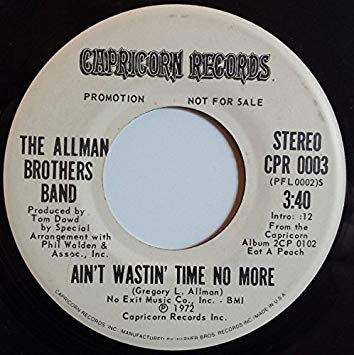
Fantastic song that you don’t hear as much as some of the other Allman songs like Rambling Man. Gregg Allman had most of the music written already but wrote the lyrics right after his brother Duane died in a motorcycle wreck. It’s about Gregg dealing with the loss of his brother and the soldiers coming back from Vietnam. The Allmans were halfway through with the album Eat A Peach when Duane died. Soon after he passed they went to Miami to finish the album.
The song peaked at #77 in the Billboard 100 in 1972.
Gregg Allman talking about the song from “My Cross To Bear”
Losing Duane really slammed Dickey too, but he didn’t show it. We didn’t see too much of Dickey after my brother died. He had this huge garden, and when something would piss him off, he would go out there and sling a hoe or a shovel or an ax for about four hours in the hot sun. He’d come back in for dinner, and he’d be okay. The cat really does have a heart, and I think he really cared about my brother—you don’t go naming your child after someone that you don’t care for.
When my brother died, Dickey really stepped up. He wood-shedded like crazy; I remember him learning how to play the slide part for “Ain’t Wastin’ Time No More” on the airplane, during the flight down to Miami to finish up Eat a Peach.
Ain’t Wastin’ Time No More
Last Sunday morning, the sunshine felt like rain The week before, they all seemed the same With the help of God and true friends, I’ve come to realize I still have two strong legs, and even wings to fly
So I, ain’t a wastin’ time no more ‘Cause time goes by like hurricanes, and faster things
Well, Lord, Lord, Miss Sally, why are your cryin? Been around here three long days, lookin’ like we’re dyin’ Go step yourself outside and look up at the stars above And go on downtown, baby, find somebody to love
Meanwhile, I ain’t a wastin’ time no more ‘Cause time goes by like pourin’ rain, and much faster things
You don’t need no gypsy to tell you why Ya can’t let one precious day to slip by Well, look inside yourself, and if you don’t see what you want May be sometimes then ya don’t But leave your mind alone and just get high
Well, by and by, way after many years have gone And all the war freaks die off, leavin’ us alone We’ll raise our children, in the peaceful way we can It’s up to you and me brother to try and try again
So, hear us now, we ain’t wastin’ time no more ‘Cause time rolls by like hurricanes Runnin’ after the subway train Don’t forget the pourin’ rain
Starts off with a nice guitar riff. The Vogues are from Turtle Creek, Pennsylvania, a suburb of Pittsburgh. This was the first of eight US Top 40 hits for The Vogues, who recorded the song in Pittsburgh’s Gateway Studios. Its follow-up, “Five O’Clock World,” is their best-known tune.
This song peaked at #4 in the Billboard 100 in 1964.
Petula Clark is best known as a recording artist with a resumé that includes the American #1 hits “Downtown” and “My Love,” both of which were penned by Tony Hatch. However the English songbird is also a fine songwriter, having composed over 100 tunes including this hit for The Vogues. Petula told us it came about because she needed one more song for her I Know a Place album and Tony Hatch had run out of ideas. He asked her to write something and she came up with this song’s melody, to which he added the lyric.
This was the first of eight US Top 40 hits for Turtle Creek, Pennsylvania Pop group The Vogues, who recorded the song in Pittsburgh’s Gateway Studios. Its follow-up, “Five O’Clock World,” is their best-known tune.
The success of the Vogues’ cover alerted Petula Clark’s UK label to the song’s hit potential. Pye rush released Clark’s own version as a single and it peaked at #23 in the singer’s native country and also reached #4 in Australia. In addition Clark recorded a French version entitled “Un Mal Pour Un Bien,” which climbed to #6 in France. However, the English songstress vetoed her US label, Warner Bros’, suggestion to issue it as a single in America to battle with the Vogues’ version.
Surprisingly, despite her success, Petula does not consider herself to be a songwriter at all. She told us: “I’m a sometime songwriter. I’ll write a song if it comes to me, but nobody could say to me, “Will you write me a song?” Because I wouldn’t know how to do that. It just has to come.”
You’re The One
Every time we meet, everything is sweet Oh, you’re so tender, I must surrender My love is your love, now and forever
You’re the one that I long to kiss Baby, you’re the one that I really miss (yeah, yeah, yeah) You’re the one that I’m dreamin’ of Baby, you’re the one that I love
Keep me in your heart, never let us part Ooh, never leave me, please don’t deceive me I want you only, you must believe me
You’re the one that I long to kiss Baby, you’re the one that I really miss (yeah, yeah, yeah) You’re the one that I’m dreamin’ of Baby, you’re the one that I love
I adore you and no one before you could make me feel this way, yay Since I met you I just can’t forget you, I love you more each day (Yeah, yeah, yeah, yeah)
There may be some tears through the comin’ years Ooh, all the while I know you’ll be smilin’ Your love will guide me through every mile ’cause
This is one of the best double A side singles ever released…The B side to I Get Around was “Don’t Worry Baby.” I had this single growing up and would watch the yellow and orange 45 spin. I’m not an audiophile but I will say the vinyl version of I Get Around jumps off the record at you while the cd seems flat.
I Get Around peaked at #1 in the Billboard 100 while reaching #7 in the UK in 1964. This was The Beach Boys first number 1 in the US. It was rated fifth biggest seller of 1964 by both Billboard and Cash Box indicating close to 2 million US units sold.
From Songfacts.
Like most early Beach Boys songs, this does not have deep lyrical content; it’s a fun song about a teenage lifestyle featuring friends, girls and cars. Musically, however, it was incredibly innovative, with an opening fuzz guitar, stop-start rhythms and a keyboard line working in and out of the song. Written by Brian Wilson with contributions from Mike Love, it was the first Beach Boys recording after The Beatles took hold in America, and Wilson responded with this rather complex creation.
This was The Beach Boys first #1 in their own country (“Surfin’ Safari” went to #1 in Sweden two years earlier). Father-manager Murry Wilson and therefore his beleaguered son Brian despaired over not hitting the top spot in the US, coming off second best first to the Four Seasons through 1962 and into ’63, then to Jan & Dean when they got to #1 that summer with “Surf City” – a song Brian Wilson wrote – and then into 1964 with the Beatles took over.
This was The Beach Boys real breakthrough in the UK, reaching #7 in a chart that for months had seen only British faces. It was effusively pushed by Mick Jagger on British TV’s Juke Box Jury and he personally circulated copies of it to the UK’s independent pirate radio stations offshore. It was also #1 in Canada and New Zealand.
Fuzzed and reverbed guitar were demonstrated in this way before anyone else in rock, but too subtle for the general public to notice. It was about three years later that fuzz and reverb became a huge deal from the amplifiers of Jimi Hendrix, Eric Clapton, and Keith Richards.
In our interview with Randy Bachman, he recalls a conversation with Brian Wilson where Wilson explained that this song is based on the Broadway show tune “Five Foot Two, Eyes of Blue.” Said Bachman:
“I said, ‘How did you do that?’ He said, ‘Well, when they say to stay on the C chord for two beats, I stay on it for four. Or if they say stay on the C chord for eight beats, I stay on it for two.’ So if you listen to ‘Five Foot Two, Eyes of Blue, oh, what those five feet could do,’ that’s ‘I Get Around.’ But they went, ‘Round, round, get around, I get around.’ And then he put his own, ‘Woo oo,’ and then he wrote his own song and he put in his own lyrics.”
I Get Around
Round round get around I get around Yeah Get around round round I get around I get around Get around round round I get around From town to town Get around round round I get around I’m a real cool head Get around round round I get around I’m makin’ real good bread
I’m gettin’ bugged driving up and down the same old strip I gotta finda new place where the kids are hip
My buddies and me are getting real well known Yeah, the bad guys know us and they leave us alone
I get around Get around round round I get around From town to town Get around round round I get around I’m a real cool head Get around round round I get around I’m makin’ real good bread Get around round round I get around I get around Round Get around round round oooo Wah wa ooo Wah wa ooo Wah wa ooo
We always take my car cause it’s never been beat And we’ve never missed yet with the girls we meet
None of the guys go steady cause it wouldn’t be right To leave their best girl home now on Saturday night
I get around Get around round round I get around From town to town Get around round round I get around I’m a real cool head Get around round round I get around I’m makin’ real good bread Get around round round I get around I get around Round Ah ah ah ah ah ah ah ah
Round round get around I get around Yeah Get around round round I get around Get around round round I get around Wah wa ooo Get around round round I get around Oooo ooo ooo Get around round round I get around Ahh ooo ooo Get around round round I get around Ahh ooo ooo Get around round round I get around Ahh ooo ooo
A great pop song by Ace and this was their only top 40 hit. Paul Carrack was the lead singer of Ace. He went on to sing for Squeeze and Mike And The Mechanics and had a solo hit with “Don’t Shed a Tear.” He also worked as a keyboardist in Roxy Music and a backup musician for Frankie Miller.
This song peaked at #3 in the Billboard 100, #3 in Canada, and #20 in the UK.
Many listeners believed that this was a love song. The truth is that is was about bass player Terry Comer working with other bands (he played briefly with The Sutherland Brothers and Quiver before returning to Ace). He didn’t tell the members of Ace and they felt cheated.
This was Ace’s only hit. They broke up in 1977.
The bass introduction is borrowed from “Traveling Song” by the British folk rock group Pentangle.
When singer-songwriter Paul Carrack appeared on the BBC Breakfast news programme on June 29, 2009 he was asked about the inspiration for this song. Rather than being about a two-timing lover it was, he said, about another band who were “trying to nick our bass player”. “How Long?” was one of the first songs he ever wrote and remains one of his biggest hits. It was released on the Anchor label, copyright 1974, backed by “Sniffin’ About”, and produced by John Anthony for Neptune Productions. It has been recorded many times since. Terry Comer, the bass player a rival band were trying to “nick”, returned in time to play on the original recording.
How Long
How long has this been goin’ on How long has this been goin’ on
Well, if friends with their fancy persuasion Don’t admit that it’s part of a scheme But I can’t help but have my suspicions ‘Cause I ain’t quite as dumb as I seem And you said you was never intendin’ To break up our scene in this way But there ain’t any use in pretendin’ It could happen to us any day
How long has this been goin’ on How long has this been goin’ on
—- musical interlude —-
Oh, your friends with their fancy persuasion Don’t admit that it’s part of a scheme But I can’t help but have my suspicion ‘Cause I ain’t quite as dumb as I seem Oh, you said you was never intending To break up our scene in this way But there ain’t any use in pretendin’ It could happen to us any day
And how long has this been going on How long has this been going on How long
How long has this been going on How long has this been going on How long has this been going on How long How long has this been going o
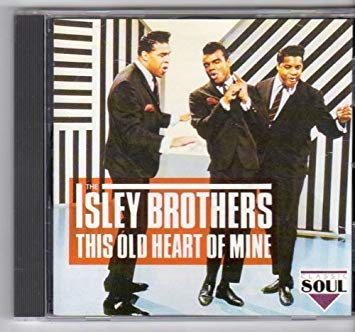
The song was written by Holland-Dozier-Holland. Lamont Dozier said it was inspired by a girl he just couldn’t give up. “The more I tried the deeper I fell,” he said. “I made excuses for her and all the wrong she had done to me. She was a necessary evil that I just couldn’t overcome.”
The song peaked at #12 in the Billboard 100 in 1966.
Rod Stewart later covered this song in 1975 and again with Ronald Isley which reached #10 in the Billboard 100 in 1990.
The Isley Brothers became one of the most successful acts of the ’70s, and also one of the most independent – they wrote, produced and released their own music throughout the decade. But in 1966, they were signed to Motown Records, who teamed them with the songwriting/production team of Eddie Holland, Lamont Dozier and Brian Holland (Holland-Dozier-Holland), who put together this heartbreak song for the group.
Released as their first Motown single, it was a hit, but their last Top 40 with the label, who reassigned Holland-Dozier-Holland to other artists. In 1968, The Isley Brothers left Motown to record on their own label, T-Neck Records. Their first T-Neck release was the group’s biggest hit: “It’s Your Thing.”
This is one of those Motown songs with an upbeat tune but heartwrenching lyrics about a guy who is devastated by the loss of his girl. The poor dude just can’t move on, and like the singer in “Ain’t Too Proud To Beg,” he’s abandoned his pride: “If you leave me a hundred times, a hundred times I’ll take you back. I’m yours whenever you want me.”
Rod Stewart, a huge fan of both Motown and The Isley Brothers, recorded his own version in 1975 and released it as a single. His rendition was a big hit in the UK, climbing to #4, but it only went to #83 in America. He did a lot better stateside when he recorded the song as a duet with Ronald Isley in 1989. This version made #10 in the US.
In the UK, this song originally charted at #47, but it reached #3 when it was re-released to coincide with a promotional tour of Britain from The Isley Brothers.
Motown singer Tammi Terrell made #67 with her 1969 cover version of this song.
This Old Heart of Mine (Is Weak For You)
This old heart of mine been broke a thousand times Each time you break away, I fear you’ve gone to stay Lonely nights that come, memories that flow, bringing you back again Hurting me more and more
Maybe it’s my mistake to show this love I feel inside ‘Cause each day that passes by you got me Never knowing if I’m coming or going, but I, I love you This old heart darling, is weak for you I love you, yes, I do These old arms of mine miss having you around Makes these tears inside start a-falling down
Always with half a kiss You remind me of what I miss Though I try to control myself Like a fool I start grinnin’ ’cause my head starts spinnin’ ’cause I
I love you This is old heart, darling is weak for you I love you, yes I do, yes I do
Ooh, I try hard to hide, my hurt inside This old heart of mine always keeps me cryin’ The way you’re treating me, leaves me incomplete You’re here for the day, gone for the week now
But if you leave me a hundred times A hundred times I’ll take you back I’m yours whenever you want me I’m not too proud to shout it, tell the world about it ’cause I
I love you This is old heart, darling is weak for you I love you This is old heart, darling is weak for you
I love you This is old heart, darling is weak for you I love you, yes I do, yes I do I love you, yes I do, darling is weak for you
I’ve been music heavy lately and wanted to live up more to the “eclectic” part of the blog’s name.
In first grade…I found the wonderous invention called Play-Doh. I loved making things and the smell of play-doh… I had a friend in school named Kevin…he would eat Play-Doh at times…I didn’t go that far. Kevin would deny eating it but when he smiled the teacher would see yellow, blue, and red all between his teeth… He would also eat crayons…Lost touch with Kevin after second grade when I assigned to a different school in our area which was closer…maybe that was for the best…
Today if I ever walk by Play-Doh I have to pick it up and do something with it. When my son was a kid we would make all sorts of things. I always loved taking the top off of a new one and trying to keep the colors separated…
Kevin where ever you are now…this post is for you.
In the 1930s Noah McVicker created a substance that looked like putty out of flour, water, salt, boric acid, and mineral oil. His family’s soap company — Kutol Products — in Cincinnati, Ohio, marketed his creation as a wallpaper cleaner.
It wasn’t until after World War II that Noah McVicker’s nephew, Joseph McVicker soon realized that Kutol Products’ wallpaper cleaner also could be used as modeling clay. In 1955, he tested the product in Cincinnati-area schools and daycares. The following year, the Woodward & Lothrop Department Store in Washington, DC, began to sell the clay, which McVicker had named Play-Doh. Noah and Joseph McVicker applied for a patent for Play-Doh in 1958, but the United States Patent Office did not officially patent the clay until January 26, 1965.
Captain Kangaroo had a part in the popularity.
When it was just a new company with no advertising budget, Joe McVicker talked his way in to visit Bob Keeshan, better known as Captain Kangaroo. Although the company couldn’t pay the show outright, McVicker offered them two percent of Play-Doh sales for featuring the product once a week. Keeshan loved the compound and began featuring it three times weekly.
Today, Play-Doh is owned by Hasbro that continues to make and sell the product through its Playskool line. In 2003, the Toy Industry Association added Play-Dohto its “Century of Toys List,” which contains the 100 most memorable and creative toys of the last 100 years.
Since its “invention,” over 700 million pounds of Play-Dohhave been sold around the world!
I remember watching Gladys Knight and the Pips perform this on television when I was a small kid.
“Midnight Train To Georgia” was not only a #1 hit on both the Billboard Hot 100 and R&B, but also a #10 on the UK Singles chart. It garnered the group the 1974 Grammy Award for “Best R&B Vocal Performance” and was also inducted into the Grammy Hall of Fame in 1999.
The song was written by Jim Weatherly…here he explained how he wrote the song… Who would have thought Lee Majors and Farrah Fawcett Majors would have anything to do with it.
“The song actually came about after a phone call I had with Farrah Fawcett. Lee Majors was a friend of mine. We’d played in the Flag Football League together in L.A. He had just started dating Farrah. One day I called Lee and Farrah answered the phone. We were just talking and she said she was packing. She was gonna take the midnight plane to Houston to visit her folks. So, it just stayed with me. After I got off the phone, I sat down and wrote the song probably in about 30 to 45 minutes. Something like that. Didn’t take me long at all, ’cause I actually used Farrah and Lee as kind of like characters I guess. A girl that comes to L.A. to make it and doesn’t make it and leaves to go back home. The guy goes back with her. Pretty simple little story, but it felt real to me. It felt honest to me. I played it for them and they loved it. I cut it on my first album as ‘Midnight Plane To Houston.’ And then later on, maybe a year or six months later, a guy in Atlanta wanted to cut the song on Cissy Houston, Whitney’s mother. They called and said they would like a more R&B sounding title and asked if we would mind if they changed the title to ‘Midnight Train To Georgia’ [so that “Houston” wouldn’t appear in both the title and artist name]. We said ‘change anything but the writer and publisher.’ So, he cut the song on Cissy Houston and it was a nice little cross between an R&B and country record. It got on the R&B charts. That’s the version that Gladys heard. Some of the background vocals you hear on Glady’s records were first on Cissy Houston’s record. It wasn’t as much, but just some of the feel of the background vocals. And of course, Gladys’ record was more of a groove-oriented thing. It wasn’t as slow. It just became a monster record.”
This was written and originally recorded by Jim Weatherly, who had a solo hit in 1974 with “The Need To Be”
Gladys Knight & The Pips recorded Weatherly’s “Neither One of Us (Wants to Be the First to Say Goodbye)” in 1973 and released it as a kiss-off record as their contract to Motown Recording Company (Soul Record) was expiring. “Neither One of Us” was their biggest Motown/Soul hit, reaching #2 as the group signed with Buddha Records. When they decided to record an album consisting of only Jim Weatherly songs (Imagination), his publisher sent a copy of the song to Knight. This was the second single from the album, after “Where Peaceful Waters Flow.” It became the group’s biggest hit. The third and fourth singles off the album didn’t do too badly either – “I’ve Got to Use My Imagination” peaked at #4 in the US, “Best Thing That Ever Happened to Me” #3.
This title is name-checked in Billy Crystal’s 1989 TV special Midnight Train to Moscow.
Films and television shows in which “Midnight Train To Georgia” is part of the soundtrack include The Deer Hunter, 30 Rock, House M.D., Broadcast News, and Las Vegas. It also gets its day in the sun in the 1974 episode of VH1’s I Love the ’70s: Volume 2. Richard Pryor (we still miss him) also used it in his 1977 special.
You might ask what, exactly, a “pip” is besides Knight’s backing singers. Well, a ‘pip’ is casino/gaming jargon for the spots on a die or domino. So when you’re at a craps table and you roll a “hard 8” on the dice, that means that there’s four pips showing on the face of each die, as opposed to an “easy 8” which would be the statistically more common 2-6 or 3-5 combinations of pips.
Other songs involving trains include “Last Train To Clarksville,” “City Of New Orleans”, “Love Train”, “Runaway Train”, and of course Journey’s “Don’t Stop Believin'”, which also has a “midnight train.” Train themes seem to be most popular in folk music and R&B.
This song has special relevance when you consider 21st century online dating, which unites partners over the internet who are separated by a great distance. The decision the protagonist has to make, choosing to move to Georgia to “live in his world,” is a common one that people have to eventually face if they start a long-distance relationship.
Midnight Train to Georgia
L.A. Proved too much for the man
Too much for the man, he couldn’t make it
So he’s leavin’ the life he’s come to know uhoo
He said he’s goin’
He said he’s goin’ back to find
Goin’ back to find
Ooh, what’s left of his world
The world he left behind
Not so long ago
He’s leavin’ (leavin’)
On that midnight train to Georgia
Leavin’ on the midnight train
Said he’s goin’ back
Goin’ back to find
To a simpler place in time
Oh yes he is
And I’ll be with him (I know you will)
On that midnight train to Georgia (leavin’ on the midnight train to Georgia)
I’d rather live in his world
Than live without him in mine
That world is his, his and ‘ers alone
He kept dreamin’ (dreamin’)
That someday he’d be a star
A super star, but he didn’t get far
But he sure found out the hard way
That dreams don’t always come true
So he pawned all his hopes
And he even sold his old car
Bought a one way ticket back
To the life he once knew
Oh yes he did
He said he would
Oh oh he’s leavin’
On that midnight train to Georgia (leavin’ on the midnight train)
Said he’s goin’ back to find
Oh a simpler place in time
And I’m gonna be with him (I know you will)
On that midnight train to Georgia
I’d rather live in his world
Than be without him in mine
The world is his, his and ‘ers alone
Oh he’s leavin’
On that midnight train to Georgia (leavin’ on the midnight train)
Said he’s goin’ back to find (goin’ back to find)
Oh a simpler place in time
And I’ve gotta be with him (I know you will)
On the midnight train to Georgia
I’d rather live in his world
Than be without him in mine
The world is his, his and ‘ers alone
For love gonna board
The midnight train to Georgia
For love gonna board
The midnight train to Georgia
For love gonna board
The midnight train to Georgia
For love gonna board
The midnight train to Georgia
For love gonna board
The midnight train to Georgia
For love gonna board
The midnight train to Georgia
For love gonna board
The midnight train to Georgia
For love gonna board
The midnight train to Georgia
For love gonna board
The midnight train to Georgia
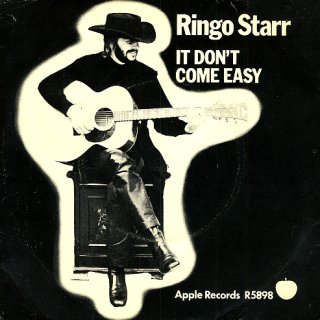
Maybe Ringo’s best solo song. Ringo is the only songwriter credited on this, but he had a lot of help from George Harrison, who was very generous in giving him full writing credit. The track (less Ringo’s vocal and horn parts) was already completed when Harrison gave it to him, and it included a scratch vocal by George (youtube video at the bottom).
The song peaked at #4 in the Billboard 100, #1 in Canada and #4 in the UK in 1971.
Pete Ham and Tom Evans from Badfinger are on this track.
If you listen carefully during the guitar solo, the backup singers throw in a “Hare Krishna,” which was mixed way down. This is a nod to George Harrison’s 1970 hit “My Sweet Lord,” where he sings the mantra.
This was Ringo’s first big hit as a solo artist (his cover of “Beaucoups of Blues” made #87 US a year earlier). From 1971-1975 he had a string of hits, including two #1s: “Photograph” and “You’re Sixteen.”
Peter Ham and Tom Evans of Badfinger sang on the intro to this song (“It don’t come easy, ya know it don’t come easy”). Badfinger was signed to The Beatles’ Apple Records, and helped out George Harrison’s first solo album.
This song served Ringo well throughout his career. When he assembled his first “All Starr Band” in 1989 (featuring Dr. John, Clarence Clemmons, Joe Walsh and Billy Preston), this was the opening number on their tour. Throughout several subsequent incarnations of the band, “It Don’t Come Easy” typically remained at the top of setlist when they performed live.
Ringo performed this song with his good friend, musical cohort, and brother-in-law Joe Walsh when he was inducted into the Rock and Roll Hall of Fame in 2015.
Here is the George Harrison version
It Don’t Come Easy
One, two, One, two, three, four!
It don’t come easy You know it don’t come easy It don’t come easy You know it don’t come easy
Got to pay your dues if you wanna sing the blues And you know it don’t come easy You don’t have to shout or leap about You can even play them easy
Open up your heart, let’s come together Use a little love And we will make it work out better
I don’t ask for much, I only want your trust And you know it don’t come easy And this love of mine keeps growing all the time And you know it don’t come easy
Peace, remember peace is how we make it Here within your reach If you’re big enough to take it
Got to pay your dues if you wanna sing the blues And you know it don’t come easy You don’t have to shout or leap about You can even play them easy
Peace, remember peace is how we make it Here within your reach If you’re big enough to take it
I don’t ask for much, I only want your trust And you know it don’t come easy And this love of mine keeps growing all the time And you know it don’t come easy
I can’t listen to this every day but once in a while, it’s alright. It’s very mid-sixties plus it has the word groovy in it. Winner winner …
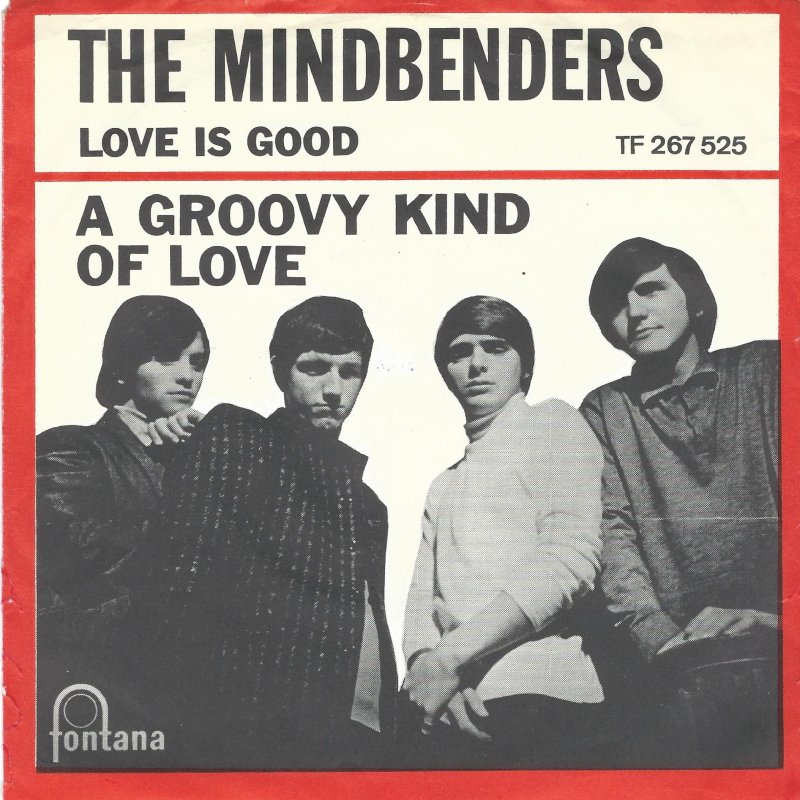
They were a beat group from Manchester, England. They were known as Wayne Fontana and the Mindbenders but Mr. Fontana decided to quit in the middle of a concert in 1965… Eric Stewart (later in 10cc) became the lead singer.
The song peaked at #2 in the Billboard 100 in 1966.
Phil Collins covered the song in the 1980s and it peaked at #1 in 1988.
From Songfacts.
This was written by New York songwriters Carole Bayer Sager and Toni Wine; Sager was 22 when they wrote it, and Wine was 17. They wrote the song for Screen Gems publishing, and Jack McGraw, who worked at Screen Gems’ London office, thought the song would be perfect for the British group The Mindbenders. The song became a huge hit in England, and was released in America a year later, where it was also very successful.
Sager was still teaching high school when she wrote this, and Wine was still in high school. Both went on to very successful careers in the music industry, with Sager writing popular songs for stage productions and movies (including “Arthur’s Theme (Best That You Can Do)”), and Wine writing the hit “Candida” and singing on many famous songs, including Willie Nelson’s version of “Always On My Mind” and “Sugar, Sugar” by The Archies. They wrote this in Sager’s apartment.
In our interview with Toni Wine, she explained: “We were talking about ‘Groovy’ being the new word. The only song we knew of was 59th Street Bridge Song, Paul Simon and Art Garfunkel. You know, ‘Feelin’ groovy.’ And we knew we wanted to write a song with that word in it. Because we knew it was the happening word, and we wanted to jump on that. Carole came up with ‘Groovy kinda… groovy kinda… groovy…’ and we’re all just saying, ‘Kinda groovy, kinda groovy, kinda…’ I don’t exactly know who came up with ‘Love,’ but it was ‘Groovy kind of love.’ And we did it. We wrote it in 20 minutes. It was amazing. Just flew out of our mouths, and at the piano, it was a real quick and easy song to write. Those are incredible things when those songs can get written. Like some you can just be hung on for so long, and then others just happen very quickly. And that was one of them. And it’s been so good to us.”
In 1966, this was also recorded by Patti LaBelle And The Bluebelles, but the version recorded by The Mindbenders, who released it as their first single without lead singer Wayne Fontana, became the hit.
Wayne Fontana left the Mindbenders after numerous singles failed to chart after their hit “Game of Love.” To quote an angry Eric Stewart after Wayne just walked off the stage while they were playing: “All we lost was our tambourine player. Wayne had been threatening to leave the band for some time and drummer Ric Rothwell had reached the end of patience with his groaning an moaning. Ric was urging him to take his ego trip and p–s off.”
This was a #1 UK and US hit for Phil Collins in 1988. His version was used in the movie Buster, where Collins plays the title role of Buster Edwards. Collins put together the soundtrack using various ’60s songs because that’s when the movie was set (he enlisted Motown hitmaker Lamont Dozier to co-write “Two Hearts,” another US #1 hit used in the film). According to Toni Wine, “Separate Lives” composer Stephen Bishop wanted to record a cover and brought a demo to his pal Collins, hoping he would produce it. Instead, Collins convinced Bishop to let him record it for the movie.
A child actor, Collins was wary about taking a movie role after becoming famous as a musician, and he made sure the song didn’t appear until the end of the film so musical perceptions wouldn’t taint his performance. The film was a box office flop, but Collins stood by it, saying it was an excellent film.
The music is based on the Rondo from “Sonatina in G Major” by Muzio Clementi.
Collins’ version was nominated for Best Male Pop Vocal Performance at the 1989 Grammy Awards, but lost to Bobby McFerrin’s “Don’t Worry Be Happy.”
Sonny & Cher recorded this for their 1967 album, In Case You’re In Love.
A Groovy Kind Of Love
When I’m feelin’ blue, all I have to do is take a look at you, Then I’m not so blue. When you’re close to me I can feel you heart beat I can hear you breathing in my ear.
Wouldn’t you agree, baby, you and me got a groovy kind of love. We got a groovy kind of love.
Any time you want to you can turn me on to anything you want to. Any time at all. When I taste your lips Oh, I start to shiver can’t control the quivering inside.
Wouldn’t you agree, baby, you and me got a groovy kind of love. We got a groovy kind of love.
When I’m in your arms nothing seems to matter If the world would shatter I don’t care. Wouldn’t you agree, baby, you and me got a groovy kind of love. We got a groovy kind of love. We got a groovy kind of love. We got a groovy kind of love
This was on the great album Blood on the Tracks. In my opinion Bob’s best album of the seventies. When I first got this album I couldn’t quit listening to it and I really wore this song out. I could sing this song in my sleep…I know every word because it’s ingrained in my head.
This would make my top 10-15 Bob Dylan songs. I’ve seen Bob 8 times and the first 6 times I saw him I kept waiting for this song because with Bob you don’t know what you will get live. He finally played it on the 7th time and I was surprised the next time because it was the only older song he played.
The song peaked at #31 in the Billboard 100 in 1975.
Talking to Ron Rosenbaum, Bob Dylan once told him that he’d written “Tangled up in Blue”, after spending a weekend immersed in Joni Mitchell’s 1971 album Blue.
Dylan wrote this in the summer of 1974 at a farm he had just bought in Minnesota. He had been touring with The Band earlier that year.
Blood On The Tracks was Dylan’s first album under his new contract with Columbia Records. He left the label a year earlier to record for David Geffen’s label, Asylum Records.
This was influenced by the art classes Dylan was taking with Norman Raeben, a popular teacher in New York. Dylan credits Raeben for making him look at things from a nonlinear perspective, which was reflected in his songs.
This is a very personal song for Dylan. It deals with the changes he was going through, including his marriage falling apart.
Dylan sometimes introduced this on stage by saying it took “Ten years to live and two years to write.”
Tangled Up In Blue
Early one mornin’ the sun was shinin’
I was layin’ in bed
Wondrin’ if she’d changed at all
If her hair was still red
Her folks they said our lives together
Sure was gonna be rough
They never did like
Mama’s homemade dress
Papa’s bank book wasn’t big enough
And I was standin’ on the side of the road
Rain fallin’ on my shoes
Heading out for the east coast
Lord knows I’ve paid some dues
Gettin’ through
Tangled up in blue
She was married when we first met
Soon to be divorced
I helped her out of a jam I guess
But I used a little too much force
We drove that car as far as we could
Abandoned it out west
Split up on a dark sad night
Both agreeing it was best
She turned around to look at me
As I was walkin’ away
I heard her say over my shoulder
We’ll meet again some day
On the avenue
Tangled up in blue
I had a job in the great north woods
Working as a cook for a spell
But I never did like it all that much
And one day the axe just fell
So I drifted down to New Orleans
Where I happened to be employed
Workin’ for a while on a fishin’ boat
Right outside of Delacroix
But all the while I was alone
The past was close behind
I seen a lot of women
But she never escaped my mind
And I just grew
Tangled up in blue
She was workin’ in a topless place
And I stopped in for a beer
I just kept lookin’ at the side of her face
In the spotlight so clear
And later on as the crowd thinned out
I’s just about to do the same
She was standing there in back of my chair
Said to me “Don’t I know your name?”
I muttered somethin’ under my breath
She studied the lines on my face
I must admit I felt a little uneasy
When she bent down to tie the laces
Of my shoe
Tangled up in blue
She lit a burner on the stove
And offered me a pipe
I thought you’d never say hello, she said
You look like the silent type
Then she opened up a book of poems
And handed it to me
Written by an Italian poet
From the thirteenth century
And everyone of them words rang true
And glowed like burnin’ coal
Pourin’ off of every page
Like it was written in my soul
From me to you
Tangled up in blue
I lived with them on Montague Street
In a basement down the stairs
There was music in the cafes at night
And revolution in the air
Then he started into dealing with slaves
And something inside of him died
She had to sell everything she owned
And froze up inside
And when finally the bottom fell out
I became withdrawn
The only thing I knew how to do
Was to keep on keepin’ on
Like a bird that flew
Tangled up in blue
So now I’m goin’ back again
I got to get to her somehow
All the people we used to know
They’re an illusion to me now
Some are mathematicians
Some are carpenters’ wives
Don’t know how it all got started
I don’t know what they’re doin’ with their lives
But me, I’m still on the road
Headin’ for another joint
We always did feel the same
We just saw it from a different point
Of view
Tangled up in blue
I’ve always liked this song. It’s a bit of a soap opera but it’s a really good soul song. The song peaked at #3 in the Billboard 100 in 1970. The guitar had a rubberband type effect that was used on this song.
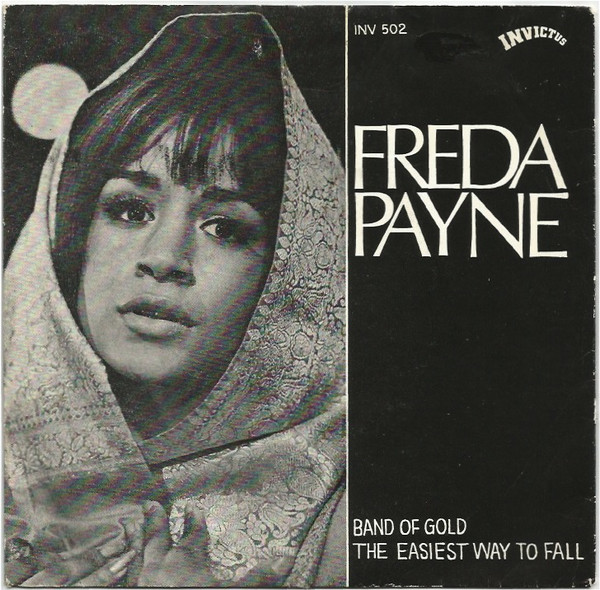
Because of the subject matter, Freda Payne did not want to record this at first. She thought the song was about a woman who was a virgin or sexually naïve and felt it was more suitable for a teenager. When Payne objected to this song, Ron Dunbar (co-writer of the song) said to her, “Don’t worry. You don’t have to like them! Just sing it,” and she did. Little did she know that this song would become her biggest hit and would give her her first record of gold.
The lead guitarist on this track was Ray Parker Jr., who later found success with the theme song for the comedy movie Ghostbusters.
There is some mystery to this song. Some people think it is about an impotent man, while others think it is about a frigid woman. In a Songfacts interview with Lamont Dozier, who co-wrote the song, he explained: “The story was, the girl found out this guy was not all there. He had his own feelings about giving his all. He wanted to love this girl, he married the girl, but he couldn’t perform on his wedding night because he had other issues about his sexuality. I’ll put it that way.
It was about this guy that was basically gay, and he couldn’t perform. He loved her, but he couldn’t do what he was supposed to do as a groom, as her new husband.”
This was released on Invictus Records, which Brian Holland, Lamont Dozier and Eddie Holland formed after they left Motown in 1968. Holland-Dozier-Holland produced the track and wrote it with their collaborator Ron Dunbar, but because of their dispute with Motown, the H-D-H trio couldn’t put their names on the label and credited themselves as “Edythe Wayne.” Members of the Motown house band The Funk Brothers played on the track.
Freda Payne is the older sister of Scherrie Payne, the final lead singer of The Supremes. Holland-Dozier-Holland wrote many of The Supremes’ hits.
According to 1000 UK #1 Hits by Jon Kutner and Spencer Leigh, Freda Payne said of this song: “It is about a wedding night that didn’t work out. I wondered why a girl would have a problem on her wedding night and why they would be in separate rooms, but they said, ‘Just learn it.’ I had no idea that it would be such a big hit.”
Band of Gold
Now that you’re gone, All that’s left is a band of gold All that’s left of the dreams I hold Is a band of gold And the memories of what love could be If you were still here with me
You took me from the shelter of my mother I had never known or loved any other We kissed after taking vows But that night on our honeymoon, We stayed in separate rooms
I wait in the darkness of my lonely room Filled with sadness, filled with gloom Hoping soon That you’ll walk back through that door And love me like you tried before
Since you’ve been gone, All that’s left is a band of gold All that’s left of the dreams I hold Is a band of gold And the dream of what love could be If you were still here with me
Ohhh
Don’t you know that I wait In the darkness of my lonely room Filled with sadness, filled with gloom Hoping soon That you’ll walk back through that door And love me like you tried before
Since you’ve been gone, All that’s left is a band of gold All that’s left of the dreams I hold Is a band of gold And the dream of what love could be If you were still here with me
Since you’ve been gone, All that’s left is a band of gold All that’s left of the dreams I hold Is a band of gold And the dream of what love could be If you were still here with me
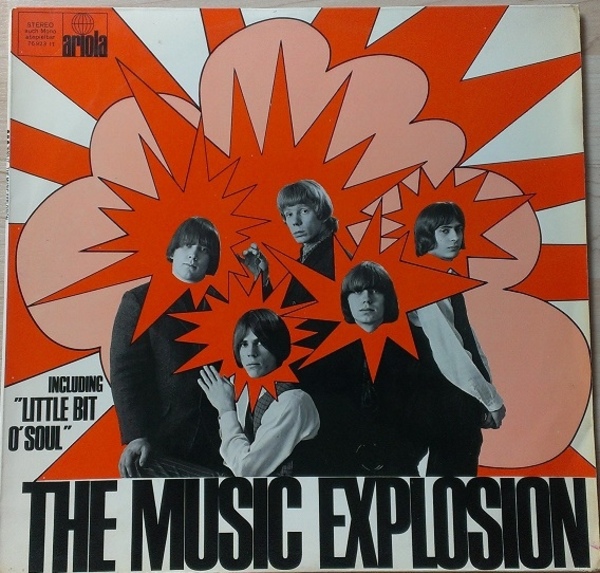
A good song for a beginner on guitar plus it’s just a cool 60s pop/rock song. I bought the single when I was a kid after I heard it on AM radio. The Music Explosion was an American garage rock band from Mansfield, Ohio. It’s one of those songs that will stick in your head all day…in a good way.
The song peaked at #2 in the Billboard 100.
From Songfacts.
The remedy for life’s lows is found in this little pop ditty from 1967, which claims all you need to get by is a “little bit o’ soul.” It was written by British songwriting duo John Carter and Ken Lewis, who wrote the 1965 hit “Can’t You Hear My Heartbeat” for Herman’s Hermits. That same year, The Little Darlings recorded an early version of “Little Bit O’ Soul,” but it was largely ignored until a band from Mansfield, Ohio, called The Music Explosion got a hold of it. They were auditioning for producers Jeff Katz and Jerry Kasenetz, known as the Kings of Bubblegum, when they were given the song to practice.
“It was a folk version, sung like a ‘Puff The Magic Dragon,’ with a flat-top guitar,” Richard Nesta, the band’s guitarist, recalled in the book One Hit Wonders by Wayne Jancik. “It was a chordy song. Nothin’ special.”
That is, until they came up with the tune’s signature bass guitar riff (played by Butch Stahl). The Music Explosion’s version started out as a local hit and, once Kasenetz started shopping it around to California stations, it shot to #2 on the Hot 100.
All that roof raising that was going on in the late ’90s can be traced back to this song, with frontman Jamie Lyons singing, “When you raise the roof with your rock ‘n roll, you’ll get a lot more kicks with a little bit o’ soul.”
The controversial rap group 2 Live Crew sampled the riff in their 1989 song “The F–k Shop.” The group’s Luther Campbell, aka Luke, also recorded a #1 rap single in 1997 called “Raise the Roof,” which popularized the hands-in-the-air dance of the same name.
The Music Explosion disbanded in 1969. Their only other hit on the Hot 100 was 1967’s “Sunshine Games,” which peaked #63.
The Ramones covered this on their 1983 album, Subterranean Jungle.
This was used on the TV drama The Wire in the 2004 episode “Middle Ground.”
This was used in the 2017 film Detroit, set during the 1967 Detroit riots.
Little Bit Of Soul
Now when you’re feelin’ low and the fish won’t bite You need a little bit o’ soul to put you right You gotta make like you wanna kneel and pray And then a little bit of soul will come your way
Now when your girl is gone and you’re broke in two You need a little bit o’ soul to see you through And when you raise the roof with your rock’n’roll You’ll get a lot more kicks with a little bit o’ soul
And when your party falls ’cause ain’t nobody groovin’ A little bit o’ soul and it really starts movin’, yeah
And when you’re in a mess and you feel like cryin’ Just remember this little song of mine And as you go through life tryin’ to reach your goal Just remember what I said about a little bit o’soul
This song I’m highlighting off of the Seventh Sojourn album released in 1972. The song peaked at #12 in the Billboard 100 and #36 in the UK. Like Ride My See-Saw I like the tone of the guitar on this one…not as distinctive as Ride My See-Saw but still good. The song was written by Joh Lodge…this is John talking about it:
It was a strange time in the world [back in the 1960s), and I know we live in strange times now (laughs). The Vietnam War was going on, and at the same time, people around the world were looking for different things—looking for hope and looking for some way to get out of everything that was piling pressure on them.
I suddenly thought…just a minute…I’m only a musician. I didn’t know the answers to the questions that people were seeking. I wanted to say that. But also, there’s a reference in the song to a famous photograph from the Vietnam War. There’s a little girl running along the street who’s just been on fire, and so I had to write that in the song as well…the line, “scorching the earth.” So I wanted to put everything in [the song]. I wanted to tell you what is actually going on in the world, [but] it seemed we couldn’t do anything else about it. And that’s really what this song is about.
I’m Just A Singer (In A Rock & Roll Band)
I’m just a wandering on the face of this earth Meeting so many people who are trying to be free And while I’m traveling I hear so many words Language barriers broken, now we’ve found the key
If you want this world of yours to turn about you You can see exactly what to do, don’t tell me
I’m just a singer in a rock and roll band
A thousand pictures can be drawn from one word Only who is the artist, we got to agree A thousand miles can lead so many ways Just to know who is driving, what a help it would be
So if you want this world of yours to turn about you And you can see exactly what to do, don’t tell me
I’m just a singer in a rock and roll band
How can we understand Riots by the people for the people Who are only destroying themselves And when you see a frightened Person who is frightened by the People who are scorching this earth, scorching this earth
I’m just a wandering on the face of this earth Meeting so many people, who are trying to be free While I’m traveling I hear so many words Language barriers broken, now we’ve found the key
If you want this world of yours to turn about you You can see exactly what to do, don’t tell me
I’m just a singer in a rock and roll band
I’m just a singer in a rock and roll band
How can we understand Riots by the people for the people Who are only destroying themselves When you see a frightened Person who is frightened by the People who are scorching this earth, scor-scorching this earth
Music is the traveler crossing our world Meeting so many people, we’re bridging the seas
I’m just a singer in a rock and roll band I’m just a singer in a rock and roll band I’m just a singer in a rock and roll band We’re just the singers in a rock and roll band
When I was 18 I would listen to 96.3 in Nashville that would only play oldies. This one I heard quite a bit but never knew who performed this song…until now. It’s a nice 60s soul song that you don’t hear every day.
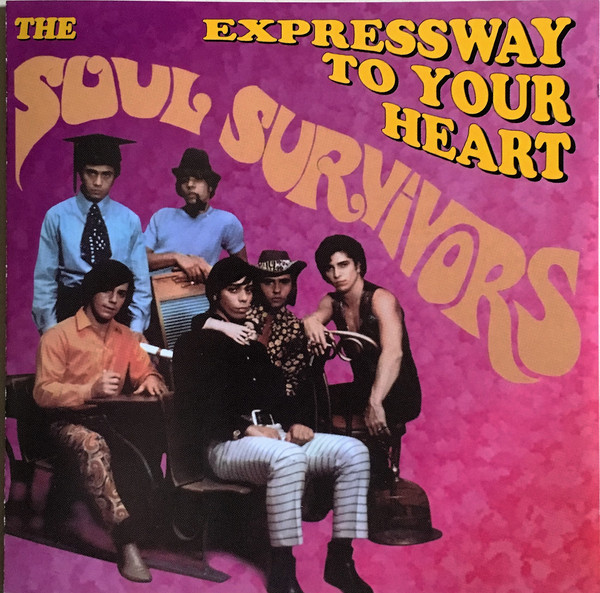
The song was written by Kenny Gamble and Leon Huff. The song peaked at #4 in the Billboard 100 in 1967. It was on the Soul Survivors album When the Whistle Blows Anything Goes.
This was the first hit record written and produced by Kenny Gamble and Leon Huff, who helped create the Philadelphia Soul sound with songs like “If You Don’t Know Me By Now” and “TSOP (The Sound of Philadelphia),” which were released on their Philadelphia International label. Gamble and Huff are from Camden, New Jersey, which is just east of Philadelphia, and often took the Schuylkill Expressway, which is the “Expressway To Your Heart.” Gamble wrote the lyrics, and he explained to National Public Radio: “I was on my way over to see a young lady, and the expressway was backed up. This is when they just started the expressway in 1967 – I was sitting there for what seemed like hours, so I started beating on the dashboard and singing, ‘Expressway to your heart, trying to get to you.’ Songs come from your imagination. You have to be quick to capture the moment.”
This song starts with the sound of car horns, which came from records containing sound effects. The horns were inspired by the Lovin’ Spoonful song “Summer In The City,” which also used the effect.
Gamble and Huff reused the lyrics “Shower you with love and affection, now you won’t look in my direction” on the song I’m Gonna Make You Love Me, which contains the line, “I’m gonna shower you with love and affection, look out, it’s comin’ in your direction.”
The Soul Survivors were a white group from New York City. They had one more Top 40 hit: “Explosion (In My Soul).”
Expressway To Your Heart
I’ve been tryin’ to get to you for a long time Because constantly you been on my mind I was thinkin’ ’bout a shortcut I could take But it seems like I made a mistake
I was wrong, mmm, I took too long I got caught in the rush hour A fellow started to shower You with love and affection Now you won’t look in my direction
On the expressway to your heart The expressway is not the best way At five o’clock it’s much too crowded Much too crowded, so crowded No room for me (too crowded) Oh, too crowded
Now there’s too many ahead of me They’re all the time gettin’ in front of me I thought I could find a clear road ahead But I found stoplights instead
I was wrong, baby, I took too long I got caught in the rush hour A fellow started to shower You with love and affection Come on, look in my direction
On the expressway to your heart The expressway is not the best way At five o’clock it’s much too crowded Much too crowded, so crowded No room for me (too crowded) Oh, too crowded
This is the softer side of Jimi. I had the American version of Are You Experienced and came across this song and it has always stuck with me. It was written about his girlfriend Kathy Mary Etchingham.
The song peaked at #6 in the UK charts and was the B side to Purple Haze in America. Bob Dylan was one of Hendrix’s biggest influences and it shows…this song has some great imagery.
Jimi wrote this in 1967 for Are You Experienced?; it was inspired by his girlfriend at the time, Kathy Mary Etchingham. He’d gotten into an argument with her about her cooking. She got very angry and started throwing pots and pans and finally stormed out to stay at a friend’s home for a day or so. When she came back, Jimi had written “The Wind Cries Mary” for her.
Kathy Mary recalled, “We’d had a row over food. Jimi didn’t like lumpy mashed potato. There were thrown plates and I ran off. When I came back the next day, he’d written that song about me. It’s incredibly flattering.” (Source Q magazine February 2013)
Jimi wrote the song quietly in his apartment and didn’t show it to anybody. After recording “Fire” (which was about his sexual relationship with Kathy), he had 20 minutes to spare in the recording studio, so he showed it to the band. They managed to record it in the 20 minute period they had. The band later recorded several more takes of the song, but they all seemed very sterile and they decided to go with the original recording.
This was the third single from Are You Experienced?.
A lot of people assumed this was about marijuana, which is also known as “Mary Jane.”
This song begins with a distinctive and recognizable introduction, in which three chromatically ascending ‘five’ chords are played in second inversion. A ‘five’ chord consists of two notes (first or “root,” and fifth) instead of three (root, third and fifth). The missing middle note gives the chord a more ‘open’ or ‘bare’ sound. A second inversion “flips” the notes in the chord, so that the fifth, not the root, is the lowest sounding note. This makes it more difficult for the listener to immediately identify what key the song is being played in. In addition, a syncopated rhythm makes it difficult for the listener to identify the “downbeats” of the song. This combination of musical elements creates a unique and disorienting experience when the song is heard for the first time.
Jamie Cullum covered this song, replacing the guitar part with a jazzy piano. Other artists to record the song include John Mayer, Popa Chubby and Robyn Hitchcock.>>
According to the book Jimi Hendrix: Electric Gypsy, Hendrix wrote this as a very long song, but broke it down to fit the short-song convention and make it radio friendly. Hendrix was concerned that listeners wouldn’t understand the song in its shortened form.
The Wind Cries Mary
After all the jacks are in their boxes And the clowns have all gone to bed You can hear happiness staggering on down the street Footprints dressed in red And the wind whispers “Mary”
A broom is drearily sweeping Up the broken pieces of yesterdays life Somewhere a queen is weeping And somewhere a king has no wife And the wind cries “Mary”
The traffic lights they turn blue tomorrow And shine the emptiness down on my bed The tiny island sags downstream Cause the life that lived is dead And the wind screams “Mary”
Will the wind ever remember The names it has blown in the past And with its crutch, its old age, and its wisdom It whispers no this will be the last And the wind cries “Mary”









 PowerPop... An Eclectic Collection of Pop Culture