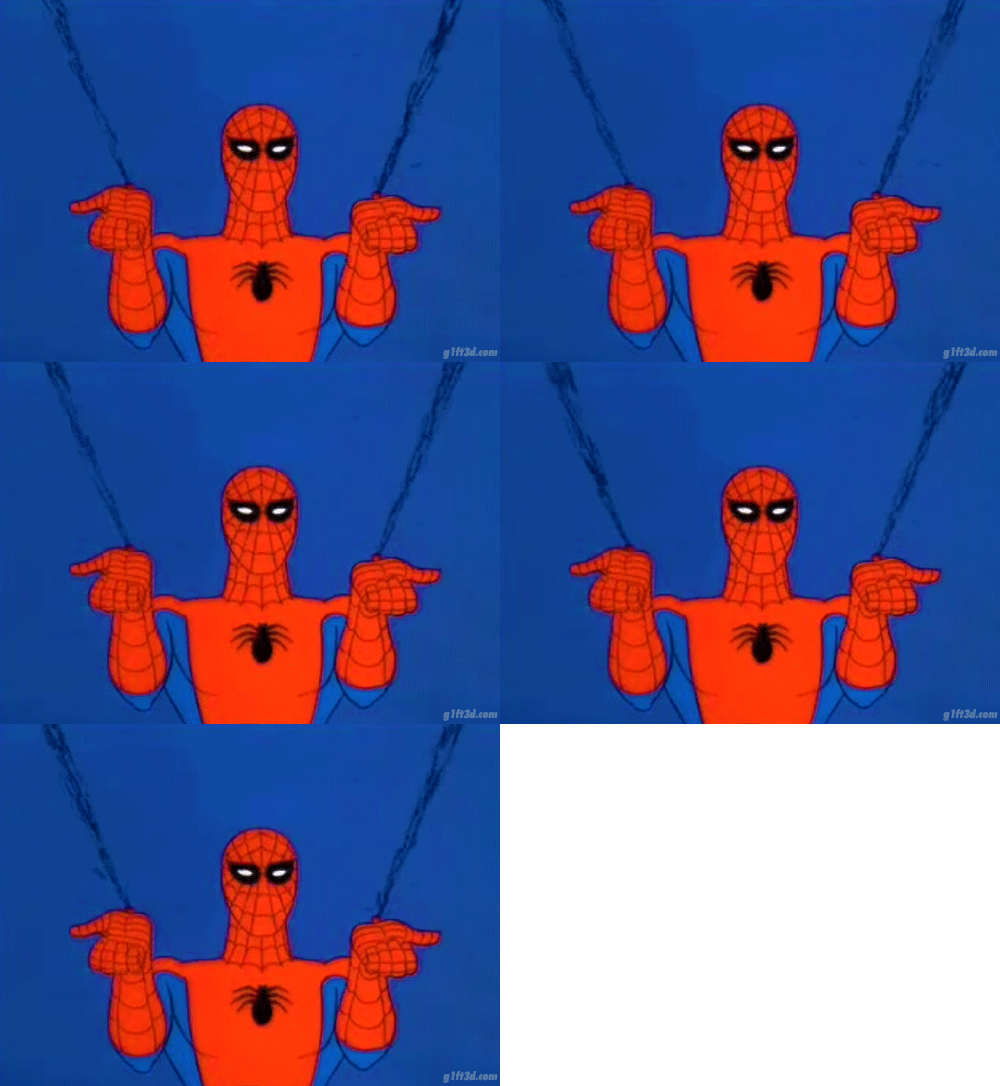
This is my Spiderman. When I hear “Spiderman” this is what I think of…I loved the animation and its sixties background music. I watched it in syndication in the 70s and it still plays today. The budget wasn’t huge for the show and it did have repetition but it was a fun watch.
The first show to ever feature Spiderman premiered on September 9, 1967, on the ABC television network and ran for a total of three seasons, entering into syndication during its final season in 1970.
Grantray-Lawrence Animation was the original production company responsible for the series but was on the brink of bankruptcy by the time it premiered and had filed for it by year’s end, forcing them to hand over production duties to Krantz Films, Inc. Krantz Films cut the pre-existing budgets in half. The classic comic book villains were thrown out because of licensing costs, replaced by generic green-skinned alien King Mooks and their Mook henchmen, more often than not the product of Stock Footage recycled from episodes of Robin Hood…another of Krantz’s shows.
It remained quite popular in it’s day and also now with many fans. The theme song was written by Paul Francis Webster and Robert “Bob” Harris. The original song was recorded at RCA Studios in Toronto (where the cartoon was also produced) featuring 12 CBC vocalists (members of the Billy Van Singers, and Laurie Bower Singers groups) who added to the musical backing track supplied by RCA Studios, New York. The singers were paid only for the session and have had no residuals from its use since then.
Spiderman, Spiderman! Does whatever a spider he can. Spins a web any size, Catches thieves, just like flies. Look out! Here comes the Spiderman!
Is he strong? Listen, Bud! He’s got radioactive blood. Can he swing from a thread? Take a look overhead. Hey there, there goes the Spiderman!
In the chill of night, At the scene of the crime Like a streak of light He arrives just in time
Spiderman, Spiderman Friendly neighborhood Spiderman Wealth and fame he’s ignored Action is his reward To him, life is a great big bang-up Wherever there’s a hang-up You’ll find the Spiderman!
I had a Zombies Greatest Hits CD in the 80s that had their popular songs and also a few more. This song was never a big hit but it caught my attention. Imagine The Swan was recorded after the classic Oracle and Odessy LP. Time of the Season was a big hit in 1969 but the band had already broken up.
The record company then wanted the Zombies to reform to cash in but that wasn’t going to happen. Rod Argent, the keyboard player did a couple of tracks under The Zombies name…he sang this one, not lead singer Colin Blunstone…Zombie member Chris White wrote the song.
It blended in well with the rest of their songs. Rod Argent would go on to form the band, Argent.
It was released as a single and wasn’t on an album until a late seventies compilation. The song made it to #109 on Billboard and #77 in Cash Box in America in 1969.
Rod Argent and Colin Blunstone talking about this song.
Imagine The Swan
Well I have a picture in color of you And it’s there in my room to remind me of you So it was with surprise that I saw you today And I did not recognize you, girl, what more can I say?
For the colors are gone You’ve become kind of gray And you’re not like the swan That I knew yesterday…
Now the pictures are wrong You’ve become kind of gray I imagine the swan That you were yesterday…
The sadness that I felt was hard on my eyes And the truth on my face was hard to disguse So I let you walk by I turned out of your way And I tried to close my eyes And let the sadness fall away…
For the colors are gone You’ve become kind of gray And you’re not like the swan That I knew yesterday…
Now the pictures are wrong You’ve become kind of gray I imagine the swan That you were yesterday…
Blondie only had 10 songs in the top 100 but they made the best of it. Out of those 10 songs were four number one hits. This song was made for the American Gigolo movie.
Call Me was written for Stevie Nicks to sing, I just can’t see Stevie pulling this off with the force that Debbie did. This was the most successful of all Blondie singles in the US, where it was the best-selling single of 1980.
European disco producer Giorgio Moroder wrote this with Blondie lead singer Debbie Harry, who became the first woman in British chart history to write three #1 hits. However, she wasn’t Moroder’s first choice. Moroder had originally wanted Stevie Nicks to provide vocals on the track but the Fleetwood Mac vocalist declined the offer. Debbie wrote most of the lyrics with Moroder.
Chris Stein, Blondie’s guitarist said that some of Moroder’s lyrics were sexually blatant and when Debbie started to rewrite it…she was much more subtle. The song was released on the American Gigolo soundtrack. In 2001 the song was included as a bonus track on the Autoamerican release.
Chris Stein: Debbie’s lyrics are much more subtle than the ones he wrote. His thing was very direct like saying I am a man and I go out and I f*** all the girls. Debbie’s lyrics are a lot more subtle and the movie in a way is not that blatant, it is sort of subtle.
From Songfacts
This song is about a prostitute. It was written for the film American Gigolo, where it plays in a scene where the lead character is “working.”
In 2002, The Box Tops recorded this for the compilation album When Pigs Fly: Songs You Never Thought You’d Hear. Cevin Soling, who was executive producer on the album, explains: “I got the Box Tops back together again, and that was a blast. That was so much fun working with the Box Tops. Especially with Alex Chilton there singing. I didn’t produce that. I was in the studio, but the producer on that one was a buy named Benji King, who was the keyboard player for the band Scandal. That studio experience was pretty funny, because he’s so full of energy. He’s always excited and always really into things. The Box Tops are each one degree more laid back to the next. Coming from the South, they’re all kind of very chill. Until you get to Alex Chilton, who’s practically catatonic. And so you have that contrast.”
In 2009, Franz Ferdinand covered this song for the War Child Presents Heroes charity album.
This song was covered by the heavy metal band In This Moment on their 2008 album, The Dream.
Giorgio Moroder told Billboard magazine that his difficult experience of recording this song with Blondie taught him not to work with rock bands. “There were always fights,” he recalled. “I was supposed to do an album with them after that. We went to the studio, and the guitarist was fighting with the keyboard player. I called their manager and quit.”
Call Me
Color me your color, baby Color me your car Color me your color, darling I know who you are Come up off your color chart I know where you’re comin’ from
Call me (call me) on the line Call me, call me any, anytime Call me (call me) my love You can call me any day or night Call me
Cover me with kisses, baby Cover me with love Roll me in designer sheets I’ll never get enough Emotions come, I don’t know why Cover up love’s alibi
Call me (call me) on the line Call me, call me any, anytime Call me (call me) oh love When you’re ready we can share the wine Call me
Oh, oh, oh, oh, oh, he speaks the languages of love Oh, oh, oh, oh, oh, amore, chiamami, chiamami Oh, oh, oh, oh, oh, appelle-moi mon cherie, appelle-moi Anytime, anyplace, anywhere, any way Anytime, anyplace, anywhere, any day-ay
Call me (call me) my love Call me, call me any, anytime Call me (call me) for a ride Call me, call me for some overtime Call me (call me) my love Call me, call me in a sweet design Call me (call me), call me for your lover’s lover’s alibi Call me (call me) on the line Call me, call me any, anytime Call me (call me) Oh, call me, oh, oh, ah Call me (call me) my love Call me, call me any, anytime
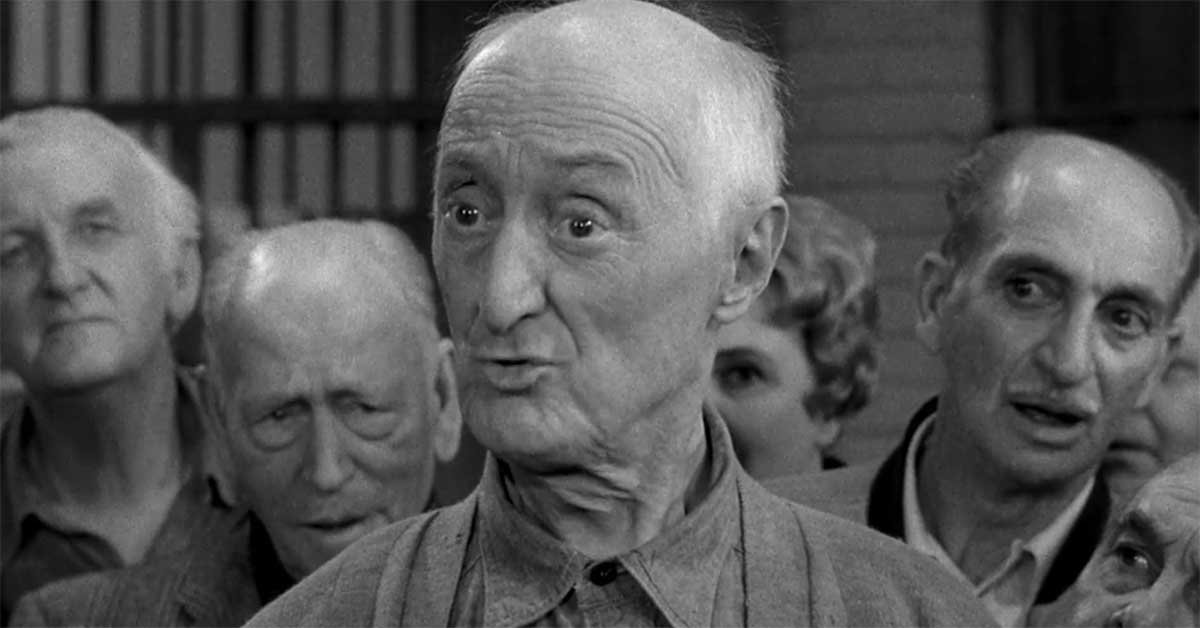
What a life that Burt Mustin lived. He didn’t start acting until he was 67 and he appeared in over 150 film and television productions. I first remembered him as Gus in Leave it to Beaver, Judd in The Andy Griffith Show, Bonanza, The Monkees, Gomer Pyle…the list is too long. He was also at the first World Series in 1903 to root on his hometown team, The Pittsburgh Pirates playing against the Boston Red Sox.
Burt was born on February 8, 1884, in Pittsburgh. After graduating from the Pennsylvania Military College in 1903 with a degree in engineering, Mustin became a car salesman. It was a rather new profession. He also worked for the Better Business Bureau, Mustin dabbled in amateur acting and singing. He belonged to the Barbershop Harmony Society and popped up in productions by the Pittsburgh Opera.
Mustin and his wife eventually retired to Arizona. In Tucson, the retiree took in a role in a local production of the play Detective Story. William Wyler — who would go on to direct Ben-Hur, Roman Holiday and Funny Girl — happened to catch the show and offered Mustin a role in his screen adaptation of Detective Story.
Thus, Burt Mustin made his screen debut at the age of 67 in 1951 and acted until he died in 1977 at the age of 92.
Below is Burt… on the Johnny Carson show talking about being at the first World Series.
This is a band I had a lot of hope for in the eighties. After Ways To Be Wicked I thought they would be more successful than they ended up being. This song didn’t chart in the US but did make it to #45 in the UK.
It was off of their second album Shelter released in 1986. The album peaked at #62 in the Billboard Album Charts. They started off as a country-rock band in the early eighties. At the urging of Linda Ronstadt, who was impressed by their live shows, they were awarded a contract with Geffen Records…their self-titled debut appeared in 1985, followed by a tour in support of U2. Still, despite good press and media hype, Lone Justice failed to sell…produced by Jimmy Iovine, it failed to connect with either country or rock audiences.
I Found Love
I was minding my business like a good girl should Maybe a little too cautious for my own good It was just like living life in the dark Til something jumped up and it grabbed my heart
I found love I found real love
The beginning and end of every wish Is balanced in the center of a vision like this Maybe my emotions are inclined To surrender to the notion of a glorious end
I found love I found real love
One touch souls speak The power’s got me and it won’t let me be It’s too much this heat I want to laugh cry jump for joy scream and shout Yeah, yeah, yeah, yeah, yeah
At the end of every tunnel there’s a shining light At the end of every storm there’s a quiet night My joy was hidden in a big old dream I didn’t know it was there until you set me free
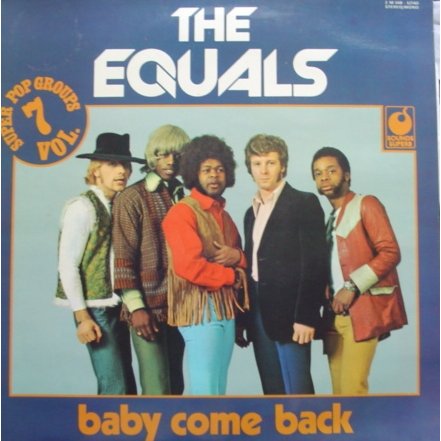
If you were wondering what Eddy Grant did before Electric Avenue…wonder no more. He was writing this song for the band he was in called The Equals.
The Equals were a pop/reggae/rock group that formed in North London, England in 1965. Eddy Grant, founded the group. Also in the original line-up were the twin brothers Derv and Lincoln Gordon, as well as John Hall and Pat Lloyd. They were noted as being the first major interracial rock group in the UK and one of the few racially mixed bands of the era.
This song was originally released in 1966 as a B side. Throughout Europe DJ’s started to play this song and it charted in Germany. It was re-released in 1968 in the UK and it peaked at #1 and in the US it made it to #32.
In 1980, The Clash recorded a cover version of the Equals’ song “Police on My Back”. Willie Nelson also covered the song in 2006.
Baby Come Back would be their only charting song in America but in the UK they found success.
“I Get So Excited” / “The Skies Above” – (1968) (UK #44)
“Baby Come Back” / “Hold Me Closer” – (1968) (UK #1, IRL #2, NOR #4, U.S. #32)
“Laurel And Hardy” / “The Guy Who Made Her a Star” – (1968) (UK #35)
“Softly Softly” / “Lonely Rita” – (1968) (UK #48)
“Michael and The Slipper Tree” / “Honey Gum” – (1969) (UK #24)
“Viva Bobby Joe” / “I Can’t Let You Go” – (1969) (UK #6, IRL #3)
“Rub A Dub Dub” / “After the Lights Go Down Low” – (1969) (UK #34)
“Black Skin Blue Eyed Boys” / “Ain’t Got Nothing to Give You” – (1970) (UK #9)
From Songfacts
Originally, this was the B-side of The Equals’ “Hold Me Closer” single. That record did not capture much attention, but in early 1968 this was released as a single in Germany, where it rose to #1. After it subsequently topped the charts in Belgium and Holland the song was finally reissued in the UK, where it soared to #1.
The Equals were a pop group formed in England in 1965 by Derv Gordan (vocals), his twin brother Lincoln (guitar), Grant (guitar), John Hall (drums) and Pat Lloyd (guitar). They went on to have 12 more hits in Germany and two other UK Top 10 hits (“Viva Bobby Joe” and “Black Skin Blue Eyed Boys”) before legal problems with the record company made it impossible to release any more records.
Baby Come Back
Come back Baby, come back Baby, come back Baby, come back
This is the first time [unintelligible] today That you have run away I’m asking you for the first time Love me [unintelligible] stay (all right)
Hey (all right) Hey (all right!) Hey, yeah Come back
Baby, come back Baby, come back Baby, come back
There ain’t no use in you crying ‘Cause I’m more hurt than you I shoulda not been out flirting But now my love is true
Ooh (all right) Ooh (OK!) Ooh, yeah Come back
Baby, come back Baby, come back Baby, come back Come back, baby, don’t you leave me
Baby, baby, please don’t go Oh, won’t you give me a second chance Baby, I love you so (all right) Oh (oh, yeah)
Oh (unintelligible) Oh, yeah Come back I said baby, come back
I said baby, come back Oh won’t you please come back Oh won’t you please come back [Repeat until fade]
Thanks for the suggestions on new artists to cover…I’ve started to listen to more powerpop artists that I knew existed. In the next few weeks, I’ll feature more.
This one is by Adam Schmitt released in 1991. He is a singer/songwriter from Urbana, Illinois. There is not much on this guy except that his debut album was hailed as brilliant by the critics. There are no lyrics anywhere for his songs.
I started to listen to his debut album World So Bright and the songs are indeed very good powerpop. I’m also posting the album’s title track World So Bright.
This bio is by Heather Phares from Allmusic
Singer/songwriter Adam Schmitt first won acclaim in the early ’90s when his 1991 debut album, World So Bright, and 1993 follow-up, Illiterature, had critics hailing him as a young pop genius. However, when his label Reprise didn’t want to release a third album from him, Schmitt decided to record other artists instead, engineering, producing and mastering music for Tommy Keene, Hum, Beezus, Robynn Ragland, and others in his home studio. By 1998, Schmitt was ready to concentrate on his own music again, but his perfectionism and production work delayed the release of his third effort until the middle of 2001. That album, Demolition, was issued by Parasol; Schmitt started out as a producer by working with many of the label’s artists.
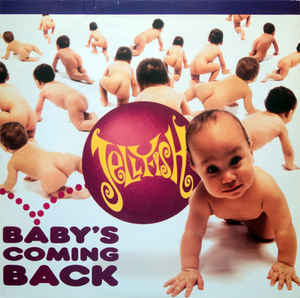
This song was released in 1990 off of their debut album Bellybutton. It peaked at #62 in the Billboard 100 and #51 in the UK in 1991. I remember seeing this band open up for someone in the early 90s…I want to say it was Bob Dylan but I could be wrong.
Jellyfish only released two full albums Bellybutton and Spilt Milk. Both albums have tracks that evoke many artists such as The Beatles, Badfinger, Cheap Trick, The Beach Boys, with their vocal harmonies.
Jellyfish was formed in 1989 in San Francisco, California. The band had several members over the years but the foundation of the band was Andy Sturmer and Roger Joseph Manning, Jr. Andy was primarily the drummer and Roger played keyboards.
In 1994, Jellyfish contributed a cover of Harry Nilsson’s “Think About Your Troubles” to the tribute album For the Love of Harry: Everybody Sings Nilsson. Jellyfish’s contribution was a personal request from Nilsson, who was a fan of the group. He died a year prior to the album’s release. The band broke up soon afterward.
Baby’s Coming Back
I knew that when I saw her That my life would soon move over from the fast lane Gone would be the days of all by drinkin and my carrying on But when I settled down The party king uncrowned This stubborn memory hadn’t faded Too many dumb mistakes And all the grief it makes Left nothing else to be debated And if you say that you understand then you’re lyin’ But if you figure that I’m alright now I can’t deny it Baby’s coming back Baby’s coming back And I’m on my best behavior I can’t take it anymore I just woke up on the floor today I’ve long run out of my last chances but she’s on her way If I had a dollar for every single time I fought her I’d buy a handgun But that couldn’t shoot away The bull’s eye that she made on my heart And if I sound like a beaten man well I guess so But on her way is the sweetest prize and I can’t let go Baby’s coming back Baby’s coming back And I’m on my best behavior I can’t take it anymore I just woke up on the floor today I’ve long run out of my last chances but she’s on her way What I told her on the telephone was that I’d been so bad I wouldn’t blame her if she mowed down these wild oats I’d sown But when she said she’d give me one more chance I said knock three times when you arrive Baby’s coming back…
This song was released in 1996 and was part of a double A-side with Follow You Down. The song peaked at #9 in the Billboard 100, #1 in Canada, and #30 in the UK in 1996. Billboard lists the song as Follow You Down/Til I Hear It From You.
One of my favorite pop songs of the 90s.
Gin Blossoms lead singer Robin Wilson wrote the lyrics to this song. The music was composed by the band’s guitarist Jesse Valenzuela with help from Marshall Crenshaw. Crenshaw said that he and Valenzuela didn’t know each other, but Jesse tracked him down to help finish the song. Crenshaw wrote the verse melody and worked on the ending.
From Songfacts (Til I Hear It From You)
The music industry trade magazine Billboard called this “The closest thing to a perfect pop song to hit radio in recent memory,” a sentiment appreciated by the band’s guitarist.
“This song reminds me why I work. I can count on hearing it in grocery stores, and I like playing it. It’s really nice pop perfection, and just saccharin enough,” says Gin Blossom Jesse Valenzuela with a chuckle. “As an artist, you have to start realizing what you do carries some value, even monetarily. And this song is a pretty big one for me to help me realize that this is what I’ll do for a living from now on. And how lucky I am – because it’s all I really love doing, and I get to do it all the time.”
The first time Jesse heard this song over the public announcement system at a grocery store, he says he almost wanted to tell somebody, “Hey! That’s my song!” he laughs. But he resisted. He remembers being proud, but being very anonymous at the time. Then there was the trip to Lowe’s (home improvement department store). “One time my wife and I went there for lighting fixtures, and she wanted one. I said, ‘Let’s go for the cheaper one.’ And she wanted one that was just a little more expensive. And I was like hemming and hawing, and all of a sudden one of my songs came on the radio, and she said, ‘It’s not as if you can’t afford to get me the more expensive one.’ I was like, ‘All right.’ She did have a case.” (read the full interview with Jesse Valenzuela)
In early 1997, right as the band was splitting up, the Gin Blossoms accepted an award from ASCAP (American Society of Composers and Publishers) for this song (along with “Follow You Down”) in recognition of having the two most-played songs the previous year.
Til I Hear It From You
I didn’t ask, they shouldn’t have told me At first I laughed but now It’s sinking in fast, whatever they sold me But baby
I don’t want to take advice from fools I’ll just figure everything is cool Til I hear it from you
It gets hard, when memory’s faded And who gets what the say It’s likely they’re, just jealous and jaded Or maybe
I don’t want to take advice from fools I’ll just figure everything is cool Til I hear it from you
Til I hear it from you
I can’t let it get me off Break up my train of thought As far as I know nothing’s wrong Until I hear it from you
Still thinking about not living without it Outside looking in, till we’re talking about Not stepping around it Maybe
I don’t want to take advice from fools I’ll just figure everything is cool Til I hear it from you
“We’ve done four already but now we’re steady and then they went: One, two, three, four”
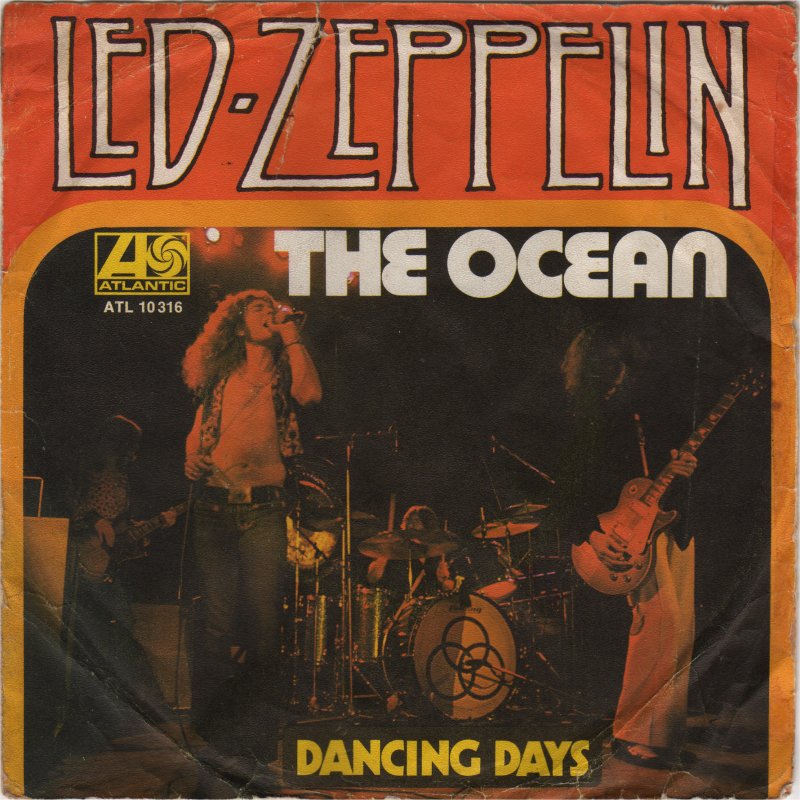
This song has a great guitar riff that carries the song along with the drums. It’s been said that the Ocean referred to was the fans as they were seen by the band on the stage. In the last line, the Girl who won my heart is Robert Plant’s daughter Carmen, who was 3 years old at the time.
This song was off of the Houses of the Holy album released in 1973. The album peaked at #1 in the Billboard Charts, #1 in the UK, and #1 in Canada. The band didn’t release many singles but this one was released and managed to peak at #8 in Germany.
Bonham and Jones make a rare appearance on backing vocals for the outro.
This song was #14 on Rolling Stones 40 greatest Led Zeppelin songs.
From Songfacts
The voice on the intro is drummer John Bonham. When he says, “We’ve done four already, but now we’re steady and then they went, 1… 2… 3… 4…,” he is referring to the takes. They had tried to record it 4 times prior but couldn’t get it right, so as a pep talk he said his famous line.
This is one of the few Zeppelin songs where all four members shared the writing credit.
Robert Plant used parts of this for his solo song “Tall Cool One.”
The Beastie Boys sampled this on “She’s Crafty.” It wasn’t their first use of Zeppelin – they took some of Bonham’s drums from “When The Levee Breaks” for “Rhymin’ And Stealin’.”
It can barely be heard due to all the guitar overdubs, but during the last minute or so, John Paul Jones and John Bonham sing for one of the only times on a Zeppelin album. They are harmonizing the phrase “Doo wop.”
If you listen carefully, you can hear a phone ringing in the studio at 1:37-1:38 and again (second ring) around 1:41.
The lyrics about “The Hellhound” refer to Blues musician Robert Johnson, who according to legend, sold his soul to the devil. On the lyrics sheet that came with the album, the word “hellhound” was replaced with “high hopes hailla.”
The Ocean
“We’ve done four already but now we’re steady And then they went: One, two, three, four”
Singing in the sunshine, laughing in the rain Hitting on the moonshine, rocking in the grain Got no time to pack my bags, my foots outside the door I got a date, I can’t be late, for the high hopes hailla ball, uh uh, uh uh, yeah
Singing to an ocean, I can hear the ocean’s roar Play for free, I play for me and play a whole lot more, more! Singing about the good things and the sun that lights the day I used to sing on the mountains, has the ocean lost its way
I don’t know, oh oh, yeah’
Ooh, yeah
Sitting round singing songs ’til the night turns into day Used to sing about the mountains but the mountains washed away Now I’m singing all my songs to the girl who won my heart She is only three years old and it’s a real fine way to start
Oh yeah!
It sure is fine! Ah blow my mind! When the tears are goin’ down! Yeah! Yeah, yeah
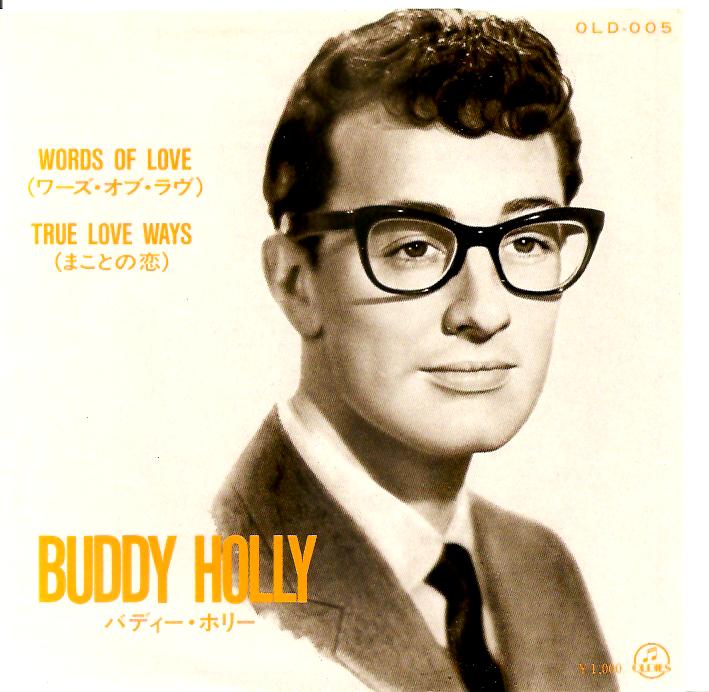
Buddy recorded and released this song in 1957. This was not one of Buddy’s biggest hits but a good song all the same. It was recorded on April 8th, 1957 and included a revolutionary gimmick for its time. He recorded his vocals twice and combined the results, thereby harmonizing with himself in the fashion of The Everly Brothers. This was one of the first released pop record to feature vocal overdubbing.
Canadian quartet The Diamonds as a successful follow-up to their #2 hit “Little Darlin’.” Their version of “Words Of Love” peaked at #13 in July of 1957.
I first heard this song by The Beatles. They had covered the song live between 1958-1962 and decided to record it for the Beatles for Sale album in 1964.
Paul McCartney about writing their own songs. “People these days take it for granted that you do, but nobody used to then. John and I started to write because of Buddy Holly. It was like, ‘Wow! He writes and is a musician.'” Paul McCartney purchased the publishing rights to Buddy Holly’s catalog in 1976.
John Lennon on Buddy Holly: “Buddy Holly was great and he wore glasses, which I liked,” “Buddy Holly was the first one that we were really aware of in England who could play and sing at the same time – not just strum, but actually play the licks.”
Words of Love
Hold me close and tell me how you feel Tell me love is real Words of love you whisper soft and true Darling I love you
Let me hear you say the words I long to hear Darling when you’re near Words of love you whisper soft and true Darling I love you
This song peaked at #51 on the Billboard 100 in 1986.
The two Davids were David Baerwald and David Ricketts. They broke up after their only studio album which really disappointed me because I was really looking forward to their next album. As I’ve said before there is hope…in 2016 it was reported that they are working on their second album…I have checked since then and have found nothing.
Ain’t So Easy
We can stay Or we can move along Either way don’t leave me all alone I’m sorry about your eye
I’ll find a way to make amends It’s only that sometimes I’ve got to break Before I bend
Come on, darling There’s a show downtown tonight Let’s go out dancing We can drink until the light
I know I’ve haven’t been everything A man should be But I promise I will change You just leave that up to me
And I’ll kiss your face, attend to your aches I swear that I can make you happy And you’ll rub my back, forget the past And baby, I know that that ain’t so easy
It ain’t too late To salvage all of this It ain’t too late we could Fix it with a kiss
All I want this one more chance So that we could have a home ‘Cause I would not stand a change If I had to make it on my own
Oh, let me kiss your face, attend to your aches I swear that I could make you happy And you’ll rub my back, forget the past And baby I know that that ain’t so easy
Maybe someday You will remember what I said to you today Maybe someday And where would you go anyway
Put that suitcase down Leave it for another day Stop this fooling around I could never let you get away
Let me kiss your face, attend to your aches I swear that I can make you happy And you’ll rub my back, forget the past And baby, I know that that ain’t so easy, please
The song was written by David Bowie and Brian Eno and was on the Heroes album released in 1977. The song peaked at #24 in the UK Charts, #35 in New Zealand, and #11 in Australia in 1978. The song recharted again in 2016. The album peaked at #35 in the Billboard Album Charts, #3 in the UK, #15 in New Zealand, #6 in Australia, and #44 in Canada.
After burn out because of touring Bowie moved to Berlin and rented a cheap apartment above an auto-repair shop, which is where he wrote this album.
Bowie made a video for this song which aired on the Bing Crosby Christmas special. In 1977 Crosby recorded a Christmas special in London called Merrie Olde Christmas, playing the England theme to the hilt. Bowie agreed to sing a duet with Crosby, which became the famous “The Little Drummer Boy/Peace On Earth” mashup. Bowie’s “Heroes” video also aired on the show with an introduction by Crosby. The show aired in November 1977, about a month after Crosby died.
Bowie talked about the song:
“It’s a bitch to sing, ‘cos I really have to give it some towards the end. I pace myself throughout the show and often place it near to a point where I can take a vocal break afterward. As long as I’m touring I don’t see a time when I won’t be singing ‘Heroes.’ It’s a good one to belt out and I get a kick out of it every time.”
From Songfacts
This song tells the story of a German couple who are so determined to be together that they meet every day under a gun turret on The Berlin Wall. Bowie, who was living in Berlin at the time, was inspired by an affair between his producer Tony Visconti and backup singer Antonia Maass, who would kiss “by the wall” in front of Bowie as he looked out of the Hansa Studio window. Bowie didn’t mention Visconti’s role in inspiring this song until 2003, when he told Performing Songwriter magazine: “I’m allowed to talk about it now. I wasn’t at the time. I always said it was a couple of lovers by the Berlin Wall that prompted the idea. Actually, it was Tony Visconti and his girlfriend. Tony was married at the time. And I could never say who it was (laughs). But I can now say that the lovers were Tony and a German girl that he’d met whilst we were in Berlin. I did ask his permission if I could say that. I think possibly the marriage was in the last few months, and it was very touching because I could see that Tony was very much in love with this girl, and it was that relationship which sort of motivated the song.”
Robert Fripp, formerly of King Crimson, played guitar on this track. His band, King Crimson, performed the song at the Admiralspalast in Berlin on September 11, 2016 in celebration of Bowie. This version was released on an EP called Heroes in 2017.
Brian Eno, formerly of Roxy Music, helped Bowie write and produce this. Eno moved to Berlin with Bowie and worked on his albums Low, Heroes, and Lodger. These albums were much more experimental and less commercial than Bowie’s previous work, but they still sold well in England.
Co-writer Eno said of this in the April 2007 Q Magazine: “It’s a beautiful song. But incredibly melancholy at the same time. We can be heroes, but actually, we know that something’s missing, something’s lost.”
Bowie released versions of this song in English, German, and French. The German version is called “Helden”; the French is “Héros.”
Featured in this song are not only Brian Eno’s synthesizer and Robert Fripp’s guitar, but also producer Tony Visconti banging on a metal ashtray that was lying around the studio.
This song is featured in the films Christiane F (1981) and The Parole Officer (2001). It also ended up as a Microsoft commercial theme.
Bowie played this at Live Aid from Wembley Stadium, England in 1985, and also at the Berlin Wall in 1987. Regarding the later performance, Bowie said in his Performing Songwriter interview: “I’ll never forget that. It was one of the most emotional performances I’ve ever done. I was in tears. They’d backed up the stage to the wall itself so that the wall was acting as our backdrop. We kind of heard that a few of the East Berliners might actually get the chance to hear the thing, but we didn’t realize in what numbers they would. And there were thousands on the other side that had come close to the wall. So it was like a double concert where the wall was the division. And we would hear them cheering and singing along from the other side. God, even now I get choked up. It was breaking my heart. I’d never done anything like that in my life, and I guess I never will again. When we did ‘Heroes’ it really felt anthemic, almost like a prayer. However well we do it these days, it’s almost like walking through it compared to that night, because it meant so much more. That’s the town where it was written, and that’s the particular situation that it was written about. It was just extraordinary. We did it in Berlin last year as well – ‘Heroes’ – and there’s no other city I can do that song in now that comes close to how it’s received. This time, what was so fantastic is that the audience – it was the Max Schmeling Hall, which holds about 10-15,000 – half the audience had been in East Berlin that time way before. So now I was face-to-face with the people I had been singing it to all those years ago. And we were all singing it together. Again, it was powerful. Things like that really give you a sense of what performance can do. They happen so rarely at that kind of magnitude. Most nights I find very enjoyable. These days, I really enjoy performing. But something like that doesn’t come along very often, and when it does, you kind of think, ‘Well, if I never do anything again, it won’t matter.'”
The Wallflowers covered this in 1998. Their version was used on the soundtrack to the movie Godzilla.
The single version, which appears on the ChangesBowie album, is shortened, leaving out a good chunk of the first verse.
Bowie first performed this on a television show hosted by his friend Marc Bolan, who was the lead singer for T-Rex. A week later, Bolan died when his girlfriend crashed their car into a tree.
Bowie played this at the “Concert For New York.” Organized by Paul McCartney, it was a tribute to the police, firemen, and rescue workers involved in the 2001 World Trade Center attacks.
Blondie recorded a live cover on January 12, 1980 at The Hammersmith Odeon. It can be found on the disc Blondie and Beyond.
This was originally an instrumental composition, whose title was a reference to the 1975 track “Hero” by the German Krautrock band Neu!.
The finalists from the seventh series of The X Factor released a cover version in November 2010 in aid of armed forces charity Help For Heroes, which topped both the UK and Irish Singles Charts. The choice of song follows a trend as in 2008, the fifth series of X Factor finalists reached #1 with a cover of Mariah Carey’s “Hero.” Despite a plethora of cover versions from other acts over the years, the X Factor 2010 Finalists are the first act aside from Bowie ever to have a hit single with the song.
What became the “official” video for the song was shot later in September 1977 and directed by Nick Ferguson, a painter who also did set design and directed various film and TV projects.
Janelle Monae recorded a cover for a 2014 Pepsi football-based advertising campaign “Now Is What You Make It.” Asked by The Guardian if she needed Bowie’s permission to use his song, the R&B songstress replied: “Oh, he’s a fan. He’s aware of me. His wife Iman is a huge supporter and she has told me countless times what a big fan he is. So he had to clear me doing the song and I’m so grateful.”
This song is central in the 2012 film The Perks of Being a Wallflower, starring Logan Lerman and Emma Watson. You hear it more than once throughout the movie.
Something of an underachiever when originally released, “Heroes” peaked at a lowly #24 back in 1977 in the UK and failed to make the Hot 100. In the week after David Bowie’s death, the song finally made the Top 20 in the country of his birth, leaping into the chart at #12.
Album Version
Single Version
Heroes
I, I wish you could swim Like the dolphins Like dolphins can swim
Though nothing, nothing will keep us together We can beat them, forever and ever Oh, we can be heroes just for one day
I, I will be King And you, you will be Queen Though nothing will drive them away We can be heroes just for one day We can be us just for one day
I, I can remember (I remember) Standing by the wall (By the wall) And the guns, shot above our heads (Over our heads) And we kissed, as though nothing could fall (Nothing could fall)
And the shame, was on the other side Oh, we can beat them, forever and ever Then we could be heroes just for one day
We can be heroes We can be heroes We can be heroes just for one day We can be heroes
I watched this a some as a kid and enjoyed it. When I watched it as an adult I thought it was Jackie Mason and Dean Martin voicing the cartoon.
John Byner voiced the Ant and the Aardvark. He imitated Jackie Mason as the Aardvark and Dean Martin as the Ant.
The Ant and the Aardvark was a series of theatrical cartoons produced at DePatie-Freleng Enterprises from 1969 to 1971, about a blue aardvark always trying to catch a red ant named Charlie.
The series consisted of 17 cartoons that ran from 1969 to 1971. After its initial theatrical run, The Ant and the Aardvark later became a part of The Pink Panther Show, with all 17 episodes airing in reruns, with the characters themselves being integrated into later iterations of The Pink Panther itself.
When I watch the intro I can’t help but think Monsters Inc got a little inspiration from the beginning.
Some songs are so ingrained in our psyche that a cover version would not make us forget the original or improve it. Covering them in concert is one thing but remaking them is another. When you compete against a memory…the memory wins. I know some will disagree but there are songs that in my opinion that are untouchable. That doesn’t mean I want to hear these songs over and over…some are worn out. I’m not saying the cover version would be bad…but it would not replace the original.
These are in no order. There are many more…any suggestions?
Bohemian Rhapsody – Queen – I can’t even imagine someone seriously trying to pull this off…
I Am The Walrus – Beatles -This bizarre piece of music would be hard to duplicate.
Stairway to Heaven – Led Zeppelin – It’s been tried…even by Pat Boone…Mr Soul Sucker who can take the soul out of a room by simply walking in. Dolly Parton even took a stab at it.
Freebird – Lynyrd Skynryd – I don’t think anyone would want to try.
Won’t Get Fooled Again – How would you match the intensity and power of this recording?
Good Vibrations – Beach Boys – Todd Rundgren remade this and copied it almost exactly…but what was the point? He did a fine job of copying it.
Sympathy for the Devil – Rolling Stones – I don’t see anyone matching the Stones version.
Born To Run – Bruce Springsteen – Bruce layered so many guitars (I’ve read up to 24) to make his own wall of sound…I don’t see this being topped.
Band On The Run – This is basically three songs into one with McCartney’s style
Like A Rolling Stone – Bob Dylan – Maybe the best single ever released. Bob is one of the most covered artists but his voice just stings on this recording and it would be hard to match.
A few more I thought of… American Pie, A Day In The Life, Sounds of Silence









 PowerPop... An Eclectic Collection of Pop Culture