Pet Rocks

Sometimes pop culture takes a turn so bizarre, so ridiculous, that you can’t help but admire it. Why can’t I think of something like this? Gary Dahl did and became a millionaire.

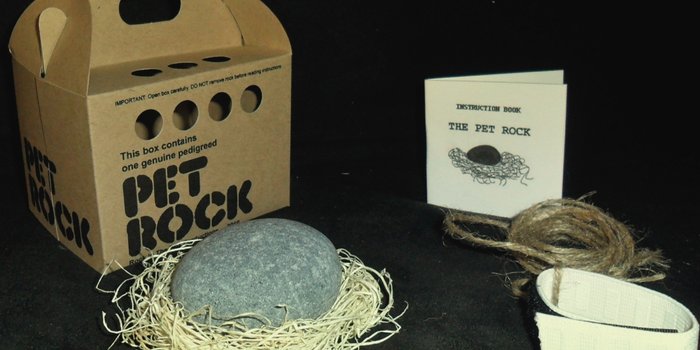
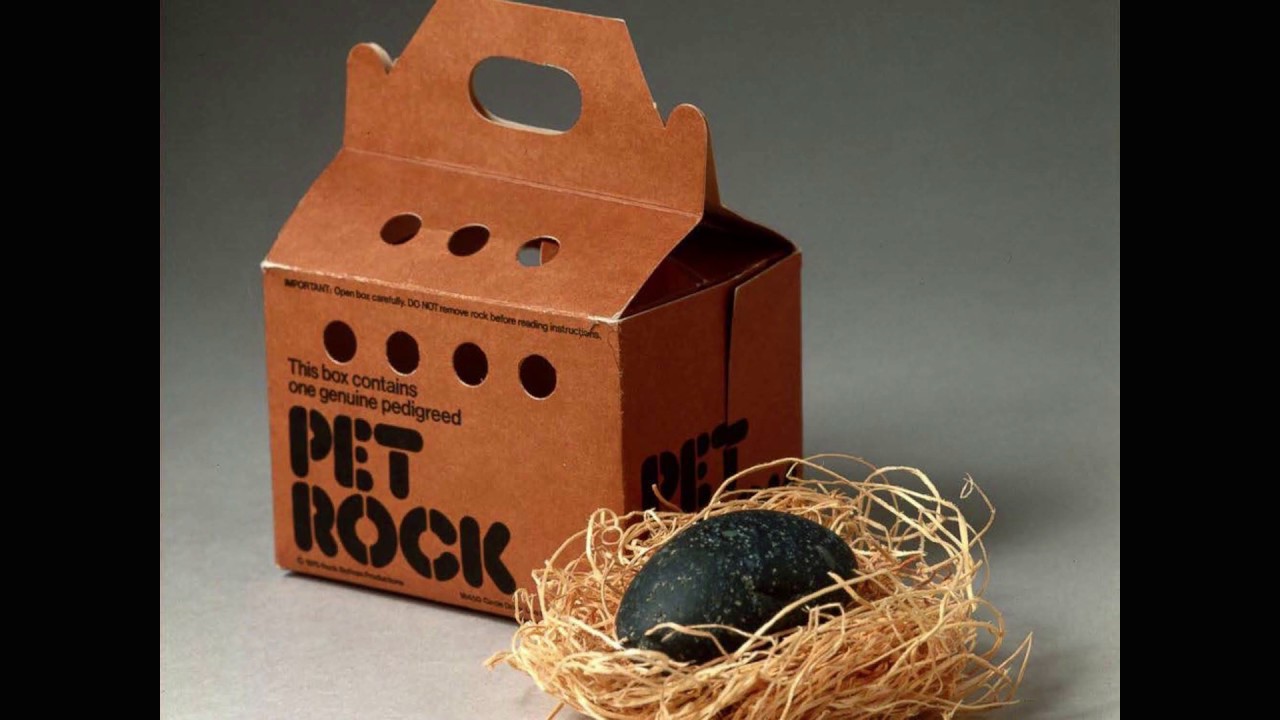
The pet came in a box with holes…of course, so the Rock could breathe and have a nest. They were $3.95 each, and each box contained “One Genuine Pedigreed” Pet Rock…A 32-page manual was included on how to take care of your special pet. The timing was perfect. In a post-Watergate America, cynicism was in, and irony was king. People were ready to buy something utterly meaningless just for the hell of it.

You want to understand the ‘70s in a nutshell? Forget disco and mood rings, look at the Pet Rock. It was the perfect gag gift in a world suddenly obsessed with kitsch, sarcasm, and pop irony.
Related image

More than a million people bought Pet Rocks as Christmas gifts in 1975. Gary Dahl, of Los Gatos, California, had the idea while joking with friends about his easy-to-care-for pet, a rock.

This pet ate nothing and didn’t bark or chew the furniture. Pet Rocks were sold with a funny manual that included tips on how to handle an excited rock and how to teach it tricks. By 1976, Gary Dahl was a millionaire, and Pet Rocks were the nation’s favorite pet.

By 1977, the fad had already burned out. Sales dropped. The joke wore thin. The world moved on. But like most pop phenomena, the Pet Rock was never really about longevity. It was about the moment. And it absolutely nailed it. He later referred to the Pet Rock craze as “a good joke that got out of hand.”

Here is the first part of the manual. I will not list the 32 pages of care…at the bottom is a very short old news report on this novelty item. Kids today don’t know what they are missing…they have iPhones….we had Pet Rocks.

Item 1.
Your new rock is a very sensitive pet
and maybe slightly traumatized from
all the handling and shipping required
in bringing the two of you together.
While you may look in on your new
pet from time to time, it is essential
that you leave your rock in its box for
a few days. It is advised that you set
the box in an area of your home
that is to become your PET ROCK’S
“special place”. Some PET ROCK
owners have found that the ticking of
an alarm clock placed near the box
has a soothing effect; especially at
night.
It takes most PET ROCKS exactly
three days to acclimate themselves to
their new surroundings. After seventy-two
hours have passed you may remove
the rock from its box and begin
enjoying your new pet.

Yes, I do have a pet rock and the box somewhere in storage. 
 

Rock’em Sock’em Robots

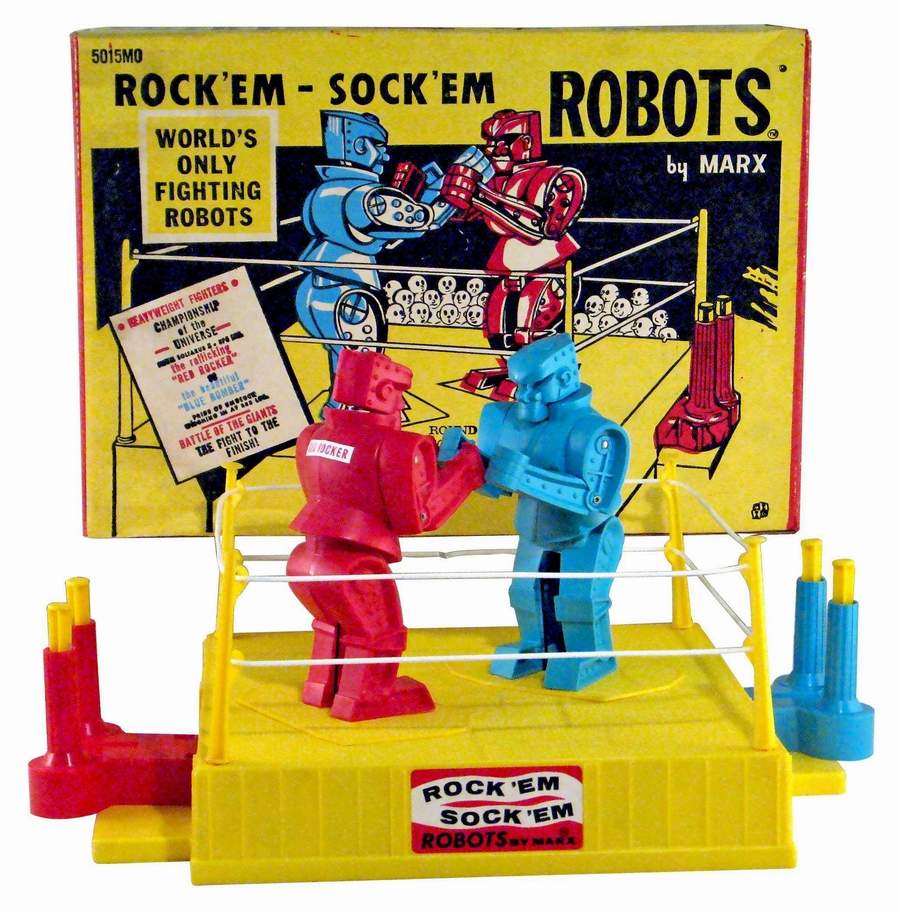
This was maybe the best toy of the 70s in some ways. Loved this game to death. We would play this for hours. Now comes the sad part. When I saw they were making them again around twenty years ago, I had to order them (for my son, of course!). I got it, and it was like Rock ’em Sock ’em Cheap Miniatures. They are small and very cheap now.

Marx released this great toy in 1966, the world’s first boxing robots with “Rock ‘Em Sock ‘Em Robots,” a game designed by Marvin Glass & Associates. At the time, the toy became hugely popular during the 1960s and ‘70s.

You would control the robots by joysticks, and you would counter the other person’s moves by dodging the oncoming punch. You would maneuver your robot and  hit the other robot at just the right angle, you’ll be able to “knock his block off!” In other words, the robot’s spring-loaded head is knocked loose and pops up, signaling the end of the “round.”

When that happened, you would just push his spring-loaded head back down and go again. The great thing about the game is you do not need batteries… you just pulled it out of your closet or from underneath your bed and played.

Lite-Brite

One of my favorite toys growing up. To this day I like collecting vintage lighting fixtures like soft drink clocks or signs probably because of this toy. They came with designs that you could use to create different cartoons and clowns but I never used those. I liked to create my own masterpieces.

This toy allowed you to be creative in a very different way. It brought out the artistic side in you. You could design different things and it would light up your room in the dark with colors. Lite-Brite was invented by Joseph M. Burck, a senior designer at Chicago toy and game design company Marvin Glass and Associates. The company licensed Lite-Brite to Hasbro, which officially launched it in 1967. It became a staple toy in the 1970s. 

Of course…when I got older I would make crude messages on the Lite Brite for friends. Lite-Brite is recognized as one of the greatest toys of all time by the Toy Hall of Fame. It has become part of our pop culture. 

Lite Brite commercial from the 1970s. Did you have one growing up? 

Magic 8 Ball

I was told as a kid that a Magic 8 Ball could predict the future. I bought it hook line and sinker…I was also told by my older sister (8 years older) that snakes bite the second person in a line while I was merrily leading the way hiking in the woods as a 5-year-old…so I caught on pretty quick after I stepped on a snake…didn’t get bit though…but I never let her forget it.

I bugged my mom till she got me the mysterious Magic 8 Ball. I was amazed at this toy…well it wasn’t a toy to me. I thought this was great. So being 5-6 years old I thought I would put it to use… Oh, Magic 8 Ball should I color in the encyclopedias with my crayons? I shook it up and waited for the triangle to give me the answer… “signs point to yes”…those signs must have pointed in a different direction than my Mom… she wasn’t a fan of the Magic 8 ball after that.

Abe Bookman invented the Magic 8 Ball, a fortune-telling toy currently manufactured by Mattel.

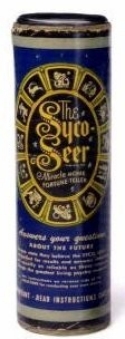
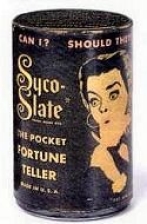
During World War II, a man named Alfred Carter in Cincinnati created a tube-like fortune-telling toy. To help him he got his brother-in-law to help…that would be Abe Bookman. they created a 7″ tube device with glass on both ends with a pair of floating dice with responses. It was sold as the “Syco-Seer: The Miracle Home Fortune Teller.” Their company was called Alabe Crafts.

The original Magic 8 Ball was tubular and went by the name Syco-Seer. The Magic 8 Ball above. The Syco-Seer metal cylindar above. The Syco-Slate Pocekt Fortune-Teller at right.

Carter died in 1948 and Bookman revised it into a crystal ball but it still didn’t sell really well. Then the Brunswick Billiards company commissioned Bookman to make them one shaped like an 8 ball as a promotional giveaway.

After the giveaway was finished Bookman kept producing them shaped like an 8 ball.

The Magic 8 Ball that we have known since then has contained a 20-sided polygon inside a hollow plastic ball, floating in a liquid-filled, 3-inch diameter tube. The liquid largely consists of dark blue ink and alcohol. The predictions, yes, no, or non-committal, appear on each triangular face of the polygon.

Bookman marketed it as a conversation piece, a paperweight and then a toy.

Ideal Toys bought Alabe Crafts in 1971. Next, Tyco Toys bought the ball in ’87. Mattel owns it today and sells one million units a year.

Here are the magical statements of the Magic 8 Ball

  • As I see it, yes
  • Ask again later
  • Better not tell you now
  • Cannot predict now
  • Concentrate and ask again
  • Don’t count on it
  • It is certain
  • It is decidedly so
  • Most likely
  • My reply is no
  • My sources say no
  • Outlook good
  • Outlook not so good
  • Reply hazy, try again
  • Signs point to yes
  • Very doubtful
  • Without a doubt
  • Yes
  • Yes, definitely
  • You may rely on it.

The Nerf Ball… a brief history

The name NERF actually comes from drag racing. In the late ‘60s, foam-covered bars sometimes called “nerf bars” were put on the front of the trucks that pushed racers to the starting line. This prevented damage to cars.

I had many Nerf Footballs and small Nerf basketballs growing up and they were always fun to bonk someone in the head.

In 1968 Reyn Guyer who invented Twister helped invent the Nerf Ball. He was testing a new caveman game with colleagues. The prototype included a bunch of foam-rubber rocks that, the men soon discovered, were more fun to throw at one another than use in the game. He then thought (and probably saved a lot of broken lamps…and spankings) they could be used as balls and played within a home.

In 1969 Reyn tried to sell the idea to Milton Bradley but they didn’t want it, but Parker Brothers did. The first Nerf product as a 4-inch polyurethane foam ball. They marketed it as “world’s first official indoor ball” and soon they had blasters, footballs (Fred Cox, kicker for the Vikings actually invented the Nerf Football), basketballs, living room baseball and a line of Nerf products.

Hasbro

Parker Brothers handed the company off to Kenner Products, a sister company, in 1991, when Hasbro acquired the Nerf line. Throughout the 1990s and early 2000s, the Nerf brand served under the subsidiaries OddzOn and Larami before Hasbro took full control of the brand.

Monkees Nerf Ball Commercial


Yahtzee History

Saturday night we had some guests over and we all played Yahtzee. It was the first time I’d played it since the 1980s at least. I had a good time and looked up the history of the game.

In 1954 a wealthy anonymous Canadian couple, who called it The Yacht Game invented the game to play aboard their yacht. They would invite friends and teach them. In 1956 they went to toy maker Edwin S. Lowe to make some games for their friends as Christmas gifts. Edwin liked the game so much that he wanted to buy the rights to it. The couple sold the rights for the amount of making them a 1000 games.

When Edwin released it on the market it did not do well in it’s first year. The game could not be explained easily in an ad.  It had many nuances and interesting things about it and they can only be understood if the game was actually played.

Finally, Edwin tried a different approach. He started to have Yahtzee parties hoping to spread the news about the game by word of mouth. That started to work and Yahtzee got extremely popular. During Lowe’s ownership alone, over forty million copies of the game were sold in the United States of America as well as around the globe

In 1973  Milton Bradley Company bought the E.S. Lowe Company and in 1984 Hasbro, Inc. acquires the Milton Bradley Company and the game.

The origins of the game came from the  Puerto Rican game Generala and the English games of Poker Dice and Cheerio. Another game, Yap, shows close similarities to Yahtzee.

https://www.youtube.com/watch?v=3mCS6o6bDiw&ab_channel=TheRetroTimeMachine


http://www.twoop.com/yahtzee/


Play-Doh…not for consumption.

I’ve been music heavy lately and wanted to live up more to the “eclectic” part of the blog’s name.

In first grade…I found the wonderous invention called Play-Doh. I loved making things and the smell of play-doh… I had a friend in school named Kevin…he would eat Play-Doh at times…I didn’t go that far. Kevin would deny eating it but when he smiled the teacher would see yellow, blue, and red all between his teeth… He would also eat crayons…Lost touch with Kevin after second grade when I assigned to a different school in our area which was closer…maybe that was for the best…

Today if I ever walk by Play-Doh I have to pick it up and do something with it. When my son was a kid we would make all sorts of things. I always loved taking the top off of a new one and trying to keep the colors separated…

Kevin where ever you are now…this post is for you.

In the 1930s Noah McVicker created a substance that looked like putty out of flour, water, salt, boric acid, and mineral oil. His family’s soap company — Kutol Products — in Cincinnati, Ohio, marketed his creation as a wallpaper cleaner.

It wasn’t until after World War II that Noah McVicker’s nephew, Joseph McVicker soon realized that Kutol Products’ wallpaper cleaner also could be used as modeling clay. In 1955, he tested the product in Cincinnati-area schools and daycares. The following year, the Woodward & Lothrop Department Store in Washington, DC, began to sell the clay, which McVicker had named Play-Doh. Noah and Joseph McVicker applied for a patent for Play-Doh in 1958, but the United States Patent Office did not officially patent the clay until January 26, 1965.

Captain Kangaroo had a part in the popularity. 

When it was just a new company with no advertising budget,  Joe McVicker talked his way in to visit Bob Keeshan, better known as Captain Kangaroo. Although the company couldn’t pay the show outright, McVicker offered them two percent of Play-Doh sales for featuring the product once a week. Keeshan loved the compound and began featuring it three times weekly.

Today, Play-Doh is owned by Hasbro that continues to make and sell the product through its Playskool line. In 2003, the Toy Industry Association added Play-Doh to its “Century of Toys List,” which contains the 100 most memorable and creative toys of the last 100 years.

Since its “invention,” over 700 million pounds of Play-Doh have been sold around the world!

https://en.wikipedia.org/wiki/Play-Doh

https://www.surfnetkids.com/early/4796/history-of-playdoh


1970s Russ Berrie Sillisculpts

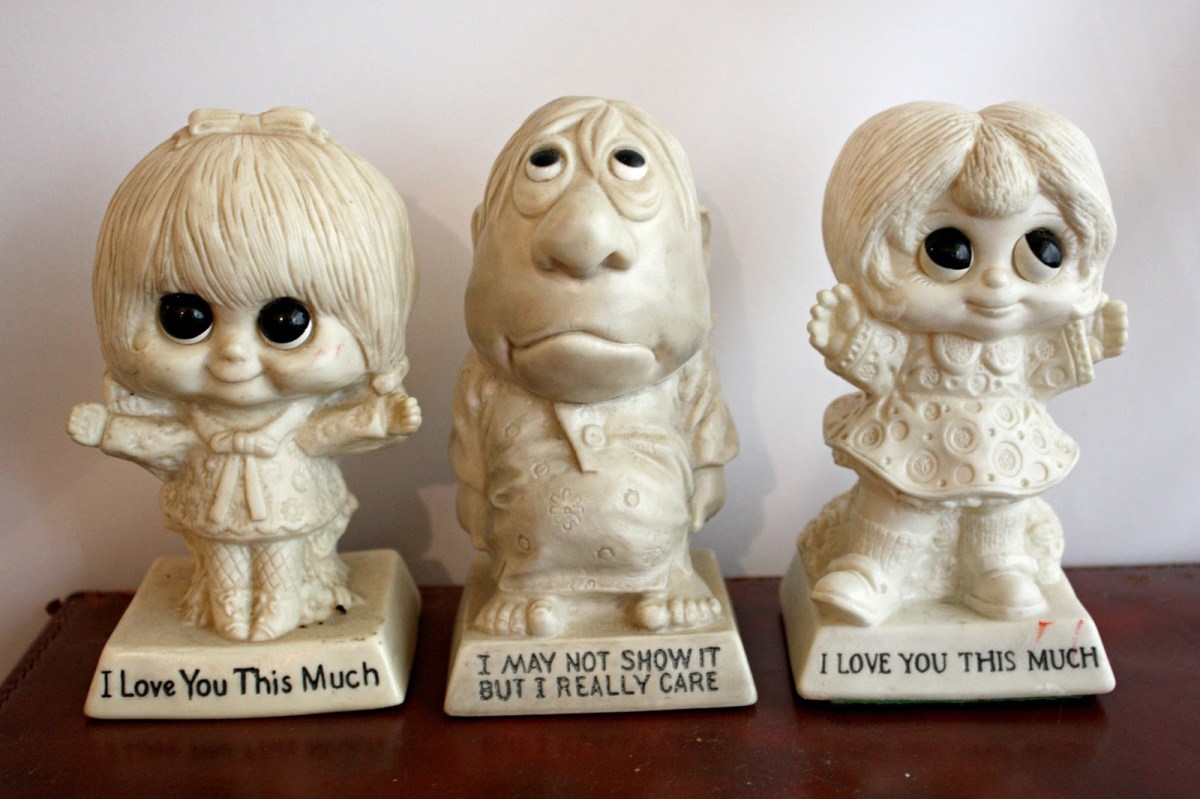
Whenever I go to a yard sale or flea market and I see one…I have to get it. Worlds Greatest Dad, Worlds Greatest Mom, Worlds Greatest Grandpa, “Being Sick is bad for your health” and many more. They have a look that I like and are usually cheap…for two bucks you can have part of the seventies. 

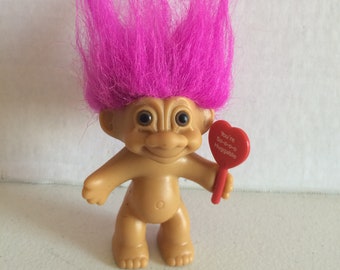
He did more than the statues…he had stuffed animals and bears which in the 80s and 90s really took off…along with trolls.  

Russell Berrie started his business with only $500 and ran it out of a rented garage in Palisades Park, NJ. His first product to reach the shelf was his Fuzzy Wuzzie in 1964.

fuzzywuzzies.jpg

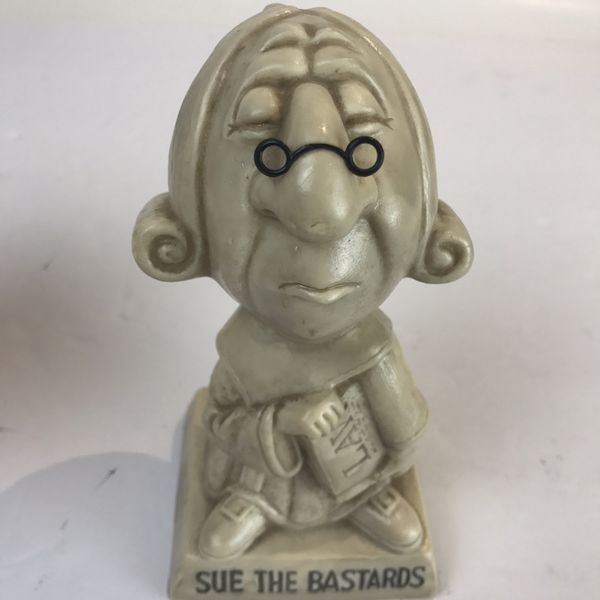
By 1968 Americans were ready for something a little bolder. Russ Berrie and Co. introduced Sillisculpts, plastic message figurines with a little more attitude. Two of the most memorable are the “I love you this much!” statuette and another of an old lawyer crying “Sue the bastards!” (I must find this one). 

Image result for russ berrie sue the bastards

These come in every form and shape.

In 1971, as sales passed the $7 million mark, Russ Berrie and Company moved to a new corporate headquarters facility in Oakland, New Jersey. This location would become the center of the company’s worldwide marketing and distribution businesses. In the following year, Russ Berrie and Company opened a second new facility, when a distribution center, in Santa Rosa, California, came online. 

By 1985, Russ Berrie and Company sales had reached $204.6 million, and revenues more than doubled in just two years.

In 1992, Russ Berrie and Company’s fortunes got a lift, when the popularity of one of its oldest products, Trolls, first introduced in the 1960s, escalated dramatically. Although they had not been a big seller for many years, suddenly the company’s trolls—squishy dolls with rubbery faces and hair that stood on end—were experiencing wild demand. To meet this clamor, Russ Berrie and Company’s designers began to churn out hundreds of different troll products, and the company’s Far Eastern suppliers raced to keep output high. By the end of the year, pushed by the troll fad, the company’s earnings had soared to $300 million. 

Image result for 1990s troll russ berrie

In 2001, Russ Berrie had sales of $294.3 million and net income of $40.2 million, selling items like a stuffed dog named Muffin and a stuffed bear known as Honeyfritz. 

In December 2002, Russ Berrie died unexpectedly after having a heart attack in his home. Often named by Fortune magazine as one of America’s most generous philanthropists, Berrie was just 69 years old when he died.

Image result for russ berrie statue dirty men


Wiffle Ball was a Blast

I had almost as much fun playing wiffle ball as a kid as I did little league. I was completely into playing baseball with friends or for years in leagues until I was 16. In my front yard, we would play wiffle ball until dark. If only one friend was over that was enough… we could still play. Hit it over the house, a home run…hitting a window, a double, in the creek a triple… etc.

You didn’t have to worry about breaking a window or knocking your buddy out while pitching as fast as you could. You would learn how to grip it and you could make it curve, rise, or sink a ridiculous amount. We would play for hours until night or until the ball was stuck on the roof or in a tree.

In the late 70s and 80s it was a fun alternative to playing baseball when not enough friends were around or you had to play in a neighborhood full of houses with nice big windows.

Image result for Wiffle Ball curve gif

In 1953, David N. Mullany was watching his 12-year-old son and some friends playing a baseball-like game with a perforated plastic golf ball and a broomstick in their backyard. The boys tried throwing curveballs and sliders but with no success. They couldn’t use a baseball because of the trail of broken windows and upset neighbors.

Mullany, who had been a semipro pitcher himself, knew all too well what thousands of Little Leaguers have had to painfully learn. Nothing shreds a young arm quite as effectively as throwing breaking balls. Mullany set about trying to save the boys’ shoulders and elbows by creating a ball that would curve and bend on its own.

He tried a hard plastic ball that served as packaging for Coty perfume. After having the boys experiment with various designs, Mullany hit on the Wiffle Ball we now know and love.

Mullany’s son and his friends referred to strikeouts as “whiffs.” Since the new invention made knee-buckling curveballs a breeze to throw, pitchers started racking up the strikeouts. Mullany named the product the Wiffle Ball to honor its strikeout-friendly breaks.

When they started to advertise them they would use old photographs of MLB players. The Mullanys later explained in interviews that doing actual photo shoots with the players would have been too pricey, so they just negotiated with players’ agents and then used any old photograph.

Image result for first wiffle ball box


The slots on one side make the ball curve and rise. Just like a real baseball…the more scuffs a ball has the more it can curve. They have Wiffle Ball leagues now where players play competitively.


http://www.wiffle.com/pages/welcome.asp?page=welcome


Clackers

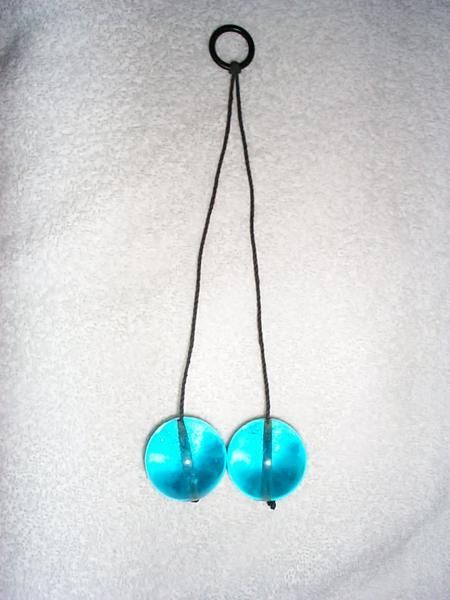
Clackers or… death on a string came out in the 1960s. They were also called Ker-Bangers, Klackers, Click-Clacks, Klik Klaks, Klappers, and Zonkers.

I remember a kid giving me his Clackers. The object I guess was swinging them up and down until they hit each other and made a “clack” sound. The sound I got the most was a thud sound with plastic hitting my skin. They were also known to shatter and the pieces fly in all different directions.

They were similar to Bolas…a weapon used by cowboys to throw at cattle or game to wrap around their legs…sometimes breaking them. Yep…lets redesign this and give it to kids.

I never minded somewhat dangerous toys but I didn’t get too much pleasure out of these.

The toy was recalled in 1985

https://www.cpsc.gov/Recalls/1985/dangerous-toys-seized-by-us-marshal-in-phoenix

https://www.youtube.com/watch?v=zTB5tsHkCj4&ab_channel=JoelSanderson


Big Wheel

Now, this was cool. I had a few friends with one but it was one thing I could not get. We lived on a dirt road with a gravel driveway. Big Wheels didn’t really work on gravel and dirt too well. I loved the pull-up brake you could engage on one wheel while you were coming to a stop and spin around.

You were low to the ground and with a good hill, you could really go. If it rained you would pedal that plastic wheel and go nowhere until you caught some traction.

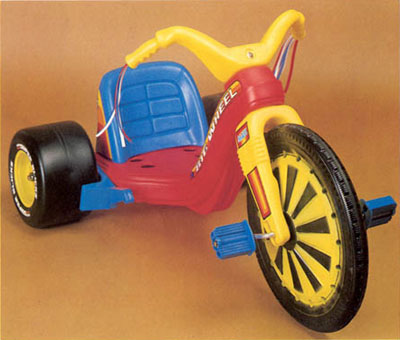
The Big Wheel was developed by Louis Marx and Company in 1969. The toy was hugely popular in the 70s and 80s because of its low cost and partly because consumer groups said it was a safer alternative to the traditional tricycle or bicycle.

Different versions came out as it was copied by other companies. The Green Machine made by Huffy was a version of the Big Wheel.

Image result for 1978 green machine

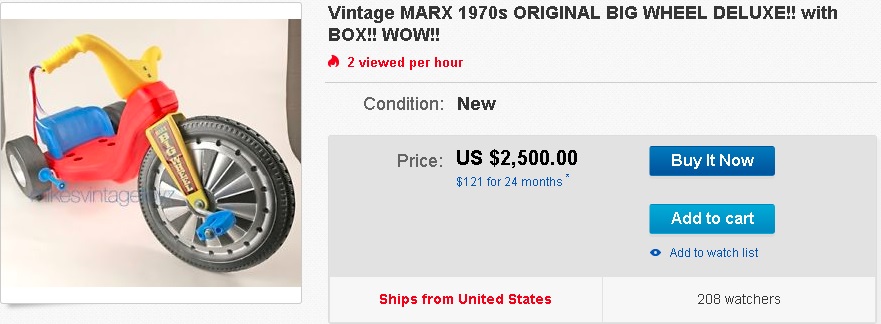
Just in case you want to own an iconic 1970s Big Wheel…not just a Big Wheel but a Big Wheel Deluxe with the box…no problem just shell out $2,500.

ebaybigwheel.jpg

https://www.youtube.com/watch?v=6AFw4wH2Mko

Stretch Armstrong

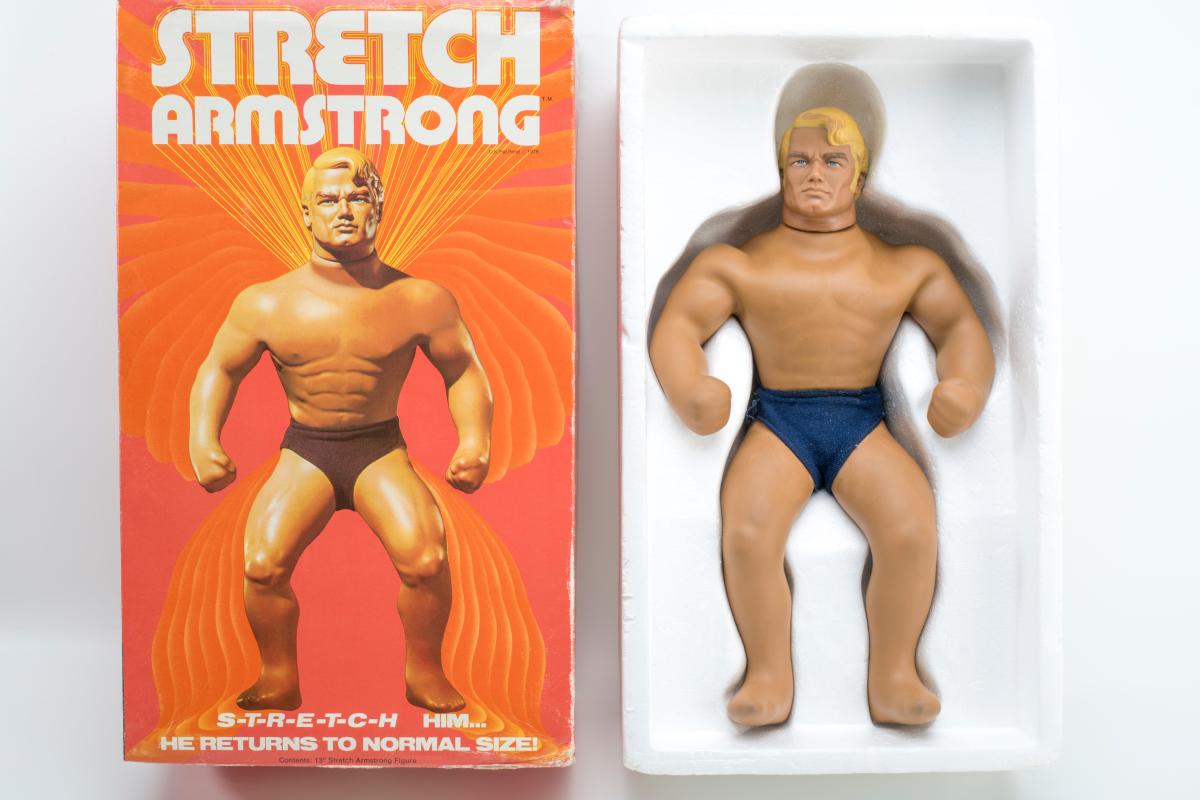
I remember having Stretch and stretch him I did. He lasted a few months before it happened. Mr. Armstrong sprung a leak and out came this gooey liquid everywhere.

Jesse Horowitz designed Stretch… he tried a sumo wrestler but it was too big and he dropped the idea. He thought about a stretch woman to rival Barbie but smartly dropped that idea.

In 1976  Stretch Armstrong was sold to the masses, and the $11 toy that made Kenner over $50 million in revenue had a secret: He was basically just a big sack of corn syrup… but to a kid…a fun $11 big sack of corn syrup.

The fad wore out after a while other companies started to do their own Stretch dolls. The Mega company started their own line with Batman, Spider-Man, and Superman stretchable figures. Kenner sued but by the time anything was done Stretch’s time in the sun was over and his popularity faded.

Maybe I shouldn’t have stretched Stretch so much…

Armstrong dolls in a box that aren’t leaking profusely from ’70s wounds can fetch over $1000 on auction sites, with especially rare versions or prototypes worth more.

Lava Lamps

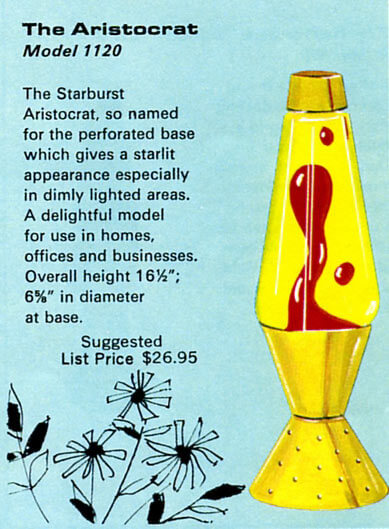
I own a couple of lava lamps and I run them quite a bit. I didn’t get my first one until the 80s and I still have it. They do nothing but do their thing…and they create a mood. I have one in my office at work…it helps at times.

The lava lamp was invented in 1963 by Edward Craven WalkerHe was passing the time in a pub when he noticed a homemade egg timer crafted from a cocktail shaker filled with alien-looking liquids bubbling on a stove top. Craven Walker’s company was manufacturing millions of “Astro Lamps,” as he called them, per year. In 1965, he sold the U.S. manufacturing rights to a company called Lava Lite.

Lava lamps caught on in the sixties and continued to be big to the late seventies. The sales cooled off until the Austin Power movies and the sales started to pick up again in the hundreds of thousands a year. Now Lava Lite supplies millions of lava lamps to retailers.

Far Out Man

Related imageRelated imageRelated imageRelated imageRelated image

Lite-Brite

One of my favorite toys growing up. To this day I like collecting any vintage lighting fixture like soft drink clocks or signs probably because of this toy. They came with designs that you could use to create different cartoons and clowns but I never used those. I liked to create my own masterpieces.

This toy allowed you to be creative in a very different way. It brought out the artistic side in you. You could design different things and it would light up your room in the dark with colors.

Lite-Brite was invented by Joseph M. Burck, a senior designer at Chicago toy and game design company Marvin Glass and Associates.

Of course…when I got older I would make crude messages on the Lite Brite for friends.

Lite Brite commercial from the 1970s.

Mattel Electronic Football

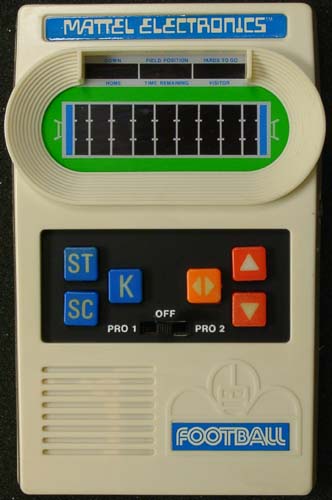
If you were 10-15 years old in 1977-78 you probably remember this game.

My friend had this game and I basically took it over every time we were on the bus and the times he would come over because he liked the auto racing game. I ended up buying it from him.

It was released in June of 1977 as the second game released by Mattel (Auto Race was the first) and sold through Sears. After less than 100,000 were made, Sears determined that the games would not be big sellers, and most of the production for Football and Auto Race was stopped. Well, Sears was wrong and had to restart the production.

By mid-February 1978 the sales figures were up to 500,000.

Who would think that red dashes could be so much fun?

Here is a commercial for the football game.

https://www.youtube.com/watch?v=NtUe4qi2yfw&ab_channel=31Mike

http://www.handheldmuseum.com/Mattel/Trivia.htm#9yards