It was a turbulent year, to say the least. We lost two proponents of peace—Martin Luther King, Jr., and Robert F. Kennedy. Other events include the Vietnam War’s Tet Offensive, riots in Washington, DC, the Civil Rights Act of 1968, and heightened social unrest over the Vietnam War, values, and race.
The music was also toughened up by moving away from psychedelic music. The social climate and The Band’s album Music from Big Pink had a lot of influence on this. You still had psychedelic music released but overall, music was more stripped down to the basics.
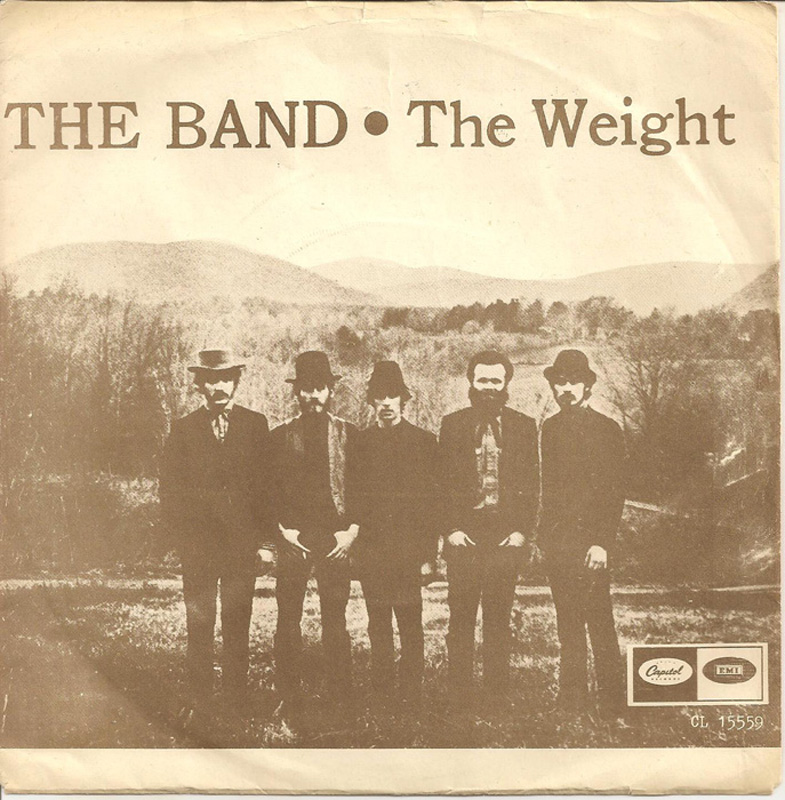
Let’s start off with The Band…Music From Big Pink was one of the most important albums ever released. Its influence was everywhere. The song The Weight was also later included in the movie Easy Rider.
The Beatles would release the super single Hey Jude/ Revolution and The White Album. I could go with many songs like Lady Madonna, Hey Jude, Back in the USSR, Helter Skelter, Dear Prudence, and the list is almost endless… but I’ll go with Revolution. This song was written by John Lennon and Paul McCartney…but mostly Lennon.
The Rolling Stones released what some considered their best song ever with Jumping Jack Flash. It was written by Keith Richards and Mick Jagger.
Maybe the first supergroup in rock…Cream with White Room. Pete Brown wrote the lyrics and Jack Bruce wrote the music. Bruce was inspired by a cycling tour that he took in France. The “white room” was a literal place: a room in an apartment where Pete Brown was living.
Now we will go with the legendary Otis Redding singing (Sittin’ On) The Dock Of The Bay.
The song is a true classic. Stax guitarist Steve Cropper wrote this with Redding. Cropper produced the album when Redding died, including this track with various songs Redding had recorded the last few years.
Redding died in a plane crash on December 10, 1967, a month before this song was released (January 8, 1968) and three days after he recorded it. It was by far his biggest hit and was also the first-ever posthumous #1 single in the US.
I somehow got a lot of singles from relatives when I was a kid. They just ended up at our house. I had the original single of this and I loved it and still do. Smokey has such a smooth and cool voice. I can’t tell you how much I like this song. It’s high on my list of all-time songs I love. I remember being 12 and going to baseball practice and listening to this song before I left…it stayed with me through practice in the heat and that night. His voice is pure gold.
To me, Smokey is like American royalty or a national treasure as people say. When your peers like Dylan, Lennon, and everyone else sing your praises…you are doing something right.
Stevie Wonder and Hank Cosby (producer) came up with the music for this song. Smokey Robinson listened to the song for a few days and decided it sounded like a circus so he came up with the lyrics based on the sad clown Conio from the opera Pagliacci. It was Ruggero Leoncavallo’s opera about fatal jealousies in a traveling troupe of actors based on a real-life story… a case encountered by Leoncavallo’s father, who was a police magistrate in Naples. Pagliacci was around in the late 1800s.
It was recorded in 1967 and was just an album track on the album Make It Happen. In 1970 it was released as a single (with a new mix) and was a huge hit. The song peaked at #1 on the Billboard 100, #7 in Canada, and #1 in the UK. It was written by Robinson, Stevie Wonder, and Hank Cosby. It was recorded in 1967 but it was released in 1970.
It’s hard to believe but this song would be their only #1 hit on the Billboard 100 with Smokey. They had 42 songs in the top 100 and 6 top ten hits. Smokey would soon leave the Miracles after this song. He would be replaced by Billy Griffin on vocals. Now THAT had to be a hard gig to replace Smokey Robinson. Billy did a good job though because they had another number 1 with Love Machine Part 1. He does sound a lot like Smokey.
Smokey Robinson: “I was trying to think of something that would be significant, that would touch people’s hearts, but still be dealing with the circus, so what is that? Pagliacci, of course. The clown who cries. And after he makes everyone else happy with the smile painted on his face, then he goes into his dressing room and cries because he’s sad. That was the key.”
Below is Smokey Robinson telling the story of the song. Below that is the single version that we have all heard. What was it with those 60s-70s shows with the backdrops to the singers? Did they think it was Smokey Robinson and the Plumbers?
Tears of a Clown
Oh yeah, yeah, yeah
Now if there’s a smile on my face
It’s only there trying to fool the public
But when it comes down to fooling you
Now honey, that’s quite a different subject
But don’t let my glad expression
Give you the wrong impression
Really, I’m sad
Oh, I’m sadder than sad
You’re gone and I’m hurtin’ so bad
Like a clown I pretend to be glad
Now there’s some sad things known to man
But ain’t too much sadder than
The tears of a clown
When there’s no one around
Oh yeah, baby
Now if I appear to be carefree
It’s only to camouflage my sadness
In order to shield my pride I’ve tried
To cover this hurt with a show of gladness
But don’t let my show convince you
That I’ve been happy since you
Decided to go
Oh, I need you so
I’m hurt and I want you to know
But for others I put on a show
Oh, there’s some sad things known to man
But there ain’t too much sadder than
The tears of a clown
When there’s no one around, oh yeah
Just like Pagliacci did
I try to keep my sadness hid
Smiling in the public eye
But in my lonely room I cry
The tears of a clown
When there’s no one around
Oh yeah, baby
Now if there’s a smile on my face
Don’t let my glad expression
Give you the wrong impression
Don’t let this smile I wear
Make you think that I don’t care
Really, I’m sad
Hurtin’ so bad
Some people have said they cannot comment on this post…some can some cannot…I’ve emailed WP and am trying live chat but of course, it’s not open. So it might let you leave a comment…and it might not
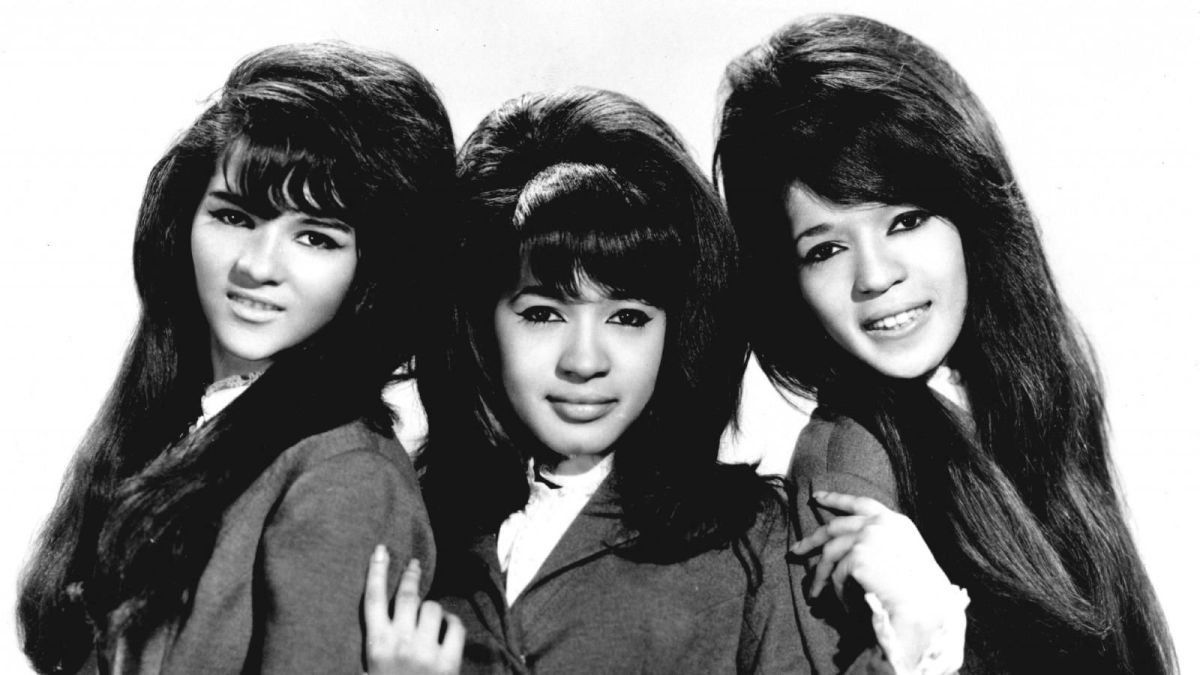
The Ronettes were Veronica (Ronnie) Bennett, her sister Estelle Bennett, and their cousin Nedra Talley. One of the great songs of the sixties.
I’m a huge fan of this song and The Ronettes. I like many of the female groups of the early sixties like The Marvelettes, Martha and the Vandellas, The Shirelles, and the Supremes but no one sounded like Ronnie Spector. But… I’m not the fan that Brian Wilson has been since he heard the song.
Count Brian Wilson as a huge fan of this song. Well, being a fan is an understatement…he was totally obsessed with this song. He was driving in the 60s when he heard it and had to pull the car over and analyze the chorus. He then bought the single and put it in his home jukebox and played it endlessly. In the seventies, as his fellow Beach Boys would be recording in his basement…he would be blasting Be My Baby at full volume with the curtains closed. One great thing came out of his obsession… it inspired him to write Don’t Worry Baby.
Mike Love remembered Wilson comparing Be My Baby to Albert Einstein’s theory of relativity. Wilson told The New York Times in 2013 that he had listened to the song at least 1,000 times. Beach Boy Bruce Johnston gave a higher estimation: “Brian must have played ‘Be My Baby’ ten million times. He never seemed to get tired of it.” He also called it the best song ever recorded. Brian Wilson’s daughter Carnie has one distinct memory from her childhood, listening to, and more accurately being woken up with, Be My Baby.
Brian Wilson: “I felt like I wanted to try to do something as good as that song and I never did, I’ve stopped trying. It’s the greatest record ever produced. No one will ever top that one.”
To me, this song is brilliant and one of my favorites… although I wouldn’t go as far as Wilson did. It’s one of Phil Spector’s best-produced songs. The song peaked at #2 on the Billboard 100, #2 in Canada, #2 in New Zealand, and #4 in the UK.
This was the first Ronettes song produced by Phil Spector and released on his label, Philles Records. It also featured Spector’s “Wall Of Sound” production technique, where he layered lots of instruments and used echo effects.
Don’t expect to find B-side gold on many of Spector’s singles. Spector had Tommy Tedesco and Bill Pitman (session musicians) record a throwaway instrumental that he called “Tedesco And Pitman.” Spector made sure the B-sides of his singles were garbage so there was no doubt what song should be played. This also allowed him more studio time to craft the hit.
The future Ronnie Spector was the only Ronette to sing on this. Phil Spector rehearsed her for weeks and had her do 42 takes before he got the sound he wanted. Spector and Bennett got married in 1968, and they divorced in 1974. Ronnie Spector said the home they shared was pretty much a prison for her.
She woke up on her wedding night to workers erecting a barbed-wire fence around the estate. Bars were soon installed over windows, and intercoms in all the rooms. Ronnie was rarely allowed out alone, unless with a life-size dummy of Spector in the passenger seat of her car. But the worst was being unable to perform on stage.
I never heard about Ronnie Spector until the 80s when she appeared on the Eddie Money song Take Me Home Tonight. After that, I looked up all I could about her.
Jeff Barry and Ellie Greenwich wrote this song. As was his custom, Phil Spector also took a songwriting credit on the track. Producers did that in the 50s and 60s and it was wrong.
One thing I respected about George Martin…he blew the whistle on the hugely successful producer Norrie Paramor in the early sixties to a young David Frost who roasted Paramor on his show “That Was the Week That Was”. Paramor would force artists to record his songs for B sides and also take writers’ credit for others. Frost kept Martin’s name out of it. No one ever found out who dished out the goods to Frost about Paramor.
Be My Baby
The night we met I knew I needed you so
And if I had the chance I’d never let you go.
So won’t you say you love me,
I’ll make you so proud of me.
We’ll make ’em turn their heads every place we go.
So won’t you, please, be my be my baby
Be my little. baby my one and only baby
Say you’ll be my darlin’, be my be my baby
Be my baby now, my one and only baby
Wha-oh-oh-oh.
I’ll make you happy, baby, just wait and see.
For every kiss you give me I’ll give you three.
Oh, since the day I saw you
I have been waiting for you.
You know I will adore you ’til eternity.
So won’t you, please, be my be my baby
Be my little. baby my one and only baby
Say you’ll be my darlin’, be my be my baby
Be my baby now, my one and only baby
Wha-oh-oh-oh.
So come on and, please, be my be my baby
Be my little baby my one and only baby
Say you’ll be my darlin’, be my be my baby
Be my baby now, my one and only baby
Wha-oh-oh-oh.
Be my be my baby be my little baby.
My one and only baby oh oh,
Be my be my baby oh,
My one and only baby wha-oh-oh-oh-oh.
Be my be my baby oh,
My one and only baby
Be my be my baby oh,
Be my baby now
A song I heard many many years ago. This is about as genuine as you can get.
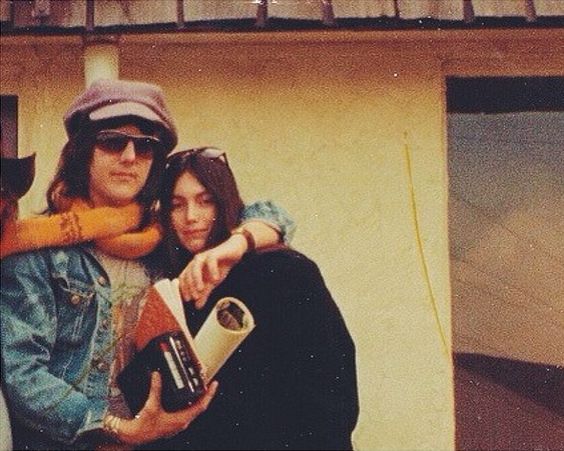
What a beautiful song. Country or whatever you want to call it…it’s a great one. Gram Parsons and poet Tom Brown wrote this song. This song was on his last solo album Grievous Angel. Gram was not a country wanna-be…he was country. Keith Richards has said that Gram taught him everything he knows about country music. After hearing Gram Parsons…Merle Haggard wanted to produce him.
After leaving the Byrds, Parsons made a series of albums… Grievous Angel completes the cycle. Beginning with the Flying Burrito Brothers’ The Gilded Palace of Sin, the work progressed through Burrito Deluxe and Parsons’ earlier solo effort, GP.
I have not mentioned his singing partner yet. The wonderful and beautiful Emmylou Harris. Emmylou Harris was an unknown singer in her early twenties when Gram Parsons saw her perform at a folk club in Washington, D.C. in 1971. He recruited her the following year to sing on 1973’s classic album GP and the subsequent tour. She ended up on the GP album and this one…Grievous Angel.
Grievous Angel peaked at #195 on the Billboard Album Charts. If Parsons had survived it’s no telling what he and Emmylou would have done together. His voice wasn’t strong like Johnny Cash or Merle Haggard but it was so emotional that you were in the story with him.
This song describes the vision of home and love that haunts a wanderer through his travels across America.
Emmylou Harris: “I would say until I had met Gram and started working with him I didn’t really understand or have a real love or feel for country music. Like most of my generation, you know, country music was politically incorrect for us at that point. It was associated with Republicans and Right Wing and that sort of thing. He taught me the beauty and the poetry, the simplicity, the honesty in the music. And the love of harmony came from really singing with him.”
Emmylou Harris: Well, we got fired after our first gig. We had two weeks of rehearsal. And I was just in the band. I never worked with a band. I didn’t know how you did things. So I just recorded things as we went down. But Gram didn’t focus on the material from the record; he just wanted to play songs. So we sat around and played all these songs, but we never worked up a beginning, middle, and end. It was such a train wreck that first night. But actually, before we got fired, the club got closed down because Weather Report had played there a few days earlier, and they were so loud that an injunction was put against the club. So, technically, we really didn’t get fired.
Emmylou Harris: “I discovered my own voice singing in harmony with Gram, there is something about the uniqueness of two voices creating a sound that does not come when they are singing solo, and I have always been fascinated by that. That song, and our harmony, is kind of a pinnacle of our duet-singing together.”
Return of the Grievous Angel
Won’t you scratch my itch, sweet Annie Rich
And welcome me back to town?
Come out on your porch or step into your parlor
And I’ll tell you how it all went down
Out with the truckers and the kickers and the cowboy angels
And a good saloon in every single town
Oh, and I remembered something you once told me
And I’ll be damned if it did not come true
Twenty thousand roads I went down, down, down
And they all lead me straight back home to you
‘Cause I headed west to grow up with the country
Across those prairies with the waves of grain
And I saw my devil
And I saw my deep blue sea
And I thought about a calico bonnet
From Cheyenne to Tennessee
We flew straight across that river bridge
Last night a half past two
The switchman waved his lantern goodbye and good day
As we went rolling through
Billboards and truckstops pass by the grievous angel
And now I know just what I have to do
Take it for me, James
And the man on the radio won’t leave me alone
He wants to take my money
For something that I’ve never been shown
And I saw my devil
And I saw my deep blue sea
And I thought about a calico bonnet
From Cheyenne to Tennessee
The news I could bring, I met up with the king
On his head an amphetamine crown
He talked about unbuckling that old bible belt
And lighted out for some desert town
Out with the truckers and the kickers and the cowboy angels
And a good saloon in every single town
Oh, but I remembered something you once told me
And I’ll be damned if it did not come true
Twenty thousand roads I went down, down, down
And they all lead me straight back home to you
Twenty thousand roads I went down, down, down
And they all lead me straight back home to you
Although I have heard this one a lot…I still listen when I hear it on radio. So many changes in this song that even after repeats…it’s interesting. Probably the number 1 known song by Jethro Tull. According to Songfacts Ian Anderson wrote the song and called it “a guilt-ridden song of confusion about how you deal with beggars, the homeless.”
Ian’s wife at the time, Jennie took photos of the homeless and showed them to Ian. Many of the lyrics describe actual homeless men. Jennie also wrote some lyrics from the photos, giving her songwriting credit and half the royalties from the song…they divorced in 1974.
Jethro Tull’s manager Burton Silverman commissioned an artist named Burton Silverman to do the watercolor cover of the album. He had seen Silverman’s work in Time Magazine earlier. Silverman took some pictures of Ian Anderson in his overcoat and ended up painting a very haggard-looking Anderson. Anderson was not happy with it at the time. Burton sued the band afterward because he didn’t think they had the right to use it for promotional items like T-Shirts.
An “Aqualung” is a portable breathing apparatus for divers. Anderson envisioned the homeless man getting that nickname because of breathing problems. Ian watched Sea Hunt and got ideas from that.
Aqualung the album peaked at #7 on the Billboard Album Charts, #5 in Canada, and #4 in the UK. Aqualung the song never charted but has constantly been played on Classic Rock radio without stopping.
Ian Anderson:“A guilt-ridden song of confusion about how you deal with beggars, the homeless… It’s about our reaction, of guilt, distaste, awkwardness, and confusion, all these things that we feel when we’re confronted with the reality of the homeless. You see someone who’s clearly in desperate need of some help, whether it’s a few coins or the contents of your wallet, and you blank them out. The more you live in that business-driven, commercially-driven lifestyle, you can just cease to see them.”
Ian Anderson on why it wasn’t a single: “Because it was too long, it was too episodic, it starts off with a loud guitar riff and then goes into rather more laid back acoustic stuff. Led Zeppelin at the time, you know, they didn’t release any singles. It was album tracks. And radio sharply divided between AM radio, which played the 3-minute pop hits, and FM radio where they played what they called deep cuts. You would go into a album and play the obscure, the longer, the more convoluted songs in that period of more developmental rock music. But that day is not really with us anymore, whether it be classic rock stations that do play some of that music, but they are thin on the ground, and they too know that they’ve got to keep it short and sharp and cheerful, and provide the blue blanket of familiar sounding music and get onto the next set of commercial breaks, because that’s what pays the radio station costs of being on the air. So pragmatic rules apply.”
Aqualung
Sitting on a park bench
Eying little girls with bad intent
Snots running down his nose
Greasy fingers smearing shabby clothes, hey, Aqualung
Drying in the cold sun
Watching as the frilly panties run, hey, Aqualung
Feeling like a dead duck
Spitting out pieces of his broken luck, oh, Aqualung
Sun streaking cold, an old man wandering lonely
Taking time, the only way he knows
Leg hurting bad as he bends to pick a dog end
He goes down to a bog and warms his feet
Feeling alone, the army’s up the road
Salvation a la mode and a cup of tea
Aqualung, my friend, don’t you start away uneasy
You poor old sod, you see it’s only me
Do you still remember
December’s foggy freeze
When the ice that clings on to your beard
It was screaming agony
Hey and you snatch your rattling last breaths
With deep-sea diver sounds
And the flowers bloom like
Madness in the spring
Sun streaking cold, an old man wandering lonely
Taking time, the only way he knows
Leg hurting bad as he bends to pick a dog end
He goes down to a bog and warms his feet
Feeling alone, the army’s up the road
Salvation a la mode and a cup of tea
Aqualung my friend don’t you start away uneasy
You poor old sod, you see it’s only me
Aqualung my friend don’t you start away uneasy
You poor old sod, you see it’s only me
Sitting on a park bench
Eying up little girls with bad intent
Snots running down his nose
Greasy fingers smearing shabby clothes, hey Aqualung
Drying in the cold sun
Watching as the frilly panties run, hey Aqualung
Feeling like a dead duck
Spitting out pieces of his broken luck, hey Aqualung
I’ve always liked Patsy Cline…her voice was so good. Fellow blogger Dana mentioned her name in the comments and I’m surprised I’ve never done a Cline post.
She was born Virginia Patterson Hensley. Known in her youth as “Ginny,” she began to sing with local country bands while a teenager, sometimes accompanying herself on guitar. By the time she had reached her early 20s, Cline was promoting herself as “Patsy” and was on her way toward country music stardom.
This song came out in 1957 but her voice sounds so fresh and vibrant. This was her first hit. It was a big crossover hit after she performed it on the variety show Arthur Godfrey’s Talent Scouts and won that night’s competition.
At only 15 years old, songwriter Alan Block wrote the original version of “Walkin’ After Midnight” in 1954. The song was based on a personal experience of Block’s, in which he found himself taking a solitary midnight stroll through the city streets. Block’s friend Donn Hecht later collaborated with him on the song, and the two fine-tuned its lyrics and melody. It was originally intended for Kay Starr, a pop and jazz singer but she turned it down.
Cline didn’t like the song when she heard it but compromised with the record company (Four Star Records) and she recorded it. It was first released by Lynn Howard and the Accents the year before but wasn’t a hit.
The song peaked at #12 on the Hot 100 and #2 on the Country Charts in 1957.
Walkin’ After Midnight
(Wa-wa-walking, wa-wa-walking)
I go out walkin’ after midnight
Out in the moonlight
Just like we used to do, I’m always walkin’
After midnight, searchin’ for you (wa-wa-walking, wa-wa-walking)
I walk for miles along the highway
Well, that’s just my way
Of sayin’ I love you, I’m always walkin’
After midnight, searchin’ for you (wa-wa-walking, wa-wa-walking)
I stop to see a weepin’ willow
Cryin’ on his pillow
Maybe he’s cryin’ for me
And as the skies turn gloomy
Night winds whisper to me
I’m lonesome as I can be
I go out walkin’ after midnight
Out in the moonlight
Just hopin’ you may be somewhere a-walkin’
After midnight, searchin’ for me (Wa-wa-walking, wa-wa-walking)
I stop to see a weepin’ willow
Cryin’ on his pillow
Maybe he’s cryin’ for me
And as the skies turn gloomy
Night winds whisper to me
I’m lonesome as I can be
I go out walkin’ after midnight
Out in the moonlight
Just hopin’ you may be somewhere a-walkin’
After midnight, searchin’ for me (wa-wa-walking, wa-ooh-ah)
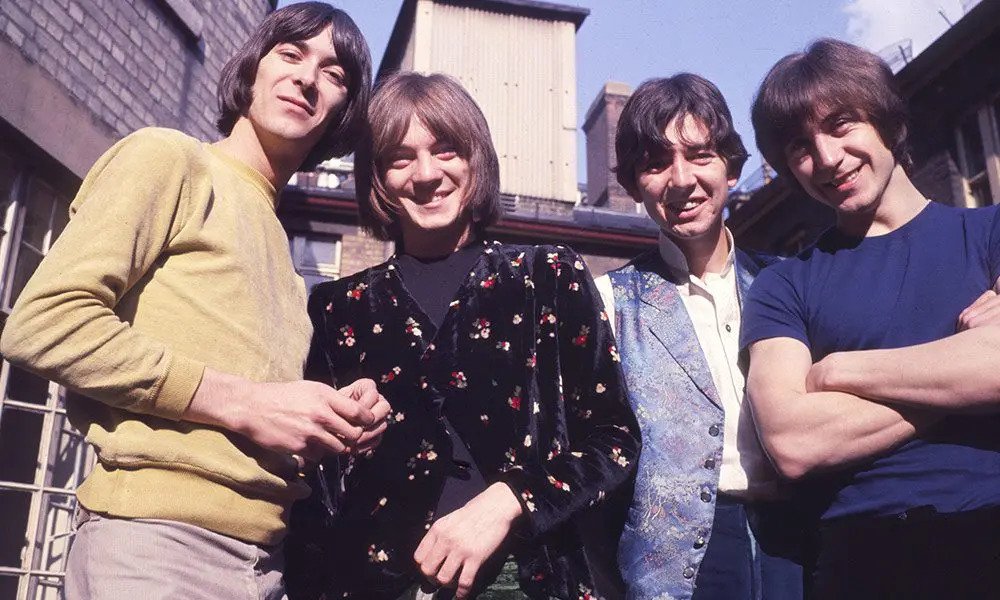
They have become one of my favorite 60s rock bands. The biggest reason is their lead singer + guitarist…Steve Marriott.
If the Small Faces would have had a good or even decent manager they might have had a longer career and be more remembered today. They had a couple of great songwriters, Steve Marriott and Ronnie Lane. A superb drummer with Kenney Jones and keyboard player Ian McLagan
In my opinion, they had the best singer of any band at that time with Marriott. Other singers like Paul Rodgers and Robert Plant have said they both owed a debt to Marriott. The pure energy he gave off live is incredible. If I could build a rock band from scratch with anyone I wanted…Steve Marriott would be my singer…plus he was a great guitarist. Keith Richards wanted him to replace Mick Taylor when he left the Stones.
I always thought America had a skewed view of Small Faces. The only two songs played in America were Lazy Sunday and Itchycoo Park. One of them sounds like a music hall song and the other psychedelic. I like them but they were a driving band with a harder edge than either of those songs. Rollin’ Over is not their best song but I always have liked it. It was the B-Side to Lazy Sunday.
This song was off their biggest album Ogdens’ Nut Gone Flake. It’s a rocking song that reminds me of what was to come in Marriott’s Humble Pie and the later Faces. It was written by Marriott and Lane as was most of their songs. Listen to this song and All or Nothing and see the difference between the two hits in America.
The album peaked at #1 in the UK and #159 on the Billboard 100. The reason they didn’t hit more in America? Their manager Don Arden would not pay for them to tour here per Kenney Jones. During their peak in the UK, Arden paid the band just £20 a week (around $50 at that time) plus a clothing allowance. Kenney Jones said they have just recently received some of the royalties that were stolen from them by Arden.
Rollin’ Over
Goodbye sunshine, I’m on my way I’ll be long time gone by the break of day Tell everyone that I’m gonna find it There ain’t nothin’ gonna stop me
Rollin’ over Rollin’ over (save all your lovin’ ’til I get home) Rollin’ over (ooh, the sweetest lovin’ sunshine that I’ve ever known) Tell everybody I’m gonna find it There ain’t nothin’ gonna stop me
You’re cool and cred like Fogerty I’m Elvis Presley in the seventies You’re Chateauneuf, I’m Yellow Label You’re the buffet I’m just the table
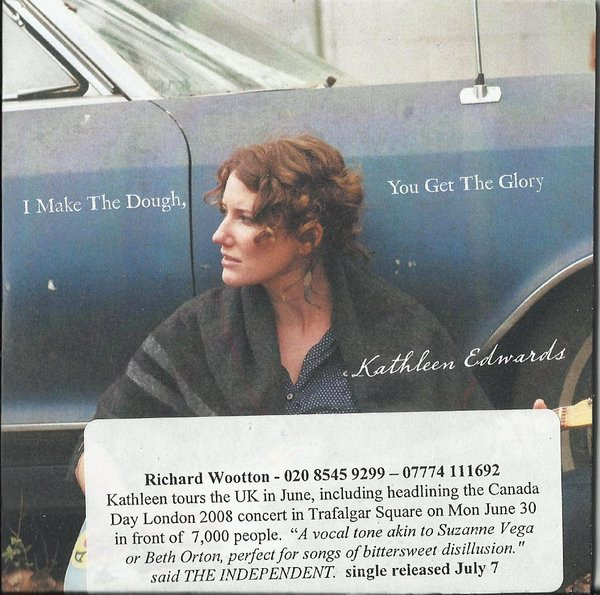
This was recommended by a former blogger who reached out to me and wanted me to hear this song. I knew I had seen or heard of her somewhere. I asked Randy and sure enough, he posted a song called Six O’Clock News with her last June. I like her voice and her overall sound. After I finished this post…I must have listened to this around 8-9 times. It will stay in my rotation.
The song and Edwards were very likable on the first listen and now I’m hooked on it. Fun video also. Kathleen Edwards is a Canadian musician who released her first album in 2003. She was influenced by Bob Dylan, Neil Young, and Tom Petty growing up.
She also worked with John Doe, of the punk rock band X, on his solo album A Year in the Wilderness. She sings on three tracks.
This song was written in honor of fellow Canadian musician Jim Bryson, who made contributions to Edwards’ first two albums and also toured with her. In this song, she is self-deprecatingly suggesting in the song that her own success was obscuring Bryson’s talents.
I like some of the lyrics in this one. You’re cool and cred like Fogerty, I’m Elvis Presley in the seventies…You’re Chateauneuf, I’m Yellow Label…You’re the buffet I’m just the table. And my favorite…a hockey reference You’re the Great One, I’m Marty McSorley. The Great One of course is Wayne Gretzky…Marty McSorley was a hockey player who was charged with assault and suspended by the NHL for the remainder of the 1999–2000 season and the playoffs, missing 23 games when he swung his stick and hit Donald Brashear in the head. After serving a full year he never would play in the NHL again. You can see him in the video…the big guy whom Edwards is hugging.
She has released 5 albums since 2003 and her last one was in 2020 called Total Freedom. Her 2012 album Voyageur hit the top 40 in America. In 2003 Rolling Stone declared her one of the year’s most promising new acts.
This song was on her 2008 album Asking For Flowers. The album peaked at #14 on the Canadian Album Charts, #102 on the Billboard Album Charts, and #1 on the Billboard Heatseekers Charts.
The video features Kathleen Edwards and her band playing against Blue Rodeo singer Jim Cuddy and former NHL-ers, Paul Coffey and Brad Dalgarno for a lopsided game of shinny. Marty McSorley joins Edwards team and the video also features sportscaster Dave Hodge.
It’s hard not to like her. One of her songs is called “One More Song The Radio Won’t Like.”
I Make The Dough, But You Get The Glory
Blazing a trail to the southern cities
From the streets of our hometown
Basement bars we played from the heart
In the company of our friends
If I write down these memories
That I have saved away
Photographs of the years that passed
Inside my little brain
You’re cool and cred like Fogerty
I’m Elvis Presley in the 70’s
You’re Chateauneuf, I’m Yellow Label
You’re the buffet I’m just the table
I’m a Ford Tempo you’re a Maserati
You’re the Great One, I’m Marty McSorley
You’re the Concorde, I’m economy
I make the dough but you get the glory
Big fish small pond and some cover songs
We sang along the way
We used to midnight run to the Vesta Lunch
Cheeseburgers and chocolate shakes
Once I got drunk with Jeff
I told him I was in love with you
But I love you like a brother
So at least half of it was true
You’re cool and cred like Fogerty
I’m Elvis Presley in the seventies
You’re Chateauneuf, I’m Yellow Label
You’re the buffet I’m just the table
I’m a Dodge Fargo, you’re a Lamborghini
You’re the Great One, I’m Marty Mcsorley
You’re the Concorde, I’m economy
I make the dough, but you get the glory
If I write down these memories
That I have saved away
Photographs of the years that passed
Inside my little brain
I’m sure it’s been said in the finer print
You make me look legitimate
Heavy rotation on the CBC
Whatever in hell that really means
You’re cool and cred like Fogerty
I’m Elvis Presley in the 70’s
You’re the Concorde I’m economy
I make the dough, but you get the glory
After the country post on Saturday…I looked through a lot of lists you all made. I listened…I want to thank Lisa for bringing this one up. It’s high time I did a post on Townes Van Zant. He was one of the best songwriters of the 20th Century.
What a songwriter Towns Van Zandt was…this song is probably best known for the Merle Haggard and Willie Nelson cover in 1983. The song peaked at #1 on the Country Billboard Charts and #1 on the Canadian Country Charts in 1983.
Willie Nelson has said that his and Merles duet album was almost complete but it lacked THAT song to put it over the top. Nelson said his daughter Lana suggested to him to listen to Pancho and Lefty by Townes Van Zandt. Willie then asked Townes what the song was about…and Townes said he didn’t know. Nelson then cut the track with his band. Willie and Merle had never heard that song before.
Nelson recorded it that night with his band and had to go and drag a sleepy Haggard (who was sleeping on his bus) to do the vocal part. The vocals were recorded in one take that night. They made a video of it and invited Townes to be in it. He was in the video as one of the Mexican Federales.
The royalties from this song helped Van Zandt through the years. He told a story of getting pulled over by a couple of policemen. His car sticker was out of date so he got into the police car and they asked him what he does for a living. He said he was a songwriter and the policemen shook their heads. He then told them that he wrote “Pancho and Lefty” and their eyes lit up and they started to grin. Pancho and Lefty were the policemen’s police radio code names. They let Townes go after that.
Van Zandt did not like fame or what came attached to it. It’s been reported that he turned down opportunities to write with Bob Dylan. He respected Dylan a great deal but it was the celebrity part he didn’t want. He never ended up on a major label through his career…by choice. Steve Earle counted Townes Van Zandt as his mentor, and the two formed a close bond in the years since their initial encounter in 1978.
Unfortunately, Earle also adopted Van Zandt’s drug and alcohol habits. So bad, in fact, that Van Zandt actually visited Earle during a rare moment in which Townes was sober. Earle told him “I must be in trouble if they’re sending you.” Earle eventually named his son after Townes… Justin Townes Earle.
The original song was on Van Zandt’s 1972 album The Late Great Townes Van Zandt.
For Willie’s Big 60 show, Bob Dylan and Willie Nelson sang Pancho and Lefty. Bob covered the song sporadically in concert during the 90’s. In 2004, Rolling Stone ranked “Pancho and Lefty” 41st on its list of the “100 Greatest Country Songs of All Time.
Townes Van Zandt on being invited to be in the video: “It was real nice they invited me,”they didn’t have to invite me and I made I think $100 dollars a day. I was the captain of the federales. And plus I got to ride a horse. I always like that. It took four and a half days and that video was four and a half minutes long…The money goes by a strange life, or elsewhere. I mean it doesn’t come to me. But money’s not the question. I would like if I could write a song that would somehow turn one five-year-old girl around to do right. Then I’ve done good. That’s what I care about.”
Townes Van Zandt: “I realize that I wrote it, but it’s hard to take credit for the writing, because it came from out of the blue. It came through me and it’s a real nice song, and I think, I’ve finally found out what it’s about. I’ve always wondered what it’s about. I kinda always knew it wasn’t about Pancho Villa, and then somebody told me that Pancho Villa had a buddy whose name in Spanish meant ‘Lefty.’ But in the song, my song, Pancho gets hung. ‘They only let him hang around out of kindness I suppose’ and the real Pancho Villa was assassinated.”
Pancho and Lefty
Living on the road my friend,
Is gonna keep you free and clean
Now you wear your skin like iron,
Your breath as hard as kerosene.
You weren’t your mama’s only boy,
But her favorite one it seems
She began to cry when you said goodbye,
And sank into your dreams.
Pancho was a bandit boy,
His horse was fast as polished steel
He wore his gun outside his pants
For all the honest world to feel.
Pancho met his match you know
On the deserts down in Mexico
Nobody heard his dying words,
Ah but that’s the way it goes.
All the Federales say
They could have had him any day
They only let him slip away
Out of kindness, I suppose.
Lefty, he can’t sing the blues
All night long like he used to.
The dust that Pancho bit down south
Ended up in Lefty’s mouth
The day they laid poor Pancho low,
Lefty split for Ohio
Where he got the bread to go,
There ain’t nobody knows
The poets tell how Pancho fell,
And Lefty’s living in cheap hotels
The desert’s quiet, Cleveland’s cold,
And so the story ends we’re told
Pancho needs your prayers it’s true,
But save a few for Lefty too
He only did what he had to do,
And now he’s growing old
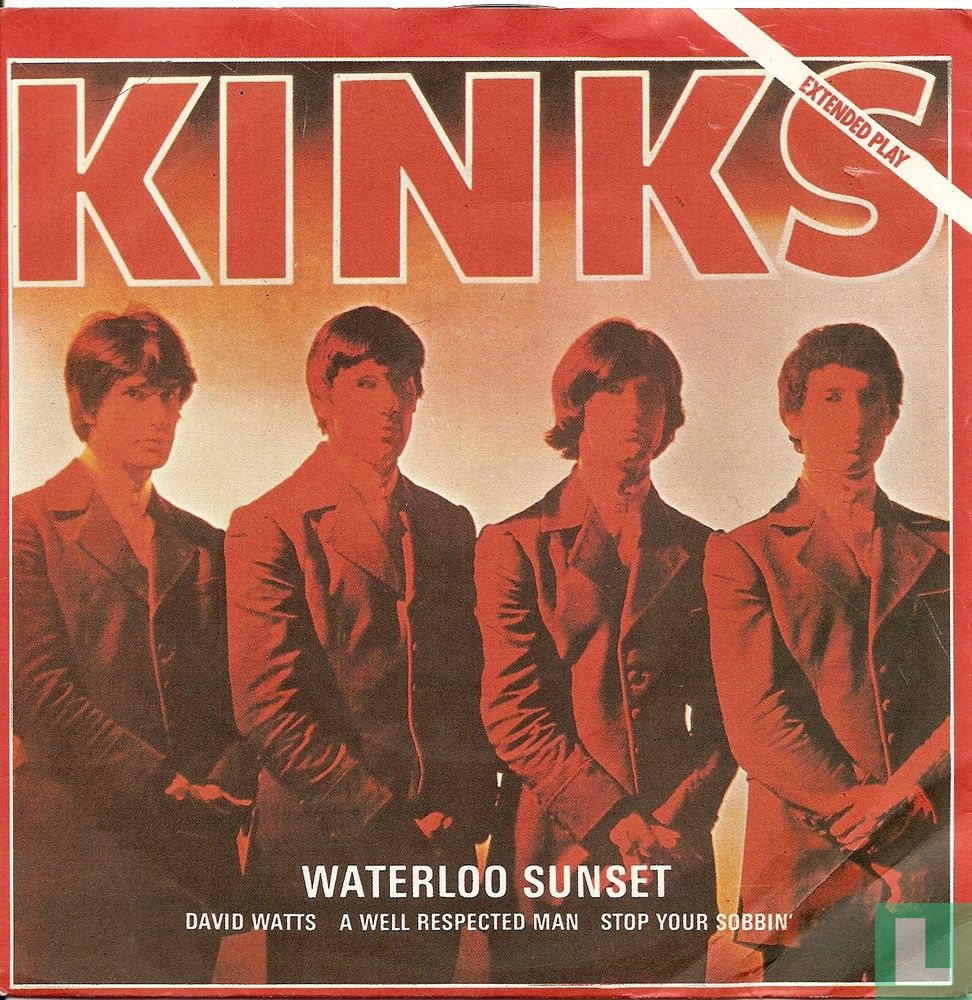
This year contained the Summer of Love and psychedelia was everywhere. This year alone had many of my favorite songs I still listen to. I want to start with a song that I think is one of the best of the sixties. The Kinks Waterloo Sunset.
People ask me my favorite Beatles song all of the time. Usually, I say A Day In The Life but this one comes really close. The Beatles released Sgt Peppers this year but also released one of…if not the best single ever with Strawberry Fields/Penny Lane. Strawberry Fields was credited to Lennon/McCartney but Lennon is said to have written most of it.
Speaking of favorites…this is one of my top songs from the 60s and ever. Procol Harum with a Whiter Shade Of Pale. Gary Brooker and Keith Reid were credited with writing the song but Matthew Fisher the former keyboard player in the band sued for partial writing credit and won on July 24, 2008. Now the song’s writing credit is Reid-Brooker-Fisher. Gary Brooker and Fisher wrote the music and Reid wrote the lyrics. This was the first song Procol Harum recorded.
Another landmark song…The Doors in Light My Fire. The organ intro to this song by Ray Manzarek is one of the most iconic intros in rock. I first heard this song as a kid and automatically loved it. It is the song that the Doors are most known for. I like the album version that is longer and has more of a solo.
The four band members were credited for writing this song Jim Morrison, Robby Krieger, John Densmore, and Ray Manzarek.
This one is a no-brainer…the one and only Aretha Franklin with Respect…and I have plenty of it for her. It was written by the great Otis Redding.
This is a fun song. Now its popularity has risen to an all-time high with the 2008 Marvel movie Ironman. I know most serious movie fans are not big fans of the Marvel movies. I fit in there also because I don’t like watching a lot of CGI. As a music fan though, I’m glad they are sharing 60s and 70s music to a new generation.
Another song that the riff is easy for beginning guitar players to learn how to play. It was one of the first ones I learned. This was the biggest US hit for Black Sabbath. It got very little radio play but developed a cult following, which led to enough sales to give it a chart position.
Iron Man peaked at #52 in 1971 on the Billboard 100 and #68 in Canada. The song was written by all of the members of the band. It was on the album Paranoid released in 1970. The album peaked at #12 on the Billboard Album Charts, #20 in Canada, and #1 in the UK Album Charts.
They did something smart as far as singles. They followed the Led Zeppelin way of doing it. In the UK they didn’t release this as a single because they had released Paranoid the year before. People would show up in the UK wanting to hear one song…Paranoid… so they limited their single releases there.
Black Sabbath Bass guitar player Geezer Butler: “I was walking down the street one day and thought… ‘what if there were a bloody great bloke made out of metal walking about?”‘
There is debate on how Ozzy got his voice distorted in the intro. Some say he got that by singing from behind a metal fan. Others say it was him singing through a VCS-3 Synthesizer…they came out in 1969. Another rumor was a processor called a ring modulator (effects box) ran through a tremolo. Why don’t they just ask Ozzy? Uh…ok never mind! just kidding.
This is the only Black Sabbath album that I owned. I always liked it… Paranoid, War Pigs, Iron Man, and Hand of Doom I liked. One cool fact I read is Frank Zappa surprised Black Sabbath by covering this song because he knew they were in the audience.
Here is a partial list of artists who have covered this song from Songfacts: Marilyn Manson, Alice in Chains, Butthole Surfers, Add N To (X), Busta Rhymes, Therapy, NOFX, Auburn U. Band, Sir Mix-A-Lot, Tim McCarthy, Heavy Voltage, DYS, Tanzwut, EMO, Amoco Renegades, Dead Alewives, Replacements, The Cardigans, The Mats, and Offspring.
Tony Iommi: “A lot of the words in the songs – a lot of the moods of the songs – are aggressive, especially in the early days – Satanic, if you like… That was the way it felt, so that was the way we played. But it got out of hand. With Paranoid in England, for instance. There was a girl (Hillary Pollard) found dead – a nurse she was: dead in her room with our album on the turntable going round. And it was taken to court saying that it was because of the album that she was depressed and killed herself, which was totally ridiculous, I think.”
Geezer Butler: “If the moral majority don’t understand it they’ll try to put it down, or get other people to read all sorts of things into it… The moral majority sort of people picked up on the Satanic part of it. I mean, most of it was about stopping wars and that side of it, and some science fiction stuff. There wasn’t that much Satanic stuff, and what there was it wasn’t exactly for the devil or anything like that; it was just around at the time and we just brought it to people’s attention.”
Iron Man
I am iron man
Has he lost his mind? Can he see or is he blind? Can he walk at all Or if he moves will he fall?
Is he alive or dead? Has he thoughts within his head? We’ll just pass him there Why should we even care?
He was turned to steel In the great magnetic field Where he traveled time For the future of mankind
Nobody wants him He just stares at the world Planning his vengeance That he will soon unfold
Now the time is here For iron man to spread fear Vengeance from the grave Kills the people he once saved
Nobody wants him They just turn their heads Nobody helps him Now he has his revenge
Heavy boots of lead Fills his victims full of dread Running as fast as they can Iron man lives again
I wrote this for Dave’s site when he asked a group of bloggers to pick a song that signifies “summer” to you. Now summer is starting to wind down…I thought I would post this one.
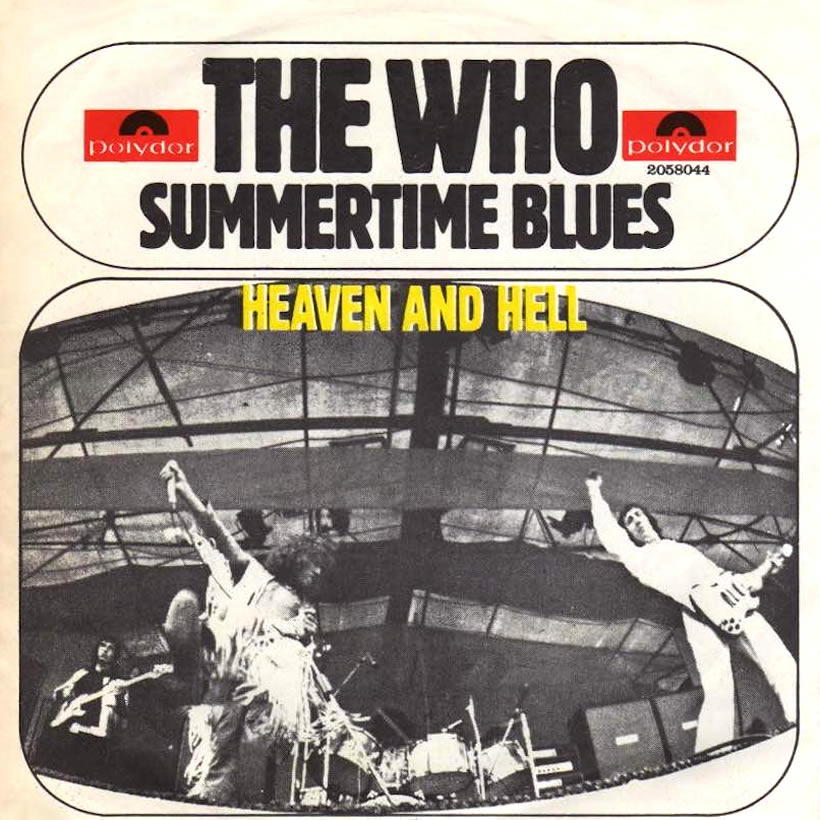
I first heard this song by The Who. The Who’s version is a good one for bar bands to play but it’s hard to keep it under control in a bar setting. It must be loud before it works…although it’s fun to see some patrons with their hands over their ears…it’s best to limit that.
Eddie Cochran wrote Summertime Blues with his friend Jerry Capehart and released it in 1958. Capehart helped Cochran get a record deal. Capehart said: “There had been a lot of songs about summer, but none about the hardships of summer.” With that idea and a guitar lick from Cochran, they wrote the song in 45 minutes.”
The song was going to be a B side of the Cochran single “Love Again” written by Sharon Sheeley. The record company wisely made the decision to make Summertime Blues the A side. In 1960 Sheeley was his girlfriend and was in the car that crashed killing Cochran. She died in 2002 five days after having a cerebral hemorrhage.
I like the Cochran version…and the Who version…and they are completely different. I’ve always loved the way The Who covered Summertime Blues. If I had a time machine… The Who would be a stop to see them live at this time. The version they released in 1970 was on their album Live At Leeds…a great rock live album. The song peaked at #27 on the Billboard 100, #8 in Canada, and #38 in the UK in 1970.
Live at Leeds would be my pick for the best rock live album ever. The album peaked at #4 on the Billboard 100, #2 in Canada, and #3 in the UK. It’s raw, raucous, and in your face…in other words, a great rock song!
Summertime Blues
Well, I’m a gonna raise a fuss, I’m a gonna raise a holler
I’ve been working all summer just to try and earn a dollar
Well, I went to the boss, said I got a date
The boss said “No Dice, son, you gotta work late”
Sometimes I wonder, what am I gonna do
There ain’t no cure for the summertime blues
Well, my mom and poppa told me, “Son you gotta earn some money
If you want to use the car to go out next Sunday”
Well, I didn’t go to work, I told the boss I was sick
He said “You can’t use the car cause you didn’t work a lick”
Sometimes I wonder, what am I gonna do
There ain’t no cure for the summertime blues
Gonna take two weeks, gonna have a fine vacation
Gonna take my problems to the United Nations
Well, I went to my congressman, he said, quote
“I’d like to help you son but you’re too young to vote”
Sometimes I wonder, what am I gonna do
There ain’t no cure for the summertime blues
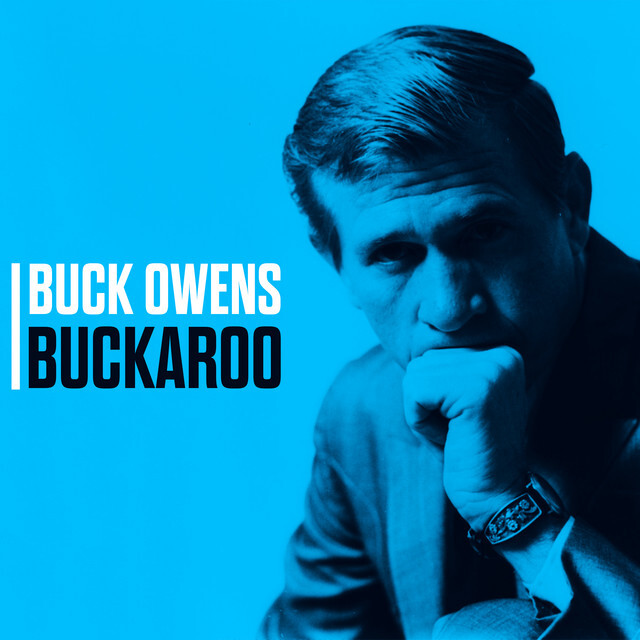
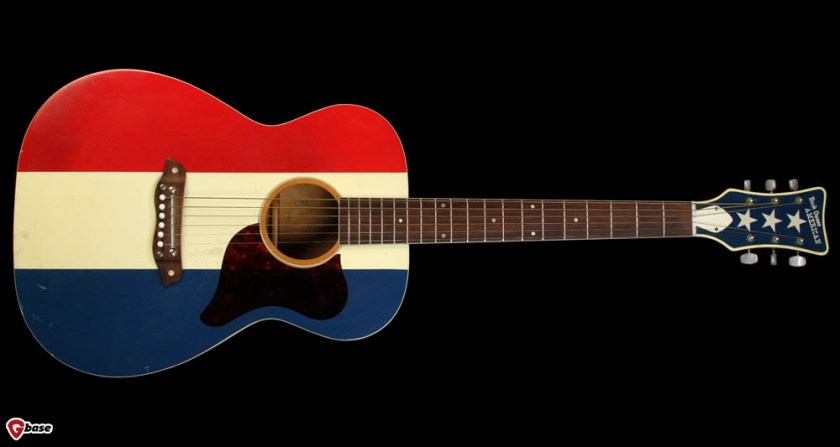
I remember watching Buck Owens and his red, white, and blue guitar on Hee Haw on Saturday nights. He wasn’t the musician that Roy Clark was…but who is? Owens had a great band and he was a really good musician to boot. This song is a cool instrumental. I want to thank Run-Sew-Read for suggesting this one. It’s probably my favorite song by Owens.
And for those to whom this applies… Happy Labor Day!
In the 1950’s and 60’s Bakersfield California became an unlikely birthplace for a new sound…The Bakersfield Sound. Universally recognized as ‘The Country Music Capital of the West Coast’ and “Nashville West”, Bakersfield is the birthplace of what would become known worldwide as the Bakersfield Sound.
Who are some of the examples of this sound? Buck Owens and Merle Haggard. Both artists cut their teeth at the bars and honkytonks around Bakersfield before gaining international success. Later on, Dwight Yoakam carried on this sound with outstanding results.
Buck’s genre of country music was different. It was the Bakersville style of country. He didn’t have that exaggerated Southern voice with tractor lyrics. Well in this song…he didn’t have a voice at all! It’s an instrumental from 1965 and you can hear the British invasion seeping in Buck’s country song.
Buck Owen’s guitar player was a man named Don Rich. He was an excellent guitar player and helped Buck become successful. Not only was he a great guitarist but he was Buck’s best friend also. He died tragically in a 1974 motorcycle accident after leaving the studio. Owens pleaded with Rich to stop riding it but Rich kept on. Buck Owens refused to talk about it until the late nineties. He said: “He was like a brother, a son, and a best friend. Something I never said before, maybe I couldn’t, but I think my music life ended when he died. Oh yeah, I carried on and I existed, but the real joy and love, the real lightning and thunder is gone forever.”
This song peaked at #1 on the Billboard Country Charts and #60 on the Billboard 100 in 1965. In the video below…Don Rich is on the left.
I’ve really been into New York music recently. I’ve been listening to Garland Jeffries, Mink DeVille, Willy DeVille, and now Willie Nile. He is an incredible songwriter. He has been compared to Dylan and Springsteen as you will see below. This guy is very accomplished for not being as well known as some.
By the late 1970s, Nile was part of the wave of young New York musicians who were breaking through. He was a regular performer at CBGB and the now-closed Kenny’s Castaways on Bleeker Street, a venue that gave performers like Patti Smith and the Smithereens a stage. In 1978, the New York Times wrote a rave review about Nile, comparing him with Buddy Holly, Bob Dylan, and Bruce Springsteen. That led to his first record contract with a major label.
Willie Nile: “So I made a record, I toured with a band across the United States for the first time. We finished the tour at The Roxy Theatre in Los Angeles. There was all kinds of talk about this new hot shot from New York City. Freddie Mercury came to the show. That’s when The Who’s manager offered me the tour. I went from playing 300 or 400-seat clubs to playing 25,000-seat arenas. It was amazing.”
Willie Nile made his self-titled debut album in 1980. He promptly got the “kiss of death” thrust upon him…”The New Bob Dylan” was hung on him. After releasing another album in 1981 he suddenly stopped. “I had two highly acclaimed records, but I was dissatisfied with problems from the business end, there were managers and lawyers. I thought, I didn’t get into this for hassles and I don’t want anyone to kill my buzz with music. So I just walked away.”
He didn’t release another until 1991 and that is what today’s song came off of. Roger McGuinn, Richard Thompson, and Louden Wainwright are on that album…including two musicians from Paul McCartney’s band. That’s a hell of a lineup and shows you how highly regarded Nile is.
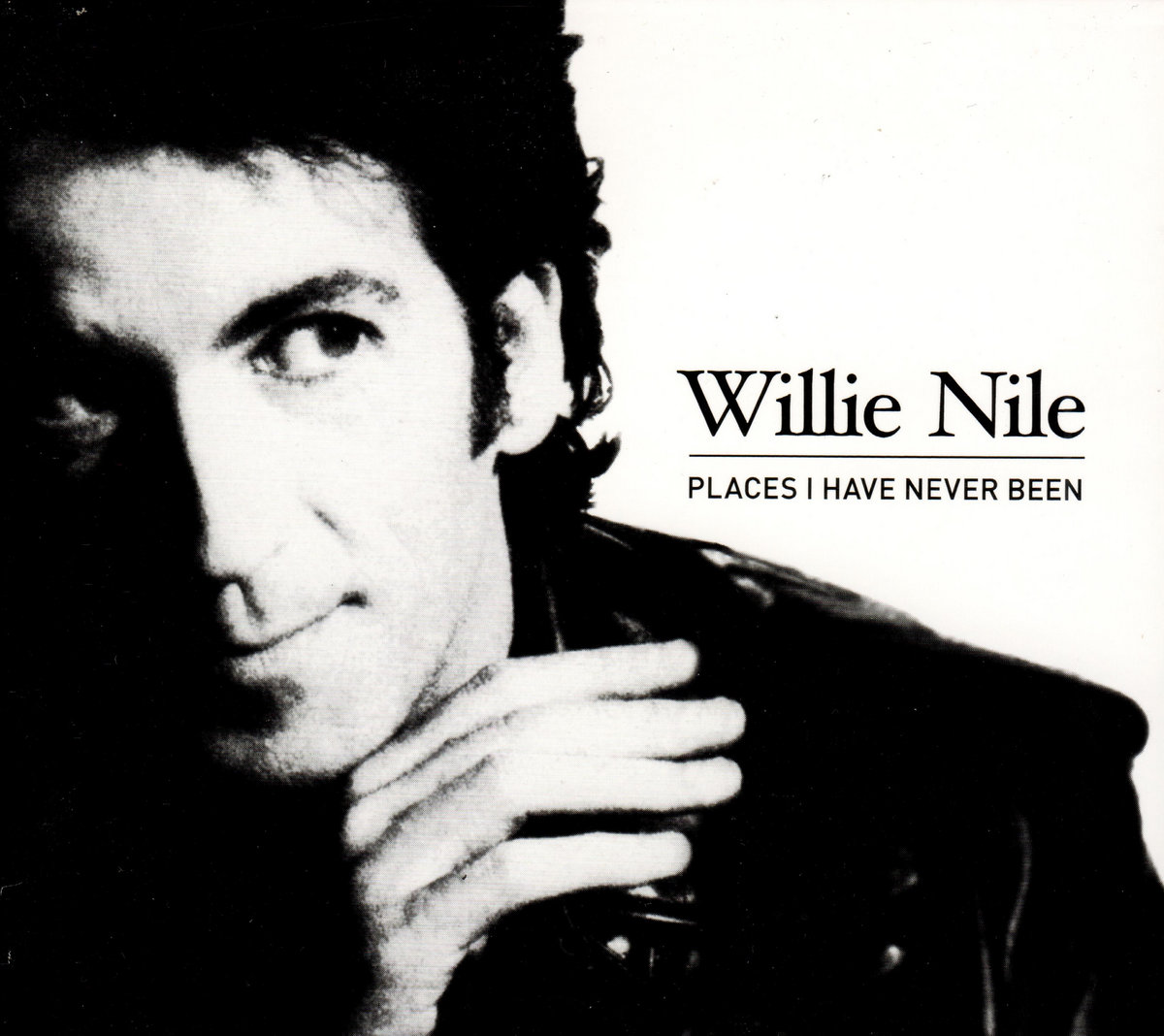
The song today was the title track to the album Places I Have Never Been. The guy has his admirers everywhere. He has garnered respect and admiration from the likes of Bruce Springsteen, The Who, Ringo Starr, and Lucinda Williams. His wide audience appreciates his songwriting and ability to bring rock and roll to life.
One thing I really admire about the guy is every article I read…it says what a humble and nice guy he is in real life. He is still out there making albums and touring.
Willie Nile: “The last show that (saxophonist) Clarence Clemons played was in Buffalo, although we didn’t know it at the time, I went with my daughters, and was given great seats by the side of the stage. Bruce was up there rocking, and wandered near us. I leaned over and said to my daughter, ‘I think he just saw me.’ Five minutes later, I get a text from an assistant saying ‘Bruce wants you up here. Come backstage now.’ Next thing you know, I’m sharing a microphone with Little Steven singing Jackie Wilson’s ‘Higher and Higher.’ It was an amazing performance by the band. I looked at my daughters and we were just laughing. You can’t make this stuff up.”
Willie Nile: “I don’t put out songs unless I think they can be special, I want my music to be meaningful to people who listen. I have no interest in being full of myself or being famous. Fame didn’t do a lot for Michael Jackson or Whitney Houston. For me, it’s all about the songs and the music: the recording and the shared experience of playing live. Life is hard for everybody. I’m able to go onstage for two hours, have a blast with my mates, and hopefully raise spirits.”
Places I Have Never Been
The streets of Rome are filled with wonder
The Chinese wall is lined with gold
I hear the lightning and the thunder
Of a thousand tales untold
All my doors are open
All my thoughts are free
There’s a great big world out there
For you and me
Come and take me on a trip so far away
Come and show me things that I have never seen
Come and walk me through your world – unpredictable
Come and take me places I have never been
You gave me food when I was hungry
You gave me drink when I was young
You took me in when I was lonely
You put your lips right on my tongue
Now my wars are over
All my battle past
All I want is for this moment here
To last and last
Come and take me on a trip so far away
Come and show me things that I have never seen
Come and walk me through your world – so wonderful
Come and take me places I have never been
All my doors are open (wide)
All my thoughts are free (hey)
Hey Babe, are those telepathic messages for me
Come and take me on a trip so far away
Come and show me things that I have never seen
Come and walk me through your world – so magical
Come and take me places I have never been
Come and take me on a trip so far away
Come and show me things that I have never seen
Come and walk me through your world – unpredic
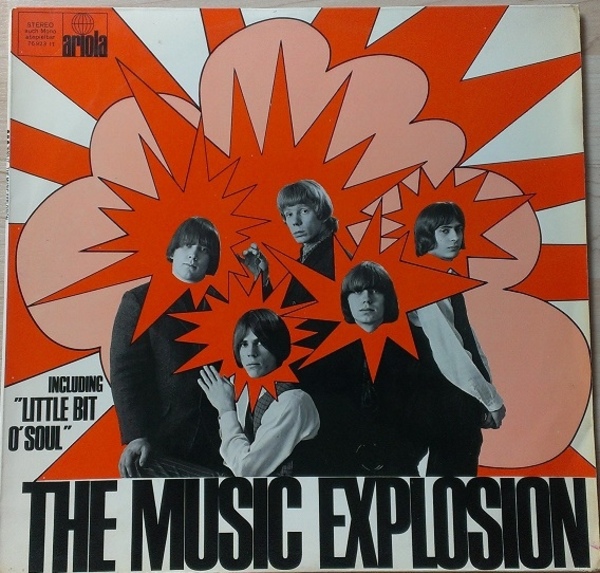
This is a good song for a beginner on guitar plus it’s a cool 60s pop/rock song. I bought the single when I was a kid after I heard it on AM radio. The Music Explosion was an American garage rock band from Mansfield, Ohio. It’s one of those songs that will stick in your head all day…in a good way.
Their record company Laurie didn’t like the song and was reluctant to release it. They finally did and it became a local hit in Ohio. After that, they got some promotion in California and the song took off.
Songs like this were important to rock music. One-hit wonders gave the stage to many garage bands not named Stones, Beatles, and Who. Many times they played simple melodies with a variation of Louie Louie chord pattern like this one. After they were released…many unknown artists like the future Allman Brothers, Tom Petty, and others were playing these songs in clubs, parties, and well…garages.
The Music Explosion disbanded in 1969. Their only other hit on the Hot 100 was 1967’s “Sunshine Games,” which peaked at #63 on the Billboard 100. It was written by John Carter and Ken Lewis.
The song peaked at #1 in Canada and #2 on the Billboard 100 in 1967. I sometimes hear this song in shows…it was featured in The Wire in the 2004 episode “Middle Ground.”
Their other hit…Sunshine Games
Little Bit Of Soul
Now when you’re feelin’ low and the fish won’t bite
You need a little bit o’ soul to put you right
You gotta make like you wanna kneel and pray
And then a little bit of soul will come your way
Now when your girl is gone and you’re broke in two
You need a little bit o’ soul to see you through
And when you raise the roof with your rock’n’roll
You’ll get a lot more kicks with a little bit o’ soul
And when your party falls ’cause ain’t nobody groovin’
A little bit o’ soul and it really starts movin’, yeah
And when you’re in a mess and you feel like cryin’
Just remember this little song of mine
And as you go through life tryin’ to reach your goal
Just remember what I said about a little bit o’soul