Supertramp – Give a Little Bit

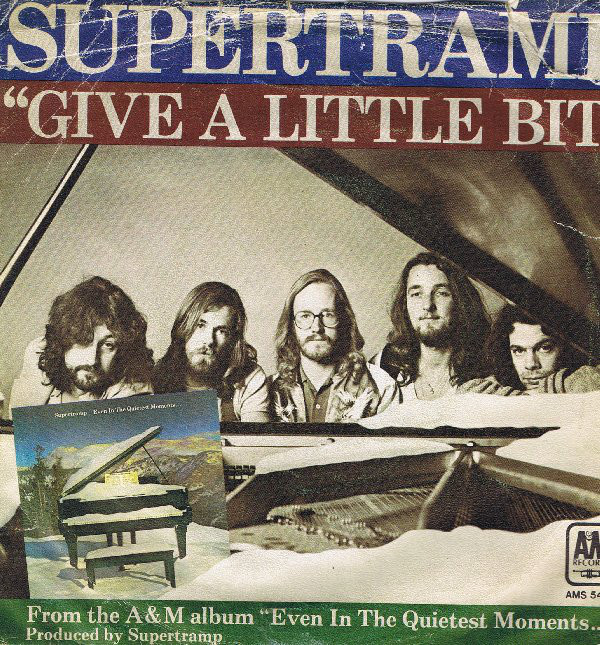
This is an extremely catchy song by Supertramp off of the album Even in the Quietest Moments… This was before their classic Breakfast In America. The song was inspired by “All You Need Is Love” by the Beatles.

The song peaked at #15 in the Billboard 100, #29 in the UK, and #8  in Canada in 1977.

The song was credited to Roger Hodgson and Rick Davies but Roger Hodgson wrote it. Roger Hodgson’s quote. “The song itself is such a pure, simple message that I think is really especially even more powerful today when the world has even more problems and it’s even more difficult sometimes to be compassionate and caring because we’ve got to put up all these barriers to survive; that it’s a song that really inspires people to give a little bit, not give a lot, just give a little bit and see how it feels and show that you care, and I know for me, every time I play it in concert, there’s something about that song.
I look out and people just start smiling straight away and sometimes they hug each other and they start singing with me. It’s a very unifying song with a beautiful, simple message that I’m very proud of and really enjoy playing today.”

From Songfacts.

Supertramp singer/guitarist Roger Hodgson wrote this song when he was a teenager, but didn’t record it until much later. It was about five years between when he wrote the song and when he brought it to the band. When we spoke with Hodgson in 2012, he explained: “I think it’s a great song. I didn’t realize it was when I first wrote it. It actually took me six years before I even brought it to the band. But I wrote it I think around 1970. That time, the late ’60s, early ’70s, was a very idealistic time, one of hope, a lot of peace and love and the dream of the ’60s was still very alive and maturing if you like. 

That song has really taken on a life of its own, and I think it’s even more relevant today than when I wrote it. Because we really are needing to value love in a much deeper way, and also we’re needing to care. The song is basically saying: just show you care. You know, reach out and show you care. So in concert, it’s the perfect show closer because what I try to do in my show over two hours is unify the audience and unify all of us. So that at the end, when everyone stands up for ‘Give A Little Bit,’ they’re open and ready to open their hearts and sing at the top of their lungs and go away with a smile on their face. And that song really does, it has a very pure energy. The moment I start, people just start smiling. It’s amazing.”

Give A Little Bit

Give a little bit
Give a little bit of your love to me
Give a little bit
I’ll give a little bit of my love to you
There’s so much that we need to share
Send a smile and show you care

I’ll give a little bit
I’ll give a little bit of my life for you
So give a little bit
Give a little bit of your time to me
See the man with the lonely eyes
Take his hand, you’ll be surprised

Give a little bit
Give a little bit of your love to me
I’ll give a little bit of my life for you
Now’s the time that we need to share
So find yourself, we’re on our way back home

Going home
Don’t you need to feel at home
Oh yeah, we gotta sing

Santana – I’m Winning

This is a well-crafted song written by Russ Ballard and performed by Santana. I’m Winning didn’t have a Latin style like many of his seventies songs…it was more pop/rock and very catchy. It peaked at #17 on the Billboard 100 in 1981. Scottish vocalist Alex Ligertwood sang this song after Greg Walker left the band a little earlier.

It was released on the Zebop! album, a fascinating transitional LP that pushed Santana into the ’80s without completely abandoning the old mojo, “Winning” is anchored by one of the best vocal performances in the band’s catalog. His voice just owns it. He’s not just singing about triumph; he sounds like a man who’s been through the wringer and is finally exhaling.

Musically, this is a curious beast. Carlos’s guitar tone cuts through like sunlight through smoke. He doesn’t showboat, doesn’t shred, he sings with his strings, giving the track an emotional lift that Ballard’s original lacked.

 Ligertwood also sang on the hit Hold On the next year.

I’m Winning

One day I was on the ground
When I needed a hand
Then it couldn’t be found
I was so far down that I couldn’t get up
You know and one day I was one of life’s losers
Even my friends were my accusers
In my head I lost before I begun
I had a dream but it turned to dust
And what I thought was love
That must have been lust
I was living in style
When the walls fell in
And when I played my hand
I looked like a joker
Turn around fate must have woke her
Cause lady luck she was waiting outside the door
I’m winning
I’m winning
I’m winning
I’m winning and I don’t intend on losing again
Too bad it belonged to me
It was the wrong time and not meant to be
It took a long time and I’m new born now
I can see the day that I bleed for
If it’s agreed that there’s a need
To play the game and to win again

Chicago – Saturday in the Park

I’ve always liked early Chicago when Terry Kath was part of the band. Love the intro to this song and it takes me back to when I first heard the song. Saturday in the Park peaked at #3 in the Billboard 100 and #2 in Canada. Robert Lamm who wrote the song openly admits he based the melody on The Beatles “You Won’t See Me.”

Robert Lamm on Saturday in the Park

“Saturday in the Park is a prime example of how I take from what I experience in the world. It was written as I was looking at footage from a film I shot in Central Park, over a couple of years, back in the early ‘70s. I shot this film and somewhere down the line I edited it into some kind of a narrative, and as I watched the film I jotted down some ideas based on what I was seeing and had experienced. And it was really kind of that peace and love thing that happened in Central Park and in many parks all over the world, perhaps on a Saturday, where people just relax and enjoy each other’s presence, and the activities we observe and the feelings we get from feeling a part of a day like that.”

From Songfacts.

Chicago’s main songwriter, Robert Lamm, wrote this after a particularly exhilarating 4th of July spent in New York’s Central Park, where there were steel drum players, singers, dancers and jugglers. Lamm and Peter Cetera sang lead on the track.

like most Chicago singles, this didn’t chart in the UK. In America, however, it was their biggest chart hit to that point and also their first gold single, which at the time meant selling more than a million copies (“25 Or 6 To 4” somehow was never certified gold).

This song contains some of the most famous nonsense singing in rock: after Robert Lamm sings the line, “Singing Italian songs,” he sings some made up words approximating the Italian language.


Saturday In the Park

Saturday in the park, 
I think it was the Fourth of July
Saturday in the park, 
I think it was the Fourth of July

People dancing, people laughing
A man selling ice cream
Singing Italian songs
Everybody is another
Can you dig it (yes, I can) 
And I’ve been waiting such a long time
For Saturday

Another day in the park
I think it was the Fourth of July
Another day in the park
I think it was the Fourth of July

People talking, really smiling
A man playing guitar
And singing for us all
Will you help him change the world
Can you dig it (yes, I can)
And I’ve been waiting such a long time
For today

Slow motion riders fly the colors of the day
A bronze man still can tell stories his own way
Listen children all is not lost, all is not lost, oh no, no

Funny days in the park
Every day’s the Fourth of July
Funny days in the park
Every day’s the Fourth of July

People reaching, people touching
A real celebration
Waiting for us all
If we want it, really want it
Can you dig it (yes, I can)
And I’ve been waiting such a long time
For the day, yeah yeah

Hoo hoo oh
Hmm hmmm
Hmm hmmm

David and David – Welcome to the Boomtown

I’ve always liked the lyrics to this song and the overall sound of it. I liked all of the singles released off of their one and only album Boomtown. Welcome to the Boomtown, It Aint So Easy, and Swallowed by the Cracks. I was really looking forward to the follow-up album which never came.

Welcome to the Boomtown peaked at #37 in the Billboard 100 in 1986. Per Wikipedia, the two are planning to make a follow-up album. Over 30 years later…but better late than never.

Welcome to The Boomtown

Miss Christina drives a .944
satisfaction oozes from her pores
she keeps rings on her fingers
marble on the floor
cocaine in her dresser
bars on her doors
she keeps her back against the wall
so I say
I say welcome
welcome to the boomtown
pick a habit
we got plenty to go around
welcome to the boomtown
and all that money makes such a succulent sound
welcome to the boomtown

Handsome Kevin got a little off track
took a year off of college
and he never went back
now he smokes much too much
he’s got a permanent hack
deals dope out of Denny’s
keeps a table in the back
he always listens to the ground
always listens to the ground
so I say
I say welcome to the boomtown
pick a habit we got plenty to go around
welcome to the boomtown
and all that money makes such a succulent sound
welcome to the boomtown

Well the ambulance arrived too late
I guess she didn’t want to wait….

Welcome to the boomtown

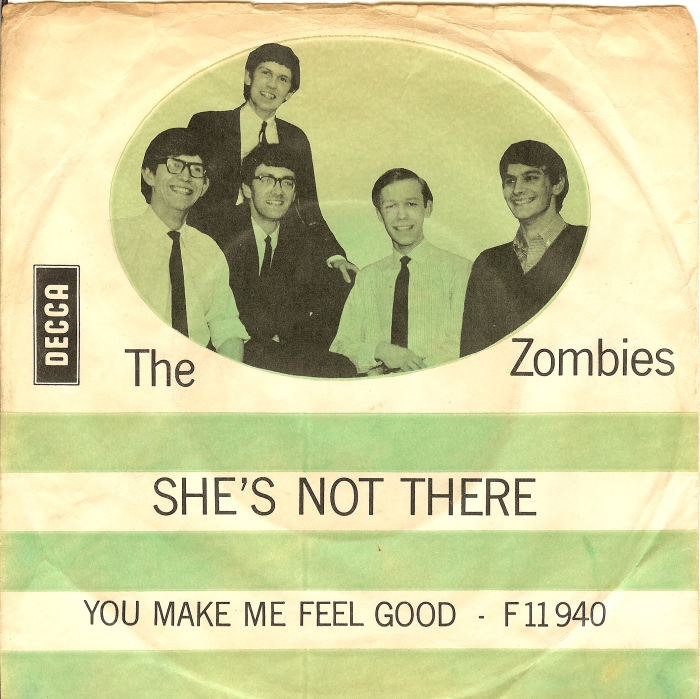
Zombies – She’s Not There

The Zombies were a bands band. They were very talented musicians who had the respect of other bands. The song peaked at #1 in the Billboard 100, #2 in Canada, and #12 in the Uk in 1964. They sounded like no other band at the time with a jazz/pop feel.

From Songfacts.

The group signed to Decca Records, and their keyboard player Rod Argent came up with this song for the session. It tells the story of an alluring woman who won’t be tied down to one man – the singer wants to tell us all about her, but he can only use words since she’s not there.

This was The Zombies first single. The band also recorded a cover of Gershwin’s “Summertime” for their first album, which was considered for the band’s first single, but “She’s Not There” got the nod. Boosted by radio play on New York powerhouse WINS, the song became a hit in the US.


She’s Not There
Well, no one told me about her
The way she lied
Well, no one told me about her
How many people cried

But it’s too late to say you’re sorry
How would I know? Why should I care?
Please don’t bother trying to find her
She’s not there

Well, let me tell you ’bout the way she looked
The way she acts and the color of her hair
Her voice was soft and cool
Her eyes were clear and bright
But she’s not there

Well, no one told me about her
What could I do?
Well, no one told me about her
Though they all knew

But it’s too late to say you’re sorry
How would I know? Why should I care?
Please don’t bother trying to find her
She’s not there

Well, let me tell you ’bout the way she looked
The way she acts and the color of her hair
Her voice was soft and cool
Her eyes were clear and bright
But she’s not there

But it’s too late to say you’re sorry
How would I know? Why should I care?
Please don’t bother trying to find her
She’s not there

Well, let me tell you about the way she looked
The way she acts and the color of her hair
Her voice was soft and cool
Her eyes were clear and bright
But she’s not there

ELO – Telephone Line

I could pick about any ELO song and do fine. Jeff Lynne is one of the best pop/rock songwriters. In my opinion, he can write super catchy songs without being sugary. Telephone Line peaked at #8 in the Billboard 100, #7 in the UK and #1 in Canada in 1977.

Lynne once said that ELO will “Pick up where ‘I Am the Walrus’ left off.”

http://www.jefflynnesongs.com/telephoneline/

Telephone Line was originally recorded at Musicland Studios in Munich, Germany during July of 1976. This recording was for the backing track only. The orchestra was recorded later at De Lane Lea Studios, Wembley, England. Just before release, other minor edits (including the muted telephone intro) were done at Cherokee Studios in Los Angeles, California, USA. The early working title was Bad Salad Telephone (a play on the term “sad ballad”), so it appears that the telephone theme was an early concept for the song.

Telephone Effects: The telephone intro for the song has drawn a lot of attention over the years. There are two notable things about it. First, the ringback tone heard (as one would hear when waiting for the line to pick up) is a North American ringback tone which is quite distinctive from that heard in the U.K. at the time. The band was having much greater success in America at the time and this inspired them to use the North American sound rather than the British sound. To get the sound just right, the band called to an office in America in when they knew no one would answer. It was likely to have been the Jet Records office in California because the time zones from England or Germany to America would have likely meant the offices were closed when the call was made. The band did not simply record the tone and insert that into the record as has been stated in some interviews, but rather they studied the sounds and then recreated them on synthesizer. If one listens closely, they are clearly not a match.

The other interesting bit about the intro is the muted, mono telephone sound, as if the listener is listening through the telephone to the song’s intro. This was a very late addition to the song. The recording was completed and Jeff was bringing the tapes from England to California when he got the idea to add the effect to the song. So it was in Cherokee Studios in Los Angeles that engineers Duane Scott and Kevin Gray were instructed to manually add the effect to the completed stereo master. The song plays normally until the very first vocal line of the first verse when the mono, listening-on-the-telephone effect cuts in. This continues, along with the ringback tone, until the “lonely, lonely, lonely, lonely, lonely nights” line when the full stereo version of the song is slowly phased in and the ringback stops. In addition, the ringback tone is again heard mid-song, in the short bridge following the first chorus and before the third verse. In the alternate vocal version heard on the 2007 A New World Record remaster, which has a non-fading end, the ringback tone is heard yet again as the last notes of the song are waning.

Telephone Line

Hello. How are you?
Have you been alright through all those lonely lonely lonely lonely lonely nights?
That’s what I’d say.
I’d tell you everything, if you’d pick up that telephone.

Hey. How you feeling?
Are you still the same?
Don’t you realize the things we did we did were all for real? Not a dream.
I just can’t believe they’ve all faded out of view.

Blue days, black nights

I look into the sky
The love you need ain’t gonna see you through.
And I wonder why
The little things you planned ain’t coming true.

Telephone line, give me some time, I’m living in twilight

O.K. So, no one’s answering,
Well can’t you just let it ring a little longer longer longer
I’ll just sit tight, through the shadows of the night
Let it ring for evermore.

Blue days, black nights

I look into the sky
The love you need ain’t gonna see you through.
And I wonder why
The little things you planned ain’t coming true.

Telephone line, give me some time, I’m living in twilight

Telephone line, give me some time, I’m living in twilight


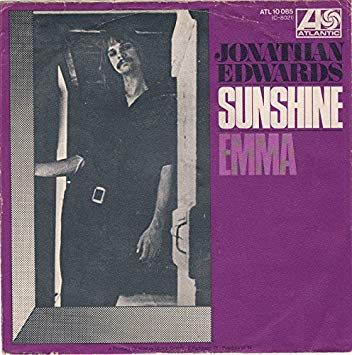
Jonathan Edwards – Sunshine

Always loved this song. Edwards sings this song like he means every syllable. This song was written by Edwards and peaked at #4 in the Billboard 100. Sunshine was off of Jonathan’s self-titled debut album in 1971. This would be Edwards only top forty hit.

A song that fit the times and the counterculture perfectly with a Us vs Them mentality.

From Songfacts.

Jonathan explained

“I just went, ‘How much does it cost? I’ll buy it.’ I was talking about freedom and talking about authority, my constant questioning of authority. ‘How much does it cost? I’ll buy it? Time is all we’ve lost. I’ll try it. He can’t even run his own life, I’ll be damned if he’ll run mine.’ That just came out as I was playing the song for these people.”

When he performs live, Edwards usually ends the first of his two sets with this song. “I often say, and it’s true, that if I had never done another song in my life, I’ll be happy to have come and gone with that,” he told us. “It was an anthem to many people and it helped a lot of people through Vietnam. It helped a lot of people through the drug culture of the last part of the ’60s and the early ’70s. It helped a lot of people cope with a lot of things that were going on during those tumultuous years. And I feel very proud to have done that and very happy with my contribution to our culture.”

Edwards performed this song at the Mayday protests on May 2, 1971. With the slogan, “If the government will not stop the war, we will stop the government,” the demonstration was organized by a group called the Mayday Tribe, with the goal of shutting down the government by blocking off key areas in Washington, DC. When the protests started on May 1, the government had thousands of troops ready and made mass arrests, which carried into the next day when Edwards played at the Washington Monument. “The sun was coming up and the National Guard was arresting people for protesting, for being on the grounds of the Washington Monument,” he recalled. “It was my turn to play and I just started playing that song. We got to the end and my bass player and I looked at each other and we went, ‘Let’s just start it over again.’ So we just kept playing that song. Because there’s no better song for the soundtrack of that movie. It had just come out. Some people had heard it, some hadn’t, but everyone heard it that morning, including the National Guard.”


Sunshine

Sunshine go away today, I don’t feel much like dancing
Some man’s come he’s trying to run my life, don’t know what he’s asking
When he tells me I better get in line, can’t hear what he’s saying
When I grow up, I’m gonna make him mine, these ain’t dues I been paying

How much does it cost? 
I’ll buy it! 
The time is all we’ve lost
I’ll try it!
He can’t even run his own life, 
I’ll be damned if he’ll run mine–sunshine

Sunshine, go away today, I don’t feel much like dancing
Some man’s come he’s trying to run my life, don’t know what he’s asking
Working starts to make me wonder where fruits of what I do are going
When he says in love and war all is fair, he’s got cards he ain’t showing

How much does it cost? 
I’ll buy it! 
The time is all we’ve lost–I’ll try it!
He can’t even run his own life, 
I’ll be damned if he’ll run mine–sunshine

Sunshine, come on back another day, 
I promise you I’ll be singing
This old world, she’s gonna turn around, 
brand new bells will be ringing

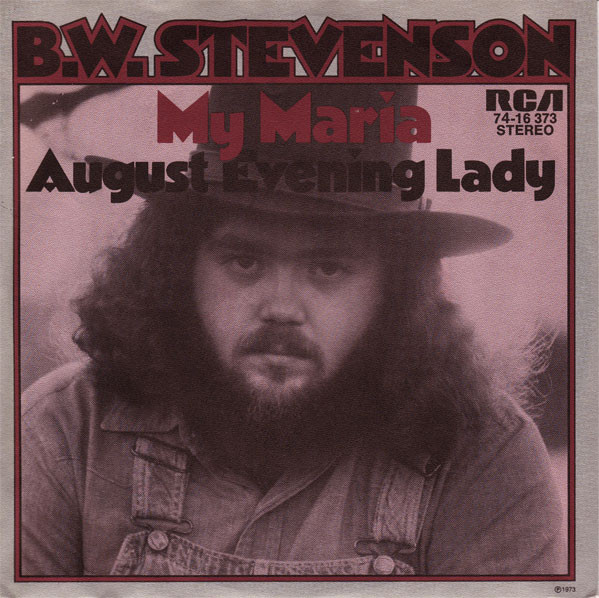
B.W. Stevenson – My Maria

It’s a catchy song with a country slant that was a big hit in 1973. The song was written by Stevenson and Daniel Moore. Daniel Moore wrote the song “Shambala” that Stevenson recorded but it wasn’t a hit until Three Dog Night covered it. This song peaked at #9 in the Billboard 100 and #7 in Canada.

The country duo Brooks and Dunn took the My Maria to #1 in the Country Charts in 1996.

From Songfacts.

In February 1973, Stevenson released the song “Shambala,” which was written by the composer Daniel Moore. Two weeks later, Three Dog Night released their version of the song, which became the much bigger hit, charting at US #3 while Stevenson’s version stalled at #66. Stevenson and Moore then got together and re-wrote “Shambala” as “My Maria,” changing the lyrics so the song became an ode to a beautiful woman. The ploy worked, and Stevenson had by far his biggest hit – his next closest chart entry was “The River Of Love” at #53, also written by Moore.

“Shambala” was often credited as being written by Stevenson. Moore told us: “My co-writer on ‘My Maria,’ B.W. Stevenson and I got together in 1987 and I busted him for taking credit for writing ‘Shambala.’ He had this big grin on his face and said, ‘I never said that I wrote it.’ Then his grin got bigger and he said, ‘But I also never said that I didn’t write it.’ Poor guy died the next year from a staph infection after a heart valve operation in Nashville. The operation went fine, but 3 days later he got the staph infection and it killed him. So much for the hospitals in Nashville.

I probably would never have finished ‘My Maria’ without B.W.’s assistance. I had been working on the song for two years at the point I showed it to him. Of course, he wrote the rest of the lyrics in about 15 minutes. Bless his heart.”

B.W. Stevenson (B.W. = “Buck Wheat”) was a singer/songwriter from Dallas, Texas who died in 1988 at age 38. “My Maria,” featuring Larry Carlton on guitar, was by far his best-known song. It was a #1 hit on the Adult Contemporary chart.

A 1996 cover version by Brooks & Dunn was a huge Country hit, going to #1 and being named by Billboard as the Country Song of the Year. Their version also made #79 on the Hot 100.

My Maria

My Maria don’t you know I’ve come a long, long way
I been longin’ to see her
When she’s around she takes my blues away
Sweet Maria the sunlight surely hurts my eyes
I’m a lonely dreamer on a highway in the skies

Maria, Maria I love you

My Maria there were some blue and sorrow times
Just my thoughts about you bring back my piece of mind
Gypsy lady you’re a miracle work for me
You set my soul free like a ship sailing on the sea
She is the sunlight when skies are grey
She treats me so right lady take me away

My Maria
Maria I love you
My Maria
Maria I love you

My Maria

Johnny Nash – I Can See Clearly Now

One of the best feel-good songs of all time. The reggae-influenced I Can See Clearly Now by Johnny Nash. The song peaked at #1 in the Billboard 100, #1 in Canada and #5 in the UK in 1972. The song was written by Johnny Nash and a hit again for Jimmy Cliff in 1993.

It’s one of the first songs I remember.

From Songfacts.

Johnny Nash is a Texas singer/songwriter who recorded reggae-influenced music. In 1967 he went to Jamaica and recorded his song “Hold Me Tight” and a cover of Sam Cooke’s “Cupid” with a local rhythm section. Both songs became hits in Jamaica, and over the next two years also charted in England and the United States. By 1972, “Cecilia” and “Mother And Child Reunion” found some success in the States incorporating reggae rhythms, and Nash followed that trend with “I Can See Clearly Now.”

Nash had legitimate reggae credentials: Bob Marley (before he became crazy famous) was an assistant producer and session player on the album, and also wrote three of the songs, including “Stir It Up,” which became Nash’s next – and final – hit.

A cover version by Jimmy Cliff (for a time, a bigger reggae star than Bob Marley) went to #18 in the US in 1994. His version was used in the John Candy movie Cool Runnings, about the Jamaican bobsled team.

I Can See Clearly Now

I can see clearly now, the rain is gone,
I can see all obstacles in my way
Gone are the dark clouds that had me blind
It’s gonna be a bright (bright), bright (bright)
Sun-Shiny day.

I think I can make it now, the pain is gone
All of the bad feelings have disappeared
Here is the rainbow I’ve been prayin’ for
It’s gonna be a bright (bright), bright (bright)
Sun-Shiny day.

Look all around, there’s nothin’ but blue skies
Look straight ahead, nothin’ but blue skies

I can see clearly now, the rain is gone,
I can see all obstacles in my way
Gone are the dark clouds that had me blind
It’s gonna be a bright (bright), bright (bright)
Sun-Shiny day.

Badfinger – Baby Blue

Baby Blue never gets old to me…it is the perfect powerpop song. It has the right combination of crunch and pop with an irresistible guitar riff. I love the way they used the song in Breaking Bad that fit the scene perfectly. The song peaked at #14 in the Billboard 100 in 1972. The “Dixie” in the song was Pete Ham’s ex-girlfriend, Dixie Armstrong.

peteham&babyblue

Dixie Armstrong and Pete Ham…I got this picture from http://soref.tv/the-true-story-behind-badfingers-baby-blue/

The song came off of the album “Straight Up” that also contained the hit “Day After Day” and it is considered by many their best album. I’m happy that Breaking Bad showcased this song so that another generation knows the song and hopefully that will lead more to learn about Badfinger.

Baby Blue

Guess I got what I deserved
Kept you waiting there too long, my love
All that time without a word
Didn’t know you’d think that I’d forget or I’d regret
The special love I had for you, my baby blue

All the days became so long
Did you really think, I’d do you wrong?
Dixie, when I let you go
Thought you’d realize that I would know
I would show the special love I have for you, my baby blue

What can I do, what can I say
Except I want you by my side
How can I show you, show me the way
Don’t you know the times I’ve tried?

guitar solo

Guess that’s all I have to say
Except the feeling just grows stronger every day
Just one thing before I go
Take good care, baby, let me know, let it grow
The special love you have for me, my Dixie, dear.

Stone Temple Pilots – Sour Girl

The song made it to #3 in the Billboard Modern Rock Tracks in 2000. I liked the song the first time I heard it. The video for the song features  Sarah Michelle Gellar who was a big fan of the band.

The song was written by Scott Weiland and Dean DeLeo. Weiland was a gifted lead singer who also sang for Velvet Revolver until 2008. He passed away in 2015 from substance abuse.

From Songfacts.

Scott Weiland wrote the lyric about his first wife, Janina Castaneda. They got married in 1994, just as Stone Temple Pilots were becoming one of the biggest bands in America. Weiland admitted that he put her through hell with his capricious behavior that stemmed from his addictions.

When he wrote the song, the couple in the midst of a divorce, which was finalized in 2000. In this song, Weiland sings about how she will soon be free of him, “a happy girl the day that she left me.” In his memoir, Weiland wrote, “She had finally rid her life of a man who had never been faithful.”

In the line, “I pay the ransom note to stop it from steaming,” the ransom note is Weiland’s divorce settlement, which he said “took forever and cost me a fortune.”


Sour Girl

She turned away, what was she looking at?
She was a sour girl the day that she met me
Hey, what are you looking at?
She was a happy girl the day that she left me

What would you do?
What would you do if I follow you?
What would you do? I follow

Don’t turn away, what are you looking at?
He was so happy on the day that he met her
Say, what are you looking at?
I was a superman, the looks are deceiving

The rollercoaster ride’s a lonely one
I pay the ransom note to stop it from steaming
Hey, what are you looking at?
She was a teenage girl when she met me

What would you do?
What would you do if I follow you?
What would you do? I follow

What would you do?….

The girl got reasons
They all got reasons

What would you do?….

Hey, what are you looking at?
She was a happy girl the day that she left me
The day that she left me The day that she left me
She was a happy girl the day that she left me
The day that she left me The day that she left me
She was a happy girl the day that she left me


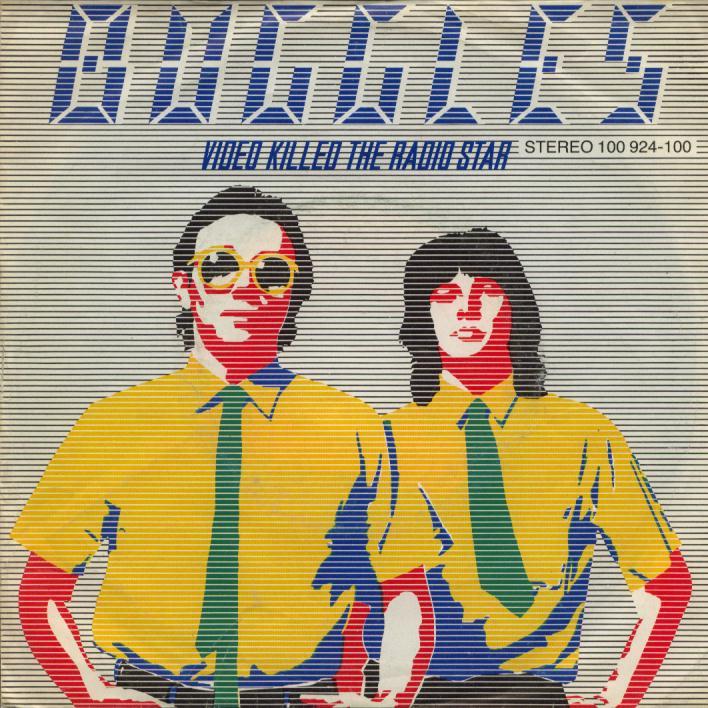
The Buggles – Video Killed the Radio Star

The first ever video played on MTV was appropriately Video Killed the Radio Star. The song peaked at #40 in the Billboard 100, #1 in the UK and #6 in Canada in 1979. I’ve always liked this song but it took a few listens. It was written by Trevor Horn, Geoff Downes, and Bruce Woolley.

The Presidents of the United States of America also did a version of this song in 1998 that I like.

Here is a quote from Trevor Horn…  “It came from this idea that technology was on the verge of changing everything. Video recorders had just come along, which changed people’s lives. We’d seem people starting to make videos as well, and we were excited by that. It felt like radio was the past and video was the future. The was a shift coming.”

From Songfacts.

Trevor Horn wrote this after reading a science fiction story about an opera singer in a world without sound (she was rendered obsolete). Said Horn: “Before I started Buggles I was a sort of loser record producer, I spent four years producing records for various people without ever making any money out of it or having any success at all. Mainly I just produced unsuccessful records because I couldn’t seem to lay my hands on a good song. Eventually, I got so fed up doing things that weren’t successful I decided that if I couldn’t find a good artist and a good song then I’d write it myself and become the artist, so I wrote this song called ‘Video Killed The Radio Star’ with Bruce Wooley. I know the name’s awful, but at the time it was the era of the great punk thing. I’d got fed up of producing people who were generally idiots but called themselves all sorts of clever names like The Unwanted, The Unwashed, The Unheard… when it came to choosing our name I thought I’d pick the most disgusting name possible. In retrospect, I have frequently regretted calling myself Buggles, but in those days I never really thought much about packaging or selling myself, all that really concerned me was the record.”

This was the first video to air on MTV. The network launched August 1, 1981, and this provided the first evidence that MTV was going to make it.

The song was a big hit in England in 1979, but pretty much unknown in America, where it peaked at #40 in December 1979. When MTV went on the air, it was on only a few cable systems, but record stores in those areas started selling lots of Buggles albums. Radio stations weren’t playing the song and almost no one in the US had heard of the Buggles, so it was clear that MTV was selling records – an early indication of the network’s influence.


Video Killed The Radio Star

I heard you on the wireless back in ’52
Lying awake intently tuning in on you
If I was young it didn’t stop you coming through
Oh-a-oh

They took the credit for your second symphony
Rewritten by machine on new technology
And now I understand the problems you can see

Oh-a-oh
I met your children
Oh-a-oh
What did you tell them?

Video killed the radio star
Pictures came and broke your heart
Oh-a-a-a oh

And now we meet in an abandoned studio
We hear the playback and it seems so long ago
And you remember the jingles used to go:

Oh-a-oh
You were the first one
Oh-a-oh
You were the last one

Video killed the radio star
In my mind and in my car
We can’t rewind, we’ve gone too far
Oh-a-a-a oh
Oh-a-a-a oh

Video killed the radio star
In my mind and in my car
We can’t rewind, we’ve gone too far
Pictures came and broke your heart
Put the blame on VTR…

You are the radio star
Video killed the radio star
You are the radio star
Video killed the radio star
You are the radio star
Video killed the radio star
You are the radio star
Video killed the radio star
You are the radio star

Oh-a-oh, oh-a-oh…

Robert Plant – Alison Krauss – Please Read the Letter

This song was originally off the Walking Into Clarksdale album by Robert Plant and Jimmy Page.

This version peaked at #20 in the U.S. Billboard Bubbling Under Hot 100 and #102 in the UK in 2009. I like the original version but Krauss’s harmony lifts this version up over that and turns into a great record. The arrangement to this version highlights the lyrics and enhances the song. It took a few listens but I was hooked after a while.

It won The Grammy Award for Record of the Year in 2009. The song was off of the Raising Sand album.

From Songfacts.

Both Krauss and Plant achieved their highest-ranking albums in the Billboard 200 chart under their own names with Raising Sand. It overtook Krauss’s placing for her earlier 2007 album A Hundred Miles or More: A Collection, which reached #10. Plant ‘s highest-ranking solo title had been the #4 peak of No Quarter in 1994. Ten years prior to that he’s also reached #4 with Volume One, a one-off side project by the Honeydrippers. Of course, Plant had been to the top of The Billboard 200 seven times as a member of Led Zeppelin.


This won for Record of the Year at the Grammy Awards in 2009. Accepting the award, Robert Plant said: “When we started this project together, the whole game was a mystery. We gave ourselves three days, and we said if it doesn’t work, we’ll just take lunch, and I’ll go back to Wolverhampton. But we brought this song out and it’s been given that Nashville touch and it feels pretty good.”


Please Read the Letter

Caught out running
With just a little too much to hide
Maybe baby
Everything’s gonna turn out fine
Please read the letter
I mailed it to your door
It’s crazy how it all turned out
We needed so much more

Too late, too late
A fool could read the signs
Maybe baby
You’d better check between the lines
Please read the letter, I
Wrote it in my sleep
With help and consultation from
The angels of the deep

Once I stood beside a well of many words
My house was full of rings and
Charms and pretty birds
Please understand me, my
Walls come falling down
There’s nothing here that’s left for you
But check with lost and found

Please read the letter that I wrote

One more song just before we go
Remember baby
All the things
We used to know
Please read my letter
And promise you’ll keep
The secrets and the memories and
Cherish in the deep

Ah…

Please read the letter that I wrote

Please read the letter that I wrote

Pure Prairie League – Amie

This is a great country – rock song and its acoustic feel is great. The song peaked at #27 in the Billboard 100 and #40 in Canada in 1975.

This is an article from the Tennessean about Amie… written by Dave Paulson in 2016

“Amie, what you want to do? I think I could stay with you for a while, maybe longer if I do.”

“Aime” certainly has stuck around. The Pure Prairie League song — recorded in 1972 — took three years to turn into a hit, but has since endured for decades. The band’s Craig Fuller told the story of “Aime” to Bart Herbison of Nashville Songwriters Association International.

Let’s take it back. Pure Prairie League is a band out of Ohio. You’ve done it the hard way; you’ve played the clubs, been on the road for years. In 1971 you finally attract the attention of RCA.

CF: RCA New York. They came to see us play a festival in Cleveland. … I think they brought the (A&R) fellow back with the power to sign. Then we played on the front porch of our house and they said, “Oh, that’s good, let’s do that.”

So you recorded the album “Bustin’ Out.” In terms of musicianship, it’s still one of my favorite records ever. It still actually sells CDs. And RCA signed you, but then they drop you. But “Amie” gets some airplay on country stations and airplay on pop stations and college stations and AOR stations. … So in 1975 they re-sign the band and put the single out.

CF: Well, when we recorded it in that mecca of country music Toronto, Canada, it was longer, and I think they edited it for radio and got it shorter. I guess you’re right. It kept bubbling there along and they decided to give it another shot promotion-wise.

Who is Amie?

CF: Just a song I wrote. Just an exercise in song craftsmanship.

Boy, people really dissect that song — about what it’s about. I’ll give you my take on it: The guy may have waited too long. You don’t know what you’ve got ‘til it’s gone.

CF: That’s just as fair as my take on it, because all I was doing was stringing words and music together.

There’s some genius to it. You fell into one, Craig, I’m telling you.

CF: I think the track on that song had a lot to do with it. We were up there luxuriating (with) a large budget for back then. We were in Toronto all summer right across from Maple Leaf Gardens. It took us all summer to record that record. It wasn’t even mixed yet and at that time Gordon Lightfoot came in. We had the whole (studio) blocked out in the days and Gordon Lightfoot would come in and record in the evening. He did a record in two weeks. Stompin’ Tom Connors, who was a guy from Canada, country kind of guy, he did a record in two nights. So we were just up there having a good time.

So tell me about the resilience of that song. Through the decades you’ve played it around the world. That’s one that everybody recognizes. So the lead singer of Evanescence, Amy Lee, apparently was named after that song, even though she spells it with a Y. I told you we were just in D.C. lobbying for songwriters two or three weeks ago and ran into another Amie that allegedly was named after that song. You’ve got to hear that a lot.

CF: I’ve had mothers come up and say, “I named my daughter Amie — and she named her daughter Amie.”

Wow. That means it’s been a while, right?

CF: Exactly. That was the joke.

So one last question, Craig. In your mind’s eye, did you get back with Amie?

CF: Amie is just a song so I get along with Amie really well.

Yeah, but did you get back with her? Have you ever thought about that?

CF: Does the character?

Yeah, does the character get back with her? Do they end up happily ever after or is it a hard lesson learned for him for the rest of his life?

CF: I suppose the protagonist of the song is just laying it out and then it’s up to her.

I love that version. 

Amie

I can see why you think you belong to me,
I never tried to make you think,
Or let you see one thing for yourself,
And now you’re off with someone else and I’m alone,
You see I thought I might keep you for my own.

Amie, what you wanna do?
I think I could stay with you,
For a while maybe longer if I do.

Don’t you think the time is right for us to find,
That all the things we thought weren’t proper could be right in time,
Can’t you see which way we should turn together or alone,
I can never see what’s right or what is wrong,
‘Cause that take too long to see now.

Amie, what you wanna do?
I think I could stay with you,
For a while maybe longer if I do.

Come on now,
Amie, what you wanna do?
I think I could stay with you,
For a while maybe longer if I do.

Now it’s come to what you want, you’ve had your way,
And all the things you thought before just faded into gray,
And can you see that I don’t know if it’s you or it’s me,
But if it’s one of us I’m sure we both will see, yeah,
Won’t you look at me and tell me.

Amie, what you wanna do?
I think I could stay with you,
For a while maybe longer if I, longer if I do.

Amie, what you wanna do?
I think I could stay with you,
For a while maybe longer if I do.

I keep fallin’ in and out of love with you,
Fallin’ in and out of love with you,
Don’t know what I’m gonna do,
I keep fallin’ in and out of love with you.

Jim Stafford – Swamp Witch

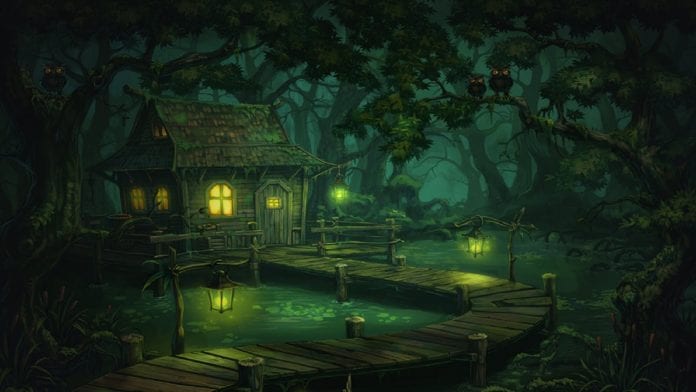
Since it is Halloween I thought I would post this song by Jim Stafford. It reached #39 in the Billboard 100 and #46 in Canada in 1973. My sister had this single but to this six-year-old it was scary. The song described a town by the bayou with an uneasy relationship with the local Witch…which seems to be a prerequisite of a town near the bayou.

The town gets hit with a plague and the Witch (Hattie) helps the town out but not before they all thought Hattie caused the plague to begin with… She cures them and after that, they decide to fetch her from the woods…bad idea.

I think the lesson here is…leave well enough alone.

Swamp Witch

Black water Hattie lived back in the swamp
Where the strange green reptiles crawl
Snakes hang thick from the cypress trees
Like sausage on a smokehouse wall
Where the swamp is alive with a thousand eyes
An’ all of them watching you
Stay off the track to Hattie’s Shack in the back of the Black Bayou

Way up the road from Hattie’s Shack
Lies a sleepy little Okeechobee town
Talk of swamp witch Hattie lock you in when the sun go down
Rumors of what she’d done, rumors of what she’d do
Kept folks off the track of hattie’s shack
In the back of the Black Bayou

One day brought the rain and the rain stayed on
And the swamp water overflowed
Mosquitoes and the fever grabbed the town like a fist
Doctor Jackson was the first to go
Some say the plague was brought by Hattie
There was talk of a hang’n too
But the talk got shackled by the howls and the cackles
From the bowels of the Black bayou

Early one morn ‘tween dark and dawn when shadows filled the sky
There came an unseen caller on a town where hope run dry
In the square there was found a big black round
Vat full of gurgling brew
Whispering sounds as the folk gathered round
“It came from the Black Bayou”

There ain’t much pride when you’re trapped inside
A slowly sink’n ship
Scooped up the liquid deep and green
And the whole town took a sip
Fever went away and the very next day the skies again were blue
Let’s thank old Hattie for sav’n our town
We’ll fetch her from the Black Bayou

Party of ten of the town’s best men headed for Hattie’s Shack
Said Swamp Witch magic was useful and good
And they’re gonna bring Hattie back
Never found Hattie and they never found the shack
And they never made a trip back in
‘Twas a parchment note they found tacked to a stump
Said don’t come look’n again