Another positive song from George. The song peaked at #1 in the Billboard 100, #8 in the UK and #9 in Canada in 1973. Just another good song from George that continues his positive message.
“Give Me Love (Give Me Peace on Earth)” replaced Wings’ “My Love” at number 1 on the Hot 100 singles chart…For the week ending 30 June that year, the Harrison and McCartney songs were ranked numbers 1 and 2 respectively.
George Harrison said this about the song: “Sometimes you open your mouth and you don’t know what you are going to say, and whatever comes out is the starting point. If that happens and you are lucky, it can usually be turned into a song. This song is a prayer and personal statement between me, the Lord, and whoever likes it.”
Give Me Love (Give Me Peace On Earth)
Give me love
Give me love
Give me peace on earth
Give me light
Give me life
Keep me free from birth
Give me hope
Help me cope, with this heavy load
Trying to, touch and reach you with,
Heart and soul
Om m m m m m m m m m m m m m
M m m my lord . . .
Please take hold of my hand, that
I might understand you
Won’t you please
Oh won’t you
Give me love
Give me love
Give me peace on earth
Give me light
Give me life
Keep me free from birth
Give me hope
Help me cope, with this heavy load
Trying to, touch and reach you with,
Heart and soul
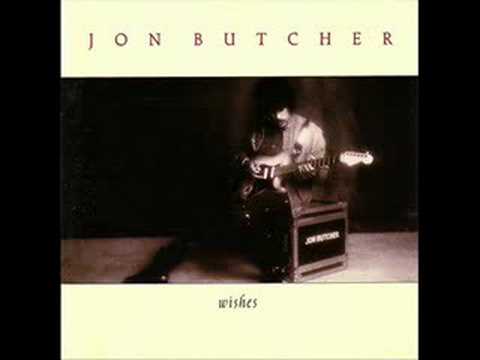
When I heard this guitar intro I was surprised, to say the least. In the late eighties after hearing Eddie Van Halen and Steve Vai endless finger tapping and scales on guitar.. this was refreshing. Jon Butcher sounded like he was inspired by Jimi Hendrix and it showed in this song….but he didn’t just sound like Hendrix in his other songs.
These comparisons to Hendrix were because of Butcher’s onstage appearance and mannerisms, patterned after Hendrix, and his choice for the band name Axis, which was a reference to Hendrix legendary album Axis: Bold as Love. Butcher’s stated influences are Richie Havens, John Lennon, Phil Lynott, Bob Dylan, and Taj Mahal and today he maintains that the Hendrix comparisons are superficial and has been quoted as saying “Being black, left-handed, and playing a Stratocaster created certain inevitable comparisons, particularly in the early days”.
This song peaked at #42 in the Billboard Mainstream Rock Song Chart in 1987.
Wishes
It’s late at night in the neighborhood And the thieves have all gone to bed They can hear your heartbeat in the distance As you lay down your weary head
But don’t worry, ’cause the dawn is breaking In another room halfway around the world And you can’t waste your life Wishing upon a star
‘Cause if wishes were horses If wishes were horses If wishes were horses Then dreamers would ride Huh, yes they would
A girl lives her life missing Some things that she never had Spends too much time in the unemployment line You see in her eyes that it drives her mad
Deep within her constitution Her pride and her dignity show through So she works that dream ‘Cause it’s all she can do
If wishes were horses If wishes were horses She says: if wishes were horses Then dreamers would ride Yes they would
Now I’m looking All around me for the answers And I know you’re looking hard too I know what you’re thinking Maybe wishes come true
If wishes were horses If wishes were horses I know, if wishes were horses Then dreamers would ride
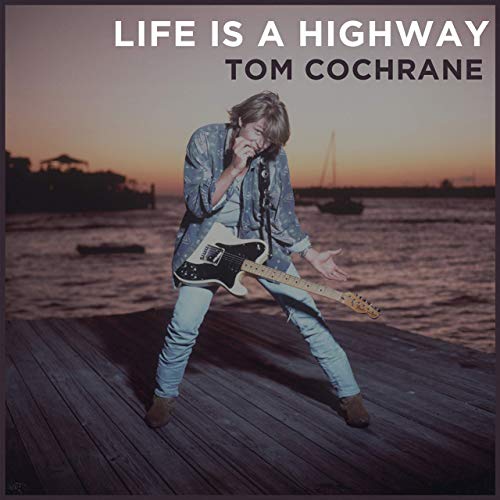
I remembered Cochrane from Red Rider and their hit Lunatic Fringe. “Life Is a Highway” is a song by Canadian-native Tom Cochrane. It is his only US Top-40 hit, reaching #6 in the Billboard 100 and #1 in Canada in 1992. Cochrane is a celebrated artist within the Canadian music scene. His honors include seven Juno Awards, membership in the Canadian Music Hall of Fame, being an Honorary Colonel in the Canadian Air Force, and having been inducted into the Canadian Walk of Fame.
From Songfacts Cochrane was also the frontman and chief songwriter for the group Red Rider for ten years and hit a few times with that group as well. Their best-known song in America is “Lunatic Fringe.”
This song was inspired by Cochrane’s trip to West Africa, where he was gaining exposure for the World Vision famine relief organization. He recalled to Jam! Music: “When I wrote that song after my first trip to Africa, which was just mind bending and soul-sapping, I was mentally, physically and spiritually exhausted and I really needed something to pull me out of this funk. I had this sketch that I had written and I ended up going into the studio and recorded it in an hour at seven in the morning.”
“The irony is that it was the most positive song I’d ever written, coming out of a pretty heavy experience. I needed a pep talk, and it became that for me and for millions of others.”
Cochrane devotes a great deal of his time to activism and causes, blending them together with his music, similar to artists such as Neil Young.
Since 1992, this song has had a near-continuous popularity thanks to heavy use in commercials. These include one for Cleveland, Ohio-based bank National City Corp and one for the NBC TV series VIPER. Before you say “car commercials,” that was different versions by other artists. It was most recently covered by Rascal Flatts who also got it to #7 on the Hot 100.
Rascal Flatts recorded a more kid-friendly version for the 2006 Disney movie Cars. The original version was used in the movies Cheaper by the Dozen and There Goes the Neighborhood.
Life Is A Highway
Life’s like a road that you travel on When there’s one day here and the next day gone Sometimes you bend sometimes you stand Sometimes you turn your back to the wind There’s a world outside every darkened door Where blues won’t haunt you anymore Where the brave are free and lovers soar Come ride with me to the distant shore We won’t hesitate break down the garden gate There’s not much time left today
Life is a highway I want to ride it all night long If you’re going my way I want to drive it all night long
Through all these cities and all these towns It’s in my blood and it’s all around I love you now like I loved you then This is the road and these are the hands From Mozambique to those Memphis nights The Khyber pass to Vancouver’s lights Knock me down get back up again You’re in my blood I’m not a lonely man
There’s no load I can’t hold Road so rough this I know I’ll be there when the light comes in Just tell ’em we’re survivors
Life is a highway I want to ride it all night long If you’re going my way I want to drive it all night long
Life is a highway I want to ride it all night long If you’re going my way I want to drive it all night long
There was a distance between you and I A misunderstanding once but now We look it in the eye
There ain’t no load I can’t hold Road so rough this I know I’ll be there when the light comes in Just tell ’em we’re survivors
Life is a highway I want to ride it all night long If you’re going my way I want to drive it all night long
Life is a highway I want to ride it all night long If you’re going my way I want to drive it all night long
Life is a highway I want to ride it all night long If you’re going my way I want to drive it all night long
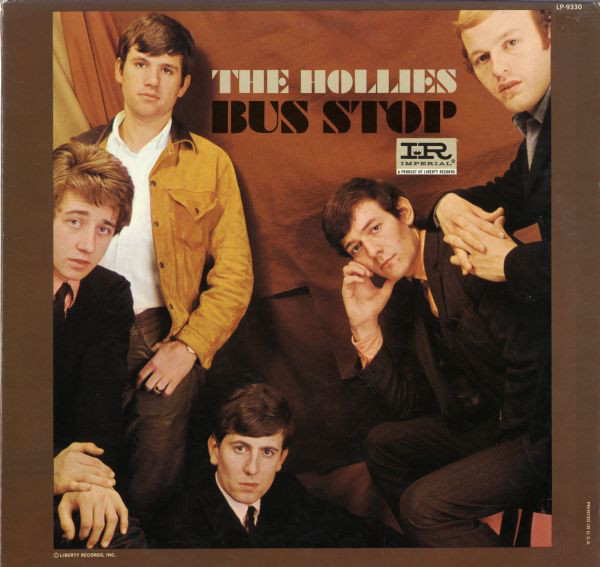
A good mid-sixties pop song from The Hollies. The song peaked at #5 in the Billboard 100, #5 in the UK, and #1 in Canada in 1966.
Bus Stop was written by Graham Gouldman, who went on to form the band 10cc, best known for their hit “I’m Not In Love.” Gouldman was just 19 when he wrote “Bus Stop,” but he had already written three Yardbirds songs: “For Your Love,” “Heart Full of Soul” and “Evil Hearted You.”
Graham Nash of The Hollies recalls learning about this song when their manager, Michael Cohen, told them about “this little kid who lives down the street,” which was Graham Gouldman. When Gouldman played it for them, they knew they had a winner. Nash says they recorded it in just an hour and 15 minutes.
From Songfacts
This song is about a couple who meet one rainy day at a bus stop. Love blooms when they share an umbrella.
In a Manchester newspaper, Graham Gouldman said he wrote it whilst riding on the No. 95 bus, which ran from East Didsbury – the route went through Manchester city center, to Sedgeley Park, Cheetham Hill, Prestwich, and on to Whitefield near Bury. Gouldman was living with his family on this route in Broughton Park Salford at the time. >>
Graham Gouldman’s father was a talented and creative writer who often helped his son with song ideas. Graham had the idea for bus stop setting, and his dad came up with the first line: “Bus stop, wet day, she’s there, I say, ‘please share my umbrella.'” From that starting point, he was able to finish the song.
In a Songfacts interview with Gouldman, he explained: “He gave me those words and I immediately, as I was reading them, heard the melody in my head, and it just kind of wrote itself. And then the middle part of the song I wrote – I got the melody and the words all in one chunk.”
The timeline in this song is a little askew. We know that love bloomed over the summer, but then we get the line, “Came the sun, the ice was melting.” This harkens spring, so apparently, time has passed. In Gouldman’s Songfacts interview, he clarified: “Winter is over, the snow is passed because the sun has melted it, so there’s no need to shelter anymore under the umbrella. You could say the snow is underfoot so you don’t need an umbrella anyway, but it’s poetic license: it could have been snowing so the umbrella can protect you from the snow as well as the rain.”
According to Gouldman, this song’s middle eight was one of the few instances in his songwriting career when he had a sudden inspiration rather than having to resort to hard toil. He explained to Mojo magazine in a 2011 interview: “You have to be working to make something happen. Occasionally you can wait for some magic, like McCartney waking up with Yesterday already written in his mind, which does happen – it’s like a gift from your own subconscious. Or sometimes, it’s like a tap’s turned on. When I’d written most of ‘Bus Stop,’ I was actually on a bus thinking about how the middle eight should go. And this whole, ‘Every morning I would see her waiting at the stop / Sometimes she’d shop…’ that all came to me in one gush, and I couldn’t wait to get home to try it. When that sort of thing happens, it’s really amazing. But that’s rare. Mostly, you have to do the slog.”
Herman’s Hermits also recorded this song in 1966. They got first crack at many of Gouldman’s songs because their manager was married to his sister.
In the Songfacts interview with Peter Noone, the Herman’s Hermits frontman explained: “‘Bus Stop’ went to the Hollies before us, because Graham didn’t think it was the kind of song that we would like. Then when we heard it, it was like, Are you kidding me? We want that. Luckily John Paul Jones heard it when we were trying to figure it out and he said ‘Nah, I’ve got it,’ and he re-invented the song. That’s John Paul Jones who turned that into a hit record, nobody else. It is not a hit song. If you listen to the Hollies demo version of it, it’s just not good. He reorganized the song and made it what it is: serious artwork.”
There is a short instrumental passage midway through the song, but the vocals, sung by Allan Clarke, carry the day. The only real verse section is in the middle – the rest is chorus and bridge, which at the end of the song is flipped – “Every morning I would see her waiting at the stop” comes in before the “bus stop, wet day” part, providing a bookend.
With so little verse, there are very few details – we have no idea what the bus or people look like – but that works to the song’s advantage because the listener can fill in the gaps. It’s a technique Gouldman picked up listening to The Beatles. “Sometimes it’s what’s left out that makes it work,” he says.
Bus Stop
Bus stop, wet day She’s there, I say Please share my umbrella Bus stops, bus goes She stays, love grows Under my umbrella
All that summer we enjoyed it Wind and rain and shine That umbrella we employed it By August she was mine
Every morning I would see her Waiting at the stop Sometimes she’d shop And she would show me what she’d bought
Other people stared As if we were both quite insane Someday my name and hers Are going to be the same
That’s the way the whole thing started Silly but it’s true Thinking of our sweet romance Beginning in a queue
Came the sun The ice was melting No more sheltering now Nice to think that that umbrella Led me to a vow
Every morning I would see her Waiting at the stop Sometimes she’d shop And she would show me what she’d bought
Other people stared As if we were both quite insane Someday my name and hers Are going to be the same
Bus stop, wet day She’s there, I say Please share my umbrella Bus stops, bus goes She stays, love grows Under my umbrella
All that summer we enjoyed it Wind and rain and shine That umbrella we employed it By August she was mine
This one I remember from the video more than airplay. A simple but effective riff to open the song and there is also The Band member Garth Hudson playing with The Call. That is what got my attention when I saw the video in the 80s. When The Walls Came Down peaked at #74 in the Billboard 100 and #17 in the Billboard Mainstream Rock Songs in 1983.
Guitarist Michael Been stated, “There was a great deal happening politically – Grenada, Lebanon, or the government saying the Russians are evil and the Russian government probably saying the same about us. That kind of thinking inspired me to write the last lines of ‘Walls Came Down’.”
When The Walls Come Down
Well they blew the horns And the walls came down They’d all been warned And the walls came down They stood there laughing They’re not laughing anymore The walls came down
Sanctuary fades Congregation splits Nightly military raids The congregation splits It’s a song of assassins Ringin’ in your ears We got terrorist thinking Playing on fears
Well they blew the horns And the walls came down They’d all been warned But the walls came down I don’t think there are any Russians And there ain’t no Yanks Just corporate criminals Playin’ with tanks
Ya ya ya ya ya ya Ya ya ya ya ya ya Ya ya ya ya ya ya Ya ya ya ya ya ya Ya ya ya ya ya ya Ya ya ya ya ya ya Ya ya ya ya ya ya Ya ya ya ya ya ya (Wake up) Ya ya ya ya ya ya Ya ya ya ya ya ya Ya ya ya ya ya ya Ya ya ya ya ya ya Ya ya ya ya ya ya Ya ya ya ya ya ya Ya ya ya ya ya ya Ya ya ya ya ya ya (Come on, come on, come on, come on)
I liked some of Squier’s earlier songs. This song peaked at #28 in the Billboard Mainstream Rock Songs in 1981. The song was on the Don’t Say No album which peaked at #5 in the Billboard Album Charts in 1981. The album had four well-known songs on it including The Stroke, My Kind of Lover, In The Dark, and this one. This song has always had a Led Zeppelin feel to me.
Squier asked Brian May of Queen to produce this album but because of scheduling conflicts, he couldn’t do it but recommended Reinhold Mack who produced the Queen album The Game…who ended up producing this album. Squier worked out of Boston and worked with at one time or another Ric Ocaskik, Joe Pepper, and Tom Shultz.
My second concert was a Billy Squier concert on November 30, 1982, in Nashville at the Municipal Auditorium. The Auditorium has been around since the early sixties and I remember seeing the No Smoking signs at the beginning of the concert…by the end you couldn’t see them because of the smoke. Nazareth opened up for Squier.
My first two concerts were REO and Billy Squier…My sons first two concerts were Paul McCartney and Ringo Starr…I told him he had a much better beginning than I did in his concert history…his third was Bob Dylan.
From Songfacts
In a 1982 interview with Sounds magazine, Squier explained that he doesn’t write songs when he’s on the road, which keeps him away from topics like groupies and parties. Said Squier: “‘Lonely Is The Night’ for example is nothing to do with the fact that I’m in a rock band, but it does have to do with the fact that you can be by yourself in a room somewhere and not know what to do, be scared to death of having to go out and find something.”
Lonely Is The Night
Lonely is the night when you find yourself alone Your demons come to light and your mind is not your own Lonely is the night when there’s no one left to call You feel the time is right, say the writing’s on the wall
It’s a high time to fight when the walls are closin’ in Call it what you like it’s time you got to win Lonely, lonely, lonely your spirit’s sinkin’ down You find you’re not the only stranger in this town
Red lights, green lights, stop and go jive Headlines, deadlines jammin’ your mind You been stealin’ shots from the side Let your feeling’s go for a ride
There’s danger out tonight, the man is on the prowl Get the dynamite, the boys are set to howl Lonely is the night when you hear the voices call Are you ready for a fight, do you wanna take it all?
Slowdown, showdown waitin’ on line Show time, no time for changin’ your mind Streets are ringin’, march to the sound Let your secrets follow you down
Somebody’s watchin’ you baby, so much you can do Nobody’s stoppin’ you baby, from makin’ it too One glimpse’ll show you now baby, what the music can do One kiss’ll show you now baby, it can happen to you
No more sleepin’, wastin’ our time Midnight creepin’s, first on our minds No more lazin’ ’round the TV You’ll go crazy, come out with me
Feelin’ lonely Lonely is the night Feelin’ lonely Lonely is the night Lonely, lonely, lonely
Another gem from the White Album. John Lennon loved to sleep…he referenced it in another song on Revolver named “I’m Only Sleeping.” Paul would have a songwriting session planned with Lennon and would arrive at John’s house only to have to wake him up. I’ve always liked this song and fit perfectly with the diverse song styles of the album.
John wrote this at a transcendental meditation camp in India when he couldn’t sleep. He was meditating day and night, and after three weeks of meditation and lectures by the Maharishi, he thought of his future wife Yoko Ono while his current wife Cynthia was there with him. and came up with the song. He even thought of inviting Yoko with him along with Cynthia… that would have added some spice to the trip. Bringing a date on a trip with your wife…probably a bad idea.
John mumbles something at the end of the song.
Mark Lewisohn’s book “The Beatles Recording Sessions” explains this final bit of Lennon mumbling as “Monsieur, monsieur, how about another one?“, insinuating that he was requesting another attempt at the backing vocals. This final mumbling was the only one that made it onto the finished mix.
In 1969 when the “Paul is dead” rumor went around the world people insisted when the mumbling at the end of this song was played backward, John was saying “Paul is dead, miss him, miss him, miss him!” This made for yet another clue for the poor departed Paul …but of course was not true and Paul was and is very much alive… but it did ruin a lot of record player needles in the process of trying to find out.
John said this about the song: “One of my favorite tracks. I just like the sound of it, and I sing it well“.
From Songfacts
The voice at the end sounds like, “Paul is dead man, miss him,” when played backward. This helped fuel rumors that McCartney was dead and replaced by an actor that looked like him.
The line “When I hold you in my arms, and feel my finger on your trigger” from “Happiness Is A Warm Gun” appears in bootlegged, unreleased versions of this song as “When I hold you in your arms, when you show each one of your charms, I wonder should I get up and go to the funny farm.”
The word “get” as used in this song is a well-known term as a quite mild insult that is still commonly used on Merseyside. Lennon is cursing Sir Walter Raleigh (who is credited with introducing tobacco to Britain from America in the 16th century) for indirectly getting him hooked on cigarettes.
At the bottom below the lyrics, I found a version of Paul singing the song and having a good time. It possibly is from the Let It Be sessions…I’m not sure.
I’m So Tired
I’m so tired, I haven’t slept a wink I’m so tired, my mind is on the blink I wonder should I get up and fix myself a drink No, no, no.
I’m so tired, I don’t know what to do I’m so tired, my mind is set on you I wonder should I call you but I know what you would do
You’d say I’m putting you on But it’s no joke, it’s doing me harm You know I can’t sleep, I can’t stop my brain You know it’s three weeks, I’m going insane You know I’d give you everything I’ve got For a little peace of mind.
I’m so tired, I’m feeling so upset Although I’m so tired, I’ll have another cigarette And curse Sir Walter Raleigh He was such a stupid get.
You’d say I’m putting you on But it’s no joke, it’s doing me harm You know I can’t sleep, I can’t stop my brain You know it’s three weeks, I’m going insane You know I’d give you everything I’ve got For a little peace of mind.
Give you everything I’ve got For a little peace of mind.
I’d give you everything I’ve got For a little peace of mind.
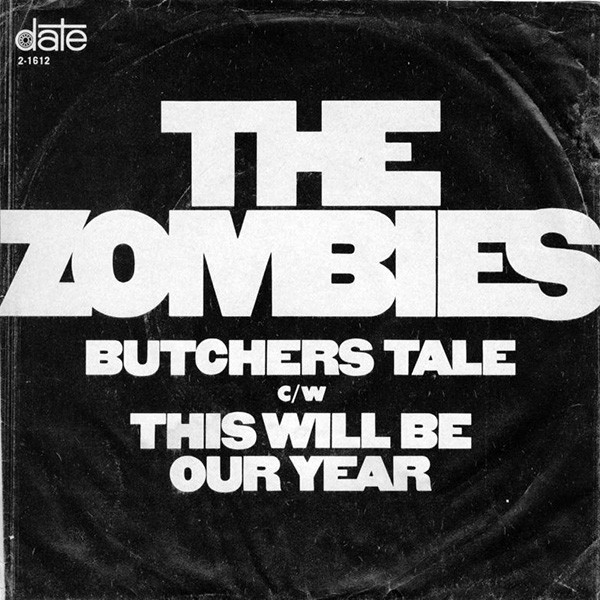
This sounds like it should have been a hit but it was never pushed as a single at the time. It was the B side to Butcher’s Tale (Western Front 1914) which is an experimental song and was a big surprise to the band that it was picked as the first single. Both are from the great album Odessey and Oracle in 1968. There are several songs on this album that could have been in the charts but Time of the Season was the only one that made it and it was a year after the album was released.
Bruce Eder of AllMusic gave the album five stars out of five, calling it “one of the flukiest (and best) albums of the 1960s, and one of the most enduring long-players to come out of the entire British psychedelic boom”.
On recording Odessey and Oracle….Rod Argent
“We had the chance of going in and putting things down in the way we wanted people to hear them and we had a new studio, we walked in just after The Beatles had walked out [after recording Sgt. Pepper]. We were the next band in. They’d left some of their instruments behind … I used John Lennon’s Mellotron, that’s why it’s all over Odessey and Oracle. We used some of their technological advances … we were using seven tracks, and that meant we could overdub for the first time. And it meant that when i played the piano part I could then overdub a Mellotron part, and it meant we could have a fuller sound on some of the songs and it means that at the moment the tour we’re doing with Odessey and Oracle it means we’re actually reproducing every note on the original record by having extra player with us as well.”
This Will Be A Year
The warmth of your love Is like the warmth of the sun And this will be our year Took a long time to come
Don’t let go of my hand Now darkness has gone And this will be our year Took a long time to come
And I won’t forget The way you held me up when I was down And I won’t forget the way you said, “Darling I love you” You gave me faith to go on
Now we’re there and we’ve only just begun This will be our year Took a long time to come
The warmth of your smile Smile for me, little one And this will be our year Took a long time to come
You don’t have to worry All your worried days are gone This will be our year Took a long time to come
And I won’t forget The way you held me up when I was down And I won’t forget the way you said, “Darling I love you” You gave me faith to go on
Now we’re there and we’ve only just begun And this will be our year Took a long time to come
Yeah we only just begun Yeah this will be our year Took a long time to come
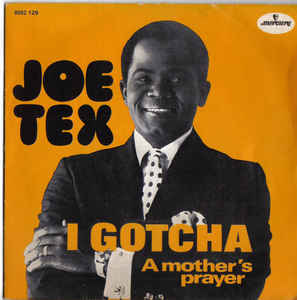
My sister…lover of the Osmonds and everything unholy in music to me…somehow had this fun R&B groove single by Joe Tex. The song peaked at #2 in 1972 in the Billboard 100.
“I Gotcha” shows more than a little James Brown influence. Some say it wasn’t just influence but more than a little mocking. The two, who sometimes shared a stage, feuded quite a bit…dating back to the 50s. Tex said Brown copied his moves and later stole his girlfriend, Brown didn’t like the way Tex made fun of him. This supposedly led to an incident where Brown allegedly used a gun to fire a few rounds at Tex in a nightclub, then paid off the patrons with $100 bills so they wouldn’t call the police.
The battle began in earnest when James Brown stole Tex’s girlfriend, Bea Ford. Then, just to twist the knife, Brown sent Tex a letter telling him that he was through with the Bea and Joe could have her back. This led to the record “You Keep Her”, where Joe calls James out by name, saying he was better off without the Bea anyway.
Eventually, the two patched things up enough for Joe to write the line: “If I was a dancefloor, James Brown could mash potatoes on me all night long!”
From Songfacts
This was Joe Tex’s highest-charting career single as far as the Billboard Hot 100 was concerned. It is all original Joe Tex, in his own absolutely inimitable style – he’s known as one of the precursors of rap music.
While Joe Tex may have been charting on the Hot 100 since 1965, his previous highest score had been #5 for his breakout single “Hold What You’ve Got”. Since that time, he’d barely tasted the Top-10. This song was actually the B-side of “A Mother’s Prayer” – Radio station DJs would flip it and play this side instead, giving him his highest-charting hit.
We have yet another Tarantino hit! The film Reservoir Dogs features this song prominently. It’s used for the scene where three of the robbers transport the hostage cop to their warehouse hideaway, where they proceed to beat the nickels out of him, both because they suspect they were set up and just to work off some frustration after their robbery plan goes to pieces. The action is even choreographed to the music a little; watch Michael Madsen pulling off a length of duct tape in time to the lyrics for a beat or two.
Joe Tex re-recorded “I Gotcha” for his 1978 album Rub Down, this time as a ballad.
I Gotcha
I gotcha, uh huh, huh
You thought I didn’t see ya now, didn’t ya, uh huh, huh
You tried to sneak by me now, didn’t ya, uh huh, huh
Now gimme what you promised me, give it here
Come on
Hey
Good God
Hey
Hey
You promised me the day that you quit your boyfriend
I’d be the next one to ease on in
You promised me it would be just us two, yeah
I’d be the only man kissin’ on you, yeah
Now, kiss me
Hold it a long time, hold it
Don’t turn it a-loose, now hold it
A little bit longer, now hold it
Come on
Hold it
Hold it
Hold it
Hold it
Now ease up on me now, good god
Hey
Good God
Hey
The girl’s alright, y’all
Ha ha
Good God
You made me a promise and you’re gonna stick to it
You shouldn’t have promised if you weren’t gonna do it
You saw me and ran in another direction
I’ll teach you to play with my affection
Now, give it here
You never should’ve promised to me, give it here
Don’t hold back, now give it here
Don’t say nothin’, just give it here
Come on, give it here
Give it here
Give it here
Give it here
Give it to me, now
Good God
Hey
I gotcha
Shouldn’t made a promise to me
I gotcha
You never should’ve promised to me, gotcha
Give it on, here
I gotcha
You thought you got away from me, didn’t ya?
I gotcha
Ha ha ha
Oh, I gotcha
Give it on up, I gotcha
Give it on here, I gotcha
You tried to sneak by me, now didn’t ya?
Ha ha
I gotcha
Oh, I gotcha
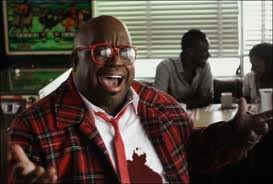
Heard this song and loved it. It’s so catchy and I even liked the video. I also laughed because I heard the other version which is called F**k You…but I try to keep this blog at least PG-13 so we will go with Forget You today. But…if you want to hear the other be my guest.
This song peaked at #2 in the Billboard 100 in 2011. The songwriters were Bruno Mars, CeeLo Green, Philip Lawrence, and Ari Levine. The song has a good pop hook and it has a few different styles thrown in.
You may have thought the inspiration for this song was from a breakup but Green said the hit came about as a result of creative differences with his label, Elektra Records.
“I did ‘F— You’ to be an a–hole, to be spiteful toward the label,” “Because it had taken about three years to do The Lady Killer, and I just felt that after recording almost 70 songs I could not please them.”
From Songfacts
This is the radio-friendly version of Cee-Lo Green’s expletive-laden viral hit, “F–k You.” In the original rendition of the song about being jilted for a Ferrari-driving slickster, Cee-Lo drops 16 f-bombs in just 3 1/2 minutes.
The song features Green’s Elektra labelmate Bruno Mars. It originated during a session in L.A. with Mars and Phil Lawrence of the production team the Smeezingtons. The pair played to Cee-Lo a rough demo of a song they weren’t sure was worth completing. “When Bruno first sung ‘F—- You’ to me, they were still a bit indecisive on whether or not it could work at all,” Green told Entertainment Weekly.”I was like, ‘I like it. Let’s record it.'” The trio then completed the song with Cee Lo contributing many of the verse lyrics.
Cee-Lo told Entertainment Weekly that the lyrics about a gold-digging ex aren’t strictly autobiographical. “I mean, it’s based on something true… As far as me personally, it’s not a current event. It’s a figurative account. It’s not completely fictitious, though.”
Cee-Lo first appeared on the music scene in 1995 with the Southern hip-hop group Goodie Mob. He is best-known as one-half of the duo Gnarls Barkley, who had a worldwide hit with “Crazy.”
The video broke the two million view mark on YouTube within one week of its release but also received criticism for the foul language used by Cee-Lo. The musician claimed rather loftily in an interview that it’s actually a work of art. “What I’ve tried to accomplish, like, is making art products … so I still believe that (the song) can be classified as art because it’s an original piece and the edge and alternative is there, and the integrity is intact,” he said.
Cee-Lo added that he was trying to elevate music with the song, something he feels the music industry does not do enough. “The system does not, you know, advocate art, so to speak, but it does package and promote products and product placement, and there’s a definitive difference between the two, art and product,” he said. “I have yet to sit down and try to write something for the sake of radio. I just never done it, not consciously.”
The Gnarls Barkley star admitted the revamped version with milder lyrics wasn’t part of the initial plan. “It wasn’t like we were looking for it to be a radio hit of some sort. It was only until a short time after that we considered doing a clean version just in case.”
Cee-Lo told NME about the song: “It’s a fictitious account of love lost. But it’s a trial that we’ve all been through some time or another, and I think that’s why people can relate to it.”
The official music video was released on September 1, 2010. It features grade school and high school versions of Green getting their heart broken by the girls they love. The singer told Billboard magazine that while he wasn’t directly in charge of casting, he had a large part in deciding who got the role. “I [did] have a final say in who I would think best represent me. I picked quite a few of the people that you see,” he said.
The song topped the charts in the Netherlands and the United Kingdom and was a top ten hit in many other territories including Australia, Belgium (Flanders), Canada, Denmark, Hungary, Ireland, New Zealand, and Sweden.
Actress Gwyneth Paltrow performed this song on “The Substitute” episode of Glee, in which she plays a substitute teacher who Mr. Schue (Matthew Morrison) falls for. The Glee version debuted at #11 on the Hot 100 marking Paltrow’s first entry on the chart. Can you name the two previous other songs the actress has contributed vocals to, which have graced other Billboard charts?
1. Her Huey Lewis duet “Cruisin’ ” topped Adult Contemporary the week of December 16, 2000.
2. Simultaneously with her success with this song, Paltrow also charted on Country Songs with “Country Strong,” the title track from the 2010 film in which she co-starred.
Some Gwyneth aficionados might have come up with “It’s Only Love,” a track from Sheryl Crow’s 2002 album, C’mon C’mon. However, this never featured on any Billboard chart.
The sweary version was named by Spin magazine as their Best Song of 2010.
Bruno Mars explained to Rolling Stone that when he came up with the piano riff, he thought it was an old soul riff from the ’60s or ’70s. Said Mars, “I guess I’d know by now if it wasn’t original. When Cee-Lo got in there and sang, we all got the chills.”
In what looked a lot like Elton John’s appearance on The Muppet Show in 1977, Cee-Lo performed this song at the Grammy Awards in 2011 dressed in feathers and backed by a band of puppets. The song became a duet when Gwyneth Paltrow joined in, eventually ending up on top of Cee-Lo’s piano. The song was nominated for Record of the Year, Song of the Year and won for Best Urban/Alternative Performance.
When the Glee version debuted at #31 in the UK on the day of the 2011 Oscar ceremony, Gwyneth Paltrow became the sixth Academy Award winner for Best Actress to also make that country’s singles chart, following Liza Minnelli, Cher, Barbra Streisand, Nicole Kidman and Kate Winslet.
Bruno Mars recalled to Q magazine: “For years I’d been saying, ‘I wanna work with Cee lo Green.’ We came up with the title and sung the chorus for him. We were a little nervous about it cos we didn’t want it to be like a skit. He said, ‘That’s incredible, let’s go.’ We wrote it in two hours.”
In a February 2012 promo for Fender guitars, Bruno Mars said he played his 57 Reissue Stratocaster on the song.
Forget You
I see you driving ’round town With the girl I love and I’m like, Forget you! Oo, oo, ooo I guess the change in my pocket Wasn’t enough I’m like, Forget you! And forget her too! Said, if I was richer, I’d still be with ya Ha, now ain’t that some shit? (ain’t that some shit?) And although there’s pain in my chest I still wish you the best with a Forget you! Oo, oo, ooo
Yeah I’m sorry, I can’t afford a Ferrari, But that don’t mean I can’t get you there. I guess he’s an Xbox and I’m more Atari, About the way you play your game ain’t fair.
I pity the fool that falls in love with you (Oh shit she’s a gold digger) Well (Just thought you should know ) Ooooooh I’ve got some news for you Yeah go run and tell your little boyfriend
I see you driving ’round town With the girl I love and I’m like, Forget you! Oo, oo, ooo I guess the change in my pocket Wasn’t enough I’m like, Forget you! And forget her too! Said, if I was richer, I’d still be with ya Ha, now ain’t that some shit? (ain’t that some shit?) And although there’s pain in my chest I still wish you the best with a Forget you! Oo, oo, ooo
Now I know, that I had to borrow, Beg and steal and lie and cheat. Trying to keep ya, trying to please ya. ‘Cause being in love with your a** ain’t cheap.
I pity the fool that falls in love with you (Oh shit she’s a gold digger) Well (Just thought you should know) Ooooooh I’ve got some news for you Ooh, I really hate your ass right now
I see you driving ’round town With the girl I love and I’m like, Forget you! Oo, oo, ooo I guess the change in my pocket Wasn’t enough I’m like, Forget you! And forget her too! Said, if I was richer, I’d still be with ya Ha, now ain’t that some shit? (ain’t that some shit?) And although there’s pain in my chest I still wish you the best with a Forget you! Oo, oo, ooo
Now baby, baby, baby Why d’you wanna wanna hurt me so bad? (So bad, so bad, so bad) I tried to tell my momma but she told me “This is one for your dad” (Your dad, your dad, your dad) Yes she did And I was like Uh! Whhhy? Uh! Whhhy? Uh! Whhhy lady? Oh! I love you oh! I still love you. Oooh!
I see you driving ’round town With the girl I love and I’m like, Forget you! Oo, oo, ooo I guess the change in my pocket Wasn’t enough I’m like, Forget you! And forget her too! Said, if I was richer, I’d still be with ya Ha, now ain’t that some shit? (ain’t that some shit?) And although there’s pain in my chest I still wish you the best with a Forget you! Oo, oo, ooo
I was a little too young to get the Sex Pistols when they were together. They did have a huge influence while only releasing one album…Never Mind The Bollocks, Here’s The Sex Pistols. I never was a big fan but this song is alright for what it is.
John Lydon talked about the song: “It flowed quite naturally to me. These are just long, long-term motivations that are there and you can’t, can’t, can’t ever underestimate the sheer driving energy poverty will bring you. Being denied everything and access to everything. Government, schools, the lot, tell you that you don’t count. You are scum. Go with flow or else. That’s an incredible driving energy, to be better than their estimation of you.”
From Songfacts
Anarchy is a society without government or law. The Sex Pistols were very anti-establishment (as were many young people in England), but the song isn’t actually advocating anarchy. “I have always thought that anarchy is mind games for the middle class,” frontman John Lydon told Rolling Stone. “It’s a luxury. It can only be afforded in a democratic society, therefore kind of slightly f–king redundant. It also offers no answers and I hope in my songwriting I’m offering some kind of answer to a thing, rather than spitefully wanting to wreck everything for no reason at all, other than it doesn’t suit you.”
This was the Sex Pistols’ first single, and it caused quite a stir in England with its lyrics advocating violence against the government. Never Mind The Bollocks, Here’s The Sex Pistols was not released until a year later, partly because of distribution concerns: after hearing “Anarchy In The UK,” some organizations refused to ship the album. >>
Sid Vicious, who died of a drug overdose in 1979 and was the subject of the 1986 film Sid and Nancy, had not yet joined the band. Vicious replaced original bass player Glen Matlock after this was released. Along with the rest of the band, Matlock is a credited writer on the track.
The Sex Pistols were dropped by two record companies before finally releasing the Never Mind The Bollocks album with Virgin Records. Virgin had a hard time promoting this song because no one would let them advertise it. The subsequent record store and radio bans helped generate publicity that was more valuable than what they could have bought.
The manager of The Sex Pistols, Malcolm McLaren, put them together to deliberately cause controversy. He knew the band would stir up trouble and get a lot of media attention in the process. That’s what happens when you have a lead singer named Johnny Rotten singing that he was an “anarchist” and the “Antichrist.”
Recording this song proved rather difficult. The first sessions were produced by Dave Goodman, who was the band’s sound man for concerts. “He had never really produced anybody properly, so he didn’t have enough clout or wherewithal to tell Malcolm McLaren not to be in the studio,” Glen Matlock said in a Songfacts interview. “And Malcolm was like the devil at his ear, going, ‘It’s not exciting enough – it’s got to be faster.’ And it was getting faster and faster, and losing all its groove.
In the end, we effectively went on strike, and said, ‘No, it’s fine,’ and we got a different guy in, Chris Thomas, who has done some fantastic work over the years. We set up, started playing, and he said, ‘I think we’ve got it now.’
The first part of the song is from take three, and the second part is from take five. We were waiting for Rotten to turn up and do the vocals, and he didn’t rush down because he was like, ‘You’re useless, you can’t play. You’ve been in there for weeks.’ And we said, ‘No. We’ve done it.’ We were right all along – we just needed the right person to realize it. And then Steve loaded up the guitars over the next few days.”
The line, “I use the enemy” is a play on words: “Enemy” is actually “NME,” a British magazine called New Musical Express. The Sex Pistols were famous for manipulating the media, and NME apparently took the bait: they said in their review of this song, “Johnny Rotten sings flat, the song is laughably naïve, and the overall feeling is of a third-rate Who imitation.”
After this was released, the band went on a British talk show where they repeatedly swore at and berated the host, Bill Grundy. This caused a great deal of controversy, which resulted in their record company, EMI, dropping the band and pulling the single.
Here’s an explanation of the alphabet soup in the lyrics:
MPLA: A political group in Angola – the Movimento Popular de Libertacao de Angola.
UDA: The loyalist supporters in Ireland conflict. The UDA (Ulster Defence Association) supported Britain and opposed unification of Ireland.
IRA: The Irish Republican Army, who opposed Britain and were in favor of unification in Ireland.
As a publicity stunt, the band performed this song on the Thames River from a boat called “The Queen Elizabeth” on June 7, 1977. Celebrations were underway for the Silver Jubilee, celebrating the Queen’s 25 years on the throne. Two days later, she was scheduled to ride on the river as part of the ceremonies, so the Sex Pistols decided to make a mockery of it.
The plan was to perform the song as they were floating by the House Of Parliament, but they didn’t get close, as police intercepted the boat. The record company executives who organized the event were arrested when they docked.
The stunt got them plenty of press and boosted their punk rock bona fides. “That came about, oddly enough, just as a giggle because of not getting gigs,” Johnny Rotten explained in Melody Maker. I had in my mind not the slightest knowledge of there being a Jubilee at all. I was quite stunned by it all.”
Mötley Crüe often played this song in concert, and they recorded it for their 1991 compilation Decade of Decadence. While their version is still titled “Anarchy in the U.K.,” Vince Neil sang it as “Anarchy For the USA,” with the lyrics changed to make references to American entities, including the PMRC, an organization that led a crusade to keep albums with explicit lyrics from being sold to minors.
Glen Matlock told Mojo magazine that this is his favorite Sex Pistols’ statement. He explained: “Everything about it is just right. It’s one of those rare moments captured, the vibe, the groove, and the bass ain’t bad! It still sounds outrageous.”
Megadeth did a popular cover of this song that was included on their 1988 album So Far, So Good… So What! and also released as a single. A video was made for this version directed by David Mackie.
Guitarist Steve Jones told Mojo that he thought when the specific moment when he felt the Pistols had clicked was when “Anarchy in the UK” came into the fold. He explained; “We had the riff and Rotten was in the corner writing words and McLaren started grooving on it. It felt like we were onto something then.”
the Sex Pistols re-recorded this song for the video game Guitar Hero 3.
Anarchy in the UK
Right now ha, ha, ha, ha, ha I am an anti-Christ I am an anarchist Don’t know what I want But I know how to get it I want to destroy the passerby
‘Cause I want to be anarchy No dogs body
Anarchy for the U.K. It’s coming sometime and maybe I give a wrong time, stop a traffic line Your future dream has sure been seen through
‘Cause I want to be anarchy In the city
How many ways to get what you want I use the best, I use the rest I use the N.M.E. I use anarchy
‘Cause I want to be anarchy Its the only way to be
Is this the MPLA Or is this the UDA Or is this the IRA I thought it was the U.K. Or just another country Another council tenancy
I want to be anarchy And I want to be anarchy (Oh what a name) And I want to be an anarchist (I get pissed, destroy!)
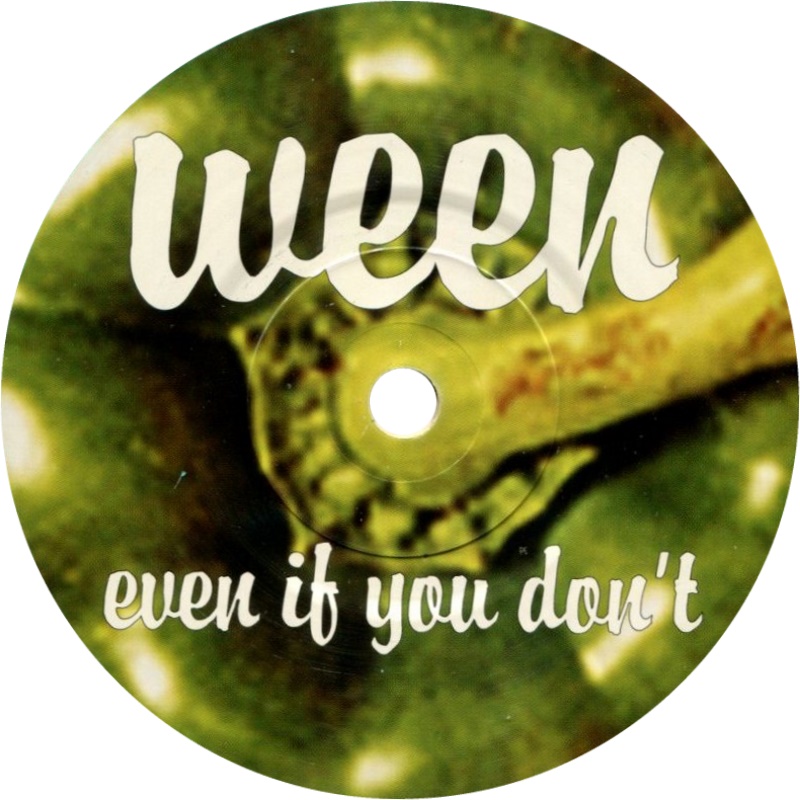
I heard this in 2000 for the first time and right away I liked it. It has a slight Beatle influenced feel and is extremely catchy. Ween does not take them seriously and they are fun to listen to. The Band formed in 1984 in New Hope, Pennsylvania by childhood friends Aaron Freeman and Mickey Melchiondo.
This song didn’t chart but it was played on many alternative stations.
From Wiki
Ween signed with Elektra Records and released their major label debut Pure Guava on November 10, 1992. Pure Guava featured their highest charting single, “Push th’ Little Daisies” which gained them media and MTV attention, as the video was a highlighted target on MTV’s Beavis and Butt-Head. The song was also a hit in Australia, reaching #18 on the singles chart.
They also wrote and performed the song “Ocean Man” for the Spongebob movie.
Even If You Don’t
I’m goin’ crazy trying to keep you sane Takin’ my prescriptions, forging my name I was happy this morning, ya finally got yourself dressed, eatin all the bacon Its okay i was still impressed
I love you, even if you don’t you’ve got your knife up to my throat, what do you want to see with me?
Rooting though the garbage for treasures in the trash pile, seein my expression will always make you smile Please don’t touch my phone book, my friends are getting pissed off Ya wake em I’m the morning, I’m acting like a jerkoff
I love you, even if you don’t you’ve got your knife up to my throat, what do you want to see with me?
I love you, even if you don’t you’ve got your knife up to my throat, what do you want to see with me?
I love you, even if you don’t you’ve got your knife up to my throat, what do you want to see with me?
This was released to radio on September 7, 1994, which would have been Buddy Holly’s 58th birthday.
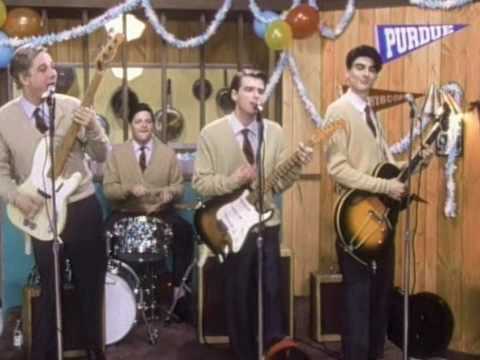
The video for this song hooked me for not only the mention of Buddy Holly, Mary Tyler Moore but also the Happy Days set… Plus its afun song. This song peaked at #17 on the Billboard Mainstream Top 40 Charts in 1995.
Spike Jonze directed the video. Vintage Happy Days footage was intercut with shots of Weezer performing on the original Arnold’s Drive-In set. Al Molinaro, who played the diner’s owner on the series, made a cameo appearance in the video. One of the most popular clips of 1995, it scored four MTV Video Music Awards, including Breakthrough Video and Best Alternative Music Video, and two Billboard Music Video Awards, among them Alternative/Modern Rock Clip of the Year.
From Songfacts
With the “I’m yours – you’re mine” lyrics, this song sounds like a romantic missive, but lead singer Rivers Cuomo explained that it’s largely misinterpreted: the song is about defending a platonic female friend.
This was Weezer’s second single, following “Undone – The Sweater Song.” It got a lot of play on Top 40 radio and reached #2 on Billboard’s Modern Rock chart, but in a bid to boost album sales, the song wasn’t sold as a single in America, which made it ineligible for the Hot 100 (it reached #18 on the Airplay chart).
When downloading became legal and practical, this song proved very popular, and in 2006 it became Weezer’s second Gold single (following “Beverly Hills”), thanks to downloads of over 500,000.
According to the book Rivers’ Edge: The Weezer Story, Cuomo didn’t think this song fit on the album and was tempted to leave it off. It was the album’s producer, Ric Ocasek, who convinced him to include it. Cuomo is glad they left it on, as it became one of his favorite songs to perform.
The popularity of the song skyrocketed after The Microsoft Windows 95 release included its video amongst a number of “Fun Stuff” items on the CD. Watching a music video on your computer was a pretty big deal at the time.
The early demo of this song had a slower tempo and some different lyrics. The chorus originally referenced famous dancing duo Fred & Ginger: “Oo-wee-oo you look just like Ginger Rogers, Oh, oh, I move just like Fred Astaire,” before it was changed to “Oh wee-ooh, I look just like Buddy Holly, Oh, oh, and you’re Mary Tyler Moore.”
Actress Mary Tyler Moore became a household name just a couple years after Holly’s death when she landed a starring role on The Dick Van Dyke Show in 1961 (and later her own Mary Tyler Moore Show in 1970).
This runs a very compact 2:39.
This song was the centerpiece of a 2015 commercial for the Honda Pilot Elite minivan. In the spot, a large family sings the song while riding in the vehicle.
On their 2018 summer tour, Weezer re-created the video when they performed this song, complete with costumes and set design.
Buddy Holly
What’s with these homies dissin’ my girl?
Why do they gotta front?
What did we ever do to these guys
That made them so violent?
Woo-hoo, but you know I’m yours.
Woo-hoo, and I know you’re mine.
Woo-hoo, and that’s for all the time.
[chorus]
Woo-ee-oo, I look just like Buddy Holly.
Oh-oh, and you’re Mary Tyler Moore.
I don’t care what they say about us anyway.
I don’t care ’bout that.
Don’t you ever fear, I’m always there. I know that you need help.
Your tongue is twisted, your eyes are slit.
You need a guardian.
Woo-hoo, and you know I’m yours.
Woo-hoo, and I know you’re mine.
Woo-hoo, and that’s for all the time.
[chorus]
I don’t care ’bout that.
Bang bang knock on the door, another big bang, you’re down on the floor.
Oh no! What do we do?
Don’t look now but I lost my shoe.
I can’t run and I can’t kick.
What’s a matter babe, are you feelin’ sick?
What’s a matter, what’s a matter, what’s a matter you?
What’s a matter babe, are you feelin’ blue?
Oh-oh-oh
I was never into 80’s rock ballads but this one I liked. Maybe it was because of when I heard it, I don’t know. Kilzer released an album in 1988 “Memory in the Making” and the album contained some minor hits such as Green, Yellow, and Red, Red Blue Jeans, and Memory in the Making.
The album charted at #110 in the Billboard album charts in 1988. This song didn’t chart but got a lot of local airplay where I live. This is the only album that made it to the Billboard 200.
John Kilzer grew up in Jackson, Tennessee as a 6-foot-6-inches tall high school all American basketball standout, played for the Memphis to play for the Tigers from 1975-1978. He traded the complimentary tickets players receive with Mabon “Teenie” Hodges, author of the hit “Take Me to the River” in exchange for guitar lessons.
He passed away last month.
Memory in the Making
Throwing roses at the moon Overdosing on perfume That arises from your picture An inviolate fixture This is more than I expected It’s as though I have erected A mausoleum for my heart babe I’ve reserved the best part babe It’s a memory in the making It’s a power that’s taking Control of my soul girl Now there’s nowhere left to go girl
Guess it only stands to reason There’s a time and a season A place and purpose I guess that verse don’t include us And it only goes to show you You’re just a ghost in a castle That’s my destiny to wrestle It’s a memory in the making It’s a power that’s taking Control of my soul girl Now I’m in danger of the dark girl Like my mama always said boy You can sleep when you’re dead boy But all I really want to do girl Is close my eyes and dream of you girl
Throwing roses at the moon Overdosing on perfume That arises from your pillow How much further down love go
The song peaked at #30 at 1991 in the Billboard 100. The song was on their debut album Shake Your Money Maker that peaked at #4 in 1991. I really liked this band when they came out. They had a sound like the Stones and Faces of the early 70s.
I heard so many different origins of this song
Chris Robinson, wrote this song with his bandmate/brother Rich, said: “‘She Talks to Angels’ is a funny song in that so many people resonate with it. The dark details like drugs and things like that would be a part of growing up and being in this world, but when I wrote that song I had no idea – I hadn’t done any of those things. I hadn’t lived that – everything was in my imagination.”
From Songfacts
During VH1’s The Black Crowes Storytellers, filmed at The Bottom Line in New York City on August 27, 1996, lead singer Chris Robinson explained that this song is not about “one” person, but rather a “hot dog” (as he put it) of people that they knew from the Atlanta club scene in their early days. “Not all the best parts” explained Chris, “or the best parts for you.” Chris says that there was always a girl in the club scene back then with really dark makeup (like Siouxsie And The Banshees), and after thinking about her one day, he scribbled the lyric “she paints her eyes as black as night.” He then went on to write an entire biography (completely made up, by the way) about her in the form of the song that then became “She Talks to Angels.” >>
The Christian band Third Day has a song about the Black Crowes that references this song and others. It’s called “Black Bird” and imitates their style. The song says that Third Day really likes The Black Crowes music but that they essentially need Jesus in their lives. There is a lyric in “Black Bird” that says “You say to talk to angels, well I say it’s such a lie.”
She Talks To Angels
She never mentions the word addiction In certain company. Yes, she’ll tell you she’s an orphan After you meet her family.
She paints her eyes as black as night now. Pulls those shades down tight. Yeah, she gives me a smile when the pain comes. The pain gonna make everything alright.
Says she talks to angels. They call her out by her name. Oh yeah, she talks to angels. Says they call her out by her name.
She keeps a lock of hair in her pocket. She wears a cross around her neck. Yes the hair is from a little boy, And the cross from someone she has not met, well, not yet
Says she talks to angels. Says they all know her name. Oh yeah, she talks to angels. Says they call her out by her name.
She don’t know no lover, None that I ever seen. Yeah, to her that ain’t nothing But to me it means, means everything.
She paints her eyes as black as night now. Pulls those shades down tight. Oh yeah there’s a smile when the pain comes. Pain’s gonna make everything alright, alright yeah
Says she talks to angels. Says they call her out by her name. Oh yeah, angels Call her out by her name Oh angel, They call her out by her name Oh she talks to angels, They call her out, yeah yeah Call her out, Don’t you know that they call her out by her name







 PowerPop... An Eclectic Collection of Pop Culture