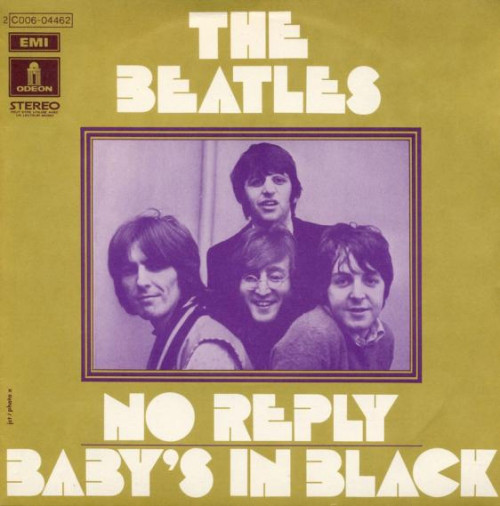
This song was written by John and Paul together. Baby’s In Black sounded different than most of their other songs at the time. The song was in 6/8 time similar to a Waltz and most Beatle songs to that point were in 4/4 time. The song was on the Beatles for Sale album. The album peaked at #1 in the UK and was taken apart for the American market with 8 of the 14 tracks released on Beatles 65 which peaked at #1 in 1965.
The song took a different approach. Baby’s In Black is about a man who is pursuing a woman, but the woman doesn’t return the interest because she is still in mourning for her previous lover, and the reason she always dresses in black.
I’ve always liked the song because it mixes different musical styles into one. The subject matter is also not a typical boy and girl love song.
Paul McCartney: “We got more and more free to get into ourselves,” McCartney remembers. “Our student selves rather than ‘we must please the girls and make money,’ which is all that ‘From Me To You,’ ‘Thank You Girl,’ P.S. I Love You’ is about…We wanted to write something a little bit darker, bluesy, the title’s dark anyway…more grown up rather than just straight pop. It was more ‘baby’s in black’ as in mourning. Our favorite color was black, as well.”
The depressing subject matter is hidden by the upbeat music.
There is speculation that the song was written about mourning the loss of Stuart Sutcliffe after he died of a sudden brain hemorrhage. The song was a 50/50 effort by both Lennon and McCartney but started by Lennon as a response to his own mourning process (which he never really got over). The “baby in black” would be photographer Astrid Kirchherr, who dated Sutcliffe before he died.
This is one of several Beatles songs with a dual melody line – “If I Fell” is another. McCartney and Lennon sang into the same microphone, making it hard to distinguish which is the main melody line. Sheet music of the song usually displays both.
This was the first 50/50 Lennon/McCartney song written since “I Want To Hold Your Hand” a year earlier. They wrote it together sitting practically nose to nose at John’s Kenwood Estate.
Baby’s In Black
Oh dear, what can I do? Baby’s in black And I’m feeling blue Tell me, oh what can I do? She thinks of him And so she dresses in black And though he’ll never come back She’s dressed in black
Oh dear, what can I do? Baby’s in black And I’m feeling blue Tell me, oh what can I do? I think of her But she thinks only of him And though it’s only a whim She thinks of him
Oh how long will it take Till she sees the mistake She has made? Dear what can I do? Baby’s in black And I’m feeling blue Tell me, oh what can I do?
Back before Elvis, before Vietnam war came along, Before the Beatles and Yesterday
I’m wrapping up the songs that reference the Beatles today…I thought Merle Haggard and Frank Zappa would be a good stopping point. Hope you enjoyed the posts.
This song has staying power because every generation longs for the culture of the ones before it. One could easily insert 21st-century phrasing into his classic hit, interchanging microwaves with iPhones, etc. Every single generation looks for a Golden Age, a time where they could pinpoint that everything was right in the world.
This song peaked at #2 in the Billboard Hot Country Song Charts and #1 in Canada in 1982.
Merle had 38 number one hits, 71 top ten hits, and 101 songs in the top 100 in the country charts. It’s hard to wrap my head around 38 number one songs on any chart.
Are The Good Times Really Over (I Wish a Buck Was Still Silver)
I wish a buck was still silver It was back when the country was strong Back before Elvis, before Vietnam war came along Before the Beatles and yesterday When a man could still work and still would Is the best of the free life behind us now And are the good times really over for good?And are we rolling downhill like a snowball headed for hell With no kinda chance for the flag or the liberty bell? Wish a Ford and a Chevy Would still last ten years like they should Is the best of the free life behind us now And are the good times really over for good?
I wish coke was still cola And a joint was a bad place to be It was back before Nixon lied to us all on T.V Before microwave ovens when a girl could still cook, and still would Is the best of the free life behind us now Are the good times really over for good?Are we rolling downhill like a snowball headed for hell With no kinda chance for the flag or the liberty bell Wish a Ford and a Chevy Would still last ten years like they should Is the best of the free life behind us now And are the good times really over for good?Stop rolling downhill like a snowball headed for hell Stand up for the flag and let’s all ring the liberty bell Let’s make a Ford and a Chevy That would still last ten years like they should ‘Cause the best of the free life is still yet to come And the good times ain’t over for good
Frank didn’t get played on commercial radio often. This is one of the few tracks that did get some airplay. The album peaked at #27 in the Billboard 100 in 1979.
I’m not familiar with a lot of Zappa’s catalog. The first song I remember liking by him was Catholic Girls off of this album. A friend of mine heavily into Zappa played me this concept album. The triple album came out as a double album and then a single album.
It’s pretty easy to see why it didn’t get radio play as the lyrics were full of profanity. The music is great… Zappa was one of the best guitarists around as well as a great all-around musician and songwriter.
From Songfacts about the album.
Running to 6 minutes 10 seconds, the title track of this triple concept album was obviously written from the heart, even though it is one of the few such songs which does not resort to out and out profanity. The song itself is fairly straightforward, but the uptempo music is both entertaining and witty. At the end, Joe is arrested for the crime of playing music. Zappa never got much airplay, but the few stations that played him often had this song in rotation.
Joe’s Garage is a popular name for real garages, though it remains to be seen if this is out of homage to Zappa or due to a lot of mechanics being Christened Joe!
In the liner notes to the album, Zappa makes a barely-passing reference to music being censored in Iran, which led some folks to believe the song was inspired by the Iran Hostage Crisis, but the American hostages weren’t taken until months after the album was released.
Zappa was an extremely outspoken enemy of religion, government, commercialism, and just about anything else, so this song and album are right in character. Joe’s Garage has parodies of a broad range of subjects – there’s “L. Ron Hoover” and the “First Church of Appliantology,” the Roman Catholic and Christian churches, lots of references to kinky sex (he also mocked that a lot), the “Central Scrutinizer” is kind of like Orwell’s Big Brother – referencing government censorship, making fun of “dope and LSD” and snorting lines of detergent, the music industry in general… you get the picture.
The ban-on-music thing in the story stems from the government’s “Total Criminalization” policy, where this new philosophy passes the legislation that states that “all humans are inherently criminals” and it’s the government’s job to keep making up laws to give them an excuse to throw everybody in jail.
Bottom line: You can’t narrow the theme of the album down to one thing. If anything, it was more Zappa’s general mockery of the whole capitalist-industrial military-religion complex, and mentioning Iran was just his way of saying “Look what could happen here! It happened there, after all.” Seeing as how this came out before the PMRC targeted Zappa for obscenity in lyrics which led to parental advisory stickers on the album, that kind of makes him a prophet.
Joe’s Garage
A boring old garage in a residential area with a teen-age band rehearsing in it. JOE (the main character in the CENTRAL SCRUTINIZER’S Special Presentation) sings to us of the trials and tribulations of garage-band husbandry.
Central Scrutinizer: We take you now, to a garage, in Canoga Park.
Frank Zappa: (It makes it’s own sauce…)
Joe: It wasn’t very large There was just enough room to cram the drums In the corner over by the Dodge It was a fifty-four With a mashed up door And a cheesy little amp With a sign on the front said “Fender Champ” And a second hand guitar It was a Stratocaster with a whammy bar
At this point, LARRY (a guy who will eventually give up music and earn a respectable living as a roadie for a group called Toad-O) joins in the song…
Larry: We could jam in Joe’s Garage His mama was screamin’ His dad was mad We was playin’ the same old song In the afternoon ‘n’ sometimes we would Play it all night long It was all we knew, ‘n’ easy too So we wouldn’t get it wrong All we did was bend the string like… Hey! Down in Joe’s Garage We didn’t have no dope or LSD But a coupla quartsa beer Would fix it so the intonation Would not offend yer ear And the same old chords goin’ over ‘n’ over Became a symphony We would play it again ‘n’ again ‘n’ again ‘Cause it sounded good to me ONE MORE TIME! We could jam in Joe’s Garage His mama was screamin’, “TURN IT DOWN!” We was playing’ the same old song In the afternoon ‘n’ sometimes we would Play it all night long It was all we knew, and easy too So we wouldn’t get it wrong Even if you played it on a saxophone We thought we was pretty good We talked about keepin’ the band together ‘N’ we figured that we should ‘Cause about this time we was gettin’ the eye From the girls in the neighborhood They’d all come over ‘n’ dance around like…
Twenty teen-age girls dash in and go STOMP-CLAP, STOMP-CLAP-CLAP…
So we picked out a stupid name Had some cards printed up for a coupla bucks ‘N’ we was on our way to fame Got matching suits ‘N’ Beatle Boots ‘N’ a sign on the back of the car ‘N’ we was ready to work in a GO-GO Bar
ONE TWO THREE FOUR LET’S SEE IF YOU GOT SOME MORE!
People seemed to like our song They got up ‘n’ danced ‘n’ made a lotta noise An’ it wasn’t ‘fore very long A guy from a company we can’t name Said we oughta take his pen ‘N’ sign on the line for a real good time But he didn’t tell us when These “good times” would be somethin’ That was really happenin’ So the band broke up An’ it looks like We will never play again…
Joe: Guess you only get one chance in life To play a song that goes like…
(And, as the band plays their little song, MRS. BORG (who keeps her son SY, in the closet with the vacuum cleaner) screams out the window…
Mrs. Borg: Turn it down! Turn it DOWN! I have children sleeping here… Don’t you boys know any nice songs?
Joe: (Speculating on the future) Well the years was rollin’ by, yeah Heavy Metal ‘n’ Glitter Rock Had caught the public eye, yeah Snotty boys with lipstick on Was really flyin’ high, yeah ‘N’ then they got that Disco thing ‘N’ New Wave came along ‘N’ all of a sudden I thought the time Had come for that old song We used to play in “Joe’s Garage” And if I am not wrong You will soon be dancin’ to…
Central Scrutinizer: The WHITE ZONE is for loading and unloading only. If you gotta load or unload, go to the WHITE ZONE. You’ll love it…
Joe: Well the years was rollin’ by (etc.)…
Mrs. Borg: I’m calling THE POLICE! I did it! They’ll be here… shortly!
Officer Butzis: This is the Police…
Mrs. Borg: I’m not joking around anymore
Officer Butzis: We have the garage surrounded If you give yourself up We will not harm you Or hurt you neither
Mrs. Borg: You’ll see them
Officer Butzis: This is the Police
Mrs. Borg: There they are, they’re coming!
Officer Butzis: Give yourself up We will not harm you
Mrs. Borg: Listen to that mess, would you?
Officer Butzis: This is the Police Give yourself up We have the garage surrounded
Mrs. Borg: Everday this goes on around here!
Officer Butzis: We will not harm you, or maim you (SWAT Team 4, move in!)
Mrs. Borg: He used cut my grass… He was very nice boy… That’s DISGUSTING!
Central Scrutinizer: This is the CENTRAL SCRUTINIZER… That was Joe’s first confrontation with The Law. Naturally, we were easy on him. One of our friendly counselors gave him A do-nut… and told him to Stick closer to church-oriented social activities.
I don’t believe in Elvis, I don’t believe in Zimmerman, I don’t believe in Beatles
Before recording this album, John and Yoko began “Primal Scream therapy,” which was a very emotional time for them. Lennon was dealing with the breakup of The Beatles and focusing on the death of his mother a decade earlier. His interviews at the time had a “scorched earth” feel about them. He basically was breaking ties with his past completely and starting anew.
John could be a walking contradiction.
In a 1969 interview John gave that was broadcast on the BBC recently he was asked about the “The Beatles bigger than Christ” he gave in 1966.
“It’s just an expression meaning the Beatles seem to me to have more influence over youth than Christ. Now I wasn’t saying that was a good idea, ‘cos I’m one of Christ’s biggest fans. And if I can turn the focus on the Beatles on to Christ’s message, then that’s what we’re here to do.” 1969.
This song is as strong as any of his Beatles songs. The word I would use would be Powerful to describe it. God was released on his debut album John Lennon/Plastic Ono Band album in 1970. The song is so personal that sometimes I feel uncomfortable listening to it.
When Lennon was recording this at Abbey Road studios, George Harrison was next door completing work on All Things Must Pass. George Harrison said “I was in one room singing ‘My Sweet Lord’, “and John was in another room singing ‘I don’t believe in Jesus, I don’t believe in nothing’.”
John Lennon: “I was going to leave a gap, and just fill in your own words: whoever you don’t believe in. It had just got out of hand, and Beatles was the final thing because I no longer believe in the myth, and Beatles is another myth. I don’t believe in it. The dream is over. I’m not just talking about the Beatles, I’m talking about the generation thing. It’s over, and we gotta – I have to personally – get down to so-called reality.”
From Songfacts
Lennon wrote this about the worship of false idols. He felt organized religion did more harm than good. In “Imagine,” he sang about a better world where there was “no religion.”
Lennon was not an atheist but believed that God was something different to everyone. He also believed that people focus too much on the teacher (God) rather than what is supposed to be taught. In songs like this one and “Imagine,” Lennon was trying to send the message that we should not let religion and other things get in the way of how we think life should be lived. In “Imagine,” “Living for today,” means to live as if there is no afterlife or god and to do the best you can. In this song, “I just believe in me,” states his belief in his life regardless of anything else.
At the time, Lennon had some hard feelings toward The Beatles, especially Paul McCartney. He made a statement that he was moving on with the line, “I don’t believe in Beatles.”
Billy Preston played the piano on this track. He also played on some of The Beatles’ songs, including “Get Back.” Preston, who came from a gospel background, was troubled by the song’s atheistic vibe but kept his feelings to himself. He had similar issues when performing “Sympathy For The Devil” on tour with the Rolling Stones.
Ringo Starr played drums. He and Lennon had a good relationship even after The Beatles broke up.
This contains the classic line, “The Dream Is Over.” This summed up the feelings of many who felt their idealistic goals of the ’60s were not going to come true.
In the January 1971 edition of Rolling Stone, Lennon said that this, “was put together from three songs almost.” He went on to the explain that the words for this “just came out of me mouth.” The former Beatle continued: “I had the idea that ‘God is the concept by which we measure pain,’ so that when you have a word like that, you just sit down and sing the first tune that comes into your head and the tune is simple, because I like that kind of music and then I just rolled into it. It was just going on in my head and I got by the first three or four, the rest just came out. Whatever came out.”
Among the list of idols in this song, which Lennon said he didn’t believe in was The Beatles. Lennon explained why to Rolling Stone:
Lennon starts this song with the line, “God is a concept by which we measure our pain.” He explained to Rolling Stone that, “pain is the pain we go through all the time,” Then added: “You’re born in pain. Pain is what we are in most of the time, and I think that the bigger the pain, the more God you look for.”
God
God is a concept By which we measure Our pain I’ll say it again God is a concept By which we measure Our pain
I don’t believe in magic I don’t believe in I-Ching I don’t believe in Bible I don’t believe in tarot I don’t believe in Hitler I don’t believe in Jesus I don’t believe in Kennedy I don’t believe in Buddha I don’t believe in mantra I don’t believe in Gita I don’t believe in yoga I don’t believe in kings I don’t believe in Elvis I don’t believe in Zimmerman I don’t believe in Beatles I just believe in me Yoko and me And that’s reality
The dream is over What can I say? The dream is over Yesterday I was the dream weaver But now I’m reborn I was the Walrus But now I’m John And so dear friends You just have to carry on The dream is over
In a hand painted night, me and Gypsy Scotty are partners, At the Hotel Flamingo, wearin black market shoes, This loud Cuban band is crucifying John Lennon
This song was released in 1996 and it came off the album Mr. Happy Go Lucky. The song peaked at #14 in the Billboard 100, #1 in Canada and #83 in the UK in 1996. It’s a very good pop song and Key West Intermezzo (I Saw You First), which was Mellencamp’s last US top 40 hit.
John Mellencamp and Cougar had 29 songs in the Billboard 100, 10 top ten hits and one number 1 (Jack and Diane). He released this two years after his minor heart attack in 1994. I’ve always liked this song…catchy riff and a good pop hook.
Key West Intermezzo (I Saw You First)
In a hand painted night, me and Gypsy Scotty are partners At the Hotel Flamingo, wearin black market shoes This loud Cuban band is crucifying John Lennon No one wants to be lonely, no one wants to sing the blues
She’s perched like a parrot on his tuxedo shoulder Christ, what’s she doing with him she could be dancing with me She stirs the ice in her glass with her elegant finger I want to be what she’s drinking, yeah I just want to be
I saw you first I’m the first one tonight I saw you first Don’t that give me the right To move around in your heart Everyone was lookin But I saw you first
On a moon spattered road in her parrot rebozo Gypsy Scotty is driving his big long yellow car She flies like a bird over his shoulder Se whispers in his ear, boy, you are my star
But I saw you first I’m the first one tonight Yes I saw you first Don’t that give me the right To move around in your heart Everyone was lookin’
In the bone colored dawn, me and Gypsy Scotty are singin’ The radio is playin, she left her shoes out in the back He tells me a story about some girl he knows in Kentucky He just made that story up, there ain’t no girl like that
But I saw you first I’m the first one tonight Yes I saw you first Don’t that give me the right To move around in your heart Everyone was lookin But I saw you first I saw you first
Will you remember Jerry Lee, John Lennon, T. Rex and old Moulty? It’s the end, the end of the seventies, It’s the end, the end of the century
Phil Spector produced the End of the Century album. This track was fitting, as Spector worked on a lot of the music that influenced The Ramones. Spector changed their sound to a more radio-friendly pop/rock record.
The voice that opens this song with the words, “Come on, let’s rock and roll with the Ramones” is Sean Donahue, a disc jockey who worked at radio stations in San Francisco (KSAN) and San Jose (KOME, KSJP).
The album peaked at #44 in the Billboard 100 in 1980. Different band members had problems with Spector. The Ramones worked fast live and in the studio but Spector was methodical about his work.
Dee Dee Ramone on Phil Spector:
He levelled his gun at my heart and then motioned for me and the rest of the band to get back in the piano room … He only holstered his pistol when he felt secure that his bodyguards could take over. Then he sat down at his black concert piano and made us listen to him play and sing “Baby, I Love You” until well after 4:30 in the morning.
Marky Ramone denied this…
From Songfacts
This song is a tribute to the music of the ’50s and ’60 that influenced The Ramones. Here’s a breakdown of the lyrical references:
“Hullabaloo” – A UK TV show featuring music and dancing that aired 1965-1966.
“Upbeat” – The Upbeat Show, which was a Cleveland TV show (also with music and dancing) that aired 1964-1971.
“Shindig” – The first prime time Rock music show, many top acts performed on the program. It aired 1964-1966.
“Ed Sullivan” – Host of The Ed Sullivan Show, a popular variety show that lasted more than 20 years. Many famous musicians appeared on the show, including The Beatles, The Doors and The Rolling Stones.
“Murray The K” – Murray “The K” Kaufman, a legendary disc jockey who helped promote rock n’ roll in the States on his radio show and through concerts he helped organize. He championed The Beatles, The Rolling Stones and Bob Dylan.
“Alan Freed” – Another very influential disc jockey, Freed is credited with coining the term “Rock And Roll.”
“Jerry Lee” – Jerry Lee Lewis was a rock originator known for his electrifying performances.
“John Lennon” – Most punk bands wouldn’t claim Lennon and The Beatles as an influence, but The Ramones were a nuanced group that shared an appreciation of his work.
“T. Rex” – Glam Rock originators known for their outrageous costumes and stage presence.
“Ol’ Moulty” – Victor Moulton, who was the drummer in a group called The Barbarians.
Under Spector’s control, he took The Ramones in a new direction, giving the songs on the album a pop sheen and radio-friendly sound. There is a prominent saxophone on the track, which was played by Steve Douglas, who was a member of Spector’s “Wrecking Crew” and played on many of his famous productions.
Spector developed a reputation as being a bit of a maniac, which in part can be attributed to statements Dee Dee Ramone made about working with him. Dee Dee claimed the Spector pulled a gun on him at one point, and was a tyrant in the studio. Spector did some work with Yoko Ono the following year, but became very reclusive until the ’00s, when he produced an album for the English band Starsailor that was released in 2003. In February 2003, Spector was accused of shooting and killing a nightclub hostess at his home.
The closing lyrics, “It’s the end of the ’70s, it’s the end of the century” imply that the musical century was essentially over. The line provided the album title.
In our interview with drummer Marky Ramone, he said that one the band put down their tracks, Phil Spector threw the works (horns, strings, percussion) at the songs on End of the Century, especially this one. “It’s mountainous the way that song is,” he said. “He had a lot of great studio musicians playing on that album just to create a wall of sound, which he was known for. That song took a while. There’s a lot of parts in it.”
Marky adds that the story about Spector pulling a gun in the studio is overblown. He says that while Spector did carry a gun and would sometimes take it off to work, he never threatened anyone with it.
The Ramones made a music video for this song that was directed by Mark Robinson, who also did their clip for “Rock ‘N’ Roll High School.” It was one of the few videos available to MTV when the network launched in 1981, but they gave it very little airplay. MTV tried to program a rock format at the time, and were desperate for videos by American bands in that genre. The Ramones fit the bill, but their videos didn’t have the production value to match what was coming out of Europe.
The intro is meant to elicit the sound of a DJ enthusiastically talking up the song at a radio station.
Do You Remember Rock and Roll Radio?
(This is Rock ‘n’ roll radio, come on, let’s rock ‘n’ roll with the Ramones)
Rock’n, rock ‘n’ roll radio, let’s go Rock’n, rock ‘n’ roll radio, let’s go Rock’n, rock ‘n’ roll radio, let’s go Rock’n, rock ‘n’ roll radio, let’s go
Do you remember Hullabaloo Upbeat, Shindig and Ed Sullivan, too? Do you remember rock ‘n’ roll radio? Do you remember rock ‘n’ roll radio?
Do you remember Murray the K Alan Freed, and High Energy? It’s the end, the end of the seventies It’s the end, the end of the century
Do you remember lying in bed With the covers pulled up over your head Radio playin’ so no one can see? We need change, and we need it fast Before rock’s just part of the past ‘Cause lately, it all sounds the same to me Whoah-whoah, oh
Rock’n, rock ‘n’ roll radio, let’s go Rock’n, rock ‘n’ roll radio, let’s go Rock’n, rock ‘n’ roll radio, let’s go Rock’n, rock ‘n’ roll radio, let’s go
Will you remember Jerry Lee John Lennon, T. Rex and old Moulty? It’s the end, the end of the seventies It’s the end, the end of the century
Do you remember lying in bed With the covers pulled up over your head Radio playin’ so no one can see? We need change, and we need it fast Before Rock’s just part of the past ‘Cause lately, it all sounds the same to me Whoah-whoah, oh
Rock’n, rock ‘n’ roll radio, let’s go Rock’n, rock ‘n’ roll radio, let’s go Rock’n, rock ‘n’ roll radio, let’s go Rock’n, rock ‘n’ roll radio, let’s go
(This is rock ‘N’ roll radio, stay tuned for more rock ‘n’ roll)
I was living in London, With the girl from the summer before, It was the year of the Beatles, It was the year of the Stones
On a cold December evening, I was walking through the Christmas tide, When a stranger came up and asked me If I’d heard John Lennon had died
This song referenced both Johnny Ace the R&B Artist who supposedly have shot himself in a game of Russian roulette in 1954, JFK and John Lennon who was killed on December 8, 1980.
I remember the song on the Simon & Garfunkel reunion concert in Central Park video. When Paul started the part about Lennon a man rushed the stage, shocking Paul especially since it was under a year since Lennon’s murder.
“The Late Great Johnny Ace” is a song by Paul Simon, which is on the 1983 Hearts and Bones album.
The Late Great Johnny Ace
I was reading a magazine And thinking of a rock and roll song The year was 1954 And I hadn’t been playing that long When a man came on the radio And this is what he said He said I hate to break it To his fans But Johnny Ace is dead Well, I really wasn’t Such a Johnny Ace fan But I felt bad all the same So I sent away for his photograph And I waited till it came It came all the way from Texas With a sad and simple face And they signed it on the bottom From the Late Great Johnny Ace It was the year of the Beatles It was the year of the Stones It was 1964 I was living in London With the girl from the summer before It was the year of the Beatles It was the year of the Stones A year after J.F.K. We were staying up all night And giving the days away And the music was flowing Amazing And blowing my way On a cold December evening I was walking through the Christmas tide When a stranger came up and asked me If I’d heard John Lennon had died And the two of us Went to this bar And we stayed to close the place And every song we played Was for the Late Great Johnny Ace
All summer long we were dancing in the sand, Everybody just kept on playing “Sgt. Pepper’s Lonely Hearts Club Band”
Ok, I’m cheating a little on this kinda… It doesn’t mention “Beatles” but Sgt Pepper’s Lonely Hearts Club Band was the Beatles alter ego on the Sgt Peppers album.
This song was a hit for Johnny Rivers and it was written by James Hendricks. Summer Rain was on his Realization album released in 1968. It was written about the Summer of Love in 1967. The song peaked at #14 in the Billboard 100, #10 in Canada in 1968.
I like Johnny Rivers…he was strictly a singles artist and had some good songs. He did chart a lot of covers in his career. He had 29 songs in the top 100, 9 top ten songs and 1 number 1 (Poor Side of Town).
I first heard this song in the 80s on a local oldies station at the time… 96.3 in Nashville.
Summer Rain
Summer rain taps at my window West wind soft as a sweet dream My love, warm as the sunshine Sitting here by me, yeah She’s here by meShe stepped out of a rainbow Golden hair shining like moonglow Warm lips, soft as her soul Sitting here by me, now She’s here by meAll summer long we were dancing in the sand Everybody just kept on playing “Sgt. Pepper’s Lonely Hearts Club Band”We sailed into the sunset Drifting home, caught by a gulf stream Never gave a thought for tomorrow Let tomorrow be, yeah Let tomorrow be
She wants to live in the Rockies She says that’s where we’ll find peace Settle down, raise up a family One to call our own, yeah We will have a home
All summer long we were grooving in the sand Everybody just kept on playing “Sgt. Pepper’s Lonely Hearts Club Band”
Winter snows drift by my window North wind blowing like thunder Our love is burning like fire She’s here by me, yeah She’s here by me Let tomorrow be
I’m gonna stand the test of time Like Beatles and Stones
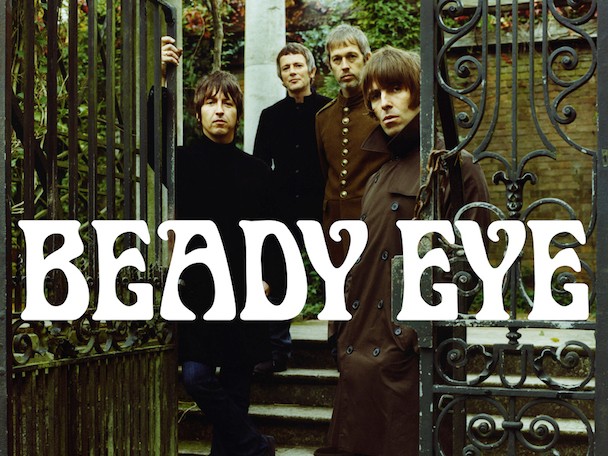
Beady Eye was a band formed by Liam Gallagher of Oasis with former members of Oasis. This song was written by Liam Gallagher and it was on the Different Gear, Still Speeding album released in 2011.
They recycled the Who’s My Generation riff to good effect. They defiantly have that mid-sixties mod thing going on.
Beady Eye released two albums. Different Gear, Still Speeding (#3 UK) in 2011 and BE (#2 UK) in 2013. In 2014 Beady Eye broke up because of the failure to gain popularity in the US according to Liam Gallagher.
Beatles and Stones
Well it beats me mama, I just want to rock and roll Well it beats me mama, I just want to rock and roll I’m gonna stand the test of time Like Beatles and Stones
Well it freaks them mama I’m not doin’ what I’m told Well it freaks them mama You know I can’t be bought and sold I’m gonna stand the test of time Like Beatles and Stones
I’m on my way home, just get back to what’s mine And when I get home, well I’ll be alright
Well it beats me mama, I just want to rock and roll I’m gonna stand the test of time Like Beatles and Stones
I’m on my way home, just get back to what’s mine And when I get home, well I’ll be alright
What’s that you say? Get out the way!
Well it beats me mama, I just want to rock and roll Well it beats me mama, I just want to rock and roll I’m gonna stand the test of time Like Beatles and Stones
Well it freaks them mama
I’m not doin’ what I’m told Well it freaks them mama You know I can’t be bought and sold I’m gonna stand the test of time Like Beatles and Stones
I’m on my way home, just get back to what’s mine And when I get home, well I’ll be alright Well it beats me mama, I just want to rock and roll I’m gonna stand the test of time Like Beatles and Stones
I’m on my way home, just get back to what’s mine And when I get home, well I’ll be alright
Fear in the air, tension everywhere, Unemployment rising fast, the Beatles new record’s a gas
This song has an edge to it that Motown songs lack at times. This was one of the many psychedelic soul records that Norman Whitfield wrote and produced for the Temptations between the late ’60 and early ’70s. The song tries to make sense of the chaos and disorder pervading the times and still relevant today. Norman Whitfield and Barrett Strong wrote the song.
Motown wasn’t known to make a lot of protest records but this one contained lyrics about Nixon’s influence, Vietnam, and drug addiction.
This song peaked at #3 in the Billboard 100 in 1970. The Temptations had 53 songs in the top 100, 15 top ten hits and 4 number 1’s. This song was on their Greatest Hits II album.
From Songfacts
Bob Babbitt of the Motown house band The Funk Brothers recalled to Mojo magazine February 2009 the recording of this track: “Norman Whitfield gave the call to me the night before (the session). So I got to the studio the next day, there was a whole load of guys in there – Uriel Jones, Pistol Allen, Jack Ashford, Eddie Bongo, Earl Van Dyke on clavinet, Johnny Griffith on organ, Joe Messina, Dennis Coffey.
There was no song, just some musical ideas, some chord patterns, and part of a bassline he played us. Norman knew what he wanted though, that it was going to be funky. He’d been listening to a lot of Hendrix, Sly & the Family Stone, that’s the sound he wanted to make the Motown sound.
Putting it together was simple, we just did that one song in the three-hour session and we had enough time left over to eat some BLT sandwiches. We didn’t know it was going to be political, because the lyrics weren’t written when the rhythm track was recorded.
I heard the song four days later. It was a Saturday morning, I was running errands and it came on the automobile radio. They got the songs out quick in those days, especially in Detroit.”
Dennis Coffey used a Vox Tone Bender pedal and an Echoplex effect unit on his guitar to get psychedelic delay. Coffey also used the Echoplex on “In The Rain” by The Dramatics, where it is more pronounced.
This was one of the number of classic R&B and gospel songs performed by Whoopi Goldberg and her choir in the 1993 movie, Sister Act 2 Back in the Habit.
A number of artists have covered this tune, including The Neville Brothers, Tina Turner, Duran Duran and Anthrax. Tina Turner’s version was included on the 1982 LP Music of Quality And Distinction Volume One, a tribute album by the B.E.F, a production team formed by former Human League members Martyn Ware and Ian Craig Marsh who later became Heaven 17 (with lead singer Glenn Gregory). The album involved other artists covering classic songs, mainly done in their electro-pop style with synthesizers and LinnDrums. Martyn Ware recalled to us the moment where Tina and her manager Rodger Davis first walked into the studio. “She said, ‘Martyn, nice to meet you. Where is the band?’ And I pointed at the Fairlight and I said, ‘It’s there.’ Of course, this was the early days of that stuff. They were blown away, really.”
Tina Turner’s recording of the track opened the album and was also issued as a single reaching the Top 5 in Norway. It proved to be an important song in Turner’s career as it led to Capitol Records signing her and her next single, a Martyn Ware produced cover of Al Green’s “Let’s Stay Together,” became a surprise hit on both sides of the Atlantic.
Ball Of Confusion (That’s What the World Is Today)
One, two, one, two, three, four, ow
People moving out, people moving in Why, because of the color of their skin Run, run, run but you sure can’t hide
An eye for an eye, a tooth for a tooth Vote for me and I’ll set you free Rap on, brother, rap on
Well, the only person talking about love thy brother is the preacher And it seems nobody’s interested in learning but the teacher Segregation, determination, demonstration, integration Aggravation, humiliation, obligation to our nation
Ball of confusion Oh yeah, that’s what the world is today Woo, hey, hey
The sale of pills are at an all time high Young folks walking round with their heads in the sky The cities ablaze in the summer time
And oh, the beat goes on
Evolution, revolution, gun control, sound of soul Shooting rockets to the moon, kids growing up too soon Politicians say more taxes will solve everything
And the band played on
So, round and around and around we go Where the world’s headed, nobody knows
Oh, great googa-looga, can’t you hear me talking to you Just a ball of confusion Oh yeah, that’s what the world is today Woo, hey
Fear in the air, tension everywhere Unemployment rising fast, the Beatles new record’s a gas
And the only safe place to live is on an Indian reservation
And the band played on
Eve of destruction, tax deduction, city inspectors, bill collectors Mod clothes in demand, population out of hand, suicide, too many bills Hippies moving to the hills, people all over the world are shouting, end the war
And the band played on
Great googa-looga, can’t you hear me talking to you Sayin’ ball of confusion That’s what the world is today, hey, hey
Let me hear ya, let me hear ya, let me hear ya Sayin’, ball of confusion That’s what the world is today, hey, hey Let me hear ya, let me hear ya, let me hear ya, let me hear ya, let me hear ya Ball of confusion
And you know something’s happening but you don’t know what it is Do you, Mr. Jones?
There is a lot of power in just that one line and the song. Not only the lyrics but the intensity that Bob sings it. When it was released everyone wanted to know who Mr. Jones was and people still wonder. Bob Dylan set it straight like only Dylan does with this statement…“I could tell you who Mr. Jones is in my life, but, like, everybody has got their Mr. Jones.”
“Ballad Of A Thin Man” was recorded on August 2, 1965, at the same session as “Just Like Tom Thumb’s Blues,” “Queen Jane Approximately” and “Highway 61 Revisited,” when you get those songs out of a session…you are doing alright.
The song was on the great album Highway 61 Revisited. The album peaked at #3 in the Billboard 100 and #4 in the UK in 1965.
From Songfacts
While speculations remain rampant as to who “Mr. Jones” is and what exactly this song is supposed to mean, there is no definitive answer at this time. The closest thing we’ve seen to an answer from Dylan himself appears in an interview given in Keys to the Rain: The Definitive Bob Dylan Encyclopedia, where Dylan asserts that the “Mr. Jones” in question is a real person not known by this name, who is a pinboy, wears suspenders, and “puts his eyes in his pocket” which might mean that he wears glasses.
Before launching into this song in Japan, 1986, Dylan said, “This is a song I wrote in response to people who ask questions all the time. You just get tired of that every once in a while.”
Of the many references to “Ballad of a Thin Man” found throughout media, are the lines “feel so suicidal, just like Dylan’s Mr. Jones” from the Beatles’ “Yer Blues,” “Mr. Jones is a man who doesn’t know who Mr. Jones is” from Momus’ “Who Is Mr. Jones?,” “I wanna be Bob Dylan, Mr. Jones wishes he was someone just a little more funky.” from Counting Crows’ “Mr. Jones,” and “Mr. Jones won’t lend me a hand” from Country Joe and the Fish’ “Flying High.” While we cannot speculate on the true identity of Mr. Jones, it can be said that the name “Mr. Jones” has come to symbolize for the music world the kind of old-guard “square” who “doesn’t get it,” similar to our modern usage of the mythical “Joe Sixpack.”
This is the song which Bob Dylan and his band played at the Forest Hills concert of 1965 in an attempt to soothe the unruly crowd. As Al Kooper recounts in Backstage Passes and Backstabbing Bastards, “It had a quiet intro, and the kids persisted in yelling and booing all the way through it. Dylan shouted to us to ‘keep playing the intro over and over again until they shut up!’ We played it for a good five minutes – doo do da da, do da de da – over and over until they did, in fact, chill. A great piece of theater. When they were finally quiet, Dylan sang the lyrics to them.”
A 1966 cover of this song (titled “Mr. Jones (Ballad of a Thin Man)”) was the first single for The Grass Roots. At the time, the group was led by P.F. Sloan and Steve Barri. Sloan credits Bob Dylan for sticking by him when many other musicians and industry insiders dissociated themselves from him. Sloan was an up-and-coming songwriter/producer when he wrote the incendiary hit “Eve Of Destruction,” which went to #1 in 1965, but caused a great deal of controversy and made it very difficult for him to find work.
According to Al Kooper, Bob Dylan took from Ray Charles’s “I Believe to My Soul” for “Ballad of a Thin Man.”
In a September 22, 1966 interview in Austin, Texas, a reporter asked Dylan if “Ballad of a Thin Man” was about “a newspaper reporter or something.” Dylan, who spent the entire interview mocking and evading the questions, responded with a single line: “No, it’s just about a fella that came into a truck stop once.”
The opening line, “You walk into the room with your pencil in your hand,” was at one point, “You walk into the room with a hatchet in your hand.” This was revealed in a lyric sheet that is part of Dylan’s archives in Tulsa.
Before and after their speeches, Black Panther founder Huey P. Newton and Bobby Seale regularly played this song over the PA system. Insiders reported they listened to it almost obsessively. The two men felt it was speaking about the black struggle in America.
Ballad of a Thin Man
You walk into the room with your pencil in your hand You see somebody naked and you say, “Who is that man?” You try so hard but you don’t understand Just what you will say when you get home Because something is happening here but you don’t know what it is Do you, Mr. Jones?
You raise up your head and you ask, “Is this where it is?” And somebody points to you and says, “It’s his” And you say, “What’s mine?” and somebody else says, “Well, what is?” And you say, “Oh my God, am I here all alone?” But something is happening and you don’t know what it is Do you, Mr. Jones?
You hand in your ticket and you go watch the geek Who immediately walks up to you when he hears you speak And says, “How does it feel to be such a freak?” And you say, “Impossible!” as he hands you a bone And something is happening here but you don’t know what it is Do you, Mr. Jones?
You have many contacts among the lumberjacks To get you facts when someone attacks your imagination But nobody has any respect, anyway they already expect you to all give a check To tax-deductible charity organizations
Ah, you’ve been with the professors and they’ve all liked your looks With great lawyers you have discussed lepers and crooks You’ve been through all of F. Scott Fitzgerald’s books You’re very well-read, it’s well-known But something is happening here and you don’t know what it is Do you, Mr. Jones?
Well, the sword swallower, he comes up to you and then he kneels He crosses himself and then he clicks his high heels And without further notice, he asks you how it feels And he says, “Here is your throat back, thanks for the loan” And you know something is happening but you don’t know what it is Do you, Mr. Jones?
Now, you see this one-eyed midget shouting the word “Now” And you say, “For what reason?” and he says, “How” And you say, “What does this mean?” and he screams back, “You’re a cow” “Give me some milk or else go home” And you know something’s happening but you don’t know what it is Do you, Mr. Jones?
Well, you walk into the room like a camel, and then you frown You put your eyes in your pocket and your nose on the ground There ought to be a law against you comin’ around You should be made to wear earphones ‘Cause something is happening and you don’t know what it is Do you, Mr. Jones?
In the next few days, I will be featuring some songs that make references to The Beatles. either separately or as a band. Today will be Life On Mars?. They will be in no order…
Now the workers have struck for fame ‘Cause Lennon’s on sale again
Life On Mars is my absolute favorite song by David Bowie. Not only favorite by Bowie but one of my favorites ever. Both the abstract lyrics and music are perfect. This song was on the Hunky Dory album released in 1971. The song peaked at #3 in the UK charts in 1972.
The piano on the recording was played by Rick Wakeman of Yes.
Bowie came up with this after he was asked to put English lyrics to a French song called “Comme d’habitude.” Paul Anka bought the rights to the original French song and rewrote it in English as “My Way,” later made famous by Frank Sinatra. “Life On Mars?” uses practically the same chords as “My Way” and the Hunky Dory liner notes state that the song is “Inspired by Frankie.”
David Bowie about the song: A sensitive young girl’s reaction to the media” “I think she finds herself disappointed with reality… that although she’s living in the doldrums of reality, she’s being told that there’s a far greater life somewhere, and she’s bitterly disappointed that she doesn’t have access to it.”
From Songfacts
The song is about a girl who goes to watch a movie after an argument with her parents. The film ends with the line “Is there life on Mars?”
The lyrics also contain imagery suggesting the futility of man’s existence, a topic Bowie used frequently on his early albums.
In 2008, Bowie recalled writing this song to the Mail on Sunday: “This song was so easy. Being young was easy. A really beautiful day in the park, sitting on the steps of the bandstand. ‘Sailors bap-bap-bap-bap-baaa-bap.’ An anomic (not a ‘gnomic’) heroine. Middle-class ecstasy. I took a walk to Beckenham High Street to catch a bus to Lewisham to buy shoes and shirts but couldn’t get the riff out of my head. Jumped off two stops into the ride and more or less loped back to the house upon Southend Road. The workspace was a big empty room with a chaise lounge; a bargain-price art nouveau screen (‘William Morris,’ so I told anyone who asked); a huge overflowing freestanding ashtray and a grand piano. Little else. I started working it out on the piano and had the whole lyric and melody finished by late afternoon. Nice. Rick Wakeman [of prog band, Yes] came over a couple of weeks later and embellished the piano part and guitarist Mick Ronson created one of his first and best string parts for this song which now has become something of a fixture in my live shows.”
The band Bush used the line, “Mickey Mouse has grown up a cow” as a tribute to Bowie in their song “Everything Zen.”
This was released as a single in 1973, two years after it appeared on Hunky Dory.
The song was recorded in Portuguese by Seu Jorge for the soundtrack of the 2004 film The Life Aquatic With Steve Zissou. Anni-Frid Lyngstad, formerly of ABBA, recorded a Swedish version titled “Liv pa Mars?”
If you listen closely to the end of the original recording of this song, you can hear a telephone ringing.
The Ukulele Orchestra of Great Britain often performs this song at live shows. They claim it is a “song about plagiarism” and that it “wasn’t our idea.” The first verse is played straight as Jonty Bankes sings. As Bankes sings the second verse, George Hinchcliffe sings “My Way” until the bridge (“But the film is a sadd’ning bore”) when Peter Brooke-Turner sings lines from “For Once in My Life.” Then through the chorus, Hester Goodman sings from “Born Free” while Dave Suich sings The Who’s “Substitute.” Watch it here. >>
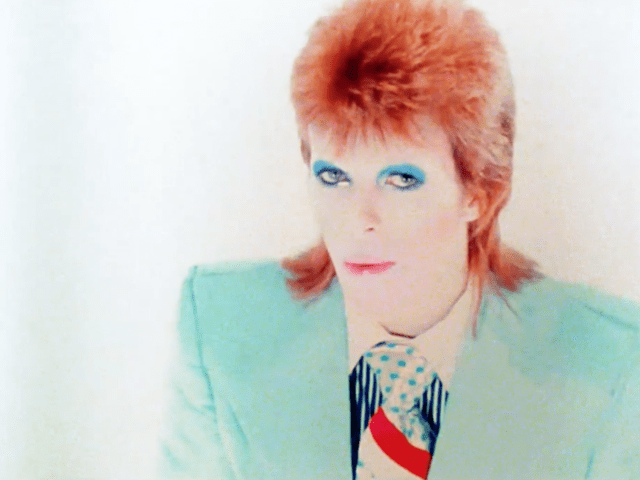
Mick Rock directed the song’s official video. It was filmed backstage at Earls Court in London in 1973. It features Bowie in a turquoise suit and makeup, performing the song against a white backdrop.
The BBC television series, Life On Mars, was named after this, while its sequel, Ashes to Ashes, was also named after the Bowie song of the same name.
Green Day frontman Billie Joe Armstrong has stated he would like this song to be played at his funeral.
This was featured on the first episode of the TV series American Horror Story: Freak Show, where it was sung by Jessica Lange’s character. The series is set in 1952 but used music recorded much later, similarly to how Baz Luhrmann incorporated contemporary tunes into the films Moulin Rouge and The Great Gatsby.
Ryan Murphy, who created the show, says that he looked for music by artists who were oddities themselves, and proud of it. Bowie fit the bill and approved the use of the song, as did Fiona Apple, who allowed her song “Criminal” to be used in the next episode.
Life On Mars
It’s a God-awful small affair To the girl with the mousy hair But her mummy is yelling no And her daddy has told her to go
But her friend is nowhere to be seen Now she walks through her sunken dream To the seat with the clearest view And she’s hooked to the silver screen
But the film is a saddening bore For she’s lived it ten times or more She could spit in the eyes of fools As they ask her to focus on
Sailors fighting in the dance hall Oh man look at those cavemen go It’s the freakiest show Take a look at the lawman Beating up the wrong guy Oh man wonder if he’ll ever know He’s in the best selling show Is there life on Mars?
It’s on America’s tortured brow That Mickey Mouse has grown up a cow Now the workers have struck for fame ‘Cause Lennon’s on sale again See the mice in their million hordes From Ibiza to the Norfolk Broads Rule Britannia is out of bounds To my mother, my dog, and clowns But the film is a saddening bore ‘Cause I wrote it ten times or more It’s about to be writ again As I ask you to focus on
Sailors fighting in the dance hall Oh man look at those cavemen go It’s the freakiest show Take a look at the lawman Beating up the wrong guy Oh man wonder if he’ll ever know He’s in the best selling show Is there life on Mars?
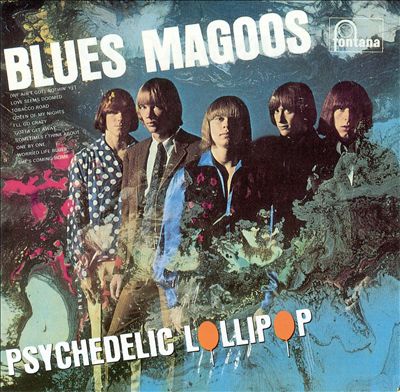
I remember this song in Easy Rider from the cool bass line. The Blues Magoos were a psychedelic rock band formed in 1964 as the “The Trenchcoats” in the Bronx, New York. This song came off of the album Psychedelic Lollipop (Great name) in 1967. The song peaked at #5 in 1967 in the Billboard 100 and the album peaked at 21 in the same year.
By 1972 the Blues Magoos name was retired, although the group reunited for live shows in the late 2000s
The Spectres…soon to be Status Quo also covered the song in 1967.
From Songfacts
Blues Magoos were a Psychedelic Rock group from The Bronx who was part of a New York City music scene that included The Lovin’ Spoonful and The Youngbloods. “(We Ain’t Got) Nothin’ Yet” was their only hit, reaching its chart peak the first week of 1967. The band, led by lead singer Emil “Peppy Castro” Thielhem, was a huge influence on Syd Barrett and his band Pink Floyd. Thielhem later became the lead singer of the band Balance.
This song occupies an interesting little niche in music history: somewhere between Acid and Punk Rock, with a little Mothers Of Invention “Freak Out” mixed in. The band is quite boastful in the song, declaring, “Nothin’ can hold us and nothin’ can keep us down, and someday our names will be spread all over town.” Of course, they ended a one-hit-wonder, but the arrogance was part of a display that included big, stylish hair and electric blue/flashing light suits. They were hard to miss when they performed the song on various TV shows.
We Aint Got Nothin’ Yet
One day you’re up and the next day you’re down You can’t face the world with your head to the ground The grass is always greener on the other side, they say So don’t worry, boys, life will be sweet some day Oh, oh, oh, oh Oh, oh, oh, oh We made enough mistakes But you know we got what it takes
Oh, we ain’t got nothin’ yet No, we ain’t got nothin’ yet
Nothin’ can hold us and nothin’ can keep us down And someday our names will be spread all over town We can get in while the getting is good So make it on your own, yeah, you know that you could Oh, oh, oh, oh Oh, oh, oh, oh We got to make the break ‘Cause we got too much at stake
Oh, we ain’t got nothin’ yet No, we ain’t got nothin’ yet
We made enough mistakes But you know we got what it takes
Oh, we ain’t got nothin’ yet No, we ain’t got nothin’ yet
I haven’t featured many garage rock songs in a while so I wanted to include this one. There was such an explosion of garage rock bands in the 60s and some were lucky enough to be heard if only for a brief while. They made their mark on rock music and their music is still played and still inspire bands today.
Roky Erickson co-founded the 13th Floor Elevators in late 1965 in Austin Texas. He and bandmate Tommy Hall were the main songwriters. Early in her career, singer Janis Joplin considered joining the Elevators, but Family Dog’s Chet Helms persuaded her to go to San Francisco, California instead where she joined Big Brother and the Holding Company.
I’ve noticed a lot of these bands have singers who have a sound like a young Mick Jagger or young Van Morrison with Them…
Many of these bands were punk long before punk.
This song peaked at #55 in the Billboard 100 in 1966. This would be their only charting single.
You’re Gonna Miss Me
Oh yeah!
Ahh!
You’re gonna wake up one morning as the sun greets the dawn.
You’re gonna wake up one morning as the sun greets the dawn.
You’re gonna look around in your mind, girl, you’re gonna find that
I’m gone.
You didn’t realize,
You didn’t realize,
You didn’t realize,
You didn’t realize,
You didn’t realize.
Oh! you’re gonna miss me, baby.
Oh! you’re gonna miss me, baby.
Oh! you’re gonna miss me, child, yeah, yeah.
I gave you the warning,
But you never heeded it.
How can you say you miss my lovin,
When you never needed it?
Yeah! Yeah! Ow!
You’re gonna wake up wonderin’,
Find yourself all alone,
But what’s gonna stop me, baby?
I’m not comin’ home.
I’m not comin’ home.
I’m not comin’ home.
Oh, oh, oh, yeah!
The main thing I like about the song is the guitar. It has a slight Chuck Berry feel to it and I like the fills the guitar player throws in. The band signed with Warner Brothers and the label wanted a soft country sound like the Eagles but the band refused to change it’s raw style.
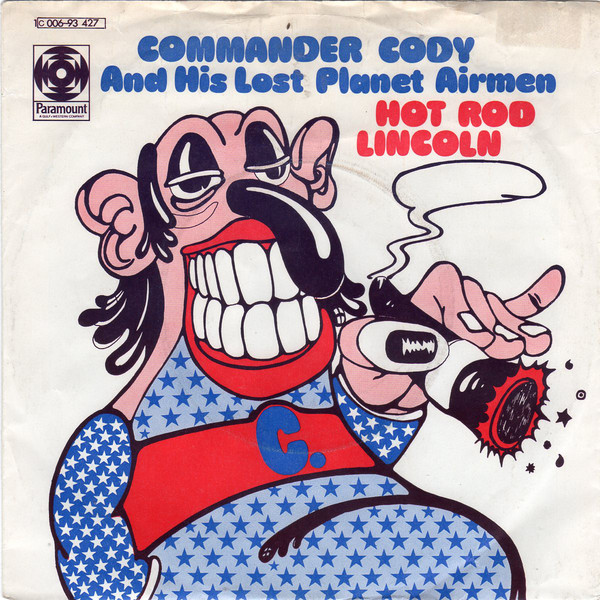
Hot Rod Lincoln was originally written by Charlie Ryan. It was first recorded and released by Charlie Ryan and The Livingston Brothers in 1955. This was the only hit for Commander Cody and His Lost Planet Airmen, who were a County-Rock group formed at the University of Michigan. Commander Cody is the lead singer and piano player George Frayne.
Commander Cody and His Lost Planet Airmen are still out there touring now.
The song peaked at #9 in the Billboard 100 and #7 in Canada in 1972.
From Songfacts
It tells the second half of the story started by the song “Hot Rod Race,” recorded in 1951 by Arkie Shibley and his Mountain Dew Boys, as referenced by the opening: “Have you heard this story of the Hot Rod Race, when Fords and Lincolns was settin’ the pace? That story is true, I’m here to say; I was drivin’ that Model A.” While the song tells of a race between a Lincoln and a Cadillac on the Grapevine grade in California, the actual location was on the Lewiston grade in Idaho.
The most iconic line from the song is: “Son, you’re gonna drive me to drinkin’ if you don’t stop drivin’ that Hot Rod Lincoln!”
Was there really a “hot-rod Lincoln?” Yes and no. Actually, it was a rebuilt car with the body of a Model “A” coupe set into the frame of a 1941 Lincoln, along with a “hopped-up” Lincoln engine block. However, at the time of this song’s writing, Ryan built a second car, this time with a chop-shop melding of a 1930 Model “A” Ford coupe and a wrecked 1948 Lincoln. It is this second restored car with which has Ryan toured.
Both the songs “Hot Rod Lincoln” and “Hot Rod Race” are defining anthems of the hot rod community and 1950s car song culture. “Hot Rod Lincoln” has appeared in the soundtracks to The Beverley Hillbillies and MTV’s Beavis and Butthead.
Hot Rod Lincoln
My pappy said, “Son, you’re gonna’ drive me to drinkin’
If you don’t stop drivin’ that Hot Rod Lincoln.”
Have you heard this story of the Hot Rod Race
When Fords and Lincolns was settin’ the pace.
That story is true, I’m here to say
I was drivin’ that Model A.
It’s got a Lincoln motor and it’s really souped up.
That Model A Vitimix makes it look like a pup.
It’s got eight cylinders; uses them all.
It’s got overdrive, just won’t stall.
With a 4-barrel carb and a dual exhaust,
With 4.11 gears you can really get lost.
It’s got safety tubes, but I ain’t scared.
The brakes are good, tires fair.
Pulled out of San Pedro late one night
The moon and the stars was shinin’ bright.
We was drivin’ up Grapevine Hill
Passing cars like they was standing still.
All of a sudden in a wink of an eye
A Cadillac sedan passed us by.
I said, “Boys, that’s a mark for me!”
By then the taillight was all you could see.
Now the fellas was ribbin’ me for bein’ behind,
So I thought I’d make the Lincoln unwind.
Took my foot off the gas and man alive,
I shoved it on down into overdrive.
Wound it up to a hundred-and-ten
My speedometer said that I hit top end.
My foot was blue, like lead to the floor.
That’s all there is and there ain’t no more.
Now the boys all thought I’d lost my sense
And telephone poles looked like a picket fence.
They said, “Slow down! I see spots!
The lines on the road just look like dots.”
Took a corner; sideswiped a truck,
Crossed my fingers just for luck.
My fenders was clickin’ the guardrail posts.
The guy beside me was white as a ghost.
Smoke was comin’ from out of the back
When I started to gain on that Cadillac.
Knew I could catch him, I thought I could pass.
Don’t you know by then we’d be low on gas?
We had flames comin’ from out of the side.
Feel the tension. Man! What a ride!
I said, “Look out, boys, I’ve got a license to fly!”
And that Caddy pulled over and let us by.
Now all of a sudden she started to knockin’,
And down in the dips she started to rockin’.
I looked in my mirror; a red light was blinkin’
The cops was after my Hot Rod Lincoln!
They arrested me and they put me in jail.
And called my pappy to throw my bail.
And he said, “Son, you’re gonna’ drive me to drinkin’
If you don’t stop drivin’ that hot rod Lincoln!”