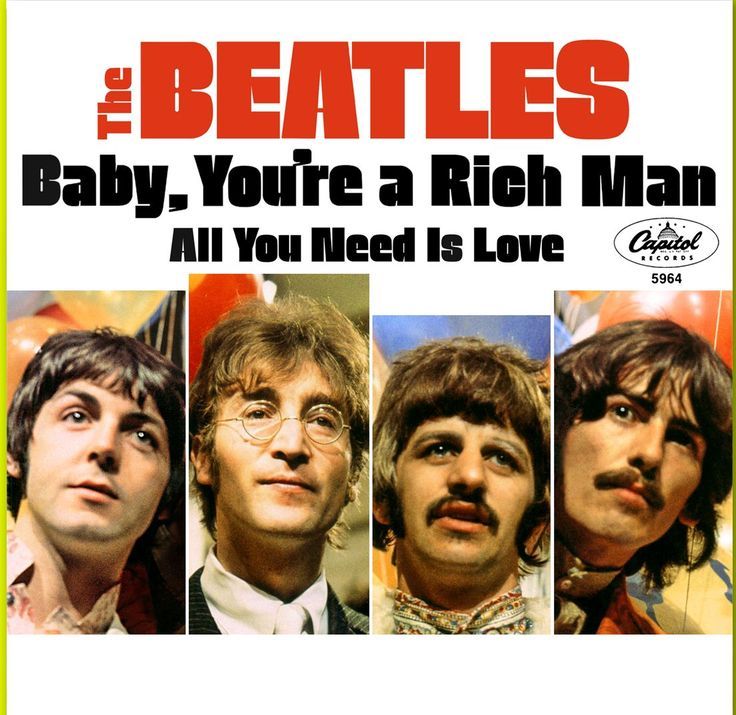
Beatles – All You Need Is Love…Happy Valentines Day!

I hope all of you have a great Valentines day…lets join the Beatles on June 25, 1967 for All You Need Is Love. There’s nothing you can do that can’t be done…

How nerve-racking this had to be even if you were a Beatle. They performed this on one of the first Satellite hookups around the world. There was an estimated 350 million people watching. This performance was a rock and roll mile stone…they were in front of the world.

The show was called “Our World”,  the first worldwide TV special. Broadcast in 24 countries on June 25, 1967, the show was six hours long and featured music from 6 continents, with The Beatles representing Britain.

At the Beatles feet were members of The Rolling Stones, The Who, Cream, The Hollies, and  The Small Faces helping by singing along.

The song peaked at #1 almost every where and probably even in Venus and Mars in 1967.

Musically, this song is very unusual. The chorus is only one note, and the song is in a rare 7/4 tempo. In the orchestral ending, you can hear pieces of both “Greensleeves,” a Bach two-part invention (by George Martin) and Glenn Miller’s “In The Mood.” Royalties were paid to Miller for his contribution.

Just think of all of the bits of paper all of them wrote or scribbled on and threw away. John Lennon’s hand-written lyrics for this song sold for one million pounds in the summer of 2005. Lennon left them in the BBC studios after this appearance, and they were salvaged by a very smart BBC employee.

From Songfacts

The concept of the song was born out of a request to bring a song that was going to be understood by people of all nations. The writing began in late May of 1967, with John and Paul working on separate songs. It was decided that John’s “All You Need Is Love” was the better choice because of its easy to understand message of love and peace. The song was easy to play, the words easy to remember and it encompassed the feeling of the world’s youth during that period.

“All You Need Is Love” was a popular saying in the ’60s anti-war movement. The song was released in the middle of the Summer of Love (1967). It was a big part of the vibe.

John Lennon wrote this as a continuation of the idea he was trying to express in his 1965 song “The Word.” John was fascinated by how slogans effect the masses and was trying to capture the same essence as songs like “We Shall Overcome.” He once stated, “I like slogans. I like advertising. I love the telly.” In a 1971 interview about his song “Power To The People,” he was asked if that song was propaganda. He said, “Sure. So was ‘All You Need Is Love.’ I’m a revolutionary artist. My art is dedicated to change.”

It was not until 1983 and the publication of the in the book John Lennon: In My Life by Pete Shotton and Nicholas Schaffner that it was revealed that John Lennon was the primary composer of the song. It is typical of Lennon: Three long notes (“love -love -love”) and the rise of excitement with at first speaking, then recital, then singing, then the climax and finally the redemption. This as opposed to McCartney’s conventional verse, verse, middle part, verse or A,A,B,A. Lennon felt that a good song must have a rise of excitement, climax and redeeming. 

Ringo’s second son, Jason, was born the day this hit #1 in the US: August 19, 1967. Jason is also a drummer.

McCartney sang the chorus to The Beatles 1963 hit, “She Loves You” at the end: “She loves you yeah yeah yeah… She loves you yeah yeah yeah”

This begins with a clip from the French national anthem, “La Marseillaise,” written and composed by Claude Joseph Rouget de Lisle in Strasbourg on April 25, 1792. Its original name was “Chant de guerre de l’Armee du Rhin” (“Marching Song of the Rhine Army”) and it was dedicated to Marshal Nicolas Luckner, a Bavarian-born French officer from Cham. It became the rallying call of the French Revolution and got its name because it was first sung on the streets by troops from Marseille upon their arrival in Paris. Now the national anthem of France, the song was also once the anthem of the international revolutionary movement, contrasting with the theme of The Beatles song. In the late 1970s, Serge Gainsbourg recorded a reggae version “Aux Armes et cetera,” with Robbie Shakespeare, Sly Dunbar and Rita Marley in the choir in Jamaica, which resulted in him getting death threats from veterans of the Algerian War of Independence. 

Al and Tipper Gore had this song played at their wedding. They married in 1970 and separated in 2010.

George Harrison mentioned this in his 1981 song “All Those Years Ago” with the line, “But you point the way to the truth when you say ‘All you need is love.'” Harrison’s song is a tribute to John Lennon, who was killed in 1980.

This was used in the climactic final episode of the UK sci-fi series The Prisoner, and was the entrance music for Queen Elizabeth II during the UK Millennial celebrations of 1999. It was also sung by choirs across the kingdom in 2002 during the Queen’s Golden Jubilee celebration. 

In 2007, this was used in an advertising campaign for Luvs diapers with the lyrics changed to “All You Need Is Luvs.” While Beatles songs have been used in commercials before, notably “Revolution” in spots for Nike and “Hello Goodbye” for Target, this peace anthem shilling for diapers didn’t go over well with fans who thought it sullied The Beatles legacy. The publishing rights to “All You Need Is Love” and most other Beatles songs are controlled by the Sony corporation and Michael Jackson, which means The Beatles cannot prevent a company from re-recording the song and using it in a commercial.

When asked what his favorite lyric is during an interview with NME, John Lennon’s son Sean replied: “My list of favorite things changes from day to day. I like when my dad said: ‘There’s nothing you can know that isn’t known/ Nothing you can see that isn’t shown/ Nowhere you can go that isn’t where you’re meant to be.’ It seems to be a good representation of the sort of enlightenment that came out of the ’60s.”

All You Need Is Love

Love, love, love
Love, love, love
Love, love, love

There’s nothing you can do that can’t be done
Nothing you can sing that can’t be sung
Nothing you can say, but you can learn how to play the game
It’s easy
Nothing you can make that can’t be made
No one you can save that can’t be saved
Nothing you can do, but you can learn how to be you in time
It’s easy

All you need is love
All you need is love, love
Love is all you need

All you need is love
All you need is love, love
Love is all you need

There’s nothing you can know that isn’t known
Nothing you can see that isn’t shown
There’s nowhere you can be that isn’t where you’re meant to be
It’s easy

All you need is love
All you need is love, love
Love is all you need

All you need is love (all together now)
All you need is love (everybody)
All you need is love, love
Love is all you need

Love is all you need
(Love is all you need)
Love is all you need
(Love is all you need)
Love is all you need
(Love is all you need)
Love is all you need
(Love is all you need)
Love is all you need
(Love is all you need)
Love is all you need
(Love is all you need)
Love is all you need
(Love is all you need)
Love is all you need
(Love is all you need)
Love is all you need
(Love is all you need)
Love is all you need
(Love is all you need)
Love is all you need
(Love is all you need)
Yesterday
(Love is all you need)
Oh
Love is all you need
Oh yeah
Love is all you need
(She love you, yeah, yeah, yeah)
(Love is all you need)

….

Beatles – Some Other Guy

It will be a little different today as this song was never a studio song. The Beatles never recorded this song for an album or single. Much later it was released in 1994 on Live At The BBC of them obviously doing it live.

They played this song regularly at the Cavern and Hamburg. The only known film footage of them playing in the Cavern is of them playing this song. It had been filmed on August 22, 1962 for Granada Television but the footage was grainy and they didn’t broadcast it until the Beatles hit big.

This is just a few days after Ringo became a Beatle. They had just got rid of Pete Best and you can hear at the very first of the Cavern footage a Pete Best fan saying “We Want Pete.” The footage is grainy but great. This was at the start of their rise. Love Me Do would be released two months later.

The Beatles loved to cover B sides and they had a knack for picking the right ones. I do wish they would have recorded this one in the studio but I don’t know if it would have captured the excitement of the live Cavern or BBC version. The song was written by Jerry Leiber, Mike Stoller, and Richie Barrett. Barrett released the song in 1962.

George Harrison: Brian (Manager Brian Epstein) had had a policy at NEMS of buying at least one copy of every record that was released. If it sold, he’d order another one, or five or whatever. Consequently he had records that weren’t hits in Britain, weren’t even hits in America. Before going to a gig we’d meet in the record store, after it had shut, and we’d search the racks like ferrets to see what new ones were there. That’s where we found artists like Arthur Alexander and Ritchie Barrett – ‘Some Other Guy’ was a great song.”

John Lennon: I’d like to make a record like ‘Some Other Guy’. I haven’t done one that satisfies me as much as that satisfies me.

The original, the BBC version, and the Cavern Version (it also shows a little of the original One after 909)…love Ringo’s drums on this.

Some Other Guy

Some other guy, now
Is taking my love away from me, oh now
Some other guy, now
Is taking away my sweet desire, oh now
Some other guy, now
Just threw water, hold my hand, oh now
I’m the lonely one, as lonely as I can feel, all right

Some other guy
Is tippin’ up behind me like a yellow dog, oh now
Some other guy, now
Has taken my love just like I’m gone, oh now
Some other guy, now
Has taken my love away from me, oh now
I’m the lonely one, as lonely as I can feel, all right

Oh oh oh oh

Some other guy
Is making me very, very mad, oh now
Some other guy, now
Is breaking my padlock off my pad, oh now
Some other guy, now
Took the first girl I’ve ever had, oh now
I’m the lonely one, as lonely as I can feel, all right now

Oh oh oh oh
I’m talking to you, right now

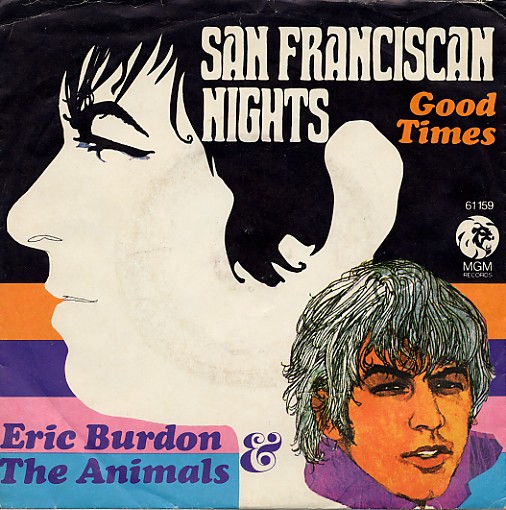
Animals – San Franciscan Nights

I bought this song on a single along with Sky Pilot when I was getting into the Animals as a pre-teen.  This was not the same Animals of House of the Rising Sun and others…everyone but Eric Burdon and drummer Barry Jenkins had been replaced.

In this song Eric welcomes you to the Summer of Love in 1967 San Francisco. This new version of the Animals they were losing traction in Europe and at the spoken word beginning of this song Burdon welcomes the Europeans over to San Francisco. The song was popular and also an anti Vietnam song.

The song peaked at #1 in Canada, #9 in the Billboard 100, and #7 in the UK in 1967.

Many people complained that San Francisco is not that warm at night or any other time. Burdon and his group had recently played in San Francisco during a rare 10-day stretch of exceptionally warm spring weather, which left a strong impression.

At a concert Burdon has said the song was written about an evening with Janis Joplin in San Francisco.

 Eric Burdon: “Britain is not as aware of what we are trying to communicate as the Americans. The whole world still needs a kick up the pants – the Americans are one move ahead. The record company was afraid I would offend England if I released ‘San Franciscan Nights’. They thought I had offered enough insults to England.”

From Songfacts

1967 was the year of the “Summer of Love,” and San Francisco was a hot spot for Hippies. Along with “San Francisco (Be Sure To Wear Flowers In Your Hair),” “San Franciscan Nights” was a popular ode to the city in those turbulent times.

The Animals were from England, but were welcomed in America along with other British Invasion groups like The Beatles and The Rolling Stones. They wrote this song themselves, which takes a stand against the Vietnam War. Looking back on the song in our 2010 interview, Animals lead singer Eric Burdon said: “The ‘Love Generation’ helped the anti-war stance in the states. It certainly turned a lot of soldiers’ heads around, making them wonder why they had to be out fighting a war when back home their girlfriends were frolicking around and it caused a lot of anguish on that level. Maybe it helped politically with the so-called enemy. I’m not sure.”

San Franciscan Nights

This following program is dedicated to the city and people of
San Francisco, who may not know it but they are beautiful and so
Is their city this is a very personal song, so if the viewer
Cannot understand it particularly those of you who are European
Residents save up all your bread and fly trans love airways to
San Francisco U.S.A., then maybe you’ll understand the song, it
Will be worth it, if not for the sake of this song but for the
Sake of your own peace of mind.

Strobe lights beam create dreams
Walls move minds do too
On a warm San Franciscan night
Old child young child feel alright
On a warm San Franciscan night
Angels sing leather wings
Jeans of blue Harley Davidsons too
On a warm San Franciscan night
Old angels young angels feel alright
On a warm San Franciscan night.

I wasn’t born there perhaps I’ll die there
There’s no place left to go, San Franciscan.

Cop’s face is filled with hate
Heavens above he’s on a street called love
When will they even learn
Old cop young cop feel alright
On a warm San Franciscan night
The children are cool
They don’t raise fools
It’s an American dream
Includes indians too.

Israel Kamakawiwo’ole – What A Wonderful World

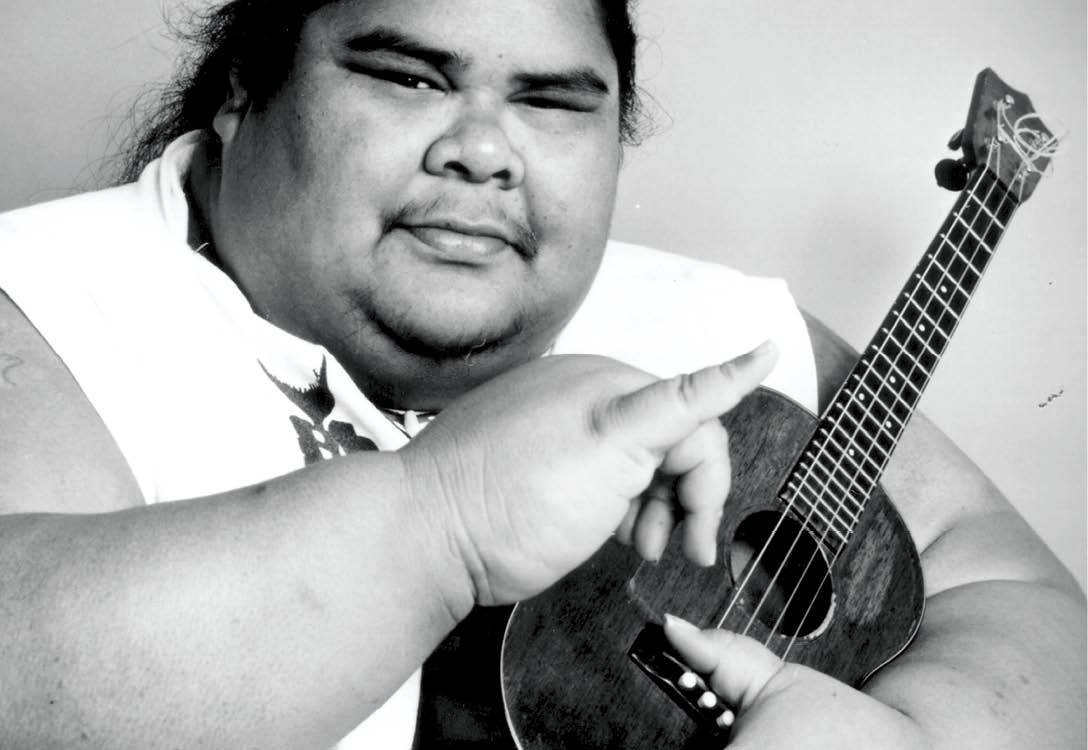
Israel Kamakawiwoʻole, was also known as “Bruddah Iz” or “IZ.” I first heard him on the show Life On Mars with just his voice and ukulele.  His name is pronounced “Ka-MA-ka-VEE-vo-oh-lay” and it means “the fearless eye, the bold face” in the Hawaiian

Kamakawiwoʻole was born in Honolulu on the island of Oahu, Hawaii. Before launching his solo career in 1990, he performed with his brother Skippy as part of the successful group The Makaha Sons of Niʻihau. .

After years of popularizing Hawaiian music, Kamakawiwo’ole recorded his solo album Ka ‘Ano’i in 1990.  on the album is”Over the Rainbow/What a Wonderful World,” a medley combining the songs “Somewhere Over the Rainbow” and “What a Wonderful World,” made famous by Louis Armstrong in 1967.

Although Kamakawiwo’ole’s 1990 solo album included “Over the Rainbow/What a Wonderful World,” it’s not the version that most people remember. The acoustic version, with Kamakawiwo’ole on vocals and ukelele, was recorded a few years prior and kept in a recording studio’s archives until the release of his 1993 follow-up, Facing Future.

In 1988, recording studio manager Milan Bertosa was wrapping a long day at 3 a.m. when the phone rang. A regular client had called on behalf of Kamakawiwo’ole, who had an idea he desperately wanted to see through. Bertosa was then put on the phone with Kamakawiwo’ole, whom Bertosa remembers as “this really sweet man, well-mannered, just kind.”

“Please, can I come in?” Kamakawiwo’ole kindly asked. Bertosa relented.

About 15 minutes later, there’s a knock on Bertosa’s door. “And in walks the largest human being I had seen in my life,” Bertosa told NPR. Throughout his life, Kamakawiwo’ole suffered obesity, weighing as much as 757 pounds.

“The first thing at hand is to find something for him to sit on,” Bertosa remembered. Someone from building security gave Israel a big steel chair. “Then I put up some microphones, do a quick soundcheck, roll tape, and the first thing he does is ‘Somewhere Over the Rainbow.’ He played and sang, one take, and it was over.” The next day Bertosa gave a copy for Israel and kept the master for himself. Over time, he found himself playing Kamakawiwo’ole’s recording for family and friends. “It was that special,” he said. “Whatever was going on that night, he was inspired. It was like we just caught the moment.”

In 1993 Bertosa was working on Kamakawawiwo’ole’s next album, Facing Future. On the last few days of recording, he felt something was missing. So Bertosa dug up that 3 a.m. recording, played it for producer Jon de Mello (who was won over), and it was added to Facing Future.

The album peaked at #1 on the Billboard World Music charts. By 2002, the record had sold 500,000 copies—the first Hawaiian-produced album to go gold—and was certified platinum, selling over 1 million copies by 2005.

Israel Kamakawiwo’ole died on June 26, 1997, at the age of 38, before he gained his vast popularity. He had suffered from morbid obesity his entire life. He died of respiratory failure. He was laid in honor in Hawaii’s Capitol building, and his ashes were later scattered into the ocean. He left behind his wife and teenage daughter.

This was written by Bob Thiele and George Weiss. Thiele was a producer for ABC records, and Weiss was a songwriter who helped create the hit version of “The Lion Sleeps Tonight.”

What A Wonderful World

I see trees of green, red roses too
I see them bloom for me and you
And I think to myself what a wonderful world

I see skies of blue and clouds of white
The bright blessed day, the dark sacred night
And I think to myself what a wonderful world

The colors of the rainbow so pretty in the sky
Are also on the faces of people going by
I see friends shaking hands saying how do you do
They’re really saying I love you

I hear babies crying, I watch them grow
They’ll learn much more than I’ll never know
And I think to myself what a wonderful world
Yes I think to myself what a wonderful world

https://www.inverse.com/culture/israel-kamakawiwoole-google-doodle

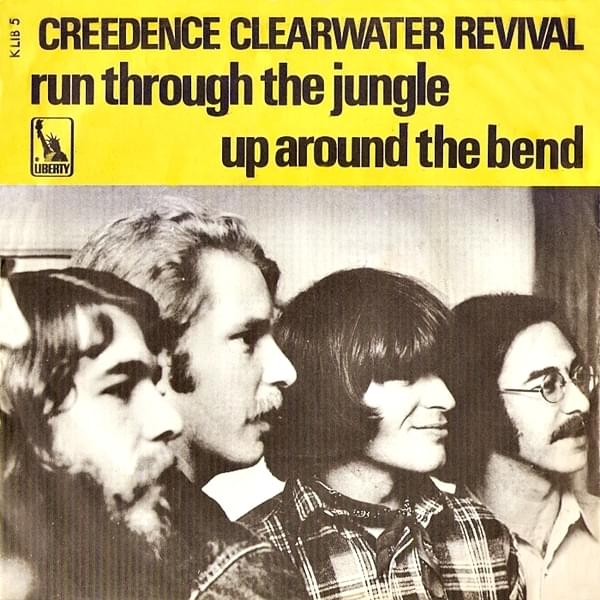
Creedence Clearwater Revival – Run Through The Jungle

It’s hard to say what song by Creedence is my favorite…but this one is in my top 3.

Creedence had some of the best singles ever. This was released as the B-side to the single for “Up Around the Bend,” which was issued in April and quickly went gold.  Up Around the Bend/Run Through The Jungle peaked at #4 in the Billboard 100 and #1 in Canada in 1970.

Many people thought this was about Vietnam but Fogerty has said it was about America and guns. He isn’t anti-gun but many people he thought were “gun happy” and that is what the song is about. John’s quote is below

Long after this song was released and Fogerty released his single “Old Man down the Road” in 1985…Former CCR executive Saul Zaentz claimed that that song, which Fogerty released as a solo artist, was too similar to Run Through The Jungle, and even took him to court. It was perhaps the first time an artist was sued for plagiarizing himself.

Fogerty won that case, but Zaentz also sued him for his song “Zanz Kant Danz,” professing that it was an attack on him. Zaentz won that case and Fogerty not only had to pay a fine, but also had to change the song’s name to “Vanz Kant Danz.” Zaentz was the root of the problem between the members of CCR.

John Fogerty: “I think a lot of people thought that because of the times, but I was talking about America and the proliferation of guns, registered and otherwise. I’m a hunter and I’m not antigun, but I just thought that people were so gun-happy – and there were so many guns uncontrolled that it really was dangerous, and it’s even worse now. It’s interesting that it has taken 20-odd years to get a movement on that position.”

From Songfacts

This is often believed to be about the Vietnam War, as it referred to a “jungle” and was released in 1970. The fact that previous CCR songs such as “Who’ll Stop the Rain?” and “Fortunate Son” were protests of the Vietnam War added to this theory. In response, 

This position is best demonstrated in this lyric:

200 million guns are loaded
Satan cries, “Take aim!”

This opens with jungle sound effects created by, according to Stu Cook, “lots of backwards recorded guitar and piano.”

Speaking about the musical influence on this song, John Fogerty said: “There were so many more people I’d never heard of – like Charlie Patton (an early Delta bluesman). I’m ashamed to admit that, but he wasn’t commercially accessible, I guess. I read about him, and about a month or two later, I realized there were recordings of his music. To me, that was like if Moses had left behind a DAT with the Dead Sea Scrolls or something! ‘You mean you can hear him?! Oh my God!’ And then when I did hear Patton, he sounded like Howlin’ Wolf, who was a big influence on me. When I did ‘Run Through the Jungle,’ I was being Howlin’ Wolf, and Howlin’ Wolf knew Charlie Patton!”

The line, “Devil’s on the loose” (“They told me, ‘Don’t go walking slow ’cause Devil’s on the loose'”) was taken from music journalist Phil Elwood, who misinterpreted the line “doubles on kazoo” from the song “Down on the Corner” (“Willy goes into a dance and doubles on kazoo”). Fogerty saw this misquoted lyric in the newspaper and loved it, so he thanked Phil and used it for “Run through the Jungle.”

Most artists didn’t use songs that could be standalone singles as B-sides, but if you bought a CCR single, you often got two hit songs – another example is “Travelin’ Band” and “Who’ll Stop The Rain?,” which were paired on the same single.

John Fogerty played the harmonica part. Like the vocals on “Down on the Corner,” he recorded it after recording the actual song and dubbed it in, because it went from harmonica to vocals so quickly and he couldn’t remove the harmonica from his mouth fast enough. John also played harmonica on his solo effort The Wall (not to be confused with the Pink Floyd album).

Fogerty told Guitar World in 1997 that when he sang “Run Through the Jungle,” he was “being Howlin’ Wolf,” an artist he cites as a major influence on him.

The Gun Club covered this for their album Miami, although with different lyrics because vocalist and band leader Jerry Pierce couldn’t understand what John Fogerty was singing. He took some lyrics from black slavery songs, a Willie Brown song and personal experience (a heroin overdose is mentioned). They first performed it at a friend’s birthday party before they were persuaded to include it on the album.

Besides Gun Club, this has been covered by Bruce Springsteen, Georgia Satellites, 8 Eyed Spy, Los Lobos and Killdozer.

Tom Fogerty called this song, “My all-time favorite Creedence tune.” He added, “It’s like a little movie in itself with all the sound effects. It never changes key, but it holds your interest the whole time. It’s like a musician’s dream. It never changes key, yet you get the illusion it does.” 

This song has appeared in the following movies:

Air America (1990)
My Girl (1991)
Rudy (1993)
The Big Lebowski (1998)
Radiofreccia (1998)
Radio Arrow (1998)
Tropic Thunder (2008)
Drift (2013)

And these TV series:

Entourage (The Scene – 2004)
Supernatural (“Sin City” – 2007, “Out of the Darkness, Into the Fire” – 2015)
Hawaii Five-0 (“Kahu” – 2012)

Run Through The Jungle

Whoa thought it was a nightmare
Lord it was so true

They told me don’t go walking slow
The devil’s on the loose

Better run through the jungle
Whoa don’t look back to see

Thought I heard a rumblin’
Calling to my name

Two hundred million guns are loaded
Satan cries “take aim”

Better run through the jungle
Whoa don’t look back to see

Over on the mountain, thunder magic spoke
Let the people know my wisdom
Fill the land with smoke

Better run through the jungle
Whoa don’t look back to see

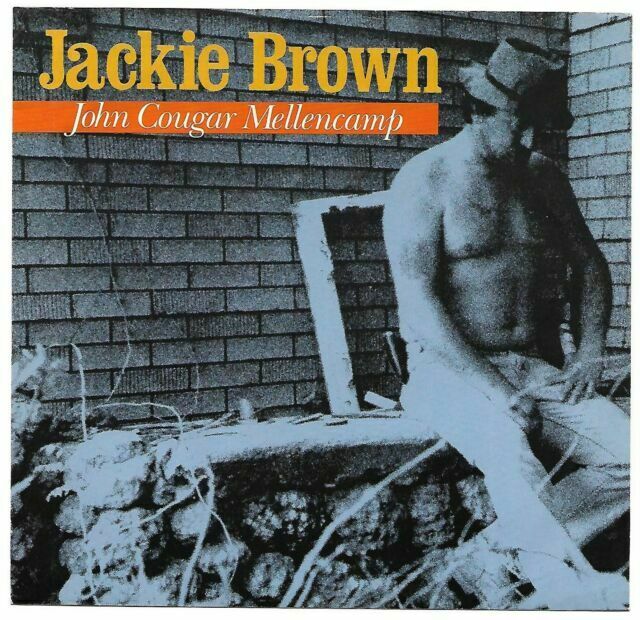
John Mellencamp – Jackie Brown

Great under the radar song by John Mellencamp. It was on the album Big Daddy released in 1989. I bought this album at the time because of this song… and Pop Singer was another favorite.

John was going through a divorce with his second wife Victoria Granucci  when he released this album and it help inspire this song.

The song peaked at #20 in the Billboard Mainstream Rock Charts and #23 in Canada in 1989.

John Mellencamp: After the divorce went through, my wife took my two little kids and moved away from Indiana, which she was allowed to do because I didn’t contest it. I had a family, and all of a sudden I didn’t. I had just done the Lonesome Jubilee tour, it was the biggest, most successful tour in the country that year, and it meant nothing to me. I was grateful that people liked the songs, but I felt like a monkey on a string. We did 190 shows, and it was like, “Oh, let’s get out there and give them one more rousing chorus of ‘Pink Houses.'” I was like a cheerleader, and I didn’t like it.

“I wrote ‘Jackie Brown’ about myself in a different scenario: me disguised as a poor guy – not as a guy that had been successful and pretty much lost everything, which in my mind I had, because I’d lost my daughters. The song is about how you have to go outside to use the bathroom because you’ve sunk so low.”

From Songfacts

Eight years before Quentin Tarantino released the movie Jackie Brown, John Mellencamp used the title for a song that tells a very different story. Mellencamp’s Jackie Brown is a destitute man who will never escape poverty.

Jackie Brown

Is this your life, Jackie Brown?
Poorly educated and forced to live on the poor side of town.
Is this your daughter, Jackie Brown?
This pretty little girl
In the worn out clothes
That have been hand-me down.
Is this your wife, Jackie Brown?
With sad blue eyes, walking on eggshells so you don’t see her frown.
Is this your family, Jackie Brown?

Dream of vacationing on a mountain stream
And giving the world more than it gave you.
What ugly truths freedom brings
And it hasn’t been very kind to you.
Is this your life, Jackie Brown?

Is this your meal, Jackie Brown?
Barely enough, I’ve seen people throw more than this out.
Is this your home, Jackie Brown?
This three room shack
With no running water
And the bathroom out back.
Is this your grave, Jackie Brown?
This little piece of limestone that says another desperate man took
Himself out.
Is this your dream, Jackie Brown?

Going nowhere and nowhere fast
We shame ourselves to watch people like this live.
But who gives a damn about Jackie Brown?
Just another lazy man who couldn’t take what was his.
One helluva life Jackie Brown.
Forevermore, Jackie Brown
Amen and amen – Jackie Brown?

Who – The Quiet One…Sunday Album Cut

I posted a song from Face Dances a little while ago and Deke brought up a song on that album called The Quiet One. I really like that song also. It was written by who I think was the best bass player in rock ever…John Entwistle.

When I bought the album this is one of the songs I zeroed in on. I’ve always liked John’s writing that got overshadowed by Pete. John had had some black humor and wit in his songs.

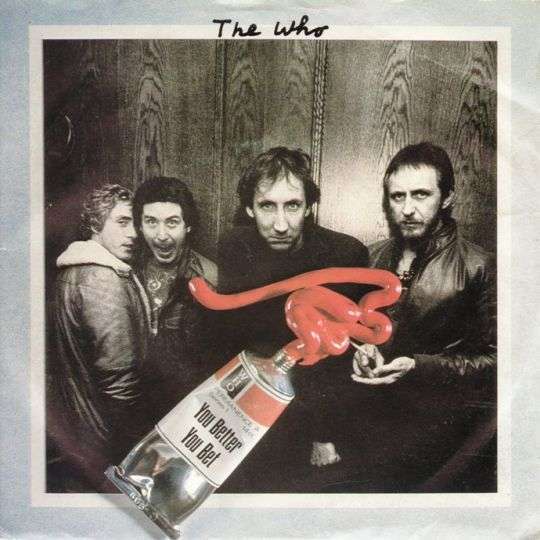
This song was the B side to the hit You Better You Bet released in 1981. On their farewell tour in 1982 he replaced his older song “My Wife” with this one on stage.  In the later tours, this song was never played again… “My Wife” was brought back.

John Entwistle: “It’s me trying to explain that I’m not really quiet. I started off being quiet and that’s the pigeon hole I’ve been stuck in all these years. It started when I heard Kenney playing a drum riff and I thought ‘that would be really great for a song and give Kenney a chance to play that on stage.’ So I got Kenney to put down about three minutes of that and I worked along with it and came up with the chorus of ‘The Quiet One.’ I wrote ‘Quiet One’ especially to replace ‘My Wife’ onstage. I had gotten tired of singing that and ‘Boris the Spider.'”

The Quiet One

Everybody calls me the quiet one
You can see but you can’t hear me
Everybody calls me the quiet one
You can try but you can’t get near me
I ain’t never had the gift of gab
But I can’t talk with my eyes
When words fail me you won’t nail me
My eyes can tell you lies

Still waters run deep so be careful I don’t drown you
You’ve got nothing to hear I’ve got nothing to say
Sticks and stones may break your bones
But names can never down you
It only takes two words to blow you away

Everybody calls me the quiet one
But you just don’t understand
You can’t listen you won’t hear me
With your head stuck in the sand
I ain’t never had time for words that don’t rhyme
My headd is in a cloud
I ain’t quiet – everybody else is too loud

Still waters run deep so be careful I don’t drown you
You’ve got nothing to hear I’ve got nothing to say
Sticks and stones may break my bones
But names can never down you
It only takes two words to blow you away.

John Fogerty – Big Train (From Memphis)

Big Train (From Memphis)” was the B-side of “The Old Man Down the Road”, the first 45 rpm single John Fogerty released in 1984. It was his first single release since “You Got The Magic” in 1976.

John Fogerty’s album Centerfield was released in 1985. No one was sure if Fogerty would release anything again at that point. This song has a Sun Records rockabilly feel.

Despite being in the middle of the eighties, Fogerty didn’t really alter his style for this album. Many of these songs would have fit perfectly well on a Creedence Clearwater Revival album. John played all the instruments himself on this album.

It peaked at #38 in the Billboard Country Charts. The Centerfield album peaked at #1 in the Billboard Album Charts, #2 in Canada, and #48 in the UK in 1985. The song was recorded at The Plant Studios in San Francisco.

Big Train (From Memphis)

When I was young, I spent my summer days playin’ on the track.
The sound of the wheels rollin’ on the steel took me out, took me back.

[CHORUS:]
Big Train from Memphis, Big Train from Memphis,
Now it’s gone gone gone, gone gone gone.

Like no one before, he let out a roar, and I just had to tag along.
Each night I went to bed with the sound in my head, and the dream was a song.

[CHORUS]

Well I’ve rode ’em in and back out again – you know what they say about trains;
But I’m tellin’ you when that Memphis train came through,
This ol’ world was not the same.

[CHORUS]

Lynyrd Skynyrd – Whiskey Rock-A-Roller

I thought of this song because a vendor I deal with asked me if I wanted to be in a whisky tasting event. I told him I rarely if ever drink but he convinced me! I was sent two bottles of whiskey and I have to log on and tell them what I think of the two different brands.

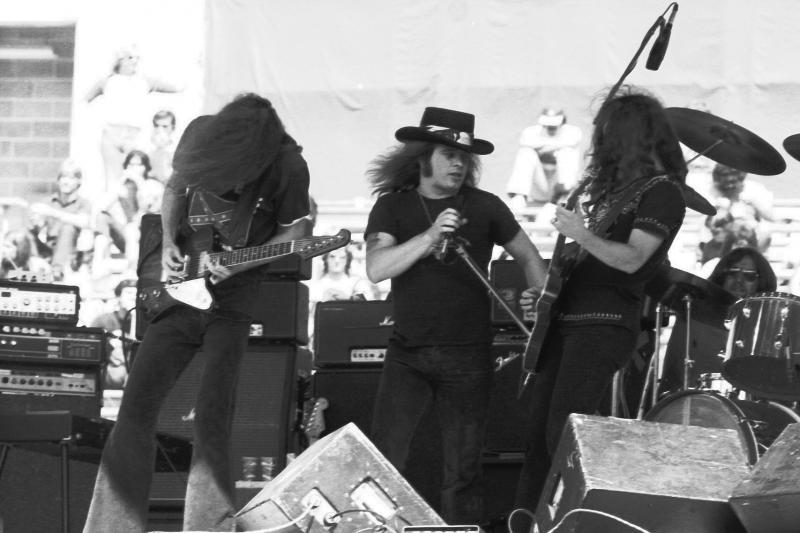
The song was written by Billy Powell, Edward King, and Ronnie Van Zant, this song is about Lynyrd Skynyrd’s touring life which was interesting. Ronnie Van Zant  ran into a writer who asked him “what are you man?” Ronnie Van Zant responded to the writer, saying he is a “Whiskey Rock a Roller.”

The song was on their 3rd album Nuthin’ Fancy. This is a great bar song. It was their last album produced by Al Kooper. The sound just wasn’t coming together and it was a mutual understanding that Kooper would leave after the album was finished.

Guitar player Ed King would quit and leave in May while on tour in Pittsburgh for this album. It would be the last album he would play on by the original band. It’s also Artimus Pyle’s first album on drums with the band. Bob Burns the original drummer had left shortly before after seeing the Exorcist and thinking he was possessed by the devil.

The album peaked at #9 in the Billboard Album Chart in 1975.

From Songfacts

This song was released on the Nuthin’ Fancy album on March 24, 1975. There are also two other recordings of this song that are on Skynyrd’s live album One More From the Road. In one if these recordings, Ronnie Van Zant forgets the song, and has to ask the back up singers (the Honketts) what the song is. On the other live version. Ronnie changes the opening lyrics to “I’m traveling down a highway, got a blue sky on my head, movin’ down this highway 500 miles away.”

Whiskey Rock-A-Roller

I’m headed down a highway got a suitcase by my side
Blue skies hangin’ over my head I got five hundred miles to ride
I’m goin’ down to Memphis town to play a late night show
I hope the people are ready there ’cause the boys are all ready to go

[Chorus]
Well, I’m a whiskey rock-a-roller
That’s what I am
Women, whiskey and miles of travelin’
Is all I understand

I was born a travelin’ man and my feets do burn the ground
I don’t care for fancy music if your shoes can’t shuffle around
I got a hundred women or more and there’s no place I call home
The only time I’m satisfied is when I’m on the road

[Chorus]
Sometimes I wonder where will we go

Lord don’t take my whiskey, rock and roll
Take me down to Memphis town, bus driver get me there
I got me a queenie she got long brown curly hair
She likes to drink old grandad and her shoes do shuffle around
And every time I see that gal
Lord she wants to take me down

[Chorus]

Sometimes I wonder where will we go
Lord don’t take my whiskey, rock and roll

Supertramp – Take The Long Way Home

Sixth grade…in sixth grade this album and the songs on it was huge.

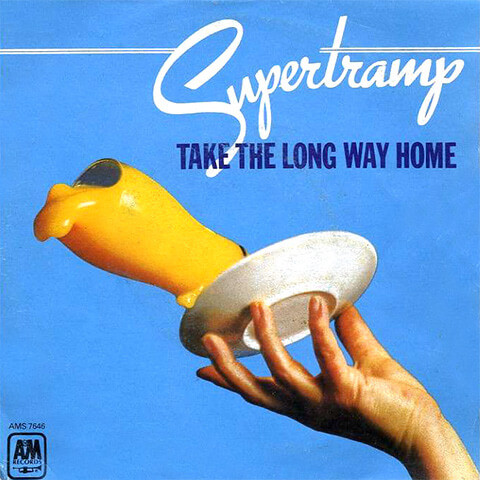
Co-credited to bandleaders Roger Hodgson and Rick Davies, but written solely by Hodgson. They had a Lennon/McCartney song writing relationship that would credit both no matter if one person wrote it.

The song peaked at #10 in the Billboard 100 and #4 in Canada in 1979. Breakfast in America peaked at #1 in the Billboard Album Charts, Canada, New Zealand, and #3 in New Zealand.

It was written shortly before Supertramp went in the studio to record the Breakfast In America album, Roger Hodgson said the song was a last minute addition.

According to Producer Peter Henderson the album took 9 months to record. The reason for this is because there was no There were no click tracks and or splicing of the backing tracks. They all played the backing tracks live in the studio. The result was a fresh sounding album that was a massive hit.

The band refused a $5 million offer from the Greyhound company to use this song in bus commercials.

Roger Hobson: I’m talking about not wanting to go home to the wife, take the long way home to the wife because she treats you like part of the furniture, but there’s a deeper level to the song, too. I really believe we all want to find our home, find that place in us where we feel at home, and to me, home is in the heart and that is really, when we are in touch with our heart and we’re living our life from our heart, then we do feel like we found our home.

From Songfacts

At the press meeting when Breakfast In America was presented, Roger Hodgson explained that this song is about a guy who thinks he’s really cool (“So you think you’re a romeo, playing a part in a picture show”), but it seems that he’s the only one who thinks that. This implies that our hero avoids getting home because when he’s on the road he has a few more moments of being alone with his dreams, and in his dreams he’s a superstar.

It was another angle on the question that ran deep inside me, which is, ‘Where’s my home? Where’s peace?’ It felt like I was taking a long way to find it.”

More lyric analysis:

“But there are times that he feels he’s part of the scenery, all the greenery is comin’ down” – It seems that in real life he’s “the joke of the neighborhood” (“why should you care if you’re feeling good” is him trying to rationalize) and his wife “seems to this that he’s a part of the furniture.” In real life he “never sees what he wants to see.”

“When he’s up on the stage, it’s so unbelievable, unforgettable, how they adore him. And then his wife seems to think he’s losing his sanity… Does it feel that you life’s become a catastrophe? Oh, it has to be for you to grow, boy.” – This is the phase of our lives when we accept the fact that we’ll never be what we wanted and become ordinary, we take it very hard, but we grow into it.

“He looks through the years and see what he could have been, what might have been, if he’d had more time.” – Time is always to blame when we want to do something, but don’t. This guy always wanted to be someone, but he got stuck taking the long way home so now it’s even difficult for him being ordinary: “So, when the day comes to settle down, Who’s to blame if you’re not around? You took the long way home.” 

Roger Hodgson’s debut solo DVD was titled Take the Long Way Home, Live in Montreal. It was released in Canada in 2006, where it went to #1 and sold over a million copies. The DVD was released worldwide in 2007 and is Gold in France.

“Take The Long Way Home” has endured as a favorite: it was chosen as the #5 favorite song in Mojo magazine’s readers’ poll in 2006.

Take The Long Way Home

So you think you’re a Romeo
Playing a part in a picture-show
Take the long way home

‘Cause you’re the joke of the neighborhood
Why should you care if you’re feeling good
Take the long way home

But there are times that you feel you’re part of the scenery
All the greenery is comin’ down, boy
And then your wife seems to think you’re part of the furniture
Oh, it’s peculiar, she used to be so nice

When lonely days turn to lonely nights
You take a trip to the city lights
And take the long way home
Take the long way home

You never see what you want to see
Forever playing to the gallery
You take the long way home
Take the long way home

And when you’re up on the stage, it’s so unbelievable,
Oh unforgettable, how they adore you,
But then your wife seems to think you’re losing your sanity,
Oh, calamity, is there no way out, oh yeah
Ooh, take it, take it out
Take it, take it out
Oh yeah

Does it feel that your life’s become a catastrophe?
Oh, it has to be for you to grow, boy
When you look through the years and see what you could have been
Oh, what you might have been,
If you’d had more time

So, when the day comes to settle down,
Who’s to blame if you’re not around?
You took the long way home
Took the long way home
You took the long way home
You took the long way home, so long
You took the long way home
You took the long way home, uh yeah
You took the long way home

Long way home
Long way home
Long way home
Long way home
Long way home
Long way home

Queen – Fat Bottom Girls

I first heard this song in the seventies and then owned it when I got Queen’s greatest hits and I wore the grooves out in the vinyl. The guitar tone and Freddie’s voice are perfect.

This was released as a double A-side single with “Bicycle Race.” The songs ran together on the album, and were often played that way by radio stations. The year before, Queen released “We Will Rock You” and “We Are The Champions” as a double A-side. They are still usually played together by radio stations.

For the song Bicycle Race they had an all nude female bicycle race…ahhh the 70s

Hard Rock Music Time Machine – 1978: Queen – “Fat Bottomed Girls” - Hard  Rock Daddy

The cover of the single featured a nude woman riding a bicycle, and was altered after many stores refused to stock it. The new version was the same image with panties drawn over the woman…kill joys.

The song peaked at #24 in the Billboard 100, #17 in Canada, #20 in New Zealand, and #11 in the UK in 1978.

The song was on their 1978 album Jazz.

From Songfacts

Queen guitarist Brian May wrote this song, which is about a young man who comes to appreciate women of substantial girth. May told Mojo magazine October 2008: “I wrote it with Fred in mind, as you do especially if you’ve got a great singer who likes fat bottomed girls… or boys.”

Each song has a reference to the other in the lyrics: in “Bicycle Race,” a lyric runs: “Fat bottomed girls, they’ll be riding today, so look out for those beauties, oh yeah.” In “Fat Bottomed Girls” the closing call shouts “get on your bikes and ride!,” linking the two songs together.

This song was covered by Antigone Rising for the 2005 Queen tribute album Killer Queen

The song was used as the opening theme for Morgan Spurlock’s 2004 documentary Super Size Me.

This was used in episodes of the US TV shows Nip/Tuck and My Name is Earl, and also in the UK show Father Ted. 

A funny incident involving this song occurred on the Daily Politics show on UK TV in January 2014, when respectable political editor Nick Robinson’s iPad suddenly started to play the song midway through a panel discussion between several politicians. Robinson hastily turned the device off before – in his words – “the really embarrassing lyrics start.”

This is one of a very small number of Queen songs composed and performed in an alternative tuning to standard. Brian May used a Dropped D tuning for this song.

Surprisingly for such a popular song, it only features on one Queen live compilation from the original lineup: On Fire Live at the Bowl, from Milton Keynes 1982. On the Queen + tours, it has been a regular staple, with both Paul Rogers and Adam Lambert handling the lyrics with gusto. Versions featuring Paul Rogers on vocals appear on Return of the Champions (2005), Super Live in Japan (2006) and Live in Ukraine (2008).

Kevin Fowler did his rendition of the classic Queen song on his 2002 album High on the Hog. Fowler’s version is a lighthearted take and encourages the crowd to partake in the fun. 

Fat Bottomed Girls

Okay, okay!
This is called, uh
Fat Bottomed Girls!

(One, two, three, four!)
Are you gonna take me home tonight?
Oh, down beside your red firelight
Are you gonna let it all hang out?
Fat bottomed girls
You make the rockin’ world go ’round

Hey!
I was just a skinny lad
Never knew no good from bad
But I knew life before I left my nursery, huh
Left alone with big fat Fanny
She was such a naughty nanny
Big woman, you made a bad boy out of me

Hey! H-h-h-hey! Ah, yeah
C’mon, yeah alright
Fat bottomed girls
Do-do-do-do, hey
Yeah

I’ve been singing with my band
Across the wire, across the land
I seen every blue eyed floozy on the way, hey
But their beauty and their style
Went kind of smooth after a while
Take me to them dirty ladies every time

C’mon!
Are you gonna take me home tonight? Hey!
Oh, down beside your red firelight
Oh, when you give it all you got
Fat bottomed girls, you make the rockin’ world go ’round

Now I got mortgages and homes
I got stiffness in my bones
Ain’t no beauty queens in this locality, I tell you
Oh, but I still get my pleasure
Still got my greatest treasure
Big woman, you done made a big man of me

Now, hear this!
Oh, (I know) you gonna take me home tonight? Hey!
Oh, down beside your red firelight
Are you gonna let it all hang out?
Fat bottomed girls, you make the rockin’ world go ’round, yeah
Fat bottomed girls, you make the rockin’ world go ’round

Get on your bikes and ride!
Like a cowboy, oh, come on, hey, go, aw yeah
That’s the way I like it, yeah
Yes, yes! Them fat bottomed girls
You ride ’em, you ride ’em, hey hey! Alright
Ooh! Ooh yeah, ooh yeah
Alright

Oh yes, fat bottomed girls
One more time girls, yeah, yeah
Alright, yeah
More, more

CSN – Just A Song Before I Go

.This is a laid back 70s pop song. I like their music in the early seventies the best but I won’t turn this off if it comes on the radio.

The song peaked at #7 in the Billboard 100 and #10 in Canada in 1977. Their first album was named Crosby, Stills, and Nash but this one was called CSN which is confusing. The album did well helped by this hit. It peaked at #2 in the Billboard Album Charts, #10 in Canada, and #23 in the UK in 1977.

After touring in 1977 and 1978, further work as a group was complicated by Crosby’s increasing dependence on cocaine. Nash’s 1980 Earth & Sky was supposed to be another Crosby-Nash album, but Crosby was not in shape to participate

It surprised me but this was the highest charting song by CSN or CSN&Y.  As Nash tells it in his memoir Wild Life, the guy taking him to the airport was his drug dealer, who said, “I’ll bet you can’t write a song before you go.” Nash then thought, “Hmm… just a song before I go,” and composed it on the spot. I have the exact quote below.

Graham Nash: I’d been on vacation in Hawaii. Leslie Morris was with me, and in an effort to score some grass we met up with a dealer named Spider at his house near the beach. This was around one in the afternoon, and I had a four o’clock flight back to Los Angeles. Spider was a cheeky little bastard. He said, “You’re supposed to be some big-shot songwriter. I bet you can’t write a song before you go.”

“Oh, really,” I said. “How much?”

“A hundred bucks.”

I finished “Just a Song Before I Go” in a little under forty minutes. Turned out to be the biggest hit Crosby, Stills & Nash ever had, on the charts for twenty weeks. The original lyric I’d scribbled on school composition-book paper is currently in the Rock and Roll Hall of Fame.

From Songfacts

Graham Nash wrote this song on a bet. David Crosby explained in the liner notes to their 1991 boxed set: “Graham was a home in Hawaii, about to go off on tour. The guy who was going to take him to the airport said, ‘We’ve got 15 minutes, I’ll bet you can’t write a song in that amount of time.’ Well you don’t smart off to Nash like that, he’ll do it. This is the result.”

Going to the airport and his day of travel were on Nash’s mind, so that’s what he wrote about: “driving me to the airport and to the friendly skies.” The “song before I go” was for his friend who made him the bet.

This was the first single released from the re-formed Crosby, Stills & Nash, and in the US it was the highest-charting song of any iteration of the group. The group’s first album came in 1969, and they won the Best New Artist Grammy Award for that year. In 1970, they added Neil Young and released two albums before taking some time off – they didn’t see the Top 40 from 1971-1976. In this period, the members recorded solo, with Graham Nash and David Crosby teaming up for a 1972 album, and Stephen Stills forming the band Manassas. Crosby, Stills, Nash & Young got back together for touring in 1974 and released the 1976 album Wind On The Water. The next year, minus Young, they were Crosby, Stills & Nash again for the first time since 1969, and the CSN album was the result. Following more solo efforts from Stills and Nash, they hit the studio again in 1982 for the Daylight Again album, and reunited with Young for the 1988 effort American Dream. They continued to go back and forth with and without Young in the ’90s. Their law firm-style name made for an unwieldy discography, but we always knew who was in the group.

Just a Song Before I Go

Just a song before I go,
To whom it may concern
Traveling twice the speed of sound
It’s easy to get burned

When the shows were over
We had to get back home,
And when we opened up the door
I had to be alone

She helped me with my suitcase,
She stands before my eyes
Driving me to the airport,
And to the friendly skies

Going through security
I held her for so long
She finally looked at me in love,
And she was gone

Just a song before I go,
A lesson to be learned
Traveling twice the speed of sound
It’s easy to get burned

..

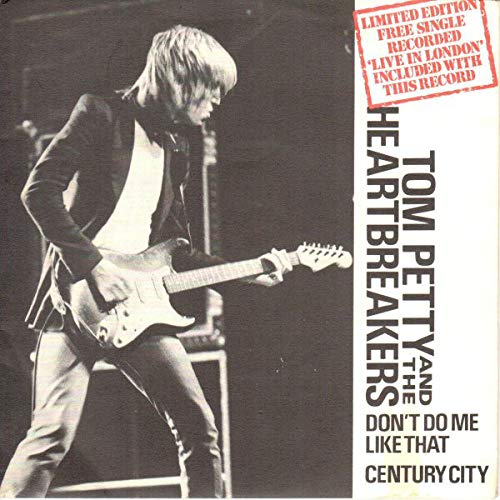
Tom Petty – Don’t Do Me Like That

This song was on the great Damn the Torpedos album that was Petty’s breakthrough album. Petty wrote this after his first group Mudcrutch moved from Florida to Los Angeles in 1974.

Tom Petty was going to give the song to The J. Geils Band because he thought it had their sound. (Petty and the Heartbreakers had opened for the J. Geils Band on tour). However, J. Geils turned him down as they were already deep in the mixing process for their album and producer Jimmy Iovine persuaded Petty and his bandmates to record it themselves.

They were glad as it became the group’s first Top 10 hit.

The song peaked at #10 in Billboard 100, #3 in Canada, and #17 in New Zealand in 1977.

The album had 4 known radio songs on the album. Damn the Torpedos peaked at #2 in the Billboard 100, #2 in Canada, and #57 in the UK in 1980.

Peter Wolf of the J Geils Band: It was in the midst of stuff. Maybe we thought we had the songs for our album: “We can do it for the next one.” I called up Jimmy and, I think, Tom and said, “Love the song. I’m not sure we’re gonna get to it. But I do like the song.” Tom wasn’t sure of it for himself for some reason. It was almost like, “As soon as I finished writing it, I thought of sending it to you.”

I always heard it as having a Lennon-esque quality, especially in the bridge – just the way Tom puts the edge on his voice. There is also a Dylan-esque quality [in the lyrics]: “Well, you’re gonna get yours. In the public eye, you’re gonna humiliate me? Baby, your time is gonna come.” That was a theme in Lennon’s work too – [the Beatles’] “No Reply.” But the way Tom recorded it, it just became so Tom. I always felt, “Man, I wish we’d jumped on it sooner.”

It’s funny – it came up in our last conversation. Tom and I were together in his dressing room in Philadelphia last July. I said, “Tom, I gotta tell you, ‘Don’t Do Me Like That’ …” And he goes, “Oh, yeah! Whatever happened?” I explained the whole thing – we were in the mix process or something. And he said, “I gotta thank you for that. When you didn’t end up doing it, everybody talked me into putting it on the record. And it became one of my big, big hits.” 

From Songfacts

The song finds him warning (or at least asking) a girl not to dump him, as he has a friend who recently had his heart broken. Not one of the group’s more meaningful songs, Creem magazine called it a “throwaway romp.”

Many listeners enjoyed this romp, making it one of Petty’s most popular songs.

When Tom Petty & the Heartbreakers made their first appearance as musical guests on Saturday Night Live November 10, 1979, they played “Refugee” and “Don’t Do Me Like That.”

Don’t Do Me Like That

I was talking with a friend of mine
Said a woman had hurt his pride
Told him that she loved him so
And turned around and let him go
Then he said, you better watch your step
Or your gonna get hurt yourself
Someone’s gonna tell you lies
Cut you down to size

Don’t do me like that
What if I love you baby?
Don’t do me like that

Don’t do me like that
Someday I might need you baby
Don’t do me like that

Listen honey, can you see?
Baby, you would bury me
If you were in the public eye
Givin’ someone else a try
And you know you better watch your step
Or you’re gonna get hurt yourself
Someone’s gonna tell you lies
Cut you down to size

Don ‘t do me like that
Don’t do me like that
What if I love you baby?
Don’t, don’t, don’t, don’t

Don’t do me like that
What if I need you baby?
Don’t do me like that

‘Cause somewhere deep down inside
Someone is saying, Love doesn’t last that long
I got this feelin’ inside night and day
And now I can’t take it no more

Listen honey, can you see?
Baby, you would bury me
If you were in the public eye
Givin’ someone else a try
And you know you better watch your step
Or you’re gonna get hurt yourself
Someone’s gonna tell you lies
Cut you down to size

Don’t do me like that
What if I love you baby?
Don’t, don’t, don’t, don’t

Don’t do me like that
I just might need you honey
Don’t do me like that

Wait
Don’t do me like that
Baby, baby, baby
Don’t, don’t, don’t

No
Don’t do me like that
Baby, baby, baby

Oh, oh, oh, oh

John Lennon – I Know (I Know)… Sunday Album Cut

This would be one of my favorite John Lennon album cuts. It’s on the album Mind Games and it gets overlooked. It reminds me of the intro to the Beatles song “I’ve Got A Feeling.”

Some people say it was written as a coded message to Paul (there is more below a bout that) and it does have some references in there. John said later it was about Yoko…it could be both or neither…At the time when this came out him and Yoko were separated and Joh. Personally I’m not sure but I just enjoy the result. John later called it a piece of nothing but John could be dismissive about his best songs at times.

It’s a wonderful pop song nonetheless. Whenever I pull Mind Games out I go to this song first.

The song was not released as a single but the album did well. It peaked at #9 in the Billboard 100, #28 in Canada, and #13 in the UK in 1973.

From the Beatles Bible:

Although in his extensive 1980 interview for Playboy he dismissed the song as “just a piece of nothing”, the lyrics of I Know (I Know) are open to interpretation as a commentary on Lennon’s relationship with Yoko Ono, which by 1973 was faltering. Lennon realised matters had turned sour, and the song can be seen as a confessional in which he claimed to finally be able to see clearly, just as he had before on the Imagine song ‘How?’ and ‘Jealous Guy’.

The curious repetition of the title in parentheses could have been simply one of Lennon’s whims, but it is possible that he was presenting a coded message – not for the first time – to his former bandmate Paul McCartney. Wings’ 1971 album Wild Life had featured the song Some People Never Know, in which McCartney lamented that some people fail to understand what it means to love. In this light, Lennon’s response saw the pair in agreement, in a marked contrast to their earlier song-based conflicts.

Lennon recorded a home demo of I Know (I Know) in the early summer of 1973, prior to entering the studio. During this time he worked on a number of songs destined for Mind Games.

Demo

I Know (I Know)

The years have passed so quickly
One thing I’ve understood
I am only learning
To tell the trees from wood

I know what’s coming down
And I know where it’s coming from
And I know and I’m sorry (yes I am)
But I never could speak my mind

And I know just how you feel
And I know now what I have done
And I know and I’m guilty
But I never could speak my mind

I know what I was missing
But now my eyes can see
I put myself in your place
As you did for me

Today I love you more than yesterday
Right now I love you more right now

Now I know what’s coming down
I can feel where it’s coming from
And I know it’s getting better all the time
As we share in each other’s minds

Today, I love you more than yesterday
Right now, I love you more right now

Ooo, no more crying
Ooo, no more crying
Ooo, no more crying
Ooo, no more crying

Rolling Stones – Wild Horses

This was first released by Gram Parsons’ Flying Burrito Brothers in 1970. The Stones’ version was written in 1969, but had to wait for Sticky Fingers in 1971.

Wild Horses was said to be started as a song for Keith Richards’ newborn son Marlon. It was 1969 and Keith regretted that he had to leave his son to go on tour.

Mick Jagger’s girlfriend at the time, the singer Marianne Faithfull, claims “Wild horses couldn’t drag me away” was the first thing she said to Mick after she pulled out of a drug-induced coma in 1969. Jagger rewrote Keith’s lyrics, keeping only the line “Wild horses couldn’t drag me away.” His rewrite was based on his relationship with Marianne Faithfull, which was disintegrating.

The Stones recorded this during a three-day session at Muscle Shoals Sound Studios in Alabama from December 2-4, 1969. It was the last of three songs done at these sessions, after “Brown Sugar” and “You Gotta Move.” Jim Dickinson played piano on this song. The Stones regular pianist Ian Stewart didn’t want to play it because he hated playing minor chords.

Jim Dickinson went on to be a producer with Aretha Franklin, Big Star and the Replacements, and did a lot of movie soundtrack music with Ry Cooder.

The song was on what is arguably their best album in Sticky Fingers. One year prior to its release on Sticky Fingers, Gram Parsons convinced Jagger and Richards to allow him to record “Wild Horses” with his band The Flying Burrito Brothers. He had become good friends with Richards and helped with the arrangement of “Country Honk” as it appeared on the album Let It Bleed. The song was included on the album Burrito Deluxe released in 1970.

Wild Horses by the Stones peaked at #28 in the Billboard 100 and #11 in Canada in 1971.

Keith Richards: “‘Wild Horses’ almost wrote itself. It was really a lot to do with, once again, f—ing around with the tunings. I found these chords, especially doing it on a twelve-string to start with, which gave the song this character and sound. There’s a certain forlornness that can come out of a twelve-string. I started off, I think, on a regular six-string open E, and it sounded very nice, but sometimes you just get these ideas. What if I open tuned a twelve-string? All it meant was translate what Mississippi Fred McDowell was doing – twelve-string slide – into five-string mode, which meant a ten-string guitar.”

From Songfacs

Parsons was good friends with Keith Richards, and the musicians often cited each other as an influence. Said Parsons: “I picked up some rock and roll from Keith Richards, and Mick Jagger knows an awful lot about country music. I learned a lot about singing from Mick.”

Regarding “Wild Horses,” he said it was “a logical combination between their music and our music. It’s something that Mick Jagger can accept, and it’s something I can accept. And my way of doing it is not necessarily where it’s at, but it’s certainly the way I feel it.” (Quotes from Bud Scoppa’s liner notes in the Sacred Hearts and Fallen Angels collection.)

There are other theories as to Mick’s muse for this song, however. Jagger’s longtime girlfriend Jerry Hall in The Observer Magazine April 29, 2007, said: “‘Wild Horses’ is my favorite Stones song. It’s so beautiful. I don’t mind that it was written for Bianca.” (Not likely, since Jagger didn’t meet his future wife Bianca until 1970, which was after the song was recorded.)

Muscle Shoals Sound Studios (actually located in Sheffield, Alabama) opened in May 1969 when Jerry Wexler at Atlantic Records (The Stones’ label) loaned money to four of the musicians at nearby FAME studios so they could start their own company and install 8-track recording equipment (FAME was on 4-track). Wexler sent many of Atlantic’s acts to Muscle Shoals, since the musicians were fantastic and it was a dry county with nothing to do, which meant the artists were more likely to stay focused. The studio also had a distinctive sound that can be heard on this track, especially on Jagger’s vocals – you can hear a slight distortion that was caused by the console.

When The Stones left the Shoals, they headed for Altamont, California, where they gave a free concert on December 6, 1969 – a disastrous show where a fan was stabbed to death by a Hells Angels security guard. In the documentary Gimme Shelter, which chronicles the concert, there is a scene where the band is listening to playback on “Wild Horses” at Muscle Shoals Sound.

The Sticky Fingers album had very elaborate packaging. Designed by Andy Warhol, the cover photo was a close up of a man’s jeans with a real zipper on it. It was also the first time the tongue logo was used.

Stones guitarist Mick Taylor played acoustic guitar on this song in what’s known as “Nashville tuning,” in which you use all first and second strings and you tune them in octaves.

The Chinese rock star Cui Jian sang this with Mick Jagger when The Rolling Stones played a concert in Shanghai on April 8, 2006. Jian was supposed to open for The Stones in 2003, but their Chinese tour was canceled because of S.A.R.S. 

The Sundays covered this song. Their version appears on the soundtrack to Buffy The Vampire Slayer. 

To coincide with the release of Britain’s Got Talent star Susan Boyle’s cover of this song, Universal/Polydor re-released The Rolling Stones’ original as part of a special digital bundle featuring three versions of the track. The other two being a recording backstage during the band’s Voodoo Lounge tour in 1995, which was included on the Stripped live album and a video of a live performance of the song recorded at Knebworth in 1976.

Wild Horses

Childhood living is easy to do
The things you wanted I bought them for you
Graceless lady you know who I am
You know I can’t let you slide through my hands

Wild horses couldn’t drag me away
Wild, wild horses couldn’t drag me away

I watched you suffer a dull aching pain
Now you’ve decided to show me the same
No sweeping exit or offstage lines
Could make me feel bitter or treat you unkind
Wild horses couldn’t drag me away
Wild, wild horses couldn’t drag me away
I know I’ve dreamed you a sin and a lie
I have my freedom but I don’t have much time
Faith has been broken tears must be cried
Let’s do some living after we die

Wild horses couldn’t drag me away
Wild, wild horses we’ll ride them some day
Wild horses couldn’t drag me away
Wild, wild horses we’ll ride them some day