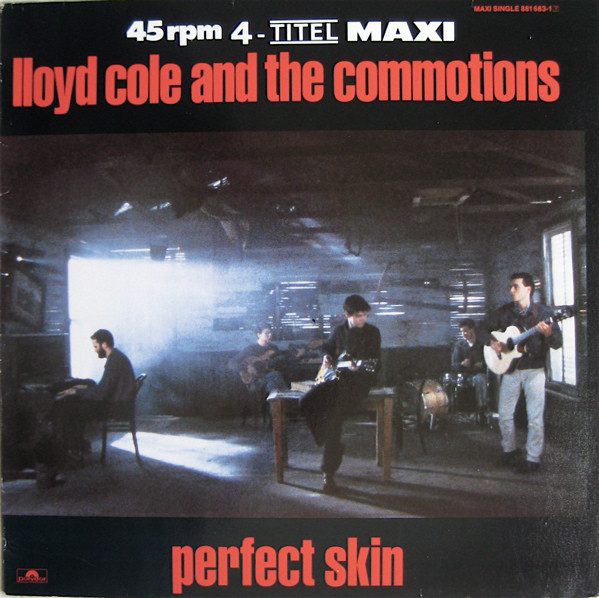
Love the sound of this song. It sounds like it could have come out of any decade. The guitar fills are wonderful. It’s a shame they didn’t have success in America but they were played on college radio stations.
Lloyd Cole wrote the lyrics and music to this song. He would write all the lyrics on the album and on a few songs would get some help with the music.
Perfect Skin was off of the album Rattlesnakes which peaked at #13 in the UK and New Zealand in 1984. The song peaked at #26 in the UK. NME included the album in its Top 100 Albums of All Time list, and the title track was later covered by the American singer Tori Amos.
The Welsh band Manic Street Preachers included the album amongst their top ten list.
They were active from 1984 through 1989 and released three albums and all of them made the top twenty in the UK. They had formed in Glasgow, Scotland in 1982…they broke up in 1989. Cole embarked on a solo career but the band reformed briefly in 2004 to perform a 20th anniversary mini-tour of the UK.
Lloyd Cole:Perfect Skin’s Louise wasn’t real, though. I’d read about Bob Dylan seducing women by writing songs for them, so I was showing off with words: “She’s got cheekbones like geometry and eyes like sin and she’s sexually enlightened by Cosmopolitan.” When I sing that live now, I go: “Who isn’t?”
Between 1983 and 84, we went from being a wimpy band who sounded like the Style Council to more of a rock band. When I wrote Are You Ready to Be Heartbroken? it made us realise what we could do. I took a Portastudio to my room in Glasgow Golf Club, where my parents worked and lived, and wrote Perfect Skin and Forest Fire. Not one song on Rattlesnakes was more than a year old when it was recorded.
Perfect Skin
I choose my friends only far too well I’m up on the pavement They’re all down in the cellar With their government grants and my IQ They brought me down to size Academia blues
Louise is a girl I know her well She’s up on the pavement Yes, she’s a weather girl And I’m staying up here so I may be undone She’s inappropriate but then she’s much more fun and
When she smiles my way My eyes go out in vain She’s got perfect skin
Shame on you, got no sense of grace Shame on me Just in case I might Come to a conclusion other than that which is absolutely necessary And that’s perfect skin
Louise is the girl with the perfect skin She says, “Turn on the light otherwise it can’t be seen” She’s got cheekbones like geometry and eyes like sin And she’s sexually enlightened by Cosmopolitan and
When she smiles my way My eyes go out in vain For her perfect skin Yeah, that’s perfect skin
She takes me down to the basement To look at her slides Of her family life Pretty weird at times At the age of ten she looked like Greta Garbo and I loved her then But how was she to know that
When she smiles my way My eyes go out in vain She’s got perfect skin
Up eight flights of stairs to her basement flat Pretty confused, huh? Being shipped around like that Seems to climb so high Now we’re down so low Strikes me the moral of the song Must be: there never has been one
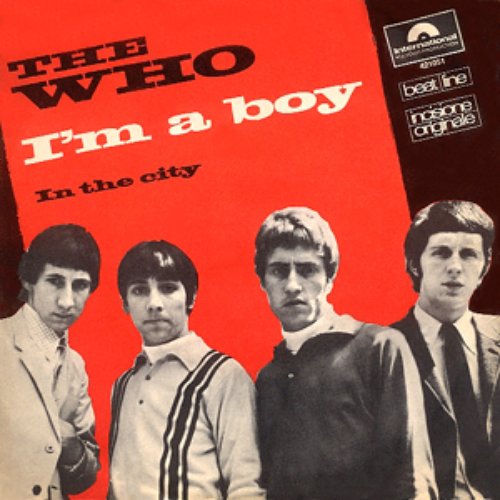
Pete Townshend wrote this for a Rock Opera he was composing called “Quads,” which was about a future where parents could choose the sex of their children. That opera never happened. I have to wonder if Townshend had this old title in mind when a few years later he came up with the title for “Quadrophenia.”
I’m A Boy was released as a single in 1966. The song peaked at #2 in the UK and #2 in New Zealand. The song was not heard much in America or Canada at the time. Many of their singles would finally come to the light when the great compilation album Meaty Beaty Big and Bouncy was released in 1971. They did a live version and included it on the live album Live At Leeds released in 1970.
Released as the B-side of the single was “In the City”, the first and last song credited to the songwriting collaboration of John Entwistle and Keith Moon. Entwistle referred to it as rip-off of Jan and Dean, a group that was a favorite of Moon’s.
Roger Daltrey: “I always thought The Who went through a weird period after ‘My Generation’ (November 1965) that lasted until we did ‘Magic Bus’ (October 1968). I thought it all went a bit sloppy. But ‘I’m A Boy’ and ‘Pictures Of Lily’ were from that period when I’d been allowed back into the band (Daltrey had been asked to leave after beating up Keith Moon over his heavy use of amphetamines). My ego had been crushed. I was insecure and it showed in my voice. When I first heard those songs, I was like, ‘Oi, what’s this all about?’ I didn’t think I could find the right voice for them. You can hear it when you listen to them now, but my insecurity made those songs sound better. It was a happy accident.”
From Songfacts
This is about a boy whose mother wants him to be a girl, while the boy longs to assert his real sexual identity. The controversial subject of cross-dressing was probably the reason why this failed to reach the American Top 100.
Daltrey told Uncut magazine: “On ‘I’m A Boy’, I tried to sing it like a really, really young kid, like an eight-year-old. Not the voice of an eight-year-old but the sentiment – and I think that came across.”
I’m A Boy
One girl was called Jean Marie Another little girl was called Felicity Another little girl was Sally Joy The other was me, and I’m a boy
My name is Bill, and I’m a head case They practice making up on my face Yeah, I feel lucky if I get trousers to wear Spend evenings taking hairpins from my hair
I’m a boy, I’m a boy But my ma won’t admit it I’m a boy, I’m a boy But if I say I am, I get it
Put your frock on, Jean Marie Plait your hair, Felicity Paint your nails, little Sally Joy Put this wig on, little boy
I’m a boy, I’m a boy But my ma won’t admit it I’m a boy, I’m a boy But if I say I am, I get it
I want to play cricket on the green Ride my bike across the street Cut myself and see my blood I want to come home all covered in mud
I’m a boy, I’m a boy But my ma won’t admit it I’m a boy, I’m a boy, I’m a boy I’m a boy, I’m a boy, I’m a boy, I’m a boy I’m a boy, I’m a boy, I’m a boy
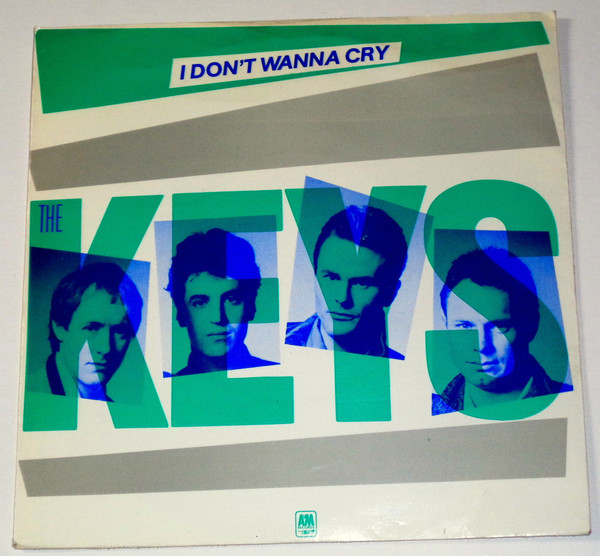
This fantastic English band was active between 1979 through 1983. The Keys attracted a lot of attention. They had a producer who I would have never guessed. Joe Jackson…I just never thought of him producing a power pop record.
The band included main songwriter and bassist Drew Barfield, guitarists
Steve Tatler and Ben Grove, and former Paul McCartney and Wing’s drummer Geoff Britton.
They were signed to A&M records and released the U.K. their only LP “The Keys Album”. The album drew rave reviews, but unfortunately it didn’t sell very well. Besides the album, the label released six singles. Due to a lack of interest The Keys split in 1983.
I listen to the album and I see why they got great reviews…I just can’t figure why they didn’t sell. I Don’t Wanna Cry was the A side and the B side was a song called Listening In. I have the video below…both songs are good power pop.
David Silvia from Allmusic:One of powerpop cornerstones ever. A hidden classic and a real masterpiece. Pop at it’s best
I Don’t Wanna Cry
Was it really just our last good night when I saw the light and I know that you’ve been telling lies Oh, no, not me, I don’t wanna cry You could talk about it all night long but the feeling’s gone and I don’t need you to tell me why Oh no, not me, I don’t wanna cry
‘Cos you know, I’ve got you figured out and you have got, nothing to shout about if this is love, I don’t really wanna play I wanna know why you want to stay
I know all about your little plan find a fool and check up the thing you can well, it seems is never gonna be that way I wanna know what you want to stay ESTRIBILLO
Oh no, not me, I don’t wanna cry Oh no, not me, I don’t wanna cry I don’t wanna cry I don’t wanna cry I don’t wanna cry I want to know what you want to stay
The title was enough for me to take a listen to this band. They combined 60’s garage rock, country, blues, and folk influences to become one of the many 80’s roots rock bands.
The Del Lords were formed in the early ’80s by Scott Kempner of New York punk group the Dictators. They emerged from the’70s new wave scene…which the band never quite fit. Kempner gathered together Eric Ambel of Joan Jett And The Blackhearts, drummer Frank Funero (now with Cracker) and bassist Manny Caiati and set out as The Del-Lords.
How Can a Poor Man Stand Such Times and Live? is an American folk song originally recorded 1929 in New York City. It was written, composed, and performed by Blind Alfred Reed, accompanying himself on the violin.
The song tells of hard times during the Great Depression. It is considered an early example of a protest song. In 2020, the song was added to the Grammy Hall of Fame.
The song was on their Frontiers album released in 1984.
The Del-Lords lived together, played together, recorded and released records as a band through 1990. At the urging of the Spanish Promoter Pepe Ugena they reformed the band in the last decade and recorded and released their most recent music in 2013 on the album Elvis Club.
How Can a Poor Man Stand Such Times and Live?
How can a poor man stand such times and live How can a poor man stand such times and live How can a poor man stand How can a poor man stand How can a poor man stand such times and live
The doctor comes around with his face all bright And he swears, in a little while, it’ll be alright All he gives you is a humbug pill A dose of dope and a great big bill How can a poor man stand such times and live
There once was a time when everything was cheap But the prices nowadays nearly put the man to sleep When we get out grocery bill Man I feel like makin’ out our will How can a poor man stand such times and live
How can a poor man stand such times and live How can a poor man stand such times and live I give all I’ve got to give I get my pay and say, is this it How can a poor man stand such times and live
Tell you what This poor boy’s got some big plans of his own I’m gonna call up a coupla friends on the telephone Tell ’em, Bring some records and bring some beer Then we can just hang out over here How can a poor man stand such times and live
How can a poor man stand such times and live How can a poor man stand such times and live How can a poor man stand How can a poor man stand How can a poor man stand such times How can a poor man stand such times How can a poor man stand such times and live And live
I saw this band in the late eighties and it was one of my concert highlights. The song peaked at #68 in the Billboard 100 and #37 on the Mainstream Rock chart in 1988.
The phrase “unique voice” could have easily have been made for Natalie Merchant. I mean that in the best way. When you hear Natalie you won’t mistake her for Linda Ronstadt, Steve Nicks, Dolly Parton, or Janis Joplin…You know it’s Merchant.
What I liked about this song and their music when I first heard it was the bright happy music set against the dark/sad lyrics…I really like the contrast. The band loved up-tempo songs but Natalie liked the darker lyrics.
Lead singer Natalie Merchant was 17 years old when she was invited to try out for the vocals. She fit, and the group, which started as Still Life, formed around her. They performed together for the first time in 1981 – Merchant was about 10 years younger than her bandmates.
The band got its name from the 1964 film Two Thousand Maniacs!, expanded to 10,000 because there were originally five of them. The group has accumulated a legion of former members thanks to its revolving-door lineup history, but the most famous and founding member was Natalie Merchant. Merchant left in 1993 to start a solo career, but the group kept going without her, replaced by Mary Ramsey.
Bass Player Steven Gustafson: We liked to play toe-tapping music,”Stuff you could dance to with a big beat. Her view of the world was sometimes in stark contrast to that joy we got from playing. It made us unique.”
From Songfacts
The first charting single for 10,000 Maniacs (#68 US), “Like the Weather” was written by lead singer Natalie Merchant, and is simply about being in a foul mood on a day when the weather is horrible and she can’t find a good reason to get out of bed.
The video was directed by Adrian Edmondson, who is best known for his work as an actor: he starred in the British shows The Young Ones and Bottom. Edmondson is also a comedian, and his sardonic wit is at play in this clip, which finds Merchant in a beatific state amid a colorful, breezy set as she sings the rather morose lyrics.
Like The Weather
The color of the sky as far as I can see is coal grey. Lift my head from the pillow and then fall again. With a shiver in my bones just thinking about the weather. A quiver in my lips as if I might cry.
Well by the force of will my lungs are filled and so I breathe. Lately it seems this big bed is where I never leave. Shiver in my bones just thinking about the weather. Quiver in my voice as I cry,
“What a cold and rainy day. Where on earth is the sun hid away.”
I hear the sound of a noon bell chime. Now I’m far behind. You’ve put in ’bout half a day while here I lie with a shiver in my bones just thinking about the weather. A quiver in my lip as if I might cry,
“What a cold and rainy day. Where on earth is the sun hid away?”
Do I need someone here to scold me or do I need someone who’ll grab and pull me out of this four poster dull torpor pulling downward. For it is such a long time since my better days. I say my prayers nightly this will pass away.
The color of the sky is grey as I can see through the blinds. Lift my head from the pillow and then fall again with a shiver in my bones just thinking about the weather. A quiver in my voice as I cry,
“What a cold and rainy day. Where on earth is the sun hid away?” I shiver, quiver, and try to wake.
This post is probably tilted a little more about the subject of the song than the song…I was interested in Edie when I was a teenager…she was an interesting and troubled person.
I watched the movie Ciao! Manhattan when I was around 15 years old. Her life was a mess and I started to read more about her. In the mid-sixties she was hanging out with Bob Dylan, Bob Neuwirth, Robbie Robertson and Andy Warhol.
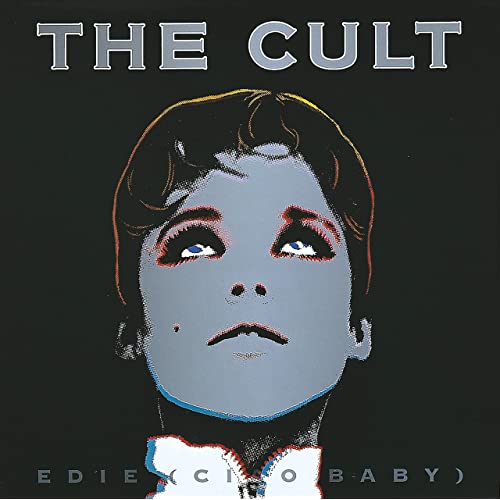
This song of course is about Edie Sedgwick, a socialite who formed part of the artist Andy Warhol’s Factory scene in New York in the ’60s. Sedgwick was featured in several underground Warhol films, including Poor Little Rich Girl and Beauty No. 2. She soon would break from Warhol and wanted to start a legitimate film career but that never really got off the ground.
Her final movie role was as Susan Superstar in Ciao! Manhattan, which was written and directed by John Palmer and David Weisman.
She lived a troubled life that was plagued by mental health issues and drug addictions. In 1971, Sedgwick died of an overdose. She was 28 years old. She was filming Ciao Manhattan when she died…they wrote that in the film.
The 2008 film, Factory Girl, starring Sienna Miller, is about Sedgwick.
The song peaked at #93 in the Billboard 100, #62 in Canada, #17 in New Zealand, and #32 in the UK in 1989.
The song was on the album Sonic Temple that peaked at #10 in the Billboard Album Charts, #2 in Canada, and #3 in the UK Album Charts.
From Songfacts
The Cult’s front man, Ian Astubury, became interested in Sedgwick while the band were recording their Electric album in New York: “It was kinda like I was really interested in Warhol’s scene, The Velvet Underground [who Warhol managed between 1965-1967], and really interested in Edie Sedgwick and just was compelled to write something about it.” Guitarist, Billy Duffy added: “Just being in New York you can get wrapped up in it. It’s a very special place. That’s just basically what the songs about. It’s not really about her particularly, it’s her used as an example.”
Sedgwick was quite a muse: she had a brief affair with Bob Dylan and his song “Just Like A Woman” is reportedly about her.
Edie (Ciao Baby)
Always said you were a youthquaker, Edie A stormy little world shaker Oh, Warhol’s darling queen, Edie An angel with a broken wing
The dogs lay at your feet, Edie Oh, we caressed you cheek Oh, stars wrapped in your hair, Edie Life without a care But your not there
Oh, caught up in an endless scene Yeah, paradise a shattered dream Oh, wired on the pills you took, Edie Your innocence dripped blood, sweet child
The dogs lay at your feet, Edie Oh, we caressed your cheek Oh, stars wrapped in your hair Oh, life without a care Ciao baby
Shake it, boy
Oh, sweet little sugar talker Paradise dream stealer Oh, Warhol’s little queen, Edie An angel with a broken wing, oh
The dogs lay at your feet, Edie Oh, we caressed your cheek, well Stars wrapped in your hair Life without a care yeah, yeah, yeah
I love the opening riff to this song! It sounds like a riff from the old 70’s ZZ Top with a little Stones thrown in…. but a little rawer. I have to thank my blogger friend CB who mentioned this band.
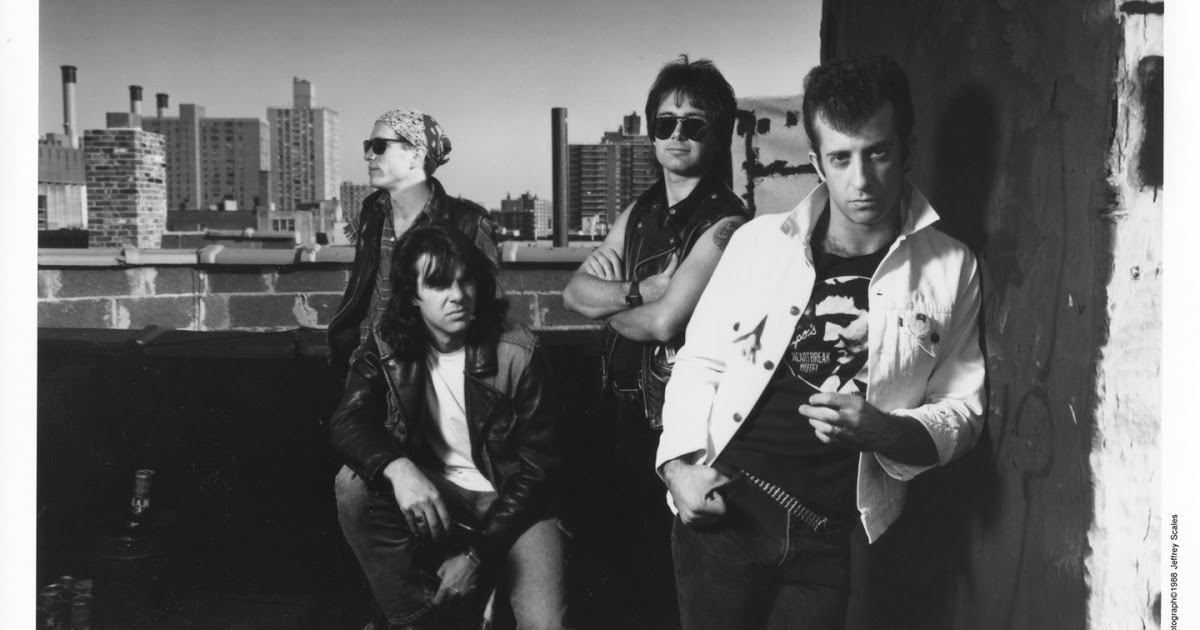
In 1989 singer and guitarist Marcellus Hall formed the band in 1989 on the Lower East Side of Manhattan with bassist Tony Lee and drummer Jez Aspinall. Within a few months, guitarist Chris Mueller also joined.
I hear a mixture of The Cramps and The Stones. This was on their 4th album The Third Rail released in 1996. The band recorded demos for a fifth Railroad Jerk LP which was to be entitled ‘Masterpiecemeal’. This final LP was never released. Dave Varenka and Marcellus Hall went on to form the band White Hassle.
It’s not a lot about this band, not even the song’s lyrics so I’m including an excerpt from AllMusic.
Railroad Jerk skewer blues, country, rock, and noise into a messy, bohemian post-punk celebration of roots rock. Formed in 1989 by guitarist/vocalist Marcellus Hall and bassist/vocalist Tony Lee in Trenton, NJ, the duo added drummer Jez Aspinall and guitarist Chris Muller by early 1990; the group recorded their self-titled debut for Matador Records in 1990. After its release, Aspinall left the band and was replaced by Steve Cercio; Muller was kicked out of the band and replaced by Alec Stephen. The quartet released their acclaimed second album, Raise the Plow, in 1993; after its release, Cercio left the band and was replaced by Dave Varenka. Railroad Jerk released its third album — its most highly-praised yet — in spring of 1995. Third Rail, the group’s fourth album, also received positive reviews upon its fall 1996 release.
This is great 1980s college radio power pop. Everything is there you want…the jangle and the jangly hook.
Let’s Active was formed in 1981 by Mitch Easter, a guitarist and songwriter best known as a record producer, with Faye Hunter on bass. Drummer Sara Romweber, then 17 years old, joined to form the original trio two weeks before their first live performance. Their first performance was opening for R.E.M. in Atlanta, Georgia in 1981.
Let’s Active was critically praised but like their peers did not sell a ton a records. This song was on the 1983 EP Afoot and they would go on to release three more LPs in all before breaking up in 1990.
Mitch produced REM on their Chronic Town EP, Murmur, and Reckoning. Easter also produced Marshall Crenshaw, Suzanne Vega, and bunches of indie acts. He also took a trip to Memphis in 1978 with members of the dB’s to meet two members of Big Star.
Romweber quit the band in 1984 after the release of the Afoot EP and their debut full-length, Cypress. Later, she co-founded the group Snatches of Pink and performed with her brother as the Dex Romweber Duo. In 2014, she reunited with Mitch Easter as Let’s Active for a benefit show. She would die of a brain tumor in 2019. Bassist Faye Hunter died in 2013.
Mitch Easter:
“I could not imagine myself singing in a Johnny Winter-style voice about ‘I just wanna make love to you,’ but the new goofball lyrics were something I could pull off,’ “I read an article with Andy Partridge of XTC back then where he was saying at no other time in history would he have been allowed to be the singer in a band. And I felt just like that, you know.
“I had this weird voice, but now maybe I could be allowed to sing without suffering some hopeless comparison to Gregg Allman.’
Every Word Means No
Watching for a sound to lead me to where ever you are I can’t help it I will always love you
It used to be no words could come between us Any time was right for secret meetings It’s different now and when you speak Every word means no Every word means no
I’m thinking, of things that never come to life You’re going through some things so shallow There’s nothing to fight
It used to be no words could come between us Any time was right for secret meetings It’s different now and when you speak and Every word means no Every word means no
And it’s just anathema I haven’t lost my way I’m looking around in directions ‘Cause all I ever thought about was you I never noticed anything but you Predicting, puts me down on shaky ground I keep on thinking your looking at me Do you want me around
It used to be no words could come between us Any time was right for secret meetings Now and then I forget the rules have changed You always remind me That every word means no, every word means no
I heard this in 2000 and it sounded like the Paul Simon of old…no pun intended. It’s about when people telling you…you are getting old whether you are there or not.
It was on the album You’re The One released in 2000. You’re The One was nominated for a Grammy Award for Album of the Year in 2001. As a result Simon became the first artist to be nominated in that category in five consecutive decades (1960s-2000s). Paul McCartney also joined that club in 2006 with his album Chaos and Creation in the Backyard.
You’re the One‘s generally upbeat tone arose out of his happy home life with singer Edie Brickell and their children… “the first time that I ever had domestic bliss.”
You’re The One peaked at #19 in the Billboard Album Chart, #8 in Canada, and #20 in the UK. This release was 3 years after his album Songs from the Capeman which contained songs from a Broadway Play he wrote.
Old
The first time I heard ‘Peggy Sue’, I was twelve years old Russians up in a rocket ships and the war was cold Now many wars have come and gone, genocide still goes on Buddy Holly still goes on, but his catalog was sold
First time I smoked, guess what, paranoid First time I heard ‘Satisfaction’, I was young and unemployed Down the decades every year, summer leaves and my birthday’s here And all my friends stand up and cheer
Say man you’re old Getting old You’re old You’re getting old
We celebrate the birth of Jesus on Christmas Day And Buddha found Nirvana along the Lotus Way About fifteen hundred years ago the messenger Mohammed spoke And his wisdom like a river flowed through hills of gold
Wisdom is old The Koran is old The Bible is old Greatest story ever told
Disagreements? Work ’em out
The human races walked the Earth for two point seven million And we estimate the universe about thirteen to fourteen billion When all these numbers tumble into your imagination Consider that the Lord was there before creation
God is old We’re not old God is old He made the mold
Somewhere in the 80’s out of all the synthesizers, electronic drums, quadraverbs, and that big sheen production…there was a rock roots movement playing out on college radio. Some was a mixture of punk rock, country, British Invasion, and power pop.
Scruffy the Cat was a cowpunk band that was popular on the Boston area, but never sniffed the charts. My Baby, She’s All Right is from 1987 that got some MTV airplay. I do barely remember the song after seeing the video. I want to thank Paul for bringing this one up.
The song was off the album Tiny Days released in 1987 and the album was in the top 5 of college national radio charts.
Charlie Chesterman was in a band in Iowa and they all moved to Boston in 1981. The band he was in then broke up and some moved back to Iowa. Chesterman stayed on in Boston and eventually helped put together another band called Scruffy the Cat (named for a cat owned by the father of one of the band members). Scruffy the Cat began playing around Boston in 1983 and released its first EP-”High Octane Revival”-on the Relativity label in 1986. They released the LP Tiny Days in 1987, Boom Boom Bingo EP in 1987, and their final album Moons of Jupiter in 1988.
They had several national tours and shared the bill with such acts as The Replacements, Yo La Tengo, and Los Lobos. The band played its final shows in 1990 before disbanding. In 2011, Scruffy The Cat played three reunion shows in the Boston area, with the initial show being arranged as a benefit concert for the cancer-stricken Chesterman. Chesterman died in November 2013.
Their music as been described as “a combination of early Elvis Costello and the Attractions with a touch of Jason & the Scorchers’ tough country punk and the American jangle of the Byrds.” They were together between 1984 through 1990.
My Baby, She’s All Right
She’s a long, tall drink of water Badder than Bo Diddley’s electric guitar Badder than anything this whole year I don’t like bragging but I can’t help myself, well…
Long and lean like a Cadillac Supercharged like the Batmobile She drives me into the woods When she gets behind the wheel
In the desert, in the hottest fire, in the houses and over the seas In the cities, in the telephone wires They all talk about what she means to me, ’cause…
My baby, she’s allright My baby, she’s allright My baby, she’s allright My baby…
She’s got that certain something Man, I hope you know what I’m talking about If you’ve ever had a lover who was really true Just walking down the street or when you turn out the lights, ’cause…
My baby, she’s allright My baby, she’s allright My baby, she’s allright My baby…
And when she kisses me, I hear the Drells or is it T. Rex? I could hang my arm out the window, but around my baby is where I’ll be…
I know you must have heard about her You know everything they say is true I suppose you know what she means to me And if you don’t then what’s the matter with you? well…
Haven’t you been listening Or did you hear what I just said? If someone tried to show me something better I’d have to say I’m not interested, because…
My baby, she’s allright My baby, she’s allright My baby, she’s allright My baby…Yeah, yeah, she’s allright My baby, she’s allright My baby, she’s allright My baby, she’s allright My baby…Yeah
This is a great opening track to this famous album. What a way to introduce probably the most famous album ever.
The slicing guitar stands out and the drum sound that Ringo got. Paul McCartney wrote this and sang lead. After recording it, he had the idea of doing the whole album as if Sgt. Pepper was a real band. It became the title track of what was considered a “concept” album, with the songs running seamlessly together on the record.
The title is a parody of American bands who were choosing long names for their bands.
Three days after the album came out, Jimi Hendrix opened a concert with this. McCartney and Harrison were both there, and were very impressed that Hendrix learned it so quickly.
The reprise of the song is right before A Day In The Life.
This song was produced in a rush when The Beatles decided to bring back the theme song to introduce the last track on the album, “A Day In The Life.” The idea to reprise the song came from Neil Aspinall, The Beatles’ friend and road manager.
George Harrison, Paul McCartney, and Ringo Starr played this on May 19, 1979 at Eric Clapton’s wedding. Clapton married Harrison’s ex-wife, Pattie. Pattie didn’t think John Lennon would fly over from America so she never sent an invititation. John Lennon said later he would have come.
From Songfacts
The album was heavily produced and took 129 days and about 700 hours to complete. The Beatles first album, Please Please Me, was recorded in less than 10 hours.
The crowd noise was dubbed in. The Beatles had stopped touring by then.
There really is an apostrophe in this song’s title, although on the album cover, it is rendered without. Since the Lonely Hearts Club Band belongs to Sgt. Pepper, it is possessive, thus “Sgt. Pepper’s.”
This is reprised at the end of the album before the final track, “A Day In The Life.”
This was recorded as one song with “With A Little Help From My Friends.” They flow seamlessly on the album, creating a problem for radio stations that want to play just one of the songs.
Artist Peter Blake designed the album cover as if Sgt. Pepper’s band had just performed a concert. He asked The Beatles who they wanted at the concert, and put them in the cover design.
All living people depicted on the cover were asked permission. Mae West refused at first – she didn’t want to be part of a “Lonely Hearts Club Band” – but The Beatles wrote her a letter and she agreed. Other characters depicted on the album cover include comedic duos Laurel & Hardy and Abbott & Costello, Marilyn Monroe, Shirley Temple and W.C. Field.
Lennon wanted Jesus, Gandhi, and Hitler on the cover. He had recently taken a lot of heat for saying The Beatles were “Bigger than Jesus,” so they decided not to.
It was rumored that the hand that is sticking out above Paul is that of Adolph Hitler. A Hitler cut out was on the set, but if you look at some side shots of the photo session, you can clearly see that the hand belongs to comic Issy Bonn, whose face is seen in between Paul McCartney and George Harrison.
On the cover of this album McCartney is taller than the other Beatles. This added to rumors of his death, since there is also a hand above Paul’s head which is an omen of death. Also, if you take a mirror and put the edge on the center of the Lonely Hearts Club Band drum an arrow will point directly to McCartney.
Sgt. Pepper was the first pop album to come with printed lyrics on the cover.
Twelve years after “Sgt. Pepper’s Lonely Hearts Club Band” and “With a Little Help from My Friends” appeared on the Sgt. Pepper album, they were released together as a two-song medley and reached US #71 and UK #63.
In 2005, Bob Geldof helped organize Live 8, a set of concerts held in eight countries with the goal of promoting activism. The concerts coincided with the G-8 summit, and Geldof was hoping to send a message to world leaders that they should increase aid to Africa and institute fair trade practices. On the London stage, U2 played this with McCartney to kick off the concert. The opening line, “It was 20 years ago today,” was a reference to Live Aid, which Geldof organized for famine relief in 1985.
Sgt. Pepper’s Lonely Hearts Club Band was the first rock album to win a Grammy for Album of the Year.
On the album cover, Paul McCartney is wearing an Ontario Provincial Police (OPP) badge on his right sleeve. You can see this better on the inside artwork.
The hand-painted drum skin used on the cover of the Sgt Pepper album was sold at Christie’s House in London on 10th July 2008 for £541,250 ($1,071,000) – setting a record for non-lyrics Beatles memorabilia.
In 2007, the Beatles Story museum in Liverpool went on a search for real Sgt. Peppers and found seven police or army officers in the UK that were sergeants with the last name Pepper. “Being Sgt. Pepper is awesome but sometimes people think I am bogus when I call them on the phone or introduce myself,” Sgt. Sean Pepper of Highfields said.
Sgt Pepper’s Lonely Hearts Club Band
It was twenty years ago today Sergeant Pepper taught the band to play, They’ve been going in and out of style, But they’re guaranteed to raise the smile, So may I introduce to you, The act you’ve known for all these years, Sergeant Pepper’s Lonely Hearts Club Band.
We’re Sergeant Pepper’s Lonely Hearts Club Band We hope you will enjoy the show Sergeant Pepper’s Lonely Hearts Club Band Sit back and let the evening go Sergeant Pepper’s Lonely Sergeant Pepper’s Lonely Sergeant Pepper’s Lonely Hearts Club Band
It’s wonderful to be here, It’s certainly a thrill You’re such a lovely audience, We’d like to take you home with us, we’d love to take you home
I don’t really want to stop the show, But I thought you might like to know, That the singer’s going to sing a song And he wants you all to sing along, So let me introduce to you The one and only Billy Shears And Sergeant Pepper’s Lonely Hearts Club Band
Oh ha ha Yeah, dress down I feel it, I feel it, I feel it Oh baby now, I feel it, I feel it, I feel it Baby, free now Gotta be free now, gotta be free now, gotta be free Don’t like that I think it’ll probably be another day singing it Yeah so just edit that then, it’s nice Yeah, and what you can do with the bits where you can’t get it ’cause you haven’t got enough breath Just take over, yeah
The Db’s were a great unknown power pop band…who would influence many bands but not sale many records. The band members were Peter Holsapple, Chris Stamey, Will Rigby, and Gene Holder.
All of the members are all from Winston-Salem, North Carolina, but the band was formed in New York City in 1978. They never broke through to the masses but they were heard on college radio in the 80s.
“Black and White,” is the leadoff track to The dB’s debut album Stands for Decibels, and it is pure power pop. The dB’s were signed to the U.K. label Albion, which had trouble licensing the record for American distribution…. and subsequently went un-promoted in radio and only received sporadic play from college radio stations.
The Stands for Decibels album was ranked at number 76 on Pitchfork‘s list of the 100 best albums of the 1980s. The dB’s would released 6 albums in all. The last album was released in 2012 when the members reunited.
The dB’s broke up in 1988 and Peter Holsapple would go on to be an auxiliary guitarist and keyboardist for REM on the Green tour. He then helped in writing and recording their Out Of Time album. Holsapple subsequently worked with Hootie & the Blowfish as an auxiliary musician.
The dB’s worth checking out.
Good story on two of the members meeting two Big Star members:
In May of 1978 two members of the dB’s Will Rigby, Peter Holsapple, and future R.E.M producer Mitch Easter made a pilgrimage to Memphis. They were about the only people in America who, while attending high school in the early ’70s, were under the impression that Big Star was a major band.
Their first stop was Danver’s…a restaurant that former Big Star’s Chris Bell worked at and his father owned. They passed a note to the server to talk to Chris and out he came. He was shocked that fans would track him down. It had been 6 years since the Big Star debut album was released. They were impressed by how nice he was to them.
Bell invited them to join him after work at a ferny bar-café called the Bombay Bicycle Club. Here, while Bell played backgammon with a buddy, the three guys peppered him with questions: What kind of guitar did he play? How did he get those great sounds?
Bell wondered if the boys were up for maybe checking out a Horslips (local rock band) concert. They instead decided to go over to Sam Phillips Recording Service to visit Alex Chilton, Bell’s former Big Star bandmate, then making his experimental album Like Flies on Sherbert. Bell and Chilton exchanged quiet hellos before Bell went home.
A few days later Alex Chilton drove Easter and Rigby (Holsapple had already left) around Memphis, showing them the old Sun Studios building (which had a Corvair parked inside it), and taking them up a bluff overlooking the Mississippi. He pulled out a cassette and played a song on a junky little cassette player that took his visitors by surprise.
Chilton played the guys a Chris Bell song. He was raving about it saying it was Chris’s best song and it was the ultimate “Big Star song “…the song was I Am The Cosmos which the public had not heard at this point.
Chris Bell would die in a car wreck on Decemeber 27, 1978…only 7 months after this happened.
Chris Stamey on Big Star:“They were my favorite, and as far as I knew they were popular all the way across America. At least for that moment, I forgot about Emerson, Lake, and Palmer.”
Peter Holsapple on meeting Chris Bell and I Am The Cosmos:“that the person who made all that beautiful music was a right-on kind of guy, too.” “It’s that kind of rife-with-sadness record, but it’s realized with the same imploding beauty that Big Star had. I mean, I Am the Cosmos-it’s just wry enough to make you turn your head and do a double-take, you know, the first sixteen thousand times you listen to it.”
Black and White
I, I never would hurt you But even if I did you You never would tell me Oh, we are finished As of a long time ago As of a long time ago I stop I don’t enjoy you anymore Well I guess I just don’t enjoy you anymore Well I guess it’s all laid out in black and white You don’t like it at all
Love Love is the answer To no question But thanks for Oh, the suggestion I know I don’t care at all Yeah, I know I don’t know anything at all But I stop
I don’t enjoy you anymore Well, I guess I just don’t enjoy you anymore Well, I guess it’s all laid out in black and white You don’t like it at all You don’t like it at all You don’t like it at all (In black and white)
Dolly Parton: “it makes me so happy that after all of these yearsthey are still Lone Justice with Maria, the greatest girl singer any band could ever have.”
If I could have controlled the outcome of the 80s…Maria McKee and Lone Justice would have been huge. She is one of my favorite singers of that decade. I had friends listening to more commercial music…while I was stuck on Maria.
Lone Justice had all the potential in the world, but ended up more of a cautionary tale. They had a charismatic lead singer with Maria McKee, a big time producer in Jimmy Iovine, the backing of a major label and contributions from Tom Petty, Bob Dylan, Little Steven, and many more. The problem is none of these people knew what to do with their blend of classic country and punk leaving Lone Justice to wither on the vine. One problem is that Geffen just was not patient enough.
Lone Justice was formed in 1982 and played rockabilly and country music as part of the cowpunk scene.
After signing with Geffen, the band recorded their debut album, and hit the road, opening for U2. They hype was in overdrive and the pressure was on.
The critics loved the album but it didn’t sell well. I first noticed them with the song Ways To Be Wicked that was written by Tom Petty and Mike Campbell. I personally thought that one would hit the top ten…I was wrong yet again. The album could not meet the expectations of all of the hype and failed to connect with a rock audience.
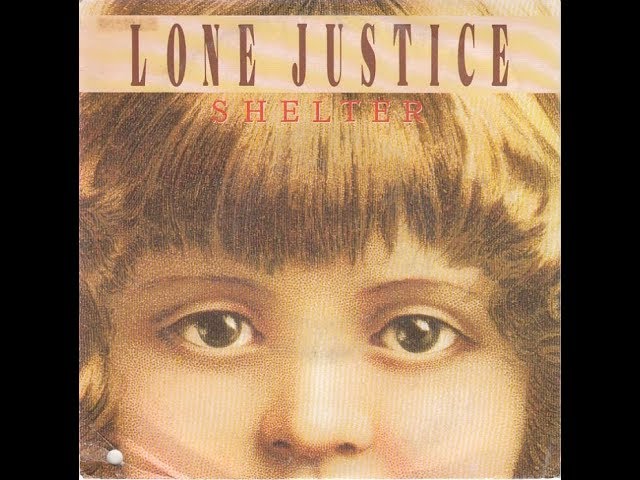
For their 2nd album, a new lineup was thrown together. Their album Shelter was released in November of 1986 and saw the newly assembled group shift away from its rockabilly sound to a more polished pop sound, with synthesizers and drum machines. I will admit I didn’t like this as much as the debut album. The band broke up not too long after this album.
Shelter peaked at #47 in the Billboard 100 and #26 in the Mainstream Rock Tracks.
In 2014 This Is Lone Justice: The Vaught Tapes, 1983 was released…this was pre-Geffen recordings with old country, traditional, and a few originals. I will be posting something from that collection.
Dolly Parton on Lone Justice and Maria McKee:
I have loved Lone Justice and Maria McKee since they first started out as a group. I remember going to see them at The Music Machine in Los Angeles in 1984. I was so impressed that I told everybody about them and encouraged different management people to manage them. I remember that different management groups and record labels wanted to break the group up and record the band and Maria as separate acts. And I remember hearing that they did not want to separate. No matter what might have gone on in the years between, it makes me so happy that after all of these yearsthey are still Lone Justice with Maria, the greatest girl singer any band could ever have. Maria has such charisma and stage presence. I love her voice and her vocal style as well as the way the plays that big ol’ guitar and how she looks while she is playing it. I especially love this new CD. It has some of my favorite old songs on it and some new favorites that I’ve never heard. Hope you enjoy Lone Justice everybody…I know I will.
Respectfully and musically yours.
Dolly Parton
Shelter
Well all right you gave it all up for a dream Fate proved unkind To lock the door and leave no key You’re unsure Well baby I’m scared too When the world crushes you
[Chorus] Let me be you’re shelter shelter From the storm outside Let me be your shelter shelter From the endless tide
Disillusion has an edge so sharp It tears at your soul And leaves a stain upon your heart I need you to wash mine clean You’ve felt it too And you need me
[Chorus]
Your struggle with darkness has left you blind I’ll light the fire in your eyes
[Chorus]
Your struggle with darkness has left you blind I’ll light the fire in your eyes
[Chorus]
Let me be your shelter shelter shelter shelter shelter
Another band that missed the masses but were a hit on college radio in the 80s.
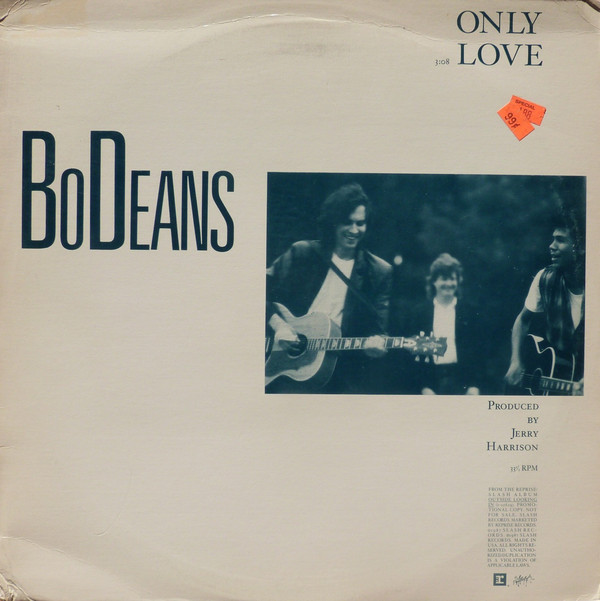
Only Love was released in 1986. The Bodeans opened up for U2 on their Joshua Tree tour and you would think they would have broken through a little more than they did.
This song was on the album “Outside Looking In” their second album released in 1987. Their first album “Love & Hope & Sex & Dreams” was released in 1986 and it lead to a full-page profile in Time Magazine. The story, written by critic Jay Cocks, quotes Llanas as saying, “We were a big fish in a little pond. Now we’re little fish in a big pond. You’re a local band until you get a record contract, then all of a sudden Bruce Springsteen is your competition.”
In 1977 Sophomores Sam Llanas and Kurt Neumann meet in study hall at Waukesha South High School and bond over a shared love of music. The two later end up playing music together. In 1980 At Neumann’s urging, Llanas dropped out of college to pursue music full-time. The group pursues gigs at small bars, clubs, dances and events. Llanas comes up with the name, Da BoDeans.
Llanas and Neumann added drummer Guy Hoffman (Oil Tasters, Confidentials, later the Violent Femmes) and bass player Bob Griffin (The Agents) to fill out their sound in 1983.
Their first album was referred to as cowpunk, rockabilly, roots-rock, revivalist rock, and as a synthesis of the a Rolling Stones and the Everly Brothers. Band member Sammy Lianas made more modest claims for the group, telling Cosmopolitan columnist Michael Segell, “I’d describe us as a band that writes a lot of good songs in different styles and plays most of them pretty well… . Our biggest influence was mid-sixties radio.
The band was still touring as of 2019 but Kurt Neumann is the only original member left.
Only Love
See you walking down the street now every day Pushing by the people as you make your way You’re walking proud now, baby You got your head held high Want you to know that this whole world Sees your heart cry Now see how hard you try To make yourself believe
It’s only love It’s only love It’s only love It’s only love
Maybe love shouldn’t have to be so hard to take Shouldn’t have to feel that love Until your poor heart breaks So why you tell yourself You know there’s no one else Then it ain’t worth the waiting anymore Don’t you wonder if there’s such a thing
It’s only love It’s only love It’s only love It’s only love
You better look in there Believe it, even if it’s too hard to Someone who’s been waiting Oh, baby, just for you and love It’s only love
If I could, I’d take you, baby, in my arms Take away all love’s blame And all love’s scars Maybe we could ride away Till we get so far away And then I couldn’t see us coming back again Well show me what you think of it Show me what you need
It’s only love It’s only love It’s only love It’s only love It’s only love It’s only love It’s only love It’s only love
I was surprised back when I found out that REM didn’t write this song. This song was originally recorded by a late 60’s band from Beaumont, Texas called The Clique, who released it as the B-side of their only Top 40 hit… “Sugar On Sunday.” The song was written by the group’s producer Gary Zekley along with Elliot Bottler, Mitchell Bottler and Brandon Chase.
The Clique didn’t have massive success in the charts but they toured nationally with popular acts, including Tommy James and The Shondells, Grand Funk Railroad, Brooklyn Bridge, and The Dave Clark Five. They had a brief reunion in 2008.
I like the Clique’s version of this also. It has a psychedelic vibe to it which is cool. REM stuck close to the original. Mike Mills the bass player is singing lead on this song because Michael Stipe refused to play it in concert. He told a London crowd in 2008 “We’re definitely not doing that one” after a fan request in 2008.
The scratchy spoken intro is credited to a Japanese pull-string Godzilla doll. Translated loosely from the Japanese, it says, “This is a special news report. Godzilla has been sighted in Tokyo Bay. The attack on it by the Self-Defense Force has been useless. He is heading towards the city. Aaaaaaaaagh….”
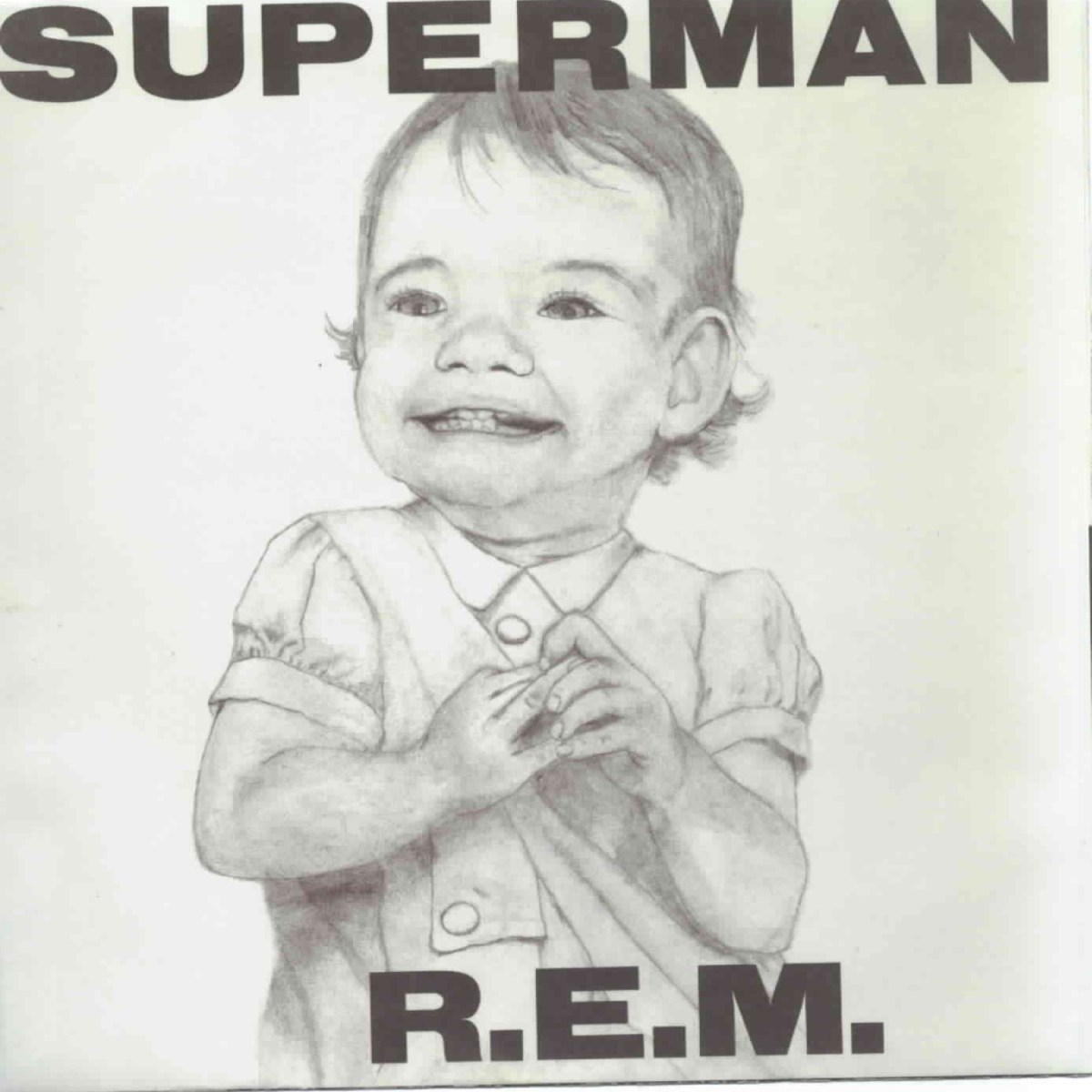
The song was on the album Life’s Rich Pageant released in 1986. Superman peaked at #17 in the Mainstream Rock Charts. The album peaked at #21 in the Billboard Album Charts, #39 in Canada, #24 in New Zealand, and #43 in the UK.
From Songfacts
This is a slightly stalkerish song about a guy who sees himself as Superman. He believes he can “see right through” the girl (presumably using his X-ray vision) so he knows that she doesn’t really love the guy she’s with. Where it gets a little creepy is when he threatens to find her even if she’s “a million miles away.”
It’s all in good fun though. R.E.M. don’t take it too seriously – Mike Mills sang lead on the track instead of Michael Stipe.
311 covered this song at one of their Halloween shows. Lead singer Nick Hexum dressed up as… you guessed it… Superman. On their DVD Enlarged To Show Detail 2, you can see them practicing it in the bus before the show, and then you see them perform it in concert. 311 site R.E.M. as one of their major influences. Hexum and Doug “S.A.” Martinez have both commented on their love of R.E.M.
Superman
I am, I am, I am Superman and I know what’s happening I am, I am, I am Superman and I can do anything
You don’t really love that guy you make it with now, do you? I know you don’t love that guy ’cause I can see right through you
I am, I am, I am Superman and I know what’s happening I am, I am, I am Superman and I can do anything
If you go a million miles away I’ll track you down, girl Trust me when I say I know the pathway to your heart
If you go a million miles away I’ll track you down, girl Trust me when I say I know the pathway to your heart
I am, I am Superman and I know what’s happening I am, I am, I am Superman and I can do anything
I am, I am, I am Superman and I know what’s happening I am, I am, I am Superman and I can do anything


:format(jpeg):mode_rgb():quality(90)/discogs-images/R-10180888-1593845402-2304.jpeg.jpg)