REM – Talk About The Passion

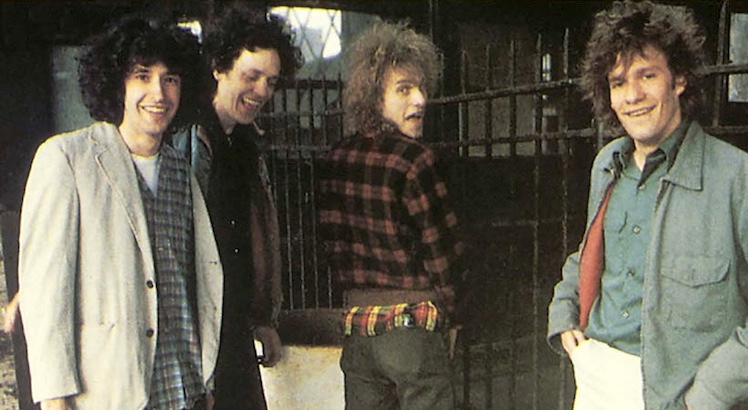
During my break from blogging, I was listening to everything from arena rock, to alternative rock, to newer rock music. The Replacements and R.E.M were high on my alternative list. I like the early R.E.M. songs that don’t get as much attention nowadays because of the big hits that came later.

This was the second single from R.E.M.’s debut album, Murmur. The first single was Radio Free Europe released in 1983. The guitar melody/solo in this song actually comes from multiple acoustic guitars played by Mike Mills, Peter Buck, and producers Mitch Easter and Don Dixon.

The album was rated number eight on Rolling Stone magazine’s list of the 100 greatest albums of the 1980s. In 2003, the TV network VH1 named Murmur the 92nd greatest album of all time.

The 1988 video, directed by Jem A. Cohen, expounds on the lyrics’ references to hunger by placing images of homeless people with a multi-million dollar warship.

Michael Stipe: “I had taken a French course at college, which I dutifully flunked out of, and Linda Hopper and I thought that the phrase, ‘combien de temps,’ that is, roughly, ‘how much time?’ was deeply meaningful and beautiful. I did sing it that way and it works here, if only here. We were 22 at the time after all.”

The song is credited to Berry, Buck, Mills, and Stipe as were most of their songs except for a few covers they did. This was a smart thing they did and probably is the reason for the longevity of the band and the continued friendship they have now. Many bands break up because one or two songwriters get all the publishing rights and make much more money.

Mike Mills on Bill Berry’s contributions: He would generally come up with several ideas for each record, and he would also be a really good editor for us. He was always very much about keeping them short, getting to the hook. He didn’t want to waste a lot of time and people’s attention noodling around.

Talk About The Passion

Empty prayer, empty mouths combien reaction
Empty prayer, empty mouths talk about the passion
Not everyone can carry the weight of the world

Talk about the passion

Empty prayer, empty mouths combien reaction
Empty prayer, empty mouths talk about the passion
Combien, combien, combien de temps?

Talk about the passion

Not everyone can carry the weight of the world
Combien, combien, combien de temps?

Talk about the passion

Beast: John Bonham and the Rise of Led Zeppelin… by C. M. Kushins

The book has a forward by Dave Grohl. I liked the book, it keeps you interested and doesn’t slow up. It’s a look at seventies rock and roll and it will make you realize how much has changed now…not only in music but in the real world.

I’ve always thought Led Zeppelin had a dark cloud that followed them..reading this book reaffirms that feeling. I always admired John Bonham as a drummer. I think Moon and Bonham were the best drummers of the seventies and I would pick them as my top two favorites of all time. They both were different from each but had a feel like no other. They didn’t have the precision of Ginger Baker or Neil Peart but they changed their band’s sound completely.

The book goes over Bonham’s early influences like Gene Krupa. One of his first rock drummer influences was Keith Moon because of how Keith pushed the drums to the forefront. Bonham also liked Ginger Baker and would go see him in his band Air Force.

The author does focus on Bonham but you get a Led Zeppelin bio with it also. It’s a good book and I did learn a lot about him and the band that I didn’t know. Plant and Bonham were from the rural  Midlands, a major difference from London studio pros like Page and Jones. It was an interesting mix.

It seems like Plant and John Paul Jones were a little more down to earth as people and didn’t get caught up long-term with drink and hard drugs that Bonham and Page did. This also states what other books say…Bonham didn’t like being away from his family and was two different people on tour. He would be fine until liquor was added…then he would turn into The Beast.

One reporter describing Bonzo said: “Loathsome…Keith Moon with all of the dynamite and none of the charm.” There are many stories about him but not many are too humorous. He once drank two bottles of champagne on a flight…went to sleep in first class. When the stewardess served dinner, the other passengers begged her not to wake John up. When John woke up…he realized he urinated on himself and called for his drum tech Mick Hinton who was in coach…Hinton gave him some more pants and Bonham then instructed Hinton to take his wet seat in first class while Bonham went to coach in Hinton’s dry seat.

Peter Grant and the rest of the band sometimes got two rooms each in hotels. One as a decoy so Bonham couldn’t find them at 3 in the morning in a drunken rage. He did seem to be a good father and husband though but just didn’t like being away from his home.

One funny story happened when John took his son Jason to see The Police. Stewart Copeland and Andy Summers were really polite and excited to meet Bonham…Sting, being cocky and pretentious was very distant and cool.  Bonham accidentally  stepped on Sting’s foot and Sting said “Hey man, don’t step on my blue suede shoes.” Bonham looked at him and said “I’ll step on your fu**ing head in a minute.”

I would recommend this book to any Led Zeppelin fan. The author does go into his drum technique for any drummers out there and what size kits he used. We all know how this story ends but it shouldn’t have ended that way. In 1980 Led Zeppelin was mounting a comeback and was rehearsing for their first American tour since 1977. Bonham arrived at the first rehearsal and had been on a drinking binge.

Bonham died after drinking what amounted to 40 shots of Vodka in a 24-hour period.

John Paul Jones:  “Benje and I found him. It was like,  let’s go up and look at Bonzo, see how he is. We tried to wake him up… It was terrible. Then I had to tell the other two… I had to break the news to Jimmy and Robert. It made me feel very angry – at the waste of him… I can’t say he was in good shape, because he wasn’t. There were some good moments during the last rehearsals … but then he started on the vodka.” 

Television – Marquee Moon

What a cool and unusual song this is. I heard it a while back but never really got it until I was on my blogging break. Kept playing it and it just goes into your head and doesn’t come out. I say that in a good way…not a bad earworm way. It’s a huge song that can wrap you around its finger.

It’s an interesting listen with moving parts all the way through. It didn’t get me on the first time but by the second and third I was hooked.

I like the guitar interplay between guitarists Tom Verlaine and Richard Lloyd in this almost 10-minute song.  The Marquee Moon album was released in February 1977, the title track was the most radio accessible, but not something that could get radio play in America. It was also a tough sell because the band wasn’t known outside of New York. The album did peak at #28 in the UK in 1977…while the song peaked at #30. The single release was split into two parts because one side of a 45 could not contain the entire song. Part I runs at 3:13, and Part II is at 6:45. Tom Verlaine is credited for writing the song.

The song started out as an acoustic song in 1974. They kept working on the song while they were regulars at the club CBGB in New York City.  That club was also the home for bands like Blondie, The Ramones, and the Talking Heads. They honed the song through live performance and diligent rehearsal, so when they recorded the album in 1976, they had perfected it. The entire album was recorded and mixed in just three weeks.

A few months after the album was released, Television opened for Peter Gabriel on the American leg of his first solo tour. They made another album in 1978, but broke up three months later, returning in 1991 with one last album.

They influenced punk and alternative music but the band is far from the prototypical punk band. This band knew how to play and play well.

Richard Lloyd: “It’s like a mini-symphony. Towards the end of the song, Tom gets a long solo, and he would often meander through parts of it, but we had it structured. I do the song on my own as well, and it’s really quite structured: There’s a part that’s loud and there’s a part that’s soft, and there’s a build-up, then there’s a climb – there’s actually three sets of climbs – then there’s what we call the ‘birdies,’ and then another section and then the verse comes back in. So it was pretty well structured after that period of time of aching to look for proper parts for it. And there’s a great deal of syncopation going on in it with the drums coming in sounding backwards and my part that trills off the one. It’s not easy to learn.”

Marquee Moon

I rememberOoh, how the darkness doubledI recallLightning struck itself

I was listeningListening to the rainI was hearingHearing something else

Life in the hive puckered up my nightA kiss of death, the embrace of lifeOoh, there I stand neath the Marquee MoonJust waiting

I spoke to a manDown at the tracksAnd I ask himHow he don’t go madHe said, “look here, junior, don’t you be so happyAnd for heaven’s sake, don’t you be so sad”

Life in the hive puckered up my nightThe kiss of death, the embrace of lifeOoh, there I stand ‘neath the Marquee MoonHesitating

Well, the CadillacIt pulled out of the graveyardPulled up to meAll they said, “get in, get in”Then the CadillacIt puttered back into the graveyardMe, I got out again

Life in the hive puckered up my nightA kiss of death, the embrace of lifeOoh, there I stand neath the Marquee MoonBut I ain’t waiting, uh-uh

I rememberHow the darkness doubledI recallLightning struck itself

I was listeningListening to the rainI was hearingHearing something else

Infamous Rock and Roll Locations…Part II

I did a post earlier on Infamous Rock and Roll Locations and I wanted to do a follow-up on it. If you don’t want to click on the link…I mentioned the Riot/Hyatt House, The Edgewater Inn, The Rainbow Bar and Grille, Villa Nellcôte, and Rodney Bingenheimer’s English Disco.

To be honest….a few are infamous but the other are just cool. I love reading rock music bios and there are some places I would love to visit one day. A warning though…a few are very morbid.

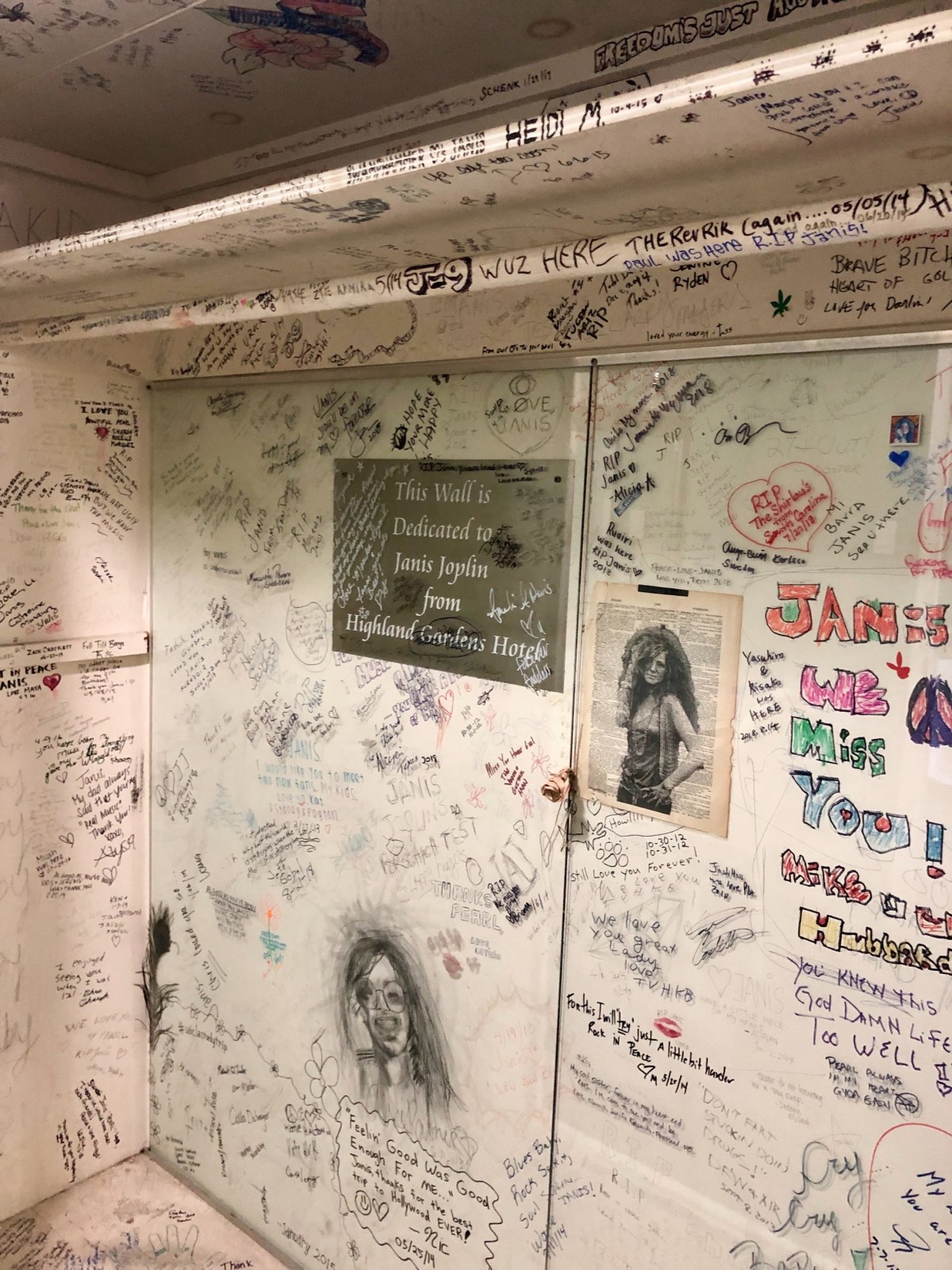
The Highland Gardens Hotel…Ok…this one is a little morbid…well a lot morbid. On October 4, 1970, Janis Joplin stayed here and it was called The Landmark Motor Hotel. She died in room #105 of a suspected heroin overdose. The same hotel stands but it’s called The Highland Gardens Hotel now. Yes, you can rent room #105. She lived there for months while working on her last album Pearl. The closet has handwriting by visitors but the rest of the room is normal. Yes, I would love to go.

Band Pink House

Big Pink in Saugerties/Woodstock: This is the house where The Band and Bob Dylan recorded The Band’s debut album…Music From Big Pink…this house was pink then and is now. Now you can rent the house but you cannot go down to the basement where they recorded…what’s the fun in that?

The World Famous Whisky A Go-Go on the Sunset Strip, West Hollywood CA

Whisky a Go-Go on the Sunset Strip: The one on the Sunset Strip opened in 1964. So many bands played and visited there. The Doors, Van Morrison, Buffalo Springfield, Alice Cooper, The Byrds, The Flying Burrito Brothers, Chicago, Germs, Elton John, Oasis, Buffalo Springfield, Steppenwolf, Van Halen, Johnny Rivers, X, Led Zeppelin, Fleetwood Mac, KISS, Guns N’ Roses, Death, AC/DC, Linkin Park, Metallica, Mötley Crüe Stryper, and many many more.

The Whiskey is still open now.

The Joshua Tree Inn | Joshua Tree National Park | Joshua Tree CA

The Joshua Tree Inn – Another morbid one but I would stay there. On September 18, 1973, Gram Parsons purchased liquid morphine on that night from an unknown girl and died of an overdose. This all happened in Room 8 of this Inn. Yes, you can rent room 8 today in fact..it’s decorated with posters of Gram.

curzon place cass elliot keith moon

Mayfair…Curzon Square – This apartment was owned by Harry Nilsson at the time. It was in this building, in the same apartment that both Cass Elliot (Mama Cass) and Keith Moon died 4 years apart. Nilsson liked the location because it was near Apple Records and nightclubs. It was decorated by  ROR…Ringo and Robin (Ringo Starr and designer Robin Cruikshank).

On July 29, 1974 after a performance…Mama Cass died of a heart attack. In 1978 Keith Moon wanted to rent it from Nilsson but he was afraid to rent it again because Nilsson remembered what happened to Cass. He ended up talking to Pete Townshend and Townshend told him that  ‘lightning does not strike in the same place twice’ so he let Keith rent it. On September 7, 1978, Keith Moon died because of an overdose of clomethiazole…a prescription drug for combating alcoholism in the same bedroom.

Maggie Bell – Wishing Well

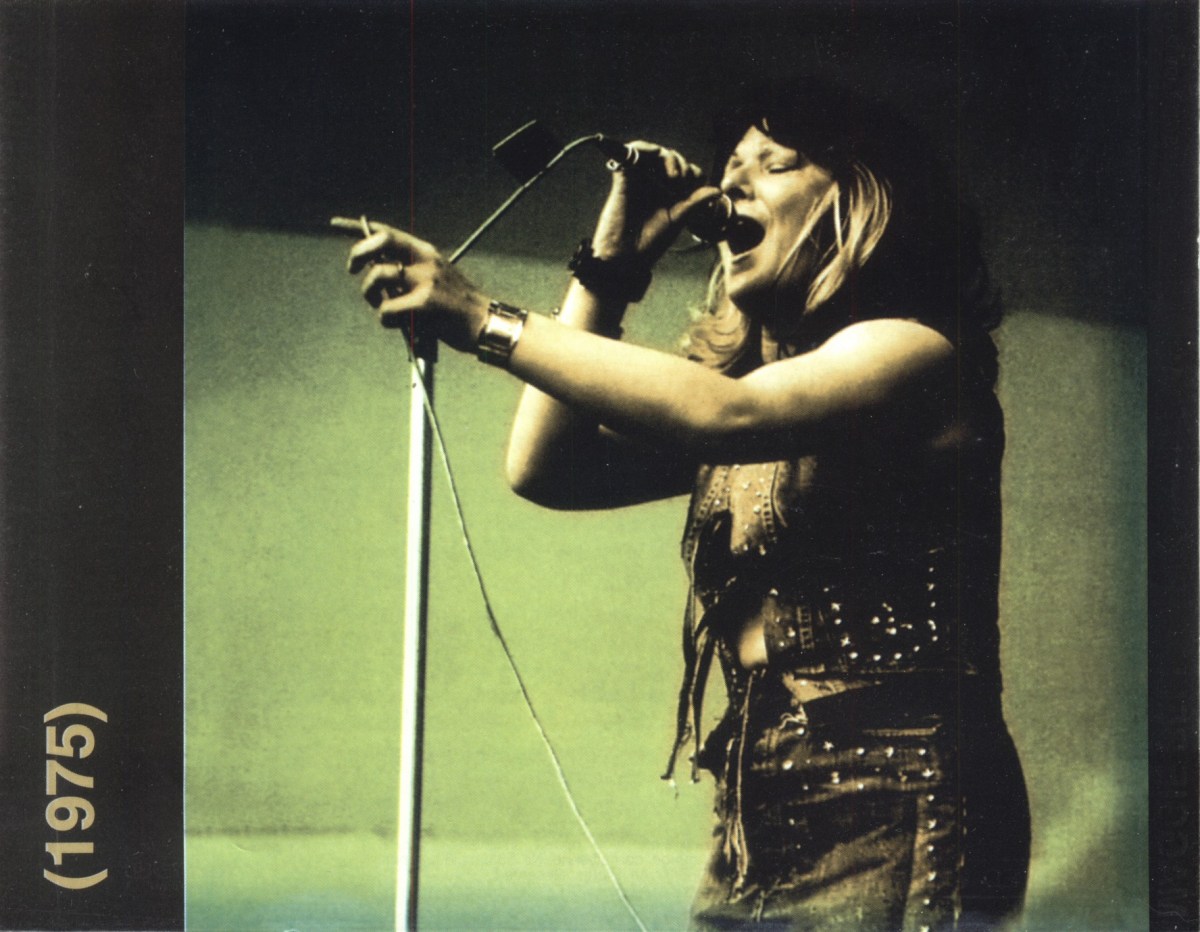
When I heard Maggie Bell a few years ago…the Scottish-born singer blew me away with her voice. A very big Janis vibe to her. I’ve read that she was called the UK’s Janis Joplin but she had her own style.

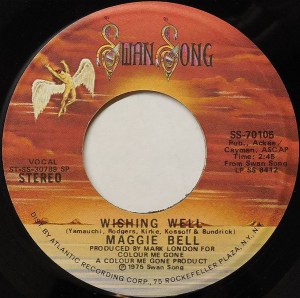
This song was on the album Suicide Sal released in 1975 on Led Zeppelin’s new record label Swan Song. The song was composed by John “Rabbit” Bundrick, Simon Kirke, Paul Kossoff, Paul Rodgers, and Tetsu Yamauchi. Wishing Well was a song by the band Free and it was originally released in 1972. Maggie puts her spin on it and I love it.

Jimmy Page played on this album and I love the funky bass groove that opens the song. The song didn’t chart but she would later have a top 40 song in the UK with the song Hazell.

Maggie Bell was the former lead singer of Stone The Crows. Peter Grant signed the band and had big plans for them. He was the most powerful manager in rock at that time because of Led Zeppelin. The band would come to a tragic end though. Guitarist Leslie Harvey was electrocuted and died on stage at the Top Rank in Swansea on May 3, 1972. He was the only one in position on the stage. Bell has said: “It was a fluke, we were standing at the side of the stage; we hadn’t even started yet. Leslie said to the audience: ‘There’s a technical hitch,’ and he touched the microphone and the guitar. And that was it.”  The road crew overlooked one loose ground wire.

Steve Howe of Yes helped fill in for some shows for the band after that. Jimmy McCulloch then joined them and they released an album with some songs by Harvey and a couple by McCulloch who would later join Paul McCartney and Wings. The band was over in 1973 but Peter Grant continued to manage Maggie til the early eighties.

Bell was in shock for years afterward but she said:  “I thought to myself: ‘Am I going to give all this up and go back up to Scotland and have two kids?’ I mean, this was a dream we’d planned. Peter said there would be no legal problems if I didn’t want to carry on. I said no, there was a plan. I was going to make sure that I finished the journey. I’m seventy-six years old, I’m still doing it. I mean, the body’s falling apart, but the voice is still fabulous!”

Pat Blythe: The Women of Blues Part Four – Maggie Bell | Segarini: Don't  Believe a Word I Say

You can hear Maggie Bell sing on Every Picture Tells Story by Rod Stewart. She was credited as having “vocal abrasives.” I don’t think I ever heard Maggie Bell on American radio which is a shame.

Wishing Well

Take off your hat, kick off your shoes
I know you ain’t goin’ anywhere
Run ’round the town singin’ your blues
I know you ain’t goin’ anywhere.

You’ve always been a good, good friend of mine,
But you’re always sayin’ “Farewell”
And the only time that you’re satisfied
Is when you dream from the wishing well.

Throw down your gun you might shoot yourself.
Or is that what you’re tryin’ to do?
Put up a fight you believe to be right
Someday the sun will shine through.

You’ve always been a good, good friend of mine,
But you’re always sayin’ “Farewell”
And the only time you’re satisfied
Is when you dream, dream from the wishing well.

And I know what you’re wishing for
Love in a peaceful world

You’ve always been a good, good, good friend of mine,
But you’re always sayin’ “Farewell”
And the only time that you’re satisfied
Is with your feet in the wishing well.

Records – Rock ‘n Roll Love Letter ….Power Pop Friday

If you like power pop…this band’s debut album is fantastic.

Rock ‘n Roll Love Letter was released as a non-album single back in 1979 in the UK. It was later included on their Shades In Bed CD as a bonus track. Tom Moore wrote this song but his version wasn’t successful. The Bay City Rollers covered it and had a top 40 hit.

I like this version because The Records put a little edge to it. Their best-known song would be Starry Eyes on the Shades In Bed released in 1979. Music City Mike reviewed the Shades In Bed album here.

The Records were an English powerpop band formed in 1978. The band included John Wicks – rhythm guitar, vocals, Huw Gower – lead guitar, vocals, Phil Brown – bass guitar, vocals, and Will Birch – drums, vocals.

Their influences included Big Star, The Raspberries, Blue Ash, Badfinger, Stealers Wheel, and the Beatles’ Revolver LP.

Rock ‘n Roll Love Letter

Dear sister poet, dear brother poet too
These tears that words are
Make me wanna be with you
But I need to spend my body
I’m a music makin man
And no page can release it like this amplifier can
This is my rock and roll love letter to you
Gonna sign it, gonna seal it, gonna mail it away
Gonna mail it today

God I must be crazy to express myself this way
But there ain’t much romance livin in the U.S.A.
This guitar is a blessing, This piano is a muse
And electricity’s a devil with a twenty amp fuse

This is my rock and roll love letter to you
Gonna sign it, gonna seal it, gonna mail it away
Gonna mail it to, gonna mail it today

Dear mama, papa hey your boy is doin fine
And this energy, you gave him
Keeps on tryin to unwind
‘Cause I see an ancient rhythm
In a man’s genetic code
Gonna keep on rock and rollin
Fill my genes explode
(repeat chorus)
This is my rock and roll love letter to you
Gonna rock it, gonna seel it, gonna slake it away
Send me back one, send me back on someday

Perfect Rockabilly Harmony

This post is by one of my favorite bloggers. He covers a couple of rockabilly tunes by Carl Perkins and James McCartney…fun post.

bcorcoran1992yahoocom's avatarMojo Horizon

I was probably in my twenties when I went through my own personal rockabilly phase, but, honestly, I don’t think I ever left it. I’ve always loved what some call roots, Americana, or oldies music. Rockabilly seems to encompass all of that along with some twangy country guitar. While Elvis Presley is probably the most well known Rockabilly Cat of all time, his predecessor Carl Perkins had an enormous influence on aspiring musicians like The Beatles and many others. During my personal rockabilly phase, I stumbled upon a really catchy Perkins tune called “Your True Love.”

I think the call-and-response vocal harmony is what really grabbed my attention. Just today, I found a version by James McCartney — the son of Sir Paul McCartney.

I basically know nothing about James McCartney, but I think this is a great cover. I would say it’s pretty SWINGIN’.

This song brings to mind…

View original post 142 more words

Who – Getting In Tune

This song was originally on the Who’s Next album released in 1971…my favorite album of that year and maybe of the seventies. That year was an incredible time for albums. Led Zeppelin would release their most remembered album Led Zeppelin IV a few months after Who’s Next.

There is not a bad song on the album. Roger excels on this song and it builds up in the middle for good dynamics. In 2016, Rolling Stone ranked Getting In Tune number 8 on its list of the 50 greatest songs by The Who. Nicky Hopkins plays piano on this song.

The Who’s Next album is one of the most sonic-sounding albums I’ve ever heard. Glyn Johns produced it and said this: “I have a residing memory of sitting in the truck, my hair being parted by what was coming out of the speakers, a massive amount of adrenaline coursing through my veins. There have been a few occasions over the years when I have been completely blown away, believing without a doubt that what I was listening to would become much more than just commercially successful but also a marker in the evolution of popular music, and this was one of those moments.”

Pete Townshend originally wrote this about a character in his “Lifehouse” project, which was going to be a film similar to The Who’s Tommy and Quadrophenia. Townshend never finished “Lifehouse,” but the songs ended up on the great album Who’s Next.

Pete Townshend wrote this as part of his “Lifehouse” project. He wanted to release a film about a futuristic world where the people are enslaved… but saved by a rock concert. Pete couldn’t get enough support to finish the project, but most of the songs he wrote were used on the Who’s Next album.

ARP Synth

Townshend’s use of the ARP synthesizer on Who’s Next was groundbreaking. He didn’t just add texture to it but the ARP became part of the structure of the songs. This was not like today’s synthesizer where you just took it out of the box. It had to be programmed and connected together…and not many people knew how to do it. He took a risk using it because technology in general always moving ahead, Who’s Next could have sounded dated a few years afterward but it still sounds fresh and interesting today…unlike some 1980s synth music.

The album peaked at #4 on the Billboard Album Charts, #1 in the UK, and #5 in Canada in 1971. It also peaked at #7 on the US Billboard Top Pop Catalog in 2014.

Getting In Tune

I’m singing this note ’cause it fits in well with the chords I’m playing
I can’t pretend there’s any meaning hidden in the things I’m saying

But I’m in tune
Right in tune
I’m in tune
And I’m gonna tune
Right in on you
Right in on you
Right in on you

I get a little tired of having to say
“Do you come here often?”
But when I look in your eyes, I see the harmonies
And the heartaches soften

I’m getting in tune
Right in tune
I’m in tune
And I’m gonna tune
Right in on you (right in on you)
Right in on you

I got it all here in my head
There’s nothing more needs to be said
I’m just bangin’ on my old piano
I’m getting in tune to the straight and narrow
(Getting in tune to the straight and narrow)
Getting in tune to the straight and narrow
(I’m getting in tune to the straight and narrow)
Yeah, I’m getting in tune to the straight and narrow
(I’m getting in tune to the straight and narrow)

I’m singing this note ’cause it fits in well with the way I’m feeling
There’s a symphony that I hear in your heart, sets my head a-reeling

But I’m in tune
Right in tune
I’m in tune
And I’m gonna tune
Right in on you (right in on you)
Right in on you

Baby, with you
(Baby, with you)
Baby, with you
(Baby, with you)
Baby, with you

I’ve got it all here in my head
There’s nothing more needs to be said
I’m just bangin’ on my old piano
I’m getting in tune to the straight and narrow

Getting in tune to the straight and narrow
I’m getting in tune to the straight and narrow
Getting in tune to the straight and narrow
I’m getting in tune to the straight and narrow
(Getting in tune to the straight and narrow)
Yeah, I’m getting in tune to the straight and narrow
(Getting in tune to the straight and narrow)
Yeah, I’m getting in tune to the straight and narrow
(Getting in tune to the straight and narrow)
Yeah, I’m getting in tune to the straight and narrow, yeah
(Getting in tune to the straight and narrow)
(I’m getting in tune to the straight and narrow)
Yeah, I’m getting in tune to the straight and narrow
(I’m getting in tune to the straight and narrow)

Replacements – I.O.U.

THIS sound is what I missed in the 1980s while growing up in that era. The Replacements were a throwback band in a lot of ways. The guitar could have come off of Exile on Main Street. The guitar tone does not sound pretty or clean…that sound went missing in the land of overproduction in the 80s.

IOU was more band biography as were several of their songs, Westerberg was eager to cancel out old relationships...“I want it in writing / I owe you nothing.”

The song appeared to be directed at former manager Peter Jesperson and guitar player Bob Stinson, but Westerberg said the literal inspiration came from an encounter with Iggy Pop: “I was on the bus with him after a show, and somebody asked for his autograph. He wrote, ‘IOU NOTHING.’ I thought it was the coolest thing in the world.”

This was off of the album Please To Meet Me recorded in Memphis with Jim Dickinson producing. Dickinson also produced Big Star’s Third/Sister Lovers album a decade before. Bob Stinson was out of the band at this time and it was recorded as a trio of Westerberg, Tommy Stinson, and Mars.

Westerburg has said he wanted their albums to sound timeless…not as tied to the decade they were recorded in. For the most part, he got his wish.

This song kicked off the album Please To Meet Me with a bang. To these ears…the best pure rock band of the 80s.

I.O.U.

Give me a/get me out of this little stinkin’ fresh air
Ninety days in the electric chair
Step right up son
Gonna show you something ain’t never been done
You’re all fucked

Listen, it don’t cost much
I lay down the line that you touch
Never do what you’re told
There’ll be time, believe me, when you’re old
You’re all wrong and I’m right

Please be on your honor
Please be on your side […sucker?]

Listen to the story all right
I’m losing all I own on that dotted line
Step right up son
Gonna show you something ain’t never been done
You’re all wrong and I’m right

You see I want it in writing, I owe you nothing
Want it in writing, I owe you nothing
Want it in writing

Slade – Far Far Away

I’ve become a fan of this band. I only heard them second-hand through Quiet Riot in the 80s until they finally had a couple of hits in the 1980s with Runaway and My Oh My. This song was a bit of a departure from the high-octane songs they had been releasing. They veered off the formula on purpose with this song.

I love watching old Slade videos on youtube. They were a lot of fun to listen to and watch. Slade was a hard-rocking glam band that somehow never made it in America until the 1980s. Their golden period was in the early to mid-seventies in the UK. Noddy’s voice is extremely strong and the melodic structure of their songs is very catchy but not in a bad way.

Slade was at the height of its success and their manager Chas Chandler suggested they make a movie. So they made a movie called Slade In Flame. The movie itself got good reviews and so did the soundtrack. BBC film critic Mark Kermode called it the “Citizen Kane of rock musicals.” I’ve never watched this film but I am going to now.

This was the first single to be taken from the soundtrack. The movie follows the history of a fictitious group in the early 1970s called Flame who were played by the members of Slade.

Singer Noddy Holder wrote the song after a long period of touring when he was thinking of home. He was looking out of a hotel window overlooking the Mississippi river with Slade’s manager Chas Chandler. The singer was thinking how far the band had come when a big paddle riverboat came down the river, all lit up. Holder had mentioned to Chandler that he saw the yellow lights go down the Mississippi …Chandler seeing the inspiration asked him to write something about it and he wrote Far Far Away with bass player Jim Lea.

The song peaked at #2 in the UK in 1974.

I found this description about the movie. A pretty gritty story of the formation of Flame, a fictional band played by the four members of Slade. In the movie, Flame were to hit the big time quickly, only to be hit by violence, and off-stage legal and financial battles, eventually leading them to split. It’s a hard-hitting look at the less glamorous side of the music biz.

Far Far Away

I’ve seen the yellow lights go down the MississippiI’ve seen the bridges of the world and they’re for realI’ve had a red light of the wristWithout me even gettin’ kissedIt still seems so unreal

I’ve seen the morning in the mountains of AlaskaI’ve seen the sunset in the east and in the westI’ve sang the glory that was RomeAnd passed the hound-dog singer’s homeIt still seems for the best

And I’m far, far awayWith my head up in the cloudsAnd I’m far, far awayWith my feet down in the crowdsLettin’ loose around the worldBut the call of home is loudStill is loud

I’ve seen the Paris lights from high upon MontmartreAnd felt the silence hanging low in No-Man’s-LandAnd all those spanish nights were fineIt wasn’t only from the wineIt still seems all in hand

And I’m far, far awayWith my head up in the cloudsAnd I’m far, far awayWith my feet down in the crowdsLettin’ loose around the worldBut the call of home is loudStill is loud

I’ve seen the yellow lights go down the MississippiThe grand Bahama island stories carry onAnd all those arigato smilesStay in your memory for a whileThere still seems more to come

And I’m far, far awayWith my head up in the cloudsAnd I’m far, far awayWith my feet down in the crowdsLettin’ loose around the worldBut the call of home is loudStill is loud

And I’m far, far awayWith my head up in the cloudsAnd I’m far, far awayWith my feet down in the crowdsAnd I’m far, far awayBut the sound of home is loudStill is loud

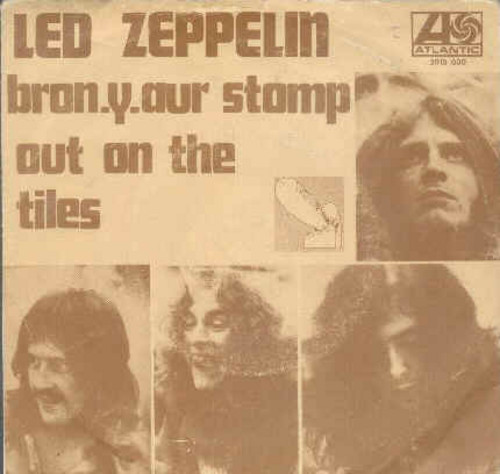
Led Zeppelin – Out On The Tiles

This one is a great deep cut by Led Zeppelin. It was on Led Zeppelin III and is looked over but it has a great riff by Jimmy Page. It’s nice to find a Zeppelin song that hasn’t been played to death…the guitar riff is killer on this song.

In Japan, this was mistakenly placed on the B-side of “Immigrant Song” rather than “Hey, Hey What Can I Do.” Those copies are rare collector’s items.

Robert Plant remembered an 18th-century cottage called Bron-Yr-Aur he had visited in his youth and felt it would be a great place to temporarily escape life in the fast lane and commune with nature. Plant invited his co-writer, guitarist Jimmy Page, and in the spring, the two men took their instruments and supplies to the retreat to recharge their batteries. The place had no running water or electricity at the time.

Robert Plant: “It was time to take stock, and not get lost in it all, and what better way to keep it real than at a place with no electricity, candles for light, water from a stream, and an outside toilet?”

Many fans didn’t embrace Led Zeppelin III like their first two albums. The band would routinely bludgeon their audiences with hard rock. This album had a lot of acoustic mixed in with rock guitar. I think it’s the most underrated album in their catalog. The next two albums would combine these two elements perfectly. Led Zeppelin III was the turning point of Led Zeppelin…after that album. To my ears…this is when Led Zeppelin grew up musically.

Led Zeppelin III peaked at #1 in the US, Canada, and UK in 1970-71.

Drummer John Bonham would talk about going “out on the tiles,” meaning to bars – the title is a British term for going out on the town. Jimmy Page wrote this song around the phrase. Bonham, along with Page and Robert Plant, got a writing credit on the track.

 Jimmy Page: “That’s ambient sound. Getting the distance of the time lag from one end of the room to the other and putting that in as well. The whole idea, the way I see recording, is to try and capture the sound of the room live and the emotion of the whole moment and try to convey that. That’s the very essence of it. And so, consequently, you’ve got to capture as much of the room sound as possible.”

Jimmy Page: “When Robert and I went to Bron-Yr-Aur we weren’t thinking: ‘Let’s go to Wales and write.. The original plan was to just go there, hang out and appreciate the countryside. The only song we really finished while we were there was That’s The Way, but being in the country established a standard of traveling for inspiration and set a tone for Led Zeppelin III.”

Below Jason Bonham tells the story of Out On The Tiles

Out On The Tiles

As I walk down the highway all I do is sing this song
And a train that’s passin’ my way helps the rhythm move along
There is no doubt about the words are clear
The voice is strong, is oh so strong

I’m just a simple guy, I live from day to day
A ray of sunshine melts my frown and blows my blues away
There’s nothing more that I can say but on a day like today
I pass the time away and walk a quiet mile with you

All I need from you is all your love
All you got to give to me is all your love
All I need from you is all your love
All you got to give to me is all your love
Oh yeah, oh yeah
Oh yeah, oh yeah

I’m so glad I’m living and gonna tell the world I am
I got me a fine woman and she says that I’m her man
One thing that I know for sure gonna give her all the loving
Like nobody, nobody, nobody, nobody can

Standing in the noonday sun trying to flag a ride
People go and people come, see my rider right by my side
It’s a total disgrace, they set the pace, it must be a race
And the best thing I can do is run

All I need from you is all your love
All you got to give to me is all your love
All I need from you is all your love
All you got to give to me is all your love
Oh yeah, oh yeah
Oh yeah, oh yeah
Oh yeah, oh yeah, oh yeah

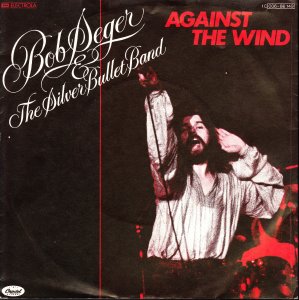
Bob Seger – Against The Wind

I’ve met some Seger fans who basically stopped liking his music when this album came out. I don’t understand that really because this is one of my favorite Seger songs although I do like his earlier ones the best. Classic Rock radio has really worn this one thin but I still listen to it when it comes on. The older I get the more I can relate.

I always thought Wish I didn’t know now what I didn’t know then was a great line. Funny enough…Seger was going to scratch that line because he said it didn’t sound right grammar-wise… he changed his mind when people told him it was the best line in the song.

The album Against The Wind was huge. It is his only number 1 album to date. Fire Lake is what attracted me to the album and I had it many years ago. The album peaked at #1 in the Billboard Album Charts, #1 in Canada,  and #26 in the UK in 1980.

The title track peaked at #5 on the Billboard 100 and #6 in Canada in 1980.

In the lyrics he mentions “Janey”…who was thought to be long term girlfriend Janey Dinsdale. He confirmed it in an interview at the time: Janey says to me all the time, ‘You allow more people to walk on you than anybody I’ve ever known.’ And I always say it’s human nature that people are gonna love you sometimes and they’re gonna use you sometimes. Knowing the difference between when people are using you and when people truly care about you, that’s what “Against the Wind” is all about. The people in that song have weathered the storm, and it’s made them much better that they’ve been able to do it and maintain whatever relationship. To get through is a real victory. 

Half the album was recorded with his Silver Bullet Band and the other half at Muscle Shoals studio with their rhythm section.

Seger won the 1980 Best Rock Performance by a Duo or Group With Vocal Grammy award for this song.

Bob Seger: “My old friend Glenn Frey of the Eagles had an idea that our guitarist Drew Abbott should play along with the piano solo. He and I then went out and did the background vocals together. The line ‘Wish I didn’t know now what I didn’t know then’ bothered me for the longest time, but everyone I knew loved it so I left it in. It has since appeared in several hits by other artists, so I guess it’s OK.”

“The only thing that bothered me about that phrase was the grammar. It sounded grammatically funny to me. I kept asking myself, ‘Is that correct grammar?’ I liked the line, and everybody I played it for – like Glenn and Don (Henley) – were saying, ‘That’s the best line in the song,’ but I couldn’t shake the feeling that it wasn’t right. But I slowly came around. You have to understand that songwriters can’t punctuate anything they write. I work in such a narrow medium that I tend to second-guess things like that. As a matter of fact, I’ve seen that line in a few other songs since I came up with it, so I guess it was okay after all.”

Against The Wind

It seems like yesterday
But it was long ago
Janey was lovely she was the queen of my nights
There in the darkness with the radio playing low
And the secrets that we shared
The mountains that we moved
Caught like a wildfire out of control
‘Til there was nothing left to burn and nothing left to prove
And I remember what she said to me
How she swore that it never would end
I remember how she held me oh so tight
Wish I didn’t know now what I didn’t know then

Against the wind
We were runnin’ against the wind
We were young and strong, we were runnin’
Against the wind
The years rolled slowly past
And I found myself alone
Surrounded by strangers I thought were my friends
I found myself further and further from my home
And I guess I lost my way
There were oh so many roads
I was living to run and running to live
Never worried about paying or even how much I owed
Moving eight miles a minute for months at a time
Breaking all of the rules that would bend
I began to find myself searching
Searching for shelter again and again

Against the wind
A little something against the wind
I found myself seeking shelter against the wind

Well those drifter’s days are past me now
I’ve got so much more to think about
Deadlines and commitments
What to leave in, what to leave out

Against the wind
I’m still runnin’ against the wind
I’m older now but still runnin’ against the wind
Well I’m older now and still runnin’
Against the wind
Against the wind
Against the wind

I’m still runnin’ against the wind
I’m still runnin’ against the wind (against the wind)
I’m still runnin’ (against the wind)
I’m still runnin’ against the wind (against the wind)
Still runnin’ (against the wind)
Running against the wind
Running against the wind (against the wind)
See the young man run (against the wind)
Watch the young man run (against the wind)
Watch the young man runnin’ (against the wind)
He’ll be runnin’ against the wind (against the wind)
Let the cowboys ride (against the wind)
Oh (against the wind)
Let the cowboys ride (against the wind)
They’ll be ridin’ against the wind (against the wind)
Against the wind (against the wind)
Ridin’ against the wind (against the wind)
Against the wind

Loretta Lynn and Jack White – Portland Oregon

I was listening to Led Zeppelin earlier and now I have switched gears. After Loretta Lynn passed away  I spent the night listening to her Van Lear Rose album and finding again how great that album is. I would recommend taking a listen to this song. It works for country, rock, and pop. I love the opening line… Well, Portland, Oregon and sloe gin fizz, If that ain’t love then tell me what is, uh huh, uh huh. 

She did a lot for women in the business and paved the way for later stars. Songs like The Pill and X Rated were largely ignored by country radio at the time but that didn’t stop them from hitting #1. She was one of the best songwriters in country history.

The White Stripes dedicated their 2001 album, ”White Blood Cells,” to her and she found out about them. Jack was still with the White Stripes at the time, but he approached her backstage and the two had a conversation that led to him following Lynn home to Tennessee and making an album with her.

They recorded and released this album in 2004. She wrote this song years before about a romance that wasn’t…she pretended to have a romance with her guitar player at the time to make her cheating husband jealous.

This one is a duet between Jack and her and it’s great. As I said yesterday…if modern country was like this…I would listen. Their voices go really well with each other.  Country radio would not play it but the album still peaked at #2 on the Country Charts and #24 on the Billboard 200 in 2004. They didn’t win any country music awards but came away with two Grammys.

jack White must have liked Nashville because, in 2009, White opened the doors to his very own Nashville-based record label, Third Man Records.

Jack White: “I said when I was first asked about her what I thought and I said years ago that I thought she was the greatest female singer-songwriter of the 20th century. I still believe that, she was such an incredible presence and such a brilliant genius in ways that I think only people who got to work with her might know about. What she did for feminism, women’s rights in a time period, in a genre of music that was the hardest to do it in, that’s just outstanding and will live on for a long time.”

The top video is Lynn and White receiving a Grammy… I would recommend watching the Letterman show version of the song at the bottom. The youtube police took the good quality one away but I found another.  I like how White and the band make a LONG build-up…and the anticipation mounts before Lynn comes on. Jack White has that country band really rocking. Their voices sound so good in this song.

The video below is Lynn and White winning a Grammy…its really funny.

Portland Oregan

Well, Portland, Oregon and sloe gin fizzIf that ain’t love then tell me what is, uh huh, uh huhWell I lost my heart, it didn’t take no timeBut that ain’t all, I lost my mind in Oregon

In a booth in the corner with the lights down lowI was movin’ in fast, she was takin’ it slow, uh huh, uh huhWell, I looked at her and caught him lookin’ at meI knew right then we were playin’ free in Oregon

Next day, we knew last night got drunkBut we loved enough for the both of us, uh huh, uh huhIn the morning when the night had sobered upIt was much too late for the both of us in Oregon

Well, sloe gin fizz works mighty fastWhen you drink it by the pitcher and not by the glass, uh huh, uh huhHey bartender, before you closePour us one more drink and a pitcher to go

And a pitcher to go(And a pitcher to go)And a pitcher to go(And a pitcher to go)

And a pitcher to go(And a pitcher to go)Yeah

And a pitcher to goAnd a pitcher to go

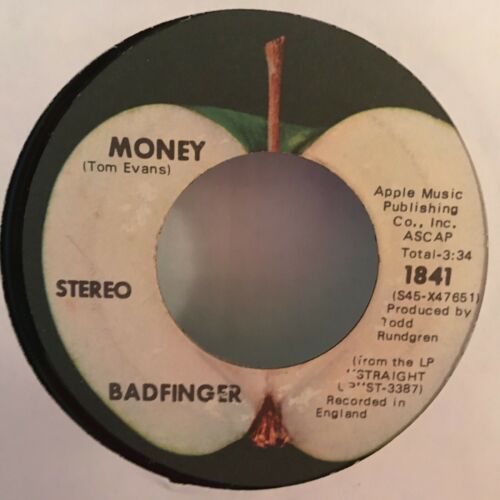
Badfinger – Money ….Power Pop Friday

Badfinger is the band that got me into power pop. After reading about them my interest widened into The Raspberries and Big Star. If any of you readers have a time machine I could use…take me back to January 19, 1973, at the Chicago Aragon Ballroom…where The Raspberries opened up for Badfinger. That would be a power pop dream.

This song was the B side to Badfinger’s hit Day After Day released in 1971. It was a good song written by bassist Tom Evans…  I zeroed in on this song from the album Straight Up. I’ve heard it used for some radio bumper music for talk and sports shows. The melody and harmonies stand out in this one.

Straight Up has two of their big hits…the beautiful Day After Day and what I consider the best power-pop song of all time…Baby Blue. It’s not just the hits that are good….the band had three songwriters with Pete Ham, Tom Evans, and  Joey Molland.  Tom and Joey were not at their bandmate’s writing level but they were very good. There is not a bad song on the album.

On the album, the song Money was connected with the Evans and Molland song Flying. They flow into each other to make a really good melody… similar to what the Beatles did on Abbey Road.

If you want to try out a Badfinger album that is not a greatest hits package…this is the one to start at. Badfinger was not known as an album band but this one I would consider one of the best power pop albums ever. Pete Ham wrote the best songs for Badfinger without a doubt but Tom and Joey did come up with some absolute winners. Pete was sometimes compared to Paul McCartney and George Harrison in his songwriting abilities.

The band started out as the Iveys with Pete Ham, Tom Evans, Ron Griffiths, and Mike Gibbins. Tom played guitar in that lineup but Griffiths had to quit because of family problems. Tom took over bass and they recruited Liverpudillian singer-songwriter Joey Molland for guitar.

Joey Molland is the only member left with us from the original lineup. He still tours as Joey Molland’s Badfinger.

Allmusic Critic Stephen Thomas Erlewine about Straight Up:

Straight Up winds up somewhat less dynamic than No Dice, largely because that record alternated its rockers, pop tunes, and ballads. Here, everything is at a similar level, as the ballads are made grander and the rockers have their melodic side emphasized. Consequently, the record sounds more unified than No Dice, which had a bit of a split personality. Todd Rundgren’s warm, detailed production makes each songwriter sound as if he was on the same page, although the bonus tracks — revealing the abandoned original Geoff Emerick productions — prove that the distinctive voices on No Dice were still present. Frankly, the increased production is for the best, since Badfinger sounds best when there’s as much craft in the production as there is in the writing. Here, there’s absolutely no filler and everybody is in top form. Pete Ham’s “Baby Blue” is textbook power-pop — irresistibly catchy fuzz riffs and sighing melodies — and with its Harrison-esque slide guitars, “Day After Day” is so gorgeous it practically aches. “Perfection” is an unheralded gem, while “Name of the Game” and “Take It All” are note-perfect pop ballads. Tom Evans isn’t as prolific here, but the one-two punch of “Money” and “Flying” is the closest Straight Up gets to Abbey Road, and “It’s Over” is a fine closer. Still, what holds the record together is Joey Molland’s emergence as a songwriter. His work on No Dice is enjoyable, but here, he comes into his own with a set of well-constructed songs. This fine songwriting, combined with sharp performances and exquisite studio craft, make Straight Up one of the cornerstones of power-pop, a record that proved that it was possible to make classic guitar-pop after its golden era had passed.

Money

Money stole my lady
Fools have a way of making me crazy
Money buy you freedom
Rules have a way of making me lazy

So we grow a little older
With another tale to tell
So we grow a little colder
With another tale to tell

Money make you feel unhappy
Fools have a way of making me crazy

So we grow a little older
With another tale to tell
So we grow a little colder
With another tale to tell

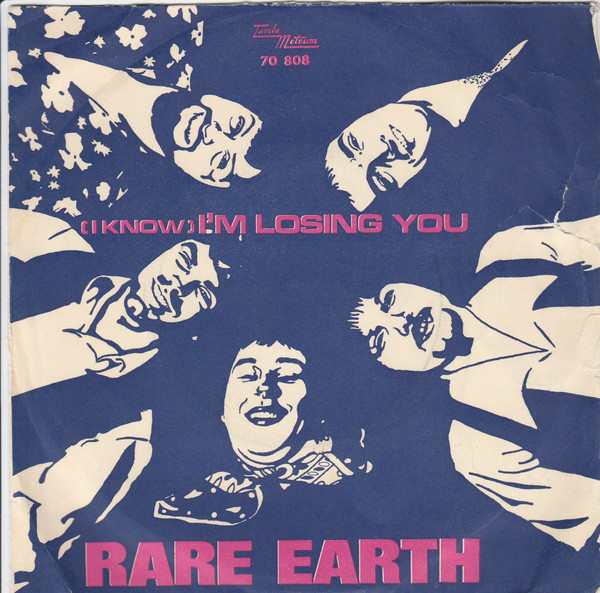
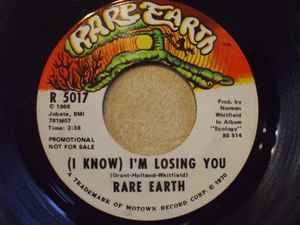
Rare Earth – (I Know) I’m Losing You

I remember this single because of the label…it was given to me when I was around 10. I love the artwork of many of these old singles. The music is not that bad either with this one.

Rare Earth – (I Know) I'm Losing You (1970, Vinyl) - Discogs

Rare Earth began as a popular Detroit club band called The Sunliners in 1960. They couldn’t get anywhere for years. The band decided that part of the problem might lie in their name and that a more contemporary one was needed.   The band came up with Rare Earth which seemed cool, back to nature, and more reflective of the times.

They were then introduced to Barney Ales the vice-president of Motown Records.  Ales had come to see the band on the recommendation of Berry Gordy’s ex-wife Margaret who was acquainted with Rare Earth’s manager. Barney Ales was looking for white rock acts for a new Motown division that reflected the album rock that was growing on FM radio at that time.

This was Rare Earth’s follow-up to their hit Get Ready. Motown pressured Rare Earth to record another Temptations hit, this time with Norman Whitfield – who had co-written and produced the original version.

The result was another major success for Rare Earth. (I Know) I’m Losing You peaked at #7 on the Billboard 100, #15 in Canada, and 20 on the Billboard R&B Charts in 1970. The song was on the album Ecology, Rare Earth’s sophomore effort and it peaked at #15 in the Billboard Album Charts.

Members of the band started dropping out and being replaced beginning in 1971. The group stopped touring together in 1974 when a split happened. Two members, including original member Peter Hoorelbeke, left to form a short-lived group called HUB.

The remaining Rare Earth members continued with replacements and recorded Back to Earth in 1975. They produced seven more albums and continue to tour. A roster of band members from 1960 to the present contains over 30 different musicians, with founding member Gil Bridges being the only constant.

Lead singer Pete Rivera: What made it so interesting, was that he actually got on our case for trying to sound like the Temps the first time we did the song the way we thought it should be. Whitfield listened for a while and then he spoke up and said, ‘You guys sound great on this tune, but I think you should give it a different flavor and presentation.

“The song was originally about 45 minutes long, Norman cut it down to 12 minutes for the album [Ecology] and then down to 3 minutes for the single. He was a master at editing.”

(I Know) I’m Losing You

Your love is fadin’, I feel it fade
Ah, your love is fadin’, I feel it fade
Ah, your love is fadin’, woman I feel it fade

Ah, woman, woman your touch, your touch has gone cold
As if someone else controls your very soul
I’ve fooled myself long as I can
Can feel the presence of another man

It’s there when you speak my name
It’s just not the same
Ooh babe, I’m losing you
It’s in the air
It’s there everywhere
Baby, baby, babe, I’m losing you

When I look into your eyes
A reflection of a face, I see
I’m hurt, down-hearted and worried, girl
‘Cause that face doesn’t belong to me
It’s all over your face
Someone’s takin’ my place
Ooh, baby, I’m losing you
You try hard to hide
The emptiness you feel inside
Ooh, babe, I’m losing you

I can’t bear the thought of losing you
Ah, woman, can’t you see what I’m goin’ through
I’m losin’ my mind (losin’ my mind)
And it’s all because of you
I can’t bear the thought of losing you
I’m losin’ my mind (losin’ my mind)
And it’s all because of you
I can’t stand the thought of losing you