This song has a gritty garage sound to it. There were many 1960’s garage bands that formed after The Beatles appeared on Ed Sullivan. The Seeds were formed in 1965 by Sly Saxon. Saxon wrote, “Pushin’ Too Hard” while sitting in the front seat of a car waiting for his girlfriend to finish grocery shopping at a supermarket. The song peaked at #36 in the Billboard 100 in 1967. The song is simple and repetitive but catchy in its own way.
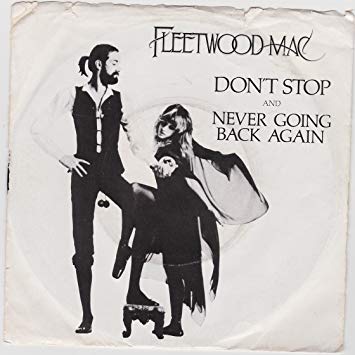
This song was a B side of “Don’t Stop” with both songs coming on the great album Rumors. This is a nice short acoustic Lindsey Buckingham written song. It’s a very understated but powerful song compared with the other ones on the album and one of my favorites.
Lindsey is a great guitar player. He is not flashy but he plays just what is needed like the sustained solo in “Go Your Own Way.” This song is what made me start listening to his playing.
from Rolling Stone Magazine: In the studio, co-producer Ken Caillat asked Buckingham to restring his guitar every 20 minutes. “I wanted to get the best sound on every one of his picking parts,” Caillat said. “I’m sure the roadies wanted to kill me. Restringing the guitar three times every hour was a bitch. But Lindsey had lots of parts on the song, and each one sounded magnificent.”
According to Q magazine, June 2009 the inspiration for this Lindsey Buckingham penned song was a brief relationship with a woman whom he’d met on the road. Buckingham had only recently broken up with his Fleetwood Mac co-singer Stevie Nicks.
Most of the Rumours album was recorded at The Record Plant in Sausalito, California, but this song was recorded at Studio City Sound Recording Studios in Los Angeles. According to recording assistant Cris Morris, this song took a while to record. Said Morris: “It was Lindsey’s pet project, just two guitar tracks but he did it over and over again. In the end his vocal didn’t quite match the guitar tracks so we had to slow them down a little.”
Never Going Back Again
She broke down and let me in Made me see where I’ve been
Been down one time Been down two times I’m never going back again
You don’t know what it means to win Come down and see me again
Been down one time Been down two times I’m never going back again
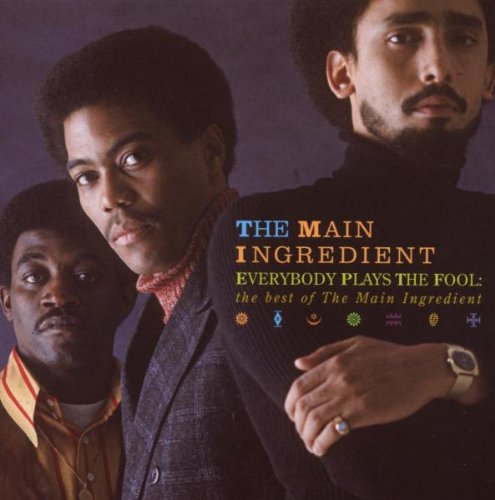
More soul from the seventies. The song peaked at #3 in the Billboard 100 and #6 in Canada. The Main Ingredient had two top ten hits and 11 songs in the top 100. The band was formed in Harlem, New York City in 1964 as a trio called the Poets, composed of lead singer Donald McPherson, Luther Simmons, Jr., and Tony Silvester. Don McPherson died of leukemia in 1971 and was replaced by Cuba Gooding, Sr…the father of Cuba Gooding Jr.
I love Seventies soul music. There were so many great artists like The Delfonics, The Chi-Lites, Smokey Robinson, and the list goes on.
Everybody Plays the Fool
Okay, so your heart is broken You sit around mopin’ Cryin’ and cryin’ You say you’re even thinkin’ about dyin’ Well, before you do anything rash, dig this
Everybody plays the fool sometime There’s no exception to the rule Listen, baby, it may be factual, may be cruel I ain’t lyin’, everybody plays the fool Falling in love is such an easy thing to do And there’s no guarantee that the one you love Is gonna love you
Oh-oh-oh, lovin’ eyes they cannot see A certain person could never be Love runs deeper than any ocean You can cloud your mind with emotion
Everybody plays the fool, sometime There’s no exception to the rule Listen, baby, it may be factual, may be cruel I want to tell ya Everybody plays the fool
How can you help it when the music starts to play And your ability to reason is swept away Oh-oh-oh, heaven on earth is all you see You’re out of touch with reality And now you cry but when you do Next time around someone cries for you
Everybody plays the fool, sometime They use your heart like a tool Listen, baby, they never tell you so in school I want to say it again Everybody plays the fool Listen to me, baby Everybody plays the fool, sometime (No exception) no exception to the rule It may be factual, may be cruel, sometime But everybody plays the fool Listen, listen, baby Everybody plays the fool
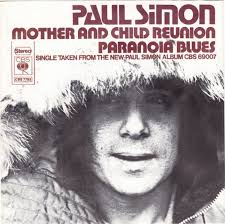
One of my favorite Paul Simon songs. The lyrics, melody, and the reggae feel make this song a classic. Paul’s songwriting is world class…the structure to his songs are great as well as is his guitar playing. The song peaked at #4 in the Billboard 100 and #5 in the UK in 1972.
Simon wrote this in response to the Jimmy Cliff song “Vietnam,” where a mother receives a letter about her son’s death on the battlefield. Simon recorded “Mother and Child Reunion” in Jamaica using Cliff’s musicians, hence the very authentic sound. Simon said of the song that it “became the first reggae hit by a non-Jamaican white guy outside Jamaica.”
Simon came up with the title after seeing a chicken and egg dish called “Mother and Child Reunion” on the menu at 456 Restaurant in Chinatown, New York.
This was Simon’s first single as a solo artist.
Paul Simon was ahead of the trend when he released this reggae-infused song: Johnny Nash went to #1 US later in 1972 with “I Can See Clearly Now,” and Eric Clapton topped the chart with “I Shot The Sheriff” (a Bob Marley cover) in 1974.
Mother and Child Reunion
No I would not give you false hope On this strange and mournful day But the mother and child reunion Is only a motion away, oh, little darling of mine
I can’t for the life of me Remember a sadder day I know they say let it be But it just don’t work out that way And the course of a lifetime runs Over and over again
No I would not give you false hope On this strange and mournful day But the mother and child reunion Is only a motion away, oh, little darling of mine
I just can’t believe it’s so Though it seems strange to say I never been laid so low In such a mysterious way And the course of a lifetime runs Over and over again
But I would not give you false hope On this strange and mournful day When the mother and child reunion Is only a motion away
Oh the mother and child reunion Is only a motion away Oh the mother and child reunion Is only a moment away
Oh the mother and child reunion Is only a motion away Oh the mother and child reunion Is only a moment away
Oh the mother and child reunion Is only a motion away Oh the mother and child reunion Is only a moment away
Everyone’s list will be different but classic rock radio has just overplayed these songs. It does not mean I don’t/didn’t like the song to begin with…some I didn’t…some I did… There are more than this but I kept it at 20. No need for me to post youtube links…just turn on a classic rock station and they will come to you.
I’ve tried to keep it one per band or artist. The order of these is not really important…you could pull them out of a hat and be just as well. Sometimes the artists have other hits that you don’t hardly hear but no… they stick to the old reliables.
Radio has ruined these for me. Yes, I’m older and have heard them more than some other people but my 18-year-old son suggested a few of them.
Taking Care of Business – Bachman Turner Overdrive – I liked this song at one time…Now I would pull a hamstring getting up to turn it off.
Hotel California – Eagles – I still like the solos at the end with Joe Walsh and Don Felder but the rest I can do without.
More Than A Feeling – Boston – At one time it was refreshing and different. Radio has worked this song like the town pump.
In The Air Tonight– Phil Collins (just one of many) His songs saturated the market so much in the 80s that is was enough for 3 lifetimes
Jukebox Hero – Foreigner – I know huge Foreigner fans but I’m not one of them. This one I know more than I should.
Feel Like Making Love– Bad Company – Not a well-written song to begin with…it doesn’t get better with more spins. They have good songs…Painted Face, Crazy Circles but they don’t get played as much.
Don’t Stop Believing– Journey – Yes it’s catchy and an eighties theme…it fit at the end of the Sopranos…but I can do without it.
Start Me Up – Rolling Stones – Oh how I loved this song when it was released. I liked it a decade later…until Microsoft used it and since then you would think it was the Stones only song.
Tom Sawyer – Rush – See number 5
The Joker – Steve Miller – Hanspostcard says it all.
Money – Pink Floyd – Great band and they have so many others they could play.
Roundabout – Yes – When I hear the octave on the guitar I spin the dial like a top to another station.
Sweet Home Alabama – Lynyrd Skynyrd – In the south where I live this song is required listening…. over and over and over…They have better songs…
Sharp Dressed Man – ZZ Top – I loved the video, the car, and the girls in the video but the song no more. How about the older ZZ Top?
Bad to the Bone – George Thorogood & the Destroyers – In high school alone I heard it enough.
Old Time Rock and Roll– Bob Seger – The first 5 times I heard it…I liked it…but after the 1, 855th time…no more.
Stairway to Heaven – Led Zeppelin – It’s been played backward, forward and sideways…and the hidden message is the same…a worn out masterpiece.
Barracuda – Heart – This and Magic Man are like the bookends of worn out songs.
Black Water – Dobbie Brothers – I’ve never bought a record by them and they had great musicians in that band…but this is nauseatingly overplayed
You Give Love a Bad Name – Bon Jovi – Not for me the first time or the many times after…in cars, shopping centers, and grocery stores.
To be fair…there are songs that are worn out but yet I still listen to… Who Are You, Baba O’Riley, Hey Jude, Lola, Paint It Black, Brown Eyed Girl…
I remember hearing this song on Fast Times at Ridgemont High. A good pop song by Jackson in 1982 and it peaked at #7 in the Billboard 100 and #16 in Canada in 1982. It was written by Jackson Browne and Danny Kortchmar.
This was his highest ever charting song.
Jackson Browne recorded the song for the film because he was friends with its writer, Cameron Crowe. The song’s co-writer Danny Kortchmar was also friends with Crowe, and was working on the song “Love Rules” for the film with Don Henley when he came up with the framework for “Somebody’s Baby.” Kortchmar convinced Browne to finish writing the song and record it for the movie.
Browne has called this an “unabashed pop song.” Most musicians would want their most popular songs on their albums, but Browne was OK having it on the Fast Times at Ridgemont High soundtrack, despite the advice of his former label boss David Geffen, who told him he was nuts for giving it up.
This song is about a guy who is infatuated with a girl, and convinces himself that she must have a boyfriend. As he tries to work up the courage to talk to her, he keeps losing confidence by reminding himself that she’s too fine not to be taken.
This was part of a memorable scene in the movie Fast Times at Ridgemont High, where it was used to express the feelings of a frustrated teenager. The movie was a huge hit and helped drive the chart success of the song. “Somebody’s Baby” was the only hit from the soundtrack, although “Moving In Stereo” by The Cars was used in a famous scene and also became associated with the film.
Jackson Browne wrote this song with Danny Kortchmar, who played guitar on his Running On Empty and Lives In The Balance albums. Kortchmar had the music and the “must be somebody’s baby” hook. He knew Browne could do something special with the song, so he brought what he had to Jackson, who helped Kortchmar complete it. That’s what I brought to him: all the guitar parts and everything else. In our 2013 interview, Kortchmar explained:
“It was not typical of what Jackson writes at all, that song. But because it was for this movie he changed his general approach and came up with this fantastic song. It’s a brilliant lyric. I think it’s absolutely wonderful. But it’s atypical of him – he wasn’t sure what to make of it himself. He didn’t want to put it on his album that he was making because it was atypical of what he did, but it ended up being something that got requested a lot and he ended up playing it live and taking it to his heart, as it were. And now he plays it all the time.”
Somebody’s Baby
Well, just, a look at that girl with the lights comin’ up in her eyes. She’s got to be somebody’s baby. She must be somebody’s baby. All the guys on the corner stand back and let her walk on by.
She’s got to be somebody’s baby. She must be somebody’s baby. She’s got to be somebody’s baby. She’s so fine.
She’s probably somebody’s only light. Gonna shine tonight. Yeah, she’s probably somebody’s baby, all right.
I heard her talkin’ with her friend when she thought nobody else was around. She said she’s got to be somebody’s baby; she must be somebody’s baby. Cause when the cars and the signs and the street lights light up the town,
She’s got to be somebody’s baby; She must be somebody’s baby; She’s got to be somebody’s baby. She’s so
She’s gonna be somebody’s only light. Gonna shine tonight. Yeah, she’s gonna be somebody’s baby tonight.
I try to shut my eyes, but I can’t get her outta my sight. I know I’m gonna know her, but I gotta get over my fright. We’ll, I’m just gonna walk up to her. I’m gonna talk to her tonight.
Yeah, she’s gonna be somebody’s only light. Gonna shine tonight. Yeah, she’s gonna be somebody’s baby tonight. Gonna shine tonight, make her mine tonight.
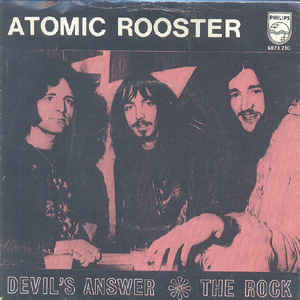
Atomic Rooster… Now that is a name. I’ve been in short term bands with different names such as… “The Flying Junebugs”, “The Cryin ‘Shame” and “Green Swingset” but Atomic Rooster is unique. Atomic Rooster was an English rock band, originally composed of former members of The Crazy World of Arthur Brown. Throughout their history keyboardist, Vincent Crane was the only constant member and wrote the majority of their material.
This is another song I noticed on the Life On Mars series in the mid-2000s.
Their history is defined by two periods: the early-mid-1970s and the early 1980s. Their genre in music is difficult to define since they went through radical changes in very short times during the life of the band. However, their best-known era represented a more hard rock/progressive rock sound, exemplified by their only hit singles, Tomorrow Night (UK No. 11) and The Devil’s Answer (UK No. 4), both in 1971.
The Devil’s Answer
People are looking but they don’t know what to do It’s the time of the season for the people like you Come back tomorrow, show the scars on your face It’s a clue to the answer we all chaseThree, five and seven lift the heaviest load reach the top of the heaven that’s fallen below Devil may care but you wish for the best can’t you see there’s an answer that lies there Come all you sinners and keep with the time can we see all the faces that have fallen behind Don’t make the reason it’s a secret for you
There’s a clue to the answer we all know There’s no clue to the answer we all know People are looking but they don’t know what to do It’s the time of the season for the people like you Come back tomorrow, show the scars on your faceIt’s a clue to the answer we all chase It’s a clue to the answer we all chase
This is a rocking song from 1971 made it to the top 10 at #10 in the Billboard 100, #5 in Canada, and #5 in the UK. This song got blacklisted and of course, gave it a boost. After singles such as “Mary Had A Little Lamb” this song gave Paul some “cool” teenager credibility about apparently getting high.
In an interview with the October 2010 edition of Mojo magazine, McCartney claimed to be surprised when the BBC blacklisted this song. Said the former Beatle: “Look at Bob Dylan, ‘everybody must get stoned.’ It was like, ‘Ooh, does he mean you get high? Or does he mean getting drunk? So there was that ambiguity and I assumed the same would apply to me.”
This song was banned by the BBC for what they described as “inappropriate sex and drugs references.” Fair enough – McCartney is singing about getting high, using his “sweet banana” and “doing it” to her!
McCartney talked about this song in a 2018 interview with GQ. “A lot of people were getting high, so to me it was just like a fantasy song, sort of saying, ‘Hey girl, come on let’s get high,'” he said. “It was just about the times. It’s very much a period piece, but it goes down well.”
McCartney dropped this from his setlists after 1976, but brought it back in 2013 and has played it recurrently ever since. As a grandfather, the song can be a bit embarrassing, so he tweaks it a bit, singing, “Let’s get hi… on life!”
Hi Hi Hi
Well, when I met you at the station You were standing with a bootleg in your hand. I took you back to my little place For a taste of a multicolored band. We’re gonna get hi hi hi, The night is young. She’ll be my funky little mama, Gonna rock it and we’ve only just begun.
We’re gonna get hi, hi, hi With the music on. Won’t say bye, bye, bye, bye, bye, bye, bye, bye Til the night is gone. I’m gonna do it to you, gonna do it, Sweet banana, you’ll never give up. We’re gettin’ hi, hi, hi, in the midday sun.
Well well, take off your face, Recover from the trip you’ve been on. I want to lie on the bed, Get you ready for my polygon. I’m gonna do it to you, gonna do it, Sweet banana, you’ve never been done. Yes, I go like a rabbit, gonna grab it, Gonna do it ’til the night is done.
We’re gonna get hi, hi, hi with the music on. Won’t say bye,bye, bye, bye, bye, bye, bye, bye Til the night is gone. I’m gonna do it to you, gonna do it, Sweet banana, you’ll never give up. We’re gonna get hi, hi, hi, we’re gonna get hi hi hi, We’re gonna get hi, hi, hi, in the midday sun.
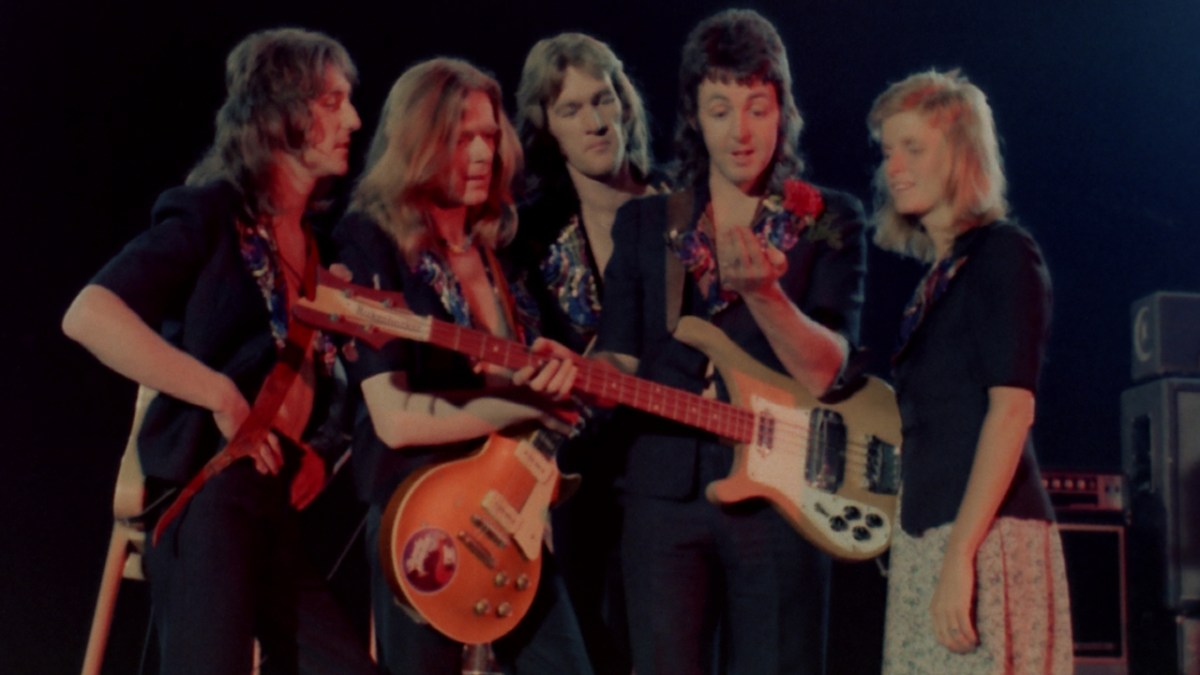
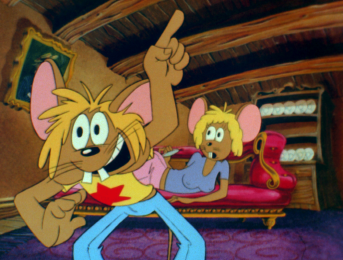
Last night my son and I went to see this film in Nashville at the Belcourt Theater at the screening. It opened up with Paul McCartney and Wings in very early seventies attire talking about how they met the Mcmouses. The one thing that surprised me…it was a smaller amount of animation that I anticipated. I thought it would be 60-40 animation but it was around 30-70 with Wings playing live on their 72 European tour and various film clips with the music. I’m not unhappy with the ratio because I wanted to hear Wings live more than seeing the animation.
They did use some soundstage shots mixed in with live shots also.
My biggest complaint was the voices of the mice were a little too animated…no pun intended but you could not understand what they were saying without straining. Wings were great though. This is the earliest video I’ve seen of Paul playing outside of the Beatles. The sound was great. The songs I can remember were Big Red Barn, Wild Life, Long Tall Sally, Seaside Woman, My Love, Hi Hi Hi, Mary Had a Little Lamb, C Moon, Blue Moon Over Kentucky, Maybe I’m Amazed, and there are a few more I’m forgetting.
The film is only 55 minutes long but a good representation of Wings in 1972. The band looked like they were having a lot of fun. I will get the film when it is released.
It’s a nice film that was made right before Live and Let Die and Band on the Run. The Bruce Mcmouse Show is not the best thing Paul has done…but a fun film all the same. It’s also a nice time capsule of the early seventies… Also, it was cool that at least 80 percent of the audience were college students…that gives me hope…and it was packed.
Now Paul…release the 1976 tour to the Theaters, please.
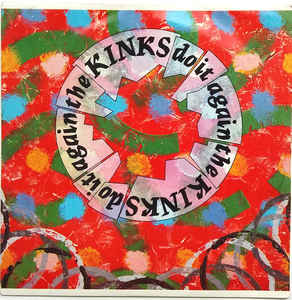
Good riff and rock song by the Kinks. It starts off with a chord that is reminiscent of the “A Hard Days Night” intro. I was in high school when it was released and it was great to hear a guitar driven song.
Ray Davies wrote this about the stressful working schedules the Kinks were going through. The song peaked at #41 in the Billboard 100 in 1983.
Do It Again
Standing in the middle of nowhere Wondering how to begin Lost between tomorrow and yesterday Between now and then
And now we’re back where we started Here we go round again Day after day I get up and I say I better do it again
Where are all the people going Round and round till we reach the end One day leading to another Get up go out do it again
Then it’s back where you started Here we go round again Back where you started Come on do it again
And you think today is going to be better Change the world and do it again Give it all up and start all over You say you will but you don’t know when
Then it’s back where you started Here we go round again Day after day I get up and I say Come on better do it again
The days go by and you wish you were a different guy Different friends and a new set of clothes You make alterations and [a fact in you knows] A new house a new car a new job a new nose But it’s superficial and it’s only skin deep Cause the voices in your head keep shouting in your sleep Get back, get back
Back where you started, here we go round again Back where you started, come on do it again
Back where you started, here we go round again Day after day I get up and I say, do it agaiiinnn Do it again Day after day I get up and I say, do it again
The song started out as a mistake, but one that Charles Wright liked. The record company didn’t want him to record it. “No one wanted to record it. I had to sneak a bass player, drummer, and engineer into the studio one Sunday and cut it in secret,” Wright recalls. “The president of Warner Bros. told me I made a mistake. So did every DJ that I played it for. But I had a feeling that it was a hit.”
Charles was right…it peaked at #12 in the Billboard 100 in 1970. It has become one of the most licensed songs of the last 40 years.
Express Yourself
Express Yourself! Express Yourself!
You don’t ever need help from nobody else. All you got to do now:
Express Yourself!
What ever you do, do it good. What ever you do, do it good. All right…
It’s not what you look like, when you’re doin´ what you’re doin´. It’s what you’re doin´ when you’re doin´ what you look like you’re doin´!
Express Yourself! Express Yourself!
They’re doin´it on the moon, yeah… In the jungle too. Everybody on the floor, now. Jumpin´ like a kangaroo. So let the horns do the thing they do, yo…
Some people have everything, and other people don’t. But everything don’t mean a thing if it ain´t the thing you want.
Express Yourself! Express Yourself!
O, do it! O, do it. Do it to it. Go on and do it. Yo, do it. Give.
The first time I heard this song was the Dave Clark Five’s version. It was written by Motown president Berry Gordy Jr, who wrote it for The Temptations, but they failed to arrive for the recording session. At the same time but in a different Motown studio, The Contours arrived to record “It Must Be Love,” but Gordy had other ideas – he asked them to cut “Do You Love Me” instead. The song became one of Motown’s first hits.
The song peaked at #3 in the Billboard 100 in 1962. This would be The Contours last top 40 hits although they would place 8 songs in the top 100.
From Songfacts
Joe Billingslea of The Contours told Mojo magazine February 2009 the story of this song: “We had just left the record hop and we turned at the studio. The doors were always open in those days. Berry was down there at the piano and he said ‘I want you to try this song I’m writing.’ He told us how he wanted the backgrounds to go and we sang it. ‘Try it again, I didn’t quite like it,’ he said. After about the third time he said, ‘That’s not right. I think I’ll give it to The Temptations instead.’ I told him not to. We did it again and he said, ‘That’s exactly how I want it. Come in tomorrow morning, we’re going to record it.’ So we did.
I didn’t like the song. It reminded me of ‘Twist And Shout.’ I said: ‘This song ain’t gonna do nothin’, man.’ That same week it was released and the following week it made the charts. I turned around and said: I love that song! Did I change my opinion? Of course! We realized later that The Temptations could never have sung that song because it wasn’t suited to them but Berry had motivated us to sing it the way he wanted it.”
This song peaked in popularity just as Motown launched their first “Motortown Revue” tour to showcase their acts. The Countours were stars of the show, igniting crowds with “Do You Love Me.” Lower on the bill were some other Motown acts that had yet to hit, including Marvin Gaye, Little Stevie Wonder, and The Supremes.
After being featured in the 1988 movie Dirty Dancing, this was re-released 26 years after it was originally recorded. This time, it charted at #11. The song was a good fit for Dirty Dancing, which despite featuring some modern, original songs, was set in 1963. This was a great song of that era for a dance scene.
The Dave Clark Five recorded this in 1964 as the British Invasion was underway. Their rendition hit #11 in the US. On March 8, 1964, The DC5 played it on the first of their 12 appearances on The Ed Sullivan Show.
In his autobiography To Be Loved, recalls a confrontation with Motown’s primary bass player, James Jamerson, over this song. Jamerson, who is lauded as a creator of the Motown sound, was playing a jazz beat during the session despite Berry’s instructions. “You’ve got to stay on the f–kin’ downbeat,” Berry told him, hoping he wouldn’t have to kick his star bassist out of the session. When they rolled for the next take, Jamerson did as instructed, playing the Pop groove Gordy requested… until Berry took his eyes off him. “In that split second, Jamerson hit four or five Jazz upbeats in rapid succession,” Gordy recalled. “I turned to let him have it, but before I could say anything he had jumped back on the downbeat so brilliantly I could only smile.”
In 1963, London group Brian Poole And The Tremeloes recorded a version that topped the charts in 16 countries including the UK.
This song featured in a 2016 Pepsi commercial starring Janelle Monáe. In the spot, which debuted during the Super Bowl, Monáe dances to the song before entering another room where she goes through a time warp and joins in the celebration to Madonna’s “Express Yourself.”
Do You Love Me
You broke my heart ’cause I couldn’t dance, You didn’t even want me around And now I’m back to let you know I can really shake ’em down
Do you love me? (I can really move) Do you love me? (I’m in the groove) Now do you love me? (Do you love me now that I can dance?) Watch me, now (Work, work) ah, work it out baby (Work, work) well, I’m gonna drive you crazy (Work, work) ah, just a little bit of soul, now? (Work) Now I can mash potatoes (I can mash potatoes) I can do the twist (I can do the twist) Tell me, baby, do you like it like this? Tell me (tell me) tell me
Do you love me? Do you love me, baby? Now do you love me? (Do you love me now that I can dance?) Watch me, now (Work, work) ah, work it out baby (Work, work) well, I’m gonna drive you crazy (Work, work) you are getting kind of cold, now (Work) (Work, work) with just a little bit of soul, now ? (Work, work) come on, come on now (Work, work) I’m gonna drive you crazy (Work) I can mash potatoes I can do the twist Well now, tell me, baby, do you like it like this? Tell me (tell me) tell me
Do you love me? Do you love me, baby? Do you love me? Do you love me? Now that I can dance (Work, work) ah, work it out baby (Work, work) well, I’m gonna drive you crazy (Work, work) oh you are getting kind of cold, now (Work) (Work, work) with just a little bit of soul, now (Work, work) now don’t you get kinda bold, now? (Work, work) oh, work it out, baby
Bono once said before playing the song “This is a song Charles Manson stole from The Beatles, well we’re stealin’ it back.” Charles Manson did, in fact, hijack the song from the Beatles. The song is about an amusement park attraction (not a coded message to Charlie). A “Helter Skelter” is an amusement ride popularized mostly in the U.K. with a slide built in a spiral around a high tower. Paul McCartney read an interview with Pete Townshend saying that the Who just recorded the loudest, rawest and dirtiest song ever…it was “I Can See For Miles.” A great song… but not what Townshend described it as exactly…
Paul then started to write a song that fit that description and went above it. Helter Skelter was recorded with all four Beatles in studio two with their amps on 11. It’s a great brutal hard rock song. It was one of the rawest songs ever released by a well-known band at that time. If I hear someone call the Beatles only a pop band…I just point them to this song. Covers of this song range from Motley Crue who despite their image their version sounds light compared to this, Pat Benatar version is not up to this one…U2’s version tries but no version gets close to the Beatles version in rawness. Some credit this song as one of the inspirations of Heavy Metal…
This song fits great on the White Album. The album is the most diverse the Beatles ever made. On the same album, you have Helter Skelter, Rocky Racoon, Sexy Sadie, Honey Pie, Back In The USSR, Blackbird, While My Guitar Gently Weeps, Revolution Nine and many more.
Helter Skelter
When I get to the bottom I go back to the top of the slide Where I stop and I turn and I go for a ride Till I get to the bottom and I see you again
Yeah, yeah, yeah, heh, heh, heh, heh But do you, don’t you want me to love you? I’m (Ahhh) coming down fast but I’m miles above you (Ahhh) Tell me, tell me, tell me, come on tell me the answer
Well, you may be a lover but you ain’t no dancer Now Helter skelter
Helter skelter Helter skelter Yeah! Woo!, hoo!
A Will you, won’t you want me to make you? (Ahhh) I’m coming down fast but don’t let me break you (Ahhh)
Tell me, tell me, tell me the answer You may be a lover but you ain’t no dancer
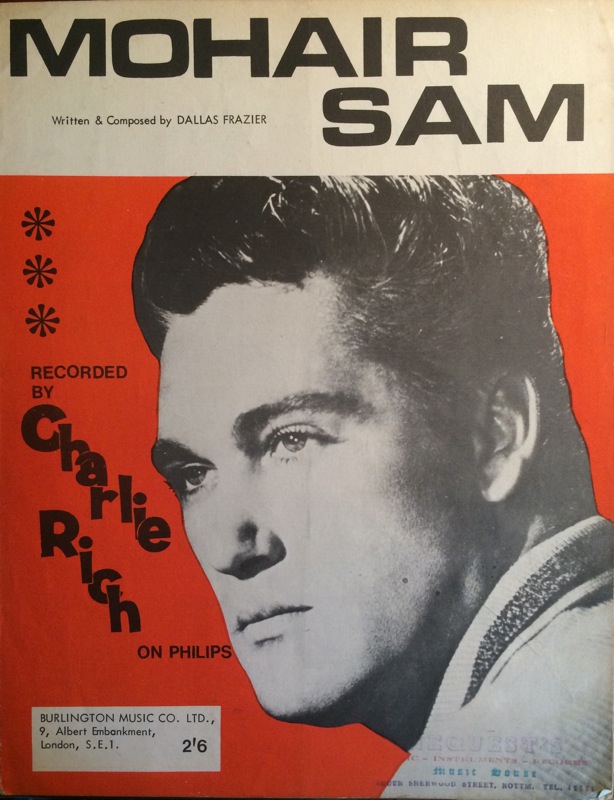
It’s a song by Charlie Rich who is more known as a country artist and his 1970s hits “Behind Closed Doors” and “The Most Beautiful Girl” off of his album Behind Closed Doors. This is not like Rich’s other hits but it’s a good song.
I first heard about this song when I read The Beatles were listening to this song when they met Elvis and Elvis had it on his jukebox when they all met. The song peaked at #21 in the Billboard 100 in 1966. The song became a hit, ending up in the top 30 on the pop charts.
Charlie played piano on Sun Records in the late 1950s and early 1960s, and then signed with Grove records…after that, he signed with Smash records and this was his first release on that label.
The song was written by Dallas Frazier who also wrote “Elvira”…the song that the Oak Ridge Boys made famous.
Mohair Sam
Well – who is the hippie that’s happenin’ all over our town? Tearin’ up chicks with the message that he lays down Who is the coolest guy, what is, what am? That’s fast-talkin’ – slow walkin’ – good-lookin’ Mohair Sam
Chicks are making reservations for his lovin’ so fine (so fine) Screamin’ and shoutin’ he’s got ’em all waitin’ in line Who is the coolest guy, what is, what am? That’s fast-talkin’ – slow walkin’ – good-lookin’ Mohair Sam
Who is the hippie that’s happenin’ all over our town? Tearin’ up chicks with the message that he lays down Who is the coolest guy, what is, what am? That’s fast-talkin’ – slow walkin’ – good-lookin’ Mohair Sam
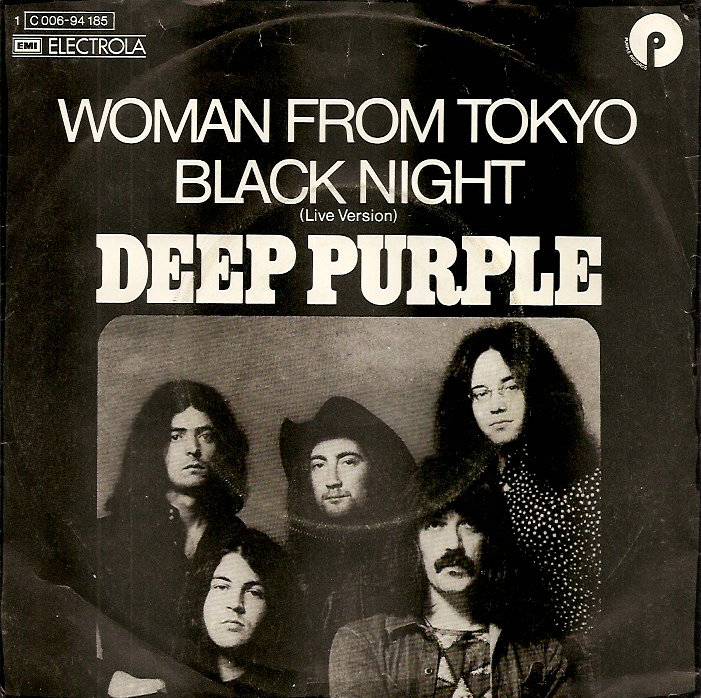
This song is all about the riff…it is a memorable riff… The song has drive and suspense. Woman from Tokyo peaked at #60 in 1973. This is one of the group’s most popular songs, but they never liked it very much. They didn’t start playing it live until they re-formed in 1984 after their 1976 split.
Because of endless touring and fatigue, Ian Gillan gave a six-month notice and stated that he was leaving the band after fulfilling all of his commitments in 1973. The album Who “Do We Think We Are” was released in January of 1973. The release generated the hit single “Woman from Tokyo.” “Smoke on the Water” was also busy that year becoming Deep Purple’s biggest hit of all-time.
After lead singer Ian Gillian left Deep Purple in 1973 they had two other lead singers before reforming in 1984…and they were David Coverdale and Joe Lynn Turner.
Deep Purple started recording their Who Do We Think We Are in Rome in July 1972. At this point, the band had yet to tour Japan, but they had three shows scheduled there for August: two in Osaka followed by one at the Budokan arena in Tokyo. Drawing on Japanese imagery (“the rising sun,” “an Eastern dream”), they concocted a story of a lovely lady from that country who drives them wild.
Rome was sunny and relaxing, so the band spent a lot of time in the swimming pool in lieu of working. There was also a sound problem in the studio, and the only track they got out of those sessions was “Woman From Tokyo.” The rest of the album was done in Germany.
In 1973, this was issued as a single, achieving a modest chart position of #60 in America. It aged well and got a lot of airplay on AOR and Classic Rock radio stations, keeping it alive. The stretched out “Toe-Key-Oh” became a bit of an earworm and helped embed the song into many an auditory cortex.
On some compilations from the ’70s, this song is listed as “live,” which Roger Glover insists is a lie, since they never did the song live in that decade.
Woman from Tokyo
Fly into the rising sun Faces, smiling everyone Yeah, she is a whole new tradition I feel it in my heart
My woman from Tokyo She makes me see My woman from Tokyo She’s so good to me
Talk about her like a Queen Dancing in a Eastern Dream Yeah, she makes me feel like a river That carries me away
My woman from Tokyo She makes me see My woman from Tokyo She’s so good to me
But I’m at home and I just don’t belong
So far away from the garden we love She is what moves in the soul of a dove Soon I shall see just how black was my night When we’re alone in Her City of light
Rising from the neon gloom Shining like a crazy moon Yeah, she turns me on like a fire I get high
My woman from Tokyo She makes me see My woman from Tokyo She’s so good to me







 PowerPop... An Eclectic Collection of Pop Culture