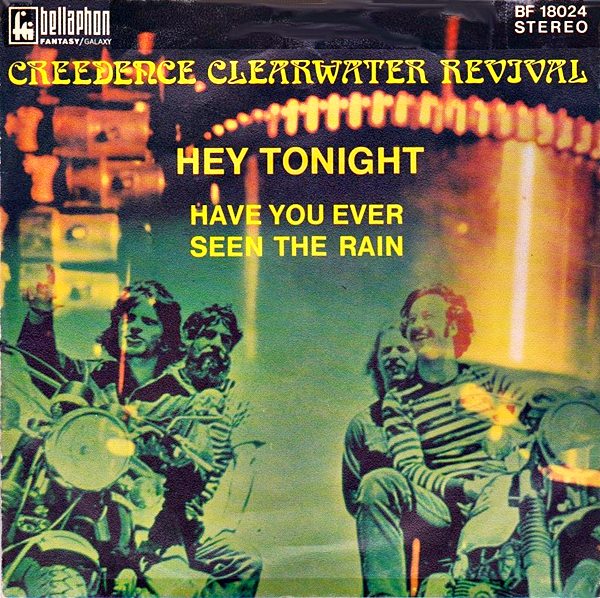
Hey Tonight is the B-side of “Have You Ever Seen the Rain,” the first single Creedence Clearwater Revival released in 1971 and the last the band launched as a quartet. Both single cuts also appear on the Pendulum album. What terrific singles this great band produced like clockwork.
This is yet another song that has the character “Jody” in it. Songs like It Came Out Of The Sky, Hey Tonight, and a solo Fogerty song called Almost Saturday Night. He has never said one way or another if it was based on someone or just sounded good in the song…probably the latter.
John Fogerty wrote “Hey Tonight” and the band rehearsed it before the group hit the studio in 1970. Fogerty thought the song was one of the better ones on the album despite the fact it was written in while the band was in turmoil at that time. Creedence Clearwater played “Hey Tonight” live for a first time at the private party the band held to music writers at Cosmo’s Factory on December 12th, 1970.
John not only wrote, sings and plays guitar on every track, he also overdubbed organ and saxophone (which he played himself) on some of the songs.
Have You Ever Seen The Rain?/Hey Tonight peaked at #9 in the Billboard 100 and #1 in Canada in 1971.
This video below is not a real video to the song but it shows some footage I haven’t seen before of the band as a trio after Tom quit. The song is right below this one.
Hey Tonight
Hey, Tonight, Gonna be tonight, Don’t you know I’m flyin’ Tonight, tonight. Hey, c’mon, Gonna chase tomorrow Tonight, tonight.
Gonna get it to the rafters, Watch me now. Jody’s gonna get religion All night long.
Hey, c’mon, Gonna hear the sun Tonight, tonight.
Gonna get it to the rafters, Watch me now. Jody’s gonna get religion All night long.
Aaaah! Hey, Tonight, Gonna be tonight, Don’t you know I’m flyin’ Tonight, tonight. Tonight, tonight.
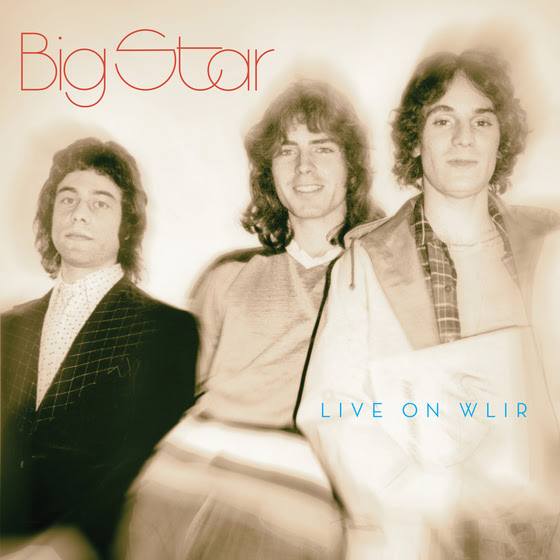
Love this driving song by Big Star. It was on Radio City, their second album. Some say it is a response to the Chris Bell song off the first album called My Life Is Right…or a message to his girlfriend Diane (Don’t like to see your face Don’t like to hear you talk at all) that he was splitting with at the time.
After the failure of their first album, singer/songwriter guitar player Chris Bell quit Big Star. Alex Chilton didn’t know if Big Star was going to make another album. He continued making demos because he could always do a solo album. The two other members, drummer Jody Stephens and bass player Andy Hummel wasn’t sure either what was going to happen. They had talked about ending the band.
Their record company Ardent was under the Stax umbrella. They sent out invitations to all of the major rock journalists of the day in 1973. They invited them to Memphis to see Ardent’s roster of bands but most of all Big Star. The rock writers loved Big Star. Many legendary writers were there including Lester Bangs.
Stax agreed to foot the bill, which amounted to $40,000 to fly in more than one hundred rock critics from across the U.S. and U.K., put them up at the Holiday Inn, wine and dine them, bus them to Memphis landmarks like Graceland, and, on the final night, knock them out with a showcase at Lafayette’s Music Room, featuring Skin Alley, Larry Raspberry and the High-Steppers, and Big Star.
As writers from California (Shaw, Gene Sculatti, and Cameron Crowe), the New York City area (Richard Meltzer, Andy Shernoff, Gary Kenton, Pete Tomlinson, Lenny Kaye, and Nick Tosches), upstate New York (Billy Altman), Austin (Chet Flippo), Detroit (most of Creem’s staff, including Lester Bangs and Jaan Uhelszki), and the U.K. (Simon Frith, Ben Edmonds, and Pete Frame) signed on, Big Star was persuaded to play the gig.
The writers sat through the other bands and by the time Big Star took the stage, around midnight, they were well lubricated. Big Star couldn’t have had a more receptive audience. Rock critics are not known to dance but they were all on the floor and some has since called the performance by Big Star magic. Some called it the greatest performance and sound they ever heard. That night is what convinced Big Star to stay together and finish their second album Radio City. They played most of the first album, some covers, and a few songs they had worked on including Life Is White.
What I question is…Stax would give money for things like this but could not distribute records?
Alex had the quote below while he was in Big Star. What he said foretold Big Star’s future. It would be years later before the album would sell anything and get noticed. They would make one more album…Big Star Third/Sister Lovers before ending it.
Alex Chilton:“The important thing is to make a good record,” “because if you make a good record, it doesn’t matter what happens. It’s going to sell from then on to some degree, even though it doesn’t sell anything when it comes out and is a big disappointment to everybody. If it’s really good, people are going to want it from then on, and that’s the important thing. It might take five or ten years for it to pay off—or it might take twenty years, and you might be dead when it pays off. If it’s good, it’s going to pay off for somebody, sometime.”
Life Is White
Don’t like to see your face Don’t like to hear you talk at all I could be with Ann But I’d just get bored
Can’t even bring myself to call And I don’t want to see you now ‘Cause I know what you lack And I can’t go back to that
Whatever’s all the same Now there’s nobody to know And I can’t recall, recall your name All I can say is so
And I don’t want to see you now ‘Cause I know what you lack And I can’t go back to that
Your life is white And I don’t think I like You hanging around
Don’t like to see your face Don’t like to hear you talk at all I could be with Ann But I’d just get bored
Can’t even bring myself to call And I don’t want to see you now ‘Cause I know what you lack And I can’t go back to that now
Tuesday Afternoon was on the classic concept album Days of Future Passed which was released in 1968. This song was released as a single and was the second single from Days of Future Passed (the first being “Nights in White Satin“). It was backed with a song called “Another Morning”.
Ever since I heard the intro on Strawberry Fields I’ve loved the mellotron. This song uses the instrument. I did read where it was hard to keep running because it used a series of tape loops and you played it by a keyboard.
Mike Pinder was the keyboard player for the Moody Blues and a founding member. He used to work for a company called Streetly Electronics, which made the instrument. He was one of the few musicians who could keep the device operational, and The Moody Blues became the first high-profile band to use it in live performances. It wasn’t always smooth… one their first American tour, the Mellotron burst open, spewing its tape out the back. After a break Pinder repaired the machine and the show continued on.
The “London Festival Orchestra”, which was the name Decca Records gave to their collection of classical musicians, played on this track. The original idea for the album was to record a rock version of a classical piece called “New World Symphony” by Dvorak.
The song peaked at #12 in the Billboard 100 and #24 in Canada in 1968.
Justin Hayward: “I sat down in a field, smoked a funny African cigarette, and that song just came out. It was a Tuesday afternoon.”
From Songfacts
Justin Hayward had a dog named Tuesday, but the song has nothing to do with the pooch. In his Songfacts interview, Hayward explained: “It just so happened we were sitting in the field together, that’s all. But it was a Tuesday afternoon and I did smoke a joint and it was down there where I come from in the West Country and this song just came out.”
On the album, this was listed as “Forever Afternoon (Tuesday?)” at the insistence of producer Tony Clarke.
Hayward was earning a living playing music by the time he was in his late teens, so unlike most working stiffs for whom Tuesday afternoon was a time to knuckle down and get some work done, that part of the week could be quite relaxing for him. “I did think about that and about being someone who’s been lucky enough never having to do a proper job,” he told us. “I wasn’t hampered by any of that kind of stuff.”
This song uses a Mellotron. The instrument is a keyboard which triggers taped loops of a chosen instrument recorded at different pitches. It is not synthesized sound, but actual instrument recordings. In this song the recorded loops were strings. The strange and unique quality of the sound comes from the warble in the tape loops as they play back.
Tuesday Afternoon
Tuesday afternoon I’m just beginning to see Now I’m on my way It doesn’t matter to me Chasing the clouds away
Something calls to me The trees are drawing me near I’ve got to find out why Those gentle voices I hear Explain it all with a sigh
I’m looking at myself reflections of my mind It’s just the kind of day to leave myself behind So gently swaying through the fairyland of love If you’ll just come with me you’ll see the beauty of Tuesday afternoon Tuesday afternoon
Tuesday afternoon I’m just beginning to see Now I’m on my way It doesn’t matter to me Chasing the clouds away
Something calls to me The trees are drawing me near I’ve got to find out why Those gentle voices I hear Explain it all with a sigh
This song was one of the most pivotal songs in their career. MTV’s refusal to play it hurt the chances of the album Please To Meet Me… which The Replacements released in 1987. The album was critically praised as were most of their other albums. With no MTV or radio support, the single didn’t go anywhere.
This song had radio potential and their record company Sire was gearing up a campaign but the song is about suicide and MTV would not touch it. A month before the album was released, the Bergenfield Suicide Pact (4 New Jersey teens took part in a suicide pact) happened. It understandably got a lot of press. Paul Westerberg was not happy with the decision. “MTV feels the lyrics are detrimental to the youth of America,” said Westerberg “But for them to play Mötley Crüe and not play our video … if it had a bunch of sexist bullshit, they would’ve played it. But if it’s something deeper, if it’s emotions, it’s taboo.”
The song hinted at Paul Westerberg’s own teenage overdose attempt and the suicide of his high school friend John Zika. Sitting home in the fall of 1986, he wrote The Ledge in forty-five minutes, from the perspective of a jumper looking down at a gathering crowd below.
It was recorded in Memphis with Jim Dickinson producing. The band worked as a trio as Bob Stinson was let go by this time. After the album was finished they would get Bob “Slim” Dunlap on lead guitar.
Paul Westerberg: It’s written not necessarily out of personal experience because I’m still here. It’s an observation. And if anyone wants to read anything into it other than that, then that’s their problem. And the lyrics, they just came. I didn’t have to sit, I didn’t have to think. It was just wham wham wham, I turned on the little tape recorder, I had it on an ironing board. And it was partially out of the way I had felt at certain times in my life. I figure if you’re gonna kill yourself, you kill yourself, but I had tried to commit suicide once I think when I was younger and I can still feel how I felt then. I mean not like now that I’m totally a-ok and the happiest guy in the world, I’m doing fine, but I can feel for people that feel totally lost and have no one to turn to. So it was written sort of half of my own experience and half of maybe me trying to feel how it is to be up there on the ledge. And it’s not written in any way to condone that kind of stuff. Obviously it’s bullshit, it’s wrong, but to someone who does it…
The Ledge
All eyes look up to me High above the filthy streets Heed no bullhorn when it calls Watch me fly and die, watch me fall
I’m the boy they can’t ignore, For the first time in my life, I’m sure All the love sent up high to pledge Won’t reach the ledge
Wind blows cold from the west I smell coffee, I smell doughnuts for the press (on their breath?) A girl that I knew once years ago Is tryin’ to be reached on the phone
I’m the boy she can’t ignore, For the first time in my life, I’m sure All the love sent up high to pledge…
(Repeat)
Priest kneels silent, all is still Policeman reaches from the sill Watch him, watch him try his best There’ll be no medal pinned to his chest
I’m the boy they couldn’t ignore, For the first time in my life, I’m sure
(Repeat)
I’m the boy for the last time in my life
All the love that they pledge For the last time will not reach the ledge…
I’m going to write about my top 10 favorite TZ episodes in the next few weeks…Most of the Twilight Zones are like songs to me…to be enjoyed over and over. The Twilight Zone is not really an ordinary TV show. It’s THE TWILIGHT ZONE. This is my personal choice for #2 on my list…Next week my number one.
I wish now I would have just reviewed every Twilight Zone episode…this is a fun gig!
If you haven’t seen this episode…it will have spoilers…just so you know.
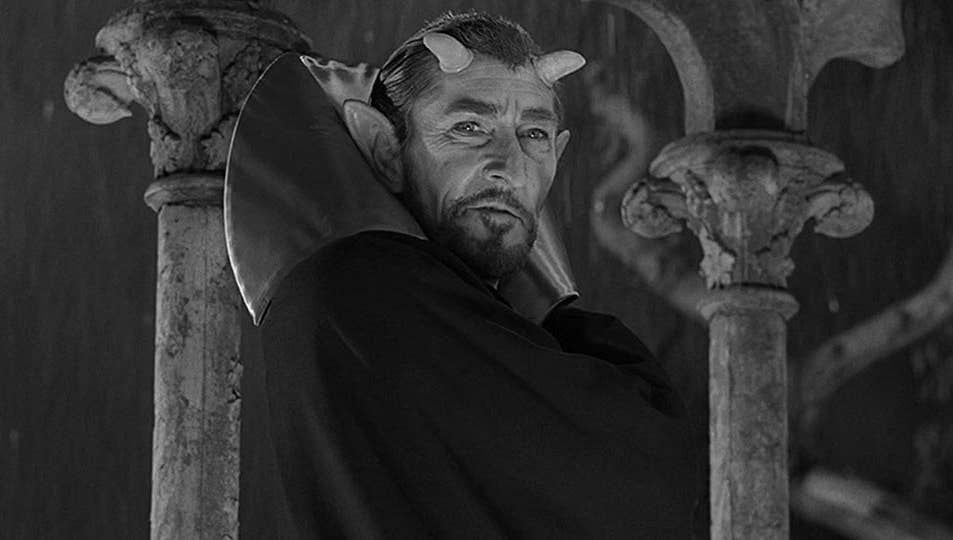
This one is not one of the comedic episodes…it is deadly serious, haunting and chilling. The Howling Man doesn’t have a lot of action but you feel sorry for David Ellington…he realized too late that he has set the devil loose in the world. The special effects of the ragged looking man turning into the devil was spot on. It would look good now in todays time. One well known actor was in this one, John Carradine played Brother Jerome.
Rod Serling’s Opening Narration:The prostrate form of Mr. David Ellington, scholar, seeker of truth and, regrettably, finder of truth. A man who will shortly arise from his exhaustion to confront a problem that has tormented mankind since the beginning of time. A man who knocked on a door seeking sanctuary and found, instead, the outer edges of The Twilight Zone.
David Ellington recounts a story, one that began just after the end of World War I. He was hiking in Europe when he sought refuge during a violent rain storm. The residence is isolated and its head, Brother Jerome, tells him he cannot stay. Ellington is ill however and during his short stay meets someone who is being kept prisoner and howls constantly through the night. Ellington believes the Howling Man is being kept there for no good reason but Brother Jerome tells him of the man’s true nature. The decision Ellington makes will haunt him for the rest of his life.
Rod Serling’s Closing Narration:Ancient folk saying: “You can catch the Devil, but you can’t hold him long.” Ask Brother Jerome. Ask David Ellington. They know, and they’ll go on knowing to the end of their days and beyond — in the Twilight Zone.
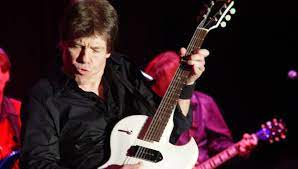
Wanted Man was written by Bob Dylan and it is a favorite of mine. I first heard it by George Thorogood. The first time I heard it was not the studio version that George did…it was when he played it on the 30th Anniversary Bob Dylan concert held in 1993. George’s version of Wanted Man was left off of the CD for some reason…but I knew I had to find that Dylan song as soon as I heard it.
This was pre-internet and I finally found out that Dylan never recorded it for an album. To this day I’ve never heard a version of only Bob singing it… not even a demo of just him.
From what I’ve read about the song Bob Dylan wrote Wanted Man for Nashville Skyline but no complete version of the song was recorded at those sessions. Johnny Cash covered the song and he announced it as a song that him and Dylan wrote together but the records show that Dylan copyrighted it according to a couple of websites.
Cash debuted “Wanted Man” on his 1969 live album, At San Quentin, and would later release a studio version.
George Thorogood released his version on his 1982 Bad To The Bone album released in 1982. The word play in this song is great.
Below I have George’s version of course but I also have Johnny Cash and Bob Dylan demo of the song.
Wanted Man
Wanted man in California Wanted man in Ohio Wanted man in Kansas City Wanted man in Buffalo
Wanted man in Oklahoma Wantd man in old Cheyenne Wherever you might look tonight You might see this wanted man
Well, I might be in Colorado Or Georgia by the sea Workin’ for some man who may not know who I might be Yeah, and if you see me comin’ And you know who I am Don’t you breathe it to nobody Cause you know I’m on the lam
Wanted man by Lucy Watson Wanted man by Jeannie Brown Wanted man by Nelly Johnson Wanted man in this Tex town
And I’ve had all that I’ve wanted Of a lot of things I’ve had And a lot more than I’ve needed Of some things that turned out bad
Well, I got sidetracked in El Paso Stopped to get myself a map I went the wrong way into Juarez With Juanita on my lap And I went to sleep in Shreveport Woke up in Abilene Wonderin’ why the hell I’m wanted At some town halfway between
Wanted man in Albuquerque Wanted man in Baton Rouge Wanted man in Tallahassee Wanted man in Syracuse
And there’s somebody sent to grab me Anywhere that I might be Wherever you might look tonight You might get a glimpse of me
Wanted man in California Wanted man in Ohio Wanted man in Kansas City Wanted man in Buffalo Wanted man in Oklahoma Wanted man in old Cheyenne Wherever you might look tonight You might see this wanted man
Out of all of the tracks on Steel Wheels…this one sounded like the old Stones. The open G chord that Keith Richards made famous is in full display on the intro. This is the first track from Steel Wheels, an album that brought The Stones back together.
With the album Dirty Work, the Stones did look like it could be over. Jagger and Richards were not getting along. They took shots at each other in the press. Jagger released two albums, She’s The Boss and Primitive Cool. Keith Richards also released a solo album…a very good album Talk Is Cheap.
Keith and Mick finally took time out to talk to each other and get the band back together. Bill Wyman, Charlie Watts, and Ron Wood joined them and this would be Bill’s last album and tour. Bill has had musical projects since then and he has rejoined the Stones onstage a few times.
The song peaked at #14 in the Mainstream Rock Tracks in 1989. Mixed Emotions was the big hit off of the album.
Charlie Watts helped write this, but as was custom for The Stones, it was credited only to Jagger/Richards.
From Songfacts
The horns were played by the Brass ensemble The Kick Horns.
Ron Wood played bass. Bill Wyman, The Stones bassist, had to deal with the press after announcing his engagement to 18-year-old Mandy Smith, and was not available. Wyman and Smith divorced soon after their marriage.
Sad Sad Sad
Fling you out into orbit No one’s gonna hear you shout And fools ain’t gonna follow You don’t need to sleaze about
Now you’re sad sad sad Sad sad sad Sad sad sad But you’re gonna be fine
The elephant’s in the bedroom Throwing all his weight about And I’m locked in the bathroom Your screams are gonna drown me out
Now you’re sad sad sad Sad sad sad Sad sad sad But you’re gonna be fine
Oh, yeah
I got a cold chill I get a cool thrill Are you ready for the gilded cage? Are you ready for the tears of rage? Come on baby, don’t let them drown you out
Sad sad sad Bad bad bad Sad sad sad But you’re gonna be fine
Sad sad sad Sad sad sad Sad sad sad But you’re gonna be fine
You’re gonna be fine You’re gonna be fine You’re gonna be fine fine fine fine You’re gonna be fine fine fine fine Fine fine fine fine
Ooh, yeah Ooh, yeah Ooh, yeah Gonna be fine fine fine fine Fine fine fine fine Fine fine fine fine
When people think of Big Star…when people do think of Big Star…Alex Chilton comes up more often than anyone else. That is not an over sight really because he was on all of their albums. The sound Big Star had largely originated from founding member Chris Bell. Alex and Chris wrote most of the first album and they modeled themselves after Lennon and McCartney. Their first album was praised by practically everyone but not distributed…people wanted the album but the album was not in the stores so it failed. Chris left the band not long after that failure.
Chris went into a depression but Alex carried on with Big Star making two more albums.
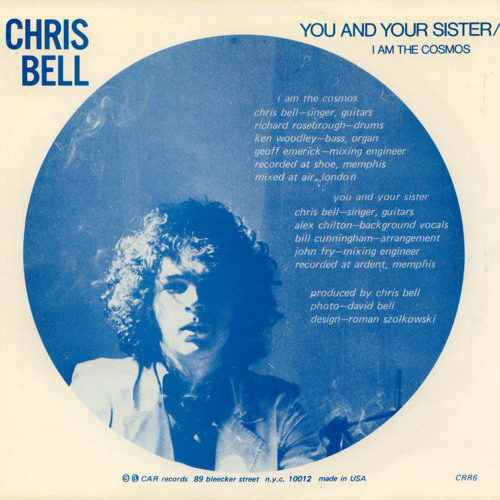
Chris visited and stayed in England off and on and recorded some solo material but a record deal never materialized while he was there. He brought some recordings over that he made in Memphis and Geoff Emerick mixed it for him. Geoff was the engineer for the Beatles. The song that he mixed was I am the Cosmos. Chris would continue to record some in Memphis through the mid to late seventies.
In fall of 1978 he got a call from Car records and they wanted to release a single with a song called I am the Cosmos with You and Your Sister as the B side. It was the only solo release Chris would see in his lifetime. Unfortunately, Chris didn’t get to enjoy it long. He died in a car wreck on December 27, 1978. He was only 27 years old.
When he recorded You and Your Sister he got Alex Chilton to sing harmony vocals with him.
By the way…if you haven’t heard I Am The Cosmos give it a listen. It’s a layered, lush, almost perfect pop song. I hope you enjoy this song.
14 years after his death in 1992 Rykodisc released Chris Bell’s solo album from the songs he recorded including the two songs on this single.
You and Your Sister
They say my love for you ain’t real But you don’t know how real it feels All I want to do Is to spend some time with you So I can hold you, hold you Your sister says that I’m no good I’d reassure her if I could All I want to do Is to spend some time with you So I can hold you, hold you Plans fail every day I want to hear you say Your love won’t be leaving (Run run, run run) Your eyes ain’t deceiving (Run run, run run) Fears will soon fade away Smile now, don’t be afraid All I want to do Is to spend some time with you So I can hold you, hold you And let me whisper in your ear Don’t you worry, they can’t hear All I want to do Is to spend some time with you So I can hold you
A perfect road trip song from the 1983 album “Non-Fiction.” You’ll want to go out and buy a long white Cadillac and drive it on a long lost highway.
Dave Alvin wrote this song….The song is about the night Hank Williams died in back of a car. He died somewhere between Bristol, Tenn., and Oak Hill on the way to a New Year’s Day 1953 show in Canton, Ohio.
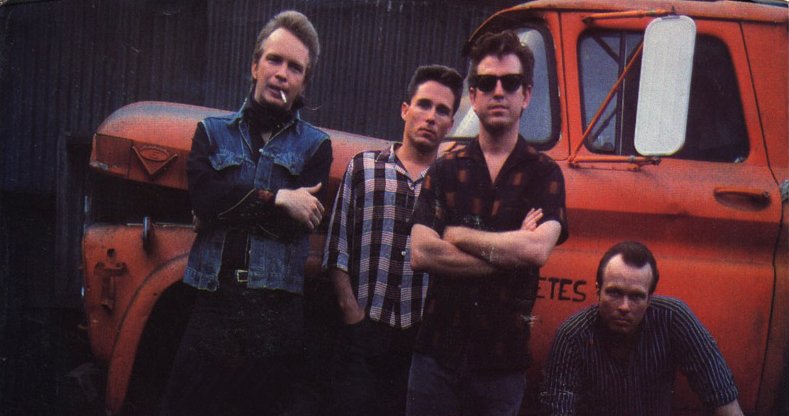
The Blasters play what I would call rockabilly with some Americana thrown in. One description I found was rockabilly, early rock and roll, punk rock, mountain music, and rhythm and blues and country…but in short…they rock.
Dave Alvin was the main songwriter and he left the band in 1986 because of tensions with his guitarist Blaster member brother Phil. The band is still going and Dave has reunited a few times with them on albums and tours.
Dwight Yoakum recorded a version of this song in 1989 for his first greatest hits package Just Lookin’ for a Hit.
Long White Cadillac
Night wolves moan The winter hills are black I’m all alone Sitting in the back Of a long white Cadillac
Headlights shine Highway fades to black I’ll take my time In a long white Cadillac In a long white Cadillac
Sometime I blame it on a woman Why my achin’ heart bleeds Sometimes I blame it on the money Sometimes I blame it on me
Train whistle cries Lost on its own track I’ll close my eyes I’m never coming back In a long white Cadillac
Night wolves moan The winter hills are black I’m all alone Sitting in the back Of a long white Cadillac
One time I had all that I wanted But it just skipped through my hands One time I sang away the sorrow One time I took it like a man
Headlights shine Highway fades to black It’s my last ride I’m never coming back In a long white Cadillac
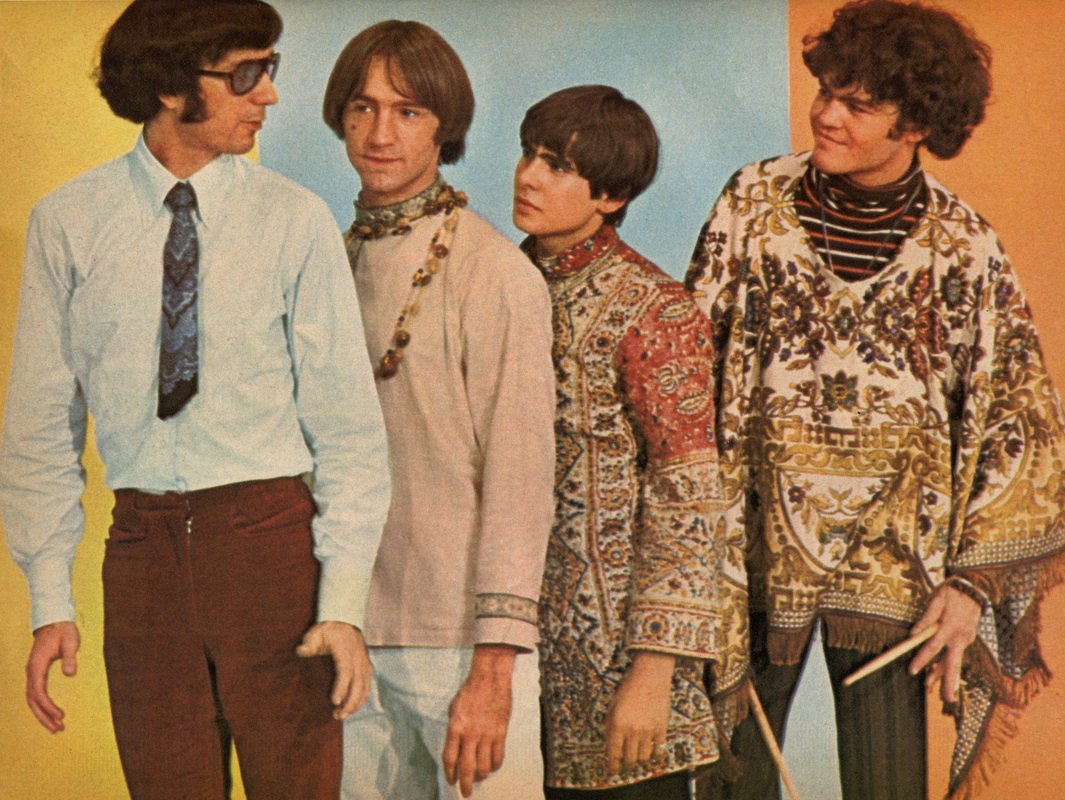
This is a really good song by the Monkees. It was written by “Wildfire” author, Michael (Martin) Murphey and Owen Castleman and was an album track. If you watched a lot of their shows on reruns like I did…I knew their album tracks by heart. This would have been a good single. It has a great country/rock sound like most of his songs do.
It was on the album Pisces, Aquarius, Capricorn & Jones Ltd. that peaked at #1 in the Billboard 100, #2 in Canada and #5 in the UK in 1967.
Owens “Boomer” Castleman was the co-writer on this song and was a member of The Survivors, a pre-Monkees group that included Michael Nesmith, Bill Chadwick, Michael Martin Murphey, and John London.
What Am I Doing Hanging Round?
Just a loud mouth Yankee I went down to Mexico. I didn’t have much time to spend, about a week or so. There I lightly took advantage of a girl who loved me so. But I found myself a-thinkin’ when the time had come to go…
[Chorus:] What am I doin’ hangin’ round? I should be on that train and gone. I should be ridin’ on that train to San Antone, What am I doin’ hangin’ round?
She took me to the garden just for a little walk. I didn’t know much Spanish and there was no time for talk. Then she told me that she loved me not with words but with a kiss. And like a fool I kept on thinkin’ of a train I could not miss…
[Chorus]
Well it’s been a year or so, and I want to go back again. And if I get the money, well I’ll ride the same old train. But I guess your chances come but once and boy I sure missed mine. And still I can’t stop thinkin’ when I hear some whistle cryin’….
This is one of the first AC/DC songs I was familiar with when I was around 11 years old. My older cousin was a huge fan and would play the live If You Want Blood You’ve Got It album constantly. It was a few years later before I heard the studio version of the song.
As with most of their songs it started with an excellent guitar riff and doesn’t relent.
The song was originally on the Let There Be Rock album released in 1977. It was released as a single in 1978 as a live cut and didn’t do much but then the live cut was reissued again in 1979 and peaked at #36 in the UK in 1980.
This song is about a large woman that lead singer Bon Scott had relations with early in the band’s career. I’ll let Bon and Angus tell the tale.
Bon Scott:“We were all staying in the same hotel and this chick Rosie lived across the road. She was so big she sort of closed the door and put it on ya’, half your body, and she was too big to say no to. Then she used to look up and see what band was in town and say “hi over there boys” and we’d go over and have a party. She came to one of our shows, she was from Tasmania actually, and she was in the front row. She was like 6’2 and like 19 stone 12 pounds (around 266lbs). That girl was some mountain. So you can imagine the problems I had. So I just sorta had to succumb … I had to do it. Oh my God, I wish I hadn’t.”
Angus Young:We’d been in Tasmania and after the show [Bon Scott] said he was going to check out a few clubs. He said he’d got about 100 yards down the street when he heard this yell: ‘Hey! Bon!’ He looked around and saw this leg and thought: ‘Oh well!’ From what he said, there was this Rosie woman and a friend of hers. They were plying him with drinks and Rosie said to him: ‘This month I’ve slept with 28 famous people,’ and Bon went: ‘Oh yeah?!’ Anyway, in the morning he said he woke up pinned against the wall, he said he opened one eye and saw her lean over to her friend and whisper: ’29!’ There’s very few people who’ll go out and write a song about a big fat lady, but Bon said it was worthy.
From Songfacts
In a 1976 interview with the band for Sounds magazine, their guitarist Malcolm Young prodded Scott to tell the story about “the fat one.” Scott explained that backstage at a show in Australia, a rotund woman they called “Big Bertha” came forward when he asked, “Who wants it?” Too frightened to refuse, he did the deed with Bertha, who then called to her friend, “that’s the 37th this month,” and produced a black book where she recorded her conquests. Scott turned the incident into a song, this time naming the woman “Rosie.”
In their early days, the band shared a house in Australia where lots of unsavory incidents occurred. This gave them material for songs like this one and “The Jack.” Bon Scott had great affection for the full-size girls, and occasionally put his conquests in his songs. Another song on the album, “Go Down,” mentions Ruby Lips, who is another real person. This is confirmed in the Let There Be Rock liner notes.
The music is based on the Chuck Berry song “No Money Down.”
Originally released on the Let There Be Rock album, this song didn’t get much publicity until AC/DC re-released it a year later on If You Want Blood, You Got It when the band became internationally popular.
This song was covered and performed live by Guns N’ Roses. Nearly a decade later, Axl Rose cited an article in Melody Maker comparing the original AC/DC lineup to Guns N’ Roses as the inspiration for covering this song.
Originally, there were two versions of this song. The first was called “Dirty Eyes” and was eventually released in 1997 on the Bonfire boxed set.
Whole Lotta Rosie
Wanna tell you story About woman I know When it comes to lovin’ She steals the show She ain’t exactly pretty Ain’t exactly small Fourt’two thirt’ninefiftysix You could say she’s got it all
Never had a woman Never had a woman like you Doin’ all the things Doin’ all the things you do Ain’t no fairy story Ain’t no skin and bones But you give it all you got Weighin’ in at nineteen stone You’re a whole lotta woman A whole lotta woman Whole lotta Rosie Whole lotta Rosie Whole lotta Rosie And you’re a whole lotta woman
Honey you can do it Do it to me all night long Only one who turn me Only one who turn me on All through the night time Right around the clock To my surprise Rosie never stops She was a whole lotta woman Whole lotta woman Whole lotta Rosie Whole lotta Rosie Whole lotta Rosie A whole lotta woman
Bring your own lampshade Somewhere there’s a party
This song has just a slight early sixties vibe and shows their expanding repertoire.
Paul Westerberg has said Swingin Party drew on Sinatra’s version of Rodgers and Hart’s standard “Where or When” and The Springfield’s “Flying on the Ground Is Wrong.” It had a trace of Frank and Nancy Sinatra’s “Somethin’ Stupid” and Brian Hyland’s “The Joker Went Wild.” He said if you steal from everything nobody can put a finger on you.
The song’s oscillating rhythms and guitars provided a perfect backdrop for the lyrics.
This song was on their 4th studio album Tim. Yes, they named the album Tim which is pretty funny. It would be the last album founding member and lead guitarist Bob Stinson worked on.
Paul Westerberg:“We named it Tim for no reason at all”.This was the first time we named an album after it was done.We sat around a bar,we were gonna call it Whistler’s Mammy,Van Gogh’s Ear,or England Schmingland.”I think I said Tim and we sat and laughed for a few minutes and then we said,”Why not?”
Paul Westerberg:“One of the reasons we used to drink so much is that it was scary going up onstage. That’s one of the things ‘Swingin Party’ is all about” “The funny thing is, people think you must have all this confidence to get up onstage.”
New Zealand singer Lorde covered Swingin Party”= as the B-side to her second single, “Tennis Court.” The song peaked at #10 in the New Zealand singles chart in 2013.
Swingin’ Party
Bring your own lampshade Somewhere there’s a party Here it’s never ending Can’t remember when it started Pass around the lampshade There’ll be plenty enough room in jail
If being alone’s a crime I’m serving forever Being strong’s your kind I need help here with this feather If being afraid is a crime We hang side by side At the swingin’ party down the line
On the prairie pavement Losing proposition Quitting school and going to work And never going fishing Water all around Never learn how to swim now
If being alone’s a crime I’m serving forever Being strong’s your kind Then I need help here with this feather If being afraid is a crime We hang side by side At the swingin’ party down the line At the swingin’ party down the line
Bring your own lampshade Somewhere there’s a party Here it’s never ending Can’t remember when it started Pass around the lampshade There’ll be plenty of room in jail
If being alone’s a crime I’m serving forever Being strong is what you want Then I need help here with this feather If being afraid is a crime We hang side by side At the swingin’ party down the line At the swingin’ party down the line Catchin’ time At the swingin’ party down the line
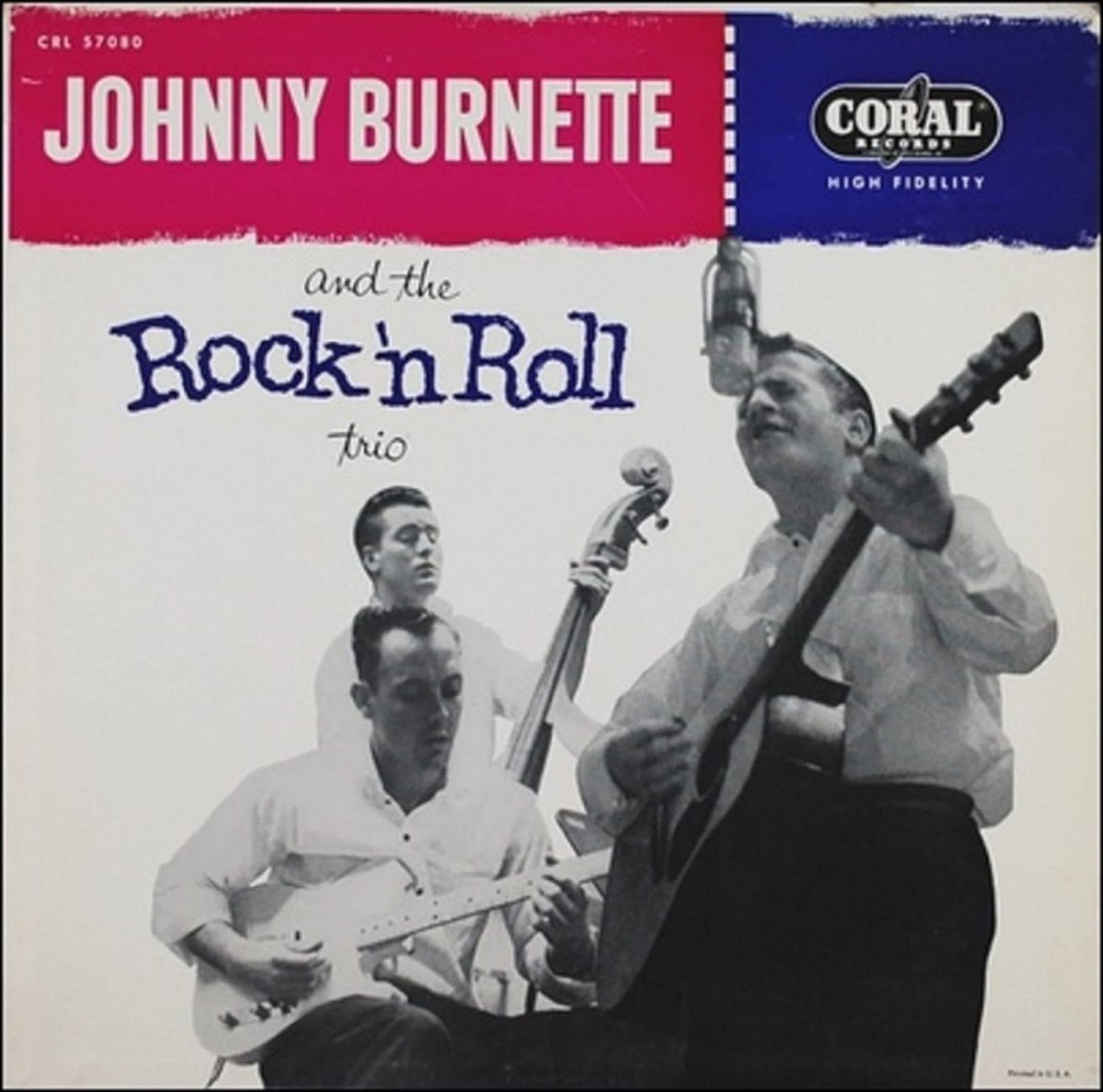
This song you may remember from the Yardbirds and Aerosmith but this version rocks roots style. No matter what version you know…this song is built for a rock band of any kind.
It was written by Tiny Bradshaw, Howard Kay, and Lois Mann, this song was originally performed by Tiny Bradshaw’s Big Band in 1951.
This version features guitar lines in what many historians consider to be the first recorded example of intentionally distorted guitar in rock music, although blues guitarists, such as Willie Johnson and Pat Hare, had recorded with the same effect years earlier.
The Trio’s guitarist, Paul Burlison, recounted that he noticed the sound after accidentally dropping his amplifier, which dislodged a power tube. Later, “Whenever I wanted to get that sound, I’d just reach back and loosen that tube”
Johnny Burnette recorded this rock version in 1956, and The Yardbirds popularized the song with their rendition in 1965. Aerosmith covered it in 1974, often playing the song as their encore in their early years. Tyler had seen the Yardbirds do it in the sixties and as he said it knocked him out.
Train Kept A Rollin’
I caught a train I met a dame She was a hepster And a real gone dame She was pretty From New York City And we trucked on down that old fair lane With a heave and a ho Well i just couldn’t let her go
Get along, creepy little woman Get along, well be on your way Get along, creepy little woman Get along, well be on your way With a heave and a ho Well i just couldn’t let her go
Well, the train kept a-rollin all night long The train kept a-rollin all night long The train kept me movin’ all night long The train kept a-rollin all night long With a heave and a ho Well i just couldn’t let her go
We made a stop In Alberquerque She must of thought That I was a real gone jerk We got off the train At El Paso Our lovin was so good, jack I couldn’t let her go Get along Well I just couldn’t let her go
Get along, creepy little woman Get along, well be on your way Get along, creepy little woman Get along, well be on your way With a heave and a ho Well I just couldn’t let her go
The train kept a-rollin all night long The train kept a-rollin all night long The train kept her movin’ all night long The train kept a-rollin all night long With a heave and a ho Well I just couldn’t let her go-oh-oh
The first thing I noticed are the huge drums that start this song off. Eddie was one of the great rock and roll guitar players in the 50s. His guitar playing influenced bands such as The Clash, The Ramones, and The Sex Pistols.
Cochran wrote this with the help of Sharon Sheeley, who became Eddie’s girlfriend. There weren’t many female songwriters at the time, but Sheeley’s first effort, “Poor Little Fool,” became a #1 hit for Ricky Nelson.
She met Eddie when she asked him to record one of her songs.
On April 17, 1960, Cochran was killed in a car accident at age 21. Sheeley and Gene Vincent were also in the car and injured in the crash, but Cochran went through the windshield.
Sheeley continued to write songs for artists like Brenda Lee and Irma Thomas. She died in 2002 at age 62.
Somethin’ Else
A look a-there, here she comes There comes that girl again Wanted to date her since I don’t know when But she don’t notice me when I pass She goes with all the guys from outta my class But that can’t stop me from a-thinkin’ to myself She’s sure fine lookin’ man, she’s something else
Hey, look a-there, across the street There’s a car made just for me To own that car would be a luxery But right now I can’t afford the gas A brand new convertible is outta my class But that can’t stop me from athinkin’ to myself That car’s fine lookin’ man, it’s something else
Hey, look a-here, just wait and see Worked hard and saved my dough I’ll buy that car that I been wanting so Get me that girl and we’ll go ridin’ around We’ll look real sharp with the flight top down I keep right on a-dreamin’ and a-thinkin’ to myself When it all comes true man, wow, that’s something else
Look a-there, what’s all this Never thought I’d do this before But here I am a-knockin’ on her door My car’s out front and it’s all mine Just a forty-one ford, not a fifty-nine I got that girl an’ I’m a-thinkin’ to myself She’s sure fine lookin’ man, wow, she’s something else
I’m letting my regular format rest this weekend and contine what I started Friday, a foray into some rockabilly. I hope you stay with me. Let start off this Saturday morning with one of the best…Wanda Jackson.
After posting about Joyce Green a while back I started hunting around for more rockabilly songs. The vocal that Jackson has on this is great. Hard to believe she was a teenager when did this.
Fujiyama Mama is a song written by Jack Hammer. It was first recorded in 1955 by Annisteen Allen. In 1957 rockabilly singer Wanda Jackson recorded it. It did not chart in the United States, but Jackson’s recording peaked at #1 in Japan for several months in 1958.
So why wasn’t this a hit in America? Wanda said “Nobody would play it,” she insists. “They barely had accepted Elvis and the other ones, and they weren’t too sure about accepting a teenage girl singing this kind of music..”
Others have said America wasn’t too happy about the sexual meaning of the lyrics being delivered by a teenage girl. The Japanese enjoyed hearing familiar places in the song much more than the memory of the war. It’s still a cult favorite in Japan.
Wanda Jackson: I’m going to go back now to the year 1958. … Finally, I got a number one song in rock and roll. [Applause.] Thank you, but it wasn’t in America. [Laughs.] It took them a little bit longer to find me. But Japan found me in ’58 and made this song number one for a whole summer. And those people still sing it today—I can’t believe it. Like an evergreen song, you know? Every generation. It’s amazing.
Fuijyama Mama
I’ve been to Nagasaki, Hiroshima too The things I did to them baby, I can do to you
‘Cause I’m a Fujiyama Mama And I’m just about to blow my top Fujiyama-yama, Fujiyama And when I start erupting Ain’t nobody gonna make me stop
I drink a quart of sake, smoke dynamite I chase it with tobbacy and then shoot out the lights
‘Cause I’m a Fujiyama Mama And I’m just about to blow my top Fujiyama-yama, Fujiyama And when I start erupting Ain’t nobody gonna make me stop
Well you can talk about me, say that I’m mean I’ll blow your head off baby with nitroglycerine
‘Cause I’m a Fujiyama Mama And I’m just about to blow my top Fujiyama-yama, Fujiyama And when I start erupting Ain’t nobody gonna make me stop
Well you can say I’m crazy, so deaf and dumb But I can cause destruction just like the atom bomb
‘Cause I’m a Fujiyama Mama And I’m just about to blow my top Fujiyama-yama, Fujiyama And when I start erupting Ain’t nobody gonna make me stop
I drink a quart of sake, smoke dynamite I chase it with tobbacy and then shoot out the lights
‘Cause I’m a Fujiyama Mama And I’m just about to blow my top Fujiyama-yama, Fujiyama And when I start erupting Ain’t nobody gonna make me stop



![Days of Future Passed [Expanded Version]](https://oldies-cdn.freetls.fastly.net/i/boxart/w340/06/63/600753066317.jpg?v=5)






 PowerPop... An Eclectic Collection of Pop Culture