Concert for Kampuchea

When I posted a Rockpile song last week… I heard from Sharon E. Cathcart talking about this concert. A few days later Val mentioned this concert on a Little Richard post. I haven’t thought of this concert in years so I thought it would be a great subject.

I did see a copy of this in the 80s at some point. I’ve watched it the last few nights and it is really good. A few facts about the show…The Pretenders debut album was released the day before they played, this was John Bonham’s last appearance on stage in England, and the Wings last concert appearance.

Concert for the People of Kampuchea was a series of concerts in 1979 featuring Queen, The Clash, The Pretenders, Rockpile, The Who, Elvis Costello, Wings, and many more artists. I’ll post the entire lineup at the bottom. These concerts had a great amount of British talent that would not be rivaled until Live Aid in 1985. The proceeds would be directed to the emergency relief work of the U.N. agencies for the civilians in Kampuchea.

The concerts were held at the Hammersmith Odeon in London over 4 days from 26-29 December 1979 to raise money for the victims of war-torn Cambodia (then called Kampuchea). The event was organized by former Beatle Paul McCartney and Kurt Waldheim (who was then Secretary-General of the UN, later Austrian president).

Waldheim initially approached McCartney, hoping his current band Wings would participate. But he also discussed a performance with George Harrison, and then the gossip wheel started turning. The Beatle reunion rumors started to overtake the press for the show itself. Paul had to completely deny it of course. He was quoted saying: “The Beatles are over and finished with,”  “None of us is even interested in doing it. There’s lots of reasons. Imagine if we came back and did a big show that wasn’t good. What a drag.” None of the ex Beatles showed…except Paul

An album and EP were released in 1981, and the best of the concerts was released as a film, Concert for Kampuchea in 1980. The album wasn’t released until 1981 and it peaked at #36 and the song Little Sister by Rockpile and Robert Plant peaked at #8.

When Wings’ main set was complete on the last night, McCartney invited a Who’s Who assemblage of British rockers to the stage to play four songs as an encore as the “Rockestra”. The list included three members of Led Zeppelin (Plant, John Bonham and John Paul Jones), Townshend, former Small Faces/Faces bandmates Ronnie Lane and Kenney Jones, Procol Harum’s Gary Brooker, Wings, plus members of Rockpile and the Pretenders, among others.

Here is a complete list.

  • Piano: Paul McCartney
  • Keyboards: Linda McCartney, Tony Ashton, Gary Brooker
  • Guitars: Denny Laine, Laurence Juber, James Honeyman-Scott, Dave Edmunds, Billy Bremner, Pete Townshend, Robert Plant
  • Bass: Paul McCartney, Bruce Thomas, Ronnie Lane, John Paul Jones
  • Drums, Percussion: Steve Holley, Kenney Jones, Tony Carr, Morris Pert, Speedy Acquaye, John Bonham
  • Horns: Howie Casey, Steve Howard, Thaddeus Richard, Tony Dorsey
  • Vocals: Paul McCartney, Linda McCartney, John Paul Jones, Ronnie Lane, Bruce Thomas, Robert Plant

That is a talented bunch.

McCartney did assemble the above musicians with some more like David Gilmour to record a couple of songs on the Wings Back To The Egg album…So Glad to See You Here and Rockestra Theme.

Here is the complete list of acts who played during the concerts.

The Blockheads
The Clash
Elvis Costello
Ian Dury
The Pretenders
Matumbi
Robert Plant
Queen
Rockpile
The Specials
Wings
The Who

December 26

  • Queen

December 27

  • Ian Dury and the Blockheads (with guest Mick Jones on “Sweet Gene Vincent”)
  • Matumbi
  • The Clash

December 28

  • The Pretenders
  • The Specials
  • The Who

December 29

  • Elvis Costello & The Attractions
  • Rockpile (with guest Robert Plant on “Little Sister”)
  • Wings
  • Rockestra

Selected setlists

Queen

  1. Jailhouse Rock
  2. We Will Rock You (fast version)
  3. Let Me Entertain You
  4. Somebody to Love
  5. If You Can’t Beat Them
  6. Mustapha
  7. Death on Two Legs
  8. Killer Queen
  9. I’m in Love with My Car
  10. Get Down, Make Love
  11. You’re My Best Friend
  12. Save Me
  13. Now I’m Here
  14. Don’t Stop Me Now
  15. Spread Your Wings
  16. Love of My Life
  17. ’39
  18. Keep Yourself Alive
  19. Drums solo
  20. Guitar solo with parts of Silent Night
  21. Brighton Rock reprise
  22. Crazy Little Thing Called Love
  23. Bohemian Rhapsody
  24. Tie Your Mother Down
  25. Sheer Heart Attack
  26. We Will Rock You
  27. We Are the Champions
  28. God Save the Queen (tape)

Ian Dury & The Blockheads

  1. Clevor Trevor
  2. Inbetweenies
  3. Don’t Ask Me
  4. Reasons To Be Cheerful
  5. Sink My Boats
  6. Waiting For Your Taxi
  7. This Is What We Find
  8. Mischief
  9. What A Waste
  10. Hit Me With Your Rhythm Stick
  11. Sweet Gene Vincent

The Clash

  1. Clash City Rockers
  2. Brand New Cadillac
  3. Safe European Home
  4. Jimmy Jazz
  5. Clampdown
  6. The Guns of Brixton
  7. Train in Vain
  8. Wrong ‘Em Boyo
  9. Koka Kola
  10. (White Man) In Hammersmith Palais
  11. Stay Free
  12. Bankrobber
  13. Janie Jones
  14. Complete Control
  15. Armagideon Time
  16. London Calling

The Specials

  1. (Dawning Of a) New Era
  2. Do The Dog
  3. Monkey Man
  4. Concrete Jungle
  5. Too Hot
  6. Doesn’t Make It Alright
  7. Too Much Too Young
  8. Guns Of Navarone
  9. Little Bitch
  10. A Message To You Rudy
  11. Nite Club
  12. Gangsters
  13. Longshot Kick The Bucket
  14. Skinhead Moonstomp
  15. Madness

The Who

  1. Substitute
  2. I Can’t Explain
  3. Baba O’Riley
  4. The Punk and the Godfather
  5. My Wife
  6. Sister Disco
  7. Behind Blue Eyes
  8. Music Must Change
  9. Drowned
  10. Who Are You
  11. 5.15
  12. Pinball Wizard
  13. See Me Feel Me
  14. Long Live Rock
  15. My Generation
  16. I’m a Man
  17. Hoochie Coochie Man
  18. Sparks
  19. I Can See for Miles
  20. I Don’t Want To Be an Old Man
  21. Won’t Get Fooled Again
  22. Summertime Blues
  23. Dancing In The Streets
  24. Dance It Away
  25. The Real Me

Rockpile

  1. Three Time Loser
  2. Crawling From The Wreckage
  3. Little Sister

Wings

  1. Got to Get You into My Life
  2. Getting Closer
  3. Every Night
  4. Again And Again And Again
  5. I’ve Had Enough
  6. No Words
  7. Cook Of The House
  8. Old Siam, Sir
  9. Maybe I’m Amazed
  10. The Fool on the Hill
  11. Hot As Sun
  12. Spin It On
  13. Twenty Flight Rock
  14. Go Now
  15. Arrow Through Me
  16. Coming Up
  17. Goodnight Tonight
  18. Yesterday
  19. Mull of Kintyre
  20. Band on the Run

Rockestra

  1. Rockestra Theme
  2. Let It Be
  3. Lucille
  4. Rockestra Theme (reprise)


The Endless Summer

This is a great documentary by Bruce Brown on surfing. I live in Tennessee and there are no beaches in sight but this 1966 documentary held my attention all the way through. Brown narrates this and keeps it tight and the pacing is good.

If you like surfing or not it doesn’t matter. This documentary will hold your interest as Brown goes around the world with surfers looking for the perfect wave. Brown filmed in Senegal, Ghana, Nigeria, South Africa, Australia, New Zealand, Tahiti, Hawaii, and California. The characters that surrounded the sport in that era are worth watching.

Bruce put up $50, 000 of his own money to make the film and it ended up making 30 million.

He would follow up with Endless Summer part II in 1994. I’ve watched both but I like1964 film better because of the people who followed the sport at the time. The 94 version has better camera action but I like the characters more in this one.

A few years later Bruce would work with Steve McQueen and make the documentary “On Any Sunday”  about the impact of motorcycles in our culture.

The Searcher… Elvis Presley

Whenever I start reading about someone (In this case Elvis Presley) I usually dive deep into them. I’ve watched a few documentaries on youtube and the Comeback Special.

Last week Slightly Charming (I highly recommend checking out her blog) recommended this documentary on Elvis and it is the best one I’ve watched about him. It’s an HBO production with commentary by Priscilla Presley, Bruce Springsteen, Tom Petty, Robbie Robertson, and many others.

It is a two-part documentary around 3 hours long both combined. Much like the Peter Guralnick books I’ve been reading it is very even-handed but it doesn’t pull any punches.

Elvis was an interesting person. A poor southern boy who gained fame and fortune quickly and handled it well considering what he was going through until his mother passed away. After that came the Army stint in Germany and from there while his fortune and fame grew his artistic credibility went down. In the mid-sixties, while The Beatles, Dylan, and the Stones dominated the charts…Elvis, a big influence to all three was stuck in a cycle of bad movies and bad soundtracks that he didn’t want to do.

The documentary goes over Colonel Tom Parker his manager, The infamous Memphis Mafia, Las Vegas, and the failed marriage to Priscilla.

The one thing this film does is concentrate on his music and not the parody he turned into at the end of his life. I found myself rooting for him during the 1968 Comeback Special. He had the spark back again and his voice was the Elvis we heard in the fifties. After the dismal movie soundtracks, he made this great comeback special but then it slowly started to go down. There was still good music to come but the end was in sight.

This great documentary is worth the time to check out.

https://www.youtube.com/watch?v=YokSyhPTjAY


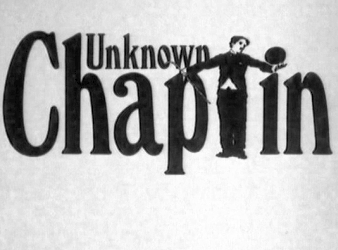
The Unknown Chaplin

A three-part documentary based on unseen footage from Charlie Chaplin. Chaplin ordered all of his outtakes burned but some did survive. This gives us a glimpse of how he constructed a story. He relied on inspiration and rarely had anything planned out in advance and that lead to classic scenes.

He would rearrange sets and actors and if a good mistake happened he would act on it and stretch it out. This was a good way to waste thousands of dollars worth of film but it also made him a comedy genius. Chaplin said he would build sets without an idea in his head but would be inspired.

Below is an outtake he never used in his feature “City Lights” which It would have been interesting if he would have kept it in. He takes the simplest prop…a piece of wood and works a scene around it in a grate.

The documentary was in three parts.

My Happiest Years – This part is mostly on his early Mutual shorts years in 1916-1917

The Great Director – Actresses and Actors talk about working on Chaplin’s films.

Hidden Treasures – A look at a variety of informal, private or salvaged pieces of film by or relating to Chaplin, including home movie footage, visitors to his studios, and several sequences that were edited out of his final films.

Like the Buster Keaton biography A Hard Act To Follow this was produced by Kevin Brownlow and David Gill. It’s worth chasing these down or click on this link in youtube. 


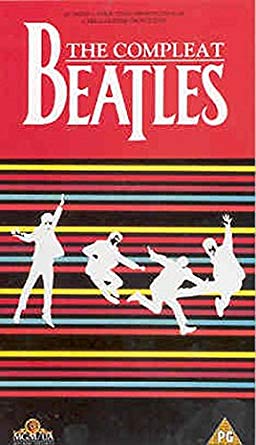
The “Compleat” Beatles 1982

This is what Beatle fans had until the Anthology came out in 1995 and turned a new generation onto the Beatles. I wore out the recorded VHS copy my cousin gave me. It is a two hour documentary of the Beatles. It was narrated by actor Malcolm McDowell (Clockwork Orange) and was well done. I remember watching this and “The Kids Are Alright” in the 80s. It was nice seeing the footage that was not as available as today.

I do remember some small frustrating parts of it. I think it was  “Hey Jude” about to begin (David Frost Show) and whoever cut the film placed a George Martin voice over during some of the performance. Remember this was a time when you couldn’t just go on youtube and see performances. Overall it was very well made. I still have a copy of it somewhere. Paul McCartney bought out the negative rights to the film in the 1990s to clear the way for Anthology and below is that story from Wikipedia.

The Compleat Beatles was initially released as a PBS documentary in the United States, and then on VHS, Betamax, CED and Laserdisc that same year on the MGM/UA Home Video label. The 1982 Laserdisc was released in both Analogue and Stereo versions, as well as being released in Japan and England (in PAL format) in 1983.[3]

The film did very well, and in 1984 Delilah Films and Metro-Goldwyn-Mayer arranged for it to be released theatrically in the U.S. by a small distributor named Teleculture. This contributed to its continuing to be a best seller on VHS. Some years later, when Paul McCartney was preparing The Beatles Anthology, he bought the negative and all the rights to the film from Delilah to get it off of the market and clear the way for his production. That, according to the film’s director Patrick Montgomery, is why it is not available on DVD or any newer formats and “probably never will be.”

If you find a copy somewhere buy it…it is worth it. Even if you already have Anthology. The Beatles Anthology is far superior but it does make a good companion piece.

This is from Rolling Stone magazine. It went over the other documentaries of the band. They make a good case for The Compleat Beatles. The link to the page is:

Again nothing has compared to the Anthology but The Compleat Beatles was very well done.

https://www.rollingstone.com/music/music-features/the-compleat-beatles-10-takeaways-from-great-overlooked-fab-four-doc-121193/

But one Beatles doc you might not know – and its cause has not been helped by not having an authorized DVD release yet – is 1982’s The Compleat Beatles, written by David Silver, directed by Patrick Montgomery, and narrated by Malcolm McDowell, chief droog from Stanley Kubrick’s A Clockwork Orange. Clocking in at two hours – and titled in the spirit of The Compleat Angler, England’s definitive book on fishing, from 1653 – The Compleat Beatles tells the band’s entire story, from pre-fame days, with checkpoints at each album, right up through the breakup. It’s brimming with keen musical analysis, and a coterie of voices you normally don’t get with a Beatles documentary.

For a long time, in the VHS era, it was a staple of high-school music teachers, starting 35 years ago in the summer and fall of ’82. If you were lucky enough to have had the TV set wheeled in by a Beatles-mad instructor, you know this is a special film.

Here are 10 reasons to check out this overlooked masterwork of the Beatles’ cinematic canon.

1. Writer David Silver had a pitch-perfect understanding of the Beatles’ career arc – and importance in their time and beyond.
“Poets of a generation, heroes of an era,” The Compleat Beatles begins, with Malcolm McDowell reciting Silver’s lines with Shakespearean gravity. This is to be a proper assessment of a band that was so much more than a rock & roll collective, something we’re made to feel immediately. “Like all poets and heroes, they reflected the spirt of their times.” The early sequences in the film present footage of a bygone Liverpool, which looks pretty grim, as if nothing mercurial could emerge from this seaport. When the opening chords of the Beatles’ cover of Chuck Berry’s “Rock and Roll Music” kick in, the film itself seems to pop with possibility, as if infused with Beatle-esque spirit. There was nothing the band couldn’t do, and now there will be nothing this movie can’t do.

2. Gerry Marsden was an ace witness to what the Beatles were doing.
The leader of Gerry and the Pacemakers, perpetual Liverpudlian also-rans, Gerry Marsden was always broad-spirited when it came to talking about the band that so outpaced his own, but you don’t get to hear him very much on film. Here he explains how the Liverpool acts were able to transform skiffle into something far grittier from what he terms the “ackky dacky” sounds of Lonnie Donegan. First he whips out a guitar to show how Donegan would play “Jambalaya,” before remarking “we’d get the record and we’d rock it up a little bit,” entering forth into a cool little demonstration. It’s a great primer for how the Northern bands were able to develop their own sound from what was a reductive, chipper genre in skiffle.

3. Early manager Allan Williams was quite the character.
Williams liked his tall tales, and the Beatles basically screwed the guy over after he hooked them up with Hamburg and they jumped ship for Brian Epstein, but Williams clearly loved reminiscing about his relationship with the band, which would continue on for a while still. (And resurface later when the legality of the Hamburg Star Club tapes was in dispute.) He describes a letter from Howie Casey of Derry and the Seniors begging him not to send “that bum group the Beatles” over to Hamburg, for fear that this would mess up everyone else’s good thing. Williams then goes on to (accurately) describe the style of then-drummer Pete Best as not very clever. Hardly a feeling-sparer, which is probably why the likes of John Lennon liked him – at least for a while.

4. George Harrison’s mom deserves serious props. The Compleat Beatles does an excellent job of synthesizing how the Beatles came together in their pre-fame years (complete with an image of John Lennon’s report card decrying his “insolence”), with a clear, concise chronology, and valuable insight directed towards the subject of George Harrison and his mother. Most Beatles studies focus, in terms of maternal subjects, on Lennon and his mother, Julia, and Paul McCartney and his late mother, Mary, but Mrs. Harrison knew a thing or two about rocking out. “To his classmates, George Harrison was the boy whose father drove the bus they all rode to school,” McDowell states. “His mother sat up with him night after night as he taught himself how to play Buddy Holly songs,” with his inclusion in the Quarrymen assured because “his mother could tolerate their noisy rehearsals.” Way to go, Mrs. H.

5. Reeperbahn mainstay Horst Fascher was one badass MF.
The Compleat Beatlesmakes commendable use of the underrated Star Club material to soundtrack several scenes, and it’s a delight when self-professed Beatles protector Horst Fascher turns up on camera. He made sure that they didn’t get in too much distress on their first Reeperbahn forays, or, as he puts it in the film, “If you are in trouble with some girls who are prostitutes, and you don’t know the girls are prostitutes, and the pimps find out, you can get in a lot of trouble,” which made Horst the guy to seek out to cure your ills and keep your ass intact, given that he was a former boxer who had been booted from competition for killing a sailor in a street fight. Ah, Hamburg.

6. The Litherland Town Hall show from December 27th, 1960, was the watershed gig of the Beatles’ career.The film also features a number of segments with Bill Harry, a friend of the band who was instrumental in spreading the good word about them in Liverpool – even before they deserved it – with his Mersey Beatmagazine, which documented the comings and goings of life on the local beat scene. Harry gives the backstory for the gig that would change the Beatles’ career. “They came back from Hamburg still as an unknown band,” Harry remembers, but he promoted they hell out of them, “because they were close friends of mine.” This got a promoter to book them at Litherland Town Hall, shortly following Christmas in 1960. Allan Williams was there, too. “The moment the Beatles struck up and did their stomping, every kid froze, and then they ran to the stage and started screaming.” That would be the gist of a lot of what was to follow.

7. According to George Martin, “Yesterday” was the crucial pivot point for the band’s sonic development.
Martin is eloquent throughout The Compleat Beatles: erudite, dapper, utterly sure of himself, being interviewed in a recording studio by his console, with no Beatles intruding with misremembered bits of info, something that dogged the Anthology. It’s just Martin, holding a master class in what it was like from his end to work with these guys. “They always wanted to have new ideas and sounds coming through. I found that they were almost more inquisitive than I was. In fact, in the end, it kind of exhausted me. Sometimes they knew what they wanted to do, but more often than not, they didn’t,” coming across like Yoda both frustrated and blown away by the gifts of Luke Skywalker. Regarding “Yesterday”: “It isn’t really a Beatles song,” Martin remembers saying to McCartney, then goes through how he made his pitch for the Beatles to forsake their standard drum-bass-guitar attack, which would become, through various methods, the mode of the future.

8. The doc features the coolest, trippiest, most cost-effective visual evocation of “Tomorrow Never Knows” ever filmed.
McDowell’s narration intones that “Two of John’s songs ‘She Said She Said’ and ‘Tomorrow Never Knows’ were the results of his recent experiments with drugs” – fair enough – as a quick tour of Revolver begins, but what follows is brilliant: Using only the cover of the album, director Montgomery, through a series of sweeps, pans and fast dissolves, gives us something of a visual acid trip, as “Tomorrow Never Knows” blasts from the soundtrack. Once you see the effect, it’s hard to disgorge it from your mind each time going forward that you hear that mindblower of a track.

9. The band’s final world tour was pure terror, and no film better evokes it.With a collage of on-the-street interviews, footage from Beatles record burnings and people getting hurt at shows as frantic MCs plead for calm, The Compleat Beatlesprovides a strong sense of why touring had to stop for the band. As the footage unfurls, there’s a low droning figure in the soundtrack, sort of like the protracted hum of the final chord on the Sgt. Pepperalbum stretched out for several minutes. We also get a self-righteous cop in Minneapolis who goes on at some length about how much he hates the Beatles: “As far as Beatle music, I could care about it not one bit personally … one of their group, with the British accent, told us they would never come back to Minneapolis, and I told him that would be too soon for me.”

 10. In Martin’s view, the Beatles were fated to become huge. George Martin has a lot of key lines regarding his four upstarts and their career. At one point he states, “Without Brian Epstein, the Beatles wouldn’t have existed,” by which he means that success would not have come to them and they would not be the galvanic entity we all know. But Martin is in downright Socratic mode, though, when he ventures towards a larger explanation for that success. “I think that the great thing about the Beatles was that they were of their time, their timing was right. They didn’t choose it – someone chose it for them. But the timing was right, and they left their mark in history because of it.”

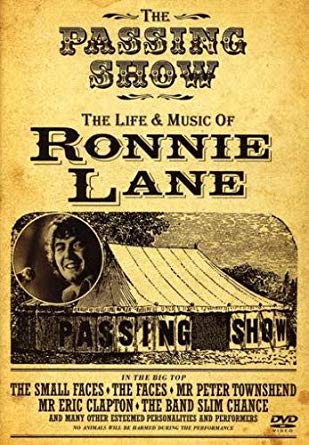
Ronnie Lane: The Passing Show

I didn’t know much about Ronnie Lane when I watched this documentary. It covers his childhood through his tragic death and the period after he left the Faces. He was loved by his peers and a talented musician and songwriter.

Ronnie’s mom had Multiple Sclerosis and Ronnie was in denial about himself until he was diagnosed with it. I didn’t know about the documentary until I ran across it on youtube.

I would recommend this to any music fan.

Ronnie Lane was a Britsh songwriter and bass player. He started with the Small Faces as the bass player and he and Steve Marriott wrote most of bands songs. The Small Faces never toured America so they never really broke out big. They did have 11 top twenty hits in the UK but only one in America with Itchycoo Park charting at #16.

Steve Mariott left the Small Faces in 1968 and Rod Stewart and Ronnie Wood joined Ronnie Lane, Kenney Jones, and Ian McLagan to start The Faces. The Faces released four albums between 1970-1973… First Step, Long Player, A Nod is as Good as a Wink…to a Blind Horse and Ooh La La. They were one of the top grossing touring bands.

After Rod Stewart’s solo career took off his interest in the band began to wane and in 1973 Ronnie Lane quit. After Ronnie left the Faces, they made no more studio albums.

Ronnie started his own folk-country band named “Slim Chance” and released a surprise hit single “Come On” in 1973 and it went to #11 in the UK. Ronnie had a unique idea of touring. His tour was called “The Passing Show” which toured the countryside with a circus tent and included a ringmaster and clowns.

In 1976 he owed a record company an album and he was in financial trouble. He asked Pete Townshend to help him record an album. The album was called “Rough Mix” and it was a very strong album with great reviews but the record company didn’t promote it and the sales were not great.

During the recording of “Rough Mix” Lane diagnosed with was Multiple Sclerosis. He still toured with Eric Clapton and others afterward and released an album in 1979 called “See Me.”

In 1983 Ronnie called some of his musician friends to do some charity concerts for the Research for Multiple Sclerosis. They were known as the ARMS (Action into Research for Multiple Sclerosis) Charity Concerts. Musicians such as Eric Clapton, Jeff Beck, Jimmy Page, Steve Winwood, Bill Wyman, Charlie Watts, and more came out to support Ronnie.

Ronnie Lane died of Pneumonia while in the final stages of Multiple Sclerosis in 1997

How Come

https://www.youtube.com/watch?v=p_PMoD0CSOI&ab_channel=RollingStones50yrs3

.


The Kids Are Alright 1979

Besides the Beatles Anthology, this is my favorite rockumentary for the lack of a better word. Jeff Stein the director did a great job on this film about The Who.

Jeff was a fan of the band and pestered them until they let him do this. He had no prior experience in filmmaking but this was the 1970s and he got the gig. His timing was eerily perfect. He caught the original band at the very end of their tenure with the great Keith Moon.

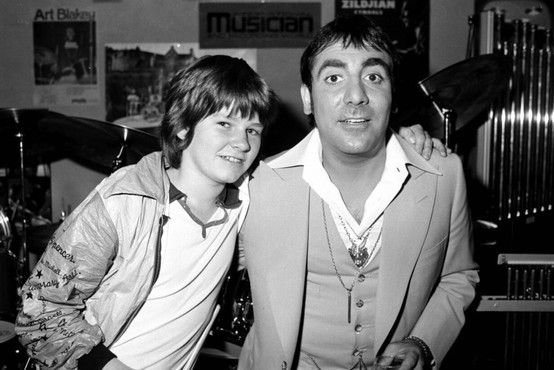
He searched high and low for clips of the band in earlier years. Stein keeps the appearance mostly in order. There is sadness in this. You see the band through the years from 1964 to 1978… you see all of them gradually age of course but Keith Moon ages faster than any of them. I’ve read where it hit him hard while watching the rough cut right before he died. His drinking and drug taking had taken its toll on him. He saw a young energetic kid that looked like Paul McCartney’s younger brother to a man who was 32 and looked like he was in his 40s.

This may be the first or one of the first video bios on a major rock group. Led Zeppelin had The Song Remains the Same but it focused on one concert in New York… The Beatles had Let It Be but those films didn’t show their history like The Kids Are Alright.

It this film you see a band that is fun… unlike Zeppelin the Who were more open to their audience and didn’t have a dark mystique hanging over them. They would crack jokes from the stage and Moon treated it like a High School talent show until he started to play…then he got serious.

You see film segments that were fun like the video of Happy Jack, the interview on the Russell Harty show, Keith with Ringo, and Keith and Pete sharing a joke that only they could understand. One of my favorite segments is The Who playing Barbara Ann with Keith singing and the band having a good time. They also played I Saw Her Standing There but it didn’t make the film…you can watch it in the outtakes. I can’t imagine Zeppelin doing Barbara Ann and goofing for the camera.

The Who did a couple of live shows for the film besides being interviewed. Stein mostly used old clips but he convinced the band to do a couple of concerts where he could get a definitive version of Won’t Get Fooled Again… which personally I think is the greatest rock song live you will ever hear. You see Keith’s last performance as he is looking pudgy, older, and slower but still pulls it off. Pete wasn’t too thrilled about doing the concerts for the film but it turned out good. They ended up only using a version Won’t Get Fooled Again and Baba O’Riley.

Keith died a few months before The Kids Are Alright debuted. The film showed The Who at it’s best. Kenney Jones from the Faces replaced him but it was never the same. You cannot replace Moon…he was the engine that drove the Who. The only drummer that has worked well with the Who since Keith has been Keith’s Godson Zak Starkey…Ringo’s son.

zak.jpg

I acquired a VHS copy of this in the mid-eighties. It wasn’t a great copy but my friends and I wore it out. One of them worked at a small cable station. The station was in a small county that usually aired farm reports and advertisements. Basically, it was a very small building in the middle of nowhere. All they would do there is broadcast videos.

We had the tape in hand and wanted to see it so we went there one afternoon. He popped it in the VHS player and played it. He had no idea but it was going out live. Near the end of the film, he took a phone call from his boss. I didn’t think anyone ever watched that station…but it turns out they did and they were not fans of The Who. He didn’t get fired but they took his key for the door. It was a big subject the next day at school as some teenagers loved it but their parents didn’t appreciate their videos on farming being interrupted by My Generation and Keith Moon in bondage.

This film covers the original Who and being such a Who fan I’m glad Jeff Stein was so persistent in doing this because many of the tapes he was able to borrow probably would have been erased and used again by the BBC as was their policy.