No music, movie, or TV Show today on this post. Let’s do Americana…not the music but the places. I love older buildings that represent the style of the era they were built. What’s more Americana than a milkshake, cheeseburger, and fries?
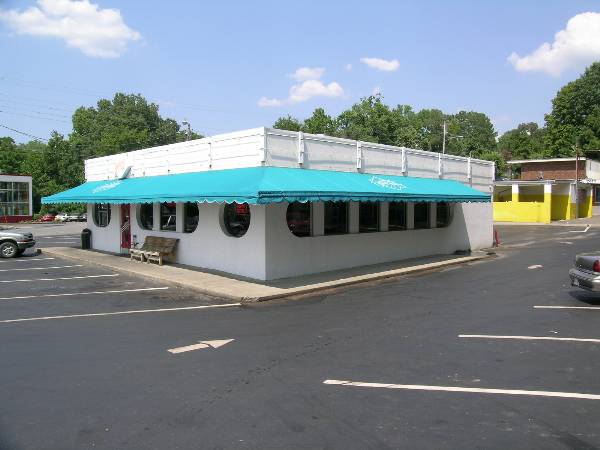
When I grew up we had a place named Strattons that was the dairy dip downtown in our small two red light town. It was the kind of place where you walked up to the window, ordered, waited, got your food, and then either sat on a picnic table or ate in your car. I remember doing that in the mid to late 70s with my sister. It was a very 70s-looking building but in the 1980s it was torn down and rebuilt. It became a 1950s-themed restaurant which was cool…but I missed the original dairy dip. Anyway, here is a picture of it before it right before it was torn down to make room for a Walgreens. Oh, how great progress is…NOT.
Below was the 1950s-themed Strattons before Walgreens in 2010.
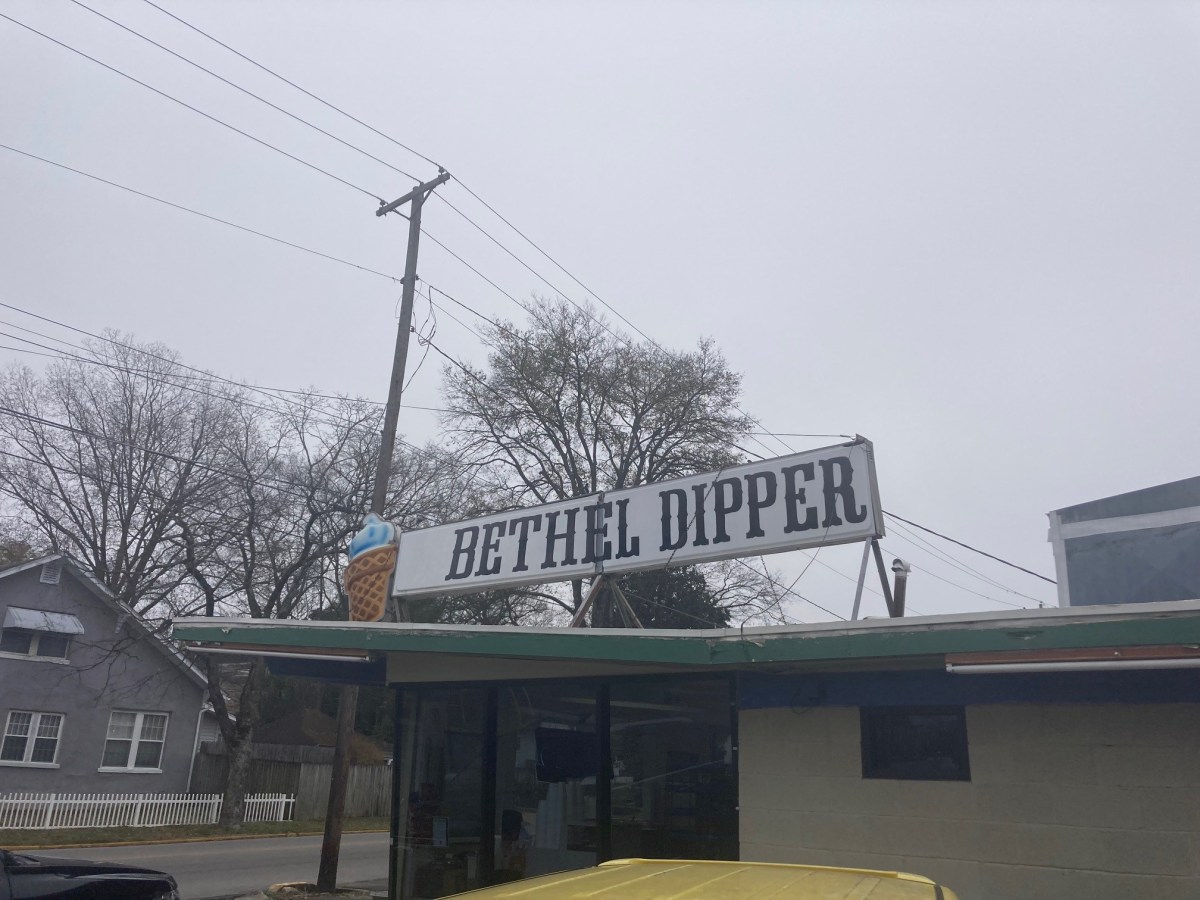
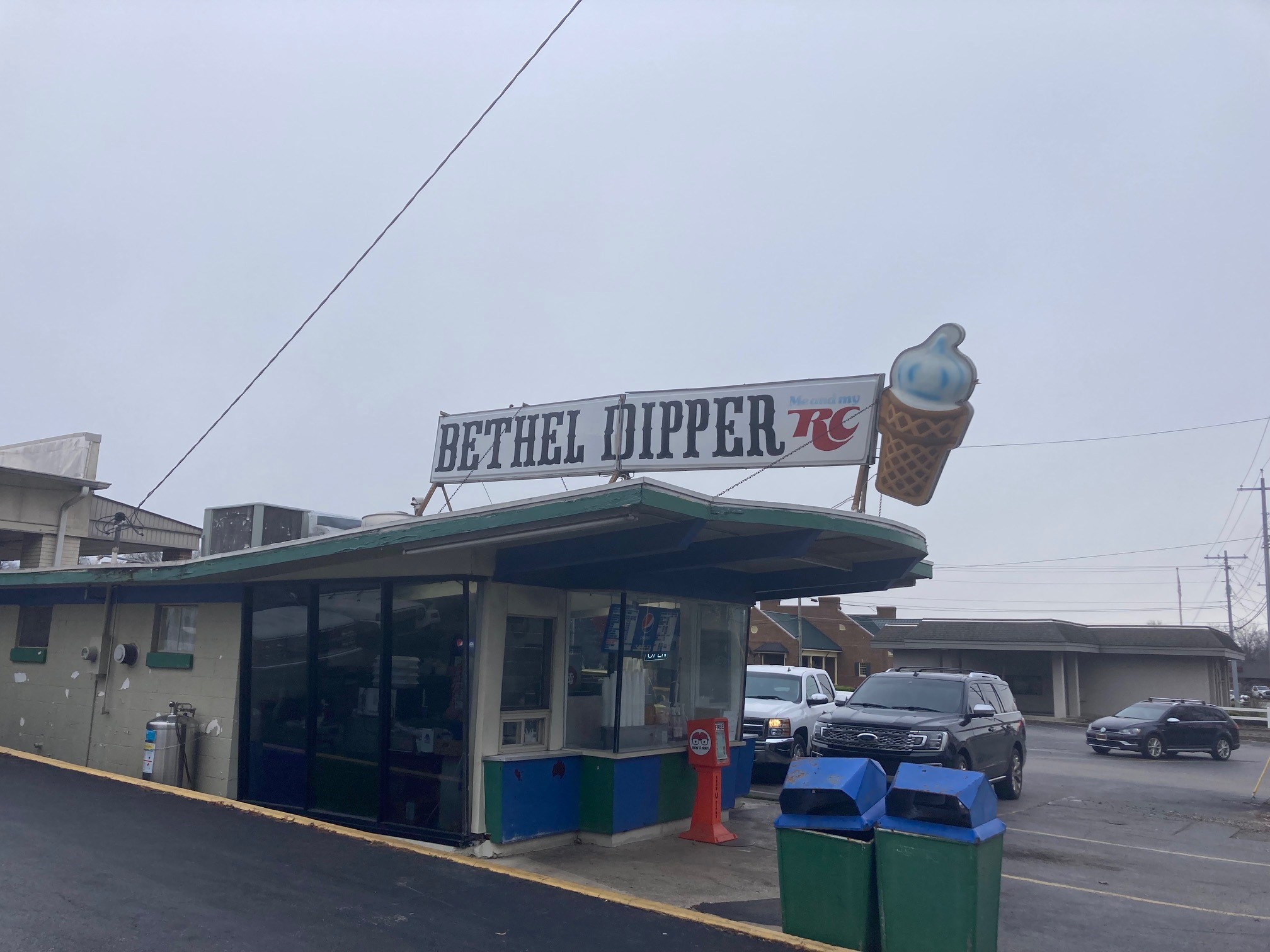
I was in Russellville Kentucky yesterday and I went to this establishment called The Bethel Dipper. I have been there a few times in the past and it looks really good at night with the carnival-type fluorescent lights. I like Russellville and want to move there one day. This place is kinda off the beaten path but not too much. It’s like walking into the past and I just wanted to share this.
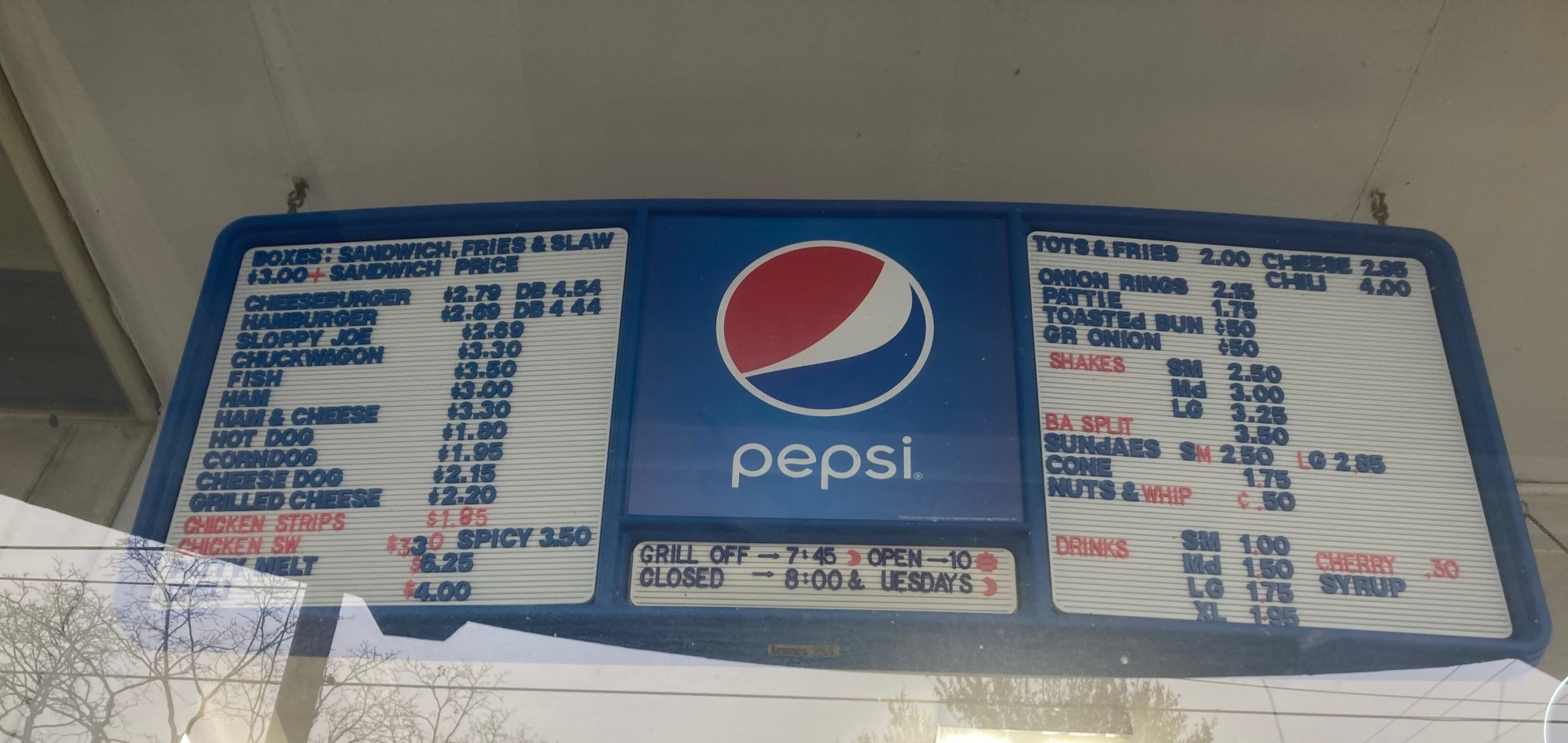
I have tried to find the history of it but my guess is it started in the 60s. When you see the picture below take your best guess. Not only is the building really cool looking, I love the roof jetting out, but you will not believe the prices. I have the menu below the building. I asked them how they were able to keep it so cheap and they told me that they only take cash. The debit card companies wanted so much for each card swiped. They also don’t have an expensive POS system to pay monthly on. They also keep their menu simple and very good.
Hello everyone and those of you who celebrate Thanksgiving… I hope you have a great one with your friends and family! Those of you who don’t…have a great day and weekend coming up. I know Thanksgiving is an American holiday mostly but I have talked to a few who celebrate it from other countries…like Bruce my friend from New Zealand.
Every Thanksgiving I listen to Alice’s Restaurant and this is the fifth year in a row that I’ve posted it on the 4th Thursday of November. Sorry if you are tired of it but it’s not Thanksgiving until Alice’s Restaurant is played…and the Last Waltz is also watched but that is a different story.
The movie that Arlo movie made called Alice’s Restaurant is fun to watch.
It’s not Thanksgiving without listening to this 1967 song. This song did not chart but he did have another version that did chart…it was called Alice’s Rock and Roll Restaurant that peaked at #97 in the Billboard 100.
Many radio stations play this on Thanksgiving. This is usually the only time they play it, since the song is over 18 minutes long.
There have been mixed reviews about the movie that was made…I’ve always found it enjoyable. It’s not going to be confused with Gone With The Wind but it’s a fun period movie.
In 1991, Arlo bought the church where this took place and set up “The Guthrie Center,” where he runs programs for kids who have been abused.
From Songfacts
Running 18 minutes and 34 seconds, this song is based on a true story that happened on Thanksgiving Day, 1965. Arlo was 18, and along with his friend Rick Robbins, drove to Stockbridge, Massachusetts to have Thanksgiving dinner with Alice and Ray Brock. Alice and Ray lived in a church – the former Trinity Church on Division Street in Stockbridge – and were used to inviting people into their home. Arlo and Rick had been traveling together, Arlo working his way up in folk singing and Rick tagging along. A number of people, Arlo and Rick included, were considered members of the family, so they were not guests in the usual sense.
When Ray woke up the next morning, he said to them, “Let’s clean up the church and get all this crap out of here, for God’s sake. This place is a mess,” and Rick said, “Sure.” Arlo and Rick swept up and loaded all the crap into a VW microbus and went out to the dump, which was closed. They started driving around until Arlo remembered a side road in Stockbridge up on Prospect Hill by the Indian Hill Music Camp which he attended one summer, so they drove up there and dumped the garbage.A little later, the phone rang, and it was Stockbridge police chief William J. Obanhein. “I found an envelope with the name Brock on it,” Chief Obanhein said. The truth came out, and soon the boys found themselves in Obanhein’s police car. They went up to Prospect Hill, and Obie took some pictures. On the back, he marked them, “PROSPECT HILL RUBBISH DUMPING FILE UNDER GUTHRIE AND ROBBINS 11/26/65.” He took the kids to jail.The kids went in, pleaded, “Guilty, Your Honor,” was fined $25 each and ordered to retrieve the rubbish. Then they all went back to the church and started to write “Alice’s Restaurant” together. “We were sitting around after dinner and wrote half the song,” Alice recalls, “and the other half, the draft part, Arlo wrote.”
Guthrie, the son of legendary folk singer Woody Guthrie, greatly exaggerated the part about getting arrested for comic effect. In the song, he is taken away in handcuffs and put in a cell with hardened criminals.
In the song, Guthrie avoids the draft and did not have to serve in Vietnam because of his littering arrest. In reality, he was eligible but wasn’t drafted because his number didn’t come up.
Guthrie performed this song for the first time on July 16, 1967, at the Newport Folk Festival.
This reflected the attitude of many young people in America at the time. It was considered an antiwar song, but unlike most protest songs, it used humor to speak out against authority.
After a while, Guthrie stopped playing this at concerts, claiming he forgot the words. As the song approached its 30th anniversary, he started playing it again.
Guthrie made a movie of the same name in 1969 which was based on the song.
Over the years, Guthrie added different words to the song. He recorded a new, longer version in 1995 at The Guthrie Center
Alice’s Restuarant
This song is called Alice’s Restaurant, and it’s about Alice, and the
Restaurant, but Alice’s Restaurant is not the name of the restaurant,
That’s just the name of the song, and that’s why I called the song Alice’s
Restaurant.
You can get anything you want at Alice’s Restaurant
You can get anything you want at Alice’s Restaurant
Walk right in it’s around the back
Just a half a mile from the railroad track
You can get anything you want at Alice’s Restaurant
Now it all started two Thanksgivings ago, was on – two years ago on
Thanksgiving, when my friend and I went up to visit Alice at the
Restaurant, but Alice doesn’t live in the restaurant, she lives in the
Church nearby the restaurant, in the bell-tower, with her husband Ray and
Fasha the dog. And livin’ in the bell tower like that, they got a lot of
Room downstairs where the pews used to be in. Havin’ all that room,
Seein’ as how they took out all the pews, they decided that they didn’t
Have to take out their garbage for a long time.
We got up there, we found all the garbage in there, and we decided it’d be
A friendly gesture for us to take the garbage down to the city dump. So
We took the half a ton of garbage, put it in the back of a red vw
Microbus, took shovels and rakes and implements of destruction and headed
On toward the city dump.
Well we got there and there was a big sign and a chain across across the
Dump saying, “Closed on Thanksgiving.” And we had never heard of a dump
Closed on Thanksgiving before, and with tears in our eyes we drove off
Into the sunset looking for another place to put the garbage.
We didn’t find one. Until we came to a side road, and off the side of the
Side road there was another fifteen foot cliff and at the bottom of the
Cliff there was another pile of garbage. And we decided that one big pile
Is better than two little piles, and rather than bring that one up we
Decided to throw our’s down.
That’s what we did, and drove back to the church, had a thanksgiving
Dinner that couldn’t be beat, went to sleep and didn’t get up until the
Next morning, when we got a phone call from officer Obie. He said, “Kid,
We found your name on an envelope at the bottom of a half a ton of
Garbage, and just wanted to know if you had any information about it. ” And
I said, “Yes, sir, Officer Obie, I cannot tell a lie, I put that envelope
Under that garbage. ”
After speaking to Obie for about forty-five minutes on the telephone we
Finally arrived at the truth of the matter and said that we had to go down
And pick up the garbage, and also had to go down and speak to him at the
Police officer’s station. So we got in the red vw microbus with the
Shovels and rakes and implements of destruction and headed on toward the
Police officer’s station.
Now friends, there was only one or two things that Obie coulda done at
The police station, and the first was he could have given us a medal for
Being so brave and honest on the telephone, which wasn’t very likely, and
We didn’t expect it, and the other thing was he could have bawled us out
And told us never to be seen driving garbage around the vicinity again,
Which is what we expected, but when we got to the police officer’s station
There was a third possibility that we hadn’t even counted upon, and we was
Both immediately arrested. Handcuffed. And I said “Obie, I don’t think I
Can pick up the garbage with these handcuffs on. ” He said, “Shut up, kid.
Get in the back of the patrol car. ”
And that’s what we did, sat in the back of the patrol car and drove to the
Quote Scene of the Crime unquote. I want tell you about the town of
Stockbridge, Massachusets, where this happened here, they got three stop
Signs, two police officers, and one police car, but when we got to the
Scene of the Crime there was five police officers and three police cars,
Being the biggest crime of the last fifty years, and everybody wanted to
Get in the newspaper story about it. And they was using up all kinds of
Cop equipment that they had hanging around the police officer’s station.
They was taking plaster tire tracks, foot prints, dog smelling prints, and
They took twenty seven eight-by-ten colour glossy photographs with circles
And arrows and a paragraph on the back of each one explaining what each
One was to be used as evidence against us. Took pictures of the approach,
The getaway, the northwest corner the southwest corner and that’s not to
Mention the aerial photography.
After the ordeal, we went back to the jail. Obie said he was going to put
Us in the cell. Said, “Kid, I’m going to put you in the cell, I want your
Wallet and your belt. ” And I said, “Obie, I can understand you wanting my
Wallet so I don’t have any money to spend in the cell, but what do you
Want my belt for? ” And he said, “Kid, we don’t want any hangings. ” I
Said, “Obie, did you think I was going to hang myself for littering?”
Obie said he was making sure, and friends Obie was, cause he took out the
Toilet seat so I couldn’t hit myself over the head and drown, and he took
Out the toilet paper so I couldn’t bend the bars roll out the – roll the
Toilet paper out the window, slide down the roll and have an escape. Obie
Was making sure, and it was about four or five hours later that Alice
(remember Alice? It’s a song about Alice), Alice came by and with a few
Nasty words to Obie on the side, bailed us out of jail, and we went back
To the church, had a another thanksgiving dinner that couldn’t be beat,
And didn’t get up until the next morning, when we all had to go to court.
We walked in, sat down, Obie came in with the twenty seven eight-by-ten
Colour glossy pictures with circles and arrows and a paragraph on the back
Of each one, sat down. Man came in said, “All rise.” We all stood up,
And Obie stood up with the twenty seven eight-by-ten colour glossy
Pictures, and the judge walked in sat down with a seeing eye dog, and he
Sat down, we sat down. Obie looked at the seeing eye dog, and then at the
Twenty seven eight-by-ten colour glossy pictures with circles and arrows
And a paragraph on the back of each one, and looked at the seeing eye dog.
And then at twenty seven eight-by-ten colour glossy pictures with circles
And arrows and a paragraph on the back of each one and began to cry,
’cause Obie came to the realization that it was a typical case of American
Blind justice, and there wasn’t nothing he could do about it, and the
Judge wasn’t going to look at the twenty seven eight-by-ten colour glossy
Pictures with the circles and arrows and a paragraph on the back of each
One explaining what each one was to be used as evidence against us. And
We was fined $50 and had to pick up the garbage in the snow, but that’s not
What I came to tell you about.
Came to talk about the draft.
They got a building down New York City, it’s called Whitehall Street,
Where you walk in, you get injected, inspected, detected, infected,
Neglected and selected. I went down to get my physical examination one
Day, and I walked in, I sat down, got good and drunk the night before, so
I looked and felt my best when I went in that morning. ‘Cause I wanted to
Look like the all-American kid from New York City, man I wanted, I wanted
To feel like the all-, I wanted to be the all American kid from New York,
And I walked in, sat down, I was hung down, brung down, hung up, and all
Kinds o’ mean nasty ugly things. And I waked in and sat down and they gave
Me a piece of paper, said, “Kid, see the phsychiatrist, room 604.”
And I went up there, I said, “Shrink, I want to kill. I mean, I wanna, I
Wanna kill. Kill. I wanna, I wanna see, I wanna see blood and gore and
Guts and veins in my teeth. Eat dead burnt bodies. I mean kill, Kill,
Kill, kill. ” And I started jumping up and down yelling, “kill, kill, ” and
He started jumping up and down with me and we was both jumping up and down
Yelling, “KILL, KILL.” And the Sargent came over, pinned a medal on me,
Sent me down the hall, said, “You’re our boy.”
Didn’t feel too good about it.
Proceeded on down the hall gettin more injections, inspections,
Detections, neglections and all kinds of stuff that they was doin’ to me
At the thing there, and I was there for two hours, three hours, four
Hours, I was there for a long time going through all kinds of mean nasty
Ugly things and I was just having a tough time there, and they was
Inspecting, injecting every single part of me, and they was leaving no
Part untouched. Proceeded through, and when I finally came to the see the
Last man, I walked in, walked in sat down after a whole big thing there,
And I walked up and said, “What do you want?” He said, “Kid, we only got
One question. Have you ever been arrested? ”
And I proceeded to tell him the story of the Alice’s Restaurant Massacre,
With full orchestration and five part harmony and stuff like that and all
The phenome… – and he stopped me right there and said, “Kid, did you ever
Go to court? ”
And I proceeded to tell him the story of the twenty seven eight-by-ten
Colour glossy pictures with the circles and arrows and the paragraph on
The back of each one, and he stopped me right there and said, “Kid, I want
You to go and sit down on that bench that says Group W…. Now kid!! ”
And I, I walked over to the, to the bench there, and there is, Group W’s
Where they put you if you may not be moral enough to join the army after
Committing your special crime, and there was all kinds of mean nasty ugly
Looking people on the bench there. Mother rapers. Father stabbers. Father
Rapers! Father rapers sitting right there on the bench next to me! And
They was mean and nasty and ugly and horrible crime-type guys sitting on the
Bench next to me. And the meanest, ugliest, nastiest one, the meanest
Father raper of them all, was coming over to me and he was mean ‘n’ ugly
‘n’ nasty ‘n’ horrible and all kind of things and he sat down next to me
And said, “Kid, whad’ya get?” I said, “I didn’t get nothing, I had to pay
$50 and pick up the garbage. ” He said, “What were you arrested for, kid? ”
And I said, “Littering.” And they all moved away from me on the bench
There, and the hairy eyeball and all kinds of mean nasty things, till I
Said, “And creating a nuisance.” And they all came back, shook my hand,
And we had a great time on the bench, talkin about crime, mother stabbing,
Father raping, all kinds of groovy things that we was talking about on the
Bench. And everything was fine, we was smoking cigarettes and all kinds of
Things, until the Sargeant came over, had some paper in his hand, held it
Up and said.
“Kids, this-piece-of-paper’s-got-47-words-37-sentences-58-words-we-wanna-
Know-details-of-the-crime-time-of-the-crime-and-any-other-kind-of-thing-
You-gotta-say-pertaining-to-and-about-the-crime-I-want-to-know-arresting-
Officer’s-name-and-any-other-kind-of-thing-you-gotta-say”, and talked for
Forty-five minutes and nobody understood a word that he said, but we had
Fun filling out the forms and playing with the pencils on the bench there,
And I filled out the massacre with the four part harmony and wrote it
Down there, just like it was, and everything was fine and I put down the
Pencil and I turned over the piece of paper, and there, there on the
Other side, in the middle of the other side, away from everything else on
The other side, in parentheses, capital letters, quotated, read the
Following words:
(“KID, HAVE YOU REHABILITATED YOURSELF?”)
I went over to the Sargent, said, “Sargeant, you got a lot a damn gall to
Ask me if I’ve rehabilitated myself, I mean, I mean, I mean that just, I’m
Sittin’ here on the bench, I mean I’m sitting here on the Group W bench
’cause you want to know if I’m moral enough join the army, burn women,
Kids, houses and villages after bein’ a litterbug. ” He looked at me and
Said, “Kid, we don’t like your kind, and we’re gonna send you fingerprints
Off to Washington. ”
And friends, somewhere in Washington enshrined in some little folder, is a
study in black and white of my fingerprints. And the only reason I’m
singing you this song now is cause you may know somebody in a similar
situation, or you may be in a similar situation, and if your in a
situation like that there’s only one thing you can do and that’s walk into
The shrink wherever you are, just walk in say “Shrink, You can get
Anything you want, at Alice’s restaurant. “. And walk out. You know, if
One person, just one person does it they may think he’s really sick and
They won’t take him. And if two people, two people do it, in harmony,
They may think they’re both faggots and they won’t take either of them.
And three people do it, three, can you imagine, three people walking in
Singin a bar of Alice’s Restaurant and walking out. They may think it’s an
Organization. And can you, can you imagine fifty people a day, I said
Fifty people a day walking in singing a bar of Alice’s Restaurant and
Walking out. And friends they may think it’s a movement.
And that’s what it is, the Alice’s Restaurant Anti-Massacre Movement, and
All you got to do to join is sing it the next time it comes around on the
Guitar.
With feeling. So we’ll wait for it to come around on the guitar, here and
Sing it when it does. Here it comes.
You can get anything you want, at Alice’s Restaurant
You can get anything you want, at Alice’s Restaurant
Walk right in it’s around the back
Just a half a mile from the railroad track
You can get anything you want, at Alice’s Restaurant
That was horrible. If you want to end war and stuff you got to sing loud.
I’ve been singing this song now for twenty-five minutes. I could sing it
For another twenty-five minutes. I’m not proud… Or tired.
So we’ll wait till it comes around again, and this time with four part
Harmony and feeling.
We’re just waitin’ for it to come around is what we’re doing.
All right now.
You can get anything you want, at Alice’s Restaurant
Excepting Alice
You can get anything you want, at Alice’s Restaurant
Walk right in it’s around the back
Just a half a mile from the railroad track
You can get anything you want, at Alice’s Restaurant
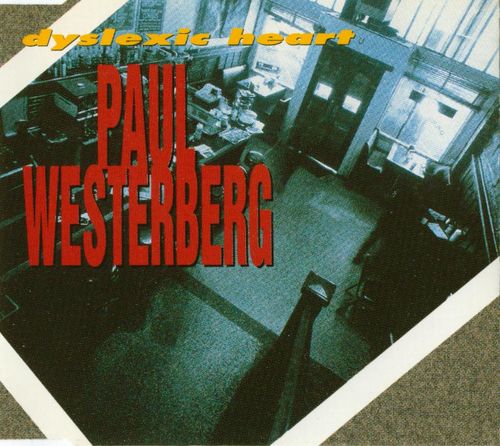
I know much more about The Replacements than Paul’s solo career but I’ve been listening and I’ve liked what I’ve heard. This song has catchy guitar riffs running through it and is accessible. It’s a good one to introduce him solo on here. During the 1980s Westerberg’s songwriting was second to none. I’m finding a lot of his solo work the same.
This song was used in the 1992 movie Singles and appears on the soundtrack along with tracks by Jimi Hendrix, Pearl Jam, Alice in Chains, Chris Cornell, The Smashing Pumpkins, Soundgarden, and more. Another Westerberg song, Waiting For Somebody, is also on it. The album peaked at #6 on the Billboard Album Charts. Dyslexic Heart peaked at #4 on the Billboard Alternative Charts. The album helped open up grunge to the mainstream.
Cameron Crowe (a huge Replacements fan) had asked Westerberg to contribute a couple of songs to the soundtrack. He made this song right after the Replacements disbanded. The following year, he would release his first solo album called 14 Songs.
The Replacements started out as a punk band. They eventually switched over to a more rock approach with rock songs and ballads. Westerberg remained a true punk in spirit with his irrelevant attitude.
The Singles soundtrack played a key role in popularizing grunge, and some even referred to Paul Westerberg as the “Godfather of Grunge.” Westerberg responded to this label with humor and humility:
“I don’t know… I guess I wore a plaid shirt, and yes, I played real loud, but… what is grunge? I don’t know. I don’t hear a lot of melody in what they’re doing on the West Coast. Nirvana, I suppose, has some hooks, I can see that, but a lot of it sounds to me like Boston with a hair up its ass. The Ramones probably have more to do with it than we did. Play Ramones records on 16 and you’ve got grunge!”
That response is one of the reasons I’m such a fan of him.
Here is a fuzzy video of him live in 1993.
Dyslexic Heart
You shoot me glances and they’re so hard to read
I misconstrue what you mean
Slip me a napkin and now that’s a start
Is this your name or a doctor’s eye chart?
I try and comprehend you but I got a dyslexic heart
I ain’t dying to offend you, I got a dyslexic heart
Thanks for the book, now my table is ready
Is this a library or bar?
Between the covers I thought you were ready
A half-angel, half-tart
I try and comprehend you but I got a dyslexic heart
I ain’t dying to offend you, I got a dyslexic heart
Do I read you correctly, you need me directly
Help me with this part
Do I date you? Do I hate you?
Do I got a dyslexic heart?
You keep swayin’, what are you sayin’?
Thinking ’bout stayin’?
Or are you just playing, making passes?
Well, my heart could use some glasses
Are you stayin’?
What are you sayin’?
Well are you swayin’?
Are you just playing, making passes?
Well, my heart could use some glasses
I try and comprehend you, I got a dyslexic heart
Do I read you correctly, I need you directly
Help me with this part
Do I love you? Do I hate you?
I got a dyslexic heart?
The reason I thought about this movie again was I was reading a Quentin Tarantino interview and he mentioned how much he liked it. It is in his favorite movie list. I hadn’t seen it since around 2012 or so. I rewatched it and enjoyed it a lot.
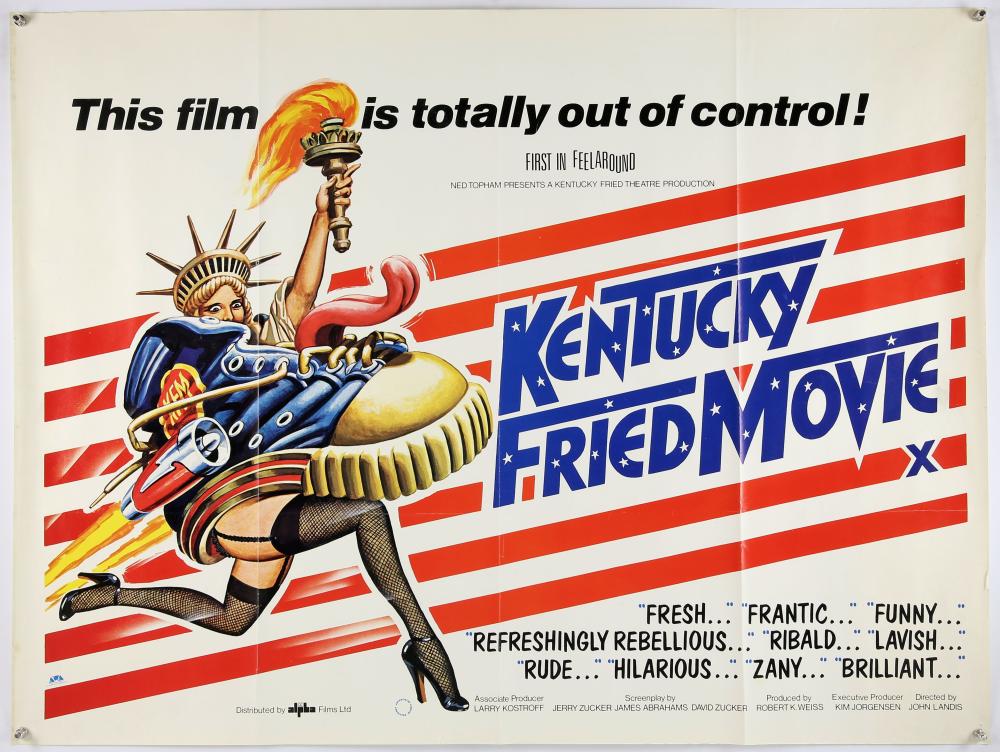
I read about this movie a lot and finally got to see it in the 1980s. It’s close to a rated R Saturday Night Live episode set in a movie with no audience. They have fake newscasts, commercials, movie trailers (Catholic High School Girls In Trouble), and almost everything else. It’s 1970s skit humor very close to SNL with the first cast. Some skits work really well and some skits don’t…just like most skit-based shows. I also would compare some of the humor with Airplane! and Naked Gun. This movie does include nudity and dark humor.
The film was directed by John Landis and written by David Zucker, Jim Abrahams, and Jerry Zucker (who later created The Naked Gun series). You will see familiar faces but not well-known except for a few cameos by Donald Sutherland, Bill Bixby, and George Lazenby. Tony Dow also makes a cameo playing his old character Wally Cleaver in the skit Courtroom.
The Zucker brothers (David and Jerry) and Jim Abrahams were the creative team behind the film. They had originally been performing a live comedy show called “The Kentucky Fried Theater” in Madison, Wisconsin, in the early 1970s. The success of their live sketches inspired them to translate that format into a film. This was going on across the nation along with the National Lampoon Magazine which inspired a different kind of skit comedy than the Carol Burnett Show.
I really hate the word “dated.” This goes back to a modern movie critic saying “Vanishing Point” was dated. Hmmm, a movie set and filmed in the 1970s with a 1970s theme and style…who would have thought that? When you watch a movie like this one…you have to put yourself in that mindset of when it was made. I understand that some comedy styles change but some things are funny…and some are not… regardless of when they were made. In other words, it’s not “politically correct.”
I have seen some “first reaction” videos of this movie from young people who were watching it for the first time. They were very positive which surprised me. Of course, they gave warnings because of the darkness but liked it.
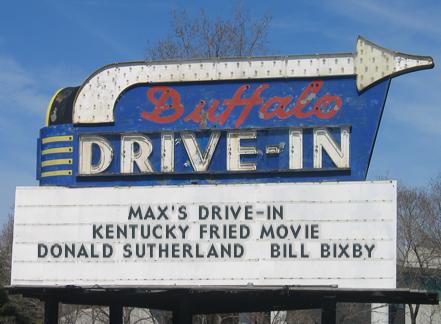
The budget was $600,000 and it made 7.1 million dollars at Drive-Ins across America. I won’t include a plot since it contains different skits.
When I grew up in a small Tennessee town, every afternoon at 5:30 pm…the CBS Evening News with Walter Cronkite would grace our living room. I didn’t understand half the news he was talking about but I liked him. He didn’t scowl, growl, throw a fit, cry, or visibly pull for one thing or another. He was a newscaster who was for the most part unbiased (yes they did exist).
Cronkite conveyed fairness and honesty with actual integrity. You felt like you could trust Uncle Walt with your news to have it fair and factual. He started off as a radio announcer and newspaper reporter in the Midwest. He joined United Press, where he became a war correspondent during World War II, covering battles in North Africa and Europe and witnessing historic moments such as the Normandy landings.
1962, Cronkite became the anchor of the CBS Evening News, which he led from a 15-minute to a 30-minute format in 1963. Cronkite took us through the Kennedy assassination, the Moon Landing, the Vietnam War, Watergate, Jimmy Carter, and finally ending as Ronald Reagan became our 40th president.
He did have a moment where he did open up about something in a commentary. After his trip to Vietnam in early 1968, anchorman Walter Cronkite broadcasted his coverage of the Tet Offensive. Cronkite concluded his report with a personal commentary, voicing his skepticism of official assertions of military progress.
“To say that we are closer to victory today is to believe, in the face of evidence, the optimists who have been wrong in the past. To suggest we are on the edge of defeat is to yield to unreasonable pessimism. To say that we are mired in stalemate seems the only realistic, yet unsatisfactory, conclusion. . . . But it is increasingly clear to this reporter that the only rational way out then will be to negotiate, not as victors, but as an honorable people who lived up to their pledge to defend democracy, and did the best they could.”
Lyndon Baines Johnson (The then President): “If I’ve lost Cronkite, I’ve lost Middle America.”
This wasn’t something he did regularly at all. He was human and I have no doubt that at times he might tilt one way or another on issues…but when I go back and watch some of his old newscasts…they stuck pretty much to the cold hard facts. That seems so hard to do today.
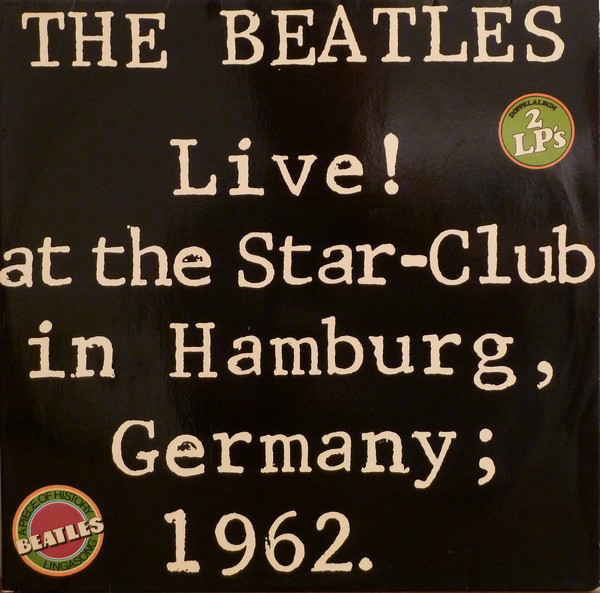
When I got this album I loved it but at first didn’t understand why the quality was so low but the music makes up for it. The recordings are from 1962 in their last engagement in Hamburg and they didn’t want to be there. I have mentioned this album with some posts but never really went over it.
These are the punk Beatles. Raw and relentless playing fast and furious. The Beatles before the world was paying attention to them. This was recorded on an old reel-to-reel recorder at the slowest speed to conserve tape. It was not meant to be an album or anything commercial. A friend named Ted “King Sized” Taylor the leader of a band called the Dominoes, put a microphone near the stage to record them. The quality is poor, to say the least.
Peter Jackson has mentioned that he would love to work on this album. He could improve the sound a lot using modern technology and I wish they would let him try it. It was released in 1977 and the record company sunk 100,000 dollars just to make the audio listenable. Ted Taylor did ask the Beatles before he recorded and they had no qualms with it. Later on, they tried to sue to block its release but obviously were unsuccessful. I’m glad they were…this is a fun and historic listen.
The Beatles were playing to an audience of sailors, prostitutes, drunks, and gangsters. They would rip through songs at such a speed that only 2 songs on this double album are over 3 minutes long. It was like the Beatles doing a future Ramones imitation. They were “enhanced” by prellies (Preludin) that sped them up quite a bit.
They are a great band here. You catch them with their guard down and acting completely natural. The Beatles were on their last club dates in Hamburg. They had already recorded Love Me Do and it was on the charts. They did not want to be back in Hamburg but they honored a previous agreement and were there. They didn’t mail the performances in but they were loose and relaxed.
It contains mostly cover songs with very few originals. The track listing is at the bottom of the post. This is close to what Brian Epstein heard when he first saw them, this is why they took over Liverpool and this is why they got signed.
Casual fans will not want this album but serious Beatles fans will love it. This is more than a low-fidelity album…it is history. John Lennon always said that the world didn’t hear the best of the Beatles live…I agree. By this time in Hamburg they were getting lazy as well. They didn’t want to be there because they were sitting on Please Please Me waiting for it to get released in the following year.
After they became THE Beatles…they could not hear themselves play because of the long constant jet taking off screaming. On this album, you hear them as they were before the screams. I was 11 when I bought this and I didn’t get the importance until a few years later.
This is out of the book Tune In… Without a doubt the best book out on the Beatles. It’s the first of three volumes.
Their playing is adept and hyper-energetic, and the microphone catches many important moments. The tape’s value has been downplayed on the basis that the Beatles are musically sloppy and perhaps even lazy, knowing they’ve one foot out of the door, but this is to ignore its virtues. The Beatles did hate being in Hamburg this last time … but the recording shows them still cutting the mustard on stage. They’re sloppy because, here, they can be, but they’re not lazy, and they’re not playing with extra care because they’re being recorded: this is an authentic eavesdrop on their club act, not something fizzed-up for the tape machine.
At least three sets were recorded, and because the Beatles rarely repeated themselves in Hamburg, there are only five duplicates among the thirty-seven songs. The repertoire is a real surprise. The only self-written pieces are “Ask Me Why” and “I Saw Her Standing There” (twice), so there’s no “Love Me Do,” “PS I Love You,” “Please Please Me,” “One After 909” or any of several other possibilities, and there are few of the songs from the spine of their all-conquering 1962 stage sets—no “Some Other Guy,” “Soldier of Love,” “Please Mr. Postman,” “Don’t Ever Change,” “A Shot of Rhythm and Blues,” “Devil in Her Heart,” “Baby It’s You,” “Will You Love Me Tomorrow,” “If You Gotta Make a Fool of Somebody,” “Hey! Baby, A Picture of You,” and so on. What’s here is an idiosyncratic selection of old rock numbers all played at breakneck speed—Prellies pace. The nights of half-hour “What’d I Say” marathons are past: everything is high velocity, only three numbers tipping into three minutes.
Side one
Introduction/”I Saw Her Standing There” (John Lennon, Paul McCartney) – 0:34/2:22
“Roll Over Beethoven” (Chuck Berry) – 2:15
“Hippy Hippy Shake” (Chan Romero) – 1:42
“Sweet Little Sixteen” (Berry) – 2:45
“Lend Me Your Comb” (Kay Twomey, Fred Wise, Ben Weisman) – 1:44
“Your Feet’s Too Big” (Ada Benson, Fred Fisher) – 2:18
Side two
“Twist and Shout” (Phil Medley, Bert Russell) – 2:03
“Mr. Moonlight” (Roy Lee Johnson) – 2:06
“A Taste of Honey” (Bobby Scott, Ric Marlow) – 1:45
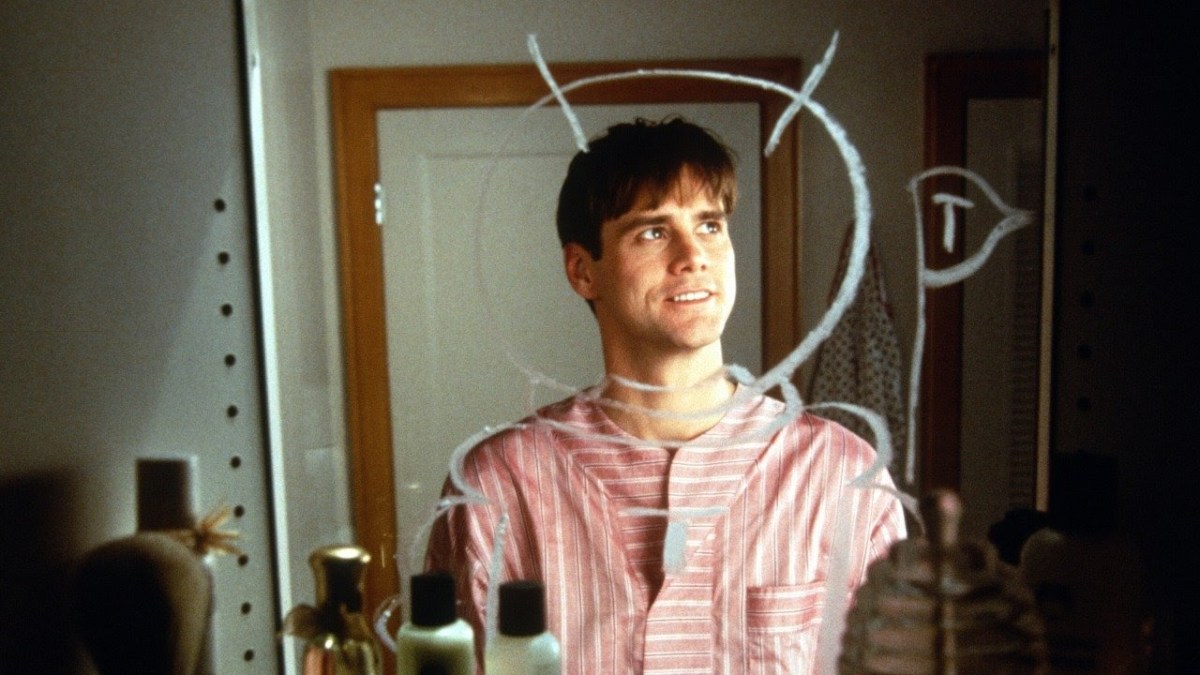
When I saw this 1998 movie I did with trepidation because of Jim Carrey. There is only so much of his comedy I can take at once but this was completely different. He did more of a serious turn in this movie and I must admit he was great. I’m not the world’s biggest Jim Carrey fan at all but this movie is brilliant.
Carey plays Truman Burbank, a man who unknowingly lives his entire life in a meticulously crafted, 24/7 reality TV show, with his every move broadcast to a global audience. I try to find themes in movies and this one explores themes of manipulation, personal freedom, commercialism, and the power of free will that wins out.
This movie was like looking into the future…a bleak near future. The Kardashians and others followed showed “real life” (heavy sarcasm) and delivered Warhol’s 15-minute fame theory in the worst possible way. To be honest…I’m honestly amazed that this movie’s plot hasn’t been tried.
Truman Burbank lives a seemingly perfect life in Seahaven, a fictional island town somewhere that is mixed between the 1950s and the 1990s. He was unaware that his entire existence was being broadcast to millions around the world. Every person he interacts with, including his wife, best friend, and co-workers, is an actor playing a role. As Truman begins to notice inconsistencies and strange events like a stage light falling from the “sky” and his wife advertising products mid-conversation…he starts to question his reality.
The film builds towards a powerful climax as Truman embarks on a journey of self-discovery and challenges the artificial world he has been confined to, sailing across the set’s ocean (which he is scared of) in search of freedom. Funny, he wanted to see the world but didn’t know the world was watching him being born, his first step, his first kiss, his marriage, and his escape.
This is a SPOILER but the most poignant thing about the movie to me is when he decides to go to the real world and the show ends. All of those people who bought Truman merchandise and tuned in through the years applauded and said hmm… what’s on another channel? They moved on quickly without a thought or care…and hopefully, Truman did the same.
I have so many feelings about this movie. After I watched it for the first time I took a second look in the mirror and the consistent things in my life and thought hmm what if? And you know what? There IS something called The Truman Syndrome… Psychologists later identified a phenomenon called “The Truman Show Delusion” where individuals believe their lives are being staged and broadcast.
Thanks to Dave from A Sound Day for publishing this post on October 25, 2024. It was part of his Turntable Talk: Our guest columnists are invited to go on a magical musical road trip and visit any musical location they want to – past or present – and see it in all its glory.
I would love to go to the Cavern. The Beatles would not have to be there for me to enjoy its dark wet walls. They have built a new one but it’s not the same location of the original. That is great for the tourists but what’s the point? I would love to go back to 1957 – 1972 to walk into the cavern. Just to feel the history inside of that place. The Beatles were not the only big name to play there as you will see. A small cellar club that would be known around the world…including a small town in Tennessee.
The original Cavern Club was founded on January 16, 1957, by Alan Sytner. Sytner was inspired by jazz clubs he had visited in Paris such as the Le Caveau de la Huchette. The Cavern Club was initially a jazz club, with early performances focusing on traditional jazz and skiffle, a blend of folk and jazz. No rock and roll or blue jeans were allowed in the club. Ringo Starr debuted there on July 31, 1957, playing drums in the Eddie Clayton Skiffle Group. John Lennon would appear there on August 7, 1957, with the Quarrymen Skiffle Group. That year Big Bill Broonzy played there along with jazz great Ronnie Scott. In 1959 Sonny Terry and Brownie McGhee played there as well.
In the early 1960s, rock ‘n’ roll became popular in Liverpool, with skiffle bands embracing electric guitars and rhythm. The Beatles made their first appearance on February 9, 1961. They performed there 292 times between 1961-1963. Brian Epstein ran a record store called NEMS and when a teen asked for My Bonnie by Tony Sheridan and The Beatles…Brian wanted to find it. He was told that The Beatles played at the Cavern so on November 9, 1961, Brian walked down the steps in the Cavern to discover The Beatles’ playing.
In less than a year he had them sign an EMI contract and Ringo replaced Pete Best in August of 1962. A year later on August 3, 1963, the Beatles played their last show there…they had outgrown the Cavern and had to start touring nationally. After The Beatles left, other bands came there to play in Liverpool. The Cavern became a hotspot for other British acts, including The Rolling Stones, The Who, The Kinks, Queen, The Yardbirds, Black Sabbath, Elton John, and The Hollies.
Paul McCartney didn’t forget the place. In 1968 he and Linda went back to visit the Cavern. The band Curiosity Shop was rehearsing, and Paul decided to join them by helping on the drums. Before getting on stage with the band Paul got behind the piano in the lounge and performed a solo performance of Hey Jude.
After struggling with financial issues, the original club was closed in 1973 due to the construction of a railway ventilation shaft. Much of the original Cavern was demolished, though some bricks were saved. A lot of the Cavern was filled in by rubble. In the early eighties architect David Backhouse said that the plans to excavate and re-open the Cavern Club in its original form would not be possible for structural reasons. Tests had revealed the arches of the old cellar had been too badly damaged during the demolition of the ground floor of the Cavern Club and the warehouses above.
There is a new Cavern as I said at the beginning and if I make it over there yes, I will see it but it would not be the same as seeing the real deal. That got me thinking…is that stage still there just covered with rubble from 1973? Dave, Obbverse, Randy, Keith, John, and Christian…grab a shovel and meet me there now!
This movie changed me when I was a teenager. It made me realize the power that a movie can have. Just a few movies have moved me like that, and this was one of them. Platoon and Full Metal Jacket were two others. I had seen violence before on the screen but this was realistic and brutal…especially when you are a very young guy (too young to watch this) viewing it for the first time. I had to rethink many things after seeing it.
I love the soundtrack, especially the music performed on a Moog synthesizer, which set the tone for the film. I’m not giving a synopsis of the movie…there are plenty of books and internet sites doing that… but a movie that will change you does its job and more. This film was directed by the great Stanley Kubrick and you know it’s his movie within 30 seconds of the intro.
There is a story about a frog and a scorpion, which I relate to this movie. It goes like this. A scorpion asks a frog to carry it across a river. The frog hesitates, afraid of being stung, but the scorpion argues that if it did so, they would both drown. Considering this, the frog agrees, but midway across the river, the scorpion does indeed sting the frog, dooming them both. When the frog asks the scorpion why, the scorpion replies that it is in its nature to do so.
This movie runs the gamut…cruelty, horror, the absurd, violence, pity, and justice. In my opinion, this movie shows that evil exists in all of us and what happens if we let it take over. Also, I think the movie shows you that no one can change someone’s nature no matter what drugs or treatment you may give them outside of a lobotomy. Treatment and drugs may slow them down and help but their nature is not going to change. They will at least have to keep fighting it every day.
In the end, A Clockwork Orange challenges viewers to consider human freedom and the ethics of “curing” people against their will. This movie has been analyzed to death and rightly so. It could have only been made in the period it was made. I can’t imagine this movie coming out now…although I wish more modern filmmakers would take chances.
The scene that stick with me are the record shop scene, the Billy Boy gang fight, Singing in the Rain, and of course the eye scene… The record shop scene was filmed in the Chelsea Drugstore… I would love to have a room like that place. Very 60’s-70s futuristic…immortalized in the Stones’s “You Can’t Always Get What You Want”…The building is now sadly a McDonalds…modern progress?
Malcolm McDowell as Alex was excellent in this movie along with his droogs Pete (Michael Tarn), Georgie (James Marcus), and Dim (Warren Clarke).
Plot from IMDB
Alex DeLarge is an “ultraviolent” youth in futuristic Britain. As with all luck, his eventually runs out and he’s arrested and convicted of murder. While in prison, Alex learns of an experimental program in which convicts are programmed to detest violence. If he goes through the program, his sentence will be reduced and he will be back on the streets sooner than expected. But Alex’s ordeals are far from over once he hits the streets of Britain.
The cool car is an Adams Probe 16 AB/4 that was referred to as a Durango 95 in the film has been restored…
Thank you Keith @ https://nostalgicitalian.com for inviting me to do this. Keith had bloggers over to his site to write about their favorite toys while growing up.
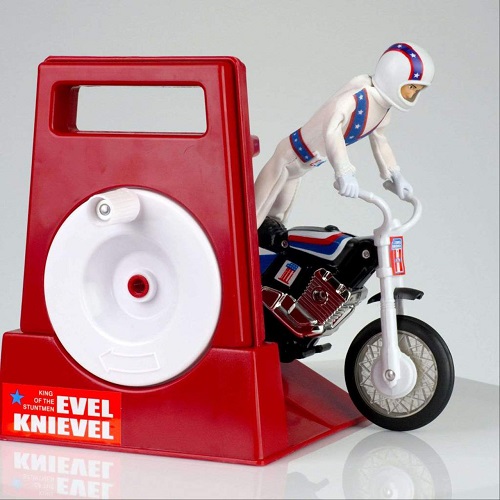
Whenever I see red, white, and blue not only do I think of the flag but I think of Evel Knievel. A hero to many in the 1970s… He is responsible for more broken arms, legs, bruises, bumps, and scrapes than anyone… Kids set up homemade ramps and then jumping them with their bicycles. I said kids…it wasn’t exclusive to boys because I remember some girls jumping also.
Riding down hills standing on your seat, popping wheelies, jumping ramps with your buddy stupidly laying in-between. We wanted to be Evel Knievel jumping over those cars or buses.
He was THE Daredevil… There are Daredevils around today but no one has reached the popularity that Knievel achieved. Not only did he jump and crash he looked cool jumping and crashing. He was like a cool Elvis in a jumpsuit jumping various objects.
I got the Evel Knievel Stunt Cycle and Figure when I was 8 years old on Christmas Eve. I have a picture that I can see halfway unwrapped. I immediately started to play with it that night. Over the next couple of months, I would jump everything in sight.
I would make it jump on our porch, our outside dog, and finally, I got a great idea. It took me hours to set it up but I finally got it right. I had ramps going over my mom’s car. I never could get it to go completely over but I got it really close when it came down on the trunk…who needed the Snake Canyon? My mom wasn’t a big fan of the Stunt Cycle…when Evel missed and hit the flowers…some flowers would be missing. When I revved it up in the house…more than one glass shattered making mom shut down my jumping activities.
I wouldn’t mind getting one now to tell you the truth!
Another…well Keith could disqualify this but it was a toy to me…it was called Pong. Basically, it was magical! It would connect to your television, and you could play table tennis all day long. It was the forerunner of modern games that we have today. It was simple black and white, but I can’t tell you how it felt playing the thing.
I got it around 1977 and we just didn’t have things like this. There is one thing I remember well though…mom made me play it at night or on rainy days. The days were made for kids to go out and play baseball, play in the creek, or ride their bicycles for miles. What I wouldn’t give to relive one of those days being 11 again.
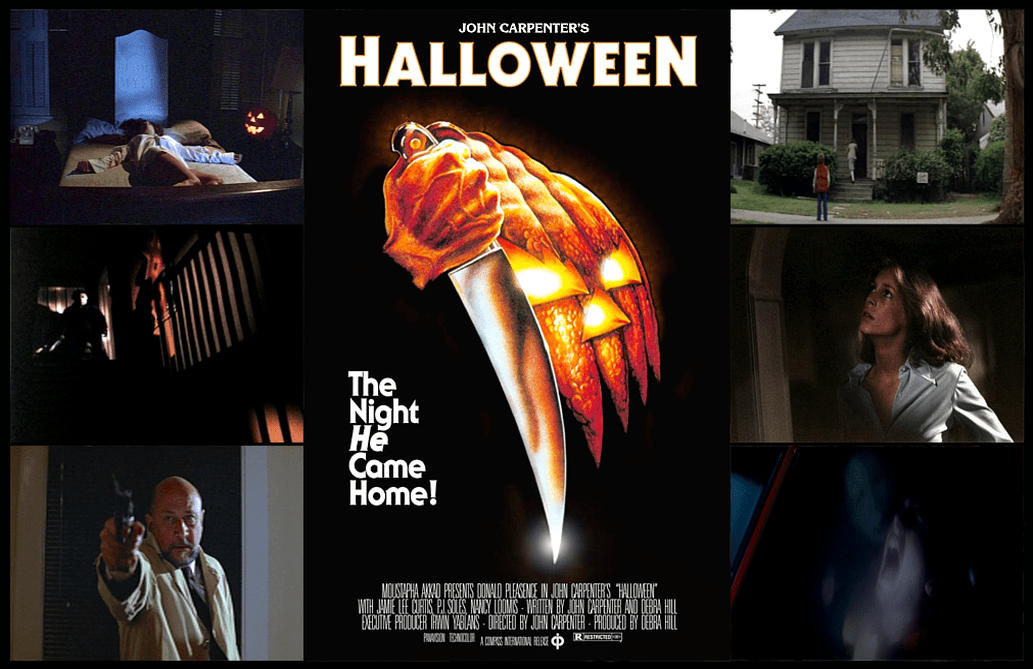
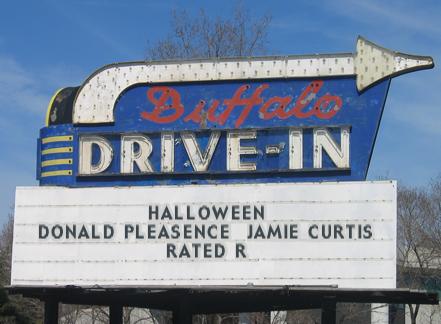
Que that spooky piano part now. This 1978 film is a horror classic that I still enjoy watching. While I’m at it…Happy Halloween Everyone! Sometimes, sequels can ruin a franchise and it gets silly. We sometimes forget how great the original is. I’m not a fan of the no-brain slasher movies that followed this.
From the very beginning, Halloween grabs your attention with its eerie, minimalist score—also composed by Carpenter himself. The haunting piano melody sets the tone for the entire film, creating a sense of dread even before it begins. It’s one of those soundtracks that sticks with you long after the credits roll. The two main leads…Jamie Lee Curtis and Donald Pleasence do an excellent job. I’ve liked Pleasence in anything he has done.
What’s surprising about Halloween after rewatching it, is how little blood and gore is actually shown. The movie relies more on atmosphere and suspense than graphic violence, which is why it remains such an effective horror film today. Carpenter’s use of shadows, lighting, and camera angles makes everything feel off-kilter. Halloween doesn’t go overboard with its horror… just enough to leave a sense of unease.
There are little things as well that this movie does well. Before it all starts Lauire (Jamie Lee Curtis) and Annie (Nancy Kyes) are smoking a joint in a car while Michael is following them. While this was going on…Don’t Fear The Reaper was playing on the radio faintly. Annie’s dad is the sheriff and his name is Brackett. Dr Loomis (Donald Pleasence) tells him that he and his town better be worried. Michael Myers escaped a facility and was headed toward the town where Myers lived when he killed his sister when he was a kid.
This is another movie that has been ingrained in pop culture. After this film, there was a part 2. John Carpenter did not want to make it but was sued to make it. He made sure to blow Myers up in the 2nd film and part 3 had nothing to do with Myers. Halloween II was written by Carpenter and Debra Lee…the two who wrote Halloween. He refused to direct it and he never liked it. “I had to come up with something. I think it was, perhaps, a late night fueled by alcoholic beverages, was that idea. A terrible, stupid idea! But that’s what we did.”
Rob Zombie remade the film in 2007 and a sequel with much more blood and gore. He traded mystic for the obvious, which didn’t work as well for me…but I’m glad he put a little more reason on why Michael did what he did.
Plot IMDB
The year is 1963, the night: of Halloween. Police are called to 43 Lampkin Ln. only to discover that 15-year-old Judith Myers has been stabbed to death by her 6-year-old brother, Michael. After being institutionalized for 15 years, Myers breaks out on the night before Halloween. No one knows, nor wants to find out, what will happen on October 31st, 1978, besides Myers’ psychiatrist, Dr. Loomis. He knows Michael is coming back to Haddonfield, but by the time the town realizes it, it’ll be too late for many people.
Quotes
Loomis: I met him, 15 years ago; I was told there was nothing left; no reason, no conscience, no understanding in even the most rudimentary sense of life or death, of good or evil, right or wrong. I met this… six-year-old child with this blank, pale, emotionless face, and… the blackest eyes – the Devil’s eyes. I spent eight years trying to reach him, and then another seven trying to keep him locked up, because I realized that what was living behind that boy’s eyes was purely and simply… evil.
_____________________________________
Brackett: I have a feeling that you’re way off on this.
Loomis: You have the wrong feeling.
Brackett: You’re not doing very much to prove me wrong!
Loomis: What more do you need?
Brackett: i going to take a lot more than fancy talk to keep me up all night crawling around these bushes.
Loomis: I-I-I watched him for fifteen years, sitting in a room, staring at a wall; not seeing the wall, looking past the wall; looking at this night, inhumanly patient, waiting for some secret, silent alarm to trigger him off. Death has come to your little town, Sheriff. Now, you can either ignore it, or you can help me to stop it.
It doesn’t get much more Halloween than this song. Black Sabbath was a hard rock band that gets credited a lot for influencing heavy metal. That is perplexing to me…what is heavy metal and what is hard rock? When I think of heavy metal I think of some of the many heavy 80s bands with a huge processed sound on guitar. That probably isn’t what others think of though.
The song was inspired by a series of ominous and eerie experiences. According to bassist Geezer Butler, the concept for the song emerged from a frightening incident he had after reading an occult book given to him by Ozzy Osbourne. Butler claims that after leaving the book on a shelf, he saw a dark figure standing at the foot of his bed that disappeared suddenly. This experience led him to write the lyrics. The song is credited to Ozzy Osbourne, Tony Iommi, Geezer Butler, and Bill Ward.
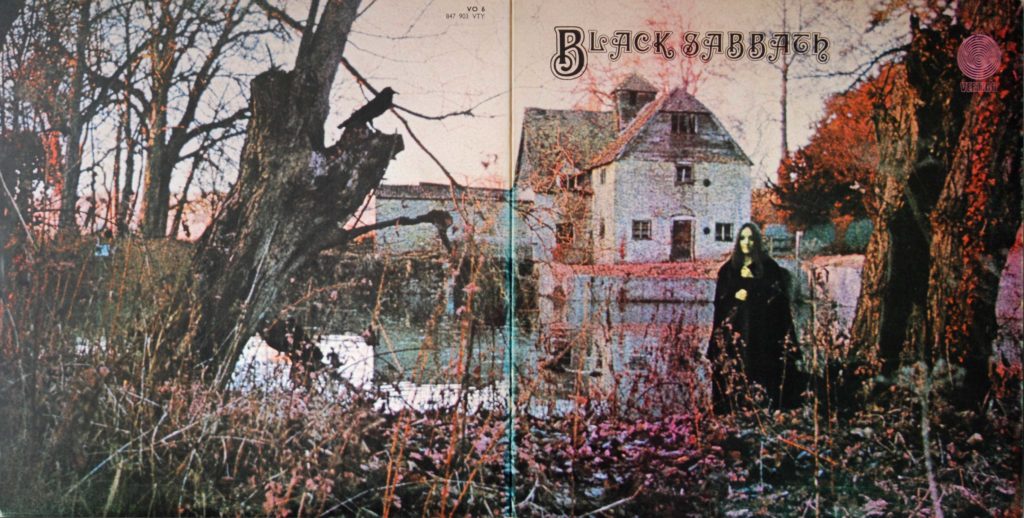
The album cover. It has to be the spookiest album cover ever. On one hand it looks real and on another it looks like a horror movie poster but better. At the center of the album cover is a mysterious, cloaked woman dressed in black. Her identity has been the subject of speculation for decades. Some have claimed she symbolizes a witch or an occult figure, which fits the band’s early associations with the dark arts. It’s one of rocks most iconic album covers.
Louisa Livingstone was a model that was hired for the cover. No one knew who she was until Rolling Stone tracked her down in 2020. Turns out Mrs. Livingstone is not much a fan of Black Sabbath after she finally listened to the album. It just wasn’t her type of music. She now records electronic music under the name of Indreba. Keith Macmillan is the photograhper who shot the album cover.
The album peaked at #23 on the Billboard 200, #29 in Canada, and #8 in the UK in 1970.
Keith Macmillan: “She was a fantastic model. She was quite petite, very, very cooperative. I wanted someone petite because it just gave the landscape a bit more grandeur. It made everything else look big. She wasn’t wearing any clothes under that cloak because we were doing things that were slightly more risqué, but we decided none of that worked. Any kind of sexuality took away from the more foreboding mood. But she was a terrific model. She had amazing courage and understanding of what I was trying to do.”
Louisa Livingstone: I had to get up at about four o’clock in the morning, or something as ridiculously early as that. It was absolutely freezing. I remember Keith rushing around with dry ice, throwing that into the pond nearby, and that didn’t seem to be working very well, so he was using a smoke machine. It was just, ‘Stand there and do that.’ I’m sure he said it was for Black Sabbath, but I don’t know if that meant anything much to me at the time.”
If you want to know about Black Sabbath’s album Black Sabbath VOL 4 cover… go to The Press Music Reviews.
Black Sabbath
What is this that stands before me?
Figure in black which points at me
Turn around quick, and start to run
Find out I’m the chosen one
Oh no
Big black shape with eyes of fire
Telling people their desire
Satan’s sitting there, he’s smiling
Watches those flames get higher and higher
Oh no, no, please God help me
Is it the end, my friend?
Satan’s coming ’round the bend
People running ’cause they’re scared
The people better go and beware
No, no, please God help me
Next to The Shining, this is my favorite King adaptation.
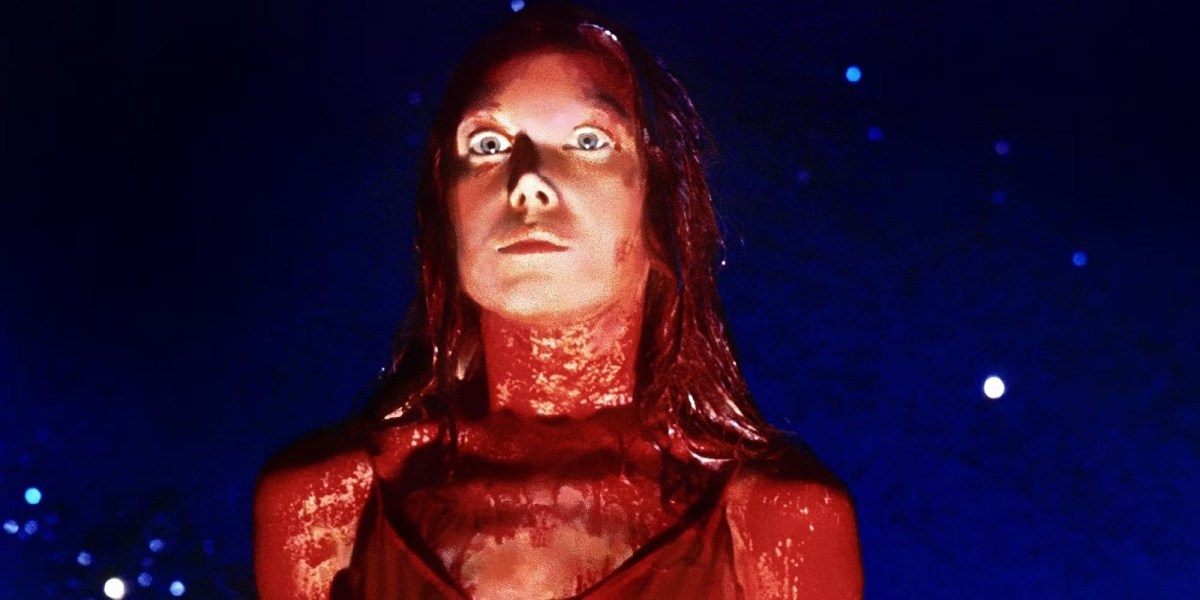
Carrie is a 1976 horror film directed by Brian De Palma, based on Stephen King’s 1974 debut novel of the same name. He used many techniques in this movie that put it over the top. Split screens, slow motion, and vivid color contrast just to name a few.
It is one of the most iconic films in the horror genre and focuses on subjects like bullying, supernatural powers, and revenge. It’s so easy to relate to because in high school we have all been through embarrassing things…getting pig blood dumped on you…probably not but we can relate with Carrie. We know the good people and we have known the bad people in this movie. We also know the popular cliques and the not-so-popular cliques. The girls that were out of reach and the ones that were.
The story revolves around Carrie White, a shy and socially awkward high school girl who is mercilessly bullied by her classmates. Raised by an overbearing, fanatically religious mother, Carrie leads a lonely and repressed life. After experiencing a traumatic event at school, she discovers that she has telekinetic powers. The situation escalates when her classmates cruelly prank her at the senior prom. In a moment of intense emotion, Carrie uses her powers to take a horrifying revenge on those who tormented her.
Sissy Spacek starred in this film and was perfect in the role. Piper Laurie portrayed her mother with an exaggerated, fanatically religious fervor. Laurie’s portrayal of a zealot was intentionally over-the-top, adding to the film’s tone. . The movie also launched the film careers of Nancy Allen and Amy Irving who both went on to star in many movies.
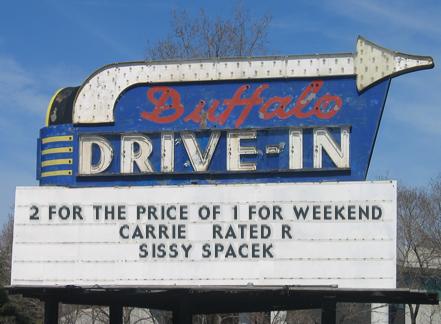
In 1976 my class went to see Charlotte’s Web at the theater. On the wall were movie posters of Carrie. Since then I’ve always associated them with each other. As a 9-year-old, seeing a teenager covered with blood with an evil look made me want to see it. I didn’t get to see it until almost a decade later. It was worth the wait!
Both Sissy Spacek and Piper Laurie received Academy Award nominations for their performances, a rarity for the horror genre.
This story has been remade in 3 different movies. This one in 1976, 2002, and a remake in 2013. I’ve watched all of them…trust me on this…this is the best version out there at least to me.
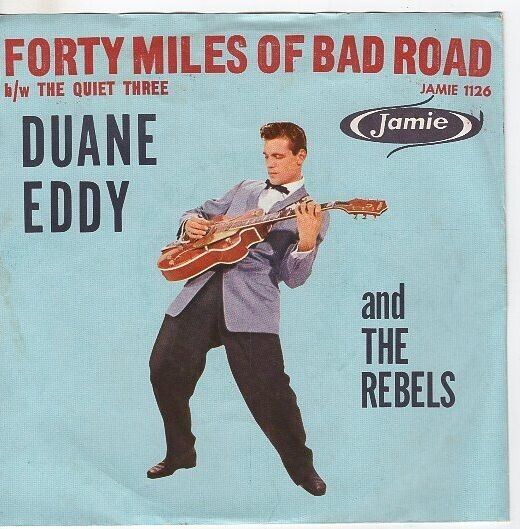
I made a playlist of instrumentals and took recommended ones from the 1950s. I think the heyday of instrumentals was the fifties and sixties. Here is one that caught my ear… Forty Miles Of Bad Road
I have a soft spot for that twangy reverb guitar. Eddy played a major role in shaping the surf rock genre and influenced many following guitarists. The song peaked at #11 in the UK, #4 in Canada, and #9 on the Billboard 100 in 1959. This song was written by Duane Eddy and Al Casey. The song was on the compilation album $1,000,000 Worth of Twang. Damn, that is a great name for an album! Not to mention the title of the song as well.
The phrase was apparently inspired by a comment overheard by Duane Eddy and his producer Lee Hazlewood while in line at a movie theater. They heard two guys talking about one of their blind dates. He said she looked like 40 miles of bad road. Of course, they looked at each other and said that has to be the title of our new song.
This (and many of his songs) was recorded in a Phoenix studio which had an echo chamber that was originally a large water tank. A single speaker was placed at one end of the tank, the microphone at the other, and the guitar was piped in there. The title was referenced in a REM song called Crush With Eyeliner…instead of 40 miles…”She’s Three Miles of Bad Road.”
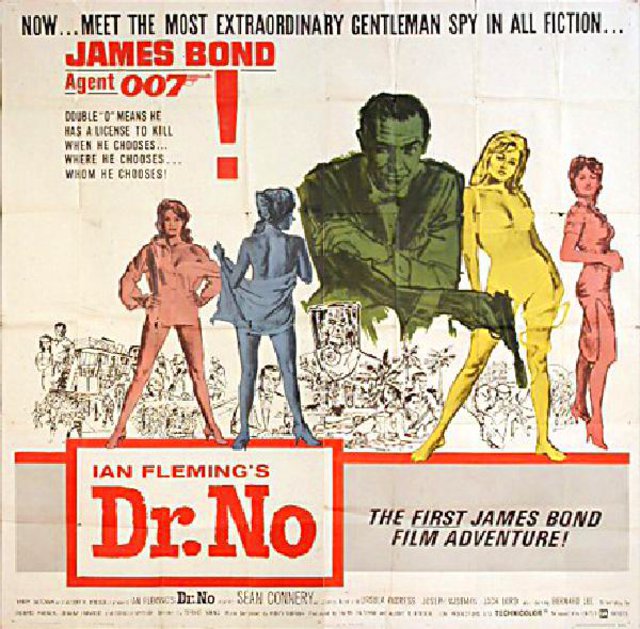
I have a different relationship with James Bond than some. I didn’t watch them as a kid but I started to watch them in my late 20s. I finally found out what all the fuss was about. I do remember seeing parts of Moonraker when it came out but it just didn’t pique my interest at 12. I recently read a review of From Russia With Love from princecranoir and would recommend everyone reading. That one may be my favorite James Bond film but this one holds a special place for me as well. My favorite always changes when I do a Bond marathon at home. I did a post a while back about my favorite Bond films…and Dr No was at the top…so it does change.
Dr. No was a commercial success, paving the way for numerous sequels and establishing the template for future Bond films. Sean Connery’s portrayal of Bond became iconic, and the film is credited with launching the spy genre in cinema. We will still be watching this in 2062.
Dr. No was the first Bond film I ever watched all the way through. Released in 1962, it introduced the world to James Bond, a suave, sophisticated British secret agent with a license to kill. Based on Ian Fleming’s novel of the same name, the film marked the first installment of one of the most successful and enduring franchises in cinematic history. Dr. No laid the foundation that would define Bond for decades—high-stakes espionage, glamorous locations, and, of course, iconic villains. There were really no gadgets in this one…that would come in the next film.
It was based on Ian Fleming’s 6th book about the Spy but the first one was adapted into a movie. Sean Connery is James Bond to me and there was no better way of kicking off a franchise than this. The film looks great in its vivid color and scenery. The bulk of the film was filmed in Jamaica in early 1962.
There is no better use of a Sunday afternoon than to spend it with James Bond and the absolutely stunning Ursula Andress. When she walked out of the water on Crab Key, it was close to everything magically turning to color in The Wizard of Oz… She was the first of many Bond girls to follow and you could not find a better first one. I was humming Under the Mango Tree for days after I saw it.
JFK, an avid Ian Fleming fan, even hosted a private screening of “Dr. No” at the White House. Legend has it he remarked, “I wish I had James Bond on my staff.” Who wouldn’t? If you haven’t seen this film, treat yourself and immerse yourself in Bond’s world; and for those who have, a rewatch is always a pleasure.
Plot (Spoilers)
The movie starts with Bond, played by Sean Connery, being sent to Jamaica to figure out why a fellow British agent went missing. Pretty mysterious, right?
When Bond gets to Jamaica, things get tense. He teams up with some local allies, like a fisherman named Quarrel and CIA agent Felix Leiter. They help him uncover clues, which eventually lead to a creepy, secretive island called Crab Key. This is where Dr. No, the villain, is hiding. He’s a super smart but evil scientist who works for a dangerous organization called SPECTRE. His plan? To mess with American space missions using some kind of high-tech radio beam. Bond realizes he needs to stop him before things get out of hand.
Bond’s adventure takes him into Dr. No’s hidden lair, where he also meets Honey Ryder (played by Ursula Andress), a woman who’s just out collecting shells but gets tangled in Bond’s mission. Together, they navigate the dangers of the island, avoiding Dr. No’s guards and traps.
In typical Bond fashion, he manages to outsmart Dr. No, destroy his base, and save the day. The movie ends with a big explosion as Bond and Honey escape. It’s classic spy action, with all the charm, gadgets, and danger you’d expect from a Bond film!
Quotes
Dr. No: The Americans are fools. I offered my services; they refused. So did the East. Now they can both pay for their mistake.
James Bond: World domination. The same old dream. Our asylums are full of people who think they’re Napoleon. Or God.
_______________________________________
[Honey describes how she killed the man who had hurt her]
Honey Ryder: I put a black widow spider underneath his mosquito net… a female, they’re the worst. It took him a whole week to die.
[Bond looks shocked]
Honey Ryder: Did I do wrong?
James Bond: Well, it wouldn’t do to make a habit of it.
_______________________________________
[explaining why she believes the legend about Crab Key’s fire-breathing dragon]
Honey Ryder: How well do you know about animals? Did you ever see amongoose dance? Or, a scorpion with sunstroke sting itself to death? Or, apraying mantis eat her husband after making love?











 PowerPop... An Eclectic Collection of Pop Culture