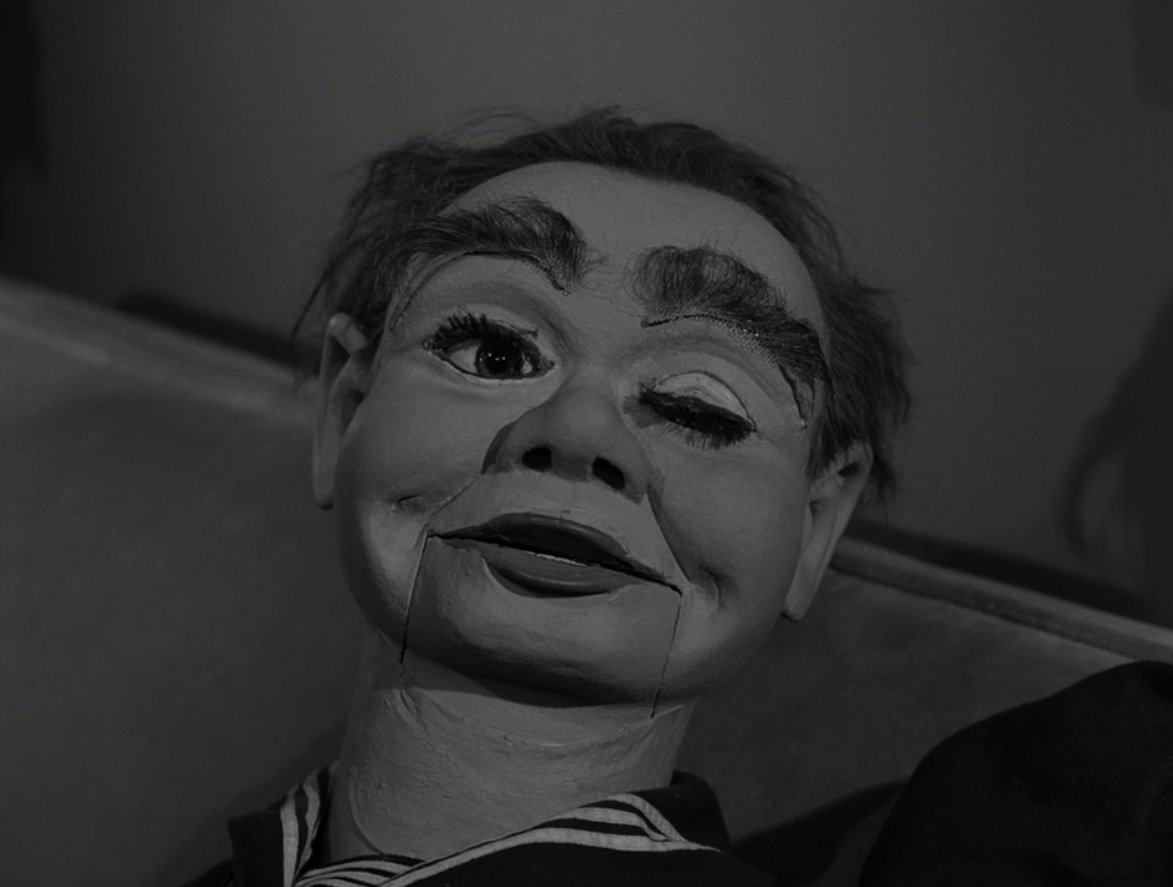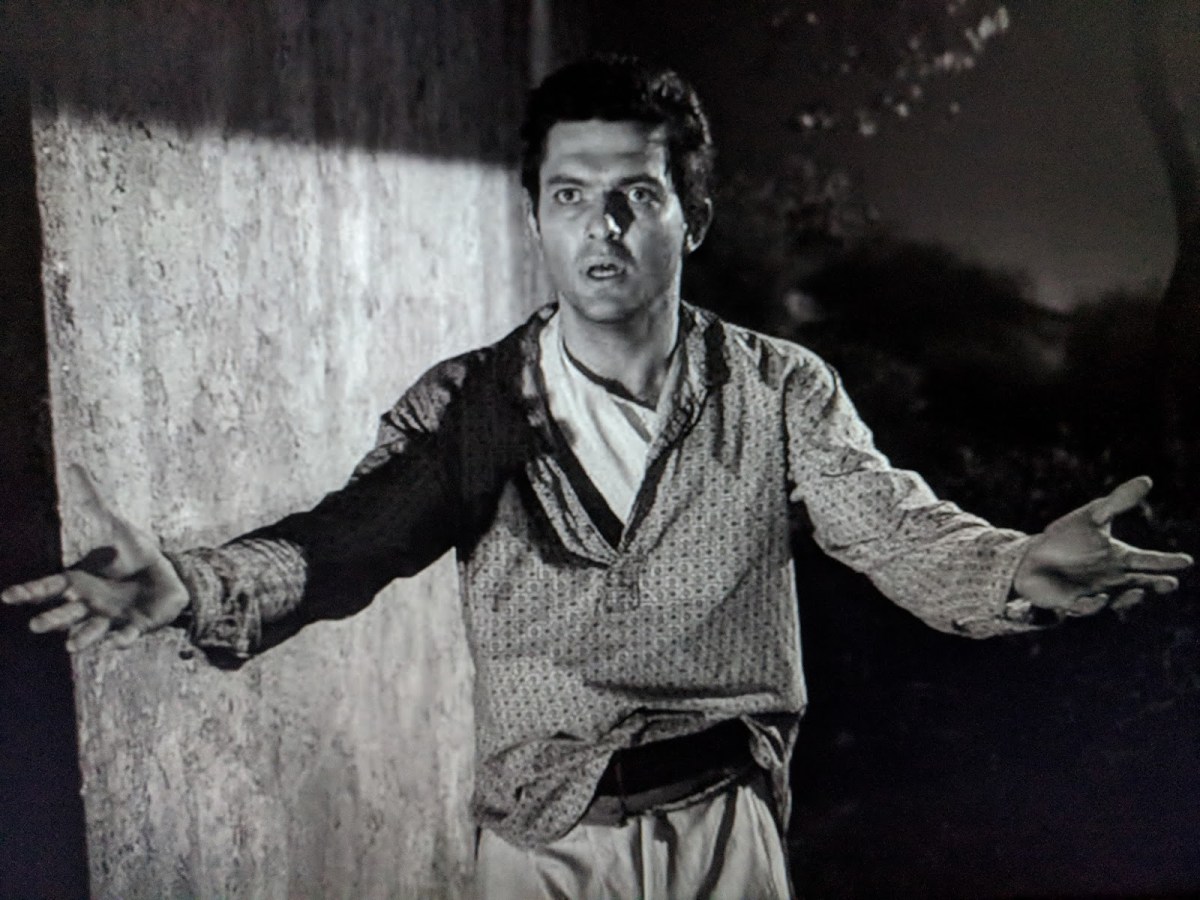
Twilight Zone – Mute

★★★★ January 31, 1963 Season 4 Episode 5

If you want to see where we are…HERE is a list of the episodes.

I really like this one. It’s not among the best but again a really good sci-fi episode. The show has some very good character actors like Frank Overton and Barbara Baxley.  A girl who  loses her parents in a fire manages to escape their burning house. A couple named Harry and Cora take her in but cannot uderstand why Ilse doesn’t talk. It turns out that Ilse used telepathy with her parents…her parents were molding her to use that skill. When Harry and Cora took her to school for the first time Ilse was horrified and could not commuicate like other kids.

This episode has depth and there are a lot of moving parts. What I saw in this episode is parents who treat their children as objects to be molded rather than people with needs and rights. Its a good episode and moves quite well. It does give a back story on why Ilse’s parents were teaching her telepathic abilities.

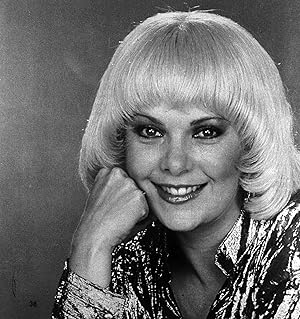
The biggest surprise to me was who played Ilse…it was an 80s sitcom actress…Ann Jillian.

Ann Jillian/"Mute" - Sitcoms Online Photo GalleriesAnn Jillian: Movies, TV, and Bio

From IMDB: The main street that Ilsa runs across is the same one used in The Twilight Zone: I Sing the Body Electric (1962). Located on the MGM backlot in Culver City, it was known as the “New England Street”, and is same set that was featured in the Andy Hardy movies, starring Mickey Rooney., Elvis Presley’s “Jailhouse Rock”, Frank Sinatra’s “Some Came Running” and the 1970s musical fantasy “Sgt. Pepper’s Lonely Heart’s Club Band”, starring The Bee Gees, which was the last major film shot there. Much of the MGM backlot had been demolished in 1974, and the remainder, including the New England Street, was pulled down in 1978, soon after filming wrapped on “Sgt Pepper’s”.

This show was written by Rod Serling and Richard Matheson

Rod Serling’s Opening Narration: 

What you’re witnessing is the curtain-raiser to a most extraordinary play; to wit, the signing of a pact, the commencement of a project. The play itself will be performed almost entirely offstage. The final scenes are to be enacted a decade hence and with a different cast. The main character of these final scenes is Ilse, the daughter of Professor and Mrs. Nielsen, age two. At the moment she lies sleeping in her crib, unaware of the singular drama in which she is to be involved. Ten years from this moment, Ilse Nielsen is to know the desolating terror of living simultaneously in the world and in the Twilight Zone.

Summary

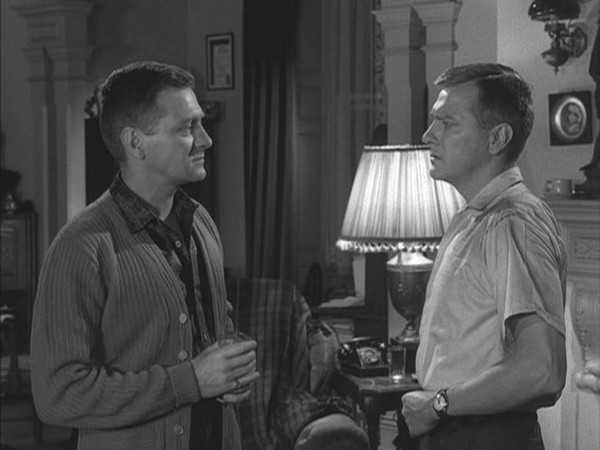
Sometime after World War II, a small group of people make a pact to develop their telepathic abilities as a means of communicating, foregoing any type of oral communication. One couple, the Nielsens, announce that they are migrating to a small town in the USA, German Corners, Pa. After a tragic fire at their house 10 years later, Sheriff Harry Wheeler and his wife Cora take in the only survivor, the now orphaned Ilsa Nielsen. The young girl has never learned to speak, always using telepathy to communicate with her parents. They don’t quite understand why Ilsa won’t speak to them and Cora sees her as a replacement for the daughter she lost in an accident some years ago. When they enroll Ilsa in school, her teacher is determined to make her act like all the other children.

THE ENTIRE EPISODE ON DAILY MOTION

Rod Serling’s Closing Narration:

It has been noted in a book of proven wisdom that perfect love casteth out fear. While it’s unlikely that this observation was meant to include that specific fear that follows the loss of extrasensory perception, the principle remains, as always, beautifully intact. Case in point, that of Ilse Nielsen, former resident of the Twilight Zone.

CAST

Rod Serling … Narrator / Self – Host (uncredited)
Barbara Baxley … Cora Wheeler
Frank Overton … Harry Wheeler
Irene Dailey … Miss Frank
Ann Jillian … Ilse (as Ann Jilliann)
Éva Szörényi … Frau Werner (as Eva Soreny)
Robert Boon … Holger Nielsen
Claudia Bryar … Frau Nielsen
Percy Helton … Tom Poulter
Oscar Beregi Jr. … Karl Werner (as Oscar Beregi)
Fred Aldrich … Pedestrian (uncredited)
William Challee … Rude man on porch (uncredited)
Bill Erwin Bill Erwin … Man in Flashback (uncredited)
Charles Morton … Bartender (uncredited)
Norbert Schiller … Committee member in prologue (uncredited)
Glen Walters … Pedestrian (uncredited
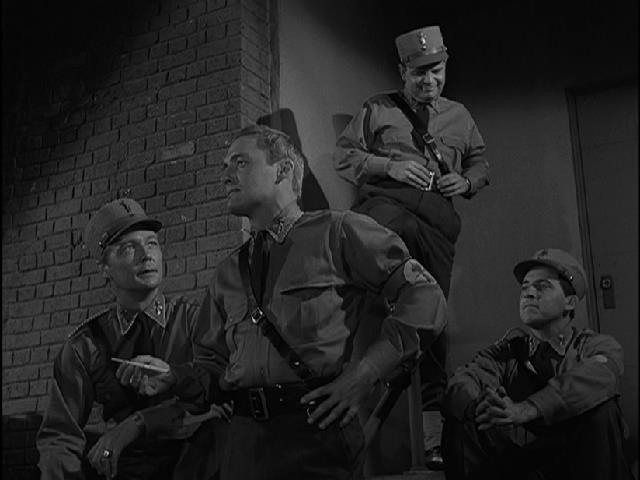
Twilight Zone – He’s Alive

★★★★★ January 24, 1963 Season 4 Episode 4

If you want to see where we are…HERE is a list of the episodes.

This episode is not subtle…there is no reading between the lines in this one. Serling lays it out on the table for everyone to see. Dennis Hopper plays Peter Vollmer who is a disenfranchised young man and a  xenophobic would be Nazi trying to gain a following. The episode was not the best of the Twilight Zone but it packs a punch and as Serling said…it probably was the most important episode of the Twilight Zone.

Peter Vollmer is struggling to gain followers for his hate causes. He then starts getting advice from a shadowy figure who we cannot see…until later on. The advice he gets is all too familiar unfortnately…it reeks of hatred, bigotry, and ignornace. How to manipulate the situations around him to gain followers for his movement.The mystery man leads Peter along and when he is uncovered it is shocking. In 1963 WWII was still fresh in people’s minds 

From IMDB….Rod Serling considered this episode, which he wrote and which examines the subject of Nazism (National Socialism), to be the most important of the series.

The episode’s director Stuart Rosenberg would later direct Dennis Hopper in the classic film Cool Hand Luke 

This show was written by Rod Serling

Rod Serling’s Opening Narration: 

Portrait of a bush-league Führer named Peter Vollmer, a sparse little man who feeds off his self-delusions and finds himself perpetually hungry for want of greatness in his diet. And like some goose-stepping predecessors he searches for something to explain his hunger, and to rationalize why a world passes him by without saluting. That something he looks for and finds is in a sewer. In his own twisted and distorted lexicon he calls it faith, strength, truth. But in just a moment Peter Vollmer will ply his trade on another kind of corner, a strange intersection in a shadowland called the Twilight Zone.

Summary

Peter Vollmer is the leader of a small neo-Nazi movement in a large American city. He’s having trouble getting his message across and seems to alienate people every time he opens his mouth. After a particularly bad rally, he hears a voice and sees a man standing in the shadows. He begins to advise Peter on what to say and how he can structure his message to make it more appealing to his particular audience. Peter has success but his mentor begins pushing him to extremes. There is a limit however and there is a voice of reason in the mob that seemed so willing to follow him

Rod Serling’s Closing Narration:

Where will he go next, this phantom from another time, this resurrected ghost of a previous nightmare – Chicago? Los Angeles? Miami, Florida? Vincennes, Indiana? Syracuse, New York? Anyplace, everyplace, where there’s hate, where there’s prejudice, where there’s bigotry. He’s alive. He’s alive so long as these evils exist. Remember that when he comes to your town. Remember it when you hear his voice speaking out through others. Remember it when you hear a name called, a minority attacked, any blind, unreasoning assault on a people or any human being. He’s alive because through these things we keep him alive.

CAST

Rod Serling … Narrator / Self – Host (uncredited)
Dennis Hopper … Peter Vollmer
Ludwig Donath … Ernst Ganz
Paul Mazursky … Frank
Howard Caine … Nick
Barnaby Hale … Stanley
Jay Adler … Gibbons
Wolfe Barzell … Proprietor
Bernard Fein … Heckler
Curt Conway … Adolf Hitler
Edward Astran … Audience Member (uncredited)
Sam Bagley … Audience Member (uncredited)
Chet Brandenburg … Audience Member (uncredited)
Paul Bryar … Cop (uncredited)
Bud Cokes … Audience Member (uncredited)
Joe Evans … Audience Member (uncredited)
Bobby Gilbert … Man With Cat (uncredited)
Buck Harrington … Audience Member (uncredited)
Ed Haskett … Audience Member (uncredited)
Robert McCord … Cop (uncredited)
William Meader … Brawling Townsman (uncredited)
Jim Michael … Guard (uncredited)
Sol Murgi … Audience Member (uncredited)
William H. O’Brien … Audience Member (uncredited)
Jose Portugal … Ice Cream Man (uncredited)
Paul Ravel … Audience Member (uncredited)
Bill Zuckert … Detective (uncredited)

Mike Nesmith (1942-2021) and the Monkees influence

I had something else planned to post but I found out that Mike Nesmith passed away. Nesmith was a big inspiration to me. There is no question…Nesmith would have made it without the Monkees…he was a talented writer, actor, producer, novelist and a very good Texas guitar player.  He wrote some great country rock songs, Elephant Parts, and even a hit for Linda Ronstadt’s band The Stone Poneys…Different Drum.

While watching the reruns of the Monkees I bugged my mom to buy me a green wool hat with buttons but you can’t buy them off the shelf. She got me a green stocking cap…it wasn’t the same but I was happy.  When the Monkees are mentioned some people cringe but they still have a place in my 5-year-old heart…plus how many bands can say that Jimi Hendrix opened up for them? Although that might be the worst pairing ever.

I’m not saying they deserve to be remembered with the best bands ever. Not at all but they do need to be recognized for their influence on a couple of generations. They influenced a lot of kids to form bands…mostly because of their weekly prime-time television show and ensuing hit singles. In the 80s they had a big comeback with a tour and massive airplay on MTV… I got to see them then…without Nesmith though.

They were a lot of fun. I thought WOW… I must be in a band one day. Little did I know that being in a band was not living in a cool place at the beach and having adventures at every turn…not to mention everyone getting along…it just doesn’t happen that way…but it is a special feeling being in a band with an us against them attitude and a great growing experience.

After I went through the Monkees faze I discovered the Beatles, The Who, Stones, Kinks…anything British but I still have a soft spot for some of the old Monkees songs.

The Monkees basically took A Hard Days Night movie humor and made a television show around a life of a mid-sixties rock band. Kids wanted to form bands after seeing them romp around the screen with girls…who wouldn’t want that gig? Michael Stipe from REM has said  he was influenced by them.

They were not allowed to play on their first couple of albums…only sing…The Monkees were put together by Bob Rafelson and Bert Schneider for Screen Gems with two real musicians in the band…Michael Nesmith and Peter Tork… Micky Dolenz (he did sing in cover bands before The Monkees) and Davy Jones could sing and act…. and Mickey quickly learned drums.

When news came out that they didn’t play on their albums they were roundly criticized in the 1960s. They fought Don Kershner who controlled what they sang…. and won… The funny thing is many sixties pop bands didn’t play on their records and the Monkees actually started to play their own instruments on their third album (Headquarters)  and writing some songs for every album afterward.

In the second season of their tv show they started to gain more control. Some of those last episodes are very pot influenced…especially the episode called “The Frodis Caper”… It is surreal and broke the fourth wall…the second season is worth a watch…all of them are fun but the 1st season is more formulaic.

I still like many songs by them…anything written by Michael Nesmith (famous also for Elephant Parts), Pleasant Valley Sunday, Randy Scouse Git, Steppin Stone and Saturday’s Child.

All in all, they ended up singing and playing on some of the best-known sixties pop-rock hits.

I’ll just add one more thing…he Monkees belong in the Rock and Roll Hall of Fame.

….

Twilight Zone – Valley Of The Shadow

★★★★★ January 17, 1963 Season 4 Episode 3

If you want to see where we are…HERE is a list of the episodes.

One of the thought-provoking episodes of the 4th season. I like the story and the pace for the hour long format is brisk. They cover a lot of ground in this episode. Ed Nelson as Philip Redfield plays this role with passion. He is traveling through back roads and runs through a small nothing little town called Peaceful Valley.

He notices something different and the townspeople can do things that are impossible…make a dog disappear, bring that same dog back from the dead, and invisible force fields. He finds out the history of the town from the leaders and wants them to share this with the world.

If you had the technology to end poverty, sickness, and even death in cases…do you use it? If you do, you risk someone getting the technology and using it for evil things. Are humans outside of this peaceful town ready for that much power? Dorn doesn’t think so…and I don’t either.

. Al the actors do a great job. David Opatoshu as the “town” leader Dorn plays it with compassion and common sense. You will know James Doohan in a minor role…still a few years away from Scotty in Star Trek.

Watch this one…it could have been a great sci-fi movie.

The title comes from the King James Version of the 23rd Psalm in the Hebrew Bible. “Yea, though I walk through the valley of the shadow of death, I will fear no evil: for thou art with me; thy rod and thy staff they comfort me.”

This show was written by Rod Serling and Charles Beaumont

Rod Serling’s Opening Narration: 

You’ve seen them. Little towns, tucked away far from the main roads. You’ve seen them, but have you thought about them? What do the people in these places do? Why do they stay? Philip Redfield never thought about them. If his dog hadn’t gone after that cat, he would have driven through Peaceful Valley and put it out of his mind forever. But he can’t do that now, because whether he knows it or not his friend’s shortcut has led him right into the capital of the Twilight Zone.

Summary

On the back roads, trying to find his way back home, reporter Philip Redfield and his dog, Rollie, stop in the small town of Peaceful Valley, for gas and food, and directions. When Rollie runs off in pursuit of a cat, a young girl points a device at the dog, and he disappears. Though her father brings Rollie back, Philip finds it all very strange. When Phillip tries to leave town, his car crashes into an invisible barrier, preventing his departure. Shaken up, the town’s mayor, Dorn, reveals their secret, and gives Philip the choice; join them or die

Rod Serling’s Closing Narration:

You’ve seen them. Little towns, tucked away far from the main roads. You’ve seen them, but have you thought about them? Have you wondered what the people do in such places, why they stay? Philip Redfield thinks about them now and he wonders, but only very late at night, when he’s between wakefulness and sleep in the Twilight Zone.

CAST

Rod Serling … Narrator / Self – Host (uncredited)
David Opatoshu … Dorn
Ed Nelson … Philip Redfield
Natalie Trundy … Ellen Marshall
Jacques Aubuchon … Connolly
Dabbs Greer … Evans
James Doohan … Father
Morgan Brittany … Girl (as Suzanne Cupito)
Henry Beckman … Townsman
Bart Burns Bart Burns … Townsman
King Calder … Townsman
Pat O’Hara Pat O’Hara … Townsman
Sandy Kenyon … The Attendant

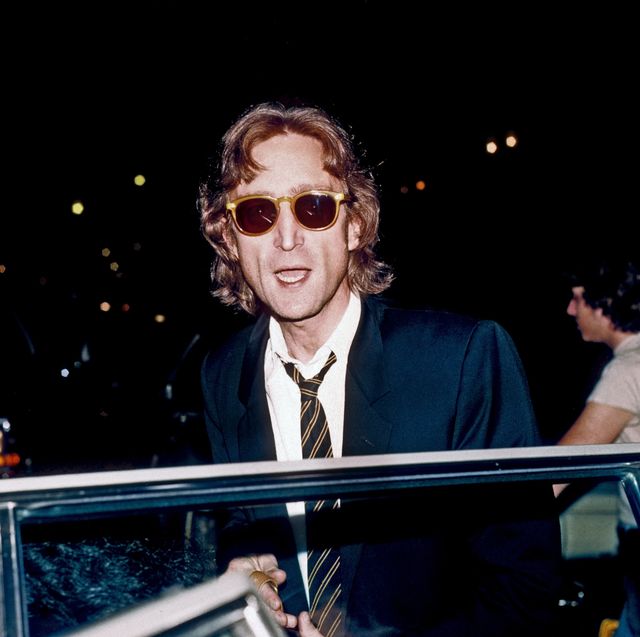
December 8, 1980…Lennon

Damn this date. Every Dec 8th I can’t help but think of where I was at when I heard.  Get Back only heightened the anger and confusion over what happened.

It’s odd to think the Beatles had only been broken up for 10 years when this happened…to a 13 year old at the time…that was a lifetime but in reality it’s nothing.

Since second grade, I’d been listening to the Beatles. While a lot of kids I knew listened and talked about modern music …I just couldn’t relate as much. By the time I was ten I had read every book about The Beatles I could get my hands on. In a small middle TN town…it wasn’t too many. I was after their generation but I knew the importance of what they did…plus just great music. The more I got into them the more I learned about the Who, Stones, and the Kinks. I wanted to get my hands on every book about the music of the 1960s. Just listening to the music wasn’t enough…I wanted to know the history.

I spent that Monday night playing albums in my room. Monday night I didn’t turn the radio on…I’m glad I didn’t…The next morning I got up to go to school and the CBS morning news was on. The sound was turned down but the news was showing Beatle video clips. I was wondering why they were showing them but didn’t think much of it.

Curious, I walked over to the television and turned it up and found out that John Lennon had been shot and killed. I was very angry and shocked. The bus ride to school was quiet, at school, it was quiet as well. Some teachers were affected because John was their generation. Some of my friends were shocked but some really didn’t get the significance at the time and some didn’t care. A few but not many kids acted almost gleeful which pissed me off…It was obvious their parents were talking through them.

I went out and bought the White Album, Abbey Road and Double Fantasy in late December of 1980…I can’t believe I didn’t have the two Beatle albums already…now whenever I hear any song from those albums they remind me of the winter of 80-81. I remember the call-in shows on the radio then…pre-internet… people calling to share their feelings for John or hatred for the killer.

The next few weeks I saw footage of the Beatles on specials that I had never seen before. Famous and non-famous people pouring their heart out over the grief. Planned tributes from bands and everyone asking the same question…why?

My young mind could not process why a person would want to do this to a musician. A politician yea…I could see that…not that it’s right but this? A musician? Martin Luther King, Bobby Kennedy, and JFK were before my time.  By the mid-1970s John had pretty much dropped out of sight…John and Yoko released Double Fantasy on November 17, 1980, and suddenly they were everywhere…Less than a month later John was murdered. The catchwords were Catcher in the Rye, Hawaii, handgun and insane. The next day we were duly informed on who killed John in the First, Middle, and Last name format they assign to murderers.

I didn’t want to know his name, his career, his wife’s name, his childhood…I just wanted to know why… he says now…”attention”

I noticed a change happened after that Monday night. John Lennon was instantly turned into a saint, something he would have said was preposterous. Paul suddenly became the square and the uncool one and George and Ringo turned into just mere sidemen. Death has a way of elevating you in life. After the Anthology came out in the 90s that started to change back a little.

I called my dad a few days after it happened and he said that people were more concerned that The Beatles would never play again than the fact a man, father, and husband was shot and killed. He was right and I was among those people until he said that. Dad was never a fan but he made his point.

Below is a video of James Taylor telling on how he met the killer a day before Lennon was murdered.

Twilight Zone – The Thirty-Five Fathom Grave

★★★1/2 January 10, 1963 Season 4 Episode 2

If you want to see where we are…HERE is a list of the episodes.

This is the second episode in the new hour long format. This story has some added padding…a direct consequence of the hour-long format of this episode.  That doesn’t mean it isn’t good. The story is creepy but they visited this theme before in the second season opener King Nine Will Not Return.

The cast is excellent. Mike Kellin plays Chief Bell  who is having survivors guilt that brings to mind PTSD. You find out later that it’s more than that. Simon Oakland is Captain Beecham and gives a very realistic performance as Oakland does in whatever he is in. The most famous actor in this one…at least to my generation is Bill Bixby. He only plays a supporting role and it’s interesting to see him as a younger actor.

Basically it’s a great story but too much padding but…very watchable.

This is from IMDB…it’s a piece of trivia that is very eerie: Mike Kellin portraying the main character, Chief Bell, died 26 August 1983, the ship used for exterior shots in the episode was decommissioned 11 August 1983. Simon Oakland, who portrayed the captain, died three days later on 29 August 1983.

Also this explains why this episode drags a bit: Season four of Twilight Zone is the only one of the five seasons that ran its episodes in hour long time slots rather then the conventional half-hour format. The Thirty-Fathom Grave was written by Rod Serling before the network and producers decided to try out the series in the new lengthier format. Since the episode had already been optioned for season four it was necessary for Rod Serling to re-write and expand the episode to fit the new hour slot. Therefore several new scenes had to be added or padded to fill up time. As a result, this episode received mostly negative feedback based on its slow pace and unnecessary dialogue.

This episode would have been so much better at the original 30 minutes.

This show was written by Rod Serling

Rod Serling’s Opening Narration: 

Incident one hundred miles off the coast of Guadalcanal. Time: the present. The United States naval destroyer on what has been a most uneventful cruise. In a moment, they’re going to send a man down thirty fathoms and check on a noise maker – someone or something tapping on metal. You may or may not read the results in a naval report, because Captain Beecham and his crew have just set a course that will lead this ship and everyone on it into the Twilight Zone.

Summary

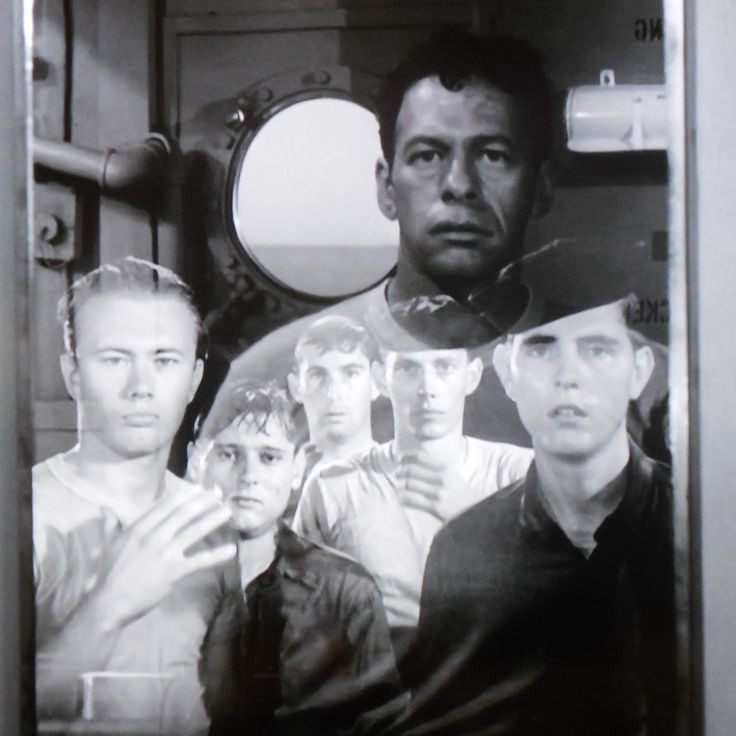
As a U.S. Navy destroyer cruises near Guadalcanal in the South Pacific, its sonar detects muted but constant hammering on metal undersea. The eerie sounds emanate from a submarine on the ocean floor, apparently there since World War II. The ship’s chief boatswain’s mate becomes very nervous, having served aboard that sub – and he was its sole survivor.

Rod Serling’s Closing Narration:

Small naval engagement, the month of April, 1963. Not to be found in any historical annals. Look for this one filed under ‘H’ for haunting in the Twilight Zone.

CAST

Rod Serling … Narrator / Self – Host (uncredited)
Mike Kellin…Chief Bell
Simon Oakland…Captain Beecham
David Sheiner…Doc
John Considine…McClure
Bill Bixby…OOD
Conlan Carter…Ensign
Forrest Compton…ASW Officer
Henry Scott…Jr. OOD
Anthony D. Call…Lee Helmsman
Charles Kuenstle…Sonar Operator
Derrik Lewis…Helmsman
Vincent Baggetta…Crewman
Louie Elias…Crewman

Twilight Zone – In His Image

★★★★1/2 January 3, 1963 Season 4 Episode 1

If you want to see where we are…HERE is a list of the episodes.

In His Image is a great sci-fi episode that has more twists and turns than a cheap garden hose. George Grizzard plays both title characters and does a great job of going through a book of emotions. You get a shock to start out the episode and the changes keep coming at you. It explores a familiar theme in the Twilight Zone of “no one knows who I am.” The difference is this time, with the hour format, it is fully explored.

This episode is one of the best of the 4th season. It takes a little time to get accustomed to the hour long format. You need to watch the fourth season with a different frame of mind. This episode would have been almost impossible for the 30 minute format. In His Image keeps you guessing on what is going on. I would like to expand on this but I would give it away.

In His Image is exciting, suspenseful and thought-provoking. If this was to be a representative example of the hour-long shows, the series had nothing to worry about. Unfortunately, such was not the case.

First of 4th series episodes, airing from January to May 1963. These episodes were one hour in length. CBS executives decided to switch the show’s time, and for this single season, the longer timeslot allowed for hour-long episodes

This show was written by Charles Beaumont and Rod Serling

Rod Serling’s Opening Narration: 

What you have just witnessed could be the end of a particularly terrifying nightmare. It isn’t – it’s the beginning. Although Alan Talbot doesn’t know it, he’s about to enter a strange new world, too incredible to be real, too real to be a dream. It’s called The Twilight Zone.

Summary

A young man grapples with an urge to kill and confusion about his origins. After a shocking scene on a subway platform he goes to his fiancé’s apartment and  takes her and visit his old home town. When they get there nothing is the same and he is not known.

Rod Serling’s Closing Narration:

In a way, it can be said that Walter Ryder succeeded in his life’s ambition, even though the man he created was, after all, himself. There may be easier ways to self-improvement, but sometimes it happens that the shortest distance between two points is a crooked line – through the Twilight Zone.

CAST

Rod Serling … Narrator / Self – Host (uncredited)
George Grizzard … Alan Talbot / Walter Ryder, Jr.
Gail Kobe Gail Kobe … Jessica Connelly
Katherine Squire … The Old Woman (as Katharine Squire)
Wallace Rooney … Man
George Petrie … Driver
James Seay … Sheriff
Jamie Forster … Hotel Clerk
Sherry Granato … Girl

Twilight Zone Season 3 Review

I want to thank you all who have stuck with me through this long haul. We are now finished with the 3rd season! The next season will be quick with only 18 hour long episodes. If you want… please comment on what you think I got wrong, right, or just your favorite episodes.

Season three was not as consistent as seasons 1 and 2 but it still contained some classics such as To Serve Man, A Game Of Pool, The Midnight Sun, Deaths-Head Revisited,  Nothing In The Dark, The Dummy, and more.

By the close of the third season, The Twilight Zone had made cultural inroads beyond its status as a mere television series. The show started to fit into popular culture, the twilight zone was a phrase perfectly suited to describe any number of strange situations.

Dean Rusk, the Secretary of State, in a speech to the Senate, referred to the Twilight Zone in diplomacy, Serling noted. When that happened, I thought, My gosh, we’ve arrived! During the 1962 California gubernatorial primaries, Governor Pat Brown said he was looking forward to the post-election TV logs reading, Richard Nixon Returns to Twilight Zone.

In the spring of 1962, The Twilight Zone was late in finding a sponsor for its fourth season. As a result, CBS programmed a new show, Fair Exchange, into its time slot for the fall. Suddenly and without prior warning, The Twilight Zone was off the air.

After CBS dropped The Twilight Zone, Serling accepted a teaching post at Antioch College, effective September, 1962, through January, 1963. CBS did of course pick the series back up after a while. The series renewal made no change in this decision. Serling was tired of The Twilight Zone and burned out. Over the next two seasons, his involvement in the show would be greatly decreased. He would still host the show and contribute his share of scripts, but his input on the details of production would be minimal. Those decisions would be made by others.

CBS ordered only 18 episodes for the 4th season but…they would now be an hour long in format. With Serling’s less involvement combined with the hour format…the shows quality declined in this season. It would somewhat bounce back in the 5th season.

Season 3
Total Episode Date Episode Stars
66 1 Sept 15, 1961 Two 4
67 2 Sept 22, 1961 The Arrival 4
68 3 Sept 29, 1961 The Shelter 5
69 4 Oct 6, 1961 The Passersby 4
70 5 Oct 13, 1961 A Game Of Pool 5
71 6 Oct 20, 1961 The Mirror 3.5
72 7 Oct 27, 1961 The Grave 4.5
73 8 Nov 3, 1961 It’s A Good Life 5
74 9 Nov 10, 1961 Deaths-Head Revisited 5
75 10 Nov 17, 1961 The Midnight Sun 5
76 11 Nov 24, 1961 Still Valley 3.5
77 12 Dec 1, 1961 The Jungle 4
78 13 Dec 15, 1961 Once Upon A Time 3.5
79 14 Dec 22, 1961 Five Characters In Search Of An Exit 5
80 15 Dec 29, 1961 A Quality Of Mercy 4
81 16 Jan 5, 1962 Nothing In The Dark 5
82 17 Jan 12, 1962 One More Pallbearer 4
83 18 Jan 19, 1962 Dead Man’s Shoes 4
84 19 Jan 26, 1962 The Hunt 4.5
85 20 Feb 2, 1962 Showdown With Rance McGrew 3
86 21 Feb 9, 1962 Kick The Can 4.5
87 22 Feb 16, 1962 A Piano In The House 4
88 23 Feb 23, 1962 The Last Rites of Jeff Myrtlebank 4
89 24 Mar 2, 1962 To Serve Man 5
90 25 Mar 9, 1962 The Fugitive 3.5
91 26 Mar 16, 1962 Little Girl Lost 5
92 27 Mar 23, 1962 Person Or Persons Unknown 4.5
93 28 Mar 30, 1962 The Little People 4.5
94 29 April 6, 1962 Four O’Clock 2
95 30 April 13, 1962 Hocus-Pocus And Frisby 4
96 31 April 20, 1962 The Trade-Ins 4.5
97 32 April 27, 1962 The Gift 3.5
98 33 May 4, 1962 The Dummy 5
99 34 May 11, 1962 Young Man’s Fancy 4
100 35 May 18, 1962 I Sing The Body Electric  4
101 36 May 25, 1962 Cavender Is Coming  2
102 37 June 1, 1962 Changing Of The Guard 5
Season
3
Review

Twilight Zone – Changing Of The Guard

★★★★★ June 1, 1962 Season 3 Episode 37

If you want to see where we are…HERE is a list of the episodes.

An excellent episode and a great way to close out the 3rd season. Donald Pleasence plays Professor Ellis Fowler and does an excellent job as he always does. He was only 43 years old when he played this part. Pleasance’s old age make-up is subtle and completely convincing.

Preparing to leave for Christmas vacation, Professor Fowler is informed by the Headmaster that, after fifty-one years of teaching, he is to be forcibly retired. Fowler is devastated by this news and begins to brood. He now believes his life was utterly without worth and thinks about suicide. The episode is poignant and makes you wonder how many lives we have touched without realizing it. This one made it into my earlier top 10 episodes of the Twilight Zone.

This is an episode that I think teachers will like.

Buck Houghton Producer: Pleasance was an idea of the casting directors, Id never heard of him,  Boy, damn the expense; we brought him from England. He was just wonderful in it. Hes a very nice man. I have a feeling it was his first time in this country professionally, and while he was a thorough going professional with a huge experience in stage and everything else, he was a little apprehensive of this whole experience because he arrived on a given day and five days later it was all going to be over. So he had a lot to absorb. But Bob Miller is very together and gave him confidence and we were off and running.

This show was written by Rod Serling

Rod Serling’s Opening Narration: 

Professor Ellis Fowler, a gentle, bookish guide to the young, who is about to discover that life still has certain surprises, and that the campus of the Rock Spring School for Boys lies on a direct path to another institution, commonly referred to as the Twilight Zone.

Summary

Professor Ellis Fowler has been teaching at the Rock Spring School for Boys for a great many years. In fact, he taught the grandfather of one of his current students. Just before Christmas however, he’s told by the headmaster that his contract will not be renewed for the new year. Despondent, he returns home convinced that his life has been wasted and decides to end it all. Before he can do so however, his is visited by some very special students from the past who give him cause to reconsider.

Rod Serling’s Closing Narration:

Professor Ellis Fowler, teacher, who discovered rather belatedly something of his own value. A very small scholastic lesson, from the campus of the Twilight Zone.

CAST

Rod Serling … Narrator / Self – Host (uncredited)
Donald Pleasence … Professor Ellis Fowler
Liam Sullivan … Headmaster
Philippa Bevans … Mrs. Landers
Tom Lowell … Artie Beechcroft
Russell Horton … Bartlett
Buddy Hart … Boy
Darryl Richard … Thompson

Twilight Zone – Cavender Is Coming 

★★ May 18, 1962 Season 3 Episode 36

If you want to see where we are…HERE is a list of the episodes.

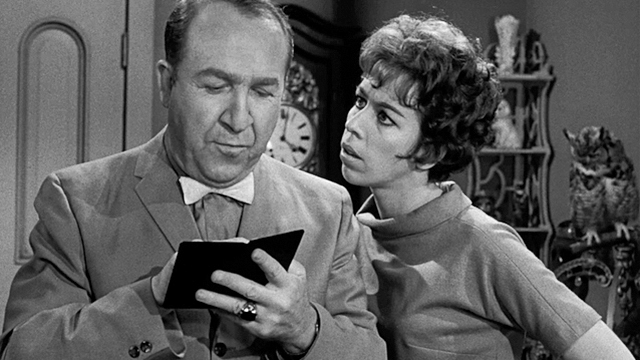
This is not a good episode. Cavender Is Coming has one redeeming quality…and her name is Carol Burnett. The episode borrows from It’s A Wonderful Lie and season one Twilight Zone episode Mr. Beavis in particular.  This episode was meant to serve as a pilot, the same as Mr. Beavis did…and like Mr. Beavis it didn’t make it as a series. The episode is more like a sitcom than a Twilight Zone and it is the only TZ with a laugh track.

As the guardian angel, Jesse White does the best he can but the problem is with the writing. Carol Burnett could ony do some much also. It is one of the lowest rated episodes on IMDB and in various polls. It’s not my my lowest rated episode…that is coming in the 4th season. It does have it’s funny parts but it doesn’t feel like a Twilight Zone.

In writing Cavender Is Coming, Serling used material from Burnett’s own life for certain sequences. At the beginning of the episode, Agnes is employed as an usherette. This was actually taken from one of Burnetts personal experiences.

The first day she went to work as an usherette, the manager ran through a list of silent signals. Three fingers slapped on the wrist meant take a thirty-minute break. Opening your mouth like a fish and pointing to it meant you were thirsty. And when the manager poked his finger into the center of his palm, that meant he wanted a girl to stand in the center of the lobby to direct the patrons to the available seating.

One of the girls worked up her own signal in reply to the bosss gestures. She poured a bag of buttered popcorn on his head and told him, That means I quit.

One good thing is the original laugh track has been removed in syndication.

Buck Houghton (Producer of the Twilight Zone) on the laugh track:  That was CBS’s idea, because they were in a pilot mood and they wanted to get a Jesse White thing going. I refused to go to the dubbing session with the canned laughter man there. I thought it was a dreadful idea.

This show was written by Rod Serling

Rod Serling’s Opening Narration: 

Submitted for your approval, the case of one Miss Agnes Grep, put on Earth with two left feet, an overabundance of thumbs and a propensity for falling down manholes. In a moment she will be up to her jaw in miracles, wrought by apprentice angel Harmon Cavender, intent on winning his wings. And, though it’s a fact that both of them should have stayed in bed, they will tempt all the fates by moving into the cold, gray dawn of the Twilight Zone.

Summary

Inept guardian angel Harmon Cavender is given a chance to finally earn his wings by helping an unconventional big city woman, the young, awkward Agnes Grep, who has just been fired. Cavender doesn’t ask her wishes, instead he puts her in posh clothes, provides her with a fortune, and moves her uptown to a fancy Park Avenue address

Rod Serling’s Closing Narration:

A word to the wise now to any and all who might suddenly feel the presence of a cigar-smoking helpmate who takes bankbooks out of thin air. If you’re suddenly aware of any such celestial aids, it means that you’re under the beneficent care of one Harmon Cavender, guardian angel. And this message from the Twilight Zone: Lotsa luck!

CAST

Rod Serling … Narrator / Self – Host (uncredited)
Jesse White … Harmon Cavender
Carol Burnett … Agnes Grep
Howard Smith … Polk
Frank Behrens … Stout
Roy N. Sickner … Bus Driver
Sandra Gould … Woman
Donna Douglas … Woman #1
Adrienne Marden … Woman #2
Maurice Dallimore … Man

Twilight Zone – I Sing The Body Electric 

★★★★ May 18, 1962 Season 3 Episode 35

If you want to see where we are…HERE is a list of the episodes.

This is an emotional episode (100th)…I would even say heartwarming. It’s a sci-fi episode with a bit of drama and well done. You probably will recognize David White… best known as Darin’s boss Larry Tate on Bewitched. He plays George Rogers, a father of 3 who is left raising his children alone after his wife passes away. He takes his children to Facsimile Ltd. to build a robot grandmother to help raise the children.

One of the children, a young girl (Anne) after losing her mom is hesitant to accept her new robot grandmother. She blames her mom for dying and thinks anyone who loves her will leave. Josephine Hutchinson plays the Grandma with warmth and compassion. Veronica Cartwright who plays Anne Rogers does a good job conveying hurt and confusion over losing her mom.

I like this episode although it’s not as unsettling as some of the great episodes.

Ray Bradbury is a name that stands out as a writer on this episode. Initially, it was intended for Bradbury’s involvement with The Twilight Zone to be far greater than just one script. He wrote Serling and offered another story called “Here There Be Tygers” (not the Stephen King Story). It was turned down along with another story he wrote. It seems like Bradbury and the Twilight Zone would have went together well.

Rod, while talking in the 7os said this:  Ray Bradbury is a very difficult guy to dramatize, because that which reads so beautifully on the printed page doesn’t fit in the mouth it fits in the head. And you find characters saying the things that Bradbury’s saying and you say, Wait a minute, people don’t say that. Certainly, Bradbury’s dialogue does lean to the poetic and this might have been a consideration.

Ray Bradbury years later: I would prefer not to write or talk much about Twilight Zone or my stories. The series is over and done, my work for it stands on its own. For various reasons two scripts were never done. I dont recall the reasons now, so many years later.

This show was written by Rod Serling and Ray Bradbury

Rod Serling’s Opening Narration: 

They make a fairly convincing pitch here. It doesn’t seem possible, though, to find a woman who must be ten times better than mother in order to seem half as good, except, of course, in the Twilight Zone.

Summary

George is a widower with three children and he is being criticized for trying to raise his children on his own. His son Tom shows him an ad from a company with the motto ‘I Sing the Body Electric’ that advertises an electronic data processing system to meet anyone’s needs – essentially, a robot. They set off and everyone seems to like the idea of having a grandmotherly robot housekeeper except for Anne, who has yet to come to grips with her mother’s death. Her rejection of the new member of their family will have serious repercussions but also lead to closure.

CLICK HERE TO SEE THE COMPLETE EPISODE AT DAILYMOTION

Here is a short video clip of the episode.

Rod Serling’s Closing Narration:

A fable? Most assuredly. But who’s to say at some distant moment there might be an assembly line producing a gentle product in the form of a grandmother whose stock in trade is love. Fable, sure, but who’s to say?

CAST

Rod Serling … Narrator / Self – Host (uncredited)
Josephine Hutchinson … Grandma Robot
David White … George Rogers
Vaughn Taylor … Salesman
Doris Packer … Nedra
Charles Herbert … Tom Rogers
Veronica Cartwright … Anne Rogers
Dana Dillaway … Karen Rogers
Susan Crane … Older Ann
Paul Nesbitt … Older Tom
Judee Morton … Older Karen
David Armstrong … Van Driver (uncredited)

Twilight Zone – Young Man’s Fancy

★★★★May 11, 1962 Season 3 Episode 34

If you want to see where we are…HERE is a list of the episodes.

Phyllis Thaxter who plays Virginia Walker is brilliant as justifiable paranoid new wife who has waited for years to marry Alex. Virginia has a strong dislike for Alex’s late mother. She blames his mom for holding Alex too close. They are at Alex’s childhood house to make arrangements to sell the place and then go on their honeymoon. I like how the episode builds and Alex has a hard time getting rid of his childhood home as promised.

As Alex keeps bringing up his childhood the house starts changing back to the way it was when he was a kid. Little things start changing at first and then the hopelessness in Virginia starts showing. You start wondering if Virginia is blaming the wrong person.

A little trivial… Phyllis Thaxter also appeared as Ma Kent in the 1978 version of Superman.

This show was written by Richard Matheson and Rod Serling

Rod Serling’s Opening Narration: 

You’re looking at the house of the late Mrs. Henrietta Walker. This is Mrs. Walker herself, as she appeared twenty-five years ago. And this, except for isolated objects, is the living room of Mrs. Walker’s house, as it appeared in that same year. The other rooms upstairs and down are pretty much the same. The time, however, is not twenty-five years ago but now. The house of the late Mrs. Henrietta Walker is, you see, a house which belongs almost entirely to the past, a house which, like Mrs. Walker’s clock here, has ceased to recognize the passage of time. Only one element is missing now, one remaining item in the estate of the late Mrs. Walker: her son, Alex, thirty-four years of age and, up till twenty minutes ago, the so-called perennial bachelor. With him is his bride, the former Miss Virginia Lane. They’re returning from the city hall in order to get Mr. Walker’s clothes packed, make final arrangements for the sale of the house, lock it up and depart on their honeymoon. Not a complicated set of tasks, it would appear, and yet the newlywed Mrs. Walker is about to discover that the old adage ‘You can’t go home again’ has little meaning in the Twilight Zone.

Summary

Immediately after their wedding, Virginia and Alex Walker return to his mother’s house to make arrangements for it to be sold. Virginia has waited a long time to marry Alex as his domineering mother Henrietta doted – and smothered – him. Going back home has a strange effect on him as he reconnects with his his environment such as his room and his toys. He slowly begins to change and Virginia realizes that her mother-in-law’s influence hasn’t subsided.

There was no decent preview of the episode. 

Rod Serling’s Closing Narration:

Exit Miss Virginia Lane, formerly and most briefly Mrs. Alex Walker. She has just given up a battle and in a strange way retreated, but this has been a retreat back to reality. Her opponent, Alex Walker, will now and forever hold a line that exists in the past. He has put a claim on a moment in time and is not about to relinquish it. Such things do happen in the Twilight Zone.

CAST

Rod Serling … Narrator / Self – Host (uncredited)
Phyllis Thaxter … Virginia Lane Walker
Alex Nicol … Alex Walker
Wallace Rooney … Mr. Wilkinson
Helen Brown … Mrs. Henrietta Walker
Rickey Kelman … Young Alex

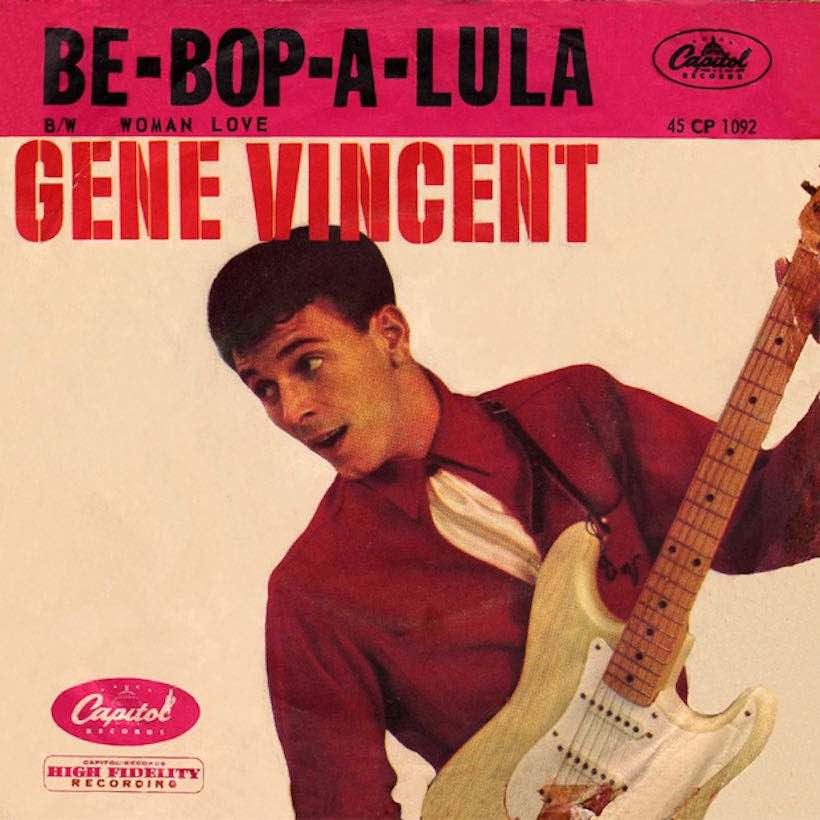
Gene Vincent – Be Bop a Lula

“That beginning – ‘we-e-e-e-e-l-l-l-l-l!’ – always made my hair stand on end.”
John Lennon

Can this rock and roll possibly be improved on? I don’t think so.  When Gene Vincent starts this song with “well” along with that echo all around…it’s magical. Since Friday, I’ve covered songs that helped shape the young Beatles. It wasn’t just the Beatles  but all of the bands that came out in the sixties had music like this as their backbone.

The Beatles played at least 14 of Gene Vincent’s songs in their sets before they made it. A song like Somewhere Over The Rainbow that the Beatles would never think of covering until Gene Vincent covered it and gave the song his ok.

They also got to know Vincent in Germany while playing in Hamburg.

This song was recorded by Gene Vincent and the Blue Caps in 1956. The song was successful on three American singles charts as it peaked at #7 on the US Billboard pop music chart, #8 on the R&B chart, and also made the top ten on the C&W Charts, and #16 in the UK in 1956. In April 1957, the record company announced that over 2 million copies had been sold to date.

As far as the origin of the song…I reblogged a fellow blogger (Freefallin’) a couple of years ago with this song. Here is the story:  Donald Graves—a buddy Gene Vincent made in a Portsmouth, Virginia, Veteran’s Hospital. Vincent—born Vincent Eugene Craddock in 1935—had just reenlisted in the U.S. Navy in the spring of 1955 when he suffered a devastating leg injury in a motorcycle accident. That injury would land him in hospital for more than a year, where a fellow patient remembers Vincent and Graves tooling around the facility working out the song that would eventually become a classic. By the time Gene Vincent’s demo tape reached Capitol Records the following spring, however, Graves had been bought out of his share in “Be-Bop-A-Lula” by Sheriff Tex (Vincent’s business manager), reportedly for just $25.

John Lennon covered it on his 1975 Rock and Roll album. As much as I’m a fan of Lennon…nothing touches the original but he does a great job.

Be Bop A Lula

Well be-bop-a-Lula she’s my baby
Be-bop-a-Lula I don’t mean maybe
Be-bop-a-Lula she’s my baby
Be-bop-a-Lula I don’t mean maybe
Be-bop-a-Lula she’s my baby doll
My baby doll, my baby doll

Well she’s the girl in the red blue jeans
She’s the queen of all the teens
She’s the one that I know
She’s the woman that loves me so

Say be-bop-a-Lula she’s my baby
Be-bop-a-Lula I don’t mean maybe
Be-bop-a-Lula she’s my baby doll
My baby doll, my baby doll
Let’s rock!

Well now she’s the one that’s got that beat
She’s the woman with the flyin’ feet
She’s the one that walks around the store
She’s the one that gets more more more

Be-bop-a-Lula she’s my baby
Be-bop-a-Lula I don’t mean maybe
Be-bop-a-Lula she’s my baby doll
My baby doll, my baby doll
Let’s rock again, now!

Well be-bop-a-Lula she’s my baby
Be-bop-a-Lula I don’t mean maybe
Be-bop-a-Lula she’s my baby
Be-bop-a-Lula I don’t mean maybe
Be-bop-a-Lula she’s my baby doll
My baby doll, my baby doll

Twilight Zone – The Dummy

★★★★★  May 4, 1962 Season 3 Episode 33

If you want to see where we are…HERE is a list of the episodes.

The story of a ventriloquist and his dummy has been done but the ending keeps this fresh.  This episode still works today. The Twilight Zone covers a lot of ground and some episodes do scare people. This one would be one of those. It’s creepy and may have influenced the 1978 movie Magic.

Cliff Robertson plays Jerry Etherson and is great in this role as a talented but alcoholic ventriloquist. Frank Sutton, who most people know as Sgt Carter from Gomer Pyle, is in the episode as Etherson’s agent Frank. At first you don’t know if Etherson is imagining what is happening or not.

Frank cares about Jerry but after so many missed performances because of his drinking problem….he drops him as a client.  He also suggests Jerry to get help because Jerry swears that “Willy” (the dummy) is alive.

The Dummy has one of the most chilling final shots of any episode of The Twilight Zone.

Any show with a dummy, gives me the creeps. After seeing this when I was younger… I had relatives who had one of those things lying around…I never took my eyes off that  thing.

The dummy “Willy” was created by American ventriloquist supplies maker Revillo Pettee, while the dummy seen at the end was created by English builder Len Insull. “Willy” is in the private collection of magician David Copperfield.

This show was written by Rod Serling and Lee Polk

Rod Serling’s Opening Narration: 

You’re watching a ventriloquist named Jerry Etherson, a voice-thrower par excellence. His alter ego, sitting atop his lap, is a brash stick of kindling with the sobriquet ‘Willy.’ In a moment, Mr. Etherson and his knotty-pine partner will be booked in one of the out-of-the-way bistros, that small, dark, intimate place known as the Twilight Zone.

Summary

Jerry Etherson has a reasonably successful nightclub act as a ventriloquist but has one major problem: he believes his dummy Willie is a sentient being who speaks to him and manipulates his life. His agent Frank thinks Jerry needs psychiatric help and tells him he has no future in the business if he doesn’t do something about his delusions. Jerry decides to lock Willie in a trunk and try his act with a different dummy. Willie has plans of his own however.

Rod Serling’s Closing Narration:

What’s known in the parlance of the times as the old switcheroo, from boss to blockhead in a few uneasy lessons. And if you’re given to nightclubbing on occasion, check this act. It’s called Willy and Jerry, and they generally are booked into some of the clubs along the ‘Gray Night Way’ known as the Twilight Zone.

CAST

Rod Serling … Narrator / Self – Host (uncredited)
Cliff Robertson … Jerry Etherson
Frank Sutton … Frank
George Murdock … Willie
John Harmon … Georgie
Sandra Warner … Noreen
Ralph Manza … Doorkeeper
Rudy Dolan … Emcee (uncredited)
Bethelynn Grey … Chorus Girl (uncredited)
Edy Williams … Chorus Girl (uncredited)

Twilight Zone – The Gift

★★★  April 27, 1962 Season 3 Episode 32

If you want to see where we are…HERE is a list of the episodes.

This episode is slow moving but at times interesting . It contains elements that could have been a great Twilight Zone but the acting in this one is subdued and the story is slow. I did like the study of human nature at the end but the script was  uneven.

A Christ-like alien ventures into a small Mexican village. He comes into a bar after being shot and hurting. He bonds with a little boy named Pedro played by Edmund Vargas. A doctor looks at the alien and by all accounts should have been dead. Everyone was fearful of him and he is referred to as a creature with powers. The alien offers a gift but will the lack of trust in the new comer accept it?

I did like the musical score for this one. The Gift has a guitar score composed and performed by Laurindo Almeida, one of the great classical guitarists.This story was originally written as one of the series’ possible pilots, but was passed over for The Twilight Zone: Where Is Everybody?

This show was written by Rod Serling

Rod Serling’s Opening Narration: 

The place is Mexico, just across the Texas border, a mountain village held back in time by its remoteness and suddenly intruded upon by the twentieth century. And this is Pedro, nine years old, a lonely, rootless little boy, who will soon make the acquaintance of a traveler from a distant place. We are at present forty miles from the Rio Grande, but any place and all places can be the Twilight Zone.

Summary

The residents of a small Mexican village, just 40 miles or so south of the Rio Grande, panic when they learn a being from another planet may have crashed near by. As the result of an altercation with local police, one policeman is dead and the alien is severely wounded. A young boy, Pedro, quickly forms a friendship with the alien who says he has come in peace. He also says he has a gift for the people of the Earth, but the villagers’ fear means that mankind will never benefit from the alien’s generosity.

Rod Serling’s Closing Narration:

Madeiro, Mexico, the present. The subject: fear. The cure: a little more faith. An Rx off a shelf in the Twilight Zone.

CAST

Rod Serling … Narrator / Self – Host (uncredited)
Geoffrey Horne … Williams – the Alien
Nico Minardos … Doctor
Cliff Osmond … Manolo
Edmund Vargas … Pedro
Vladimir Sokoloff … Guitarist
Paul Mazursky … Officer
Henry Corden … Sanchez
Vito Scotti Vito Scotti … Rudolpho
Eumenio Blanco … Townsman (uncredited)
Carmen D’Antonio … Woman (uncredited)
David Fresco … Man (uncredited)
Lea Marmer … Woman (uncredited)
Joseph V. Perry … Man (uncredited)