Don Williams – I Believe In You

We are going in a different direction today…some older country from 1980. Don’s voice is just so good…he doesn’t have an exaggerated southern drawl…it’s just quality.

My friend Matt (observationblogger) posted two songs (Amanda and I Recall A Gypsy Woman) by Don Williams and it reminded me of my memories of meeting Don Williams as a pre-teen and teenager. His popularity was much more international than I ever knew at the time. This song for instance was very popular in New Zealand, Australia, and the UK. During that time I thought country music was only popular in the southern US.

I was around 10-12 and I played baseball at the city ballpark. I would go there after school and practice. There were days I would just hang around and talk to people. I saw this man mowing the grass that had this old cowboy hat on. After a little while, he stopped and talked to me and asked me how I was doing. I knew the guy’s face and it came to me… I was talking to Don Williams. The reason I knew him was because of my mom’s country albums. I wasn’t into country music but some songs I did like.

I would see him off and on throughout my teenage years and he always was as nice as can be. I went to school and played baseball with his son. Don would mow the city park and the high school field. I’m not sure if he was bored or just wanted to help the community…he was a super guy either way.

This song was released as the first single and title track from Don Williams’ I Believe in You album, this became his 11th #1 on the Country chart. It also peaked at #1 in Canada on the Country Charts. It ended up being Don Williams’ only Top 40 song on the Billboard 100, the song peaked at #24 in the Billboard 100, #4 in New Zealand, and #20 in Australia.

All together Williams had 21 #1 singles on the Country Charts and a total of 25 studio albums and 62 singles.

Eric Clapton and Pete Townshend were admirers of Don Williams and both covered his songs. Eric Clapton would cover Tulsa Time and take it to #30 in the Billboard 100.

I Believe In You

I don’t believe in superstars
Organic food and foreign cars
I don’t believe the price of gold
The certainty of growing old
That right is right and left is wrong
That north and south can’t get along
That east is east and west is west
And being first is always best

But I believe in love
I believe in babies
I believe in mom and dad
And I believe in you

Well I don’t believe that heaven waits
For only those who congregate
I like to think of God as love
He’s down below, he’s up above
He’s watching people everywhere
He knows who does and doesn’t care
And I’m an ordinary man
Sometimes I wonder who I am

But I believe in love
I believe in music
I believe in magic
And I believe in you

I know with all my certainty
What’s going on with you and me
Is a good thing
It’s true, I believe in you

I don’t believe virginity
Is as common as it used to be
In working days and sleeping nights
That black is black and white is white
That Superman and Robin Hood
Are still alive in Hollywood
That gasoline’s in short supply
The rising cost of getting by

But I believe in love
I believe in old folks
I believe in children
I believe in you

I believe in love
I believe in babies
I believe in mom and dad
And I believe in you

Stanley Brothers – Mountain Dew

Ok…we are veering WAY OFF the power-pop/rock path today! I was reading a biography of Pittsburgh Steelers coach Chuck Noll, and it mentioned he would sing this song occasionally. So reading a bio of an American football coach led to this post…you just never know! To paraphrase Bugs Bunny…we are taking that proverbial left turn at Albuquerque.

I got really curious and looked the song up. It’s great…I’ve always liked these old folk songs and bluegrass music because I respect them so much. I’ve played bluegrass with a professional before, and it is some of the hardest music I’ve tried to play. The time signatures are all over the place, and if you haven’t played the music a lot… it can be tricky. It made me a better musician.

I like the music because it’s so rootsy and earthy. I don’t listen to it a lot, but sometimes I will enjoy an hour or so of it. It reminds me of when my dad would go to work in the morning, and sometimes he would have this music on.

Good Ole’Mountain Dew!

This song is an  Appalachian folk song that Bascom Lamar Lunsford first wrote in 1928. Lunsford was an attorney; however, he is very fond of folk songs. He once represented a man in court because he was illegally making whiskey called Moonshine. This experience led him to write the song.  He ended up selling the song to Scotty Wiseman, and Wiseman changed a few lyrics but remembered Lunsford…he kept the songwriting credit Wiseman-Lunsford.

These songs are special. They were not trying to write hits…they just wanted to tell stories through songs. Instead of newspapers in the backwoods of the Appalachians, you had these songs.

Many artists have covered the song through the years, like Willie Nelson, Glen Campbell, Mother Maybelle Carter, Grandpa Jones, and more.

Willie Nelson released a version in 1981 that peaked at #23 in the Billboard Country Charts and #39 in Canada.

The lyrics never stay completely the same through the versions, but it still works. We will return to our normal programming in the next post!

Mountain Dew

Down the road here from me there’s an old holler tree
Where you lay down a dollar or two
Go on round the bend come back again
There’s a jug full of that good ole mountain dew

Oh they call it that good ole mountain dew
And them that refuse it are few
I’ll hush up my mug if you’ll fill up my jug
With that good ole mountain dew

Now Mr. Roosevelt told ’em just how he felt
When he heard that the dry law ‘d gone through
If your liquors too red it’ll swell up your head
You better stick to that good ole mountain dew

Oh they call it that good ole mountain dew
And them that refuse it are few
I’ll hush up my mug if you’ll fill up my jug
With that good ole mountain dew

The preacher rode by with his head hasted high
Said his wife had been down with the flu
He thought that I o’rt to sell him a quart
Of my good ole mountain dew

Oh they call it that good ole mountain dew
And them that refuse it are few
I’ll hush up my mug if you’ll fill up my jug
With that good ole mountain dew

Well my uncle Snort he’s sawed off and short
He measures four feet two
But feels like a giant when you give him a pint
Of that good old mountain dew

Oh they call it that good ole mountain dew
And them that refuse it are few
I’ll hush up my mug if you’ll fill up my jug
With that good ole mountain dew

Tanya Tucker – Delta Dawn

I’ve always liked this song and Tanya’s scratchy voice. Helen Reddy did a fine version of this also but I’ll take this treatment. It is the version I grew up with…I’ve always been a fan of Tanya Tucker.

When I was a senior in high school I had a job at a place called Tuckahoe Farms. It was Tanya’s farm but she had sold it by the time I worked there. They raised thoroughbred racing horses and it was huge. I was always hoping she would come back to visit but she never did.

It was written by former rockabilly star Larry Collins and country and western songwriter Alex Harvey. It was first recorded by Harvey in 1972. Tracy Nelson and Bette Midler put the song in their live repertoire before it became a country hit for 13-year-old Tanya. The melody and chorus are virtually identical to the Amazing Grace

Harvey says the tune is really about his mother, a heavy drinker who died in an apparent suicide by crashing into a tree when the songwriter was a teen. Harvey had just returned from a TV gig with his band…he had asked his mother not to go, worried she would embarrass him by drinking too much and making a spectacle. The guilt over his mother’s death stuck with him for years. A decade later, he was hanging out at Larry Collins’ house with a group of country musicians. Everyone fell asleep except for Harvey, who stayed up strumming his guitar. That’s when he saw his mother.

Alex Harvey: “I looked up and I felt as if my mother was in the room. I saw her very clearly. She was in a rocking chair and she was laughing,” he recalled. “My mother had come from the Mississippi Delta and she always lived her life as if she had a suitcase in her hand but nowhere to put it down. She was a hairdresser in Brownsville. She was very free-spirited, and folks in a small town don’t always understand people like that. She never really grew up.”

“I really believe that my mother didn’t come into the room that night to scare me, but to tell me, ‘It’s okay,’ and that she had made her choices in life and it had nothing to do with me. I always felt like that song was a gift to my mother and an apology to her. It was also a way to say ‘thank you’ to my mother for all she did.

The song peaked at #6 on the Country Charts, #3 in Canada, and #72 on the Billboard 100 in 1972.

Helen Reddy would take the song to #1 on the Billboard 100 in 1973.

Barbra Streisand passed on the song after the backing track had been recorded by her producer without her prior knowledge.

Delta Dawn

Delta Dawn, what’s that flower you have on?
Could it be a faded rose from days gone by?
And did I hear you say he was a-meeting you here today
To take you to his mansion in the sky?

She’s forty-one and her daddy still calls her “baby”
All the folks around Brownsville say she’s crazy
‘Cause she walks dowtown with a suitcase in her hand
Looking for a mysterious dark-haired man

In her younger days they called her Delta Dawn
Prettiest woman you ever laid eyes on
Then a man of low degree stood by her side
And promised her he’d take her for his bride

Delta Dawn, what’s that flower you have on?
Could it be a faded rose from days gone by?
And did I hear you say he was a-meeting you here today
To take you to his mansion in the sky?

Delta Dawn, what’s that flower you have on?
Could it be a faded rose from days gone by?
And did I hear you say he was a-meeting you here today
To take you to his mansion in the sky?

Delta Dawn, what’s that flower you have on?
Could it be a faded rose from days gone by?
And did I hear you say he was a-meeting you here today
To take you to his mansion in the sky?

Delta Dawn, what’s that flower you have on?
Could it be a faded rose from days gone by?
And did I hear you say he was a-meeting you here today
To take you to his mansion in the sky?

Paul McCartney – Sally G

I’ve always liked B-Sides… Let’s listen to some Liverpudlian Country Music.

I cannot hear this song without thinking of my grandmother. Her name was Sally and yes her last name started with G. She lived to the ripe old age of 96. I have posted about the A-side of this single Juniors Farm but never about this B-side that I like. I heard this song when I was 7 because my sister had this single and it’s been in my head ever since.

When I saw him in 2010 and 2014 I thought both times…hmmm he is in Nashville so Sally G surely will be played. Nope… Paul didn’t utter Sally’s name.

The song actually got played on the country stations in Nashville which looking back I can’t believe happened at that time. Nashville wasn’t exactly in love with rock performers.

Sally G was written and recorded in Nashville. In 1974 Paul McCartney came to Nashville. They rented a 133-acre farm just outside of Lebanon TN from songwriter Curly Putman (“Green, Green Grass of Home”) for $2,000 a week. They had requested a farm within 50 miles of Nashville that had horses and swimming facilities.

The band stayed at the farm for 6 weeks while the Putman family vacationed in Hawaii. When Putman and his wife returned to their farm, McCartney saw them walking up the driveway. McCartney and the band greeted them by playing “Green, Green Grass of Home.”

I have a cousin that lives in Lebanon around 5 miles from where he stayed…not a great picture but here it is today.

IMG_2102.PNG

Lloyd Green, Bob Willis, and Johnny Gimble Willis contributed steel guitar, dobro, and fiddle respectively while adding legitimacy to McCartney’s country venture.

Paul playing guitar on “Junior’s Farm” in 1974

OFFTOPIC: Unseen picture of Paul McCartney in Nashville, 1974. | Paul  mccartney and wings, The beatles, Beatles photos

Sally G. and it peaked at #17 in the Billboard 100,  #51 on the country charts, #11 in the Canadian Country charts, and #61 in Canada.  Paul composed the song after visiting the nightlife in Printer’s Alley.

As his time in Tennessee came to a close, McCartney told a group of local reporters that he hoped to mount a U.S. tour the following year and that if it happened, Music City would definitely be on the itinerary.

McCartney didn’t come back until 36 years later in 2010 and I finally got to see him. Paul…you lied but all was forgiven when he took the stage.

I hardly ever point out a bridge in a song but in this one…it’s kept me listening for decades. It’s not the lyrics but the melody, backups, and harmonizing on the final “move along.”

Me and Sally took up,
things began to look up,
Me and her were going strong.

Then she started lyin’,
I could see our love was dyin’.
I heard a voice say,
“Move along, move along”.

Paul McCartney: “Buddy Killen [studio owner and music publisher] took us out to Printer’s Alley, a little club district,” “I didn’t see anyone named ‘Sally G’ in Printer’s Alley, nor did I see anyone who ran her eyes over me when she was singing ‘A Troubled Mind.’ That was my imagination, adding to the reality of it.”

Musician gets to stay on the farm for 3 weeks. 

Home movies of Wings in the studio in Nashville 1974

https://www.youtube.com/watch?v=CG48u6R8I50

Sally G

Somewhere to the south of New York City
Lies the friendly state of Tennessee,
Down in Nashville town I met a pretty
Who made a pretty big fool out of me.

And they call her Sally,
Sally G, why d’you wanna do the things you do to me?
You’re my Sally, Sally G
took the part that was the heart of me, Sally G.

The night life took me down to Printers Alley,
where Sally sang a song behind a bar.
I ran my eyes across her as she sang a tangled mime,
I used to love to hear her sweet guitar.

And they call her Sally,
Sally G, why d’you wanna do the things you do to me?
You’re my Sally, Sally G
took the part that was the heart of me, Sally G.

Me and Sally took up,
things began to look up,
Me and her were going strong.

Then she started lyin’,
I could see our love was dyin’.
I heard a voice say,
“Move along, move along”.

Well now. I’m on my own again,
I wonder if she ever really understood.
I never thought to ask her what the letter “G” stood for,
But I know for sure it wasn’t good.

And they call her Sally,
Sally G, why d’you wanna do the things you do to me?
You’re my Sally, Sally G
took the part that was the heart of me, Sally G.

Sally G.

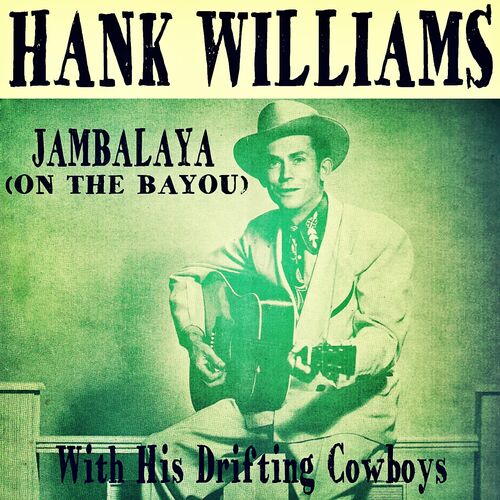
Hank Williams – Move It On Over

Whenever I’m asked if I like country music…at first, I wonder what country they mean. If they mean commercial top 40…then not. If they mean Hank Williams, then a big fat yes. In this country, I hear a little rockabilly and country mix…which is a great thing.

Hank Williams as a songwriter is up there with the greats. Bob Dylan and more idolized him and his writing. This song was his first big hit. The song was written by the man himself. He released this song in 1947. Two years later, he received his invitation to join the Grand Ole Opry after his successful recording of the minstrel era song, “Lovesick Blues.”

Move It On Over peaked at #4 in the Country Charts in 1947.

Despite never learning to read music, Williams was a prolific songwriter including country music classics such as “Hey, Good Lookin’,” “I’m So Lonesome I Could Cry,” and “Your Cheatin’ Heart.” He recorded a total of 66 songs in his six-year recording career, 37 of which became hit records. It was not unheard of for Williams to record three hit songs in one afternoon. Now think about this… out of 66 songs recorded…37 were hits… That is like batting over .500.

Williams was plagued by back pain throughout his life, likely due to spina bifida. Life on the road as a Country singer only made it worse. An operation in 1951 gave him no relief and actually increased his pain. The combination of unending physical pain and the pressure of being a successful recording artist led to Williams seeking solace in drugs in alcohol.

Many of you will remember this song by George Thorogood released in 1978 and picked up a lot of airplay.

Move It On Over

I come in last night about half past ten
That baby of mine wouldn’t let me in
So move it on over, rock it on over
Move over little dog, the mean old dog is movin’ in

She told me not to mess around
But I done let the deal go down
Move it on over, rock it on over
Move over nice dog, a big fat dog is movin’ in

She changed the lock on my back door
Now my key won’t fit no more
Move it on over, rock it on over
Move over nice dog, the mean old dog is movin’ in

She threw me out just as pretty as she pleased
Pretty soon I’ll be scratchin’ fleas
Move it on over, slide it on over
Move over nice dog, a mean old dog is movin’ in

Yeah, listen to me dog before you start to whine
That side yours and this side mine
So move it on over, rock it on over
Move over little dog, the big old dog is movin’ in

Yeah, she changed the lock on my back door
Now my key won’t fit no more
Move it on over, rock it on over
Move over little dog, the big old dog is movin’ in

Move it on over, move it on over
Move it on over, won’t’cha rock it on over
Move over cool dog, the hot dog’s movin’ in

The Byrds – Drug Store Truck Driving Man

This song is on the Dr. Byrds & Mr. Hyde album by the Byrds. It’s a really good song and the song’s origin is interesting. It was written in response to an on-air argument with Ralph Emery, who was an all-night country DJ on a country radio station at the time. It was written by Roger McGuinn and Gram Parsons. The song was an open letter to Emery.

Before I get into the song which I really like…I want everyone to know I’m not downing Emery because of this. I grew up with Ralph Emery on television in the 1970s. I was never a fan because his show wasn’t in my age group. To be fair to Ralph…he did invite Roger McGuinn on his show in 1985 when Vern Gosdin covered Turn, Turn, Turn and Roger played guitar. He was on there more than once so it was all in the past by that time. Times had changed so much by the 80s…rock and country went together by then but in the 60s Buck Owens touched on it but not many people were doing both…the Byrds with Gram Parsons were pioneers in a way with Sweetheart Of The Rodeo.

In 1968 The Byrds were in Nashville promoting their new country album Sweetheart of the Rodeo and got a cool reception at the Grand Ole Opry. They got into an argument with Emery on air when he said that “You Ain’t Going Nowhere” wasn’t country and then proceeded to call them long-haired hippies and would not play the record. He also didn’t understand what the song meant and Roger told him that Dylan wrote it…well that didn’t help!

Ralph Emery would not budge…It was the 1960s in a very fifties Nashville and Ralph could not get past the hair although they didn’t have excessively long hair. It would open up a bit in the early seventies with Outlaw country music by Willie Nelson, Kris Kristofferson, and Waylon Jennings. That movement would soon join traditionalists and the outlaw crowd together. They Byrds helped, in their own way, to make that happen.

The lyrics were about the narrow-mindedness of then certain segments of the country music industry. Lines like “He’s the all-American boy” and “he don’t like the way we play” reflect the hate that McGuinn and Parsons felt from some in Nashville. The title, “Drug Store Truck Drivin’ Man,” is a dig at Emery, suggesting that he was more of a conventional figure who could not appreciate or understand the Byrds’ approach to country music. But I’m glad it happened because we got a good country-rock song out of it.

Chris Hillman: “There was the funny story with Ralph Emery, the DJ in Nashville, where he had The Gilded Palace Of Sin tacked on the wall outside of his office, and with a big red pen it said, ‘This is not country music.’ Roger and Gram had gone to do an interview with him when we were all still with the Byrds, and Ralph was such a jerk to them then that they wrote that song “Drug Store Truck Driving Man”. A classic! I wish I’d written a part of that. But later, whenever I’d go on his show with the Desert Rose Band, Ralph would ask, “Did you write that song?” Finally, I had to say, “No, but I wish I had!” So when Roger was on later, Ralph would say, “Well, how is Gram doing?” and Roger would answer, “He’s still dead.” McGuinn was pretty darned quick in those situations!” 

I’m adding a live version and a hell of a story by Jason and the Scorchers…on how they played this song and it found a spot on Ralph Emery’s TV show in the early 80s.

Ralph Emery when he invited McGuinn on his show in 1985

Drug Store Truck Drivin’ Man

He’s a drug store truck-drivin’ man
He’s the head of the Ku Klux Klan
When summer rolls around
He’ll be lucky if he’s not in town

Well, he’s got him a house on the hill
He plays country records till you’ve had your fill
He’s a fireman’s friend he’s an all-night DJ
But he sure does think different from the records he plays

He’s a drug store truck-drivin’ man
He’s the head of the Ku Klux Klan
When summer rolls around
He’ll be lucky if he’s not in town

Well, he don’t like the young folks I know
He told me one night on his radio show
He’s got him a medal he won in the War
It weighs five-hundred pounds and it sleeps on his floor

He’s a drug store truck drivin’ man
He’s the head of the Ku Klux Klan
When summer rolls around
He’ll be lucky if he’s not in town

He’s been like a father to me
He’s the only DJ you can hear after three
I’m an all-night musician in a rock and roll band
And why he don’t like me I can’t understand

He’s a drug store truck-drivin’ man
He’s the head of the Ku Klux Klan
When summer rolls around
He’ll be lucky if he’s not in town

He’ll be lucky if he’s not in town

This one’s for you, Ralph

https://www.youtube.com/watch?v=piNF7LUehsM&ab_channel=burritodlx