Alias Smith and Jones

This television show only last three seasons from 1971-1973 and from reading the reviews of the day it attracted young viewers because of the young male leads Pete Duel and Ben Murphy. It’s a western comedy about two reformed non-violent bank robbers who are trying to go straight.

The Governor has promised them amnesty if they stay out of trouble for a while but no one can know so, they are still wanted. The episodes are humorous and different from the two big westerns at the time…Gunsmoke and Bonanza. The episodes tended to be uneven though but overall it was a good show.

Pete Duel was going through problems in his life at the time. During the first season, he was driving drunk and pulled into the path of an oncoming car. Two people were injured and one hospitalized. This would haunt him till his death and he would fight a drinking problem to the end.

Pete and Ben are in about every shot of the series. They both worked 12-14 hour days 6-7 days a week. Pete was never happy with the show. He was restless and wanted to do different things. When the second season started he was put on 2-year probation for the accident and lost his drivers license.

One quote from him around this time about being in a TV series was “It’s a big fat drag to any actor with interest in his work. It’s the ultimate trap.” He was very environmentally conscious and often spoke out on issues like pollution.

After being driven home from the set on December 30, 1971, he died of a self-inflicted gunshot wound in the early hours of December 31, 1971.

The show continued on with Roger Davis taking over Duel’s character in the series. It lasted only 17 episodes after Duel’s departure.

This is from Wikipedia… it’s a sad commentary

Upon learning of Duel’s death, executive producer Jo Swerling, Jr., initially wanted to end the series, but ABC refused.  Swerling later stated:

ABC said, “No way!” They said, “You have a contract to deliver this show to us, and you will continue to deliver the show as best you can on schedule or we will sue you.” Hearing those words, Universal didn’t hesitate for a second to instruct us to stay in production. We were already a little bit behind the eight ball on airdates. So, we contacted everybody, including Ben (Murphy), and told them to come back in. The entire company was reassembled and back in production by one o’clock that day shooting scenes that did not involve Peter — only 12 hours after his death.

The Intro

Narrator: Hannibal Heyes and Kid Curry – the two most successful outlaws in the history of the West. And in all the trains and banks they robbed, they never shot anyone. This made our two latter-day Robin Hoods very popular – with everyone but the railroads and the banks.

Jed ‘Kid’ Curry: There’s one we thing we gotta get, Heyes.

Hannibal Heyes: What’s that?

Jed ‘Kid’ Curry: Out of this business!

Sheriff Lom Trevors: The governor can’t come flat out and give you amnesty now. First you have to prove you deserve it.

Hannibal Heyes: Ah. So all we have to do is just stay out of trouble till the governor figures we deserve amnesty.

Jed ‘Kid’ Curry: But in the mean time, we’ll still be wanted.

Sheriff Lom Trevors: Well, that’s true. Till then only you, me and the Governor will know about it. It’ll be our little secret.

Hannibal Heyes: That’s a good deal?

Jed ‘Kid’ Curry: I sure wish the governor’d let a few more people in on our secret!

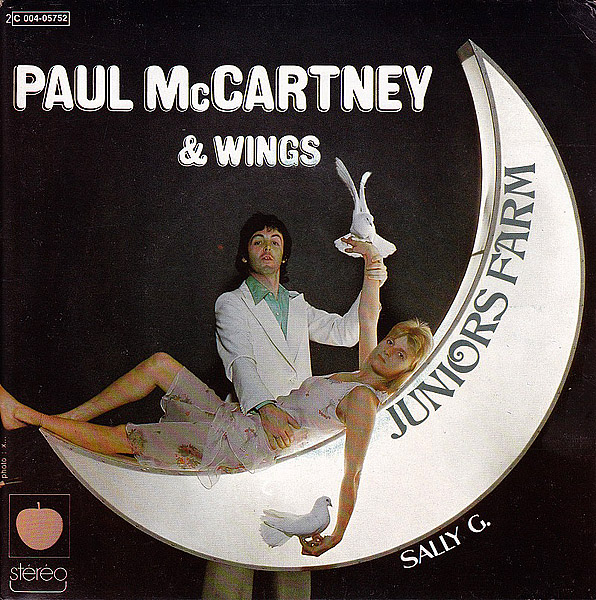
Juinor’s Farm/Sally G. by Paul McCartney and Wings

Juinor’s Farm/Sally G. single by Paul McCartney and Wings.

I had this single as a kid. Juinor’s Farm and Sally G were both partially recorded in Nashville during Paul’s six-week stay there in 1974. Juinor’s Farm is one of my favorite songs by Paul McCartney. The song rocks and the solo was performed by a 21-year-old Jimmy McCulloch. The song reached #3 in America. The band stayed at a farm in Lebanon TN around 30 miles from Nashville. I remember at the time it being big news that Paul McCartney was going to record in Nashville. I was seven years old and remember seeing Paul on the local news.

Jimmy McCulloch was a guitar prodigy… He was playing in a band when he was 11. He was in a band supporting The Who when he was 14 and in the band Thunderclap Newman in 1969 when he was 16. He went on to play with John Mayall (That guy knew how to pick guitar players) and Stone the Crows… He then went to play with Paul McCartney and Wings in 1974. He gave Paul’s songs an edge and I wish he would have stayed in Wings longer.

He left Paul to play with the reformed Small Faces in 1977.  In 1979 died of heart failure due to morphine and alcohol poisoning. You have to wonder how much better this guy could have been…

The B side was Sally G. and it hit #17 on the Billboard charts and even #51 on the country charts. This song has stayed with me through the years. When I listen to it…I think, now this is more of a what a country song should sound like. I really hate modern country music. No pickup trucks or tractors in this song. Modern country music could learn a lot by listening to country songs in this period and earlier. Paul composed the song after visiting a club in Printer’s Alley in Nashville.

This was McCartney’s last release on Apple Records

sallyg.jpg

This is from the Tennessean about Paul’s 1974 visit to Nashville. It was written by Dave Paulson

1974
Paul McCartney touched down at Metropolitan airport with his family on the evening of June 6, 1974, emerging from the plane wearing a green battle jacket and flashing a peace sign. The Tennessean reported that Paul answered questions “briefly but willingly” and even humored a group of kids who were amused by his British accent (he said the word “elevator” at their request).
The music superstar told a crowd of about 50 fans and members of the press that he’d come to Nashville for his three Rs — rehearsing, relating and riding. Music producer and executive Buddy Killen, who would act as the McCartneys’ Music City guide during their six-week stay here that summer, greeted the family upon their arrival.
The McCartneys rented a 133-acre farm just outside of Lebanon from songwriter Curly Putman (“Green, Green Grass of Home”) for $2,000 a week. They had requested a farm within 50 miles of Nashville that had horses and swimming facilities.
“I’ve got a farm in Scotland,” McCartney told reporters during an informal press conference on the farm. “You’re not the only people who have farms, you know. Back in Scotland, we’re country people in our own way.”
During their stay, the family visited the homes of Johnny Cash and Chet Atkins and even took in a few movies at their local drive-in.
McCartney and his family caused quite a stir when they joined the audience at Opryland for the third annual Grand Masters Fiddling Contest on June 16, 1974. During the intermission, Porter Wagoner and Dolly Parton performed their final show together before Parton embarked on her solo career. Linda McCartney got out of her seat several times to take photos of the duo. The McCartneys went backstage to meet with Wagoner and Parton, and then escaped into a waiting automobile.
McCartney told Nashville reporters that he was raised on country music, and he tried his hand at a bit of country songwriting while he was in town: He wrote the song “Sally G.” after a trip to Printer’s Alley.
McCartney drove around on a newly purchased motorcycle during the family’s Nashville visit. When a group of reporters waited at the Putman farm gate for a “highly informal” press conference, Paul and Linda rode past, smiling and waving.
Linda told The Tennessean she was “not much into materialism anymore,” though she had made a recent trip to Rivergate to purchase gifts for her family. Another big machine Paul loved — the Mellotron synthesizer — was not readily available in Tennessee at the time, to his chagrin.
As his time in Tennessee came to a close, McCartney told a group of local reporters that he hoped to mount a U.S. tour the following year, and that if it happened, Music City would definitely be on the itinerary.
“We just couldn’t skip Nashville,” he said. “We have too many friends here.”
McCartney continued to skip Nashville for the next 36 years.

When Paul did come I was there in 2010… he also came back in 2013 and I was there again. Three hours of one favorite after another…

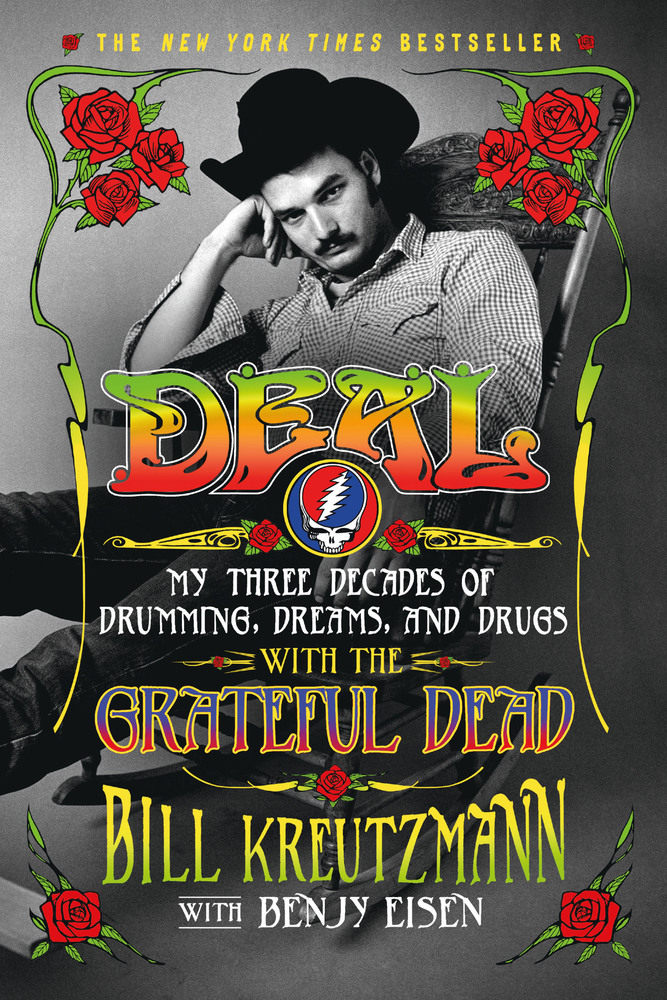
Deal by Bill Kreutzmann

The book is called Deal: My Three Decades of Drumming, Dreams, and Drugs with the Grateful Dead.

This book is what you would imagine from the drummer (one of them) of the Grateful Dead. Music, drugs, women, drugs, travels, guns, drugs, death, drink and more drugs. Actually, I really enjoyed the book. He is very open and very honest about his actions good and bad.

He is not a shy guy whatsoever. He shares his feelings about any subject that comes up. He does go into the music and how he feels about his bandmates. Most are positive but he does not hold back.

He covers the complete career of the band. He openly said he was very happy being the only drummer of the band when Mickey Hart quit and didn’t like it one bit when Mickey rejoined the band…at first anyway.

He goes into his relationship with Jerry Garcia. He also admits the guilt the band share in not trying to help Garcia more…but Jerry was his own man. He writes about the so-called keyboard player curse the band had in their career.

He tells us about the 72 European tour, shows they played near the pyramids and the Festival Express. I will say this…this band had fun. They were like a family and treated their employees well for the most part.

The only thing that I wish he would have shared more about was Pigpen. The band was apparently in the dark about how bad Pigpen was doing before he died. Maybe he didn’t share it with them.

I learned a lot about the Dead that I didn’t know about.

The book keeps going at a good pace. With the Dead’s long career he never lacks for stories. A lot of rock autobiographies are coming out and again this one takes the template that Keith Richards made with his book “Life” and fills it in.

Bill Kreutzmann from Deal about Garcia and heroin:

I’m pretty sure Jerry wasn’t into heroin during the making of Garcia; as far I know, he hadn’t even discovered it yet. But when he did, during subsequent Grateful Dead albums, it could become difficult just to get him to show up, unfortunately. That got to be really old, really fast, for all of us. We wanted to play music with him so badly that we’d put up with it, which—in hindsight—was crazy. Nobody else in the band would’ve been able to get away with it; at least, not to the extent that he did. But Jerry Garcia was the exception.
It also opens up a moral question that we can talk about now, but we can never truly answer, since he’s not with us. There was a certain feeling, toward the end, that Jerry was using the Grateful Dead to finance his drug habit. That’s a sad thought. I don’t think he ever intended it to be that way or for it to get to that point or to hurt anyone. He was as pure of a musician as they come. But heroin addiction will change a person in ways that are tragic and discouraging.


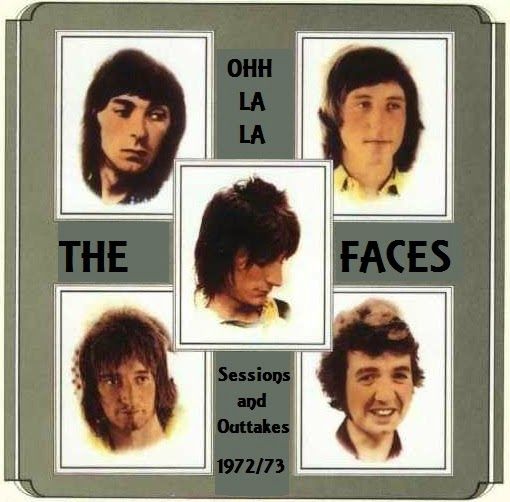
Ooh La La 1973

What a great song from The Faces. The song was written by Ronnie Lane and Ronnie Wood and sung by Wood. That is strange because The Faces had one of the best lead singers around at the time…Rod Stewart.

Stewart by this time was soaring as a solo artist and his interest in the Faces was waning. He claimed the song was not in his key to sing. He did do vocals for it then and Lane but Wood ended up singing the released version.

The Faces had one big hit…Stay With Me but this song is their greatest song to me. Rod Stewart finally covered the song in 1998 for a tribute to Ronnie Lane. Ronnie Lane did his own version with his band Slim Chance. Ronnie Wood also does it live in solo shows.

A song between Granddad and Son about the ways of love. The song never ages because the subject matter never changes and it is continually passed along. The song creates an atmosphere and Wood not known for his singing ability did a great job on this one.

The song was included in the 1998 film Rushmore and enjoyed renewed popularity.

It’s one of my favorite songs of all time. Just a beautiful melody and words.

Poor old granddad
I laughed at all his words
I thought he was a bitter man
He spoke of woman’s ways
They’ll trap you, then they use you
Before you even know
For love is blind and you’re far too kind
Don’t ever let it show
I wish that I knew what I know now
When I was younger
I wish that I knew what I know now
When I was stronger
The can can’s such a pretty show
They’ll steal your heart away
But backstage, back on earth again
The dressing rooms are gray
They come on strong and it ain’t too long
Before they make you feel a man
But love is blind and you soon will find
You’re just a boy again
When you want her lips, you get a cheek
Makes you wonder where you are
If you want some more and she’s fast asleep
Then she’s twinkling with the stars
Poor young grandson, there’s nothing I can say
You’ll have to learn, just like me
And that’s the hardest way
Ooh la la, ooh la la la yeh
I wish that I knew what I know now
When I was younger
I wish that I knew what I know now
When I was stronger


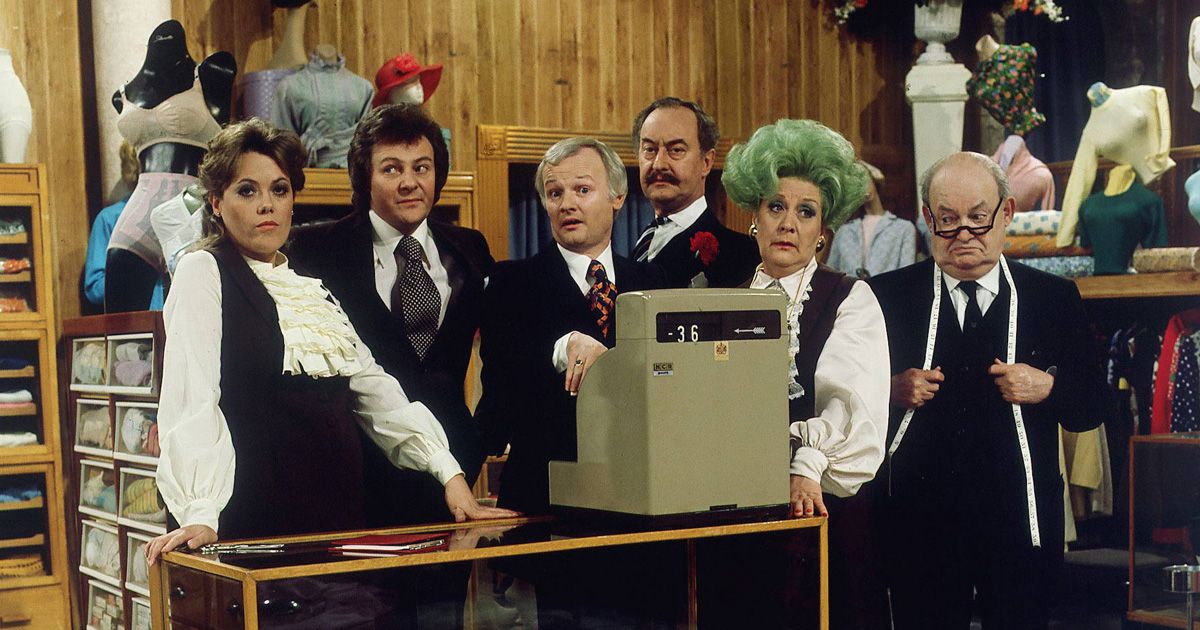
Are You Being Served?

A fun British sitcom that aired from 1972-1985. This comedy is not subtle…it’s obvious and in the open.

The show is about a department store called Grace Bros. owned by the elderly Grace brothers. It is operated with the British class system. The show highlighted the Menswear and Womenswear departments and also the Floor Walker the pretentious Captain Peacock. It also featured the incompetent floor manager…Mr. Rumbold.

The Women’s department was run by Miss Slocombe. A lady that is known for her hair color changing every day and the love of her pussy cat…they get a lot of mileage out of that. She tries to elevate herself over the working class but that is just what she is…Her assistant is the young very pretty Miss Brahms who talks with a cockney accent and is proud of being thought of as working class.

The head of the Men’s department is Mr. Granger who is older and near retirement and seems to be in a sour mood most of the time. Two more men work in the department… The junior in the department is Mr. Lucas who is always late and flirting with Miss Brahms, never has money and always has to wait his turn before he can serve anyone and make money because the other two men have seniority, The other man is Mr. Humphries…probably the most popular character of the show. He hints at being gay every episode but never comes out and says it…this is really played up…remember it is the 70s. The writers go for the obvious jokes many times but it’s still funny.

The Grace brothers owned the store and “Young” Mr. Grace was in fact not young at all. He was stingy and he always had a very young attractive girl by his side.

The maintenance guy Mr. Mash and Mr. Harmon were great. They would make the devices to advertise the merchandise. Sometimes the machine they made would blow up or show some naughty things to the customers. They were union and they thumbed their nose at the everyone.

Mix these personalities and you got a funny show. The purpose of the sitcom basically was to expose the class system and to parody it.

The customers that shopped at Grace Bros department store usually left disappointed. The phrases I remember the most are “Are you free?” and while having a customer try on pants that obviously doesn’t fit…You would hear an employee say don’t worry ”They’ll ride up with wear.”

Some of the cast left and past away during the run of the show. They were replaced with different characters and the show went on. When the show ended in 1985 a spin-off was made called Grace and Favour.

The core cast was strong and the show was very good until the start of the 80’s and like most shows, they were reaching more for stories and repeating themselves. In 1979 when Trevor Bannister who played Mr. Lucas left it started to go down.

The sitcom had 69 episodes and a movie in 1977… well, you can say 70 episodes because in 2016 a new episode was made with different actors playing the same characters.

I wouldn’t compare this to Fawlty Towers because Fawlty Towers was better written… but this is a fun sitcom nonetheless. I remember it when I was young being broadcast on PBS. It is worth a watch if you like British humor.

The cast was

Mollie Sugden – Miss Slocombe

Frank Thornton – Mr. Peacock

John Inman – Mr. Humphries

Wendy Richard – Miss Brahms

Nicholas Smith – Mr. Rumbold

Trevor Bannister – Mr. Lucas

Arthur Brough – Mr. Grainger

Harold Bennett – Young Mr. Grace

Larry Martyn – Mr. Mash

Arthur English – Mr. Harmon

James Hayter – Mr. Tebbs

Alfie Bass – Mr. Goldberg

Mike Berry – Mr. Spooner

Kenneth Waller – Old Mr. Grace


Wild Tales: A Rock and Roll Life

This is Graham Nash’s autobiography.

Graham narrates the audible version and does a good job weaving through his personal history. He starts with his blue-collar family and how Alan Clarke and he knew each other since school and formed The Hollies. The most interesting part to me was the mid-sixties era living in swinging London.

He wrote about his friendship with the Beatles and him getting an advance tape of Sgt Pepper from Brian Epstein. He had a great hi-fi system at his flat and he would show it off to anyone that came over. When the Turtles came over from America they were blown away by Sgt Peppers at top volume. He went on about how Sgt Peppers changed everything and it would eventually lead him to leave the Hollies.

Graham describes being a pop star in the mid-sixties in London. Shouldn’t we all live that life? Paul McCartney calls him up and invites him over to the All You Need Is Love session for the “Our World” program to be broadcast to millions.

He talks about how his friendship with Mama Cass led to meeting David Crosby and eventually CSN being born. Graham covers the CSNY period and his romantic relationships including  Joni Mitchell. He does cover the drama associated with CSNY and the troubled David Crosby. What kind of Rockstar bio would it be without drugs… Graham did his share and Crosby did our share. Graham handled them better than some.

Graham would write simple songs compared to Crosby, Stills, and Young but many times his songs would be the hits that drove some of the later albums…songs like “Just a Song Before I Go” and “Wasted on the Way.”

One thing I can say is he didn’t hold back or pull punches…but he still comes off as a really nice guy but it is his book.

This book helped sever his relationship with Crosby…for now anyway but Nash stressed through the book how much he cared for Crosby.

I would recommend this book to not only Hollies and CSNY fans but fans of 60’s and 70’s music and culture. After reading this I listened to more Hollies songs and I really began to appreciate their psychedelic period with songs like King Midas in Reverse.


You Know My Name (Look Up The Number) Beatles

I bought the Let It Be single by the Beatles in the mid-1970s from a relative’s yard sale. I loved Let It Be and then I flipped it over. The song started off with a catchy piano riff and then took a left turn never coming back.

I won’t even attempt to describe it because it would lose everything in words. It is a funny record (I don’t mean “My Love” bad funny… wo wo wo wo, wo wo wo wo…sorry Paul) it’s a comedy record. You could tell they were having a great time doing it.

Brian Jones played saxophone on the recording. Yes, that Brian Jones of the Rolling Stones. He dropped by the studio and John and Paul thought he would play some guitar but he had a sax so they thought of this tune and he played on it.

My friend and I would listen to this over and over. We would quote from it…”Welcome to Slaggers” at school. Sometimes…and this is probably sad but we still do.

The song was recorded in May of 1967 and June of 1969 and was released as the B side of Let It Be in 1970.

It’s just so off the wall. The thing that surprises me isn’t the 1967 sessions…it’s John and Paul working on this in 1969 when they were not exactly best mates anymore. How could you not get along and make this? I guess they went through bad and good periods like any friendship or partnership…

The original version was 6:08 long but John edited it down to 4:19 for the single release.

Here is a quote from John Lennon

“That was a piece of unfinished music that I turned into a comedy record with Paul. I was waiting for him in his house, and I saw the phone book was on the piano with ‘You know the name, look up the number.’ That was like a logo, and I just changed it. It was going to be a Four Tops kind of song – the chord changes are like that – but it never developed and we made a joke of it. Brian Jones is playing saxophone on it.”

Paul McCartney on Brian Jones

“I naturally thought he’d bring a guitar along to a Beatles session and maybe chung along and do some nice rhythm guitar or a little bit of electric twelve-string or something, but to our surprise, he brought his saxophone,”

“He opened up his sax case and started putting a reed in and warming up, playing a little bit. He was a really ropey sax player, so I thought, ‘Ah-hah. We’ve got just the tune.”

“It’s not amazingly well played but it happened to be exactly what we wanted. Brian was very good like that.”

Gower Guitars

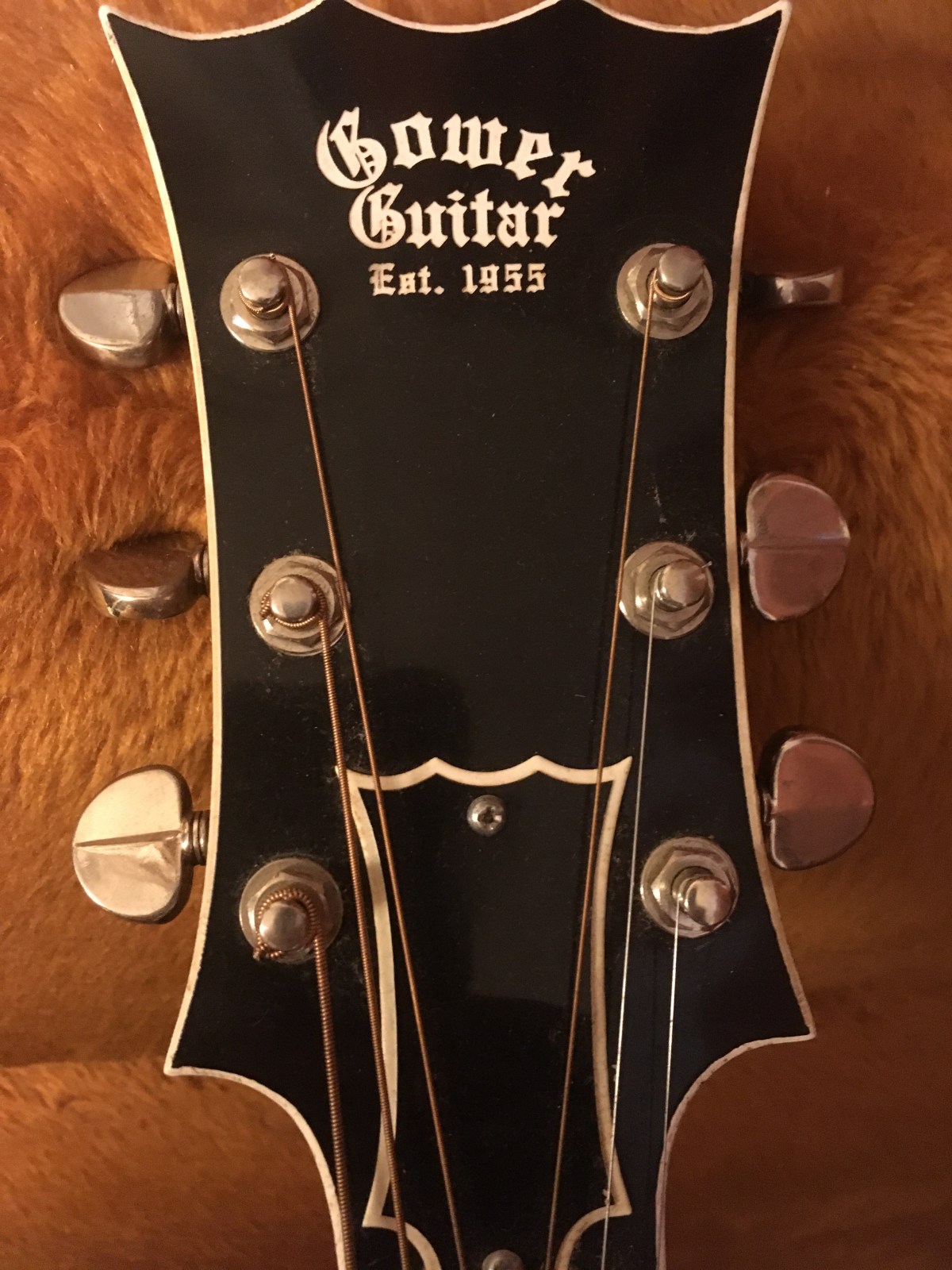
I have three Gowers and one Grammer Guitar and I’m really proud to have them. They are part of my family heritage that I had nothing to do with…My family built guitars (Gower Guitars and Grammer Guitars) starting in the 1950s and made them until the 1970s. Country artists such as Johnny Cash, Leon Rhodes, Gordon Terry, and George Jones played Gower and Grammer Guitars.

I keep my eye out for them but on eBay, they are anywhere between $1500 – $5000 and more. They are rare…if you run up on one for a good price grab it. I don’t want them only for the family connection…they sound great.

I have two acoustics and two electrics. They didn’t make a lot of electric guitars. They all play great and the acoustics have the feel of a Martin. I asked my dad once why they didn’t make more electric guitars. He said because acoustics took craftmanship and electrics were basically “2 x 4’s with strings.”

Well, the electrics I have are more than that. The Green sunburst hollow body electric I have has a Gibson 335 feel and the mahogany solid body electric I have with original DeArmond pickups I would put it against any Gibson SG…

In the sixties, my family also built a studio where singer-songwriters Joe South, Dolly Parton, Willie Nelson, Ray Stevens, Johnny Bragg and drummer D. J. Fontana recorded demos there.

I remember when I was 4 or 5 and walking into the Grammer guitar shop in the early 70s around the time it ended. I will never forget that smell of wood and glue…I also remember the studio and walking in with my cousin Ricky and seeing egg crates on the wall. I do wish they would have continued.

I will let two of my relatives who were there at the time and remember, tell the history…one being Randy Gower who’s father was J.W. Gower and Ricky Moore who’s mother was Alma Moore. My father was Bobby Max Gower.

The below is some history by Ricky Moore and Randy Gower

Ricky Moore

In 1955 J.W. Gower and his sister Alma Moore started the Gower Company. The first guitar was made by bending the sides on a tree. This did not work well but they still got the Guitar together. After a few months, they had purchased some woodworking equipment and had a brick building built by their duplex where they lived.

They built acoustics and electrics from 1955 until the early 1960’s. They made their own guitar pickups. Alma Moore’s husband Kellice Moore built a machine out of an old sewing machine and an old part from a car to wind the pickups.

Randy Gower

Then one day, out of nowhere, dad (J.W. Gower) decided he wanted to build guitars. He went and visited a violin maker in town and picked his brain and as George Jones would say “The Race Was On”. The beginning of the guitar business was slow. If you had seen the first one you would have known why, uglier than a bowling shoe.  Made out of maple it was a big jumbo guitar.  The sound was good but it looked rough. He made the beast and he did not stop there. He made another one that looked better. Dad and his sister (Alma Moore) decided they could do this for a living so he and Alma’s husband Kellice Moore got together to build a brick o block shop in the back of the house where they could build guitars and do repair work on others. Gower Guitar began. It wasn’t long until he had the shop going. Alma and him would make a guitar on occasion. To help pay the bills they did a lot of repair work for the guys at the Opry. Paying the bills proved to be a challenge. I was only ten years old and I could tell for the time he was putting in on some of these jobs he was not charging enough. He would work 2 hours on a job and charge .50 cents. Granted this was 1958 and .50 was worth much more then than it is today but he was never going to get ahead. The shop was a who’s who of country music stars. Stonewall Jackson, Faron Young, Sonny James, Earl Scruggs, Eddie Arnold, Harold Bradley, Pete Wade and many more would hang out or pass through over the years.

I can remember being in the shop with a fire going in the old pot belly stove in the shop when Faron Young came by to pick up a job. He told dad he had just left the studio where he thought he had cut another hit. He reached down to pick up a guitar that was laying there, strummed a cord and said, “Hello Walls how’d things go for you today”. He was right it was a hit, a big hit.

Then there was Eddie Arnold. I came in from school one day and dad was on the phone with Mr. Arnold. As usual, I went over and ask for a nickel. For all of you, youngsters a nickel would buy a soda or candy bar back in the day. I regressed, he waved me off but I was persistent, I said give me a nickel, once again a wave off. I tried once more with the same response at which point I ran my hand down into his front pocket. I did n’t reach the bottom when out of nowhere a hand came flying across my face. He had smacked the shit out of me. I bounced off the block wall and stood there stunned in disbelief. That was the only time he ever smacked me but I will say I never really gave him a reason again, nor did I ever put my hand in his pocket again. To this day, if I hear or see Mr.  Eddy Arnold the hair will stand up on the back of my neck. Life lesson learned.

At some point in the early 60’s J.W. Gower and Kellice Moore decided to build a recording studio in the building they were making guitars in…no Gower guitars would be made again until the mid-1960’s. Around 1964 Billy Grammer came to the house and ask dad if he wanted to go into business with him making guitars. They went and got a third partner in Clyde Reid to help sell stock and raise money. The start of Grammer Guitar had its start.  They brought in a man named Fred Hedges who was an outstanding machinist to build equipment for the manufacturing process. It wasn’t long until dad realized the thing was not going to work out.  Billy and Clyde wanted to go to a laminated Rosewood for the backs and sides. Like most companies, this was just a cost saving and nothing more. However, dad contention was it affected the sound of the instrument and would not go along with the change.  They could not agree so dad left the company in ’66.

There was a gap between Grammer and the new Gower Co.

At some point, Hatch Reid approached dad about starting up Gower Guitar. Hatch was Clyde’s uncle and there again the money man.

J.W. Gower and his sister and brother Max started manufacturing acoustic guitars around 1966. The company was in business until sometime around 1969 when they went bankrupt. A salesman that worked for the company took orders for guitars and pocketed the money…

Alma Moore and her brother Max went back to Grammer Guitars and worked there until Grammer went out of business. Tut Taylor bought all the equipment at auction and leased the same building Grammer used. Alma Moore and her brother Bobby Max Gower worked for Tut Taylor until he also went out of business. She would go on to work for Gibson Guitars for 11 years until she retired. Max went on to work with Tut Taylor’s son Mark for a few years building wooden instruments.

J.W. Gower moved to Franklin, TN and made more Gower Guitars with his son Randy.


I’m proud to be associated with these guitars and studio if only by family. Not long ago I met the great guitarist Leon Rhodes before he passed away. We were introduced and when he heard who I was he started to tell me some stories about the old days and my family that I didn’t know.

All in all, I have 12 guitars… I like playing vintage guitars through vintage amps because I like the instruments to have a history. I like knowing I can get the exact sound now that someone got in 1970…I have some older guitars but the Gower guitars have part of my history.

This guitar was given to me by Randy Gower that J.W. Gower made. I wouldn’t take anything for it. My guitar guy installed humbucker pickups and I can get about any tone I want out of it.

gower green.JPG

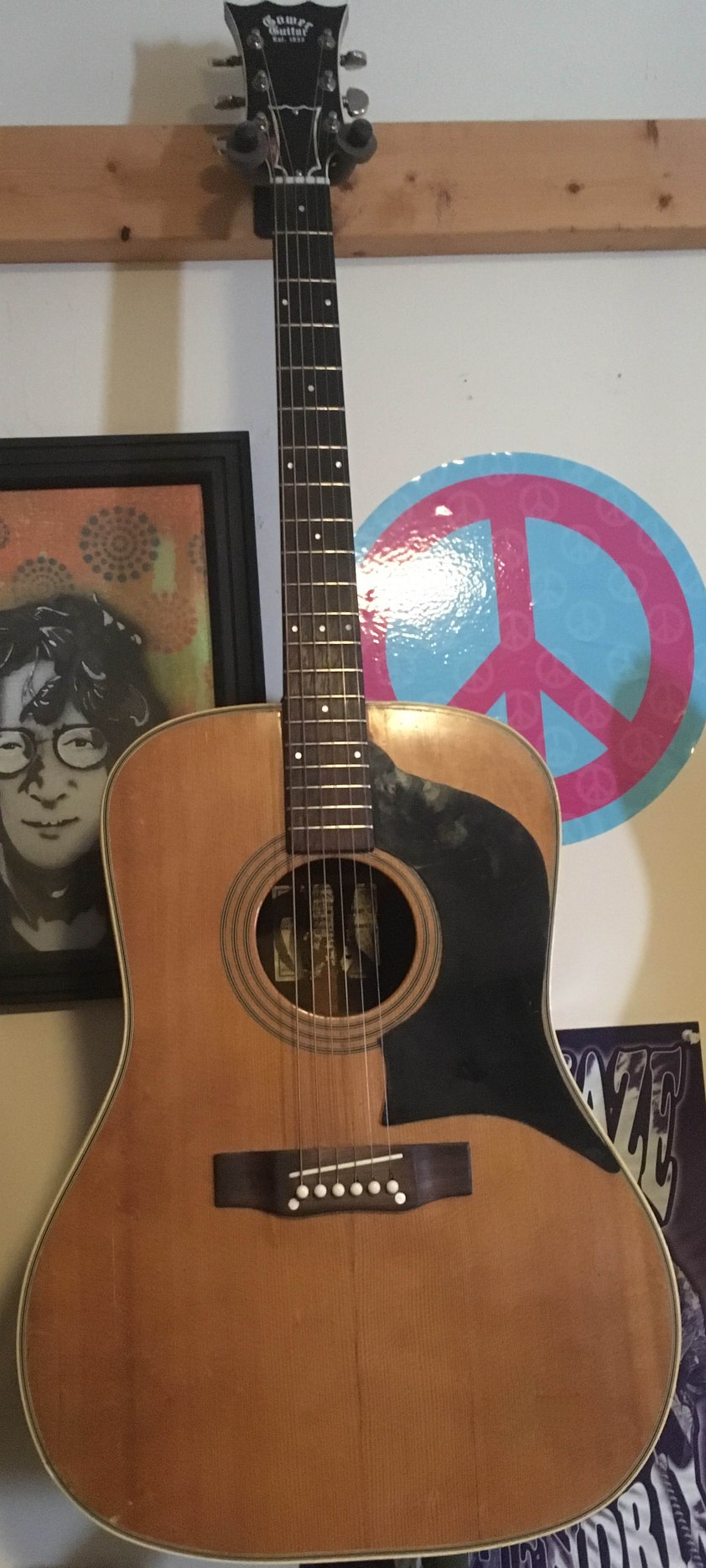
This one plays like a Martin. It is the best acoustic I have. It was made in the early sixties.

Gower acoustic.JPG


Waging Heavy Peace

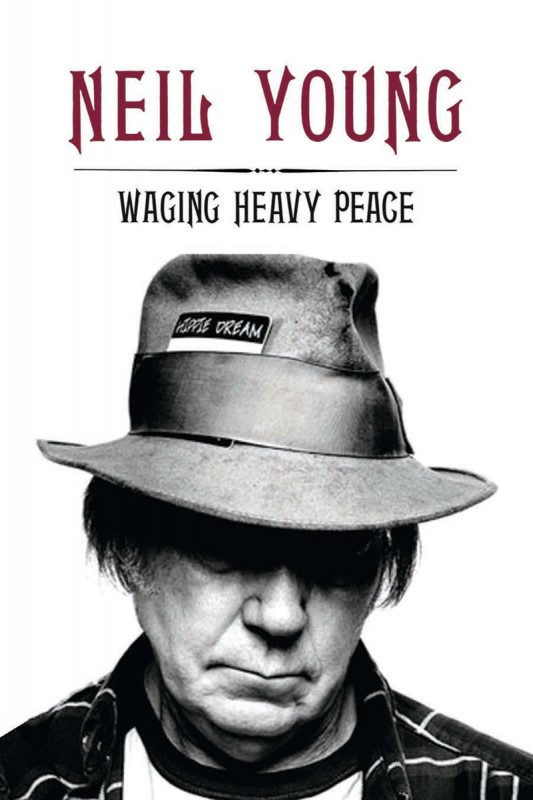
An Autobiography by Neil Young. Neil is one of my favorite artists. He tells some history about Buffalo Springfield and CSNY and also the Mynah Birds with Rick James. Neil Young and Rick James in a band together…its just hard for me to imagine that.

He gets into how he started his music career with his first band and how he loves Crazy Horse.

Now all of these stories are great but… this is during the period he came up with PONO music… a high-end music player that plays music with much more quality than CDs or mp3s. This venture eventually failed years later but he is very excited about it in the book. That is great but sometimes it seems forced. I honestly don’t think he was plugging PONO…I think he was just that excited about it. His enthusiasm is unquestionable.

Cars…the man loves cars. I admire that in him but again he talks A LOT about electric cars and hybrids. Then he combines the two…PONO music systems being installed into…fuel efficient cars. I will admit it is interesting and you get to see what makes the man tick.

Some of it reads like a diary because that is the way he wrote a lot of it. He will say he is going to Hawaii and then a page or two later…he will tell you he made it there. It’s like being in conversation with someone who will just switch subjects on a whim. Neil tends to ramble.

He is part owner in Lionel Trains and you can feel his love of trains coming through the pages. He also talks about his quadriplegic son and the Lionel Train control he designed for his son to operate the trains. That I found really heart touching. He really tries to connect with his son and that is what the album Trans is all about.

He goes through his drug and drinking problems, medical problems, marriage problems, and every single car or bus he has had in his life…which again he just loves any kind of vehicle.

The disappointment for me was Neil didn’t talk enough about the music. Yes, you will learn more about Neil Young. I did learn many things about him that I didn’t know. The problem is he spreads the music sections out and just when he gets on a roll, you are thinking… cool he is writing about playing with Buffalo Springfield and also where they hung out…here comes the PONO Music bit or more car information.

I guess the best way to sum it up is yes you will get a lot of the musical info you are looking for but you have to wade through a lot of rambling.

Overall if you can find this book 2nd hand, get it. If you are looking for a definitive Neil Young bio this is not the one… He does have great things to say about the members of CSNY, Buffalo Springfield, and Crazy Horse. Maybe I wanted another Testimony or My Cross to Bear…this wasn’t it…but what did I expect? It’s Neil Young and he is going to do what he wants to do… that is the reason we love him.

I will admit this…after he mentions all the vintage cars and busses he has owned his enthusiasm rubs off…I started to look these models up and reading about them… but it wasn’t what I had in mind going into the book.

The Kids Are Alright 1979

Besides the Beatles Anthology, this is my favorite rockumentary for the lack of a better word. Jeff Stein the director did a great job on this film about The Who.

Jeff was a fan of the band and pestered them until they let him do this. He had no prior experience in filmmaking but this was the 1970s and he got the gig. His timing was eerily perfect. He caught the original band at the very end of their tenure with the great Keith Moon.

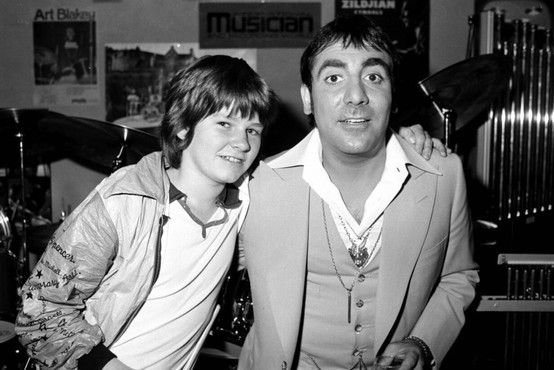
He searched high and low for clips of the band in earlier years. Stein keeps the appearance mostly in order. There is sadness in this. You see the band through the years from 1964 to 1978… you see all of them gradually age of course but Keith Moon ages faster than any of them. I’ve read where it hit him hard while watching the rough cut right before he died. His drinking and drug taking had taken its toll on him. He saw a young energetic kid that looked like Paul McCartney’s younger brother to a man who was 32 and looked like he was in his 40s.

This may be the first or one of the first video bios on a major rock group. Led Zeppelin had The Song Remains the Same but it focused on one concert in New York… The Beatles had Let It Be but those films didn’t show their history like The Kids Are Alright.

It this film you see a band that is fun… unlike Zeppelin the Who were more open to their audience and didn’t have a dark mystique hanging over them. They would crack jokes from the stage and Moon treated it like a High School talent show until he started to play…then he got serious.

You see film segments that were fun like the video of Happy Jack, the interview on the Russell Harty show, Keith with Ringo, and Keith and Pete sharing a joke that only they could understand. One of my favorite segments is The Who playing Barbara Ann with Keith singing and the band having a good time. They also played I Saw Her Standing There but it didn’t make the film…you can watch it in the outtakes. I can’t imagine Zeppelin doing Barbara Ann and goofing for the camera.

The Who did a couple of live shows for the film besides being interviewed. Stein mostly used old clips but he convinced the band to do a couple of concerts where he could get a definitive version of Won’t Get Fooled Again… which personally I think is the greatest rock song live you will ever hear. You see Keith’s last performance as he is looking pudgy, older, and slower but still pulls it off. Pete wasn’t too thrilled about doing the concerts for the film but it turned out good. They ended up only using a version Won’t Get Fooled Again and Baba O’Riley.

Keith died a few months before The Kids Are Alright debuted. The film showed The Who at it’s best. Kenney Jones from the Faces replaced him but it was never the same. You cannot replace Moon…he was the engine that drove the Who. The only drummer that has worked well with the Who since Keith has been Keith’s Godson Zak Starkey…Ringo’s son.

zak.jpg

I acquired a VHS copy of this in the mid-eighties. It wasn’t a great copy but my friends and I wore it out. One of them worked at a small cable station. The station was in a small county that usually aired farm reports and advertisements. Basically, it was a very small building in the middle of nowhere. All they would do there is broadcast videos.

We had the tape in hand and wanted to see it so we went there one afternoon. He popped it in the VHS player and played it. He had no idea but it was going out live. Near the end of the film, he took a phone call from his boss. I didn’t think anyone ever watched that station…but it turns out they did and they were not fans of The Who. He didn’t get fired but they took his key for the door. It was a big subject the next day at school as some teenagers loved it but their parents didn’t appreciate their videos on farming being interrupted by My Generation and Keith Moon in bondage.

This film covers the original Who and being such a Who fan I’m glad Jeff Stein was so persistent in doing this because many of the tapes he was able to borrow probably would have been erased and used again by the BBC as was their policy.


Logan’s Run

1970’s futuristic sci-fi movie. That’s all it takes for me to watch.

Sometime in the 23rd century… the survivors of war, overpopulation, and pollution are living in a great domed city, sealed away from the forgotten world outside. Here, in an ecologically balanced world, mankind lives only for pleasure, freed by the servo-mechanisms which provide everything. There’s just one catch: Life must end at thirty unless reborn in the fiery ritual of Carousel.

And so begins this movie from 1976.

A future society living in a dome and everything is run by a computer. Everyone is under 30 because when you turn 30 you are killed in the Carousel ceremony. Logan and Jessica try to escape and after nearly being killed, they find an old man outside the dome who tells them how life used to be many years ago. it’s a bit more complicated than that but a good sci-fi movie to watch.

The Cast is Micheal York, Jenny Agutter, Richard Jordan, Roscoe Lee Browne (Voice only), Peter Ustinov and a brief appearance by Farrah Fawcett.

Peter Ustinov is great in this movie as the old man… He keeps this movie grounded and he is my favorite character in the movie.

I like the special effects for its time period. You can tell it was made in the disco era and this was pre-Star Wars. Some of the set looks huge and they mix them with miniatures. I wish I could have a room like Logan’s.

Jenny Agutter is beautiful in this movie and there is a small appearance by Farrah Fawcett.

I’m very surprised that there hasn’t been a remake since everything else has been remade to death.

Roger Ebert’s review in 1976

“Logan’s Run” is a vast, silly extravaganza that delivers a certain amount of fun, once it stops taking itself seriously. That happens about an hour into the film, but even the first half isn’t bad if you’re a fan (as I am) of special effects and cities of the future and ray guns and monorails whizzing overhead. The movie was made on a very large budget – the figure $9 million has been whispered about Hollywood – and it looks it. “2001” it’s not, but it has class. The plot is fairly routine stuff, by science-fiction standards; It seems to be a cross between Arthur C. Clarke’s “The City and the Stars” and elements of “Planet of the Apes” (1968). It’s about another one of those monolithic, self-perpetuating domed cities we’re all scheduled to start living in 300 or 400 years hence. 

People wear the regulation futurist leotards and miniskirts, and glide around enormous interior spaces that look like modern buildings in Texas (these scenes were shot on location in modern buildings in Texas). They don’t seem to eat anything, although they drink stuff that’s apparently nutritious, and when they feel like sex they just plug themselves into a cross between a teleporter and a computer dating service and materialize in each other’s bedrooms. 

The only catch in this idyllic existence is that nobody’s allowed to live more than 30 years. On the appointed last day, they ascend heavenward in a “carousel” that incinerates them while their friends applaud. In theory, if you get to the top of the carousel without being zapped, you can continue to live. But there are no old people in the city . . . 

Our hero is Logan, played by Michael York with a certain intelligence (meditate on how some of his dialog would sound coming from anyone else and you’ll see what I mean). He’s a “sandman,” assigned to intercept “runners” who attempt to escape their society. Most people start to run just as they’re approaching their 30th birthdays – Logan’s world is just like ours. One day, after being double-crossed by the computer-mind of the city, Logan runs, too. And the beautiful Jessica (Jenny Agutter) runs with him. 

It’s here that the movie gets to be fun. Logan and Jessica float through an irrigation system, are trapped on an elevator, get into fights with other sandmen (during which we reflect that everyone’s death rays are terribly inefficient), walk through an ice tunnel populated by Roscoe Lee Brown playing a computerized Tin Man and finally emerge into a largely abandoned Washington, DC. This flight is not unaccompanied by laughter on our part. The audience seemed to laugh a lot, indeed, but it was mostly tolerant laughter. Maybe the moviemakers themselves even knew some scenes would be funny, as when, Jessica and Logan, dripping wet in the ice tunnel, get out of their wet clothes and into some dry animal skins and then immediately, inexplicably, put their wet clothes back on again. There are the obligatory shots of the man and woman confronting the brave new world with their arms about each other, and then a truly marvelous confrontation with the lone survivor of Washington (played by Peter Ustinov with a twinkle in his eye and, I swear, in his voice, his beard and his toes as well). After a knockdown fight borrowed from old Westerns, the movie’s ending is unabashed cornball utopian. But “Logan’s Run” has wit enough to work on such a level; even while we’re chuckling at such an audacious use of cliche, we’re having fun.


Dear Boy: The Life Of Keith Moon

I didn’t think I would ever see an extensive book (nearly 600 pages) on Keith Moon. Tony Fletcher wrote this book and he thoroughly researched Keith and he had been a fan since his teenage years. As a teenager, he actually met Keith before he died. I’ll post what happened at the end of the blog from Tony’s website.

The book is huge and Fletcher talks to everyone of importance in Keith’s life. The only disappointing thing for me and for Fletcher himself is he had to debunk some of the myths about Keith. The great story of him driving a car in the pool of a Flint Michigan Holiday Inn…didnt happen… but the real story is just as interesting though.

The veil is drawn back on a lot of myths. It’s not a book full of Keith doing wild things like the book “Full Moon”. This one shows his ugly side also. Keith had one of the most dangerous traits you could have…the ability not to be embarrassed. Think about that…that keeps us in check at times. With Keith, anything could happen at any time.

Keith was diagnosed with Borderline Personality Disorder and elements of schizophrenia…add that with alcohol and drug abuse and it’s a wonder he lived as long as he did… In his first and only marriage, he was terrible to his wife Kim who finally had enough and left him for Ian McLagan and Keith never recovered from that. Kim would say he would dress up and be Hitler one day, a Pirate the next and Noel Coward at other times…not only dress up but BE those people all day.

The book also concentrates on his drumming and the influence he was to so many. The author wanted to show it was more to Keith than the Moon the Loon image…and it was. He was fantastic to fans and his friends. He would play with friends kids…like Ringo’s son Zak and Larry Hagman’s child for hours but yet basically ignore his daughter Mandy. It also touched on his relationship with each member of the band and his love of the Beach Boys and friendship with The Beatles.

He would go to schools and talk to unruly kids and explain to them that they need to settle down. He could get by with bad things because he was a pop star but they would get thrown in jail.

He became a caricature of his self at the end. He tried to live up to the image that he created. Many people have said that during the last few months of his life he was trying to settle down and even started to write an autobiography so he could put to bed the Moon the Loon image. He was trying to stop drinking but he would go into seizures because his body craved alcohol so bad.

A doctor gave him Heminevrin to ease the withdrawal symptoms from alcohol and he took too many and overdosed. Heminevrin should not have been given to him, it should have only been administered in a hospital but he was a rock star and so the doctor looked the other way. He kept waking up through the night and taking more…32 tablets were found in his system.

The book covers everything about the man and information about The Who I never knew. You can’t help but laugh at some of the things he did. At the same time, it’s sad knowing the man was mentally unstable. That probably helped his drumming on the edge but the price was too high.

There is just too much in the book to cover in a blog. It is an interesting read… The first line says it all… How do you attempt to capture an exploding time bomb? These were the first words put to me by one of the vast number of people I talked to while researching the life of Keith Moon.

From Tony Fletcher’s iJammin! website…  http://www.ijamming.net/Moon/ChasingTheMoon.html

On August 1, 1978, an exhibition of Who memorabilia curated by the group’s fans opened at the Institute Of Contemporary Arts on The Mall, near Buckingham Palace in London.

It was perhaps inevitable that members of the band would turn up to the opening. Their presence brought the process full circle: if the Who meant so much to their fans that the audience should mount an exhibition, then it followed that the fans meant so much to the Who that the band would want to see it.

So it came about that both Pete Townshend and Keith Moon immersed themselves among the hundreds of diehard Who worshippers that first day of ‘Who’s Who’ to make their way around the exhibition, pausing to talk with the audience along the way.

To a fourteen-year old fanzine writer, who had identified with the Who since first discovering pop music, and had attended the group’s last London stadium show as an excited twelve-year old, being in the same room as Pete and Keith was a significant moment. Like many others throwing nervous glances his heroes’ way, he respected them enough to grant them their privacy, but still he wanted an autograph, a chance to talk. While studying a bizarre life-size hologram of Keith Moon at the drums, the boy turned to find the real thing standing next to him. Keith looked shorter in real life, and somewhat chubbier. But it was unmistakably him: the hologram had obviously been based on a recent picture or film. The boy made a comment about the surreal situation, looking at an illusion while standing next to the real thing, and the rock star, quietly, in contrast to his larger-than-life reputation, said something in agreement. The boy then seized his moment. He pulled from his sports bag a lone copy of the fanzine he produced and asked Keith Moon to autograph a basic biography on the Who he had written for it.

The drummer looked at the cheaply produced fanzine, checked the cover to register the name — Jamming! — examined the boy’s face, and said, “I don’t think I’ve seen this one.”

You wouldn’t have, thought the boy, given that there were only one hundred copies in existence, and those mainly sold at his school. “It’s my own magazine,” he said aloud.

“I’d like to read this article some time,” said the rock star with evident sincerity.

“You can keep it if you want,” replied the boy, eager to please.

“No, you want it autographed,” said Moon, signing his name across the page with a flourish. “Tell you what, though.” He produced a slip of paper from an inside pocket and scribbled an address in Mayfair on it. “Here’s where I live,” he said as he handed it to the incredulous fourteen year old. “Come and see me. Bring a copy of your magazine with you. Any time’s fine by me.”

A week or so after meeting his hero, the fourteen-year old boy made his way nervously to a plush apartment building in London’s Mayfair. He carried the star’s address in his pocket: Flat 9, 12 Curzon Place, London W1. He did not know if he possessed the courage. It didn’t make sense his being invited around like that; it was hardly as if someone so popular could be lonely for company. With no security to stop him, he made his way to the fourth floor. His heart in his mouth, he approached Flat 9 with his magazine under his arm and knocked quietly. He thought he could hear music, yet from which apartment he was not sure. He knocked again, a little louder this time. But there was no reply. He slipped the magazine under the door along with an appreciative note bearing his own phone number and address. He didn’t really expect to hear back from his hero.
And he never did. Just a couple of weeks later, Keith Moon died in that same Mayfair apartment.

I cried when I learned of Keith Moon’s death: on Capital Radio at 9pm, at the start of Nicky Horne’s show, as I vividly recall it being, late that Thursday evening of September 7. (At 10pm every night, I would turn religiously to John Peel on Radio 1.) It was the first time anybody’s death had ever hit me personally, and it affected me in much deeper ways than I believe my family could understand at the time. To them he was just another alcoholic rock star, pissing away his limited talent and excess wealth, and indeed there was an ugly scene at a cousin’s communion shortly thereafter, when an aunt dared to insult the dead drummer for his general debauchery and lack of morals as she had read about in a middle-class tabloid and I jumped passionately to my dead hero’s defense. For me, Keith Moon had been more than just a world-famous rock star, more than simply a brilliant drummer, more even than the most irrepressible and carefree character of rock’n’roll’s last (and British rock’s first) fifteen years. He had been a human being, an approachable, affable man who had never forgotten what it was like to be a fan or a dreamer. More than that, for those few minutes that August on The Mall, he had been as a friend.

This website has stories from Jeff Beck, Alice Cooper, and Dave Edmunds about Keith. If you have the time check them out.

The night before he died.

keith last.jpg


Roller Skating and Music

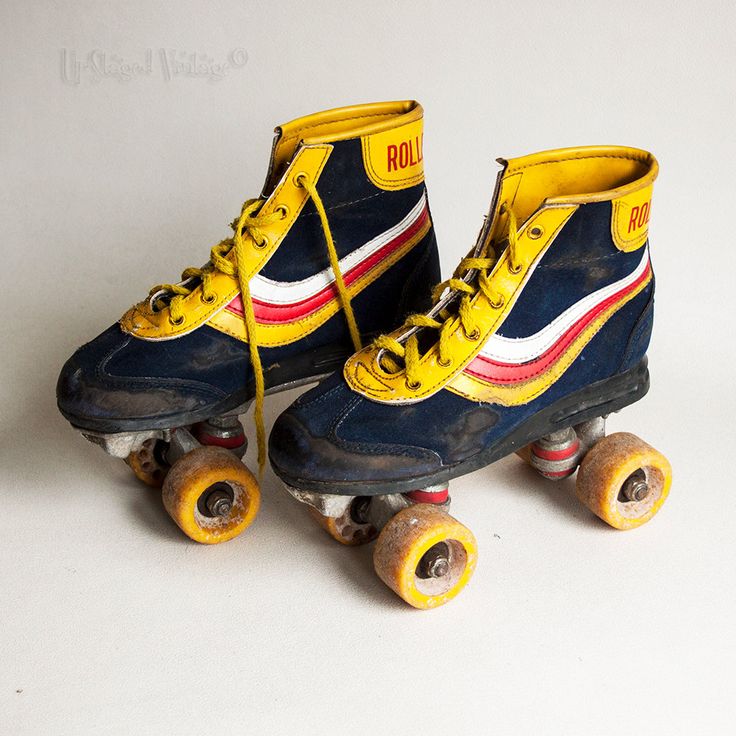
In the mid-seventies, my big sister would take me to the skating rink. I would go in as a little kid and trade my shoes for skates. I never understood why my sister went there and hardly ever skated. She would be in the corner with her girlfriends talking to guys while I was out there falling down. There was not a lot to do in a small town so this was a lot of fun.

I remember being exposed to a lot of music while skating. Someone would say over the intercom “All Skate” and they would blast a song at ear-splitting volume. Songs like “Juniors Farm”, “Sally G”, “Can’t Get Enough of Your Love”, “Rocky Mountain Way” and Free’s “All Right Now” would play while I learned how to skate decent soaking up the atmosphere.

They would play the 4 corners. You would skate until the music stopped. You would then go to a corner and they would call a corner number and those people in that corner were eliminated. This would go on till there was only one person left.  I won one time. The song that was playing and then stopped as I went to my corner on that night was Frankenstein. What I won was a single by Wings called Silly Love Songs. It was the first thing I ever won…I earned that single and still have it today and also bugged my Mom till she bought me the Wings at the Speed of Sound album…not Pauls best to say the least but it brings back too many good memories to be that bad.

In the seventies skating and going to rinks was huge. It was a place to gather and have fun with your friends. No texting or emails or blogs…Some were great at skating backward, doing tricks, and sabotaging other skaters…I was just a simple skater…As time went by I would find my own way down to the rink…as I got older I was the one that hung with friends and wanted to talk to girls instead of skating. I kept going to the rink until I was around 15 and then all of my friends and me just stopped at once. We had moved on to other things by then.

I did go again after my son was born in 2000…we had fun but the music sucked…no loud guitar music at all…just programmed electronic dance music… I guess you really can’t go back home.

I’ll never forget my friends and the music in that period of my life…That is why music is so important…it can transport you back through time and you are at that place again.


Testimony

The autobiography of Robbie Robertson. I read this right after My Cross To Bear by Gregg Allman. The only surprising part is it stops at 1976 and doesn’t cover Robbie’s solo career.

Robbie is 33 when the book ends. It ends at a recording session where only Robbie shows up after The Last Waltz.

If you have read Levon Helm’s This Wheels on Fire you know that Levon was pretty hard on Robbie. He rips him for songwriting credits and The Last Waltz. Robbie takes the high road in his book. He talks about the brotherhood they all shared. He mentions that Levon was his best friend he ever had in his life.

Robbie was in the middle of musical history throughout the book. He talks about joining Ronnie Hawkins and the Hawks and befriending Levon…they eventually picked up Richard Manuel, Rick Danko, and Garth Hudson. After they split with Ronnie they get busted and gigged at various bars while meeting music legends Sonny Boy Williamson II, Paul Butterfield, Mike Bloomfield and then Bob Dylan. After meeting Dylan they start backing him on his first electric tour.

They are in the middle of the chaos of Dylan’s electric tour…Levon quits a few shows into it because of the booing and the people that surround Dylan. The rest of the Band (still called the Hawks) continue to back Dylan around the world. Along the way, they make friends with Brian Jones, The Beatles, Johnny Cash and eventually Jimi Hendrix (Jimmy James at the time).

He also mentions about living at the Chelsea Hotel, Big Pink, Levon coming back, living in Woodstock, playing Woodstock, and being friends with Dylan. This is one book that gives you a side of Dylan you never read much about. Robbie humanizes him while keeping respect. The Band much like the Allman Brothers valued brotherhood. They stuck together and got along really well until heroin started to enter the picture.

He goes into his songwriting and where he got the ideas. A lot of his ideas came from hanging out with Levon at Levon’s home in Arkansas. Robbie enjoyed the area and the southern culture that surrounded him.

Robbie is big foreign film buff who read many screenplays and would have people to pick them up when going through New York. After reading those he said it helped him to express what he felt in lyrics.

You get such a mix of personalities in the book… Edie Sedgwick, Carly Simon, Eric Clapton, George Harrison, to smoking pot with John Lennon in the sixties with John’s special made “cigarettes.”

All of the Band had street smarts and mixed with killers, thieves and mafia members before they made it. They were without money at one point and Robbie and Levon were actually going to wear masks and hold up a high stakes poker game. It’s a wonder one of them wasn’t killed before the band met Dylan.

I’ve read both Levon’s and Robbie’s books. I liked them both. Robbie is more consistent in his telling. There is a reason Robbie wanted to get off the road. Richard Manuel was not in good shape…even on The Last Waltz and Robbie was no angel himself. The road brought temptations that were hard for them to resist.

If you are a Band fan and/or Dylan fan…get it. I would place this book up there with Keith Richard’s book Life. That is about the highest praise I can give…


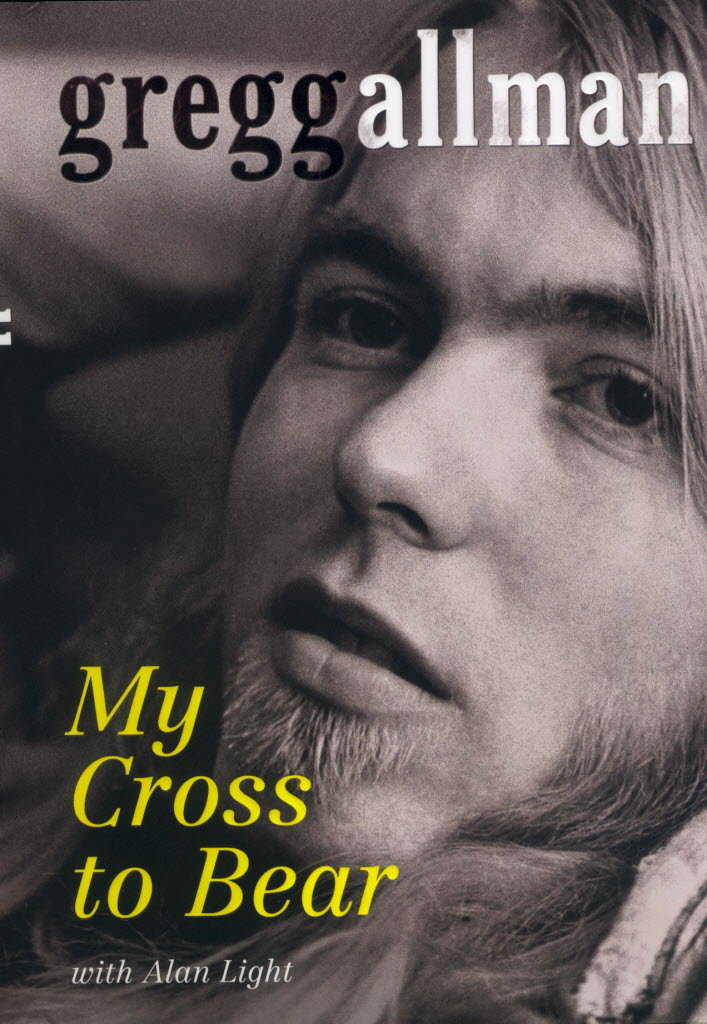
My Cross To Bear

I was never a huge Allman Brothers Band fan. I always respected them and I liked their radio songs and heard enough of Duane Allman to know he was a great slide guitar player. I also knew Gregg could make any song his song because of his vocals. I never really wanted to know more about them.

A friend of mine recommended Gregg Allman’s autobiography My Cross To Bear. I have a 72-mile round trip car ride to work every day so I downloaded the audio version. I took a  chance on this one a couple of years ago and I really enjoyed it.  I also downloaded the E-book after I finished it.

The Allman Brothers have always been known as the Godfathers of Southern Rock. I never considered them Southern Rock…like Gregg himself said… they were a blues band with some jazz thrown in and they were from the south.

The audiobook is narrated by Will Patton who does a great job of channeling Gregg.

It is like having Gregg over on your back porch telling you these great stories. He is very down to earth and does not try to make his mistakes sound like someone else’s fault. If you want to know about Duane Allman get this book. He is honest about his brother…warts and all. He doesn’t try to whitewash himself either.

He starts at the Rock and Roll Hall of Fame induction where he was sick, miserable, and bloated because of his drinking problem…from there he starts going back through his personal history and the many ups and downs of the Allman Brothers. He covers the bands that Duane and he formed…The Escorts, The Allman Joys (which I would have kept that name) and Hourglass.

Hourglass made a couple of albums of original material and covers but the record company made them “pop” everything up. They would not let them play with an edge. The Escorts and Allman Joys were cover bands… very good cover bands.

After reading the book I have started to listen to the Allman Brothers more. He gives you some funny stories and you see how close that band was in the early days before Duane and Berry Oakley died. He mentions his struggles with Dickey Betts, alcohol, drugs and wives. You also read about a “foot shooting” party…

He also talks about being on stage noticing Eric Clapton among the audience. That led to the Layla sessions. Eric was a big fan of Duane’s slide playing.

You learn some history about a cover band’s travels, trials, and tribulations in the mid-1960s…youtube has a few crude recordings of the Allman Joys live in the mid-60s. Below is The Allman Joys version of Help. I would have never thought it was Gregg Allman singing.

If you are a music fan you will probably enjoy this book.

Help by the Allman Joys in 1966 is the opening song.