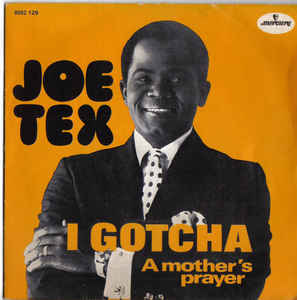
My sister…lover of the Osmonds and everything unholy in music to me…somehow had this fun R&B groove single by Joe Tex. The song peaked at #2 in 1972 in the Billboard 100.
“I Gotcha” shows more than a little James Brown influence. Some say it wasn’t just influence but more than a little mocking. The two, who sometimes shared a stage, feuded quite a bit…dating back to the 50s. Tex said Brown copied his moves and later stole his girlfriend, Brown didn’t like the way Tex made fun of him. This supposedly led to an incident where Brown allegedly used a gun to fire a few rounds at Tex in a nightclub, then paid off the patrons with $100 bills so they wouldn’t call the police.
The battle began in earnest when James Brown stole Tex’s girlfriend, Bea Ford. Then, just to twist the knife, Brown sent Tex a letter telling him that he was through with the Bea and Joe could have her back. This led to the record “You Keep Her”, where Joe calls James out by name, saying he was better off without the Bea anyway.
Eventually, the two patched things up enough for Joe to write the line: “If I was a dancefloor, James Brown could mash potatoes on me all night long!”
From Songfacts
This was Joe Tex’s highest-charting career single as far as the Billboard Hot 100 was concerned. It is all original Joe Tex, in his own absolutely inimitable style – he’s known as one of the precursors of rap music.
While Joe Tex may have been charting on the Hot 100 since 1965, his previous highest score had been #5 for his breakout single “Hold What You’ve Got”. Since that time, he’d barely tasted the Top-10. This song was actually the B-side of “A Mother’s Prayer” – Radio station DJs would flip it and play this side instead, giving him his highest-charting hit.
We have yet another Tarantino hit! The film Reservoir Dogs features this song prominently. It’s used for the scene where three of the robbers transport the hostage cop to their warehouse hideaway, where they proceed to beat the nickels out of him, both because they suspect they were set up and just to work off some frustration after their robbery plan goes to pieces. The action is even choreographed to the music a little; watch Michael Madsen pulling off a length of duct tape in time to the lyrics for a beat or two.
Joe Tex re-recorded “I Gotcha” for his 1978 album Rub Down, this time as a ballad.
I Gotcha
I gotcha, uh huh, huh
You thought I didn’t see ya now, didn’t ya, uh huh, huh
You tried to sneak by me now, didn’t ya, uh huh, huh
Now gimme what you promised me, give it here
Come on
Hey
Good God
Hey
Hey
You promised me the day that you quit your boyfriend
I’d be the next one to ease on in
You promised me it would be just us two, yeah
I’d be the only man kissin’ on you, yeah
Now, kiss me
Hold it a long time, hold it
Don’t turn it a-loose, now hold it
A little bit longer, now hold it
Come on
Hold it
Hold it
Hold it
Hold it
Now ease up on me now, good god
Hey
Good God
Hey
The girl’s alright, y’all
Ha ha
Good God
You made me a promise and you’re gonna stick to it
You shouldn’t have promised if you weren’t gonna do it
You saw me and ran in another direction
I’ll teach you to play with my affection
Now, give it here
You never should’ve promised to me, give it here
Don’t hold back, now give it here
Don’t say nothin’, just give it here
Come on, give it here
Give it here
Give it here
Give it here
Give it to me, now
Good God
Hey
I gotcha
Shouldn’t made a promise to me
I gotcha
You never should’ve promised to me, gotcha
Give it on, here
I gotcha
You thought you got away from me, didn’t ya?
I gotcha
Ha ha ha
Oh, I gotcha
Give it on up, I gotcha
Give it on here, I gotcha
You tried to sneak by me, now didn’t ya?
Ha ha
I gotcha
Oh, I gotcha
I’m not saying that these actors and actresses never acted in anything else but they ended up trapped in the role that ended up defining them good or bad. This list could have been much longer.
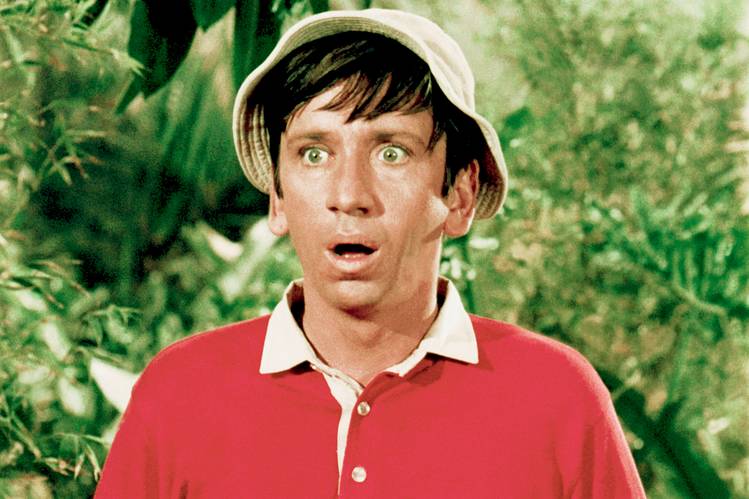
Bob Denver – Gilligan – I just picked Bob because he was the star of the show but a point could be argued that the entire cast of this show was eternally typecast. Bob Denver also played Maynard Krebs (which I loved) on The Many Lives of Dobie Gillis but Gilligan wins out.
Mark Hamill – Luke Skywalker – After he auditioned for the title role in 1983 movie Amadeus the director dismissed the idea saying “I don’t want Luke Skywalker in this film.” He has broken a little out of the image by doing voiceovers like the Joker in Batman animated cartoons.
Carrie Fischer – Princess Leia – Harrison Ford was able to break out more successfully than his other two co-stars in Star Wars. Carrie Fischer acted in a lot of movies but could never shake Princess Leia…she is forever frozen in time in the minds of teenage nerds at the time and now.
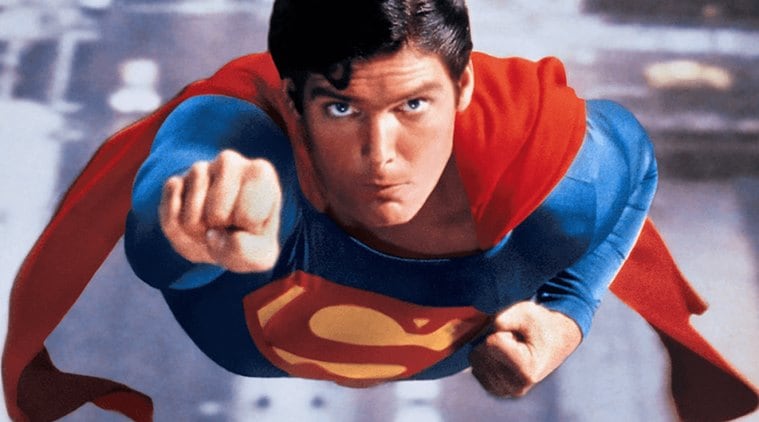
Christopher Reeve – Superman – He is said to have stated that he spent his career trying to “escape the cape.”… When I think of Superman…I do think of Christopher Reeve’s version
George Reeves – Superman – See Above
Barbara Eden – Jeannie – She appeared in many TV movies but nothing topped beautiful Jeannie. Larry Hagman did manage to escape his character in I Dream of Jeannie into another…J.R. Ewing.
Elizabeth Montgomery – Samantha – Everyone’s favorite witch. Like Eden she did many TV movies…a lot of them really good but is known for Samantha.
Don Adams – Maxwell Smart -Adams also provided the voices for the animated series Tennessee Tuxedo and His Tales and Inspector Gadget but was
Anthony Perkins – Is Norman Bates and there is no arguing that.
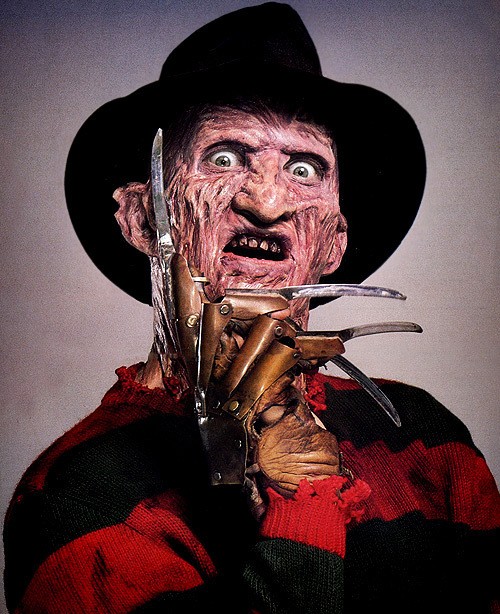
Robert Englund – Freddie Kruger – and I don’t believe he minds at all.
I was a little too young to get the Sex Pistols when they were together. They did have a huge influence while only releasing one album…Never Mind The Bollocks, Here’s The Sex Pistols. I never was a big fan but this song is alright for what it is.
John Lydon talked about the song: “It flowed quite naturally to me. These are just long, long-term motivations that are there and you can’t, can’t, can’t ever underestimate the sheer driving energy poverty will bring you. Being denied everything and access to everything. Government, schools, the lot, tell you that you don’t count. You are scum. Go with flow or else. That’s an incredible driving energy, to be better than their estimation of you.”
From Songfacts
Anarchy is a society without government or law. The Sex Pistols were very anti-establishment (as were many young people in England), but the song isn’t actually advocating anarchy. “I have always thought that anarchy is mind games for the middle class,” frontman John Lydon told Rolling Stone. “It’s a luxury. It can only be afforded in a democratic society, therefore kind of slightly f–king redundant. It also offers no answers and I hope in my songwriting I’m offering some kind of answer to a thing, rather than spitefully wanting to wreck everything for no reason at all, other than it doesn’t suit you.”
This was the Sex Pistols’ first single, and it caused quite a stir in England with its lyrics advocating violence against the government. Never Mind The Bollocks, Here’s The Sex Pistols was not released until a year later, partly because of distribution concerns: after hearing “Anarchy In The UK,” some organizations refused to ship the album. >>
Sid Vicious, who died of a drug overdose in 1979 and was the subject of the 1986 film Sid and Nancy, had not yet joined the band. Vicious replaced original bass player Glen Matlock after this was released. Along with the rest of the band, Matlock is a credited writer on the track.
The Sex Pistols were dropped by two record companies before finally releasing the Never Mind The Bollocks album with Virgin Records. Virgin had a hard time promoting this song because no one would let them advertise it. The subsequent record store and radio bans helped generate publicity that was more valuable than what they could have bought.
The manager of The Sex Pistols, Malcolm McLaren, put them together to deliberately cause controversy. He knew the band would stir up trouble and get a lot of media attention in the process. That’s what happens when you have a lead singer named Johnny Rotten singing that he was an “anarchist” and the “Antichrist.”
Recording this song proved rather difficult. The first sessions were produced by Dave Goodman, who was the band’s sound man for concerts. “He had never really produced anybody properly, so he didn’t have enough clout or wherewithal to tell Malcolm McLaren not to be in the studio,” Glen Matlock said in a Songfacts interview. “And Malcolm was like the devil at his ear, going, ‘It’s not exciting enough – it’s got to be faster.’ And it was getting faster and faster, and losing all its groove.
In the end, we effectively went on strike, and said, ‘No, it’s fine,’ and we got a different guy in, Chris Thomas, who has done some fantastic work over the years. We set up, started playing, and he said, ‘I think we’ve got it now.’
The first part of the song is from take three, and the second part is from take five. We were waiting for Rotten to turn up and do the vocals, and he didn’t rush down because he was like, ‘You’re useless, you can’t play. You’ve been in there for weeks.’ And we said, ‘No. We’ve done it.’ We were right all along – we just needed the right person to realize it. And then Steve loaded up the guitars over the next few days.”
The line, “I use the enemy” is a play on words: “Enemy” is actually “NME,” a British magazine called New Musical Express. The Sex Pistols were famous for manipulating the media, and NME apparently took the bait: they said in their review of this song, “Johnny Rotten sings flat, the song is laughably naïve, and the overall feeling is of a third-rate Who imitation.”
After this was released, the band went on a British talk show where they repeatedly swore at and berated the host, Bill Grundy. This caused a great deal of controversy, which resulted in their record company, EMI, dropping the band and pulling the single.
Here’s an explanation of the alphabet soup in the lyrics:
MPLA: A political group in Angola – the Movimento Popular de Libertacao de Angola.
UDA: The loyalist supporters in Ireland conflict. The UDA (Ulster Defence Association) supported Britain and opposed unification of Ireland.
IRA: The Irish Republican Army, who opposed Britain and were in favor of unification in Ireland.
As a publicity stunt, the band performed this song on the Thames River from a boat called “The Queen Elizabeth” on June 7, 1977. Celebrations were underway for the Silver Jubilee, celebrating the Queen’s 25 years on the throne. Two days later, she was scheduled to ride on the river as part of the ceremonies, so the Sex Pistols decided to make a mockery of it.
The plan was to perform the song as they were floating by the House Of Parliament, but they didn’t get close, as police intercepted the boat. The record company executives who organized the event were arrested when they docked.
The stunt got them plenty of press and boosted their punk rock bona fides. “That came about, oddly enough, just as a giggle because of not getting gigs,” Johnny Rotten explained in Melody Maker. I had in my mind not the slightest knowledge of there being a Jubilee at all. I was quite stunned by it all.”
Mötley Crüe often played this song in concert, and they recorded it for their 1991 compilation Decade of Decadence. While their version is still titled “Anarchy in the U.K.,” Vince Neil sang it as “Anarchy For the USA,” with the lyrics changed to make references to American entities, including the PMRC, an organization that led a crusade to keep albums with explicit lyrics from being sold to minors.
Glen Matlock told Mojo magazine that this is his favorite Sex Pistols’ statement. He explained: “Everything about it is just right. It’s one of those rare moments captured, the vibe, the groove, and the bass ain’t bad! It still sounds outrageous.”
Megadeth did a popular cover of this song that was included on their 1988 album So Far, So Good… So What! and also released as a single. A video was made for this version directed by David Mackie.
Guitarist Steve Jones told Mojo that he thought when the specific moment when he felt the Pistols had clicked was when “Anarchy in the UK” came into the fold. He explained; “We had the riff and Rotten was in the corner writing words and McLaren started grooving on it. It felt like we were onto something then.”
the Sex Pistols re-recorded this song for the video game Guitar Hero 3.
Anarchy in the UK
Right now ha, ha, ha, ha, ha I am an anti-Christ I am an anarchist Don’t know what I want But I know how to get it I want to destroy the passerby
‘Cause I want to be anarchy No dogs body
Anarchy for the U.K. It’s coming sometime and maybe I give a wrong time, stop a traffic line Your future dream has sure been seen through
‘Cause I want to be anarchy In the city
How many ways to get what you want I use the best, I use the rest I use the N.M.E. I use anarchy
‘Cause I want to be anarchy Its the only way to be
Is this the MPLA Or is this the UDA Or is this the IRA I thought it was the U.K. Or just another country Another council tenancy
I want to be anarchy And I want to be anarchy (Oh what a name) And I want to be an anarchist (I get pissed, destroy!)
This is based on a song called C’mon, God, and buy me a Mercedes Benz by the Los Angeles beat poet Michael McClure. Joplin saw McClure perform it, and on August 8, 1970, she reworked it into her own song, which she performed about an hour later.
This was a fun song off of Janis’s last album Pearl. The song did not chart as a single but the album peaked at #1 in 1971 after Janis died.
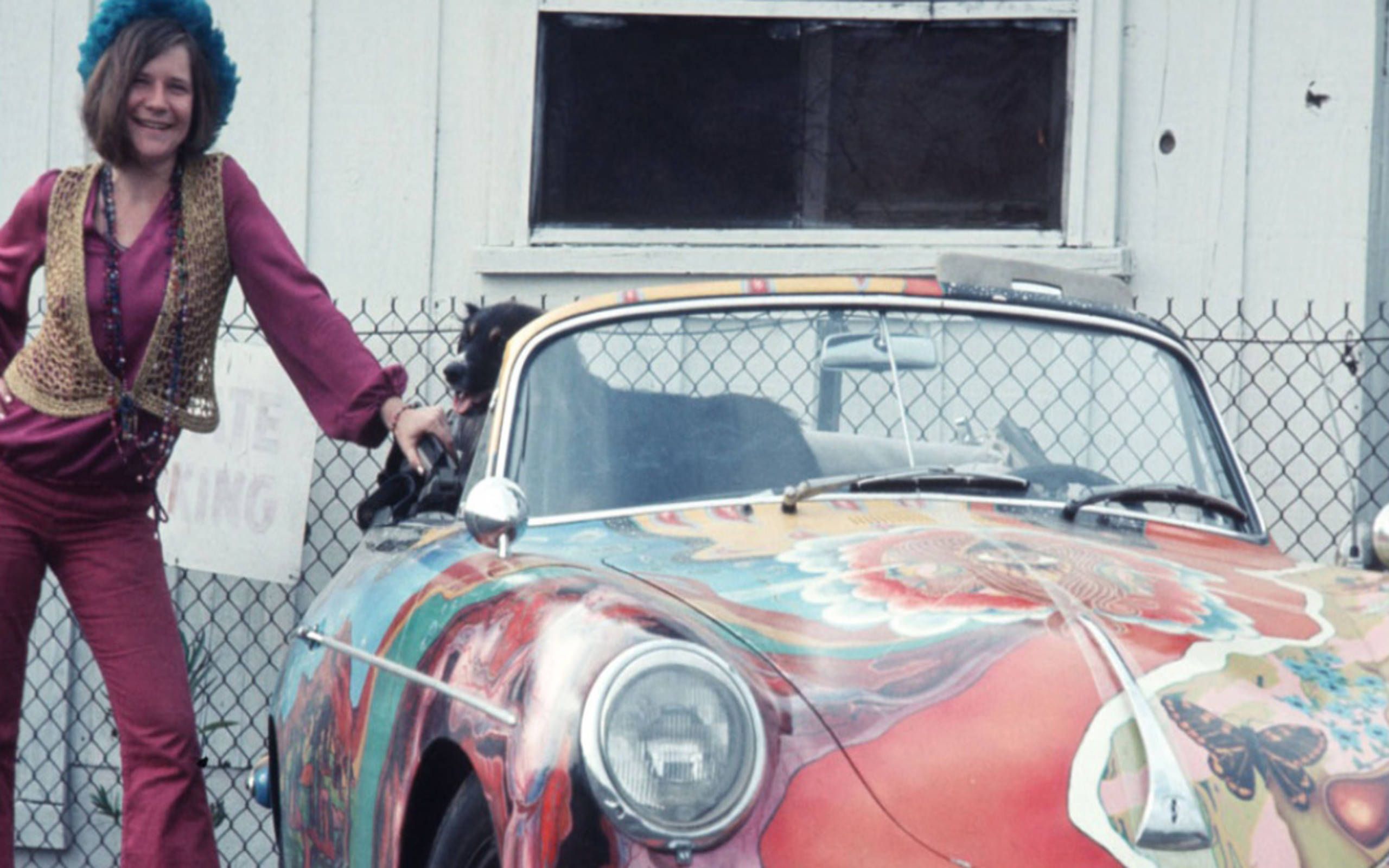
Janis Joplin never got a Mercedes Benz, but she did have a 1965 Porsche that was painted to become a piece of hippie art.
A lot of song facts for such a short song.
From Songfacts
As recounted in the Patti Smith memoir Just Kids, before her show at the Capitol Theatre in Port Chester, New York, she went to a nearby bar (likely Vahsen’s, later renamed Little Dick’s) with her good friend, the songwriter Bob Neuwirth, and two more recent acquaintances, the actors Rip Torn and Geraldine Page. Joplin started reciting the line, “Oh, Lord won’t you buy me a Mercedes Benz” – the first line of McClure’s song. The four started banging beer mugs on the table to form a rhythm, and Neuwirth wrote down lyrics he and Joplin came up with on a napkin. They finished the song, and Janis performed it at the show, introducing it by saying, “I just wrote this at the bar on the corner. I’m going to do it Acapulco.”
That show was recorded and widely bootlegged, as it was her penultimate performance and the debut of “Mercedes Benz.” Joplin played her last concert on August 12 at Harvard Stadium and died on October 4.
The song is a social commentary on how many people relate happiness and self-worth with money and material possessions. Sung a capella in a blues style, Joplin was poking fun at the mindset that luxury goods will make everything better.
Janis Joplin is from Port Arthur, Texas, a small city close to the Gulf of Mexico near the Louisiana border. In the second verse, the line “Dialing for Dollars is trying to find me” refers to a segment the local NBC station ran called “Dialing for Dollars.” The station would announce a password on the air, then call a local phone number at random later on. If whoever answered knew the password, that person would win a cash prize. Variations of “Dialing for Dollars” ran in many cities throughout the United States and Canada in the ’60s and early ’70s.
This song spoke to the shift in the counterculture, as some of the impoverished musicians speaking out against the system were now very rich. As Barney Hoskyns, who wrote about Joplin and the song in his book Small Town Talk: Bob Dylan, The Band, Van Morrison, Janis Joplin, Jimi Hendrix and Friends in the Wild Years of Woodstock told us, “Rock was now big business, and a lot of money was flooding into the pockets of people who never expected to make it. This set up a mixture of expectation and guilt – they were acquiring a taste for the finer things but knew that a good hippie shouldn’t be materialistic. By the early ’70s it had all changed, and rock stars were the new Yuppies.”
Joplin recorded this song at Sunset Sound studios in Los Angeles on October 1, 1970 with producer Paul Rothchild, famous for his work with The Doors. It ended up being her last recording session, as she died three days later (she also recorded a version of “Happy Trails” as a 30th birthday present for John Lennon” in this session).
The Pearl album was just about finished when Joplin died. Rothchild included her raw take of “Mercedes Benz” on the album, leaving it a capella. A quip Joplin made before her vocal take – “I’d like to do a song of great social and political import” – was included as an introduction. In its unadorned state, the song showcased Joplin’s humor and raw vocal talent.
In the mid-’90s, Mercedes used this in commercials for their cars. It was one of the great misappropriations of a song in a commercial, as Joplin’s song was meant to convey the message that owning a luxury automobile does not make you a better person. Joplin’s estate – sister Laura and brother Michael – allowed Mercedes to use it.
There are three credited songwriters on this track: Joplin, Michael McClure, and Bob Neuwirth. McClure says he never earned a cent from his poetry, but “Mercedes Benz” paid for his house in the Butters Canyon section of Oakland, California.
In an interview published in hE@D Magazine, Michael McClure said that Joplin called him before recording the song to get his permission. She sang him the song, then he sang her his original version, and they both liked their own renditions better. “Then she asked me if she could sing it, and I agreed,” McClure said. “I had no idea that her songs were worth so much money.”
The soul singer Bobby Womack claimed credit for inspiring this song. According to Womack, Joplin got the idea for the song after riding in his new Mercedes 600. Womack was having success as a songwriter, and Joplin commissioned him to write a song for her Pearl album, which turned out to be “Trust Me.” She recorded that one (which also appears on the Pearl album), and asked for another.
As recounted in his Womack’s book Midnight Mover, he took her for a ride, and she was impressed with the new car. After a few blocks, she started singing: “Lord, won’t you buy me a Mercedez Benz…”
When they returned to the studio, the band had gone home, but Joplin put down the vocal track.
This took place on October 1, 1970. As Womack told it, Joplin got a phone call, which he presumed was her drug dealer. She asked him to leave, they hugged goodbye, and Joplin was found dead three days later.
Mercedes Benz
Oh Lord, won’t you buy me a Mercedes Benz? My friends all drive Porsches, I must make amends. Worked hard all my lifetime, no help from my friends, So Lord, won’t you buy me a Mercedes Benz?
Oh Lord, won’t you buy me a color TV? Dialing For Dollars is trying to find me. I wait for delivery each day until three, So oh Lord, won’t you buy me a color TV?
Oh Lord, won’t you buy me a night on the town? I’m counting on you, Lord, please don’t let me down. Prove that you love me and buy the next round, Oh Lord, won’t you buy me a night on the town?
Everybody! Oh Lord, won’t you buy me a Mercedes Benz? My friends all drive Porsches, I must make amends, Worked hard all my lifetime, no help from my friends, So oh Lord, won’t you buy me a Mercedes Benz?
I always liked this song. Billy Joel was inspired by the suite of songs on Abbey Road. It was never released as a single but has remained one of Joel’s best known songs. The song was on the album The Stranger which peaked at #2 in 1978.
The restaurant which inspired this song, since closed, was the Fontana di Trevi at 151 West 57th Street in New York City, right across from Carnegie Hall. Joel talked about the restaurant: “It was for the opera crowd, but the Italian food was really good. They didn’t really know who I was, which was fine with me, but sometimes you would have a hard time getting a table. Well, I went there when the tickets had gone on sale for my dates at Carnegie Hall, and the owner looks at me and he goes (in an Italian accent), ‘Heyyy, you’re that guy!’ And from then on, I was always able to get a good spot.”
From Songfacts
This song is about people who peaked too early: the popular jocks in class who went nowhere in life. Like most of Joel’s songs, he composed the music first, which in this case was inspired by The Beatles, specifically the suite of songs on their Abbey Road album where a few unfinished tunes were put together to create one coherent piece.
On an A&E special, Joel said he came up with the “Bottle of white bottle of red” line while he was dining at a restaurant and a waiter actually came up to him and said, “Bottle of white… bottle of red… perhaps a bottle of rosé instead?”
The “Things are okay with me these days…” part was an old piece of music he had written a long time before The Stranger album – he just changed the words around to update them. The third part of the song is an old song he had written called “The Ballad of Brenda and Eddie.”
Many towns on Joel’s stomping grounds of Long Island have a spot or field surrounded by trees called “The village green,” similar to the one he sings about here. Joel was in a gang (not a very rough one) in Levittown, Long Island called “The Parkway Green Gang.”
Joel outlined to USA Today how the Beatles inspired this song: “I had always admired the B-side of Abbey Road, which was essentially a bunch of songs strung together by (producer) George Martin. What happened was The Beatles didn’t have completely finished songs or wholly fleshed-out ideas, and George said, ‘What have you got?’ John said, ‘Well I got this,’ and Paul said, ‘I got that.’ They all sat around and went, ‘Hmm, we can put this together and that’ll fit in there.’ And that’s pretty much what I did.”
In a 2017 appearance on The Late Show with Stephen Colbert, Joel ranked this #1 on his list of the top Billy Joel songs. He has also cited “New York State Of Mind” as his favorite.
After adding Mike DelGuidice to his touring band in 2013, Joel began leading into this song in concerts with DelGuidice singing Puccini’s “Nessun Dorma.” DelGuidice formed a popular Billy Joel tribute band called Big Shot, which get the attention of the real deal, who offered him a gig.
Scenes From An Italian Restaurant
A bottle of white, a bottle of red Perhaps a bottle of rose instead We’ll get a table near the street In our old familiar place You and I,face to face
A bottle of red, a bottle of white It all depends upon your appetite I’ll meet you any time you want In our Italian Restaurant.
Things are okay with me these days Got a good job, got a good office Got a new wife, got a new life And the family’s fine We lost touch long ago You lost weight I did not know You could ever look so good after So much time.
I remember those days hanging out At the village green Engineer boots, leather jackets And tight blue jeans Drop a dime in the box play the Song about New Orleans Cold beer, hot lights My sweet romantic teenage nights
Brenda and Eddie were the Popular steadys And the king and the queen Of the prom Riding around with the car top Down and the radio on. Nobody looked any finer Or was more of a hit at the Parkway Diner We never knew we could want more Than that out of life Surely Brenda and Eddie would Always know how to survive.
Brenda and Eddy were still going Steady in the summer of ’75 When they decided the marriage would Be at the end of July Everyone said they were crazy “Brenda you know you’re much too lazy Eddie could never afford to live that Kind of life.” But there we were wavin’ Brenda and Eddie goodbye.
They got an apartment with deep Pile carpet And a couple of paintings from Sears A big waterbed that they bought With the bread They had saved for a couple Of years They started to fight when the Money got tight And they just didn’t count on The tears.
They lived for a while in a Very nice style But it’s always the same in the end They got a divorce as a matter Of course And they parted the closest Of friends Then the king and the queen went Back to the green But you can never go back There again.
Brenda and Eddie had had it Already by the summer of ’75 From the high to the low to The end of the show For the rest of their lives They couldn’t go back to The greasers The best they could do was Pick up the pieces We always knew they would both Find a way to get by That’s all I heard about Brenda and Eddie Can’t tell you more than I Told you already And here we are wavin’ Brenda And Eddie goodbye.
A bottle of red, a bottle of white Whatever kind of mood you’re in tonight I’ll meet you anytime you want In our Italian Restaurant.
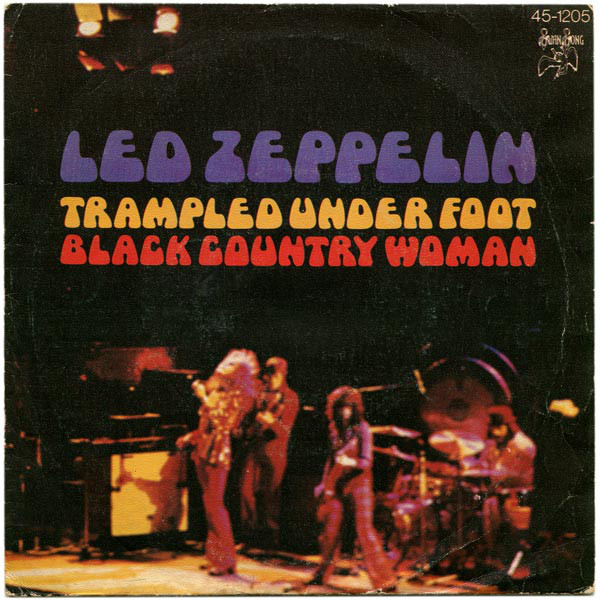
A bit different of a song for Led Zeppelin. This was on their great Physical Graffiti album…which was to me their last great album. This song peaked at #38 in the Billboard 100 in 1975. Led Zeppelin really was not a singles band but they did have 10 songs in the top 100 and 1 top ten song.
Led Zeppelin wasn’t a funk band but on this track they had something going. John Paul Jones played clavinet on this song that is just outstanding. Jones was the utility player for the band and probably the most underrated member.
The guitar had a great sound…Jimmy Page: It’s sort of backward echo and wah-wah. I don’t know how responsible I was for new sounds because there were so many good things happening around that point, around the release of the first Zeppelin album, like Hendrix and Clapton.
From Songfacts
The lyrics were based on Robert Johnson’s 1936 “Terraplane Blues.” A Terraplane is a classic car, and the song uses car parts as metaphors for sex: “pump your gas,” “rev all night,” etc.
This evolved out of a jam session. It became a concert favorite and a popular song on rock radio. When Led Zeppelin played it live, they would often jam on it, extending it with guitar and keyboard solos.
This is one of Robert Plant’s favorite Zeppelin songs. He sang it on his 1988 Now and Zen tour.
Led Zeppelin performed this at Carmen Plant’s 21st birthday party in 1989 with Jason Bonham on drums. Carmen is Robert’s daughter.
The “Talkin ’bout love” part was most likely nicked from the song “Love” by Curtis Knight and Jimi Hendrix.
Led Zeppelin did not release any singles in the UK until 1997 when “Whole Lotta Love” was released 18 years after it was written. In 1975, Zeppelin’s Swan Song label sent 5000 pressings of “Trampled Underfoot” to UK record stores as incentive to stock the Physical Graffiti album. These were labeled “Special Limited Edition” and became collectors’ items.
At Earls Court in 1975, Robert Plant introduced the song like this: “If you like the motor cars and the parts of the human body, then sometimes… you can get trrrrrampled under foot!”
“Trampled Underfoot” was probably named after the bassline being a repetitive boom, played with a Moog pedal.
Trampled Under Foot
Greasy slicked-down body, Groovy leather trim I like the way you hug the road, Mama it ain’t no sin Talkin’ ’bout love, Talkin’ ’bout love, Talkin’ ’bout Ooh, trouble-free transmission, helps your oil’s flow Mama, let me pump your gas, mama, let me do it all Talkin’ ’bout love, huh, Talkin’ ’bout love, ooh, Talkin’ ’bout Take that heavy metal underneath your hood Baby, I could work all night, leave a big pile of tubes Talkin’ ’bout lo-ove, Talkin’ ’bout lo-ove, Talkin’ ’bout Automobile club-covered, really built in style Special is tradition, mama, let me feast my eyes Talkin’ ’bout love, Talkin’ ’bout love, Talkin’ ’bout Factory air-conditioned, wind begins to rise Guaranteed to run for hours, mama, and brand-new tires Talkin’ ’bout love, Talkin’ ’bout love, Talkin’ ’bout Groovin’ on the freeway, blazes on the road From now on my gasoline is even gonna conk your hair Talkin’ ’bout love, Talkin’ ’bout love, Talkin’ ’bout I can’t stop talkin’ about, I can’t stop talkin’ about Ooh, yeah-yeah, yes, ah, drive on Ooh, yeah-yeah-yeah-yeah-yes, I’m comin’ through Come to me for service every hundred miles Baby, let me check your valves, fix your overdrive Talkin’ ’bout love, Talkin’ ’bout love, Talkin’ ’bout Ooh, yes, fully automatic, comes in any size Makes me wonder what I did, before I got synchronized Talkin’ ’bout lo-ove, Talkin’ ’bout love, Talkin’ ’bout Ooh, feather-light suspension, coils just couldn’t hold I’m so glad I took a look inside your showroom doors Talkin’ ’bout love, Talkin’ ’bout lo-oo-oh-ove, Talkin’ ’bout Oh yeah, oh yeah, Oh, I can’t stop talkin’ about love I can’t stop talkin’ about love Ooh, let me go in down, go in down, go in down, go in down, go in down, yes, I can’t stop talkin’ about I can’t stop talkin’ about lo-oh’, baby I can’t stop talkin’ about love, or my baby I can’t stop talkin’ about love, my baby, uh, my baby, my baby, yeah, Unnh, push, push, push it, push, push Ounheahhonhouh
This was his biggest charting hit. It peaked at #3 in the Billboard 100 in 1976. It’s groove song I’ve always liked…very smooth and catchy.
Scaggs wrote this song with the keyboard player David Paich, who would later form the band Toto and write many of their hits. “Lowdown” was the first song that Scaggs and Paich wrote together…it was Silk Degrees producer Joe Wissert who put them together.
Boz Scaggs said: “We took off for a weekend to this getaway outside of LA where there was a piano and stayed up all night banging around ideas. We hit on ‘Lowdown,’ and then we brought it back to the band and recorded it. We were just thrilled with that one. That was the first song that we attempted, and it had a magic to it.”
From Songfacts
This was the second single released from Silk Degrees. The first was “It’s Over,” which charted at a modest #38 in May 1976. Scaggs had little name recognition at the time, and sales were stagnant for the album until an R&B radio station in Cleveland started playing “Lowdown.” Other stations followed suit, and it quickly became clear that the song had crossover appeal and hit potential. Scaggs’ label, CBS, released it as a single and it climbed to #3 on the Hot 100 in October, spurring sales of the album along the way.
The song is about a girl who doesn’t appreciate what her man gives her. The “dirty lowdown” is the honest truth – what Scaggs is encouraging this poor sap to face.
The word “Lowdown” was popular slang meaning a summary of what’s going on for real. The first Hot 100 entry with the term in the title came in 1969 with the instrumental “Lowdown Popcorn” by James Brown (#41, 1969). Next came Chicago’s song “Lowdown” (#35, 1971).
Along with keyboard player David Paich, two other future Toto members also played on this track: drummer Jeff Porcaro and bass player David Hungate. The Silk Degrees marked the first time that Scaggs used these studio pros, and it was also his first album produced by Joe Wissert, who was a staff producer at Columbia Records who had previously worked with Earth, Wind & Fire.
The crew for the album found just the right sound, a Disco-blend that could play in dance clubs and pool halls. Scaggs credits Wissert for giving him and the other musicians plenty of freedom in the studio, resulting in one of the most successful albums of the ’70s – Silk Degrees went on to sell over five million copies.
This won the Grammy for Best R&B Song of 1976, making Scaggs the first white artist to win the award (Leo Sayer was the second, taking the trophy the next year for “You Make Me Feel Like Dancing.”)
The producers of Saturday Night Fever asked to use this in their movie, but Scaggs’ manager turned them down and instead used it in the movie Looking For Mr. Goodbar. Not a good move – Saturday Night Fever became one of the best-selling soundtracks of all time.
Lowdown
Baby’s into running around Hanging with the crowd Putting your business in the street Talking out loud Saying you bought her this and that And how much you done spent I swear she must believe it’s all heaven sent
Hey boy you better bring the chick around To the sad, sad truth the dirty lowdown
(Ooh I wonder, wonder, wonder, wonder who) Taught her how to talk like that (Ooh I wonder, wonder, wonder, wonder who) Gave her that big idea
Nothin’ you can’t handle Nothin’ you ain’t got Put your money on the table And drive it off the lot Turn on that old love light And turn a “maybe” to a “yes” Same old schoolboy game got you into this mess
Hey son, better get back on to town Face the sad old truth, the dirty lowdown
(Ooh I wonder, wonder, wonder, wonder who) Put those ideas in your head (Ooh I wonder, wonder, wonder, wonder who)
Yeah
Come on back down, little son Dig the low, low, low, low, lowdown!
You ain’t got to be so bad, got to be so cold This dog eat dog existence sure is getting old Got to have a Jones for this Jones for that This runnin’ with the Joneses, boy, just ain’t where it’s at, no, no
You gonna come back around To the sad, sad truth, the dirty lowdown
(Ooh I wonder, wonder, wonder, wonder who) Got you thinking like that, boy (Ooh I wonder, wonder, wonder, wonder who)
I wonder, wonder, wonder, wonder who Said I wonder, wonder, wonder, I wonder who Oh, look out for that lowdown (ohh, I wonder, wonder, wonder, wonder who) That dirty, dirty, dirty, dirty lowdown
Ooh I wonder, wonder, wonder, wonder who Ooh I wonder, wonder, wonder, wonder who
Got you thinkin’ like that Got you thinkin’ just like that (Ooh I wonder, wonder, wonder, wonder who) Lookin’ that girl in the face is so sad I’m ashamed of you
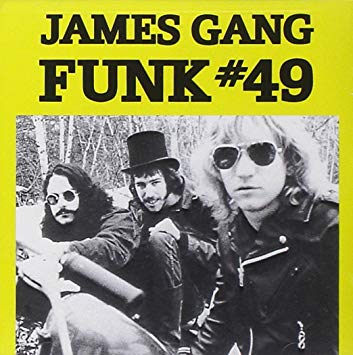
This song has been played a bunch on the radio but Joe Walsh’s intro doesn’t get old to me. The song peaked at #59 in the Billboard 100 in 1971.
The James Gang is best known for their guitarist, Joe Walsh, whose playing on this track helped establish him as a superstar guitarist. Walsh joined the Cleveland-based group in 1969 after making a name for himself as one of the top guitarists in Ohio. He replaced Glenn Schwartz in the band, who Walsh considers a mentor. They were a 5-piece when Walsh joined but was down to three when they released their second album James Gang Rides Again.
From Songfacts
With just three members, it meant Walsh had to play both rhythm and lead guitar parts, and also sing (he got a lot more help when he joined the Eagles in 1975). It was quite a learning experience for Walsh, who left the James Gang in 1971 after recording three studio albums with the group.
It was the producer Bill Szymczyk who signed the James Gang to ABC Records after seeing them perform at a show in Ohio. Szymczyk produced the band and began a long association with Joe Walsh, producing his solo albums and most of the Eagles output in the ’70s.
Walsh wrote this song with his bandmates, drummer Jim Fox and bass player Dale Peters. The song is about a girlfriend whose wild ways the singer just can’t tame (the female equivalent of Joe Walsh’s character in his solo hit “Life’s Been Good”). There isn’t much in the way of lyrics, as the song is mostly a showcase for Walsh’s guitar work. He explained in the book The Guitar Greats, “I came up with the basic guitar lick, and the words never really impressed me intellectually, but they seemed to fit somehow. It was a really good example of how we put things together, bearing in mind that it was a three-piece group, and I don’t think that there was any overdubbing. The only thing we really added was the percussion middle part, which the three of us actually played, putting some parts on top of the drums, but that’s the three-piece James Gang, and that’s the energy and kind of the symmetry we were all about.”
The first James Gang album (Yer’ Album, 1969) contained the track “Funk #48,” which according to producer Bill Szymczyk, got its title “out of thin air.” When they came up with what would become “Funk #49,” they were once again faced with no logical title based on the lyrics, and followed the sequence. There was a “Funk 50,” but not until Joe Walsh released it on his 2012 album Analog Man after being asked to rework “Funk #49” for the ESPN show Sunday NFL Countdown.
“Funk #49” became a staple of Album Oriented Rock and Classic Rock radio, but it wasn’t the biggest chart hit for the James Gang – that would be “Walk Away,” which made #51 in 1971 and was later reworked for Walsh’s 1976 solo album You Can’t Argue with a Sick Mind. “Funk #49” is one of Joe Walsh’s most popular songs, and by the mid-’70s he admitted that he couldn’t stand playing it anymore, but did so because fans loved it.
Funk #49
Uh, sleep all day, out all night, I know where you’re going. I don’t that’s a-acting right, You don’t think it’s showing. A-jumpin’ up, fallin’ down, Don’t misunderstand me. You don’t think that I know your plan, What you try’n to hand me?
Out all night, sleep all day, I know what you’re doing. If you’re gonna a-act that way, Think there’s trouble brewing.
After posting about Blinded By The Light yesterday…I was commenting with jeremyjames (Jeremy in Hong Kong) and he mentioned this song which was on the Greetings From Asbury Park debut album by Bruce Springsteen. I started to listen to this album in the 80s and it has remained one of my favorite albums by Springsteen.
I wrote this about the album last summer and started to listen to the album again Saturday afternoon. This was one of the many songs off the album that I liked at first listen and was surprised that I remembered most of the words to the song right off the bat.
“Does This Bus Stop At 82nd Street?” is a journey through an enjoyable play of words. It was written about a bus journey to a girlfriend’s house. Here is a sample of a verse
“Wizard imps and sweat sock pimps Interstellar mongrel nymphs Rex said that lady left him limp Love’s like that (sure it is) Queen of diamonds, ace of spades Newly discovered lovers of the Everglades They take out a full-page ad in the trades To announce their arrival And Mary Lou, she found out how to cope She rides to heaven on a gyroscope The Daily News asks her for the dope She said, “Man, the dope’s that there’s still hope”
From Songfacts
This song is based on people and places Springsteen met in his early years as a songwriter. His father was a bus driver for a time, which helped inspire the song.
The barrage of images in the lyrics helped earn Springsteen the tag “The New Dylan,” a comparison he played down. He moved away from the Dylan style by writing less introspective, harder rocking songs on his next album, The Wild, The Innocent & The E Street Shuffle.
This song started with the lyrics, something Springsteen did from time to time when he started out as a songwriter. Greetings From Asbury Park, N.J. was his first album, and it marked a turning point in his songwriting: Instead of keeping the lyrics as simple and repetitive as possible to accommodate the bars he was playing with his bands, he started using elaborate wordplay to tell different stories, often within the same song – something you could do in a recording studio but not in a noisy club. This song makes passing reference to a number of characters but leaves the listener to decide their fates. Just what becomes of Mary Lou, the mongrel nymphs and the lucky, young matador who catches the rose is in the ear of the beholder.
Joan Fontaine pops up in the lyrics for no apparent reason:
Broadway Mary, Joan Fontaine
advertiser on a downtown train
She was an actress who starred in the Alfred Hitchcock movie Rebecca.
Does This Bus Stop At 52nd Street?
Hey bus driver, keep the change Bless your children, give them names Don’t trust men who walk with canes Drink this and you’ll grow wings on your feet Broadway Mary, Joan Fontaine Advertiser on a downtown train Christmas crier bustin’ cane He’s in love again
Where dock worker’s dreams mix with panther’s schemes To someday own the rodeo Tainted women in VistaVision Perform for out-of-state kids at the late show
Wizard imps and sweat sock pimps Interstellar mongrel nymphs Rex said that lady left him limp Love’s like that (sure it is) Queen of diamonds, ace of spades Newly discovered lovers of the Everglades They take out a full-page ad in the trades To announce their arrival And Mary Lou, she found out how to cope She rides to heaven on a gyroscope The Daily News asks her for the dope She said, “Man, the dope’s that there’s still hope”
Senorita, Spanish rose Wipes her eyes and blows her nose Uptown in Harlem she throws a rose To some lucky young matador
Shaft peaked at #1 in the Billboard 100 in 1971. In the beginning, the high hat starts and then that cool seventies wah wah pedal kicks in..a coolness just washes all over you.
Isaac Hayes was a songwriter for Stax records before he became a successful recording artist. He wrote some hits for Sam & Dave, including “Soul Man” and “Hold On I’m Coming.” Hayes explained Shaft: “The character Shaft was explained to me: a relentless character always on the prowl, always on the move. I had to create something to denote that. Otis Redding’s ‘Try A Little Tenderness,’ I had a hand in arranging that. At the end, Al Jackson was doing some stuff on a hi-hat, and I thought if I sustained that kind of thing on a hi-hat, it would give a relentless, dramatic effect, and it worked.”
The instruments were played by Memphis funk group The Bar-Kays. For a while, they were Otis Redding’s backup band… Can you dig it? “Shaft”
From Songfacts
This was featured in the 1971 movie of the same name starring Richard Roundtree. It was remade in 2000 starring Samuel L. Jackson as Shaft. Hayes made an uncredited appearance in the remake, but that wasn’t what he had in mind. According to Q magazine, Hayes agreed to write the Shaft theme after being promised the lead role but the promise wasn’t kept – he didn’t even get an audition.
This won a Grammy for Best Instrumental Arrangement and an Oscar for Best Original Score. The Oscar win made Hayes the first African-American to win an Academy Award in a composer category.
Future actress (she was on the TV shows Bosom Buddies and Family Matters) Telma Hopkins was one of the backup singers. That’s her saying “Shut Your Mouth!”, which became a bit of a catchphrase for Hopkins, whose character would often say it on her shows. Joyce Wilson was the other backup singer; she and Hopkins performed as Tony Orlando’s backup group Dawn.
The distinctive funk guitar and hi-hat cymbals make this a very recognizable song. It is often used in commercials and TV promos, sometimes with the product name put in place of the word “Shaft.”
Hayes was the voice of “Chef” on the TV show South Park. Despite being a cartoon, Chef usually found an opportunity to sing on each show.
There was also a TV version of Shaft, which lasted one season on CBS in 1973. Hayes contributed music to the series.
When Hayes was inducted into the Rock and Roll Hall of Fame in 2002, he opened the ceremonies with this song.
Bart and Lisa sing this on The Simpsons episode “One Fish, Two Fish, Blowfish, Blue Fish.”
Theme From Shaft
Shaft Who’s the black private dick That’s a sex machine to all the chicks? (Shaft!) You’re damn right Who is the man That would risk his neck for his brother man? (Shaft!) Can ya dig it? Who’s the cat that won’t cop out When there’s danger all about (Shaft!) Right on You see this cat Shaft is a bad mother (Shut your mouth) But I’m talkin’ about Shaft (Then we can dig it) He’s a complicated man But no one understands him but his woman (John Shaft)
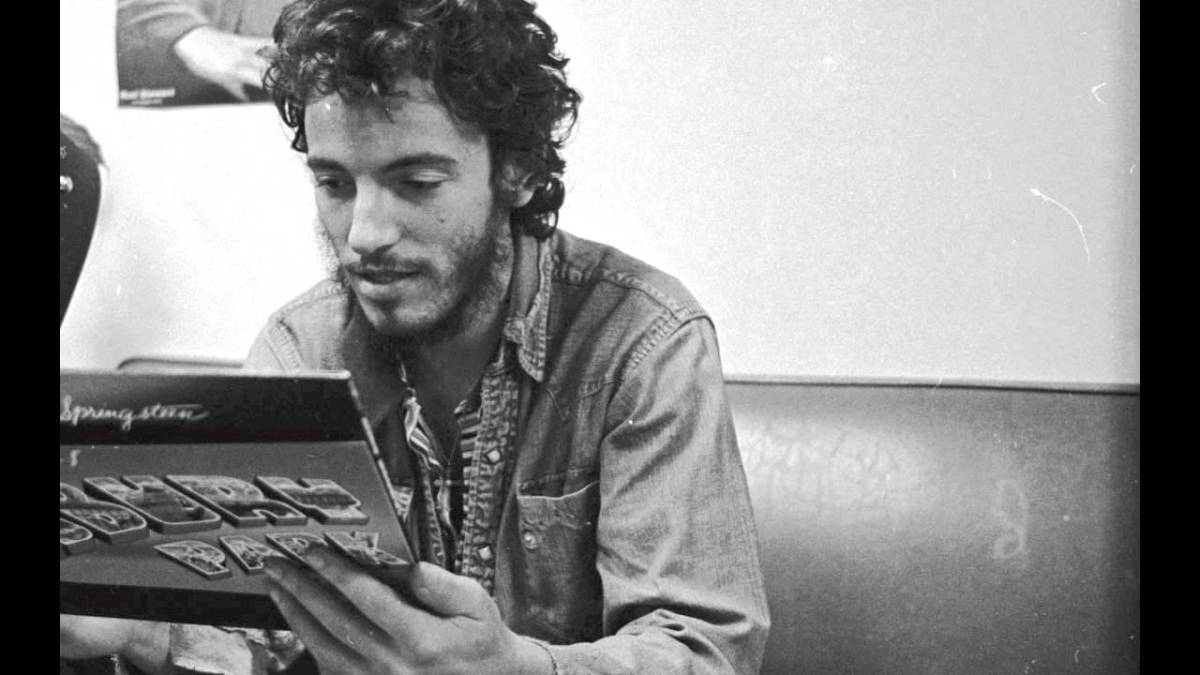
I know that the Manfred Mann version is more popular but I always listen to Bruce’s version of the song he wrote. It’s not as slick whatsoever…maybe that is the reason I like it so much. It’s raw and Bruce just pelts you with words over and over.
This song was the first cut of his album “Greetings From Ashbury Park” which is a very underrated album. The album peaked at #60 in the Billboard Album Charts.
This was Springsteen’s first single. It was released only in the US, where it flopped. It was, however, a #1 hit for Manfred Mann’s Earth Band in February 1977, becoming the only #1 Hot 100 hit Springsteen ever wrote. The Manfred Mann version was much more elaborately produced, and Springsteen hated it at first. It ended up earning him a very nice payout.
From Songfacts
Springsteen talked about this song in detail on an episode of VH1 Storytellers.A lot of the references are personal, to include people he knew or had met on the Boardwalks, or had grown up around, or were just direct personal references to himself:
“Madman drummers bummers” – Vinnie “Mad dog” Lopez, the first drummer in the E Street Band.
“Indians in the summer” – Bruce’s little league baseball team as a kid.
“In the dumps with the mumps” – being sick with the mumps.
“Boulder on my shoulder” – a “chip” on his shoulder.
“Some all hot, half-shot, heading for a hot spot, snapping fingers clapping his hands” – Being a “know it all kid growing up, who doesn’t really know anything.”
“Silicone Sister” – Bruce mentions that this is arguably the first mention of breast implants in popular music – a dancer at one of the local strip joints in Asbury Park.
He wrote this song in his bedroom, primarily using a rhyming dictionary. Or as Bruce put it, “the rhyming dictionary was on fire.”
Manfred Mann’s version replaces the line “Cut loose like a deuce” with “Revved up like a deuce.” In their version, “Deuce” was commonly misheard as “Douche.” Springsteen’s original line makes a lot more sense – a deuce is a 1932 Ford hotrod. On his Storytellers special, Springsteen said (in a jesting manner): “I have a feeling that is why the song skyrocketed to #1.”
Talking about the barrage of images he used in his early songs, Springsteen told ZigZag: “I see these situations happening when I sing them and I know the characters well. I use them in different songs and see them in shadows – they’re probably based on people I know or else they’re flashes, that just appear there. There’s a lot of activity, a whole mess of people… it’s like if you’re walking down the street, my songs are what you see, only distorted. A lot of songs were written without any music at all, it’s just that I do like to sing the words.”
After eight years playing in bars where audiences usually didn’t listen to or couldn’t hear the words, Springsteen used his first album to unload a ton of lyrics. All these lyrics helped earn Springsteen the tag “The New Dylan.” Singer-songwriters like James Taylor and Kris Kristofferson also shared the comparison, and Bruce went out of his way to shed the tag by making his next album a true rock record.
This was the first song on Springsteen’s first album. Greetings From Asbury Park, N.J. featured a postcard on the cover that fans would look for any time they were near the town.
Along with “Spirit In The Night,” this was one of two songs on the album featuring Clarence Clemons on saxophone. The E Street Band became a much bigger part of Springsteen’s songs on his next album.
Springsteen wrote the lyrics first and filled in the music later. The only time he wrote this way was on his first album.
The working title was “Madman’s Bummers,” taken from words in the first line.
This was one of the songs that prompted Columbia Records to market the album by claiming “This man puts more thoughts, more ideas and images into one song than most people put into an album.”
Manfred Mann’s cover is the only Bruce Springsteen song to top the Hot 100. Near misses for Bruce have been “Dancing In The Dark” (#2 in 1984) and The Pointer Sisters version of “Fire” (#2 in 1979).
Springsteen wrote this after Columbia Records rejected his first attempt at an album, telling him to make some songs that could be played on the radio. He came up with this song and “Spirit In The Night.”
Madman drummers bummers and Indians in the summer with a teenage diplomat In the dumps with the mumps as the adolescent pumps his way into his hat With a boulder on my shoulder, feelin’ kinda older, I tripped the merry-go-round With this very unpleasing sneezing and wheezing, the calliope crashed to the ground Some all-hot half-shot was headin’ for the hot spot, snappin’ his fingers, clappin’ his hands And some fleshpot mascot was tied into a lover’s knot with a whatnot in her hand And now young Scott with a slingshot finally found a tender spot and throws his lover in the sand And some bloodshot forget-me-not whispers, daddy’s within earshot, save the buckshot, turn up the band
And she was blinded by the light Oh cut loose like a deuce, another runner in the night Blinded by the light She got down but she never got tight, but she’ll make it alright
Some brimstone baritone anti-cyclone rolling stone preacher from the East He says, dethrone the dictaphone, hit it in its funny bone, that’s where they expect it least And some new-mown chaperone was standin’ in the corner all alone, watchin’ the young girls dance And some fresh-sown moonstone was messin’ with his frozen zone to remind him of the feeling of romance
Yeah, he was blinded by the light Oh, cut loose like a deuce, another runner in the night Blinded by the light He got down but he never got tight, but he’s gonna make it tonight
Some silicone sister with her manager’s mister told me I got what it takes She said, I’ll turn you on, sonny, to something strong if you play that song with the funky break And Go-Cart Mozart was checkin’ out the weather chart to see if it was safe to go outside And little Early-Pearly came by in her curly-wurly and asked me if I needed a ride Oh, some hazard from Harvard was skunked on beer, playin’ backyard bombardier Yes, and Scotland Yard was trying hard, they sent some dude with a calling card, he said, do what you like, but don’t do it here Well, I jumped up, turned around, spit in the air, fell on the ground and asked him which was the way back home He said, take a right at the light, keep goin’ straight until night, and then, boy, you’re on your own And now in Zanzibar, a shootin’ star was ridin’ in a side car, hummin’ a lunar tune Yes, and the avatar said, blow the bar but first remove the cookie jar, we’re gonna teach those boys to laugh too soon And some kidnapped handicap was complainin’ that he caught the clap from some mousetrap he bought last night Well, I unsnapped his skull cap and between his ears I saw a gap but figured he’d be all right
He was just blinded by the light Cut loose like a deuce, another runner in the night Blinded by the light Mama always told me not to look into the sights of the sun Oh, but Mama, that’s where the fun is Ooh yeah I was blinded I was blinded I was blinded I was blinded I was blinded I was blinded I was blinded I was blinded
I was a kid in the seventies and I would stay up and watch Saturday Night Live… Mr. Bill got my attention right away. The hapless Mr. Bill would live in fear of Mr. Hands and Sluggo.
The poor guy and his dog Spot were kicked, punched, buried, burned, stabbed, stepped on, and dropped from the Empire State Building. At school, there was a lot of Ohhhh Nooooo…when someone fell or got hurt.
Walter Williams invented Mr. Bill in 1973 and after SNL had a contest for anyone to submit home movies…Walter and Vance DeGeneres made the first film with an 8mm camera. Lorne liked Mr. Bill and it premiered in the first season…Walter wasn’t paid anything for them for a while but he kept sending them in and Lorne Michaels kept airing them.
Walter eventually was hired as a staff writer in the 4th and 5th season and wrote skits and for the Weekend Update. After the 5th season, he left the show with the original cast but did make a couple of more Mr. Bill’s for SNL that aired in 1981 to bring the total number to 24 Mr Bill Shows.
Mr. Bill’s popularity never completely waned and Walter Williams has made episodes for Fox TV and commercials for different products.
Vance DeGeneres originated “Mr Hands” and helped William film a few of the first films and later sued Williams for part ownership. The judge awarded DeGeneres some money but ruled that the basic idea was Willaims.
From Wiki…SNL Appearances
February 28, 1976 (The Mr. Bill Holiday Special)
October 16, 1976 (Mr. Bill Goes To A Party)
January 22, 1977 (Mr. Bill Goes To A Magic Show)
March 25, 1978 (Mr. Bill Goes To The Circus)
April 8, 1978 (Mr. Bill Pays His Taxes)
October 14, 1978 (Mr. Bill Goes To New York)
October 21, 1978 (Mr. Bill Moves In)
November 18, 1978 (Mr. Bill Goes Fishing)
December 2, 1978 (Mr. Bill Is Late)
January 27, 1979 (Mr. Bill Goes To Court)
February 24, 1979 (Mr. Bill Shapes Up)
March 17, 1979 (Mr. Bill Is Hiding)
May 12, 1979 (Mr. Bill Runs Away)
May 19, 1979 (Mr. Bill Goes To The Movies)
May 26, 1979 (Mr. Bill Visits Saturday Night Live; cold open)
October 13, 1979 (The All-New Mr. Bill Show)
November 3, 1979 (Mr. Bill Stays Home)
November 17, 1979 (Mr. Bill Builds A House)
January 26, 1980 (Mr. Bill Gets Help)
April 5, 1980 (Mr. Bill Strikes Back)
May 10, 1980 (Mr. Bill Gets 20 Years In Sing Sing)
December 20, 1980 (Mr. Bill’s Christmas Special)
April 11, 1981 (cold open with Chevy Chase)
October 17, 1981 (Mr. Bill Goes To L.A.; final appearance)
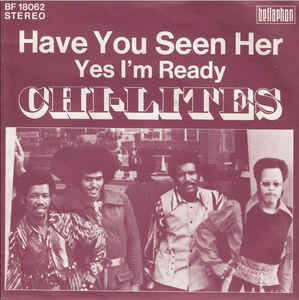
I never get tired of 70’s soul music. This one and Ooh Girl by the Chi-Lites stay on my playlist. This song peaked at #3 in the Billboard 100 and #3 in the UK in 1971.
The Chi-Lites label Brunswick Records didn’t think much of this song and released three other songs as singles from the album. When R&B radio stations started playing “Have You Seen Her” off of the album, the label finally saw the hit potential and issued it as a single. It became the group’s first #1 on the R&B chart and their first Top 10 on the Hot 100.
From Songfacts
This was written by Barbara Acklin and Eugene Record (who was the frontman for The Chi-Lites). The spoken parts were inspired by the opening monologues on Isaac Hayes’ 1969 Hot Buttered Soul album, where Hayes would tell an often heartbreaking tale using his speaking voice before singing.
On “Have You Seen Her,” Record speaks the verses, explaining that ever since his girl left him, he hasn’t been able to enjoy the simple pleasures in life like going to the movies or playing with the neighborhood children. That’s because he can’t stop thinking about his girl, and he envisions her everywhere he goes, even though she’s not really there. He tell himself she’ll be back, but he knows deep down it’s a lie. Still, he asks anyone who will listen, “Have you seen her?”
Eugene Record had the “doo doo doo” intro for this song and the line, “Have you seen her? Tell me have you seen her?,” but didn’t know where to go with it until he sang it for Acklin, who helped complete the song.
Barbara Acklin and Eugene Record had dual careers as artists and songwriters. Acklin was a solo artist who had her biggest hit in 1968 with “Love Makes A Woman” (#15 US), which Record co-wrote. Record fronted The Chi-Lites and wrote most of their hits, including “(For God’s Sake) Give More Power to the People” and “Oh Girl.” As a team, Acklin and Record’s compositions include “Two Little Kids” for Peaches & Herb and several other Chi-Lites tracks, including “Stoned Out Of My Mind” and “We Are Neighbors.”
They wrote the first version of the song years earlier but thought it was too long to record. When Isaac Hayes released Hot Buttered Soul, which included an 18-minute song, they saw the song’s potential and decided to record it for The Chi-Lites third album, since they had some room. The track clocks in at 5:08 and was the last song recorded for the set.
The Chi-Lites followed this template of lovelorn spoken verses on a number of other songs, including their #33 hit in 1973, “A Letter To Myself.”
MC Hammer covered this song on his 1990 10-million-selling album, Please Hammer, Don’t Hurt ‘Em. It was released as the second single from the album, following “U Can’t Touch This,” and it reached #4 in the US.
Have You Seen Her
Ah…ah…ah…ah…ah…ah… Ooh…ooh…ooh…ooh…ooh…ooh…ooh…ooh… Ah…ah…ah…ah…ah…ah… Ooh…ooh…ooh…ooh…ooh…ooh…ooh…ooh… One month ago today I was happy as a lark But now I go for walks To the movies, maybe to the park I have a seat on the same old bench To watch the children play, huh You know tomorrow is their future But for me just another day They all gather ’round me, huh They seem to know my name We laugh, tell a few jokes But it still doesn’t ease my pain I know I can’t hide from a memory Though day after day I’ve tried I keep sayin’ she’ll be back But today again I’ve lied Oh, I see her face everywhere I go On the street and even at the picture show Have you seen her Tell me have you seen her Oh, I hear her voice as the cold winds blow In the sweet music on my radio Have you seen her Tell me have you seen her Why, oh, why Did she have to leave and go away? Oh…oh…oh…oh…oh… I’ve been used to havin’ someone to lean on And I’m lost, baby, I’m lost Oh, doo, doo, doo, doo, doo, doo, doo, doo Doo, doo, doo, doo, doo, doo, doo, doo Have you seen her Tell me have you seen her [Tell me have you seen her] Oh, doo, doo, doo, doo, doo, doo, doo, doo Doo, doo, doo, doo, doo, doo, doo, doo Have you seen her Tell me have you seen her [Tell me have you seen her] Oh, she left her kiss upon my lips But left that break within my heart Have you seen her Tell me have you seen her Oh, I see her hand reaching out to me Only she can set me free Have you seen her Tell me have you seen her Why, oh, why Did she have to leave and go away Oh…oh…oh…oh…oh… I’ve been used to havin’ someone to lean on And I’m lost, baby, I’m lost Oh, doo, doo, doo, doo, doo, doo, doo, doo Doo, doo, doo, doo, doo, doo, doo, doo Have you seen her Tell me have you seen her [Tell me have you seen her] As another day comes to an end I’m lookin’ for a letter or somethin’ Anything that she would send With all the people I know, hmm I’m still a lonely man You know it’s funny I thought I had her in the palm of my hand Have you seen her Tell me have you seen her [Tell me have you seen her] Oh (Oh, yeah…eah…eah…), doo, doo, doo, doo, doo, doo, doo, doo Doo, doo, doo, doo, doo, doo, doo, doo Have you seen her (Have you seen her) Tell me have you seen her (Have you seen her) Have you seen her Tell me have you seen her [Tell me have you seen her] Have you seen her Tell me have you seen her [Tell me have you seen her] Have you seen her Tell me have you seen her [Tell me have you seen her] Have you seen her Tell me have you seen her [Tell me have you seen her] Have you seen her Tell me have you seen her [Tell me have you seen her]
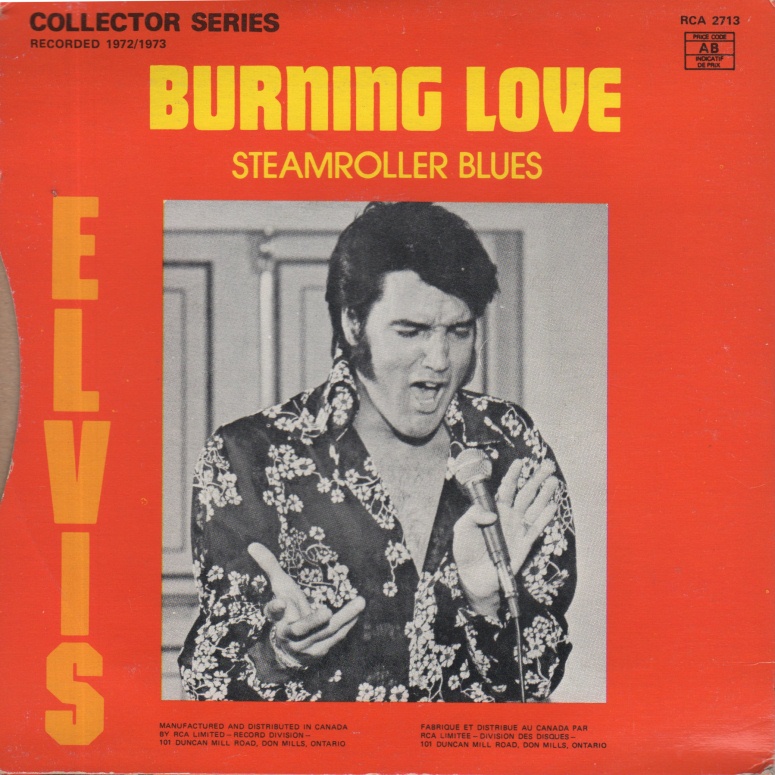
I’m on the second Peter Guralnick book about Elvis and I’m in the year of 1972…the jumpsuit, karate, Vegas Elvis. Though it had obvious hit potential, Elvis had just separated from his wife, Priscilla, and was not in the mood for a Rock n Roll number, so he wasn’t excited to record it. Elvis’ producer Felton Jarvis had to persuade him that the song was worth trying, and after 6 attempts, he recorded a suitable take. The song is great and Elvis’s performance is on the mark.
This song would peak at #2 in the Billboard 100 in 1972. Burning Love would his last top ten Billboard hit. The song was also released on an album titled Burning Love and Hits from his Movies: Volume 2… an album with this song and the rest very forgettable movie songs. This was another Colonel Tom Parker special. It was released on RCA’s budget label.
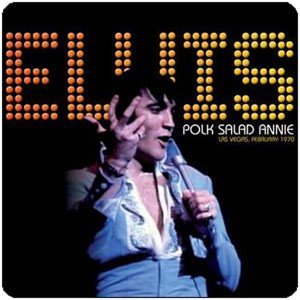
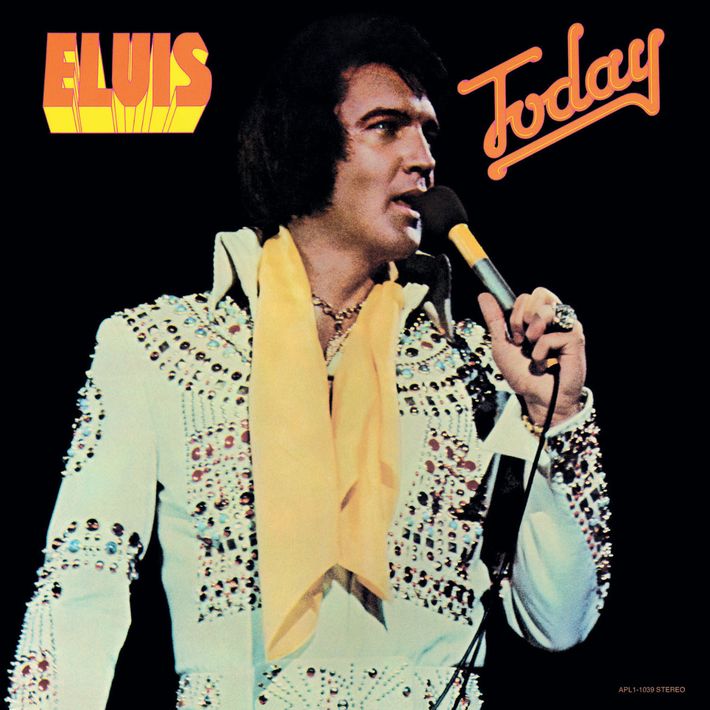
Album Covers… Elvis’s album packaging in the 1970s was just bland to me. Elvis…on stage…in the jumpsuit…in a karate pose and holding a mic. Since the sixties, album covers had been an important part of representing the artist. His covers were unmemorable and were put out cheaply to make a quick buck…very shortsighted and very Colonel Parker. The only one I remember well was the Aloha from Hawaii album with the satellite but it still didn’t compete with Pink Floyd, Led Zeppelin, and every other major act at the time. His album covers were interchangeable with each other for the most part. I’m not downing Elvis’s music but I just wish more thought would have been put into designing and marketing.
I’m not saying they had to be all works of art but a little more distinguishable.
When you see Abbey Road, Led Zeppelin II, Who’s Next, Dark Side of the Moon you know what songs are on them by just looking at them…Elvis albums?
From Songfacts
This was Elvis’ biggest hit single Stateside since “Suspicious Minds” in 1969 and his last Top 10 hit in the American Hot 100 or pop charts.
This song about the breakdown of a relationship had already featured on the self-titled 1972 album by Country-Soul pioneer Arthur Alexander.
In addition to making the original commercial recording of a song later covered by Elvis, Arthur Alexander has the claim of being the only songwriter in history to have his songs sung by The Beatles (“Anna (Go to Him))”), the Rolling Stones (“You’d Better Move On”) and Bob Dylan (“Sally Sue Brown”).
Dennis Linde, who wrote this song and also provided the guitar intro, was reclusive by nature and was at one time tagged “Nashville’s best-kept songwriting secret.” Apart from “Burning Love,” most of the successful songs he wrote were for Country stars, including,Roger Miller (“Tom Green County Fair” – 1970), Garth Brooks (“Callin’ Baton Rouge” – 1993) and The Dixie Chicks (“Goodbye Earl” – 1999.) In Britain, Welsh Rock and Roll revivalist Shakin’ Stevens recorded a #10 hit with his version of Linde’s “A Letter to You” in 1984.
In 2005, an Australian woman, who was evidently not a fan of this song, stabbed her partner in the back, thigh, and shoulder with a pair of scissors because “he played the song too many times.”
As part of a series of re-releases of Elvis songs in the UK in 2007 this re-entered the UK chart at #13.
Burning Love
Lord Almighty, I feel my temperature rising Higher higher It’s burning through to my soul
Girl, girl, girl You gonna set me on fire My brain is flaming I don’t know which way to go
Your kisses lift me higher Like the sweet song of a choir You light my morning sky With burning love
Ooh, ooh, ooh, I feel my temperature rising Help me, I’m flaming I must be a hundred and nine Burning, burning, burning And nothing can cool me I just might turn into smoke But I feel fine
‘Cause your kisses lift me higher Like a sweet song of a choir And you light my morning sky With burning love
It’s coming closer The flames are reaching my body Please won’t you help me I feel like I’m slipping away It’s hard to breath And my chest is a-heaving
Lord have mercy, I’m burning a hole where I lay ‘Cause your kisses lift me higher Like the sweet song of a choir You light my morning sky With burning love With burning love Ah, ah, burning love I’m just a hunk, a hunk of burning love Just a hunk, a hunk of burning love Just a hunk, a hunk of burning love Just a hunk, a hunk of burning love Just a hunk, a hunk of burning love Just a hunk, a hunk of burning love
I’ve heard this song so much that I know every nuance of it. The song was on the album of the same name. This song would be in my top 5 of Van Morrison. It’s a beautiful epic song. I’ve always noticed the lyrics are not Morrison’s best by any means. The melody is not complicated, in fact, it is reminiscent of The Weight…same chord pattern. Van’s voice and phrasing lift this song into a great song. Well, there is Connie Kay’s drumming also.
The song peaked at #47 in the Billboard 100 in 1972. The album peaked at #27 in 1971.
From Songfacts
“Tupelo Honey” is an unreserved typically mystic take on the domestic happiness Morrison had found since he’d married his wife Janet. They’d met during his time with the Irish R&B band Them. She’d already been his muse for several of Morrison’s earlier songs.
Tupelo honey is honey made from the sweet flowers of the tupelo tree, which grows abundantly in swampy areas of the Southern United States.
There are allusions to early America and the Boston Tea Party in this song:
You can take all the tea in China
Put it in a big brown bag for me
Sail right around the seven oceans
Drop it straight into the deep blue sea
And
You can’t stop us on the road to freedom
You can’t stop us ’cause our eyes can see
The Irish Troubles were still raging when this song was written, and it’s important to view it as the song of an artist who was a product of that situation. Freedom was surely heavy on Van’s mind.
This song plays at the conclusion of the 1997 film Ulee’s Gold, which stars Peter Fonda as a beekeeper who makes Tupelo Honey.
Tupelo Honey
You can take all the tea in China Put it in a big brown bag for me Sail right around all the seven oceans Drop it straight into the deep blue sea She’s as sweet as Tupelo honey She’s an angel of the first degree She’s as sweet as Tupelo honey Just like honey from the bee
You can’t stop us on the road to freedom You can’t keep us ’cause our eyes can see Men with insight, men in granite Knights in armor bent on chivalry She’s as sweet as Tupelo honey She’s an angel of the first degree She’s as sweet as Tupelo honey Just like honey, baby, from the bee
You can’t stop us on the road to freedom You can’t stop us ’cause our eyes can see Men with insight, men in granite Knights in armor intent on chivalry She’s as sweet as Tupelo honey She’s an angel of the first degree She’s as sweet as Tupelo honey Just like honey, baby, from the bee
You know she’s alright, oh she’s alright with me You know, you know, you know she’s alright, she alright with me You know, you know, you know you know You know she’s alright, alright with me She’s alright, she’s alright She’s alright with me She’s alright She’s alright with me She’s alright She’s alright with me
She’s al, she’s alright, she’s alright She’s alright with me She’s alright, she’s alright, she’s alright, she’s alright
You can take all the tea in China Put it in a big brown bag for me Sail it right around all these seven oceans Drop it smack dab in the middle of the deep blue sea Because, she’s as sweet as Tupelo honey, yes she is She’s an angel of the first degree She’s as sweet as Tupelo honey Just like honey, baby, from the bee
She’s as sweet as Tupelo honey She’s an angel of the first degree She’s as sweet as Tupelo honey Just like the honey, from the bee She’s alright, she’s alright with me She’s my baby, you know she’s alright She’s my baby, she’s my baby, she’s alright She’s my baby
















:format(jpeg):mode_rgb():quality(40)/discogs-images/R-4616619-1370052238-2255.jpeg.jpg)


 PowerPop... An Eclectic Collection of Pop Culture